
A well-planned social media posting schedule is one of the most effective ways to grow your audience, increase engagement, and maintain a consistent brand presence.
Many businesses and creators struggle with posting consistently across multiple platforms while also creating quality content. The solution is building a repeatable scheduling system that combines strategic planning, content automation, and data-driven timing to maximize results with less effort.
In this blog, you will look into:
- How to choose the ideal posting frequency
- How to find the best posting times
- How to automate scheduling and content creation
Whether you're managing one social account or multiple channels, the right posting schedule can help you save time, stay consistent, and achieve better results across every platform.
Let's start by understanding what a social media posting schedule actually is and why it matters.
What Is a Social Media Posting Schedule?
A social media posting schedule is a structured plan that determines what content you will publish, when you will publish it, and on which platforms it will appear. Instead of posting randomly whenever inspiration strikes, a posting schedule creates consistency and ensures your audience receives valuable content at predictable intervals.
Think of a social media posting schedule as a content roadmap. It helps businesses, creators, marketers, and brands organize their content strategy weeks or even months in advance while maintaining flexibility for trends, promotions, and real-time engagement opportunities.
The Difference Between Random Posting and Strategic Scheduling
Many social media accounts fail to grow because they rely on inconsistent posting habits. One week they publish content daily, and the next week they disappear entirely. This inconsistency can reduce audience engagement and make it harder for platform algorithms to understand when and how often to distribute your content.
A strategic posting schedule solves this problem by creating a consistent publishing rhythm. Rather than focusing solely on quantity, it prioritizes delivering the right content to the right audience at the right time.
For example, a business might schedule:
- Educational content on Mondays
- Customer success stories on Wednesdays
- Promotional content on Fridays
- Daily Stories throughout the week
- Weekly videos for YouTube and TikTok
This approach creates a balanced content mix that keeps followers engaged while supporting business objectives.
Also read: How to Create a Social Media Funnel That Actually Converts (Step-by-Step Guide)
Why Every Business Needs a Social Media Posting Schedule
Whether you're a small business owner, content creator, marketing agency, or enterprise brand, a posting schedule offers several advantages:
Improved Consistency
Consistency is one of the strongest predictors of social media success. A schedule ensures your accounts remain active and visible without relying on last-minute content creation.
Higher Engagement Rates
Publishing when your audience is most active increases the likelihood of likes, comments, shares, saves, and clicks. Consistent posting also trains followers to expect content from your brand.
Better Content Quality
When content is planned in advance, teams have more time to create better visuals, write stronger captions, and align posts with broader marketing goals.
Reduced Stress and Time Pressure
Without a schedule, social media management often becomes reactive. Planning ahead eliminates daily uncertainty and reduces the pressure of constantly deciding what to post next.
Easier Performance Tracking
A structured schedule makes it easier to identify patterns, measure results, and optimize future content strategies based on real data.
The Evolution of Social Media Scheduling
Years ago, scheduling social media content meant manually planning posts and publishing them one by one. Today, advanced automation tools have transformed the process.
Modern platforms such as Bibby allow marketers and creators to streamline their entire workflow. Instead of juggling multiple tools and spreadsheets, users can upload their images or videos—or even generate images with AI—choose a preferred posting style, and let Bibby's AI generate captions automatically.
From there, Bibby schedules content across platforms such as Facebook, Instagram, LinkedIn, TikTok, and YouTube at AI-optimized posting times designed to maximize engagement. Whether you're publishing images, carousels, videos, or stories, the entire process can be managed from a single dashboard, significantly reducing the time required to maintain an active social media presence.
The Bottom Line
A social media posting schedule is much more than a calendar. It's a strategic system that helps you stay consistent, reach your audience more effectively, and scale your content efforts without increasing your workload. The most successful brands don't simply post more—they post with purpose, consistency, and a clear plan.
Why Most Social Media Posting Schedules Fail
Many businesses start with good intentions when creating a social media posting schedule. They download a content calendar, plan a few weeks of posts, and commit to being more consistent. Yet within a month, most schedules are abandoned.
The problem isn't usually a lack of motivation. It's that many social media strategies are built around assumptions rather than proven systems. Understanding the most common scheduling mistakes can help you avoid them and build a process that delivers long-term results.
Mistake #1: Prioritizing Quantity Over Consistency
One of the biggest misconceptions in social media marketing is that posting more frequently automatically leads to better results.
Businesses often begin by publishing multiple times per day across every platform. While this approach may work temporarily, it becomes difficult to sustain. Eventually, content quality drops, engagement declines, and the posting schedule falls apart.
A more effective strategy is to choose a realistic publishing frequency that your team can maintain consistently over time. Posting three high-quality pieces of content every week is often more valuable than publishing low-quality content every day.
Mistake #2: Using the Same Strategy on Every Platform
Each social platform has unique audience expectations and content formats.
For example:
- LinkedIn audiences often prefer professional insights and industry expertise.
- Instagram users engage heavily with visual content, Reels, and Stories.
- TikTok rewards entertaining and trend-driven short-form videos.
- YouTube viewers typically expect deeper, more educational content.
- Facebook audiences often respond well to community-driven and shareable content.
Many brands fail because they simply copy and paste the same content across every platform without adapting it to the audience.
A successful posting schedule accounts for these differences while maintaining a consistent brand message.
Mistake #3: Ignoring Audience Behavior
Even great content can underperform if it's published when your audience isn't active.
Many marketers choose posting times based on generic "best time to post" studies without analyzing their own audience data. While industry benchmarks can provide a starting point, every audience behaves differently.
Factors that influence engagement include:
- Geographic location
- Time zones
- Industry
- Audience demographics
- Device usage habits
- Platform preferences
The most effective schedules are built around actual audience behavior rather than assumptions.
Mistake #4: Creating Content at the Last Minute
Last-minute content creation often leads to rushed posts, weak captions, and inconsistent branding.
When teams are constantly scrambling to find something to publish, social media becomes reactive instead of strategic. Important opportunities for storytelling, promotion, and audience engagement are frequently missed.
Planning content in advance allows marketers to:
- Create stronger visuals
- Write better captions
- Align content with campaigns
- Coordinate launches and promotions
- Maintain a balanced content mix
The result is a more professional and effective social media presence.
Mistake #5: Lack of Automation
Managing multiple platforms manually can quickly become overwhelming.
A typical social media manager may need to:
- Create content
- Write captions
- Upload media
- Publish across several platforms
- Monitor performance
- Respond to engagement
Without automation, maintaining a consistent schedule becomes increasingly difficult as content volume grows.
This is where modern tools like Bibby create a significant advantage. Instead of manually managing every step, users can upload or generate images with AI, select a posting style, automatically generate captions, and schedule content across Facebook, Instagram, LinkedIn, TikTok, and YouTube from a single workflow.
By automating repetitive tasks, businesses can maintain consistency without dramatically increasing their workload.
Mistake #6: Never Reviewing Performance Data
Many posting schedules fail because they remain static.
Social media platforms, algorithms, and audience behavior are constantly changing. A schedule that works today may not be as effective six months from now.
Successful marketers regularly review metrics such as:
- Reach
- Engagement rate
- Saves
- Shares
- Click-through rates
- Conversion rates
- Follower growth
These insights help refine posting frequency, content types, and publishing times over time.
The Real Reason Most Schedules Fail
The root cause behind most failed social media schedules is complexity. Businesses create systems that require too much manual effort, too much content creation, and too much daily management.
The most successful social media strategies are built around simplicity, consistency, and automation. When content planning, creation, caption writing, and scheduling are streamlined into a repeatable process, maintaining an active social presence becomes significantly easier.
The goal isn't to create the perfect schedule from day one. The goal is to create a sustainable system that you can consistently execute, optimize, and scale over time.
Step 1: Define Clear Social Media Goals
Before deciding how often to post, what content to create, or which scheduling tool to use, you need to answer one critical question:
Why are you posting on social media in the first place?
Many businesses create content without a clearly defined objective. As a result, their posting schedule becomes a collection of random updates rather than a strategic growth engine.
Your social media goals influence every decision that follows, including content formats, posting frequency, platform selection, engagement strategies, and performance metrics.
Why Goal Setting Matters
A social media posting schedule without goals is like a road trip without a destination. You may stay busy, but it's difficult to measure progress or determine whether your efforts are producing meaningful results.
Clear goals help you:
- Create more relevant content
- Prioritize the right platforms
- Measure success accurately
- Allocate resources effectively
- Build a sustainable long-term strategy
Most successful social media strategies are built around one primary objective and a few supporting goals.
Common Social Media Goals
1. Increase Brand Awareness
If your goal is visibility, your focus should be on reaching new audiences and expanding your brand's presence.
Typical objectives include:
- Growing followers
- Increasing reach
- Expanding audience awareness
- Improving brand recognition
Content that supports awareness goals includes:
- Educational posts
- Entertaining content
- Viral content
- Short-form videos
- Industry commentary
- Shareable graphics
Posting schedules focused on awareness often prioritize consistency and reach across multiple platforms.
2. Generate Leads
For service businesses and B2B companies, social media often serves as a lead-generation channel.
In this case, your content should guide users toward a specific action such as:
- Booking a consultation
- Downloading a resource
- Joining an email list
- Requesting a demo
Lead-generation content may include:
- Case studies
- Testimonials
- Educational guides
- Webinars
- Problem-solving content
- Calls-to-action
Your posting schedule should include regular conversion-focused content without becoming overly promotional.
3. Drive Website Traffic
Many companies use social media to bring visitors to their website, blog, product pages, or landing pages.
Content strategies for traffic generation often include:
- Blog promotion
- Resource sharing
- Industry insights
- Research findings
- Educational content
The key is providing enough value on social media to encourage users to learn more.
4. Build a Community
Community-focused brands prioritize relationships over reach.
Their content encourages interaction through:
- Discussions
- Polls
- Questions
- User-generated content
- Behind-the-scenes content
- Community highlights
When community building is the goal, engagement metrics become more important than follower counts.
5. Increase Sales
E-commerce brands and product-based businesses often focus on turning followers into customers.
Sales-focused content may include:
- Product demonstrations
- Customer reviews
- Success stories
- Product launches
- Promotional campaigns
- Limited-time offers
The most effective schedules balance promotional content with educational and entertaining content to avoid overwhelming audiences with sales messages.
Also try this tool: AI Reel Script Generator
Align Your Content With Your Goals
Once you've identified your primary objective, every piece of content should serve a purpose.
A simple framework looks like this:
| Goal | Primary Content Type |
|---|---|
| Brand Awareness | Educational, entertaining, shareable content |
| Lead Generation | Case studies, guides, webinars |
| Website Traffic | Blog promotion, resources, industry insights |
| Community Building | Discussions, polls, user-generated content |
| Sales | Product content, testimonials, offers |
This alignment prevents random posting and ensures every post contributes to a larger business objective.
Set Measurable Goals
The best social media goals are specific and measurable.
Instead of saying:
"We want more engagement."
Try:
"Increase Instagram engagement rate by 25% within six months."
Instead of:
"We want more leads."
Try:
"Generate 100 qualified leads per month through LinkedIn content."
Clear targets make it easier to evaluate whether your posting schedule is working.
How Automation Supports Goal Achievement
As social media operations grow, maintaining consistency becomes more challenging. This is why many businesses incorporate automation into their workflow.
Tools like Bibby help transform social media goals into repeatable execution. Teams can upload media or generate AI-powered images, select a content style that aligns with their brand voice, automatically generate captions, and schedule posts across Facebook, Instagram, LinkedIn, TikTok, and YouTube.
Because content is published consistently at AI-optimized times, businesses can spend less time managing logistics and more time focusing on strategic objectives such as audience growth, engagement, lead generation, and sales.
The Key Takeaway
The perfect social media posting schedule starts with clear goals. Before worrying about posting frequency or timing, define exactly what success looks like for your business. Once your objectives are established, every content decision becomes easier, more measurable, and more effective.
The next step is understanding the people you're trying to reach. After all, even the best content strategy will struggle if it's not aligned with your audience's behavior and preferences.
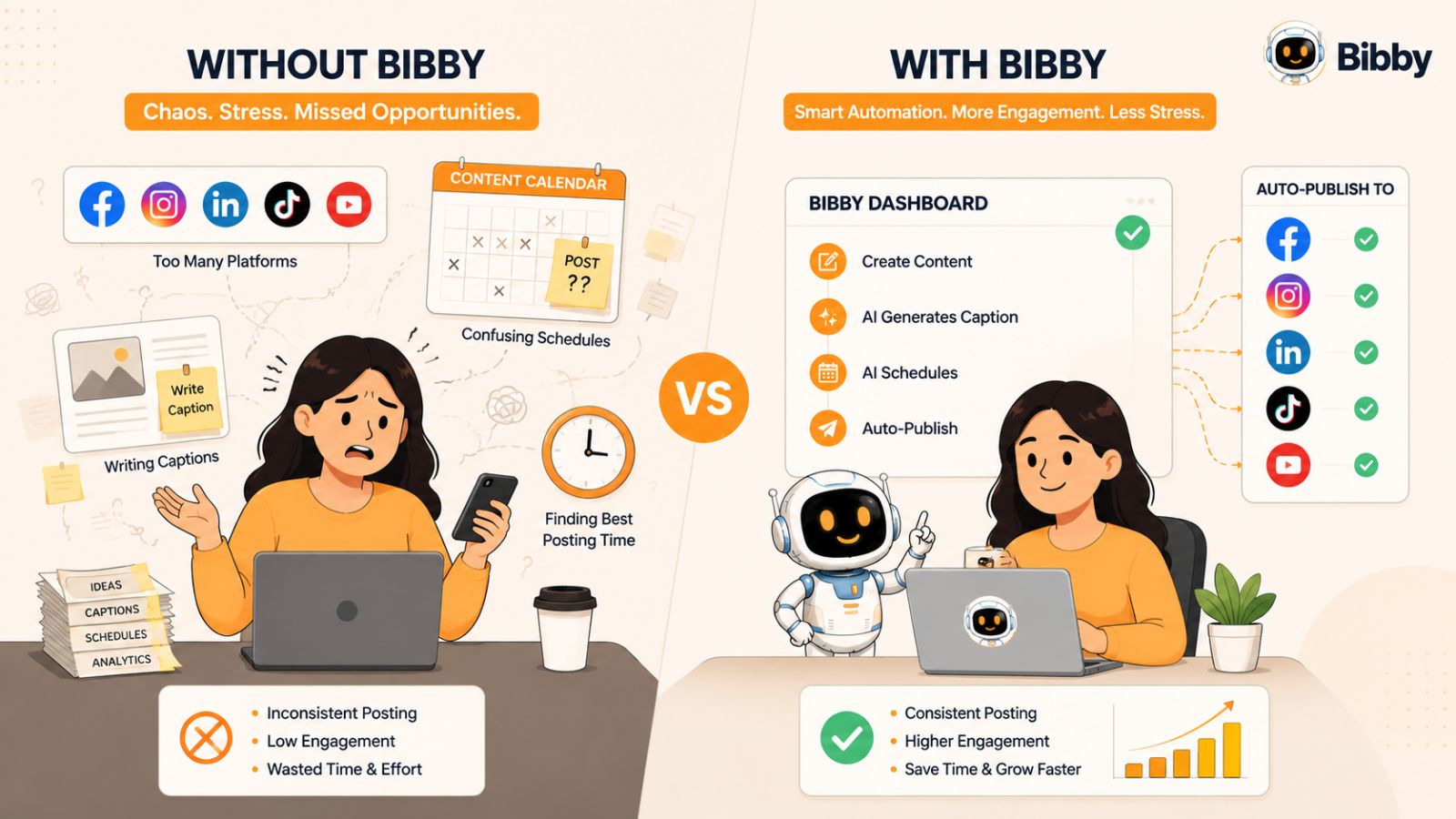
Step 2: Understand Your Audience's Online Behavior
Once you've established clear social media goals, the next step is understanding the people you're trying to reach.
Many businesses spend hours creating content but never take the time to analyze how their audience actually behaves online. As a result, they may publish excellent content at the wrong times, on the wrong platforms, or in formats their audience doesn't prefer.
The most effective social media posting schedules are built around audience behavior, not assumptions.
Why Audience Behavior Matters
Social media success isn't just about what you post—it's also about when, where, and how you post it.
Every audience has unique habits:
- Different active hours
- Different content preferences
- Different engagement patterns
- Different platform usage behaviors
A posting schedule that works perfectly for a B2B software company may perform poorly for an e-commerce brand, creator, or local business.
Understanding these differences allows you to create a schedule tailored specifically to your audience.
Identify Where Your Audience Spends Time
The first step is determining which platforms deserve the most attention.
Rather than trying to dominate every social network, focus on the channels where your audience is already active.
For example:
Ideal for:
- B2B businesses
- Consultants
- Agencies
- Professional services
- Corporate brands
Content that performs well:
- Industry insights
- Thought leadership
- Case studies
- Professional advice
Ideal for:
- Lifestyle brands
- Creators
- E-commerce businesses
- Personal brands
Content that performs well:
- Reels
- Stories
- Carousels
- Visual storytelling
TikTok
Ideal for:
- Brands targeting younger audiences
- Creators
- Consumer-focused businesses
Content that performs well:
- Short-form videos
- Trends
- Educational entertainment
- Behind-the-scenes content
Ideal for:
- Community-driven brands
- Local businesses
- Broad consumer audiences
Content that performs well:
- Videos
- Community discussions
- Events
- Shareable content
YouTube
Ideal for:
- Long-form education
- Product demonstrations
- Tutorials
- In-depth content
Content that performs well:
- How-to videos
- Reviews
- Guides
- Educational series
Understanding where your audience spends time helps you prioritize effort and avoid spreading resources too thin.
Learn When Your Audience Is Most Active
The next step is identifying when followers are most likely to engage.
While countless studies publish "best times to post," there is no universal answer that works for every audience.
Factors that influence activity patterns include:
- Geographic location
- Time zones
- Industry
- Age demographics
- Work schedules
- Lifestyle habits
For example:
- Professionals often engage with LinkedIn before work, during lunch breaks, or after work hours.
- Instagram activity may increase during evenings and weekends.
- TikTok audiences often consume content throughout the day, especially during breaks and downtime.
- YouTube viewing patterns may differ significantly depending on content category.
Your audience data should always outweigh generic industry averages.
Analyze Your Existing Analytics
Most social media platforms provide valuable audience insights.
Review metrics such as:
- Audience activity by hour
- Audience activity by day
- Top-performing posts
- Engagement rates
- Reach trends
- Video watch time
Look for patterns rather than isolated successes.
Questions to ask include:
- Which days consistently perform best?
- Which content formats receive the most engagement?
- Are certain posting times generating more reach?
- Do different platforms show different behavior patterns?
These insights help shape a more effective posting schedule.
Study Your Highest-Performing Content
Your best-performing posts reveal valuable information about audience preferences.
Analyze:
- Content topics
- Visual styles
- Caption formats
- Post lengths
- Calls-to-action
- Publishing times
You'll often discover recurring patterns that can be replicated in future content.
For example, if educational carousel posts consistently outperform other formats on Instagram, they may deserve a larger role in your content calendar.
Segment Audiences When Necessary
Not all followers behave the same way.
Many businesses serve multiple audience groups with different interests and needs.
For example:
A marketing agency may target:
- Small business owners
- Marketing managers
- Startup founders
- Enterprise decision-makers
Each audience segment may engage with different types of content and at different times.
Understanding these differences allows for more strategic scheduling and content planning.
Let Data Guide Scheduling Decisions
One of the biggest mistakes marketers make is relying entirely on intuition.
Instead of guessing when content should be published, use data-driven decision making.
Over time, your schedule should evolve based on:
- Engagement patterns
- Reach metrics
- Audience growth
- Conversion performance
- Platform-specific trends
The most successful social media strategies are continuously refined rather than treated as fixed systems.
How AI Can Help Identify Optimal Posting Times
As audiences grow across multiple platforms, manually tracking performance becomes increasingly difficult.
Modern tools like Bibby simplify this process by combining content creation, scheduling, and optimization within a single workflow. After uploading media—or generating visuals with AI—users can choose a posting style, automatically generate captions, and schedule content across Facebook, Instagram, LinkedIn, TikTok, and YouTube.
Instead of manually testing dozens of publishing windows, Bibby uses AI-optimized scheduling to help publish content at times most likely to generate engagement. This reduces guesswork and allows marketers to focus on creating valuable content rather than constantly managing posting logistics.
The Key Takeaway
The perfect posting schedule is built around audience behavior. Before deciding how often to post or what times to publish, take the time to understand where your audience spends time, when they are active, and which content they prefer.
Once you know how your audience behaves, you can determine the ideal posting frequency for each platform—a critical step in building a sustainable and effective social media schedule.
Step 3: Choose the Right Posting Frequency
One of the most common questions in social media marketing is:
"How often should I post?"
Unfortunately, there isn't a universal answer.
The ideal posting frequency depends on your audience, industry, content quality, available resources, and business goals. However, one principle remains true across every platform:
Consistency beats intensity.
It's better to maintain a realistic publishing schedule for months than to post aggressively for a few weeks and then disappear.
The goal is to find a posting frequency that delivers consistent value while remaining sustainable for your team.
Why Posting Frequency Matters
Posting frequency directly affects:
- Audience engagement
- Brand visibility
- Algorithm performance
- Content production workload
- Long-term growth potential
Posting too little can make your brand invisible. Posting too much can overwhelm followers and reduce engagement.
The sweet spot lies somewhere in the middle.
Facebook Posting Frequency
Although Facebook's organic reach has evolved over the years, it remains a valuable platform for businesses, communities, and local brands.
Recommended Frequency
- 3–7 posts per week
- Daily Stories when relevant
- Additional posts during promotions or events
Content That Works Well
- Videos
- Customer stories
- Educational content
- Community updates
- Industry news
Consistency is typically more important than volume on Facebook.
Instagram Posting Frequency
Instagram rewards active accounts that consistently publish engaging content across multiple formats.
Recommended Frequency
- Feed posts: 3–5 times per week
- Reels: 3–7 times per week
- Stories: Daily
- Carousels: 1–3 times per week
Content That Works Well
- Reels
- Educational carousels
- Behind-the-scenes content
- User-generated content
- Product showcases
Many successful brands prioritize Reels and Stories because they often generate strong visibility and engagement.
LinkedIn Posting Frequency
LinkedIn audiences typically value quality over quantity.
Recommended Frequency
- 3–5 posts per week
- Daily engagement with comments and discussions
Content That Works Well
- Industry insights
- Case studies
- Professional experiences
- Thought leadership
- Business lessons
For B2B companies, a smaller number of high-value posts often outperforms excessive posting.
TikTok Posting Frequency
TikTok favors active creators and brands that publish regularly.
Recommended Frequency
- 1–3 videos per day
- Minimum of 4–7 videos per week
Content That Works Well
- Educational entertainment
- Trends
- Storytelling
- Product demonstrations
- Behind-the-scenes content
Because content consumption is extremely fast on TikTok, higher publishing volume is often beneficial when quality remains strong.
YouTube Posting Frequency
YouTube success depends more on consistency and content depth than posting volume.
Recommended Frequency
Long-form videos
- 1–2 videos per week
YouTube Shorts
- 3–7 Shorts per week
Community posts
- Several per week
Content That Works Well
- Tutorials
- Product reviews
- Educational content
- Industry insights
- Long-form guides
A predictable publishing cadence helps build viewer expectations and loyalty.
Avoid the Trap of Platform Perfection
Many businesses become overwhelmed trying to meet every recommended posting frequency.
The reality is that not every business has the resources to publish:
- Daily TikToks
- Daily Stories
- Weekly YouTube videos
- Frequent LinkedIn content
- Multiple Instagram formats
Trying to do everything often results in burnout.
Instead, start with a manageable schedule and expand as your content creation process becomes more efficient.
For example:
Small Business Starter Schedule
- Facebook: 3 posts weekly
- Instagram: 4 posts weekly
- LinkedIn: 3 posts weekly
- TikTok: 3 videos weekly
- YouTube: 1 video weekly
This approach provides strong coverage without overwhelming your team.
Match Frequency to Content Quality
A common mistake is increasing frequency at the expense of quality.
Social media algorithms are becoming increasingly sophisticated. High-quality content that generates engagement often outperforms larger volumes of mediocre content.
Before increasing frequency, ask:
- Can we maintain content quality?
- Can we remain consistent for months?
- Do we have enough valuable ideas?
- Do we have a sustainable workflow?
If the answer is no, focus on improving quality before increasing output.
How Automation Makes Higher Posting Frequency Possible
As businesses expand across multiple platforms, maintaining a consistent posting frequency becomes increasingly difficult.
This is where automation can dramatically improve efficiency.
Tools like Bibby simplify the entire publishing process by allowing users to upload images and videos—or generate visuals with AI—select a preferred posting style, automatically generate captions, and schedule content across Facebook, Instagram, LinkedIn, TikTok, and YouTube.
Because posts can be scheduled in advance and published at AI-optimized times, businesses can maintain a consistent presence without manually managing every platform each day. This makes it easier to increase posting frequency while preserving content quality and reducing workload.
Sample Weekly Multi-Platform Posting Schedule
Here's an example of a sustainable schedule for many growing businesses:
| Platform | Weekly Frequency |
|---|---|
| 3–5 posts | |
| Instagram Feed | 3–5 posts |
| Instagram Stories | Daily |
| 3–5 posts | |
| TikTok | 5–7 videos |
| YouTube | 1–2 videos |
| YouTube Shorts | 3–5 videos |
Remember, this is a starting point—not a rule.
The best posting frequency is the one your team can execute consistently while producing content that your audience genuinely values.
The Key Takeaway
There is no perfect posting frequency that works for every business. The ideal schedule balances consistency, quality, audience expectations, and available resources. Start with a sustainable publishing cadence, track performance, and adjust over time based on real-world results.
Once you've determined how often to post, the next step is deciding what to post. Building the right content mix ensures your schedule remains engaging, balanced, and aligned with your goals.
Also read: [[a
Step 4: Create a Content Mix That Keeps Audiences Engaged
Even the most perfectly timed posting schedule will fail if the content itself isn't valuable.
One of the biggest reasons audiences unfollow brands is content fatigue. When every post looks the same, promotes the same offer, or delivers little value, engagement naturally declines.
The most successful social media strategies use a balanced content mix that educates, entertains, inspires, and converts. Instead of repeatedly posting promotional messages, they create a diverse stream of content that keeps audiences interested over the long term.
Why Content Variety Matters
People follow brands for different reasons.
Some want:
- Education
- Entertainment
- Industry insights
- Inspiration
- Product information
- Community interaction
If every post serves the same purpose, a large portion of your audience will eventually lose interest.
A strategic content mix ensures you're consistently delivering value while still supporting business goals.
The 70-20-10 Content Framework
One of the most effective content planning models is the 70-20-10 framework.
70% Value-Driven Content
The majority of your content should focus on helping your audience.
This content is designed to:
- Educate
- Solve problems
- Answer questions
- Share insights
- Build trust
Examples include:
- How-to guides
- Industry tips
- Tutorials
- Educational carousels
- Expert advice
- Frequently asked questions
This category often generates the strongest long-term audience growth.
20% Engagement Content
The next portion of your content should encourage interaction.
Its purpose is to strengthen relationships and increase engagement signals.
Examples include:
- Polls
- Questions
- Surveys
- Community discussions
- Behind-the-scenes content
- User-generated content
- Opinion-based posts
These posts help transform passive followers into active community members.
10% Promotional Content
Promotion is important—but it shouldn't dominate your content calendar.
Examples include:
- Product launches
- Service announcements
- Sales campaigns
- Special offers
- Free trials
- Demo invitations
When audiences receive consistent value from your content, promotional posts become significantly more effective.
Core Content Categories Every Schedule Should Include
To maintain variety, most businesses should rotate through several content categories.
Educational Content
Educational posts establish authority and provide immediate value.
Examples:
- Tips and tricks
- Tutorials
- Industry insights
- Step-by-step guides
- Common mistakes to avoid
Educational content often generates strong saves and shares because people want to reference it later.
Thought Leadership Content
Thought leadership helps position your brand as an expert.
Examples:
- Industry predictions
- Unique perspectives
- Market analysis
- Personal experiences
- Business lessons
This content performs particularly well on LinkedIn and X-style professional discussions.
Behind-the-Scenes Content
People connect with people.
Behind-the-scenes content humanizes your brand and creates authenticity.
Examples:
- Team updates
- Workflows
- Office culture
- Product development
- Daily operations
This content often builds trust more effectively than highly polished promotional content.
Customer Success Stories
Social proof remains one of the most powerful marketing tools.
Examples:
- Testimonials
- Case studies
- Customer spotlights
- Transformation stories
- User-generated content
These posts demonstrate real-world results and help reduce buyer skepticism.
Entertainment Content
Not every post needs to be educational.
Entertainment can significantly increase reach and engagement.
Examples:
- Trends
- Memes
- Short-form videos
- Relatable situations
- Industry humor
When aligned with your brand, entertaining content can dramatically improve visibility.
Promotional Content
Promotional posts help drive revenue and business growth.
Examples:
- Product features
- Service explanations
- New releases
- Special offers
- Limited-time promotions
The key is maintaining balance so followers don't feel constantly sold to.
Match content formats to Platform Strengths
Different content formats perform better on different platforms.
Best formats:
- Reels
- Carousels
- Stories
- Visual content
Best formats:
- Text posts
- Industry insights
- Personal stories
- Document posts
TikTok
Best formats:
- Short-form videos
- Trends
- Educational entertainment
Best formats:
- Videos
- Community discussions
- Shareable content
YouTube
Best formats:
- Tutorials
- Long-form education
- Product demonstrations
- Shorts
Your content mix should account for both topic diversity and format diversity.
Build Content Pillars
Content pillars are recurring themes that guide content creation.
For example, a social media management brand might use:
- Social media strategy
- Content creation
- Automation tools
- Audience growth
- Case studies
Every new post fits into one of these categories.
This approach simplifies planning and ensures long-term consistency.
How Bibby Makes Content Planning Easier
One challenge businesses face is creating enough content variety while maintaining consistency.
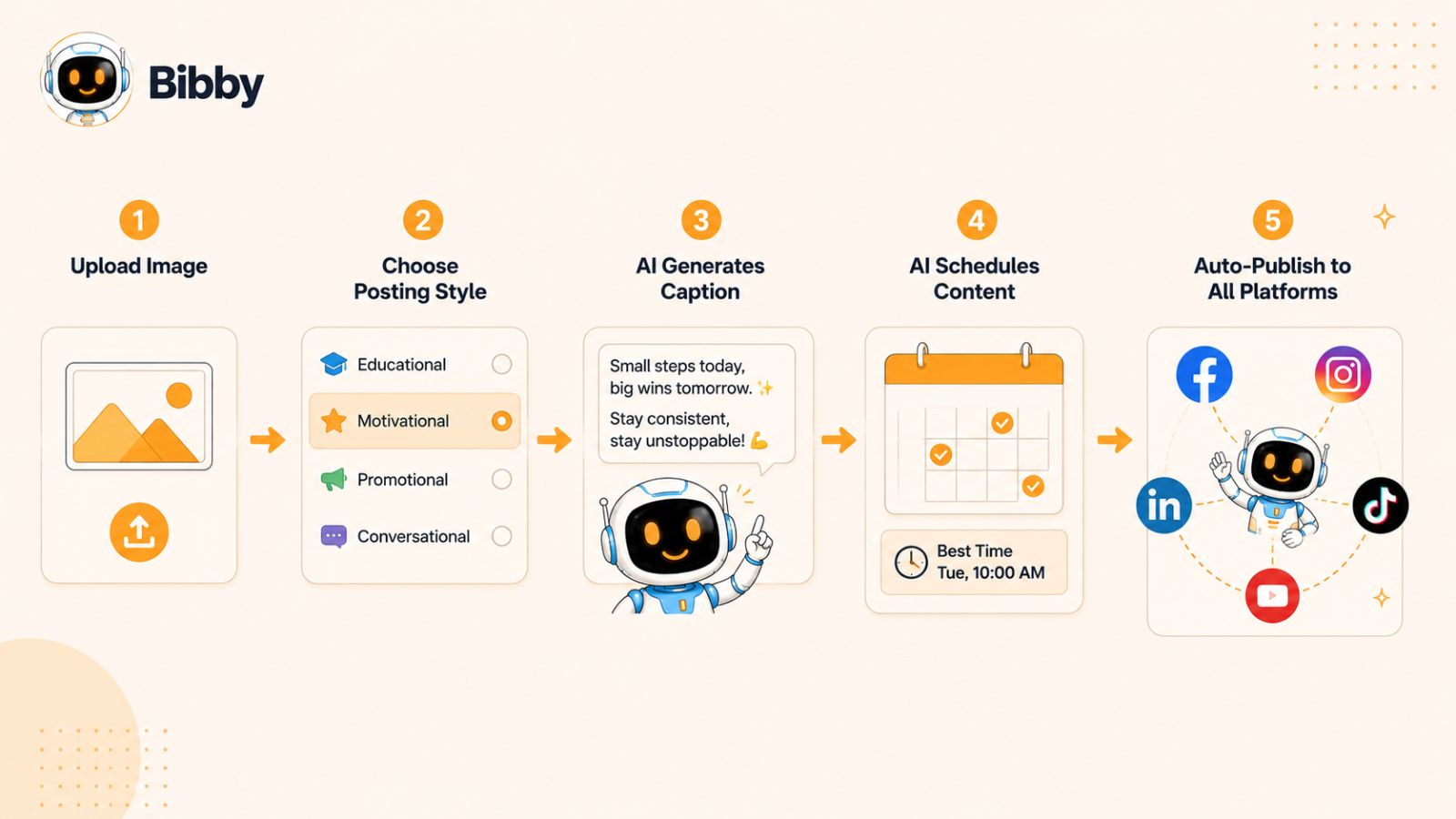
Bibby helps streamline this process through a simple workflow. Users can upload their own images and videos or generate visuals with AI, choose a preferred posting style, and allow Bibby's AI to generate captions automatically.
Because content can be planned, created, and scheduled from one platform, businesses can easily maintain a balanced content mix across Facebook, Instagram, LinkedIn, TikTok, and YouTube. Whether publishing images, carousels, videos, or stories, teams can keep content flowing without constantly switching between tools.
This makes it easier to maintain content diversity while reducing the operational burden of social media management.
Example Weekly Content Mix
A balanced weekly schedule might include:
| Day | Content Type |
|---|---|
| Monday | Educational Tip |
| Tuesday | Customer Success Story |
| Wednesday | Industry Insight |
| Thursday | Behind-the-Scenes Content |
| Friday | Promotional Offer |
| Saturday | Community Engagement Post |
| Sunday | Inspirational or Entertaining Content |
This structure provides variety while ensuring every content category receives attention.
The Key Takeaway
The perfect social media posting schedule isn't just about frequency and timing—it's also about content balance. By combining educational, engaging, entertaining, and promotional content, you create a social presence that keeps audiences interested while supporting business objectives.
Now that you know what to post, it's time to organize everything into a practical system. The next step is building a monthly content calendar that transforms your strategy into a repeatable workflow.
Step 5: Build a Monthly Content Calendar
At this point, you know your goals, understand your audience, have chosen your posting frequency, and established a balanced content mix.
Now it's time to bring everything together into a system that can be executed consistently.
A monthly content calendar is the foundation of an effective social media posting schedule. Instead of deciding what to post every day, you plan your content in advance, giving your team more time to create better content, coordinate campaigns, and maintain consistency.
The most successful brands rarely operate week-to-week. They think months ahead.
Why a Monthly Content Calendar Matters
Without a content calendar, social media often becomes reactive.
Teams find themselves asking:
- What should we post today?
- Do we have any content ready?
- Have we promoted this campaign yet?
- Are we posting too much promotional content?
A content calendar eliminates these problems by creating visibility and structure.
Benefits include:
- Better consistency
- Improved content quality
- More strategic planning
- Reduced stress
- Easier collaboration
- Stronger campaign execution
Most importantly, it helps transform social media from a daily task into a scalable business process.
Start With Monthly Planning
Begin by looking at the upcoming month as a whole.
Identify:
- Product launches
- Promotions
- Seasonal campaigns
- Holidays
- Industry events
- Company announcements
- Important business milestones
These events become anchor points around which your content calendar is built.
For example, if you're launching a new product on the 20th of the month, your content leading up to that date can build anticipation while post-launch content can focus on education, testimonials, and adoption.
Create Weekly Content Themes
Weekly themes simplify planning and reduce decision fatigue.
For example:
| Day | Theme |
|---|---|
| Monday | Educational Content |
| Tuesday | Tips and Tutorials |
| Wednesday | Customer Stories |
| Thursday | Behind-the-Scenes |
| Friday | Promotional Content |
| Saturday | Community Engagement |
| Sunday | Inspiration or Entertainment |
These themes create structure while still allowing flexibility.
Over time, audiences become familiar with your content rhythm and begin anticipating certain types of posts.
Batch Content Creation
One of the most effective ways to maintain consistency is content batching.
Rather than creating content every day, dedicate specific blocks of time to creating multiple pieces of content at once.
For example:
Week 1
- Plan monthly topics
- Outline campaigns
- Finalize content calendar
Week 2
- Create graphics
- Record videos
- Design carousels
Week 3
- Write captions
- Review content
- Prepare publishing assets
Week 4
- Schedule content
- Analyze previous month's performance
- Optimize future plans
Batching dramatically reduces context switching and improves efficiency.
Build Content Around Content Pillars
Earlier, we discussed content pillars as recurring themes.
Your monthly calendar should distribute content evenly across these pillars.
For example, a social media management brand might organize content like this:
| Content Pillar | Monthly Posts |
|---|---|
| Social Media Strategy | 6 |
| Content Creation | 5 |
| Automation | 4 |
| Audience Growth | 5 |
| Customer Stories | 3 |
This prevents overemphasis on any single topic while ensuring variety.
Leave Room for Real-Time Content
A common mistake is scheduling every available content slot weeks in advance.
While planning is important, flexibility matters too.
Reserve space for:
- Breaking industry news
- Trending topics
- User-generated content
- Viral opportunities
- Community engagement moments
A good rule is to keep approximately 10–20% of your calendar flexible.
This allows you to participate in relevant conversations without disrupting your overall strategy.
Use a Multi-Platform Content Strategy
Creating unique content for every platform can quickly become overwhelming.
Instead, build content that can be adapted and repurposed.
For example:
One Blog Post Can Become:
- LinkedIn thought leadership posts
- Instagram carousels
- Facebook posts
- TikTok videos
- YouTube Shorts
- Email newsletter content
This approach dramatically increases content output without requiring constant content creation.
Automate Scheduling and Publishing
Once your content calendar is complete, the next challenge is execution.
Manually publishing dozens of posts across multiple platforms every week is time-consuming and prone to mistakes.
This is where automation becomes essential.
Bibby simplifies the entire process through a streamlined workflow:
- Upload your images and videos or generate visuals with AI.
- Select your preferred posting style and brand voice.
- Allow Bibby's AI to generate captions automatically.
- Schedule content across Facebook, Instagram, LinkedIn, TikTok, and YouTube.
- Let AI optimize publishing times for maximum engagement.
Because Bibby supports images, carousels, videos, stories, and multi-platform campaigns, businesses can manage their entire content calendar from a single dashboard instead of juggling multiple tools.
The result is a more efficient workflow and a more consistent posting schedule.
Example Monthly Content Calendar
Here's a simplified example:
Week 1
- Educational content
- Industry insights
- Customer story
- Behind-the-scenes video
Week 2
- Tutorial carousel
- Community discussion
- Product demonstration
- Promotional post
Week 3
- Case study
- Trend-based content
- Expert opinion
- Video tutorial
Week 4
- Customer testimonial
- FAQ content
- Special offer
- Monthly recap
This structure balances value, engagement, and promotion while maintaining content variety.
Common Content Calendar Mistakes
Avoid these common issues:
- Planning too little content
- Planning too much content
- Ignoring analytics
- Overloading promotional posts
- Failing to repurpose content
- Not leaving room for trends
- Managing schedules manually for too long
The best calendars are structured enough to provide consistency but flexible enough to adapt to change.
The Key Takeaway
A monthly content calendar transforms social media from a daily challenge into a predictable system. By planning content in advance, batching creation, organizing content pillars, and automating publishing, you can maintain consistency without increasing workload.
Now that your calendar is organized, the next step is determining exactly when content should go live. Publishing at the right time can significantly improve reach, engagement, and overall performance.
Also read: The Complete Checklist for Managing Social Media with AI
Step 6: Determine the Best Times to Post
You can create exceptional content, build a detailed content calendar, and maintain a consistent posting frequency—but if your audience never sees your content, results will suffer.
Timing plays a significant role in social media performance.
While great content will always be the most important factor, publishing when your audience is active increases the likelihood of generating immediate engagement, which can help improve reach, visibility, and overall performance.
The challenge is that there is no universal "best time to post."
The best time for your business depends on your audience, industry, location, platform, and content type.
Why Posting Time Matters
Social media algorithms evaluate how users interact with content shortly after it is published.
When a post receives early engagement, platforms may interpret it as valuable content and distribute it to more users.
Publishing when followers are online increases the chances of:
- Likes
- Comments
- Shares
- Saves
- Video views
- Link clicks
More engagement often leads to greater visibility and stronger long-term growth.
The Myth of Universal Best Times
You've probably seen articles claiming things like:
- "Post at 9 AM for maximum engagement."
- "Tuesday is the best day for social media."
- "Never post on weekends."
While these studies can provide useful benchmarks, they should never replace your own audience data.
For example:
- A B2B audience may engage heavily during business hours.
- A fitness creator may see strong engagement early in the morning.
- An entertainment brand may perform best in the evening.
- A global company may have audiences active around the clock.
Every audience behaves differently.
The goal is to discover your audience's unique patterns.
Factors That Influence Optimal Posting Times
Several variables affect when your content performs best.
Audience Demographics
Consider:
- Age
- Occupation
- Lifestyle
- Daily routines
Students, executives, parents, and entrepreneurs often consume content at different times throughout the day.
Geographic Location
If your audience spans multiple countries or time zones, scheduling becomes more complex.
For example:
- A North American audience may be active during completely different hours than a European audience.
- Global brands often need multiple publishing windows to maximize visibility.
Industry Type
Different industries have different engagement patterns.
Examples:
- B2B content often performs during work hours.
- Lifestyle content may perform better during evenings.
- Entertainment content often sees strong weekend engagement.
- Professional networking content frequently performs well on weekdays.
Platform-Specific Behavior
Users interact differently across social platforms.
Someone may browse TikTok during short breaks, watch YouTube in the evening, and engage with LinkedIn before starting work.
Your posting schedule should reflect these platform-specific habits.
General Platform Timing Guidelines
While audience data should always take priority, these guidelines can provide a useful starting point.
Often performs well:
- Morning hours
- Midday breaks
- Early evenings
Best for:
- Community content
- Videos
- Shareable posts
Often performs well:
- Early morning
- Lunch breaks
- Evenings
Best for:
- Reels
- Carousels
- Stories
Often performs well:
- Before work
- During lunch
- Early business hours
Best for:
- Professional insights
- Thought leadership
- Industry content
TikTok
Often performs well:
- Throughout the day
- Evenings
- Weekends
Best for:
- Short-form videos
- Trends
- Educational entertainment
YouTube
Often performs well:
- Evenings
- Weekends
Best for:
- Tutorials
- Long-form educational content
- Product reviews
Remember, these are starting points—not permanent rules.
Use Analytics to Find Your Best Times
The most reliable source of timing data is your own performance history.
Review metrics such as:
- Reach by publishing time
- Engagement rate by hour
- Video views
- Click-through rates
- Conversion rates
Look for recurring trends rather than one-time spikes.
Questions to ask:
- Which days consistently outperform others?
- Which time slots generate the most engagement?
- Do certain content formats perform better at specific times?
- Are there seasonal changes in audience activity?
The answers help shape a more effective posting schedule.
Run Controlled Timing Experiments
Optimization is an ongoing process.
Test different publishing windows while keeping content quality consistent.
For example:
Week 1
- Publish at 9 AM
Week 2
- Publish at 12 PM
Week 3
- Publish at 3 PM
Week 4
- Publish at 6 PM
Compare performance and identify trends.
Over time, you'll develop a data-backed understanding of your audience's behavior.
AI-Powered Timing Optimization
As social media operations grow, manually testing dozens of publishing windows across multiple platforms becomes increasingly difficult.
Modern scheduling tools use automation and AI to simplify this process.
Bibby takes a particularly streamlined approach.
The workflow is simple:
- Upload your images and videos or generate visuals using AI.
- Choose your preferred posting style.
- Let Bibby's AI generate captions automatically.
- Select your target platforms, including Facebook, Instagram, LinkedIn, TikTok, and YouTube.
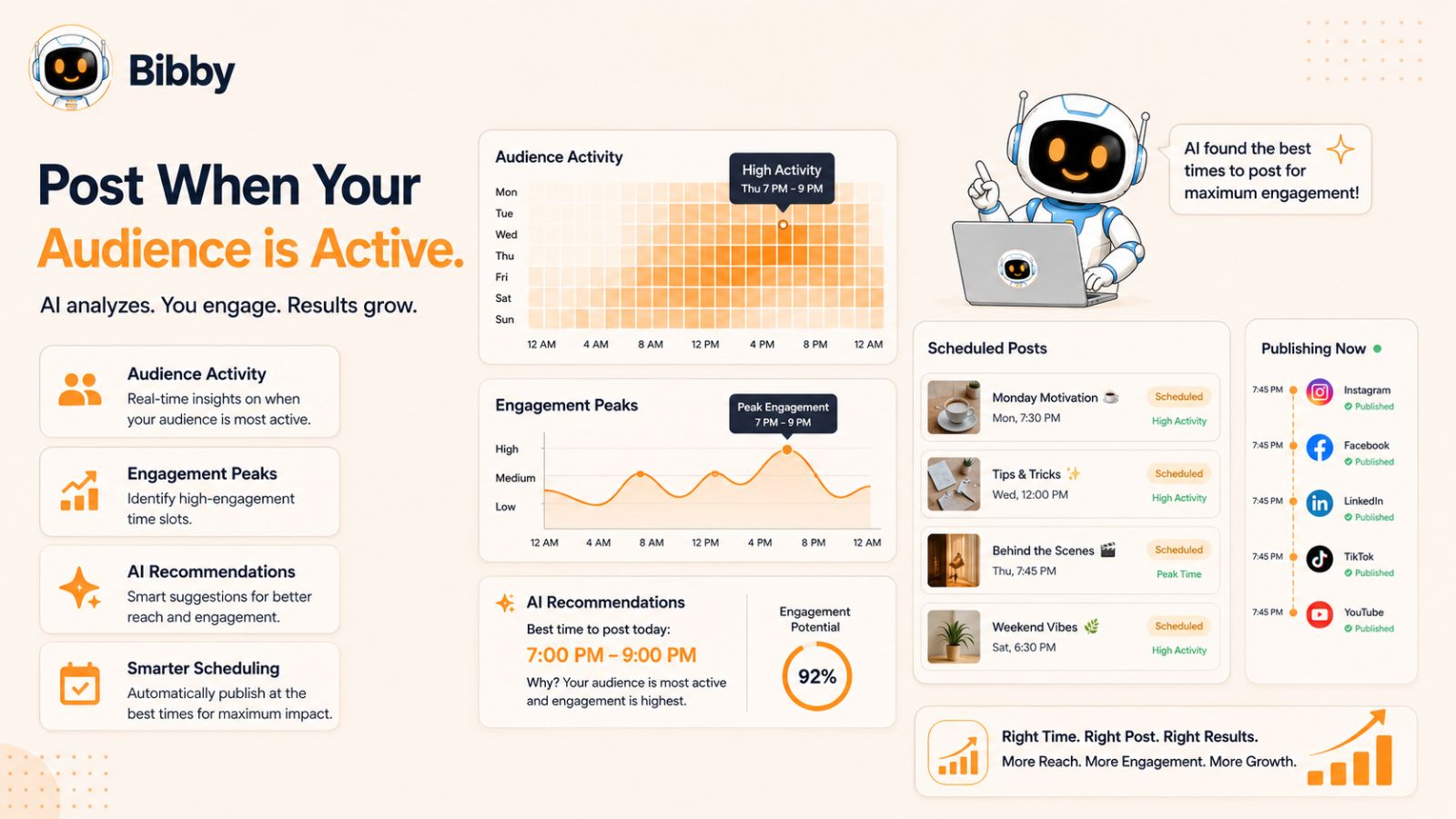
- Allow Bibby to schedule content at AI-optimized posting times.
Instead of constantly guessing when to publish, businesses can rely on AI-assisted scheduling to maximize visibility while reducing manual effort.
This approach is especially valuable for teams managing multiple platforms and large content libraries.
Timing Is Important—But Consistency Matters More
Many marketers spend too much time searching for the perfect posting time and not enough time creating valuable content.
A great post published at a good time will usually outperform mediocre content published at the perfect time.
Think of timing as an optimization layer rather than a replacement for quality.
Focus on:
- Valuable content
- Consistent publishing
- Audience relevance
- Strategic timing
In that order.
The Key Takeaway
The best posting times are unique to your audience. While industry benchmarks can provide direction, your own analytics should drive scheduling decisions. By monitoring performance, testing different publishing windows, and leveraging AI-powered scheduling tools, you can maximize engagement without relying on guesswork.
Now that your timing strategy is in place, it's time to automate your workflow so your posting schedule can run efficiently at scale—even when you're not actively managing it.
Step 7: Automate Your Social Media Workflow
At some point, every growing business encounters the same problem:
There simply aren't enough hours in the day to manage social media manually.
Creating content, writing captions, uploading media, publishing across multiple platforms, monitoring performance, and staying consistent can quickly become overwhelming.
What starts as a simple marketing activity often evolves into a full-time job.
This is why automation has become one of the most important components of a successful social media posting schedule.
The goal of automation isn't to remove creativity from your marketing. The goal is to eliminate repetitive tasks so you can spend more time creating great content and less time managing logistics.
Why Manual Social Media Management Doesn't Scale
As your social presence grows, so does the complexity of your workflow.
A typical content publishing process may involve:
- Creating visuals
- Designing carousels
- Editing videos
- Writing captions
- Researching hashtags
- Scheduling content
- Publishing to multiple platforms
- Monitoring engagement
- Tracking analytics
Multiply that across Facebook, Instagram, LinkedIn, TikTok, and YouTube, and the workload becomes substantial.
Without automation, consistency often suffers.
Missed posting days, rushed content creation, and scheduling mistakes become increasingly common.
The Benefits of Social Media Automation
Automation helps businesses maintain consistency while reducing the amount of manual work required.
Key benefits include:
Save Time
Instead of publishing content every day, you can schedule weeks or months of content in advance.
Improve Consistency
Content continues publishing even when your team is focused on other priorities.
Reduce Human Error
Automation minimizes missed posts, incorrect publishing times, and workflow bottlenecks.
Scale Content Operations
As your business grows, automation allows you to manage more content without proportionally increasing workload.
Focus on Strategy
Less time spent on repetitive tasks means more time available for audience growth, content quality, and campaign planning.
What an Automated Social Media Workflow Should Look Like
An effective automation system should simplify every stage of content management.
The ideal workflow includes:
- Content creation
- Media management
- Caption generation
- Scheduling
- Multi-platform publishing
- Timing optimization
Unfortunately, many businesses rely on multiple tools to accomplish these tasks.
One platform for graphics.
Another for captions.
Another for scheduling.
Another for analytics.
This fragmented approach creates unnecessary complexity.
Introducing Bibby: The Complete Social Media Scheduling and Automation Platform
Bibby was designed to simplify social media management through a streamlined, AI-powered workflow.
Instead of juggling multiple tools and manual processes, users can manage content creation, scheduling, and publishing from a single platform.
Step 1: Upload or Generate Content
Every social media campaign begins with content.
With Bibby, users can:
- Upload existing images
- Upload videos
- Upload carousel content
- Generate images using AI
This flexibility allows businesses to create content quickly regardless of their design resources.
Step 2: Choose Your Posting Style
Every brand has a unique voice.
Bibby allows users to select a preferred posting style that aligns with their content strategy and brand personality.
Whether the goal is:
- Professional
- Educational
- Conversational
- Promotional
- Inspirational
The platform adapts content generation accordingly.
Step 3: Generate Captions Automatically with AI
Writing captions can be one of the most time-consuming aspects of social media management.
Bibby's AI automatically generates captions based on your content and chosen posting style.
This helps users:
- Save time
- Maintain consistency
- Publish faster
- Create platform-ready content
Instead of staring at a blank screen, marketers can move from content creation to scheduling in minutes.
Step 4: Schedule Everything Across Multiple Platforms
Once content and captions are ready, Bibby handles scheduling.
Users can publish to:
- TikTok
- YouTube
From a single dashboard.
This eliminates the need to log into multiple platforms and manually publish content throughout the week.
Step 5: Publish at AI-Optimized Times
One of Bibby's most powerful advantages is AI-powered timing optimization.
Rather than relying on generic posting recommendations, Bibby automatically schedules content at AI-optimized times designed to maximize engagement opportunities.
This helps businesses:
- Reach more people
- Increase engagement
- Improve consistency
- Reduce scheduling guesswork
The result is a smarter posting schedule with less manual effort.
Support Every Major Content Format
Modern social media strategies require more than static images.
Bibby supports:
- Images
- Carousels
- Videos
- Stories
- Multi-platform campaigns
This allows businesses to execute comprehensive content strategies from one centralized platform.
What Makes Bibby Different?
Many scheduling tools focus solely on publishing.
Bibby combines content creation, AI assistance, scheduling, and optimization into a single workflow.
Instead of following a process like:
- Create content elsewhere
- Write captions elsewhere
- Schedule elsewhere
- Optimize manually
Users can simply:
- Upload or generate content.
- Choose a posting style.
- Let AI create captions.
- Schedule across all platforms.
- Allow AI to optimize publishing times.
The process becomes dramatically faster and easier.
Who Can Benefit from Bibby?
Bibby is particularly valuable for:
Small Business Owners
Maintain a professional social media presence without hiring a large marketing team.
Content Creators
Spend more time creating and less time managing platforms.
Marketing Agencies
Manage multiple clients more efficiently from a centralized workflow.
Startups
Scale content production without increasing operational complexity.
Enterprise Teams
Standardize publishing processes across large organizations.
From Content Chaos to Content System
The most successful social media brands don't rely on daily inspiration.
They rely on systems.
Automation transforms social media from a repetitive task into a predictable process that consistently delivers content to the right audience at the right time.
When content creation, caption generation, scheduling, and publishing work together seamlessly, maintaining a consistent posting schedule becomes significantly easier.
The Key Takeaway
Automation is no longer optional for businesses that want to scale their social media efforts efficiently. By reducing manual work, improving consistency, and streamlining execution, automation allows marketers to focus on strategy rather than repetitive tasks.
Platforms like Bibby take this a step further by combining AI-generated content, automated caption creation, multi-platform scheduling, and AI-optimized posting times into a single workflow that simplifies social media management from start to finish.
The next step is learning how to measure success. Even the best posting schedule requires continuous optimization, and that starts with tracking the right performance metrics.
Step 8: Track Performance and Improve Your Schedule
Building a social media posting schedule is only the beginning.
The most successful brands don't create a schedule and leave it unchanged for months or years. They continuously analyze performance, identify opportunities for improvement, and optimize their strategy based on real data.
Social media platforms evolve, audience behavior changes, and content trends shift. What works today may not deliver the same results six months from now.
That's why ongoing optimization is essential.
The goal isn't to create a perfect schedule immediately. The goal is to create a schedule that becomes more effective over time.
Why Performance Tracking Matters
Without measurement, it's impossible to know whether your social media strategy is actually working.
Tracking performance helps you answer important questions such as:
- Which content types perform best?
- What posting times generate the highest engagement?
- Which platforms drive the most results?
- Are you achieving your business goals?
- Which content should be repeated?
- Which content should be eliminated?
Instead of making decisions based on assumptions, you can rely on evidence.
Focus on Metrics That Matter
One of the biggest mistakes marketers make is tracking vanity metrics while ignoring business outcomes.
While metrics like follower count can be useful, they don't always reflect actual success.
Focus on metrics that align with your goals.
Reach
Reach measures how many people see your content.
This metric helps evaluate:
- Content visibility
- Audience growth
- Distribution effectiveness
Consistently increasing reach often indicates that your content is resonating with your audience.
Engagement Rate
Engagement is one of the strongest indicators of content quality.
Track:
- Likes
- Comments
- Shares
- Saves
- Reactions
High engagement usually signals that your audience finds the content valuable or relevant.
Click-Through Rate (CTR)
If your objective includes driving traffic, CTR becomes especially important.
A strong click-through rate suggests:
- Effective calls-to-action
- Relevant content
- Strong audience interest
Conversion Rate
Conversions measure business impact.
Examples include:
- Lead submissions
- Product purchases
- Demo requests
- Email signups
- Consultation bookings
This metric helps connect social media activity to business results.
Follower Growth
Follower growth isn't the ultimate goal, but it can indicate whether your audience is expanding.
Pay attention to:
- Growth trends
- Sudden increases
- Sudden declines
Consistent growth often reflects a healthy content strategy.
Video Performance Metrics
Video content plays a major role on nearly every social platform.
Monitor:
- Watch time
- Average view duration
- Completion rate
- Retention rate
These metrics help determine whether your content is holding audience attention.
Identify Your Top-Performing Content
Every month, review your highest-performing posts.
Look for common characteristics such as:
- Topic
- Format
- Length
- Visual style
- Posting time
- Call-to-action
Questions to ask:
- What made this content successful?
- Can this format be repeated?
- Can this topic be expanded into a content series?
Your best-performing content provides a roadmap for future growth.
Identify Underperforming Content
Optimization isn't only about repeating successes.
It's also about eliminating weaknesses.
Review posts that generated:
- Low reach
- Low engagement
- Poor click-through rates
- Weak conversions
Determine whether the issue was:
- Timing
- Topic selection
- Content quality
- Audience relevance
- Platform fit
Sometimes a small adjustment can dramatically improve results.
Review Your Posting Frequency
As your data grows, you may discover that your original posting frequency needs adjustment.
For example:
- Increasing frequency may improve visibility.
- Reducing frequency may improve content quality.
- Certain platforms may deserve more attention.
- Others may provide limited return.
Allow performance data to guide future decisions.
Refine Your Posting Times
Earlier, we discussed the importance of timing.
Now it's time to validate those assumptions.
Review:
- Engagement by hour
- Reach by day
- Conversion rates by posting window
Over time, you'll identify patterns unique to your audience.
These insights allow you to continuously improve scheduling effectiveness.
Conduct Monthly Content Audits
A simple monthly review process can dramatically improve long-term results.
Evaluate:
Content Performance
- Best-performing posts
- Worst-performing posts
- Emerging trends
Audience Growth
- New followers
- Engagement changes
- Community activity
Business Outcomes
- Leads generated
- Website traffic
- Sales impact
Schedule Effectiveness
- Posting consistency
- Frequency performance
- Timing optimization
These reviews help keep your strategy aligned with business goals.
Let Automation Support Optimization
As content volume increases, performance analysis can become more complex.
This is another area where automation can provide significant value.
Because Bibby centralizes content creation, scheduling, and publishing, businesses can maintain a more organized workflow and gather performance insights more efficiently.
By allowing users to generate AI-powered content, automatically create captions, schedule posts across Facebook, Instagram, LinkedIn, TikTok, and YouTube, and publish at AI-optimized times, Bibby creates a strong foundation for continuous optimization.
Instead of spending hours managing logistics, teams can focus on analyzing results and improving strategy.
Continuous Improvement Beats Perfection
Many marketers search for the perfect social media strategy.
The reality is that social media success comes from continuous improvement.
Small gains accumulate over time:
- Better content topics
- Better posting times
- Better audience targeting
- Better engagement strategies
- Better scheduling systems
Brands that consistently optimize often outperform competitors that simply post more content.
Create an Optimization Cycle
A simple framework looks like this:
- Plan content.
- Publish consistently.
- Measure performance.
- Identify insights.
- Improve the schedule.
- Repeat.
This cycle creates a system that becomes stronger every month.
The Key Takeaway
The perfect social media posting schedule isn't something you build once—it's something you continuously refine. By tracking meaningful metrics, reviewing performance regularly, and making data-driven adjustments, you can steadily improve engagement, reach, and business results.
Now that you've learned how to create, schedule, automate, and optimize your content, it's time to explore advanced strategies that can help you scale your social media efforts even further.
Advanced Social Media Scheduling Strategies
Once you've mastered the fundamentals of social media scheduling, the next step is scaling your efforts without dramatically increasing your workload.
The most successful brands, creators, and marketing teams don't simply create more content—they create smarter systems.
These advanced strategies help maximize content output, improve efficiency, and generate better results from the content you're already producing.
Repurpose Content Across Multiple Platforms
One of the biggest mistakes marketers make is creating entirely new content for every platform.
This approach quickly becomes unsustainable.
Instead, focus on content repurposing.
A single piece of content can often be transformed into dozens of social media assets.
For example:
One Blog Post Can Become:
- LinkedIn thought leadership posts
- Instagram carousels
- Facebook posts
- TikTok videos
- YouTube Shorts
- Email newsletters
- Infographics
- Quote graphics
This approach dramatically increases content production efficiency while maintaining a consistent message across channels.
Create Content in Batches
Content batching is one of the most effective productivity strategies in social media marketing.
Rather than switching between planning, creating, editing, and scheduling every day, group similar tasks together.
For example:
Planning Day
- Research content ideas
- Build content outlines
- Organize monthly themes
Creation Day
- Design graphics
- Record videos
- Create carousel posts
Writing Day
- Write captions
- Draft calls-to-action
- Review messaging
Scheduling Day
- Upload content
- Schedule campaigns
- Finalize publishing dates
Batching reduces context switching and significantly improves efficiency.
Build Evergreen Content Libraries
Not every post needs to be created from scratch.
Evergreen content remains valuable long after publication.
Examples include:
- Tutorials
- How-to guides
- Frequently asked questions
- Industry best practices
- Case studies
- Educational tips
Creating a library of evergreen assets allows you to fill content gaps quickly while maintaining quality.
Many brands discover that their highest-performing content can be successfully reused months later with minor updates.
Develop Content Series
Audiences often respond better to recurring content formats than random standalone posts.
Content series create familiarity and anticipation.
Examples include:
Weekly Tip Series
Every Monday, share a practical industry tip.
Customer Spotlight Series
Feature a customer success story every week.
Myth-Busting Series
Address common misconceptions in your industry.
Behind-the-Scenes Series
Show your audience how products, services, or processes work.
Series-based content simplifies planning while strengthening audience engagement.
Schedule Around Seasonal Opportunities
The best social media calendars include both evergreen and timely content.
Plan ahead for:
- Industry conferences
- Product launches
- Major holidays
- Seasonal events
- Awareness campaigns
- Annual business milestones
Creating seasonal content in advance prevents last-minute scrambling and improves campaign quality.
A good rule is to begin planning major campaigns at least four to six weeks before launch.
Use a Multi-Format Strategy
Different audiences consume content differently.
Some prefer:
- Videos
- Carousels
- Stories
- Text posts
- Infographics
- Live content
Relying on a single format limits your reach.
A strong scheduling strategy includes multiple formats throughout the month.
For example:
| Content Format | Weekly Frequency |
|---|---|
| Short Videos | 3–5 |
| Carousels | 2–3 |
| Images | 2–4 |
| Stories | Daily |
| Long-Form Videos | 1 |
| Community Posts | Several |
This variety improves audience engagement while reducing content fatigue.
Build Platform-Specific Variations
Repurposing content does not mean duplicating it verbatim.
A single message should be adapted to match each platform.
For example:
Focus on professional insights and lessons learned.
Turn key points into visual carousels or Reels.
TikTok
Transform ideas into short educational videos.
YouTube
Expand concepts into detailed tutorials.
This approach maximizes relevance while preserving efficiency.
Automate at Scale With Bibby
As content operations grow, manually managing advanced scheduling strategies becomes increasingly difficult.
Bibby helps businesses scale content production through a simple and efficient workflow.
Instead of managing multiple tools and manual processes, users can:
- Upload images and videos or generate visuals with AI.
- Select a preferred posting style.
- Generate captions automatically with AI.
- Schedule content across Facebook, Instagram, LinkedIn, TikTok, and YouTube.
- Publish at AI-optimized times designed to maximize engagement.
Because Bibby supports images, carousels, videos, stories, and multi-platform publishing, it becomes significantly easier to execute advanced scheduling strategies without increasing administrative workload.
This allows businesses to focus on growth rather than content logistics.
Create a 90-Day Scheduling Strategy
Many businesses plan only one or two weeks ahead.
Top-performing brands often plan content at least 60–90 days in advance.
A longer planning horizon provides:
- Better campaign coordination
- Stronger content quality
- Reduced stress
- More strategic decision-making
A practical framework looks like:
Monthly Planning
- Themes
- Campaigns
- Goals
Weekly Planning
- Content assignments
- Production schedules
Daily Execution
- Engagement
- Community management
- Performance monitoring
This structure creates both flexibility and consistency.
The Most Successful Social Media Teams Think Like Publishers
Traditional marketers often think in terms of individual posts.
High-performing brands think like media companies.
They build repeatable systems for:
- Content ideation
- Production
- Scheduling
- Distribution
- Optimization
The result is a content engine that consistently produces value without relying on daily inspiration.
The Key Takeaway
Advanced social media scheduling isn't about posting more—it's about building systems that allow you to publish consistently, efficiently, and strategically. By repurposing content, creating content libraries, developing recurring series, planning seasonal campaigns, and leveraging automation, you can scale your social media efforts while maintaining quality.
The next section provides practical social media posting schedule templates that businesses, creators, and marketing teams can use as a starting point for building their own publishing calendar.
Also read: Social Media Automation for Franchises and Multi-Location Businesses
Sample Perfect Social Media Posting Schedule Templates
One of the biggest challenges in social media marketing is turning strategy into execution.
Many businesses understand the importance of consistency but struggle to determine exactly what they should post each week and how often they should publish across different platforms.
The good news is that you don't need to build your schedule from scratch.
The following templates provide practical starting points that can be customized based on your goals, audience, industry, and available resources.
Remember: these schedules are frameworks, not rules. The best posting schedule is the one you can maintain consistently while delivering valuable content.
Template 1: Small Business Social Media Posting Schedule
This schedule is ideal for:
- Local businesses
- Service providers
- Small e-commerce brands
- Consultants
- Startups
Weekly Posting Frequency
| Platform | Frequency |
|---|---|
| 3–5 posts | |
| Instagram Feed | 4 posts |
| Instagram Stories | Daily |
| 3 posts | |
| TikTok | 3–5 videos |
| YouTube | 1 video |
Sample Weekly Calendar
Monday
- Educational tip
- Industry insight
Tuesday
- Behind-the-scenes content
- Instagram Story updates
Wednesday
- Customer testimonial
- Case study
Thursday
- Short-form video
- Community engagement post
Friday
- Promotional content
- Product or service highlight
Saturday
- Lifestyle content
- User-generated content
Sunday
- Inspirational content
- Weekly recap
Why This Schedule Works
This approach balances education, engagement, and promotion while remaining manageable for small teams with limited resources.
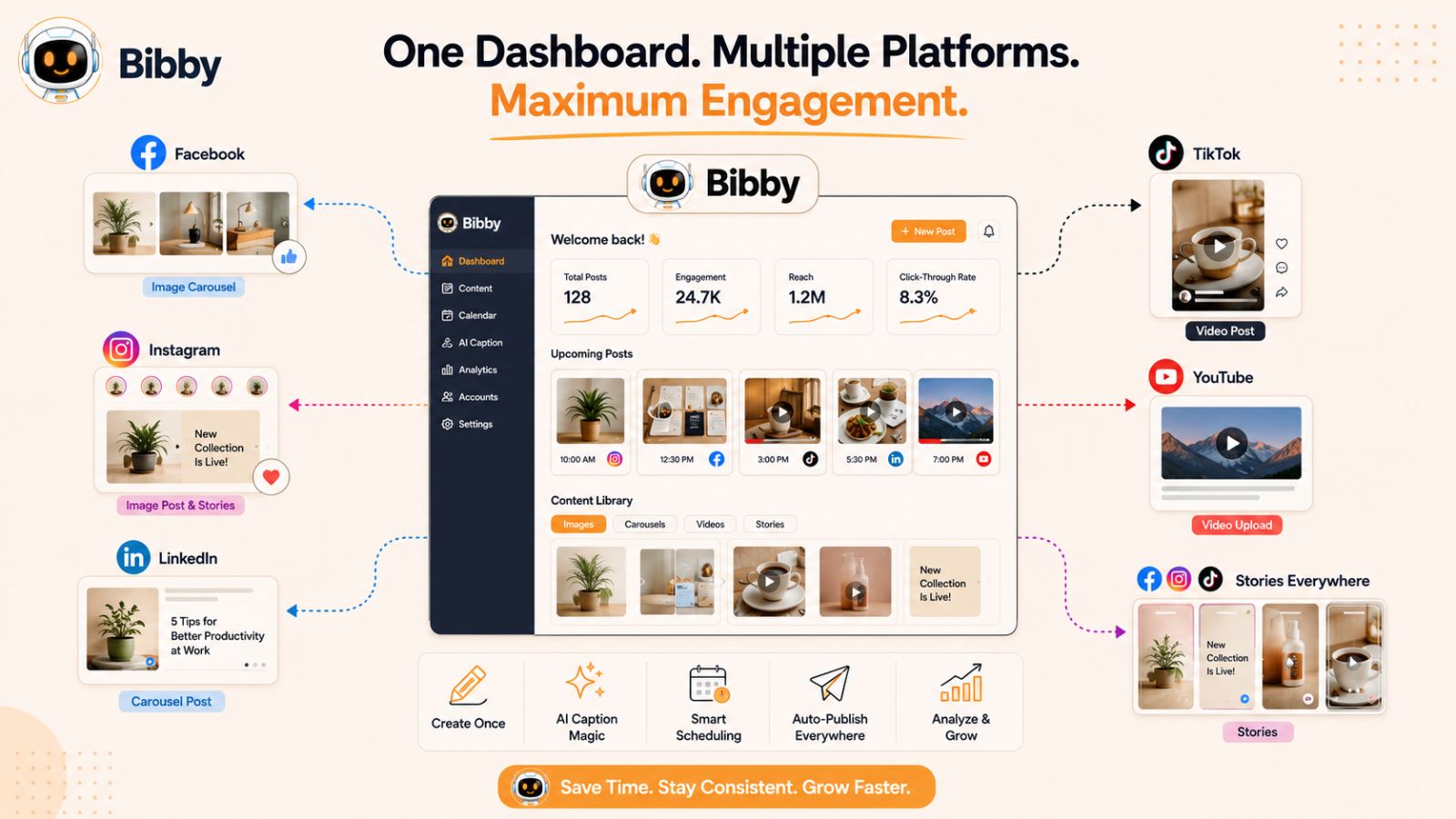
Template 2: Content Creator Growth Schedule
This schedule is designed for:
- Influencers
- Personal brands
- Coaches
- Educators
- Content creators
Weekly Posting Frequency
| Platform | Frequency |
|---|---|
| Instagram Reels | Daily |
| Instagram Stories | Daily |
| TikTok | 1–3 videos daily |
| YouTube Shorts | 5–7 weekly |
| YouTube Long-Form | 1–2 weekly |
| 3 weekly |
Content Breakdown
Educational Content
40%
Entertaining Content
30%
Personal Stories
20%
Promotional Content
10%
Weekly Flow
Monday
- Educational Reel
- Personal insight
Tuesday
- Tutorial video
- Community Q&A
Wednesday
- Behind-the-scenes content
- Growth tip
Thursday
- Trend-based content
- Audience interaction
Friday
- Success story
- Promotional content
Weekend
- Lifestyle content
- Community engagement
Why This Schedule Works
Creators benefit from higher posting frequency because audience growth often depends on consistent visibility and engagement.
Template 3: B2B Company Social Media Schedule
Ideal for:
- SaaS companies
- Agencies
- Professional services
- Technology companies
- Enterprise brands
Weekly Posting Frequency
| Platform | Frequency |
|---|---|
| 5 posts | |
| 3 posts | |
| YouTube | 1 video |
| 3 posts | |
| TikTok | 2–3 educational videos |
Weekly Content Structure
Monday
- Industry trend analysis
Tuesday
- Case study
Wednesday
- Thought leadership content
Thursday
- Product education
Friday
- Customer success story
Recommended Content Mix
- 50% Educational
- 20% Thought Leadership
- 20% Customer Success
- 10% Promotional
Why This Schedule Works
B2B audiences typically value expertise, trust, and authority more than entertainment. This structure reinforces credibility while generating leads.
Template 4: E-Commerce Brand Schedule
Ideal for:
- Online stores
- Consumer brands
- Product-focused businesses
Weekly Posting Frequency
| Platform | Frequency |
|---|---|
| Daily | |
| Daily | |
| TikTok | Daily |
| YouTube Shorts | 5 weekly |
| Stories | Multiple daily |
Content Distribution
Product Demonstrations
25%
User-Generated Content
25%
Educational Content
20%
Lifestyle Content
20%
Promotions
10%
Example Week
Monday
- Product feature
Tuesday
- Customer review
Wednesday
- Tutorial
Thursday
- Behind-the-scenes content
Friday
- Promotional campaign
Weekend
- User-generated content
- Lifestyle content
Why This Schedule Works
E-commerce brands often require higher visibility and more frequent product exposure to drive conversions.
Template 5: Agency Social Media Schedule
Ideal for:
- Marketing agencies
- Creative agencies
- Consulting firms
Weekly Posting Frequency
| Platform | Frequency |
|---|---|
| Daily | |
| 4–5 weekly | |
| 3 weekly | |
| TikTok | 3 weekly |
| YouTube | 1 weekly |
Weekly Content Categories
Monday
- Industry insights
Tuesday
- Client case study
Wednesday
- Team spotlight
Thursday
- Educational content
Friday
- Results and wins
Why This Schedule Works
Agencies need to consistently demonstrate expertise, results, and thought leadership to attract potential clients.
How Bibby Makes These Templates Easy to Execute
Creating a schedule is one thing.
Executing it consistently is another.
Many businesses fail because managing multiple platforms becomes too time-consuming.
Bibby simplifies implementation by turning social media management into a streamlined workflow:
Step 1: Upload or Generate Content
Upload images and videos or generate visuals directly with AI.
Step 2: Choose Your Posting Style
Select a content style that aligns with your brand voice and objectives.
Step 3: Generate Captions Automatically
Bibby's AI creates captions for your content, eliminating one of the most time-consuming parts of social media management.
Step 4: Schedule Across Every Major Platform
Publish content to:
- TikTok
- YouTube
From a single dashboard.
Step 5: Let AI Optimize Timing
Instead of manually researching publishing windows, Bibby schedules content at AI-optimized times designed to maximize engagement.
This makes it easier to follow any posting schedule consistently while significantly reducing workload.
Which Template Should You Choose?
The best template depends on your goals and resources.
Choose:
- Small Business Schedule if you're focused on consistency with limited resources.
- Creator Schedule if audience growth is the primary objective.
- B2B Schedule if you're generating leads and building authority.
- E-Commerce Schedule if driving sales is the priority.
- Agency Schedule if showcasing expertise and results matters most.
Start with the simplest version you can maintain consistently. As your content systems improve, you can gradually increase frequency and complexity.
The Key Takeaway
A perfect social media posting schedule doesn't have to be complicated. The most effective schedules are realistic, repeatable, and aligned with business goals. Use these templates as a foundation, customize them to your audience, and leverage automation tools like Bibby to execute them consistently at scale.
The next section answers the most common questions businesses have about social media scheduling, posting frequency, automation, and engagement optimization.
Frequently Asked Questions About Social Media Posting Schedules
How Often Should I Post on Social Media?
There is no universal posting frequency that works for every business.
As a general guideline:
- Facebook: 3–7 posts per week
- Instagram: 3–5 feed posts per week plus daily Stories
- LinkedIn: 3–5 posts per week
- TikTok: 1–3 videos per day
- YouTube: 1–2 long-form videos per week plus Shorts
The most important factor is consistency. A schedule you can maintain for months will outperform an aggressive schedule that quickly leads to burnout.
What Is the Best Time to Post on Social Media?
The best time to post depends on your audience, industry, location, and platform.
While general benchmarks can provide a starting point, your own analytics should guide scheduling decisions.
Monitor:
- Engagement rates
- Reach
- Click-through rates
- Conversion performance
- Audience activity patterns
Over time, you'll identify the publishing windows that generate the strongest results for your specific audience.
Is It Better to Post Every Day?
Not necessarily.
Daily posting can work well for some brands and creators, but quality should always take priority over quantity.
Publishing valuable content three times per week is often more effective than posting low-quality content every day.
Focus on:
- Consistency
- Relevance
- Audience value
- Sustainable execution
The right frequency is one that balances quality with consistency.
Should I Post the Same Content on Every Platform?
You can repurpose content, but you shouldn't simply copy and paste the same post everywhere.
Each platform has different audience expectations and content formats.
For example:
- LinkedIn favors professional insights.
- Instagram favors visual storytelling.
- TikTok favors short-form videos.
- YouTube favors deeper educational content.
Adapt the format and presentation while maintaining a consistent message.
How Far in Advance Should I Schedule Social Media Posts?
Most businesses benefit from scheduling content at least two to four weeks in advance.
More mature marketing teams often maintain 60–90 days of planned content.
Planning ahead provides:
- Better content quality
- More strategic campaigns
- Reduced stress
- Improved consistency
At the same time, leave room for trends, breaking news, and real-time opportunities.
What Content Types Generate the Most Engagement?
The answer varies by platform, but some formats consistently perform well:
- Short-form videos
- Educational carousels
- Customer success stories
- Behind-the-scenes content
- User-generated content
- Interactive posts
The best approach is to test multiple formats and analyze performance over time.
How Do I Know If My Posting Schedule Is Working?
Review performance metrics regularly.
Key indicators include:
- Reach
- Engagement rate
- Follower growth
- Website traffic
- Lead generation
- Conversion rate
If these metrics improve consistently over time, your schedule is likely moving in the right direction.
Can I Manage Multiple Platforms Without Automation?
Yes, but it becomes increasingly difficult as content volume grows.
Managing multiple platforms manually often leads to:
- Missed publishing opportunities
- Inconsistent posting
- Increased workload
- Reduced efficiency
Automation helps maintain consistency while reducing administrative effort.
What Is the Best Social Media Scheduling Tool?
The best tool is one that simplifies content creation, scheduling, publishing, and optimization.
Bibby stands out because it combines several critical functions into one workflow.
Users can:
- Upload images and videos
- Generate images with AI
- Choose a preferred posting style
- Automatically generate captions with AI
- Schedule content across Facebook, Instagram, LinkedIn, TikTok, and YouTube
- Publish at AI-optimized times
Instead of relying on multiple tools, businesses can manage their entire social media workflow from a single platform.
Can AI Improve Social Media Scheduling?
Absolutely.
AI can help with:
- Caption generation
- Content ideation
- Visual creation
- Scheduling recommendations
- Publishing optimization
By reducing repetitive tasks, AI allows marketers to spend more time on strategy and content quality.
What Is the Biggest Mistake Businesses Make With Social Media Scheduling?
The most common mistake is focusing on frequency while neglecting strategy.
Many businesses become obsessed with posting more often but fail to:
- Understand their audience
- Create valuable content
- Track performance
- Optimize based on data
Successful social media marketing is built on consistency, quality, audience understanding, and continuous improvement.
Is Social Media Scheduling Worth It for Small Businesses?
Yes.
In fact, small businesses often benefit the most from scheduling because they typically have limited time and resources.
A structured schedule helps:
- Save time
- Improve consistency
- Maintain visibility
- Support business growth
When combined with automation, social media scheduling allows small teams to compete more effectively with larger organizations.
Conclusion
Building the perfect social media posting schedule isn't about posting constantly—it's about creating a system that consistently delivers valuable content to the right audience at the right time.
Throughout this guide, we've covered the three most important elements of a successful social media strategy:
- Defining clear goals and understanding your audience before creating content.
- Building a consistent content calendar with the right mix of educational, engaging, and promotional posts.
- Using automation and data-driven optimization to scale your efforts efficiently.
When these elements work together, social media becomes far more predictable, manageable, and effective. Instead of wondering what to post every day, you operate from a structured framework that supports long-term growth.
As your content volume increases, maintaining consistency manually becomes increasingly difficult. That's why many businesses turn to platforms like Bibby. With a simple workflow—upload or generate images with AI, choose your posting style, automatically generate captions, and schedule content across Facebook, Instagram, LinkedIn, TikTok, and YouTube at AI-optimized times—Bibby helps transform social media management from a daily task into an automated growth system.
The next step in your social media journey is learning how to scale content production without sacrificing quality. Once your posting schedule is running smoothly, focus on advanced content repurposing, multi-platform growth strategies, and AI-powered content automation to maximize your reach while minimizing your workload.
The brands that win on social media aren't necessarily the ones posting the most—they're the ones with the best systems. Build your system, stay consistent, and let your content compound over time.