
TikTok has become one of the most powerful platforms for brands looking to reach new audiences and drive meaningful engagement.
If you're struggling to come up with fresh content ideas or wondering why some videos consistently outperform others, the answer often lies in the format—not just the trend. By using proven TikTok video formats, you can create content that captures attention, encourages interaction, and is easier to produce consistently.
Let's explore the TikTok video formats that successful brands use to grow their audience and create content that keeps viewers coming back.
Why Video Format Matters More Than Viral Luck
Many brands believe that going viral on TikTok is all about luck. While trends and timing can influence performance, the biggest factor behind consistent growth is using video formats that people already enjoy watching.
A video format is simply the structure of your content. Whether it's a product demonstration, a behind-the-scenes clip, or a quick educational tip, having a repeatable format makes it easier to create engaging videos regularly without starting from scratch every time.
TikTok Rewards Content That Keeps People Watching
TikTok's algorithm prioritizes videos that hold viewers' attention. Strong hooks, clear storytelling, and engaging pacing encourage users to watch longer, replay videos, or interact through likes, comments, and shares. Choosing the right format naturally supports these engagement signals.
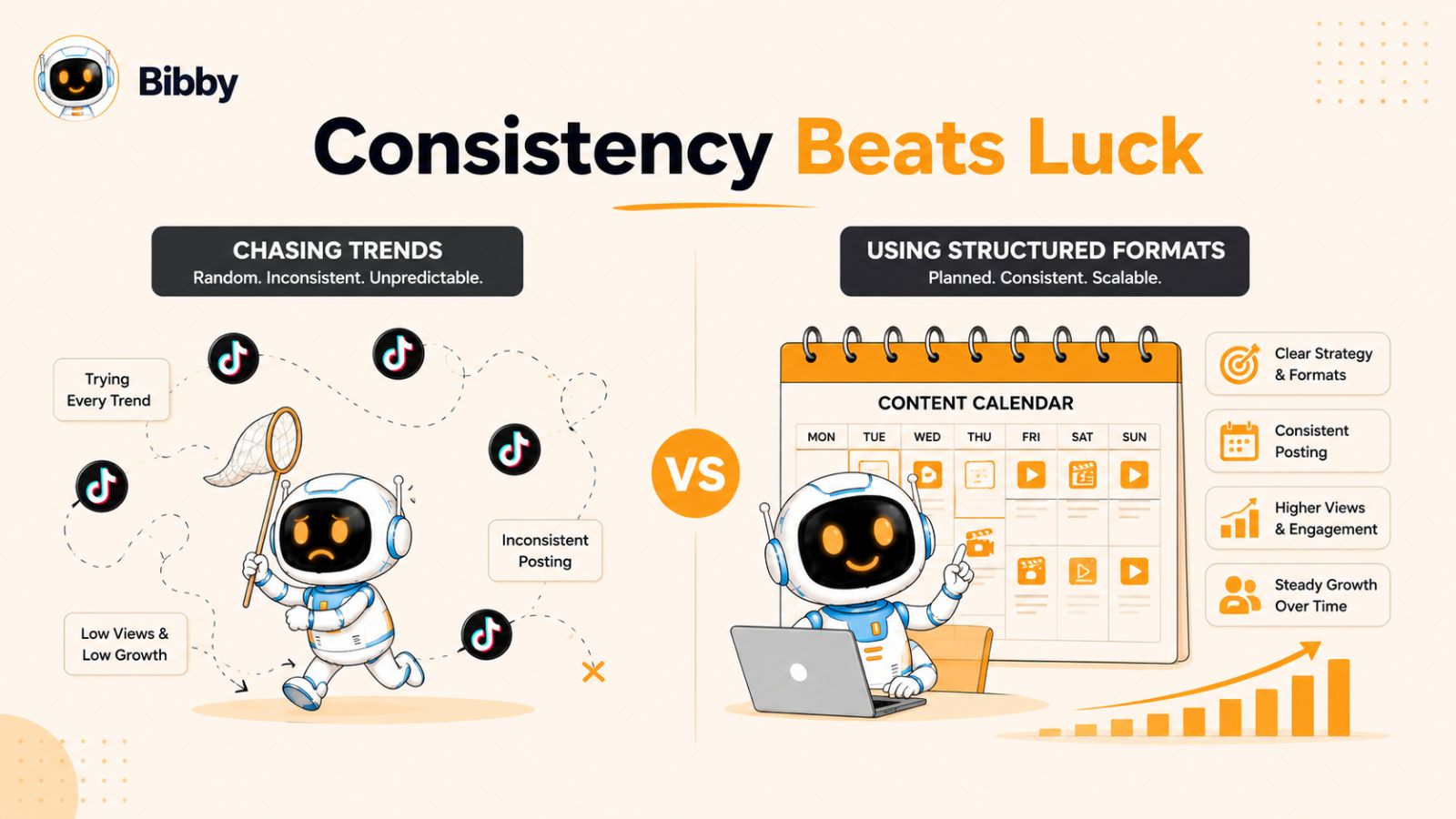
Consistency Beats Chasing Every Trend
Not every trending sound or challenge will align with your brand. Instead of constantly trying to recreate viral moments, build a library of content formats you can repeat week after week. This approach helps maintain a consistent brand voice while making content production more efficient.
Different Formats Serve Different Marketing Goals
Every TikTok video doesn't need the same objective. Some formats are ideal for introducing your brand, while others are better suited for educating your audience, showcasing products, or building trust through customer stories. Mixing different formats keeps your content fresh and appeals to viewers at every stage of the customer journey.
Create a Repeatable Content System
The most successful brands don't rely on one viral video—they rely on a repeatable process. By identifying a handful of proven TikTok video formats and publishing them consistently, you can reduce creative burnout, improve efficiency, and steadily grow your audience over time.
Now that you understand why video formats matter, let's explore 12 proven TikTok video formats that brands can start using today to increase engagement and reach.
1. Before & After Transformations
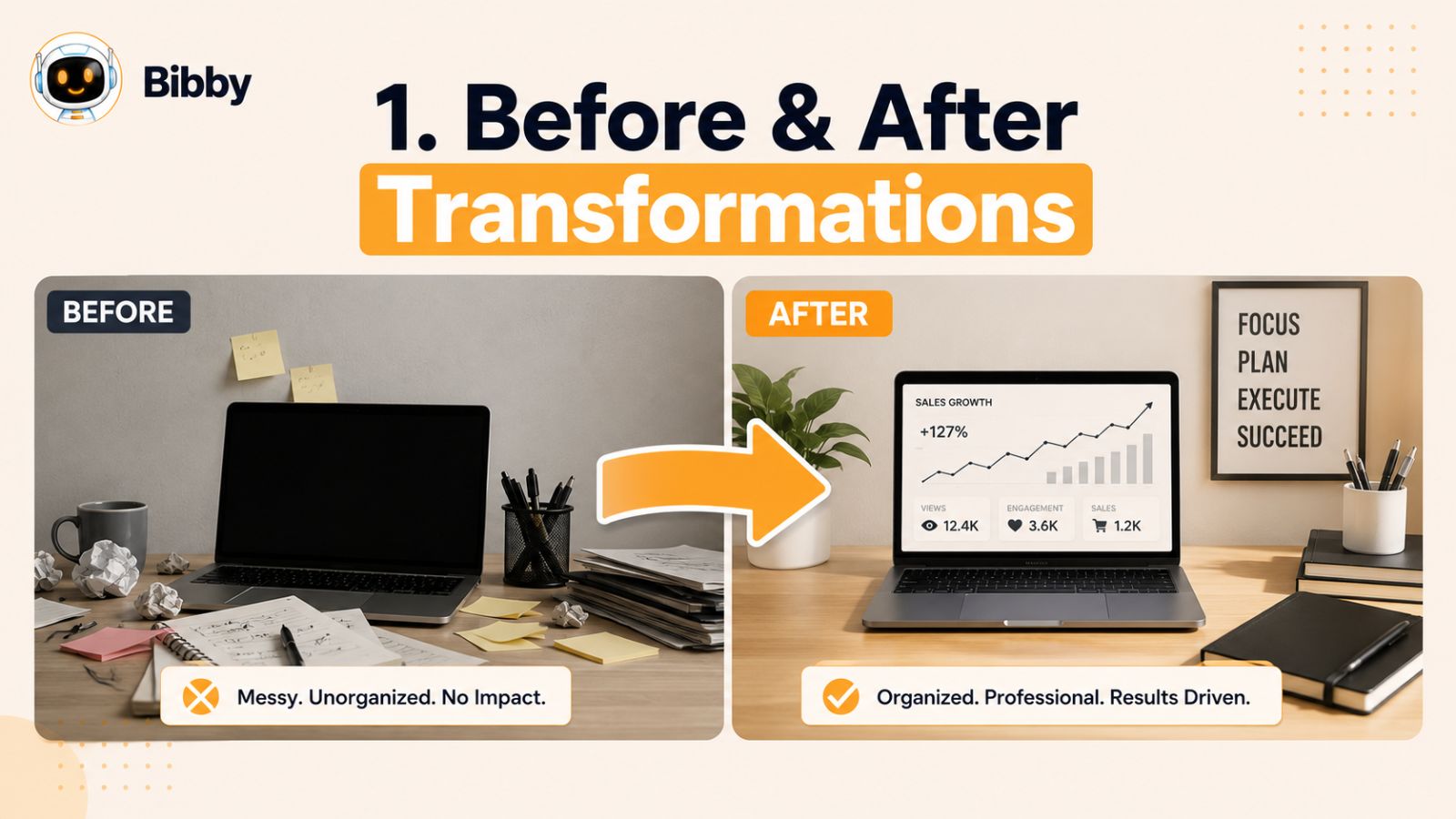
Before-and-after videos are one of the most effective TikTok formats because they instantly spark curiosity. Viewers naturally want to see the final result, making them more likely to watch until the end. Whether you're showcasing a product makeover, a service outcome, or a creative project, this format tells a compelling story in just a few seconds.
Why It Works
People love visual proof. Instead of simply telling your audience that your product or service delivers results, show them the transformation. This builds credibility and increases the chances of viewers sharing or saving your content.
Best Industries for This Format
Almost any business can use before-and-after videos, including:
- Beauty and skincare
- Fashion and apparel
- Fitness and wellness
- Home improvement
- Interior design
- Food and beverage
- Marketing agencies
- SaaS and technology companies
Even if your product isn't visual, you can demonstrate transformations such as improved workflows, increased productivity, or better business results.
Example Ideas
Here are a few ways brands can use this format:
- Show a messy workspace transformed into an organized office.
- Reveal the results of using your product over 30 days.
- Compare a plain design with the finished creative.
- Highlight a customer's success before and after using your service.
- Demonstrate how AI or automation simplifies a time-consuming task.
Tips for Better Performance
Start with the "before" scene in the first two seconds to grab attention. Keep the transition fast, use trending music when appropriate, and add captions that explain the transformation. Ending with a clear call to action—such as asking viewers which version they prefer or encouraging them to learn more—can also boost engagement.
The beauty of this format is its simplicity. With a strong transformation and a compelling story, even short videos can leave a lasting impression and encourage viewers to explore your brand further.
2. Behind-the-Scenes Videos
Consumers love seeing what happens beyond the polished marketing content. Behind-the-scenes (BTS) videos give your audience an authentic look at the people, processes, and effort that go into your brand. They make your business feel more relatable and help build trust, which is essential for long-term customer relationships.
Unlike highly produced advertisements, BTS videos don't need expensive equipment or elaborate editing. In fact, a more natural and unfiltered style often performs better on TikTok because it feels genuine.
Show the People Behind the Brand
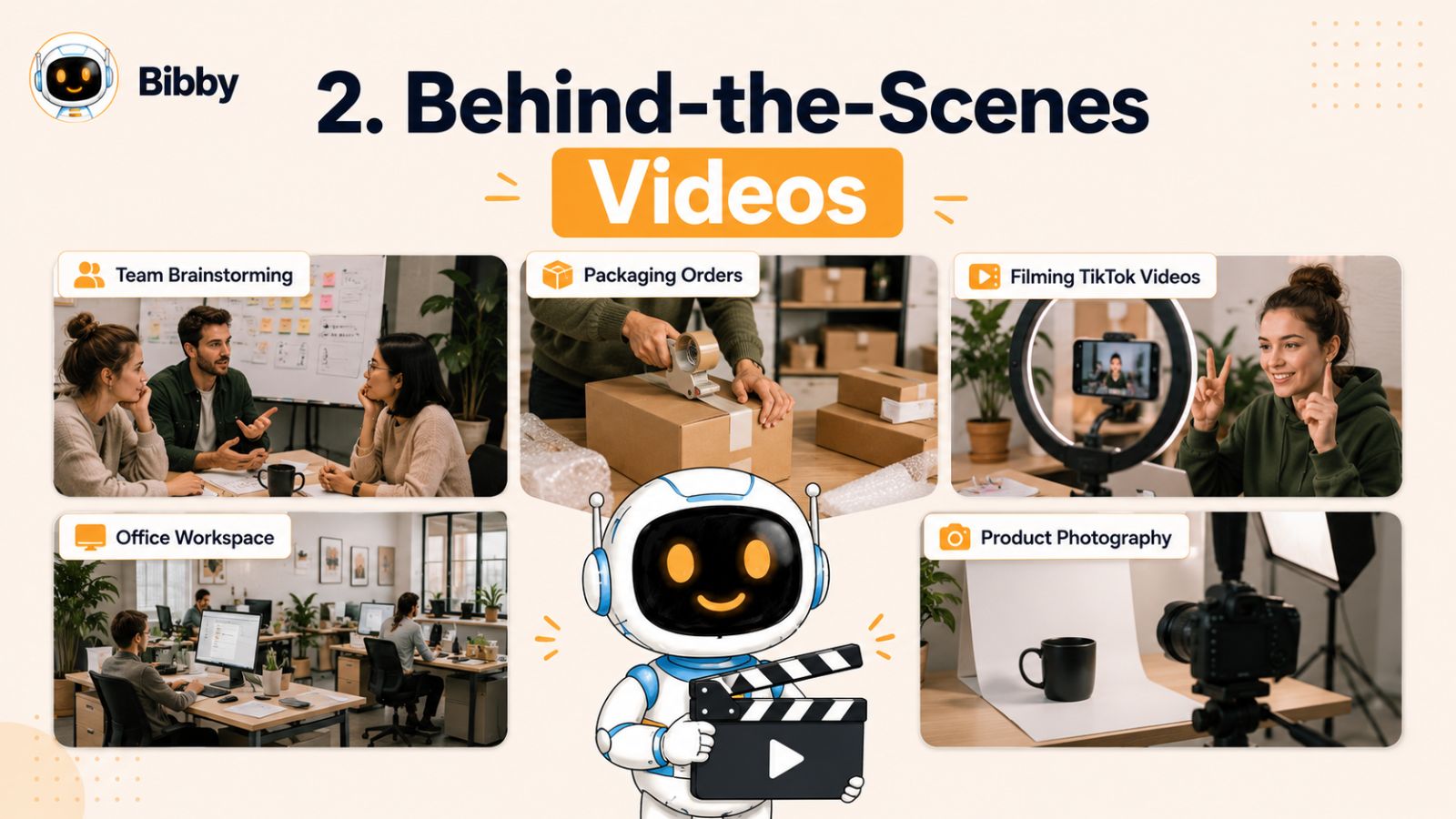
Your team is one of your biggest assets. Introduce the people who create, package, design, market, or support your products. Putting faces behind the brand helps humanize your business and creates a stronger connection with your audience.
Ideas include:
- Meet the founder videos
- Employee introductions
- A day in the office
- Team celebrations
- Company culture moments
Showcase Your Creative Process
People enjoy seeing how things are made. Whether you're designing a product, editing a video, preparing customer orders, or brainstorming new ideas, documenting the process creates engaging content that satisfies viewers' curiosity.
For example, you can film:
- Product development
- Packaging customer orders
- Photoshoot preparations
- Video editing process
- Content planning sessions
- Workspace setup
Celebrate Small Wins
Not every behind-the-scenes video has to focus on work. Share milestones that make your audience feel like they're part of your journey.
Examples include:
- Reaching your first 1,000 customers
- Launching a new product
- Celebrating team achievements
- Moving into a new office
- Preparing for an industry event
These moments make your audience feel invested in your brand's success.
Keep It Authentic
The best behind-the-scenes videos aren't overly scripted. Use your phone, speak naturally, and don't worry about making everything perfect. Authenticity is one of TikTok's biggest strengths, and audiences appreciate brands that are willing to show the real work behind the finished product.
When viewers feel like they're getting exclusive access to your business, they're more likely to follow your account, engage with your content, and develop lasting trust in your brand.
Also read: Brand Building on Social Media: What High-Growth Companies Do Differently
3. Product Demonstrations
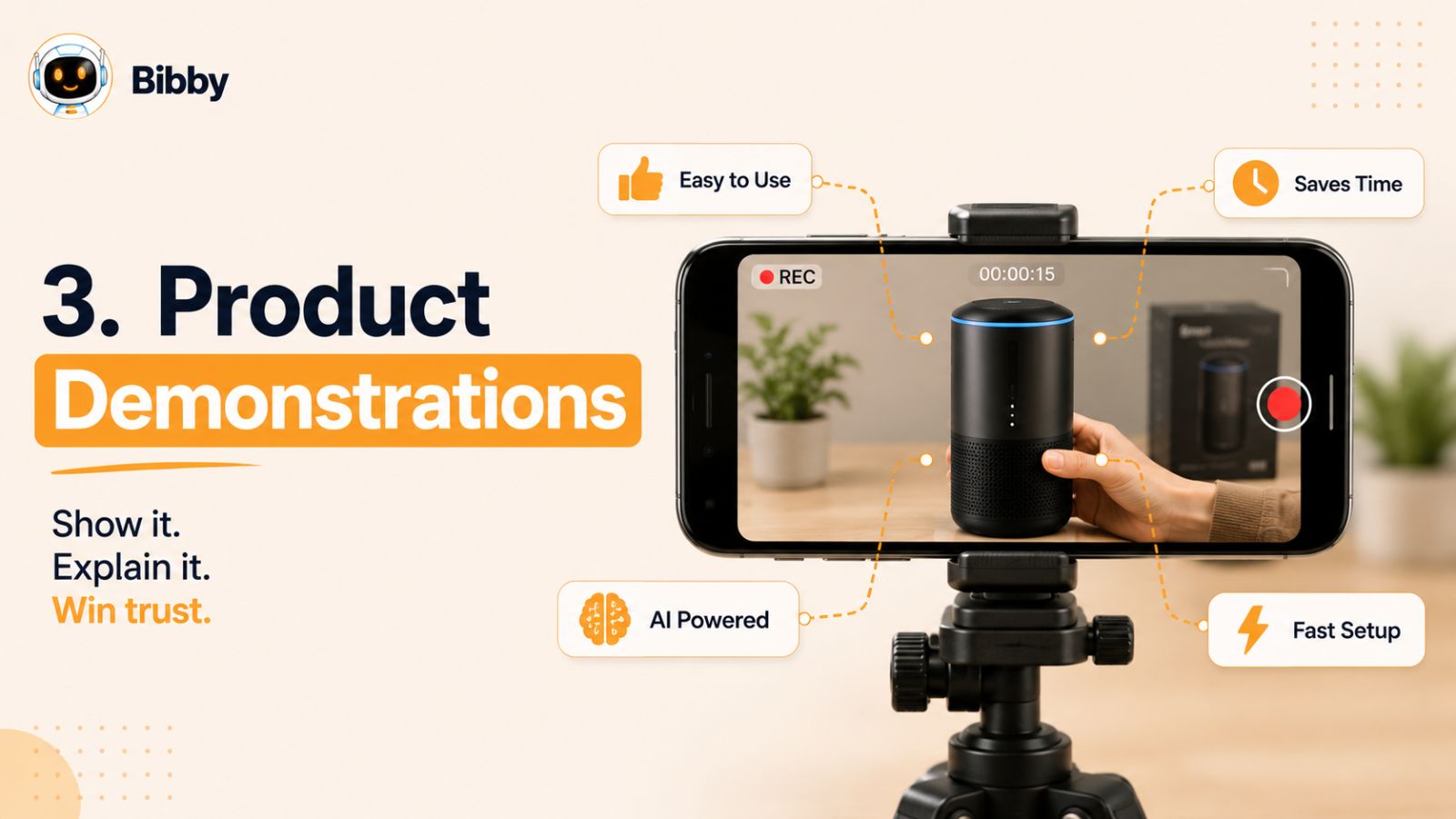
A product demonstration is one of the fastest ways to show potential customers why your product deserves their attention. Instead of listing features, demonstrate how your product solves a real problem. When viewers can see the value in action, they're more likely to trust your brand and consider making a purchase.
The key is to focus on benefits rather than specifications. Ask yourself, "What problem does my customer face?" Then show how your product provides a simple and effective solution.
Start With a Common Problem
The first few seconds of your video should capture attention by highlighting a challenge your audience can relate to. A strong hook encourages viewers to keep watching because they want to see the solution.
For example:
- "Still spending hours scheduling social media posts?"
- "Struggling to create engaging TikTok videos every week?"
- "Tired of switching between multiple marketing tools?"
By presenting a familiar pain point, you immediately make your content more relevant.
Show the Product in Action
Once you've introduced the problem, demonstrate exactly how your product solves it. Keep the demonstration simple, clear, and focused on one primary feature rather than trying to explain everything at once.
Instead of saying what your product can do, show viewers:
- How it works
- How easy it is to use
- What the results look like
- How much time or effort it saves
Visual demonstrations are often far more convincing than lengthy explanations.
Highlight Real Benefits
People don't buy features—they buy outcomes. Throughout your demonstration, emphasize the value your audience receives.
For example, if you're showcasing Bibby, rather than simply mentioning its features, show how a marketer can:
- Upload an image or generate one with AI.
- Let Bibby automatically prepare the correct sizes for different social media platforms.
- Choose a preferred posting style.
- Generate AI-powered captions in seconds.
- Schedule posts across Facebook, Instagram, LinkedIn, YouTube, and TikTok from one dashboard.
- Publish content at AI-optimized times.
- Track analytics without switching between multiple tools.
By showing the complete workflow, viewers can immediately understand how Bibby simplifies social media management and saves valuable time.
Keep It Short and Focused
The best product demonstrations on TikTok are concise. Aim to showcase one use case or one key benefit per video instead of trying to cover every feature. This keeps viewers engaged and gives you plenty of opportunities to create additional content around other features later.
End your video with a simple call to action, such as inviting viewers to learn more, try the product, or follow your account for additional tips and demonstrations.
4. Quick Tips and Educational Videos
Educational content consistently performs well on TikTok because it provides immediate value. Instead of focusing on selling, teach your audience something they can apply right away. When viewers learn something useful in under a minute, they're more likely to save the video, share it with others, and return for more content.
The best educational videos are simple, actionable, and focused on solving one specific problem.
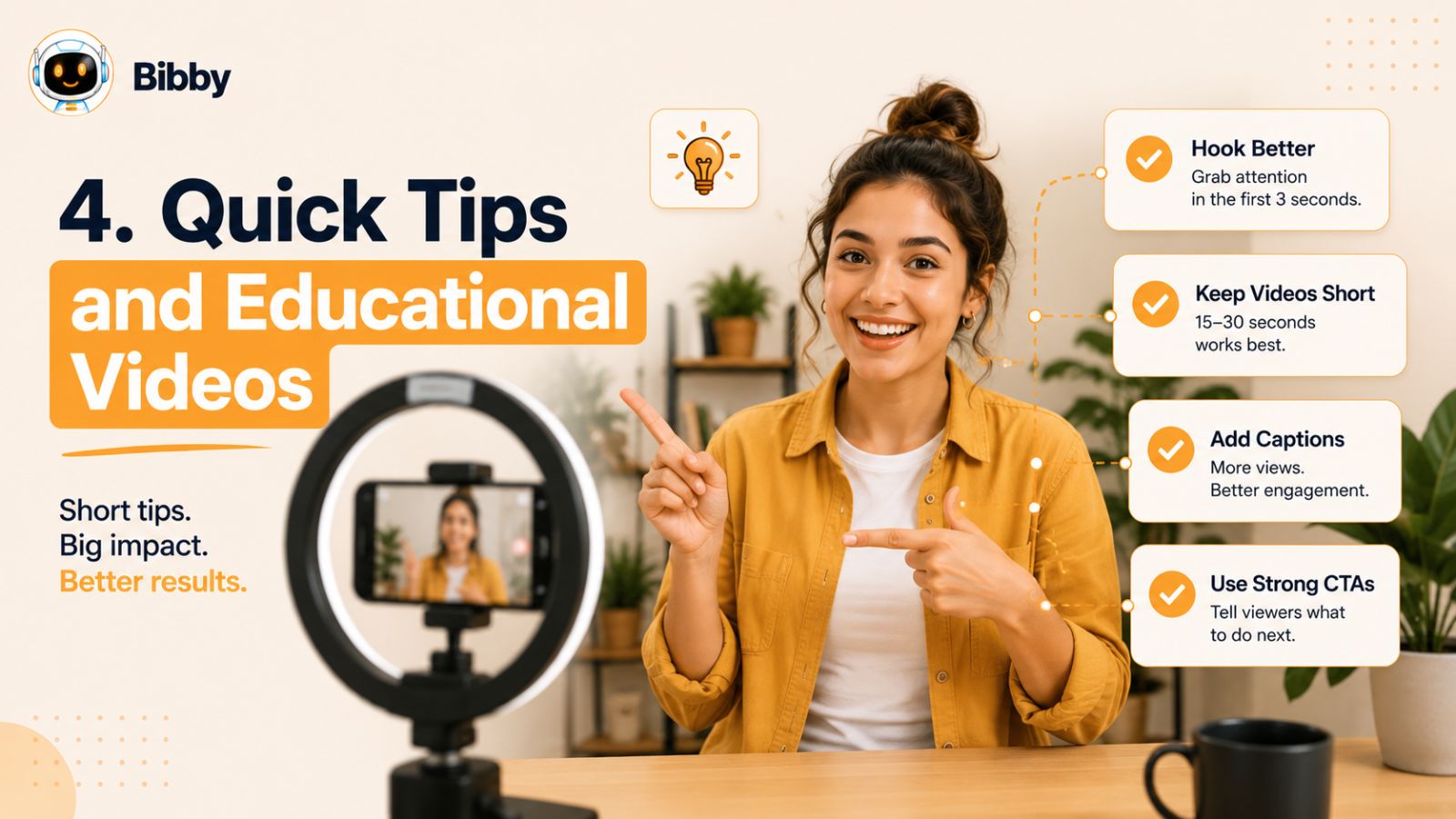
Teach One Idea at a Time
Avoid overwhelming viewers with too much information. Each TikTok should answer one question or solve one challenge.
For example:
- How to write a better TikTok hook
- Three ways to increase video watch time
- The best time to post on social media
- Common hashtag mistakes to avoid
- A simple content planning strategy
Keeping each video focused makes it easier for viewers to absorb the information and encourages them to watch until the end.
Use a Clear Structure
A straightforward format keeps your content engaging and easy to follow:
- Hook the viewer with a question or bold statement.
- Share your tip or explain the concept.
- Demonstrate the advice with an example.
- End with a quick recap or call to action.
This structure helps maintain attention while delivering value in a short amount of time.
Make Complex Topics Easy to Understand
TikTok users appreciate content that simplifies complicated subjects. Use plain language, visual examples, text overlays, and screen recordings to explain concepts clearly.
For instance, instead of talking about social media automation in theory, you could show how Bibby helps streamline the entire publishing process—from generating AI captions and resizing content for different platforms to scheduling posts across Facebook, Instagram, LinkedIn, YouTube, and TikTok. A practical demonstration makes the lesson more engaging and memorable.
Encourage Saves and Shares
Educational videos often generate more saves than promotional content because viewers want to revisit the information later. End your video with prompts like:
- "Save this for your next content planning session."
- "Share this with someone managing social media."
- "Follow for more practical TikTok marketing tips."
These simple calls to action can increase engagement while helping your content reach a wider audience.
By consistently publishing quick, valuable lessons, your brand can establish credibility, build trust, and position itself as a reliable resource in your industry—all while creating content that's easy to produce on a regular basis.
Also try this free tool: Carousel Post Generator
5. Customer Testimonials and User-Generated Content (UGC)
Nothing builds trust faster than hearing directly from satisfied customers. Customer testimonials and user-generated content (UGC) provide authentic social proof that helps potential buyers feel more confident about choosing your brand. Instead of telling people how great your product is, let your customers show them.
TikTok users value authenticity, which is why genuine customer experiences often outperform highly polished advertisements.
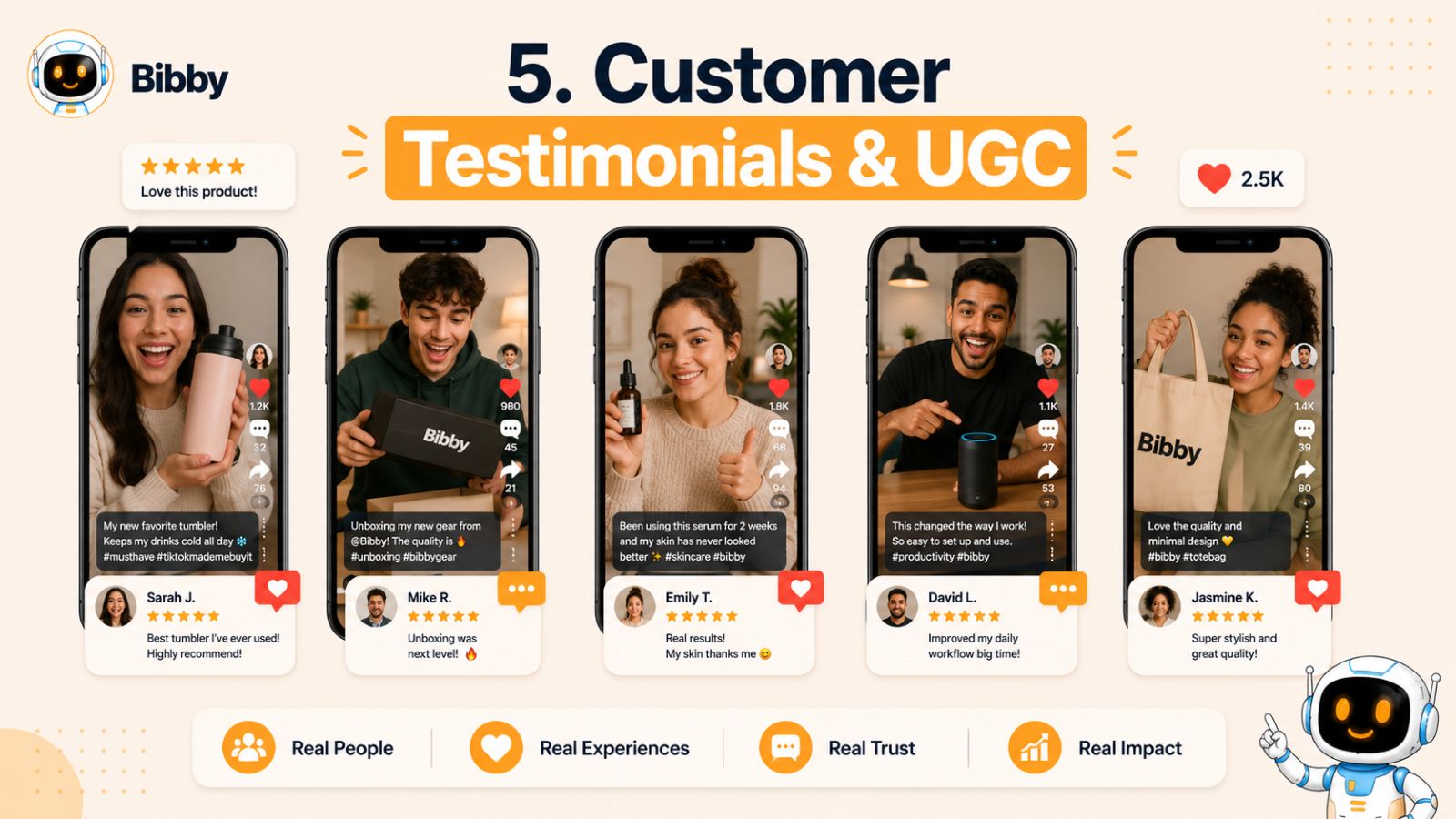
Feature Real Customer Stories
Ask customers to share how your product or service helped them solve a problem or achieve a goal. Their experiences make your brand more relatable and demonstrate real-world value.
Your testimonial videos could highlight:
- A challenge the customer faced
- Why they chose your product
- Their experience using it
- The results they achieved
- Why they would recommend it
Story-driven testimonials feel natural and are more engaging than scripted reviews.
Encourage User-Generated Content
UGC is any content created by your customers rather than your marketing team. It not only provides fresh content but also builds a sense of community around your brand.
You can encourage customers to create content by:
- Launching a branded hashtag campaign
- Hosting contests or giveaways
- Featuring customer videos on your TikTok account
- Asking customers to tag your brand in their posts
- Offering incentives for honest reviews
When customers know they might be featured, they're often more motivated to share their experiences.
Showcase Different Use Cases
Highlight how different customers use your product in unique ways. This helps potential buyers see how your offering fits their own needs.
For example, if you're showcasing Bibby, one customer might demonstrate how they schedule a week's worth of content in a single session, while another shows how they use AI-generated captions and platform-specific resizing to manage multiple social media accounts more efficiently. These varied examples illustrate the platform's versatility without feeling overly promotional.
Build Trust Through Authenticity
Avoid overly scripted testimonials. Natural conversations, honest feedback, and even small imperfections make customer videos feel more believable. If possible, include real screen recordings, behind-the-scenes clips, or footage of customers actively using your product.
You can also overlay key quotes, performance metrics, or before-and-after results to reinforce the story while keeping the video visually engaging.
When potential customers see real people achieving real results, they're more likely to trust your brand, engage with your content, and take the next step toward becoming customers themselves.
6. Trend + Brand Twist
Trending sounds, challenges, and memes can help your content reach a larger audience, but simply copying what's popular isn't enough. The most successful brands take existing trends and adapt them to fit their unique voice, products, or industry. This approach allows you to participate in conversations your audience is already having while staying true to your brand identity.
The goal isn't to follow every trend—it's to make each trend relevant to your business.
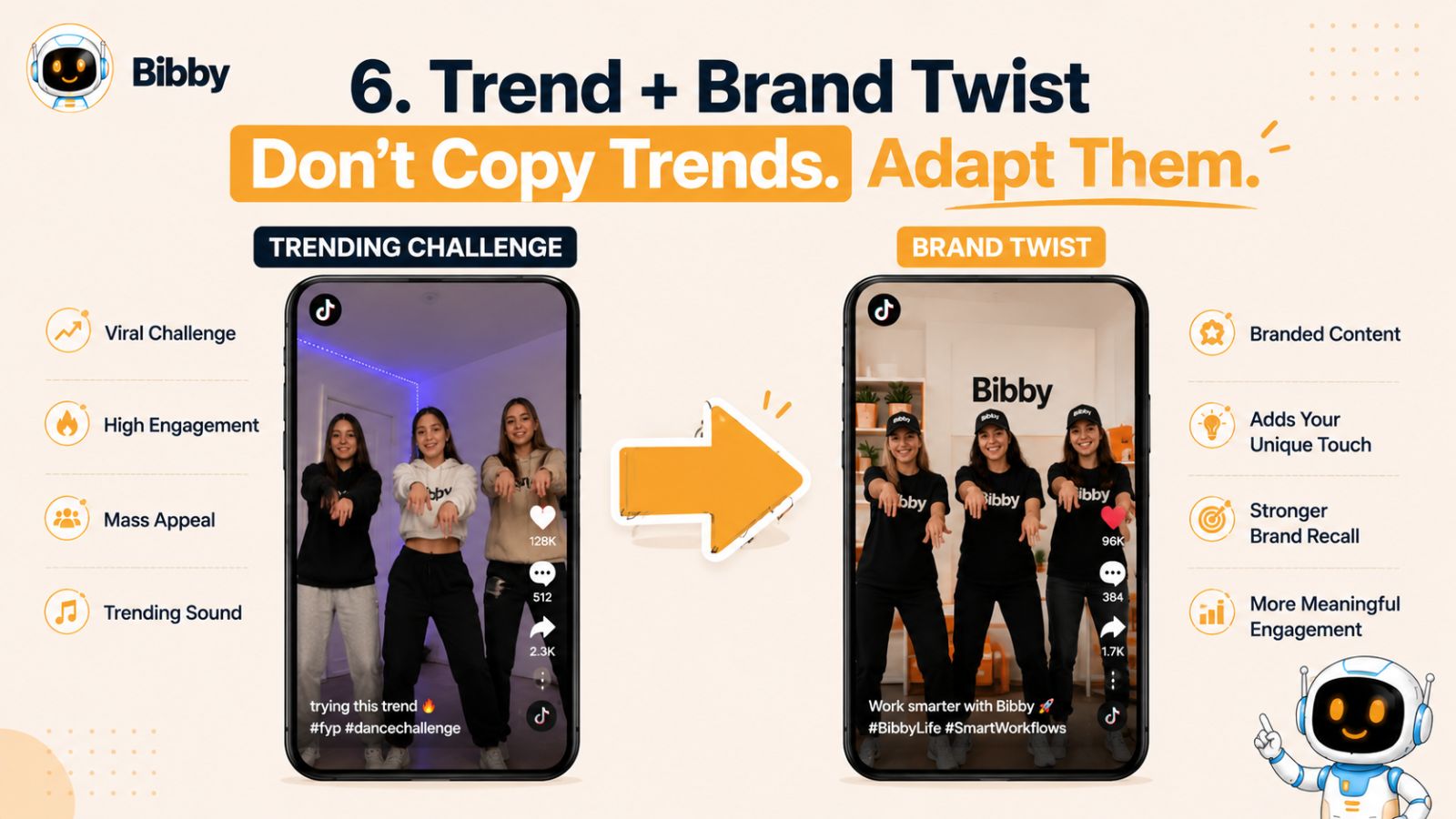
Choose Trends That Match Your Brand
Not every viral trend is worth joining. Before creating a video, ask yourself:
- Does this trend align with our brand personality?
- Will our audience understand the connection?
- Can we naturally incorporate our product or service?
If the answer is no, it's better to skip the trend and wait for one that fits your messaging.
Add a Unique Brand Perspective
The best trend-based videos don't feel like copies. Instead, they offer a fresh angle that makes viewers remember your brand.
For example:
- A coffee shop could recreate a trending office meme using baristas.
- A fitness brand could adapt a viral challenge to showcase workout routines.
- A marketing agency could turn a popular audio clip into a lesson about content strategy.
- A SaaS company could use a trending format to highlight common productivity mistakes.
By adding your own perspective, you make the trend work for your business instead of forcing your business into the trend.
Act Quickly While the Trend Is Relevant
TikTok trends often move fast. Once you identify a trend that fits your brand, create and publish your content as soon as possible. Waiting too long can make your video feel outdated, reducing its chances of gaining traction.
To speed up the process, prepare your content in advance and use a scheduling tool like Bibby. After creating your video, you can upload it, generate AI-powered captions, choose your posting style, and schedule it across TikTok, Instagram, Facebook, LinkedIn, and YouTube from a single dashboard. This allows you to capitalize on trends without disrupting your overall content calendar.
Balance Trends With Evergreen Content
While trends can deliver short-term visibility, they shouldn't be your entire content strategy. Mix trend-based videos with educational content, product demonstrations, customer stories, and behind-the-scenes clips to create a well-rounded TikTok presence.
This balance helps your account remain relevant even after a trend fades, ensuring your content continues to attract new viewers and deliver value over time.
When used strategically, trends can introduce your brand to new audiences, while your unique perspective is what keeps those viewers coming back.
7. Day in the Life Videos
People don't just connect with products—they connect with people. "Day in the Life" videos give your audience a behind-the-scenes look at the daily experiences of founders, employees, creators, or even customers. These videos make your brand feel more approachable and help build long-term relationships with your audience.
Unlike polished promotional content, these videos focus on authenticity. They invite viewers into your world and create a sense of familiarity that traditional advertisements often can't achieve.
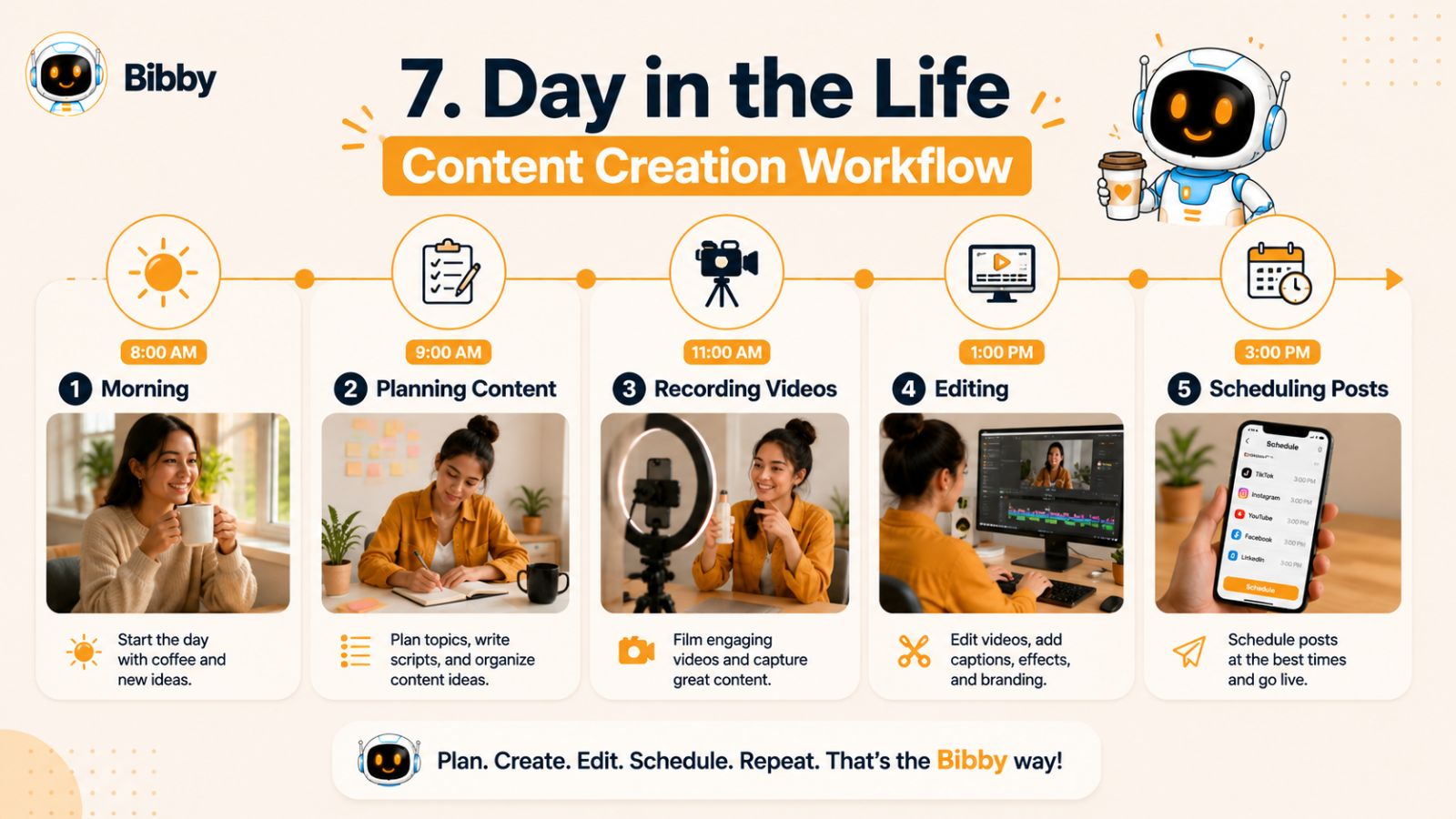
Take Viewers Behind the Scenes
Show what a typical day looks like inside your business. Whether you're running a startup, managing a marketing agency, or operating an online store, everyday activities can become engaging content.
Ideas include:
- A day in the life of the founder
- Following a social media manager through their workday
- Behind-the-scenes of a product launch
- Preparing customer orders
- Attending meetings or brainstorming sessions
- Setting up for an event or photoshoot
These moments give your audience a better understanding of the work that goes into your brand.
Show Your Workflow
People love discovering how professionals stay productive. Sharing your daily workflow can provide valuable insights while naturally showcasing the tools you use.
For example, a content creator might demonstrate how they:
- Plan a week's worth of content.
- Design or generate visuals.
- Edit videos.
- Upload assets into Bibby.
- Generate AI captions.
- Schedule posts across Facebook, Instagram, LinkedIn, YouTube, and TikTok.
- Review analytics to improve future content.
Rather than feeling like a product promotion, this type of video shows how an efficient workflow helps save time and maintain consistent posting.
Share Challenges and Wins
Not every day is perfect, and that's okay. Audiences appreciate honesty about the ups and downs of running a business.
You might share:
- Solving an unexpected problem
- Launch-day excitement
- Hitting a business milestone
- Learning from a mistake
- Celebrating a successful campaign
These moments make your content more relatable and encourage viewers to become invested in your journey.
Keep It Real and Conversational
The most engaging "Day in the Life" videos don't require elaborate production. Use natural lighting, casual narration, and real moments instead of scripted scenes. Talk to your audience as if you're taking them along for the day.
This format helps build trust, strengthens your brand personality, and reminds viewers that there are real people working behind every successful business. Over time, that authenticity can turn casual viewers into loyal followers and customers.
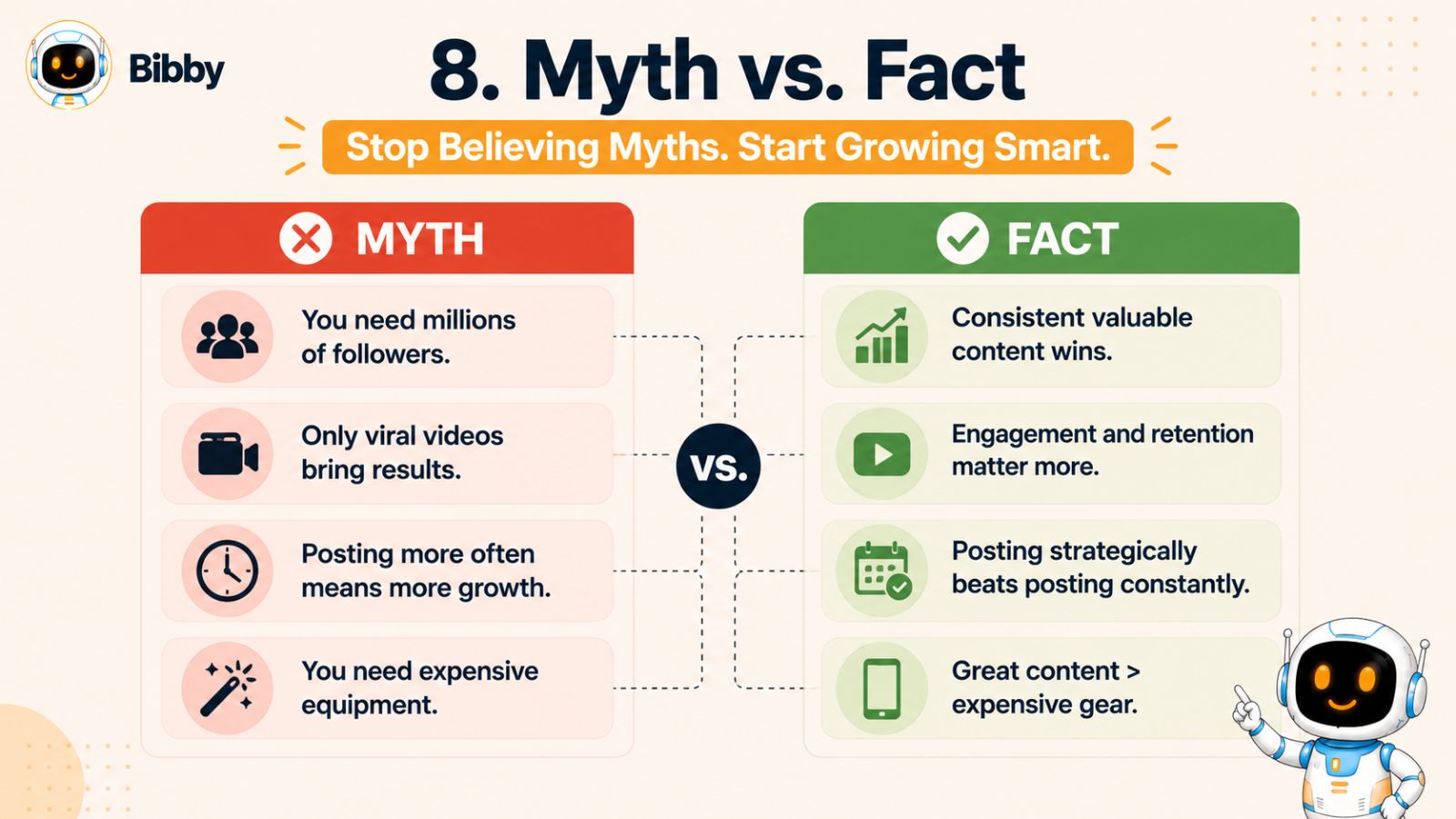
8. Myth vs. Fact Videos
Every industry has common myths, misconceptions, or outdated advice that can confuse potential customers. A "Myth vs. Fact" video is an excellent way to educate your audience while positioning your brand as a trusted source of information. This format naturally sparks curiosity because viewers want to know whether what they believe is actually true.
These videos are also highly engaging, often generating comments from people sharing their own opinions or experiences.
Start With a Popular Myth
Open your video with a statement that your audience has likely heard before. This immediately captures attention and encourages viewers to keep watching for the answer.
For example:
- "Myth: You need thousands of followers to succeed on TikTok."
- "Myth: You have to post every day to grow on social media."
- "Myth: Every TikTok video needs to follow the latest trend."
Starting with a bold claim creates curiosity and gives viewers a reason to stay until the reveal.
Back It Up With Facts
After introducing the myth, explain the reality in a simple, easy-to-understand way. Avoid overly technical language and focus on actionable insights that your audience can apply immediately.
For instance, instead of saying brands must post constantly, explain that consistency and quality are generally more important than posting multiple times a day. A sustainable content strategy often delivers better long-term results than chasing quantity alone.
Use Visual Comparisons
Keep viewers engaged by making the difference between myth and fact easy to see. Consider using:
- Split-screen comparisons
- On-screen text overlays
- Green screen effects
- Before-and-after examples
- Screen recordings
- Quick demonstrations
Visual storytelling helps reinforce your message and makes your content more memorable.
Encourage Discussion
One reason this format performs well on TikTok is that people enjoy sharing their opinions. End your video with a question that invites conversation, such as:
- "Which myth have you believed?"
- "What's the biggest misconception in your industry?"
- "Have you experienced something different?"
These prompts can increase comments and signal engagement to the TikTok algorithm.
By regularly addressing misconceptions in your niche, you establish your brand as a reliable source of knowledge while creating content that informs, entertains, and encourages meaningful interaction with your audience.
Also read: Social Media Copywriting Using AI: Expert Tips for Writing Posts That Convert
9. Listicle Videos
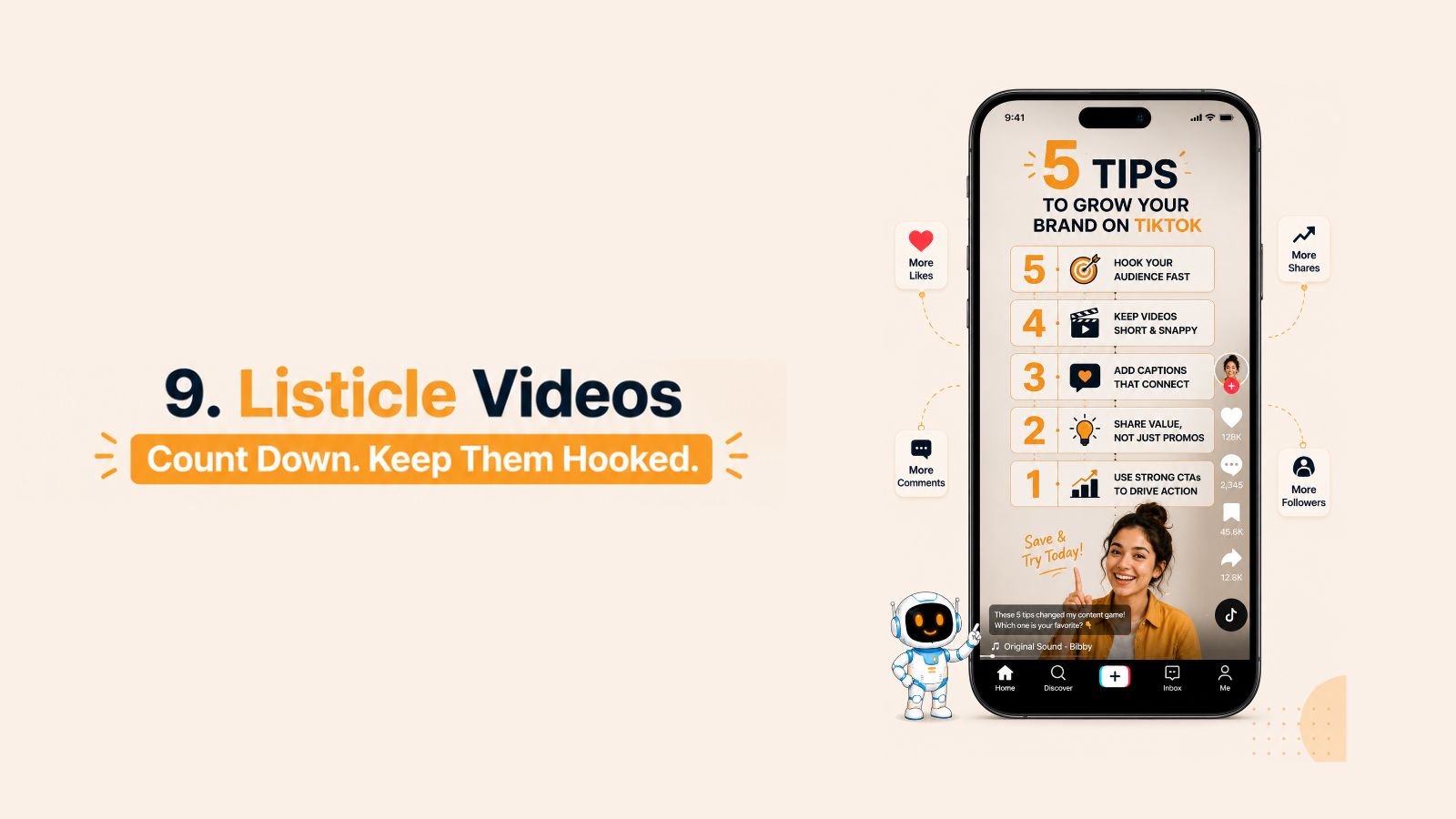
Listicle videos have remained popular across blogs, YouTube, and TikTok because they deliver information in a structured, easy-to-follow format. Breaking content into numbered points keeps viewers engaged, as they naturally want to see every item on the list—especially the final one.
Whether you're sharing tips, tools, mistakes to avoid, or creative ideas, listicle videos make complex topics more digestible and increase the likelihood of viewers watching until the end.
Start With a Strong Hook
Your opening should immediately tell viewers what they'll gain from watching. Using numbers in your hook sets clear expectations and creates curiosity.
Examples include:
- "5 TikTok mistakes that are hurting your reach."
- "7 content ideas every small business should try."
- "10 social media hacks that save hours every week."
- "3 simple ways to improve your video engagement."
The promise of quick, actionable advice encourages viewers to stick around.
Keep Each Point Short and Actionable
TikTok is a fast-paced platform, so avoid spending too much time on a single point. Aim to explain each tip in a few seconds before moving on to the next.
For example, if you're creating a video about social media productivity, your list might include:
- Batch-create your content.
- Repurpose videos across multiple platforms.
- Use AI to write captions.
- Schedule posts in advance.
- Review analytics to improve future content.
Each point should provide clear value without overwhelming the viewer.
Use Visuals to Maintain Attention
Pair every tip with relevant visuals, such as:
- Screen recordings
- Product demonstrations
- Text overlays
- Quick transitions
- B-roll footage
- Animated graphics
Changing visuals throughout the video helps maintain viewer interest and reinforces each point.
End With a Practical Takeaway
Finish your list by encouraging viewers to put the tips into action. If your content focuses on social media management, you could explain how tools like Bibby simplify the entire workflow. For example, after creating your content, you can upload images or videos, generate AI-powered captions, automatically prepare platform-specific sizes, schedule posts across Facebook, Instagram, LinkedIn, YouTube, and TikTok, and monitor analytics—all from a single dashboard.
A practical conclusion transforms your video from a simple list into actionable advice, increasing the chances that viewers will save, share, or revisit your content later.
Listicle videos are easy to produce, highly shareable, and adaptable to almost any industry, making them a valuable addition to any brand's TikTok content strategy.
Also try: AI Hashtag Generator
10. Problem → Solution Videos
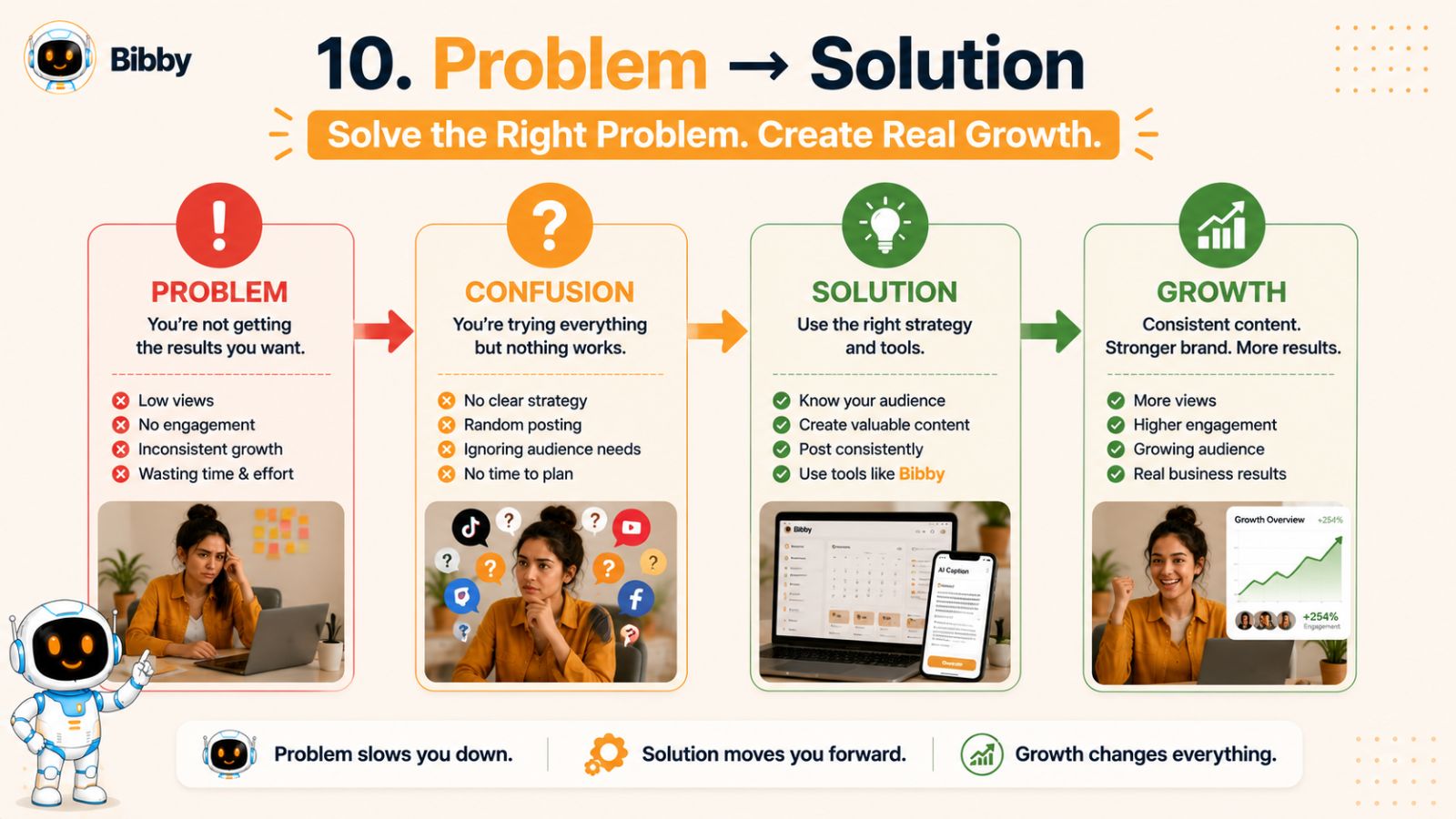
One of the most effective storytelling frameworks on TikTok is the Problem → Solution format. It immediately grabs attention by presenting a challenge your audience faces and then demonstrating a practical solution. Because viewers are naturally curious about how a problem is resolved, this format often leads to higher watch times and stronger engagement.
The key is to focus on a single problem that your target audience experiences regularly.
Start With a Relatable Problem
The first few seconds should make viewers think, "That's exactly what I'm dealing with."
Examples include:
- "Managing five social media accounts is taking up all my time."
- "Your TikTok videos aren't getting enough views."
- "You're spending hours writing captions for every post."
- "Creating content consistently feels impossible."
A relatable problem creates an emotional connection and gives viewers a reason to keep watching.
Present a Clear Solution
Once you've introduced the problem, show the solution in action. Keep your explanation simple and focus on the outcome rather than every feature or detail.
For example, if you're talking about content management, demonstrate how an organized workflow helps eliminate repetitive tasks and saves time. Show each step visually so viewers can immediately understand the process.
Demonstrate the Results
People want proof that a solution works. Instead of simply saying your approach is effective, show the results.
You can highlight outcomes such as:
- Faster content creation
- More consistent posting
- Better team collaboration
- Improved productivity
- Less manual work
- A more organized content calendar
Showing the end result makes your message more credible and persuasive.
Finish With a Strong Call to Action
Every Problem → Solution video should end by guiding viewers toward the next step. Depending on your goal, you could encourage them to:
- Follow your account for more marketing tips.
- Visit your website to learn more.
- Try your workflow for themselves.
- Leave a comment with their biggest challenge.
- Share the video with someone who needs it.
For example, if you're demonstrating a social media workflow, you could show how Bibby simplifies the entire process. After creating your content, you can upload your assets, let AI generate captions, automatically optimize content for multiple social media platforms, schedule posts across Facebook, Instagram, LinkedIn, YouTube, and TikTok at AI-recommended times, and monitor performance from a single dashboard. By showing the workflow instead of simply describing it, viewers can clearly see how the solution addresses the original problem.
The Problem → Solution format works because it mirrors the customer journey. It identifies a pain point, offers a practical answer, and finishes with a clear next step, making it one of the most effective TikTok video formats for brands.
11. Reaction and Duet Videos
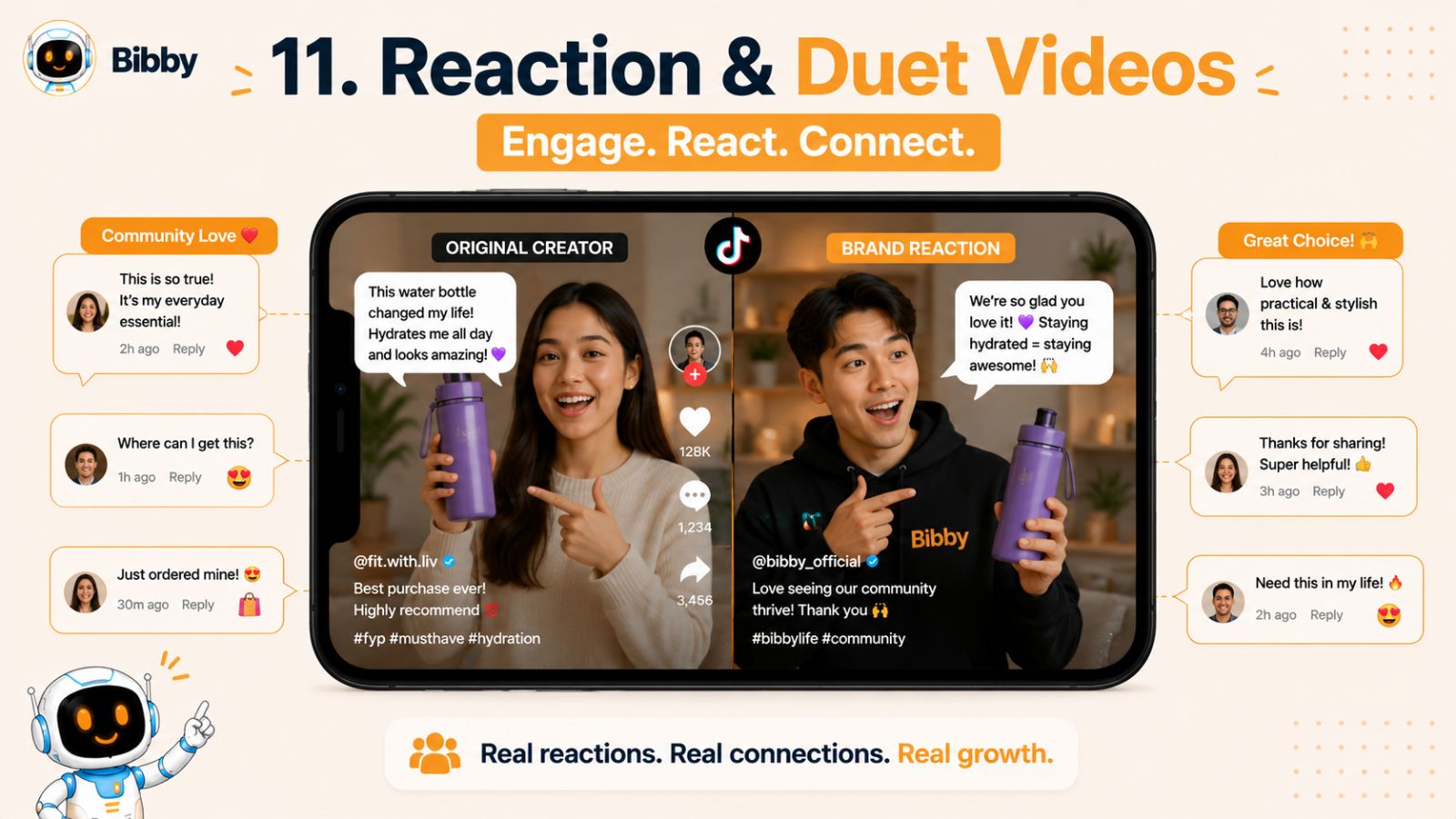
Reaction and Duet videos are a great way to join existing conversations on TikTok while adding your brand's unique perspective. Instead of creating every video from scratch, you can build on content that already resonates with audiences. This makes your content more discoverable and shows that your brand is actively engaged with trends and industry discussions.
The key is to add value rather than simply reacting for the sake of reacting.
React to Industry Trends
Your audience looks to you for insights, not just entertainment. When a new trend, feature, or piece of industry news emerges, create a reaction video that explains what it means and why it matters.
For example, you could react to:
- New TikTok features
- Social media algorithm updates
- Marketing trends
- AI tools for content creation
- Viral campaigns from well-known brands
By sharing your expertise, you position your brand as a trusted resource while participating in timely conversations.
Respond to Customer Content
If customers mention or tag your brand in their videos, consider creating a reaction or Duet. This not only recognizes your community but also encourages more customers to create content featuring your products or services.
You can react to:
- Customer reviews
- Product unboxing videos
- Creative use cases
- Success stories
- Before-and-after transformations
Always ask for permission when appropriate, especially if you plan to feature a customer's content in your marketing.
Add Your Own Perspective
A successful Reaction or Duet video should contribute something meaningful. Rather than repeating what's already been said, provide additional context, tips, or expert opinions.
For instance, if someone shares how they manage multiple social media accounts, you could expand on their workflow by explaining how tools like Bibby help streamline the publishing process with AI-generated captions, platform-specific sizing, scheduling across Facebook, Instagram, LinkedIn, YouTube, and TikTok, and built-in analytics. This adds educational value while naturally introducing a practical solution.
Stay Respectful and Authentic
Avoid reacting to controversial topics simply to gain attention. Focus on content that aligns with your brand values and provides genuine value to your audience.
When reacting to another creator's content:
- Give proper credit.
- Be respectful of differing opinions.
- Add insights instead of criticism.
- Keep the discussion constructive.
- Encourage healthy conversations in the comments.
Reaction and Duet videos help your brand stay relevant, increase visibility, and foster engagement by becoming part of the conversations your audience is already following. When done thoughtfully, they can strengthen your authority while expanding your reach on TikTok.
Also read: Social Media Image Sizes for Every Platform
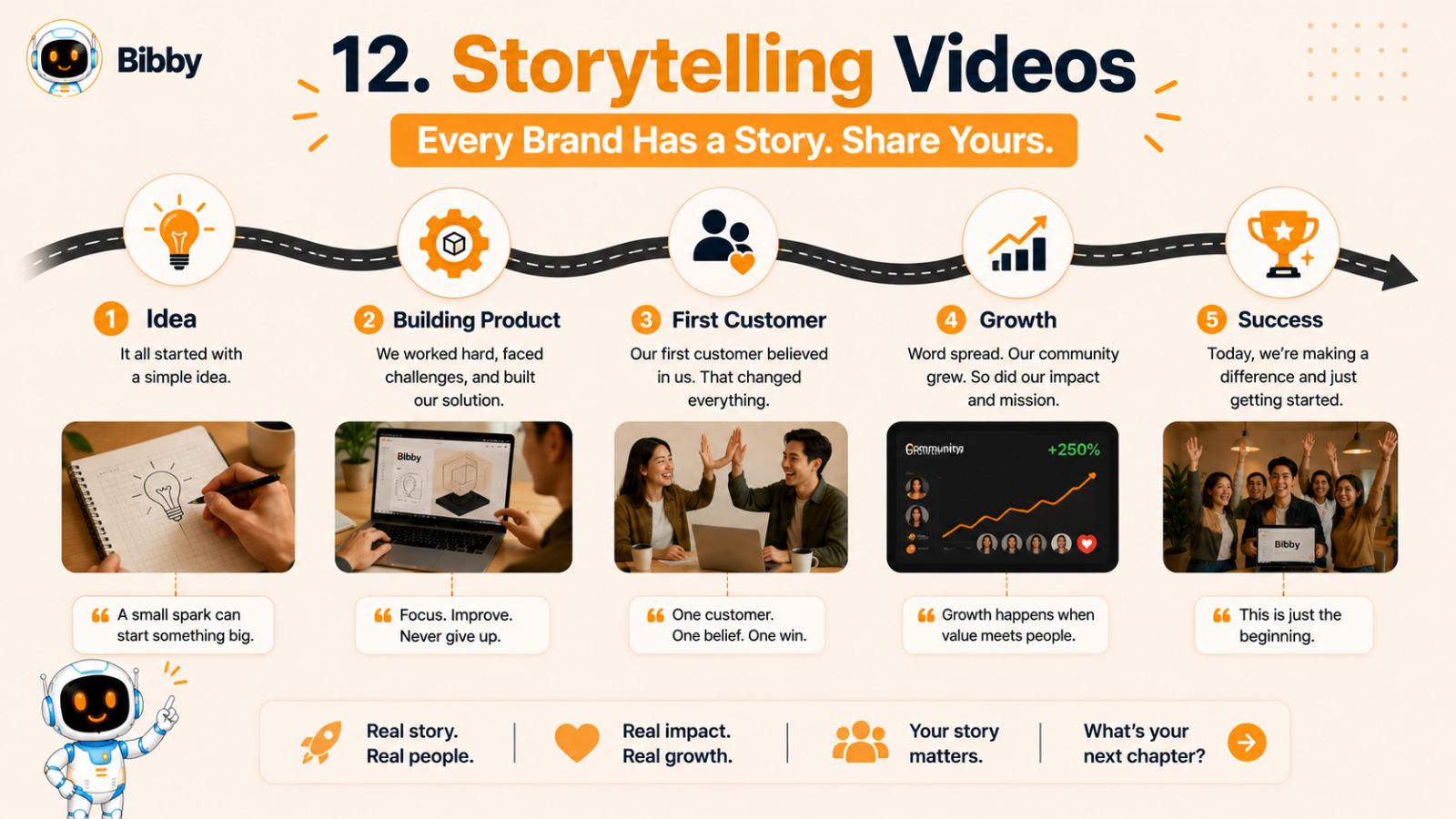
12. Storytelling Videos
Every successful brand has stories worth sharing. Whether it's the journey of building your business, a customer's transformation, or the inspiration behind a product, storytelling helps people connect with your brand on a deeper level. While viewers may forget product features, they're far more likely to remember a compelling story.
The best storytelling videos don't feel like advertisements. Instead, they entertain, inspire, educate, or evoke emotion while naturally introducing your brand.
Share Your Brand's Journey
People enjoy learning how businesses get started. Sharing your journey makes your brand more relatable and shows the passion behind your work.
Consider creating videos about:
- Why you started your business
- The biggest challenges you faced
- Lessons learned along the way
- Your first customer or first sale
- Important milestones and achievements
These stories help audiences connect with the people behind the brand, not just the products you sell.
Highlight Customer Success Stories
Your customers often have the most compelling stories. Instead of focusing solely on your product, show how it helped someone overcome a challenge or achieve a goal.
A simple storytelling structure works well:
- Introduce the customer's challenge.
- Explain the solution they chose.
- Show the outcome they achieved.
- End with what they learned from the experience.
This approach makes testimonials feel authentic while demonstrating real-world value.
Take Viewers Through a Journey
Storytelling works best when there's a clear beginning, middle, and end. Build anticipation by introducing a problem or question early in the video, then gradually reveal how it unfolds.
For example, you could document:
- Launching a new product
- Preparing for a major event
- Completing a client project
- Growing from a small startup to an established business
- Transforming a simple idea into a successful campaign
These narratives keep viewers engaged because they want to see how the story ends.
End With a Memorable Takeaway
Every story should leave viewers with something to remember. It might be a lesson learned, an inspiring message, or a practical tip they can apply to their own business.
For instance, if you're sharing your content creation journey, you might explain how building a repeatable workflow helped your team stay consistent. You can naturally mention how Bibby became part of that process by simplifying tasks such as generating AI captions, preparing content for multiple social media platforms, scheduling posts at AI-optimized times, and tracking performance from one dashboard. Rather than making the tool the focus of the story, position it as one element that helped improve your workflow.
A meaningful ending gives viewers a reason to comment, share the video, or follow your account for future stories.
Storytelling is one of the most versatile TikTok video formats because it combines emotion, authenticity, and value. When your audience connects with your story, they're more likely to remember your brand, engage with your content, and become loyal customers over time.
Common Mistakes Brands Make on TikTok
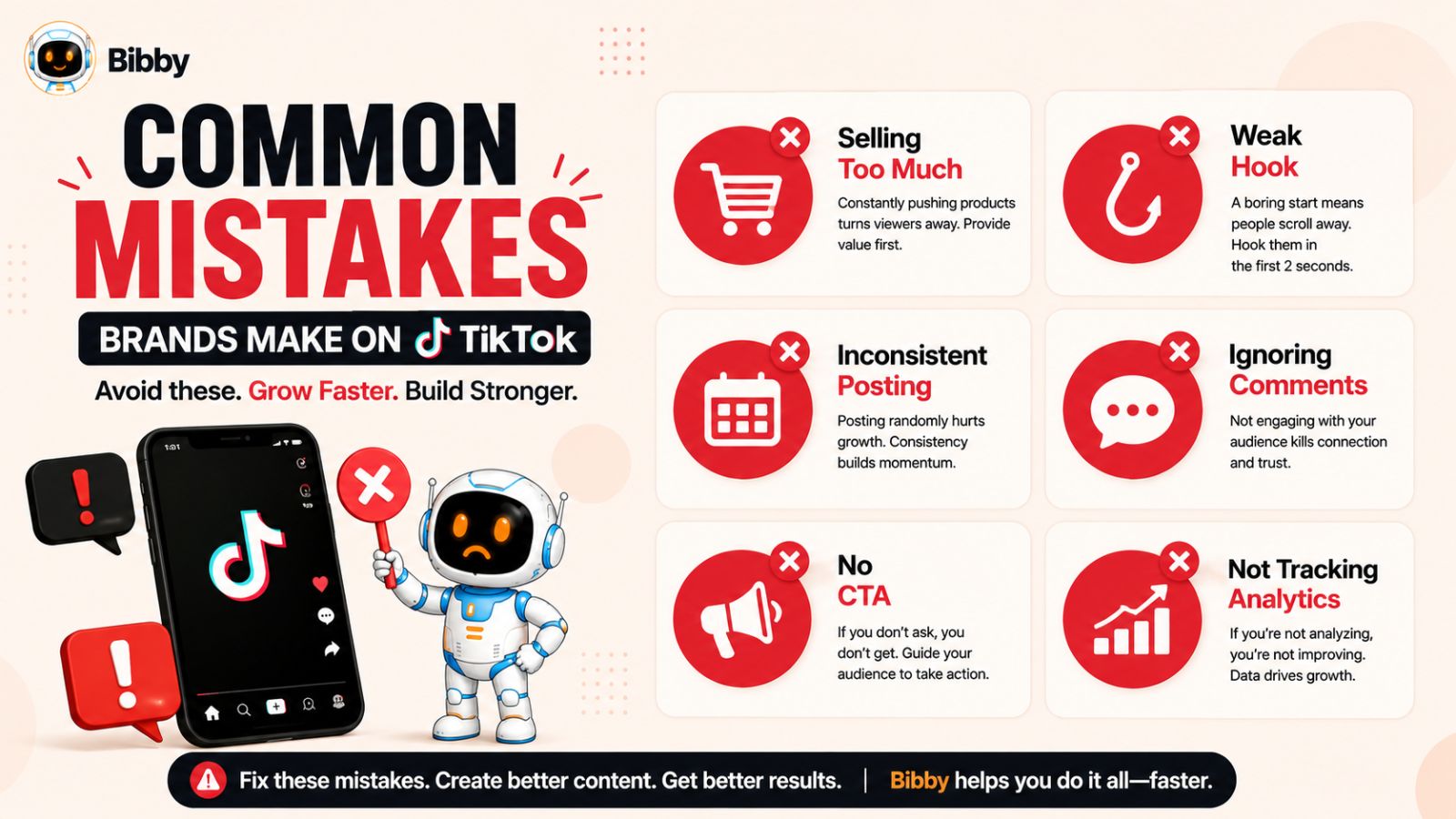
Creating great TikTok videos isn't just about following the right formats—it's also about avoiding the mistakes that limit your reach and engagement. Many brands invest time in content creation but overlook fundamental best practices that can significantly impact performance.
Fortunately, most of these mistakes are easy to fix once you know what to look for.
Focusing Too Much on Selling
TikTok users visit the platform to be entertained, educated, or inspired—not to watch traditional advertisements. If every video is a sales pitch, viewers are likely to scroll past your content.
Instead, follow the 80/20 rule:
- 80% valuable or entertaining content
- 20% promotional content
When you consistently provide value, promotional videos feel more natural and are often more effective.
Weak Hooks in the First Few Seconds
The first three seconds determine whether someone keeps watching or scrolls away. Starting with a slow introduction or lengthy logo animation can hurt your video's performance.
Instead, grab attention immediately with:
- A surprising statistic
- A bold statement
- A relatable problem
- A thought-provoking question
- An eye-catching visual
Strong hooks encourage viewers to stay until the end.
Trying to Follow Every Trend
Not every trend is relevant to your business. Chasing every viral challenge can make your content feel inconsistent and dilute your brand identity.
Choose trends that align with your audience and message, and don't be afraid to skip those that don't fit your brand.
Inconsistent Posting
Posting several videos one week and disappearing the next makes it difficult to build momentum. Consistency helps your audience know when to expect new content and gives the TikTok algorithm more opportunities to understand your niche.
Planning content in advance and maintaining a publishing schedule can make consistency much easier.
Ignoring Comments and Community Engagement
TikTok is built around conversations. If viewers leave comments or ask questions, take the time to respond. Engaging with your audience strengthens relationships and signals that your brand is active and approachable.
You can even turn frequently asked questions into future TikTok videos, giving you an endless source of content ideas.
Forgetting to Include a Call to Action
Even the most engaging video should guide viewers toward a next step. Without a clear call to action (CTA), you may miss opportunities to increase engagement or generate leads.
Depending on your objective, encourage viewers to:
- Follow your account
- Leave a comment
- Save the video
- Share it with a friend
- Visit your website
- Learn more about your product or service
Keep your CTA simple and relevant to the content you've just shared.
Not Measuring Performance
Many brands publish content without reviewing what's actually working. Regularly tracking performance helps you identify which video formats generate the highest watch time, engagement, and conversions.
Review metrics such as:
- Views
- Average watch time
- Completion rate
- Likes
- Comments
- Shares
- Saves
- Follower growth
These insights help you refine your content strategy over time.
Managing Everything Manually
As your social media presence grows, manually resizing content, writing captions, scheduling posts, and tracking analytics across multiple platforms becomes increasingly time-consuming.
Using a centralized workflow can significantly improve efficiency. For example, Bibby allows you to upload or generate images with AI, automatically prepare content for different social media platform sizes, generate AI-powered captions, schedule posts across Facebook, Instagram, LinkedIn, YouTube, and TikTok at AI-optimized times, and monitor analytics—all from a single dashboard. This reduces repetitive tasks so you can spend more time creating high-quality content.
By avoiding these common mistakes and focusing on consistency, authenticity, and audience value, your brand will be in a much stronger position to grow on TikTok and build lasting engagement.
Also read: Social Media Growth Myths vs Reality: What Actually Works Today
How to Create TikTok Content Faster
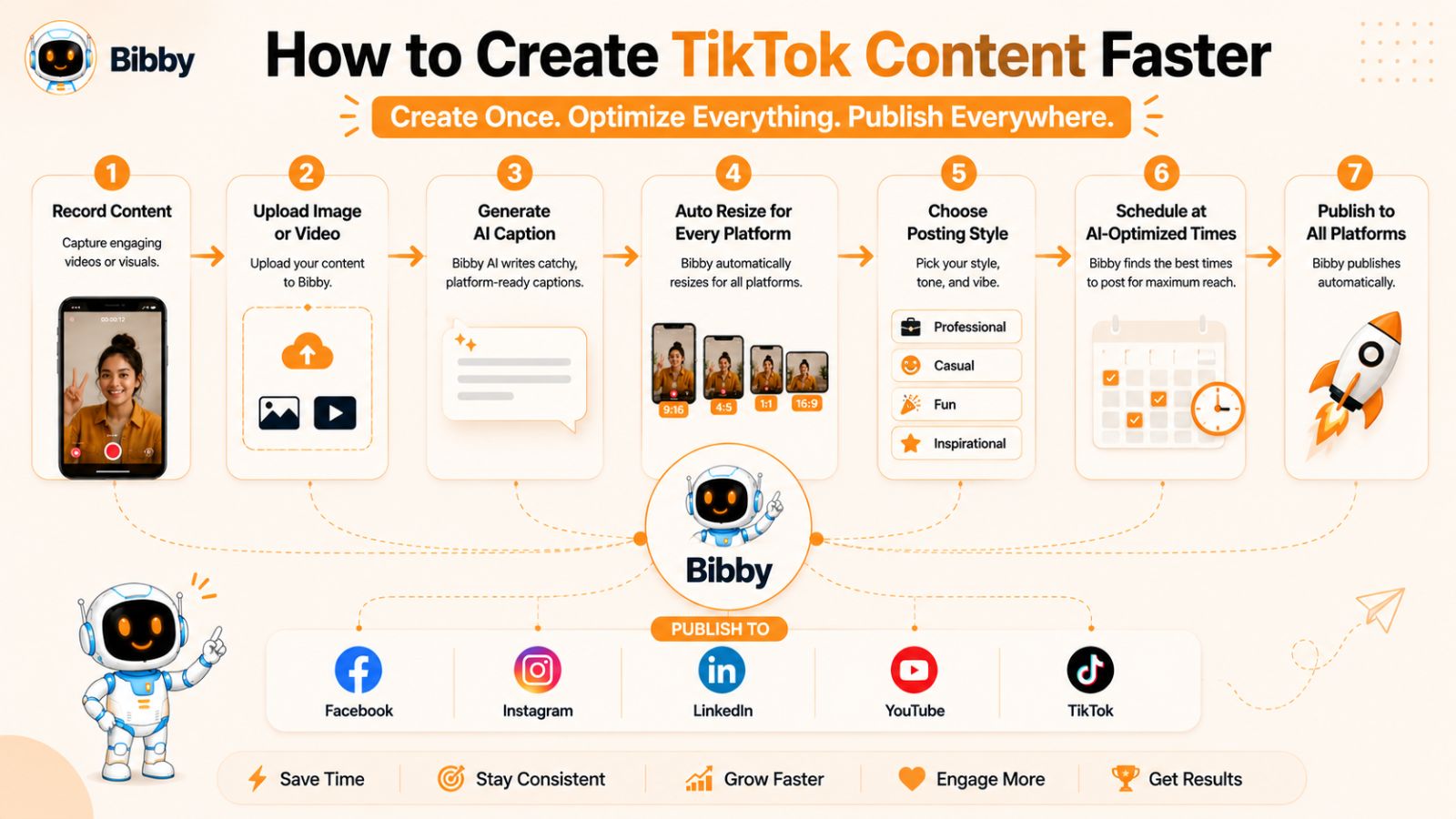
One of the biggest challenges brands face isn't coming up with ideas—it's turning those ideas into published content consistently. Recording videos, editing clips, writing captions, resizing media for different platforms, scheduling posts, and analyzing performance can quickly become overwhelming, especially if you're managing multiple social media accounts.
The solution is to build a repeatable workflow that eliminates repetitive tasks and lets you focus on creating great content.
Plan Content in Batches
Instead of creating one TikTok video at a time, dedicate a few hours each week to batch-producing your content. Write multiple scripts, record several videos in one session, and edit them together.
Batching content helps you:
- Save time by reducing setup and editing sessions.
- Maintain a consistent posting schedule.
- Reduce creative burnout.
- Always have content ready to publish.
This approach is especially useful when you're managing campaigns across several social media platforms.
Repurpose Every TikTok Video
A single TikTok can be adapted for multiple platforms with minimal effort. Rather than creating unique content for every channel, repurpose your videos for:
- Instagram Reels
- Facebook Reels
- YouTube Shorts
- X (formerly Twitter)
Repurposing extends the reach of every piece of content and maximizes your return on the time spent creating it.
Automate Your Publishing Workflow with Bibby
After your content is ready, the next step is publishing—and that's where Bibby simplifies the entire process.
Instead of switching between multiple tools, Bibby lets you manage your social media workflow from one intuitive dashboard.
With Bibby, you can:
- Upload your own images or generate visuals using AI.
- Automatically prepare the correct image sizes for different social media platforms.
- Upload videos for multi-platform publishing.
- Choose your preferred posting style.
- Generate AI-powered captions in seconds.
- Schedule content across Facebook, Instagram, LinkedIn, YouTube, and TikTok.
- Let AI recommend optimized publishing times for better consistency.
- Schedule posts for different dates in advance.
- Publish posts, videos, stories, and other supported content formats.
- Monitor analytics to understand what performs best.
Instead of spending hours managing individual platforms, Bibby streamlines your workflow so you can create once and publish everywhere.
Review Performance and Improve
Publishing is only one part of a successful TikTok strategy. Regularly reviewing your analytics helps you understand which content formats resonate most with your audience.
Pay close attention to metrics such as:
- Video views
- Watch time
- Completion rate
- Engagement rate
- Shares and saves
- Click-through rate
- Follower growth
Use these insights to refine your content strategy, experiment with new formats, and double down on what works best.
Creating TikTok content consistently doesn't have to be complicated. By batching content, repurposing videos, automating publishing with Bibby, and learning from your analytics, you can build a sustainable workflow that saves time while helping your brand grow across multiple social media platforms.
Final Thoughts
Creating successful TikTok content doesn't require reinventing the wheel. By using proven video formats, focusing on authentic storytelling instead of constant promotion, and building a repeatable content workflow, your brand can consistently create videos that attract attention and encourage engagement.
The 12 TikTok video formats covered in this guide provide a solid foundation for any content strategy. Whether you're educating your audience, showcasing customer success stories, jumping on relevant trends, or demonstrating your products, the key is to deliver value with every video. Pairing these formats with an efficient workflow—using tools like Bibby to create, optimize, schedule, and analyze content across multiple social platforms—can help you stay consistent while saving valuable time.
As you begin experimenting with these formats, track your results, refine your approach, and double down on the content your audience enjoys most. Small improvements made consistently often lead to significant long-term growth.