
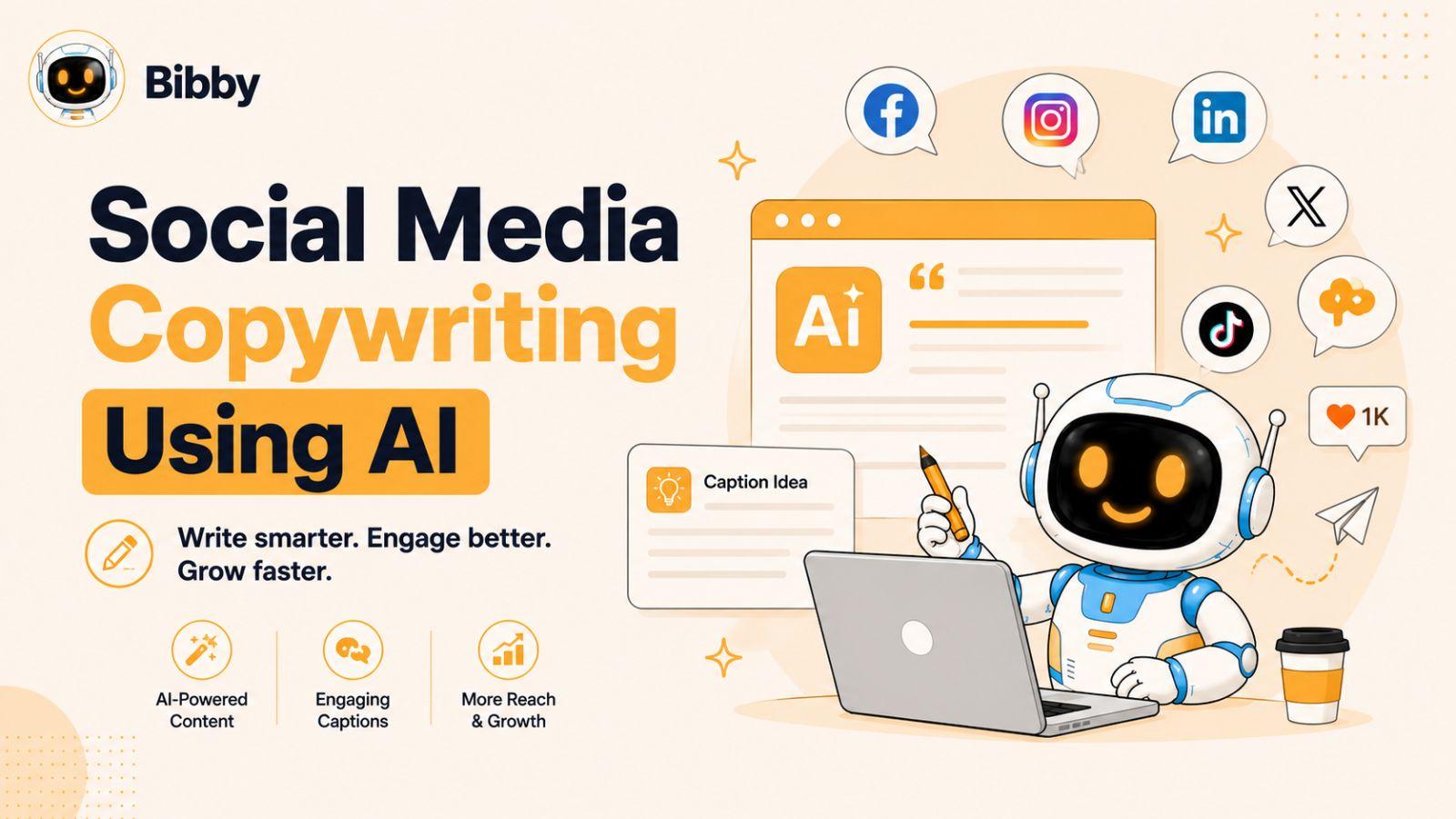
Social media copywriting is evolving rapidly as artificial intelligence transforms how brands create, optimize, and scale content.
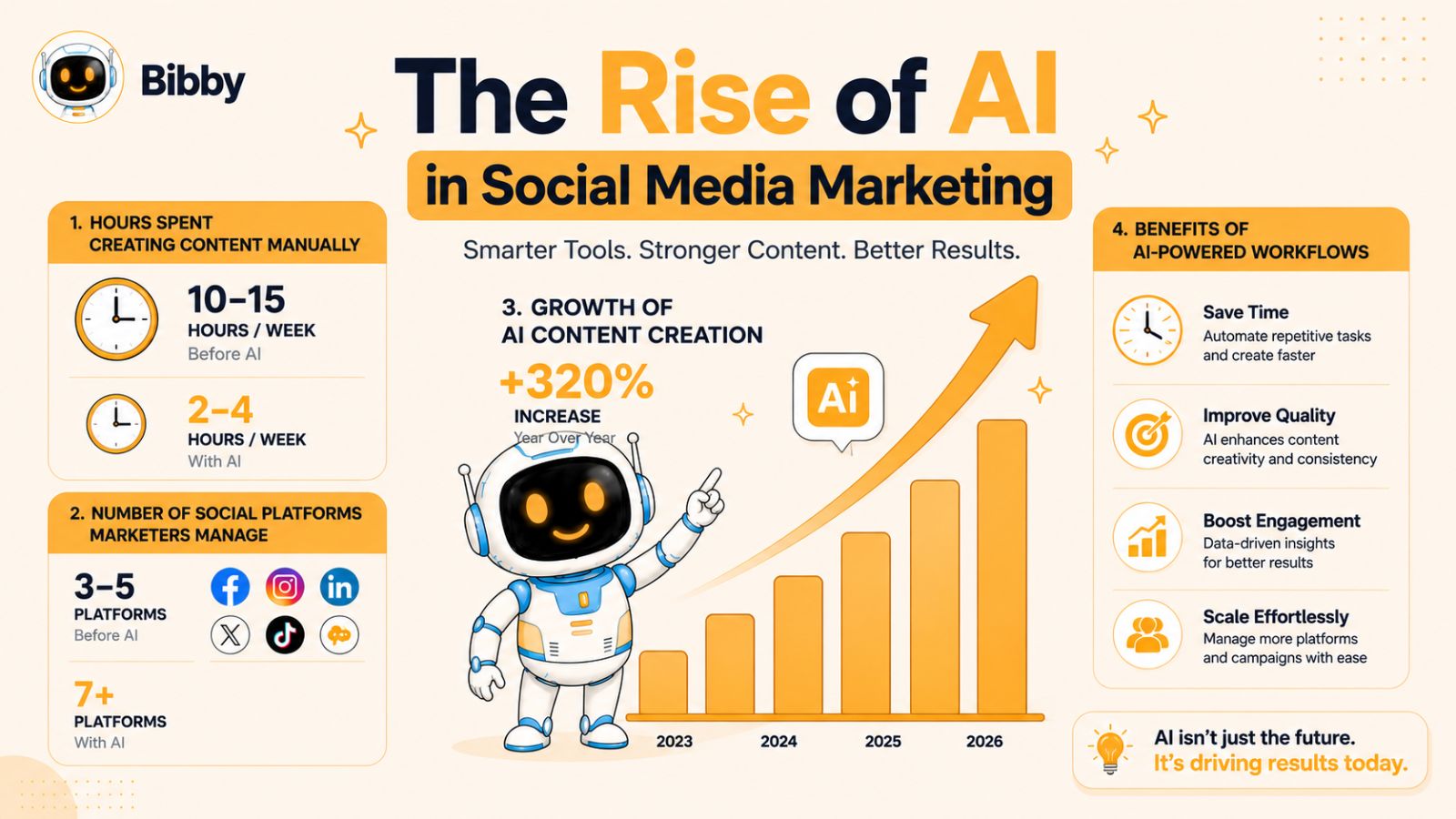
Today's marketers face increasing pressure to consistently publish engaging content across multiple platforms while driving measurable business results. AI-powered tools are making this easier by helping businesses create high-converting social media posts faster, improve engagement, and automate repetitive tasks without sacrificing quality.
In this article, you will learn:
- How AI helps create social media content faster and smarter
- Proven copywriting techniques that increase engagement and conversions
- Ways to automate content creation, scheduling, and optimization
Whether you're a business owner, marketer, creator, or agency professional, understanding how to combine AI with effective copywriting principles can help you produce better content, reach larger audiences, and generate stronger results from your social media efforts.
What Is Social Media Copywriting?
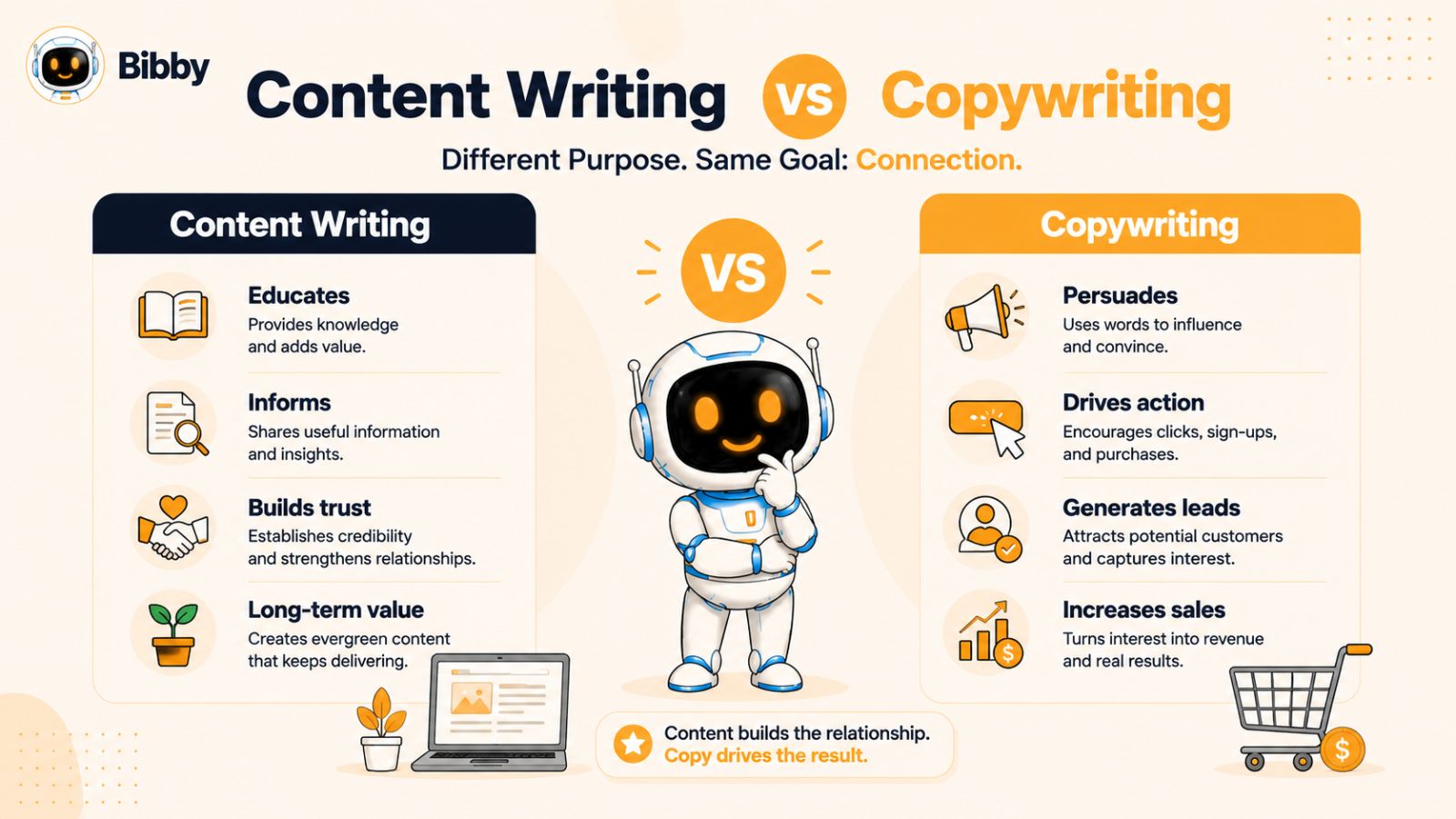
Social media copywriting is the art and science of writing persuasive content for social media platforms with the goal of encouraging a specific action. Unlike general content writing, which primarily focuses on informing or entertaining, copywriting is designed to influence behavior—whether that means generating likes, comments, shares, clicks, leads, or sales.
Every social media post serves a purpose. Some posts aim to build brand awareness, while others are created to drive website traffic, capture leads, promote products, or strengthen customer relationships. Effective copywriting ensures that each post communicates a clear message and motivates the audience to take the desired next step.
The Difference Between Content Writing and Copywriting
Although the terms are often used interchangeably, content writing and copywriting serve different functions.
Content writing focuses on delivering valuable information, educating readers, and building long-term trust. Blog articles, guides, and educational social posts typically fall into this category.
Copywriting, on the other hand, is more action-oriented. It uses persuasive language, emotional triggers, and strategic calls-to-action to encourage users to engage or convert. The highest-performing social media strategies often combine both approaches, providing value while guiding audiences toward a business goal.
Why Social Media Copywriting Matters
Attention spans are shorter than ever. Users scroll through hundreds of posts every day, often deciding within seconds whether a piece of content deserves their attention. Strong copywriting helps your content stand out in crowded feeds by capturing attention quickly and communicating value immediately.
Effective social media copywriting can help businesses:
- Increase engagement and reach
- Build stronger relationships with audiences
- Generate qualified leads
- Improve conversion rates
- Strengthen brand recognition
- Drive more sales and revenue
As competition across social platforms continues to grow, the ability to write compelling social media copy has become one of the most valuable skills in digital marketing.
Also read: What to Post on Instagram When You Have No Ideas
Why AI Is Changing Social Media Copywriting
Creating high-performing social media content consistently has become increasingly difficult. Brands are expected to maintain an active presence across multiple platforms, adapt to changing algorithms, and produce fresh content every day. For many marketers, the challenge is no longer finding ways to publish content—it's finding enough time to create content that actually performs.
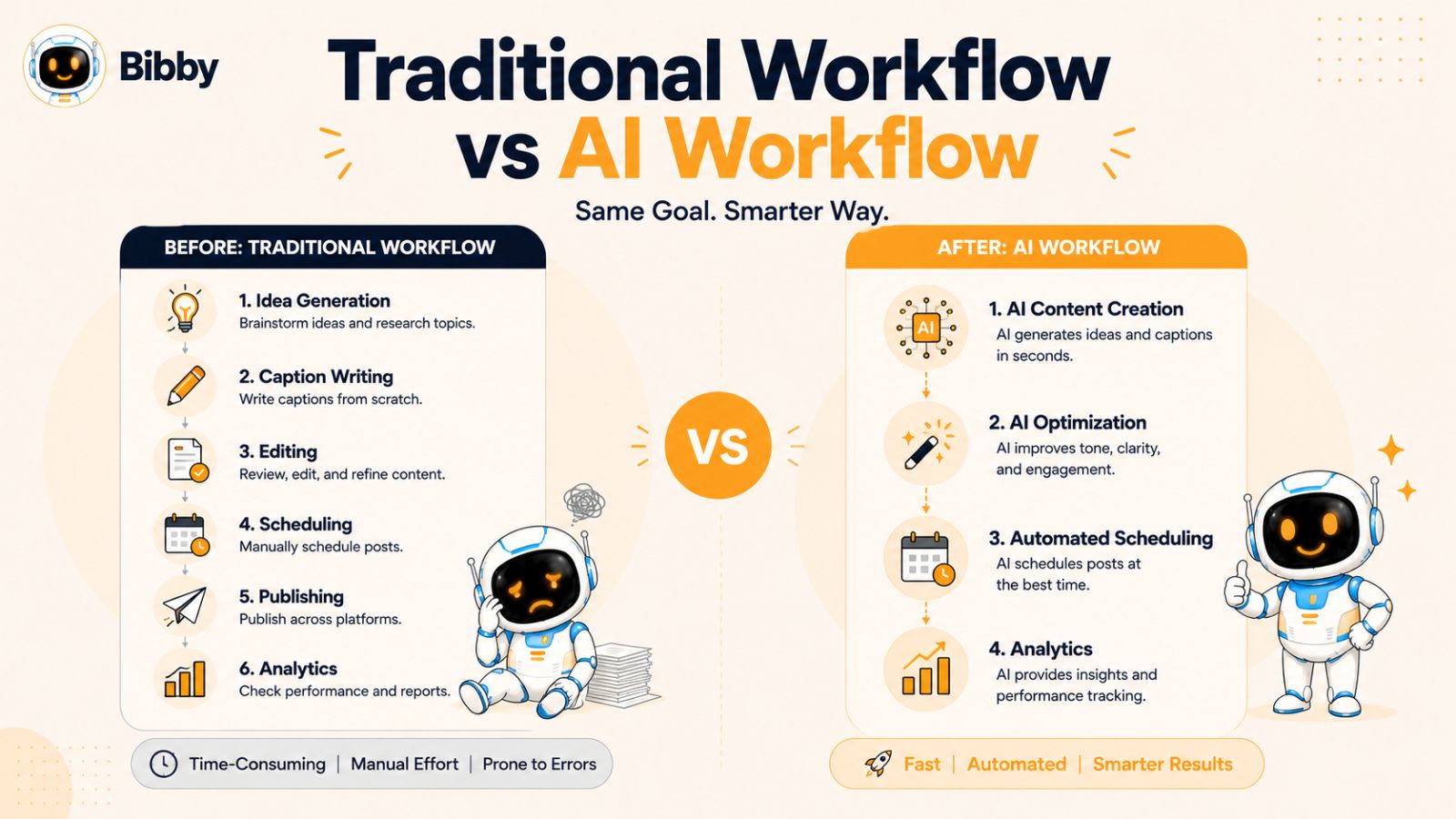
Artificial intelligence is helping solve this problem by transforming how social media copy is created, optimized, and distributed. Instead of spending hours brainstorming ideas, writing captions, and planning publishing schedules, marketers can now use AI to streamline much of the process while maintaining quality and consistency.
The Biggest Challenges Social Media Marketers Face
Most businesses encounter similar obstacles when managing social media:
Writer's Block and Content Fatigue
Even experienced marketers run out of ideas. Creating engaging posts every day can quickly become exhausting, especially when managing multiple accounts or campaigns.
Maintaining Consistency
Consistency is one of the biggest factors in social media growth. However, regularly producing high-quality content often becomes difficult when teams are stretched thin or managing other responsibilities.
Managing Multiple Platforms
Every platform has unique audience expectations and content formats. A post that performs well on LinkedIn may require significant adjustments before it works effectively on Instagram, TikTok, or Facebook.
Time-Consuming Scheduling and Publishing
Creating content is only part of the process. Marketers must also schedule posts, choose publishing times, monitor performance, and make ongoing adjustments based on results.
How AI Solves These Challenges
AI-powered tools can significantly reduce the manual workload involved in social media management.
Instead of starting from a blank page, marketers can use AI to generate content ideas, create captions, suggest hashtags, and produce multiple content variations within seconds. This allows teams to spend more time refining strategy and less time handling repetitive tasks.
AI can also analyze audience behavior and engagement patterns, helping marketers make smarter decisions about content formats, messaging, and publishing schedules.
The Benefits of AI-Powered Social Media Copywriting
When used strategically, AI provides several advantages:
- Faster content creation
- Improved productivity and efficiency
- More consistent publishing schedules
- Easier content repurposing across platforms
- Better optimization through data-driven insights
- Increased scalability for growing brands
From Content Creation to Complete Automation
The most advanced AI tools now go beyond copywriting and help automate the entire social media workflow.
For example, platforms like Bibby allow users to upload an existing image or generate one with AI, select a preferred posting style, and automatically generate platform-specific captions. From there, content can be scheduled across Facebook, Instagram, LinkedIn, YouTube, and TikTok, with AI determining the best publishing times for maximum engagement.
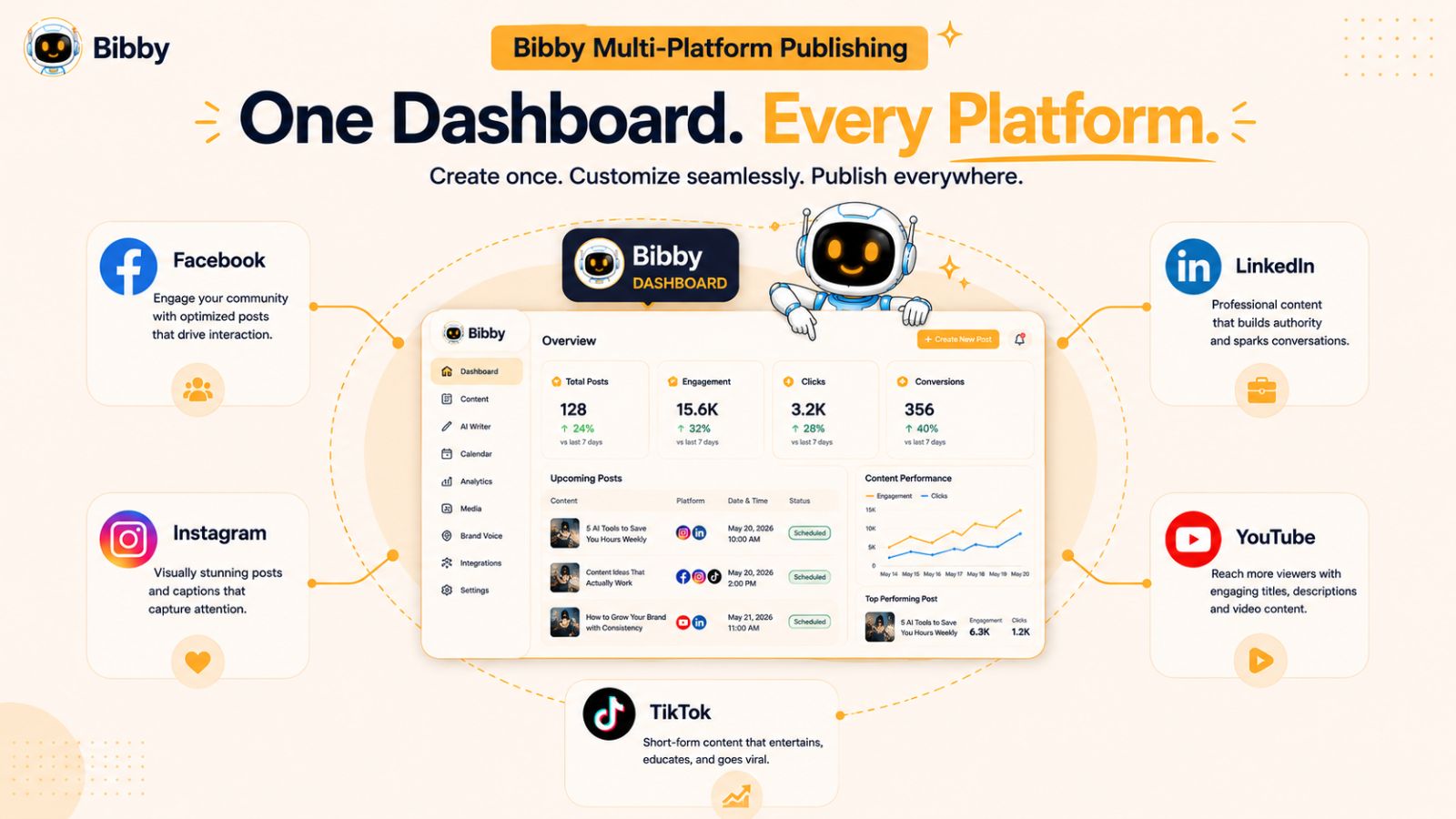
Instead of juggling multiple tools, users can manage posts, videos, stories, analytics, scheduling, and performance tracking from a single dashboard. This level of automation allows businesses to maintain a consistent social media presence while dramatically reducing the time required to manage it.
As AI technology continues to evolve, the focus is shifting from simply helping marketers write faster to helping them build entire content systems that generate better results with less effort.
The Psychology Behind Social Media Posts That Convert
While AI can help generate captions and streamline content creation, successful social media copywriting still depends on understanding human psychology. People don't engage with posts simply because they are well-written—they engage because the content triggers an emotion, solves a problem, sparks curiosity, or offers value.
The highest-converting social media posts combine strong copywriting principles with a deep understanding of what motivates audiences to take action.
Understanding User Intent
Every social media user has a reason for being on a platform. Some are looking for entertainment, others want education, inspiration, industry insights, or product recommendations.
Effective copywriting aligns your message with the audience's current mindset. Before writing any post, ask:
- What problem is my audience trying to solve?
- What outcome are they hoping to achieve?
- What information would be most valuable to them right now?
- What action do I want them to take next?
When your content matches user intent, engagement naturally increases because the message feels relevant and timely.
Emotional Triggers That Drive Engagement
Most decisions—even business decisions—are influenced by emotion. Strong social media copy taps into emotional drivers that encourage people to stop scrolling and interact with content.
Curiosity
Curiosity is one of the most powerful attention-grabbing tools in copywriting.
Examples:
- "Most brands make this social media mistake..."
- "The AI strategy that doubled our engagement in 30 days"
- "Before you schedule your next post, read this"
These types of openings create information gaps that encourage users to keep reading.
Fear of Missing Out (FOMO)
People naturally want to avoid missing opportunities, trends, or valuable information.
Examples:
- "You're leaving engagement on the table if you're not doing this."
- "Most marketers still haven't discovered this AI workflow."
Used carefully, FOMO can significantly increase clicks and engagement.
Trust
Trust is essential for conversions. Audiences are more likely to engage with brands that demonstrate expertise, transparency, and credibility.
Ways to build trust include:
- Sharing real results
- Providing actionable advice
- Showcasing customer success stories
- Using authentic brand messaging
Social Proof
People often look to others when making decisions.
Examples of social proof include:
- Customer testimonials
- User-generated content
- Case studies
- Reviews
- Success metrics
Showing that others have achieved positive results can make your message more persuasive.
The Importance of Strong Calls-to-Action (CTAs)
Even highly engaging content can fail if it doesn't clearly tell users what to do next.
A call-to-action guides the audience toward the desired outcome, whether that's commenting, sharing, visiting a website, signing up, or making a purchase.
Examples of effective CTAs include:
- Download the guide
- Try it today
- Share your experience below
- Book a demo
- Learn more
- Save this post for later
The best CTAs feel like a natural continuation of the content rather than a hard sales pitch.
Combining Psychology with AI
AI can generate captions quickly, but understanding audience psychology is what turns ordinary content into content that converts.
When marketers combine AI-generated content with proven psychological triggers, they can create social media posts that not only attract attention but also encourage meaningful engagement and measurable business results. This combination of technology and human insight is what separates average social media campaigns from exceptional ones.
You may also like reading: How to Schedule Instagram Reels Automatically?
10 Expert Tips for Writing Social Media Posts That Convert with AI
AI can dramatically reduce the time required to create social media content, but simply generating captions isn't enough. The most successful marketers use AI strategically, combining automation with proven copywriting principles to create content that captures attention, drives engagement, and generates conversions.
The following expert tips will help you get better results from both your social media copywriting and your AI tools.
1. Start with a Powerful Hook

The first line of your post determines whether someone keeps reading or keeps scrolling.
A strong hook immediately grabs attention by creating curiosity, highlighting a problem, or presenting an unexpected insight.
Examples:
- Most businesses are wasting hours on social media every week.
- Your captions may be hurting your engagement without you realizing it.
- We tested AI copywriting for 30 days. Here's what happened.
AI tools can quickly generate multiple hook variations, allowing you to test different approaches and identify what resonates most with your audience.
2. Focus on Benefits, Not Features
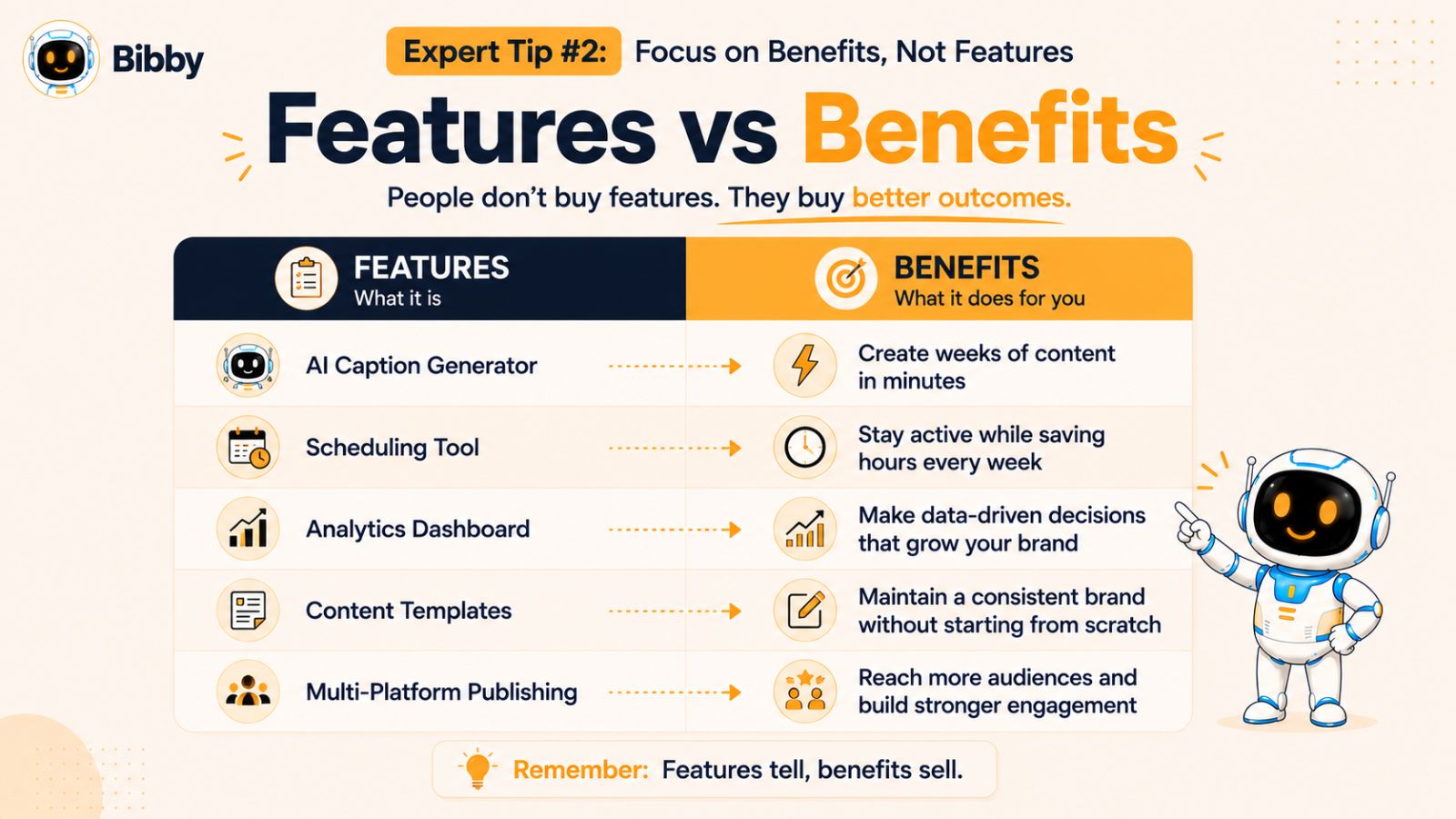
One of the most common copywriting mistakes is talking too much about features and not enough about outcomes.
Instead of saying:
"Includes AI-generated captions and scheduling."
Say:
"Create weeks of social media content in minutes and publish automatically across all your platforms."
People care more about how a solution improves their lives than about technical specifications.
3. Write for Each Platform Individually
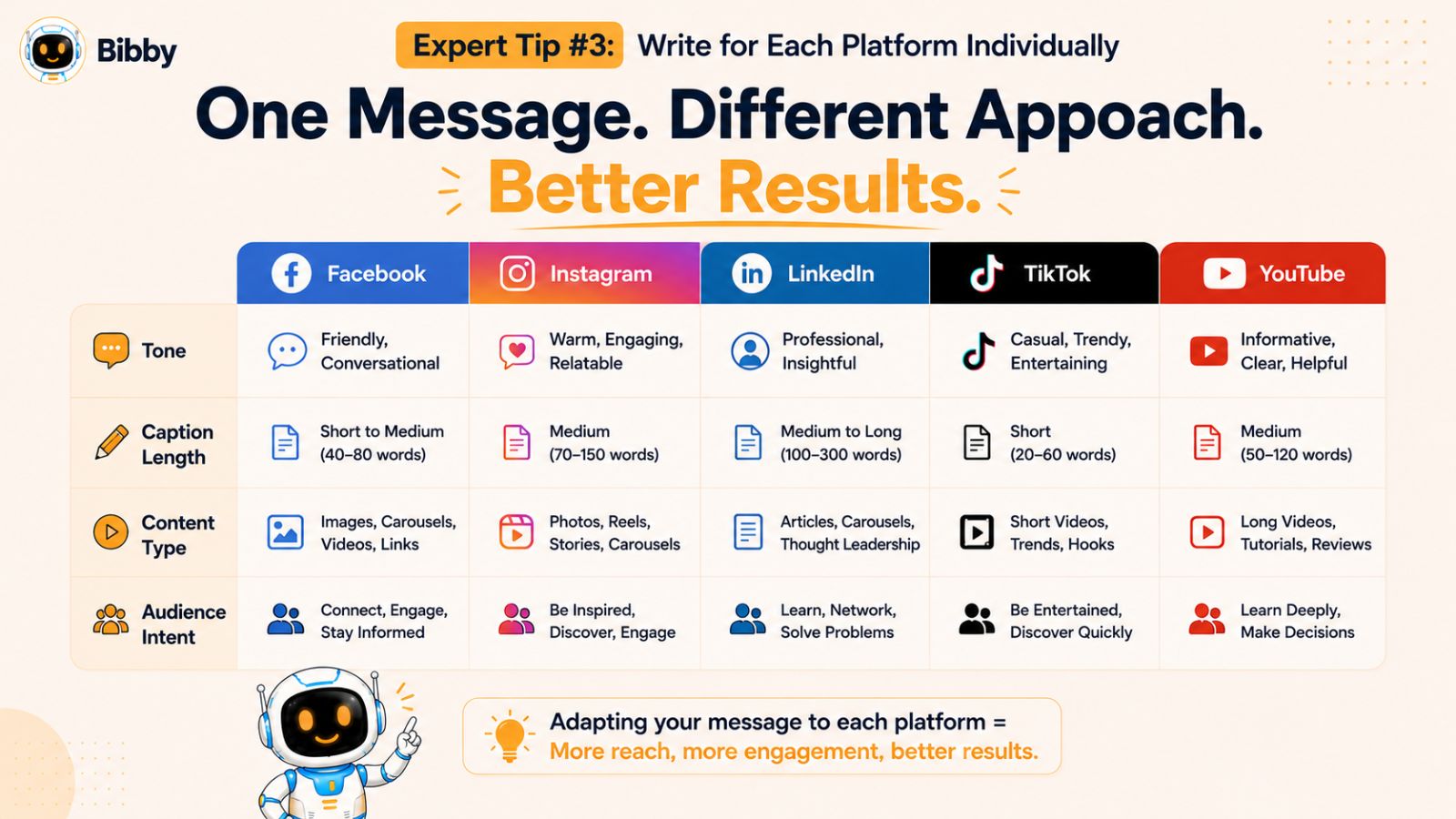
Every social media platform has a unique audience and communication style.
- Conversational and community-focused
- Works well with storytelling and discussions
- Visual-first content
- Short, engaging captions perform well
- Professional insights and thought leadership
- Industry-focused conversations
TikTok
- Short-form, trend-driven content
- Informal and highly engaging tone
YouTube
- Educational and value-driven messaging
- Strong focus on watch time and audience retention
AI can help adapt a single content idea into multiple platform-specific versions, saving significant time while improving performance.
4. Use Storytelling to Build Connection
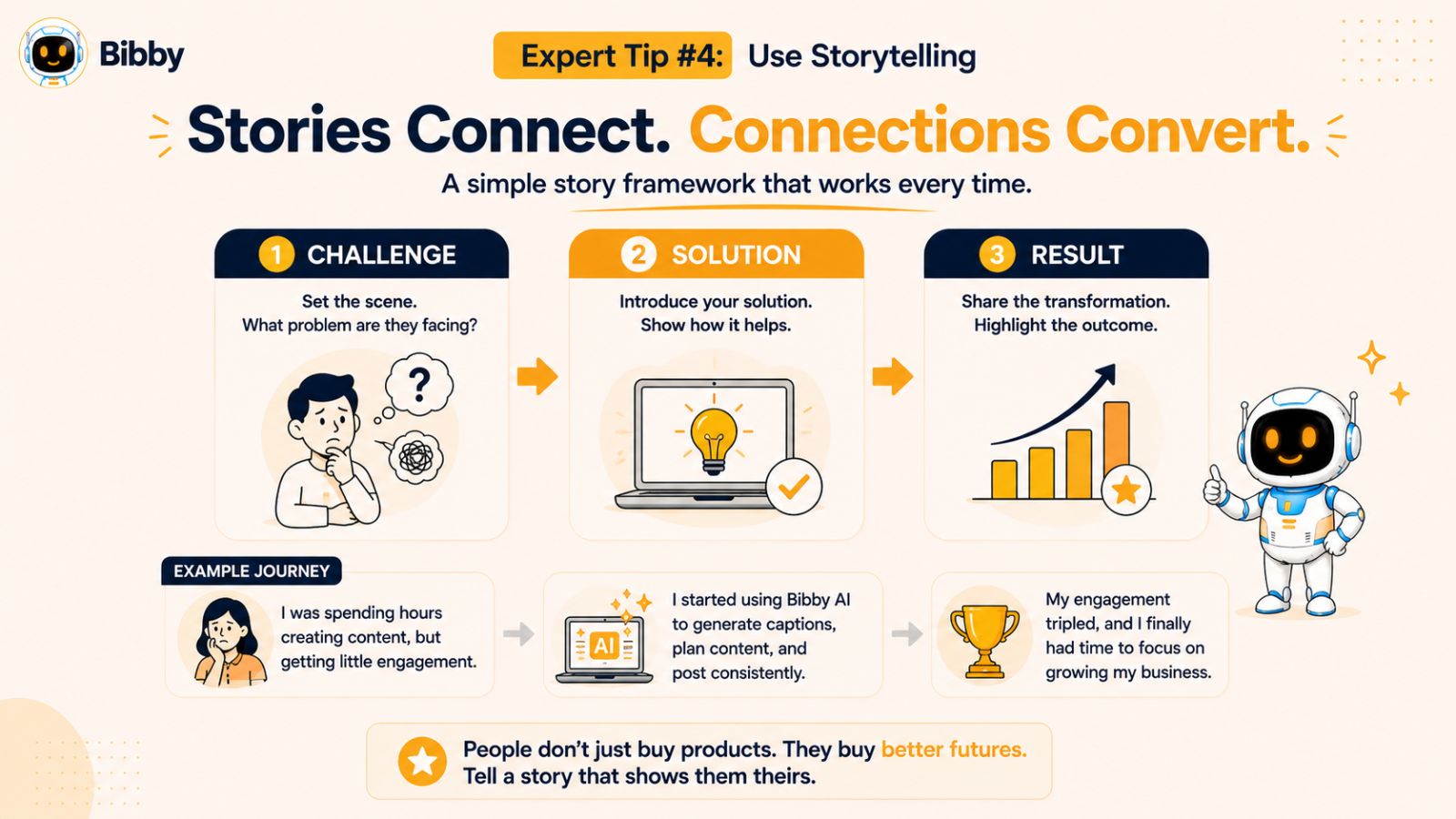
Stories help audiences relate to your message and remember it.
A simple storytelling framework includes:
- The challenge
- The solution
- The result
For example, instead of simply promoting a tool, tell the story of a business owner who struggled to maintain a consistent posting schedule before adopting a more automated workflow.
Stories create emotional engagement, making your content more persuasive and memorable.
5. Generate Multiple Variations and Test Them
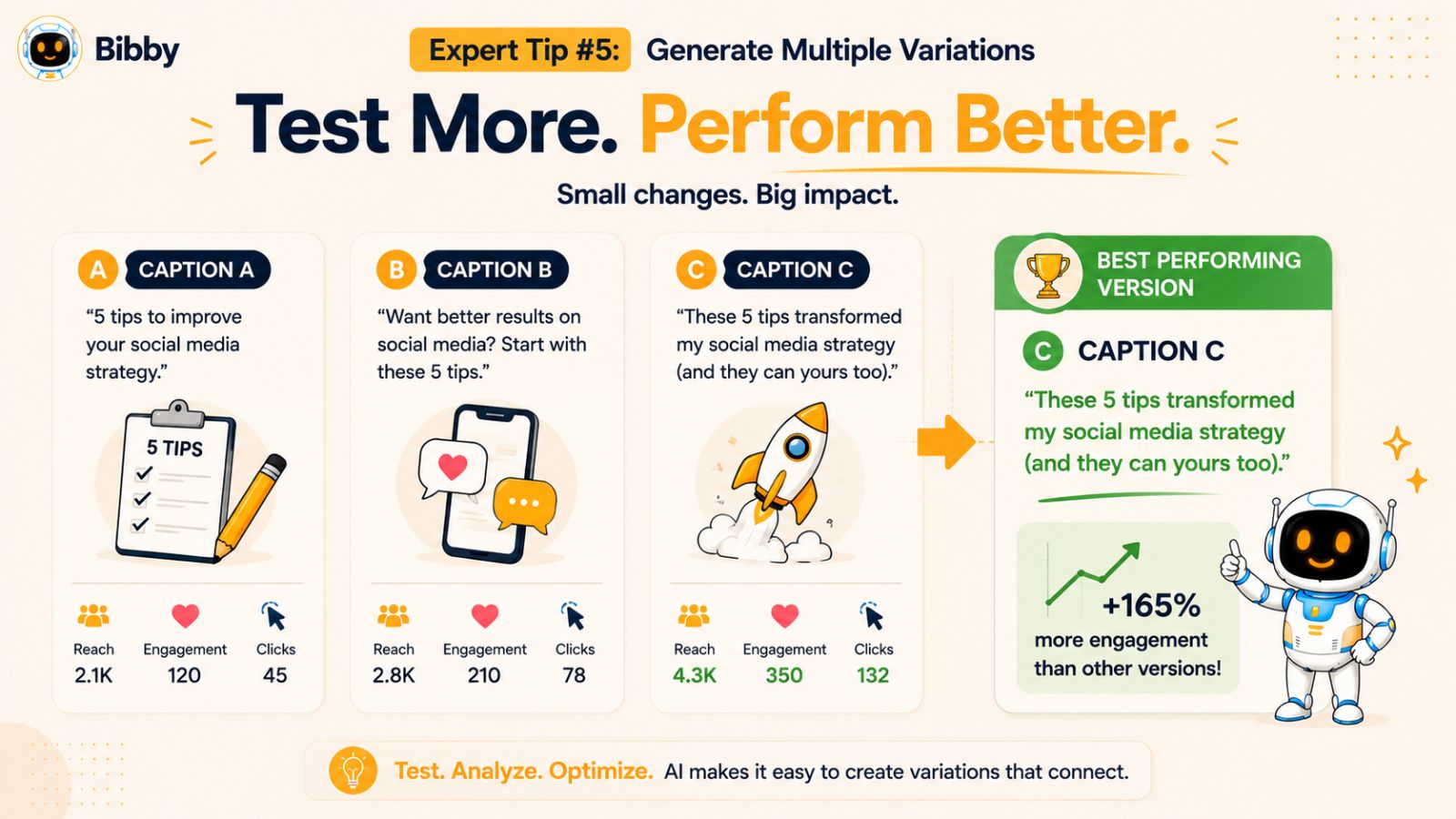
One of AI's biggest advantages is speed.
Rather than publishing the first caption you create, generate several versions and compare their performance.
Test variations of:
- Headlines
- Hooks
- Calls-to-action
- Content length
- Tone of voice
Small adjustments can often produce significant improvements in engagement and conversion rates.
6. Keep Your Posts Easy to Read
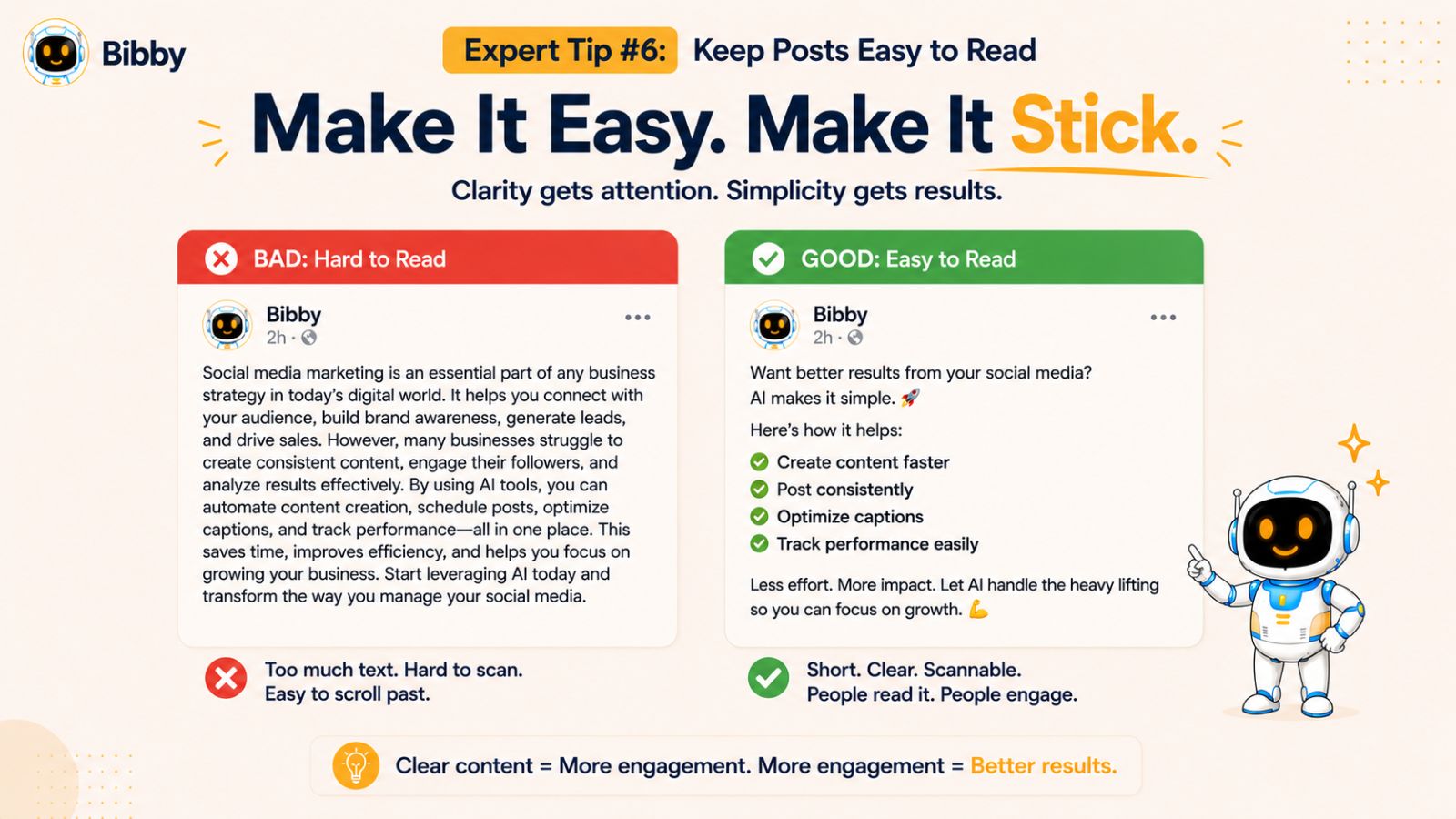
Social media users scan content quickly.
Improve readability by:
- Using short paragraphs
- Breaking up text with bullet points
- Keeping sentences concise
- Highlighting important information
Clear formatting makes your content easier to consume and increases the likelihood that users will engage with it.
7. Personalize Your Messaging
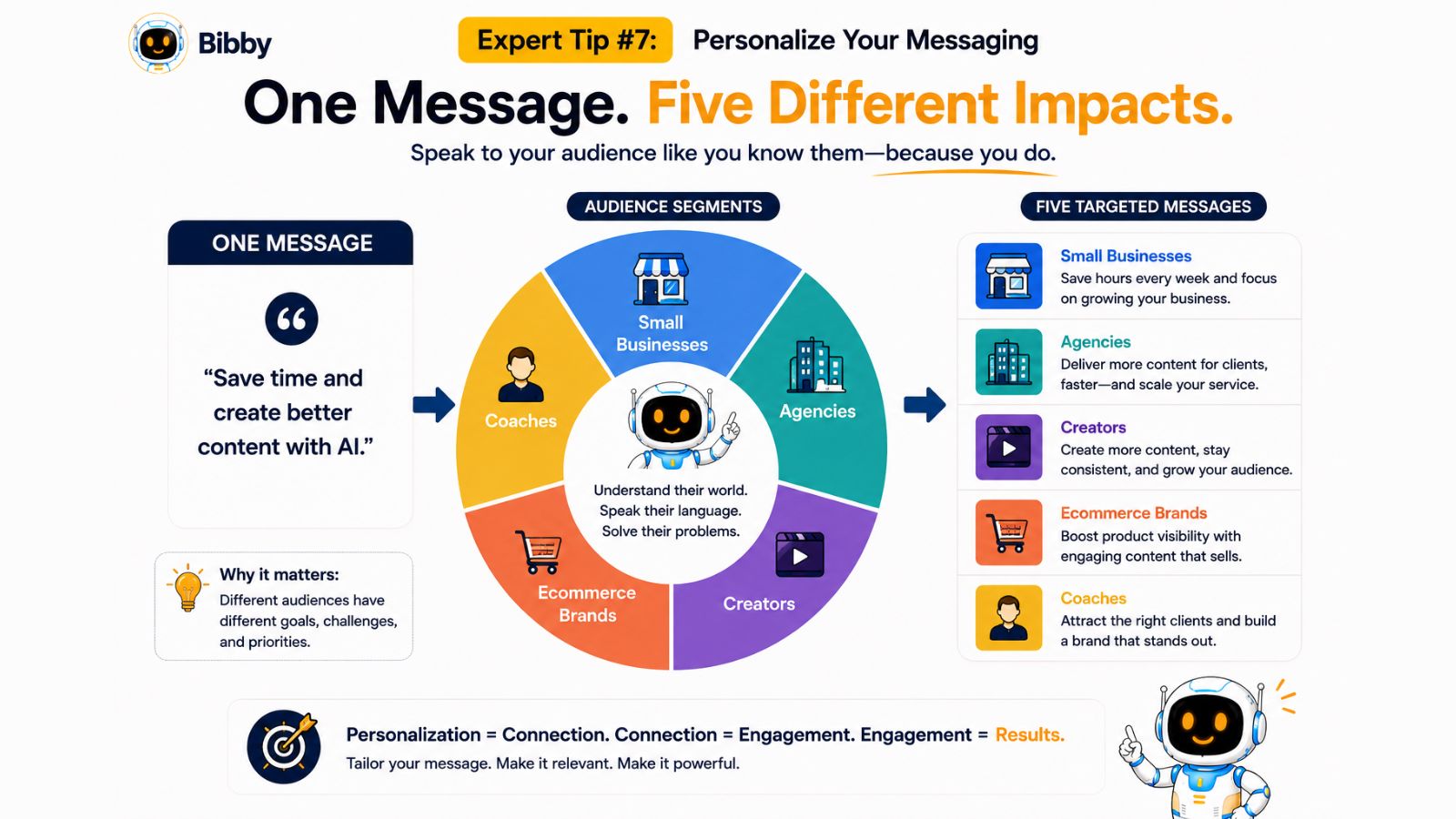
Generic content often gets ignored.
The more relevant your message feels, the more likely users are to engage.
Consider:
- Industry-specific messaging
- Audience pain points
- Customer goals
- Different stages of the buyer journey
AI can help create customized content variations for different audience segments, making personalization much easier to scale.
8. Incorporate Social Proof
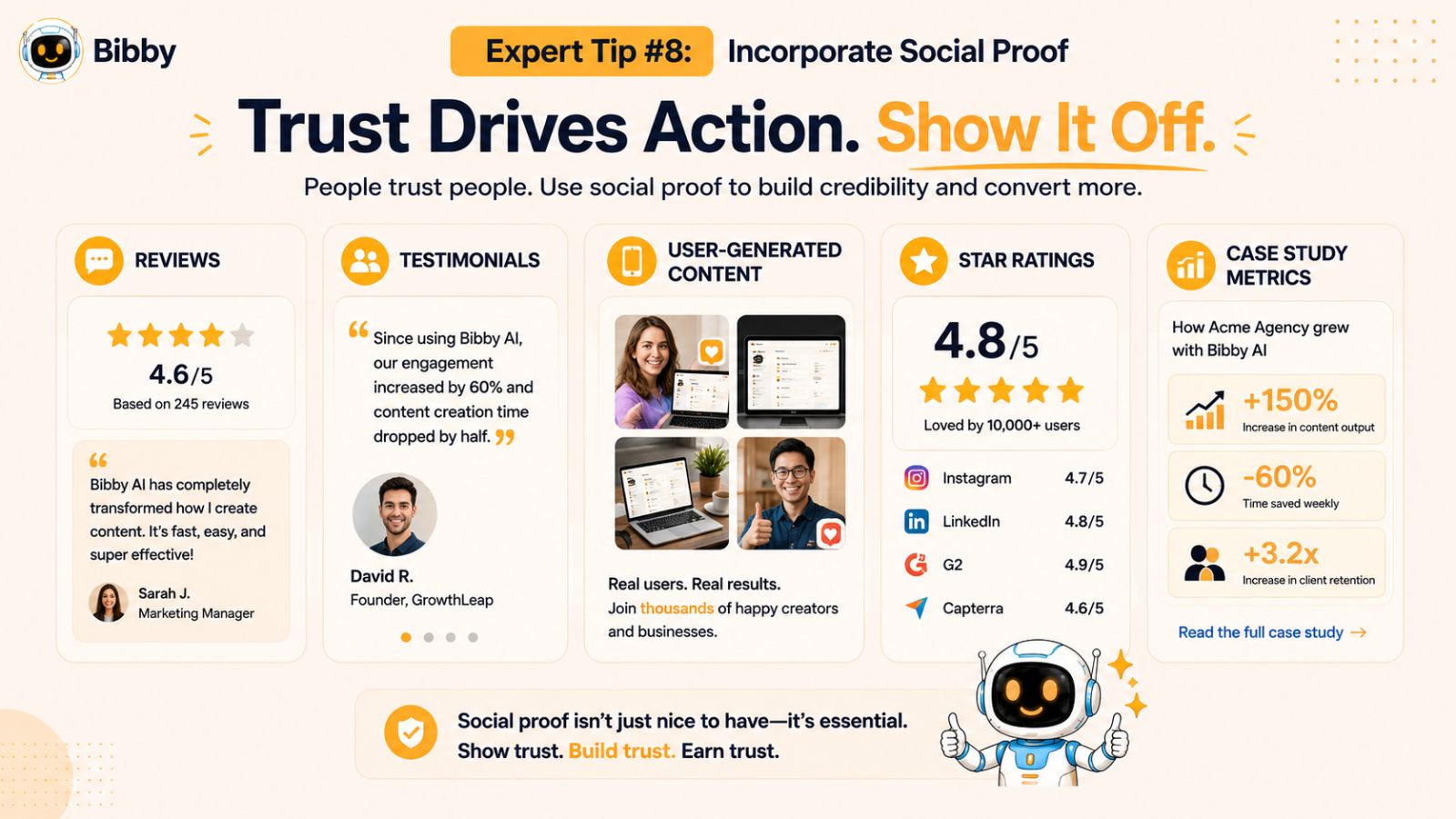
People trust recommendations and real-world experiences more than marketing claims.
Examples of social proof include:
- Customer testimonials
- User-generated content
- Case studies
- Performance metrics
- Success stories
Instead of saying your strategy works, demonstrate that it has worked for others.
9. Optimize Posting Times with AI
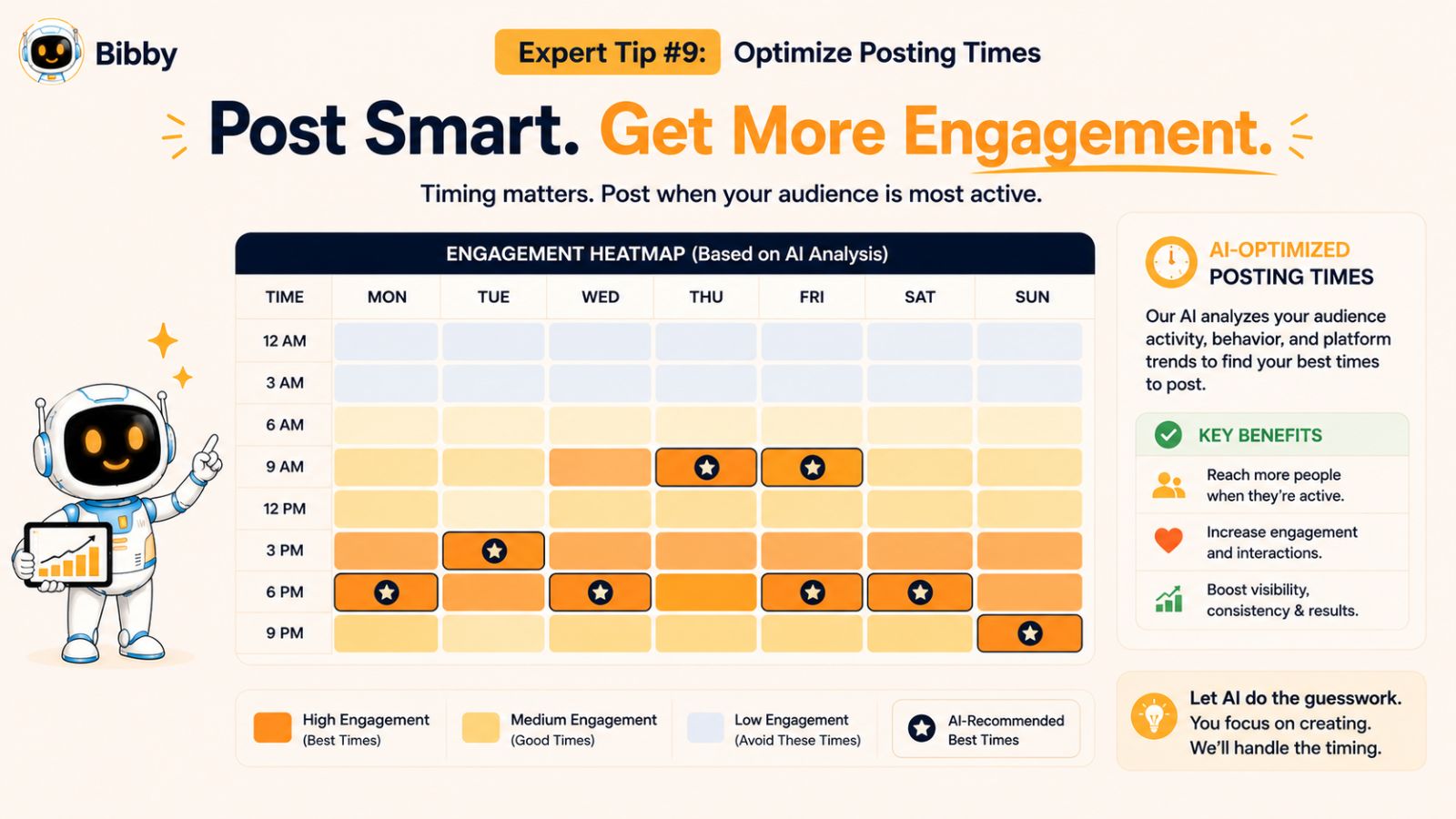
Even excellent content can underperform if it's published at the wrong time.
Historically, marketers had to manually analyze engagement data to determine when audiences were most active.
Today, AI can handle much of this process automatically by identifying patterns in audience behavior and recommending optimal publishing times.
This helps maximize reach without requiring constant manual analysis.
10. Analyze, Learn, and Improve
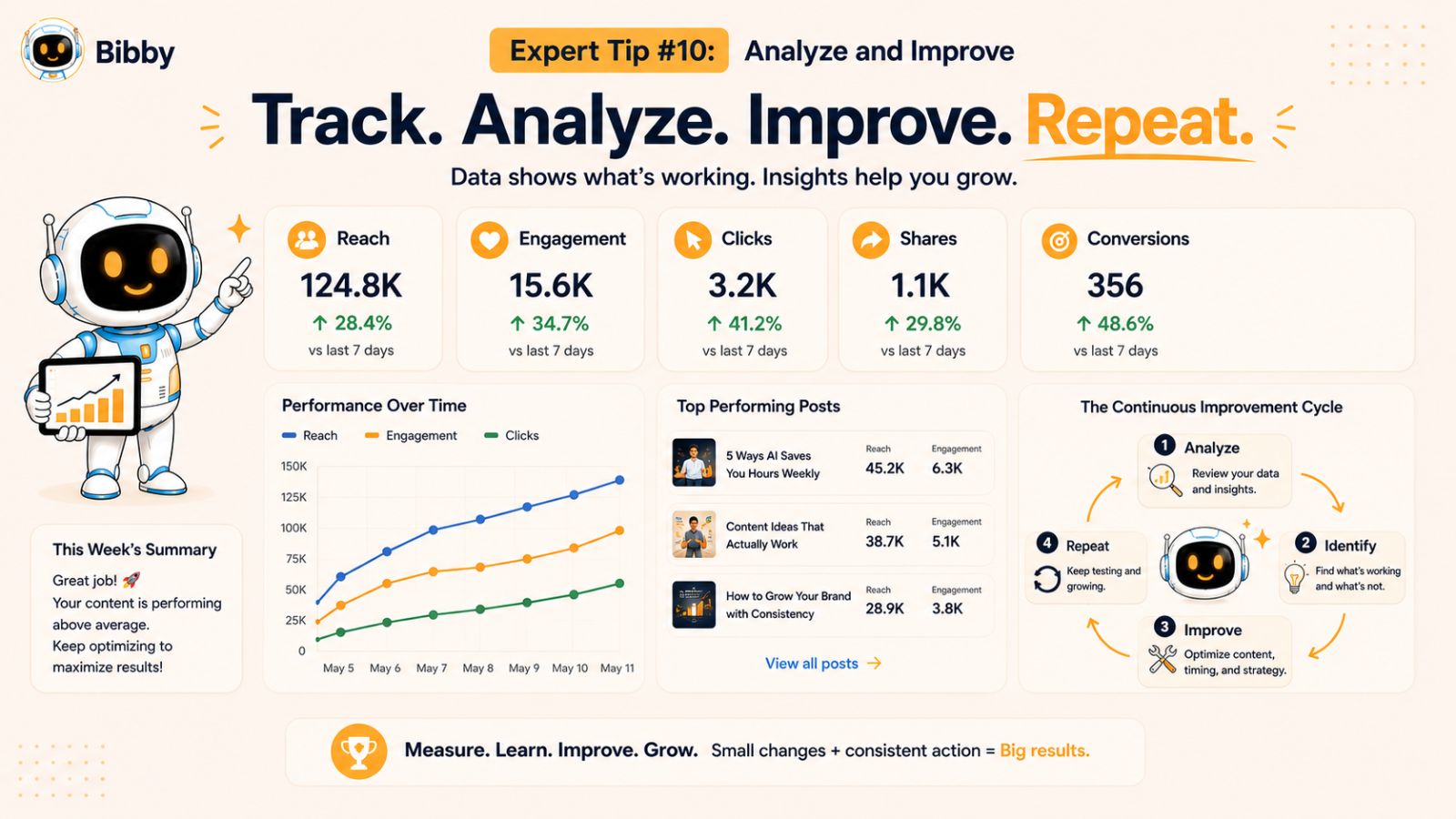
The best social media marketers treat every post as a learning opportunity.
Monitor metrics such as:
- Reach
- Engagement rate
- Click-through rate
- Shares
- Saves
- Conversions
Over time, these insights reveal what types of content resonate most with your audience.
AI-powered analytics tools can accelerate this process by identifying trends, highlighting top-performing content, and recommending future improvements.
Bringing It All Together
The real power of AI isn't simply writing captions faster—it's helping marketers build repeatable systems for creating, optimizing, publishing, and improving content.
When you combine compelling hooks, audience psychology, platform-specific messaging, social proof, and continuous optimization with AI-driven workflows, you create a scalable social media strategy that consistently drives engagement and conversions.
The next step is understanding how modern AI-powered platforms can bring all of these capabilities together in a single workflow.
How Bibby Makes AI Social Media Copywriting Effortless
Creating social media content is no longer just about writing captions. Modern marketers must generate visuals, tailor content for different platforms, schedule posts, monitor analytics, and maintain a consistent publishing schedule. Managing all of these tasks manually can quickly become overwhelming.
This is where Bibby simplifies the entire process.
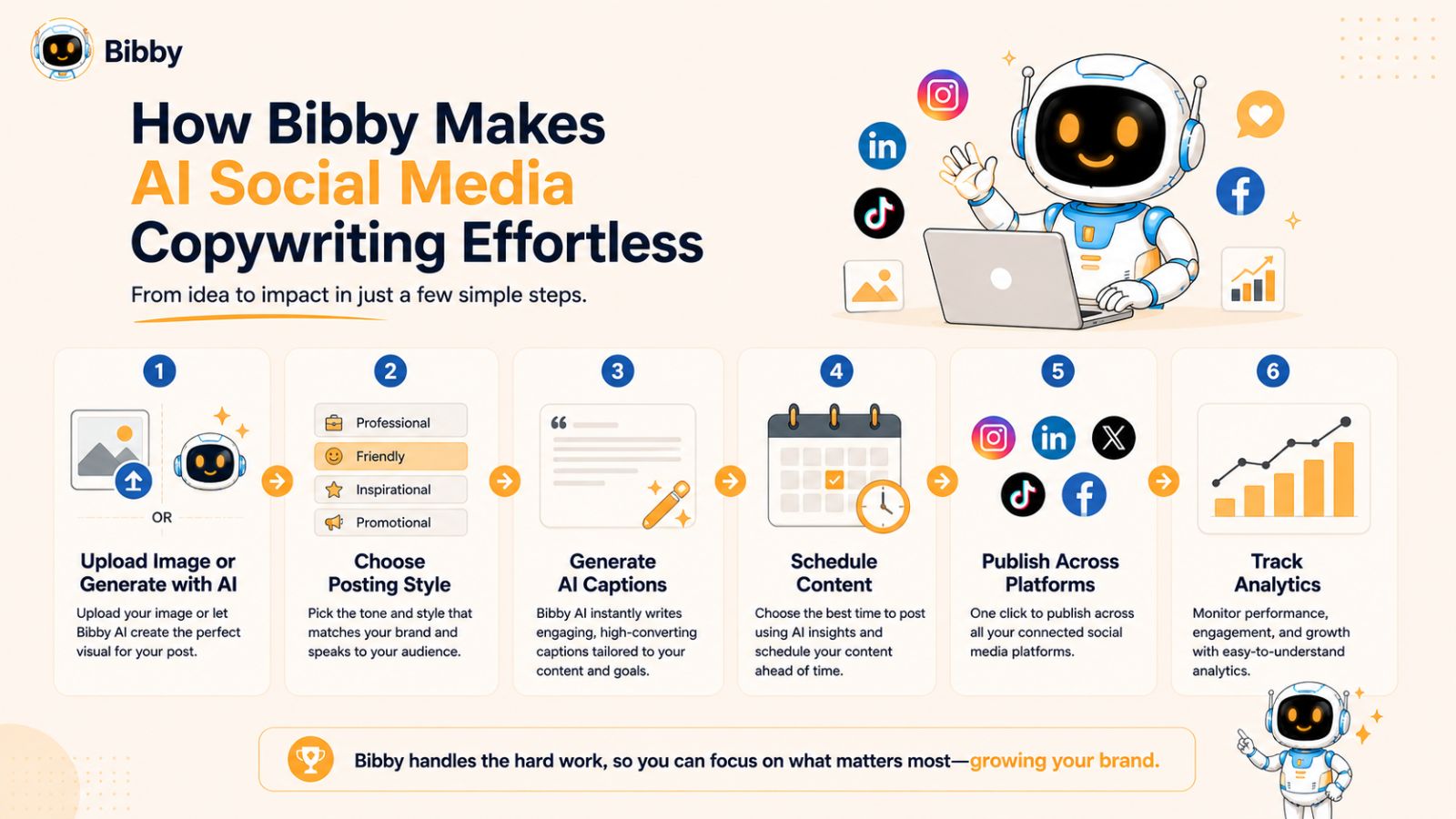
Bibby is an AI-powered social media scheduling and automation platform designed to help businesses, creators, marketers, and agencies create, publish, and optimize content from a single dashboard. Instead of juggling multiple tools for content creation, scheduling, analytics, and publishing, Bibby brings everything together into one streamlined workflow.
A Simple Workflow Designed for Busy Marketers
One of Bibby's biggest advantages is its simplicity. The platform is designed to reduce the number of steps required to create and publish high-quality social media content.
Step 1: Upload or Generate Your Visual Content
Every great social media post starts with strong visuals.
With Bibby, users can either:
- Upload their own images
- Generate new images using AI
This flexibility allows businesses to quickly create content without needing separate design software or additional tools.
Step 2: Choose Your Preferred Posting Style
Different brands communicate differently.
Bibby allows users to select a posting style that matches their brand voice and marketing goals.
Examples include:
- Professional
- Educational
- Promotional
- Inspirational
- Conversational
- Brand-focused
This helps ensure content remains consistent across all platforms.
Step 3: Let AI Generate Captions Automatically
Once your visual and style preferences are selected, Bibby's AI creates captions tailored to your content.
Instead of spending hours brainstorming copy, users can instantly generate engaging social media captions that are designed to capture attention and encourage interaction.
Benefits include:
- Faster content creation
- Consistent messaging
- Reduced writer's block
- Platform-ready copy
Step 4: Schedule Content Across Multiple Platforms
After generating content, Bibby makes publishing effortless.
Users can schedule posts across multiple social networks, including:
- YouTube
- TikTok
Rather than logging into each platform separately, content can be managed from one centralized workspace.
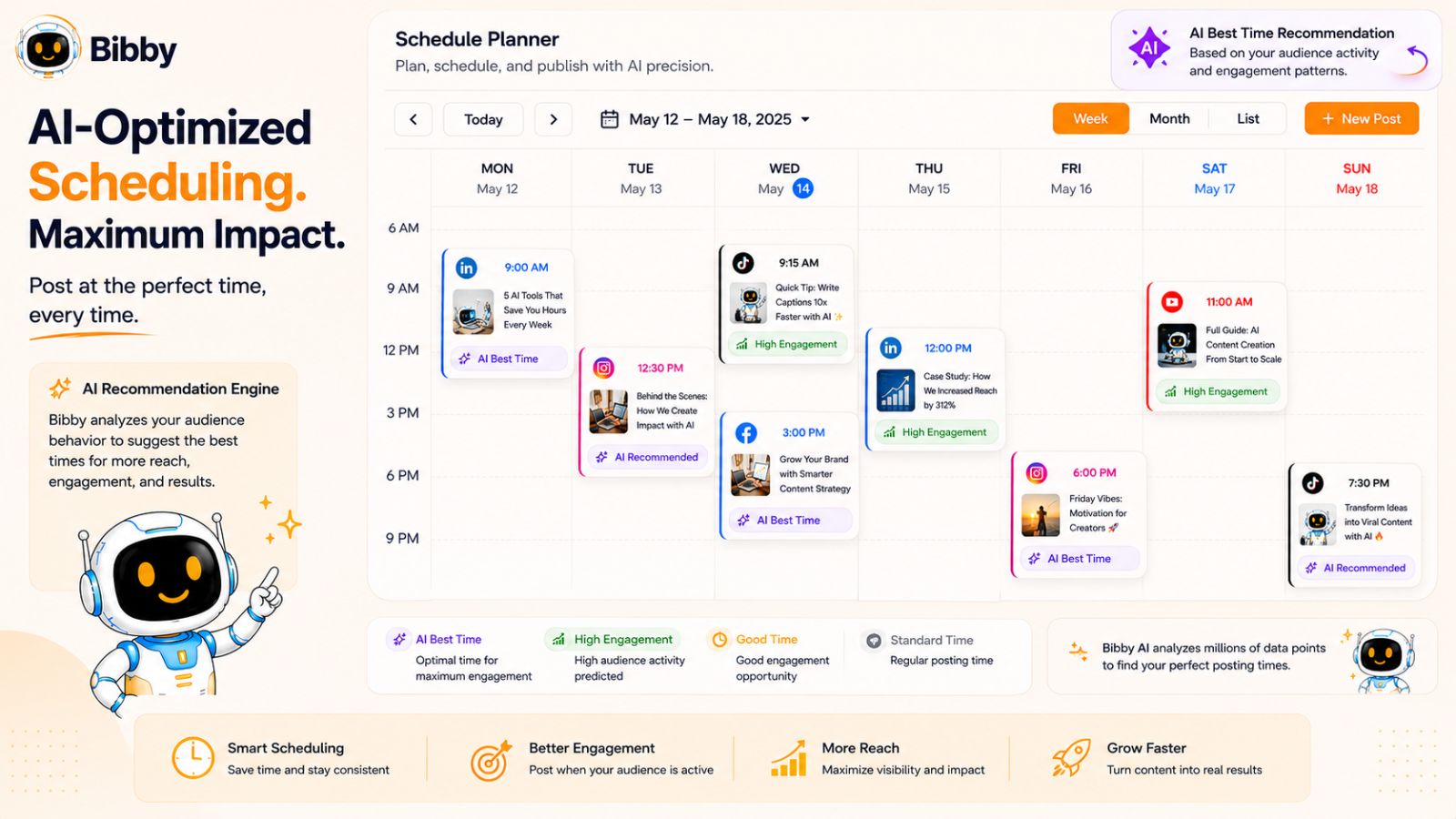
AI-Optimized Posting Times
Timing plays a major role in social media performance.
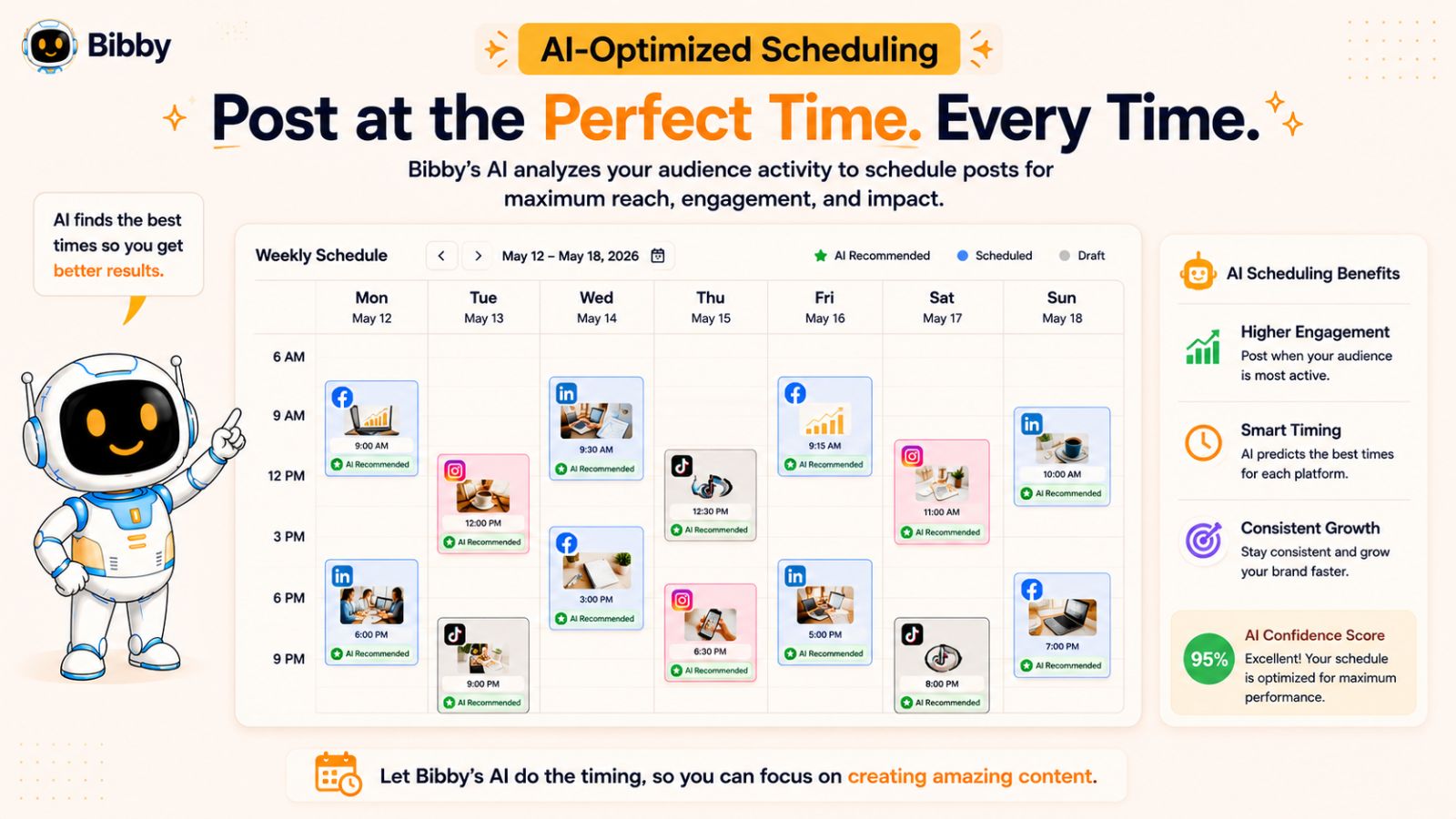
Bibby uses AI to help identify the best times to publish content based on audience behavior and engagement patterns. This helps increase the likelihood that posts will reach users when they are most active and receptive.
Instead of manually researching publishing schedules, marketers can rely on AI-driven optimization to improve consistency and reach.
Manage More Than Just Standard Posts
Today's social media strategy often includes multiple content formats.
Bibby supports:
- Images
- Videos
- Stories
- Reels
- Shorts
- Promotional content
- Educational content
This allows businesses to manage their entire content calendar from a single platform.
Built-In Analytics for Smarter Decisions
Publishing content is only half the equation. To improve results over time, marketers need visibility into performance.
Bibby includes analytics that help users understand:
- Which posts perform best
- Audience engagement trends
- Content effectiveness
- Growth opportunities
- Platform performance
These insights make it easier to refine content strategies and continuously improve results.
Why Bibby Stands Out
Many social media tools focus on only one part of the process. Some specialize in scheduling, while others focus on content creation or analytics.
Bibby combines all of these capabilities into a unified workflow:
- AI image generation
- AI caption creation
- Multi-platform scheduling
- AI-optimized publishing times
- Video and story publishing
- Performance analytics
- Content automation
The result is a platform that helps businesses spend less time managing social media and more time focusing on growth.
From Manual Posting to Automated Growth
The future of social media marketing is not simply creating more content—it's creating better content while automating repetitive tasks.
By combining AI-powered content creation, intelligent scheduling, cross-platform publishing, and analytics in one place, Bibby enables businesses to build a scalable social media system that saves time, improves consistency, and supports long-term growth.
For marketers looking to simplify their workflow while increasing content output and engagement, Bibby provides a practical way to turn AI-powered social media copywriting into a repeatable, results-driven process.
You may also like reading: Best Platforms to Share Video Content and Grow Your Audience
AI Social Media Copywriting Mistakes to Avoid
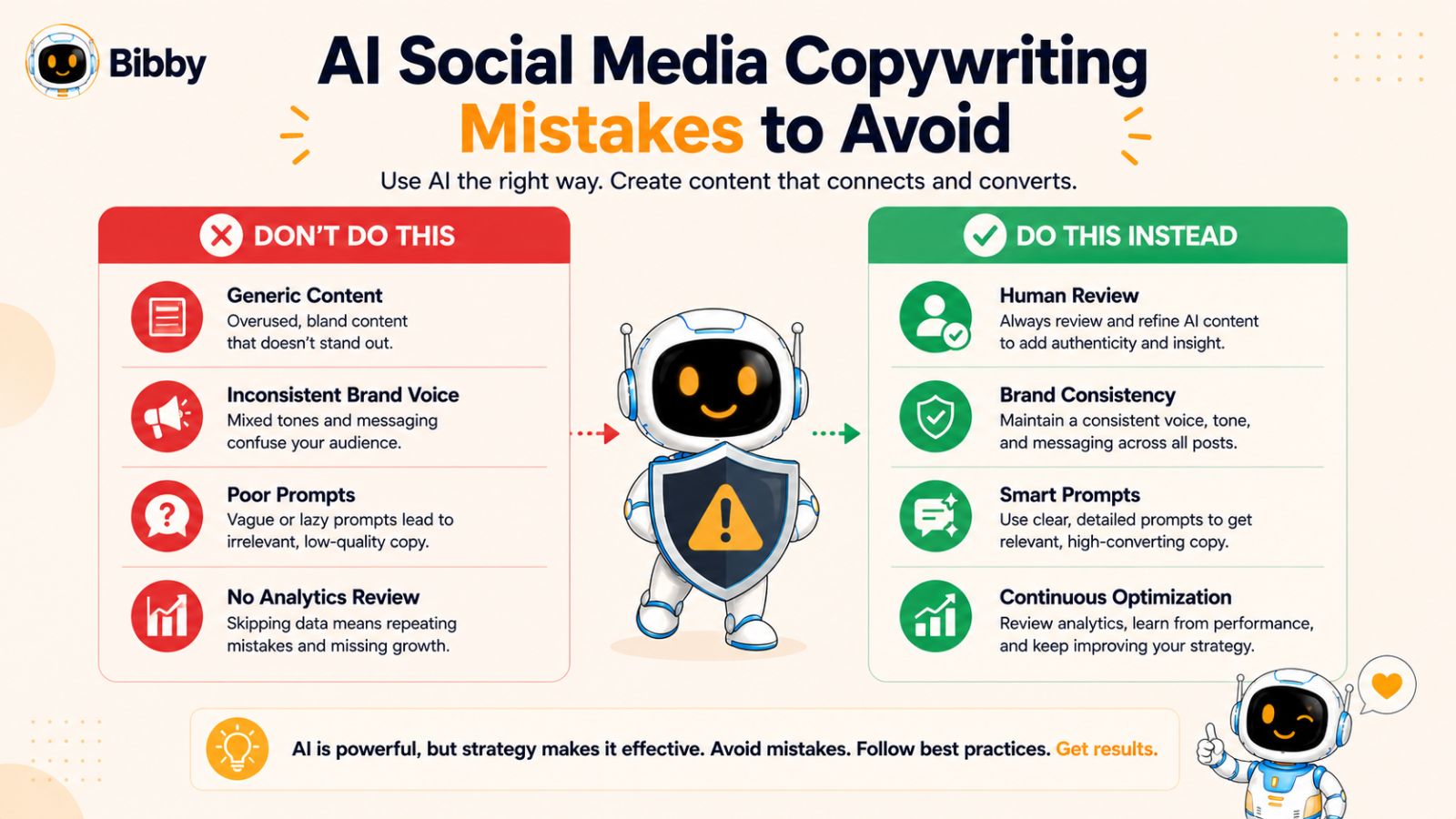
Artificial intelligence can significantly improve productivity and content output, but it is not a substitute for strategy, creativity, or audience understanding. Businesses that rely too heavily on AI without proper oversight often end up producing generic content that fails to connect with their audience.
To maximize results, it's important to understand the most common AI social media copywriting mistakes and how to avoid them.
Over-Relying on AI
One of the biggest misconceptions about AI is that it can completely replace human involvement in content creation.
While AI can generate captions, ideas, and content variations in seconds, it lacks the context, creativity, and brand understanding that humans bring to the process.
The most effective approach is to use AI as an assistant rather than a replacement. Let AI handle repetitive tasks and first drafts, then refine the content with your expertise and insights.
Best practice:
- Use AI for speed and efficiency.
- Use human judgment for strategy and quality control.
Ignoring Brand Voice
Every successful brand has a unique voice and personality.
If you publish AI-generated content without reviewing it, your messaging can become inconsistent, making it harder for audiences to recognize and trust your brand.
Whether your brand voice is professional, friendly, educational, humorous, or authoritative, every piece of content should reflect that identity.
To maintain consistency:
- Create clear brand voice guidelines.
- Use detailed prompts when generating content.
- Review and edit AI-generated captions before publishing.
- Train team members to follow the same communication style.
Consistency builds trust, and trust drives engagement and conversions.
Using Generic Prompts
The quality of AI-generated content depends heavily on the quality of the instructions provided.
Vague prompts often produce vague results.
For example:
Poor prompt:
Write a social media caption about marketing.
Better prompt:
Write an engaging LinkedIn post for small business owners explaining how AI can reduce social media management time by 50%, using a professional but conversational tone and ending with a question to encourage comments.
The more context you provide, the more relevant and effective the output will be.
Publishing Without Fact-Checking
AI can occasionally generate inaccurate, outdated, or misleading information.
This is especially important when discussing:
- Industry statistics
- Research findings
- Financial information
- Healthcare topics
- Legal topics
- Product claims
Always verify facts and figures before publishing content.
Accuracy protects both your credibility and your audience's trust.
Prioritizing Quantity Over Quality
AI makes it possible to create content at an unprecedented scale.
However, publishing large amounts of low-quality content rarely produces meaningful results.
Successful social media strategies focus on creating valuable content that solves problems, educates audiences, inspires action, or entertains.
Before publishing, ask:
- Is this useful?
- Is it relevant?
- Does it align with audience needs?
- Does it support business goals?
If the answer is no, revise the content before posting.
Neglecting Analytics and Performance Data
Many marketers generate content, publish it, and move on without reviewing results.
This creates a major missed opportunity.
Performance data reveals:
- Which content formats perform best
- Which topics resonate most
- Which calls-to-action drive conversions
- Which platforms generate the highest engagement
AI-powered analytics tools can help identify patterns and opportunities, but marketers must still use those insights to improve future content.
Forgetting the Human Element
Social media is fundamentally about human connection.
People engage with brands that feel authentic, relatable, and trustworthy.
Even when using advanced AI tools, businesses should continue to:
- Share real experiences
- Tell customer stories
- Show behind-the-scenes content
- Express genuine opinions and insights
- Build conversations with their audience
The goal is not to sound more robotic—it is to use AI to free up time for more meaningful human interactions.
The Smartest Way to Use AI
The most successful marketers don't use AI to replace creativity. They use AI to enhance it.
When combined with strong strategy, audience understanding, and consistent brand messaging, AI becomes a powerful tool for scaling content creation without sacrificing quality.
By avoiding these common mistakes, businesses can create social media content that feels authentic, delivers value, and drives measurable results while still benefiting from the speed and efficiency that AI provides.
Future Trends in AI Social Media Copywriting
Artificial intelligence has already transformed how social media content is created, but the technology is still evolving rapidly. What seems advanced today may become standard practice within the next few years.
Businesses that understand where AI-powered social media marketing is headed will be better positioned to stay competitive, improve efficiency, and capitalize on emerging opportunities before their competitors.
Hyper-Personalized Content at Scale
Personalization has long been one of the most effective ways to increase engagement and conversions. However, creating customized content for different audience segments traditionally required significant time and resources.
AI is changing this by making personalization scalable.
In the future, AI tools will be able to generate highly targeted content based on factors such as:
- Audience interests
- Industry
- Location
- Buyer journey stage
- Previous engagement behavior
- Platform preferences
Instead of creating one message for everyone, businesses will be able to deliver more relevant content to specific audience groups automatically.
Predictive Content Optimization
Today's AI tools analyze past performance to provide recommendations. The next generation of AI systems will increasingly predict future outcomes before content is published.
This may include:
- Forecasting engagement levels
- Predicting click-through rates
- Estimating conversion potential
- Identifying high-performing content themes
- Recommending optimal content formats
As predictive capabilities improve, marketers will spend less time guessing and more time making data-driven decisions.
AI-Driven Publishing and Scheduling
Posting at the right time has always been important, but future AI systems will make scheduling even more intelligent.
Rather than relying on fixed publishing schedules, AI will continuously adapt based on:
- Audience activity patterns
- Platform algorithm changes
- Historical engagement data
- Seasonal trends
- Industry-specific behavior
Tools like Bibby are already moving in this direction by helping users publish content at AI-optimized times across multiple platforms. Future advancements will make these recommendations even more precise and automated.
Multimodal Content Creation
Social media is no longer limited to text and images.
Modern audiences consume:
- Images
- Videos
- Stories
- Reels
- Shorts
- Live content
- Interactive media
Future AI systems will increasingly create and coordinate multiple content formats from a single idea.
For example, a marketer may provide a simple content brief and receive:
- Social media captions
- AI-generated images
- Short-form videos
- Platform-specific variations
- Publishing schedules
This will dramatically reduce production time while increasing content output.
Smarter Analytics and Performance Insights
Analytics tools are becoming more sophisticated as AI gains the ability to uncover patterns that humans might miss.
Future AI-powered analytics may provide:
- Automated performance summaries
- Content recommendations
- Audience behavior predictions
- Competitive insights
- Growth forecasting
Rather than simply reporting results, AI will increasingly act as a strategic advisor, helping marketers understand why content performed well and what actions to take next.
End-to-End Social Media Automation
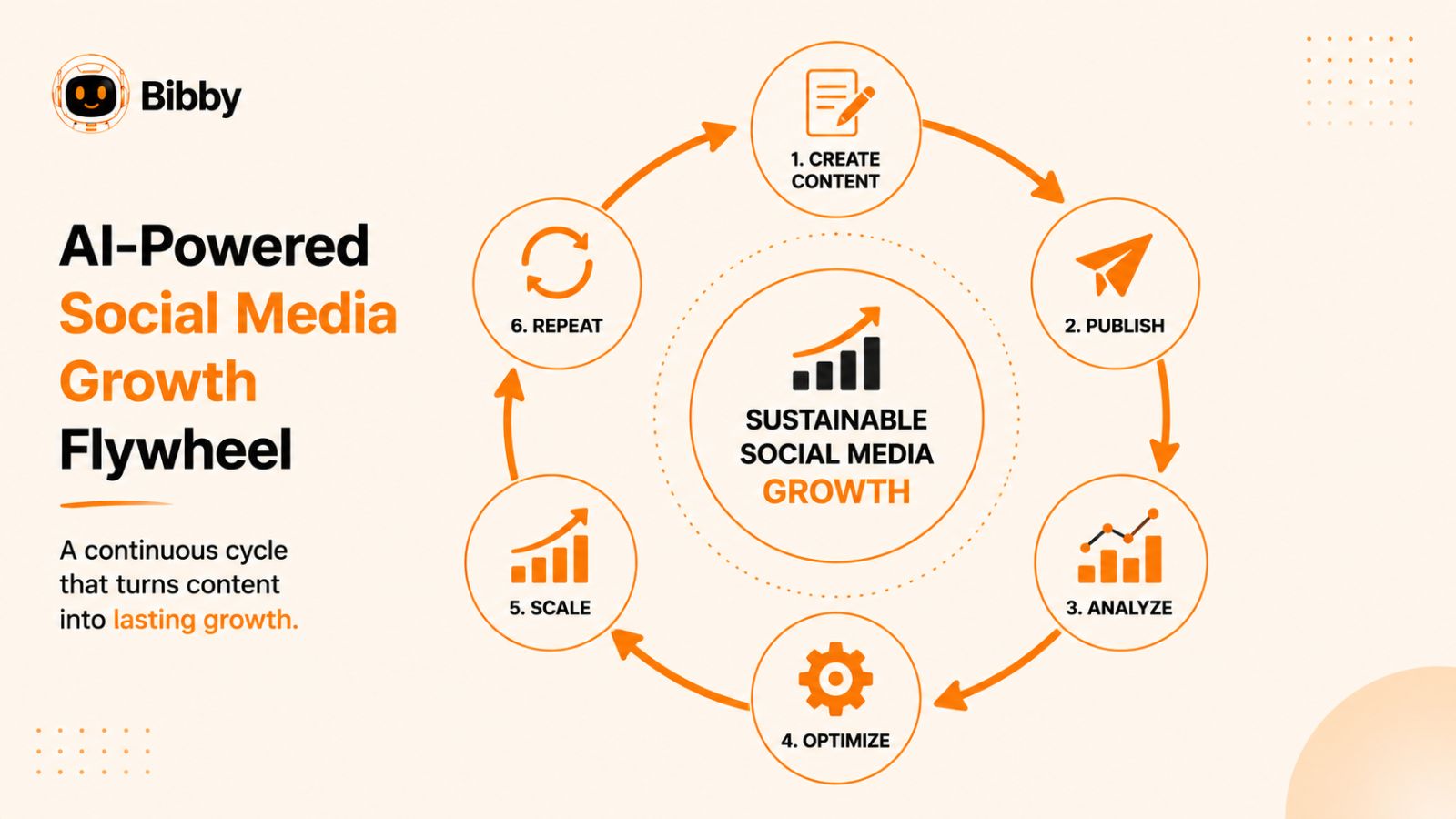
The ultimate goal of AI-powered social media marketing is creating a seamless workflow from content creation to performance optimization.
The future social media process may look like this:
- Upload or generate visual content.
- AI creates platform-specific captions.
- Content is automatically optimized.
- Posts are scheduled at the ideal times.
- Performance is monitored continuously.
- AI recommends improvements.
- Future content is adjusted automatically.
Platforms that combine content generation, scheduling, publishing, and analytics within a single system are helping businesses move closer to this reality.
Will AI Replace Human Copywriters?
Despite rapid advancements, AI is unlikely to replace skilled copywriters entirely.
Human marketers provide qualities that AI cannot fully replicate:
- Creativity
- Strategic thinking
- Emotional intelligence
- Brand storytelling
- Cultural understanding
- Original ideas
Instead of replacing marketers, AI is becoming a powerful partner that handles repetitive tasks and accelerates execution.
The businesses that achieve the greatest success will be those that combine AI's speed and efficiency with human creativity and strategic expertise.
Preparing for the Future
AI social media copywriting is still in its early stages. As technology becomes more sophisticated, marketers will gain access to tools that create better content, automate more workflows, and deliver deeper insights than ever before.
Organizations that embrace these innovations today will be better equipped to scale their content efforts, improve engagement, and stay ahead in an increasingly competitive digital landscape.
The future belongs to marketers who learn how to combine human creativity with AI-powered efficiency—and that future is arriving faster than many businesses realize.
Also read: The Best Social Media Platforms for Marketing
Frequently Asked Questions About AI Social Media Copywriting
Can AI Write Effective Social Media Captions?
Yes. Modern AI tools can generate engaging social media captions, suggest hooks, create calls-to-action, and adapt content for different platforms. However, the best results typically come from combining AI-generated drafts with human editing to ensure accuracy, brand consistency, and authenticity.
Does AI-Generated Content Perform Better Than Human-Written Content?
Not necessarily. AI is a tool, not a guarantee of better performance.
High-performing social media content depends on factors such as audience understanding, messaging, creativity, timing, and strategy. AI can improve efficiency and help generate ideas, but human expertise remains essential for creating content that resonates emotionally and aligns with business objectives.
What Is the Best AI Tool for Social Media Copywriting?
The best tool depends on your specific needs.
Some platforms focus primarily on caption generation, while others specialize in scheduling or analytics. Businesses looking for an all-in-one solution may benefit from platforms like Bibby, which combines AI-powered caption creation, image generation, multi-platform scheduling, AI-optimized posting times, analytics, and content automation within a single workflow.
How Can I Automate Social Media Posting?
Social media posting can be automated using scheduling and automation platforms.
Typically, the process involves:
- Creating or uploading content.
- Generating captions.
- Selecting target platforms.
- Scheduling publication dates.
- Monitoring performance through analytics.
Advanced tools such as Bibby can automate much of this workflow, helping businesses maintain a consistent social media presence while reducing manual effort.
Can AI Determine the Best Time to Post?
Yes. Many modern social media tools use artificial intelligence to analyze audience activity and engagement patterns.
By evaluating historical performance data, AI can recommend or automatically select publishing times that are more likely to maximize visibility, engagement, and reach.
Is AI Social Media Copywriting Suitable for Small Businesses?
Absolutely.
Small businesses often have limited time, staff, and marketing resources. AI can help them create content faster, maintain consistent posting schedules, and compete more effectively without significantly increasing costs.
For many small businesses, AI-powered social media tools provide an opportunity to scale marketing efforts that would otherwise require a much larger team.
Can AI Create Content for Multiple Platforms at Once?
Yes. Many AI tools can adapt a single content idea into platform-specific variations for Facebook, Instagram, LinkedIn, TikTok, and YouTube.
This allows marketers to maintain consistent messaging while adjusting content length, tone, and formatting to match each platform's audience expectations.
What Types of Content Can AI Help Create?
AI can assist with a wide range of content formats, including:
- Social media captions
- Promotional posts
- Educational content
- Product announcements
- Story content
- Video descriptions
- Hashtag suggestions
- Content ideas
- Content calendars
Many modern platforms are also expanding into AI-generated images, videos, and other multimedia content.
Will AI Replace Social Media Managers?
No. While AI can automate many repetitive tasks, social media management still requires human skills such as strategy, relationship building, creative direction, brand management, and audience engagement.
AI is best viewed as a productivity tool that helps social media professionals work more efficiently rather than as a replacement for their expertise.
How Do I Get Started with AI Social Media Copywriting?
The easiest way to begin is by identifying repetitive tasks in your current workflow and using AI to streamline them.
Start by:
- Generating caption ideas with AI
- Testing different hooks and calls-to-action
- Scheduling content in advance
- Tracking performance data
- Refining your strategy based on analytics
As you become more comfortable with AI tools, you can gradually automate larger portions of your content creation and publishing process while maintaining control over your brand voice and marketing strategy.
Conclusion
Social media copywriting is no longer just about finding the right words—it's about creating the right content, for the right audience, at the right time. As AI continues to transform digital marketing, businesses now have access to tools that can dramatically improve efficiency while helping them create more engaging and effective social media campaigns.
Throughout this guide, we've explored three key takeaways:
- AI can significantly speed up content creation and reduce manual workload.
- High-converting social media posts rely on proven copywriting and psychological principles.
- Automation platforms can streamline content creation, scheduling, publishing, and performance analysis.
By combining human creativity with AI-powered tools, marketers can produce higher-quality content at scale without sacrificing authenticity or strategic thinking.
Solutions like Bibby demonstrate how far social media automation has evolved. Instead of managing multiple tools and workflows, businesses can upload or generate images, create AI-powered captions, schedule content across platforms, publish at AI-optimized times, and monitor analytics from a single dashboard. This allows teams to spend less time on repetitive tasks and more time focusing on growth, creativity, and customer engagement.
As AI technology continues to advance, the most successful marketers will be those who embrace automation while maintaining a strong understanding of their audience and brand voice.
The next step is learning how to build a complete AI-powered social media marketing system—one that not only creates content efficiently but also turns engagement into measurable business results. Mastering that process can help transform social media from a time-consuming task into a scalable growth engine for your business.