
Brand awareness is the foundation of successful marketing, influencing whether people recognize, remember, and ultimately choose your business over competitors.
Whether you're launching a new company or growing an established brand, understanding brand awareness is essential for attracting customers and building long-term trust. Strong brand awareness increases the likelihood that consumers will think of your business when they need products or services you offer, making it a key driver of sustainable growth.
Let's begin by defining brand awareness and exploring why it plays such a critical role in modern marketing.
What Is Brand Awareness?
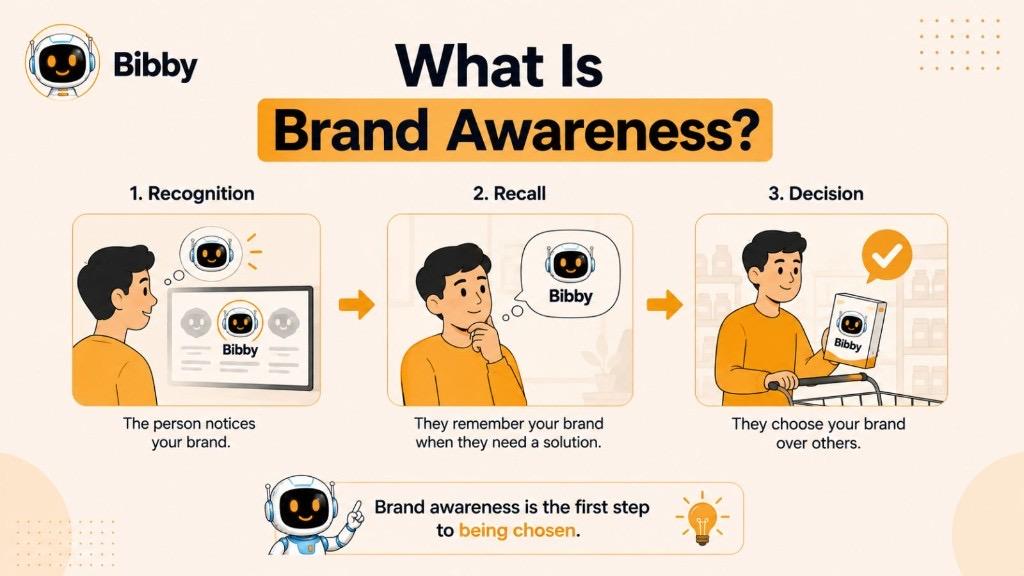
Brand awareness shapes whether people recognize, remember, and choose your business—here's how experts define it.
Recognize
Remember
Recall
Brand Awareness Explained
Brand awareness refers to how familiar consumers are with your brand and how easily they can recognize or recall it. It's often the first step in the customer journey, laying the foundation for trust, engagement, and future purchases.
When people repeatedly encounter your brand through channels like social media, search engines, advertisements, email campaigns, or word-of-mouth, they become more familiar with it. Over time, this familiarity makes them more likely to consider your business when they need a product or service you offer.
For example, if someone is looking for a social media automation tool, they're more likely to choose a brand they've seen consistently online than one they've never heard of. This is the power of brand awareness—it increases visibility, builds credibility, and keeps your business top of mind.
It's important to note that brand awareness doesn't guarantee immediate sales. Instead, it creates recognition and trust, making potential customers more likely to engage with your brand when they're ready to buy. Businesses with strong brand awareness often enjoy higher customer confidence, improved marketing performance, and a lasting competitive advantage.
Why Brand Awareness Matters
Brand awareness is more than just getting your name in front of people—it's about creating familiarity that influences purchasing decisions. When consumers recognize and trust your brand, they're more likely to choose it over competitors, recommend it to others, and remain loyal over time.
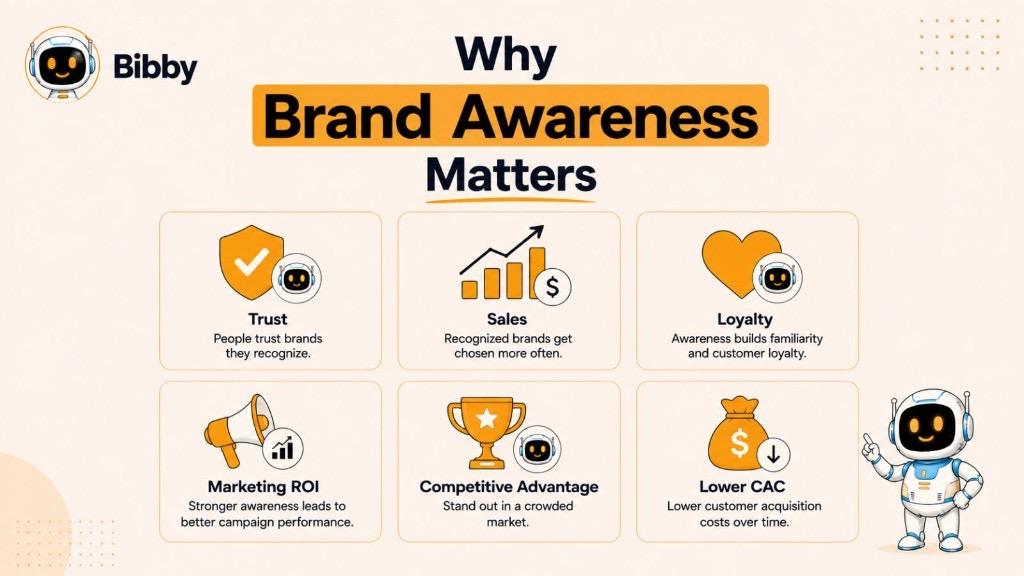
Here are the key reasons why brand awareness is essential for business growth:
Builds Trust and Credibility
People are more likely to buy from brands they know and recognize. Consistent visibility across social media, search engines, and other marketing channels helps establish credibility and makes your business appear more reliable.
Increases Purchase Intent
Consumers often consider familiar brands first when researching products or services. Strong brand awareness keeps your business top of mind, increasing the likelihood that potential customers will choose you when they're ready to make a purchase.
Improves Customer Loyalty
Brand awareness doesn't end with the first sale. Familiarity encourages repeat purchases and strengthens long-term relationships, helping turn one-time buyers into loyal customers and brand advocates.
Enhances Marketing Performance
Marketing campaigns tend to perform better when audiences already recognize your brand. Familiarity can improve click-through rates, engagement, and conversion rates because people are more willing to interact with brands they trust.
Creates a Competitive Advantage
In crowded markets, businesses with strong brand awareness stand out more easily. Even when competitors offer similar products or services, a recognizable brand is often remembered and chosen first.
Reduces Customer Acquisition Costs
As more people become familiar with your brand, acquiring new customers often becomes more cost-effective. Returning visitors, branded searches, referrals, and word-of-mouth recommendations can reduce the need for expensive advertising while improving overall marketing efficiency.
Types of Brand Awareness
Brand awareness isn't a single concept—it exists at different levels based on how well consumers know and remember a brand. Understanding these types can help businesses evaluate their marketing efforts and identify opportunities to strengthen their brand presence.
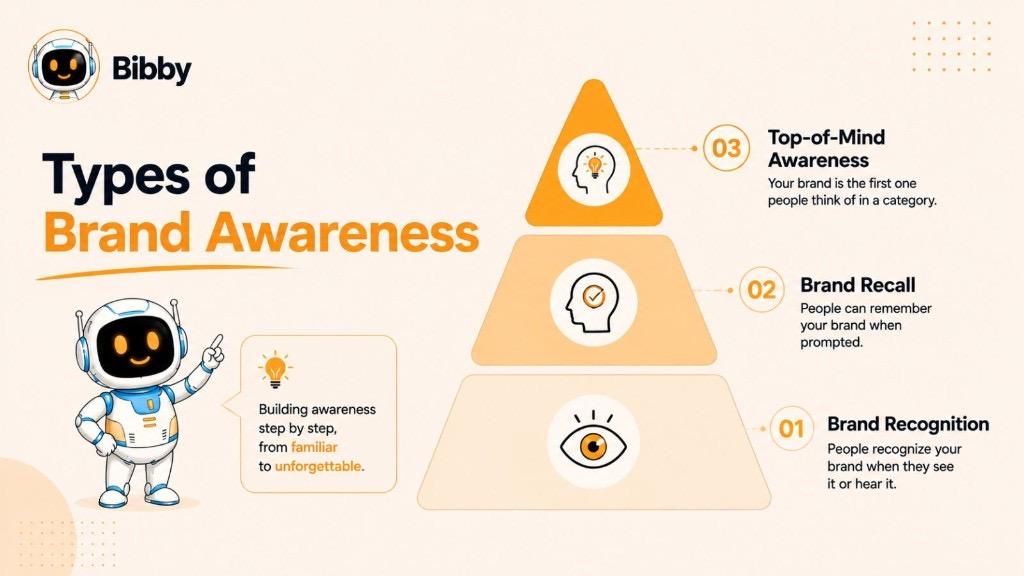
Brand Recognition
Brand recognition is the ability of consumers to identify a brand when they see its name, logo, colors, slogan, packaging, or other visual elements. For example, recognizing a company's logo while scrolling through social media or spotting its products on a store shelf demonstrates brand recognition.
While recognition shows that people are familiar with your brand, it doesn't necessarily mean they'll think of it first when making a purchase.
Brand Recall
Brand recall measures how easily consumers can remember a brand without being shown any visual or verbal cues. For example, if someone is asked to name a social media automation tool and immediately thinks of Bibby, that indicates strong brand recall.
High brand recall is valuable because it increases the likelihood that your business will be considered during the buying process.
Top-of-Mind Awareness
Top-of-mind awareness is the highest level of brand awareness. It occurs when your brand is the very first one consumers think of within a specific product or service category.
For instance, when people think of a category like athletic footwear or video streaming, certain well-known brands often come to mind instantly. Achieving top-of-mind awareness requires consistent branding, memorable customer experiences, and long-term marketing efforts across multiple channels.
By moving consumers from recognition to recall and ultimately to top-of-mind awareness, businesses can build stronger relationships with their audience and gain a lasting competitive advantage.
Brand Awareness Examples
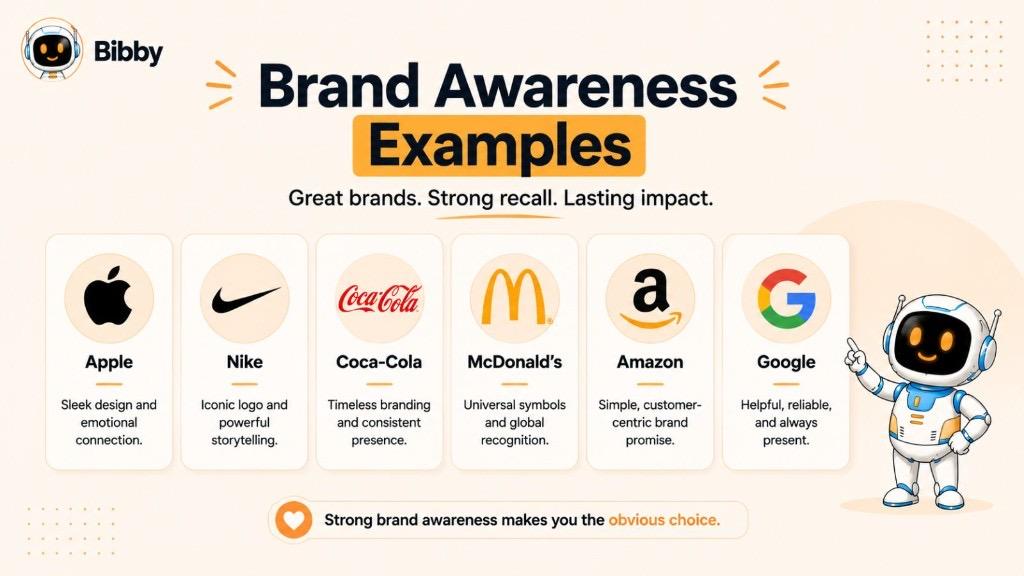
Some of the world's most successful companies have built exceptional brand awareness through consistent branding, memorable marketing campaigns, and positive customer experiences. Here are a few well-known examples:
Coca-Cola
Coca-Cola has achieved global brand awareness through its iconic red-and-white branding, distinctive logo, and decades of memorable advertising. Many consumers can instantly recognize the brand from its packaging alone.
Nike
Nike has built strong brand awareness with its famous Swoosh logo and the "Just Do It" slogan. Its partnerships with athletes, compelling storytelling, and consistent presence across digital and traditional media have made it one of the most recognizable sportswear brands in the world.
Apple
Apple is known for its minimalist branding, innovative products, and loyal customer base. Its consistent design language and product launches have helped make the brand instantly recognizable across global markets.
Netflix
Netflix has strengthened its brand awareness through original content, personalized user experiences, and consistent marketing across streaming platforms and social media. Today, it's one of the first brands many people associate with online video streaming.
Bibby
For growing businesses, building brand awareness doesn't require the budget of a global company—it requires consistency. By regularly publishing valuable content and maintaining an active presence across social media platforms, brands can become more familiar to their target audience over time. Social media automation tools like Bibby help businesses schedule posts consistently, making it easier to stay visible and strengthen brand awareness without increasing manual effort.
These examples show that successful brand awareness isn't built overnight. It develops through repeated exposure, consistent messaging, and meaningful interactions that keep a brand top of mind whenever customers are ready to make a purchase.
How Brand Awareness Works
Brand awareness develops over time through repeated interactions between a business and its target audience. Every time someone sees your brand—whether through social media, search engines, advertisements, blog posts, email campaigns, or word-of-mouth—they become more familiar with it.
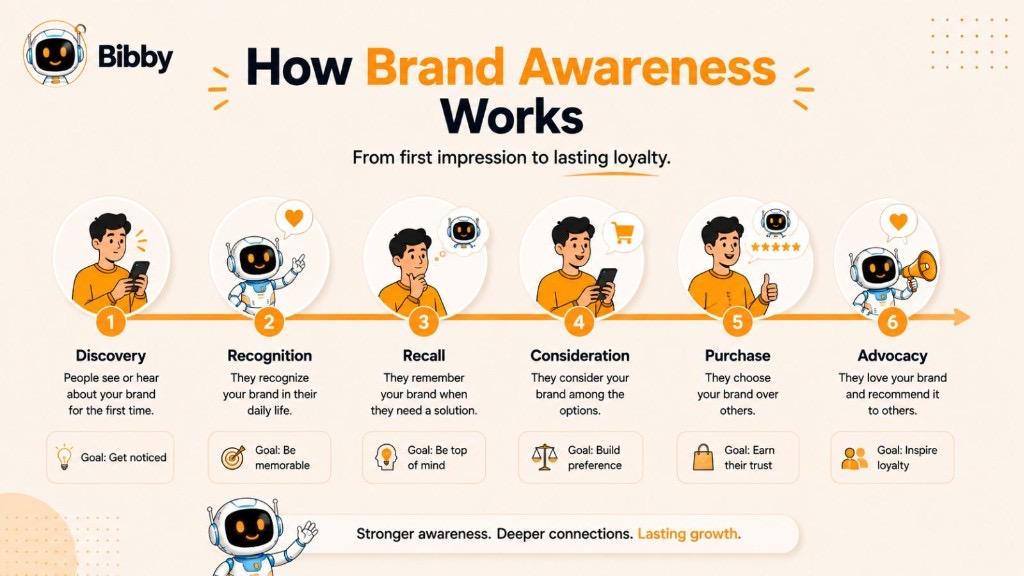
As these interactions increase, consumers begin to recognize your brand, remember it more easily, and develop trust. This familiarity makes them more likely to consider your business when they're ready to make a purchase.
A typical brand awareness journey looks like this:
- Discovery: A potential customer encounters your brand for the first time through a marketing channel, recommendation, or search result.
- Repeated Exposure: They continue seeing your brand across different platforms, reinforcing familiarity and recognition.
- Recognition: The customer starts identifying your brand by its name, logo, messaging, or visual identity.
- Trust: Consistent experiences and valuable content help establish credibility and confidence in your brand.
- Consideration: When the customer needs a product or service you offer, your brand becomes one of the options they consider.
- Purchase: Trust and familiarity increase the likelihood of choosing your business over competitors.
- Loyalty and Advocacy: Positive experiences encourage repeat purchases, recommendations, reviews, and word-of-mouth referrals, further expanding your brand awareness.
This cycle is continuous. Loyal customers often introduce your brand to new audiences, creating additional exposure and strengthening brand awareness over time. Businesses that consistently deliver value and maintain a visible presence are more likely to stay top of mind and build lasting customer relationships.
How to Build Brand Awareness
Building brand awareness requires a consistent, long-term approach rather than a single marketing campaign. The goal is to make your brand more recognizable, memorable, and trustworthy wherever your target audience spends time. Here are some of the most effective strategies to increase brand awareness.
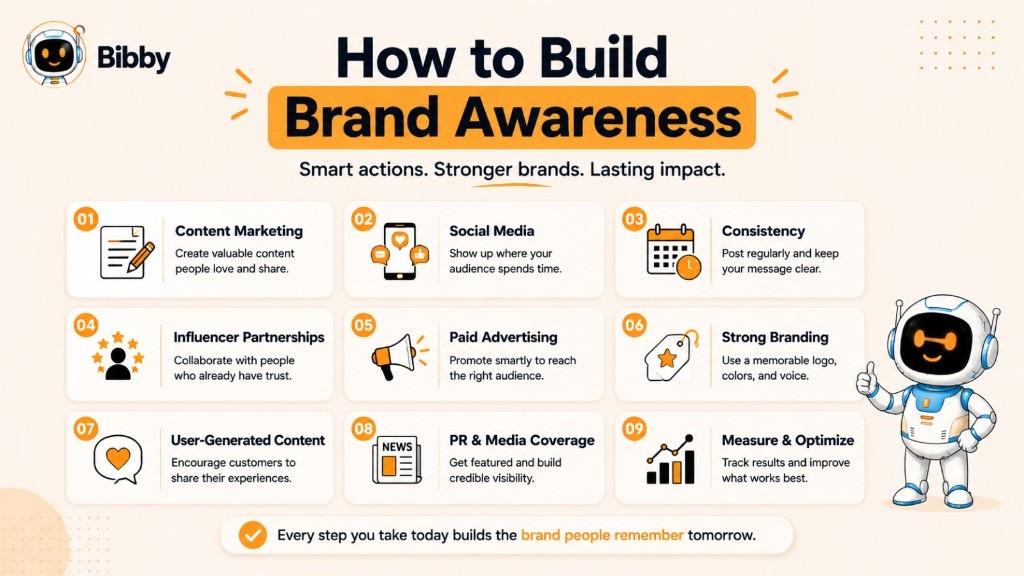
1. Create Valuable Content
Publishing high-quality content helps introduce your brand to new audiences while establishing authority in your industry. Blog posts, videos, infographics, podcasts, and educational resources can answer customer questions and improve your visibility in search engines.
Focus on creating content that solves real problems and aligns with your audience's interests. Valuable content encourages shares, backlinks, and repeat visits, all of which contribute to stronger brand awareness.
2. Maintain an Active Social Media Presence
Social media platforms provide businesses with opportunities to reach large audiences and interact directly with potential customers. Posting consistently, responding to comments, and participating in conversations help keep your brand visible and build meaningful relationships.
Sharing a mix of educational content, product updates, customer stories, and behind-the-scenes insights can increase engagement and strengthen brand recognition over time.
3. Publish Content Consistently
Consistency is one of the biggest drivers of brand awareness. Businesses that publish content on a regular schedule are more likely to remain top of mind than those that post only occasionally.
Planning your content in advance and using scheduling or automation tools can help maintain a consistent presence across multiple social media platforms without requiring constant manual effort.
4. Collaborate with Influencers and Industry Partners
Partnering with influencers, creators, or complementary businesses can introduce your brand to new audiences who already trust those voices. Authentic collaborations, guest content, product reviews, and co-marketing campaigns can significantly expand your reach.
Choose partners whose audience aligns with your target market to maximize the impact of your campaigns.
5. Invest in Paid advertising
Organic marketing is valuable, but paid advertising can accelerate brand awareness by reaching highly targeted audiences. Platforms such as Google Ads, Facebook, Instagram, LinkedIn, and TikTok allow businesses to promote their content, products, or services to potential customers based on demographics, interests, and behaviors.
Combining paid campaigns with strong organic content often delivers the best long-term results.
6. Build a Consistent Brand Identity
A recognizable brand identity helps customers remember your business. Consistent use of your logo, colors, typography, messaging, and tone of voice across every marketing channel creates a cohesive experience that reinforces brand recognition.
The more consistent your branding, the easier it becomes for customers to identify your business.
7. Encourage User-Generated Content
Customer reviews, testimonials, social media mentions, and user-generated content help increase your brand's credibility while expanding its reach. When people share positive experiences with your brand, they introduce it to their own networks and build trust through authentic recommendations.
Encouraging customers to tag your business or participate in branded campaigns can further amplify your visibility.
8. Leverage Public Relations and Media Coverage
Press releases, guest articles, podcast interviews, webinars, and media features can expose your brand to wider audiences while strengthening your reputation. Being featured by respected publications or industry experts increases credibility and introduces your business to potential customers who may not have discovered it otherwise.
9. Track and Optimize Your Efforts
Building brand awareness is an ongoing process that requires regular evaluation. Monitor key metrics such as website traffic, branded search volume, social media reach, engagement, and direct traffic to understand which marketing activities are generating the greatest visibility.
Use these insights to refine your strategy, focus on high-performing channels, and continuously improve your brand awareness campaigns.
How Bibby Helps Build Brand Awareness
Consistency is one of the biggest challenges businesses face when growing brand awareness. Managing multiple social media accounts, planning content, and publishing posts manually can quickly become time-consuming.
Bibby simplifies this process by helping businesses schedule and automate social media posts across multiple platforms from a single dashboard. By maintaining a consistent publishing schedule, engaging audiences regularly, and keeping your brand visible, Bibby enables businesses to strengthen brand awareness while saving valuable time.
How to Measure Brand Awareness
Building brand awareness is only part of the process—you also need to measure its effectiveness. By tracking the right metrics, you can understand how visible your brand is, identify what's working, and make informed decisions to improve your marketing strategy.
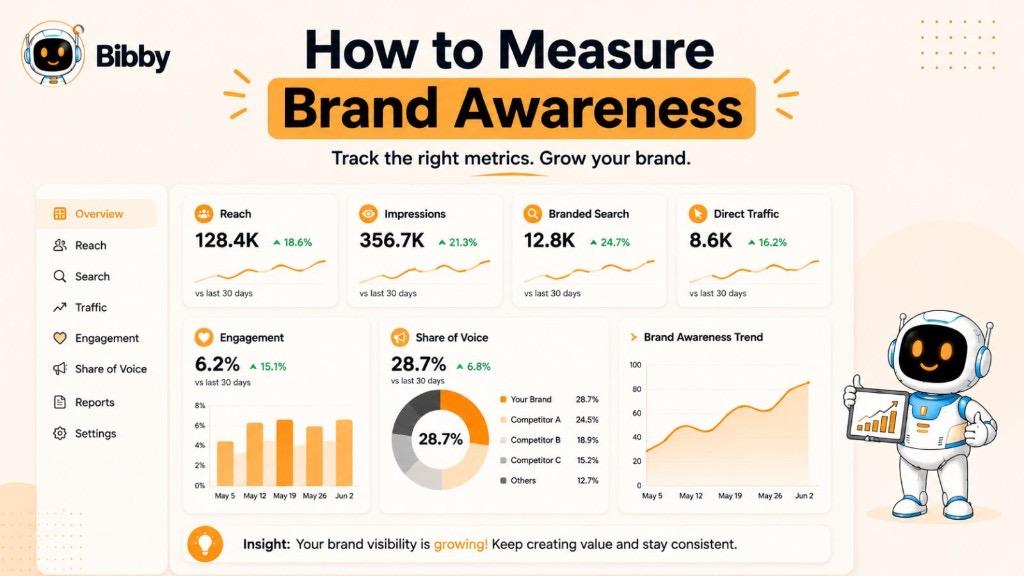
Here are some of the most important brand awareness metrics to monitor:
1. Reach
Reach measures the number of unique people who have seen your content, advertisement, or social media posts. A growing reach indicates that your brand is being exposed to a larger audience.
2. Impressions
Impressions represent the total number of times your content is displayed, regardless of whether someone interacts with it. High impressions combined with increasing reach often indicate strong brand visibility.
3. Website Traffic
Monitoring website traffic helps you understand how many people are discovering your brand online. Pay close attention to trends in new visitors, returning visitors, and traffic sources to identify which marketing channels are generating the most awareness.
4. Branded Search Volume
Branded search volume measures how often people search specifically for your company or product name. An increase in branded searches is a strong sign that more consumers recognize and remember your brand.
5. Social Media Mentions
Track how often your brand is mentioned across social media platforms. Positive mentions, conversations, and shares indicate growing visibility and engagement within your target audience.
6. Share of Voice
Share of voice compares how frequently your brand is mentioned online relative to competitors. A higher share of voice generally indicates stronger market visibility and greater brand awareness within your industry.
7. Direct Traffic
Direct traffic includes visitors who type your website address directly into their browser or access it through saved bookmarks. Growth in direct traffic often reflects increasing brand recognition and customer familiarity.
8. Engagement Rate
Metrics such as likes, comments, shares, saves, and clicks reveal how audiences interact with your content. High engagement suggests that your messaging resonates with your audience and helps reinforce brand awareness.
9. Brand Awareness Surveys
Customer surveys provide direct insights into how well people recognize and remember your brand. Questions about brand recall, recognition, and purchase consideration can help measure awareness beyond digital analytics.
Best Practices for Measuring Brand Awareness
To gain an accurate understanding of your brand awareness, monitor multiple metrics instead of relying on a single data point. Review performance regularly, compare trends over time, and evaluate results across different marketing channels.
If you're using social media to increase brand awareness, analytics tools can help you monitor reach, impressions, engagement, and audience growth in one place. Combined with a consistent publishing strategy, these insights enable you to refine your campaigns and continuously strengthen your brand's visibility.
Brand Awareness vs. Brand Recognition
Although the terms brand awareness and brand recognition are often used interchangeably, they represent different aspects of how consumers perceive a brand.
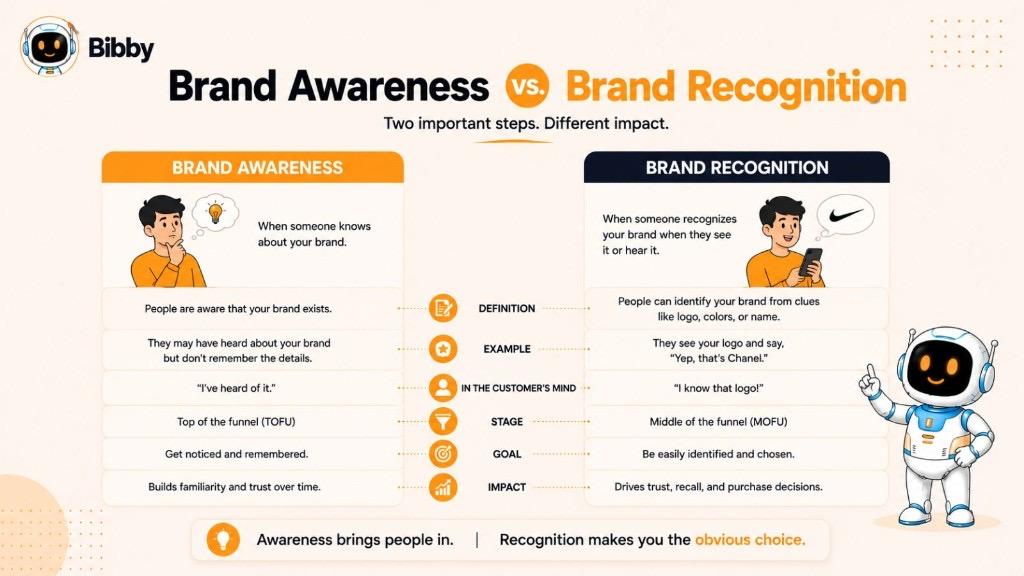
Brand awareness is the broader concept. It measures how familiar people are with your brand and whether they can recognize, remember, or recall it when making purchasing decisions.
Brand recognition, on the other hand, focuses specifically on a consumer's ability to identify your brand when they encounter visual or verbal cues, such as your logo, brand name, colors, slogan, or packaging.
The table below highlights the key differences:
| Brand Awareness | Brand Recognition |
|---|---|
| Measures overall familiarity with a brand | Measures the ability to identify a brand from specific cues |
| Includes both recognition and recall | Focuses primarily on visual or auditory identification |
| Influences trust, consideration, and purchase decisions | Helps consumers instantly identify a brand |
| Built through consistent marketing and customer experiences | Strengthened through consistent branding and visual identity |
| Represents the broader goal of branding efforts | Serves as one component of overall brand awareness |
Which Is More Important?
Neither is more important—they work together.
Brand recognition helps people identify your business when they see it, while brand awareness ensures they remember your brand and consider it when they're ready to make a purchase. Businesses that invest in consistent branding, valuable content, and ongoing customer engagement are more likely to improve both brand recognition and overall brand awareness.
For long-term success, marketers should focus on building recognition first and then reinforcing it through consistent interactions that create trust, recall, and customer loyalty.
Common Brand Awareness Mistakes
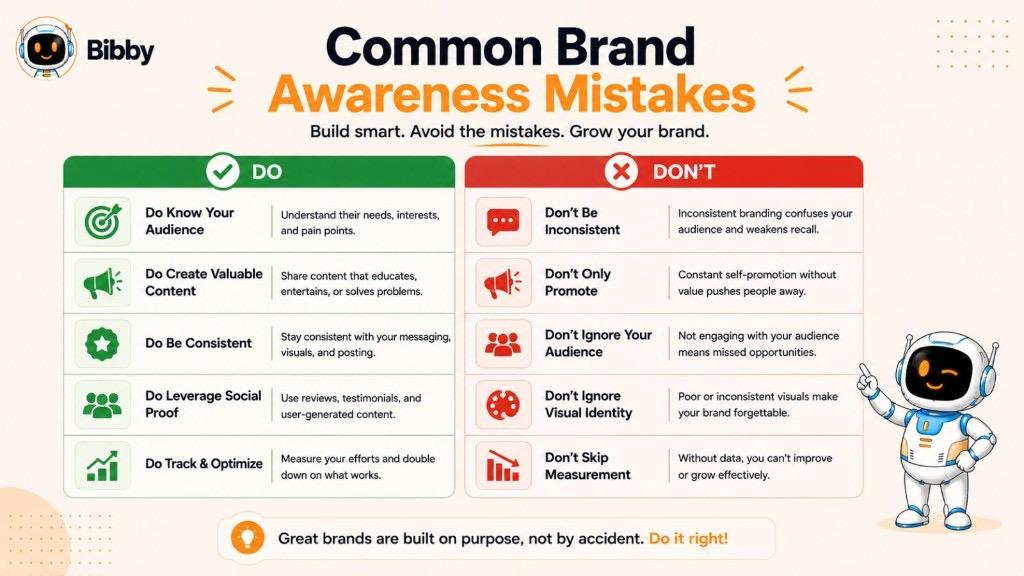
Building brand awareness takes time, but certain mistakes can slow your progress or reduce the effectiveness of your marketing efforts. Avoiding these common issues can help you create a stronger, more recognizable brand.
1. Inconsistent Branding
Using different logos, colors, messaging, or tone of voice across platforms can confuse your audience. Maintaining a consistent brand identity makes it easier for people to recognize and remember your business.
2. Posting Inconsistently
Publishing content sporadically can reduce your brand's visibility and make it difficult to stay top of mind. Developing a content calendar and posting regularly helps reinforce brand awareness over time.
3. Ignoring Your Target Audience
Trying to appeal to everyone often results in generic messaging that resonates with no one. Understanding your audience's needs, interests, and pain points enables you to create more relevant and memorable marketing campaigns.
4. Focusing Only on Sales
Constantly promoting products or services without providing value can discourage engagement. A balanced content strategy that includes educational, entertaining, and informative content helps build trust and long-term relationships.
5. Neglecting Customer Engagement
Brand awareness isn't just about being seen—it's also about building relationships. Responding to comments, answering questions, and participating in conversations demonstrates that your brand is active, approachable, and customer-focused.
6. Measuring the Wrong Metrics
Relying solely on vanity metrics, such as follower counts, doesn't provide a complete picture of brand awareness. Instead, monitor meaningful indicators like reach, impressions, branded search volume, engagement, direct traffic, and customer feedback to evaluate your progress.
7. Giving Up Too Soon
Brand awareness is built through consistent effort, not overnight success. Businesses that continue publishing valuable content, engaging with their audience, and refining their marketing strategy are more likely to achieve lasting recognition and sustainable growth.
How to Avoid These Mistakes
Create a clear brand strategy, maintain a consistent publishing schedule, engage with your audience regularly, and track meaningful performance metrics. By focusing on long-term consistency rather than short-term results, you'll be better positioned to build a recognizable brand that customers remember and trust.
Brand Awareness Best Practices
Building strong brand awareness requires a combination of consistency, value, and continuous optimization. Follow these best practices to make your brand more recognizable and memorable over time.
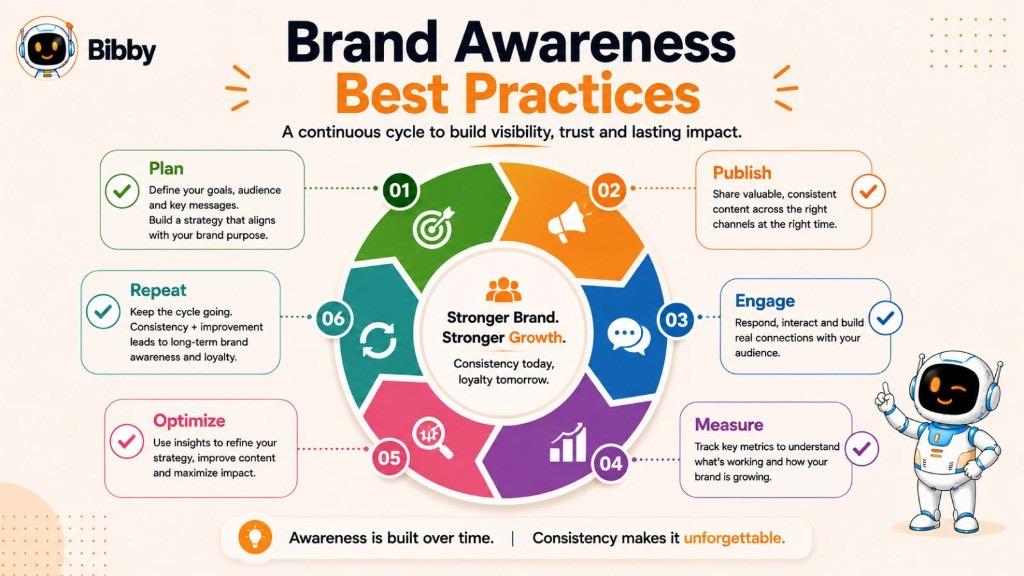
- Define your target audience. Understand who your ideal customers are so you can create messaging that resonates with their needs and interests.
- Maintain a consistent brand identity. Use the same logo, colors, typography, and tone of voice across all marketing channels to strengthen recognition.
- Publish high-quality content regularly. Consistent content keeps your brand visible and helps establish authority within your industry.
- Be active on social media. Engage with your audience, respond to comments, and share valuable content to build relationships and increase visibility.
- Focus on delivering value. Create educational, entertaining, or problem-solving content instead of only promoting your products or services.
- Encourage customer advocacy. Positive reviews, testimonials, referrals, and user-generated content can significantly expand your brand's reach.
- Monitor brand awareness metrics. Track reach, impressions, branded search volume, engagement, and direct traffic to measure the impact of your efforts.
- Adapt your strategy based on data. Regularly review analytics, identify high-performing channels, and refine your marketing approach for better results.
- Stay consistent over the long term. Brand awareness grows through repeated exposure and positive customer experiences, making consistency one of the most important factors for success.
- Leverage automation tools. Scheduling and automating your social media content helps maintain a consistent online presence, ensuring your brand stays visible even during busy periods.
Following these best practices can help businesses of all sizes increase brand awareness, strengthen customer trust, and create lasting relationships that support long-term growth.
Key Takeaways
Brand awareness is the foundation of effective marketing. When consumers recognize, remember, and trust your brand, they're more likely to consider it when making purchasing decisions. Building strong brand awareness requires consistent branding, valuable content, meaningful customer engagement, and ongoing measurement to refine your strategy over time.
Whether you're a startup or an established business, investing in brand awareness can lead to greater visibility, stronger customer relationships, and sustainable long-term growth. If social media is part of your marketing strategy, tools like Bibby can help you maintain a consistent publishing schedule across multiple platforms, making it easier to keep your brand visible and top of mind. Start a free trial to automate your posting workflow.
To deepen your understanding of branding and marketing, explore related terms such as Brand Identity, Brand Recognition, Brand Equity, Content Marketing, and Social Media Marketing.