
A brand ambassador is a person who represents and promotes a company's products, services, or values to help build trust, increase brand awareness, and influence potential customers. Unlike traditional advertising, brand ambassadors create authentic connections with audiences by sharing genuine experiences, recommendations, and content across social media, events, communities, and everyday interactions.
Brand ambassadors have become an essential part of modern marketing because people are more likely to trust recommendations from real individuals than direct advertisements. Whether it's a loyal customer posting about their favorite product, an employee showcasing company culture, or a creator partnering with a brand, ambassadors help businesses reach new audiences in a credible and engaging way.
Social media has transformed the role of brand ambassadors. Today, platforms like Instagram, Facebook, LinkedIn, TikTok, and YouTube allow ambassadors to create videos, photos, stories, and live content that can influence thousands or even millions of potential customers. As a result, businesses of all sizes, from startups to global enterprises, invest in brand ambassador programs to strengthen customer relationships and grow their online presence.
Managing ambassador content across multiple social platforms can quickly become challenging. Many brands now use AI-powered social media management tools to simplify campaign planning, content creation, scheduling, and performance tracking. By automating repetitive tasks, businesses and ambassadors can focus more on building authentic relationships with their audiences while maintaining a consistent brand presence.
In this guide, you'll learn everything you need to know about brand ambassadors, including their definition, types, responsibilities, benefits, how they differ from influencers, and how AI is reshaping brand ambassador marketing.
What Is a Brand Ambassador?
A brand ambassador is an individual who actively represents a company and promotes its products, services, or brand values to a specific audience. Their primary role is to create a positive image of the brand, build trust with potential customers, and encourage people to engage with or purchase from the business.
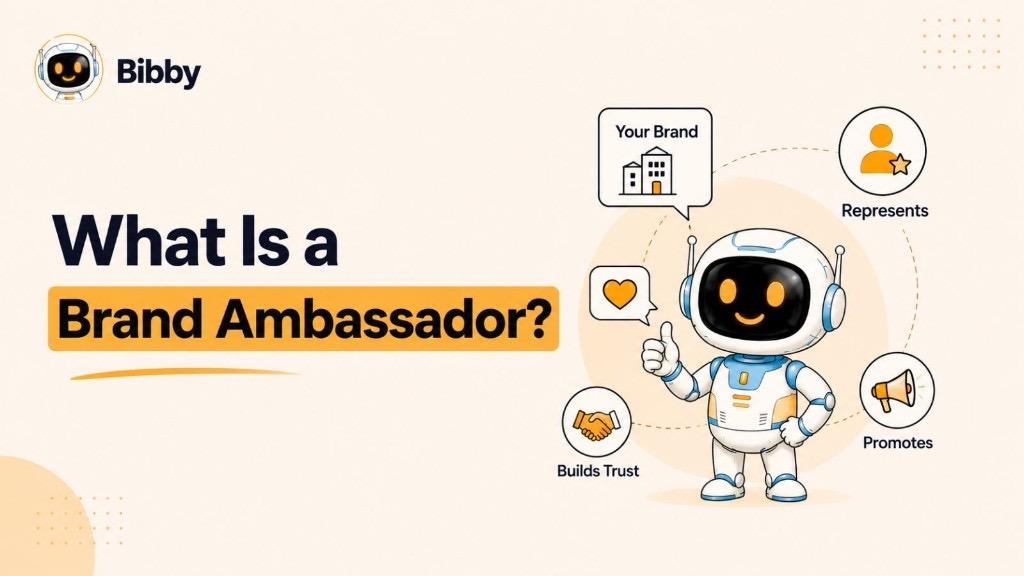
Unlike traditional advertising, which focuses on direct promotional messages, brand ambassadors rely on authentic experiences and personal recommendations. They often share their opinions, demonstrate products, create social media content, attend events, and interact with their communities in ways that feel natural and credible.
Brand ambassadors can come from different backgrounds. Some are loyal customers who genuinely love a product, while others are employees, industry experts, content creators, students, celebrities, or influencers chosen because they align with a brand's values and target audience. Regardless of who they are, their goal is the same: to strengthen the relationship between the brand and its customers.
For example, imagine a fitness coach who regularly shares workout videos while using a particular protein supplement. Instead of simply advertising the product, they explain how it fits into their daily routine, answer followers' questions, and share real results. Their audience is more likely to trust the recommendation because it is based on genuine experience rather than a traditional advertisement.
Today, brand ambassadors play a vital role in digital marketing. They help businesses increase brand awareness, generate user-generated content, improve customer engagement, and build long-term loyalty. As consumers increasingly seek authentic recommendations before making purchasing decisions, companies across industries, including SaaS, ecommerce, healthcare, education, technology, and retail, continue to invest in brand ambassador programs.
Whether working with a global enterprise or a small local business, a successful brand ambassador becomes the human face of the brand, helping transform marketing messages into meaningful conversations that inspire trust and action.
Brand Ambassador Definition
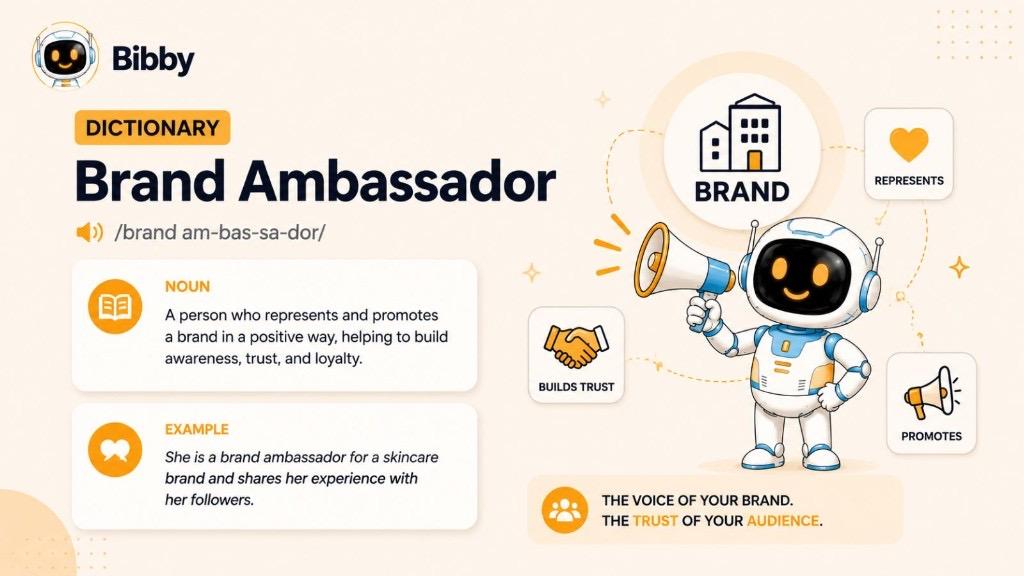
A brand ambassador is more than just someone who promotes a product. They act as a trusted representative of a business, helping create positive experiences and long-term relationships with customers. Depending on the context, the definition of a brand ambassador can vary slightly, but the core purpose remains the same: to build credibility and encourage people to engage with a brand.
Simple Definition
Detailed Definition
Business Definition
Social Media Marketing Definition
Dictionary Definition
Why This Definition Matters
The role of a brand ambassador has evolved significantly with the rise of digital marketing and social media. Today's ambassadors are not simply endorsing products. They create valuable content, engage directly with communities, answer questions, share real experiences, and help brands establish credibility in competitive markets.
As consumers increasingly rely on recommendations from people they trust, brand ambassadors have become an essential part of modern marketing strategies, helping businesses build stronger relationships and achieve sustainable growth.
How Does a Brand Ambassador Work?
A brand ambassador works by creating a genuine connection between a business and its target audience. Instead of relying on traditional advertisements, they promote a brand through authentic conversations, personal experiences, and engaging content that encourages people to learn more about a product or service.
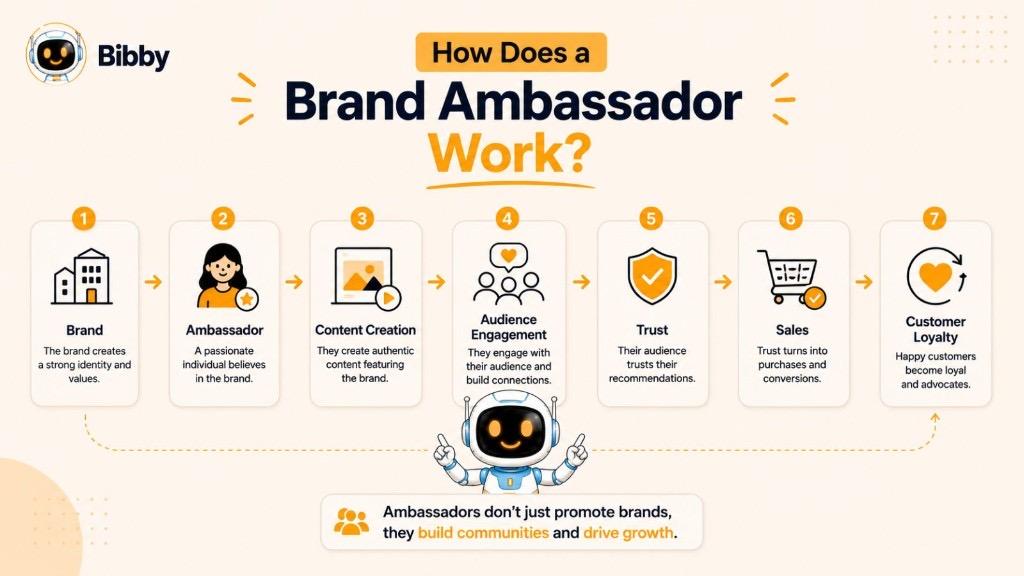
The goal is not simply to sell. A successful brand ambassador builds trust over time by consistently representing the brand's values and demonstrating how its products or services fit into everyday life.
1. Represents the Brand
A brand ambassador becomes a recognizable face or voice for the company. They communicate the brand's mission, values, personality, and messaging in a way that resonates with their audience. Whether online or offline, they help create a positive and consistent brand image.
2. Creates Authentic Content
One of the most important responsibilities of a brand ambassador is creating valuable content. This may include:
- Social media posts
- Photos and videos
- Product demonstrations
- Tutorials
- Customer testimonials
- Live streams
- Blog articles
- Stories and reels
Because the content is based on real experiences, it often feels more trustworthy than traditional advertising.
3. Shares Personal Experiences
Rather than making promotional claims, brand ambassadors explain how they personally use or benefit from a product or service. These honest experiences help potential customers understand the real value of the brand and make informed purchasing decisions.
4. Engages With the Community
Brand ambassadors actively interact with their audience by:
- Answering questions
- Responding to comments
- Joining discussions
- Participating in events
- Sharing feedback
- Encouraging conversations
This two-way communication strengthens relationships and builds customer confidence.
5. Promotes Products and Campaigns
When a business launches a new product, campaign, or event, brand ambassadors help spread the message. They may create campaign-specific content, introduce new features, demonstrate products, or encourage followers to participate in promotions and contests.
6. Builds Trust and Credibility
Consumers are more likely to believe recommendations from people they trust than from advertisements. Brand ambassadors earn that trust by remaining consistent, transparent, and authentic in everything they share.
Over time, this credibility increases brand awareness, improves customer loyalty, and influences purchasing decisions.
7. Provides Valuable Customer Feedback
Brand ambassadors are often among the first to hear customer opinions and suggestions. They can collect feedback from their audience and share it with the company, helping businesses improve products, services, and marketing strategies.
Example of How a Brand Ambassador Works
Imagine a software company launching a new AI-powered social media scheduling tool. Instead of relying only on paid advertisements, the company partners with marketing professionals and content creators who use the software in their daily workflow.
These ambassadors create tutorials, publish social media posts, share productivity tips, answer questions from their followers, and demonstrate how the tool simplifies content planning. As people see real-world results and authentic experiences, they become more confident in trying the product themselves.
How AI Makes Brand Ambassadors More Effective
Modern brand ambassadors often manage content across multiple social media platforms. AI-powered tools make this process faster and more efficient by helping them:
- Generate engaging captions
- Create AI-powered images
- Schedule posts across multiple platforms
- Publish content at optimal times
- Maintain a consistent posting schedule
- Track campaign performance
- Collaborate with brands more effectively
By automating repetitive tasks, AI allows brand ambassadors to spend more time engaging with their communities and creating high-quality content that delivers better results for both themselves and the brands they represent.
Types of Brand Ambassadors
Not all brand ambassadors have the same role or responsibilities. Businesses choose different types of brand ambassadors based on their marketing goals, target audience, industry, and budget. Some ambassadors are employees who represent the company from within, while others are customers, creators, or public figures who help promote the brand to a wider audience.
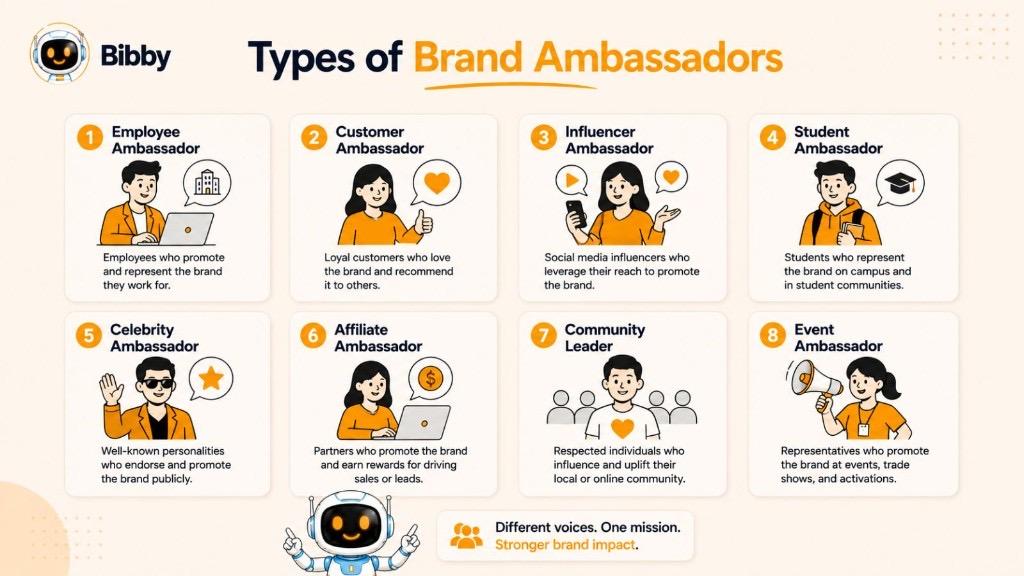
Understanding the different types of brand ambassadors helps businesses build the right ambassador program and choose individuals who can create the greatest impact.
Employee Brand Ambassador
An employee brand ambassador is a staff member who promotes the company they work for. They share workplace experiences, company culture, achievements, and industry insights through social media, professional networking platforms, or public events.
Employee ambassadors help humanize a business by giving customers a behind-the-scenes look at the organization. Their authentic perspective can improve employer branding, increase trust, and attract both customers and potential employees.
Example: A software engineer regularly shares updates about innovative projects, team culture, and company events on LinkedIn.
Customer Brand Ambassador
Customer brand ambassadors are loyal customers who genuinely enjoy a company's products or services and recommend them to others. Their recommendations often carry significant weight because they are based on real experiences rather than paid advertising.
Many businesses encourage customer ambassadors through referral programs, rewards, exclusive discounts, or early access to new products.
Example: A long-time customer regularly posts reviews, photos, and recommendations of their favorite skincare products on Instagram.
Student Brand Ambassador
Student brand ambassadors represent companies within schools, colleges, and universities. They introduce products, organize promotional activities, share educational content, and encourage fellow students to engage with the brand.
This type of ambassador is particularly effective for brands targeting younger audiences.
Example: A productivity app partners with university students to demonstrate how the app helps organize assignments and study schedules.
Campus Brand Ambassador
A campus brand ambassador is similar to a student ambassador but focuses specifically on marketing campaigns within a college campus. Their responsibilities often include organizing events, distributing promotional materials, running contests, and creating campus-specific social media content.
Companies in technology, education, fashion, food delivery, and consumer products frequently use campus ambassador programs.
Celebrity Brand Ambassador
Celebrity brand ambassadors are well-known public figures who officially represent a brand over an extended period. Their popularity helps businesses reach large audiences quickly while increasing brand visibility and credibility.
Celebrity partnerships are commonly used by global brands in industries such as fashion, sports, automobiles, technology, and consumer goods.
Because these partnerships require significant investment, they are typically suited for larger companies with substantial marketing budgets.
Influencer Brand Ambassador
Influencer brand ambassadors are content creators who build long-term relationships with a brand instead of promoting products through one-time sponsored posts.
Unlike traditional influencer campaigns, ambassador partnerships focus on ongoing collaboration, allowing audiences to see repeated and authentic interactions with the brand over time.
This approach often leads to higher trust and stronger customer loyalty.
Community Brand Ambassador
Community brand ambassadors actively engage with local communities or online groups to promote a brand. They answer questions, provide support, organize discussions, and help create meaningful relationships between the business and its customers.
These ambassadors are commonly found in SaaS businesses, gaming communities, open-source projects, fitness groups, and nonprofit organizations.
Affiliate Brand Ambassador
Affiliate brand ambassadors promote products using personalized referral links or discount codes. They earn a commission whenever someone purchases through their referral.
While affiliate marketing focuses on measurable sales, successful affiliate ambassadors also build trust by providing honest reviews, tutorials, and educational content rather than simply sharing promotional links.
Event Brand Ambassador
Event brand ambassadors represent businesses during conferences, exhibitions, trade shows, product launches, workshops, and promotional events.
Their responsibilities often include:
- Demonstrating products
- Greeting attendees
- Answering questions
- Collecting leads
- Explaining product features
- Encouraging event participation
They help businesses create memorable first impressions and generate interest among potential customers.
Digital Brand Ambassador
Digital brand ambassadors primarily promote brands through online channels. They create content across platforms such as Instagram, Facebook, LinkedIn, TikTok, YouTube, blogs, podcasts, and newsletters.
Unlike traditional ambassadors who may focus on in-person interactions, digital ambassadors rely on consistent content creation, audience engagement, and online community building.
As businesses increasingly invest in digital marketing, this has become one of the fastest-growing types of brand ambassador roles.
Choosing the Right Type of Brand Ambassador
The best type of brand ambassador depends on your business goals, audience, and resources.
- Employee ambassadors are ideal for building trust and showcasing company culture.
- Customer ambassadors strengthen credibility through authentic experiences.
- Student and campus ambassadors help brands connect with younger audiences.
- Celebrity ambassadors deliver massive reach and brand recognition.
- Influencer ambassadors combine audience engagement with long-term advocacy.
- Community ambassadors foster loyalty and meaningful relationships.
- Affiliate ambassadors focus on driving measurable sales.
- Event ambassadors create strong in-person brand experiences.
- Digital ambassadors expand online visibility across multiple social media platforms.
Many successful businesses use a combination of these ambassador types to maximize brand awareness, customer engagement, and long-term growth.
Brand Ambassador vs. Influencer
The terms brand ambassador and influencer are often used interchangeably, but they are not the same. Both help businesses reach new audiences and promote products, yet their goals, relationships with brands, and marketing strategies are quite different.
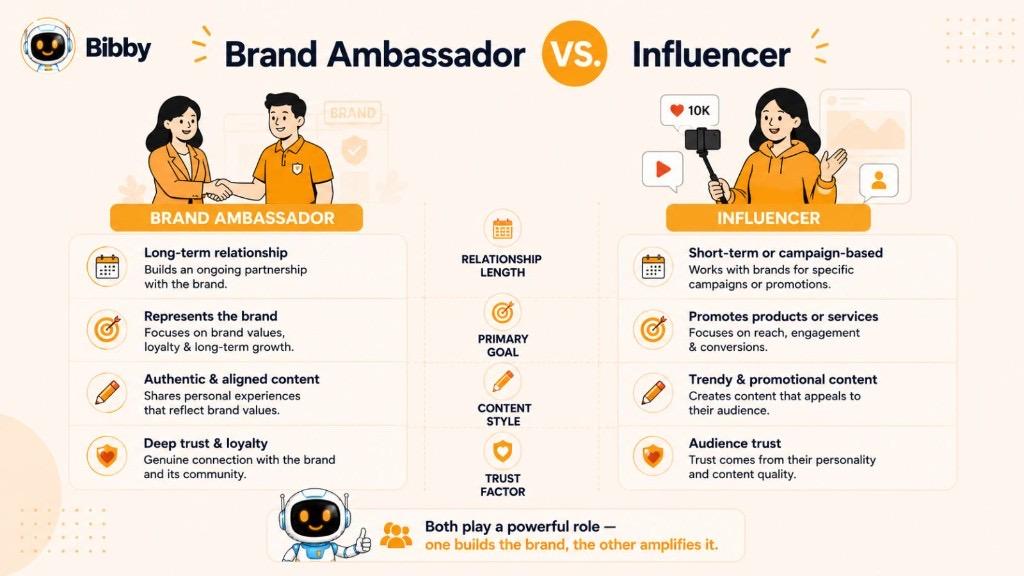
In general, a brand ambassador develops a long-term relationship with a company and becomes an ongoing representative of the brand. An influencer, on the other hand, typically collaborates with multiple brands through short-term campaigns to promote products to their followers.
Understanding these differences helps businesses choose the right partnership for their marketing objectives.
Brand Ambassador vs. Influencer Comparison
| Feature | Brand Ambassador | Influencer |
|---|---|---|
| Relationship with Brand | Long-term partnership | Usually short-term or campaign-based |
| Main Goal | Build trust and brand loyalty | Increase awareness and reach |
| Brand Exclusivity | Often represents one brand within a category | May work with several competing brands |
| Content Style | Ongoing, authentic storytelling | Promotional content for specific campaigns |
| Audience Perception | Seen as a genuine advocate | Seen as a content creator promoting products |
| Brand Knowledge | Deep understanding of the company and its values | Focuses mainly on campaign objectives |
| Compensation | Salary, free products, commissions, incentives, or long-term contracts | Usually paid per campaign, post, or collaboration |
| Success Metrics | Customer loyalty, engagement, retention, referrals | Reach, impressions, clicks, conversions |
What Makes a Brand Ambassador Different?
Brand ambassadors become closely associated with a business over time. They consistently share the company's products, values, and mission while building genuine relationships with their audience.
For example, a fitness coach who has used the same nutrition brand for years and regularly creates educational content around it is acting as a brand ambassador. Their audience begins to associate both the individual and the brand together, creating stronger trust and recognition.
What Makes an Influencer Different?
Influencers primarily create content for their audience and collaborate with brands through sponsored campaigns. They may promote different products from various companies throughout the year.
For example, a travel creator might partner with one luggage company this month, a hotel chain next month, and a camera brand after that. Their followers expect a variety of collaborations rather than an exclusive relationship with one business.
When Should a Business Choose a Brand Ambassador?
A brand ambassador is the better choice when your goal is to:
- Build long-term customer trust
- Increase brand loyalty
- Create consistent messaging
- Develop an engaged community
- Encourage repeat purchases
- Strengthen your brand identity
This approach works particularly well for SaaS companies, ecommerce brands, fitness businesses, educational platforms, and subscription-based services.
When Should a Business Work with an Influencer?
Influencer marketing is often the right option when you want to:
- Launch a new product
- Reach a large audience quickly
- Generate buzz around a campaign
- Increase website traffic
- Promote seasonal offers
- Test new markets
Influencers are especially valuable for short-term promotions where visibility and engagement are the primary goals.
Can Someone Be Both?
Yes. Many creators start as influencers and eventually become brand ambassadors after building a successful long-term relationship with a company.
For example, a creator may begin by promoting a software tool through a sponsored campaign. If the partnership performs well and they continue using the product, the company may invite them to become an official brand ambassador. Over time, they consistently represent the brand, create educational content, participate in product launches, and engage with the community.
Which Delivers Better ROI?
There is no single answer because it depends on your business objectives.
- Brand ambassadors typically deliver better long-term value by building trust, customer loyalty, and lasting relationships.
- Influencers often generate faster results by increasing awareness, traffic, and engagement during specific campaigns.
Many successful businesses combine both strategies. They use influencers to introduce their brand to new audiences and rely on brand ambassadors to nurture those relationships over time. This balanced approach creates both immediate visibility and sustainable growth.
Brand Ambassador vs. Affiliate Marketing
Although brand ambassadors and affiliate marketers both help businesses promote products and services, their roles, motivations, and relationships with a brand are very different. A brand ambassador focuses on building trust and representing a company's values over the long term, while an affiliate marketer primarily aims to generate sales through referral links or promotional codes.
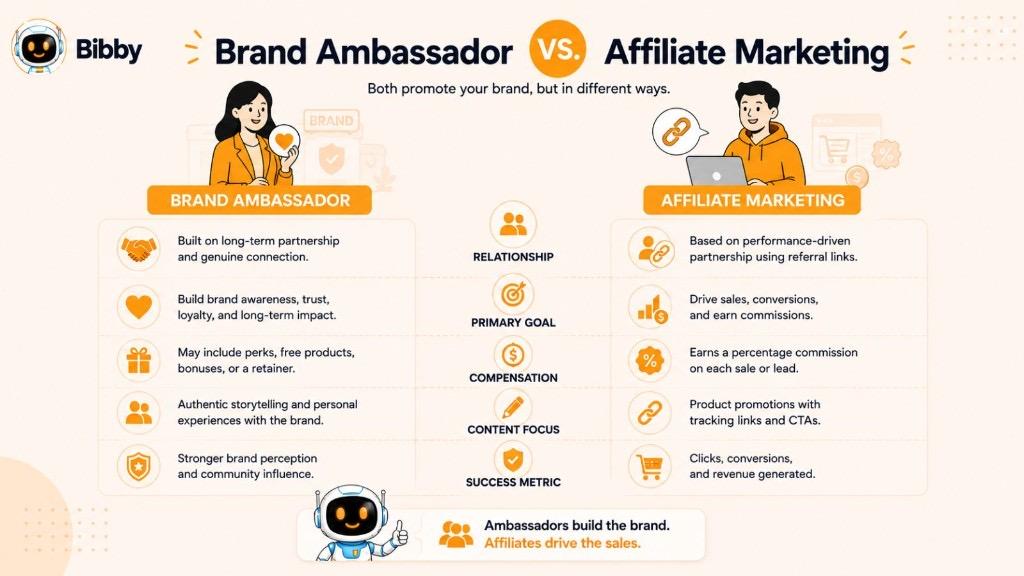
Understanding these differences can help businesses choose the right marketing strategy and set clear expectations for partnerships.
Brand Ambassador vs. Affiliate Marketing Comparison
| Feature | Brand Ambassador | Affiliate Marketing |
|---|---|---|
| Primary Goal | Build trust and brand loyalty | Generate sales and leads |
| Relationship with Brand | Long-term partnership | Transactional or campaign-based |
| Promotion Style | Authentic storytelling and ongoing advocacy | Promotional content with referral links |
| Compensation | Salary, free products, commissions, incentives, or contracts | Commission for every successful sale or lead |
| Brand Representation | Represents the brand's values and identity | Focuses mainly on driving conversions |
| Customer Relationship | Builds long-term engagement | Encourages immediate purchases |
| Content Strategy | Educational, informative, and community-focused | Sales-oriented and conversion-focused |
| Performance Metrics | Brand awareness, engagement, customer loyalty | Clicks, conversions, and commissions |
What Is a Brand Ambassador?
A brand ambassador becomes a trusted representative of a company. They regularly create content, interact with customers, share personal experiences, and promote the brand in an authentic way. Their goal is to strengthen the company's reputation and build lasting relationships with its audience.
Brand ambassadors often work closely with businesses, receive product updates, participate in campaigns, attend events, and help shape the overall brand image.
What Is Affiliate Marketing?
Affiliate marketing is a performance-based marketing strategy where individuals or businesses promote products using unique tracking links. Every time someone makes a purchase through their referral link, the affiliate earns a commission.
Affiliate marketers typically focus on generating measurable sales rather than representing the brand over an extended period.
For example, a technology blogger may publish an article reviewing social media scheduling tools and include affiliate links. If readers purchase a subscription through those links, the blogger receives a commission.
Key Differences
#### Relationship with the Brand
Brand ambassadors often become an extension of the business and develop long-term partnerships. Affiliate marketers usually maintain independent relationships and may promote multiple competing brands simultaneously.
#### Content Approach
Brand ambassadors create educational content, tutorials, customer stories, behind-the-scenes updates, and genuine product experiences.
Affiliate marketers typically create reviews, comparison articles, buying guides, product roundups, and promotional content designed to encourage purchases.
#### Trust and Authenticity
Because brand ambassadors consistently support a company over time, audiences often perceive them as genuine advocates. This long-term consistency helps build stronger trust.
Affiliate marketers can also build trust, but their recommendations are frequently associated with earning commissions, making transparency essential.
#### Success Measurement
Businesses evaluate brand ambassadors based on metrics such as:
- Brand awareness
- Social media engagement
- Community growth
- Customer loyalty
- User-generated content
- Repeat purchases
Affiliate marketing success is usually measured by:
- Referral traffic
- Click-through rate (CTR)
- Conversion rate
- Sales generated
- Revenue
- Commission earned
Can a Brand Ambassador Also Be an Affiliate?
Yes. Many companies combine both strategies.
For example, a fitness creator may serve as a long-term brand ambassador by consistently promoting a nutrition brand while also earning commissions through a personalized referral link. This allows businesses to benefit from authentic advocacy while rewarding ambassadors for driving measurable sales.
Which Strategy Is Better?
The right choice depends on your business goals.
Choose brand ambassadors if you want to:
- Build long-term customer trust
- Strengthen your brand identity
- Increase customer loyalty
- Grow an engaged community
- Create authentic user-generated content
Choose affiliate marketing if you want to:
- Increase online sales
- Generate qualified leads
- Pay only for performance
- Scale promotions quickly
- Reach niche audiences through publishers and creators
Many successful companies use both approaches together. Brand ambassadors help establish credibility and long-term relationships, while affiliate marketers expand reach and drive measurable conversions. When combined, these strategies can create a powerful and sustainable marketing ecosystem.
Why Brand Ambassadors Are Important
In today's digital marketplace, customers are exposed to thousands of advertisements every day. As a result, traditional marketing alone is often not enough to capture attention or build lasting trust. People are more likely to believe recommendations from real individuals than promotional messages from brands. This is why brand ambassadors have become an essential part of modern marketing strategies.
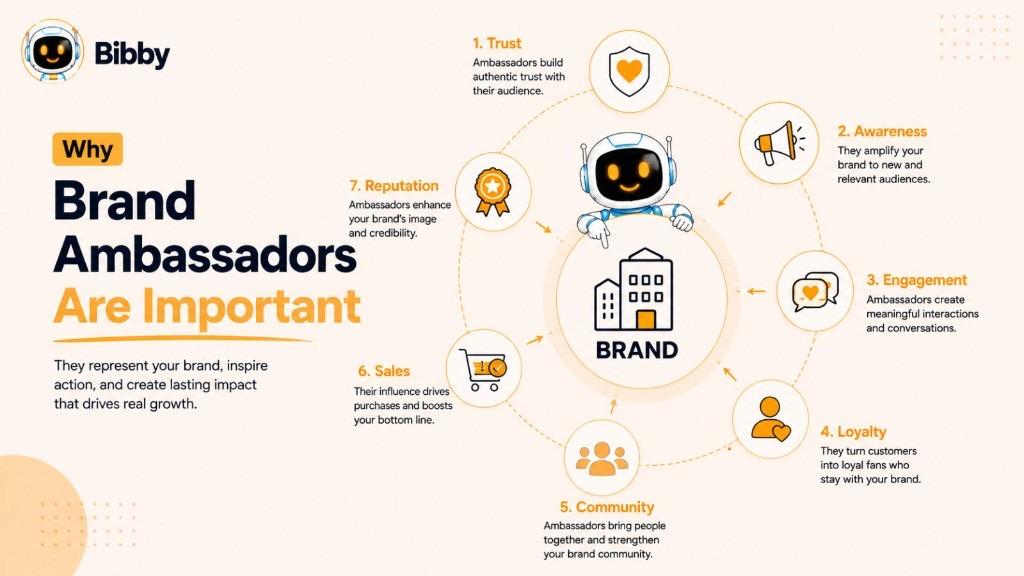
A brand ambassador helps bridge the gap between a company and its audience by creating authentic connections, sharing real experiences, and encouraging meaningful conversations. Instead of simply promoting products, they build relationships that lead to stronger customer loyalty and long-term business growth.
Build Trust and Credibility
Trust is one of the most valuable assets a business can have. Brand ambassadors earn credibility by consistently sharing honest experiences with a company's products or services.
When potential customers see someone they respect genuinely recommending a brand, they are more likely to trust that recommendation than a traditional advertisement.
Increase Brand Awareness
Every post, video, review, or conversation shared by a brand ambassador introduces the business to new audiences. Their followers, friends, colleagues, and communities help extend the brand's reach far beyond the company's own marketing channels.
This increased visibility helps businesses attract new customers while strengthening their overall market presence.
Improve Customer Loyalty
Brand ambassadors help create emotional connections between customers and a business. By consistently communicating the brand's mission, values, and story, they encourage customers to become loyal supporters rather than one-time buyers.
Loyal customers often become ambassadors themselves, creating a cycle of organic brand advocacy.
Generate Authentic Content
One of the biggest advantages of working with brand ambassadors is access to genuine, user-focused content.
Brand ambassadors regularly create:
- Product reviews
- Tutorials
- Photos
- Videos
- Social media posts
- Stories and reels
- Testimonials
- Behind-the-scenes content
This authentic content often performs better than traditional advertisements because it feels more relatable and trustworthy.
Increase Customer Engagement
Brand ambassadors actively communicate with their audience by answering questions, responding to comments, participating in discussions, and encouraging conversations.
This ongoing engagement helps businesses build stronger communities while improving customer satisfaction and brand loyalty.
Influence Purchasing Decisions
Consumers frequently research products before making a purchase. Recommendations from trusted individuals can significantly influence buying decisions.
A well-established brand ambassador reduces uncertainty by demonstrating how a product works, sharing personal experiences, and addressing common customer concerns.
Strengthen Brand Reputation
Every positive interaction between a brand ambassador and their audience contributes to the company's reputation.
Professional, knowledgeable, and authentic ambassadors help businesses establish themselves as trustworthy organizations, while also reinforcing their values and mission.
Expand Community Growth
Successful brands focus on building communities rather than simply acquiring customers.
Brand ambassadors encourage followers to join conversations, participate in events, share experiences, and engage with the brand on multiple platforms. Over time, this creates a loyal community that actively supports and promotes the business.
Increase User-Generated Content (UGC)
Brand ambassadors inspire customers to create and share their own experiences with a brand. This user-generated content helps businesses build social proof while expanding their online visibility.
Examples include:
- Customer reviews
- Product photos
- Unboxing videos
- Success stories
- Testimonials
- Challenge participation
- Community hashtags
UGC also provides businesses with a steady stream of authentic marketing content.
Support Long-Term Business Growth
Unlike short-term advertising campaigns, brand ambassadors contribute to sustainable growth. Their consistent advocacy helps businesses attract new customers, retain existing ones, improve customer lifetime value, and maintain a positive brand image over time.
As trust grows, customers are more likely to recommend the brand to friends and family, creating additional opportunities for organic growth.
Why Brand Ambassadors Matter More Than Ever
The rise of social media, creator marketing, and AI-powered content creation has transformed how businesses connect with customers. People now expect brands to be authentic, transparent, and engaging across every platform.
Brand ambassadors meet these expectations by becoming trusted voices for the companies they represent. Whether they are employees, customers, creators, or industry experts, they help businesses build credibility, strengthen relationships, and create marketing that feels genuine instead of promotional.
For businesses looking to stand out in a competitive market, investing in a strong brand ambassador program is no longer just an option. It has become a strategic advantage that drives awareness, engagement, loyalty, and long-term success.
Benefits of Having Brand Ambassadors
A well-planned brand ambassador program can deliver significant value to businesses of all sizes. Whether you're a startup looking to build awareness, an ecommerce store aiming to increase sales, or a SaaS company focused on customer retention, brand ambassadors can help you achieve your marketing goals through authentic advocacy.
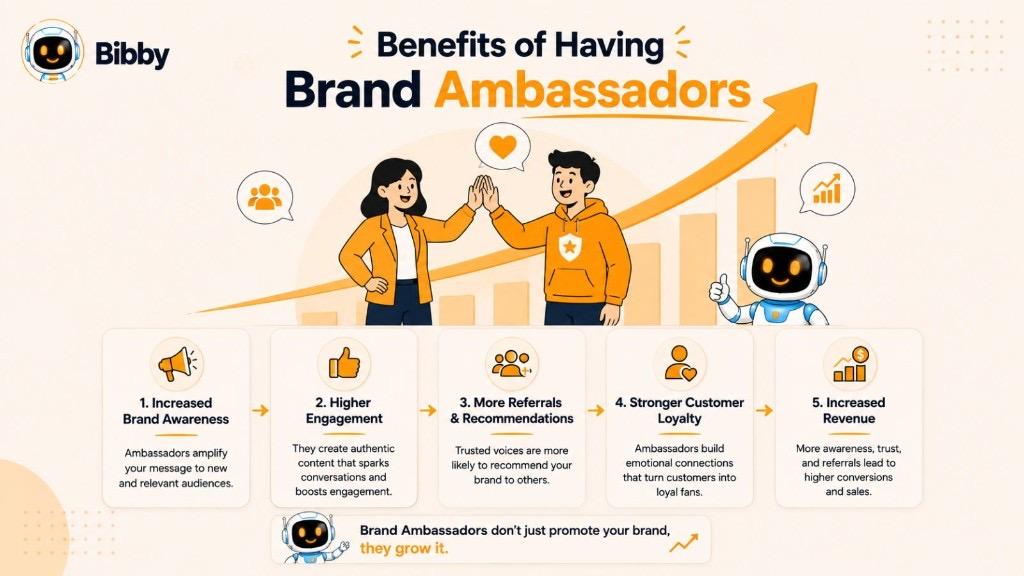
Unlike traditional advertising, which often stops generating results once a campaign ends, brand ambassadors create long-term relationships that continue to benefit a business over time.
Benefits for Businesses
Brand ambassadors help businesses establish a strong market presence by building trust and increasing brand visibility. Their authentic recommendations encourage potential customers to explore a company's products or services with greater confidence.
Key benefits include:
- Increase brand awareness
- Build customer trust
- Improve brand reputation
- Generate authentic user-generated content
- Strengthen customer relationships
- Increase website traffic
- Improve social media engagement
- Drive higher conversion rates
- Encourage repeat purchases
- Create long-term brand loyalty
As ambassadors consistently promote a brand, businesses also benefit from ongoing exposure without relying solely on paid advertising.
Benefits for Startups
Startups often face the challenge of gaining visibility with limited marketing budgets. Brand ambassadors can help overcome this challenge by introducing new products or services to highly relevant audiences through trusted recommendations.
For startups, brand ambassadors can:
- Build credibility in a competitive market
- Create early brand awareness
- Generate word-of-mouth marketing
- Attract initial customers
- Increase investor confidence through community growth
- Collect valuable customer feedback
- Build an engaged online community
A successful ambassador program allows startups to grow organically while keeping customer acquisition costs under control.
Benefits for SaaS Companies
Software-as-a-Service (SaaS) businesses rely heavily on trust, customer education, and long-term subscriptions. Brand ambassadors play an important role in demonstrating how software solves real-world problems.
They can help SaaS companies by:
- Creating product tutorials
- Sharing workflow demonstrations
- Explaining new features
- Publishing customer success stories
- Encouraging free trial sign-ups
- Improving product adoption
- Increasing customer retention
- Supporting online communities
When potential customers see real users successfully using a platform, they are more likely to try it themselves.
Benefits for Ecommerce Brands
Ecommerce businesses depend on customer confidence because shoppers cannot physically interact with products before purchasing. Brand ambassadors bridge this gap by providing real-life experiences and authentic product recommendations.
Benefits for ecommerce businesses include:
- Higher product visibility
- More customer reviews
- Better product demonstrations
- Increased social proof
- More user-generated content
- Improved conversion rates
- Reduced purchase hesitation
- Stronger customer loyalty
Many ecommerce brands also use ambassadors to launch new products and create excitement around seasonal promotions.
Benefits for Local Businesses
Local businesses can use brand ambassadors to strengthen relationships within their communities. Whether it's a restaurant, gym, salon, healthcare clinic, or retail store, ambassadors help spread positive word-of-mouth recommendations.
Some advantages include:
- Increased local brand recognition
- More customer referrals
- Stronger community engagement
- Better online reviews
- Improved event participation
- Higher customer retention
- Greater trust among local audiences
Local ambassadors often become familiar faces who help businesses build lasting relationships with nearby customers.
Benefits for Personal Brands
Content creators, coaches, consultants, authors, speakers, and entrepreneurs can also benefit from having brand ambassadors. Loyal followers often become advocates who naturally recommend their content, courses, books, or services.
Brand ambassadors can help personal brands:
- Expand audience reach
- Increase credibility
- Grow online communities
- Promote digital products
- Generate referrals
- Increase webinar or event registrations
- Build stronger customer relationships
- Encourage long-term loyalty
This type of advocacy is especially valuable because it comes from genuine supporters rather than paid advertisements.
Long-Term Benefits of Brand Ambassadors
Regardless of industry, businesses that invest in long-term ambassador relationships often experience sustainable growth. Over time, ambassadors become trusted voices who consistently reinforce the brand's message and values.
Some long-term benefits include:
- Sustainable brand awareness
- Stronger customer loyalty
- Higher customer lifetime value
- Increased organic reach
- Lower customer acquisition costs
- Consistent content creation
- Better customer insights
- Stronger community engagement
- Improved brand reputation
- Greater competitive advantage
As digital marketing continues to evolve, brand ambassadors remain one of the most effective ways to build trust, foster authentic relationships, and create lasting connections with customers. Businesses that empower ambassadors with the right tools, resources, and support are more likely to achieve consistent growth and long-term success.
Key Responsibilities of a Brand Ambassador
A brand ambassador does much more than promote products on social media. They serve as a trusted representative of a business, helping communicate its values, build relationships with customers, and create a positive brand image. Their responsibilities often extend beyond marketing to include community engagement, customer education, and valuable feedback collection.
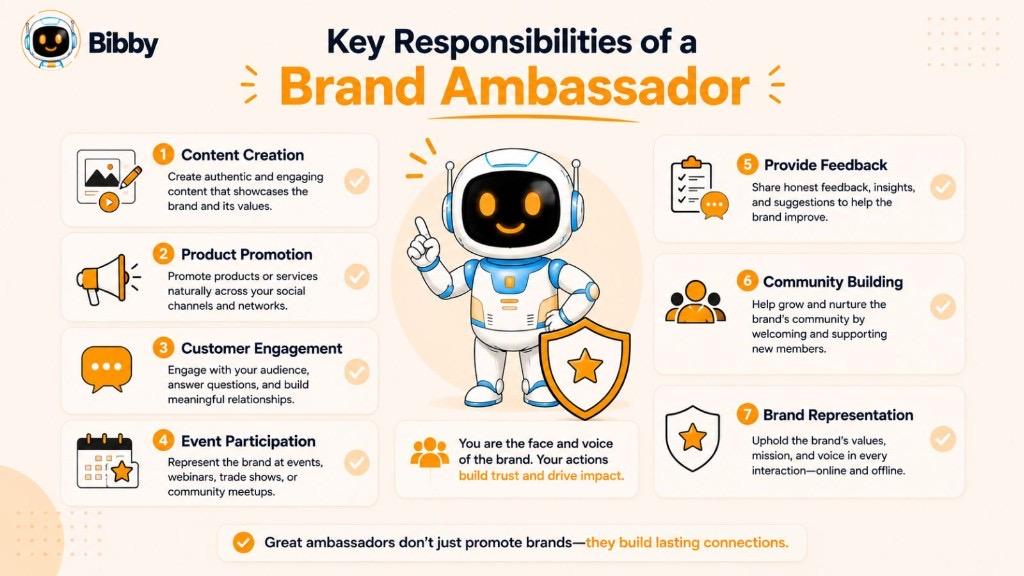
While specific duties vary depending on the company and industry, most brand ambassadors share several core responsibilities.
1. Promote Products and Services
The primary responsibility of a brand ambassador is to increase awareness of a company's products or services. This involves introducing new offerings, explaining their benefits, and showing how they solve real customer problems.
Rather than relying on aggressive sales tactics, ambassadors focus on authentic recommendations based on personal experience.
2. Create High-Quality Content
Content creation is a major part of a brand ambassador's role. They regularly produce engaging content that educates, informs, or inspires their audience while naturally showcasing the brand.
Common content formats include:
- Social media posts
- Photos
- Short-form videos
- Product demonstrations
- Tutorials
- Customer testimonials
- Blog articles
- Stories and reels
- Live streams
- Behind-the-scenes content
Consistent, high-quality content keeps the audience engaged and strengthens the brand's online presence.
3. Represent the Brand's Values
Brand ambassadors are expected to reflect the company's mission, culture, and values in everything they do.
Their communication style, online behavior, and interactions with customers should align with the brand's identity. This consistency helps build trust and creates a recognizable brand image across different platforms.
4. Engage With the Audience
Successful ambassadors actively communicate with their followers and potential customers. Instead of simply publishing content, they participate in conversations and build genuine relationships.
Typical engagement activities include:
- Replying to comments
- Answering questions
- Participating in discussions
- Responding to direct messages
- Encouraging community interaction
- Sharing audience feedback
This ongoing communication helps strengthen customer relationships and improve brand loyalty.
5. Build Brand Awareness
Every piece of content, event appearance, or online interaction contributes to increasing brand visibility.
Brand ambassadors introduce businesses to new audiences through consistent storytelling and meaningful engagement, helping brands reach potential customers they may not have reached through traditional advertising.
6. Attend Events and Campaigns
Many ambassadors represent businesses at:
- Trade shows
- Conferences
- Product launches
- Community events
- Webinars
- Networking sessions
- Workshops
- Promotional campaigns
During these events, they answer questions, demonstrate products, interact with attendees, and create content that extends the event's reach online.
7. Encourage Customer Trust
Trust is one of the most valuable outcomes of a successful brand ambassador program.
Ambassadors strengthen credibility by:
- Sharing honest experiences
- Providing transparent recommendations
- Demonstrating products in real situations
- Offering helpful advice
- Addressing customer concerns
Authenticity plays a crucial role in maintaining audience confidence.
8. Collect Customer Feedback
Because ambassadors interact directly with customers, they are in an excellent position to gather insights about products and services.
They often report:
- Customer suggestions
- Frequently asked questions
- Product improvement ideas
- Common challenges
- Market trends
- Feature requests
This feedback helps businesses make informed decisions and improve customer satisfaction.
9. Support Marketing Campaigns
Brand ambassadors often participate in marketing campaigns by creating promotional content and encouraging audience participation.
Their responsibilities may include:
- Announcing product launches
- Promoting seasonal campaigns
- Sharing discount codes
- Running contests or giveaways
- Demonstrating new features
- Encouraging event registrations
Their involvement helps campaigns feel more authentic and relatable.
10. Maintain a Positive Brand Reputation
Every interaction a brand ambassador has with customers influences public perception of the company.
Professional communication, ethical behavior, and consistent messaging help protect and strengthen the brand's reputation over time.
Essential Daily Responsibilities
A successful brand ambassador typically performs many of these tasks on a regular basis:
- Create engaging social media content
- Publish posts consistently
- Respond to audience comments and messages
- Recommend products naturally
- Educate customers about features and benefits
- Share personal experiences
- Participate in brand campaigns
- Attend events and webinars
- Monitor audience engagement
- Provide feedback to the company
- Stay updated on new products and announcements
- Build long-term relationships with customers
Why These Responsibilities Matter
The success of a brand ambassador is not measured solely by the number of followers they have. It depends on how effectively they build trust, educate their audience, encourage engagement, and represent the brand consistently over time.
As social media becomes increasingly competitive, managing content across multiple platforms can also become time-consuming. Many ambassadors now rely on AI-powered social media tools to streamline content creation, schedule posts at optimal times, maintain consistent branding, and monitor campaign performance. This allows them to focus more on building authentic relationships while delivering better results for both their audience and the brands they represent.
Essential Skills of a Successful Brand Ambassador
Being a successful brand ambassador requires much more than having a large social media following. The most effective ambassadors build genuine relationships, communicate clearly, and consistently represent a brand in a way that inspires trust. They combine marketing knowledge, communication skills, creativity, and professionalism to create meaningful experiences for their audience.
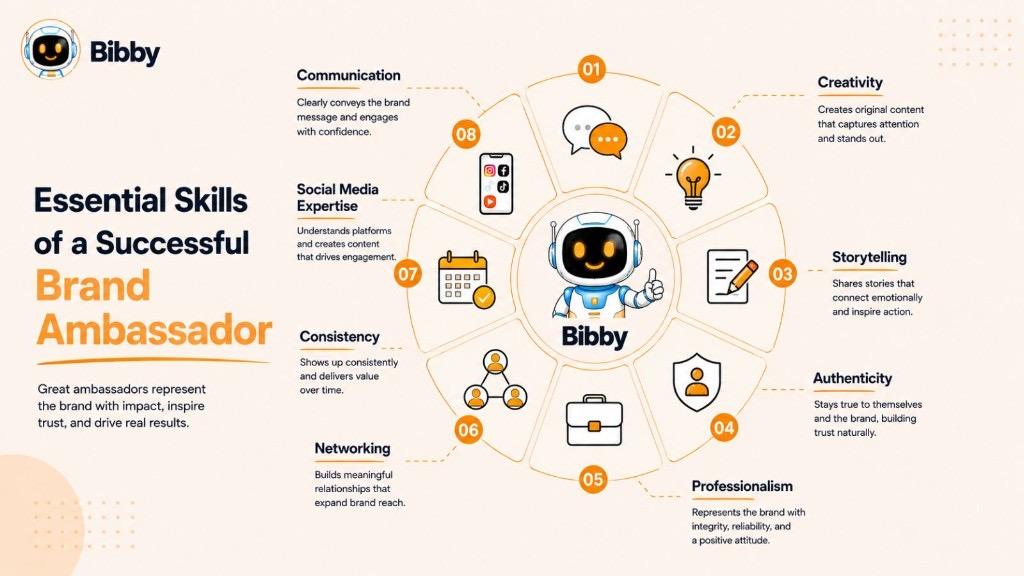
Whether representing a global company or a local business, the following skills are essential for long-term success.
1. Strong Communication Skills
Communication is the foundation of every successful brand ambassador. They should be able to explain products, answer questions, and interact with people in a clear, friendly, and professional manner.
Good communication helps ambassadors:
- Build customer trust
- Explain product features clearly
- Handle customer questions confidently
- Represent the brand professionally
- Create engaging conversations
Whether communicating through videos, blog posts, live streams, or face-to-face interactions, clarity and confidence make a lasting impression.
2. Authenticity
People follow recommendations they believe are genuine. Successful brand ambassadors only promote products they truly support and share honest experiences rather than overly promotional messages.
Authenticity helps:
- Increase credibility
- Build stronger relationships
- Improve audience trust
- Encourage long-term loyalty
Audiences can quickly recognize insincere endorsements, making authenticity one of the most valuable qualities an ambassador can possess.
3. Content Creation Skills
Today's brand ambassadors are also content creators. They should know how to produce engaging content that educates, entertains, or inspires their audience.
Useful content creation skills include:
- Photography
- Short-form video production
- Graphic design
- Copywriting
- Storytelling
- Video editing
- Live streaming
The ability to consistently create high-quality content helps brands maintain visibility across multiple social media platforms.
4. Social Media Knowledge
A modern brand ambassador should understand how social media platforms work and how to create content that performs well on each one.
This includes knowledge of:
- Platform algorithms
- Content formats
- Hashtag strategies
- Audience engagement
- Posting schedules
- Analytics and performance metrics
Understanding these fundamentals allows ambassadors to maximize the reach and effectiveness of their content.
5. Storytelling Ability
Facts and features alone rarely capture attention. Great brand ambassadors tell stories that connect emotionally with their audience.
Instead of simply saying a product is useful, they explain:
- The problem they faced
- How they discovered the product
- Their personal experience
- The results they achieved
Storytelling makes content memorable and encourages deeper engagement.
6. Relationship-Building Skills
Brand ambassadors are community builders. They actively develop relationships with customers, followers, company representatives, and fellow creators.
Strong relationship-building skills help them:
- Grow loyal communities
- Encourage conversations
- Increase customer retention
- Create networking opportunities
- Build long-term partnerships
Successful ambassadors focus on creating meaningful connections rather than simply increasing follower counts.
7. Consistency
Building trust takes time. Successful ambassadors consistently publish valuable content, communicate professionally, and represent the brand with the same tone and values across every interaction.
Consistency includes:
- Regular posting
- Reliable communication
- Consistent branding
- Professional behavior
- Long-term commitment
Brands value ambassadors who remain dependable throughout long-term partnerships.
8. Creativity
Creative ambassadors know how to present products in fresh and engaging ways.
They experiment with:
- New content ideas
- Video formats
- Social media trends
- Campaign concepts
- Interactive content
- Community challenges
Creativity keeps audiences interested while helping brands stand out in competitive markets.
9. Professionalism
Brand ambassadors often represent a company in public, making professionalism essential.
Professional ambassadors:
- Meet deadlines
- Communicate respectfully
- Follow brand guidelines
- Respect confidentiality
- Maintain a positive online presence
- Deliver high-quality work consistently
Professional behavior strengthens both the ambassador's reputation and the company's brand image.
10. Adaptability
Social media trends, algorithms, and customer preferences change constantly. Successful brand ambassadors are willing to learn new skills, adopt emerging technologies, and adjust their strategies when needed.
Adaptability allows ambassadors to remain relevant in an evolving digital landscape.
Additional Skills That Add Value
Beyond the core competencies, many successful brand ambassadors also develop:
- Public speaking
- Networking
- Time management
- Campaign planning
- Basic marketing knowledge
- Data analysis
- Customer service
- Negotiation skills
- Personal branding
- Problem-solving abilities
These skills make ambassadors more effective and increase their value to the brands they represent.
How AI Helps Brand Ambassadors Develop These Skills
AI-powered tools are making it easier for brand ambassadors to work efficiently without sacrificing quality. Instead of spending hours on repetitive tasks, ambassadors can use AI to streamline their workflow and focus on creativity and audience engagement.
AI can help by:
- Generating engaging captions
- Brainstorming content ideas
- Creating AI-generated images
- Scheduling posts across multiple platforms
- Identifying the best posting times
- Monitoring engagement metrics
- Organizing content calendars
- Maintaining a consistent brand voice
By combining these tools with strong communication, creativity, and authenticity, brand ambassadors can build stronger communities, produce better content, and create lasting value for both their audience and the brands they represent.
How to Become a Brand Ambassador
Becoming a brand ambassador is about more than gaining followers or posting promotional content. Brands look for people who are authentic, knowledgeable, and capable of building meaningful relationships with their audience. Whether you're a content creator, customer, student, employee, or industry professional, you can become a successful brand ambassador by consistently providing value and representing brands you genuinely believe in.
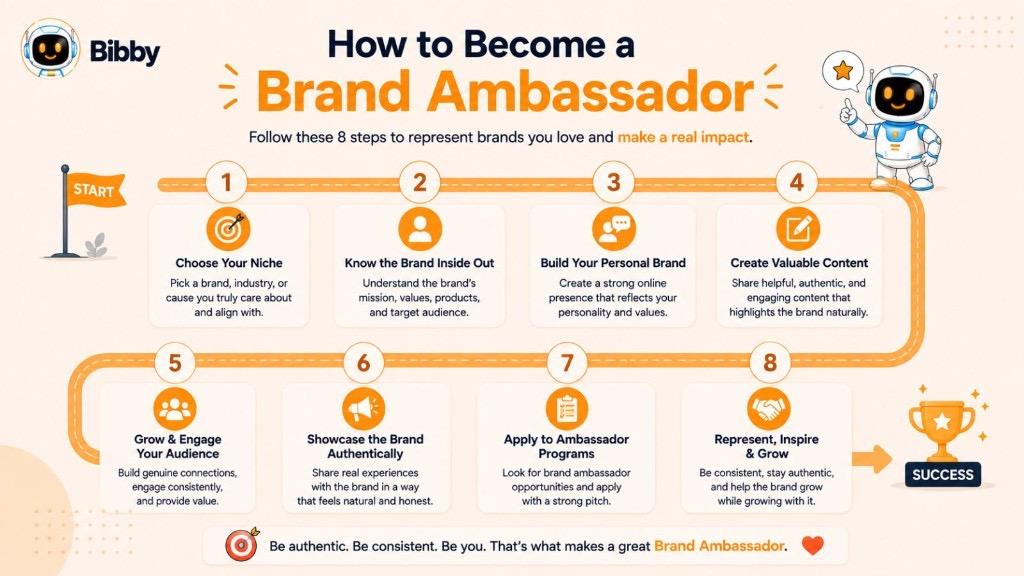
Follow these steps to start your journey as a brand ambassador.
Step 1: Choose Your Niche
Start by identifying the industry or topic you are passionate about. Focusing on a specific niche helps you build authority and attract an audience interested in your content.
Popular niches include:
- Technology
- Fashion
- Fitness
- Beauty
- Travel
- Food
- Education
- Gaming
- Business
- Health and wellness
A clear niche makes it easier for brands to understand whether you're a good fit for their products or services.
Step 2: Build Your Personal Brand
Your personal brand is how people recognize and remember you. Create a consistent identity across your social media profiles by sharing valuable content and communicating your expertise.
To build a strong personal brand:
- Use a professional profile photo.
- Write a clear and engaging bio.
- Maintain a consistent visual style.
- Share your knowledge regularly.
- Highlight your interests and values.
- Engage with your audience consistently.
A well-developed personal brand makes you more attractive to potential partners.
Step 3: Create High-Quality Content
Brands prefer ambassadors who consistently produce content that informs, entertains, or inspires their audience.
Content ideas include:
- Product reviews
- Tutorials
- Tips and guides
- Behind-the-scenes videos
- Industry insights
- Educational posts
- Customer success stories
- Live demonstrations
Focus on quality, authenticity, and consistency rather than publishing large amounts of content.
Step 4: Grow an Engaged Audience
Many people believe brands only work with creators who have millions of followers. In reality, engagement often matters more than audience size.
Build an engaged community by:
- Responding to comments
- Asking questions
- Starting conversations
- Sharing useful information
- Posting consistently
- Encouraging discussions
A smaller but highly engaged audience is often more valuable than a large audience with little interaction.
Step 5: Use Products You Truly Believe In
The best brand ambassadors naturally recommend products they already enjoy using.
Before approaching a company:
- Use its products or services.
- Understand its mission and values.
- Learn about its target audience.
- Share honest experiences.
- Create authentic content.
Real enthusiasm creates credibility and makes your recommendations more convincing.
Step 6: Network With Brands
Building relationships with companies is an important part of becoming a brand ambassador.
You can connect with brands by:
- Following them on social media
- Engaging with their content
- Attending industry events
- Joining online communities
- Connecting with marketing teams on LinkedIn
- Participating in brand campaigns
Meaningful interactions often open doors to future collaboration opportunities.
Step 7: Join Brand Ambassador Programs
Many companies offer official brand ambassador programs where participants receive training, exclusive products, early access to new launches, referral opportunities, or financial incentives.
When applying:
- Read the program requirements carefully.
- Showcase your relevant experience.
- Share examples of your best content.
- Explain why you align with the brand.
- Demonstrate your audience engagement.
A thoughtful application significantly improves your chances of being selected.
Step 8: Build Trust Through Consistency
Long-term success comes from consistently creating valuable content and maintaining professional relationships.
Successful ambassadors:
- Publish regularly
- Communicate honestly
- Follow brand guidelines
- Meet deadlines
- Respond professionally
- Continue learning and improving
Brands are more likely to extend long-term partnerships to ambassadors they can rely on.
Tips to Increase Your Chances of Becoming a Brand Ambassador
If you want to stand out from other applicants, consider these best practices:
- Focus on engagement rather than follower count.
- Develop expertise in your niche.
- Learn photography and video editing.
- Improve your storytelling skills.
- Build a professional online presence.
- Share genuine experiences instead of sales pitches.
- Track your content performance.
- Stay updated with industry trends.
- Be responsive and easy to work with.
- Always represent brands professionally.
Common Mistakes to Avoid
Many aspiring brand ambassadors struggle because they focus on the wrong priorities.
Avoid these common mistakes:
- Promoting products you don't believe in
- Buying fake followers or engagement
- Posting inconsistent or low-quality content
- Ignoring audience questions
- Working with too many competing brands
- Failing to disclose sponsored partnerships
- Neglecting your personal brand
- Treating every post like an advertisement
Authenticity and consistency are far more valuable than constant promotion.
How AI Can Help You Become a Better Brand Ambassador
Managing content across multiple social media platforms can be challenging, especially as your audience grows. AI-powered tools simplify this process by helping you plan, create, and publish content more efficiently.
AI can assist with:
- Generating caption ideas
- Creating AI-powered visuals
- Building content calendars
- Scheduling posts across multiple platforms
- Finding optimal posting times
- Maintaining a consistent brand voice
- Tracking engagement and performance
- Organizing campaigns and brand collaborations
By automating routine tasks, AI gives brand ambassadors more time to focus on what matters most: creating authentic content, engaging with their community, and building lasting partnerships with the brands they represent.
How Brands Choose Brand Ambassadors
Selecting the right brand ambassador is one of the most important decisions a business can make. A great ambassador does more than promote products. They represent the company's values, connect with the right audience, and help build long-term trust. Choosing the wrong person, however, can damage a brand's reputation and reduce the effectiveness of marketing campaigns.
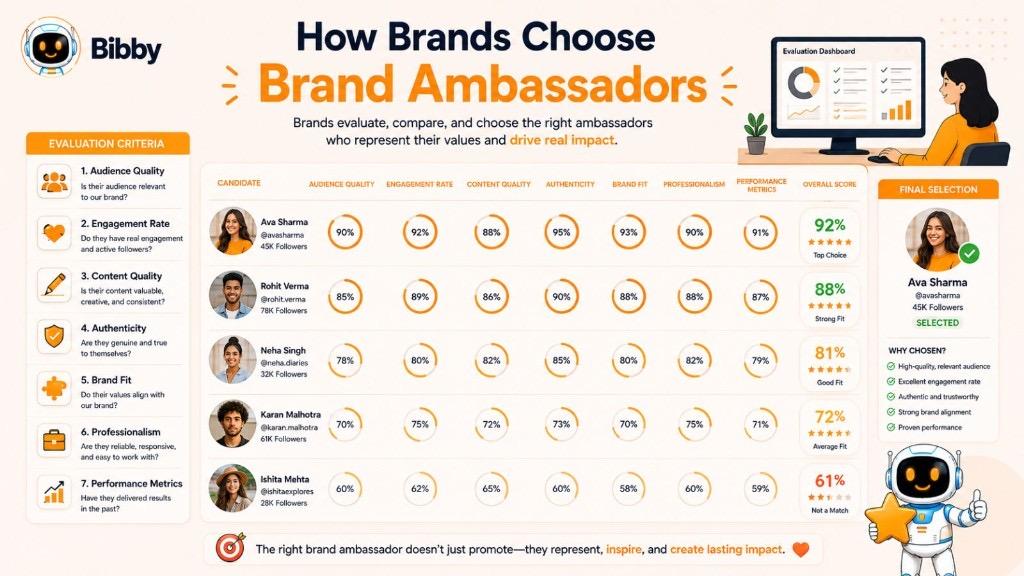
Instead of focusing only on follower count, successful businesses evaluate several factors to find ambassadors who genuinely align with their brand.
1. Brand Alignment
The first thing companies look for is whether the individual naturally fits the brand's identity, mission, and values.
For example, a sustainable fashion brand is more likely to partner with creators who regularly advocate for eco-friendly living than someone whose content has no connection to sustainability.
A strong brand fit makes promotions feel authentic rather than forced.
2. Audience Quality
An engaged and relevant audience is far more valuable than a large but inactive following.
Brands evaluate whether an ambassador's audience matches their target customers by considering factors such as:
- Age group
- Interests
- Location
- Industry
- Buying behavior
- Content preferences
The closer the audience aligns with the brand's ideal customer profile, the more effective the partnership is likely to be.
3. Engagement Rate
High engagement often indicates that followers genuinely trust and interact with the creator.
Businesses typically review:
- Likes
- Comments
- Shares
- Saves
- Video views
- Click-through rates
- Community discussions
A creator with 10,000 highly engaged followers can often deliver better results than someone with 500,000 inactive followers.
4. Content Quality
The quality of an ambassador's content reflects directly on the brand.
Companies look for creators who consistently produce:
- Professional images
- High-quality videos
- Informative posts
- Creative storytelling
- Educational content
- Authentic reviews
- Visually consistent branding
Clear communication and valuable content are often more important than expensive production equipment.
5. Authenticity and Credibility
Authenticity is one of the biggest reasons businesses invest in brand ambassadors.
Brands prefer individuals who:
- Share honest opinions
- Use products naturally
- Avoid excessive promotions
- Build genuine relationships
- Maintain audience trust
Customers can easily recognize forced endorsements, making authenticity a critical selection factor.
6. Consistency
Companies want ambassadors who consistently create content and maintain an active presence.
They often evaluate:
- Posting frequency
- Content consistency
- Audience interaction
- Long-term commitment
- Reliability
Consistency demonstrates professionalism and helps maintain steady brand visibility.
7. Professionalism
Brand ambassadors represent a company publicly, so professionalism matters.
Businesses consider whether the candidate:
- Meets deadlines
- Responds promptly
- Follows campaign guidelines
- Communicates respectfully
- Maintains a positive online reputation
- Works well with marketing teams
Reliable ambassadors are more likely to receive repeat partnerships and long-term contracts.
8. Industry Knowledge
Brands often prefer ambassadors who understand their industry and can explain products confidently.
For example:
- A cybersecurity company benefits from ambassadors with technology expertise.
- A fitness brand values trainers who understand health and nutrition.
- A SaaS platform may partner with marketers, entrepreneurs, or business consultants who regularly discuss productivity and software.
Industry knowledge helps ambassadors create more informative and credible content.
9. Reputation and Online Presence
Before partnering with someone, companies usually review their overall online presence.
They may examine:
- Previous brand collaborations
- Public comments
- Community behavior
- Professional conduct
- Content history
- Brand safety
Businesses prefer ambassadors whose reputation supports, rather than risks, the company's image.
10. Ability to Deliver Results
Ultimately, brands want ambassadors who can contribute to measurable business outcomes.
Performance indicators may include:
- Brand awareness
- Engagement growth
- Website traffic
- Lead generation
- Product sales
- Customer referrals
- User-generated content
- Community growth
An ambassador who consistently delivers value is more likely to become a long-term partner.
What Brands Expect From a Brand Ambassador
Most companies expect ambassadors to:
- Represent the brand professionally
- Create authentic and engaging content
- Follow brand guidelines
- Maintain consistent communication
- Meet campaign deadlines
- Interact with their audience
- Share honest product experiences
- Protect the brand's reputation
- Provide constructive customer feedback
- Build long-term relationships with the community
How AI Helps Brands Select Better Ambassadors
AI is changing the way businesses identify and evaluate brand ambassadors. Instead of relying solely on manual research, companies can use AI-powered tools to analyze data and make informed decisions.
AI can help brands:
- Analyze audience demographics
- Measure engagement quality
- Detect fake followers and suspicious activity
- Evaluate content performance
- Identify creators with strong brand alignment
- Monitor campaign performance
- Compare ambassador effectiveness
- Track return on investment (ROI)
By combining data-driven insights with human judgment, businesses can choose ambassadors who not only reach the right audience but also build authentic relationships that drive long-term success.
Best Practices for Brand Ambassador Programs
A successful brand ambassador program is built on more than simply recruiting people to promote your products. The most effective programs focus on creating long-term partnerships, providing clear guidance, and giving ambassadors the tools they need to succeed.
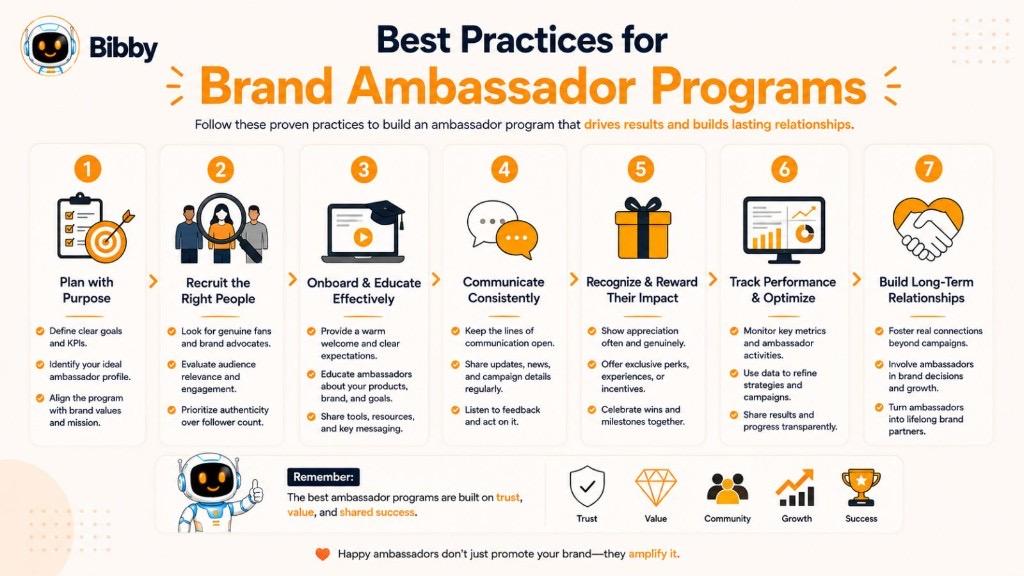
Whether you're managing a small team of loyal customers or a global network of creators, following these best practices can help you build a program that delivers consistent results.
1. Set Clear Goals
Before launching a brand ambassador program, define what you want to achieve. Clear objectives help you recruit the right ambassadors, measure success, and optimize your strategy over time.
Common goals include:
- Increasing brand awareness
- Growing social media engagement
- Driving website traffic
- Generating leads
- Boosting product sales
- Creating user-generated content
- Building customer loyalty
- Expanding into new markets
Well-defined goals also help ambassadors understand how their contributions support the business.
2. Choose the Right Ambassadors
Not every creator or customer is the right fit for your brand. Select ambassadors who genuinely align with your values, audience, and industry.
Look for individuals who:
- Share authentic content
- Have an engaged audience
- Communicate professionally
- Understand your industry
- Believe in your products
- Maintain a positive reputation
A smaller group of highly aligned ambassadors often delivers better results than a large network of mismatched partners.
3. Create Clear Brand Guidelines
Ambassadors should understand how to represent your brand consistently across every platform.
Your guidelines should include:
- Brand mission and values
- Tone of voice
- Visual branding
- Logo usage
- Messaging recommendations
- Content dos and don'ts
- Disclosure requirements
- Campaign expectations
Clear guidelines maintain consistency while still allowing ambassadors to express their own personality.
4. Encourage Authenticity
Authenticity is the biggest strength of any brand ambassador program.
Allow ambassadors to:
- Share personal experiences
- Use their own communication style
- Tell genuine stories
- Offer honest opinions
- Create original content
Audiences respond far better to authentic recommendations than scripted promotional messages.
5. Provide the Right Resources
Successful ambassadors need the right information and tools to create effective content.
Helpful resources include:
- Product training
- Brand kits
- Campaign briefs
- Content ideas
- Marketing assets
- Frequently asked questions
- Early product access
- Educational materials
Providing support increases confidence and improves content quality.
6. Reward and Recognize Performance
Acknowledging your ambassadors' efforts strengthens long-term relationships and encourages continued participation.
Rewards may include:
- Financial compensation
- Commission programs
- Exclusive discounts
- Free products
- Performance bonuses
- Early access to new releases
- Public recognition
- Invitations to special events
Recognition often motivates ambassadors as much as financial incentives.
7. Communicate Regularly
Strong communication keeps ambassadors informed, engaged, and aligned with your goals.
Regular communication can include:
- Campaign updates
- Product announcements
- Performance feedback
- Training sessions
- Monthly newsletters
- Team meetings
- Private online communities
Open communication also allows ambassadors to share ideas and customer feedback.
8. Track Performance
Measure your program's effectiveness using meaningful performance metrics rather than vanity numbers alone.
Key metrics include:
- Brand reach
- Engagement rate
- Website traffic
- Referral sales
- Conversion rate
- User-generated content
- Audience growth
- Customer retention
- Campaign participation
Analyzing these metrics helps you identify top-performing ambassadors and improve future campaigns.
9. Build Long-Term Relationships
The strongest ambassador programs focus on long-term partnerships instead of one-time promotions.
Long-term ambassadors:
- Build greater audience trust
- Develop deeper product knowledge
- Create more authentic content
- Strengthen brand recognition
- Deliver consistent results
Investing in lasting relationships creates ambassadors who genuinely become advocates for your business.
10. Continuously Improve the Program
Marketing trends, customer expectations, and social media platforms change constantly. Review your ambassador program regularly to identify opportunities for improvement.
Consider:
- Ambassador feedback
- Customer responses
- Campaign performance
- New social media features
- Emerging content formats
- AI-powered marketing tools
- Competitor strategies
A flexible program can adapt to changing market conditions while maintaining strong ambassador relationships.
Common Metrics to Measure Success
A successful brand ambassador program should be evaluated using measurable business outcomes, including:
- Brand awareness
- Social media reach
- Engagement rate
- Website visits
- Lead generation
- Sales attributed to ambassadors
- Customer retention
- Referral conversions
- User-generated content volume
- Return on investment (ROI)
These insights help businesses understand what is working and where improvements are needed.
How AI Strengthens Brand Ambassador Programs
AI-powered marketing tools are helping businesses manage ambassador programs more efficiently than ever before.
AI can help companies:
- Plan content campaigns
- Generate creative ideas
- Schedule posts automatically
- Recommend optimal publishing times
- Track campaign performance
- Analyze audience engagement
- Measure ROI
- Organize ambassador communication
- Maintain consistent branding across platforms
For ambassadors, AI reduces the time spent on repetitive tasks such as writing captions, planning content calendars, and publishing posts. This allows them to focus on creating authentic content and engaging with their communities, while businesses benefit from more organized, scalable, and data-driven ambassador programs.
Quick Checklist for a Successful Brand Ambassador Program
Before launching or expanding your ambassador program, make sure you:
- Choose ambassadors based on quality, not just follower count.
- Prioritize authenticity over promotion.
- Create clear brand guidelines.
- Set measurable campaign goals.
- Maintain regular communication.
- Track meaningful performance metrics.
- Reward ambassadors fairly.
- Encourage creative freedom.
- Build long-term partnerships.
- Use AI tools to streamline campaign management.
Common Mistakes to Avoid in Brand Ambassador Marketing
A brand ambassador program can generate significant value for a business, but only when it is planned and managed effectively. Many companies make avoidable mistakes that reduce the impact of their ambassador campaigns or even harm their brand reputation.
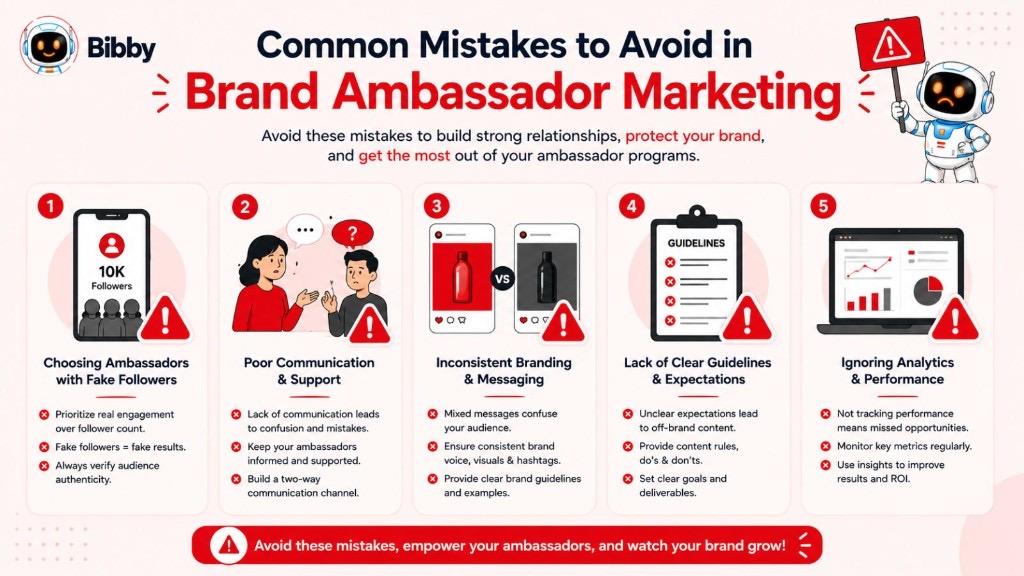
By understanding these common pitfalls, businesses can build stronger partnerships, create more authentic campaigns, and achieve better long-term results.
1. Choosing Ambassadors Based Only on Follower Count
One of the biggest mistakes is selecting ambassadors simply because they have a large audience.
A creator with millions of followers may not deliver meaningful results if their audience isn't interested in your products or doesn't actively engage with their content.
Instead, evaluate:
- Audience relevance
- Engagement rate
- Content quality
- Brand alignment
- Authenticity
An engaged audience is often more valuable than a large but inactive one.
2. Ignoring Brand Fit
Every ambassador should naturally align with your company's mission, values, and target audience.
Partnering with someone who doesn't genuinely connect with your brand can make promotions feel forced and reduce customer trust.
Choose ambassadors who already use or appreciate your products whenever possible.
3. Providing No Clear Guidelines
Without proper guidance, ambassadors may create inconsistent messaging or unintentionally misrepresent your brand.
Provide clear information about:
- Brand voice
- Visual identity
- Campaign goals
- Approved messaging
- Content requirements
- Legal disclosure expectations
Clear guidelines create consistency while still allowing ambassadors to express their own creativity.
4. Expecting Sales Instead of Relationships
Many businesses focus only on immediate sales, overlooking the long-term value of trust and community building.
Brand ambassadors are most effective when they:
- Educate audiences
- Build credibility
- Encourage conversations
- Strengthen customer loyalty
- Create authentic experiences
Strong relationships often lead to sustainable growth and repeat customers.
5. Micromanaging Content
Giving ambassadors a rigid script often makes content feel unnatural.
Instead of controlling every word, provide:
- Campaign objectives
- Key product information
- Brand guidelines
- Creative direction
Then allow ambassadors to communicate in their own voice. Authenticity consistently performs better than overly scripted promotions.
6. Poor Communication
Successful ambassador programs depend on regular communication.
Avoid mistakes such as:
- Late campaign updates
- Unclear expectations
- Delayed responses
- Missing feedback
- Inconsistent support
Keeping ambassadors informed helps them produce better content and strengthens long-term partnerships.
7. Failing to Track Performance
Without performance measurement, it's impossible to know whether your ambassador program is delivering results.
Monitor important metrics such as:
- Reach
- Engagement
- Website traffic
- Referral sales
- Lead generation
- Content performance
- Customer acquisition
- ROI
Regular reporting helps businesses optimize future campaigns.
8. Ignoring Customer Feedback
Brand ambassadors interact directly with customers and often receive valuable insights.
Businesses that ignore ambassador feedback may miss opportunities to:
- Improve products
- Solve customer problems
- Enhance marketing campaigns
- Identify new content ideas
- Discover emerging trends
Listening to ambassadors strengthens both products and customer relationships.
9. Ending Relationships Too Quickly
Many companies treat ambassadors as short-term campaign partners.
However, long-term collaborations often produce:
- Higher customer trust
- Better brand recognition
- More authentic content
- Stronger audience relationships
- Increased customer loyalty
Building lasting partnerships creates ambassadors who become genuine advocates for your brand.
10. Not Using Technology to Improve Efficiency
Managing multiple ambassadors manually can become time-consuming, especially as programs grow.
Without modern tools, businesses often struggle with:
- Content planning
- Scheduling posts
- Campaign coordination
- Performance reporting
- Communication
- Brand consistency
Using AI-powered marketing tools helps automate these tasks and allows both businesses and ambassadors to focus on creating meaningful customer experiences.
Brand Ambassador Examples
Brand ambassadors can be found across almost every industry, from technology and fashion to healthcare, education, and local businesses. While the role may vary depending on the company, the goal remains the same: to build trust, increase brand awareness, and encourage customer engagement through authentic advocacy.
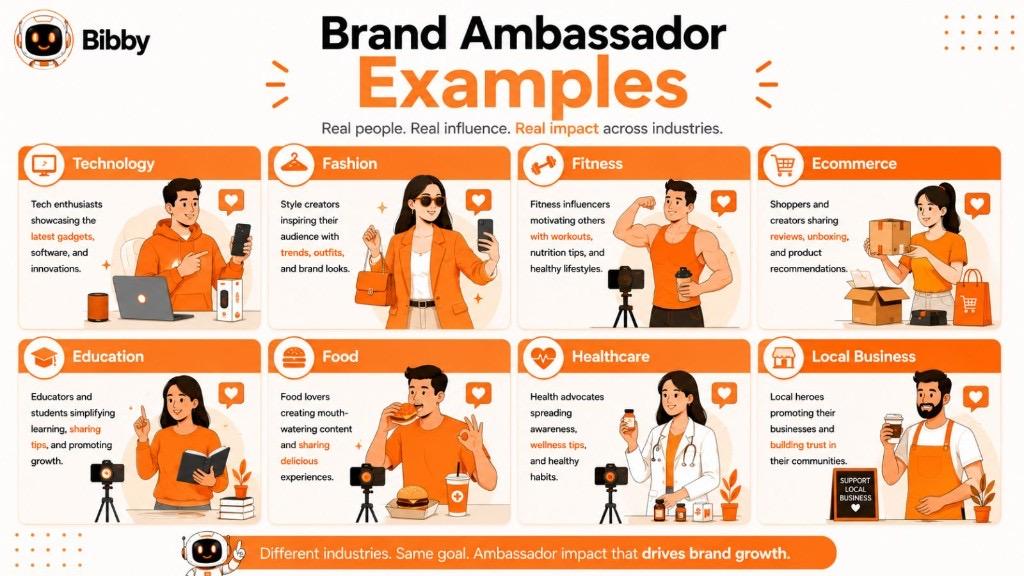
Below are some common examples of how different businesses use brand ambassadors.
1. Technology and SaaS Companies
Technology companies often partner with software professionals, entrepreneurs, educators, and content creators who regularly use their products.
These ambassadors create:
- Product tutorials
- Workflow demonstrations
- Feature walkthroughs
- Productivity tips
- Educational videos
- Customer success stories
For example, a social media marketing consultant might regularly share how they use an AI-powered scheduling platform to plan content, automate publishing, and improve engagement. By demonstrating real-world use cases, they help potential customers understand the product's value.
2. Fashion Brands
Fashion companies frequently collaborate with creators who reflect their brand identity and style.
Fashion ambassadors typically:
- Share outfit inspiration
- Create styling videos
- Review new collections
- Attend product launches
- Promote seasonal campaigns
Instead of simply displaying products, they inspire audiences by showing how clothing fits into everyday life.
3. Beauty and Skincare Brands
Beauty brands often work with makeup artists, skincare specialists, and lifestyle creators who educate their audiences about products through tutorials and honest reviews.
Their content may include:
- Product demonstrations
- Before-and-after results
- Daily skincare routines
- Makeup tutorials
- Ingredient explanations
- Product comparisons
Authentic experiences help potential customers make informed purchasing decisions.
4. Fitness and Wellness Brands
Fitness brands partner with trainers, athletes, nutrition coaches, and wellness experts who naturally incorporate products into their daily routines.
These ambassadors often create:
- Workout videos
- Healthy lifestyle content
- Nutrition tips
- Fitness challenges
- Product demonstrations
- Transformation stories
Their consistent use of products builds credibility and trust among health-conscious audiences.
5. Ecommerce Businesses
Online retailers frequently encourage loyal customers and creators to showcase products through real-life experiences.
Common ambassador content includes:
- Product reviews
- Unboxing videos
- Shopping hauls
- Lifestyle photography
- Customer testimonials
- Product recommendations
This user-generated content increases social proof and reduces purchase hesitation.
6. Food and Beverage Companies
Restaurants, beverage brands, and food manufacturers often collaborate with chefs, food bloggers, and lifestyle creators.
Brand ambassadors may:
- Share recipes
- Create cooking tutorials
- Review products
- Showcase meal ideas
- Host tasting events
- Recommend products to their audience
Authentic food experiences make promotional content feel natural and engaging.
7. Healthcare and Wellness Organizations
Healthcare companies often work with qualified professionals, educators, or patient advocates to raise awareness about services and wellness initiatives.
Examples include:
- Health education campaigns
- Awareness programs
- Wellness tips
- Community events
- Patient success stories
Because trust is especially important in healthcare, ambassadors focus on education rather than direct promotion.
8. Educational Institutions
Schools, universities, and online learning platforms frequently recruit student ambassadors to represent their institutions.
Student ambassadors may:
- Share campus experiences
- Guide prospective students
- Promote educational programs
- Organize events
- Answer admission-related questions
- Create educational content
Their firsthand experiences help future students make informed decisions.
9. Local Businesses
Small businesses also benefit from ambassador programs.
For example, a local:
- Coffee shop
- Restaurant
- Gym
- Salon
- Bookstore
- Boutique
- Real estate agency
may partner with respected community members who regularly recommend the business through social media and word-of-mouth marketing.
This approach strengthens community relationships while increasing local visibility.
10. Nonprofit Organizations
Nonprofits often collaborate with volunteers, community leaders, and advocates who support their mission.
Ambassadors help by:
- Raising awareness
- Sharing educational content
- Recruiting volunteers
- Promoting fundraising campaigns
- Encouraging donations
- Organizing community events
Their passion and credibility help inspire greater community involvement.
What Makes These Examples Successful?
Although these ambassadors work in different industries, they share several common characteristics:
- They genuinely believe in the brand.
- They create authentic, valuable content.
- They educate rather than simply advertise.
- They engage regularly with their audience.
- They maintain long-term relationships with the company.
- They consistently represent the brand's values.
These qualities help build trust, which is the foundation of every successful brand ambassador partnership.
Lessons Businesses Can Learn
Regardless of your industry, a successful brand ambassador program should focus on people who can genuinely represent your business.
To maximize results:
- Choose ambassadors who align with your brand values.
- Encourage authentic storytelling instead of scripted promotions.
- Support ambassadors with training and marketing resources.
- Build long-term partnerships rather than one-time campaigns.
- Measure performance using meaningful business metrics.
- Use AI-powered tools to simplify content creation, scheduling, and campaign management.
When businesses invest in the right ambassadors and provide the support they need, the result is stronger customer relationships, increased brand awareness, and sustainable long-term growth.
Brand Ambassador Program
A brand ambassador program is a structured marketing strategy in which a business recruits, trains, and collaborates with individuals who actively promote its products, services, or values over an extended period. Instead of relying only on paid advertisements, companies build a network of trusted advocates who create authentic content, engage with customers, and strengthen the brand's reputation.
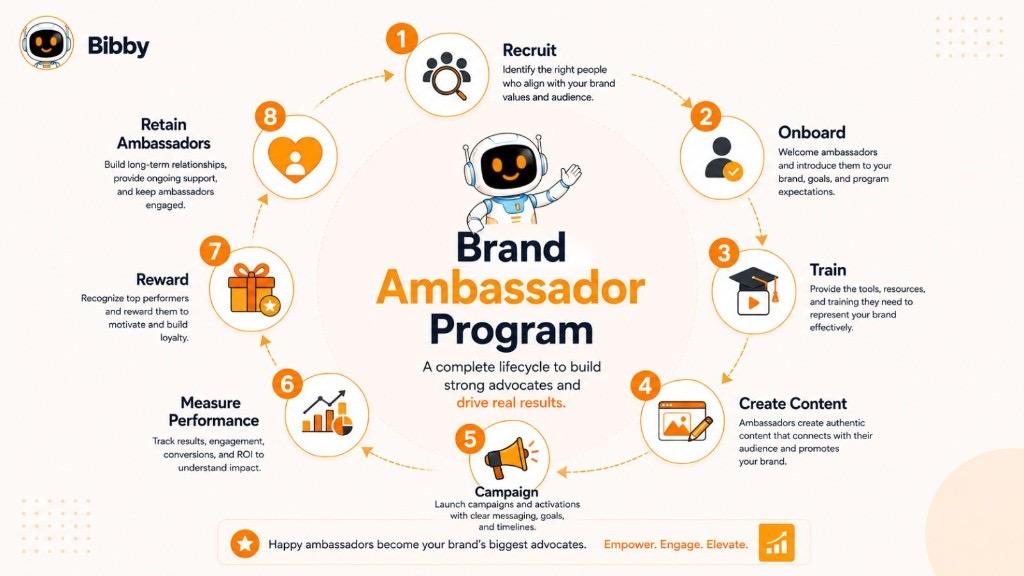
A successful brand ambassador program benefits both the business and the ambassadors. Companies gain increased visibility, trust, and customer loyalty, while ambassadors receive exclusive opportunities, rewards, professional growth, and long-term partnerships.
How a Brand Ambassador Program Works
Although every company designs its program differently, most brand ambassador programs follow a similar process.
Step 1: Define Program Goals
The first step is identifying what the business wants to achieve.
Common objectives include:
- Increasing brand awareness
- Growing social media engagement
- Generating leads
- Driving product sales
- Expanding into new markets
- Building customer loyalty
- Creating user-generated content
- Strengthening online communities
Having clear goals helps shape every stage of the program.
Step 2: Recruit the Right Ambassadors
Once the objectives are established, businesses begin searching for individuals who align with their brand values and target audience.
Potential ambassadors may include:
- Loyal customers
- Employees
- Content creators
- Industry professionals
- Students
- Community leaders
- Existing influencers
Rather than focusing only on audience size, businesses evaluate authenticity, engagement, professionalism, and content quality.
Step 3: Provide Training and Onboarding
Before ambassadors begin promoting the brand, they should understand the company's mission, products, messaging, and expectations.
A typical onboarding process includes:
- Brand introduction
- Product training
- Marketing guidelines
- Communication standards
- Campaign objectives
- Content recommendations
- Legal disclosure requirements
Well-trained ambassadors create more accurate and consistent content.
Step 4: Launch Campaigns
After onboarding, ambassadors begin participating in marketing campaigns.
Their activities may include:
- Publishing social media posts
- Creating videos
- Writing reviews
- Sharing customer experiences
- Hosting live sessions
- Promoting product launches
- Participating in events
- Encouraging referrals
Campaigns should provide ambassadors with creative freedom while maintaining brand consistency.
Step 5: Measure Performance
Tracking performance helps businesses understand whether their ambassador program is achieving its objectives.
Important metrics include:
- Reach
- Engagement rate
- Website traffic
- Referral sales
- Lead generation
- User-generated content
- Customer retention
- Conversion rate
- Return on investment (ROI)
Regular performance reviews help optimize future campaigns.
Step 6: Reward and Retain Ambassadors
Long-term partnerships are built through recognition and fair rewards.
Businesses may offer:
- Financial compensation
- Commission programs
- Free products
- Exclusive discounts
- Performance bonuses
- Early access to new releases
- Professional development opportunities
- Public recognition
Recognized ambassadors are more likely to remain loyal advocates for the brand.
Essential Components of a Successful Brand Ambassador Program
An effective program typically includes the following elements:
Clear Brand Guidelines
Provide ambassadors with:
- Brand voice
- Messaging framework
- Logo usage rules
- Visual identity standards
- Content recommendations
- Disclosure policies
This ensures consistent communication across all platforms.
Regular Communication
Maintain ongoing communication through:
- Campaign updates
- Monthly newsletters
- Private communities
- Video meetings
- Training sessions
- Feedback discussions
Strong communication helps ambassadors stay informed and engaged.
Performance Tracking
Use measurable KPIs instead of relying on assumptions.
Monitor:
- Social media engagement
- Referral traffic
- Sales performance
- Campaign participation
- Audience growth
- Customer feedback
These insights help identify top-performing ambassadors and improve future campaigns.
Creative Freedom
Although guidelines are important, ambassadors should have enough flexibility to create content in their own style.
Audiences respond more positively to authentic storytelling than scripted promotional messages.
Benefits of a Brand Ambassador Program
A well-managed ambassador program can help businesses:
- Increase brand awareness
- Build customer trust
- Improve brand reputation
- Generate authentic content
- Expand online reach
- Increase customer engagement
- Drive referrals
- Strengthen customer loyalty
- Reduce advertising costs
- Build long-term communities
These benefits often continue long after individual campaigns have ended.
Challenges Businesses May Face
Managing an ambassador program also comes with challenges, such as:
- Finding the right ambassadors
- Maintaining consistent branding
- Coordinating multiple campaigns
- Tracking performance accurately
- Keeping ambassadors engaged
- Measuring long-term ROI
- Managing communication across teams
Without a structured process, these challenges can reduce the program's effectiveness.
How AI Improves Brand Ambassador Programs
Modern AI-powered marketing tools are transforming the way businesses manage ambassador programs.
AI can help companies:
- Generate campaign ideas
- Create content briefs
- Build brand kits
- Suggest captions and hashtags
- Schedule posts across multiple social media platforms
- Publish content at AI-optimized times
- Monitor campaign performance
- Analyze audience engagement
- Measure ROI
- Maintain consistent branding
For ambassadors, AI reduces the time spent on repetitive tasks such as writing captions, planning content calendars, and scheduling posts. This allows them to focus on creating authentic content and building stronger relationships with their audience.
As ambassador programs continue to grow, combining authentic human advocacy with AI-powered automation enables businesses to scale their marketing efforts while maintaining consistency, efficiency, and long-term customer trust.
How AI Is Transforming Brand Ambassador Marketing
Artificial intelligence (AI) is reshaping the way businesses and brand ambassadors create, manage, and measure marketing campaigns. Tasks that once required hours of manual effort, such as planning content, writing captions, scheduling posts, and analyzing performance, can now be completed in minutes with AI-powered tools.
For brand ambassadors, AI is not replacing creativity or authenticity. Instead, it enhances productivity by automating repetitive tasks, providing data-driven insights, and allowing ambassadors to focus on what matters most: building genuine relationships with their audience.
1. Faster Content Creation
Creating fresh content consistently can be one of the biggest challenges for brand ambassadors. AI tools help generate ideas, draft captions, suggest hashtags, and even create images or videos based on simple prompts.
With AI, ambassadors can:
- Generate caption ideas
- Create social media posts
- Write product descriptions
- Brainstorm campaign concepts
- Produce AI-generated visuals
- Repurpose existing content for different platforms
This reduces creative fatigue while maintaining a steady flow of engaging content.
2. Smarter Social Media Scheduling
Posting at the right time can significantly impact engagement. AI-powered scheduling tools analyze audience behavior and recommend the best times to publish content.
Benefits include:
- AI-optimized posting times
- Multi-platform scheduling
- Automated publishing
- Consistent posting frequency
- Time zone optimization
- Content calendar management
Instead of manually posting every day, ambassadors can plan weeks or even months of content in advance.
3. Personalized Content Recommendations
AI analyzes audience behavior to understand what types of content perform best.
It can recommend:
- Popular content formats
- Trending topics
- High-performing hashtags
- Caption styles
- Visual themes
- Content improvements
These insights help ambassadors create content that resonates with their audience.
4. Better Audience Insights
Understanding your audience is essential for successful brand ambassador marketing.
AI-powered analytics provide valuable information about:
- Audience demographics
- Interests
- Engagement patterns
- Active hours
- Content preferences
- Geographic locations
These insights allow ambassadors to tailor their messaging for maximum impact.
5. Improved Campaign Performance Tracking
Modern AI tools monitor campaign performance in real time, making it easier to understand what works and what doesn't.
Businesses can track:
- Reach
- Engagement
- Click-through rate (CTR)
- Conversion rate
- Referral traffic
- Sales performance
- Return on investment (ROI)
Real-time analytics help businesses optimize campaigns without waiting until they end.
6. Brand Consistency Across Platforms
Maintaining a consistent brand voice can be challenging when managing multiple campaigns across different platforms.
AI helps ensure consistency by:
- Suggesting brand-approved messaging
- Maintaining tone of voice
- Organizing brand assets
- Recommending visual styles
- Supporting content approval workflows
This keeps marketing campaigns aligned with the company's identity.
7. Campaign Management Made Easier
Many businesses work with multiple ambassadors simultaneously. AI simplifies campaign management by organizing workflows and reducing manual coordination.
AI-powered systems can help:
- Assign campaign tasks
- Manage content calendars
- Track deadlines
- Organize creative assets
- Monitor campaign progress
- Generate performance reports
This improves collaboration between brands and ambassadors.
8. Faster Community Engagement
Responding to audience interactions quickly helps strengthen relationships.
AI can assist by:
- Prioritizing important messages
- Suggesting response drafts
- Identifying frequently asked questions
- Monitoring conversations
- Detecting customer sentiment
While human interaction remains essential, AI reduces the workload associated with managing large online communities.
Benefits of AI for Brand Ambassadors
Using AI allows brand ambassadors to:
- Save time on repetitive tasks
- Create content more efficiently
- Maintain consistent posting schedules
- Improve audience engagement
- Analyze performance faster
- Focus on storytelling and relationship building
- Collaborate more effectively with brands
The result is greater productivity without sacrificing authenticity.
Benefits of AI for Businesses
Companies also benefit significantly from AI-powered ambassador marketing.
AI helps businesses:
- Identify suitable ambassadors
- Manage large ambassador networks
- Track campaign performance
- Measure ROI accurately
- Optimize marketing strategies
- Improve content consistency
- Reduce manual workload
- Scale ambassador programs efficiently
These advantages make ambassador programs easier to manage while improving overall marketing effectiveness.
How Bibby Helps Brand Ambassadors Manage Social Media
Managing multiple campaigns across platforms like Facebook, Instagram, LinkedIn, TikTok, and YouTube can quickly become overwhelming. Brand ambassadors often need to create fresh content, write captions, schedule posts, monitor performance, and maintain consistent branding, all while staying engaged with their audience.
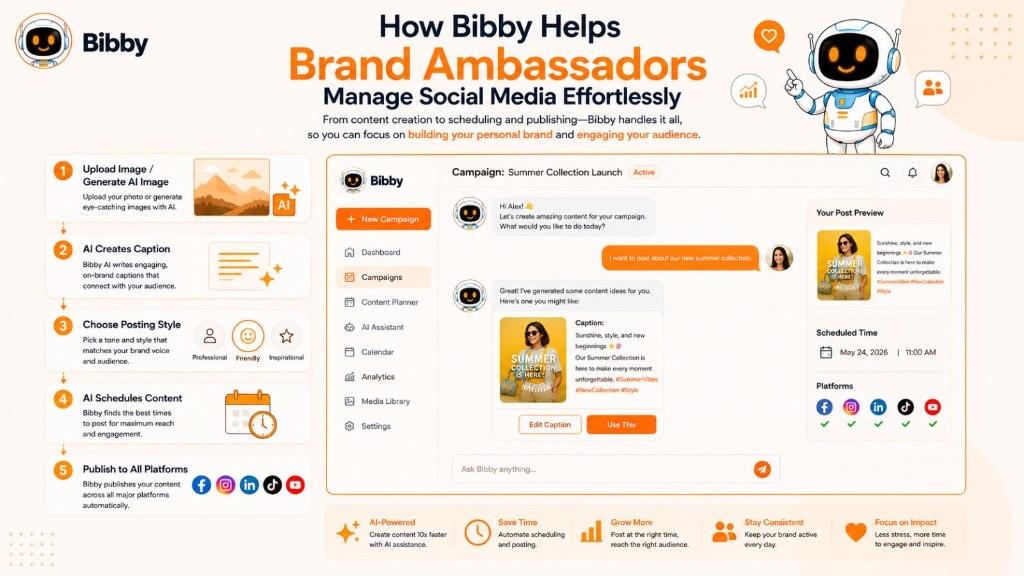
This is where Bibby simplifies the entire workflow.
With Bibby, brand ambassadors can:
- Upload their own images or generate AI-powered visuals.
- Instantly generate engaging captions with caption generation, tailored to different posting styles.
- Schedule posts across multiple social media platforms from a single dashboard.
- Publish images, videos, carousels, and stories without switching between apps.
- Automatically post content at AI-optimized posting times for better engagement.
- Build and manage brand kits to maintain consistent branding.
- Organize campaigns and content calendars in one place.
- Use Bibby's AI chat interface to create campaigns, generate posts, regenerate captions, and manage social media through simple conversations.
Instead of spending hours manually managing multiple platforms, ambassadors can automate routine tasks while focusing on creating authentic content and interacting with their community. This allows them to represent brands more effectively, maintain a consistent online presence, and deliver better results with significantly less effort.
As AI continues to evolve, the combination of authentic human advocacy and intelligent automation will define the future of brand ambassador marketing. Businesses that embrace both will be better equipped to build stronger customer relationships, expand their reach, and achieve sustainable long-term growth.
Key Takeaways
- Brand ambassadors represent a company through authentic advocacy—not one-off ads—and build brand awareness, trust, and long-term loyalty.
- They differ from influencers (often short-term campaigns) and affiliate marketing (performance-first referrals); many brands combine all three.
- Success depends on alignment, quality content, consistent engagement, and clear program goals—not follower count alone.
- Ambassadors create social proof through reviews, tutorials, events, and community interaction; programs need guidelines, rewards, and measurable KPIs.
- AI-powered content tools streamline caption generation, scheduling across multiple platforms, and performance tracking so ambassadors focus on authentic relationships.
- The success of a brand ambassador program depends on the quality of relationships, not the quantity of promotions. Businesses that focus on trust, transparency, and authentic collaboration are far more likely to build loyal communities and achieve sustainable growth.
- As AI continues to transform social media marketing, combining authentic advocacy with intelligent automation enables both brands and ambassadors to create better content, reach larger audiences, and achieve sustainable growth more efficiently.
- Use Bibby to plan, publish, and optimize ambassador content—then measure what earns attention. Start a free trial to simplify multi-platform publishing and Best Time to Post Tool scheduling.