
Affiliate marketing is a performance-based marketing strategy where businesses reward individuals or partners (known as affiliates) for driving sales, leads, or other desired actions through unique referral links. Instead of paying for advertising upfront, companies only pay commissions when specific results are achieved, making affiliate marketing one of the most cost-effective digital marketing channels.
Whether you're a business looking to grow revenue or a creator searching for new income opportunities, understanding affiliate marketing is essential in today's digital economy. From bloggers and YouTubers to influencers and website owners, millions of people use affiliate marketing to monetize their audiences while helping businesses reach new customers.
In this guide, you'll learn what affiliate marketing is, how it works, the different commission models, its benefits and challenges, and how it compares to other marketing strategies. You'll also discover common affiliate marketing terms, real-world examples, and best practices to help you better understand this powerful performance marketing model.
What Is Affiliate Marketing?
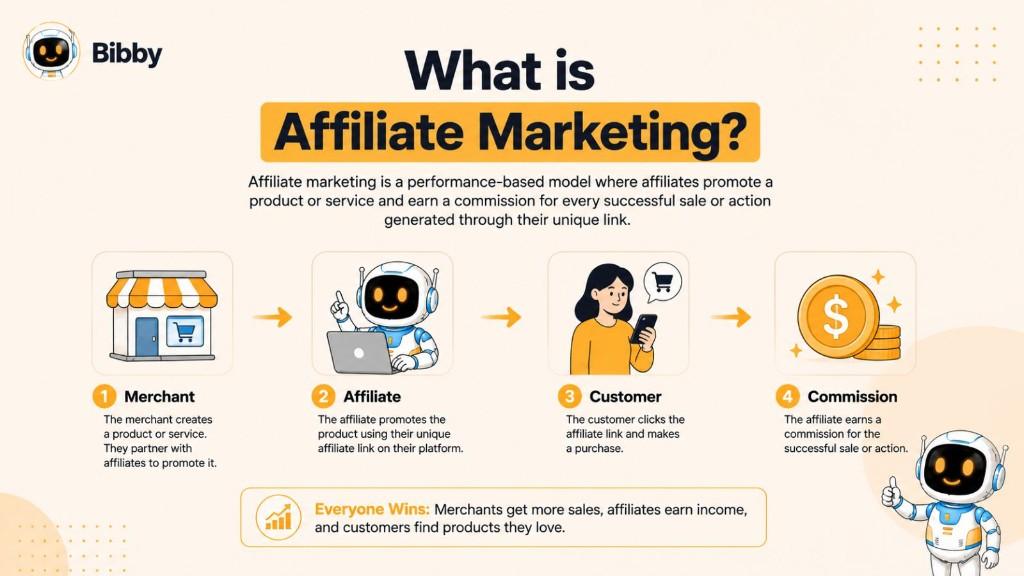
Affiliate marketing is a type of performance marketing in which a business rewards third-party partners—called affiliates—for promoting its products or services. Affiliates earn a commission whenever someone completes a predefined action through their unique tracking link, such as making a purchase, signing up for a free trial, or submitting a lead form.
Unlike traditional advertising, where businesses pay upfront for impressions or clicks, affiliate marketing is results-driven. This means companies only pay when an affiliate successfully generates the agreed-upon outcome, making it a low-risk and highly measurable customer acquisition strategy.
Affiliate marketing typically involves four key participants:
- Merchant (Advertiser): The company that sells a product or service and runs the affiliate program.
- Affiliate (Publisher): An individual or organization that promotes the merchant's products to its audience.
- Customer: The person who clicks an affiliate link and completes the desired action.
- Affiliate Network or Tracking Platform: A platform that manages affiliate links, tracks conversions, and handles commission payments. Some businesses operate their own in-house affiliate programs instead of using a third-party network.
Today, affiliate marketing is widely used across industries such as eCommerce, SaaS, finance, travel, education, and digital media. Businesses benefit from increased reach and performance-based customer acquisition, while affiliates can monetize their content by recommending products and services they genuinely value.
Because commissions are tied to measurable results, affiliate marketing has become one of the most scalable and cost-effective digital marketing strategies for both brands and content creators.
How Affiliate Marketing Works
Affiliate marketing follows a straightforward process that connects businesses with affiliates through trackable referral links. Every sale, lead, or action generated by an affiliate can be monitored, ensuring commissions are accurately attributed.
Here's how the affiliate marketing process typically works:
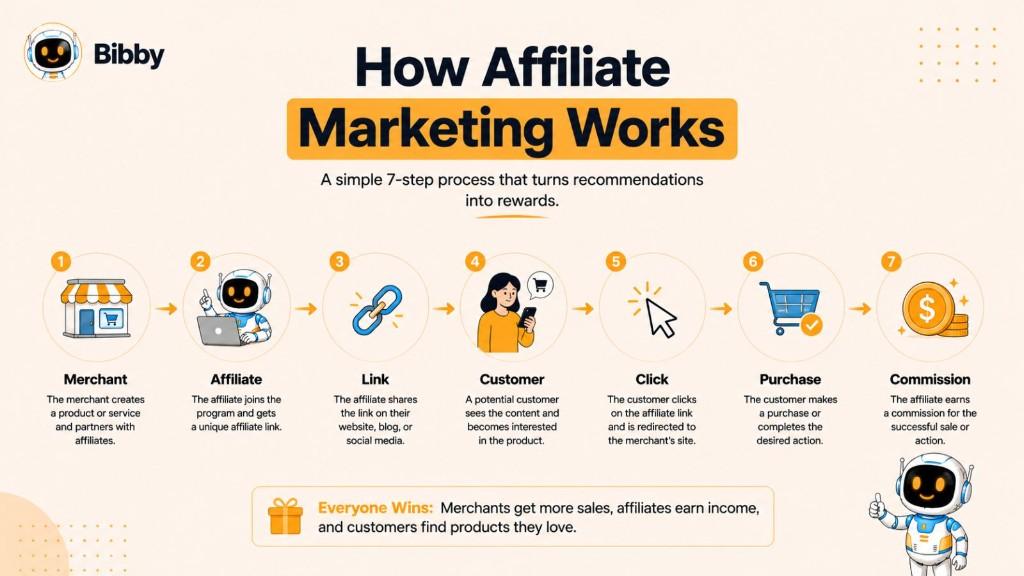
Step 1: A Business Launches an Affiliate Program
A company creates an affiliate program to promote its products or services. The business decides the commission structure, qualifying actions (such as sales or leads), payment schedule, and program terms.
Step 2: Affiliates Join the Program
Content creators, bloggers, influencers, website owners, and marketers apply to join the affiliate program directly or through an affiliate network. Once approved, they receive access to promotional resources and unique tracking links.
Step 3: The Affiliate Receives a Unique Tracking Link
Each affiliate is assigned a personalized referral link. This link contains tracking parameters that identify which affiliate referred a visitor, allowing the business to attribute conversions accurately.
Step 4: The Affiliate Promotes the Product or Service
Affiliates share their referral links across various marketing channels, including:
- Blog articles
- Product reviews
- Social media posts
- Email newsletters
- YouTube videos
- Podcasts
- Online communities
Their goal is to recommend products or services that are relevant to their audience and encourage users to take action.
Step 5: A Customer Clicks the Affiliate Link
When a user clicks the affiliate's tracking link, a tracking cookie or similar attribution technology records the referral. This enables the merchant or affiliate platform to identify the affiliate if the customer completes a qualifying action within the attribution window.
Step 6: The Customer Completes a Qualifying Action
The visitor performs the action defined by the affiliate program, such as:
- Purchasing a product
- Starting a free trial
- Submitting a lead form
- Installing a mobile app
- Creating an account
The specific qualifying action depends on the program's commission model.
Step 7: The Affiliate Earns a Commission
Once the qualifying action is verified, the affiliate receives a commission according to the program's terms. Payments may be issued weekly, biweekly, or monthly, depending on the affiliate platform or merchant.
Affiliate Marketing Workflow
Merchant Creates Affiliate Program
              ↓
Affiliate Joins the Program
              ↓
Receives a Unique Tracking Link
              ↓
Promotes the Product or Service
              ↓
Customer Clicks the Link
              ↓
Customer Completes a Qualifying Action
              ↓
Conversion Is Tracked
              ↓
Affiliate Earns a Commission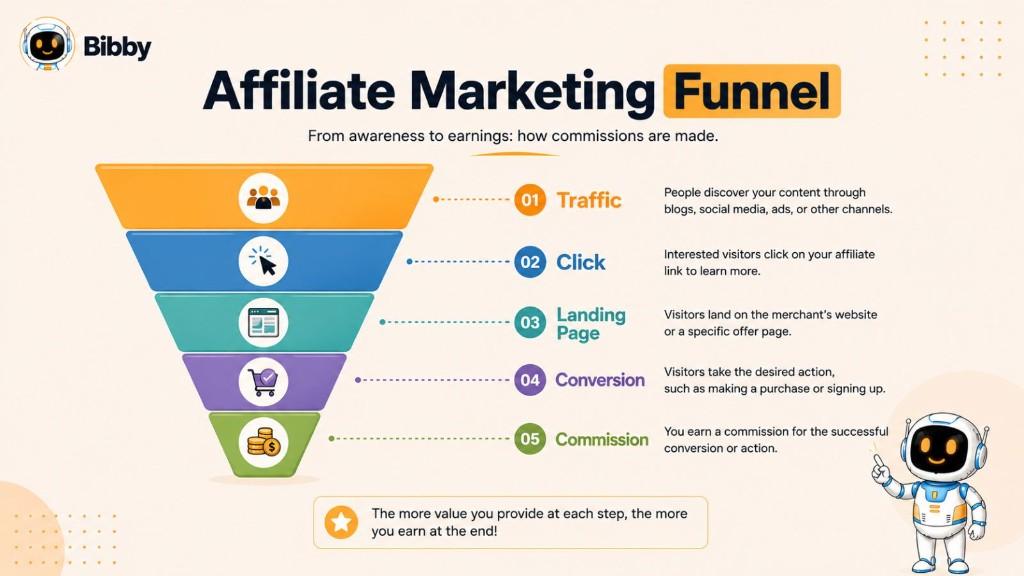
Example of Affiliate Marketing in Action
Imagine a technology blogger writes an in-depth review of a social media scheduling tool and includes an affiliate link within the article. A reader clicks the link, signs up for a paid subscription, and the purchase is successfully tracked. Because the sale originated from the affiliate's referral link, the blogger earns a commission while the business acquires a new customer.
This performance-based model benefits everyone involved: businesses pay only for measurable results, affiliates earn income by sharing valuable recommendations, and customers discover products that meet their needs.
Types of Affiliate Marketing
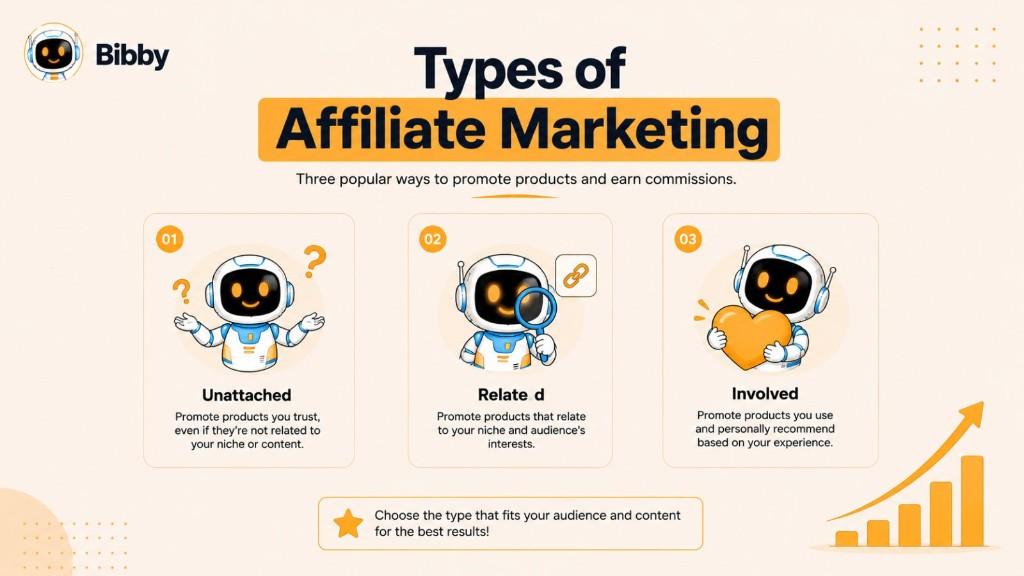
Not all affiliate marketers promote products in the same way. Depending on their relationship with the product or audience, affiliate marketing generally falls into three categories: unattached, related, and involved affiliate marketing. Understanding these types helps businesses choose the right partners and enables affiliates to build more effective promotion strategies.
Unattached Affiliate Marketing
Unattached affiliate marketing involves promoting products or services without having a direct connection to the brand or personal experience with the product. Affiliates typically rely on paid advertising, search engine optimization (SEO), or other marketing tactics to generate traffic and conversions.
Characteristics:
- No personal experience with the product
- Minimal relationship with the target audience
- Often uses paid ads or niche websites
- Focuses primarily on generating conversions
Advantages:
- Easy to scale across multiple niches
- Doesn't require building a personal brand
- Can generate passive income with optimized campaigns
Challenges:
- Lower audience trust
- Higher competition
- Requires strong advertising or SEO skills
Example:
A marketer creates comparison websites for web hosting services and earns commissions by ranking pages in search engines, even though they have never personally used every hosting provider featured.
Related Affiliate Marketing
Related affiliate marketing is used by creators or businesses that promote products relevant to their niche or audience, even if they haven't personally used every product they recommend. Their expertise and audience trust make the recommendations more credible than unattached promotions.
Characteristics:
- Products align with the affiliate's niche
- Built on audience relevance and authority
- Often promoted through blogs, newsletters, or social media
Advantages:
- Higher trust than unattached marketing
- Easier to create relevant content
- Better long-term audience engagement
Challenges:
- Recommending untested products can impact credibility
- Requires consistent content creation
Example:
A digital marketing blog recommends several email marketing platforms because they are relevant to its readers, even if the author hasn't personally tested every tool.
Involved Affiliate Marketing
Involved affiliate marketing is the most authentic and trust-based approach. Affiliates actively use the products they recommend and share their genuine experiences, reviews, tutorials, or case studies with their audience.
Because recommendations are based on firsthand experience, this type of affiliate marketing often delivers the highest conversion rates and stronger long-term relationships with followers.
Characteristics:
- Personal experience with the product
- Honest recommendations and reviews
- High level of audience trust
- Often includes tutorials, demonstrations, and case studies
Advantages:
- Builds credibility and authority
- Higher engagement and conversion rates
- Encourages long-term audience loyalty
Challenges:
- Requires time to test products thoroughly
- Limits promotions to products the affiliate genuinely supports
Example:
A YouTuber who uses a project management tool every day creates detailed tutorials, workflow videos, and productivity tips while recommending the software through affiliate links.
Comparison of Affiliate Marketing Types
| Type | Product Experience | Audience Trust | Scalability | Best For |
|---|---|---|---|---|
| Unattached | None | Low | High | Paid marketers and niche websites |
| Related | Limited or optional | Medium | High | Bloggers, niche publishers, and creators |
| Involved | Extensive firsthand experience | High | Medium | Influencers, educators, consultants, and industry experts |
Which Type Is Best?
There isn't a single "best" type of affiliate marketing—it depends on your goals and audience. Businesses often benefit from partnering with involved affiliates because authentic recommendations tend to generate higher-quality traffic and conversions. For affiliates, promoting products they genuinely use and trust is usually the most sustainable approach for building credibility and long-term income.
Common Affiliate Commission Models
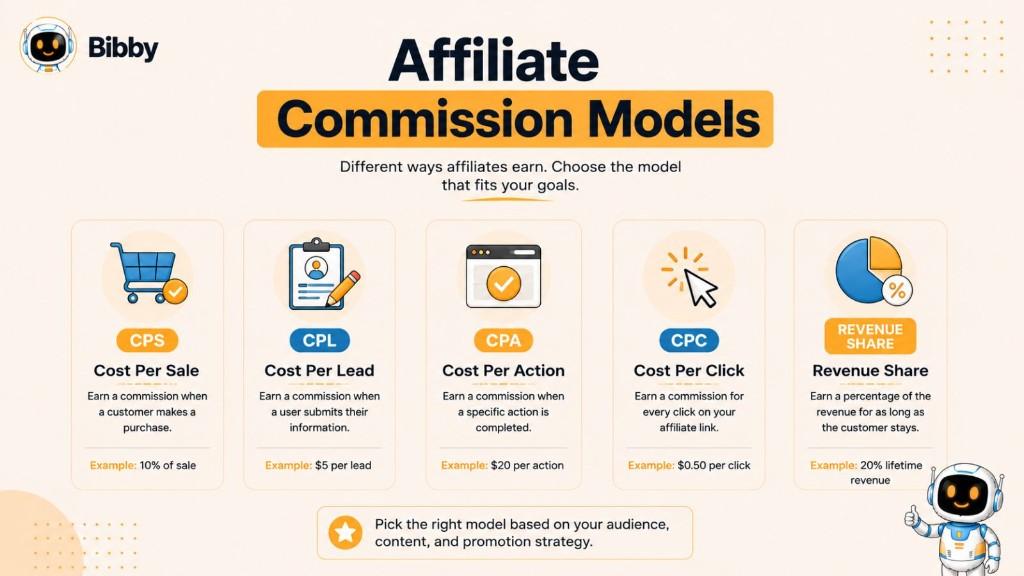
Affiliate programs use different commission models to determine how affiliates are rewarded for their marketing efforts. The payment structure varies depending on the business goals, industry, and type of product or service being promoted.
Understanding these commission models helps both businesses and affiliates choose programs that align with their objectives.
Cost Per Sale (CPS)
Cost Per Sale (CPS) is the most common affiliate commission model. Affiliates earn a commission only when a referred customer completes a purchase.
This model is popular in eCommerce, SaaS, and subscription-based businesses because merchants pay only when revenue is generated.
Example:
An online store offers a 10% commission on every sale. If an affiliate refers a customer who purchases a product worth $200, the affiliate earns a $20 commission.
Best for:
- eCommerce stores
- SaaS companies
- Digital products
- Subscription services
Cost Per Lead (CPL)
With Cost Per Lead (CPL), affiliates are paid when a visitor completes a lead-generation action instead of making a purchase.
Qualifying actions may include:
- Filling out a contact form
- Signing up for a free trial
- Requesting a demo
- Registering for a webinar
- Subscribing to a newsletter
This model is widely used in industries where lead generation is more valuable than immediate sales.
Example:
A software company pays affiliates $15 for every qualified free-trial signup generated through their referral link.
Best for:
- SaaS businesses
- Insurance companies
- Financial services
- B2B companies
Cost Per Click (CPC)
Under the Cost Per Click (CPC) model, affiliates earn money whenever someone clicks their affiliate link, regardless of whether the visitor makes a purchase or completes another action.
Although less common today, CPC programs are still used for brand awareness and traffic generation campaigns.
Example:
A business pays affiliates $0.40 for every valid click sent to its website through an approved affiliate link.
Best for:
- Brand awareness campaigns
- Content publishers
- High-traffic websites
Cost Per Action (CPA)
Cost Per Action (CPA) rewards affiliates when users complete a specific predefined action.
The required action varies by affiliate program and may include:
- Creating an account
- Installing an app
- Starting a free trial
- Completing a survey
- Making a purchase
Because businesses define the qualifying action, CPA offers flexibility across different industries and marketing objectives.
Example:
A mobile app pays affiliates $8 for every new user who installs the app and creates an account.
Best for:
- Mobile apps
- SaaS platforms
- Online services
- Lead-generation campaigns
Revenue Share
In a Revenue Share model, affiliates earn an ongoing percentage of the revenue generated by the customers they refer, rather than receiving a one-time commission.
This model is commonly used by subscription-based businesses because affiliates continue earning as long as the customer remains active.
Example:
A subscription software platform offers affiliates a recurring 30% commission. If a referred customer pays $50 per month, the affiliate earns $15 every month while the subscription remains active.
Best for:
- SaaS companies
- Membership platforms
- Subscription services
- Online education platforms
Comparison of Affiliate Commission Models
| Commission Model | When the Affiliate Gets Paid | Common Use Cases |
|---|---|---|
| Cost Per Sale (CPS) | After a customer makes a purchase | eCommerce, SaaS, digital products |
| Cost Per Lead (CPL) | After a qualified lead is generated | B2B, finance, insurance, software |
| Cost Per Click (CPC) | For each valid click | Brand awareness, publishers |
| Cost Per Action (CPA) | After a predefined action is completed | Apps, free trials, lead generation |
| Revenue Share | Recurring percentage of customer revenue | Subscription and membership businesses |
Which Commission Model Is Best?
The ideal commission model depends on the goals of both the business and the affiliate. Companies focused on direct revenue often prefer Cost Per Sale (CPS) or Revenue Share, while businesses prioritizing customer acquisition may choose Cost Per Lead (CPL) or Cost Per Action (CPA). Affiliates typically evaluate commission rates, conversion potential, cookie duration, and recurring earning opportunities before selecting an affiliate program.
Real-World Examples of Affiliate Marketing
Affiliate marketing is used by businesses of all sizes, from global eCommerce brands to SaaS companies and online marketplaces. These programs allow partners to earn commissions by referring customers through unique affiliate links.
Here are some well-known examples of affiliate marketing in action.
Amazon Associates
Amazon Associates is one of the world's largest affiliate programs. Affiliates can promote millions of products available on Amazon and earn commissions when customers make eligible purchases through their referral links.
Because of its extensive product catalog and brand recognition, Amazon Associates is a popular starting point for bloggers, publishers, and content creators.
Example:
A home décor blogger recommends furniture and kitchen accessories in a buying guide. When readers purchase those products through the affiliate links, the blogger earns a commission.
Shopify Affiliate Program
The Shopify Affiliate Program allows partners to promote Shopify's eCommerce platform to entrepreneurs and businesses looking to launch online stores.
Affiliates often create tutorials, comparisons, and educational content that explains how to build and grow an online business using Shopify.
Example:
A YouTube creator publishes a step-by-step video on starting an online store and includes a Shopify affiliate link in the video description.
HubSpot Solutions Partner & Affiliate Program
HubSpot offers affiliate opportunities for marketers, agencies, educators, and publishers who recommend its CRM and marketing software.
Affiliates typically create in-depth guides, software reviews, and digital marketing tutorials to help potential customers understand HubSpot's features and benefits.
Example:
A marketing consultant writes a comparison of CRM platforms and recommends HubSpot to businesses seeking an all-in-one marketing solution.
Canva Affiliate Program
Canva's affiliate program enables creators to promote its online design platform. Affiliates commonly publish tutorials, design tips, and productivity guides that demonstrate how Canva can simplify graphic design.
Example:
A design educator shares a beginner's Canva tutorial and includes affiliate links for viewers who want to upgrade to a premium plan.
Semrush Affiliate Program
Semrush rewards affiliates for referring users to its SEO and digital marketing platform. Content creators often promote Semrush through SEO tutorials, keyword research guides, and software comparisons.
Example:
An SEO blog reviews keyword research tools and recommends Semrush as part of a comprehensive guide for improving search rankings.
Where Affiliate Marketing Is Commonly Used
Affiliate marketing is widely adopted across many industries because it provides measurable, performance-based results.
Common industries include:
- eCommerce: Fashion, electronics, home goods, beauty products, and online marketplaces.
- Software (SaaS): Marketing tools, CRM platforms, project management software, and automation tools.
- Finance: Credit cards, investment platforms, insurance, and personal finance applications.
- Travel: Hotels, airlines, travel insurance, booking platforms, and vacation packages.
- Education: Online courses, certifications, learning platforms, and digital resources.
- Web Hosting & Technology: Hosting providers, website builders, domains, and cybersecurity services.
Why These Programs Succeed
Successful affiliate programs share several common characteristics:
- Competitive commission structures
- Reliable tracking and reporting
- High-quality products or services
- Strong brand reputation
- Marketing resources for affiliates
- Transparent payment policies
For affiliates, choosing trustworthy brands and creating genuinely helpful content often leads to higher engagement, stronger audience trust, and better long-term results than focusing solely on commission rates.
Benefits of Affiliate Marketing
Affiliate marketing offers advantages for both businesses and affiliates. For businesses, it provides a cost-effective way to acquire customers and increase sales. For affiliates, it creates opportunities to earn income by promoting products and services that align with their audience's interests.
Benefits for Businesses
#### Performance-Based Marketing
Unlike traditional advertising, affiliate marketing is performance-driven. Businesses pay commissions only when affiliates generate a predefined result, such as a sale, lead, or signup. This helps maximize marketing budgets and improve return on investment (ROI).
#### Lower Customer Acquisition Costs
Since payments are tied to measurable outcomes, affiliate marketing can reduce customer acquisition costs compared to channels that require upfront advertising spend.
#### Expanded Brand Reach
Affiliates promote products through blogs, websites, social media platforms, email newsletters, YouTube channels, and other digital channels. This allows businesses to reach audiences they may not have accessed through their own marketing efforts.
#### Increased Sales and Revenue
A well-managed affiliate program can become a reliable source of new customers and recurring revenue. As more affiliates join the program, businesses can scale their marketing efforts without significantly increasing operational costs.
#### Improved Brand Credibility
Recommendations from trusted creators, industry experts, and niche publishers often carry more credibility than traditional advertisements. This trust can lead to higher engagement and better conversion rates.
Benefits for Affiliates
#### Opportunity to Generate Passive Income
Many affiliates create evergreen content—such as product reviews, tutorials, and buying guides—that continues attracting visitors long after it is published. As a result, they can earn commissions from existing content over time.
#### Low Startup Costs
Most affiliate programs are free to join, and affiliates do not need to create products, manage inventory, process payments, or handle customer support. This makes affiliate marketing accessible to beginners and experienced marketers alike.
#### Flexible Work Environment
Affiliates can manage their business from virtually anywhere with an internet connection. They also have the flexibility to choose products, industries, and content formats that match their interests and expertise.
#### Multiple Income Streams
Affiliates are not limited to promoting a single brand. Many work with multiple companies across different industries, creating diversified revenue streams and reducing dependence on one affiliate program.
#### Scalable Growth
As audiences grow and content libraries expand, affiliates can increase traffic, conversions, and earnings without proportionally increasing their workload. Effective SEO, email marketing, and social media strategies can further accelerate growth.
Why Affiliate Marketing Is Popular
Affiliate marketing has become one of the fastest-growing digital marketing strategies because it creates value for everyone involved:
- Businesses gain customers while paying only for measurable results.
- Affiliates earn commissions by sharing products and services with their audiences.
- Customers discover solutions through trusted recommendations and educational content.
This win-win model has made affiliate marketing a core growth strategy for eCommerce brands, SaaS companies, online publishers, influencers, and content creators worldwide.
Challenges of Affiliate Marketing
While affiliate marketing offers significant opportunities for businesses and affiliates, it also comes with challenges that can impact performance and profitability. Understanding these challenges can help you build a more sustainable and successful affiliate marketing strategy.
High Competition
Affiliate marketing is a competitive industry, especially in popular niches such as technology, finance, health, and online shopping. Thousands of affiliates may promote the same products, making it difficult to stand out.
How to overcome it:
- Focus on a specific niche.
- Create original, high-quality content.
- Build trust by sharing genuine recommendations and insights.
Building Audience Trust
Successful affiliate marketing depends on credibility. If affiliates promote products solely for commissions or recommend low-quality products, they risk losing their audience's trust.
How to overcome it:
- Promote products you genuinely believe in.
- Clearly disclose affiliate relationships.
- Prioritize helpful, unbiased content over aggressive sales tactics.
Cookie Duration and Attribution
Affiliate programs often use cookies to track referrals, but these cookies expire after a set period. If a customer completes a purchase after the cookie expires or another affiliate receives credit, the original affiliate may not earn a commission.
How to overcome it:
- Choose programs with longer cookie durations.
- Understand each program's attribution rules before joining.
- Focus on high-intent audiences that are more likely to convert quickly.
Commission Changes
Businesses can update commission rates, payment terms, or affiliate program policies at any time. A reduction in commission rates can significantly affect an affiliate's income.
How to overcome it:
- Diversify income by joining multiple affiliate programs.
- Monitor program updates regularly.
- Build direct relationships with trusted merchants when possible.
Fraud and Invalid Traffic
Some affiliate programs face issues such as click fraud, fake leads, cookie stuffing, or fraudulent transactions. These activities can reduce program effectiveness and create challenges for both merchants and legitimate affiliates.
How to overcome it:
- Use reputable affiliate networks and tracking platforms.
- Monitor traffic quality and conversion data.
- Implement fraud detection and verification tools.
Dependence on Search and Social Platforms
Many affiliates rely heavily on search engines or social media platforms to generate traffic. Changes to search engine algorithms or social platform policies can affect website traffic and affiliate revenue.
How to overcome it:
- Diversify traffic sources.
- Build an email list.
- Invest in multiple content channels, such as blogs, videos, newsletters, and podcasts.
Compliance and Legal Requirements
Affiliate marketers must comply with advertising regulations and disclosure requirements. Many countries require affiliates to clearly disclose when they may earn commissions from recommendations.
How to overcome it:
- Add clear affiliate disclosures to your content.
- Follow local advertising regulations.
- Review the terms and conditions of each affiliate program.
How to Succeed Despite These Challenges
Although affiliate marketing has its challenges, most can be managed with the right strategy. Businesses should provide transparent commission structures, reliable tracking, and strong support for affiliates. Affiliates, on the other hand, should focus on creating valuable content, recommending trustworthy products, diversifying income sources, and building long-term relationships with their audiences.
By understanding these potential obstacles and addressing them proactively, both businesses and affiliates can build sustainable affiliate marketing programs that deliver consistent results over time.
Best Practices for Affiliate Marketing
Whether you're a business running an affiliate program or an individual promoting products, following proven best practices can improve conversions, strengthen trust, and support long-term success.
Choose Products Relevant to Your Audience
Promote products and services that align with your audience's interests, needs, and challenges. Relevant recommendations are more likely to generate engagement and conversions than promoting unrelated products solely for higher commissions.
Prioritize Quality Over Quantity
It's better to recommend a few high-quality products than dozens of average ones. Carefully evaluate products based on their features, customer support, pricing, and reputation before recommending them.
Create Helpful, Value-Driven Content
Educational content often performs better than overly promotional content. Consider creating:
- Product reviews
- Step-by-step tutorials
- Comparison articles
- Buying guides
- Case studies
- Frequently asked questions (FAQs)
By solving real problems, you can build credibility while naturally introducing affiliate recommendations.
Be Transparent About Affiliate Relationships
Always disclose when your content contains affiliate links. Transparency helps build trust with your audience and ensures compliance with advertising regulations in many countries.
A simple disclosure such as *"This article contains affiliate links. We may earn a commission if you make a purchase through these links at no additional cost to you."* is often sufficient.
Optimize for Search Engines (SEO)
Search engine optimization can drive consistent, long-term traffic to affiliate content. To improve visibility:
- Research relevant keywords.
- Write descriptive page titles and meta descriptions.
- Structure content with clear headings.
- Add internal links to related articles.
- Optimize images with descriptive alt text.
- Keep content updated as products and features change.
Track Performance and Analyze Results
Monitor key performance metrics to understand what's working and where improvements can be made.
Important metrics include:
- Click-through rate (CTR)
- Conversion rate
- Earnings per click (EPC)
- Revenue generated
- Top-performing content
- Traffic sources
Regular analysis helps you refine your strategy and maximize results. Bibby Growth Insights can help you compare performance across your channels in one place.
Diversify Your Traffic Sources
Relying on a single platform can be risky. Instead, build multiple channels for reaching your audience, such as:
- Organic search
- Social media
- Email newsletters
- YouTube
- Podcasts
- Online communities
Diversification helps reduce the impact of search algorithm updates or changes to social media platforms.
Build Long-Term Trust
Trust is one of the most valuable assets in affiliate marketing. Avoid misleading claims, exaggerated promises, or recommending products you don't believe in. Consistently providing honest reviews and useful information encourages repeat visitors and long-term audience loyalty.
Affiliate Marketing Best Practices Checklist
Use this checklist as a quick reference:
- ✓ Promote products relevant to your audience.
- ✓ Recommend products you trust.
- ✓ Publish helpful, educational content.
- ✓ Clearly disclose affiliate relationships.
- ✓ Optimize content for SEO.
- ✓ Monitor clicks, conversions, and earnings.
- ✓ Diversify traffic sources.
- ✓ Keep your content accurate and up to date.
- ✓ Focus on building long-term audience trust.
Following these best practices can help businesses attract high-quality affiliates and enable affiliates to build sustainable income through valuable, trustworthy content rather than short-term promotional tactics.
Affiliate Marketing vs. Influencer Marketing
Affiliate marketing and influencer marketing are often used together, but they are not the same. Both strategies involve third parties promoting products or services, yet they differ in how partners are compensated, their primary objectives, and the way success is measured.
Affiliate Marketing
Affiliate marketing is a performance-based marketing strategy. Affiliates earn commissions only when they generate a predefined result, such as a sale, lead, or signup. Businesses typically use affiliate marketing to drive measurable conversions while keeping marketing costs tied to actual outcomes.
Key characteristics:
- Commission-based compensation
- Focus on sales, leads, or conversions
- Uses trackable affiliate links
- Long-term, performance-driven partnerships
- Success measured by ROI and conversion metrics
Influencer Marketing
Influencer marketing involves collaborating with individuals who have an established audience on social media or other online platforms. Influencers are often compensated with a fixed fee, free products, commissions, or a combination of these methods to promote a brand.
The primary goal is usually to increase brand awareness, engagement, and audience trust rather than generate immediate sales.
Key characteristics:
- Fixed payments, free products, or hybrid compensation
- Focus on brand awareness and engagement
- Relies on audience influence and personal branding
- Frequently uses social media platforms
- Success measured through reach, impressions, engagement, and sometimes conversions
Affiliate Marketing vs. Influencer Marketing: Comparison
| Feature | Affiliate Marketing | Influencer Marketing |
|---|---|---|
| Primary Goal | Generate sales and conversions | Build brand awareness and engagement |
| Payment Model | Performance-based commissions | Fixed fees, free products, commissions, or hybrid |
| Success Metrics | Sales, leads, ROI, conversions | Reach, impressions, engagement, brand awareness |
| Tracking Method | Affiliate links and conversion tracking | Campaign analytics, affiliate links, promo codes |
| Best For | Revenue-focused campaigns | Product launches, brand visibility, audience engagement |
Which Strategy Should You Choose?
The right approach depends on your marketing goals.
Choose affiliate marketing if you want to:
- Increase sales and revenue.
- Pay only for measurable results.
- Build a scalable performance marketing channel.
- Track conversions with precision.
Choose influencer marketing if you want to:
- Increase brand awareness.
- Reach new audiences quickly.
- Generate social proof and user engagement.
- Launch new products or campaigns.
Many businesses combine both strategies by partnering with influencers who also participate in affiliate programs. This hybrid approach allows brands to benefit from broad audience reach while rewarding creators for driving measurable business results.
Affiliate Marketing vs. Referral Marketing
Affiliate marketing and referral marketing both rely on recommendations to attract new customers, but they serve different purposes and involve different participants. While affiliate marketing is designed to reward third-party marketers for promoting a business, referral marketing encourages existing customers to recommend products or services to friends, family, or colleagues.
Understanding the differences can help businesses choose the right strategy—or combine both for greater customer acquisition.
Affiliate Marketing
Affiliate marketing involves independent publishers, creators, bloggers, influencers, or businesses promoting products in exchange for a commission. Affiliates typically have audiences beyond their personal network and use content marketing, SEO, social media, email marketing, and other digital channels to generate referrals.
Key characteristics:
- Open to affiliates, publishers, and creators
- Rewards performance through commissions
- Targets new audiences at scale
- Uses affiliate links for tracking
- Focuses on customer acquisition and revenue growth
Referral Marketing
Referral marketing is built around existing customers recommending a product or service to people they know. Instead of commissions, customers often receive rewards such as discounts, store credits, cash bonuses, or free products when someone they refer completes a qualifying action.
Because referrals come from trusted personal relationships, they often result in higher conversion rates and stronger customer loyalty.
Key characteristics:
- Participants are existing customers
- Rewards include discounts, credits, or bonuses
- Based on personal recommendations
- Uses referral codes or referral links
- Focuses on customer loyalty and word-of-mouth growth
Affiliate Marketing vs. Referral Marketing: Comparison
| Feature | Affiliate Marketing | Referral Marketing |
|---|---|---|
| Participants | Affiliates, creators, publishers | Existing customers |
| Primary Goal | Acquire new customers and drive sales | Encourage customer referrals and loyalty |
| Compensation | Commission-based | Discounts, credits, rewards, or bonuses |
| Audience | Broad public audience | Friends, family, colleagues, personal network |
| Tracking | Affiliate links and tracking platforms | Referral links or referral codes |
| Typical Scale | High and scalable | Limited to customer networks |
Which Strategy Is Better?
Neither strategy is inherently better—they solve different business challenges.
Affiliate marketing is ideal for businesses that want to:
- Expand their reach to new audiences.
- Increase online sales.
- Build a scalable, performance-based marketing channel.
- Partner with creators, bloggers, and publishers.
Referral marketing is better suited for businesses that want to:
- Increase customer loyalty.
- Encourage repeat business.
- Reward satisfied customers for recommending the brand.
- Grow through trusted word-of-mouth referrals.
Many successful businesses use both strategies together. Referral marketing strengthens relationships with existing customers, while affiliate marketing helps attract new audiences through trusted publishers and content creators, creating a balanced and sustainable growth strategy.
Key Takeaways
Affiliate marketing is a performance-based marketing strategy that enables businesses to reward partners for driving measurable results, such as sales, leads, or signups. By using unique tracking links, businesses can accurately attribute conversions, while affiliates have the opportunity to earn commissions by recommending products and services to their audiences.
Whether you're a business looking to expand your customer base or a creator exploring new revenue opportunities, affiliate marketing offers a scalable and cost-effective approach to growth. Success depends on choosing the right products, creating valuable content, building trust with your audience, and continuously optimizing your marketing efforts.
Key Points to Remember
- Affiliate marketing rewards partners for generating measurable business results.
- The ecosystem includes merchants, affiliates, customers, and affiliate networks or tracking platforms.
- Common commission models include Cost Per Sale (CPS), Cost Per Lead (CPL), Cost Per Action (CPA), Cost Per Click (CPC), and Revenue Share.
- Long-term success is built on trust, transparency, and high-quality, audience-focused content.
- Businesses and creators alike can use affiliate marketing to drive sustainable growth while measuring performance through accurate conversion tracking.
If you're exploring digital marketing concepts, continue learning with our related dictionary entries on Content Marketing, Influencer Marketing, Referral Marketing, Conversion Rate, Lead Generation, and Social Media Marketing to build a deeper understanding of the digital marketing ecosystem. Creators promoting through social commerce can use Bibby to schedule posts, test call-to-action (CTA) variations, and track which content drives sign-ups and sales from referral links.