
CPC (Cost Per Click) is a digital advertising metric that shows how much you pay, on average, each time someone clicks your ad.
If you run paid campaigns on social media or search platforms, understanding CPC helps you evaluate how efficiently your advertising budget generates traffic. But a low CPC alone doesn't guarantee a successful campaign—you also need to consider conversions, revenue, and the quality of the traffic you're attracting.
In this section, you will learn:
- What CPC means and how the CPC formula works
- What factors influence CPC and what makes a good CPC
- Practical ways to lower CPC and improve campaign performance
First, let's look at exactly what CPC means and why it matters to digital marketers.
What Is CPC (Cost Per Click)?
CPC, or Cost Per Click, is the average amount an advertiser pays for each click on an advertisement. It is one of the most common metrics used to measure the cost and efficiency of paid advertising campaigns across search engines, social media platforms, and other digital advertising networks.
In simple terms, CPC tells you how much it costs to get someone to click your ad.
For example, if you spend $100 on an advertising campaign and receive 200 clicks, your CPC is $0.50 per click. This means you spent an average of 50 cents to generate each click.
CPC can be used in two related ways. It can describe a pricing model, where an advertiser pays when someone clicks an ad, or it can describe a performance metric used to evaluate how efficiently an advertising campaign generates clicks.
CPC is commonly used when evaluating paid campaigns on platforms such as Facebook, Instagram, LinkedIn, TikTok, YouTube, and search advertising networks. However, the exact way platforms define and report clicks can vary, so marketers should always check which click metric is being used when comparing campaigns.
CPC is useful because it gives advertisers a straightforward way to understand the relationship between their advertising spend and the traffic their ads generate. However, CPC should rarely be evaluated on its own. A campaign with a low CPC can still perform poorly if those inexpensive clicks don't lead to meaningful actions such as sign-ups, purchases, or leads.
That's why CPC is best considered alongside metrics such as CTR, conversion rate, CPA, and ROAS when evaluating overall campaign performance.
Now that you understand what CPC means, let's look at the simple formula used to calculate it.
How Is CPC Calculated?
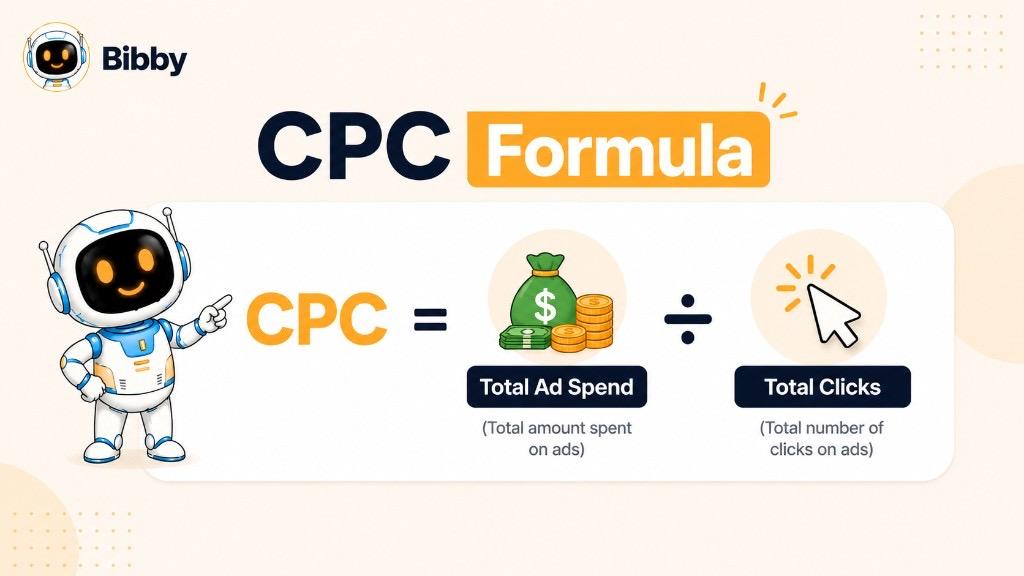
CPC is calculated by dividing your total advertising spend by the total number of clicks your ads received.
CPC Formula
CPC = Total Ad Spend ÷ Total Number of Clicks
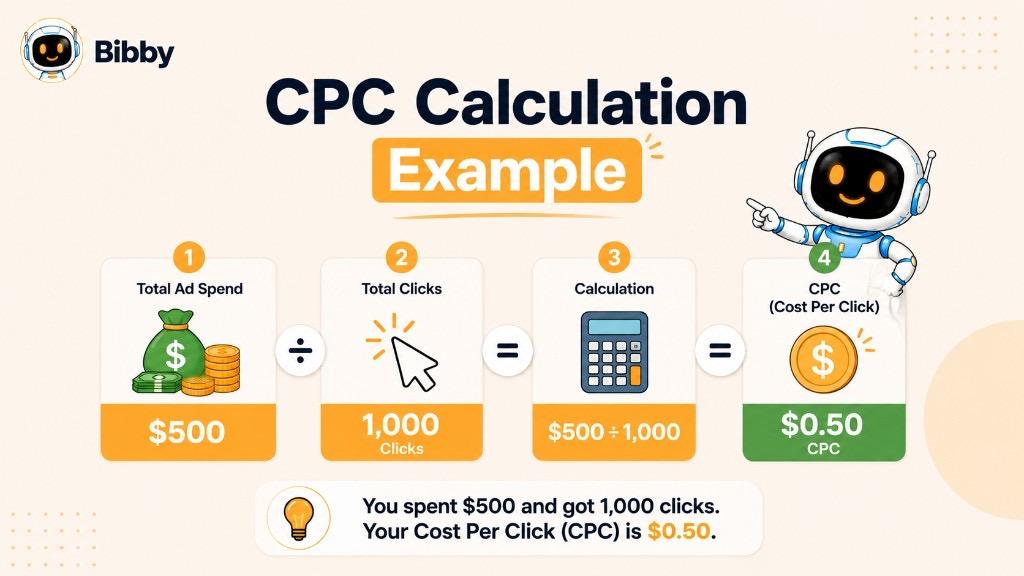
For example, suppose you spend $500 on a social media advertising campaign and your ads receive 1,000 clicks.
$500 ÷ 1,000 = $0.50 CPC
Your average CPC is therefore $0.50, meaning you spent an average of 50 cents for every click generated by the campaign.
CPC Calculation Example
Imagine you run a Facebook advertising campaign with a total budget of $750. By the end of the campaign, your ads have generated 1,500 clicks.
Using the formula:
$750 ÷ 1,500 = $0.50
Your CPC is $0.50 per click.
If another campaign generated the same number of clicks but cost $1,200, its CPC would be $0.80. Assuming the two campaigns generated clicks of similar quality, the first campaign was more efficient at generating traffic.
It's important to remember that CPC is an average. Individual clicks don't necessarily cost the same amount. Advertising platforms typically use auctions to determine ad delivery and pricing, so the cost of individual clicks can fluctuate throughout a campaign.
You should also make sure you're comparing the same type of click when analyzing CPC across campaigns or platforms. Different advertising platforms may report different click metrics, and a link click, outbound click, or all-click metric may not represent the same user action.
Ultimately, the CPC formula is simple, but interpreting the result requires context. A $0.50 CPC isn't automatically good or bad—the value depends on your industry, audience, campaign objective, and what happens after someone clicks your ad.
Next, let's look at what actually makes a CPC "good" and why there isn't one universal benchmark.
What Does a Good CPC Look Like?
There is no single CPC that is considered good for every advertising campaign. A CPC that is excellent for one business could be expensive for another, depending on the industry, audience, platform, location, and campaign objective.
For example, a business selling a $2,000 product may be comfortable paying several dollars for a highly qualified click if those visitors frequently become customers. A business promoting a low-cost product may need a much lower CPC to remain profitable.
Instead of focusing on a universal benchmark, compare your CPC against your campaign goals and historical performance.
Several factors can influence whether your CPC is considered good:
- Industry: Competitive industries often have more expensive advertising auctions.
- Advertising platform: CPC can vary significantly between Facebook, Instagram, LinkedIn, TikTok, Google, and other platforms.
- Audience: Some audiences are more competitive to reach than others.
- Location: Advertising costs can differ substantially between countries, regions, and cities.
- Campaign objective: Campaigns optimized for traffic, leads, sales, or other actions can produce different CPCs.
- Ad creative: Relevant and engaging ads can attract clicks more efficiently.
- Conversion performance: A higher CPC may still be worthwhile if the resulting visitors convert at a higher rate.
CPC Should Be Measured Against Results
A low CPC can look impressive but doesn't necessarily mean your campaign is successful.
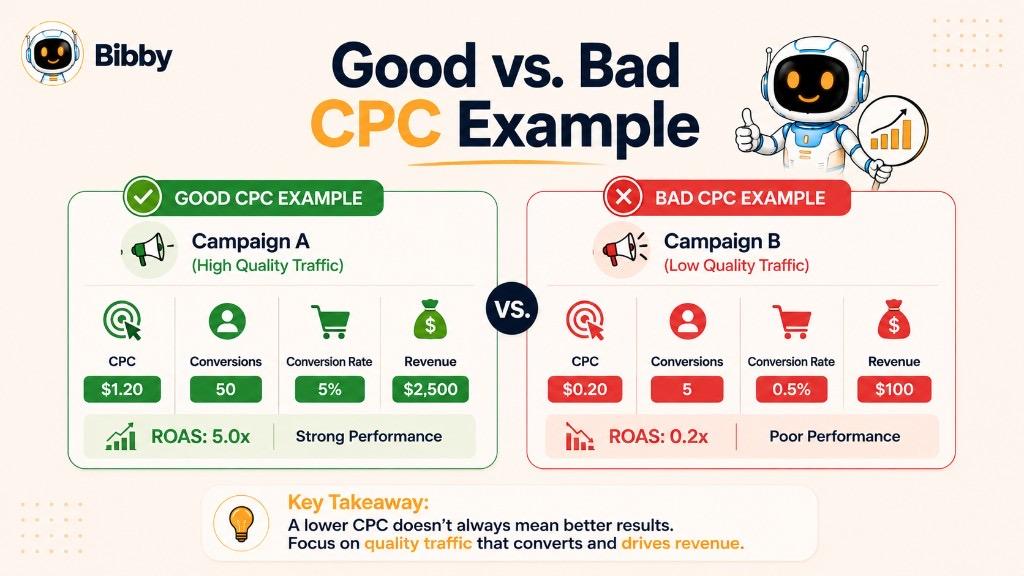
Imagine two campaigns:
Campaign A
- CPC: $0.30
- 1,000 clicks
- 5 conversions
Campaign B
- CPC: $1.00
- 1,000 clicks
- 50 conversions
Campaign A generates cheaper clicks, but Campaign B produces far more conversions. If those conversions have meaningful business value, paying more for each click could actually produce a better return.
This is why marketers should evaluate CPC alongside CTR, conversion rate, CPA, and ROAS rather than treating CPC as the final measure of campaign success.
A useful approach is to establish your own CPC benchmarks over time. Compare campaigns using similar audiences, objectives, and platforms, then investigate what causes CPC to rise or fall.
Once you understand how CPC fits into the bigger picture, the next step is comparing it with other important advertising metrics such as CPM, CPA, and CTR.
CPC vs. Other Advertising Metrics
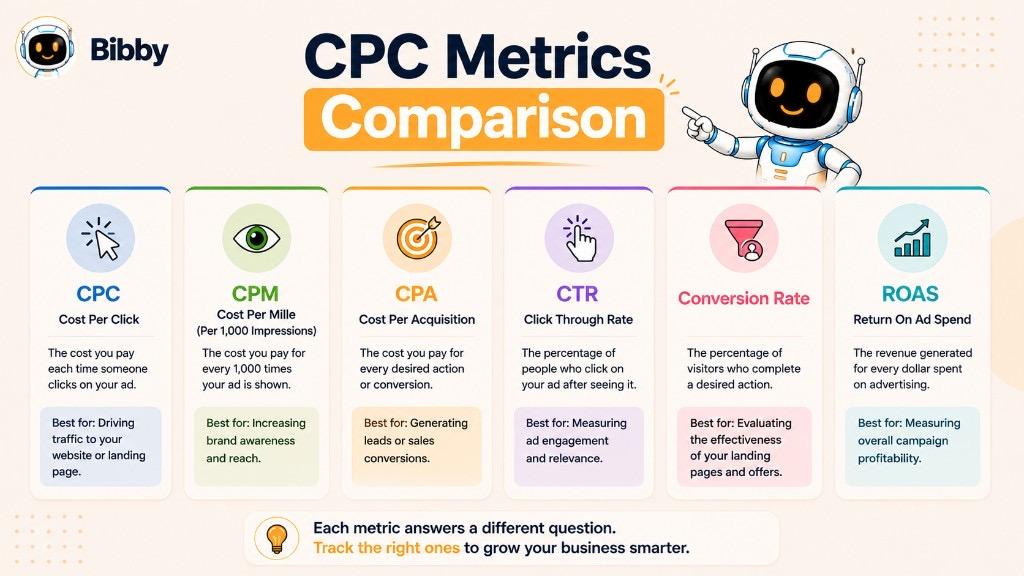
CPC is an important advertising metric, but it only tells you part of the story. To understand whether a campaign is actually performing well, it's useful to compare CPC with other metrics such as CPM, CPA, CTR, conversion rate, and ROAS.
CPC vs. CPM
CPC (Cost Per Click) measures the average cost of generating a click.
CPM (Cost Per Mille) measures the cost of generating 1,000 ad impressions.
CPC is useful when you're focused on driving traffic, while CPM is useful for understanding the cost of getting your ads in front of an audience.
For example, a campaign can have a low CPM but a high CPC if many people see the ad but relatively few click it.
CPC vs. CPA
CPA (Cost Per Acquisition) measures how much it costs to generate a desired conversion or acquisition, such as a purchase, lead, or sign-up.
CPC measures the cost of getting someone to click. CPA measures the cost of getting someone to complete the desired action.
A campaign could have a low CPC but a high CPA if the people clicking the ads aren't converting.
CPC vs. CTR
CTR (Click-Through Rate) measures the percentage of impressions that result in clicks.
CPC tells you how much you're paying for clicks, while CTR tells you how frequently people click after seeing your ad.
For example, a high CTR generally indicates that your ad is attracting attention and encouraging people to click. However, the relationship between CTR and CPC can vary depending on the advertising platform and auction dynamics.
CPC vs. Conversion Rate
Conversion rate measures the percentage of visitors who complete a desired action after clicking an ad.
CPC happens before the conversion. Conversion rate helps you understand what happens after the click.
This distinction is important because increasing clicks isn't necessarily useful if those visitors don't take meaningful actions on your website or landing page.
CPC vs. ROAS
ROAS (Return on Ad Spend) measures the revenue generated relative to the amount spent on advertising.
CPC focuses specifically on the cost of generating clicks, while ROAS looks at the financial return from the campaign.
For businesses focused on revenue, ROAS can ultimately be more meaningful than CPC alone. A campaign with a higher CPC can still be more profitable if it generates significantly more revenue.
How These Metrics Work Together
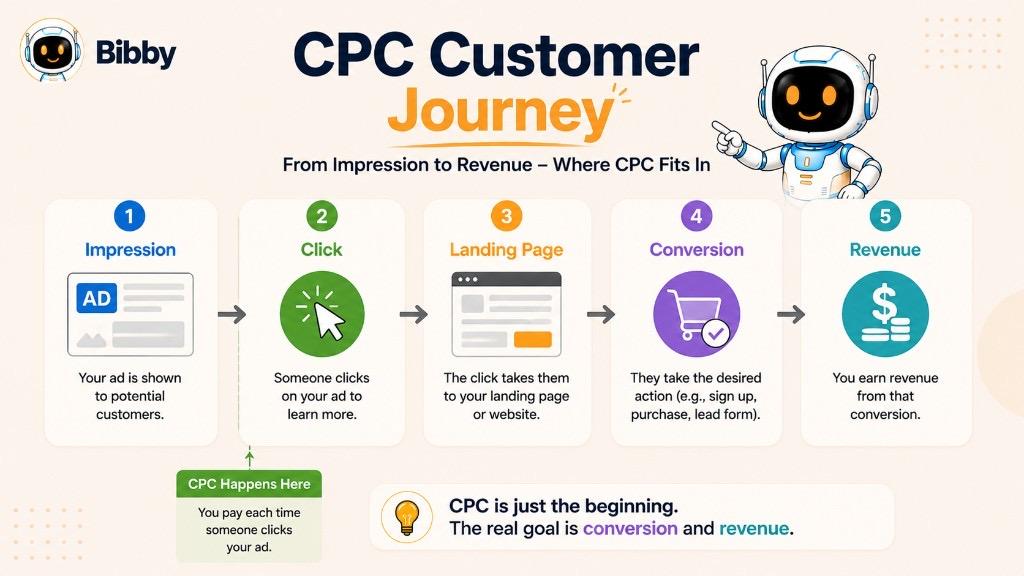
Rather than optimizing for one number, look at the entire path from impression to revenue:
Impressions → Clicks → Conversions → Revenue
CPM helps you understand the cost of impressions, CPC helps you understand the cost of clicks, conversion rate shows how effectively clicks become customers or leads, CPA measures the cost of those conversions, and ROAS shows the financial return.
Understanding these relationships makes it easier to diagnose campaign performance and identify where improvements are needed.
Next, let's look at how CPC works specifically across social media advertising platforms.
CPC on Social Media
CPC is widely used to evaluate the performance of paid social media campaigns. However, CPC can vary significantly from one platform to another because each platform has different audiences, advertising auctions, campaign objectives, placements, and optimization systems.
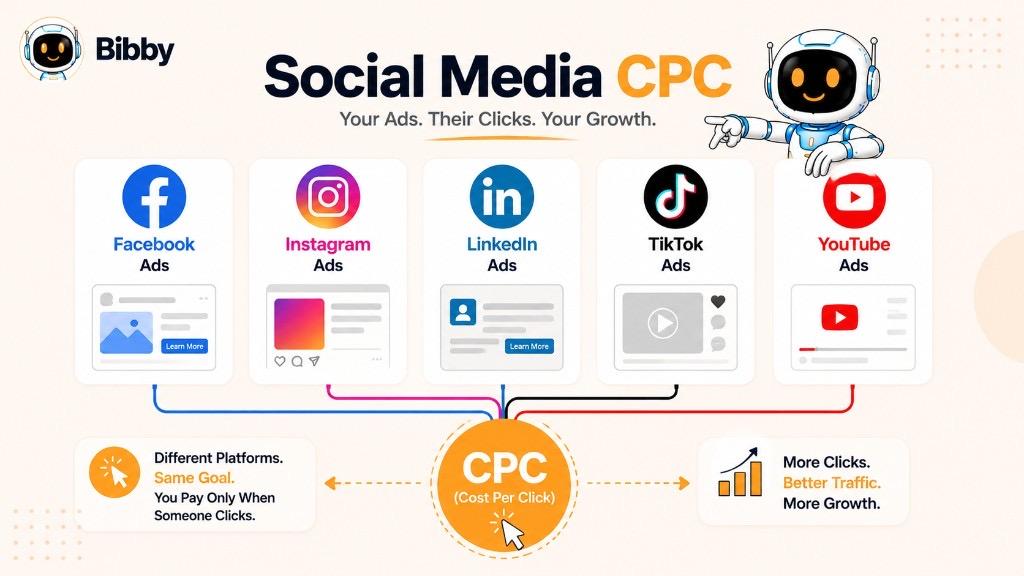
The same ad can therefore generate very different CPCs depending on where it is promoted.
Facebook and Instagram CPC
Facebook and Instagram advertising, managed through Meta's advertising system, can use CPC to measure the cost of generating clicks from ads.
CPC can be influenced by factors such as audience competition, ad creative, placements, campaign objective, and engagement. An engaging image, video, or carousel that resonates with the target audience may attract more clicks and potentially improve overall advertising efficiency.
When evaluating CPC on Facebook and Instagram, look beyond the cost of individual clicks. Consider whether those clicks generate meaningful traffic, leads, purchases, or other desired outcomes.
LinkedIn CPC
LinkedIn is particularly important for B2B marketers because advertisers can target professional characteristics such as job roles, industries, and company-related attributes.
These highly specific audiences can be valuable, but they can also be competitive and expensive to reach. As a result, a LinkedIn campaign may have a higher CPC than a campaign targeting a broader consumer audience elsewhere.
For B2B campaigns, evaluate CPC alongside lead quality and conversion performance rather than assuming the lowest CPC represents the best campaign.
TikTok CPC
TikTok is heavily focused on short-form video content, making creative quality particularly important for advertisers.
Strong hooks, engaging visuals, and content that fits the platform's viewing experience can help encourage users to interact with an advertisement. Advertisers should monitor CPC alongside engagement and conversion metrics to determine whether their creative is attracting valuable traffic.
Testing multiple creative concepts can help identify which messages and formats generate clicks more efficiently.
YouTube CPC
YouTube advertising can involve several different campaign and bidding approaches, so the relevance of CPC depends on the specific campaign setup and objective.
For campaigns where clicks are an important outcome, CPC can help advertisers understand the cost of generating traffic from video ads. However, video campaigns may also prioritize metrics such as views, watch time, engagement, or conversions.
This means CPC should always be interpreted in the context of the campaign's primary objective.
Why Social Media CPC Changes
CPC isn't fixed. It can change throughout a campaign as audience competition, demand, creative performance, and other auction conditions change.
For this reason, marketers should monitor CPC over time instead of treating the initial CPC as a permanent rate.
The next step is understanding the factors that can cause CPC to increase or decrease, from audience targeting and competition to ad creative and seasonality.
What Factors Affect CPC?
CPC is influenced by a combination of factors related to your audience, advertising strategy, creative, and the competitive environment. Because most digital advertising platforms use auction-based systems, CPC can change even when your budget stays the same.
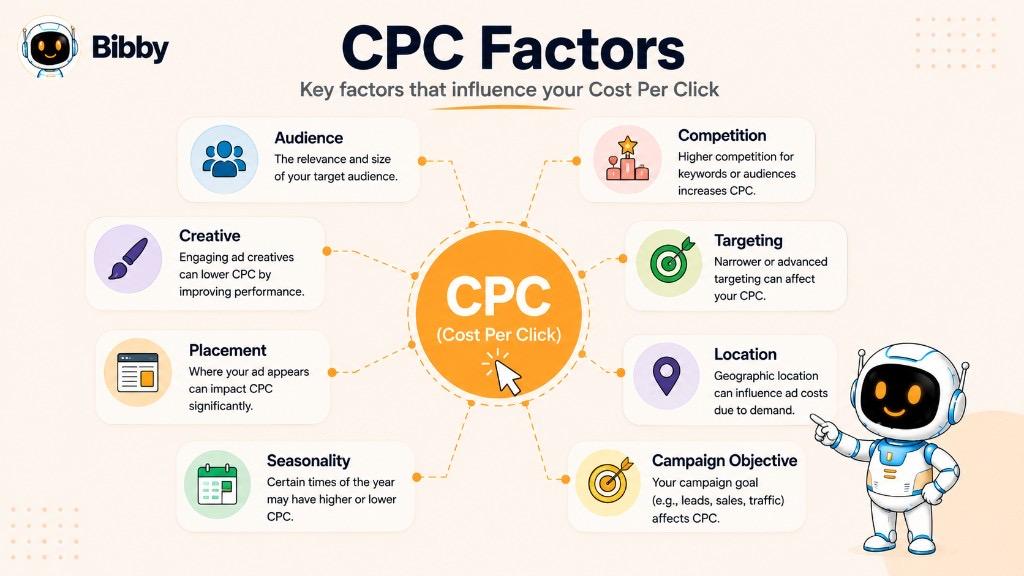
Understanding these factors can help you diagnose rising costs and identify opportunities to improve campaign efficiency.
Ad Quality and Relevance
The relevance and quality of your advertisement can affect how efficiently it generates clicks.
When an ad closely matches what an audience wants to see, people may be more likely to engage with it. Poorly matched creative can produce weaker engagement and less efficient campaign performance.
This is why creating content specifically for the target audience is often more effective than using the same generic creative for every campaign.
Audience Competition
The number of advertisers competing for the same audience can influence CPC.
If many businesses are targeting a highly desirable audience, competition in the advertising auction can increase. This can make clicks more expensive, particularly in competitive industries or during periods of high advertising demand.
Audience Targeting
Your targeting choices can have a significant effect on CPC.
Highly specific audiences may be valuable because they allow you to reach a particular group of potential customers, but they can also be more competitive. Broader audiences may provide advertising platforms with more opportunities to find people likely to respond to your ads.
The best approach depends on your campaign objective, audience, and available data.
Ad Creative
Your creative is one of the most important parts of an advertising campaign.
Images, videos, carousels, headlines, copy, and calls to action all influence how people respond to your ads. If your creative stops attracting attention, CPC may increase as performance declines.
Testing different creative concepts can help you discover which messages and formats generate stronger results.
Campaign Objective
The goal you select for a campaign can influence the audience the platform tries to reach and how your advertising budget is spent.
A campaign designed to generate website traffic may behave differently from one designed to generate leads, purchases, or conversions.
When comparing CPC between campaigns, make sure you're considering whether they have similar objectives.
Ad Placement
Different placements can have different levels of competition, audience behavior, and performance.
For example, an advertisement appearing in a feed may perform differently from one shown in a story or short-form video placement.
Rather than assuming one placement is always cheapest, compare CPC with the quality and outcomes generated by each placement.
Seasonality
Advertising costs can change during periods when more businesses compete for users' attention.
Holiday shopping periods, major sales events, and industry-specific seasons can increase competition and affect CPC. A campaign that performs efficiently during one month may therefore become more expensive during another.
Geographic Location
CPC can also vary by location.
Different countries, regions, and cities can have different levels of advertiser competition and purchasing power. If you're running campaigns across multiple markets, compare CPC by location rather than relying only on an overall campaign average.
Landing Page Experience
Although the landing page doesn't directly determine the price of every click, what happens after the click matters when evaluating the overall efficiency of your advertising.
A low CPC isn't particularly valuable if visitors leave immediately or fail to complete the intended action. A strong landing page should deliver on the promise of the ad and make the next step clear.
Ultimately, CPC is the result of many interconnected factors. Improving one area—such as creative quality or targeting—may help, but sustainable performance usually comes from improving the entire journey from ad impression to conversion.
Now that we've covered what influences CPC, let's look at practical ways to lower it without sacrificing the quality of your traffic.
How to Lower Your CPC
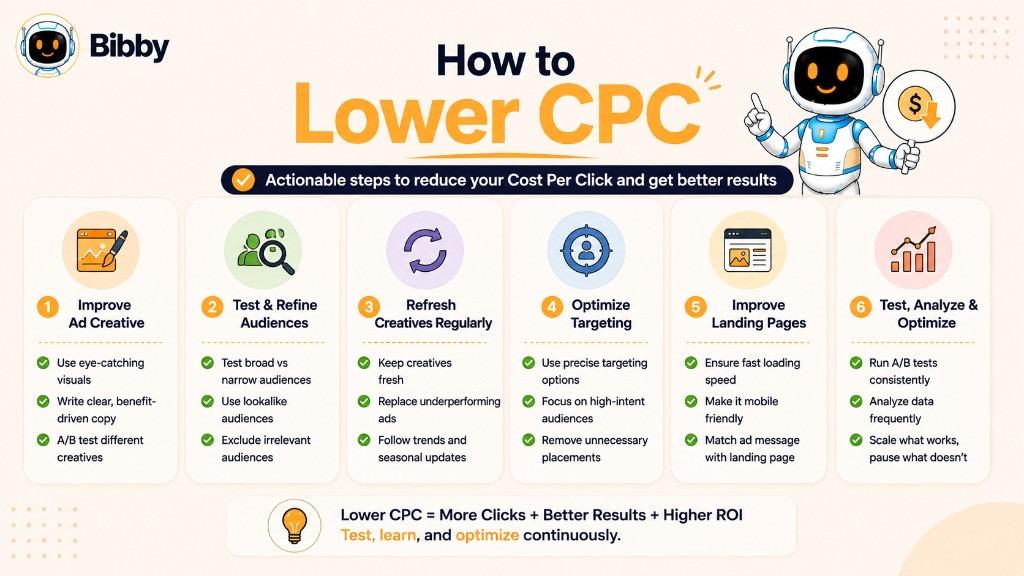
Lowering CPC can help you get more clicks from the same advertising budget, but reducing CPC should not be your only goal. The best optimization strategy is to generate more valuable clicks at an efficient cost, rather than simply chasing the cheapest possible traffic.
Here are several practical ways to improve CPC efficiency.
Improve Ad Relevance
Create ads that closely match the interests, needs, and expectations of your target audience.
Your message, creative, offer, and call to action should make sense for the people you're trying to reach. When an advertisement is relevant, users are more likely to engage with it instead of scrolling past.
Start by asking:
- Does the ad address a real audience need?
- Is the message immediately understandable?
- Does the creative match the audience?
- Is the call to action clear?
Small improvements in relevance can make a significant difference to campaign performance.
Test Different Ad Creatives
Don't rely on a single image, video, or message.
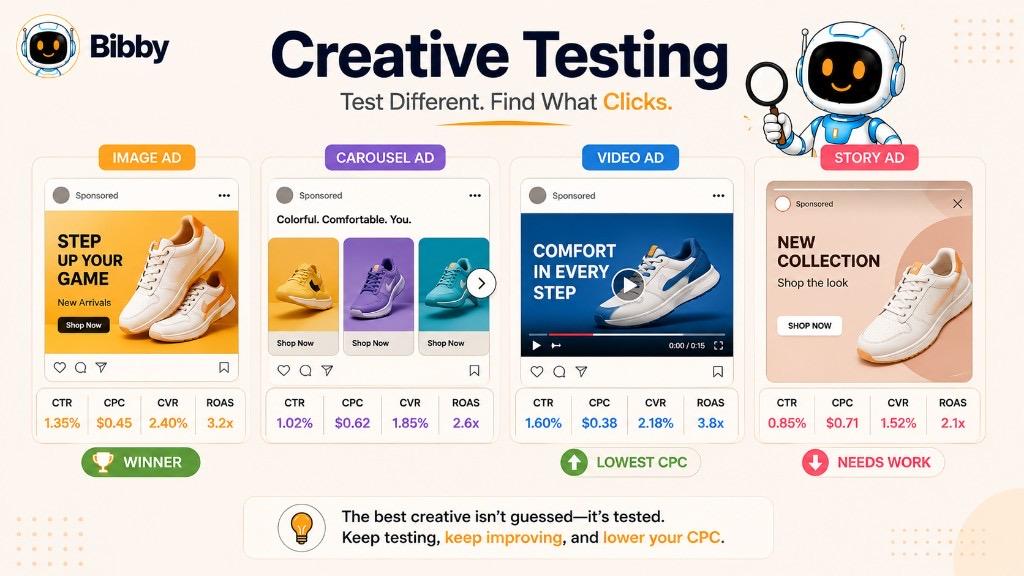
Test multiple creative variations to discover what resonates with your audience. Depending on the platform and campaign, you can experiment with:
- Images
- Carousels
- Short-form videos
- Stories
- Different headlines
- Different hooks
- Different calls to action
- Different messaging angles
Once you identify creative that consistently generates strong engagement and efficient clicks, you can use those insights to guide future campaigns.
Improve Your Audience Targeting
Review the audiences you're targeting and look for segments that generate expensive or low-quality traffic.
Test different audience groups rather than assuming your initial targeting is optimal. Depending on the platform and campaign, you might compare broader audiences with more specific segments to determine where you get the best combination of CPC and conversion performance.
Remember that the cheapest audience isn't necessarily the most valuable audience.
Refresh Ad Creative Regularly
Even a strong advertisement can become less effective when the audience sees it repeatedly.
If CPC starts increasing while engagement and click-through rate decline, creative fatigue may be one possible explanation.
Refreshing your creative with new visuals, hooks, formats, or messaging can help maintain audience interest.
Improve Your Landing Page
Getting a cheap click is only useful if the visitor has a good experience after clicking.
Make sure your landing page:
- Loads quickly
- Works well on mobile devices
- Matches the message in your advertisement
- Clearly explains the offer
- Has a noticeable call to action
- Makes the next step easy to understand
A better landing-page experience can help turn more of your existing clicks into conversions, improving the overall economics of the campaign.
Test Multiple Campaign Variations
Instead of making large changes based on assumptions, test different approaches and compare their results.
You might test different:
- Audiences
- Creative concepts
- Offers
- Messages
- Placements
- Campaign objectives
Give each test enough time and data to produce a meaningful comparison before deciding which variation performs best.
Monitor CPC Alongside Conversion Metrics
One of the biggest mistakes marketers make is optimizing for CPC alone.
Suppose you reduce your CPC from $1.00 to $0.60, but the new traffic produces half as many conversions. You may have improved your CPC while making the campaign less profitable.
Monitor CPC alongside metrics such as:
- CTR
- Conversion rate
- CPA
- Revenue
- ROAS
The goal isn't simply to pay less for clicks. The goal is to make your advertising budget work more efficiently.
Use Your Organic Content to Inform Paid Creative
Your existing social media content can provide useful signals about what your audience responds to.
Posts that generate strong engagement organically can give you ideas for paid creative, messaging, hooks, and content formats. This can help you make more informed decisions about which concepts are worth testing with advertising budget.
This is where a consistent social media content workflow becomes useful: the more efficiently you can create, test, and organize different content concepts, the easier it becomes to build a library of creative ideas for future campaigns.
Ultimately, lowering CPC is about improving the complete advertising experience—from the audience you target and the creative you show them to the experience they have after clicking.
Next, let's look at how CPC connects with your broader social media content strategy.
CPC and Social Media Content Strategy
CPC is a paid advertising metric, but the quality of the content behind your campaigns can have a significant impact on how efficiently your ads perform.
A strong social media content strategy gives you more opportunities to discover which topics, messages, visuals, and formats resonate with your audience. Those insights can then inform the creative you use in paid campaigns.
Use Organic Content to Find Winning Ideas
Before putting significant advertising budget behind a concept, your organic social media content can provide useful signals about what your audience responds to.
For example, if a particular post receives unusually strong engagement, comments, shares, or clicks, its topic or creative approach may be worth exploring in a paid campaign.
Organic performance doesn't guarantee that an advertisement will have a low CPC, but it can help you make more informed creative decisions.
Test Different Content Formats
Different audiences respond differently to different formats. Your social media strategy can include:
- Single-image posts for simple, visual messages
- Carousels for educational or multi-step content
- Videos for demonstrations, storytelling, and product content
- Stories for short, timely, or interactive content
Testing different formats helps you learn which types of content generate attention and engagement from your audience.
Build a Consistent Creative Pipeline
Advertising performance often depends on having enough high-quality creative to test.
Instead of creating one advertisement and running it indefinitely, build a consistent pipeline of new content ideas. This gives you more opportunities to test different hooks, visuals, messages, and formats when performance starts to decline.
A structured content workflow can make this process easier by helping you create, organize, schedule, and repurpose content across multiple platforms.
Use Performance Data to Guide Future Content
Your advertising results can also improve your organic content strategy.
If certain messages consistently generate strong clicks or conversions, those insights can influence future social media posts. Likewise, organic engagement can reveal topics that may deserve further testing in paid campaigns.
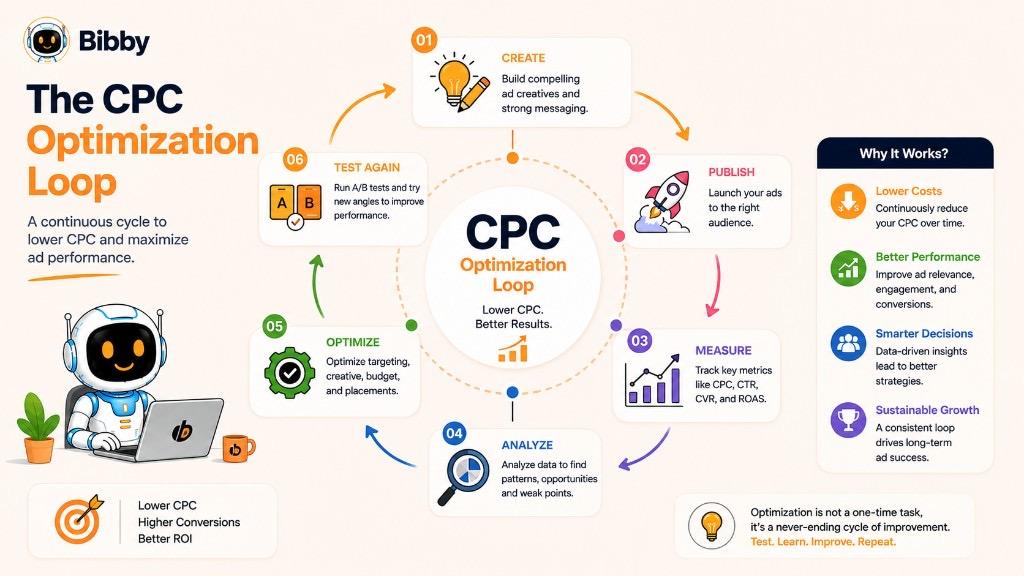
Over time, this creates a feedback loop:
Create content → Publish → Measure engagement → Identify strong ideas → Test with paid campaigns → Analyze results → Create better content
The goal isn't to optimize every piece of content for CPC. Organic content and paid advertising serve different purposes. Instead, use insights from both to develop a more effective overall social media strategy.
For marketers managing content across multiple platforms, keeping this process organized can become increasingly time-consuming. Tools that automate repetitive social media tasks can help reduce that workload while leaving marketers more time to focus on strategy and creative decisions.
Next, let's look at how Bibby can help streamline the social media workflow that supports this process.
How Bibby Can Help With Your Social Media Workflow
Managing the content that supports your social media and advertising strategy can quickly become time-consuming. You may need to create visuals, write captions, adapt content for different platforms, schedule posts, and keep your campaigns organized—all while monitoring performance.
Bibby is designed to automate much of this social media workflow from one place.
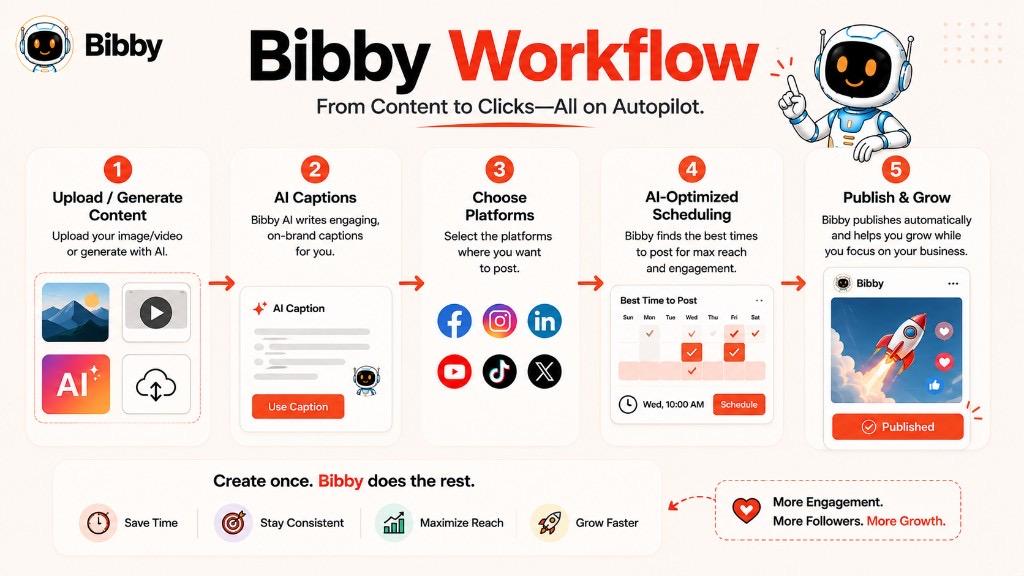
You can upload your own images or use AI to generate visuals, choose a posting style, and let Bibby automatically generate captions for your content. You can then schedule your media across platforms such as Facebook, Instagram, LinkedIn, YouTube, and TikTok at AI-optimized times.
Bibby supports different content formats, including:
- Image posts
- Carousels
- Videos
- Stories
Bibby also includes a chat-based interface that lets you manage your social media workflow through conversation. Instead of navigating through multiple tools and dashboards, you can use the chat interface to perform tasks such as creating a brand kit, building a campaign, creating posts, and regenerating captions.
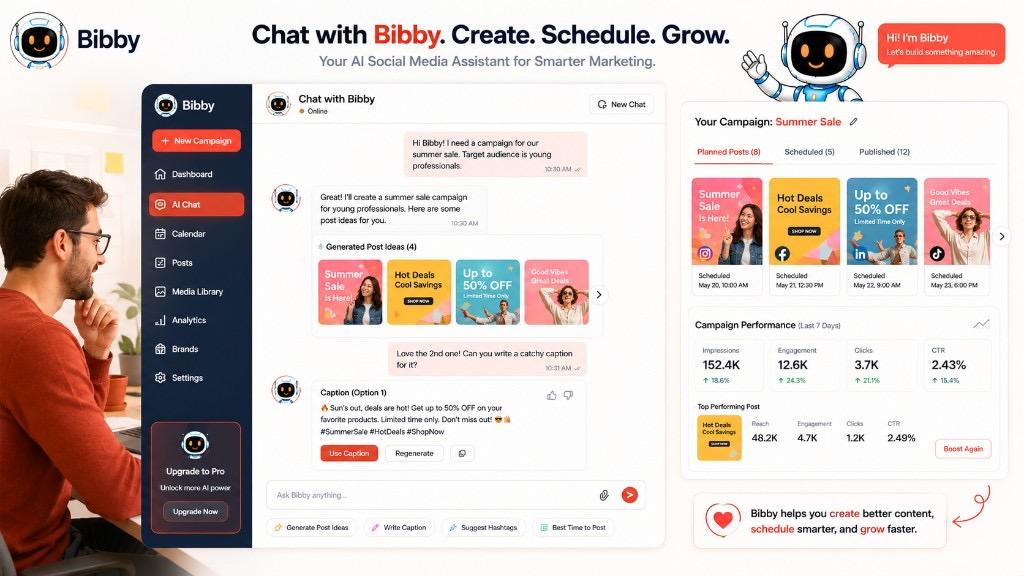
This can be particularly useful when you're testing different content ideas and building a consistent creative pipeline. By making content creation, organization, and scheduling easier, Bibby can give marketers more time to focus on analyzing campaign performance and improving their overall strategy.
However, it's important to distinguish social media workflow automation from advertising performance. Bibby can help you create and manage the content around your social media strategy, but your CPC is ultimately influenced by factors such as your advertising platform, audience, campaign objective, competition, creative performance, and bidding strategy.
The best approach is to use automation to make your content workflow more efficient while using CPC and other performance metrics to determine which advertising strategies are actually working.
Key Takeaways
- CPC (Cost Per Click) measures the average amount you pay each time someone clicks your advertisement—you calculate it by dividing total ad spend by total clicks.
- A good CPC depends on your campaign objective, audience, industry, platform, and conversion performance—not a universal benchmark.
- Evaluate CPC alongside click-through rate (CTR), conversion rate, CPA, and return on ad spend (ROAS) rather than treating it as the only measure of success.
- Lowering CPC can stretch your budget further, but the cheapest click isn't always the most valuable—focus on relevant audience targeting, strong creative, consistent A/B testing, and the post-click experience.
- Your social media content strategy and organic performance can inform paid creative, creating a feedback loop between content, engagement, and paid advertising efficiency.
- Bibby can streamline the content workflow that supports smarter campaigns—generating visuals, writing captions, and scheduling at AI-optimized times across multiple platforms.
- Once you understand CPC, explore how CPM, CTR, CPA, conversion rate, and ROAS work together for a clearer picture of campaign profitability.