
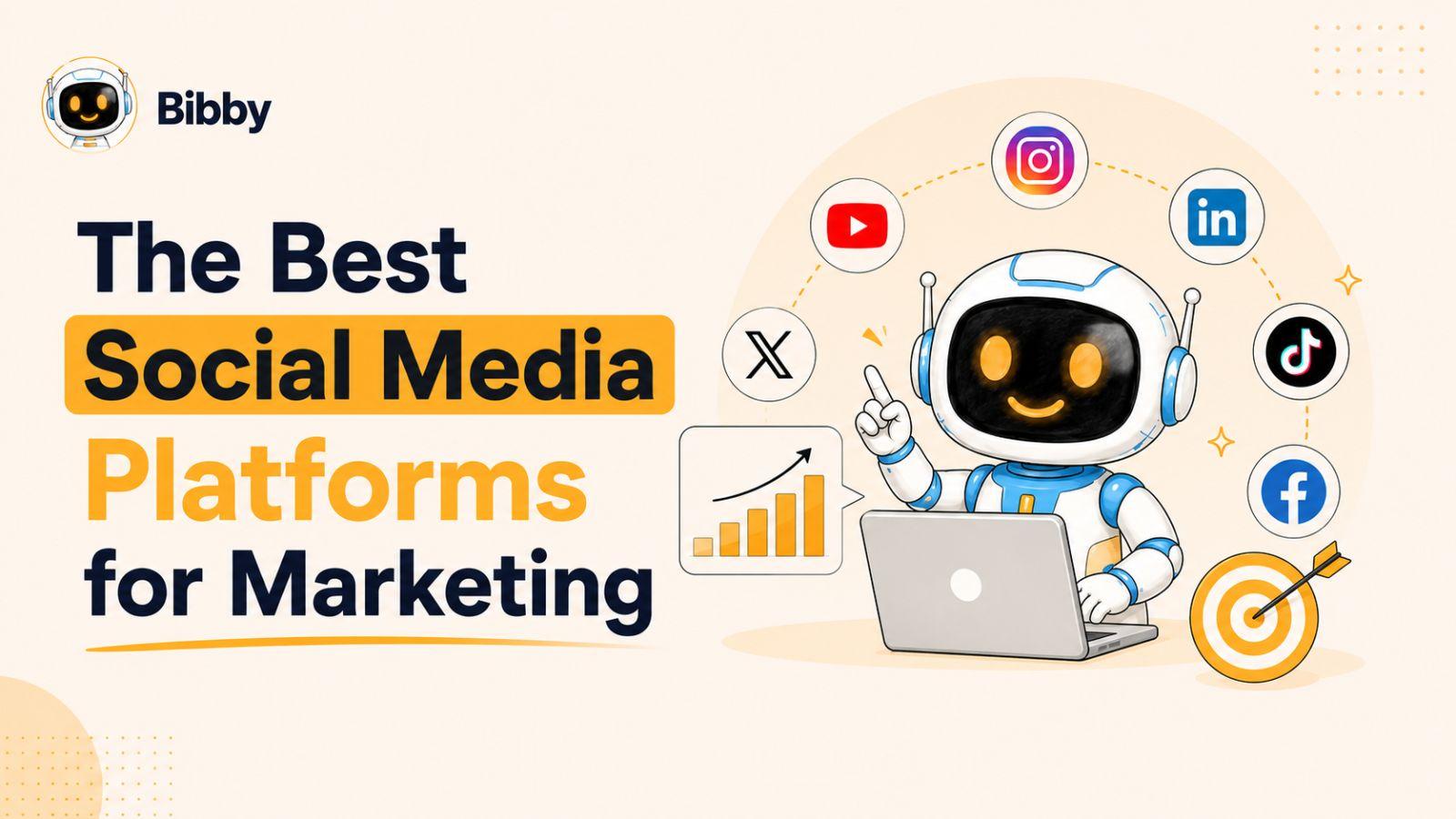
Social media marketing in 2026 is more competitive, data-driven, and AI-powered than ever before.
With dozens of platforms competing for attention, businesses can no longer afford to spread their efforts everywhere and hope for results. The brands seeing the highest ROI are focusing on the platforms that match their audience, content style, and business goals while using AI tools to streamline content creation and publishing.
We will look into:
- Which social media platforms deliver the highest marketing ROI
- How each platform performs for different business types
- How AI automation tools can save hours every week
We'll break down the latest data, compare the leading platforms, and show how marketers are using tools like Bibby to automate content creation, scheduling, and analytics across multiple channels without adding more work to their day.
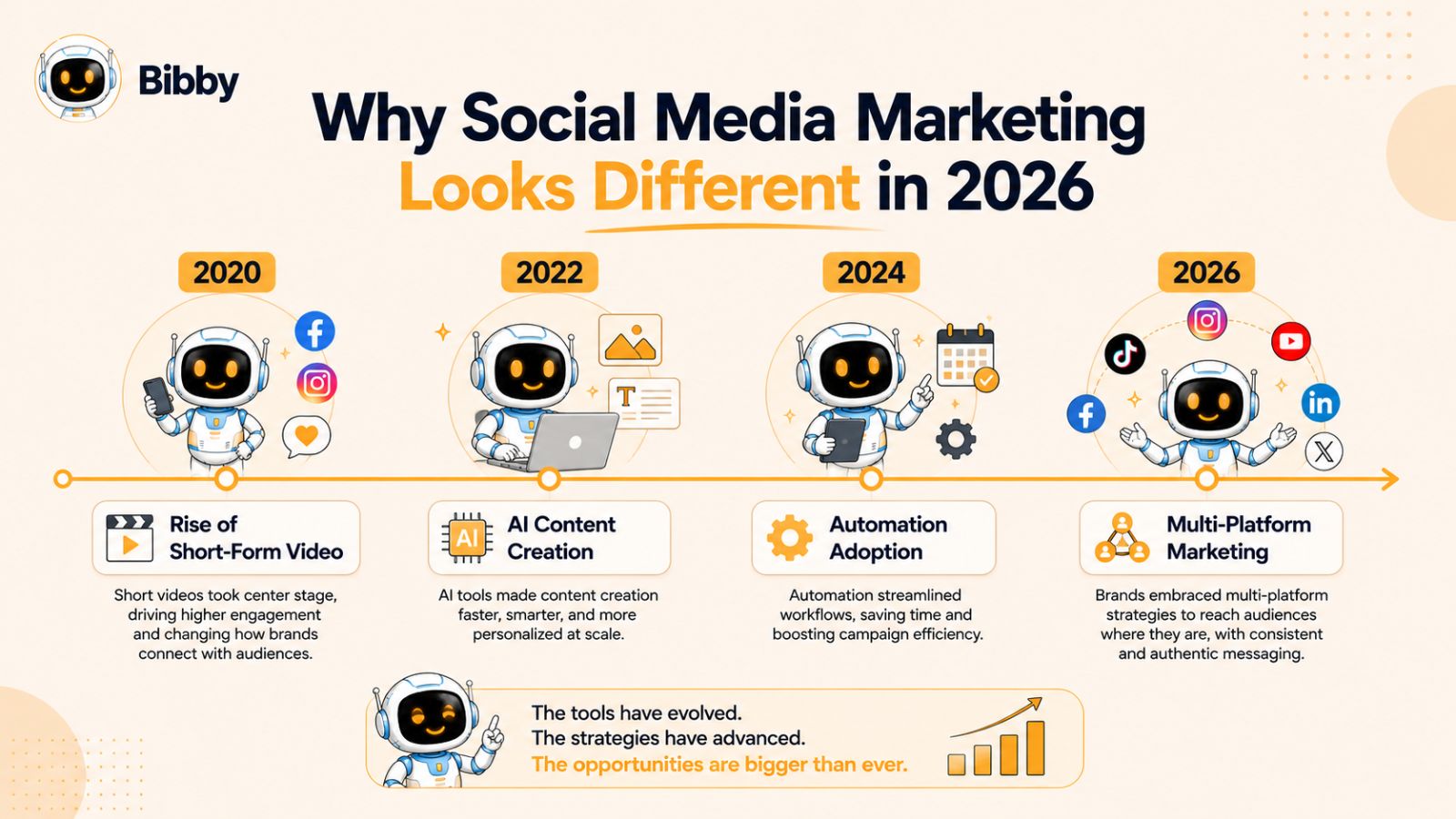
Why Social Media Marketing Looks Different in 2026
The social media landscape has evolved dramatically over the past few years. What worked in 2023 or even 2024 is no longer guaranteed to deliver the same results today. Platforms have changed their algorithms, user behavior has shifted, and artificial intelligence has transformed how content is created and distributed.
The Growing Competition for Attention
Every day, millions of posts, videos, stories, and advertisements compete for users' attention. As content volume continues to increase, standing out has become one of the biggest challenges for marketers.
Consumers are also becoming more selective about the content they engage with. Generic promotional posts are often ignored, while authentic, educational, and entertaining content tends to perform significantly better. This means brands must focus on creating higher-quality content rather than simply publishing more frequently.
AI Is Reshaping Content Creation
Artificial intelligence is no longer a competitive advantage—it's becoming a standard part of modern marketing workflows.
Businesses now use AI to generate content ideas, create images, write captions, analyze performance data, and optimize publishing schedules. These capabilities allow marketers to produce more content in less time while maintaining consistency across multiple platforms.
However, AI-generated content alone isn't enough. The most successful brands combine automation with genuine expertise, creativity, and audience understanding to create content that feels authentic and valuable.
The Rise of Cross-Platform Publishing
Today's customers rarely spend all their time on a single social network. They might discover a brand on TikTok, research it on YouTube, follow it on Instagram, and connect professionally on LinkedIn.
As a result, businesses need a presence across multiple platforms. The challenge is that manually creating, scheduling, and publishing content for each platform can quickly become overwhelming.
This is why social media automation has become a critical part of successful marketing strategies in 2026. By automating repetitive tasks, businesses can maintain a consistent presence across platforms while focusing their time on strategy, creativity, and growth.
How We Evaluated the Best Social Media Platforms
Not every social media platform delivers the same results. While one platform may generate exceptional engagement for a fashion brand, another may be far more effective for a B2B software company.
To identify the best social media platforms for marketing in 2026, we focused on the metrics that matter most to businesses, marketers, creators, and agencies. Rather than relying on popularity alone, we evaluated each platform based on its ability to generate visibility, engagement, leads, and revenue.
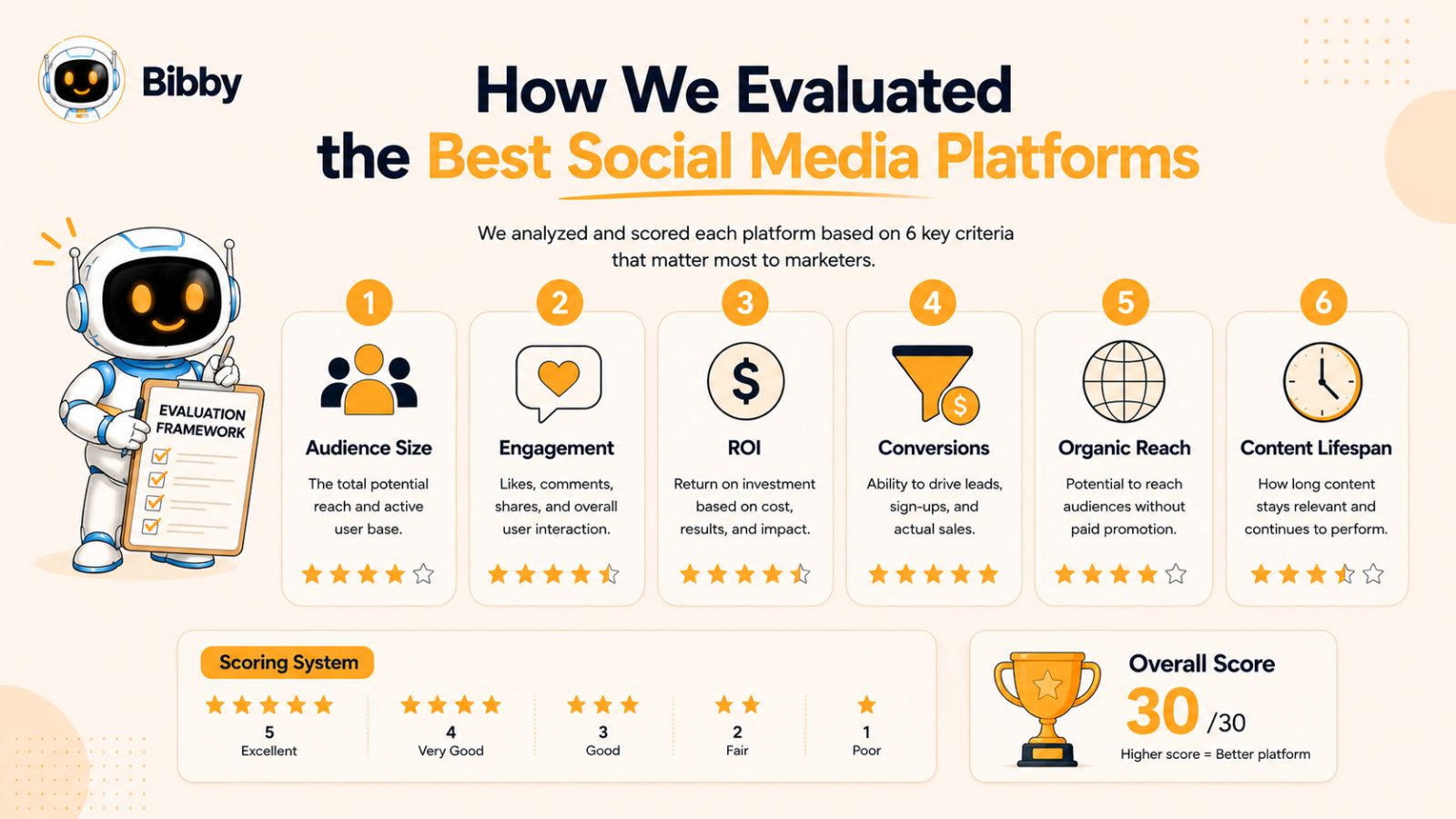
Monthly Active Users
Audience size remains an important consideration when selecting a marketing platform. Larger user bases create more opportunities to reach potential customers and grow brand awareness.
However, a platform's value isn't determined solely by the number of users. What matters most is whether your target audience actively spends time there.
Engagement Rates
Engagement is often a stronger indicator of marketing potential than audience size alone. Platforms that encourage likes, comments, shares, saves, and conversations can help brands build stronger relationships with their audiences.
Higher engagement frequently leads to increased visibility, stronger trust, and improved conversion rates.
Organic Reach Opportunities
Organic reach remains one of the most valuable advantages in social media marketing. Some platforms make it easier for businesses to reach new audiences without relying heavily on paid advertising.
We evaluated how effectively brands can grow through organic content and whether platform algorithms actively promote content discovery.
Advertising Performance and ROI
Paid advertising continues to play a major role in social media marketing. We examined each platform's advertising capabilities, targeting options, conversion potential, and overall return on investment.
Platforms that consistently help businesses generate leads, sales, and measurable business outcomes received higher rankings.
Content Versatility
Modern marketers need flexibility. Some platforms support a wide variety of content formats, including videos, images, stories, live streams, carousels, and long-form content.
Platforms that allow brands to connect with audiences through multiple content formats provide greater opportunities for growth and experimentation.
Audience Demographics
Understanding who uses a platform is just as important as understanding how many people use it. A platform may have millions of users, but it won't deliver strong results if your ideal customers aren't active there.
We considered audience demographics, professional interests, purchasing behavior, and content consumption habits when evaluating each platform.
Your Next Month of Social Media Could Be Done in Minutes
Automate Your Social Media Now
Start for FreeLong-Term Marketing Value
Some content generates results for only a few hours, while other content continues attracting views, engagement, and leads for months or even years.
Platforms that support evergreen content and long-term discoverability provide greater value because they continue generating returns long after publication.
Why Real Data Matters More Than Trends
Every year, marketers chase new platforms, emerging features, and viral trends. While experimentation is important, building a marketing strategy around hype can lead to wasted time and resources.
The most successful businesses focus on platforms that consistently deliver measurable results. By prioritizing engagement, reach, conversions, and ROI, marketers can make smarter decisions about where to invest their time and budget.
With these evaluation criteria in mind, let's examine the social media platforms delivering the strongest marketing results in 2026.
Instagram: Still the Engagement King
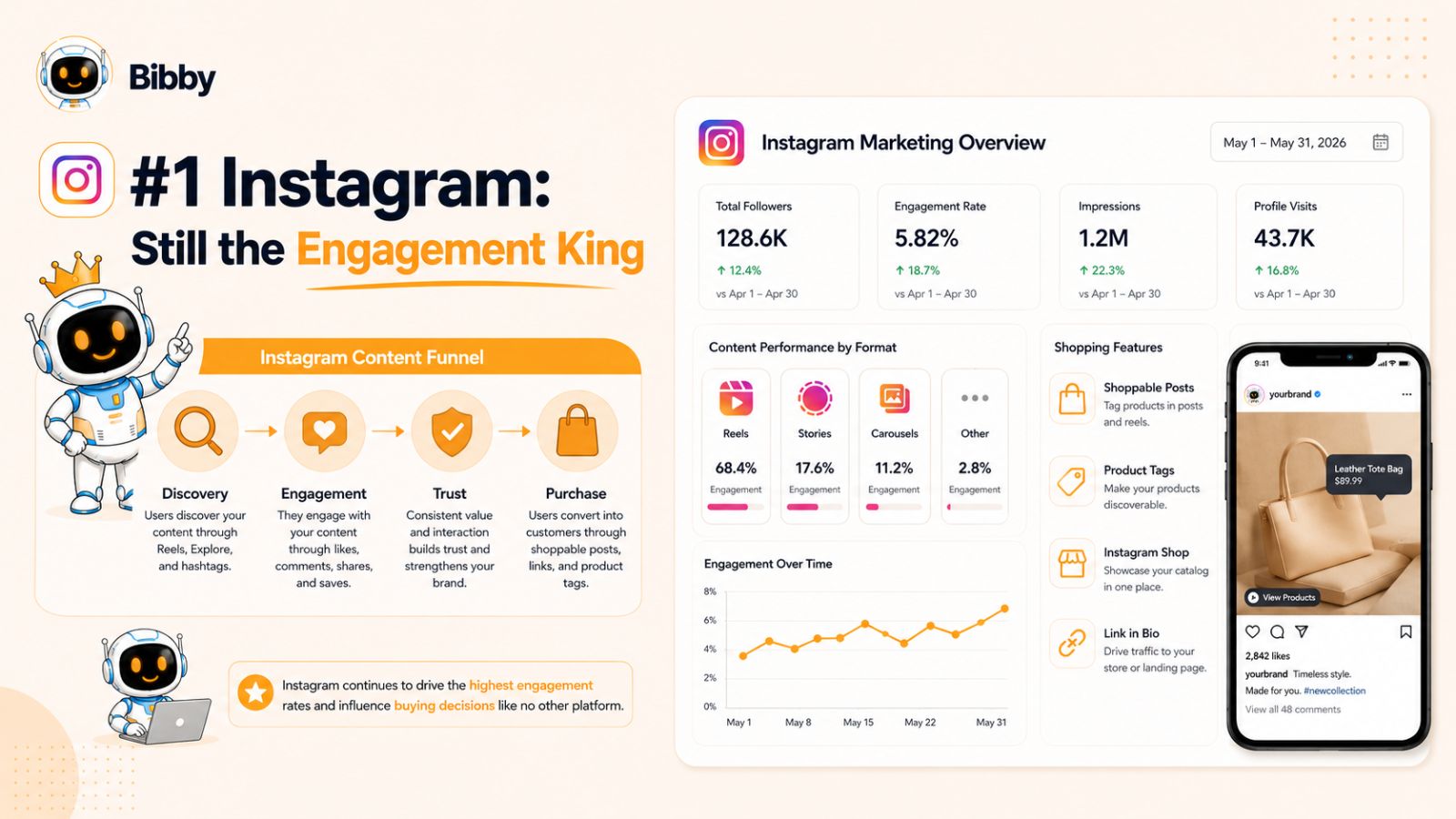
Despite the rapid growth of new social platforms, Instagram remains one of the most effective marketing channels in 2026. Its combination of visual storytelling, powerful discovery features, shopping capabilities, and highly engaged audiences continues to make it a top choice for businesses of all sizes.
For many brands, Instagram serves as the center of their social media strategy, helping them build awareness, generate leads, drive sales, and strengthen customer relationships.
Why Instagram Remains Essential for Marketers
Instagram has successfully evolved from a photo-sharing app into a complete marketing ecosystem. Businesses can now reach audiences through Reels, Stories, carousels, live broadcasts, direct messages, and in-app shopping experiences.
The platform's algorithm prioritizes engaging content, giving businesses opportunities to reach new audiences even if they have relatively small followings. This makes Instagram one of the strongest platforms for both established brands and growing businesses.
Another major advantage is its broad demographic reach. From Gen Z consumers to professionals and business owners, Instagram continues to attract users across multiple age groups and industries.
Best Content Types on Instagram
Success on Instagram depends heavily on using the right content formats.
Reels
Short-form videos continue to generate the highest reach and discovery potential on the platform. Educational tips, product demonstrations, behind-the-scenes content, and entertaining videos often perform exceptionally well.
Carousels
Carousel posts remain one of the most effective formats for delivering value and encouraging engagement. Marketers frequently use them for tutorials, industry insights, case studies, and step-by-step guides.
Stories
Stories help brands maintain daily visibility and build stronger relationships with followers. Polls, questions, quizzes, and interactive stickers can significantly increase audience participation.
User-Generated Content
Featuring customer experiences, reviews, and community content builds trust while providing a steady stream of authentic content that resonates with potential buyers.
Industries That Perform Best on Instagram
While nearly any business can benefit from Instagram, some industries consistently achieve stronger results than others.
E-commerce Brands
Visual product showcases, influencer collaborations, and shopping integrations make Instagram one of the most powerful platforms for online stores.
Fashion and Beauty
The highly visual nature of these industries aligns perfectly with Instagram's content-first experience.
Fitness and Wellness
Workout demonstrations, transformations, educational content, and motivational posts tend to generate strong engagement.
Travel and Hospitality
Destinations, experiences, and behind-the-scenes content help travel brands capture attention and inspire action.
Personal Brands and Creators
Coaches, consultants, influencers, and content creators continue to use Instagram as a primary platform for audience growth and community building.
Common Instagram Marketing Challenges
Although Instagram offers significant opportunities, maintaining consistent growth requires ongoing effort.
Businesses often struggle with:
- Creating enough high-quality content
- Maintaining a consistent posting schedule
- Writing engaging captions
- Managing multiple content formats
- Finding the best times to publish
- Tracking performance across campaigns
As competition increases, these challenges can quickly become overwhelming for small teams and business owners.
How Smart Marketers Scale Instagram Growth
Many successful marketers are now combining content creation with AI-powered automation to stay consistent without increasing their workload.
Instead of manually creating captions, scheduling posts, and monitoring publishing times, they use tools that streamline the entire process. This allows them to focus on strategy and audience engagement rather than repetitive administrative tasks.
For businesses that rely heavily on Instagram marketing, maintaining consistency is often the difference between steady growth and stagnant results. The brands that publish regularly, analyze performance, and optimize their content strategy are typically the ones that see the strongest long-term returns.
While Instagram remains one of the best social media platforms for marketing in 2026, it isn't the best platform for every business. For companies targeting professionals, decision-makers, and high-value B2B audiences, another platform often delivers even stronger results.
LinkedIn: The B2B Growth Machine
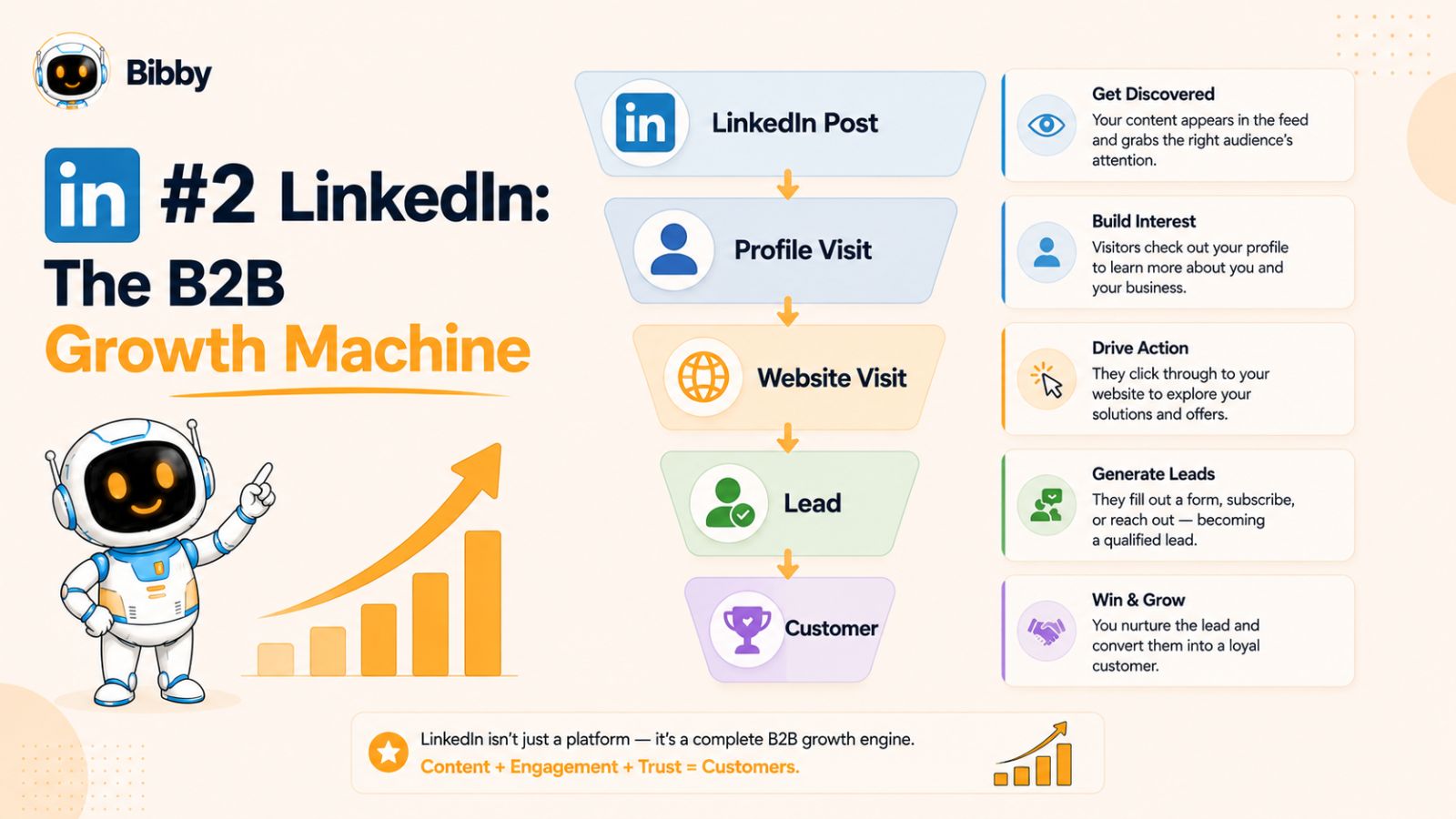
When it comes to B2B marketing, professional networking, and high-value lead generation, no social media platform comes close to LinkedIn in 2026. What was once primarily a digital resume platform has evolved into one of the most powerful channels for building authority, generating demand, and creating meaningful business relationships.
For companies targeting decision-makers, executives, business owners, and professionals, LinkedIn often delivers higher-quality leads than any other social platform.
Why LinkedIn Continues to Grow
LinkedIn's biggest advantage is audience intent. Unlike entertainment-focused platforms, users visit LinkedIn to learn, network, discover industry insights, and explore business opportunities.
This creates an environment where educational content, thought leadership, and expertise-driven marketing perform exceptionally well.
Businesses that consistently share valuable content can build credibility, attract qualified prospects, and establish themselves as trusted authorities within their industries.
You may also like looking into: How Often Should Businesses Post on LinkedIn?
LinkedIn's Organic Reach Advantage
One of LinkedIn's most attractive features for marketers is its strong organic reach potential.
While many social platforms have become increasingly dependent on paid promotion, LinkedIn still offers opportunities for businesses and personal brands to reach large audiences organically. Well-written posts, insightful commentary, and engaging discussions can generate significant visibility without advertising spend.
This makes LinkedIn especially valuable for startups, consultants, agencies, and small businesses looking to grow their presence efficiently.
Best Content Types on LinkedIn
Different content formats perform well on LinkedIn, but educational and expertise-based content generally produces the strongest results.
Thought Leadership Posts
Sharing unique perspectives, industry observations, and professional experiences helps establish authority and encourages engagement from peers and potential customers.
Industry Insights
Data-driven posts, trend analysis, and market commentary often attract professionals seeking actionable information and expert opinions.
Case Studies
Real-world examples and success stories demonstrate expertise while providing proof of results. These posts frequently generate strong engagement and lead-generation opportunities.
Video Content
Video continues to gain traction on LinkedIn. Short educational videos, company updates, and expert insights can help businesses stand out in crowded feeds.
Employee Advocacy Content
Organizations that encourage employees to share content often achieve greater visibility and credibility than brands relying solely on company pages.
Industries That Perform Best on LinkedIn
Although LinkedIn can support nearly any business, several industries consistently achieve exceptional results.
SaaS Companies
Software businesses use LinkedIn to educate prospects, generate leads, and nurture relationships throughout the buying journey.
Professional Services
Consultants, legal firms, financial advisors, and business service providers benefit from LinkedIn's professional audience and trust-based environment.
Marketing Agencies
Agencies frequently use LinkedIn to showcase expertise, publish case studies, and attract potential clients.
Recruitment and HR
LinkedIn remains one of the most effective platforms for talent acquisition, employer branding, and professional networking.
B2B Technology Companies
Technology brands use LinkedIn to connect directly with decision-makers, executives, and enterprise buyers.
Also read: Best LinkedIn Scheduling Tool for Agencies
Common LinkedIn Marketing Challenges
Despite its opportunities, LinkedIn success requires consistency and a clear content strategy.
Businesses often struggle with:
- Maintaining a regular posting schedule
- Creating enough educational content
- Building engagement consistently
- Managing company and personal profiles
- Tracking performance across campaigns
- Scaling content production efficiently
These challenges become even more difficult for teams managing multiple social media platforms simultaneously.
Using AI and Automation to Maximize LinkedIn Results
As content demands increase, more businesses are turning to AI-powered tools to simplify their workflows.
Instead of manually creating every post, writing captions, selecting publishing times, and managing schedules, marketers are increasingly automating repetitive tasks. This allows them to maintain a consistent presence while focusing on relationship building and business growth.
Platforms like Bibby help streamline this process by generating captions, scheduling content, and publishing across multiple channels from a single dashboard. Rather than spending hours managing social media logistics, businesses can focus on creating valuable content and engaging with their audience.
Is LinkedIn Right for Your Business?
If your goal is to reach professionals, decision-makers, executives, or business buyers, LinkedIn should be a core part of your marketing strategy.
Its combination of professional audiences, strong organic reach, and high-quality lead generation makes it one of the most valuable social media platforms available in 2026.
However, for brands seeking massive organic reach and viral growth opportunities, another platform continues to dominate the conversation: TikTok.
Also read: How to Automate Your LinkedIn Posting Strategy for B2B Growth
TikTok: The Fastest Path to Organic Reach
Few social media platforms have changed digital marketing as dramatically as TikTok. In 2026, TikTok remains one of the most powerful channels for reaching new audiences, building brand awareness, and generating engagement at scale.
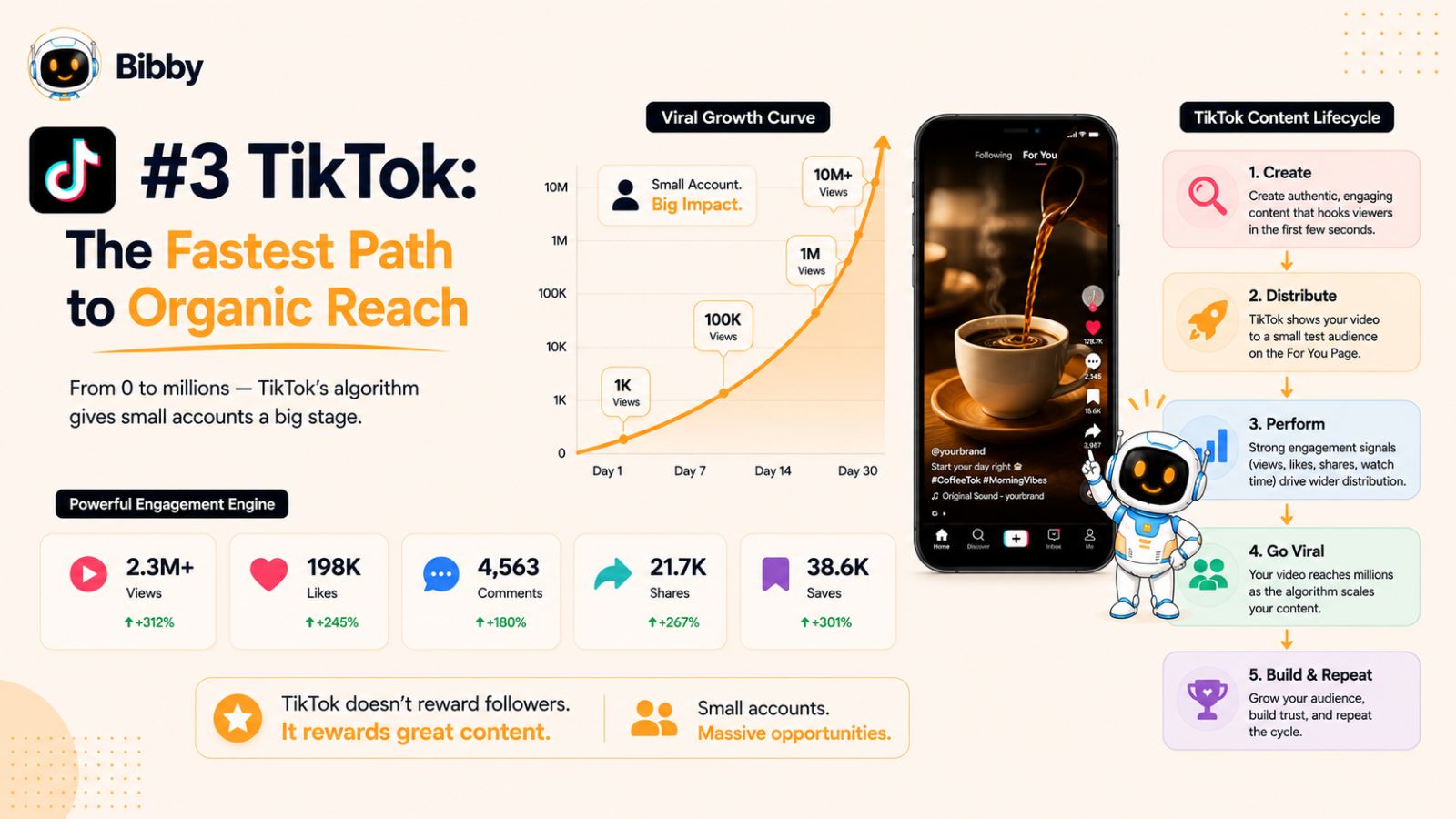
Unlike many social platforms that primarily show content from accounts users already follow, TikTok's discovery-driven algorithm actively pushes content to new viewers. This creates unique opportunities for businesses, creators, and brands to achieve significant reach without needing a large existing audience.
For marketers focused on growth, visibility, and audience expansion, TikTok remains one of the most attractive platforms available.
Why TikTok Continues to Deliver Exceptional Reach
TikTok's recommendation algorithm is designed to prioritize content performance over follower count. This means a small business with a few hundred followers can potentially reach thousands—or even millions—of users if its content resonates with viewers.
The platform rewards creativity, engagement, watch time, and audience retention. As a result, brands that consistently publish valuable and entertaining content often experience rapid growth compared to more traditional social networks.
This ability to reach new audiences organically is one of TikTok's biggest competitive advantages.
Best Content Types on TikTok
Success on TikTok depends on creating content that captures attention quickly and delivers value within a short period of time.
Educational Content
Quick tips, tutorials, industry insights, and how-to videos perform exceptionally well because they provide immediate value to viewers.
Product Demonstrations
Showing products in action helps potential customers understand their benefits while increasing engagement and purchase intent.
Behind-the-Scenes Videos
Audiences enjoy seeing the people, processes, and stories behind a brand. This type of content helps humanize businesses and build trust.
Storytelling Content
Personal experiences, customer stories, and business journeys often generate strong watch times and engagement.
Trend-Based Content
Participating in relevant trends can increase visibility and help brands connect with broader audiences when done authentically.
Industries That Perform Best on TikTok
TikTok's audience and content style make it particularly effective for certain industries.
E-commerce Brands
Product-focused content, demonstrations, and reviews can drive significant traffic and sales.
Beauty and Fashion
Visual transformations, tutorials, and product showcases naturally align with TikTok's video-first format.
Fitness and Health
Workout tips, nutrition advice, and educational content often perform well because viewers actively seek practical information.
Food and Hospitality
Recipes, restaurant experiences, and behind-the-scenes kitchen content consistently attract engagement.
Personal Brands and Creators
Coaches, educators, influencers, and entrepreneurs use TikTok to build audiences quickly and establish authority within their niches.
Common TikTok Marketing Challenges
While TikTok offers enormous opportunities, it also demands consistency and adaptability.
Businesses frequently encounter challenges such as:
- Producing enough video content
- Keeping up with trends
- Maintaining a regular posting schedule
- Managing content across multiple platforms
- Tracking performance effectively
- Scaling content production without increasing costs
Many brands discover that creating content is only part of the challenge. Managing the publishing process can become equally time-consuming.
Why Consistency Matters on TikTok
TikTok rewards accounts that publish consistently. Regular posting helps businesses stay visible, gather performance data, and increase opportunities for content discovery.
However, maintaining this consistency manually can quickly become overwhelming, especially for teams managing Instagram, LinkedIn, Facebook, YouTube, and TikTok simultaneously.
This is why many marketers are adopting AI-powered social media tools to simplify content workflows and reduce manual work.
Using Automation to Scale TikTok Marketing
Modern social media management platforms make it easier to maintain a consistent presence without spending hours every week on scheduling and publishing.
For example, tools like Bibby allow marketers to upload content, generate captions automatically, choose a preferred posting style, and schedule content across multiple platforms from a single dashboard. AI can even identify optimal publishing times, helping businesses maximize reach and engagement while reducing administrative work.
This type of automation enables brands to focus on creating better content rather than managing repetitive tasks.
Is TikTok Right for Your Business?
If your goal is rapid audience growth, increased brand awareness, and strong organic reach, TikTok deserves serious consideration.
Its discovery-focused algorithm continues to provide opportunities that are increasingly difficult to find on other platforms. Businesses willing to invest in short-form video content can often achieve impressive results even without large advertising budgets.
That said, while TikTok excels at reach and awareness, YouTube remains the undisputed leader when it comes to long-term content value, search visibility, and evergreen traffic.
Also read: Social Media Marketing Statistics You Need to Know
YouTube: The Long-Term Marketing Asset
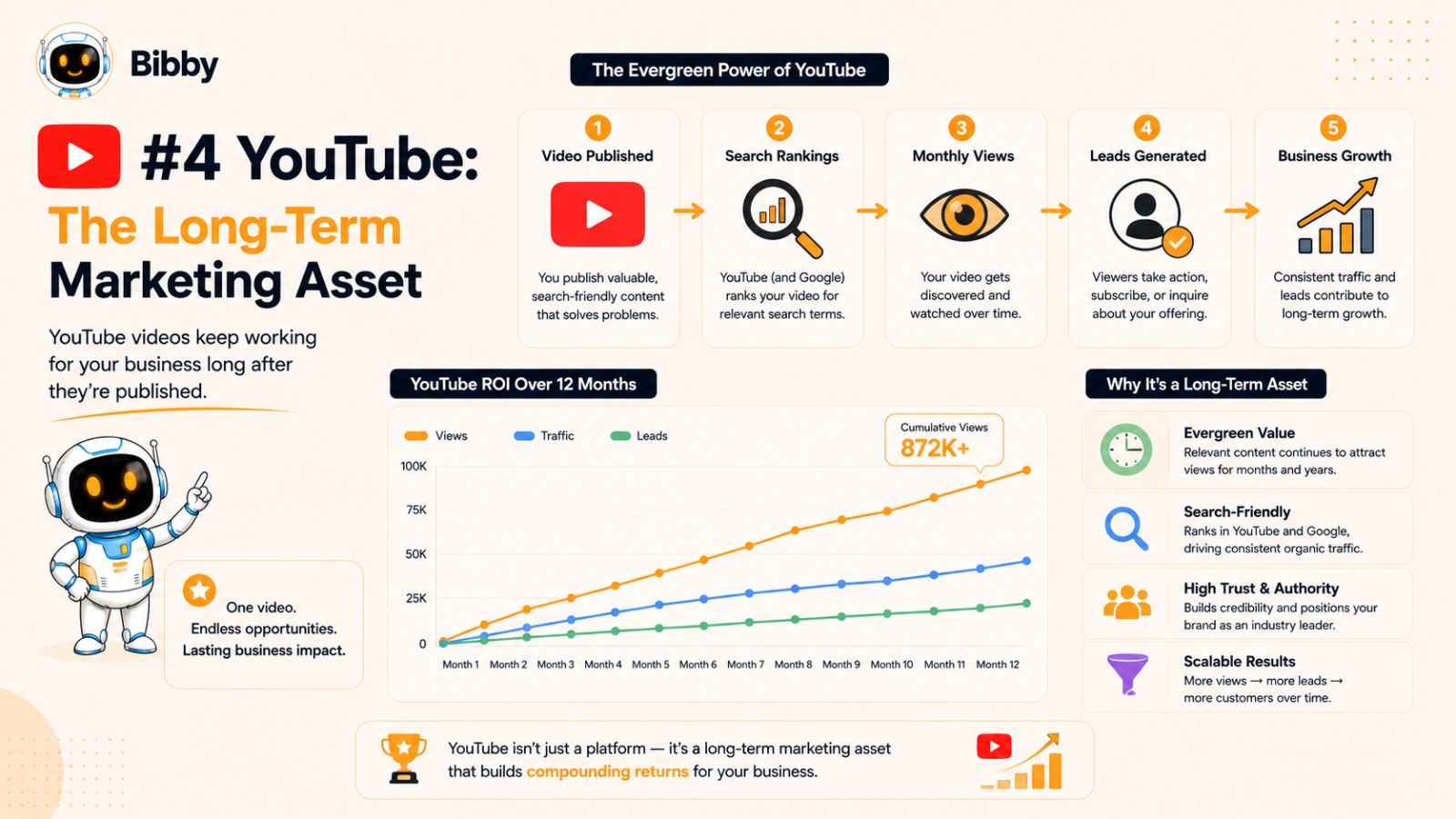
While most social media content disappears from feeds within days or even hours, YouTube offers something that few platforms can match: long-term discoverability. In 2026, YouTube remains one of the most valuable marketing channels for businesses that want to build authority, generate consistent traffic, and create content that continues producing results long after publication.
Unlike platforms focused primarily on social interactions, YouTube functions as both a social network and a search engine. People actively visit the platform to learn new skills, research products, solve problems, and make purchasing decisions. This makes YouTube one of the most powerful platforms for attracting high-intent audiences.
Why YouTube Remains a Marketing Powerhouse
The biggest advantage of YouTube is content longevity. A well-optimized video can continue generating views, leads, and sales for months or even years after it is published.
Instead of constantly creating content that quickly disappears, businesses can build a library of videos that compound in value over time. Every new video becomes a long-term asset that can continue attracting potential customers through search and recommendations.
For many businesses, YouTube serves as one of the most effective channels for building trust and demonstrating expertise at scale.
YouTube's Unique SEO Advantage
YouTube content is highly discoverable through search. Users frequently search for tutorials, product reviews, comparisons, industry insights, and educational content before making purchasing decisions.
Because videos often appear in search engine results, businesses can gain visibility beyond YouTube itself. This creates additional opportunities to attract qualified traffic and establish authority within competitive industries.
For marketers focused on long-term growth, few platforms offer the same combination of visibility, discoverability, and evergreen value.
Best Content Types on YouTube
Different content formats can perform well on YouTube depending on your audience and business goals.
Tutorials and How-To Videos
Educational content consistently attracts viewers because it helps solve specific problems. These videos often generate traffic long after publication.
Product Reviews and Demonstrations
Detailed demonstrations help potential customers understand products and make informed buying decisions.
Case Studies
Real-world examples showcase expertise while providing valuable insights that audiences can apply to their own situations.
Industry Analysis and Thought Leadership
Expert commentary and trend analysis help businesses establish authority and attract professional audiences.
Webinars and Deep-Dive Content
Long-form educational videos provide opportunities to build trust and engage viewers who want more detailed information.
YouTube Shorts
Short-form videos help brands increase reach, attract new subscribers, and complement their long-form content strategy.
Industries That Perform Best on YouTube
Although almost every business can benefit from YouTube, certain industries consistently achieve outstanding results.
Software and SaaS Companies
Product tutorials, onboarding guides, and feature demonstrations help educate users while supporting lead generation efforts.
Professional Services
Consultants, coaches, and agencies can showcase expertise through educational content and case studies.
Technology Brands
Tech audiences actively seek reviews, comparisons, and educational content before making purchasing decisions.
Education and Training Businesses
Courses, tutorials, and instructional content naturally align with YouTube's search-focused ecosystem.
E-commerce Brands
Product demonstrations, reviews, and buying guides help drive traffic and increase conversions.
Common YouTube Marketing Challenges
Despite its advantages, YouTube requires significant effort and consistency.
Businesses often struggle with:
- Video production time
- Content planning
- Thumbnail creation
- Caption writing
- Publishing consistency
- Cross-platform promotion
- Performance tracking
Managing a successful YouTube channel can quickly become a full-time job, particularly when combined with other social media responsibilities.
How Smart Marketers Maximize YouTube Content
Many businesses are now using a content repurposing strategy to maximize the value of every video they create.
A single YouTube video can be transformed into Instagram Reels, TikTok videos, LinkedIn posts, Facebook content, Stories, and Shorts. This allows brands to maintain a presence across multiple platforms without creating entirely new content for each channel.
The challenge is managing distribution efficiently.
Using Bibby to Simplify Multi-Platform Publishing
As businesses expand their social media presence, managing content across multiple channels becomes increasingly complex.
Bibby simplifies this process by allowing marketers to upload videos or images, generate captions with AI, select a preferred posting style, and automatically schedule content across platforms such as Facebook, Instagram, LinkedIn, YouTube, and TikTok.
Instead of manually publishing content on each platform, businesses can manage everything from a single workflow. Bibby also helps identify AI-optimized posting times and provides analytics that make it easier to understand what content is performing best.
For teams looking to scale their social media efforts without increasing workload, this type of automation can create significant efficiency gains.
Is YouTube Right for Your Business?
If your goal is long-term visibility, authority building, lead generation, and evergreen traffic, YouTube should be a central part of your marketing strategy.
While platforms like TikTok excel at rapid reach and Instagram drives strong engagement, YouTube offers something uniquely valuable: content that continues working for your business long after it is published.
However, not every business needs to focus exclusively on video. For local businesses, community-focused brands, and companies looking for powerful advertising capabilities, Facebook still remains a highly effective marketing platform in 2026.
Also read: How to Scale a YouTube Channel With Automation
Facebook: Still Relevant for Many Businesses
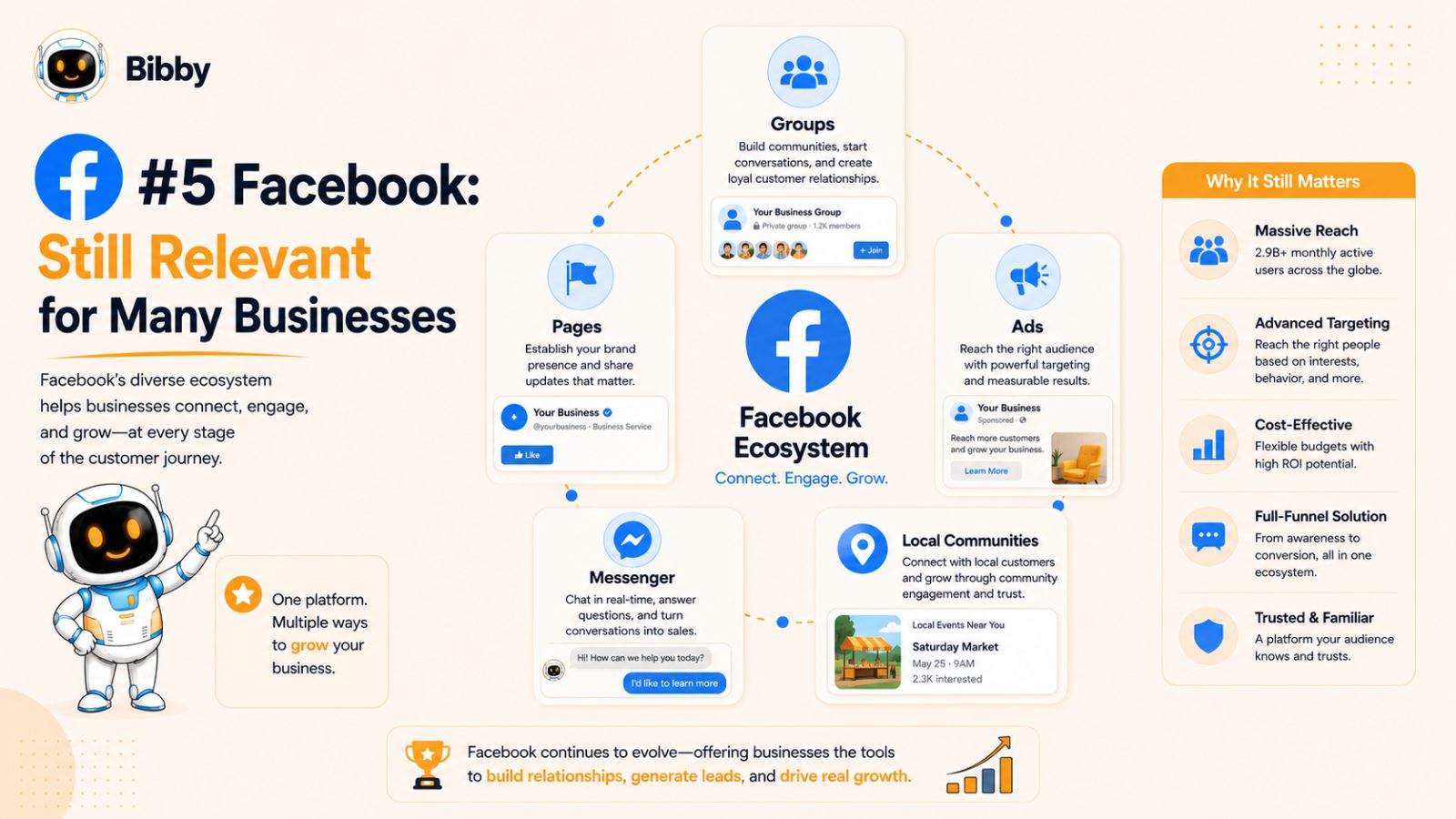
Although newer platforms often dominate marketing headlines, Facebook continues to be one of the most effective social media platforms for businesses in 2026. With billions of users, powerful advertising tools, robust community features, and deep audience targeting capabilities, Facebook remains an important part of many successful marketing strategies.
While it may not generate the same level of organic excitement as TikTok or Instagram, Facebook continues to deliver measurable business results, particularly for local businesses, service providers, e-commerce brands, and companies focused on lead generation.
Why Facebook Still Matters in 2026
One of Facebook's biggest strengths is its massive and diverse user base. The platform continues to attract users across a wide range of age groups, interests, and geographic locations.
For businesses, this means there is a strong likelihood that potential customers are already spending time on Facebook. Whether your goal is brand awareness, customer engagement, lead generation, or sales, Facebook provides multiple ways to reach your target audience.
The platform also offers some of the most advanced advertising and retargeting capabilities available in social media marketing.
Facebook's Advertising Advantage
Facebook advertising remains one of the platform's strongest assets.
Businesses can create highly targeted campaigns based on demographics, interests, behaviors, locations, and previous interactions. This precision helps marketers reach the right audience while maximizing advertising budgets.
Facebook's advertising ecosystem also integrates with Instagram, making it easier for businesses to manage campaigns across both platforms from a single advertising account.
For many companies, Facebook advertising continues to generate a strong return on investment, especially when combined with effective retargeting strategies.
Best Content Types on Facebook
Although Facebook supports nearly every content format, certain types of content consistently perform better than others.
Community-Focused Content
Posts that encourage conversations, discussions, and audience participation often generate stronger engagement than purely promotional content.
Video Content
Short videos, educational content, and behind-the-scenes footage continue to attract attention and increase engagement.
Customer Stories and Testimonials
Real customer experiences help build trust and provide social proof that influences purchasing decisions.
Live Streams
Live video remains a powerful way to interact directly with audiences, answer questions, and strengthen community relationships.
Local Updates and Events
Businesses serving specific geographic areas often see strong engagement from local announcements, events, and community-focused content.
Industries That Perform Best on Facebook
Several business categories continue to see excellent results from Facebook marketing.
Local Businesses
Restaurants, gyms, clinics, home service providers, and retail stores frequently use Facebook to connect with nearby customers and promote local offers.
E-commerce Brands
Product promotions, retargeting campaigns, and customer engagement strategies can drive significant sales.
Professional Service Providers
Financial advisors, real estate agents, consultants, and legal professionals often use Facebook to build trust and generate leads.
Nonprofits and Community Organizations
Facebook Groups and community features help organizations engage supporters and maintain ongoing communication.
The Power of Facebook Groups
One feature that continues to set Facebook apart is its group functionality.
Facebook Groups provide businesses with opportunities to build engaged communities around shared interests, industries, products, or customer experiences. These communities often generate stronger engagement and deeper relationships than traditional business pages.
Brands that successfully nurture active groups can create loyal audiences that contribute to long-term business growth.
Common Facebook Marketing Challenges
While Facebook offers many advantages, businesses often face several challenges when managing the platform.
These include:
- Maintaining consistent content creation
- Managing multiple pages and campaigns
- Coordinating content across platforms
- Tracking performance data
- Scheduling content effectively
- Optimizing posting times
For organizations with limited resources, these responsibilities can become difficult to manage manually.
Why Automation Is Increasingly Important
Modern businesses rarely rely on Facebook alone. Most are also active on Instagram, LinkedIn, TikTok, YouTube, and other platforms.
Managing content separately for each channel can quickly become overwhelming. As a result, many marketers are turning to automation solutions that centralize content creation, scheduling, and performance tracking.
Tools like Bibby help simplify this process by allowing users to upload content or generate images with AI, automatically create captions, choose a posting style, and schedule content across multiple social networks from a single dashboard. AI-optimized publishing times and built-in analytics further reduce the workload while improving performance.
This allows businesses to maintain a consistent presence without spending hours every week on manual publishing tasks.
Is Facebook Right for Your Business?
Facebook may no longer be the newest social platform, but it continues to be one of the most reliable. Its combination of audience size, advertising capabilities, community features, and business tools makes it a valuable channel for many organizations.
For local businesses, service providers, and brands focused on customer relationships, Facebook remains a strong investment in 2026.
However, the most effective marketing strategies rarely rely on a single platform. The real challenge is choosing the right mix of platforms and managing them efficiently, which is where a strategic approach—and the right tools—can make all the difference.
Emerging Platforms to Watch in 2026
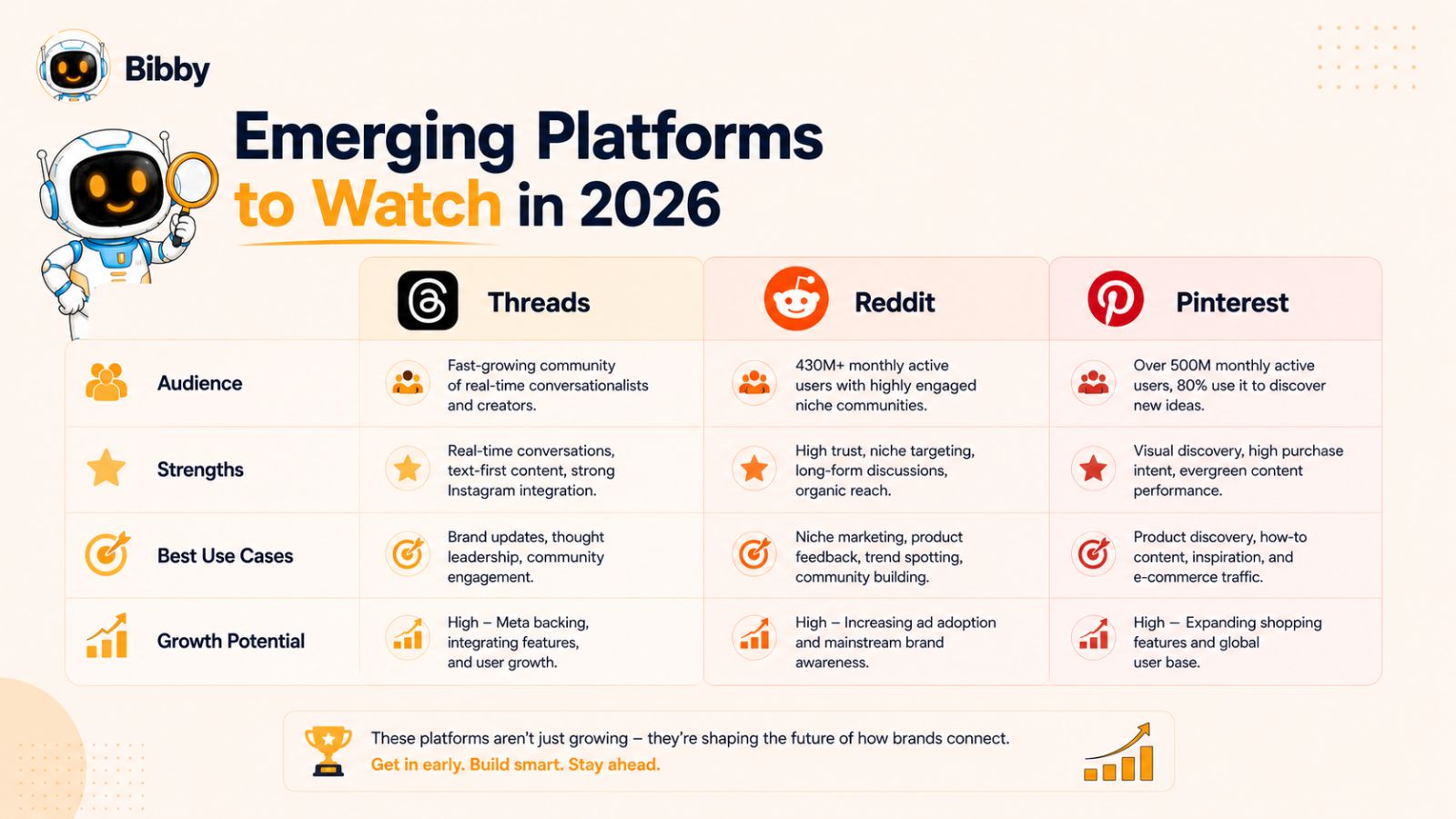
While Instagram, LinkedIn, TikTok, YouTube, and Facebook continue to dominate social media marketing, several emerging and specialized platforms are creating new opportunities for businesses willing to experiment.
These platforms may not yet have the scale of the industry leaders, but they offer unique advantages that can help brands reach highly engaged audiences, build communities, and generate targeted traffic.
For marketers looking to stay ahead of the competition, these are the platforms worth watching in 2026.
Threads: Building Conversations and Brand Visibility
Since its launch, Threads has steadily evolved into a major platform for real-time discussions, industry conversations, and personal branding.
Unlike visual-first platforms, Threads focuses on text-based engagement and community interaction. This creates opportunities for brands to participate in conversations, share insights, and build relationships with audiences in a more conversational environment.
Businesses that already have an established Instagram presence can often grow on Threads more quickly because of the connection between the two platforms.
Best Uses for Threads
- Thought leadership
- Industry commentary
- Community engagement
- Personal branding
- Brand storytelling
- Customer interaction
Threads is particularly valuable for founders, consultants, creators, and businesses that want to establish authority through conversations rather than visual content.
Reddit: The Trust-Driven Marketing Opportunity
Reddit remains one of the internet's most influential communities, with millions of users participating in discussions across virtually every industry and interest category.
Unlike traditional social media platforms, Reddit users tend to value authenticity and expertise over promotional content. Brands that contribute genuinely useful information can build trust and visibility within highly targeted communities.
However, marketers must approach Reddit carefully. Overt advertising is often poorly received, while educational and community-focused contributions are more likely to succeed.
Best Uses for Reddit
- Market research
- Community engagement
- Brand awareness
- Customer feedback
- Product validation
- Thought leadership
Businesses that prioritize value over promotion can often uncover insights and opportunities that are difficult to find elsewhere.
Pinterest: The Underrated Traffic Generator
Pinterest is often overlooked in discussions about social media marketing, but it continues to be a powerful platform for driving long-term traffic and purchase intent.
Unlike most social platforms, Pinterest functions more like a visual search engine. Users actively search for ideas, inspiration, products, and solutions, making them more likely to take action after discovering content.
Pins also have a much longer lifespan than traditional social media posts, allowing businesses to generate traffic months after publishing content.
Best Uses for Pinterest
- E-commerce marketing
- Blog promotion
- Product discovery
- Home and lifestyle brands
- Fashion and beauty brands
- DIY and educational content
For businesses with strong visual content and a long-term growth strategy, Pinterest can become a valuable source of consistent traffic and conversions.
Should You Invest in Emerging Platforms?
The answer depends on your audience, resources, and business goals.
For most businesses, the primary focus should remain on the major platforms that consistently generate the strongest results. However, emerging platforms can provide valuable opportunities to reach niche audiences, experiment with new content formats, and gain an advantage before competition increases.
The key is balancing experimentation with efficiency.
Many businesses struggle not because they lack opportunities, but because they try to manage too many platforms at once. Creating content, writing captions, scheduling posts, monitoring analytics, and maintaining consistency across multiple channels can quickly become overwhelming.
As marketers expand their social media presence, one challenge becomes increasingly clear: managing multiple platforms efficiently is often harder than choosing which platforms to use in the first place.
Also read: How to Build a Successful Social Media Strategy from Scratch
The Biggest Challenge: Managing Multiple Platforms
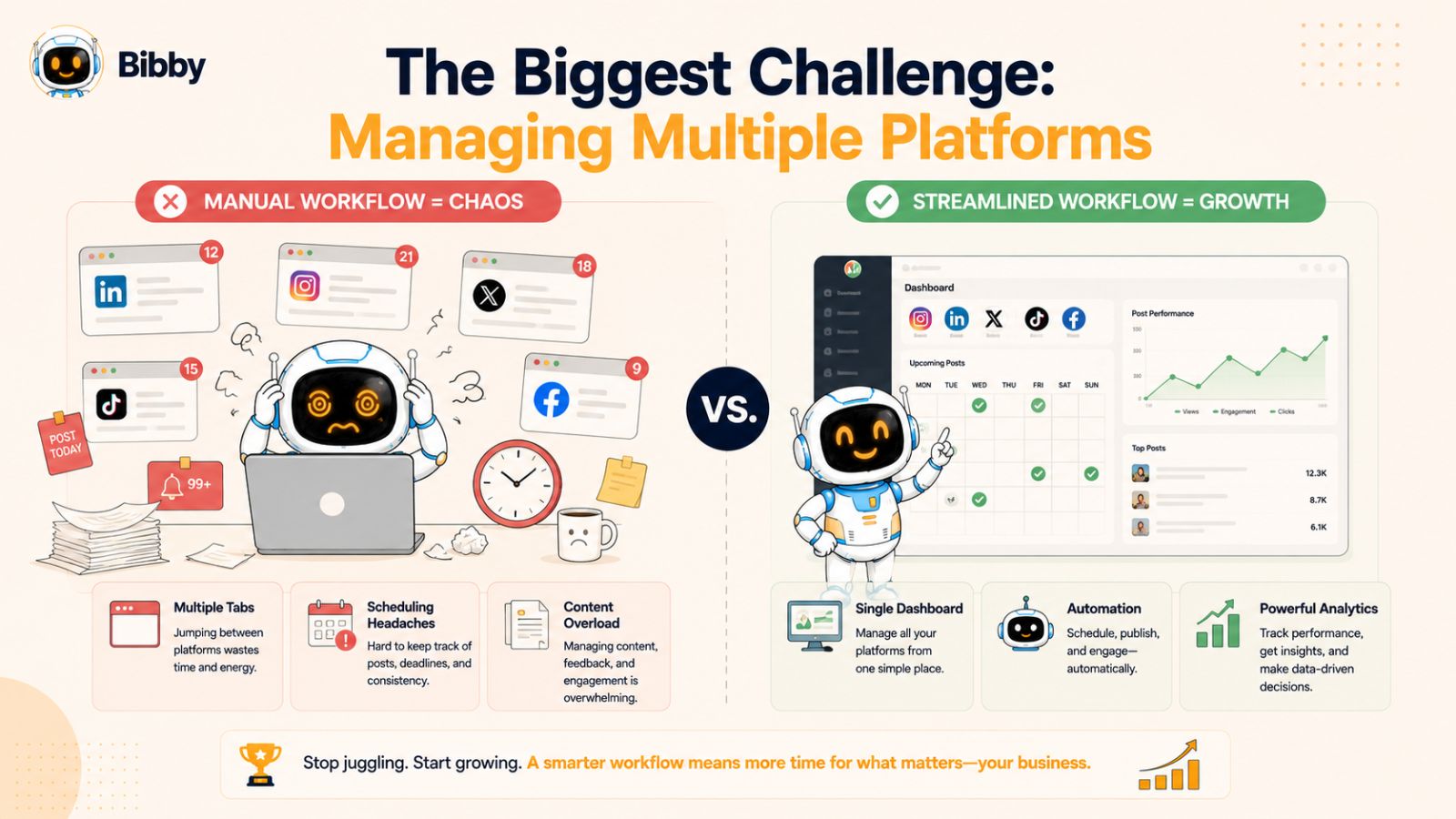
Choosing the right social media platforms is only half the battle. Once you've identified where your audience spends time, a new challenge emerges: managing content consistently across multiple channels.
In 2026, successful brands rarely rely on a single platform. They publish on Instagram, LinkedIn, TikTok, YouTube, Facebook, and emerging platforms simultaneously. This approach maximizes reach and creates multiple opportunities to connect with potential customers throughout their buying journey.
However, managing all of these platforms manually can quickly become overwhelming.
Why Multi-Platform Marketing Is So Difficult
Each social media platform has its own audience behavior, content formats, publishing requirements, and engagement patterns.
A marketer may need to:
- Create visual content
- Edit videos
- Write captions
- Schedule posts
- Publish Stories
- Upload Shorts and Reels
- Monitor comments
- Track analytics
- Adjust posting schedules
- Optimize future content
When multiplied across several platforms, these tasks can consume dozens of hours every week.
For small businesses, creators, agencies, and marketing teams, maintaining consistency often becomes the biggest obstacle to growth.
The Hidden Cost of Manual Social Media Management
Many businesses underestimate the true cost of managing social media manually.
The problem isn't just the time required to publish content. It's also the opportunity cost.
Hours spent scheduling posts, rewriting captions, and switching between platforms are hours that could be spent:
- Creating better content
- Engaging with customers
- Building partnerships
- Improving products and services
- Developing marketing strategy
Over time, inefficient workflows can limit growth and reduce overall marketing effectiveness.
Consistency Is What Drives Results
Most social media success stories have one thing in common: consistency.
Brands that publish regularly tend to generate more engagement, stronger audience growth, better algorithm visibility, and more business opportunities than brands that post sporadically.
The challenge is maintaining that consistency without turning social media management into a full-time job.
This is where automation has become one of the most important competitive advantages in modern marketing.
Why More Businesses Are Turning to AI Automation
Artificial intelligence has transformed nearly every aspect of social media management.
Instead of spending hours performing repetitive tasks, marketers can now automate large portions of their workflow while maintaining quality and consistency.
AI-powered tools can help businesses:
- Generate content ideas
- Create captions
- Schedule posts
- Optimize publishing times
- Analyze performance
- Manage multiple platforms from one location
This allows businesses to scale their social media efforts without dramatically increasing workload or hiring additional team members.
The Future of Social Media Management
As social media platforms continue to evolve, the businesses that succeed will be those that combine creativity with efficiency.
Creating great content will always matter. But managing that content efficiently across multiple platforms is becoming equally important.
The ability to create once, publish everywhere, and let automation handle repetitive tasks is quickly becoming the standard for high-performing marketing teams.
One platform helping businesses achieve exactly that is Bibby—a social media scheduling and automation tool designed to simplify the entire content publishing process from creation to analytics.
How Bibby Simplifies Social Media Marketing
Managing multiple social media platforms shouldn't require multiple tools, endless spreadsheets, and hours of manual work every week. That's exactly the problem Bibby was built to solve.
Bibby is an AI-powered social media scheduling and automation platform that helps businesses, creators, agencies, and marketing teams manage their entire content workflow from a single dashboard. Instead of juggling content creation, caption writing, scheduling, publishing, and analytics across different platforms, users can streamline everything in one place.
The result is a simpler workflow, more consistent publishing, and significantly less time spent managing social media.
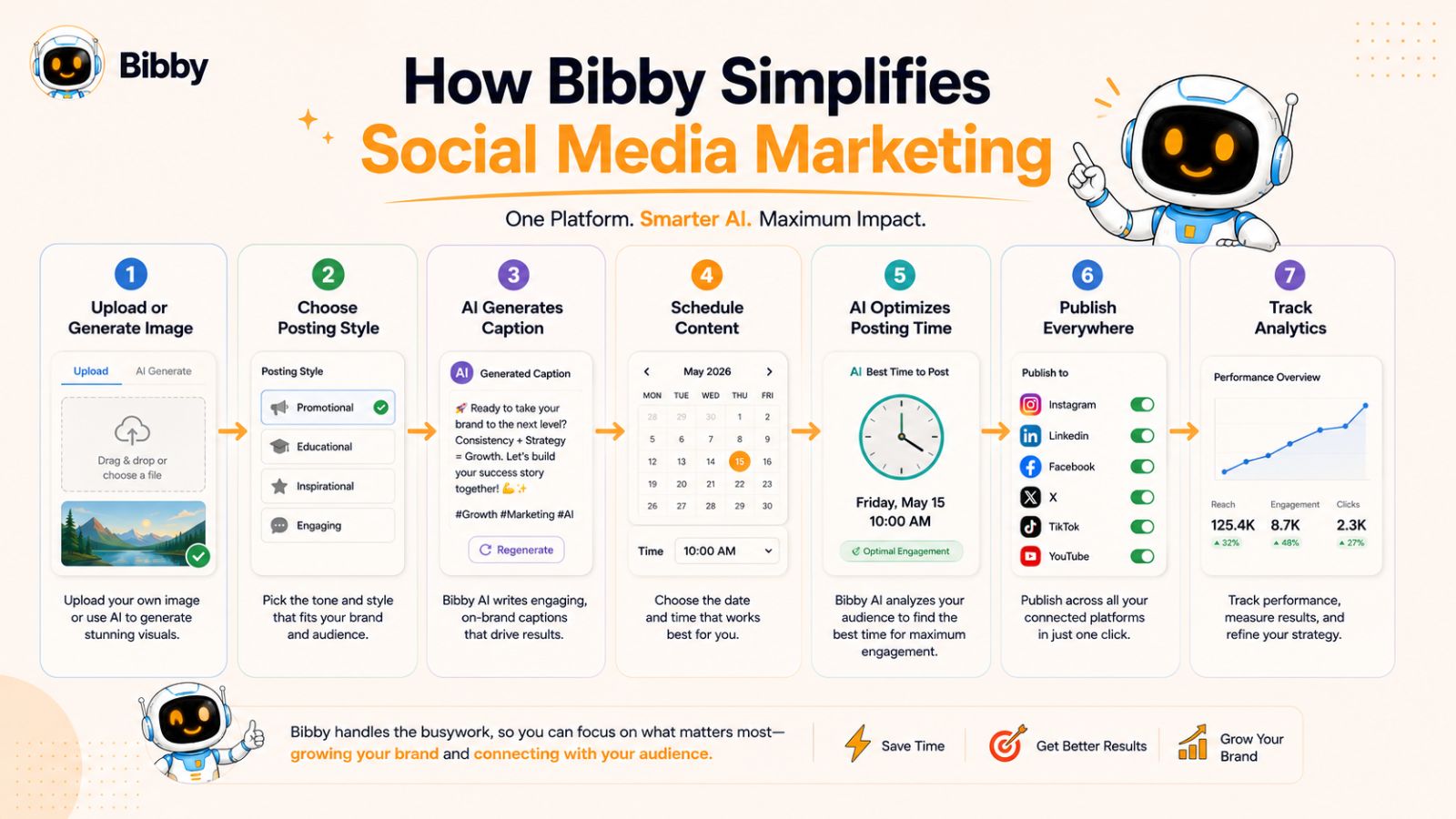
Create Content Faster With AI
Every social media strategy starts with content, but creating enough content consistently is one of the biggest challenges marketers face.
Bibby makes the process easier by giving users two options:
- Upload existing images or videos
- Generate images with AI
Whether you're working with original content or creating new assets from scratch, Bibby helps reduce the time required to prepare content for publishing.
This means businesses can spend less time creating content and more time focusing on strategy, audience engagement, and growth.
Choose Your Posting Style
Different brands communicate differently.
A professional consulting firm has a different voice than an e-commerce brand, personal creator, or local business. Maintaining that voice consistently across every platform can be difficult, especially when publishing frequently.
Bibby allows users to select their preferred posting style so content remains aligned with their brand identity. This helps create a more consistent experience for audiences across all social channels.
Generate Captions Automatically
Writing captions is often one of the most time-consuming parts of social media management.
Bibby's AI automatically generates captions based on your content, helping eliminate writer's block and reduce the time spent crafting posts.
Instead of manually writing unique captions for every piece of content, users can generate engaging copy in seconds and make adjustments as needed.
This feature is especially valuable for businesses publishing large volumes of content across multiple platforms.
Schedule Everything From One Dashboard
One of Bibby's biggest advantages is its ability to centralize social media management.
Rather than logging into multiple platforms individually, users can schedule content across:
- YouTube
- TikTok
This unified workflow simplifies content planning and helps ensure that publishing remains consistent across every channel.
Publish at AI-Optimized Times
Knowing when to post can have a major impact on engagement and reach.
Most businesses rely on guesswork or generic recommendations when selecting publishing times. Bibby removes that uncertainty by using AI to identify optimal posting windows.
By automatically scheduling content at AI-optimized times, businesses can increase the likelihood that their content reaches audiences when they are most active and engaged.
This helps maximize performance without requiring constant manual analysis.
Stop Managing Social Media Manually
Upload your content, let AI create captions, and schedule posts across Facebook, Instagram, LinkedIn, TikTok, and YouTube in minutes.
Start for FreeManage More Than Just Standard Posts
Modern social media marketing goes far beyond traditional image posts.
Audiences consume content in multiple formats, and successful brands need to meet them where they are.
Bibby supports a variety of content types, including:
- Image posts
- Video posts
- Stories
- Reels
- Shorts
- Multi-platform campaigns
This flexibility allows businesses to execute more comprehensive social media strategies from a single platform.
Track Performance With Built-In Analytics
Publishing content is only one part of the equation. Understanding what works is equally important.
Bibby's analytics features help marketers measure performance across platforms and identify opportunities for improvement.
Users can monitor:
- Engagement trends
- Audience growth
- Content performance
- Campaign effectiveness
- Publishing consistency
These insights help businesses make smarter decisions and continuously improve their social media results.
Why Businesses Choose Bibby
Many social media tools focus on only one part of the workflow. Some specialize in scheduling, while others focus on content creation or analytics.
Bibby brings these essential functions together in a single platform.
Instead of managing several tools and workflows, users can:
- Create content
- Generate AI captions
- Schedule posts
- Publish across multiple platforms
- Optimize posting times
- Monitor analytics
All from one streamlined system.
Who Can Benefit From Bibby?
Bibby is designed for anyone who wants to simplify social media management and save time.
This includes:
- Small businesses
- Marketing agencies
- Content creators
- Startups
- E-commerce brands
- Personal brands
- Enterprise marketing teams
Whether you're managing one account or dozens, Bibby helps reduce complexity while maintaining a consistent social media presence.
The Bottom Line
The biggest challenge in social media marketing is rarely choosing a platform. It's consistently creating, publishing, and optimizing content across all the platforms that matter.
Bibby solves this problem with a simple AI-powered workflow: upload or generate content, choose a posting style, let AI generate captions, schedule across platforms, and publish at optimized times.
For businesses looking to scale their social media marketing without scaling their workload, Bibby offers a smarter and more efficient way to manage the entire process.
Also read: Best LinkedIn Scheduling Tool for Agencies
Which Social Media Platform Is Best for Your Business?
There is no single social media platform that is perfect for every business. The best platform depends on your target audience, industry, content capabilities, and marketing objectives.
While some businesses thrive on visual platforms like Instagram and TikTok, others generate far better results through LinkedIn, YouTube, or Facebook. The key is understanding where your ideal customers spend their time and creating content that aligns with how they consume information.
Use the following recommendations as a starting point when building your social media strategy for 2026.
Best Platforms for B2B Companies
B2B businesses typically benefit most from platforms that attract professionals, decision-makers, and business buyers.
LinkedIn remains the strongest platform for B2B lead generation, professional networking, and thought leadership. Businesses can build authority, connect with prospects, and generate high-quality leads through educational content and industry insights.
YouTube
YouTube helps B2B companies educate potential customers through tutorials, demonstrations, webinars, and case studies. Its search-driven nature also creates long-term visibility and lead generation opportunities.
Best Platforms for E-Commerce Brands
Online stores often perform best on platforms that prioritize visual content and product discovery.
Instagram's visual format, shopping features, and strong engagement rates make it one of the most effective platforms for showcasing products and building brand awareness.
TikTok
TikTok's discovery algorithm can help products reach large audiences quickly, making it a powerful channel for both brand exposure and sales.
Pinterest users frequently search for products, inspiration, and solutions, making it an excellent source of long-term traffic and purchase intent.
Best Platforms for Local Businesses
Businesses that serve specific geographic areas often require a different approach.
Facebook remains highly effective for local marketing, community engagement, events, and targeted advertising.
Local businesses can use Instagram to showcase products, services, customer experiences, and behind-the-scenes content while building stronger community connections.
Best Platforms for Content Creators
Creators need platforms that support audience growth, engagement, and content monetization.
YouTube
YouTube remains one of the best platforms for building long-term audiences and creating evergreen content that continues generating views over time.
TikTok
TikTok offers some of the strongest organic reach opportunities available, making it an excellent platform for audience growth.
Instagram helps creators strengthen relationships with followers through Stories, Reels, and community-focused content.
Best Platforms for SaaS Companies
Software businesses often need to educate customers while generating qualified leads.
LinkedIn helps SaaS brands connect directly with business decision-makers and showcase expertise through educational content.
YouTube
Tutorials, product walkthroughs, feature demonstrations, and customer success stories perform exceptionally well on YouTube.
Threads
Threads can help SaaS founders and teams build visibility through industry discussions, product updates, and thought leadership.
The Most Effective Strategy in 2026
For most businesses, success doesn't come from choosing a single platform. It comes from selecting a small number of platforms that align with business goals and executing consistently across them.
A common approach might look like this:
- Instagram for engagement and brand awareness
- LinkedIn for professional networking and lead generation
- YouTube for authority and long-term traffic
- TikTok for audience growth and discovery
- Facebook for community building and advertising
The challenge is maintaining a consistent presence across all of these channels without dramatically increasing workload.
This is why many businesses now combine platform-specific strategies with AI-powered automation tools like Bibby. By centralizing content creation, scheduling, publishing, and analytics, marketers can remain active on multiple platforms while spending significantly less time managing them.
Ultimately, the best social media platform is the one that consistently helps you reach the right audience, achieve your business goals, and generate measurable results.
Social Media Marketing Trends to Watch in 2026
Social media marketing continues to evolve at a rapid pace. New technologies, changing user behavior, and platform updates are constantly reshaping how businesses attract attention and engage audiences.
While the most effective marketing fundamentals remain the same—creating valuable content and understanding your audience—the strategies used to achieve results are becoming increasingly sophisticated.
These are the biggest social media marketing trends shaping 2026 and beyond.
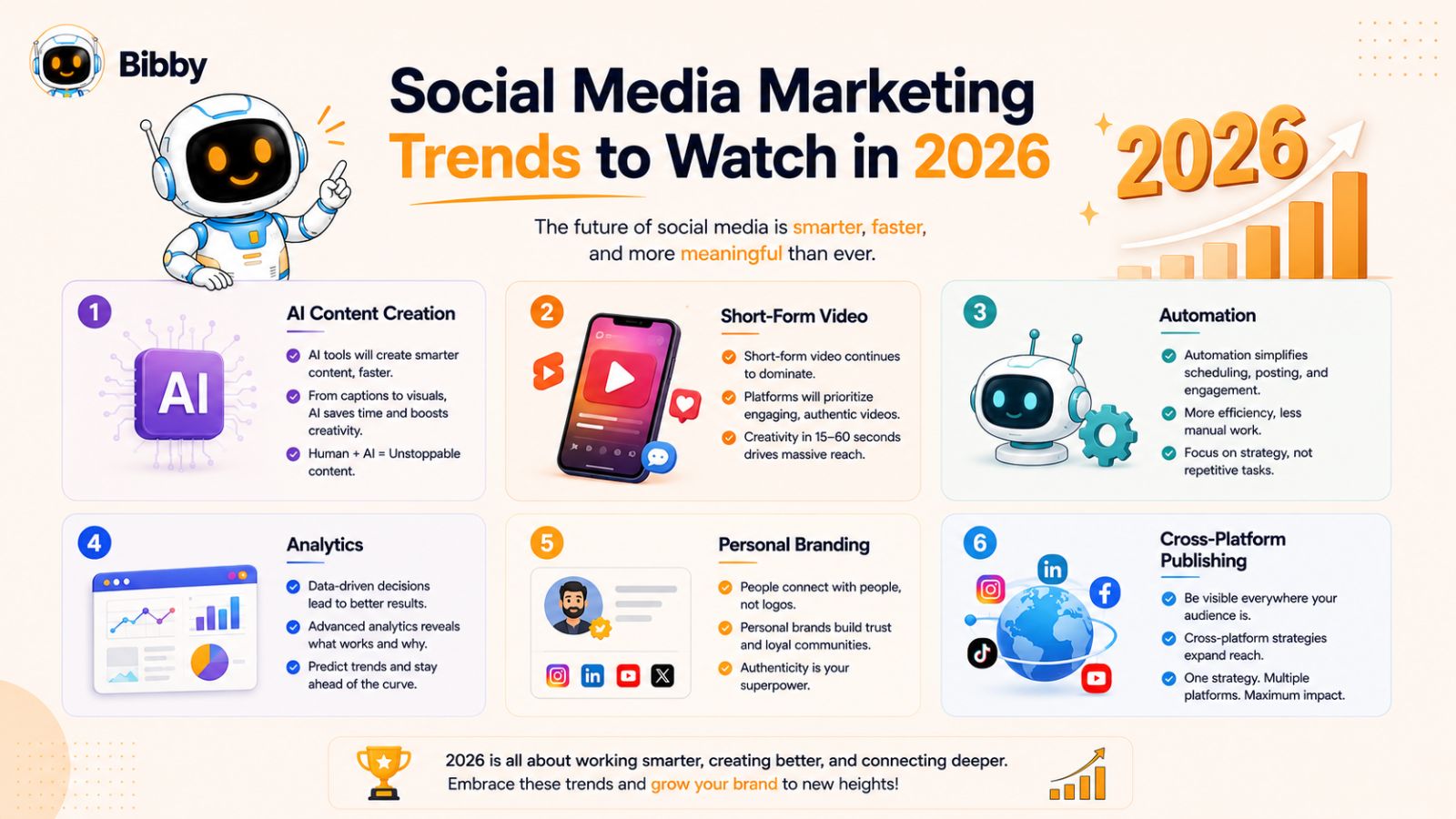
AI-Powered Content Creation Becomes the Standard
Artificial intelligence is no longer a competitive advantage for a small group of early adopters. It is quickly becoming a standard part of the social media workflow.
Businesses are using AI to:
- Generate content ideas
- Create images
- Write captions
- Optimize posting schedules
- Analyze performance data
- Repurpose content across platforms
As AI tools continue to improve, marketers will spend less time on repetitive tasks and more time on strategy, creativity, and audience engagement.
Companies that embrace AI effectively will be able to publish more consistently while maintaining quality and efficiency.
Short-Form Video Continues to Dominate
The popularity of short-form video shows no signs of slowing down.
Platforms such as TikTok, Instagram Reels, YouTube Shorts, and Facebook Reels continue to prioritize video content because it drives engagement and keeps users active on their platforms.
Consumers increasingly prefer content that delivers value quickly, making short-form video one of the most effective ways to capture attention.
Businesses that invest in educational, entertaining, and authentic video content will likely continue seeing strong results in 2026.
Authenticity Outperforms Perfection
As audiences become exposed to more AI-generated and highly polished content, authenticity is becoming even more valuable.
Consumers want to connect with real people, genuine experiences, and transparent brands.
Behind-the-scenes content, founder stories, customer experiences, and honest insights often outperform overly promotional messaging.
The brands that successfully combine professional execution with authentic communication will be better positioned to build trust and loyalty.
Cross-Platform Marketing Becomes Essential
Today's consumers interact with multiple platforms throughout the day.
A potential customer might discover a brand on TikTok, research it on YouTube, follow it on Instagram, engage with it on Facebook, and eventually connect with it on LinkedIn.
As a result, businesses are increasingly adopting multi-platform marketing strategies to stay visible throughout the customer journey.
However, managing multiple channels manually can quickly become unsustainable, which is driving increased demand for automation and centralized management tools.
Automation Becomes a Competitive Advantage
As content demands continue to increase, automation is becoming a key differentiator between average and high-performing marketing teams.
Businesses that automate repetitive tasks can:
- Publish more consistently
- Reduce administrative work
- Improve efficiency
- Scale content production
- Focus on strategic initiatives
Tools like Bibby are helping businesses simplify social media management by combining AI content creation, caption generation, scheduling, publishing, and analytics into a single workflow.
Instead of spending hours managing platforms individually, marketers can streamline operations while maintaining a strong presence across Facebook, Instagram, LinkedIn, YouTube, and TikTok.
Analytics-Driven Decision Making
Successful marketers are moving beyond vanity metrics such as follower counts and focusing on performance indicators that directly impact business growth.
Key metrics increasingly include:
- Engagement rate
- Reach
- Website traffic
- Lead generation
- Conversion rates
- Customer acquisition costs
- Return on investment
This shift toward data-driven decision making allows businesses to allocate resources more effectively and continuously improve marketing performance.
Community Building Gains Importance
As algorithms become more competitive, businesses are recognizing the value of building direct relationships with their audiences.
Communities create stronger customer loyalty, increase engagement, and generate valuable user-generated content.
Whether through Facebook Groups, LinkedIn communities, Instagram engagement, or niche online forums, brands that invest in community building often create more sustainable long-term growth.
The Future Belongs to Businesses That Adapt
The social media landscape will continue evolving, but one trend is clear: businesses that embrace AI, prioritize authentic content, leverage automation, and make decisions based on data will have a significant advantage.
The platforms may change, algorithms may evolve, and new technologies will emerge, but adaptability will remain one of the most important marketing skills.
The companies that stay flexible, experiment intelligently, and use the right tools to improve efficiency will be best positioned to succeed in the years ahead.
Also read: How AI Helps Maintain Brand Consistency Across Social Platforms
Conclusion
Social media marketing in 2026 is no longer about being everywhere—it's about being where your audience is and executing consistently. The most successful businesses are focusing on the platforms that align with their goals, creating content tailored to each audience, and using data to guide their decisions.
Three key takeaways stand out from this analysis. First, Instagram, LinkedIn, TikTok, YouTube, and Facebook continue to offer the strongest marketing opportunities for most businesses. Second, platform selection should be based on your audience, industry, and objectives rather than chasing every new trend. Third, automation and AI are becoming essential for maintaining a consistent presence across multiple channels without dramatically increasing workload.
As content demands continue to grow, marketers who combine creativity with efficient systems will have a significant advantage. Tools like Bibby make it possible to create content, generate captions, schedule posts, publish across multiple platforms, and track performance from a single workflow.
The next step is simple: evaluate your current social media strategy, identify the platforms that generate the best results, and build a scalable system that allows you to stay consistent. The businesses that embrace both strategic platform selection and AI-powered automation will be best positioned to grow in 2026 and beyond.