
Audience targeting is the practice of identifying and reaching specific groups of people who are most likely to be interested in your products, services, or content.
Whether you're running social media campaigns, paid advertisements, or email marketing, understanding audience targeting helps you deliver the right message to the right people at the right time. Effective audience targeting improves engagement, increases conversions, and reduces wasted marketing spend by focusing your efforts on users who are most likely to take action.
Let's explore how audience targeting works and why it's a fundamental strategy for successful digital marketing.
What Is Audience Targeting?
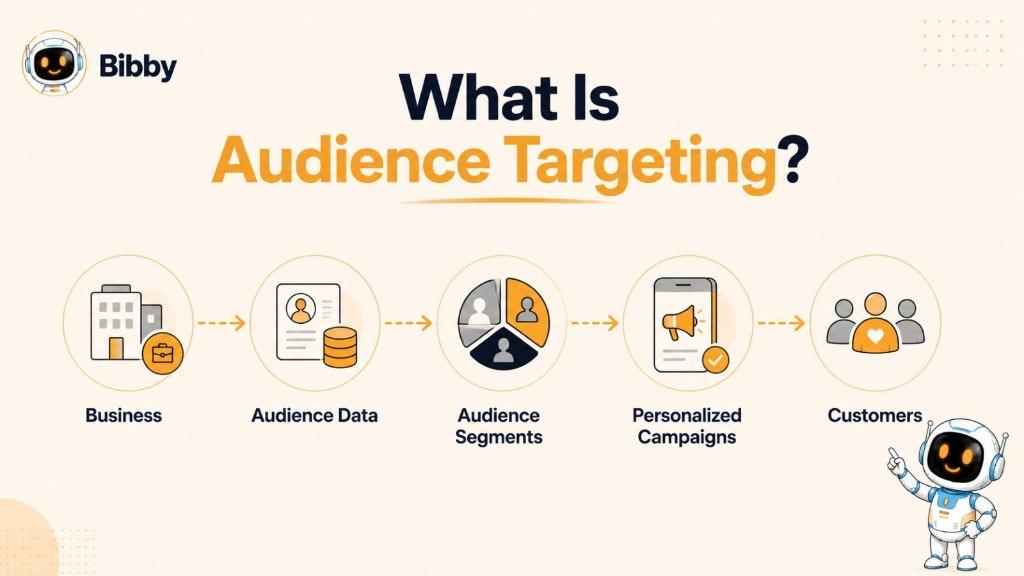
Audience targeting is the process of identifying and reaching a specific group of people based on shared characteristics, such as demographics, interests, behaviors, location, or purchasing intent. Instead of showing the same message to everyone, businesses tailor their marketing to audiences who are most likely to engage with their content or become customers.
In digital marketing, audience targeting uses customer data and insights to deliver more relevant advertisements, social media posts, emails, and other marketing communications. By understanding who your ideal audience is, you can create personalized campaigns that resonate with users and encourage meaningful interactions.
For example, a fitness brand may target people interested in health and wellness, while a software company may focus on small business owners or marketing professionals. Delivering relevant content to the right audience increases the chances of attracting qualified leads and improving campaign performance.
Audience targeting is widely used across platforms such as social media, search engines, email marketing, and display advertising. It helps businesses make better use of their marketing budgets by reducing wasted impressions and focusing on users who are more likely to convert.
Key Characteristics of Audience Targeting
- Identifies specific groups of potential customers.
- Uses data such as demographics, interests, behaviors, and location.
- Delivers personalized marketing messages.
- Improves engagement, conversions, and return on investment (ROI).
- Supports both organic and paid marketing strategies.
In short, audience targeting helps businesses connect with the right people at the right time using the right message, making it one of the most important foundations of successful marketing.
Why Is Audience Targeting Important?
Audience targeting is important because it helps businesses reach the people who are most likely to be interested in their products or services. Instead of marketing to a broad audience, businesses can focus their efforts on specific customer groups, making campaigns more relevant, cost-effective, and successful.
When marketing messages match a person's interests, needs, or behaviors, they are more likely to engage with the content, click on ads, and complete desired actions such as making a purchase or signing up for a service.
Benefits of Audience Targeting
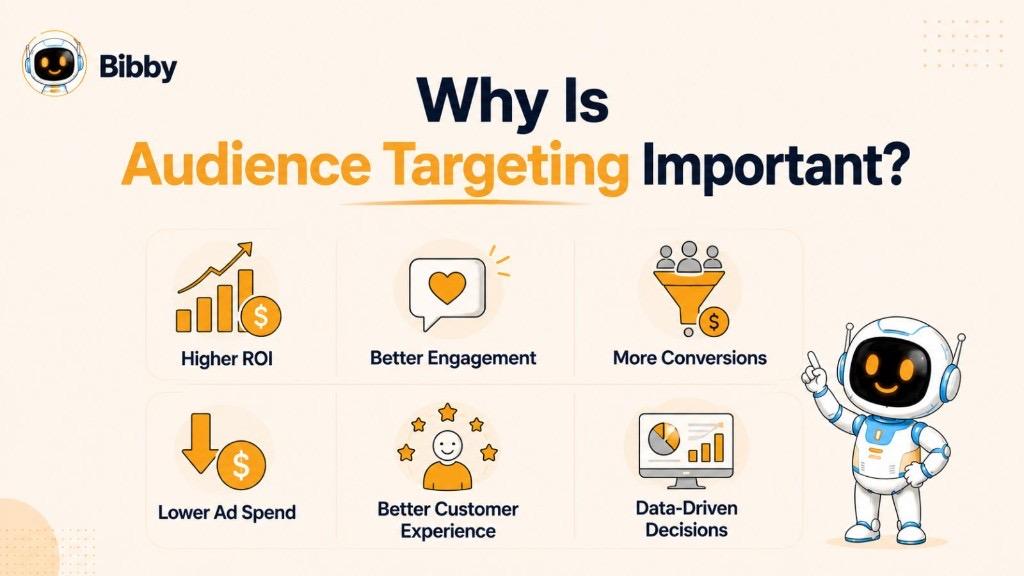
1. Improves Marketing ROI
Targeting the right audience reduces wasted ad spend by showing your content to people who are more likely to convert. This often results in a higher return on investment (ROI) for both paid and organic marketing campaigns.
2. Increases Engagement
Relevant content attracts more attention. Whether it's a social media post, email campaign, or online advertisement, personalized messaging encourages users to like, comment, share, and interact with your content.
3. Boosts Conversion Rates
When your marketing reaches people with genuine interest in your offerings, they are more likely to become leads or customers. Better targeting often leads to higher conversion rates and improved sales performance.
4. Delivers a Better Customer Experience
Customers expect personalized experiences. Audience targeting allows businesses to create content, promotions, and recommendations that align with individual preferences, making interactions feel more relevant and valuable.
5. Optimizes Marketing Budgets
Every marketing budget has limits. By focusing on high-potential audiences, businesses can allocate resources more efficiently and avoid spending money on users who are unlikely to engage.
6. Supports Data-Driven Decision Making
Audience targeting relies on customer insights and analytics, helping marketers understand which audience segments perform best. These insights can be used to refine future campaigns and improve overall marketing strategies.
7. Builds Stronger Customer Relationships
Consistently delivering relevant content helps businesses earn trust and strengthen relationships with their audience. Over time, this can increase customer loyalty, repeat purchases, and brand advocacy.
Why It Matters Across Marketing Channels
Audience targeting plays a key role in almost every digital marketing channel, including:
- Social media marketing
- Search engine advertising (PPC)
- Email marketing
- Content marketing
- Display advertising
- Video marketing
- Marketing automation campaigns
Regardless of the channel, reaching the right audience with the right message at the right time is one of the most effective ways to improve marketing performance and achieve business goals.
How Audience Targeting Works
Audience targeting works by collecting and analyzing customer data to identify groups of people who share similar characteristics. Businesses then use these insights to deliver personalized marketing messages that are more likely to resonate with each audience segment.
While the exact process varies depending on the platform and campaign goals, audience targeting generally follows these steps:
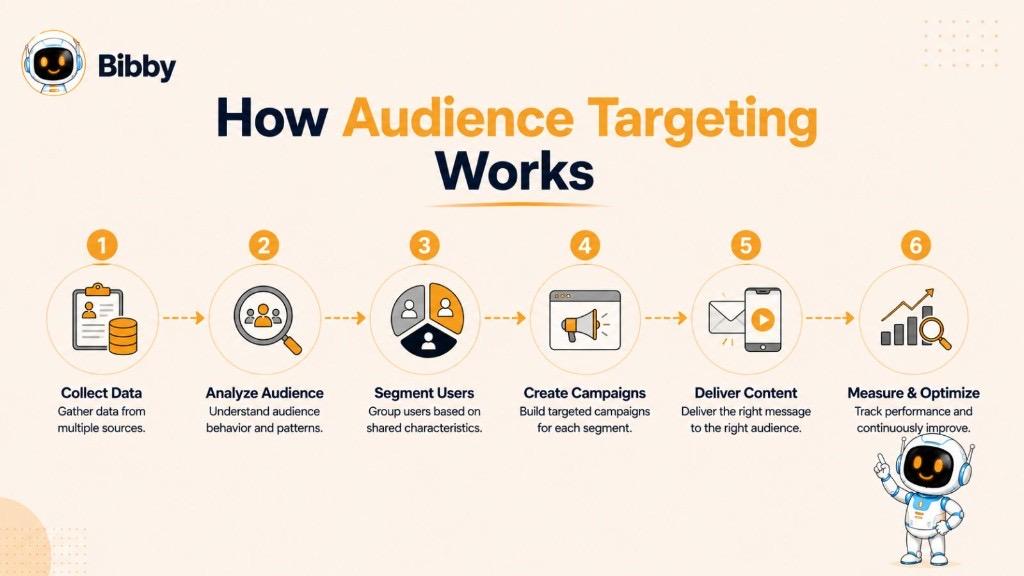
1. Collect Audience Data
The first step is gathering data about your audience from reliable sources. This information helps businesses understand who their customers are and what they care about.
Common data sources include:
- Website analytics
- Customer relationship management (CRM) systems
- Social media insights
- Email marketing platforms
- Online surveys and feedback
- Purchase history
- Mobile apps
2. Identify Audience Characteristics
Once data is collected, marketers analyze it to identify patterns and shared traits among customers.
These characteristics may include:
- Demographics: Age, gender, income, education, and occupation.
- Geographic data: Country, region, city, or local area.
- Interests: Hobbies, lifestyle, favorite topics, and preferences.
- Behaviors: Browsing history, purchases, engagement, and device usage.
- Psychographics: Values, attitudes, personalities, and motivations.
3. Segment the Audience
The collected data is then used to divide customers into smaller, more focused audience groups. Each segment shares common characteristics, making it easier to deliver relevant content and marketing messages.
For example, an online clothing store might create audience segments such as:
- New visitors
- Returning customers
- Frequent buyers
- Shoppers interested in seasonal collections
- Customers who abandoned their shopping carts
4. Create Personalized Campaigns
After defining audience segments, businesses create marketing campaigns tailored to each group's interests and needs.
Personalization may include:
- Customized advertisements
- Personalized email campaigns
- Relevant social media content
- Product recommendations
- Special offers and discounts
Delivering personalized experiences helps increase engagement and improves the likelihood of conversions.
5. Deliver Content Through the Right Channels
Different audience segments spend time on different platforms. Businesses use audience insights to deliver campaigns through the channels where each audience is most active, such as:
- Social media platforms
- Search engines
- Email marketing
- Display advertising
- Mobile apps
- SMS marketing
Choosing the right channel ensures marketing messages reach users at the right time and in the right context.
6. Measure Performance and Optimize
Audience targeting is an ongoing process. Businesses continuously monitor campaign performance using key metrics such as:
- Click-through rate (CTR)
- Conversion rate
- Engagement rate
- Cost per acquisition (CPA)
- Return on ad spend (ROAS)
By analyzing these metrics, marketers can refine audience segments, improve messaging, and optimize future campaigns for better results.
Summary
Successful audience targeting combines customer data, audience segmentation, personalization, and performance analysis to deliver relevant marketing messages. The more accurately businesses understand their audience, the more effectively they can improve engagement, increase conversions, and maximize their marketing investment.
Types of Audience Targeting
Businesses use different types of audience targeting to reach people based on specific characteristics, behaviors, or preferences. Depending on the marketing goals and platform, marketers often combine multiple targeting methods to create highly relevant campaigns.
Below are the most common types of audience targeting used in digital marketing.
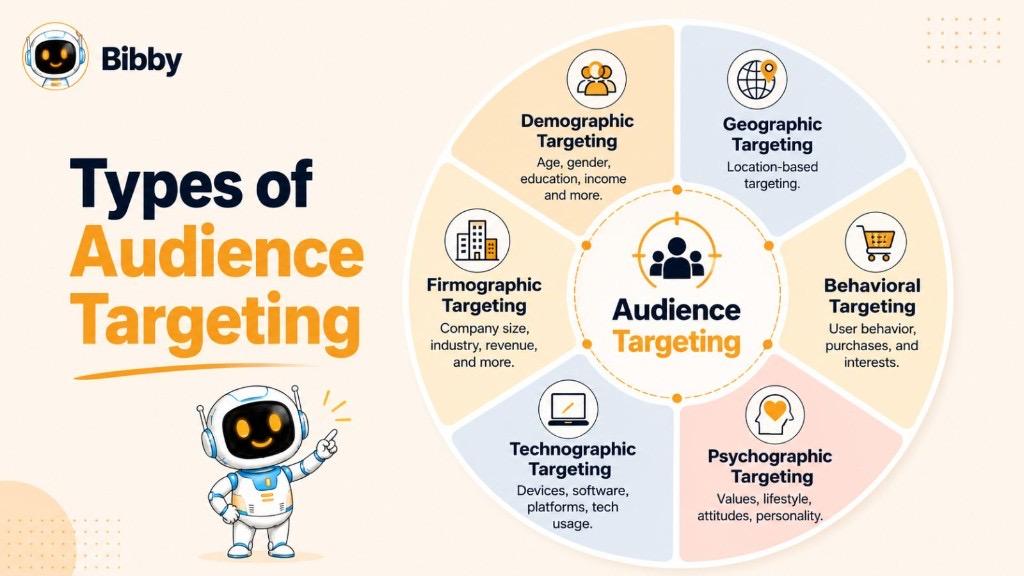
1. Demographic Targeting
Demographic targeting focuses on measurable characteristics of an audience. It's one of the most widely used targeting methods because demographic information is relatively easy to collect and analyze.
Common demographic factors include:
- Age
- Gender
- Income level
- Education
- Occupation
- Marital status
- Family size
Example:
A university promoting its MBA program may target professionals aged 25–40 with a bachelor's degree.
2. Geographic Targeting
Geographic targeting (also known as geo-targeting) delivers marketing messages based on a user's physical location.
Businesses can target audiences by:
- Country
- State or province
- City
- ZIP or postal code
- Neighborhood
- Radius around a specific location
This type of targeting is especially useful for local businesses and location-based promotions.
Example:
A restaurant may advertise lunch specials only to users within a 10-kilometer radius.
3. Behavioral Targeting
Behavioral targeting uses data about how users interact with websites, apps, or digital content to deliver more relevant marketing messages.
Common behavioral signals include:
- Website visits
- Purchase history
- Product views
- Cart abandonment
- App usage
- Email engagement
- Previous ad interactions
Example:
An online retailer may show ads for products that a customer recently viewed but didn't purchase.
4. Interest-Based Targeting
Interest-based targeting groups users according to their hobbies, passions, and long-term interests.
Examples of interests include:
- Travel
- Fitness
- Technology
- Gaming
- Fashion
- Cooking
- Finance
This approach helps businesses connect with audiences whose interests align with their products or services.
Example:
A travel agency can target users who frequently engage with travel-related content.
5. Psychographic Targeting
Psychographic targeting goes beyond basic demographics by focusing on a person's lifestyle, values, personality traits, opinions, and motivations.
This method helps marketers create campaigns that resonate on a deeper emotional level.
Common psychographic factors include:
- Personal values
- Lifestyle choices
- Attitudes
- Beliefs
- Interests
- Motivations
Example:
A sustainable clothing brand may target environmentally conscious consumers who value ethical shopping.
6. Contextual Targeting
Contextual targeting displays advertisements based on the content of the webpage or app a user is currently viewing rather than relying on personal user data.
For example, an article about photography may display ads for cameras, editing software, or photography courses because they are relevant to the page's content.
This approach is increasingly important as marketers adapt to stronger privacy regulations and reduced reliance on third-party cookies.
7. Device Targeting
Device targeting allows businesses to customize campaigns based on the device a user is using.
Common device categories include:
- Desktop computers
- Smartphones
- Tablets
- Smart TVs
Businesses may optimize content, landing pages, or advertisements differently depending on the user's device.
Example:
A mobile app developer may display installation ads only to smartphone users.
8. Custom Audience Targeting
Custom audience targeting enables businesses to reach people who have already interacted with their brand using first-party data.
Custom audiences can be built from:
- Customer email lists
- Website visitors
- Mobile app users
- Existing customers
- Newsletter subscribers
This strategy is commonly used for remarketing and customer retention campaigns.
Example:
An online store can promote new arrivals to previous customers using its email subscriber list.
9. Lookalike Audience Targeting
Lookalike audience targeting helps businesses find new potential customers who share characteristics with their existing audience.
Advertising platforms analyze your current customers and identify similar users based on factors such as interests, online behavior, and demographics.
This approach is often used to expand reach while maintaining campaign relevance.
Example:
A software company can create a lookalike audience based on its highest-value customers to attract similar prospects.
Choosing the Right Audience Targeting Strategy
The most effective marketing campaigns often combine multiple targeting methods instead of relying on just one. For example, a business might target users based on their location, age, interests, and recent online behavior to deliver highly personalized messaging.
The best targeting strategy depends on factors such as:
- Campaign objectives
- Target market
- Available customer data
- Marketing budget
- Advertising platform
- Privacy and data compliance requirements
By selecting the right combination of audience targeting methods, businesses can improve campaign performance, increase customer engagement, and achieve better marketing results.
Audience Targeting vs. Audience Segmentation
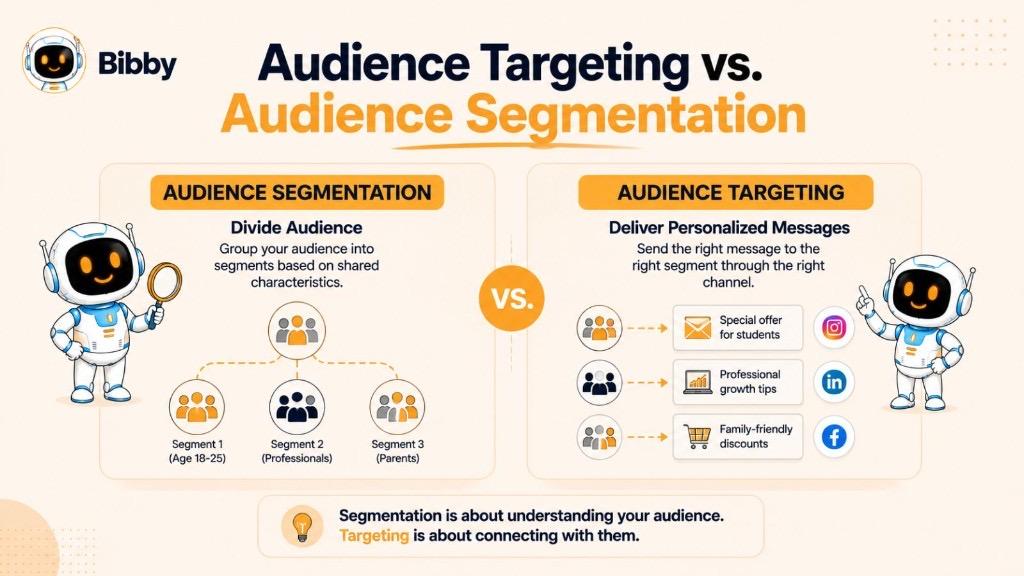
Audience targeting and audience segmentation are closely related concepts, but they are not the same. Audience segmentation is the process of dividing a broad audience into smaller groups based on shared characteristics, while audience targeting is the process of delivering personalized marketing messages to those specific groups.
Think of it this way: segmentation identifies the groups, while targeting determines how and when to reach them.
| Audience Targeting | Audience Segmentation |
|---|---|
| Focuses on delivering messages to a specific audience | Focuses on dividing a broad audience into meaningful groups |
| Used during campaign execution | Used during audience analysis and planning |
| Determines who should receive a campaign | Determines how audiences are organized |
| Uses audience segments to personalize communication | Creates audience segments based on shared characteristics |
| Aims to improve engagement and conversions | Aims to better understand customer groups |
Key Differences
#### Purpose
- Audience Segmentation: Organizes customers into groups with similar traits.
- Audience Targeting: Uses those groups to deliver relevant marketing messages and offers.
#### Timing
Audience segmentation typically happens during the planning stage of a marketing strategy. Once the segments are defined, marketers use audience targeting to launch campaigns tailored to each group.
#### Data Used
Both strategies rely on customer data, including:
- Demographics
- Geographic location
- Interests
- Online behavior
- Purchase history
- Customer preferences
However, segmentation focuses on analyzing this data to create groups, while targeting uses the same insights to determine which content, advertisements, or promotions each group should receive.
Example
Imagine an online fitness brand that sells workout equipment and nutrition plans.
Using audience segmentation, the company might divide its customers into groups such as:
- Beginners starting their fitness journey
- Experienced athletes
- Weight-loss enthusiasts
- Home gym owners
Using audience targeting, the company can then create campaigns tailored to each segment:
- Beginners receive educational workout guides and starter equipment.
- Experienced athletes see advanced training programs and premium gear.
- Weight-loss enthusiasts receive nutrition plans and healthy recipe content.
- Home gym owners are shown equipment bundles and exclusive discounts.
In this example, segmentation identifies the different customer groups, while targeting ensures each group receives content that matches its needs and interests.
Which Is More Important?
Audience targeting and audience segmentation work best together rather than independently. Effective segmentation creates well-defined customer groups, and accurate targeting ensures those groups receive relevant, personalized experiences.
Without segmentation, targeting becomes less precise. Without targeting, even the best audience segments may never receive messaging that encourages engagement or conversions.
Together, these strategies help businesses improve customer experiences, optimize marketing budgets, and achieve better campaign performance.
Real-World Examples of Audience Targeting
Audience targeting is used across industries to deliver relevant content, advertisements, and promotions to the people most likely to engage. The following examples illustrate how different businesses apply audience targeting to achieve specific marketing goals.
Example 1: Local Coffee Shop
A neighborhood coffee shop wants to attract more customers during weekday mornings.
Target audience:
- People within a 5-kilometer radius
- Office workers
- Students
- Morning commuters
Campaign:
The coffee shop runs a social media ad promoting a breakfast combo that's available from 7:00 AM to 10:00 AM.
Result:
By targeting nearby customers who are likely to visit in the morning, the business increases foot traffic while avoiding unnecessary advertising spend.
Example 2: SaaS Company
A software company offers a social media automation platform for businesses and marketers.
Target audience:
- Social media managers
- Marketing agencies
- Small business owners
- Content creators
Campaign:
The company publishes educational content about social media scheduling, AI-powered content creation, and marketing automation while promoting free product trials to qualified users.
Result:
Because the content addresses the needs of professionals who manage social media, the business attracts more qualified leads and improves trial sign-ups.
Example 3: Ecommerce Store
An online fashion retailer notices that many visitors add products to their shopping cart but leave without completing their purchase.
Target audience:
- Users who abandoned their shopping carts
- Previous website visitors
Campaign:
The retailer launches remarketing ads showcasing the abandoned products and offers a limited-time discount to encourage customers to return.
Result:
By reaching users who have already shown purchase intent, the retailer improves conversion rates and recovers lost sales.
Example 4: Fitness Brand
A company selling fitness equipment wants to promote a new range of home workout products.
Target audience:
- People interested in fitness and wellness
- Home workout enthusiasts
- Existing customers
- Newsletter subscribers
Campaign:
The brand creates personalized email campaigns, social media advertisements, and product recommendations tailored to each audience segment.
Result:
Relevant messaging increases product engagement, strengthens customer relationships, and drives repeat purchases.
Example 5: Online Learning Platform
An online education platform offers courses in programming, graphic design, and digital marketing.
Target audience:
- College students
- Career changers
- Working professionals looking to upskill
Campaign:
The platform recommends courses based on users' browsing history, previous enrollments, and learning interests.
Result:
Personalized recommendations improve course enrollments and create a more engaging learning experience.
Key Takeaways from These Examples
Although each business has different goals, they all follow the same audience targeting process:
- Identify the ideal audience.
- Analyze customer data and behavior.
- Create relevant audience segments.
- Deliver personalized content or advertisements.
- Measure campaign performance and optimize over time.
Whether you're running local promotions, managing social media campaigns, or scaling global advertising efforts, audience targeting helps ensure your marketing reaches the people who are most likely to respond.
Audience Targeting Across Different Platforms
Most digital marketing platforms provide audience targeting features, but the available targeting options vary depending on the platform. Understanding how each platform approaches audience targeting helps businesses choose the right channels and create more effective marketing campaigns.
Facebook offers advanced audience targeting capabilities, allowing businesses to reach users based on demographics, interests, behaviors, and online activity.
Common targeting options include:
- Age and gender
- Location
- Interests
- Life events
- Purchase behaviors
- Custom Audiences
- Lookalike Audiences
Facebook is widely used for both brand awareness and conversion-focused campaigns because of its extensive audience data.
Instagram audience targeting is managed through Meta's advertising platform, providing many of the same options available on Facebook.
Businesses can target users based on:
- Interests
- Demographics
- Location
- Engagement with Instagram accounts
- Custom Audiences
- Lookalike Audiences
Instagram is particularly effective for visually driven brands in industries such as fashion, travel, food, beauty, and lifestyle.
LinkedIn specializes in professional audience targeting, making it one of the most effective platforms for B2B marketing and recruitment.
Businesses can target users using:
- Job title
- Industry
- Company size
- Skills
- Seniority level
- Education
- Professional interests
LinkedIn is commonly used to generate business leads, recruit talent, and promote professional services.
Google Ads
Google Ads enables businesses to reach users across Search, Display, YouTube, and other Google properties.
Popular targeting options include:
- Search intent
- Keywords
- Geographic location
- Device type
- In-market audiences
- Affinity audiences
- Remarketing audiences
Google Ads is especially valuable for reaching users who are actively searching for products or services.
TikTok
TikTok helps businesses connect with audiences through short-form video content and behavior-based recommendations.
Audience targeting options include:
- Demographics
- Interests
- User behavior
- Device information
- Custom Audiences
- Lookalike Audiences
Its algorithm enables brands to reach highly engaged users based on viewing habits and content interactions.
X (formerly Twitter)
X allows businesses to target audiences based on conversations, interests, and engagement patterns.
Common targeting options include:
- Interests
- Keywords
- Followers of specific accounts
- Events
- Geographic location
- Custom Audiences
This platform is often used for real-time marketing, product launches, and event promotion.
Email Marketing Platforms
Email marketing platforms use first-party customer data to deliver personalized campaigns to specific subscriber groups.
Businesses commonly target audiences based on:
- Purchase history
- Email engagement
- Customer lifecycle stage
- Website activity
- Preferences
- Subscription status
Segmentation and automation help deliver relevant messages that improve open rates, click-through rates, and conversions.
Choosing the Right Platform
The best platform depends on your audience, campaign objectives, and marketing strategy.
| Platform | Best For |
|---|---|
| Broad consumer audiences and paid advertising | |
| Visual content and brand engagement | |
| B2B marketing and professional networking | |
| Google Ads | High-intent search and display advertising |
| TikTok | Short-form video and younger audiences |
| X (formerly Twitter) | Real-time engagement and trending conversations |
| Email Marketing | Customer retention and personalized communication |
Many businesses use multiple platforms together to reach audiences at different stages of the customer journey. A coordinated strategy ensures consistent messaging and increases the likelihood of converting prospects into loyal customers.
How Bibby Supports Audience Targeting
While audience targeting determines who should see your content, consistency determines whether your audience actually sees it.
Bibby helps businesses, marketers, and creators streamline their social media workflows by scheduling posts, automating content publishing, and maintaining a consistent posting cadence across multiple social platforms. By combining audience insights from your marketing strategy with automated publishing, you can deliver relevant content to the right audience at the right time without managing every post manually.
Using audience targeting alongside a social media automation tool like Bibby can help improve engagement, maintain brand consistency, and support long-term marketing growth.
Audience Targeting Best Practices
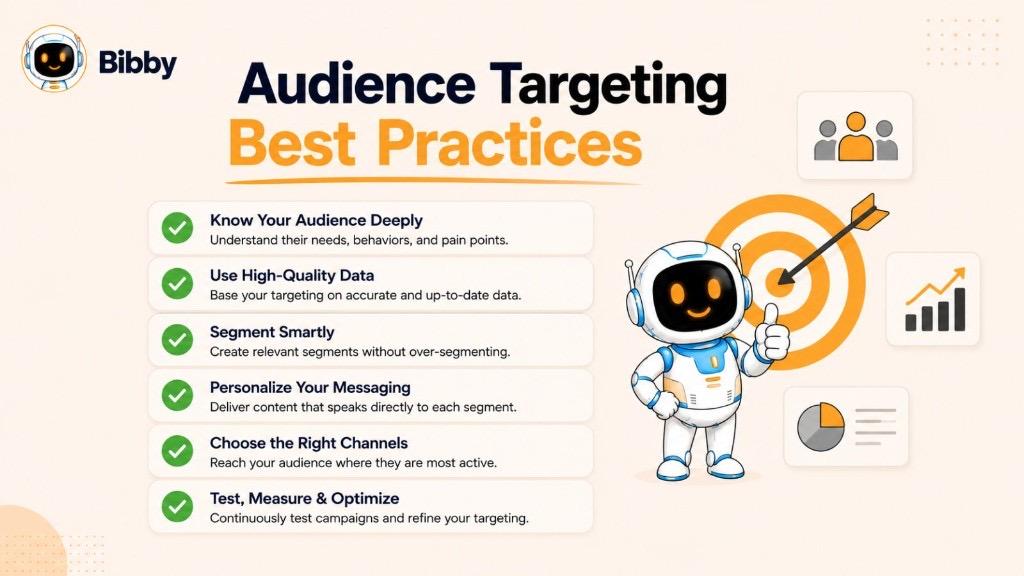
A successful audience targeting strategy goes beyond choosing the right audience. It requires accurate data, continuous optimization, and a deep understanding of customer needs. Following these best practices can help improve campaign performance, increase engagement, and maximize your marketing return on investment (ROI).
1. Define Your Ideal Customer
Before launching any campaign, clearly identify who you want to reach. Create an ideal customer profile or buyer persona based on factors such as:
- Age
- Location
- Occupation
- Interests
- Goals
- Pain points
- Buying behavior
The more specific your audience definition, the easier it is to create relevant messaging.
2. Use High-Quality First-Party Data
First-party data is information collected directly from your customers through your website, CRM, email list, or mobile app. Since it comes from your own audience, it's generally more accurate and privacy-friendly than third-party data.
Examples include:
- Website activity
- Purchase history
- Email subscriptions
- Customer feedback
- Product usage data
Keeping this data accurate and up to date leads to better targeting decisions.
3. Combine Multiple Targeting Methods
Relying on a single targeting method can limit campaign effectiveness. Instead, combine different audience signals to create more precise audience groups.
For example, you might target:
- Marketing professionals
- Located in major cities
- Interested in social media marketing
- Who recently visited your website
Layering multiple criteria helps deliver more relevant campaigns.
4. Personalize Your Messaging
Different audience segments respond to different messages. Tailor your content, visuals, and calls to action based on each audience's needs, interests, and stage in the customer journey.
Personalization can include:
- Product recommendations
- Customized email content
- Location-specific promotions
- Dynamic landing pages
- Audience-specific advertisements
Relevant messaging often leads to higher engagement and conversion rates.
5. Test and Optimize Regularly
Audience targeting is not a one-time task. Customer preferences and behaviors change over time, so it's important to continuously test and refine your campaigns.
Consider testing:
- Audience segments
- Ad creatives
- Headlines
- Calls to action
- Posting times
- Marketing channels
Regular optimization helps identify what works best and improves future campaign performance.
6. Monitor Key Performance Metrics
Track campaign performance using analytics to understand how different audience segments respond.
Important metrics include:
- Reach
- Impressions
- Click-through rate (CTR)
- Engagement rate
- Conversion rate
- Cost per acquisition (CPA)
- Return on ad spend (ROAS)
These insights help marketers make informed decisions and improve targeting strategies over time.
7. Avoid Overly Broad Audiences
Trying to reach everyone often results in lower engagement and higher advertising costs. Narrowing your audience allows you to create more relevant content and improve campaign efficiency.
Focus on audiences that are most likely to benefit from your products or services rather than maximizing reach alone.
8. Keep Audience Data Updated
Customer information changes over time as people move, change jobs, develop new interests, or make different purchasing decisions.
Review and refresh your audience data regularly to ensure your campaigns remain relevant and effective.
9. Respect Privacy and Data Regulations
Audience targeting should always comply with applicable privacy laws and platform policies.
Businesses should:
- Obtain appropriate consent where required.
- Protect customer data.
- Be transparent about data collection.
- Honor user privacy preferences.
- Follow relevant regulations such as GDPR or CCPA when applicable.
Responsible data practices help build trust and strengthen long-term customer relationships.
10. Measure, Learn, and Improve
The most successful marketers treat audience targeting as an ongoing process rather than a fixed strategy.
After each campaign:
- Review performance data.
- Identify high-performing audience segments.
- Adjust targeting criteria.
- Improve messaging and creative assets.
- Apply those insights to future campaigns.
Small improvements made consistently can lead to significant gains over time.
Best Practices Checklist
Use this checklist before launching your next campaign:
- ✓ Clearly define your target audience.
- ✓ Build audience segments using reliable data.
- ✓ Combine demographic, behavioral, and interest-based targeting.
- ✓ Personalize content for each audience segment.
- ✓ Test multiple audience variations.
- ✓ Monitor campaign performance with analytics.
- ✓ Keep customer data accurate and up to date.
- ✓ Respect user privacy and data regulations.
- ✓ Continuously optimize based on campaign results.
Following these best practices helps businesses create more relevant marketing campaigns, strengthen customer relationships, and achieve better results across social media, email, search, and paid advertising.
Common Audience Targeting Mistakes
Even with the right tools and data, audience targeting can fall short if common mistakes go unnoticed. Avoiding these pitfalls can help businesses improve campaign performance, reduce wasted marketing spend, and deliver a better customer experience.
1. Targeting Everyone
One of the biggest mistakes is trying to reach as many people as possible. A broad audience often leads to generic messaging that doesn't resonate with anyone in particular.
Better approach: Focus on the audience most likely to benefit from your product or service, even if it means reaching fewer people.
2. Ignoring Audience Data
Making decisions based on assumptions instead of real customer data can result in ineffective campaigns.
Better approach: Use insights from website analytics, CRM systems, social media platforms, and customer feedback to understand your audience and make informed decisions.
3. Relying on Outdated Information
Customer interests, behaviors, and demographics change over time. Using outdated audience data can reduce campaign relevance and performance.
Better approach: Regularly update audience segments and remove inactive or outdated records.
4. Overlooking Audience Segmentation
Sending the same message to every customer ignores the unique needs of different audience groups.
Better approach: Create meaningful audience segments and tailor content, offers, and messaging for each one.
5. Failing to Personalize Content
Generic marketing messages are less likely to capture attention or encourage action.
Better approach: Personalize campaigns using customer interests, behaviors, purchase history, or lifecycle stage to make your communication more relevant.
6. Not Testing Different Audiences
Many businesses launch a campaign with a single audience and never compare it with alternatives.
Better approach: Test multiple audience segments, creatives, and messaging to identify which combinations deliver the best results.
7. Ignoring Customer Intent
Not all users are at the same stage of the buying journey. Treating new visitors and returning customers the same can reduce campaign effectiveness.
Better approach: Align your messaging with customer intent. For example, educational content may suit first-time visitors, while discounts or product recommendations may be more effective for returning customers.
8. Focusing Only on Demographics
Age, gender, and location are useful, but they don't tell the whole story. Two people with similar demographics may have very different interests and buying behaviors.
Better approach: Combine demographic data with behavioral, psychographic, and interest-based insights for more accurate targeting.
9. Neglecting Campaign Performance
Launching a campaign without tracking results makes it difficult to understand what is or isn't working.
Better approach: Monitor metrics such as engagement, click-through rate (CTR), conversion rate, and return on ad spend (ROAS), then use those insights to refine future campaigns.
10. Ignoring Privacy and Compliance
Collecting or using customer data without following applicable privacy laws and platform policies can damage trust and lead to legal or financial consequences.
Better approach: Be transparent about data collection, obtain consent where required, and follow relevant privacy regulations such as GDPR or CCPA when applicable.
How to Avoid These Mistakes
A strong audience targeting strategy is built on continuous learning and optimization. Before launching a campaign, ask yourself:
- Have I clearly defined my target audience?
- Am I using current and reliable customer data?
- Have I created relevant audience segments?
- Is my messaging personalized for each audience?
- Have I tested different targeting approaches?
- Am I tracking performance and making improvements?
- Am I handling customer data responsibly?
By reviewing these questions regularly, businesses can avoid common targeting mistakes and create more effective marketing campaigns that deliver measurable results.
Audience Targeting Tools
Audience targeting relies on the right tools to collect customer data, build audience segments, deliver personalized campaigns, and measure performance. While the best tool depends on your business goals, many marketers use a combination of platforms to create a complete audience targeting strategy.
Below are the main categories of audience targeting tools and how they support marketing campaigns.
Customer Relationship Management (CRM) Tools
CRM platforms help businesses organize and manage customer information in one place. They provide valuable insights into customer interactions, purchase history, and engagement, making it easier to build targeted marketing campaigns.
Common uses include:
- Managing customer profiles
- Tracking sales interactions
- Building customer segments
- Personalizing communication
- Improving customer retention
Social Media Management Tools
Social media management tools help businesses plan, publish, and monitor content across multiple social networks. While they don't replace advertising platforms' targeting capabilities, they help ensure the right content reaches your audience consistently.
These tools typically allow you to:
- Schedule posts in advance
- Publish content across multiple platforms
- Maintain a consistent posting schedule
- Collaborate with team members
- Monitor engagement and performance
How Bibby Helps
Bibby simplifies social media management by allowing businesses and creators to schedule posts, automate publishing, and manage content from a single platform. By combining a well-defined audience targeting strategy with consistent content delivery, you can engage your audience more effectively and maintain a stronger online presence.
Advertising Platforms
Advertising platforms provide built-in audience targeting features that help businesses reach users based on demographics, interests, behaviors, location, and intent.
These platforms typically support:
- Custom audiences
- Lookalike audiences
- Interest-based targeting
- Geographic targeting
- Behavioral targeting
- Campaign performance reporting
Email Marketing Platforms
Email marketing tools enable businesses to send personalized campaigns to specific audience segments based on customer behavior and preferences.
Common features include:
- Audience segmentation
- Marketing automation
- Personalized email content
- Behavioral triggers
- A/B testing
- Campaign analytics
These capabilities help businesses build stronger customer relationships and improve engagement over time.
Analytics and Reporting Tools
Analytics platforms provide insights into how audiences interact with your website, content, and marketing campaigns.
Key metrics often include:
- Website traffic
- User behavior
- Engagement
- Conversion rates
- Traffic sources
- Customer journeys
These insights help marketers refine audience targeting strategies and make data-driven decisions.
Customer Data Platforms (CDPs)
Customer Data Platforms collect and unify customer information from multiple sources into a single profile. This creates a more complete view of each customer and enables more personalized marketing.
CDPs help businesses:
- Combine data from different channels
- Create unified customer profiles
- Build advanced audience segments
- Deliver personalized experiences
- Improve cross-channel marketing
Choosing the Right Audience Targeting Tool
The right tool depends on your marketing objectives, budget, and business size. Many organizations combine multiple solutions to manage customer data, automate marketing, and analyze campaign performance.
When evaluating audience targeting tools, consider whether they offer:
- Reliable audience insights
- Easy audience segmentation
- Marketing automation features
- Analytics and reporting
- Integration with your existing tools
- Scalability as your business grows
Using the right combination of tools allows businesses to better understand their audience, deliver more relevant marketing campaigns, and continuously improve results across digital channels.
Key Takeaways
Audience targeting is a foundational digital marketing strategy that helps businesses identify, segment, and reach the people most likely to engage with their content or become customers. By combining customer data, segmentation, personalization, and ongoing optimization, marketers can deliver more relevant campaigns across social media, search, email, and paid advertising.
Whether you're a small business reaching local customers or a global brand scaling multi-channel campaigns, effective audience targeting improves engagement, boosts conversion rates, and maximizes return on investment (ROI).
Key Points to Remember
- Audience targeting focuses marketing on specific groups based on demographics, interests, behaviors, location, and intent.
- Segmentation organizes your audience; targeting delivers personalized messages to each group.
- Common targeting types include demographic, geographic, behavioral, interest-based, psychographic, contextual, device, custom, and lookalike audiences.
- Success depends on quality data, personalized messaging, regular testing, and privacy-conscious practices.
- The right tools—from CRM and ad platforms to social schedulers like Bibby—help you act on audience insights consistently.
Continue exploring related dictionary entries on Social Media Strategy, Influencer Marketing, Cost Per Click (CPC), Click-Through Rate, Conversion Rate, and Call to Action (CTA) to build a stronger digital marketing foundation. Start a free trial to schedule audience-specific content across your channels and track what performs best.