
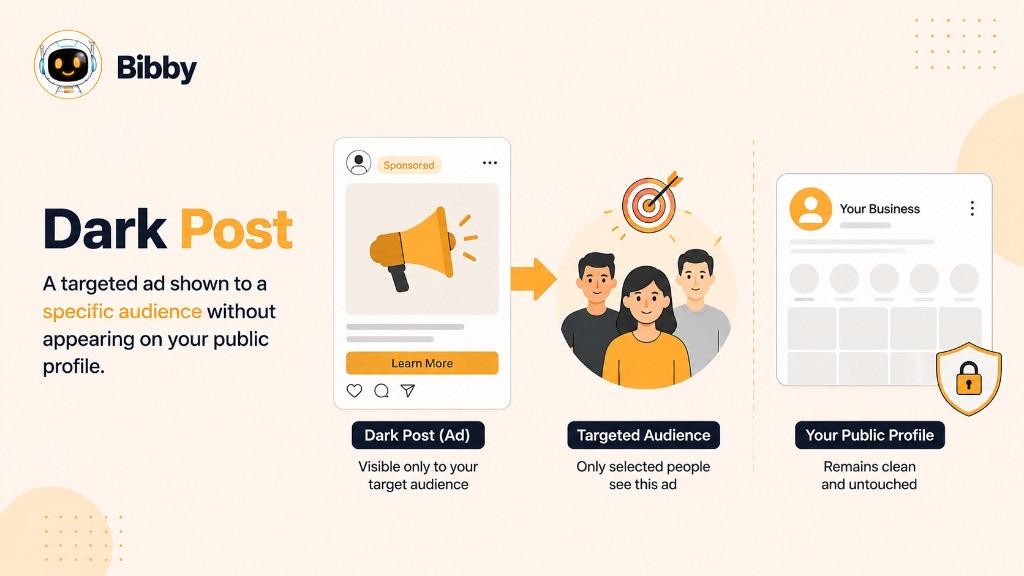
A dark post is an unpublished social media advertisement shown to a specific audience without appearing on a brand's public profile or timeline.
If you're wondering what a dark post means, how it works, or why marketers use one, the concept is simpler than it sounds. In this guide, you'll learn how dark posts work, how they differ from regular posts and boosted posts, and when they can make paid social advertising more effective.
Here, you will learn:
- What a dark post is and how it works
- How dark posts differ from regular and boosted posts
- When marketers should use dark posts for targeting, testing, and retargeting
Let's start with the basic definition and what makes a dark post different from an ordinary social media post.
What Is a Dark Post?
A dark post is an unpublished social media advertisement that is shown to a specific target audience without appearing on the brand's public profile, timeline, or organic feed.
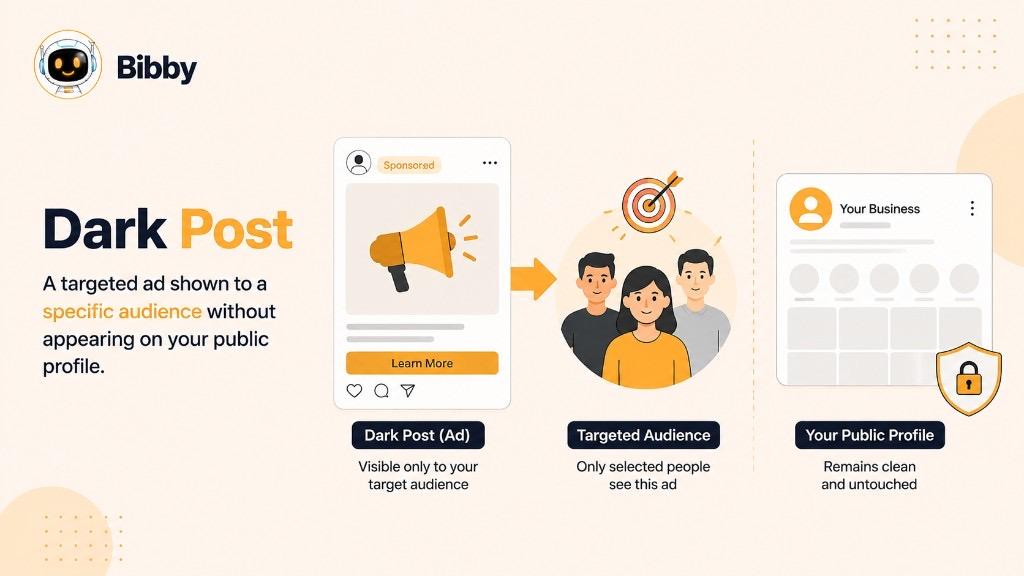
Unlike a regular social media post, a dark post is created primarily for paid advertising and audience targeting. A brand can create different versions of an ad for different audiences, promote specific offers, or test multiple creative variations without publishing every version to its public profile.
The word “dark” does not mean the advertisement is completely hidden. People included in the targeted audience can still see the ad in their social media feeds, and some platforms provide advertising transparency tools that allow users to discover active ads.
For example, a clothing company could create one dark post promoting running shoes to people interested in fitness and another promoting formal shoes to professionals. Both ads can run simultaneously, while neither needs to become a regular post on the company's public feed.
This unpublished format is especially useful on Facebook and Instagram, where advertisers often run many creative variations at once. The same idea can apply to paid social campaigns on LinkedIn and other networks, even when the platform uses different terminology.
In simple terms, a dark post is paid social content designed to reach a specific audience without becoming a normal public post on your brand's profile.
How Does a Dark Post Work?
A dark post works by combining advertising creative, audience targeting, and paid distribution. Instead of publishing content to a brand's public profile first, the advertiser creates the content as an ad and selects who should see it.
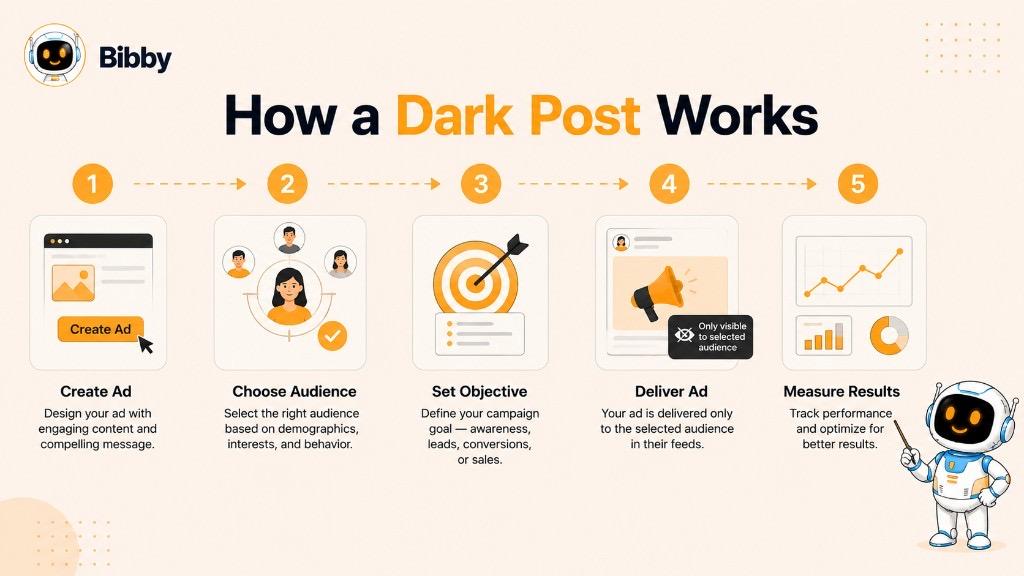
Here's the typical process:
1. Create the ad creative
The advertiser creates the content they want to promote. This could be an image, video, carousel, promotional offer, product announcement, or other type of social media creative. The caption, headline, and call to action should match the campaign goal.
2. Choose the target audience
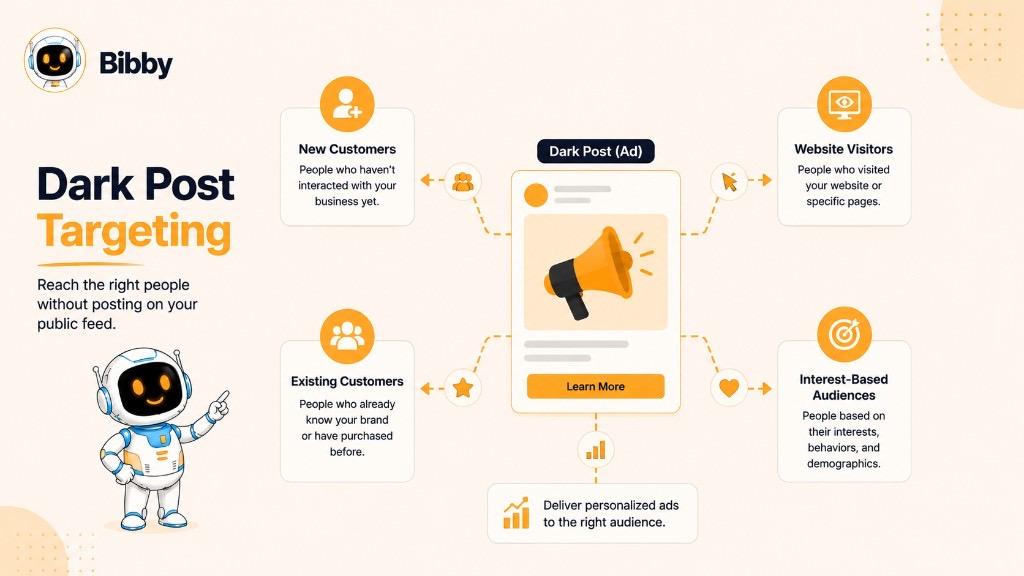
The advertiser defines who should receive the ad. Depending on the platform and campaign, targeting can include demographics, interests, behaviors, previous interactions, website activity, customer audiences, or lookalike audiences.
3. Set the campaign objective
The campaign can be designed around a specific goal, such as generating website visits, leads, purchases, app installs, or other conversions.
4. Deliver the ad to the selected audience
The social media platform distributes the advertisement to people who match the campaign's targeting criteria. Those users may see the dark post in their feeds even though the content isn't published as a normal post on the brand's profile. That delivery is paid reach, not organic reach.
5. Measure and optimize performance
The advertiser can evaluate metrics such as impressions, clicks, click-through rate, conversions, cost per click, and return on ad spend. They can then adjust the audience, creative, budget, or messaging based on the results.
This process allows marketers to create highly targeted advertising campaigns without turning every ad variation into a permanent piece of content on their public social media feed.
Dark Post Example
Imagine a clothing brand launching a new line of running shoes. Instead of showing the same promotional post to everyone who visits its social media profile, the brand wants to reach people who are particularly interested in running and fitness.
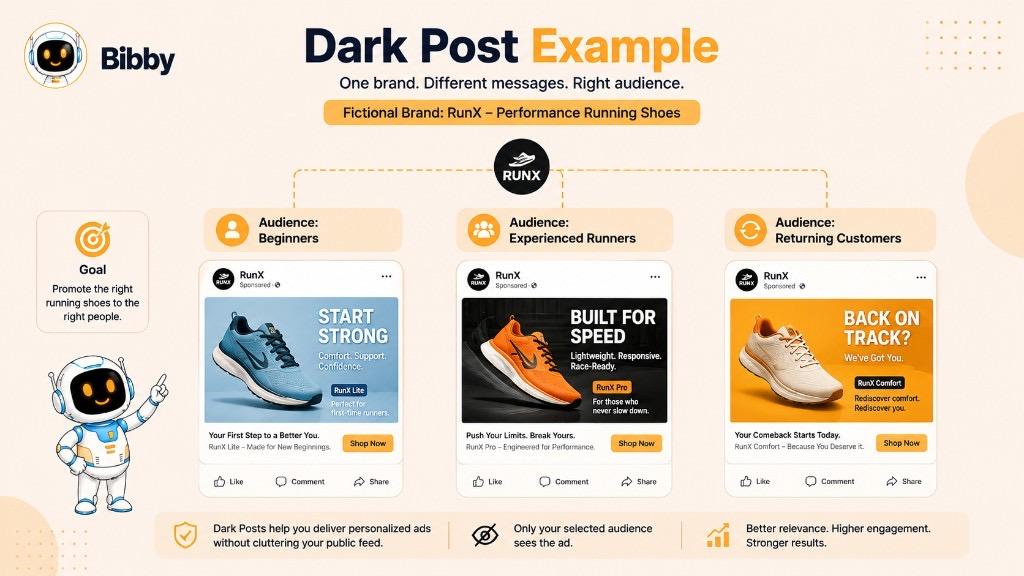
The brand creates a dark post featuring the new shoes, a short promotional message, and a link to the product page. It then targets people who match its chosen audience criteria.
Those people can see the sponsored content in their social media feeds, but the promotional post doesn't need to appear as a regular post on the clothing brand's public profile.
The brand could also create several versions of the dark post:
- Beginners: “Find your first pair of running shoes.”
- Experienced runners: “Built for your next long-distance run.”
- Returning customers: “Your next run starts with 20% off.”
Each version can use different messaging while promoting the same product.
This is one of the biggest advantages of dark posts: a brand can tailor its advertising to different audiences without filling its public social media feed with every variation.
Why Do Marketers Use Dark Posts?
Marketers use dark posts because they provide more control over who sees an advertisement, what message they receive, and how different versions of an ad are tested.
Here are some of the most common reasons marketers use them.
Run highly targeted campaigns
Dark posts allow advertisers to create campaigns for specific audience segments rather than showing the same promotional message to everyone.
For example, a software company could create separate ads for freelancers, marketing agencies, and large businesses, with messaging tailored to each group's needs. That is audience targeting applied at the creative level, not just the campaign settings.
Keep the public feed clean
Not every advertisement needs to become part of a brand's permanent social media presence. Dark posts allow businesses to run promotional campaigns without filling their public profile with sales-focused content.
This is particularly useful when a brand is running many campaigns at the same time while still publishing educational or community-building posts for brand awareness and engagement.
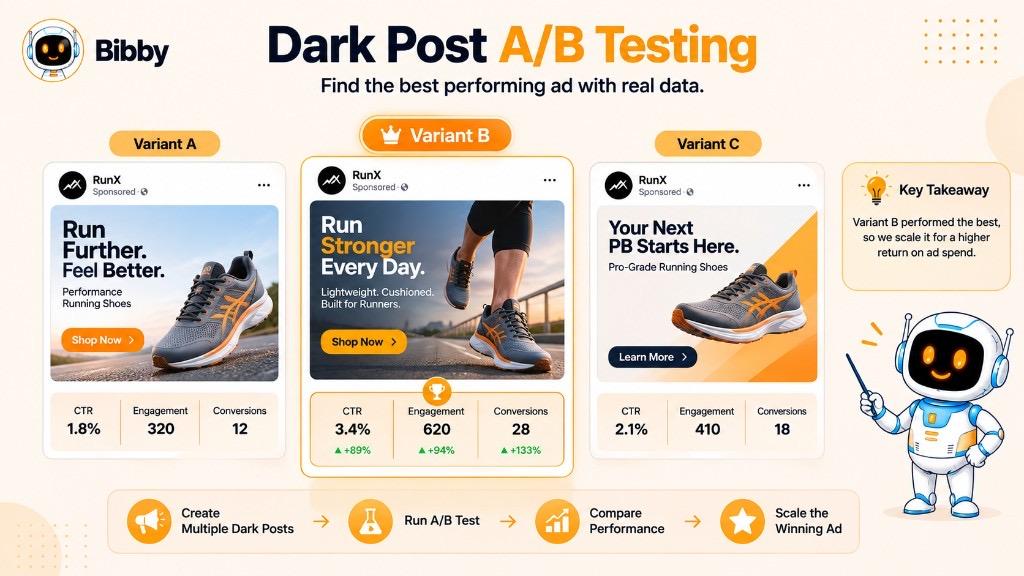
Test different creative ideas
Advertisers can create multiple versions of an ad and compare how they perform. They might test different:
- Images or videos
- Headlines
- Captions
- Offers
- Calls to action
- Audience segments
This makes dark posts useful for advertising experiments and A/B testing.
Personalize advertising
Different audiences often respond to different messages. A dark post allows marketers to adapt their creative and messaging to the people they are trying to reach.
A fitness company, for example, might promote beginner workouts to new customers while showing advanced training content to experienced athletes.
Run highly specific promotions
Some offers are relevant only to a small group of customers. Rather than publishing those promotions to everyone, a brand can use targeted advertising to reach the people most likely to benefit from them.
Support retargeting campaigns
Dark posts can also be useful when advertising to people who have already interacted with a business, such as visiting its website, viewing a product, or engaging with previous content. That is retargeting: showing a relevant ad to a warmer audience without making the reminder a public profile post.
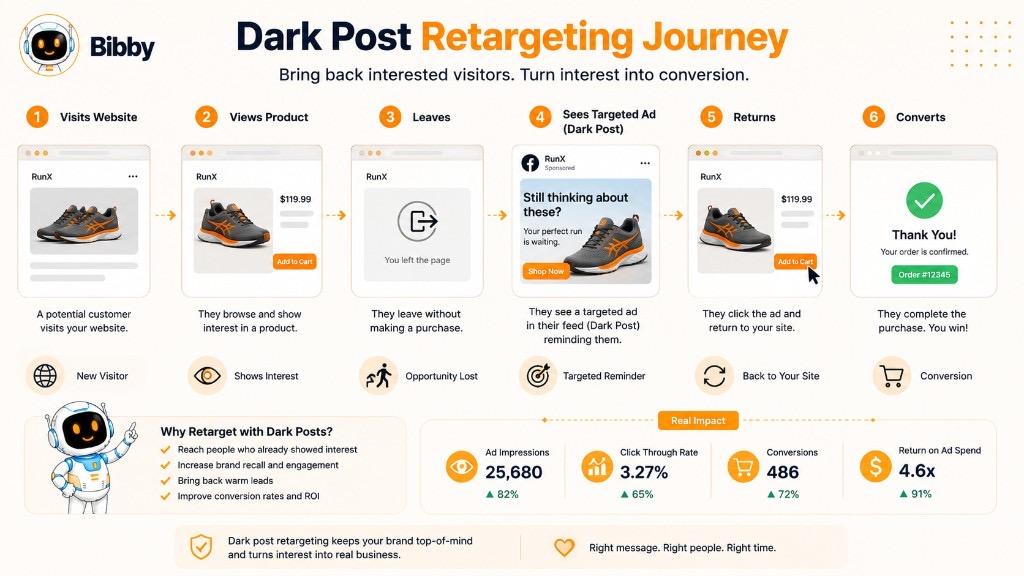
Ultimately, dark posts give marketers a way to experiment, personalize, and target paid social content without making every advertising variation part of their public social media feed.
Dark Post vs. Regular Social Media Post
The biggest difference between a dark post and a regular social media post is how and where the content is published.
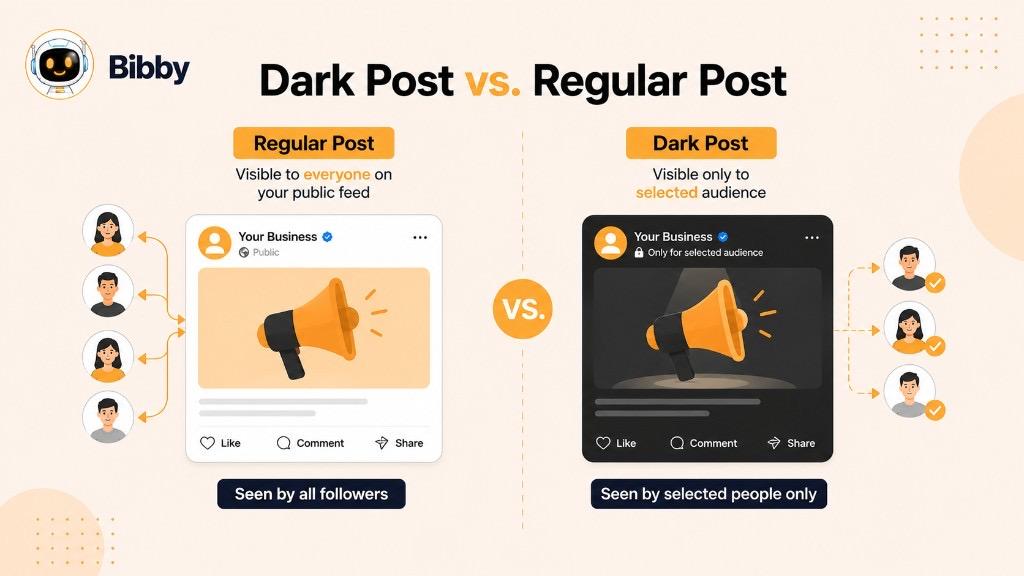
A regular social media post is published to a brand's profile and can become part of its public content library. A dark post is created primarily as paid advertising and generally isn't published to the brand's public profile.
| Feature | Dark Post | Regular Social Media Post |
|---|---|---|
| Appears on public profile | Usually no | Yes |
| Paid advertising | Yes | Not necessarily |
| Organic distribution | No | Yes |
| Audience targeting | Highly targeted | Typically broader |
| Used for advertising tests | Frequently | Less commonly |
| Promotional content | Common | Optional |
| Visible to profile visitors | No | Yes |
When should you use each?
A dark post makes more sense when your primary goal is targeted advertising, audience experimentation, or testing different promotional messages.
A regular social media post is generally better when you want to share content publicly, build your brand presence, educate your audience, start conversations, or maintain an active social media feed.
For example, a company might publish an educational post about its product publicly because it provides value to all followers. At the same time, it could use a dark post to advertise a limited-time discount only to people who have previously visited its website.
In short, regular posts build your public social media presence, while dark posts give you more control over targeted paid advertising.
Dark Post vs. Boosted Post
Dark posts and boosted posts are both used for paid social media advertising, but they work differently.
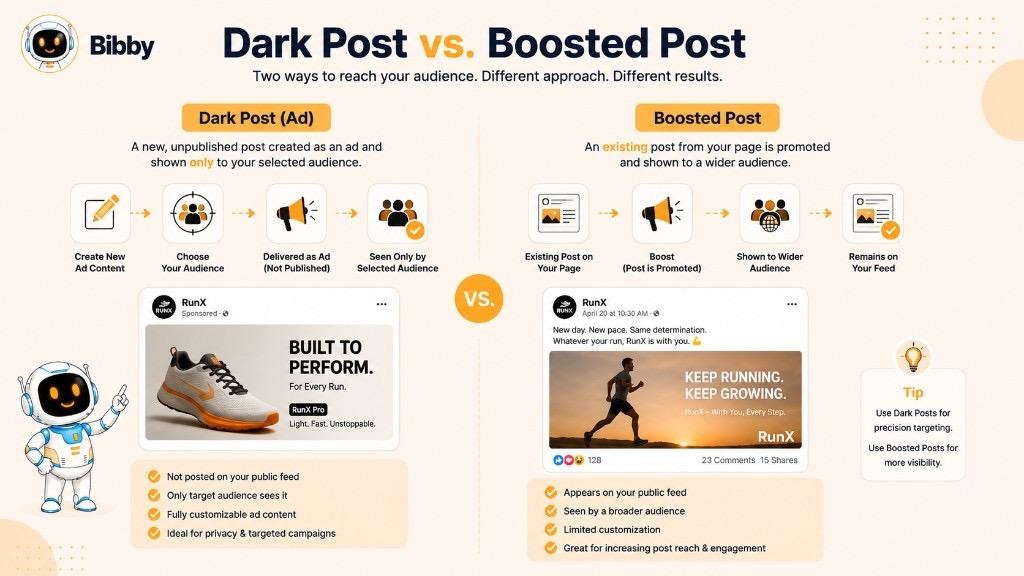
A dark post is created as an advertisement without first being published as a regular post, while a boosted post starts as an existing organic post that is then given additional paid distribution.
| Feature | Dark Post | Boosted Post |
|---|---|---|
| Starts as an organic post | No | Yes |
| Appears on public profile | Usually no | Yes |
| Uses paid distribution | Yes | Yes |
| Can target specific audiences | Yes | Yes |
| Useful for testing ad variations | Yes | More limited |
| Original content remains public | No | Yes |
Example
Imagine a restaurant publishes a post announcing a new lunch menu. After receiving good engagement, the restaurant decides to spend money promoting that existing post to people within a certain geographic area.
That's a boosted post.
Now imagine the restaurant creates a separate advertisement offering a weekday lunch discount specifically for nearby office workers. It doesn't publish that promotion as a normal post on its profile but delivers it to the selected audience through paid advertising.
That's a dark post.
The simple difference
Dark post = create an ad without publishing it organically.
Boosted post = pay to distribute an existing published post to a larger or more targeted audience.
Both approaches can be useful, but dark posts generally give advertisers more flexibility when creating and testing multiple versions of paid social content.
Dark Post vs. Organic Post vs. Boosted Post
Dark posts, organic posts, and boosted posts can look similar when someone sees them in a social media feed, but they serve different purposes.
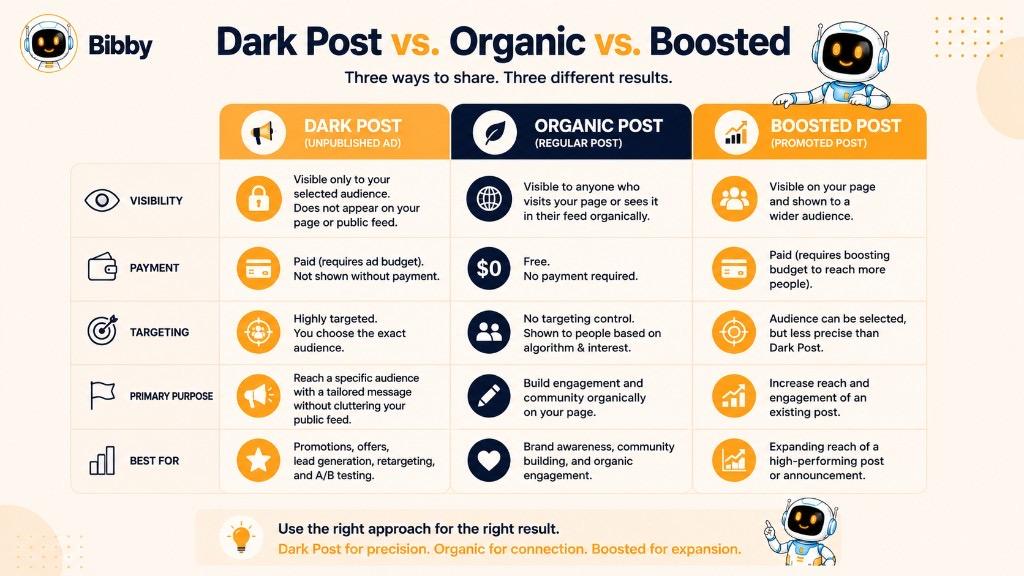
Understanding the difference helps marketers choose the right approach for each piece of content.
| Feature | Dark Post | Organic Post | Boosted Post |
|---|---|---|---|
| Published publicly | Usually no | Yes | Yes |
| Paid distribution | Yes | No | Yes |
| Appears on brand profile | Usually no | Yes | Yes |
| Audience targeting | Highly targeted | Primarily organic distribution | Targeted paid distribution |
| Main purpose | Targeted advertising and testing | Content and community building | Amplifying existing content |
| Can be promotional | Yes | Yes | Yes |
| Useful for ad testing | Yes | Less commonly | Sometimes |
Dark post
A dark post is created specifically for paid distribution to a selected audience. It doesn't normally become part of the brand's public feed.
Organic post
An organic post is published normally to a brand's social media profile without paid promotion. Its distribution depends on factors such as followers, engagement, platform algorithms, and sharing. Organic reach is typically narrower than paid distribution.
Organic posts are commonly used for education, entertainment, announcements, community engagement, and brand building.
Boosted post
A boosted post starts as an organic post that has already been published publicly. The brand then pays the platform to show that post to more people or to a selected audience.
Which one should you use?
Use an organic post when you want to build your public social media presence.
Use a boosted post when you already have a published post and want to increase its reach.
Use a dark post when you want to create targeted paid advertising without making the advertisement part of your public feed.
The right choice ultimately depends on whether your primary goal is public content, amplified reach, or targeted advertising.
When Should You Use a Dark Post?
Dark posts are particularly useful when you want to run targeted advertising without making every advertisement part of your public social media presence.
Here are some situations where a dark post can make sense.
When you want to target a specific audience
If your product or offer is relevant to a particular audience, you can create advertising specifically for that group.
For example, a B2B software company could create different ads for freelancers, small businesses, and enterprise teams instead of showing everyone the same message.
When you want to test multiple ad variations
Dark posts are useful for testing different versions of your advertising creative. You can experiment with different images, videos, captions, offers, headlines, or calls to action and compare their performance with A/B testing.
This can help you identify which combination resonates most with your target audience.
When you don't want to clutter your public feed
A brand may need to run dozens of advertisements while keeping its public profile focused on useful, engaging, or brand-building content.
Dark posts allow those advertising variations to run without publishing each one organically. Your content calendar can stay focused on posts that belong on the public profile.
When you want to personalize your messaging
Different audiences have different needs and motivations. A dark post allows you to tailor the message to a particular audience segment.
For example, an online course company could promote beginner content to new prospects while showing advanced courses to existing customers.
When you're running retargeting campaigns
Dark posts can be useful for reaching people who have already interacted with your business, such as website visitors, previous customers, or people who engaged with your social media content.
A retargeting ad could remind someone about a product they viewed or offer an incentive to complete a purchase.
When you're running a specific promotion
Limited-time offers, location-specific promotions, or audience-specific discounts don't always need to appear on a brand's public profile.
A dark post can deliver the promotion directly to the people most likely to be interested.
When a regular post isn't the best fit
If an advertisement is highly promotional, narrowly targeted, or designed primarily as an experiment, publishing it organically may not provide much value to your broader audience.
In these situations, a dark post can keep the public content strategy and paid advertising strategy separate while allowing both to work together.
Dark Post Best Practices
Creating a dark post is only the first step. To get better results from targeted social media advertising, marketers should also focus on relevant creative, precise targeting, meaningful testing, and clear performance measurement.
Create variations for different audiences
Avoid assuming that one message will work equally well for everyone. If your audiences have different needs, create variations that speak directly to each segment.
For example, a productivity tool could highlight time savings for freelancers, team collaboration for agencies, and workflow management for larger businesses.
Test one major variable at a time
When testing dark posts, changing everything at once makes it difficult to understand what caused a difference in performance.
Consider testing one major variable at a time, such as:
- Image
- Video
- Headline
- Caption
- Offer
- Call to action
This makes A/B testing results easier to interpret.
Match the creative to the audience
Your targeting and creative should work together. An ad should reflect the interests, problems, or motivations of the people who are going to see it.
A highly targeted audience paired with generic messaging can still produce weak results.
Focus on meaningful metrics
Likes and comments can provide useful signals, but they aren't always the most important measures of advertising success.
Depending on the campaign objective, pay attention to metrics such as:
- Click-through rate
- Cost per click
- Leads
- Conversions
- Cost per acquisition
- Revenue
- Return on ad spend
Choose KPIs that connect directly to the outcome you're trying to achieve.
Don't confuse “unpublished” with “invisible”
A dark post isn't necessarily a secret advertisement. The people included in its target audience can see it, and social platforms may provide advertising transparency tools or ad libraries that allow users to find information about active advertisements.
“Dark” generally refers to the content not being published as a normal post on the brand's public profile.
Follow advertising platform policies
Dark posts are still advertisements, so they need to comply with the rules of the platform where they run.
Pay particular attention to requirements around targeting, prohibited content, advertising claims, regulated industries, and disclosures.
Keep testing and learning
A strong dark-post strategy isn't about finding one perfect advertisement and leaving it unchanged. Use performance data to identify what works, develop new variations, and gradually improve your campaigns.
When used correctly, dark posts can turn social media advertising into a structured process of targeting, testing, learning, and optimization.
Are Dark Posts Still Used?
Yes. The underlying concept of dark posts is still relevant to social media advertising.
The way advertisers create and manage these ads can change as social media platforms update their advertising tools, terminology, and interfaces. However, the fundamental idea remains useful: create paid content for a specific audience without publishing every advertising variation as a normal post on the brand's public profile.
This is particularly valuable for brands running multiple campaigns or testing different combinations of audiences, creative, offers, and messaging.
For example, a business could run several targeted ads at the same time:
- One ad for new potential customers
- One for people who previously visited its website
- One for existing customers
- One testing a new promotional offer
The brand doesn't necessarily need to publish all four advertisements organically to its public feed.
It's also important to remember that “dark” doesn't mean completely hidden. Targeted users can see the advertisements, and advertising platforms may provide transparency features that allow people to discover information about ads.
So while specific platform terminology and workflows can change, the marketing use case behind dark posts—targeted paid advertising without cluttering a public social media feed—remains useful.
Are Dark Posts Secret?
No. A dark post isn't necessarily a secret or invisible advertisement.
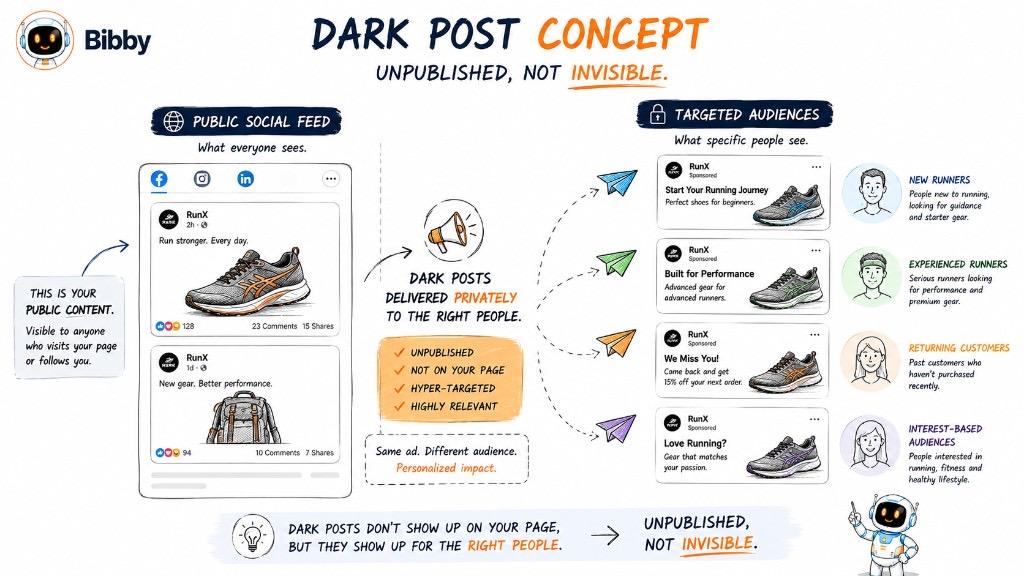
The term “dark” refers to the fact that the content isn't published as a normal post on the brand's public profile or timeline. It doesn't mean that nobody can see it.
People who match the advertisement's targeting criteria can see the dark post in their social media feeds. The platform may also provide advertising transparency tools or ad libraries that allow people to find information about active advertisements.
For example, a company could create an advertisement specifically for people who have previously visited its website. The ad may never appear on the company's public profile, but those targeted visitors can still see it when the platform delivers the advertisement to them.
Think of it this way:
Dark post = unpublished from your public feed, not invisible to your target audience.
This distinction is important because the term can make dark posts sound more secretive than they actually are.
How Bibby Helps Keep Paid Ads Separate From Your Public Feed
Dark posts work best when your public content strategy and paid advertising strategy are complementary, not mixed together.
Bibby is an AI-powered social media scheduling and automation platform that helps you create, plan, and publish the organic side of that strategy. You can upload or generate visuals, write captions, choose a posting style, build campaigns, and schedule posts across Facebook, Instagram, LinkedIn, YouTube, and TikTok.
That matters for dark-post campaigns because:
- Your public profile can stay focused on useful, on-brand content instead of every promotional variation.
- You can test educational or community posts organically, then boost winners or use insights to inform paid creative.
- Campaign planning and a content calendar make it easier to keep organic publishing consistent while ads run in the advertising tools.
A practical split looks like this:
Public feed (Bibby): educational posts, announcements, community engagement, and brand-building content.
Dark posts (ad platform): audience-specific offers, retargeting ads, and creative tests that don't belong on the public timeline.
Great advertising still needs a strong public presence. Bibby helps you run that public presence consistently while dark posts handle the unpublished, targeted paid work.
Key Takeaways
- A dark post is an unpublished social media ad shown to a selected audience without appearing on the brand's public profile—also called an unpublished post or dark ad.
- “Dark” means unpublished, not invisible. Targeted users can see the ad, and platforms may list it in ad libraries or transparency tools.
- Use dark posts for targeting, personalization, A/B testing, retargeting, and promotions that shouldn't clutter the public feed.
- A regular organic post builds public presence. A boosted post amplifies an existing published post. A dark post is created as an ad from the start.
- Measure dark posts with KPIs that match the objective—CTR, CPC, conversions, and ROAS—not vanity metrics alone.
- Keep public content and paid ads complementary: Bibby can run the organic feed while dark posts handle targeted unpublished advertising.