
A boosted post is a social media post that you pay to promote so it reaches a larger audience than it would organically.
If you're wondering what a boosted post is, how it works, or whether it's the right choice for your marketing strategy, you're in the right place. This guide explains the concept in simple terms and highlights when boosting a post makes sense compared to other paid advertising options.
Let's start by defining exactly what a boosted post is and why businesses use it.
What Is a Boosted Post?
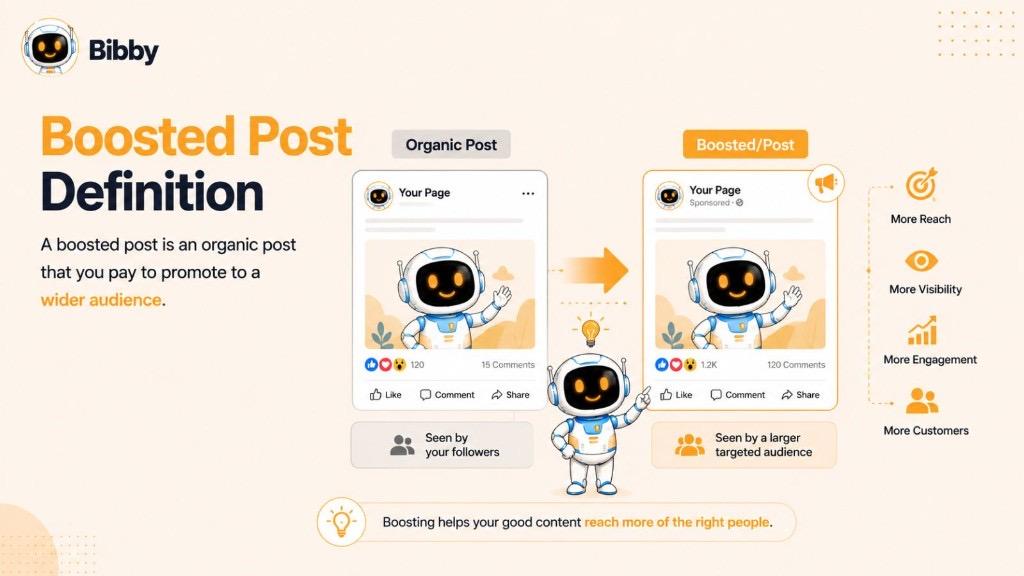
Boosted posts are designed to make paid promotion simple and accessible. Rather than creating a full advertising campaign with advanced settings, you can take a post that's already been published and turn it into a paid promotion with just a few clicks. This makes boosted posts a popular option for small businesses, creators, and marketers who want to increase the visibility of important content without managing a complex ad campaign.
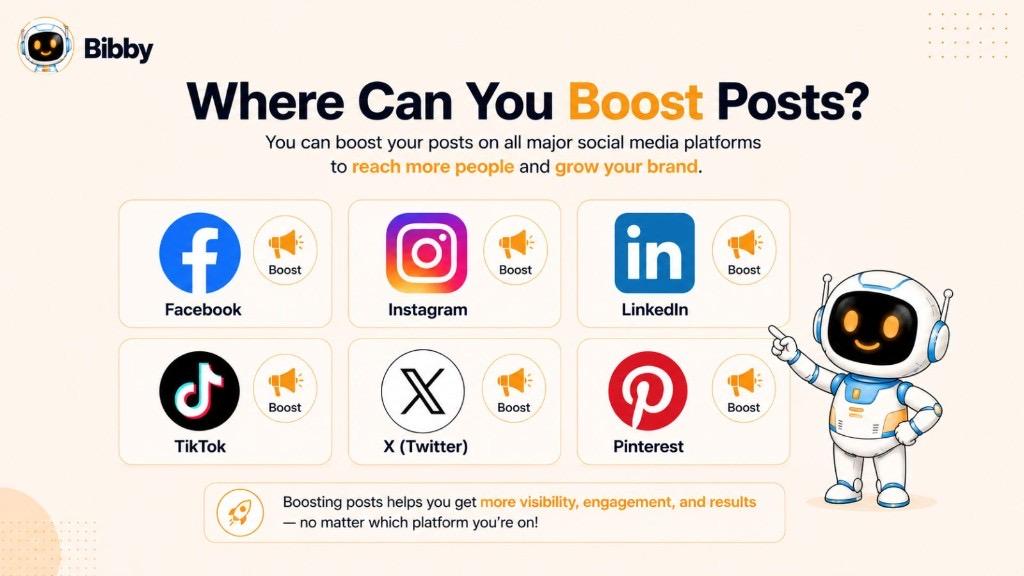
Most major social media platforms—including Facebook, Instagram, LinkedIn, and TikTok—offer a boosting feature, though the available targeting options, objectives, and reporting tools vary by platform.
In simple terms, think of a boosted post as an organic post with paid distribution. The content remains the same, but by investing a budget, you can reach more people than your followers alone, helping increase brand awareness, engagement, website traffic, or other marketing goals depending on the platform.
How Does a Boosted Post Work?
A boosted post starts as a regular organic social media post. Instead of relying only on your existing followers and algorithmic reach, you pay the platform to show the post to a larger audience that matches your targeting criteria.
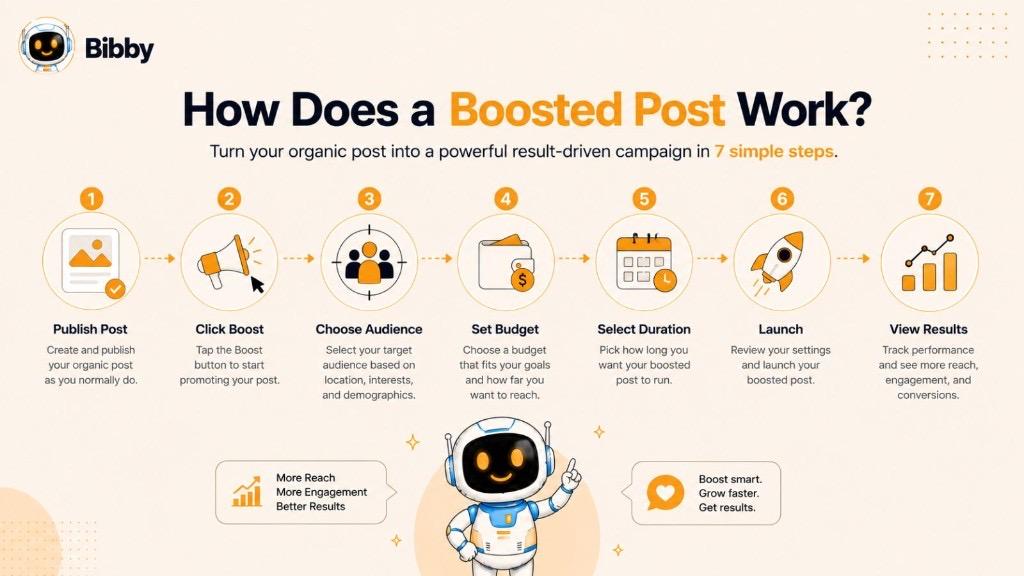
Here's how the process typically works:
- Publish an organic post. Create and publish a post on your chosen social media platform as you normally would.
- Select "Boost Post." After the post is live, choose the platform's boost or promote option.
- Define your audience. Select who should see your post based on factors such as location, age, interests, or demographics. Some platforms also let you target custom or lookalike audiences using audience targeting.
- Set your budget and duration. Decide how much you want to spend and how long you want the promotion to run. Most platforms allow flexible daily or lifetime budgets.
- Choose a campaign objective. Depending on the platform, you may be able to optimize for goals like engagement, website visits, messages, or profile visits.
- Launch the boost. Once your settings are confirmed, the platform reviews your promotion and begins delivering it to your selected audience after approval.
- Track performance. Monitor metrics such as reach, impressions, clicks, engagement, and conversions (where available) to measure the effectiveness of your boosted post.
Unlike organic posts, which depend on platform algorithms and your existing audience, boosted posts receive paid distribution. This means your content is shown to more people beyond your followers—increasing paid reach and giving you greater control over who sees it.
While boosting a post is one of the easiest ways to advertise on social media, it typically offers fewer customization and optimization options than creating a campaign through a platform's dedicated advertising manager.
Where Can You Boost Posts?
Most major social media platforms allow businesses and creators to boost existing posts to reach a larger audience. While the basic concept is similar across platforms, the available targeting options, campaign objectives, and analytics can vary.
| Platform | Boost / promote feature | Common use cases |
|---|---|---|
| Boost from a business Page | Reach, engagement, website visits, messages | |
| Boost photos, videos, Reels | Profile visits, traffic, engagement, awareness | |
| Boost Company Page posts | Thought leadership, webinars, B2B updates | |
| TikTok | Promote existing videos | Views, profile visits, website traffic |
| X (formerly Twitter) | Promote individual posts | Impressions, engagement, clicks |
| Promote existing Pins | Discovery, traffic, ecommerce |
Facebook introduced boosted posts as a simple way for businesses to promote content without creating a full advertising campaign. You can boost posts from your business Page to increase reach, engagement, website visits, messages, or other supported objectives. Learn more about Facebook scheduling with Bibby.
Instagram lets professional accounts boost photos, videos, Reels, and other eligible posts directly from the app or through Meta's advertising tools. Boosting is commonly used to increase profile visits, website traffic, engagement, and brand awareness. Schedule Instagram content in Bibby before you boost your strongest posts.
LinkedIn allows businesses to boost posts from their Company Pages to reach a larger professional audience. This can be especially effective for promoting thought leadership content, company updates, webinars, job opportunities, and B2B marketing campaigns.
TikTok
TikTok offers a Promote feature that works similarly to boosting a post. Creators and businesses can pay to increase the visibility of existing videos, helping them reach more users, drive profile visits, or generate website traffic.
X (formerly Twitter)
X enables advertisers to promote individual posts to expand their reach beyond existing followers. Promoted posts can help increase impressions, engagement, and website clicks while targeting audiences based on interests, keywords, demographics, and other criteria.
Pinterest allows businesses to turn existing Pins into promoted content. Boosting a Pin can help increase visibility, drive traffic to a website, generate product discovery, or support ecommerce campaigns.
Platform Features Can Differ
Although boosting is available on many social media platforms, each platform offers its own set of campaign objectives, audience targeting options, budget controls, and performance metrics. Before launching a boosted post, review the available features to ensure they align with your marketing goals.
Why Businesses Use Boosted Posts
Boosted posts help businesses extend the reach of their best-performing content without the complexity of creating a full advertising campaign. By promoting an existing post, businesses can connect with a larger audience, achieve specific marketing goals, and amplify content that is already resonating with users.
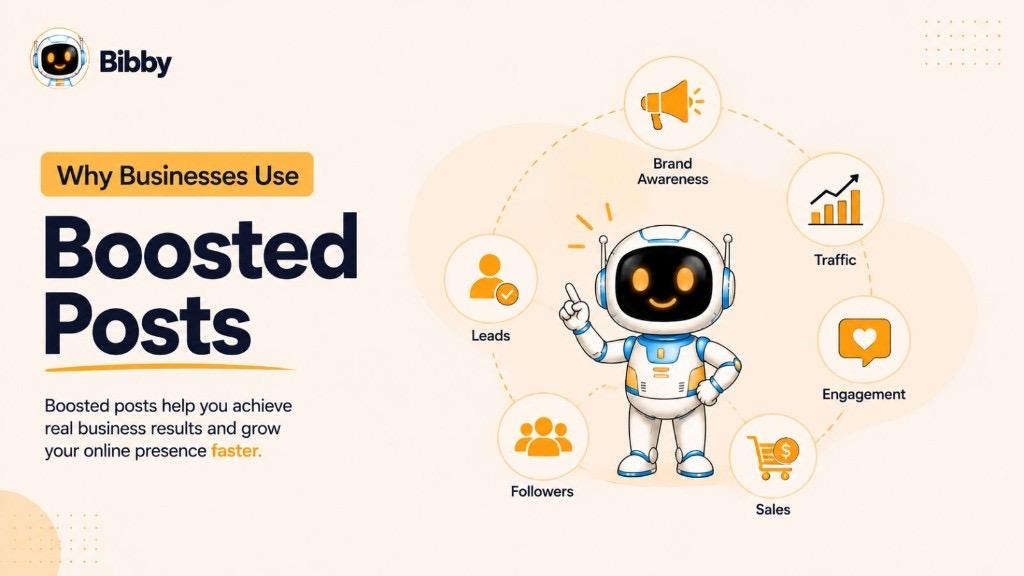
Here are some of the most common reasons businesses boost social media posts:
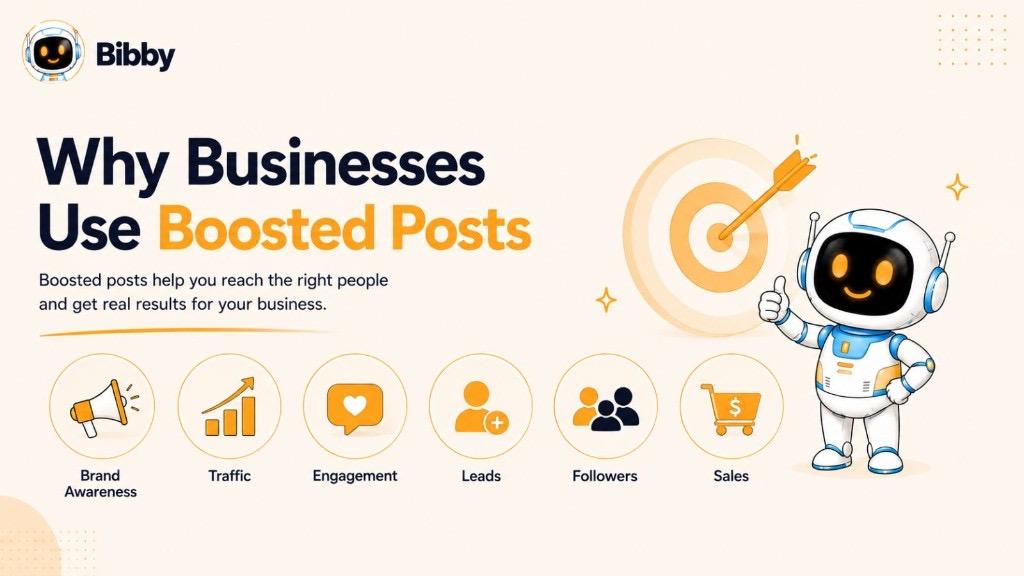
Increase Brand Awareness
Boosting a post helps introduce your brand to people who may not already follow your business. This is especially useful for new brands, product launches, or expanding into new markets.
Reach More People
Organic reach on social media is often limited. A boosted post uses paid distribution to display your content to a larger audience, including users who are likely to be interested in your products or services.
Drive Website Traffic
Many platforms allow boosted posts to include a call-to-action button that encourages users to visit your website, online store, landing page, or blog.
Increase Engagement
Businesses often boost posts to generate more likes, comments, shares, saves, and other forms of engagement. Higher engagement can also improve the visibility and credibility of your content.
Promote Products and Services
Whether you're launching a new product, highlighting a best seller, or announcing a limited-time offer, boosting a post can help your promotion reach more potential customers.
Generate Leads
Some platforms support campaign objectives that encourage users to submit contact information, send messages, or take other actions that can generate new business opportunities.
Promote Events and Announcements
Boosted posts are an effective way to increase awareness of webinars, conferences, local events, product launches, and other important announcements before they take place.
Grow Your Audience
Businesses also use boosted posts to attract new followers, increase profile visits, and build a larger community around their brand.
The most effective boosted posts are those that already perform well organically. If a post receives strong engagement from your existing audience, boosting it can help extend its reach and maximize its impact without creating entirely new content.
Benefits of Boosting a Post
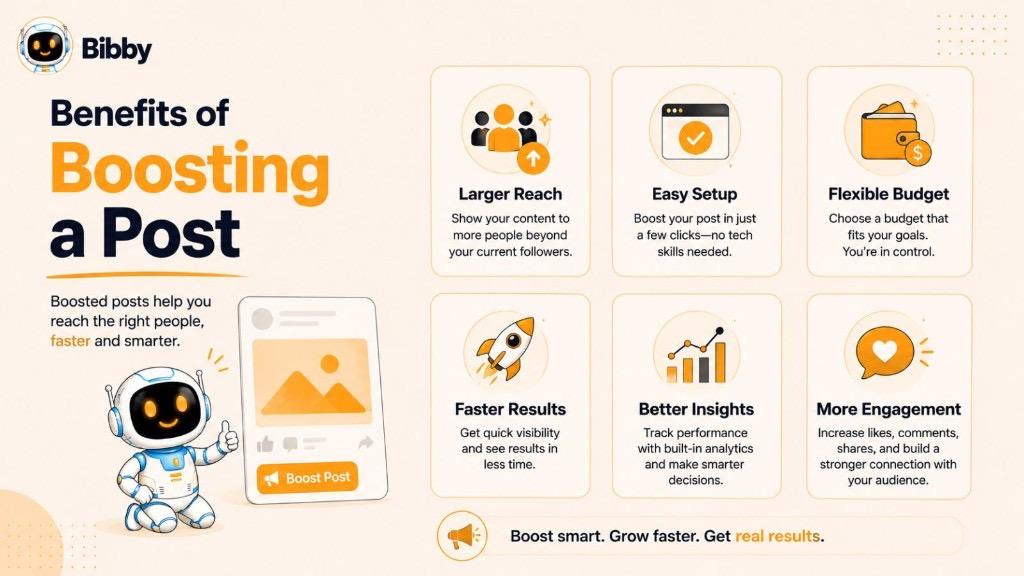
Boosting a post is one of the easiest ways to increase the visibility of your content on social media. Whether you're promoting a product, sharing an announcement, or growing your audience, boosted posts offer several advantages over relying on organic reach alone.
Easy to Set Up
Unlike full advertising campaigns that often require multiple settings and advanced configuration, boosted posts can usually be launched in just a few minutes. This makes them a practical option for businesses, creators, and marketers with limited advertising experience.
Reach a Larger Audience
A boosted post is shown to users beyond your existing followers, helping your content reach potential customers who may not have discovered your brand organically.
Flexible Budgets
Most social media platforms let you choose how much you want to spend and how long your promotion should run. Whether your budget is $10 or $1,000, you can scale your campaign based on your goals—and compare efficiency using metrics like CPM and CPC where available.
Promote High-Performing Content
Instead of creating new ads from scratch, you can amplify posts that have already generated strong engagement. Boosting successful content often leads to better results because it has already proven valuable to your audience.
Increase Engagement
Boosted posts can generate more likes, comments, shares, saves, and clicks by exposing your content to a wider audience. Increased engagement can also strengthen your brand's social proof.
Support Multiple Marketing Goals
Depending on the platform, boosted posts can help you:
- Increase brand awareness
- Drive website traffic
- Generate profile visits
- Encourage direct messages
- Promote events
- Increase video views
- Grow your follower base
Faster Results
Organic growth often takes time, while boosted posts begin reaching your target audience shortly after they're approved. This makes them useful for time-sensitive promotions, product launches, and limited-time offers.
Gain Valuable Performance Insights
Most platforms provide analytics for boosted posts, including metrics such as reach, impressions, engagement, clicks, and audience demographics. These insights can help you understand what content performs best and improve future marketing efforts.
While boosted posts provide many benefits, they aren't the right solution for every campaign. Understanding their limitations can help you decide when to use a boosted post and when a full advertising campaign may be a better choice.
Limitations of Boosted Posts
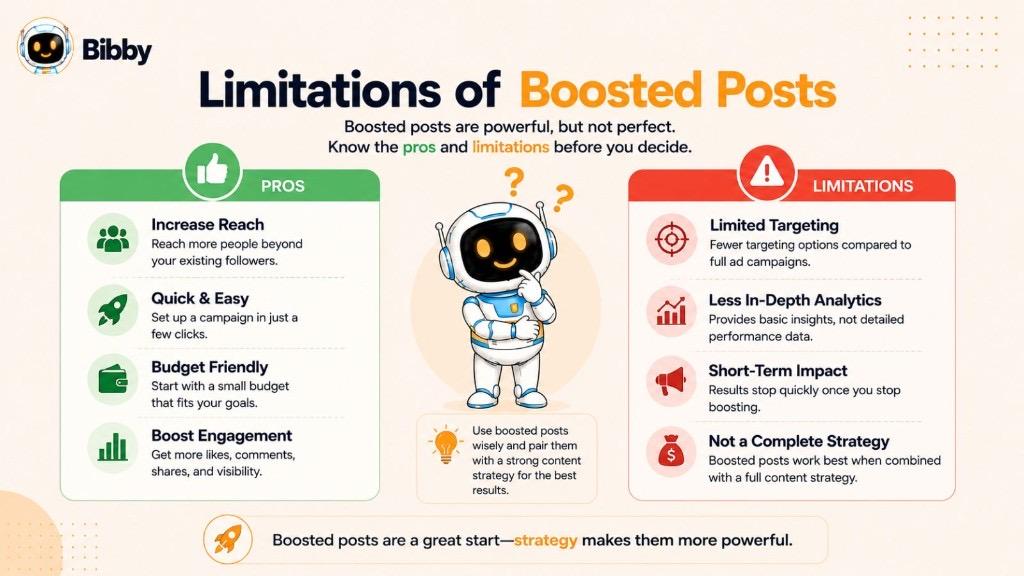
While boosted posts are an effective way to increase the reach of your content, they aren't as powerful or flexible as full social media advertising campaigns. Understanding these limitations can help you choose the right approach for your marketing objectives.
Limited Campaign Objectives
Boosted posts are designed for simplicity, so they typically offer fewer campaign objectives than dedicated advertising platforms. Depending on the social network, you may only be able to optimize for goals such as reach, engagement, profile visits, or website traffic.
Fewer Targeting Options
Although you can usually target audiences based on demographics, interests, and location, boosted posts often lack the advanced targeting capabilities available in full ad managers, such as detailed audience segmentation, lookalike audiences, or complex behavioral targeting.
Less Control Over Ad Placement
When you boost a post, the platform generally decides where your promotion appears across its available placements. Full advertising campaigns often provide more control over where ads are shown, allowing marketers to optimize placements for better performance.
Limited Creative Flexibility
A boosted post uses content that has already been published. If you want to test different headlines, visuals, calls to action, or ad formats, you'll typically have fewer options than you would with a dedicated advertising campaign.
Basic Reporting and Analytics
Most platforms provide performance metrics for boosted posts, such as reach, impressions, engagement, and clicks. However, reporting is often less detailed than the analytics available through advanced advertising tools, making it harder to evaluate campaign performance in depth.
Fewer Optimization Features
Dedicated advertising platforms include features such as A/B testing, automated bidding strategies, conversion optimization, and advanced campaign management. These capabilities are usually unavailable or more limited when boosting a post.
May Not Be Ideal for Complex Campaigns
If your goal is to generate leads, maximize conversions, retarget previous website visitors, or manage multiple ad sets with different audiences, a full advertising campaign will generally provide greater flexibility and better optimization tools.
Ongoing Costs
Unlike organic posts, boosted posts require an advertising budget. Once your campaign ends, paid distribution stops, and your post returns to relying on organic reach.
Boosted posts are best viewed as a simple way to amplify existing content rather than a replacement for a comprehensive social media advertising strategy. For many businesses, they work best alongside organic content and full ad campaigns, with each serving a different purpose.
Boosted Posts vs. Social Media Ads
Although boosted posts and social media ads both use paid promotion to reach more people, they are designed for different purposes. A boosted post is a quick way to amplify content that has already been published, while a full ad campaign provides advanced targeting, optimization, and reporting features for achieving specific business goals.
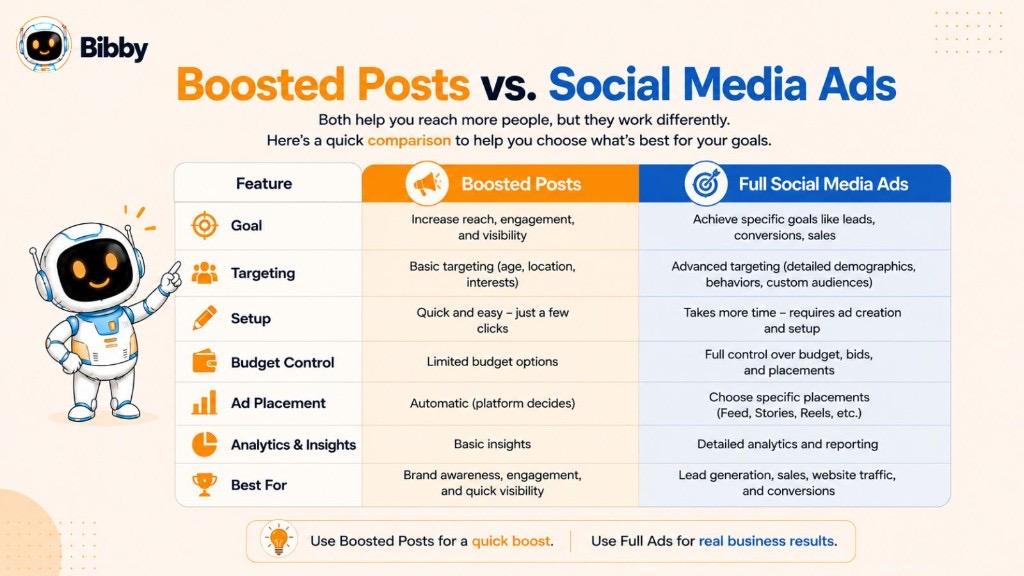
The following comparison highlights the key differences between the two.
| Feature | Boosted Post | Social Media Ad |
|---|---|---|
| Purpose | Increase the reach of an existing post | Achieve specific marketing objectives through a dedicated campaign |
| Setup | Quick and simple | More detailed and customizable |
| Content | Uses an existing published post | Can be created from scratch with custom creative |
| Targeting | Basic audience targeting | Advanced audience segmentation and targeting |
| Campaign Objectives | Limited objectives, such as reach or engagement | Wide range of objectives, including conversions, lead generation, app installs, and sales |
| Budget Control | Simple daily or lifetime budgets | Advanced budgeting, bidding, and campaign optimization |
| Ad Placements | Limited placement controls | Greater control over where ads appear |
| Analytics | Basic performance metrics | Detailed reporting, attribution, and conversion tracking |
| A/B Testing | Usually unavailable | Commonly supported |
| Best For | Promoting high-performing organic posts | Running comprehensive marketing campaigns |
When to Use a Boosted Post
A boosted post is a good choice when you want to:
- Increase the visibility of a post that's already performing well.
- Reach a larger audience with minimal setup.
- Promote announcements, events, or limited-time offers.
- Build brand awareness or increase engagement.
- Launch a campaign quickly without using advanced advertising tools.
When to Use a Social Media Ad
A full advertising campaign is often the better option when you need to:
- Generate leads or online sales.
- Drive conversions on your website or app.
- Retarget previous website visitors.
- Test multiple audiences or creatives.
- Optimize campaigns based on detailed performance data.
- Manage larger advertising budgets with advanced controls.
Which Option Is Right for You?
The right choice depends on your marketing goals. If your objective is simply to expand the reach of an existing post, boosting it is often the fastest and easiest solution. If you're focused on measurable outcomes such as conversions, lead generation, or return on ad spend (ROAS), a full social media advertising campaign typically offers more control and better long-term results.
Many businesses use both approaches together—boosting high-performing organic content to increase visibility while running dedicated ad campaigns to achieve more specific business objectives.
Boosted Post vs. Organic Post
Every boosted post starts as an organic post, but the two differ significantly in how they're distributed, who sees them, and the results they can achieve. Understanding these differences can help you decide when to rely on organic content and when it's worth investing in paid promotion.
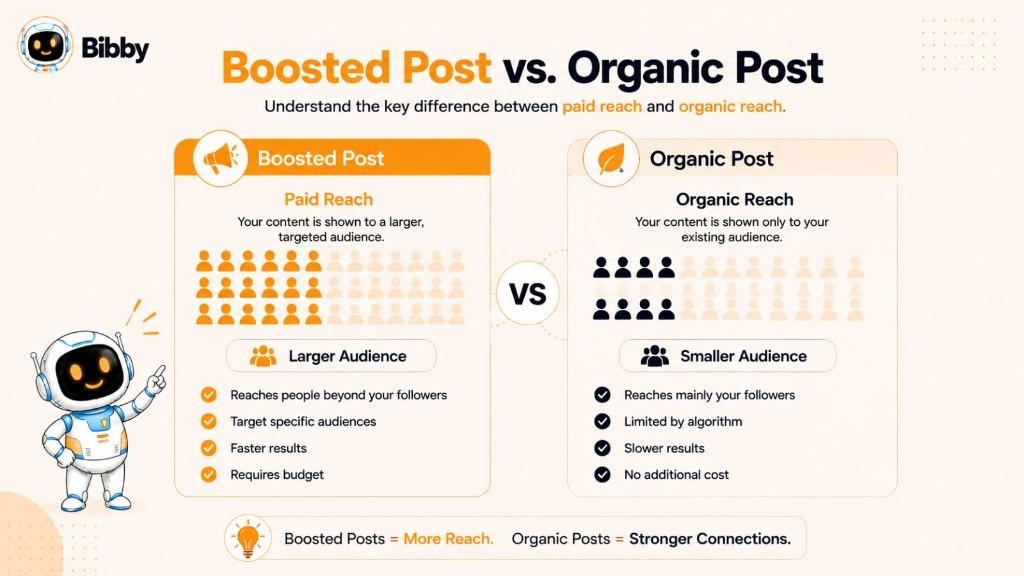
| Feature | Organic Post | Boosted Post |
|---|---|---|
| Cost | Free to publish | Requires a paid advertising budget |
| Reach | Primarily your followers and algorithmic recommendations | Your followers plus a targeted paid audience |
| Audience Targeting | Limited to platform algorithms and existing audience | Choose audiences based on demographics, interests, location, and more |
| Visibility | Depends on organic engagement and platform algorithms | Increased through paid distribution |
| Speed of Results | Can take time to gain traction | Begins reaching more people soon after approval |
| Marketing Goals | Build community, educate, and engage followers | Increase awareness, engagement, traffic, or other supported objectives |
| Performance Insights | Standard post analytics | Additional paid campaign metrics and advertising insights |
When to Use an Organic Post
Organic posts are ideal for building long-term relationships with your audience. They're well suited for:
- Sharing educational or informative content
- Posting company updates and behind-the-scenes content
- Engaging with your community
- Maintaining a consistent posting schedule
- Building trust and brand loyalty over time
When to Boost a Post
Boosting is often the better option when you want to amplify content that already performs well or reach people beyond your existing audience. Consider boosting posts that:
- Receive above-average engagement organically
- Announce a new product or service
- Promote a sale or limited-time offer
- Highlight an important event or webinar
- Drive traffic to your website or landing page
The Best Strategy: Use Both Together
Rather than choosing one over the other, many businesses combine organic and paid strategies. Organic posts help establish credibility, engage existing followers, and maintain a consistent brand presence, while boosted posts extend the reach of your most valuable content to new audiences.
A practical approach is to publish content organically first, monitor its performance, and then boost the posts that generate strong engagement. This allows you to invest your advertising budget in content that has already proven to resonate with your audience. Tools like Bibby make it easier to schedule consistently and identify winners before you spend.
When Should You Boost a Post?
Not every social media post needs paid promotion. In many cases, it's more effective to publish content organically, evaluate its performance, and only boost the posts that align with your marketing goals or show strong engagement. By choosing the right posts to promote, you can make better use of your advertising budget and maximize your return on investment.
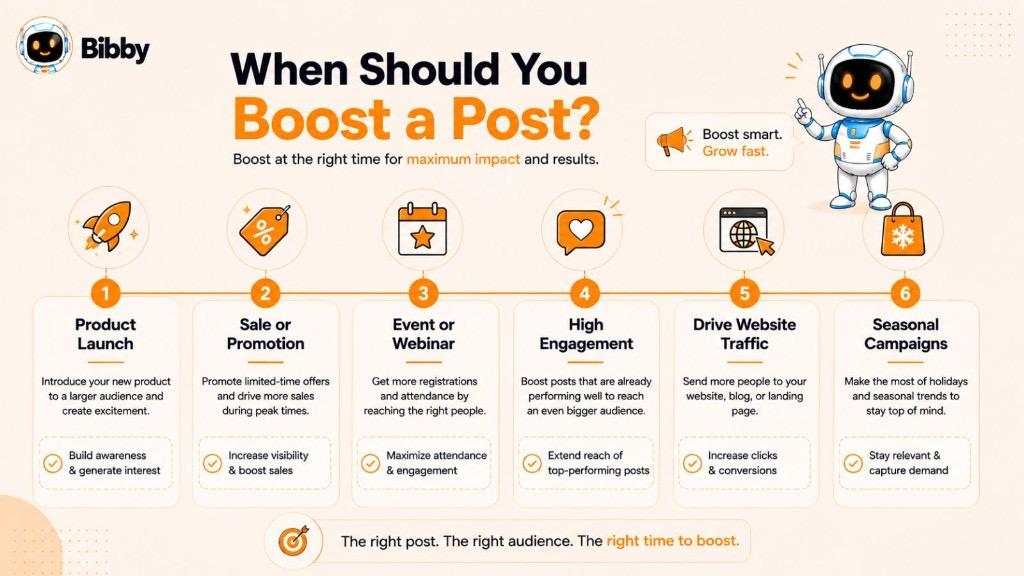
When a Post Is Performing Well Organically
If a post receives more likes, comments, shares, saves, or clicks than your typical content, it's often a strong candidate for boosting. Promoting content that has already resonated with your audience can help extend its reach to similar users.
During Product or Service Launches
Launching a new product or service is an ideal time to boost a post. Paid promotion can help you reach potential customers quickly, build awareness, and generate interest during the most important stage of your launch.
To Promote Limited-Time Offers
Flash sales, seasonal discounts, and special promotions benefit from increased visibility. Boosting these posts helps ensure more people see your offer before it expires.
Before an Event
Whether you're promoting a webinar, conference, workshop, live stream, or local event, boosting your announcement can increase registrations, attendance, and overall awareness.
To Drive Website Traffic
If your post links to a blog article, product page, landing page, or signup form, boosting it can help attract more visitors who match your target audience.
To Increase Brand Awareness
Businesses entering a new market or looking to reach new audiences often use boosted posts to introduce their brand, products, or services to potential customers.
During Seasonal Campaigns
Holiday promotions, back-to-school campaigns, Black Friday sales, and other seasonal marketing initiatives can benefit from boosted posts that increase visibility during periods of high consumer interest.
To Support Important Business Announcements
Major company updates, partnerships, awards, hiring announcements, or milestone celebrations are often worth promoting to ensure they reach a wider audience.
Before Investing in Larger Ad Campaigns
Boosting a post can also serve as a simple way to gauge audience interest before committing to a larger advertising budget. If a boosted post performs well, its insights can help shape future campaigns.
Choose Quality Over Quantity
Boosting every post is rarely the best strategy. Instead, focus your budget on content that delivers clear value, aligns with your business objectives, and has already demonstrated strong organic performance. A smaller number of well-chosen boosted posts often produces better results than promoting every piece of content you publish.
Best Practices for Boosting Posts
A boosted post can increase your reach, but its success depends on the quality of the content and how well you target your audience. Following a few best practices can help you make the most of your advertising budget and achieve better results.
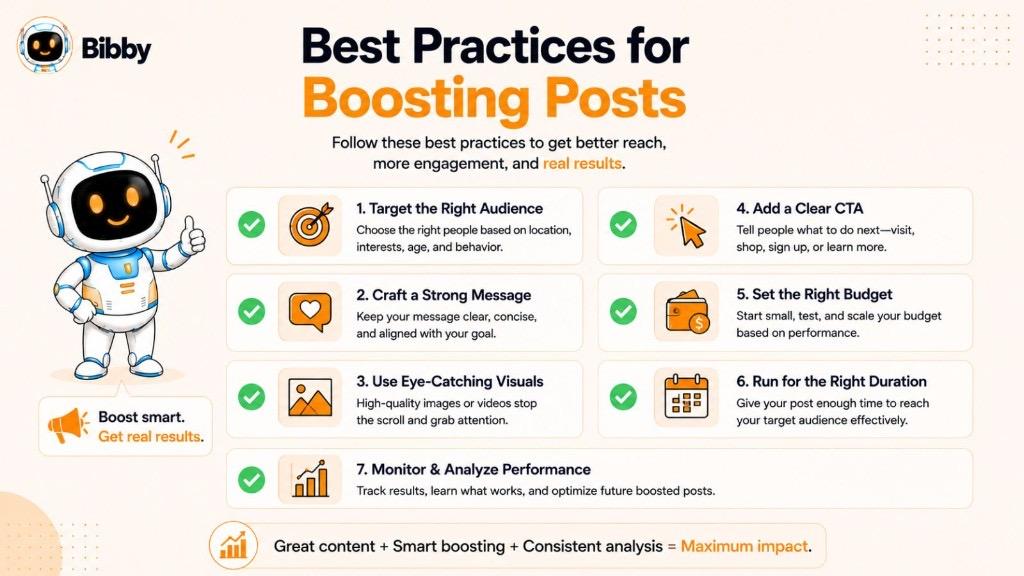
Boost Your Best-Performing Content
Instead of boosting every post, focus on content that has already received strong organic engagement. Posts with high numbers of likes, comments, shares, or saves often have a better chance of performing well when promoted.
Define a Clear Goal
Before boosting a post, decide what you want to achieve. Whether your objective is to increase brand awareness, drive website traffic, generate engagement, or promote an event, having a clear goal will help you choose the right campaign settings.
Target the Right Audience
Reaching the right people is more important than reaching the largest audience. Use the platform's targeting options to define your audience based on factors such as location, age, interests, or demographics that match your ideal customer.
Use High-Quality Visuals
Strong images and videos capture attention as users scroll through their feeds. Choose clear, high-resolution visuals that represent your brand and support the message of your post.
Write an Engaging Caption
Your caption should quickly communicate the value of your content and encourage users to take action. Keep it clear, concise, and relevant to your audience.
Include a Strong Call to Action
Tell people what you'd like them to do next. Depending on your campaign, your call to action might encourage users to visit your website, shop now, sign up, learn more, or contact your business.
Start With a Modest Budget
If you're boosting a post for the first time, begin with a smaller budget to evaluate its performance. Once you identify what's working, you can increase your investment with greater confidence.
Monitor Performance Regularly
Track metrics such as reach, impressions, engagement, click-through rate, and website traffic throughout your campaign. Reviewing performance helps you understand what's working and identify opportunities for improvement.
Stop or Adjust Underperforming Campaigns
Not every boosted post will deliver the results you expect. If a campaign isn't meeting your objectives, consider pausing it, refining your audience, updating your creative, or reallocating your budget to stronger content.
Learn From Your Results
Each boosted post provides valuable insights into what resonates with your audience. Use those learnings to improve future content, targeting strategies, and advertising campaigns over time.
By combining high-quality content with thoughtful audience targeting and ongoing optimization, you can maximize the impact of every boosted post and make your advertising budget go further.
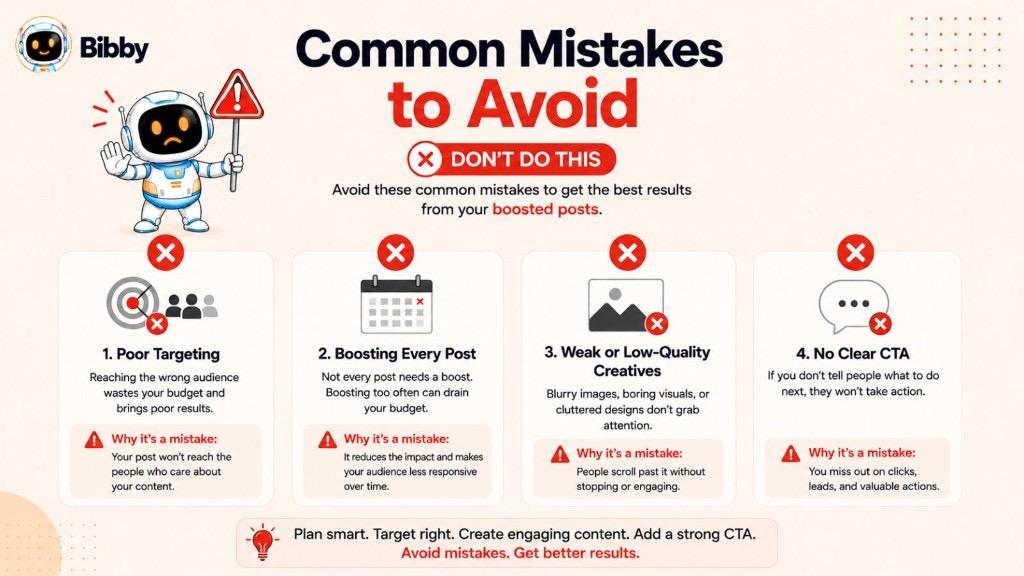
Common Mistakes to Avoid
Boosting a post is simple, but small mistakes can reduce its effectiveness and waste your advertising budget. Avoiding these common pitfalls can help you get better results from your social media promotions.
Boosting Every Post
Not every post deserves paid promotion. Boosting all of your content can quickly consume your budget without delivering meaningful results. Instead, focus on posts that already perform well organically or support an important business objective.
Choosing the Wrong Audience
Even the best content can underperform if it's shown to the wrong people. Take time to define an audience that matches your ideal customer based on relevant demographics, interests, behaviors, or location.
Ignoring Campaign Goals
Boosting a post without a clear objective makes it difficult to measure success. Before launching a campaign, decide whether your goal is to increase brand awareness, drive website traffic, generate engagement, or achieve another measurable outcome.
Using Low-Quality Images or Videos
Social media is highly visual, and poor-quality creative can discourage users from engaging with your content. Use high-resolution images and well-produced videos that reflect your brand and capture attention.
Writing Weak Captions
A compelling visual should be supported by an equally strong caption. Avoid vague messaging and instead communicate your value clearly while encouraging users to take the next step.
Forgetting a Call to Action
If you don't tell people what to do, many won't take action. Include a clear call to action, such as Learn More, Shop Now, Sign Up, or Visit Our Website, to guide users toward your desired outcome.
Setting Unrealistic Expectations
A boosted post can increase visibility, but it isn't guaranteed to generate sales or viral growth. Results depend on factors such as your audience, budget, creative quality, competition, and campaign objective.
Never Reviewing Performance
Launching a boosted post is only the beginning. Monitor your analytics to understand how the campaign is performing and identify opportunities to improve future promotions.
Running Campaigns for Too Long
Continuing to spend on a campaign that has stopped performing well can reduce your return on investment. Review campaign performance regularly and end or adjust promotions when results begin to decline.
Overlooking Mobile Users
Most social media users browse on mobile devices. Ensure your images, videos, landing pages, and calls to action are optimized for smaller screens to provide a smooth user experience.
Failing to Test Different Approaches
Testing different visuals, captions, audiences, and calls to action can reveal what resonates most with your audience. Even small changes can lead to significant improvements in campaign performance over time.
Avoiding these common mistakes can help you use your advertising budget more effectively and improve the overall performance of your boosted posts.
How AI Improves Boosted Posts
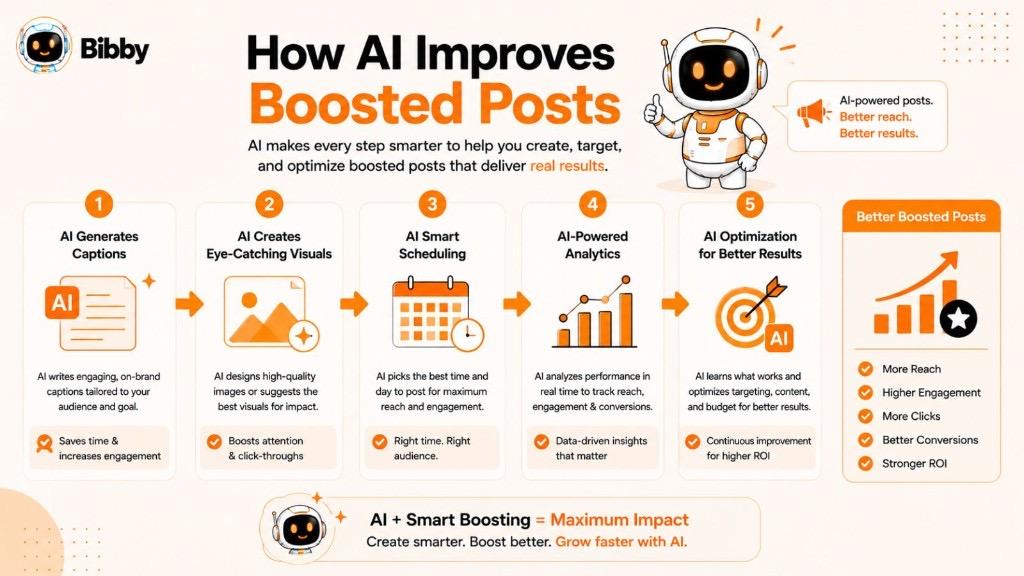
Artificial intelligence (AI) is changing how businesses create, optimize, and manage social media content. While AI doesn't replace a well-defined marketing strategy, it can help improve the quality of your posts before you invest money in boosting them, increasing the likelihood of better engagement and stronger campaign performance.
Create More Engaging Content
AI writing tools can generate captions, headlines, and calls to action that are tailored to your audience and marketing goals. This helps you publish posts that are more likely to capture attention and encourage interaction.
Generate High-Quality Visuals
Many AI-powered tools can create or enhance images for social media, making it easier to produce eye-catching content without extensive design experience. Strong visuals can improve both organic engagement and the effectiveness of boosted posts.
Optimize Posting Times
Publishing at the right time can improve a post's initial performance. AI can analyze audience activity and recommend or automate posting at times when your followers are most likely to engage, helping identify content that may be worth boosting later. Try Bibby's Best Time to Post Tool for personalized windows.
Maintain Consistent Brand Messaging
AI can help ensure your captions, visuals, and messaging remain consistent across campaigns, strengthening your brand identity and creating a more recognizable presence on social media.
Speed Up Content Creation
Instead of spending hours brainstorming ideas, writing captions, or designing creative assets, AI can automate repetitive tasks and accelerate your content creation workflow. This allows marketers to focus more on strategy and campaign planning.
Analyze Content Performance
AI-powered analytics can identify patterns in your social media performance, helping you understand which types of posts generate the most engagement, clicks, or conversions. These insights can guide your decisions about which posts are worth promoting.
Support Smarter Marketing Decisions
By combining content generation, scheduling, analytics, and performance insights, AI helps businesses make more informed decisions throughout the content lifecycle. Rather than boosting posts based on guesswork, marketers can use data to prioritize content with the greatest potential.
As AI continues to evolve, it is becoming an essential tool for businesses looking to create higher-quality content, improve efficiency, and maximize the impact of both organic and paid social media efforts.
How Bibby Helps You Create Better Posts Before Boosting
The success of a boosted post depends largely on the quality of the content you're promoting. If the original post isn't engaging, increasing its reach with paid promotion is unlikely to deliver the results you're looking for. That's why creating strong content first is essential.
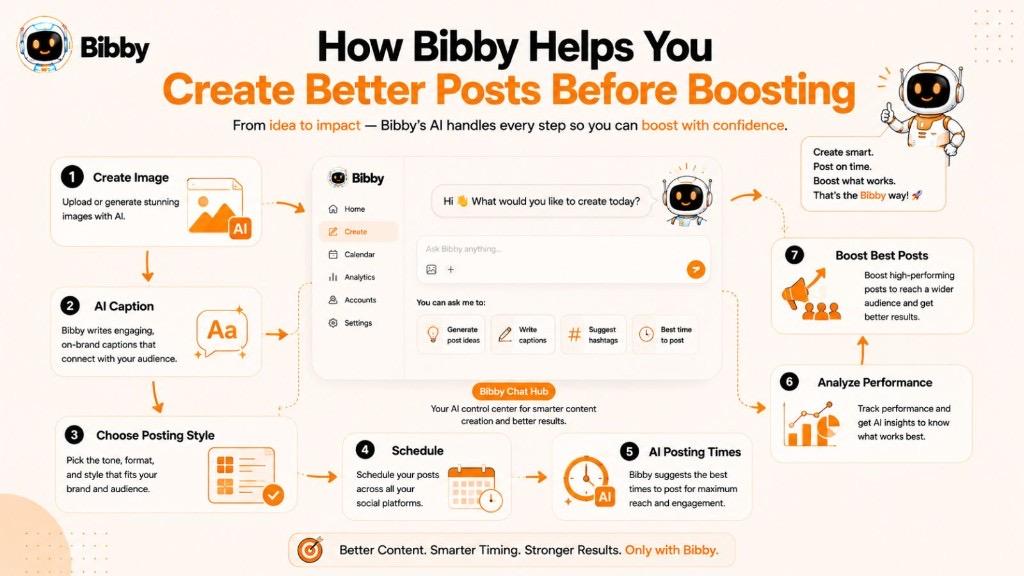
Bibby is an AI-powered social media scheduling and automation platform that helps businesses create, manage, and publish high-quality social media content from a single workspace. Instead of juggling multiple tools for content creation, scheduling, and publishing, you can manage your entire social media workflow in one place.
With Bibby, you can:
- Generate AI-powered captions tailored to your brand, audience, and posting style.
- Create or upload images for your social media posts.
- Publish multiple content formats, including images, videos, carousels, and stories.
- Schedule posts across multiple platforms, including Facebook, Instagram, LinkedIn, YouTube, and TikTok.
- Automatically publish at AI-optimized times to improve the chances of reaching your audience when they're most active.
- Manage your content through a conversational AI chat interface, making social media management as simple as describing what you want to accomplish.
You can even use the chat interface to:
- Create a brand kit
- Build marketing campaigns
- Generate social media posts
- Regenerate captions
- Organize and manage your publishing workflow
A practical workflow is to create and schedule your content with Bibby, monitor which posts perform best organically, and then boost the strongest performers using your preferred social media platform. This approach helps you invest your advertising budget in content that has already demonstrated its ability to engage your audience.
By combining AI-powered content creation with intelligent scheduling and automation, Bibby helps you build a consistent social media presence and create posts that are better positioned for both organic success and paid promotion. Start a free trial to publish stronger posts—then boost the ones that win.
Key Takeaways
- A boosted post turns an existing organic post into paid distribution so more of the right people see it.
- Boosting is simpler than a full social media ad, but offers fewer targeting, testing, and reporting controls.
- Start with strong organic content—then boost winners, not every post.
- Pair clear goals, the right audience, quality creative, and a strong CTA for better results.
- Use organic + paid together: schedule consistently, measure performance, and invest in what works.
Continue learning with related dictionary entries on Paid Social, Organic Reach, Paid Reach, Audience Targeting, Engagement Rate, CPM, and CPC. Create better posts first with Bibby, then boost the ones that already earn attention.