
For businesses looking to build brand awareness, generate leads, and establish industry authority, LinkedIn remains one of the most powerful social media platforms available.
But one question continues to challenge marketers and business owners alike: how often should you actually post on LinkedIn? Post too infrequently and your audience may forget about you. Post too often and you risk overwhelming followers or sacrificing content quality. The reality is that successful LinkedIn growth depends on finding the right balance between frequency, consistency, and timing.
In this article, you will learn:
- The ideal LinkedIn posting frequency for most businesses
- How posting frequency impacts reach, engagement, and growth
- How AI scheduling tools for LinkedIn optimize posting times automatically
While there's no universal posting schedule that works for every company, understanding LinkedIn's algorithm and audience behavior can help you develop a strategy that maximizes visibility without creating unnecessary workload.
Why LinkedIn Posting Frequency Matters More Than Ever
Many businesses focus heavily on what they post on LinkedIn but overlook an equally important factor: how often they post. Even high-quality content can struggle to gain traction when published inconsistently.
The LinkedIn Algorithm Rewards Consistency
LinkedIn's algorithm is designed to keep users engaged by showing them relevant and timely content. When a company regularly publishes valuable posts, LinkedIn receives signals that the account is active and consistently contributing to conversations on the platform.
This doesn't mean posting more automatically leads to greater reach. However, businesses that maintain a steady publishing schedule create more opportunities for engagement, which can increase visibility across their network over time.
The Cost of Posting Too Infrequently
Many businesses post only when they have a major announcement, product launch, or company update. While these posts can perform well, long gaps between posts often lead to:
- Reduced brand visibility
- Slower audience growth
- Fewer opportunities to generate leads
- Lower engagement over time
If your audience only sees content from your business once every few weeks, it's difficult to stay top-of-mind in a crowded professional landscape.
The Risks of Posting Too Frequently
On the other hand, posting multiple times per day without a clear strategy can create challenges of its own.
Common issues include:
- Declining engagement per post
- Audience fatigue
- Lower content quality
- Increased pressure on content creation teams
The goal isn't simply to publish more content—it's to publish consistently while maintaining quality and relevance.
Consistency Beats Occasional Bursts
Businesses often experience stronger long-term results from posting three to five times per week consistently than from publishing heavily for a few weeks and then disappearing for months.
Consistency helps build audience expectations, strengthens brand recognition, and gives LinkedIn more opportunities to distribute your content to relevant users.
Before deciding how often your business should post, it's important to understand what current data and industry benchmarks actually recommend.
Also read: How to Automate Your LinkedIn Posting Strategy for B2B Growth
What LinkedIn's Data Suggests About Optimal Posting Frequency
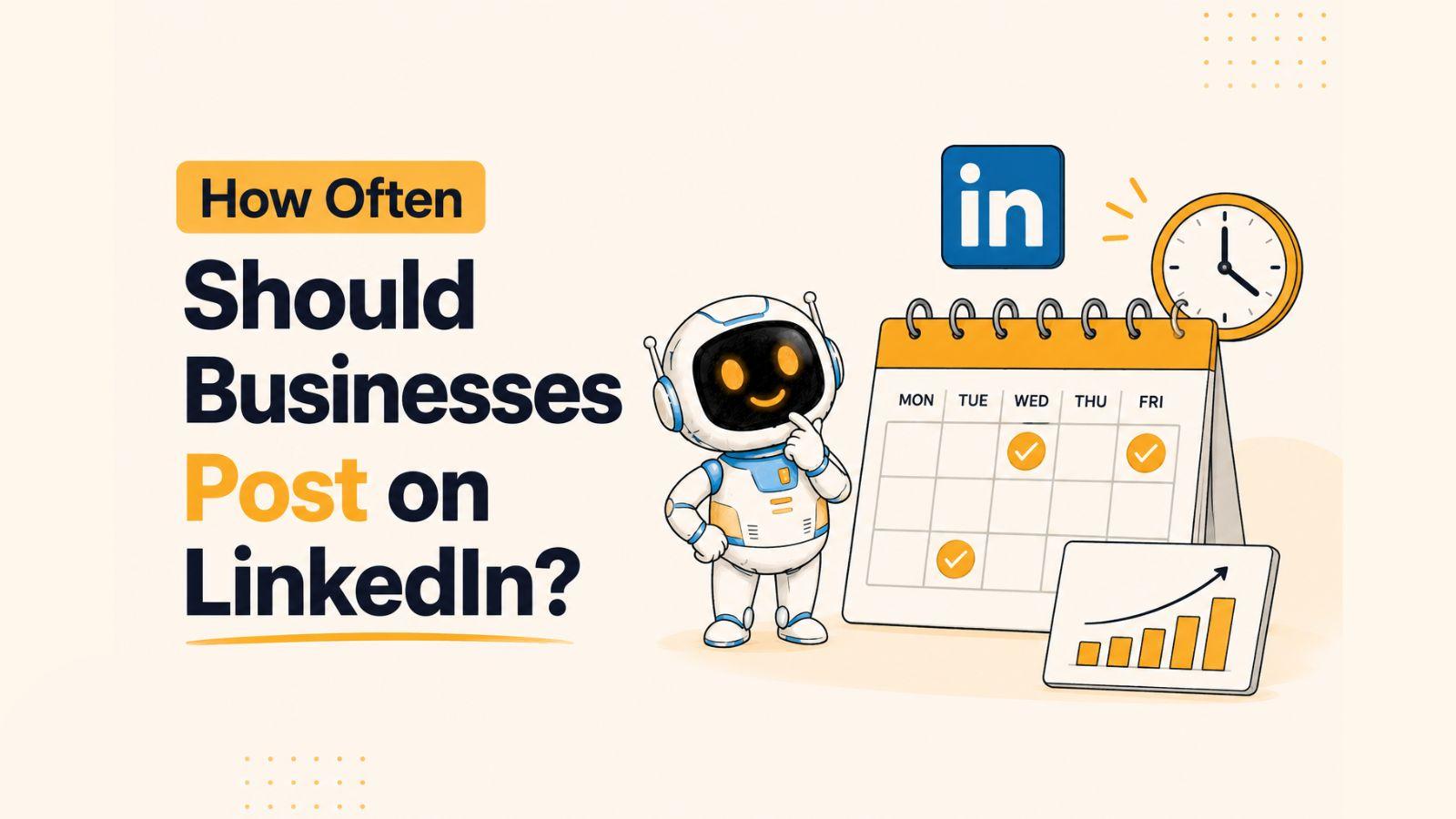
If you're looking for a simple answer to how often businesses should post on LinkedIn, most companies will see the best results by publishing 3–5 times per week.
This frequency provides enough content to stay visible in followers' feeds without overwhelming audiences or stretching content resources too thin. More importantly, it creates consistency—one of the strongest predictors of long-term LinkedIn growth.
The Recommended Range for Most Businesses
For small and mid-sized businesses, posting three to five times weekly strikes an effective balance between quality and visibility.
At this frequency, businesses can:
- Maintain a regular presence in their audience's feeds
- Generate more engagement opportunities
- Test different content formats and topics
- Build momentum without sacrificing content quality
Rather than concentrating all posts into a single day, it's generally more effective to spread content throughout the week to maximize reach and engagement opportunities.
Daily Posting: When It Makes Sense
Some businesses benefit from posting every weekday—or even daily.
This approach is often successful for:
- Founder-led brands building personal authority
- Media and publishing companies
- Large organizations with dedicated marketing teams
- Businesses producing high volumes of educational content
However, daily posting only works when content quality remains consistently high. Publishing more frequently with lower-quality content often produces weaker results than posting less often with stronger content.
Is Once Per Week Enough?
Posting once per week is certainly better than not posting at all, but it can make growth significantly slower.
With only four or five posts per month, businesses have fewer opportunities to:
- Reach new audiences
- Generate engagement
- Test content performance
- Build familiarity with prospects
Companies that post infrequently often find themselves starting from scratch each time they publish because they never establish consistent visibility.
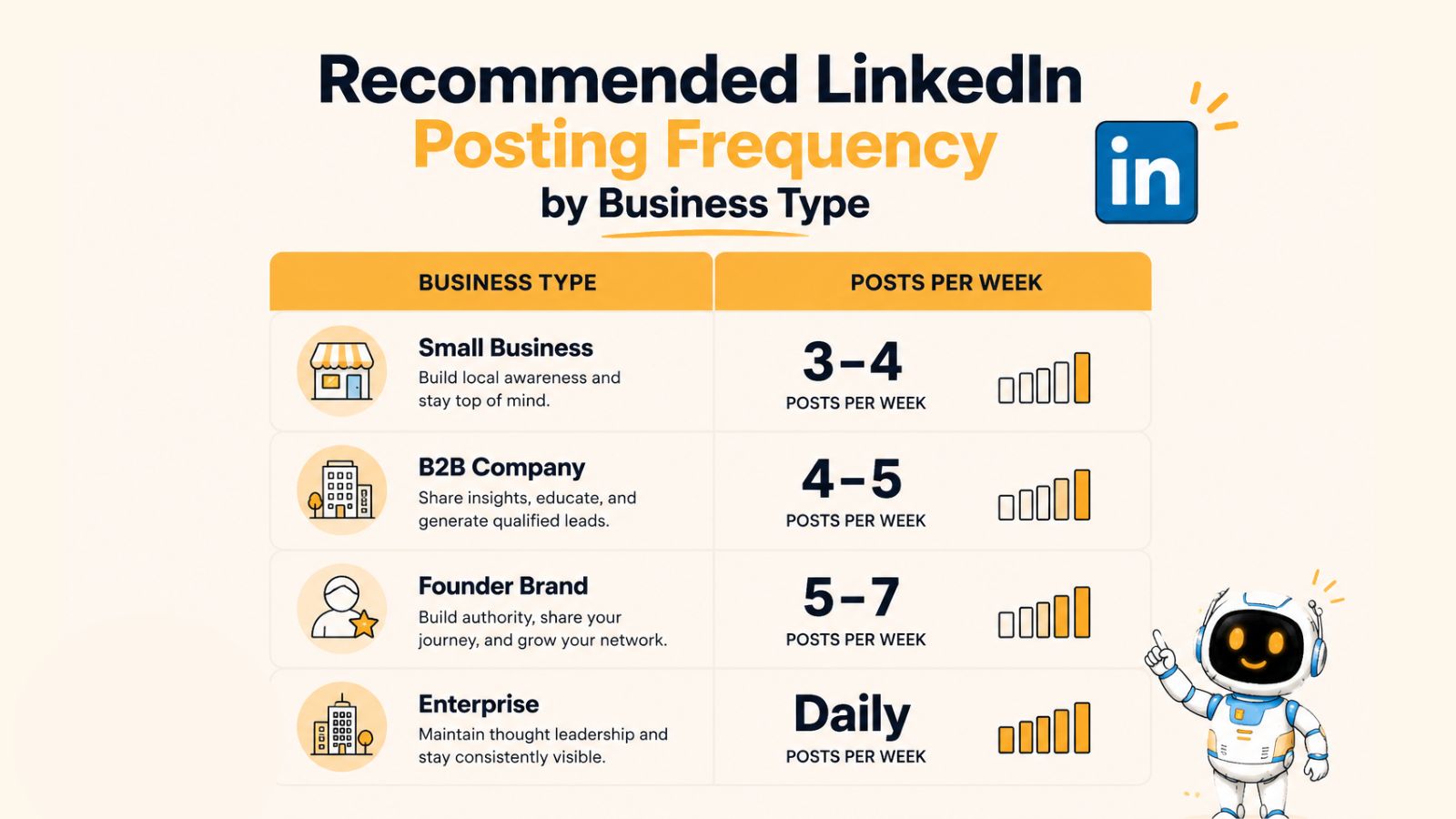
Recommended LinkedIn Posting Frequency by Business Type
| Business Type | Recommended Frequency |
|---|---|
| Small Business | 3–4 posts per week |
| B2B Company | 4–5 posts per week |
| Founder Personal Brand | 5–7 posts per week |
| Enterprise Organization | Daily or near-daily |
| Recruitment-Focused Brand | 4–7 posts per week |
These recommendations should be viewed as starting points rather than fixed rules. The ideal frequency ultimately depends on your audience, resources, and business objectives.
Frequency Alone Doesn't Determine Success
One mistake many businesses make is focusing exclusively on how often they post while ignoring when they post.
A perfectly crafted LinkedIn post can underperform if it's published when your audience isn't active. Conversely, a good post published at the right time may generate significantly more visibility and engagement.
This is why many businesses now combine consistent posting schedules with AI-powered scheduling tools that automatically publish content when their audience is most likely to engage. Instead of relying on generic "best times to post" studies, these tools help businesses maximize the impact of every post.
Also read: Why Every Small Business Should Use a Social Media Scheduling Tool?
Factors That Should Influence Your LinkedIn Posting Schedule
While posting three to five times per week is a strong starting point for most businesses, the ideal LinkedIn posting frequency isn't the same for everyone. Several factors influence how often you should publish content and what schedule will produce the best results.
Understanding these variables can help you build a strategy that's both effective and sustainable.
Audience Behavior
The most important factor is your audience.
Different industries, job roles, and geographic regions use LinkedIn differently. A software company's audience may be highly active throughout the workweek, while a manufacturing audience might engage less frequently but spend more time consuming in-depth content.
Pay attention to:
- Which days generate the most engagement
- When your audience is most active
- Which content formats perform best
- How engagement changes over time
The more you understand audience behavior, the easier it becomes to determine whether increasing or decreasing your posting frequency is likely to improve results.
Content Quality vs. Quantity
Many businesses assume more posts automatically lead to more reach. In reality, quality remains one of the strongest drivers of LinkedIn performance.
A thoughtful, educational post that generates meaningful discussion will often outperform several low-effort posts published solely to maintain a schedule.
Before increasing posting frequency, ask:
- Can we consistently create valuable content?
- Are we providing useful insights?
- Does each post serve a clear purpose?
If quality begins to decline, it's usually better to reduce posting frequency rather than publish content that fails to engage your audience.
Available Resources
Your ideal posting schedule should reflect your team's capacity.
Businesses with dedicated marketing teams can often support daily posting schedules. Smaller companies, however, may achieve better results by focusing on fewer, higher-quality posts.
Consider:
- Content creation resources
- Team size
- Budget availability
- Access to subject matter experts
- Time available for engagement and community management
A sustainable schedule is almost always more effective than an ambitious schedule that becomes difficult to maintain.
Business Goals
Different goals often require different posting frequencies.
Brand Awareness
Businesses focused on visibility typically benefit from posting more frequently to maximize reach and impressions.
Lead Generation
Companies using LinkedIn to generate leads should prioritize educational and trust-building content published consistently throughout the week.
Recruiting
Organizations actively hiring may need more frequent posting to showcase company culture, employee experiences, and open opportunities.
Thought Leadership
Founders and executives building personal brands often see strong results from publishing several times per week and actively engaging with their networks.
Industry Competition
Your competitive landscape also matters.
In highly competitive industries, publishing more consistently can help your business remain visible while competitors are actively creating content. In less competitive niches, a smaller volume of high-quality content may be enough to establish authority.
Consistency Is More Important Than Perfection
Many businesses spend too much time trying to determine the "perfect" posting frequency.
In reality, the best schedule is one you can maintain consistently over the long term.
Whether you publish three times per week or every weekday, audiences respond more positively to predictable, reliable content than sporadic bursts of activity followed by long periods of silence.
Once you've determined how often to post, the next challenge is deciding exactly when your content should be published for maximum visibility and engagement.
Also read: How to Stay Consistent on Social Media?
The Best Times to Post on LinkedIn
Posting frequency is important, but timing can have an equally significant impact on your results.
Even the most valuable content can struggle to gain traction if it's published when your audience isn't online. That's why successful LinkedIn strategies focus not only on how often content is posted but also on when it's published.
Why Timing Matters
When a post goes live, LinkedIn initially shows it to a small portion of your audience. The platform then evaluates early engagement signals such as:
- Reactions
- Comments
- Shares
- Click-throughs
- Time spent viewing the post
Strong engagement during the first few hours can help LinkedIn distribute the content to a larger audience. If engagement is weak, the platform may limit further reach.
This makes timing particularly important because publishing when your audience is active increases the likelihood of generating those valuable early interactions.
Common High-Performing Time Windows
While every audience is different, several time periods consistently perform well for many businesses.
Early Morning (7 AM – 9 AM)
Many professionals check LinkedIn before beginning their workday. Educational content, industry news, and thought leadership posts often perform well during these hours.
Mid-Morning (10 AM – 12 PM)
This period frequently sees strong engagement as professionals settle into their day and take short breaks between meetings and tasks.
Lunch Hours (12 PM – 2 PM)
LinkedIn usage often increases during lunch breaks, making this another popular posting window.
Mid-Week Advantage
For many businesses, Tuesday, Wednesday, and Thursday tend to generate the strongest engagement levels. Mondays are often dominated by planning and meetings, while Fridays can experience lower activity as professionals prepare for the weekend.
Why Generic "Best Time to Post" Studies Have Limits
A quick online search will reveal countless articles claiming to know the perfect time to post on LinkedIn.
The problem is that these studies are based on broad averages.
Your audience may differ significantly based on:
- Industry
- Location
- Job title
- Company size
- Time zone
- Professional habits
For example, a SaaS company targeting executives in North America may see completely different engagement patterns than a recruitment agency serving healthcare professionals in Europe.
This is why blindly following generic posting schedules often produces inconsistent results.
The Shift Toward AI-Optimized Posting
Instead of relying on assumptions, many businesses are now using AI-powered scheduling tools to identify when their audiences are most likely to engage.
These tools analyze performance patterns over time and automatically publish content during optimal engagement windows. As audience behavior changes, posting schedules can adapt accordingly without requiring constant manual adjustments.
This approach helps businesses maximize visibility while reducing the guesswork involved in social media management.
How Bibby Helps Businesses Publish at the Right Time
For many teams, maintaining a consistent posting schedule across multiple platforms becomes difficult as content demands grow.
Bibby helps solve this challenge by combining social media automation with AI-powered scheduling. Rather than manually selecting posting times, businesses can schedule content and allow Bibby to publish when engagement opportunities are strongest.
In addition to LinkedIn, Bibby supports:
- YouTube
- TikTok
This allows businesses to manage their entire social media publishing workflow from a single platform while ensuring content is distributed at AI-optimized times.
The result is a more consistent publishing schedule, improved efficiency, and a greater likelihood that content reaches audiences when they're most active.
Of course, timing alone won't drive results. To succeed on LinkedIn consistently, businesses also need a repeatable content plan that makes publishing several times per week realistic and sustainable.
Also read: How to Grow on Social Media With AI?
How to Build a Sustainable LinkedIn Content Calendar
One of the biggest reasons businesses struggle to maintain a consistent LinkedIn presence is the lack of a structured content plan.
Without a content calendar, posting often becomes reactive. Teams scramble for ideas, content gets delayed, and weeks can pass without publishing anything meaningful. A simple, repeatable content calendar eliminates this problem by creating a predictable system for content creation and distribution.
Focus on Content Pillars Instead of Random Posts
Rather than deciding what to post each day, successful businesses organize their content around a few core themes.
Common LinkedIn content pillars include:
- Industry insights and trends
- Educational content
- Customer success stories
- Company news and updates
- Leadership and thought leadership content
- Team culture and recruiting content
Using content pillars makes it easier to generate ideas and ensures your content remains relevant to your audience and business goals.
The 80/20 Rule for LinkedIn Content
Many businesses make the mistake of treating LinkedIn as a promotional channel.
In reality, audiences engage most with content that provides value. A useful guideline is the 80/20 rule:
- 80% educational, informative, or entertaining content
- 20% promotional content
The majority of your posts should help your audience solve problems, learn something new, or gain industry insights. Promotional content becomes much more effective when it's supported by a consistent stream of value-driven posts.
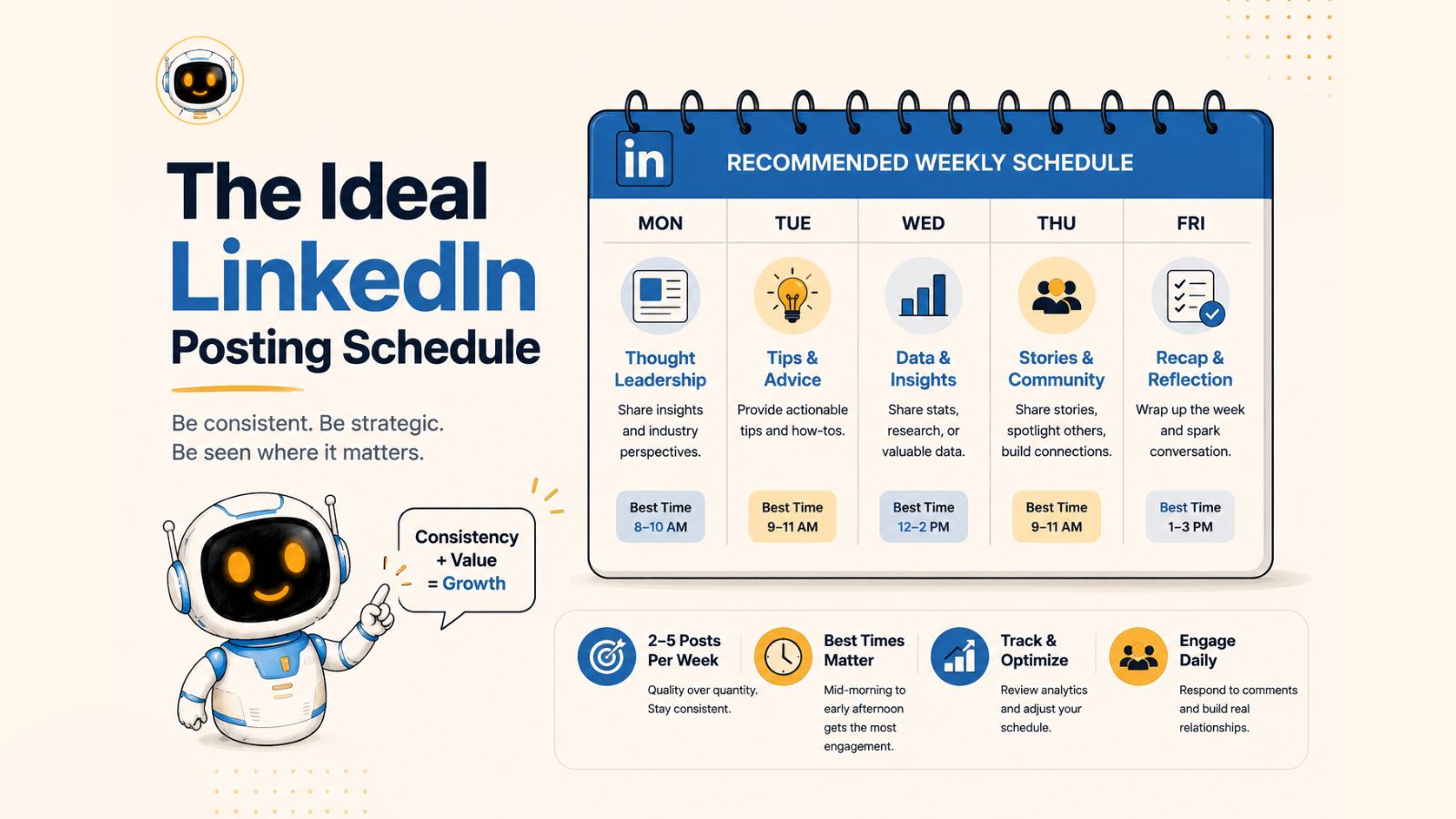
A Sample Weekly LinkedIn Posting Schedule
For businesses aiming to publish five times per week, a simple schedule might look like this:
| Day | Content Type |
|---|---|
| Monday | Industry trend or insight |
| Tuesday | Educational tip or how-to content |
| Wednesday | Customer success story or case study |
| Thursday | Thought leadership post |
| Friday | Team culture or behind-the-scenes content |
This framework creates variety while ensuring your audience receives a balanced mix of content throughout the week.
Batch Content Creation to Save Time
Creating content one post at a time is often inefficient.
Many high-performing businesses create content in batches by:
- Brainstorming ideas for the month ahead
- Writing multiple posts in a single session
- Preparing graphics and media in advance
- Scheduling content weeks ahead of publication
Batching reduces daily workload and helps maintain consistency even during busy periods.
Repurpose High-Performing Content
You don't need to reinvent the wheel for every LinkedIn post.
A single piece of content can often be transformed into multiple posts:
- Turn a blog post into several LinkedIn updates
- Convert webinar insights into short thought leadership posts
- Extract customer success stories into case studies
- Repackage statistics into visual content
Repurposing allows businesses to increase posting frequency without dramatically increasing content creation effort.
Use Scheduling Tools to Maintain Consistency
The most effective content calendar is one that runs even when your team is busy.
Scheduling tools allow businesses to prepare content in advance and automatically publish posts according to a predefined schedule. This eliminates the need to manually publish every day and helps maintain consistency over time.
For businesses managing multiple social channels, scheduling becomes even more valuable. Instead of logging into LinkedIn, Facebook, Instagram, TikTok, and YouTube separately, content can be planned, scheduled, and distributed from a centralized workflow.
Once a content calendar is in place, the next challenge becomes maintaining consistency at scale—which is where automation can significantly improve both efficiency and results.
Also read: How Social Media Automation Improves Content Quality Over Time
Why Automation Helps Businesses Stay Consistent
Most businesses don't struggle with understanding the importance of LinkedIn. They struggle with consistency.
Marketing teams are often balancing multiple priorities, content creators have limited time, and business owners frequently push social media down the priority list when other responsibilities demand attention. As a result, posting schedules become inconsistent, and growth opportunities are missed.
This is where automation can make a significant difference.
The Biggest Challenge Isn't Creating Content—It's Publishing Consistently
Many businesses start with good intentions.
They create a content strategy, publish regularly for a few weeks, and begin seeing positive results. Then workloads increase, schedules become busy, and posting frequency gradually declines.
The problem isn't always a lack of content. Often, it's the operational challenge of ensuring content gets published consistently at the right time.
Automation helps remove this bottleneck by turning content publishing into a repeatable process rather than a daily task.
How Scheduling Tools Improve Results
Scheduling tools provide several advantages beyond simple convenience.
Consistent Publishing
Content can be scheduled days, weeks, or even months in advance, ensuring your audience continues to see regular updates regardless of internal workloads.
Better Content Planning
When posts are scheduled ahead of time, businesses can maintain a balanced content mix instead of publishing whatever happens to be available that day.
Reduced Manual Work
Teams spend less time logging into multiple platforms and more time creating valuable content.
Improved Team Collaboration
Marketing teams can review, approve, and organize content before it goes live, reducing last-minute errors and inconsistencies.
Why AI-Powered Scheduling Is Becoming the New Standard
Traditional scheduling tools solve part of the problem by automating publishing.
However, many businesses still face another challenge: determining the best time to post.
Audience behavior changes constantly. The optimal posting time for your audience today may not be the same six months from now.
AI-powered scheduling helps address this by analyzing engagement patterns and identifying opportunities to publish content when audiences are most likely to interact.
Instead of relying on generic posting recommendations, businesses can use data-driven insights to improve visibility and engagement.
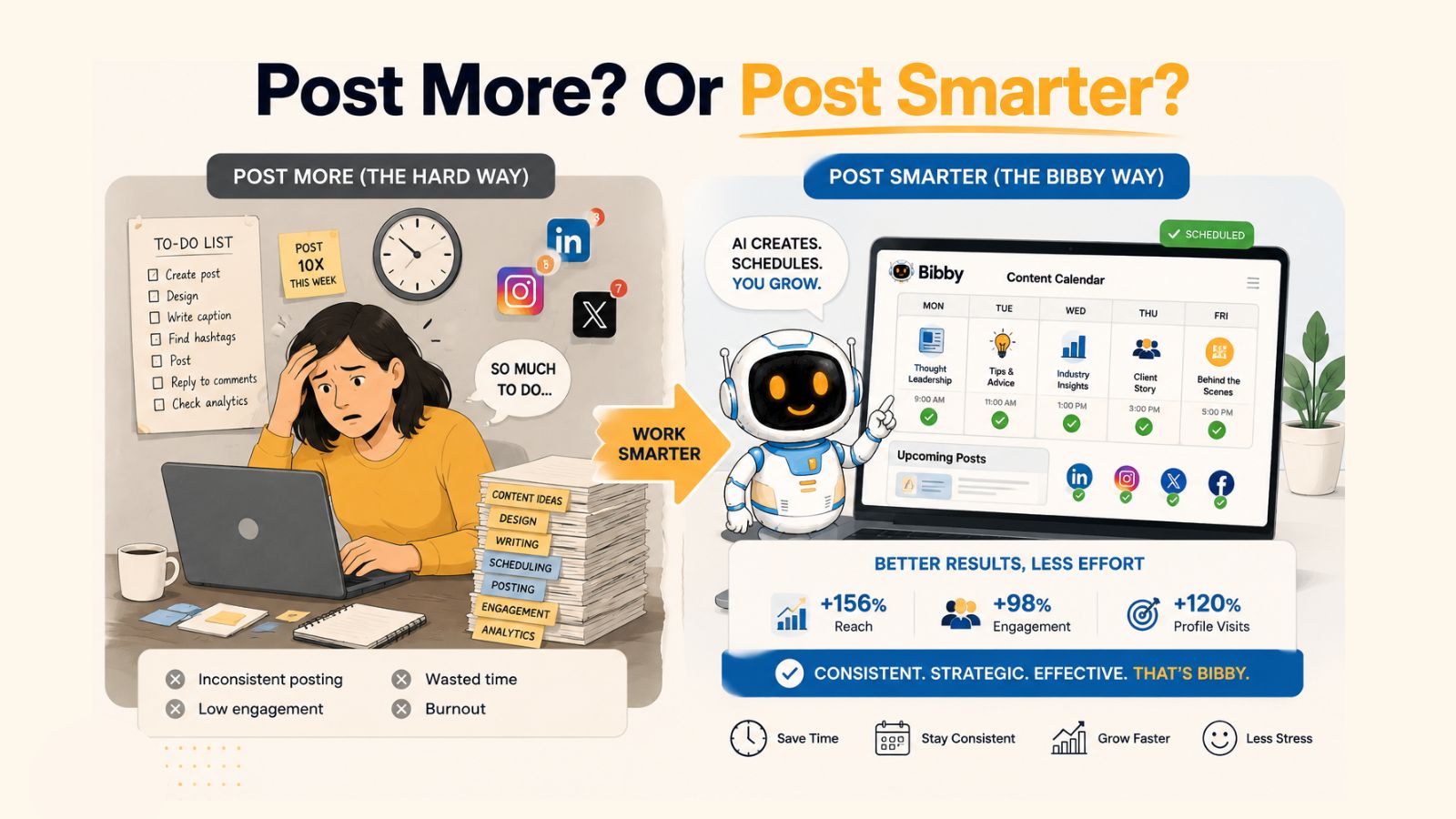
How Bibby Helps Businesses Post Smarter
Bibby is designed to help businesses maintain a consistent social media presence without increasing manual workload.
Using AI-powered automation, Bibby can schedule and publish content at optimized posting times, helping businesses maximize the impact of every post.
Key benefits include:
- AI-optimized publishing schedules
- Automated content posting
- Consistent social media execution
- Reduced manual management effort
- Centralized scheduling across multiple platforms
Beyond LinkedIn, Bibby supports:
- TikTok
- YouTube
This allows businesses to manage their content strategy from a single platform while ensuring posts are published when audiences are most likely to engage.
Automation Doesn't Replace Strategy
It's important to remember that automation is a force multiplier, not a substitute for quality content.
The businesses that achieve the best results combine:
- Valuable content
- Consistent publishing
- Strategic timing
- Ongoing performance analysis
Automation simply makes it easier to execute those fundamentals reliably and at scale.
With the right combination of content quality, posting frequency, and AI-powered scheduling, businesses can build a sustainable LinkedIn presence that continues generating visibility, engagement, and opportunities over time.
The final step is learning how to recognize whether your current posting frequency is helping or hurting your performance.
Also read: How to Automate Social Media for Small Business (Without Hiring Anyone)
Signs You're Posting Too Much or Too Little on LinkedIn
There is no universal posting schedule that guarantees success on LinkedIn.
While industry benchmarks provide useful starting points, the ideal posting frequency ultimately depends on how your audience responds. The key is monitoring performance and adjusting your strategy based on real engagement data rather than assumptions.
Here are the most common signs that your current posting frequency may need adjustment.
Indicators You're Posting Too Little
Many businesses underestimate how much consistency matters on LinkedIn.
If you're only publishing occasionally, you may notice:
Declining Reach and Impressions
When long periods pass between posts, LinkedIn has fewer opportunities to distribute your content. This often results in reduced visibility over time.
Slow Follower Growth
A limited publishing schedule gives potential followers fewer opportunities to discover and engage with your content.
Inconsistent Engagement
Businesses that post sporadically often experience unpredictable performance because audiences never develop expectations around their content.
Difficulty Building Brand Recognition
Regular exposure is an important part of building familiarity and trust. Posting infrequently can make it difficult to stay top-of-mind with prospects and customers.
Indicators You're Posting Too Much
While consistency is important, more isn't always better.
You may be posting too frequently if you notice:
Falling Engagement Per Post
If impressions continue to rise but engagement rates steadily decline, your audience may be experiencing content fatigue.
Declining Content Quality
A demanding publishing schedule can sometimes lead to rushed content that provides less value.
Reduced Team Capacity
If your team is struggling to maintain quality standards or spending excessive time producing content, your schedule may be too aggressive.
Audience Feedback Signals
Pay attention to comments, engagement trends, and overall audience behavior. If interactions become less meaningful despite increased posting frequency, it may be time to reevaluate your approach.
How to Find Your Ideal Posting Frequency
The best LinkedIn posting schedule is one supported by performance data.
Start with a consistent baseline—such as three to five posts per week—and monitor metrics including:
- Impressions
- Engagement rate
- Comments
- Follower growth
- Click-through rates
- Lead generation results
After several weeks, evaluate performance and make small adjustments rather than dramatic changes.
For example:
- If engagement remains strong, consider increasing frequency slightly.
- If engagement drops while posting volume increases, reduce frequency and focus on content quality.
- If reach remains stagnant, experiment with both posting frequency and timing.
Track Timing Alongside Frequency
Many businesses mistakenly assume frequency is the issue when timing is actually the problem.
A post published when your audience is inactive may underperform regardless of quality. This is why monitoring publishing times is just as important as monitoring publishing volume.
AI-powered scheduling tools can help identify patterns that would be difficult to spot manually, ensuring content is published when engagement opportunities are strongest.
The Most Effective LinkedIn Strategy
Businesses that consistently perform well on LinkedIn tend to follow the same formula:
- Publish valuable content
- Maintain a predictable schedule
- Optimize posting times
- Analyze performance regularly
- Adjust based on audience behavior
Rather than chasing a perfect posting frequency, focus on creating a sustainable system that delivers value consistently.
For most businesses, that means posting three to five times per week, monitoring results, and using tools that help maintain consistency without increasing workload.
Frequently Asked Questions About LinkedIn Posting Frequency
Is posting every day on LinkedIn too much?
Not necessarily.
Daily posting can be highly effective for businesses, founders, and thought leaders who consistently create valuable content. However, posting every day only makes sense if quality remains high. For many organizations, publishing three to five times per week delivers similar results with less pressure on content creation resources.
Is posting once a week enough on LinkedIn?
Posting once per week is better than remaining inactive, but it's generally not enough to maximize growth.
With only a few posts per month, businesses have fewer opportunities to reach new audiences, generate engagement, and build brand recognition. Most companies will see stronger results by posting multiple times throughout the week.
How many LinkedIn posts should a small business publish each week?
A good starting point for most small businesses is three to four posts per week.
This frequency provides enough visibility to remain active in followers' feeds while keeping content creation manageable for smaller teams.
Should businesses post on LinkedIn during weekends?
It depends on the audience.
Many business audiences are less active on weekends, but some industries still generate meaningful engagement outside traditional workdays. Rather than relying on assumptions, monitor your own performance data to determine whether weekend posting is worthwhile.
Does LinkedIn punish accounts for posting too frequently?
LinkedIn does not directly penalize businesses for posting often.
However, if frequent posting leads to lower engagement rates, the platform may reduce the visibility of individual posts. This is why maintaining quality is more important than maximizing volume.
What matters more: posting frequency or posting time?
Both are important, but consistency is usually the foundation.
A business that posts regularly at reasonably good times will often outperform a business that posts sporadically at supposedly perfect times. Ideally, companies should combine consistent publishing with data-driven timing optimization.
How can businesses identify the best time to post?
The most effective approach is to analyze audience engagement patterns over time.
Many businesses use AI-powered scheduling tools to automate this process. Instead of manually testing dozens of posting windows, these tools identify and publish content during periods when audiences are most likely to engage.
Can businesses automate LinkedIn posting?
Yes.
Social media automation platforms allow businesses to schedule content in advance and publish automatically. Solutions such as Bibby go a step further by using AI to optimize publishing times, helping businesses maintain consistency while maximizing visibility across LinkedIn and other social platforms, including Facebook, Instagram, TikTok, and YouTube.
Final thoughts
For most businesses, the ideal LinkedIn posting frequency falls between three and five posts per week. This range provides enough consistency to stay visible, generate engagement, and build audience trust without overwhelming your content creation resources.
The most successful LinkedIn strategies don't rely solely on posting more often. They combine valuable content, consistent publishing, strategic timing, and ongoing performance analysis. Businesses that focus on these fundamentals are far more likely to achieve sustainable growth than those chasing viral results or perfect posting schedules.
As social media management becomes increasingly complex, AI-powered automation tools such as Bibby can help businesses maintain consistency by automatically publishing content at optimized times across LinkedIn, Facebook, Instagram, TikTok, and YouTube.
Now that you know how often to post on LinkedIn, the next step is learning what to post. Developing a content strategy that consistently attracts engagement, builds authority, and generates leads can help turn your LinkedIn presence into a long-term growth channel for your business.