
Long-form video is extended video content that gives creators more time to educate, entertain, tell stories, or explore a topic in depth.
Unlike short-form videos built for quick consumption, long-form video focuses on delivering deeper value through tutorials, interviews, podcasts, reviews, discussions, and storytelling. There is no universal time limit that makes a video “long-form”—the content's depth, structure, and purpose matter just as much as its duration.
In this article, you will learn:
- What long-form video is (and what it is not)
- How long a long-form video typically is
- How it compares with short-form video
- Examples, brand use cases, and quality checks
- How to create, publish, and repurpose long-form video on social media
What Is Long-Form Video?
Long-form video is video content that uses an extended runtime to explore a topic, story, lesson, or discussion in greater depth. Unlike short-form content, which is designed to communicate an idea quickly, long-form video gives creators more time to provide context, explain complex subjects, demonstrate processes, or develop a narrative.
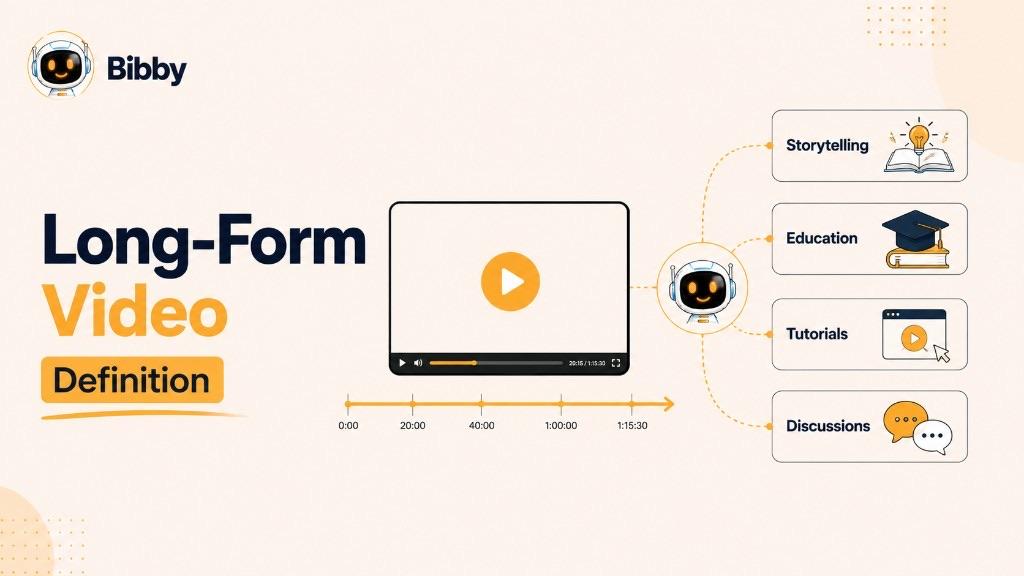
There is no universal duration that officially defines a long-form video. While videos longer than a few minutes are often considered long-form, the appropriate length depends on the topic, audience, platform, and purpose. A five-minute tutorial can provide long-form value if it thoroughly solves a problem, while a 30-minute video may feel unnecessarily long if it adds little useful information.
Long-form video commonly includes tutorials, interviews, podcasts, webinars, product reviews, documentaries, educational lessons, case studies, and in-depth discussions. The defining characteristic is not simply that the video is long—it is that the additional runtime is used to deliver meaningful depth or value.
Key Characteristics of Long-Form Video
- Greater depth: Covers a subject more thoroughly than a short video.
- More detailed storytelling: Gives creators room to develop ideas, narratives, and explanations.
- Higher viewer commitment: Requires more time and attention from the audience.
- Structured content: Often follows a clear introduction, main discussion, and conclusion.
- Multiple opportunities for value: Can educate, entertain, demonstrate, compare, or explain.
- Repurposing potential: A single long-form video can provide material for shorter clips, posts, carousels, and other social content.
In social media marketing, long-form video can serve as a core content asset that is distributed across platforms and repurposed into multiple pieces of content. That is especially useful for brands and creators that want detailed content without inventing a new idea for every post in their content calendar.
How Long Is a Long-Form Video?
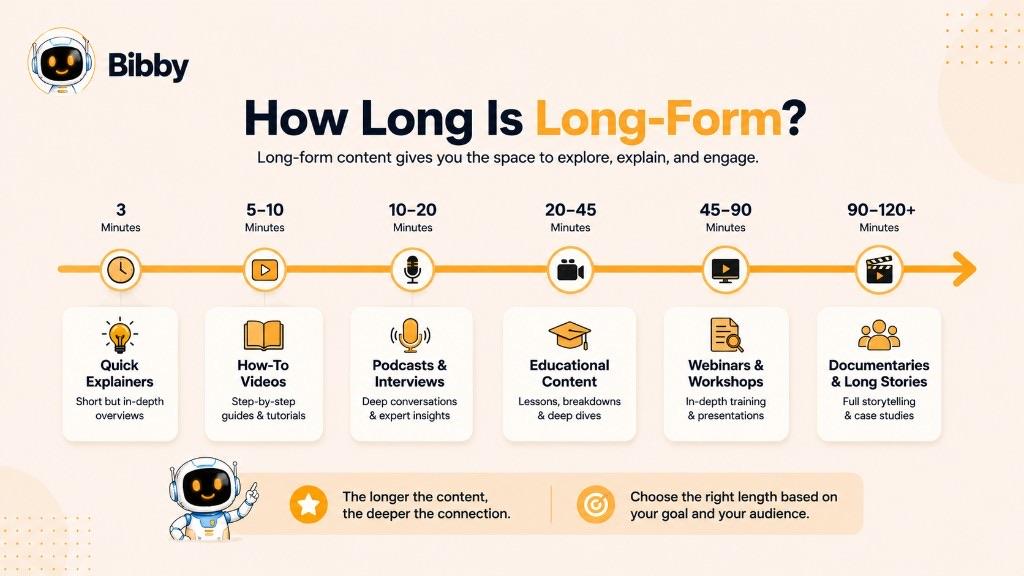
There is no fixed length that officially makes a video long-form. In general, long-form videos are longer than short-form content and provide enough time to explore a subject, tell a story, or deliver detailed information. The right length depends on the topic, audience, platform, and purpose of the video.
Is a Video Over 3 Minutes Long-Form?
A video over three minutes can be considered long-form, but three minutes is not a universal cutoff.
For example, a detailed three-minute educational video may provide substantially more depth than a 60-second short-form video. At the same time, a 15-minute video can still feel too short for a complex interview or documentary.
Rather than targeting an arbitrary runtime, make the video as long as necessary to deliver its intended value without unnecessary repetition.
Typical Long-Form Video Lengths
Different types of long-form content naturally require different amounts of time:
| Video type | Typical length |
|---|---|
| Educational tutorial | 5–30+ minutes |
| Product review | 10–30 minutes |
| Interview | 20–90+ minutes |
| Podcast | 20–120+ minutes |
| Webinar | 30–120+ minutes |
| Documentary | 20+ minutes |
| Case study or deep dive | 10–60+ minutes |
These ranges are guidelines rather than strict definitions. A video's format and depth matter more than its exact runtime.
What Matters More Than Video Length?
A successful long-form video should use its additional runtime purposefully. Strong long-form content usually has a clear topic, logical structure, useful information, engaging storytelling, and pacing that keeps viewers moving toward a meaningful outcome.
In other words, long-form does not mean unnecessarily long. The goal is to give viewers enough depth to make the additional viewing time worthwhile.
Long-Form Video vs. Short-Form Video
Long-form and short-form videos serve different content goals. Long-form video gives creators more space to explain, demonstrate, and tell stories, while short-form video is designed to communicate an idea quickly and capture attention in a limited amount of time.
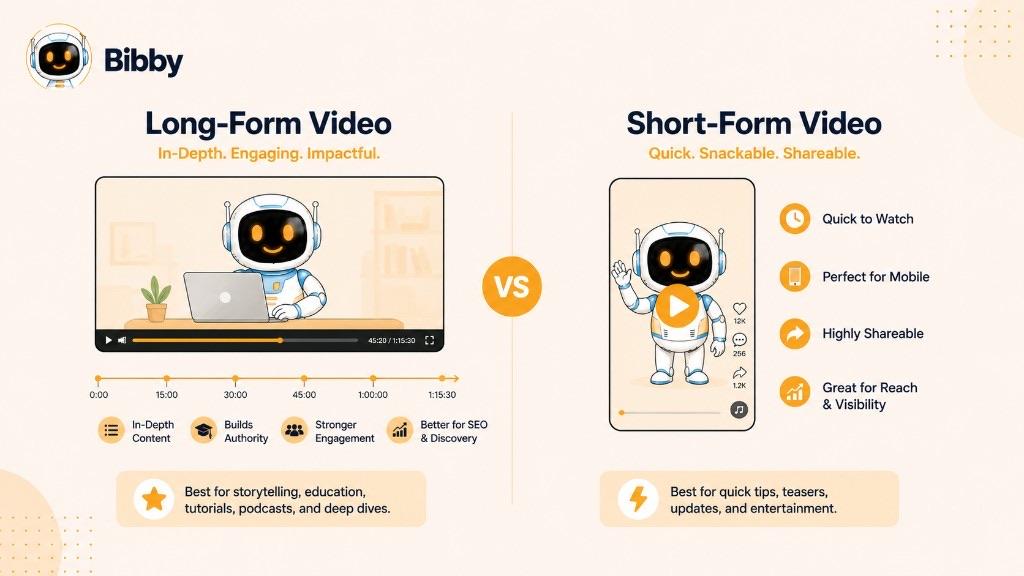
Neither format is inherently better. The right choice depends on what you want the audience to learn, feel, or do.
| Factor | Long-form video | Short-form video |
|---|---|---|
| Primary strength | Depth and context | Speed and attention |
| Typical purpose | Education, storytelling, detailed discussions | Discovery, entertainment, quick education |
| Content structure | More developed | Highly condensed |
| Viewer commitment | Higher | Lower |
| Topic complexity | Well suited to complex subjects | Best for focused ideas |
| Storytelling | More room for narrative development | Usually more immediate |
| Repurposing | Can generate multiple shorter content pieces | Usually focused on one idea |
Long-Form Video
Long-form content is useful when the audience needs more information before they can understand a topic or make a decision. Tutorials, interviews, product demonstrations, podcasts, webinars, documentaries, and detailed reviews are common examples.
The additional runtime allows creators to provide context, answer questions, demonstrate processes, include examples, and develop stronger narratives.
Short-Form Video
Short-form content prioritizes concise communication. It is often used to deliver a single tip, answer a quick question, showcase a product, share an entertaining moment, or introduce viewers to a larger topic.
Because the viewing commitment is lower, short-form videos can be effective for reaching new audiences and generating initial interest—especially on Reels, Stories, and TikTok.
Can You Use Both Formats Together?
Yes. Long-form and short-form video can complement each other as part of the same content strategy.
For example, a brand could publish an in-depth product review as its primary long-form video, then turn useful sections of that video into shorter clips for social media. Those shorter pieces can introduce the topic, attract attention, and direct interested viewers toward the more comprehensive content.
This approach allows one substantial piece of content to support multiple publishing opportunities without requiring creators to start from scratch for every post.
Examples of Long-Form Video
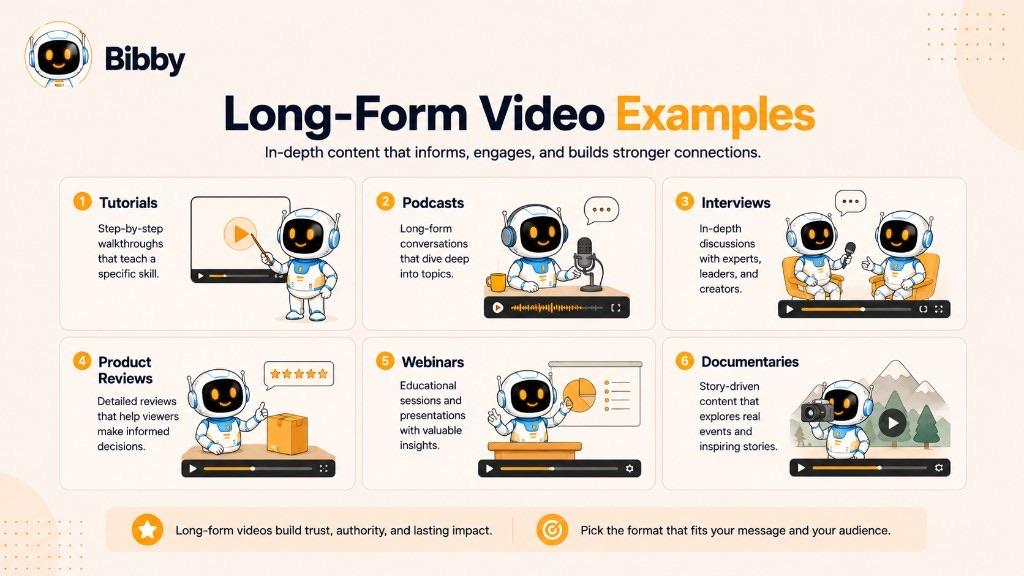
Long-form video can take many forms, from educational tutorials and product reviews to interviews, podcasts, documentaries, and detailed case studies. What these formats have in common is that they give creators enough time to explore a subject beyond a quick overview.
Tutorials and Educational Videos
Detailed tutorials use long-form video to teach a process, skill, or concept step by step. They can include demonstrations, explanations, examples, and troubleshooting that would be difficult to fit into a short video.
For example, a software company might create a 20-minute tutorial showing customers how to set up a complete workflow.
Interviews and Podcasts
Interviews and podcasts naturally benefit from longer runtimes because meaningful conversations often require time to develop. Long-form conversations can explore a guest's experience, opinions, expertise, and stories without reducing every answer to a short clip.
Product Reviews and Comparisons
Long-form product videos allow creators to go beyond basic features. A detailed review can demonstrate how a product works, explain its strengths and weaknesses, compare alternatives, and help viewers decide whether it is right for them.
Webinars and Presentations
Webinars, workshops, lectures, and presentations are often long-form because the audience expects comprehensive information. These videos can combine explanations, demonstrations, slides, questions, and practical examples.
Documentaries and Storytelling
Documentaries use extended runtimes to develop characters, provide historical or cultural context, investigate subjects, and build a narrative. Brands can also use documentary-style videos to tell their origin story, showcase customers, or explore a broader issue connected to their industry.
Case Studies and Deep Dives
Case studies and deep-dive videos use long-form content to examine a specific problem, process, event, or result in detail. For businesses, this format can demonstrate expertise while showing how a product or strategy works in a real-world situation.
Behind-the-Scenes Videos
Long-form behind-the-scenes content can give audiences a closer look at how a product is made, how a team works, how an event is produced, or what happens behind a finished piece of content.
The best format depends on the subject and the audience's intent. A long-form video works when the additional time helps viewers understand, experience, or explore something more deeply—not simply when it makes the video longer.
Why Do Brands Use Long-Form Video?
Brands use long-form video when they need more time to educate an audience, demonstrate expertise, tell a compelling story, or explain something that cannot be communicated effectively in a short clip. Because viewers make a greater time commitment, useful long-form content can create deeper engagement and stronger connections with an audience.
Build Trust and Demonstrate Expertise
Long-form videos give brands room to demonstrate knowledge instead of relying on short promotional messages. Detailed tutorials, expert interviews, educational discussions, and industry deep dives can help position a brand as a useful and credible source of information.
Explain Complex Products or Ideas
Some products, services, and subjects require context. A longer video can demonstrate how something works, explain different use cases, answer common questions, and address potential objections in one piece of content.
This can be particularly valuable for products with a learning curve or complicated buying decisions.
Tell More Compelling Brand Stories
Long-form video provides space for stories to develop. Brands can use interviews, customer stories, documentaries, and behind-the-scenes content to communicate their values, people, history, and mission in ways that a short promotional video may not.
Create More Valuable Content Assets
A well-produced long-form video can become the foundation for an entire content campaign. Individual sections can be transformed into short videos, social posts, carousels, quotes, educational snippets, or follow-up discussions.
Instead of treating a long-form video as a single post, brands can treat it as a source of multiple content assets.
Support Different Stages of the Customer Journey
Long-form content can serve different purposes depending on the viewer's needs:
- Awareness: Educational videos and industry discussions can introduce a topic or problem and support brand awareness.
- Consideration: Product comparisons, demonstrations, and case studies can help people evaluate options.
- Decision: Detailed reviews, customer stories, and product walkthroughs can answer final questions.
- Retention: Tutorials and educational content can help existing customers get more value from a product.
The Goal Is Value, Not Length
Long-form video should never be created simply to make a video longer. If a topic can be explained effectively in five minutes, stretching it to 20 minutes can hurt the viewing experience.
The strongest long-form videos use their additional runtime to provide depth, clarity, context, or entertainment that the audience actually wants. That is what turns a longer video into valuable content.
What Makes a Good Long-Form Video?
A good long-form video is not simply a longer version of a short video. It uses its additional runtime intentionally, giving viewers enough depth, context, or entertainment to justify the time they invest. Strong structure, useful information, engaging storytelling, and consistent pacing all contribute to a better viewing experience.
A Clear Topic and Promise
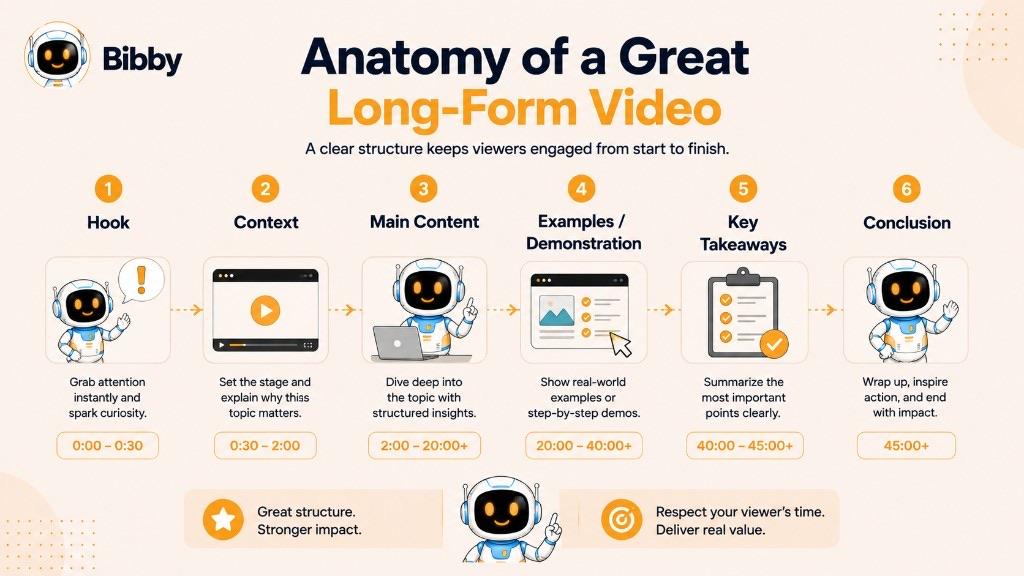
Start by making the video's purpose obvious. Viewers should quickly understand what the video covers and what they will gain by watching it.
A specific promise is usually stronger than a broad topic. Instead of covering everything about a subject, focus on a clearly defined question, problem, story, or outcome.
A Strong Opening
Long-form content still needs a compelling opening. The first moments should establish why the topic matters and give viewers a reason to continue watching.
Avoid spending too much time on lengthy introductions, unnecessary background information, or promotional messages before delivering value.
A Logical Structure
Long-form videos have more information to organize, making structure particularly important. A clear progression helps viewers understand how each section connects to the next.
A typical structure might include:
- Introduce the topic and establish the promise.
- Provide the necessary context.
- Explore the main ideas or story.
- Support them with examples, demonstrations, or evidence.
- Summarize the key points.
- Give viewers a relevant next step.
Useful Depth
Every additional minute should contribute something meaningful. Add explanations, examples, demonstrations, perspectives, or details that help the viewer understand the subject more completely.
Avoid repeating the same point simply to increase runtime.
Engaging Storytelling
Even educational videos can benefit from storytelling. Real examples, customer experiences, problems, discoveries, mistakes, and outcomes can make information easier to understand and remember.
For narrative content, storytelling also creates a reason for viewers to keep watching as the video develops.
Good Pacing
Long-form does not have to mean slow. Vary the pacing where appropriate by combining explanations with demonstrations, visuals, examples, questions, or changes in the story.
Remove sections that do not move the topic forward.
A Satisfying Conclusion
End by delivering on the promise made at the beginning. Summarize the most important takeaway, answer the central question, or provide a useful next step—often a call to action.
A strong conclusion makes the viewer feel that the time spent watching was worthwhile.
Ultimately, the best long-form videos respect the audience's time. The objective is not maximum length—it is maximum value from the length the topic actually requires.
Long-Form Video for Social Media
Long-form video can be an effective part of a social media strategy when the content gives audiences a reason to spend more time with it. Brands and creators can use longer videos to educate followers, demonstrate expertise, tell stories, showcase products, and build deeper relationships with their audiences.
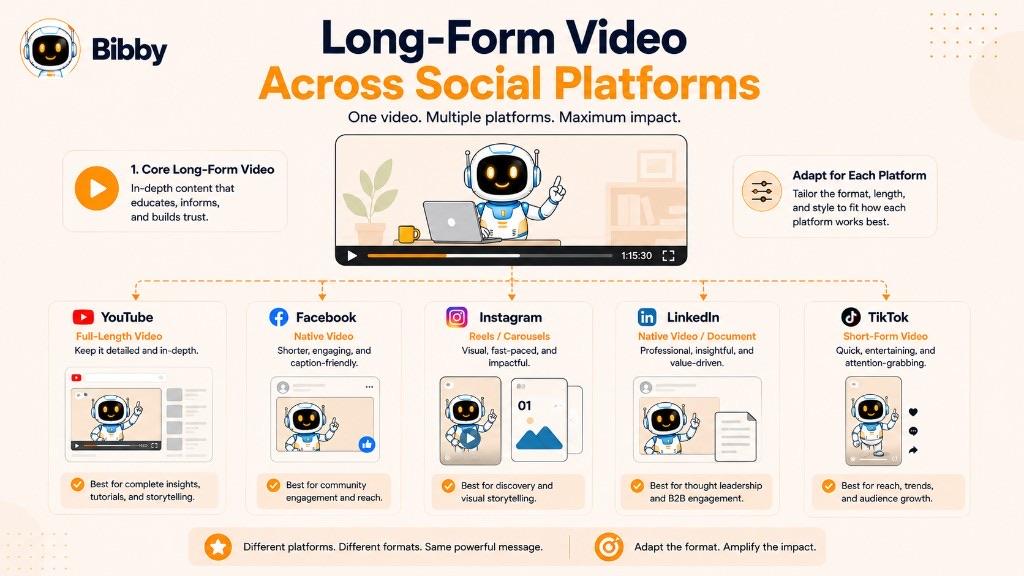
The key is to adapt the content to the platform and the audience rather than publishing the exact same video everywhere without considering how people consume content.
Use Long-Form Video as a Core Content Asset
A detailed video can become the foundation for a larger social media campaign. Instead of treating it as a single post, identify the most valuable moments, ideas, questions, and insights within the video.
For example, a 30-minute interview could provide:
- The complete interview
- Several short video clips
- Quote-based social posts
- Educational carousel posts
- Key takeaway posts
- Follow-up questions for audience discussion
This approach allows one substantial piece of content to support multiple social media publishing opportunities.
Long-Form Video on YouTube
YouTube is particularly well suited to longer educational videos, tutorials, reviews, interviews, podcasts, documentaries, and other in-depth content.
Creators can use long-form videos to answer specific questions, explore topics comprehensively, and build an ongoing library of useful, evergreen content. YouTube also supports short-form uploads (Shorts), so the platform itself is not “long-form only.”
Long-Form Video on Facebook
Longer videos can be used on Facebook for educational content, storytelling, interviews, demonstrations, and community-focused content. The most effective format depends on the audience and the type of content being shared.
Long-Form Video on LinkedIn
For businesses and professionals, longer videos on LinkedIn can provide space for expert discussions, educational content, customer stories, industry analysis, and detailed explanations of products or services.
Long-Form Video on Instagram and TikTok
Instagram and TikTok are strongly associated with short-form video, but longer content can still play a role when the topic and audience justify the additional viewing time.
Instagram previously offered IGTV as a dedicated long-form destination; that product is discontinued. Today, match length and format to Instagram's current video options—Reels, feed video, Stories, and Live—rather than trying to recreate IGTV.
On TikTok, longer videos can still work when they hold attention. Deliver value quickly, maintain momentum, and follow each platform's current publishing requirements, because those specifications change.
Repurpose Long-Form Video Into Shorter Content
One of the biggest advantages of long-form video for social media is its repurposing potential.
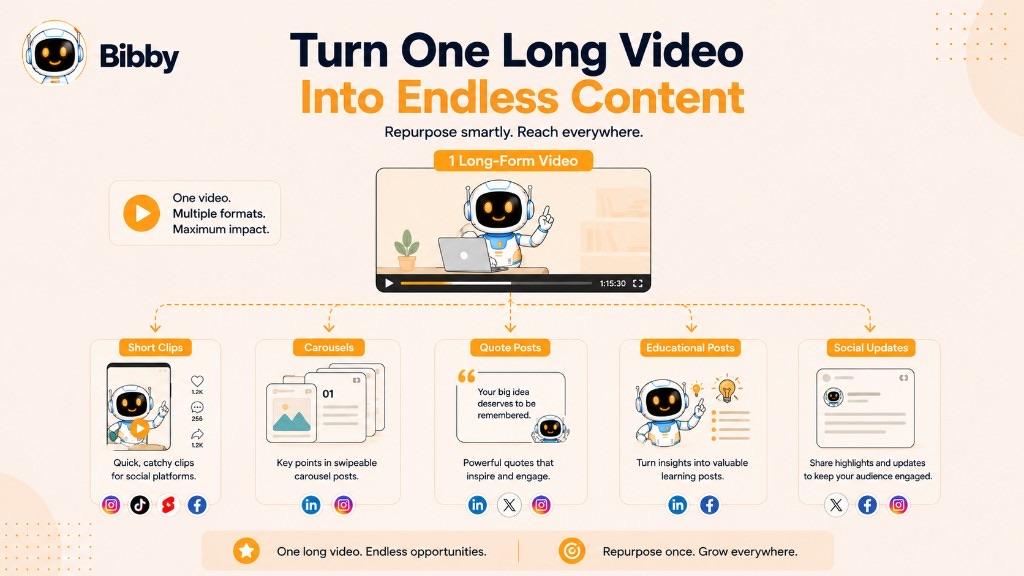
A single long-form video can be broken into smaller pieces that serve different purposes throughout a content calendar. Short clips can attract attention, while the original long-form video provides the deeper experience for people who want more information.
This creates a practical content workflow: create one valuable long-form asset, then distribute and repurpose its strongest ideas across multiple social media formats.
How to Create a Long-Form Video
Creating a strong long-form video starts with the audience's needs, not an arbitrary runtime. The goal is to choose a focused topic, organize the information clearly, and produce enough useful content to make the viewer's time worthwhile.
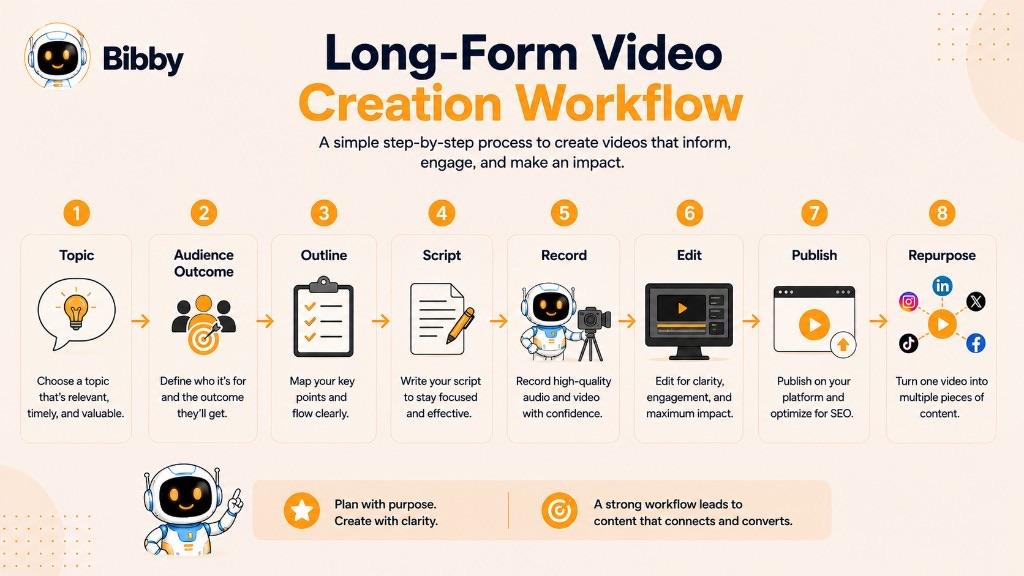
1. Choose a Focused Topic
Start with a topic that is specific enough to explore in depth. Consider the questions your audience asks, problems they need to solve, or subjects where you can provide meaningful expertise.
A focused topic makes it easier to create a coherent video without filling the runtime with unnecessary information.
2. Define the Viewer's Desired Outcome
Decide what viewers should know, understand, or be able to do after watching.
For example, the outcome might be learning how to use a tool, understanding a complicated concept, comparing products, or gaining a new perspective on an industry topic.
3. Create an Outline
Organize the video before recording. Break the topic into logical sections and determine the most useful information, examples, demonstrations, or stories for each section.
A strong outline also helps prevent repetition and makes editing easier.
4. Develop the Script or Talking Points
Depending on your format, write a complete script or prepare structured talking points. Educational and instructional videos often benefit from detailed scripts, while interviews and discussions may work better with questions and key topics.
The objective is to sound natural while maintaining a clear progression.
5. Record or Produce the Video
Record the content with appropriate audio, lighting, visuals, and presentation. For screen recordings, demonstrations, interviews, or presentations, make sure the visuals directly support what is being discussed.
Good production quality helps, but useful information and clear communication matter more than expensive equipment.
6. Edit for Clarity and Pacing
Remove unnecessary pauses, repetition, tangents, and sections that do not contribute to the video's purpose.
Use cuts, transitions, graphics, screen recordings, demonstrations, or other visual elements when they improve understanding or maintain attention.
7. Publish and Distribute
Create a clear title and description that accurately communicate what the video offers. Choose the platforms where your target audience is most likely to engage with the content—and consider when they are most likely to watch.
Avoid publishing simply because a video is finished. Consider when and where the audience is most likely to find it useful.
8. Repurpose the Content
Identify the strongest moments and ideas after publishing. These can become shorter videos, social posts, carousels, quotes, or follow-up content.
Repurposing allows one long-form video to contribute to a broader content strategy rather than functioning as a single isolated post.
The most effective long-form video workflow is therefore not about maximizing runtime. It is about turning a valuable idea into a well-structured viewing experience and then extending that value across your content channels.
Long-Form Video Best Practices
The best long-form videos make the extra viewing time worthwhile. Whether the goal is education, entertainment, storytelling, or marketing, these practices can help keep longer content useful and engaging.
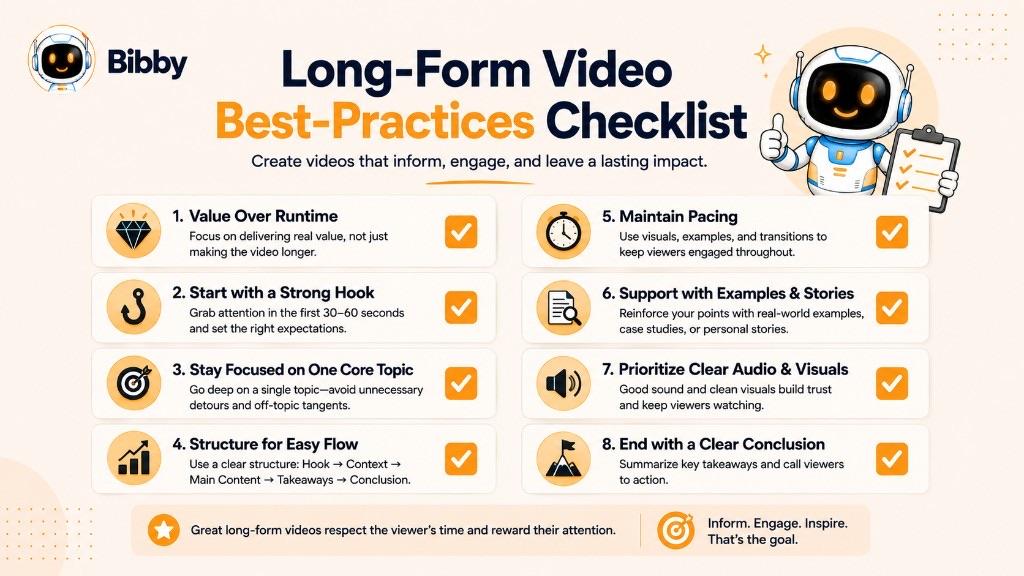
Prioritize Value Over Runtime
Do not add information simply to make a video longer. Every section should contribute to the viewer's understanding, experience, or desired outcome.
Start With a Clear Hook
Tell viewers what the video is about and why it matters early. A strong opening establishes expectations and gives the audience a reason to continue watching.
Keep the Topic Focused
Long-form content can cover a subject in depth without becoming unfocused. Avoid unrelated tangents that make it harder for viewers to follow the central idea.
Use a Clear Structure
Break complex subjects into logical sections. Headings, chapters, transitions, examples, and summaries can make lengthy content easier to understand and navigate.
Maintain Strong Pacing
Long videos should not feel unnecessarily slow. Remove repetition and use changes in visuals, demonstrations, examples, questions, or storytelling to maintain momentum where appropriate.
Add Examples and Demonstrations
Abstract explanations become more useful when supported by real examples, visual demonstrations, case studies, or practical applications.
Respect the Audience's Time
A viewer's time is the most valuable resource in long-form content. If an idea can be explained clearly in two minutes, there is no reason to spend ten minutes explaining it.
Make the Video Easy to Navigate
For particularly long videos, consider chapters, timestamps, descriptive sections, captions, and other navigation aids. These allow viewers to find the information most relevant to them.
Repurpose the Best Moments
Look for valuable sections that can stand alone as shorter content. A long-form video can become a source for short clips, social posts, carousels, quotes, and other formats.
Match the Format to the Audience
Different audiences have different expectations for video length and presentation. Analyze what your viewers actually want rather than following a generic rule about how long a video should be.
Ultimately, effective long-form video is about earning the viewer's attention for as long as the content deserves it. Length should follow value—not the other way around.
Publish Long-Form Video With Bibby
Long-form video can be more than a single social media post. With Bibby, brands and creators can turn video content into a broader, organized social media publishing workflow.
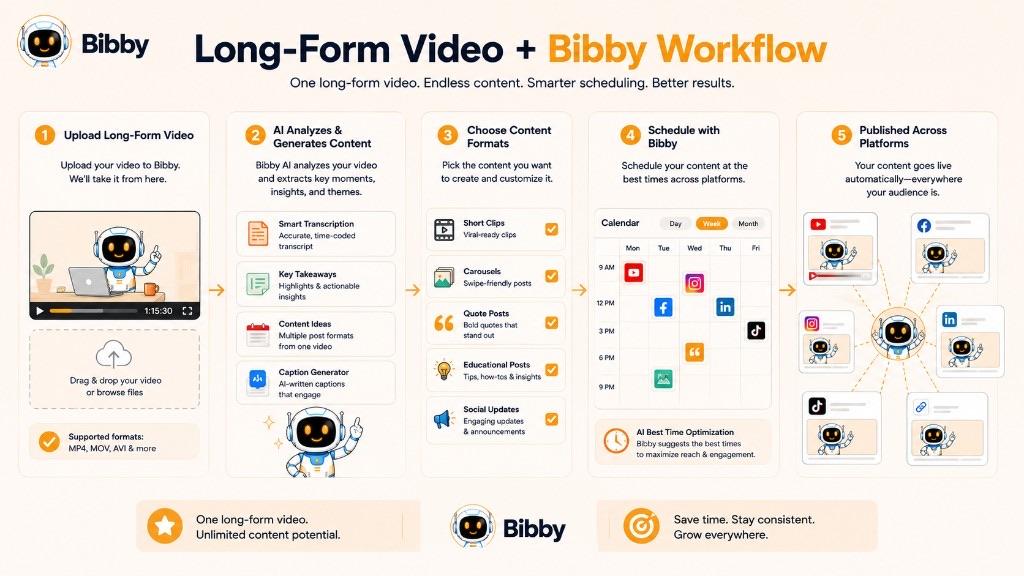
Upload your video to Bibby, choose your preferred posting style, and let AI help generate captions and prepare the content for publishing. Bibby can then schedule your media at AI-optimized times across Facebook, Instagram, LinkedIn, YouTube, and TikTok.
You can also use Bibby's chat interface to manage your social media workflow conversationally. From the same interface, you can create campaigns, build a brand kit, create posts, regenerate captions, and manage other parts of your content strategy.
For long-form video specifically, this makes it easier to publish the original video where it belongs and create supporting posts around its strongest ideas—clips, carousels, and captions you still choose and edit—so you get more value from the work that went into producing it.
Whether you're sharing an educational tutorial, podcast, interview, product review, webinar, or other in-depth video, Bibby helps bring content creation and social media scheduling together in one place.
Key Takeaways
Long-form video is not defined by a single minute count. It is video that uses extra runtime to provide greater depth, context, education, entertainment, or storytelling.
- Tutorials, interviews, podcasts, reviews, webinars, documentaries, and deep dives are common examples.
- Prioritize value over length, keep a clear structure, and respect the viewer's time.
- Pair long-form with short-form video so one asset can feed a full content calendar.
- Match format to the platform: YouTube for in-depth libraries; Facebook and LinkedIn for professional and community viewing; Instagram and TikTok when longer videos still earn attention.
Once you have a valuable long-form video, the next step is getting more from it: turn standout sections into Reels, carousels, and other social posts, then start a free Bibby trial to caption and schedule across your channels. Browse more terms in the social media dictionary.