
Managing multiple brands on social media can quickly become overwhelming without the right strategy, workflow, and tools.
Whether you're a social media manager, marketing agency, or business owner, juggling multiple brand voices, content calendars, and publishing schedules across platforms can consume hours every week. The good news is that with a structured workflow and AI-powered automation, you can streamline your entire process, stay consistent, and focus more on growing your brands instead of managing repetitive tasks.
By the end of this guide, you'll have a proven framework for managing multiple brands more efficiently while saving time, maintaining consistency, and improving your social media results.
Why Managing Multiple Brands Is So Challenging
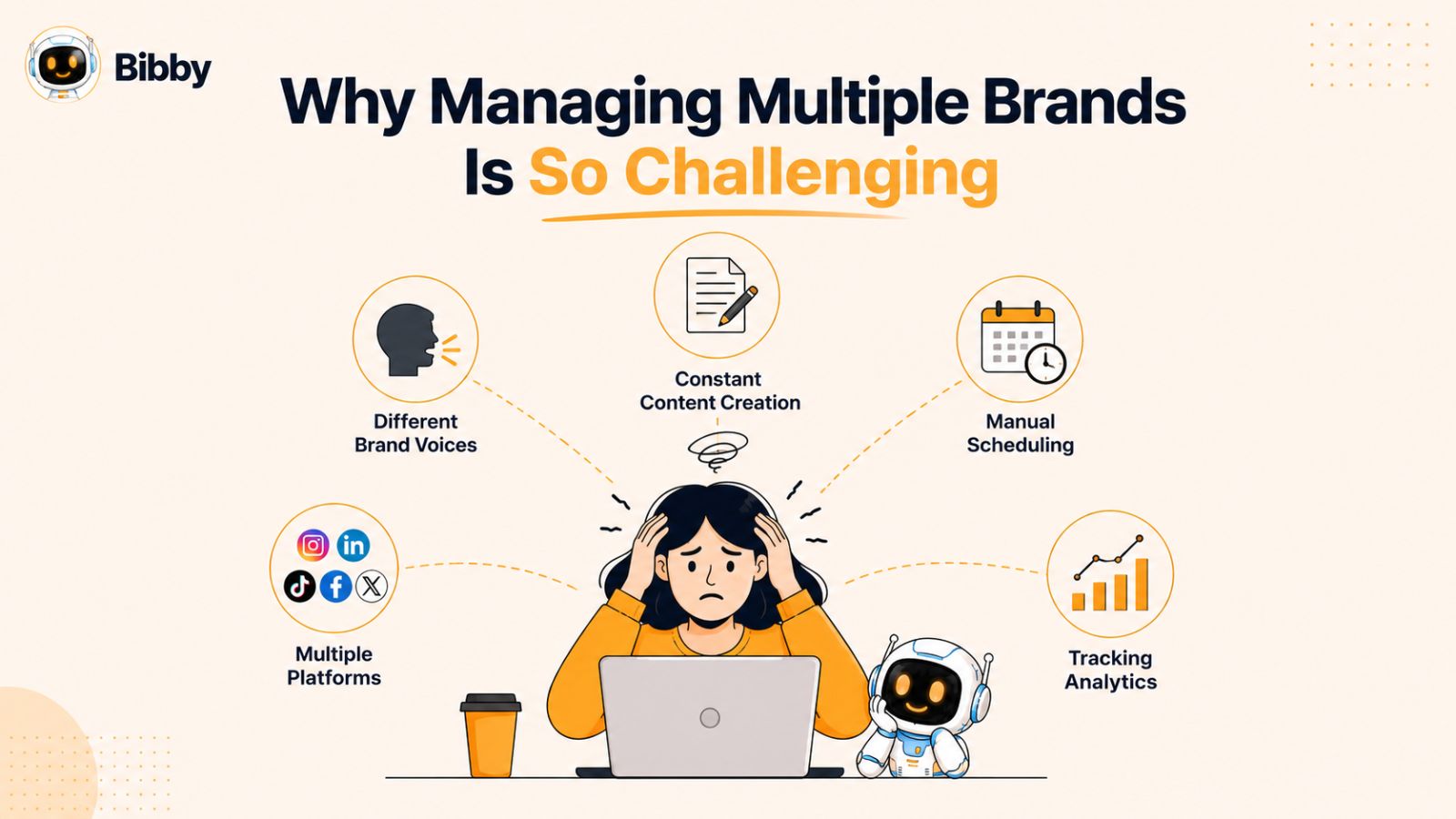
Managing one social media account is demanding enough. When you're responsible for multiple brands—each with its own audience, goals, and content strategy—the complexity increases significantly. Without a well-defined workflow, it's easy to miss posting schedules, mix up brand messaging, or spend countless hours switching between platforms.
Let's explore the biggest challenges social media managers, agencies, and businesses face when managing multiple brands.
Every Brand Has Its Own Voice
No two brands communicate the same way. One brand may have a professional, corporate tone, while another thrives on humor and trending content. Maintaining a consistent voice for each brand is essential for building trust and recognition. Keeping separate brand guidelines, messaging frameworks, and content themes helps ensure every post reflects the right personality.
Different Platforms Require Different Content
A single post rarely performs equally well across every social media platform. Instagram favors visually engaging content, LinkedIn audiences expect professional insights, TikTok rewards short-form creative videos, while YouTube focuses on longer, value-driven content. Creating platform-specific content for multiple brands can quickly become a full-time job if done manually.
Maintaining a Consistent Posting Schedule
Consistency is one of the biggest factors behind social media growth, but keeping up with multiple posting calendars is easier said than done. Missing scheduled posts can reduce engagement and weaken your brand presence. Planning and scheduling content in advance ensures every brand stays active without requiring daily manual effort.
Creating Fresh Content Constantly
Coming up with new ideas for several brands every week can lead to creative fatigue. From designing graphics and editing videos to writing captions and selecting hashtags, content creation is often the most time-consuming part of social media management. Without efficient systems, producing high-quality content at scale becomes increasingly difficult.
Tracking Performance Across Multiple Accounts
Publishing content is only half the job. Understanding what's working is equally important. Monitoring engagement, reach, clicks, follower growth, and conversions across multiple brands often means logging into several dashboards and compiling reports manually. This process can consume valuable time that could otherwise be spent improving strategy and creating better content.
The Need for Smarter Workflows
As the number of brands grows, manual processes become harder to sustain. Successful marketers rely on organized content calendars, automation, and AI-powered tools to simplify repetitive tasks, maintain consistency, and manage every brand from a centralized workflow. The right system doesn't just save time—it allows you to scale your social media efforts without sacrificing quality.
Also read: Social Media Automation for B2B Companies: The Complete Guide (2026) →
A Proven Workflow for Managing Multiple Brands on Social Media
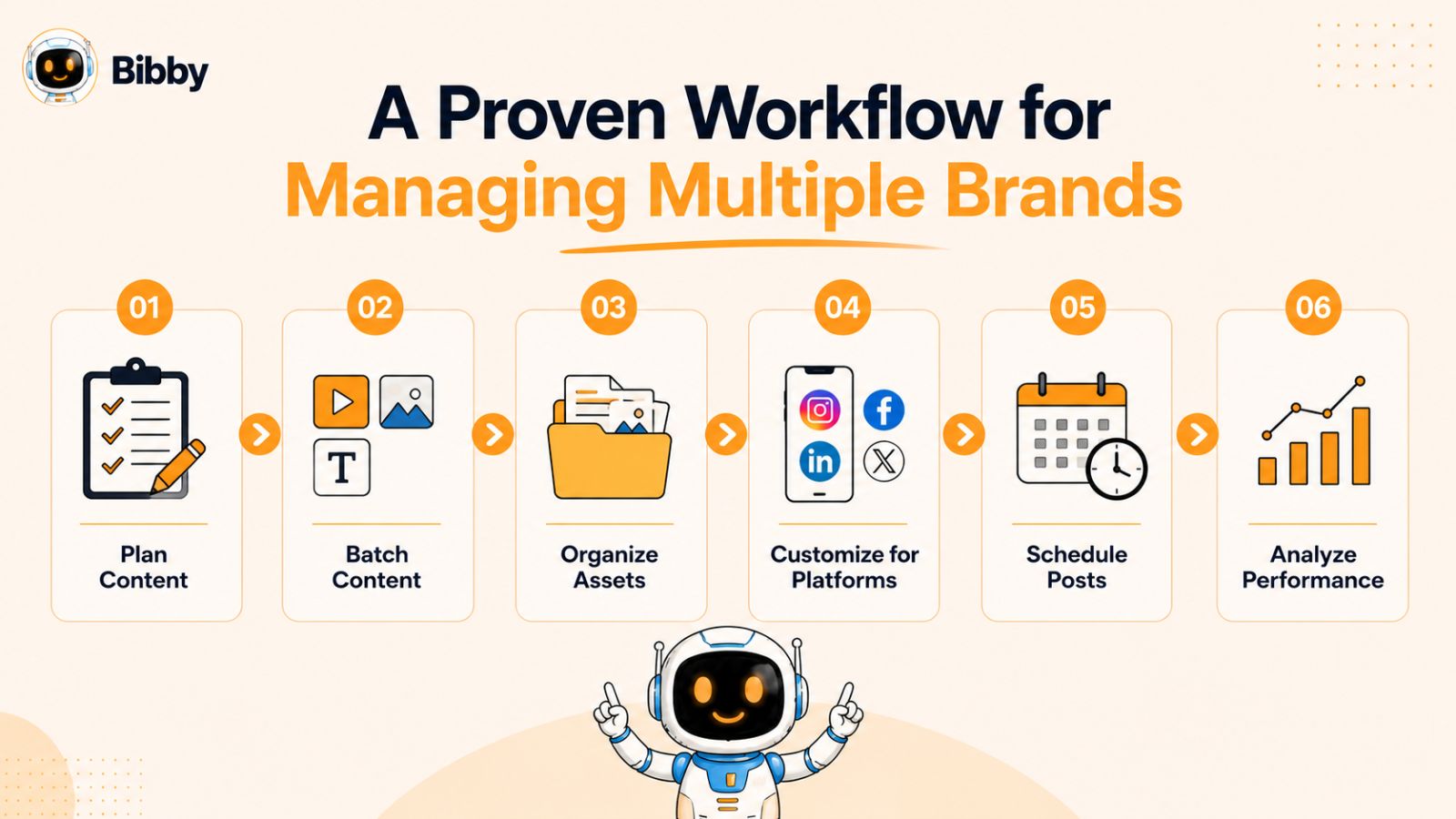
The secret to successfully managing multiple brands isn't working harder—it's building a repeatable workflow that keeps your content organized, consistent, and easy to scale. Instead of reacting to daily posting demands, successful marketers and agencies plan ahead, automate repetitive tasks, and use AI to simplify content creation.
Here's a workflow you can follow to manage multiple social media brands more efficiently.
Step 1: Plan Your Content with a Centralized Calendar
A well-structured content calendar is the foundation of every successful social media strategy. Rather than planning posts one day at a time, map out your content weeks or even months in advance.
Your content calendar should include:
- Campaign launches
- Product announcements
- Seasonal promotions
- Industry events
- Educational content
- User-generated content
- Promotional posts
A centralized calendar gives you a clear overview of what each brand is publishing, helping you avoid content gaps, duplicate posts, and last-minute scrambling.
Step 2: Batch Your Content Creation
Creating content in batches is one of the easiest ways to increase productivity. Instead of switching between writing captions, designing graphics, and editing videos throughout the week, dedicate focused sessions to similar tasks.
For example, you might spend one day:
- Designing graphics for all brands
- Recording videos
- Writing captions
- Creating Stories and Reels
- Planning next month's campaigns
Batching reduces context switching, improves creativity, and allows you to produce more content in less time.
Step 3: Keep Brand Assets Organized
When managing multiple brands, staying organized is essential. Store all of your brand assets in one place so they're easy to access whenever you're creating content.
Your asset library should include:
- Logos
- Brand colors
- Fonts
- Image templates
- Video templates
- Approved messaging
- Hashtag collections
- Calls to action
An organized library ensures every piece of content stays on-brand while reducing the time spent searching for files.
Step 4: Customize Content for Each Platform
Every social media platform has different audience behaviors and content requirements. Instead of copying the same post everywhere, adapt your content to fit each channel.
For example:
- Facebook: Community updates, promotions, and longer captions.
- Instagram: High-quality visuals, Reels, Stories, and engaging captions.
- LinkedIn: Professional insights, industry news, and thought leadership.
- TikTok: Short-form videos that entertain or educate.
- YouTube: Long-form videos, tutorials, and Shorts.
Making small adjustments for each platform can significantly improve engagement without requiring you to create entirely new content from scratch.
Step 5: Schedule Content in Advance
Publishing posts manually every day isn't a sustainable strategy when managing multiple brands. Scheduling content ahead of time helps maintain consistency, reduces stress, and ensures campaigns go live even when your team is busy.
By preparing content in advance, you can:
- Stay consistent across every brand.
- Launch campaigns on time.
- Eliminate last-minute publishing.
- Reduce manual work.
- Focus on strategy instead of repetitive tasks.
Step 6: Review Analytics and Optimize
A successful workflow doesn't end after you click "Publish." Regularly reviewing your analytics helps you understand what resonates with your audience and where you can improve.
Monitor key performance metrics such as:
- Reach
- Impressions
- Engagement rate
- Click-through rate
- Follower growth
- Video views
- Conversions
Use these insights to refine your content strategy, experiment with new ideas, and make data-driven decisions that improve results across all of your brands.
When these six steps become part of your routine, managing multiple brands becomes far more efficient. The final piece of the puzzle is choosing the right tool—one that can streamline content creation, automate scheduling, and bring everything together in a single, easy-to-use platform.
Why AI Is Transforming Multi-Brand Social Media Management
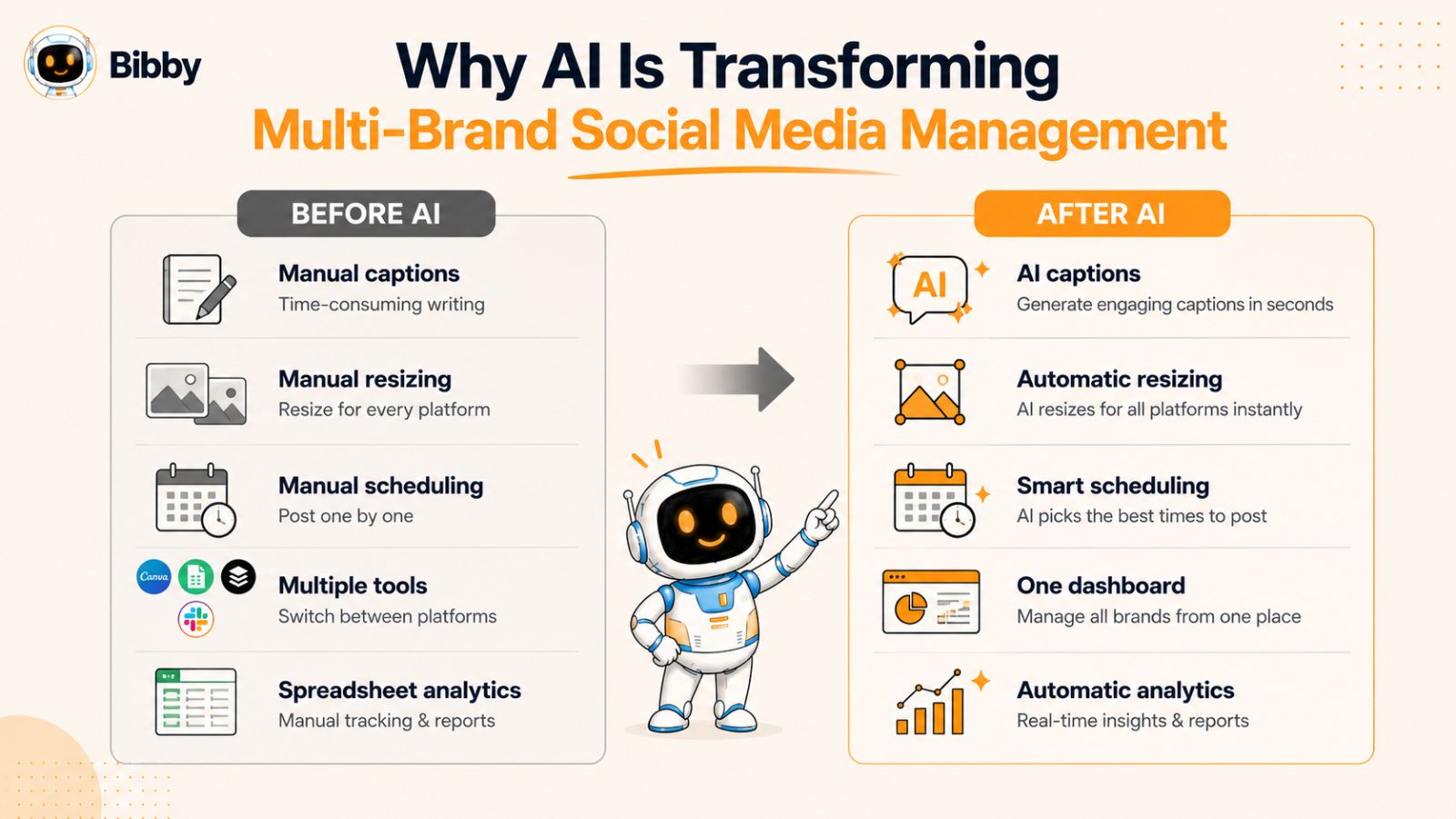
Artificial intelligence has changed the way businesses approach social media. What once required hours of manual work—from writing captions and resizing images to scheduling posts and analyzing performance—can now be completed in minutes. For marketers managing multiple brands, AI isn't just a convenience; it's becoming a competitive advantage.
Instead of spending valuable time on repetitive tasks, AI allows you to focus on what truly drives results: creating meaningful campaigns, engaging with your audience, and growing your brands.
AI Generates High-Quality Captions in Seconds
Writing unique captions for multiple brands and platforms can quickly become repetitive. AI-powered tools can generate engaging, platform-specific captions based on your content, audience, and preferred tone of voice.
Whether you need a professional LinkedIn update, an engaging Instagram caption, or a concise Facebook post, AI helps you produce fresh content faster while maintaining a consistent brand voice. Many tools also suggest relevant hashtags, calls to action, and emoji usage, reducing the time spent editing each post.
AI Creates or Enhances Visual Content
Visuals are at the heart of successful social media marketing, but creating graphics for every campaign can be time-consuming. AI can help generate original images, enhance existing visuals, or assist with creative concepts, making it easier to produce high-quality content without relying on complex design software.
This enables teams to maintain a steady stream of eye-catching content while reducing the effort required for design.
AI Optimizes Content for Every Platform
Every social media platform has different image dimensions, content formats, and audience expectations. Preparing separate versions of the same post for Instagram, Facebook, LinkedIn, TikTok, YouTube, and other platforms can take considerable time.
AI-powered tools simplify this process by automatically adapting content for different platforms, helping ensure your posts look polished and professional wherever they're published.
AI Schedules Posts at the Right Time
Knowing when to publish can have a significant impact on engagement. Instead of guessing the best time to post, AI analyzes historical performance and audience activity to recommend or automatically select publishing times that maximize visibility.
This helps your content reach more people while removing the guesswork from scheduling.
AI Turns Analytics into Actionable Insights
Publishing content is only part of a successful social media strategy. Understanding what works—and why—is equally important.
AI-powered analytics make it easier to identify top-performing posts, monitor engagement trends, measure audience growth, and uncover opportunities for improvement. Rather than sorting through complex reports, you can quickly see what's driving results and adjust your strategy with confidence.
Work Smarter, Not Harder
Managing multiple brands doesn't have to mean spending every day switching between platforms, resizing images, writing captions, and scheduling posts manually. By integrating AI into your workflow, you can automate repetitive tasks, improve consistency, and free up more time for creative thinking and strategic planning.
The next step is choosing a platform that brings all of these AI capabilities together in one place. That's where Bibby simplifies the entire social media management process.
Also read: AI Social Media Assistant: Everything You Need to Know →
Manage Multiple Brands Effortlessly with Bibby
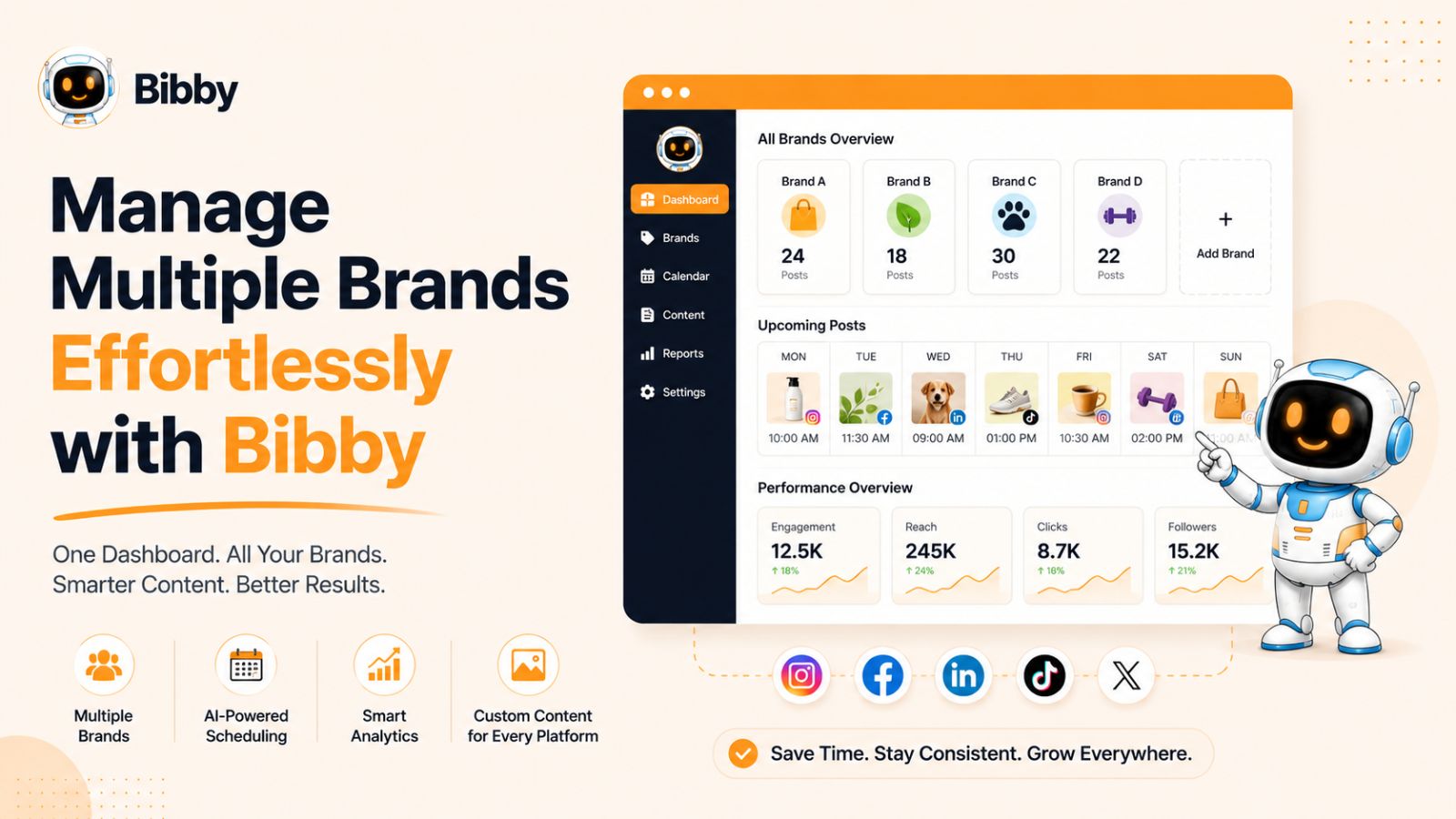
Once you've established a solid workflow, the next step is choosing a platform that can execute it efficiently. Instead of juggling separate design tools, AI writers, scheduling apps, and analytics dashboards, Bibby brings everything together in one simple, AI-powered workspace.
Whether you're a solo creator, marketing team, or agency managing multiple clients, Bibby helps you create, schedule, publish, and analyze your social media content from a single dashboard.
One Simple Workflow from Start to Finish
Bibby is designed to eliminate repetitive tasks and simplify your entire social media process.
Here's how it works:
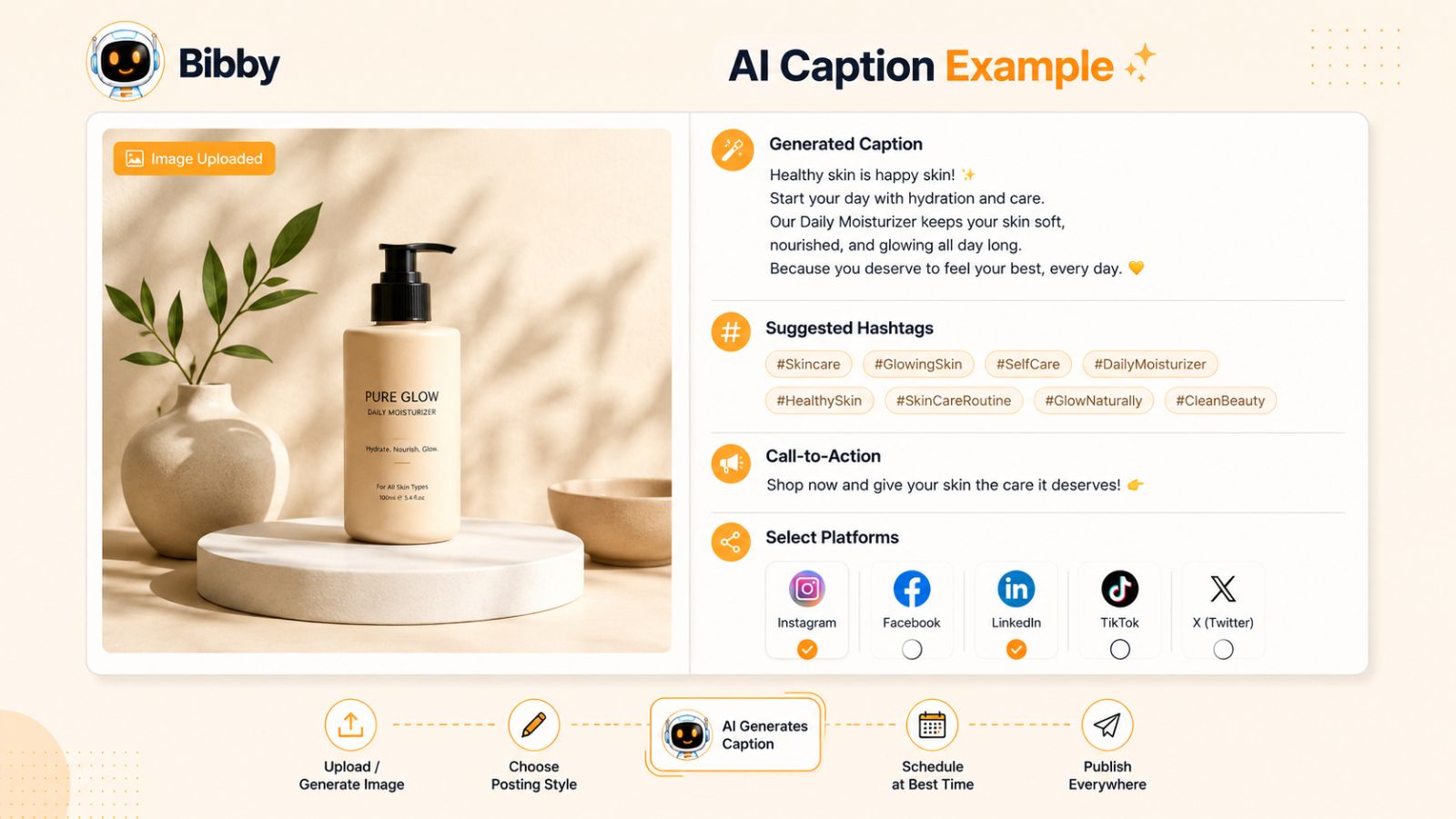
- Upload your own image or generate one using AI.
- Bibby automatically prepares your content for different social media platforms.
- Choose your preferred posting style and brand tone.
- Let AI generate engaging captions tailored to each platform.
- Select the platforms where you want to publish.
- Schedule your content in just a few clicks.
- AI recommends optimized publishing times for maximum reach.
- Sit back while Bibby automatically publishes your content according to schedule.
Instead of spending hours switching between different tools, you can complete your entire publishing workflow in minutes.
No More Resizing Images for Every Platform
One of the biggest frustrations in social media management is creating multiple versions of the same image for different platforms. Every network has its own recommended dimensions, making manual resizing both time-consuming and error-prone.
Bibby takes care of this automatically. Simply upload one image—or create one with AI—and Bibby prepares platform-ready versions for the channels you've selected.
Whether you're publishing to:
- TikTok
- YouTube
your visuals are automatically optimized for the appropriate format, helping you maintain a professional appearance without extra design work.
Create Better Captions with AI
Writing compelling captions for several brands can quickly become one of the most repetitive parts of social media management.
Bibby's AI helps speed up the process by generating captions based on your content and preferred posting style. It can adapt the tone for different brands and platforms while suggesting relevant hashtags, emojis, and calls to action—making it easier to create engaging posts without starting from a blank page every time.
Schedule Once and Let AI Handle the Rest
Consistency is essential for growing on social media, but remembering to publish every post manually isn't realistic when you're managing multiple brands.
With Bibby, you can schedule your content in advance across your selected platforms. AI also recommends optimized publishing times based on when your audience is most likely to engage, helping your content reach more people without requiring constant monitoring.
This means your content continues to be published—even while you're focused on other projects.
Publish Every Type of Content
Modern social media strategies go beyond static images, and Bibby supports a wide range of content formats from one platform.
You can plan and publish:
- Images
- Videos
- Stories
- Promotional campaigns
- Product announcements
- Marketing content
Managing different content types from a single dashboard helps keep every brand organized and consistent.
Monitor Performance Without Switching Dashboards
After your content goes live, Bibby helps you measure what's working with built-in analytics.
Track important performance metrics such as:
- Reach
- Impressions
- Engagement
- Clicks
- Audience growth
- Top-performing posts
Having these insights in one place makes it easier to compare results across multiple brands, identify successful campaigns, and make informed decisions for future content.
Spend Less Time Managing and More Time Growing
Managing multiple brands doesn't have to mean juggling countless tools and repetitive tasks. By combining AI-powered content creation, automatic image optimization, smart scheduling, publishing, and analytics into one streamlined workflow, Bibby helps you spend less time on day-to-day operations and more time focusing on strategy, creativity, and business growth.
Whether you're overseeing two brands or twenty, a centralized platform can make scaling your social media efforts significantly more efficient.
Also read: AI Social Media Manager: What It Is and How It Works →
Tips for Managing Multiple Brands Like a Professional
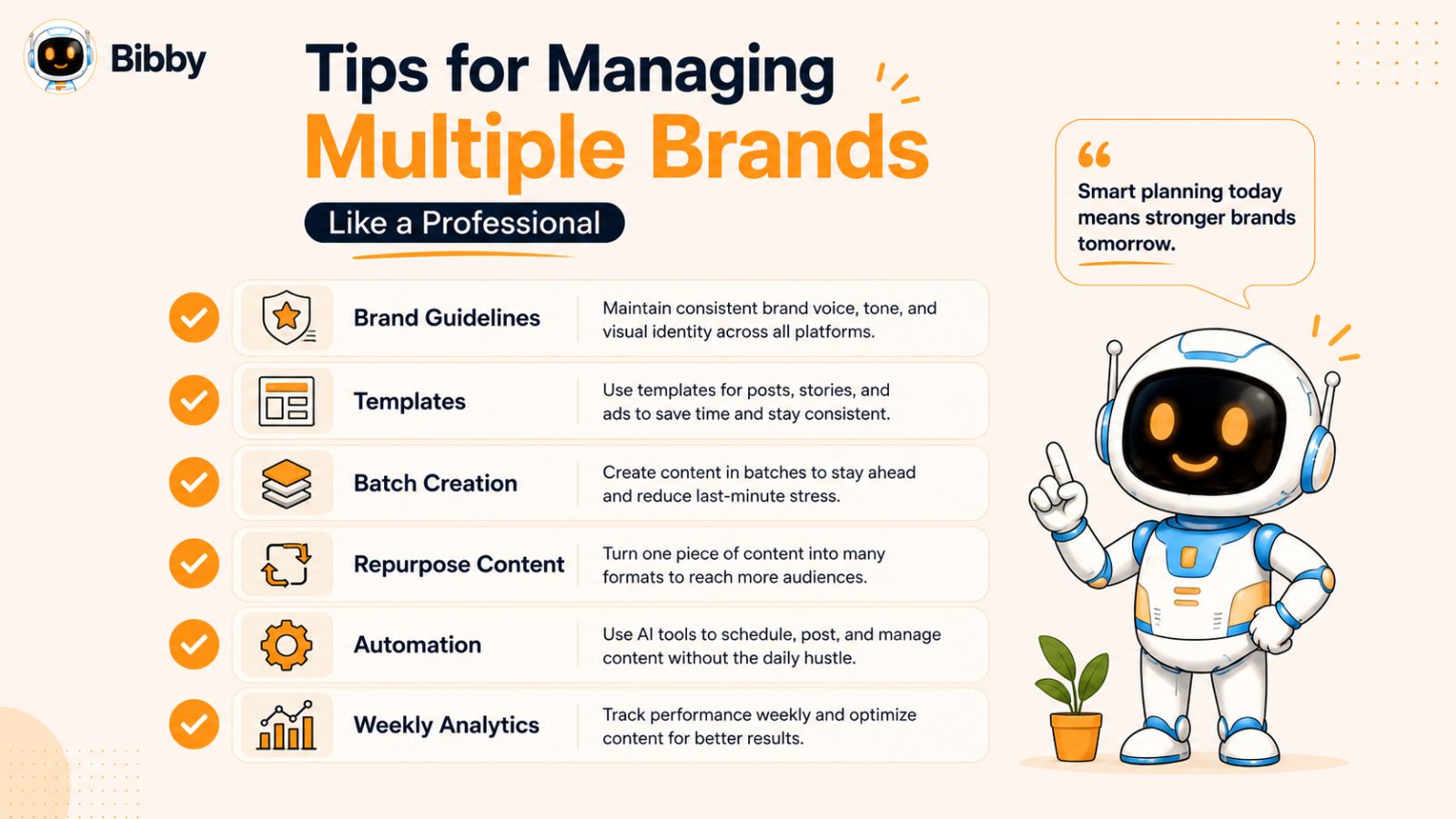
Even with the best workflow and AI-powered tools, managing multiple brands successfully requires discipline, organization, and a clear strategy. The following best practices can help you stay productive, maintain consistency, and deliver better results across every social media account you manage.
Create Detailed Brand Guidelines
Each brand should have documented guidelines that define its personality, tone of voice, visual identity, and messaging. This ensures that everyone on your team creates content that feels authentic and consistent.
Your brand guidelines should include:
- Brand voice and tone
- Color palette and typography
- Logo usage
- Messaging and value proposition
- Approved hashtags
- Content dos and don'ts
Having these resources readily available minimizes errors and keeps every post aligned with the brand's identity.
Build Reusable Content Templates
You don't need to design every post from scratch. Create templates for recurring content such as announcements, product launches, testimonials, educational posts, and promotions.
Templates help you:
- Save design time
- Maintain visual consistency
- Speed up content creation
- Scale campaigns across multiple brands
By starting with a proven layout, you can focus more on the message than the design.
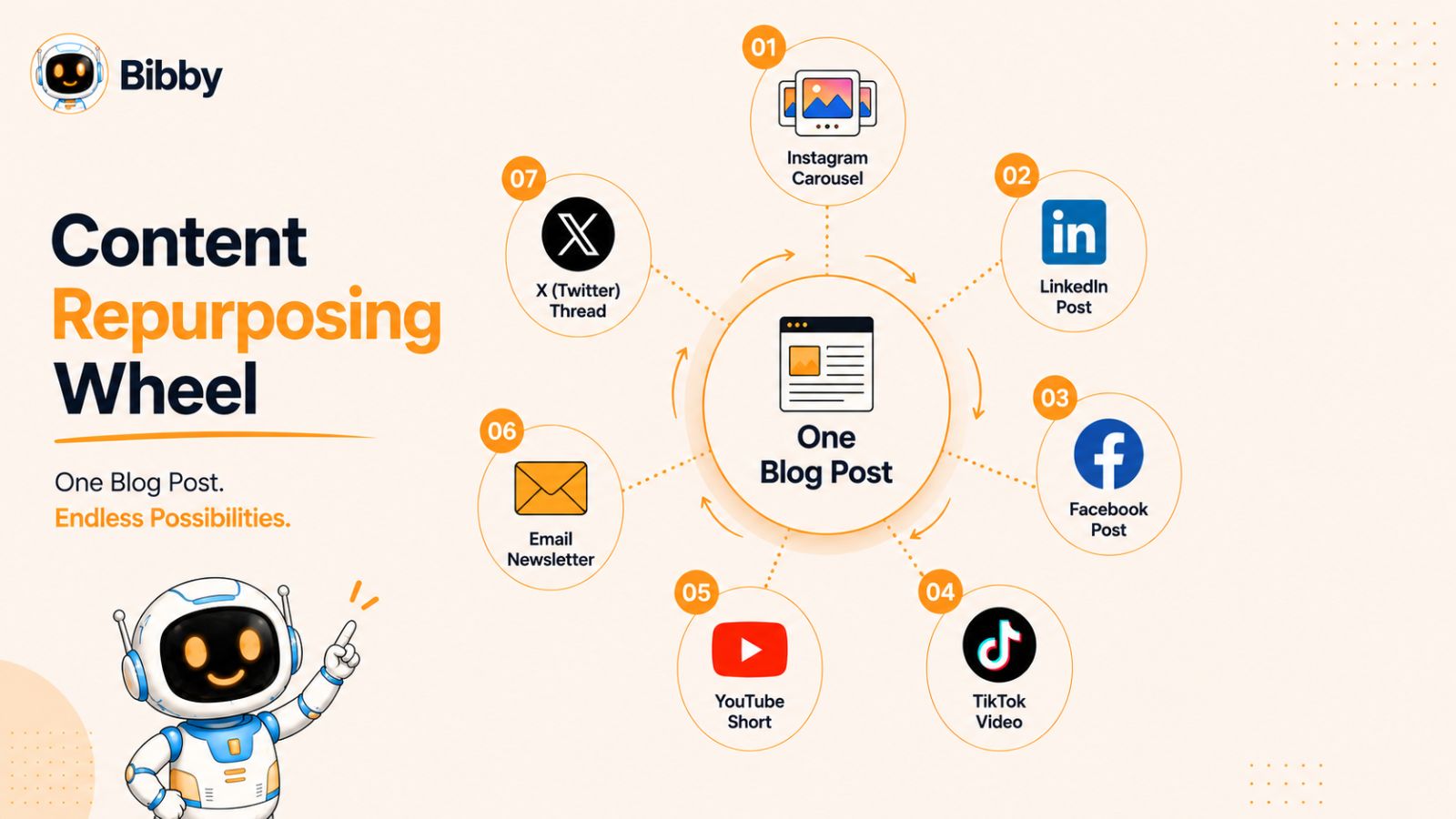
Repurpose High-Performing Content
Not every post needs to be brand new. If a piece of content performs exceptionally well, find ways to repurpose it into different formats.
For example, you can turn:
- A blog article into a LinkedIn post
- A webinar into short video clips
- A customer testimonial into a graphic
- A YouTube video into Instagram Reels
- A data report into a carousel post
Repurposing content extends its value, reaches new audiences, and reduces the pressure to constantly create from scratch.
Batch Similar Tasks Together
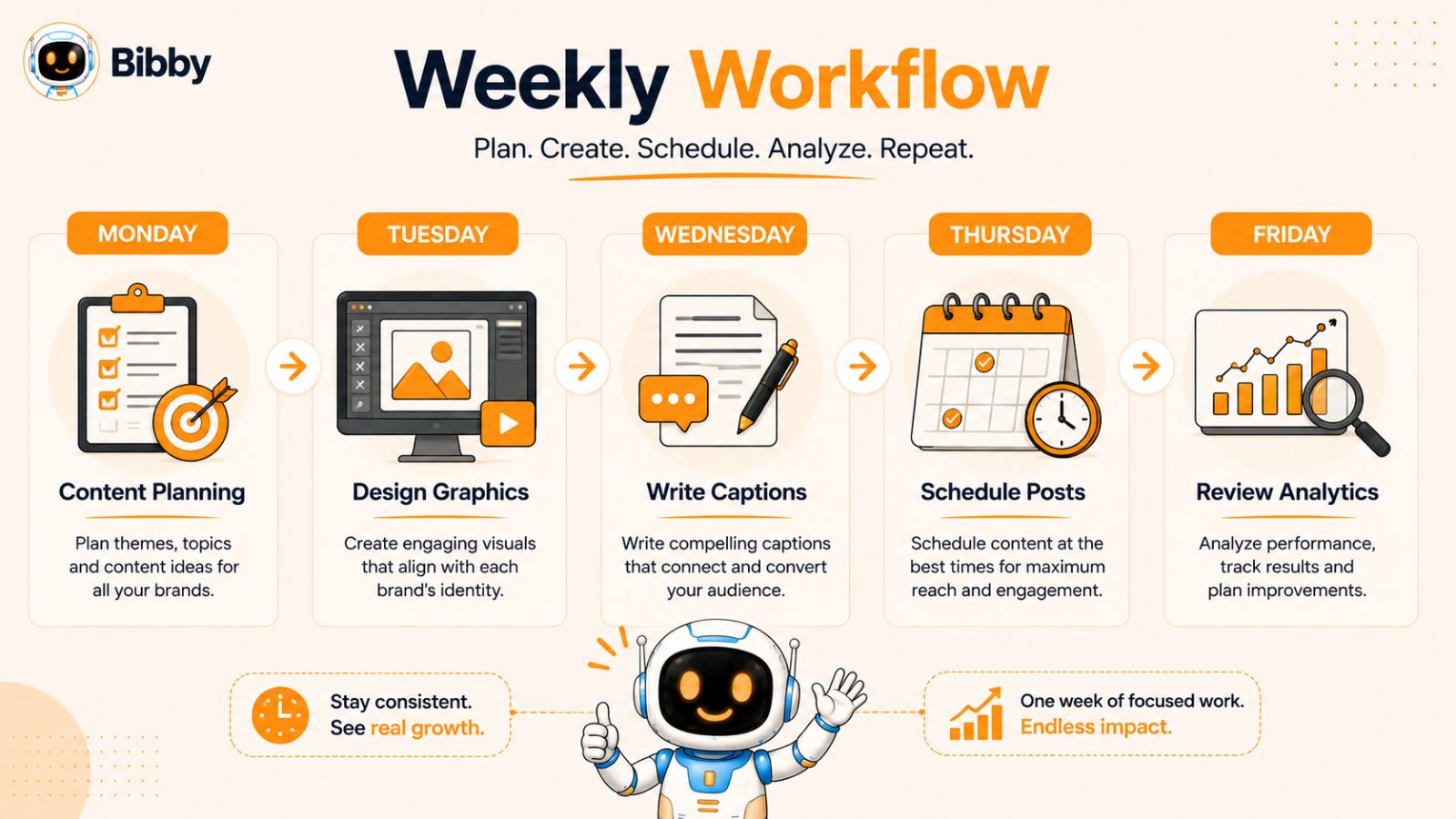
Switching between writing, designing, editing, and scheduling throughout the day can reduce productivity. Instead, group similar tasks into dedicated work sessions.
For example:
- Monday: Plan content
- Tuesday: Create graphics and videos
- Wednesday: Write captions
- Thursday: Review and schedule content
- Friday: Analyze performance and optimize
Batching your work helps you stay focused, produce content more efficiently, and reduce mental fatigue.
Use Automation for Repetitive Tasks
Many day-to-day social media activities don't need to be done manually. Automating repetitive work allows you to spend more time on strategy, creativity, and audience engagement.
Tasks you can automate include:
- Scheduling posts
- Generating captions with AI
- Optimizing image sizes
- Publishing across multiple platforms
- Selecting optimal posting times
- Performance reporting
Using an all-in-one platform like Bibby makes it easier to automate these repetitive tasks from a single dashboard, helping you maintain consistency across multiple brands while significantly reducing manual effort.
Review Performance Regularly
Successful social media management is an ongoing process of testing, learning, and improving. Set aside time each week or month to review your analytics and identify opportunities for optimization.
Ask questions such as:
- Which content generated the highest engagement?
- Which posting times delivered the best results?
- Which platforms drove the most traffic?
- What content formats performed best?
- Which campaigns exceeded expectations?
Regular performance reviews help you make data-driven decisions that improve future campaigns and deliver stronger results for every brand you manage.
Focus on Strategy, Not Just Posting
Publishing content consistently is important, but true success comes from aligning your social media efforts with broader business goals. Every post should support objectives such as increasing brand awareness, generating leads, driving website traffic, or building customer relationships.
When you combine a clear strategy with organized workflows and AI-powered automation, managing multiple brands becomes far more scalable, efficient, and rewarding.
Also read: AI Caption Generator vs Manual Writing: Which Performs Better? →
Frequently Asked Questions
How do you manage multiple brands on social media efficiently?
The most effective way to manage multiple brands is by creating a centralized content calendar, establishing clear brand guidelines, batching content creation, and scheduling posts in advance. Using an AI-powered social media management platform can further simplify the process by automating repetitive tasks like caption writing, image optimization, scheduling, and performance tracking.
What is the best way to manage multiple social media accounts?
A centralized workflow is key. Instead of logging into each platform separately, use a single dashboard to create content, schedule posts, monitor analytics, and collaborate with your team. This reduces manual work, improves consistency, and saves valuable time.
Can AI help with social media management?
Yes. AI can assist with many aspects of social media management, including generating captions, creating images, recommending hashtags, suggesting the best times to post, optimizing content for different platforms, and analyzing campaign performance. These capabilities help marketers work more efficiently while maintaining high-quality content.
What features should I look for in a social media management tool?
Look for a platform that offers:
- Multi-platform publishing
- AI-generated captions
- AI image creation
- Automatic image resizing
- Content scheduling
- Analytics and reporting
- Team collaboration
- Video and Stories support
- Content calendar
- Workflow automation
Choosing a tool with these features helps streamline your social media strategy and reduces the need for multiple separate applications.
Can I schedule posts for multiple platforms at once?
Yes. Most modern social media management tools allow you to schedule content across multiple platforms simultaneously. Platforms like Bibby make this even easier by letting you upload or generate an image with AI, automatically optimize it for each platform, create captions, and schedule posts across Facebook, Instagram, LinkedIn, TikTok, YouTube, and other supported networks from a single dashboard.
Does Bibby support videos and Stories?
Yes. In addition to standard image posts, Bibby supports publishing videos, Stories, and other social media content formats. This enables marketers to manage a complete content strategy for multiple brands without switching between different tools.
How does AI choose the best time to post?
AI analyzes audience behavior and historical engagement data to identify when your followers are most active. Based on these insights, it recommends or automatically selects posting times that maximize visibility and engagement, helping your content reach the right audience at the right moment.
Why is analytics important when managing multiple brands?
Analytics provide valuable insights into how your content performs across different brands and platforms. By monitoring metrics such as reach, engagement, clicks, follower growth, and conversions, you can identify successful strategies, optimize future campaigns, and make informed marketing decisions.
How often should businesses post on social media?
The ideal posting frequency depends on your industry, audience, and platform. Rather than focusing solely on quantity, prioritize consistency and quality. A well-planned content calendar combined with automated scheduling ensures each brand maintains a reliable publishing schedule without overwhelming your audience.
Final Take
Managing multiple brands on social media doesn't have to be overwhelming. By building a structured workflow, planning content in advance, and using AI to automate repetitive tasks, you can save hours every week while maintaining a consistent and engaging presence across every platform.
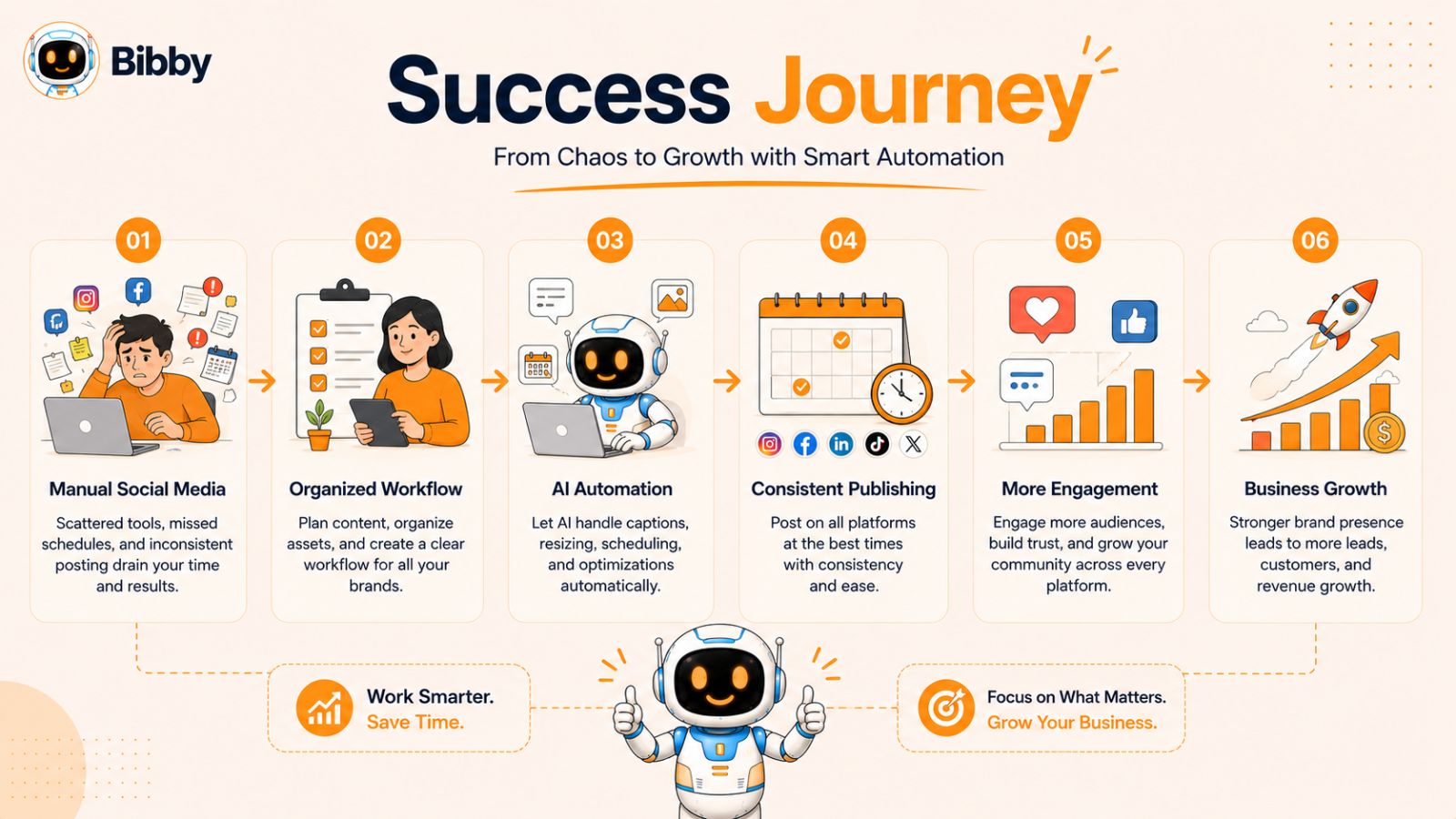
The key to success is combining the right strategy with the right technology. A centralized content calendar keeps your campaigns organized, AI-powered content creation accelerates production, and analytics help you continuously improve your results. Together, these practices make it easier to scale your social media efforts without sacrificing quality.
If you're looking for a simpler way to manage multiple brands, Bibby brings everything together in one intuitive platform. From AI image generation and automatic image resizing to AI-generated captions, smart scheduling, multi-platform publishing, video and Stories support, and built-in analytics, Bibby streamlines your entire social media workflow so you can spend less time managing posts and more time growing your business.
As your social media strategy evolves, the next step is learning how to create a high-performing content calendar that consistently drives engagement, builds stronger communities, and supports your long-term marketing goals.