
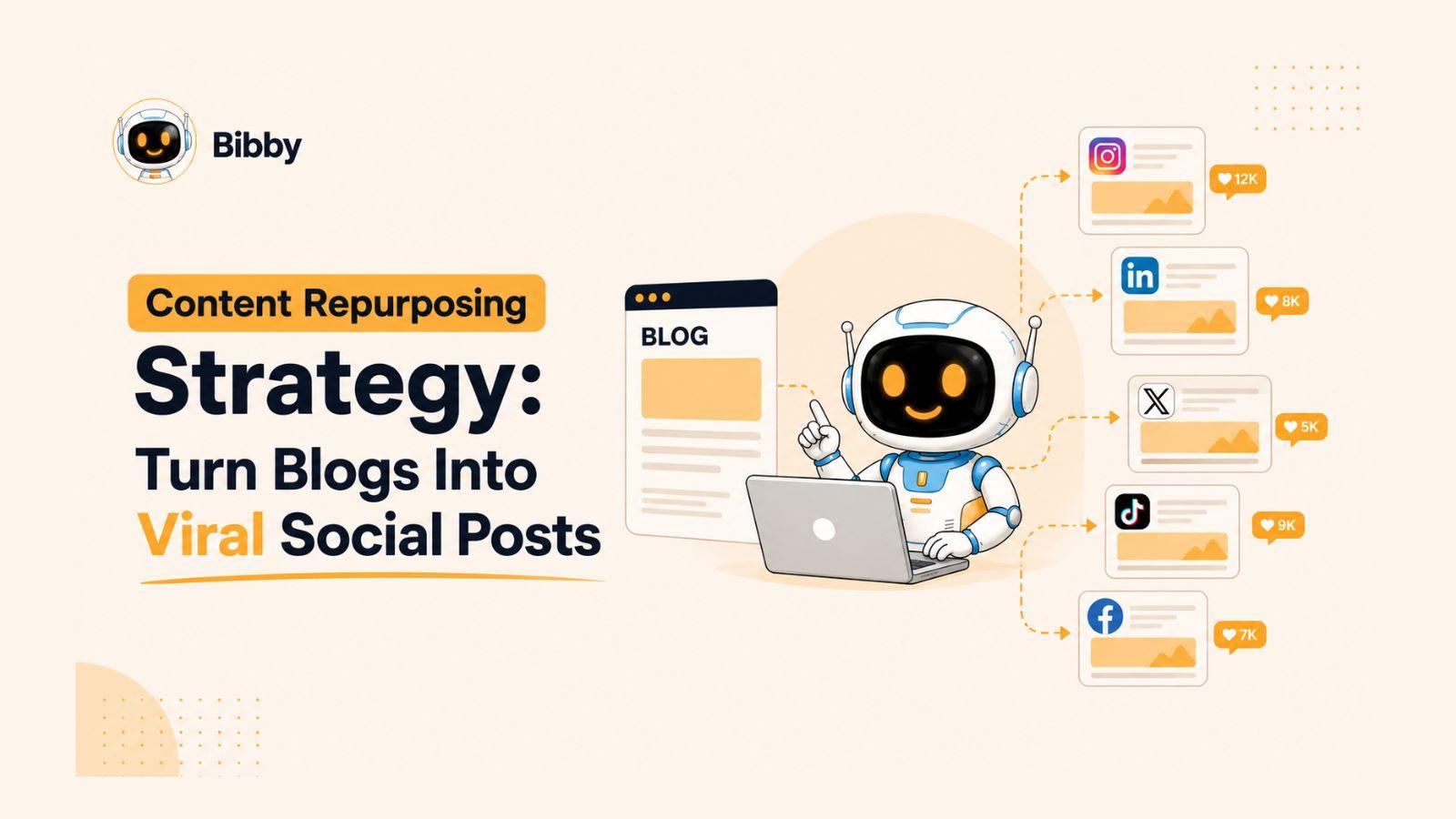
Content repurposing is one of the smartest ways to multiply your content's reach without multiplying your workload.
If you've ever spent hours writing a blog post only to see it fade into obscurity after a few days, you're not alone. The good news is that a single high-quality article can be transformed into weeks—or even months—of engaging social media content that attracts new audiences, drives traffic, and builds your brand consistently.
In this blog, we will look into:
- How to turn one blog into dozens of platform-specific social posts.
- A repeatable workflow that saves time while maximizing content reach.
- How AI and tools like Bibby simplify content creation, scheduling, and analytics.
Instead of constantly creating new content from scratch, let's explore how to make every blog post work harder for your business and generate value long after you hit publish.
What Is Content Repurposing?
Content repurposing is the process of transforming existing content into new formats that are optimized for different platforms and audiences. Instead of creating fresh content for every social media channel, you can take one well-written blog post and turn it into Instagram carousels, LinkedIn posts, Facebook updates, X threads, tiktok videos, YouTube Shorts, email newsletters, infographics, and much more.
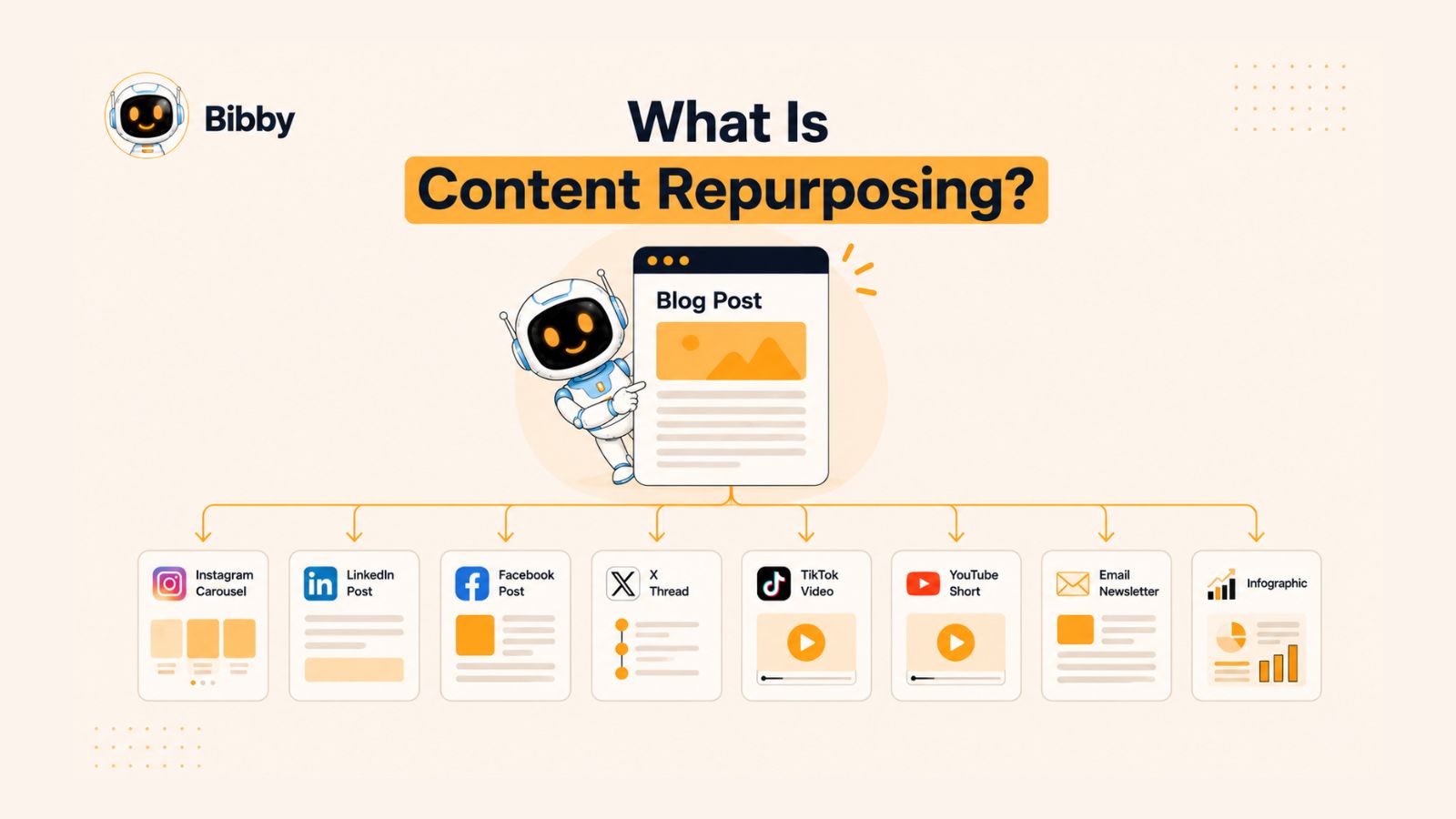
For example, a 2,000-word blog post can easily become:
- 10–20 social media posts
- Multiple Instagram carousel slides
- Several LinkedIn thought leadership posts
- An educational X thread
- Short-form videos for TikTok, Instagram Reels, and YouTube Shorts
- Email newsletter content
- Quote graphics
- FAQ posts
- Downloadable checklists or guides
The key difference between repurposing and simply reposting is customization. Reposting means publishing the exact same content across every platform without any changes. Repurposing means adapting your message to fit the style, audience, and best practices of each platform. An Instagram carousel, for example, should look and read differently from a LinkedIn article or a TikTok video, even if they all originate from the same blog post.
This approach offers significant benefits for businesses, marketers, creators, and agencies alike. Instead of spending countless hours brainstorming and producing entirely new content every day, you maximize the value of the content you've already invested in creating. That means less time creating from scratch and more time engaging your audience, analyzing results, and growing your brand.
Content repurposing also supports your broader content marketing strategy. Sharing the same core ideas in multiple formats helps reinforce your message, reach people who prefer different types of content, and keep your brand visible across multiple platforms. Someone who doesn't read your blog may discover your brand through a LinkedIn post, while another person may engage with your Instagram carousel or TikTok video before eventually visiting your website.
From an SEO perspective, repurposing can indirectly improve your online visibility by driving more traffic back to your blog, increasing brand awareness, attracting backlinks, and encouraging users to spend more time interacting with your content ecosystem. The more places your content appears, the more opportunities you create for people to discover your expertise and share your work.
Rather than viewing each blog post as a one-time publication, think of it as the foundation for an entire content campaign. With a thoughtful content repurposing strategy, a single article can continue generating engagement, website traffic, and leads long after it has been published.
Why Every Blog Post Should Become Multiple Pieces of Content
Creating a high-quality blog post takes time. From researching your topic and optimizing for SEO to writing, editing, and publishing, each article represents a significant investment. If that content is only published once and then forgotten, you're leaving valuable opportunities on the table.
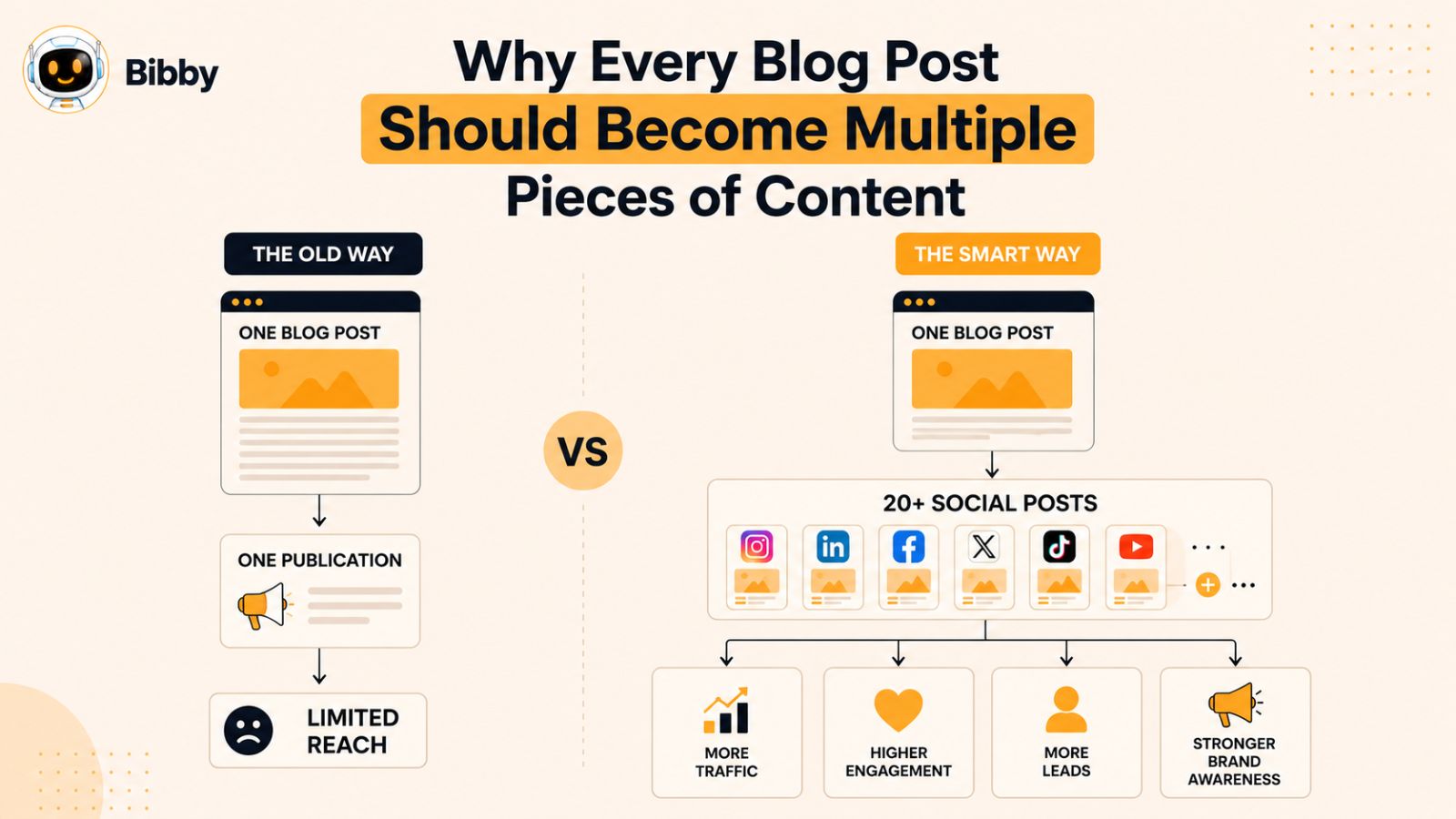
Repurposing allows you to maximize the return on every piece of content you create. Instead of constantly starting from scratch, you can extract key insights, tips, quotes, statistics, and examples from a single blog and distribute them across multiple social media platforms. This strategy keeps your content working long after it goes live.
Maximize Your Content ROI
Think of every blog post as a content library rather than a single asset. A comprehensive article can generate:
- Educational LinkedIn posts
- Instagram carousel slides
- Facebook discussions
- X (Twitter) threads
- TikTok and Instagram Reels
- YouTube Shorts
- Email newsletter snippets
- Quote graphics
- Infographics
- FAQ posts
By creating multiple content formats from one source, you increase the value of every hour spent researching and writing.
Reach Different Audiences
Not everyone consumes content in the same way. Some people enjoy reading detailed blog posts, while others prefer watching short videos, scrolling through image carousels, or reading concise social media updates.
Repurposing allows you to meet your audience where they already spend their time. Someone who never visits your blog might discover your expertise through a LinkedIn post, while another person may first encounter your brand on Instagram or TikTok before becoming a loyal reader or customer.
Increase Brand Visibility
Publishing consistently across multiple platforms helps keep your brand top of mind. Every social media post creates another opportunity for your audience to interact with your content, share it with others, and visit your website.
Instead of relying on a single blog post to generate traffic, you're building an interconnected content ecosystem where every post reinforces your message and directs people back to your most valuable resources.
Extend the Lifespan of Evergreen Content
Many blog posts remain valuable long after they're published. Evergreen topics, tutorials, guides, and case studies can continue attracting readers for months or even years.
Repurposing ensures these articles continue reaching new audiences. Rather than allowing great content to disappear into your archive, you can regularly refresh and redistribute it in new formats that feel timely and relevant.
Maintain a Consistent Posting Schedule
One of the biggest challenges in social media marketing is consistently producing fresh content. Repurposing solves this problem by giving you a steady pipeline of ready-to-use ideas.
Instead of wondering what to post each day, you can build an editorial calendar around your existing blog content. This approach reduces creative fatigue, saves time, and helps maintain a reliable publishing schedule that keeps your audience engaged.
Save Time with AI and Automation
Modern AI-powered tools make content repurposing even more efficient. Rather than manually resizing images, writing unique captions, and scheduling each post individually, platforms like Bibby streamline the entire process.
With Bibby, you can upload your own image or generate one using AI, choose a posting style that matches your brand, and let the platform automatically create captions tailored for your content. Bibby also takes care of image sizing for different social media platforms, schedules posts across Facebook, Instagram, LinkedIn, YouTube, TikTok, and more at AI-optimized times, and provides analytics to help you understand what's performing best. Whether you're publishing images, videos, or Stories, Bibby helps you manage your entire social media workflow from one intuitive dashboard.
The result is simple: you spend less time managing content and more time growing your audience and business.
Also read: Social Media Growth Myths vs Reality: What Actually Works Today →
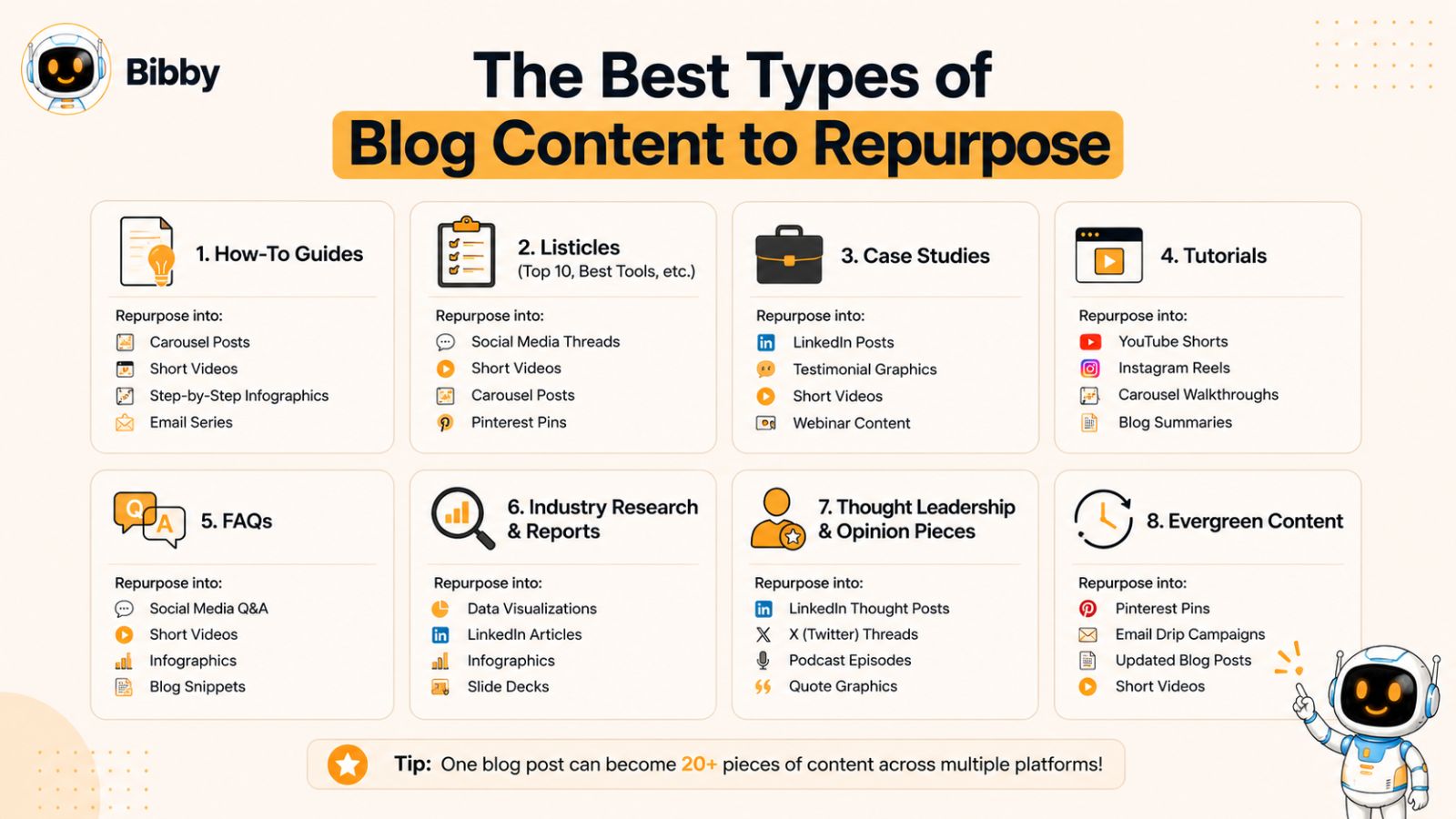
The Best Types of Blog Content to Repurpose
Not every blog post offers the same repurposing potential. While almost any piece of content can be adapted for social media, some formats naturally provide more opportunities to create engaging posts, videos, carousels, and discussions.
The most effective content repurposing strategy starts with creating evergreen, value-packed articles that can be broken down into multiple standalone pieces. Below are the blog formats that consistently deliver the highest return when repurposed across social media platforms.
1. How-To Guides
How-to articles are among the easiest types of content to repurpose because they're already organized into clear, actionable steps.
For example, a guide titled "How to Improve Your Website's SEO" can become:
- A LinkedIn post highlighting the top three SEO tips.
- An Instagram carousel explaining each optimization step.
- A YouTube Short demonstrating one quick SEO improvement.
- A TikTok video sharing a common SEO mistake.
- An X thread summarizing the complete process.
Each section of your guide can stand on its own while encouraging readers to visit the full article for more details.
2. Listicles
List-based articles naturally divide into bite-sized pieces of content.
An article like "25 Social Media Marketing Tips" can easily generate weeks of posts by turning each tip into:
- A motivational graphic.
- A short educational video.
- A carousel slide.
- A LinkedIn insight.
- A Facebook discussion question.
Instead of publishing all 25 tips at once, you can release them individually over several weeks to keep your audience engaged.
3. Case Studies
People love real-world examples because they demonstrate what actually works.
Case studies can be repurposed into:
- Before-and-after graphics.
- Customer success stories.
- LinkedIn thought leadership posts.
- Short testimonial videos.
- Quote graphics featuring key results.
- Statistics-based social posts.
Sharing measurable outcomes builds credibility and encourages trust in your expertise.
4. Tutorials and Step-by-Step Walkthroughs
Detailed tutorials are ideal for creating educational content across multiple formats.
You can transform individual steps into:
- Instagram Reels.
- TikTok tutorials.
- YouTube Shorts.
- LinkedIn documents.
- Story sequences.
- Downloadable checklists.
This allows you to teach one concept at a time while directing viewers to your complete guide.
5. Frequently Asked Questions (FAQs)
FAQ sections are often overlooked, but they're perfect for social media.
Each question can become:
- A quick social post.
- A short video answer.
- An Instagram Story.
- A LinkedIn tip.
- A YouTube Short.
Answering common questions also positions your brand as a helpful and trustworthy resource.
6. Industry Statistics and Research
Data-driven content performs well because people enjoy sharing surprising facts and insights.
Repurpose statistics into:
- Infographics.
- Carousel slides.
- LinkedIn data posts.
- X threads.
- Educational videos.
- Quote graphics.
Whenever possible, include credible sources and explain what the numbers mean for your audience.
7. Opinion and Thought Leadership Articles
Sharing your perspective helps differentiate your brand from competitors.
Opinion pieces can become:
- LinkedIn articles.
- Personal stories.
- Discussion starters.
- Live video topics.
- Podcast talking points.
- Short-form videos.
These formats encourage conversation and help establish authority within your industry.
8. Evergreen Educational Content
Evergreen content continues delivering value long after publication, making it one of the best investments for content repurposing.
Examples include:
- Beginner guides.
- Glossaries.
- Best practices.
- Checklists.
- Resource collections.
- Ultimate guides.
Because these topics remain relevant over time, you can refresh and republish them regularly without creating entirely new content.
Choose Quality Over Quantity
The most successful repurposing strategies begin with high-quality blog content. A well-researched, comprehensive article offers dozens of opportunities to create valuable social media posts without feeling repetitive.
Once your blog is published, the next step is turning it into platform-specific content that feels native to each social network. Rather than copying and pasting the same message everywhere, you'll adapt your content to match the style, audience, and format that performs best on each platform.
Also read: The Perfect Post Length for Instagram, Facebook, LinkedIn, and X in 2026 →
How to Turn One Blog Into Content for Every Platform
One of the biggest mistakes businesses make is publishing the same post across every social media platform. While the core message may remain the same, each platform has its own audience, content style, and algorithm. Successful content repurposing means adapting your blog into formats that feel native to each platform.
Let's look at how a single blog post can be transformed into engaging content across the most popular social networks.
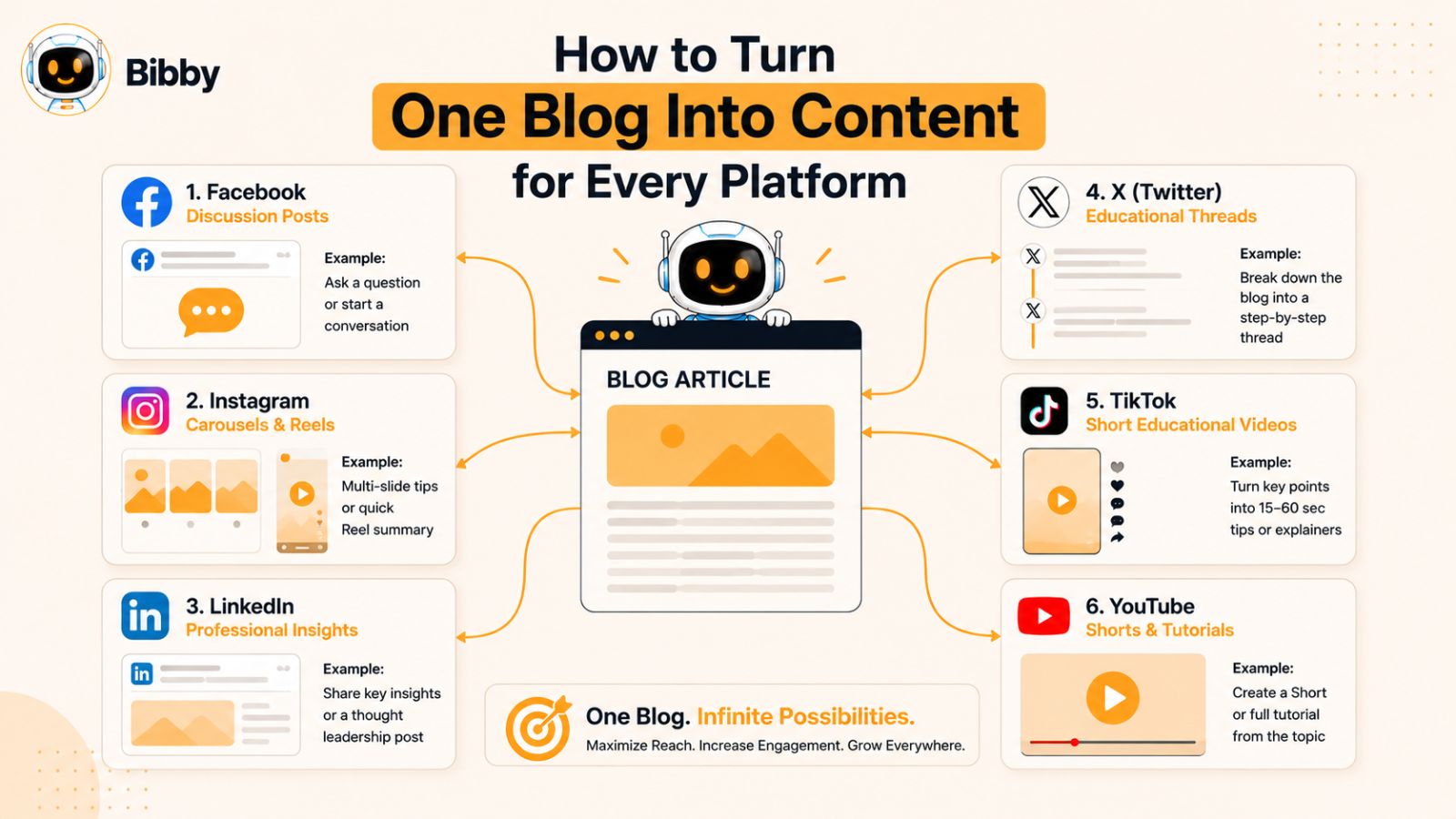
Facebook continues to be an effective platform for building communities and encouraging conversations. Rather than sharing a simple blog link, create posts that invite discussion and provide immediate value.
You can repurpose your blog into:
- Educational posts that summarize key takeaways.
- Carousel posts highlighting important tips.
- Polls and questions that encourage comments.
- Success stories and customer experiences.
- Infographics that simplify complex ideas.
- Short videos introducing the main concepts.
Always include a clear call to action that encourages readers to visit your full blog for additional insights.
Instagram is a highly visual platform, making it perfect for transforming blog content into eye-catching graphics and videos.
Ideas include:
- Carousel posts that explain one concept per slide.
- Reels featuring quick tutorials or practical tips.
- Stories with polls, quizzes, and behind-the-scenes content.
- Quote graphics showcasing memorable insights.
- Before-and-after visuals for case studies.
- Educational infographics.
Focus on delivering one valuable idea at a time rather than trying to summarize the entire blog in a single post.
LinkedIn audiences appreciate educational, professional, and thought-provoking content. Repurpose your blog into posts that demonstrate expertise and encourage meaningful conversations.
Effective formats include:
- Industry insights.
- Professional lessons learned.
- Mini case studies.
- Data-driven observations.
- Document posts and carousels.
- Personal experiences related to your topic.
Instead of sounding promotional, aim to teach, inform, and start discussions that add value to your professional network.
X (formerly Twitter)
X is ideal for concise, high-value content. Break your blog into a series of short posts that are easy to consume and share.
Repurpose your content as:
- Educational threads.
- Quick productivity tips.
- Industry statistics.
- Quotes from your article.
- Myth-versus-fact posts.
- Questions that spark conversation.
Each post should stand on its own while encouraging readers to explore the complete article for more depth.
TikTok
TikTok rewards authentic, educational, and engaging short-form videos. Your blog can serve as the script for dozens of quick videos.
Popular ideas include:
- "Three quick tips" videos.
- Common mistakes to avoid.
- Step-by-step tutorials.
- Industry myths.
- Frequently asked questions.
- Behind-the-scenes content showing your process.
Keep videos concise, hook viewers within the first few seconds, and end with a clear next step for viewers who want to learn more.
YouTube
YouTube offers opportunities to create both long-form and short-form content from your blog.
You can repurpose your article into:
- Educational YouTube Shorts.
- Full-length tutorials.
- Screen-recorded demonstrations.
- Explainer videos.
- Webinars.
- Podcast-style discussions.
Long-form videos allow you to expand on your blog's ideas, while Shorts can highlight individual tips that drive viewers back to your website.
Streamline the Entire Workflow with Bibby
Creating content for multiple platforms manually can quickly become overwhelming. Resizing images, writing unique captions, choosing the best posting times, and scheduling content across several platforms often takes more time than writing the original blog.
This is where Bibby simplifies the process.
After publishing your blog, you can upload your own images or generate new visuals with AI directly in Bibby. The platform automatically prepares your creatives in the correct dimensions for each social media platform, so you don't have to worry about resizing or formatting.
Next, simply choose your preferred posting style. Bibby's AI generates platform-appropriate captions, helping you maintain a consistent brand voice while saving hours of manual writing.
Once your content is ready, Bibby schedules posts at AI-optimized times across Facebook, Instagram, LinkedIn, YouTube, TikTok, and other supported platforms. Instead of manually publishing every day, you can plan weeks or even months of content in advance.
Bibby also supports videos, Stories, and multi-platform campaigns from the same intuitive dashboard. After your content is published, built-in analytics help you monitor engagement, identify your best-performing posts, and refine your strategy over time.
By combining a strong content repurposing strategy with automation, you can consistently publish high-quality content, reach audiences on every major platform, and spend more time creating valuable content instead of managing repetitive tasks.
A Repeatable Content Repurposing Workflow
The secret to successful content repurposing isn't creating more content—it's following a repeatable system. When every blog post goes through the same workflow, you can consistently produce weeks of social media content without reinventing your process every time.
Whether you're a solo creator, a marketing team, or an agency managing multiple clients, this workflow helps you stay organized, save time, and maximize the value of every article you publish.
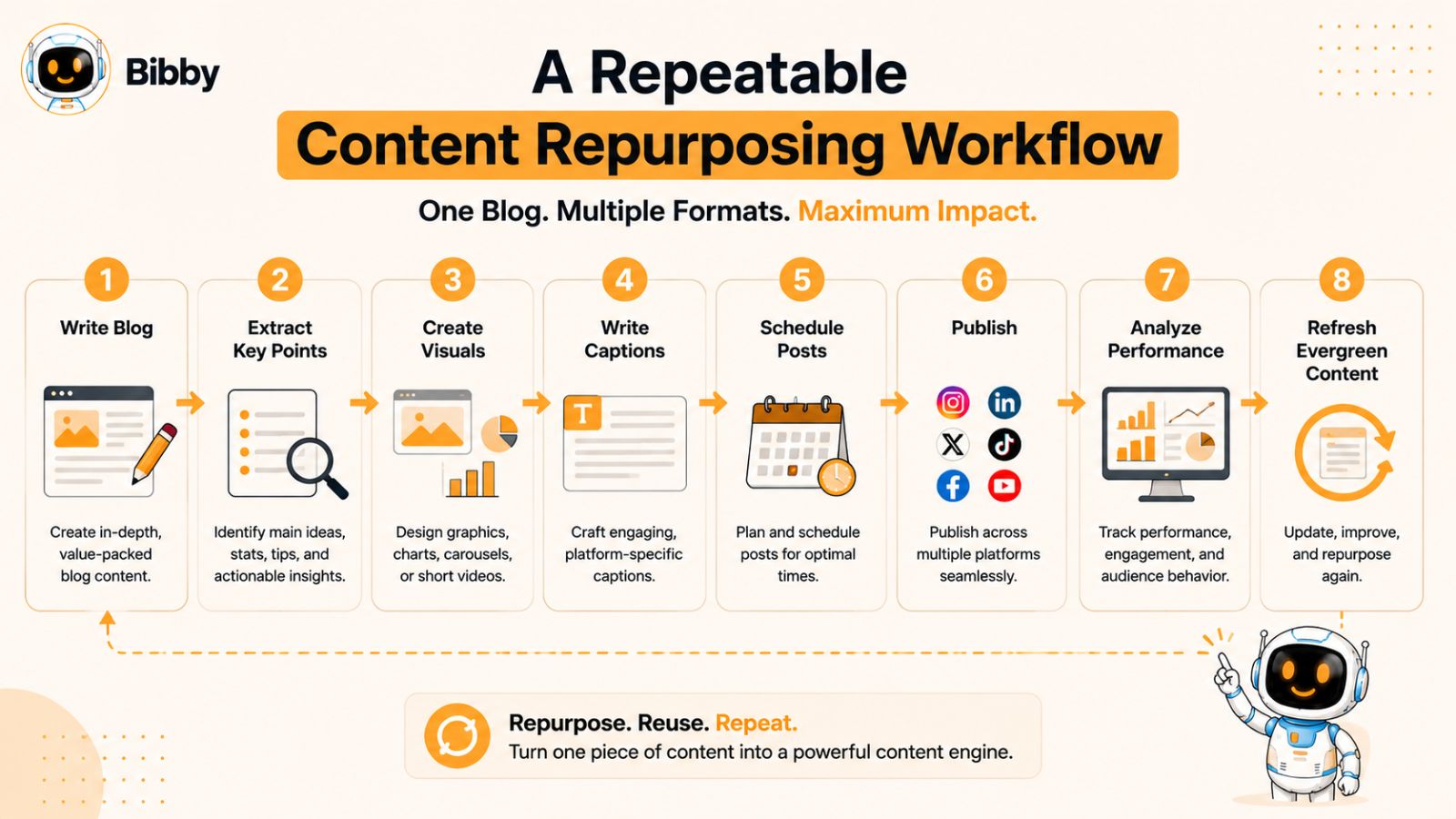
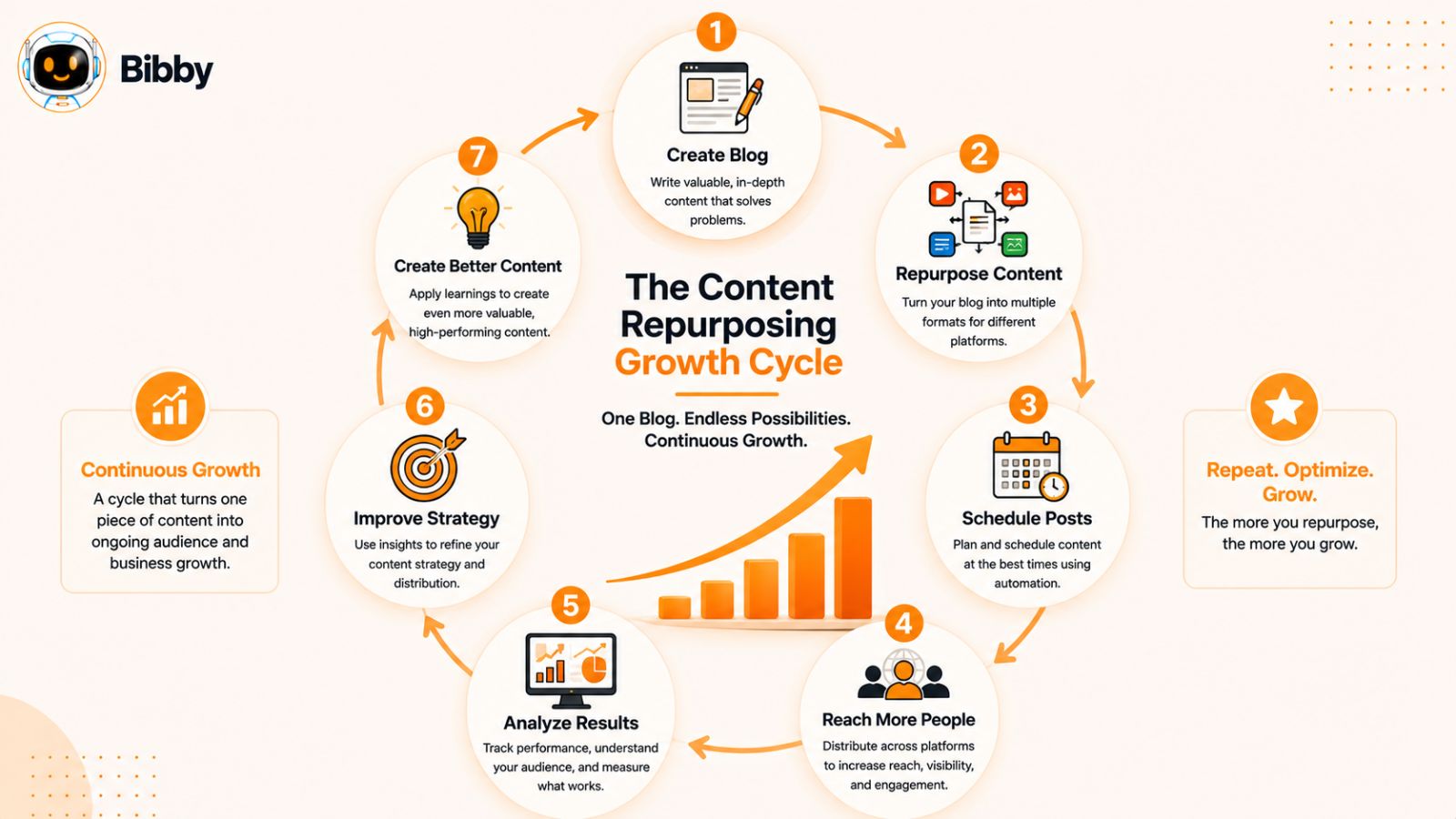
Step 1: Publish a High-Quality Blog Post
Everything starts with a comprehensive, value-driven blog post. The more detailed and actionable your article is, the more content you'll have to repurpose later.
Aim to include:
- Actionable tips
- Step-by-step instructions
- Statistics and research
- Quotes
- Checklists
- Frequently asked questions
- Real-world examples
- Strong calls to action
Think of your blog as the master content asset that will fuel all of your future social media posts.
Step 2: Identify Your Best Content
Read through your article and highlight the sections that can stand on their own.
Look for:
- Key takeaways
- Interesting facts
- Memorable quotes
- Practical tips
- Common mistakes
- Success stories
- Statistics
- Frequently asked questions
Each of these can become a separate piece of social media content.
Step 3: Match Content to the Right Platform
Not every piece of content belongs on every platform. Choose formats that align with how people consume content on each channel.
For example:
| Platform | Best Content Formats |
|---|---|
| Discussions, images, videos, community questions | |
| Carousels, Reels, Stories, graphics | |
| Professional insights, documents, case studies | |
| X | Threads, tips, statistics, quick insights |
| TikTok | Educational videos, tutorials, trends |
| YouTube | Shorts, tutorials, explainers, webinars |
Tailoring your content to each platform increases engagement and helps your posts feel native instead of repetitive.
Step 4: Create Visual Assets
Visual content captures attention faster than text alone.
Create supporting assets such as:
- Carousel graphics
- Quote cards
- Infographics
- Video thumbnails
- Short video clips
- Animated graphics
Keep your branding consistent by using the same colors, fonts, and visual style across every platform.
Step 5: Write Platform-Specific Captions
Each platform has its own tone and audience expectations.
For example:
- LinkedIn captions can be more professional and educational.
- Instagram captions often encourage storytelling.
- Facebook captions should invite discussion.
- X posts should be concise and direct.
- TikTok captions should quickly reinforce the video's main message.
Rather than copying the same caption everywhere, tailor it to the platform while keeping your core message consistent.
Step 6: Automate Scheduling
Publishing manually every day is time-consuming and often leads to inconsistent posting.
Instead, batch your content and schedule it in advance.
Using Bibby, you can simplify this step significantly. Upload your visuals—or generate them with AI—select your preferred posting style, and let Bibby create optimized captions for each post. The platform also formats your images for different social networks and schedules them across Facebook, Instagram, LinkedIn, YouTube, TikTok, and other supported channels at AI-optimized posting times.
Instead of logging into multiple platforms every day, you can manage your entire publishing calendar from one place.
Step 7: Monitor Analytics
Publishing content is only half the process. Measuring performance helps you understand what resonates with your audience.
Track metrics such as:
- Reach
- Engagement
- Shares
- Comments
- Click-through rate
- Website traffic
- Follower growth
- Conversions
Over time, these insights reveal which topics, formats, and platforms deliver the best results.
Bibby's built-in analytics make it easy to review performance across your connected social accounts, helping you identify successful campaigns and refine future content.
Step 8: Refresh and Republish Evergreen Content
Your best-performing blog posts shouldn't disappear after one promotion cycle.
Every few months:
- Update outdated information.
- Add new examples or statistics.
- Refresh visuals.
- Create new captions.
- Generate additional short-form videos.
- Reshare the updated content.
This keeps evergreen articles relevant while continuously attracting new readers and engagement.
Build a System That Scales
When you follow the same workflow for every blog post, content repurposing becomes predictable, efficient, and scalable. Instead of scrambling to create something new every day, you'll always have a library of high-quality content ready to publish.
Combined with AI-powered tools like Bibby, this workflow reduces manual work, streamlines scheduling, and helps you maintain a consistent presence across every major social media platform. The result is a sustainable content marketing strategy that saves time, increases visibility, and helps you get more value from every blog you create.
Also read: TikTok Growth Hacks Backed by Data: 21 Proven Strategies That Actually Work →
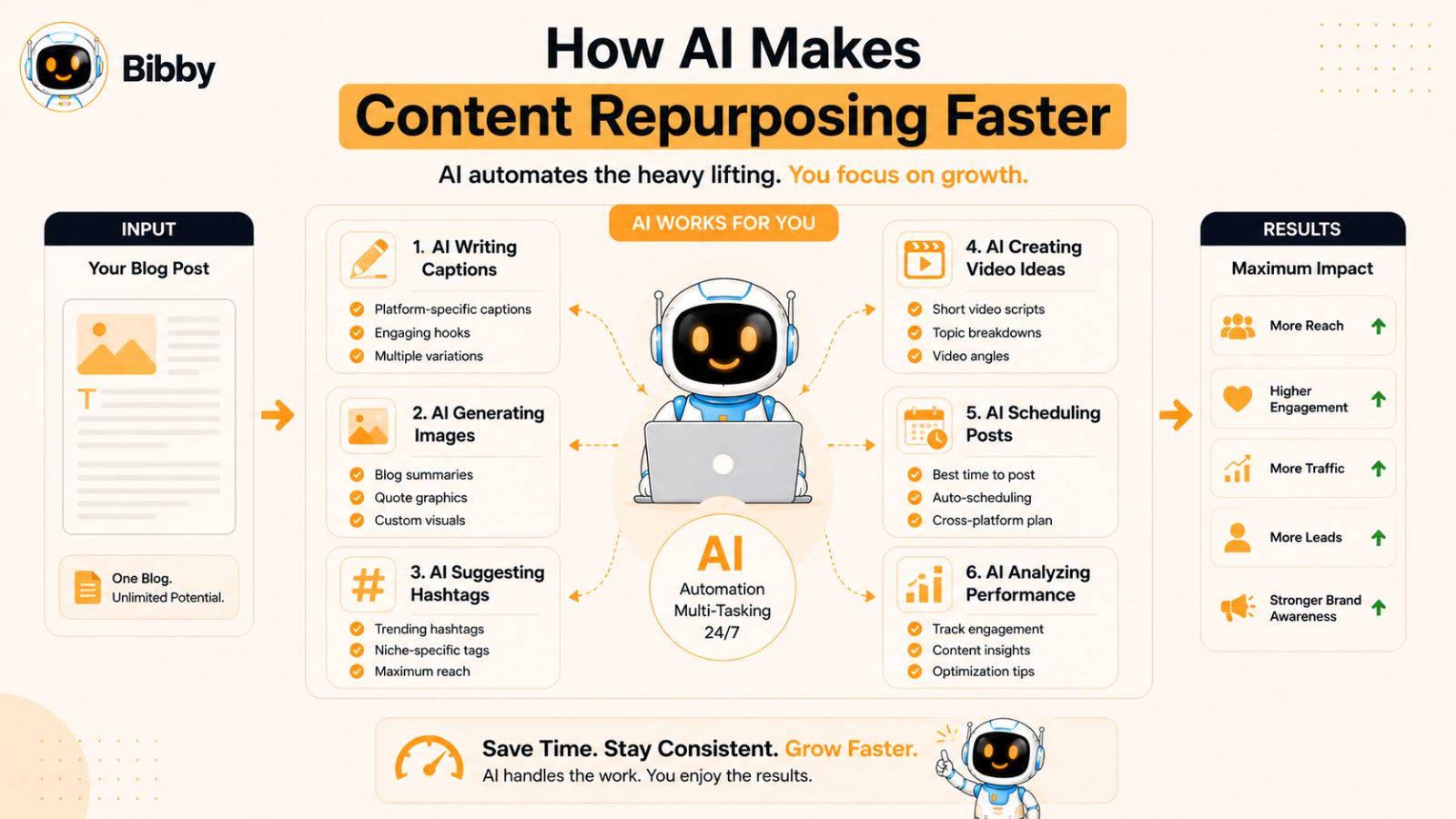
How AI Makes Content Repurposing Faster
Artificial intelligence has transformed the way businesses create and distribute content. Tasks that once required hours of manual effort—brainstorming ideas, designing graphics, writing captions, and scheduling posts—can now be completed in minutes with the right AI-powered tools.
Instead of replacing creativity, AI helps eliminate repetitive work, allowing marketers and creators to focus on strategy, storytelling, and building stronger relationships with their audiences.
Generate Social Media Captions in Seconds
Writing unique captions for every platform can quickly become one of the most time-consuming parts of content repurposing. A single blog may produce dozens of posts, each requiring a different tone, length, and call to action.
AI can analyze your blog content and generate captions tailored for platforms like Facebook, Instagram, LinkedIn, TikTok, and YouTube. Rather than starting with a blank page every time, you receive a solid first draft that you can review and personalize to match your brand voice.
This not only speeds up content creation but also helps maintain consistency across your marketing campaigns.
Create Images with AI
Visual content plays a major role in social media engagement, but designing graphics for multiple platforms often requires additional tools and design experience.
AI image generation makes this process much easier. Instead of creating every visual manually, you can generate custom graphics that align with your blog topic, campaign, or brand identity. These images can then be used for social posts, carousel slides, blog banners, Stories, or promotional campaigns.
When combined with platform-specific image sizing, AI helps ensure your visuals look professional wherever they're published.
Turn Long Articles into Short-Form Content
A comprehensive blog contains numerous ideas that can be separated into smaller, standalone pieces of content.
AI can help identify:
- Key takeaways
- Actionable tips
- Frequently asked questions
- Quotes
- Statistics
- Calls to action
- Video scripts
- Carousel outlines
This makes it easier to transform one article into a complete content campaign without manually reviewing every paragraph.
Generate New Content Ideas
Sometimes your existing blog can inspire entirely new content.
AI can suggest:
- Follow-up blog topics
- Video ideas
- Podcast discussions
- Webinar concepts
- Email newsletters
- FAQ articles
- Social media series
These suggestions help you build a connected content ecosystem where every piece supports the next.
Optimize Your Publishing Schedule
Knowing what to post is only part of the equation. Publishing at the right time also influences how many people see and engage with your content.
Many AI-powered platforms analyze audience behavior to recommend the best posting times based on historical engagement data. Instead of relying on guesswork, you can schedule content when your audience is most likely to be active.
Over time, this data-driven approach helps improve reach and engagement without requiring constant manual adjustments.
Learn from Analytics
One of AI's biggest strengths is its ability to process large amounts of performance data.
Modern analytics tools can help identify:
- Which topics receive the most engagement.
- Which platforms drive the most traffic.
- What posting times perform best.
- Which content formats generate the most shares.
- Which campaigns deliver the highest conversions.
Rather than relying on assumptions, you can use these insights to continuously improve your content strategy.
Automate the Entire Process with Bibby
Managing multiple social media accounts often involves juggling different image sizes, caption styles, publishing schedules, and analytics dashboards. Bibby brings these tasks together into one streamlined workflow, making content repurposing significantly easier.
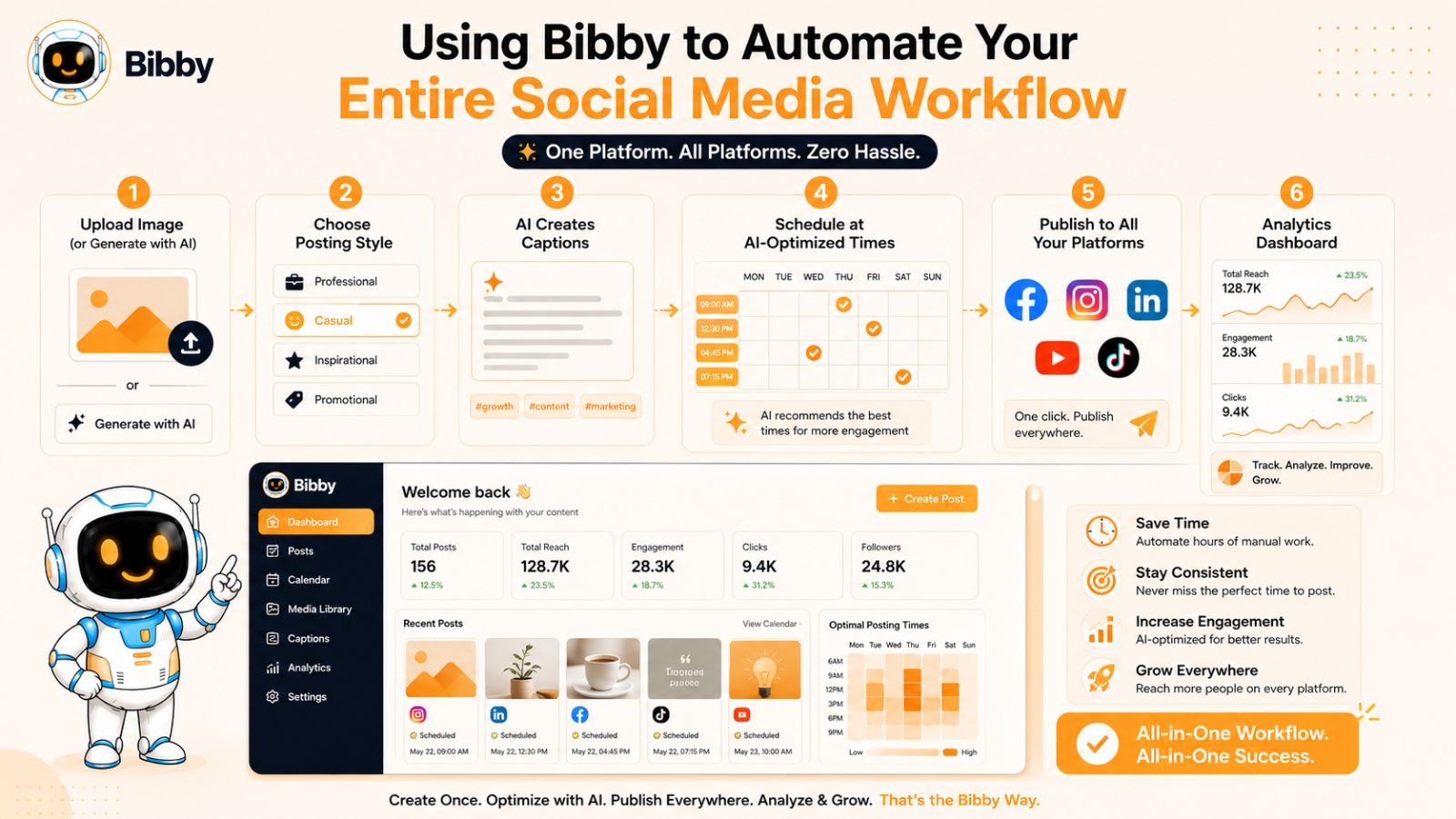
After publishing your blog, simply upload your own image or generate one with AI directly inside Bibby. The platform automatically prepares your visuals in the correct dimensions for every supported social network, eliminating the need to resize assets manually.
Next, choose the posting style that best matches your brand or campaign. Bibby's AI generates captions designed for different platforms, helping you maintain a consistent voice while adapting your message to each audience.
When your content is ready, Bibby schedules it across Facebook, Instagram, LinkedIn, YouTube, TikTok, and other connected platforms at AI-optimized posting times. You can also publish videos, Stories, and multi-platform campaigns from the same dashboard, reducing the need to switch between multiple tools.
Once your posts are live, Bibby's built-in analytics provide valuable insights into engagement, reach, clicks, and overall campaign performance. By understanding which content resonates most with your audience, you can refine future campaigns and continue improving your content repurposing strategy.
The combination of AI and automation allows you to spend less time on repetitive tasks and more time creating valuable content, engaging with your audience, and growing your business.
Common Content Repurposing Mistakes
Content repurposing is one of the most effective ways to increase the reach of your marketing efforts, but simply publishing the same content everywhere isn't enough. To get the best results, you need a strategy that respects each platform, your audience's preferences, and your overall marketing goals.
Avoiding the following common mistakes will help you create content that feels fresh, delivers value, and consistently drives engagement.
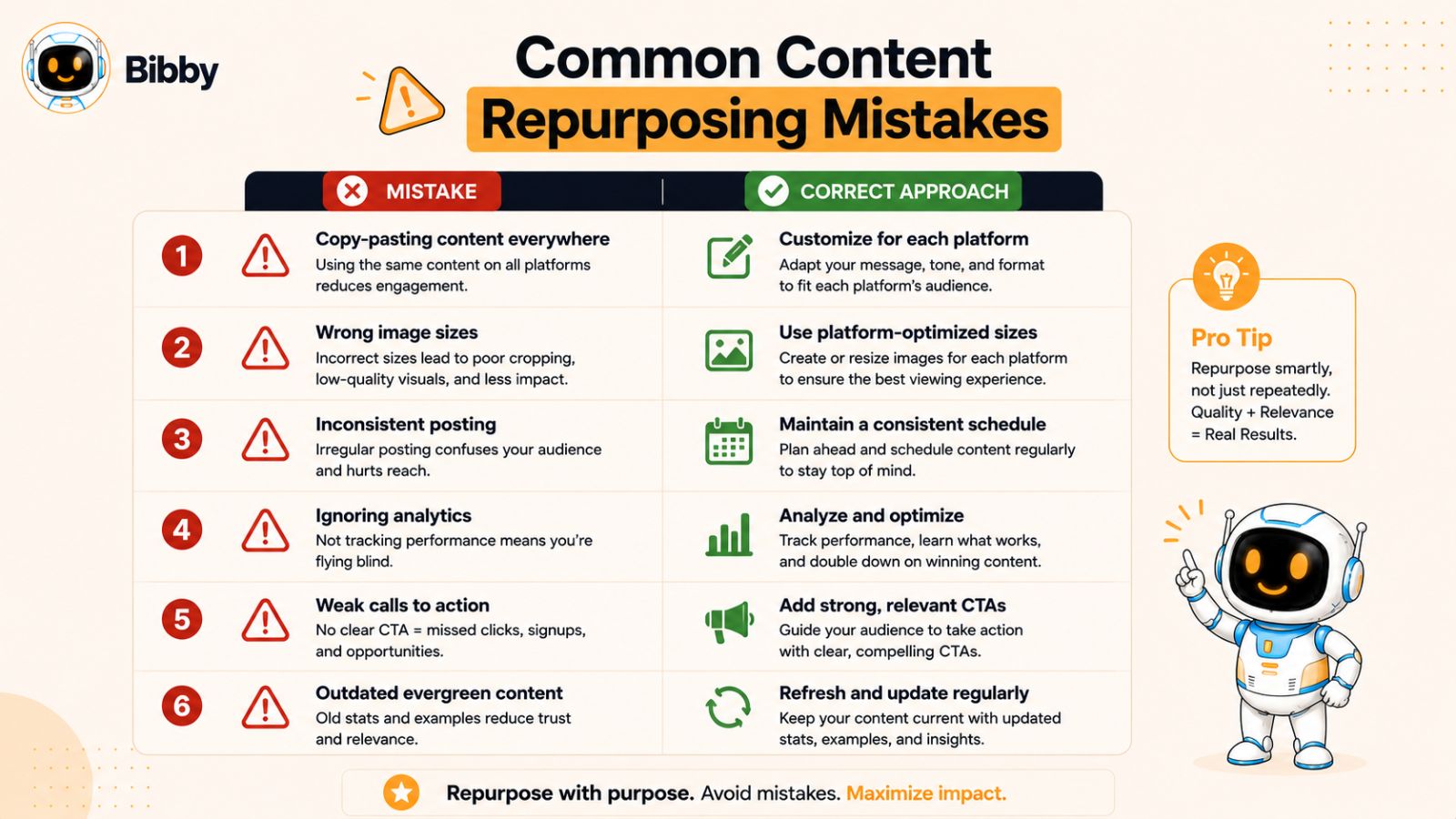
1. Posting the Exact Same Content Everywhere
One of the biggest mistakes is copying and pasting identical captions, images, and videos across every social media platform.
Each platform has a unique audience and content style. What performs well on LinkedIn may not resonate on TikTok, while an Instagram carousel won't necessarily work as an X thread.
Instead, adapt your content by:
- Adjusting the tone of your caption.
- Changing the format to suit the platform.
- Using platform-specific calls to action.
- Highlighting different takeaways from the same blog.
The goal is to deliver the same message in ways that feel natural to each audience.
2. Ignoring Visual Optimization
Great content deserves great presentation.
Using the wrong image dimensions, low-quality graphics, or cluttered designs can reduce engagement and make your content appear less professional.
Always ensure your visuals are:
- High resolution.
- Easy to read.
- Consistent with your branding.
- Optimized for each platform's recommended dimensions.
Tools like Bibby simplify this process by automatically preparing your images for different social media platforms, saving time while maintaining a polished appearance.
3. Trying to Repurpose Every Single Blog
Not every blog post is worth turning into dozens of social media posts.
Instead, focus on repurposing content that:
- Solves common problems.
- Generates consistent website traffic.
- Contains evergreen information.
- Performs well in search engines.
- Receives strong audience engagement.
High-value content provides far more opportunities for successful repurposing than short news updates or time-sensitive announcements.
4. Forgetting Strong Calls to Action
Even the most informative post should guide readers toward the next step.
Depending on your goals, encourage your audience to:
- Read the full blog.
- Watch a video.
- Download a resource.
- Leave a comment.
- Share the post.
- Subscribe to your newsletter.
- Contact your business.
Without a clear call to action, valuable engagement opportunities can be lost.
5. Posting Inconsistently
Publishing several posts one week and then disappearing for a month makes it difficult to build momentum.
Consistency helps your audience know when to expect new content while also increasing your visibility across social media platforms.
Creating a content calendar and scheduling posts in advance ensures your marketing remains active, even during busy periods.
6. Ignoring Performance Analytics
Many marketers focus entirely on creating content but rarely review how it performs.
Regularly monitor metrics such as:
- Engagement rate
- Reach
- Click-through rate
- Shares
- Comments
- Website traffic
- Conversions
These insights reveal which content formats, topics, and platforms deliver the strongest results, allowing you to improve future campaigns.
Bibby's built-in analytics make it easier to monitor your social media performance from one dashboard, helping you identify successful content and optimize your strategy over time.
Also read: AI Social Media Manager: What It Is and How It Works →
7. Letting Evergreen Content Go Stale
Evergreen content should continue working for your business long after it's published.
Review your best-performing articles periodically to:
- Update outdated information.
- Add new statistics.
- Improve examples.
- Refresh visuals.
- Create new videos.
- Rewrite captions for future campaigns.
Refreshing existing content often delivers better results than constantly creating new material from scratch.
Build Better Habits for Long-Term Success
Successful content repurposing isn't about producing more content—it's about making smarter use of the content you already have. By customizing posts for each platform, maintaining a consistent publishing schedule, monitoring performance, and regularly updating evergreen content, you can maximize the impact of every blog you publish.
Combined with an efficient workflow and AI-powered automation through Bibby, avoiding these common mistakes will help you create a scalable content marketing system that saves time while consistently reaching new audiences.
Content Repurposing Best Practices
A successful content repurposing strategy goes beyond simply creating more social media posts. The goal is to maximize the value of every blog while delivering content that feels authentic, relevant, and engaging on each platform.
The following best practices will help you build a sustainable workflow that consistently drives traffic, engagement, and long-term growth.
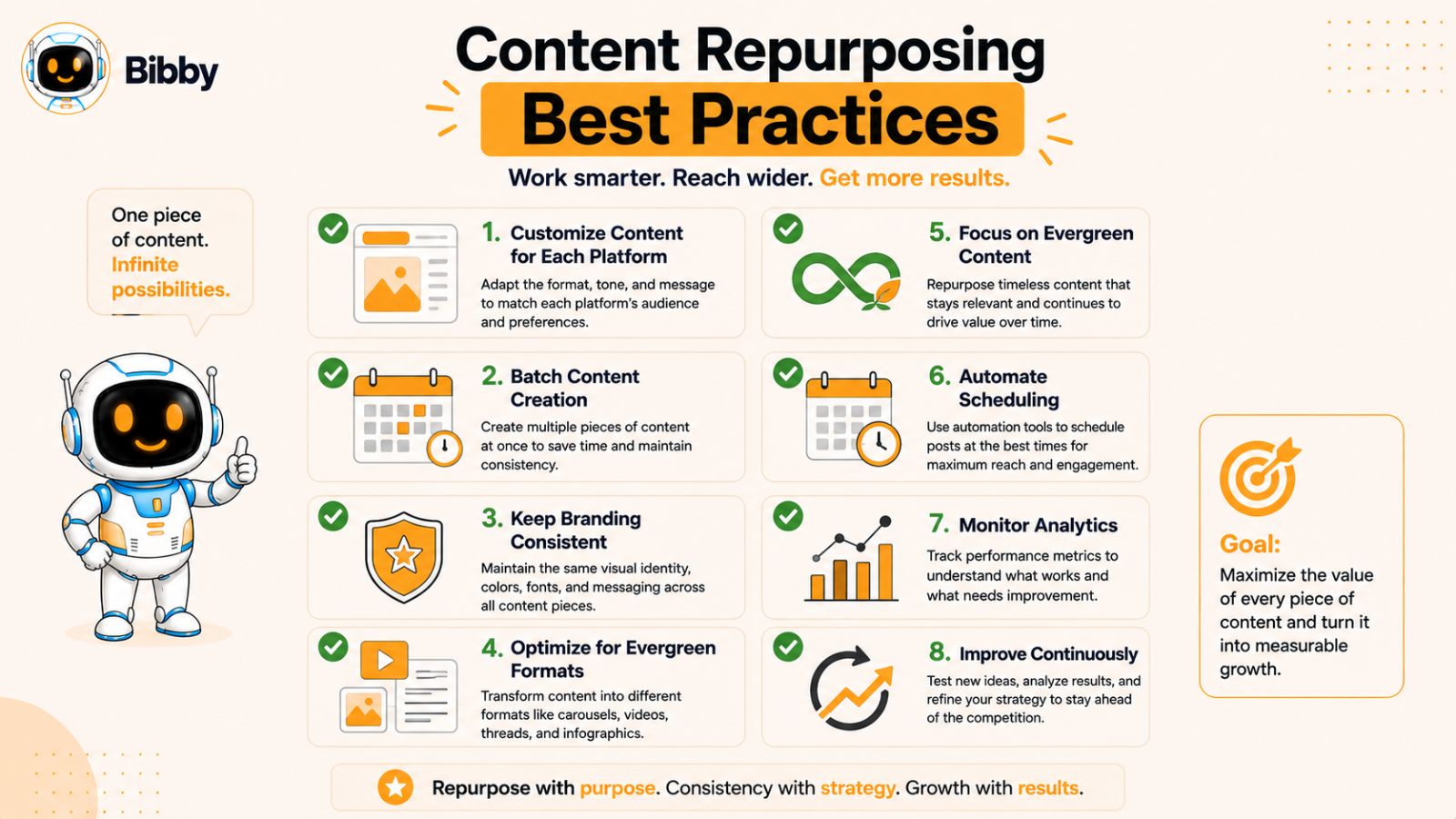
Customize Content for Every Platform
Every social media platform has its own audience, preferred content formats, and engagement patterns. While your core message should remain consistent, the way you present it should change.
For example:
- Turn a blog section into an Instagram carousel with visual tips.
- Expand a key insight into a LinkedIn thought leadership post.
- Create a short educational video for TikTok or Instagram Reels.
- Summarize actionable advice in an X thread.
- Record a detailed YouTube tutorial that explores the topic further.
Tailoring your content to each platform improves user experience and increases the likelihood of engagement.
Start with Your Best-Performing Content
Not every blog deserves the same level of promotion. Begin by repurposing articles that have already proven their value.
Look for blog posts that:
- Rank well in search engines.
- Generate consistent organic traffic.
- Receive high engagement.
- Attract backlinks.
- Convert readers into leads or customers.
Expanding the reach of successful content often produces better results than investing time in content that has shown little interest from your audience.
Focus on Evergreen Topics
Evergreen content remains relevant long after publication, making it an excellent foundation for ongoing social media campaigns.
Topics such as beginner guides, tutorials, best practices, checklists, and frequently asked questions can be refreshed and republished regularly without losing their value.
This approach allows you to build a content library that continues attracting new audiences over time.
Maintain Consistent Branding
Your audience should recognize your content regardless of where they discover it.
Keep your branding consistent by using:
- The same logo.
- Brand colors.
- Typography.
- Visual style.
- Tone of voice.
- Messaging.
Consistency builds trust and makes your content instantly recognizable across multiple platforms.
Batch Your Content Creation
Switching between writing, designing, editing, and scheduling throughout the week can reduce productivity.
Instead, dedicate specific time blocks to each task.
For example:
- Monday: Publish your blog.
- Tuesday: Create graphics and videos.
- Wednesday: Write captions.
- Thursday: Schedule posts.
- Friday: Review analytics and optimize future content.
Batching similar tasks helps maintain focus and significantly reduces context switching.
Also read: How Local Shops Can Attract More Customers Through Social Media in 2026 →
Use Automation Wherever Possible
Manual publishing may work when managing one or two accounts, but it quickly becomes inefficient as your content strategy grows.
Automation allows you to:
- Schedule weeks of content in advance.
- Maintain a consistent posting schedule.
- Reduce repetitive work.
- Coordinate campaigns across multiple platforms.
- Spend more time creating valuable content.
Bibby is designed to simplify this entire process. After publishing your blog, upload your own image or generate one with AI, choose your preferred posting style, and let Bibby's AI generate captions for each platform. The platform automatically prepares images in the correct sizes, schedules posts at AI-optimized times, and publishes content across Facebook, Instagram, LinkedIn, YouTube, TikTok, and other supported networks.
Beyond standard image posts, Bibby also supports videos, Stories, and multi-platform campaigns while providing built-in analytics that help you measure engagement, identify top-performing content, and continuously improve your social media strategy.
Review and Improve Your Strategy
Content repurposing should be an ongoing process of learning and refinement.
Regularly review your analytics to identify:
- Which platforms deliver the highest engagement.
- Which content formats perform best.
- What posting times generate the most interaction.
- Which topics attract the most traffic.
- Which calls to action produce the highest conversions.
Use these insights to adjust your future campaigns and continually improve your results.
Build a Repurposing System That Grows with Your Business
The most successful marketers don't create more content—they make better use of the content they already have. By customizing posts for each platform, focusing on evergreen articles, maintaining consistent branding, and embracing automation, you can build a content marketing system that scales as your business grows.
With a structured workflow and a platform like Bibby handling image sizing, AI-generated captions, scheduling, publishing, and analytics, you can spend less time on repetitive tasks and more time creating meaningful content that reaches the right audience at the right time.
Frequently Asked Questions
What is content repurposing?
Content repurposing is the process of taking existing content, such as a blog post, and transforming it into different formats for various platforms. For example, one blog can become Instagram carousels, LinkedIn posts, Facebook updates, X threads, TikTok videos, YouTube Shorts, email newsletters, and more. This approach helps you maximize the value of every piece of content you create.
Why is content repurposing important?
Creating high-quality content requires a significant investment of time and resources. Repurposing allows you to extend the lifespan of that content, reach new audiences across multiple platforms, improve brand visibility, and generate more traffic without constantly creating new material from scratch.
Is content repurposing good for SEO?
Yes. While repurposed social media posts don't directly improve search engine rankings, they can increase your blog's visibility, drive referral traffic, attract backlinks, strengthen brand awareness, and encourage more people to discover and share your content. All of these factors can contribute to your overall digital marketing success.
How many social media posts can I create from one blog?
The answer depends on the depth of your article, but a comprehensive blog post can often produce:
- 10–20 social media posts
- Multiple Instagram carousels
- Several LinkedIn posts
- An X thread
- Multiple TikTok videos
- YouTube Shorts
- Stories
- Quote graphics
- Infographics
- Email newsletter content
A detailed evergreen guide may generate weeks or even months of content.
Which social media platforms should I repurpose my content for?
Focus on the platforms where your audience is most active. Common choices include:
- X
- TikTok
- YouTube
Rather than publishing identical content everywhere, adapt your message and format to suit each platform's audience and best practices.
Can AI help with content repurposing?
Absolutely. AI can speed up many parts of the repurposing process, including:
- Generating social media captions
- Creating images
- Suggesting hashtags
- Identifying key takeaways from long articles
- Writing video scripts
- Brainstorming new content ideas
- Recommending posting schedules
AI reduces repetitive work, allowing you to spend more time on strategy and creativity.
How does Bibby simplify content repurposing?
Bibby streamlines the entire social media workflow from one platform. After publishing your blog, you can upload your own image or generate one with AI, and Bibby automatically prepares it in the correct dimensions for each supported social network.
Next, choose your preferred posting style, and Bibby's AI generates captions tailored for your content. You can then schedule posts across Facebook, Instagram, LinkedIn, YouTube, TikTok, and other supported platforms at AI-optimized posting times.
Bibby also supports videos, Stories, and multi-platform campaigns while providing built-in analytics to help you monitor engagement, identify your best-performing content, and improve future campaigns.
How often should I repurpose evergreen content?
Evergreen content should be reviewed and repromoted regularly. Many marketers refresh and republish their best-performing articles every three to six months by updating statistics, improving examples, creating new visuals, writing fresh captions, and sharing the content with new audiences. This keeps valuable content working for your business long after its original publication.
Also read: AI Caption Generator vs Manual Writing: Which Performs Better? →
Conclusion
Creating high-quality content takes time, so every blog post should deliver value far beyond the day it's published. By adopting a content repurposing strategy, you can transform a single article into weeks of engaging social media content, reach audiences across multiple platforms, and maximize the return on every piece of content you create.
The key to success is building a repeatable workflow. Start with a valuable blog post, adapt its insights for each platform, maintain a consistent publishing schedule, and use analytics to understand what resonates with your audience. When you combine these practices with AI-powered automation, content marketing becomes more efficient, scalable, and sustainable.
Platforms like Bibby make this process even simpler by bringing your entire social media workflow into one place. You can upload your own images or generate visuals with AI, automatically resize them for every platform, choose your preferred posting style, generate AI-powered captions, schedule posts at AI-optimized times, and publish across Facebook, Instagram, LinkedIn, YouTube, TikTok, and other supported networks. With support for videos, Stories, and detailed analytics, Bibby helps you spend less time managing social media and more time growing your business.
Now that you know how to turn one blog into dozens of engaging social posts, the next step is to build a repeatable content marketing system. Start by choosing one of your highest-performing blog posts, repurpose it into content for multiple platforms, measure the results, and refine your workflow over time. As your process improves, you'll create more impact with less effort—and build a content engine that continues to drive traffic, engagement, and business growth.