
Managing multiple social media accounts doesn't have to mean creating brand-new content for every platform.
Whether you're a creator, marketer, small business owner, or agency, cross-posting can help you reach more people while dramatically reducing the time spent managing your social media presence. The key is knowing how to adapt your content for each platform instead of simply publishing the exact same post everywhere. With the right strategy—and the right automation tools—you can maintain a consistent brand, improve engagement, and save hours every week.
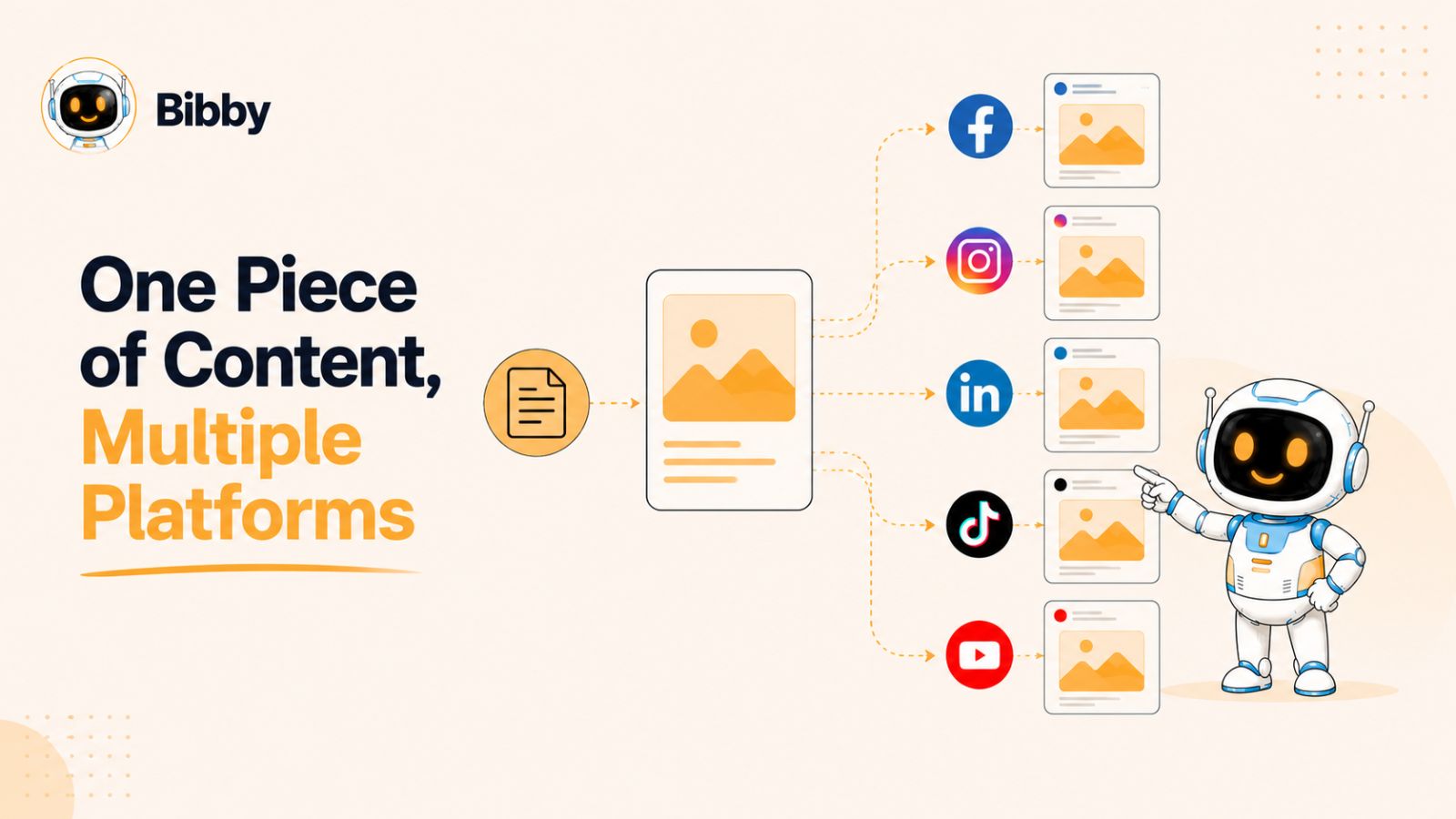
Let's start by understanding exactly what cross-posting is and why it has become an essential part of modern Social Media Marketing.
What Is Cross-Posting on Social Media?
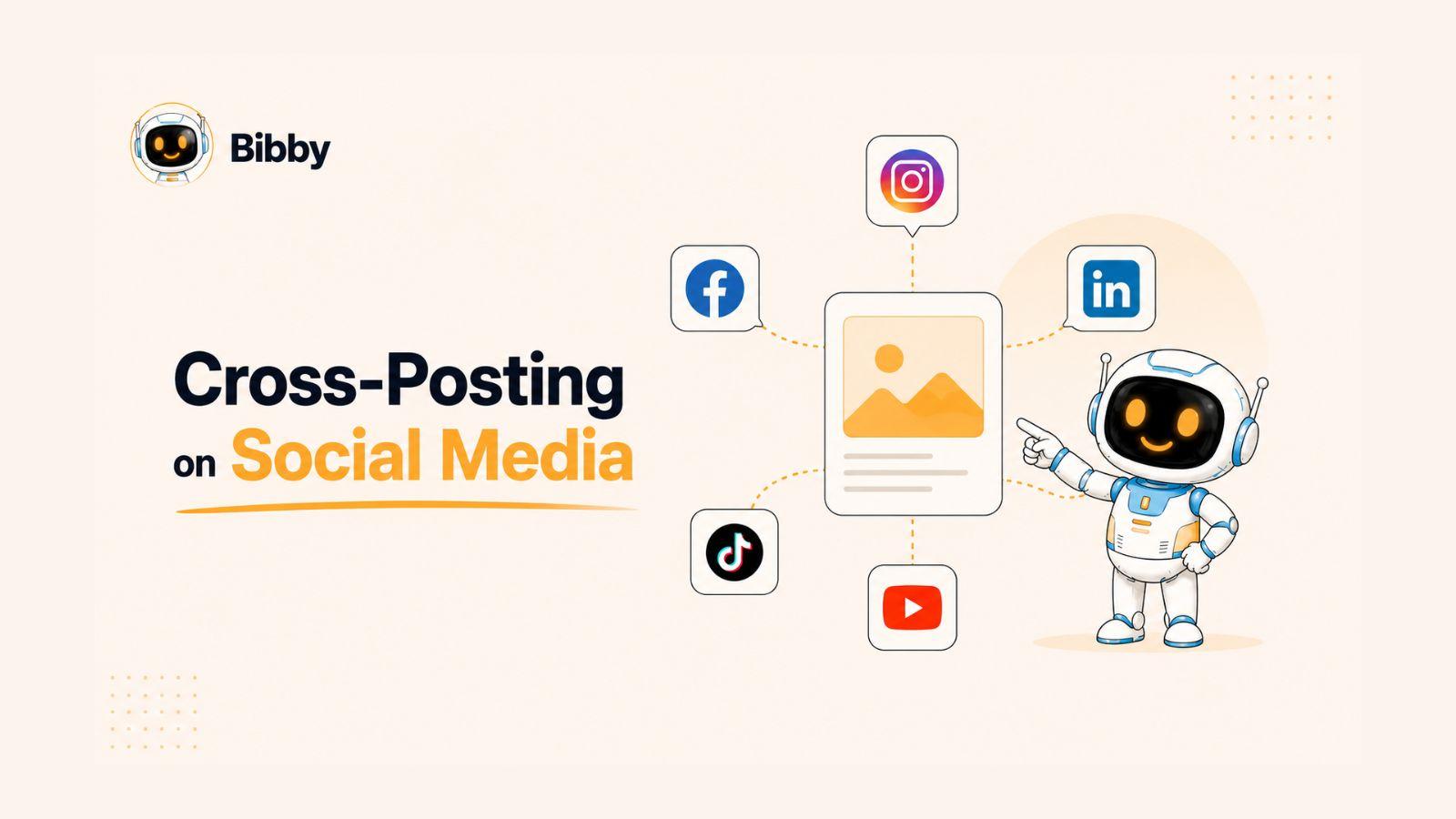
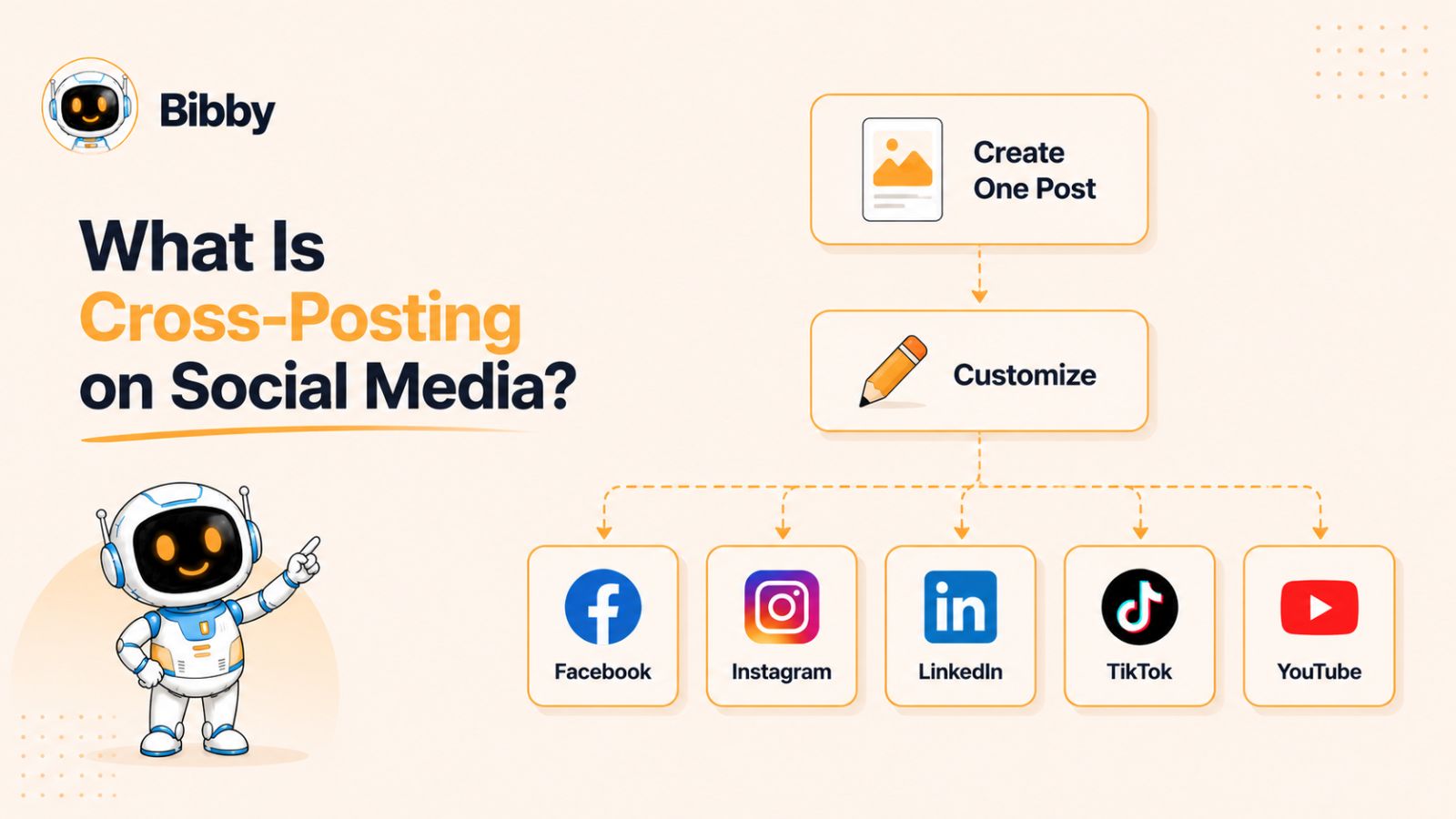
Cross-posting on social media is the practice of publishing the same piece of content across multiple social media platforms. Instead of creating entirely different posts for Facebook, Instagram, LinkedIn, TikTok, YouTube, and other networks, you start with one core piece of content and adapt it to fit each platform's audience, format, and best practices.
For example, you might publish:
- A product announcement on Facebook.
- A carousel highlighting key features on Instagram.
- A thought leadership post about the launch on LinkedIn.
- A short video on TikTok.
- A YouTube Short demonstrating the product in action.
Although the core message remains the same, the presentation changes to match how users interact with each platform.
Cross-Posting vs. Reposting
These terms are often used interchangeably, but they aren't exactly the same.
Cross-posting means publishing the same core content across multiple platforms, usually with small optimizations for each audience.
Reposting typically means sharing existing content again on the same platform or sharing another user's content with permission or attribution.
For example, publishing the same marketing campaign across Facebook, Instagram, and LinkedIn is cross-posting. Sharing one of your Instagram posts again a few months later to reach a new audience is reposting.
Cross-Posting vs. Content Syndication
Content syndication is another concept that's frequently confused with cross-posting.
Cross-posting focuses on social media platforms, while content syndication involves republishing long-form content, such as blog posts or articles, on third-party websites to expand your reach.
For example:
- Publishing your latest article on your company blog and then sharing it on Medium or LinkedIn Articles is content syndication.
- Turning that same article into social media posts for Facebook, Instagram, LinkedIn, TikTok, and YouTube is cross-posting.
Understanding the difference helps you build a complete content distribution strategy instead of relying on a single marketing channel.
Why Businesses and Creators Use Cross-Posting
Creating high-quality content takes time, creativity, and resources. Cross-posting allows you to maximize the value of every piece of content by reaching audiences wherever they spend their time online.
An effective cross-posting strategy can help you:
- Increase brand visibility across multiple platforms.
- Reach different audience segments with the same core message.
- Maintain a consistent brand voice and identity.
- Save hours by repurposing content instead of creating everything from scratch.
- Keep your social media profiles active with a predictable publishing schedule.
- Generate more engagement, website traffic, and conversions from a single content campaign.
The goal isn't to publish identical posts everywhere. Instead, it's to create one strong piece of content and intelligently adapt it for each platform so it feels native to the audience viewing it. That's the approach that delivers better engagement while making your content creation process far more efficient.
Why Cross-Posting Matters More Than Ever
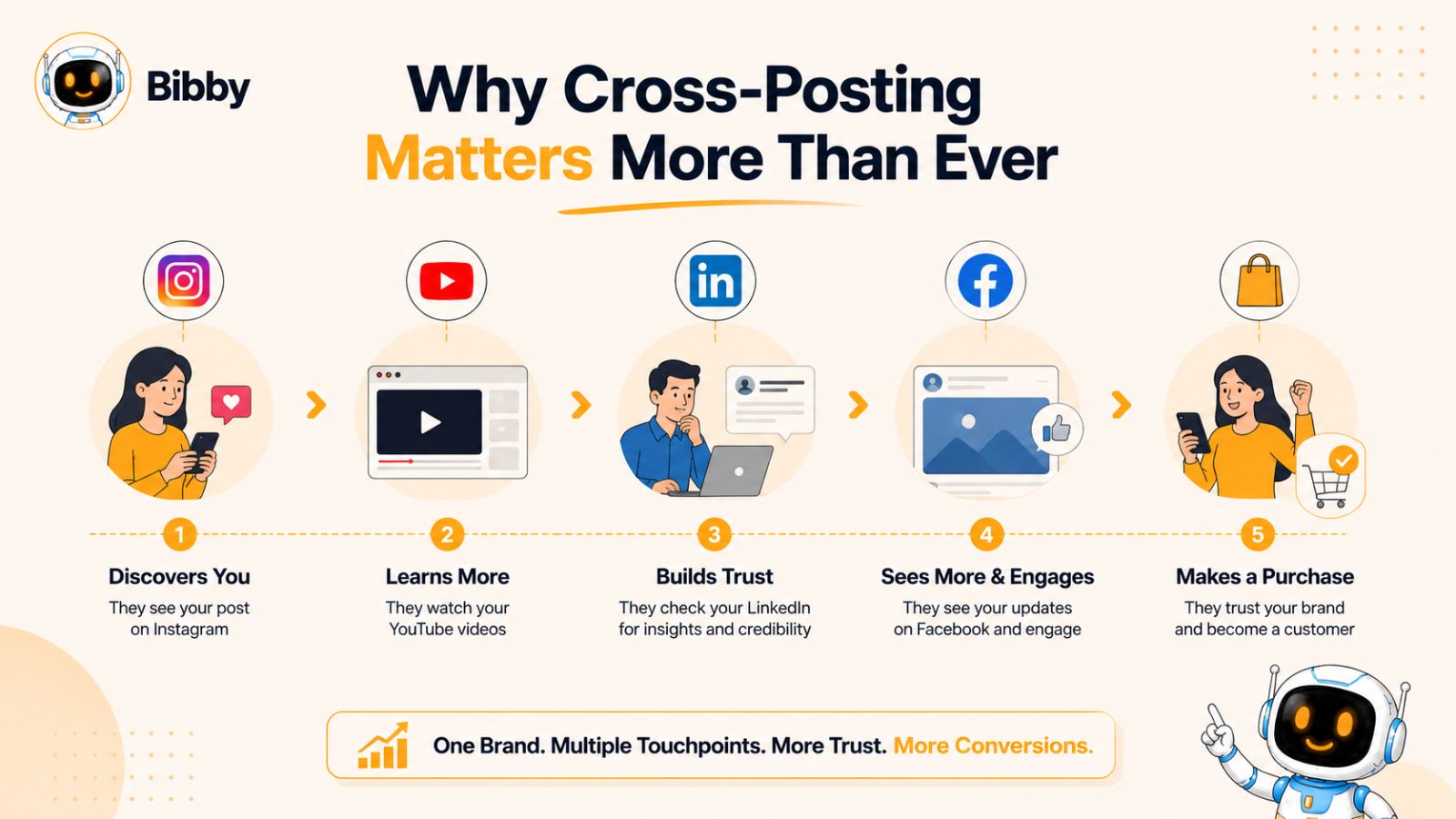
The days of relying on a single social media platform are over. Today's audiences discover brands, products, and creators across multiple channels, often switching between apps several times a day. Someone might first see your brand on Instagram, research your company on LinkedIn, watch a product demonstration on YouTube, and finally connect with you on Facebook or TikTok.
This fragmented user journey makes cross-posting an essential part of any successful social media strategy. By distributing your content across multiple platforms, you increase the chances of reaching your audience wherever they prefer to spend their time.
Your Audience Isn't on Just One Platform
Every social media platform attracts different demographics and serves different purposes. While there is some overlap, users often engage with content differently depending on the platform.
For example:
- Facebook is ideal for building communities, sharing updates, and engaging with broad audiences.
- Instagram excels at visual storytelling through photos, carousels, Reels, and Stories.
- LinkedIn is the go-to platform for professional networking, industry insights, and B2B marketing.
- TikTok rewards creative, entertaining, and trend-driven short-form videos.
- YouTube supports everything from long-form educational videos to YouTube Shorts for quick, engaging content.
A multi-platform presence ensures you're not limiting your reach to a single audience.
Organic Reach Is More Competitive
Social media algorithms have evolved to prioritize high-quality, engaging content. As a result, even businesses with large followings may find that only a fraction of their audience sees each post.
Cross-posting helps offset this challenge by giving every piece of content multiple opportunities to perform. Even if a post gains modest traction on one platform, it may resonate strongly with audiences on another.
Get More Value From Every Piece of Content
Creating original content requires planning, design, writing, editing, and approval. Rather than letting a single post live on just one platform, cross-posting allows you to maximize its lifespan and return on investment.
For example, one product launch can become:
- A Facebook announcement.
- An Instagram carousel.
- A LinkedIn thought leadership post.
- A TikTok behind-the-scenes video.
- A YouTube Short highlighting key features.
- A series of Stories that keep your audience engaged throughout the week.
Instead of creating six completely different campaigns, you're repurposing one core idea into multiple formats tailored to each platform.
Build a More Consistent Brand Presence
Consistency is one of the most important factors in building trust online. When your audience encounters the same messaging, branding, and visual identity across different platforms, your business becomes more recognizable and memorable.
Cross-posting helps maintain this consistency while still allowing you to customize content to fit the expectations of each audience.
Save Time Without Sacrificing Quality
Many businesses struggle to post consistently because managing multiple social media accounts is time-consuming. Between resizing images, writing captions, choosing hashtags, scheduling posts, and tracking performance, social media management can quickly become overwhelming.
A structured cross-posting workflow simplifies the process. Instead of repeating the same tasks for every platform, you create your content once, adapt it where necessary, and schedule it in advance. This allows you to spend more time engaging with your audience, analyzing performance, and developing creative campaigns instead of handling repetitive publishing tasks.
As your content strategy grows, combining cross-posting with automation tools can streamline the entire process—from preparing platform-ready visuals to generating captions, scheduling posts, and monitoring analytics—all from a single dashboard.
Also read: AI Content Planner: Plan an Entire Month of Content in Minutes →
Benefits of Cross-Posting on Social Media
Cross-posting is much more than a time-saving tactic—it's a smarter way to maximize the impact of every piece of content you create. When done strategically, it helps you reach larger audiences, strengthen your brand, and maintain a consistent presence without multiplying your workload.
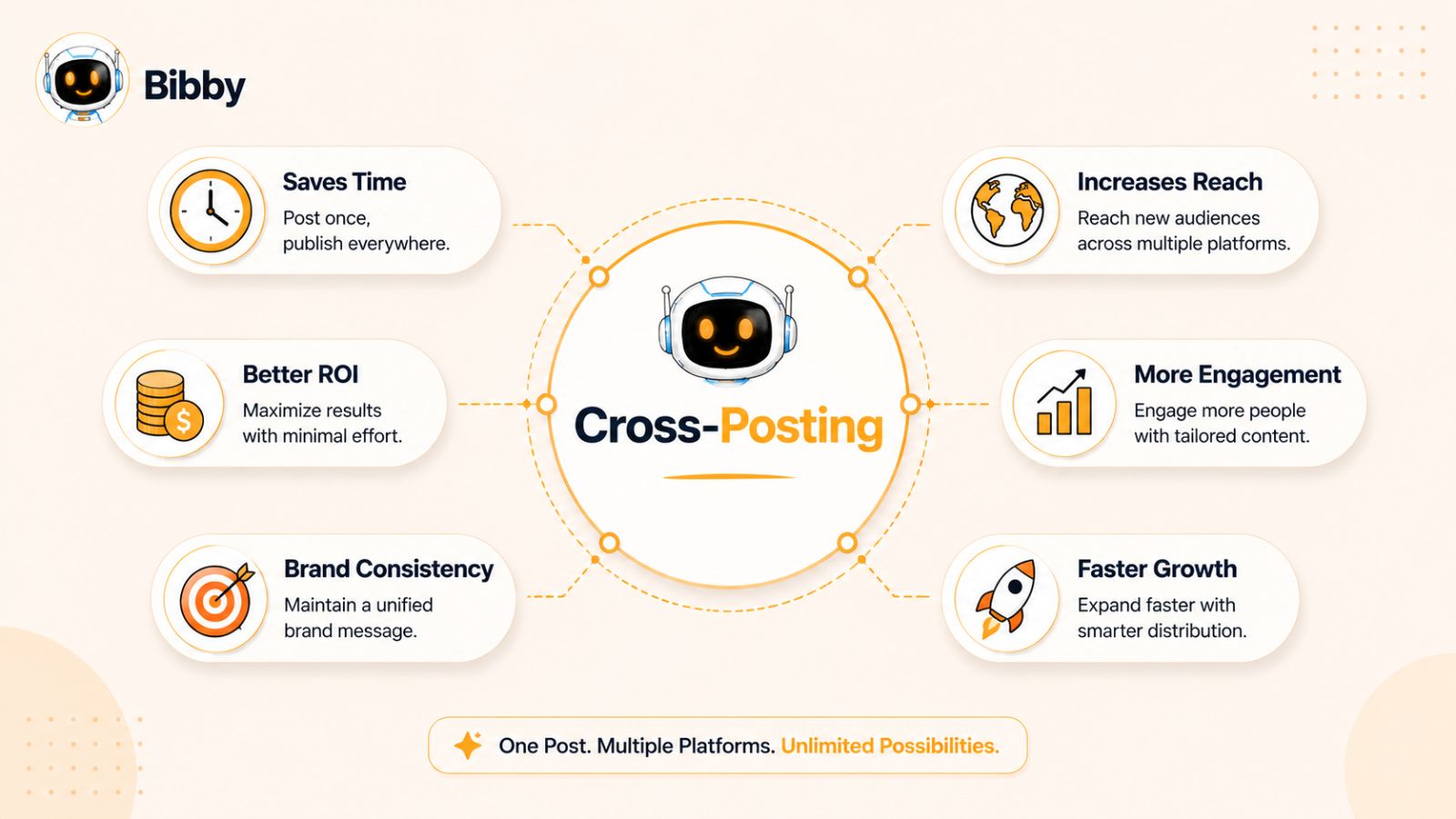
Let's look at the biggest benefits.
Save Hours Every Week
Creating unique content for every social media platform can quickly become overwhelming. Each post requires brainstorming ideas, designing visuals, writing captions, selecting hashtags, and publishing at the right time.
Cross-posting allows you to start with one core piece of content and adapt it for multiple platforms instead of starting from scratch each time. This streamlined approach reduces repetitive work while maintaining high-quality content across your social media channels.
The time you save can be invested in more valuable activities, such as engaging with your audience, responding to comments, creating better campaigns, or analyzing performance.
Reach More People Across Multiple Platforms
Not everyone follows your brand on every social network. Some customers may only use LinkedIn during work hours, while others spend most of their time on Instagram, Facebook, TikTok, or YouTube.
Publishing across multiple platforms increases your chances of reaching both existing followers and new audiences. It also creates multiple touchpoints throughout the customer journey, helping people become familiar with your brand before they decide to engage or make a purchase.
Maximize Your Content ROI
Every blog post, product announcement, customer testimonial, promotional graphic, or video represents an investment of time and resources.
Cross-posting helps you get the most value from that investment by extending the life and reach of your content. Instead of creating separate campaigns for each platform, you can repurpose a single idea into multiple formats that resonate with different audiences.
This approach improves your return on investment (ROI) while reducing the pressure to constantly produce brand-new content.
Build Stronger Brand Recognition
Successful brands are recognizable because they communicate consistently. When your messaging, visual identity, and tone remain aligned across platforms, audiences are more likely to remember and trust your business.
Cross-posting helps reinforce your brand by delivering a unified message, even when the content is adapted for different networks. Whether someone discovers your business through Facebook, Instagram, LinkedIn, TikTok, or YouTube, they should immediately recognize your brand.
Stay Consistent Without Burning Out
Consistency is one of the biggest challenges in social media marketing. Many businesses start with enthusiasm but struggle to maintain a regular posting schedule as daily responsibilities pile up.
Cross-posting makes consistency much easier by enabling you to plan content in advance and distribute it across several platforms from a single content calendar. Rather than worrying about what to post every day, you can focus on executing a well-planned strategy.
Improve Audience Engagement
Different platforms encourage different types of interactions. A professional insight may spark meaningful conversations on LinkedIn, while the same topic could perform better as a short educational video on TikTok or a carousel on Instagram.
By adapting your content instead of duplicating it, you increase the likelihood of connecting with each platform's audience in a way that feels natural. This often leads to better engagement, more shares, higher reach, and stronger relationships with your followers.
Gain Better Marketing Insights
Cross-posting also gives you access to a broader set of performance data. By comparing how similar content performs across platforms, you can identify:
- Which platforms generate the most engagement.
- What content formats your audience prefers.
- The best times to publish.
- Which topics drive the most clicks, shares, or conversions.
- Where to focus your future marketing efforts.
These insights help you make smarter content decisions and continuously improve your social media strategy over time.
Scale Your Social Media Strategy More Efficiently
As your business grows, managing multiple social media accounts manually becomes increasingly difficult. Cross-posting provides a scalable framework that allows your marketing efforts to grow without proportionally increasing the time and resources required.
When combined with modern AI-powered scheduling and automation tools, you can streamline everything from content creation and caption writing to scheduling, publishing, and performance tracking. This enables you to maintain an active presence across multiple platforms while spending significantly less time on repetitive tasks.
Also read: 21 AI-Powered Social Media Tools Changing Social Media Management in 2026 →
The Biggest Cross-Posting Mistakes (And How to Avoid Them)
Cross-posting can dramatically improve your social media efficiency, but only when it's done strategically. Many businesses assume they can simply copy and paste the same post across every platform. While that may save time in the short term, it often leads to lower engagement, weaker performance, and missed opportunities.
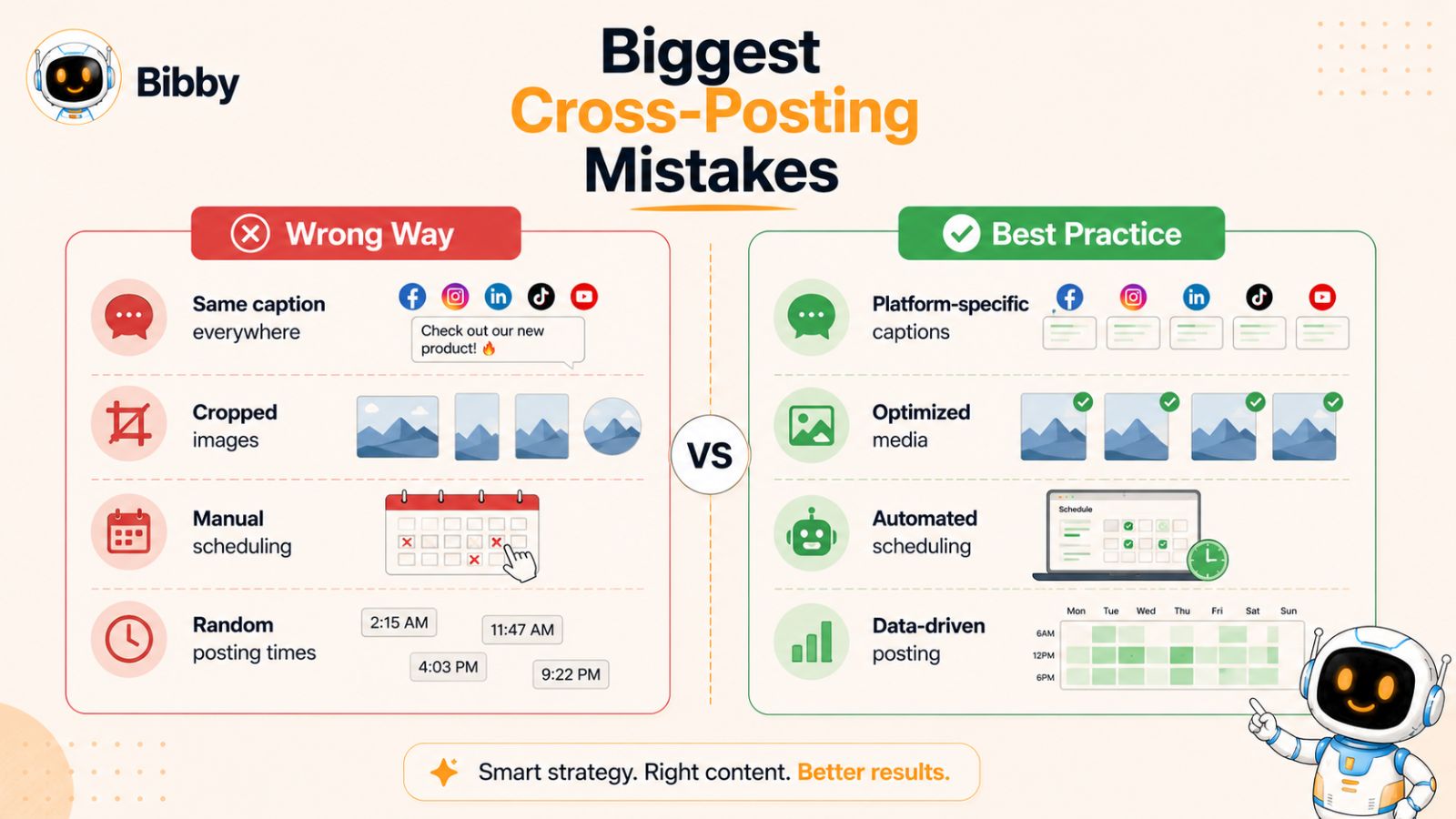
Here are the most common cross-posting mistakes—and how to avoid them.
1. Posting the Exact Same Content Everywhere
The biggest misconception about cross-posting is that every platform should receive an identical post.
In reality, each social network has its own audience, culture, and content preferences. A caption that performs well on LinkedIn may feel too formal on Instagram, while a TikTok video may need a completely different hook to capture attention.
Instead:
- Keep your core message consistent.
- Rewrite captions for each platform.
- Adjust your call-to-action.
- Change the opening line to suit the audience.
- Use platform-native features whenever possible.
Think of cross-posting as adapting content—not simply duplicating it.
2. Ignoring Platform-Specific Formats
Every social platform rewards content that feels native.
For example:
- Instagram favors visually appealing carousels, Reels, and Stories.
- LinkedIn performs better with educational content, professional insights, and storytelling.
- Facebook encourages conversations and community engagement.
- TikTok prioritizes authentic, fast-paced, short-form videos.
- YouTube offers opportunities with both long-form videos and Shorts.
Publishing the exact same format everywhere often limits your reach because the content doesn't align with each platform's strengths.
Best practice: Start with one content idea, then package it differently for each network.
3. Using the Wrong Image or Video Sizes
Every platform has recommended dimensions for posts, Stories, Reels, banners, and videos.
Uploading the wrong size can result in:
- Cropped images
- Cut-off text
- Reduced image quality
- Poor user experience
- Lower engagement
Manually resizing content for every platform is one of the most time-consuming parts of cross-posting.
Using a tool that automatically prepares platform-specific image sizes can eliminate this repetitive work while ensuring your visuals always look professional.
4. Writing One Generic Caption
Your audience expects different conversations depending on where they follow you.
For example:
- LinkedIn readers often appreciate detailed insights.
- Instagram users typically respond to concise, engaging captions.
- Facebook audiences enjoy community-focused discussions.
- TikTok captions tend to be shorter and complement the video rather than explain it.
Instead of copying one caption everywhere, tailor the messaging while keeping your overall campaign consistent.
5. Posting at the Same Time on Every Platform
Just because 9:00 AM works well for LinkedIn doesn't mean it's the best time for Instagram or TikTok.
Every platform has different audience behaviors, and your followers may be active at completely different times throughout the day.
Scheduling content based on platform-specific engagement patterns can significantly improve visibility and interaction.
Modern scheduling tools even use AI to recommend or automatically select publishing times based on historical engagement data, helping your content reach more people without requiring constant manual planning.
6. Forgetting to Track Performance
Many marketers focus entirely on publishing and forget to analyze what happens afterward.
Without analytics, you won't know:
- Which platform performs best
- Which content generates the most engagement
- What posting times are most effective
- Which campaigns drive clicks or conversions
- What should be improved next month
Regularly reviewing performance metrics allows you to refine your strategy instead of relying on guesswork.
7. Managing Everything Manually
Logging into five or six different platforms to upload media, resize images, write captions, schedule posts, and review analytics quickly becomes inefficient as your content volume grows.
An automated workflow can dramatically simplify the process by bringing everything into one place. Instead of repeating the same tasks across multiple platforms, you can create your content once, customize it where needed, schedule it in advance, and monitor results from a centralized dashboard.
This not only saves time but also reduces the likelihood of missed posts, formatting issues, and inconsistent branding.
The Bottom Line
Cross-posting works best when it balances efficiency with platform-specific optimization. Rather than treating every social network the same, adapt your content to match each audience while maintaining a consistent message and brand identity. By avoiding these common mistakes, you'll improve engagement, extend the reach of your content, and build a more effective long-term social media strategy.
Best Practices for Cross-Posting on Social Media
A successful cross-posting strategy isn't about publishing more content—it's about publishing smarter. By making a few strategic adjustments for each platform, you can significantly increase engagement while still enjoying the efficiency of creating content once and distributing it across multiple channels.
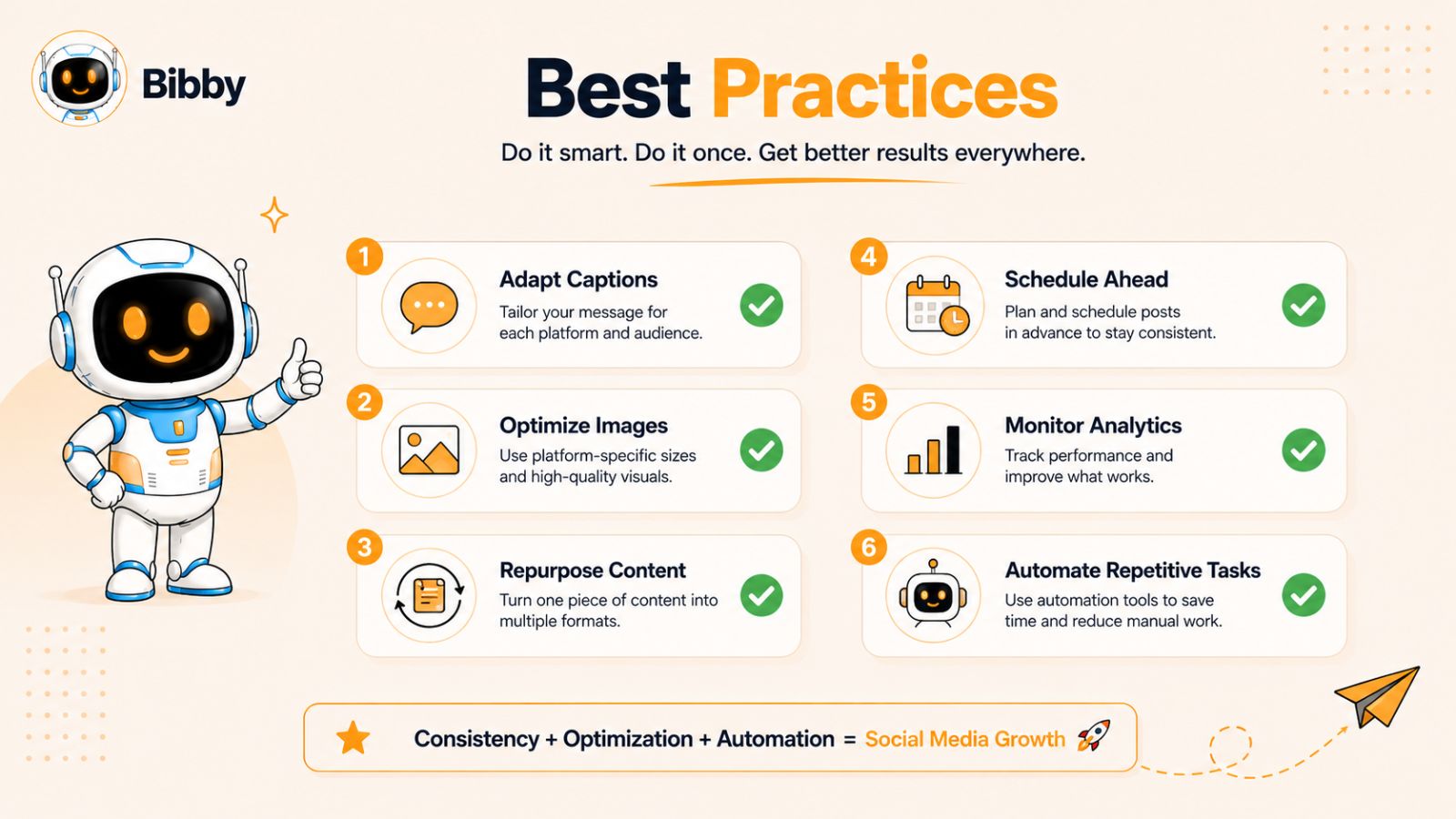
These best practices will help you get the most out of every post.
Start With One Core Piece of Content
The most efficient content strategies begin with a single idea.
Instead of planning separate content for every platform, create one high-quality asset first. This could be:
- A blog post
- A product announcement
- A customer success story
- A promotional graphic
- A short-form video
- A product launch
- An industry tip
- A behind-the-scenes update
Once you have your core content, repurpose it into formats that suit each platform.
For example, a blog article can become:
- A LinkedIn thought leadership post
- An Instagram carousel
- A Facebook discussion
- A TikTok educational video
- A YouTube Short
- Multiple Stories highlighting key takeaways
This approach dramatically increases the value of every piece of content you create.
Adapt Your Captions for Each Platform
While your message should remain consistent, your captions shouldn't be identical.
Each social platform has its own communication style.
For example:
- Professional
- Educational
- Data-driven
- Conversation starters
- Shorter
- Visual storytelling
- Emoji-friendly
- Community engagement
- Friendly
- Discussion-oriented
- Longer captions often perform well
TikTok
- Short
- Entertaining
- Trend-focused
YouTube
- Search-friendly
- Descriptive
- Clear calls to action
A few small edits can make the same content feel native to every platform.
Optimize Images and Videos
Visual quality plays a major role in engagement.
Different platforms recommend different dimensions for:
- Feed posts
- Stories
- Reels
- Shorts
- Cover images
- Thumbnails
- Profile graphics
Uploading the correct format ensures your content looks professional and avoids awkward cropping or reduced quality.
If you're publishing regularly across several platforms, using a solution that automatically formats media for each network can save hours of manual editing while maintaining a polished appearance.
Schedule Content in Advance
Consistency is far easier to maintain when you plan ahead.
Rather than deciding what to post every day, create a content calendar and schedule posts in advance.
Benefits include:
- Consistent publishing
- Better campaign planning
- Reduced daily workload
- Improved collaboration
- Fewer missed posting opportunities
Scheduling also gives you time to review your content before it goes live, reducing the chance of errors.
Publish at the Right Time
Timing can have a significant impact on engagement.
Your audience is unlikely to be equally active across every platform. Professionals may browse LinkedIn during business hours, while Instagram and TikTok often see higher engagement in the evenings or on weekends.
Rather than publishing everything simultaneously, schedule each post when its audience is most likely to see and engage with it.
Many AI-powered scheduling tools analyze engagement patterns and recommend optimal posting times, helping your content perform better without requiring constant manual testing.
Repurpose Instead of Duplicate
The highest-performing cross-posting strategies focus on repurposing content rather than copying it.
For example, one webinar can become:
- A YouTube video
- Several YouTube Shorts
- Instagram Reels
- LinkedIn insights
- Facebook posts
- Story highlights
- Quote graphics
- Blog articles
- Email newsletters
One idea can generate weeks of valuable content with only minor adjustments.
Use Analytics to Continuously Improve
Every post provides valuable insights into what your audience enjoys.
Track metrics such as:
- Reach
- Impressions
- Engagement
- Click-through rate
- Shares
- Saves
- Comments
- Watch time
- Conversions
Reviewing these metrics regularly helps you identify which content formats, topics, and posting times consistently perform best.
Instead of relying on assumptions, you can refine your strategy based on real audience behavior.
Automate the Repetitive Work
As your social media presence grows, manual publishing becomes increasingly difficult to manage.
Tasks like resizing images, writing captions, scheduling posts, selecting publishing times, and monitoring analytics can consume hours every week.
This is where automation becomes a game changer.
Modern AI-powered platforms such as Bibby simplify the entire cross-posting process with an intuitive workflow:
- Upload your image or video—or generate one using AI.
- Choose your preferred posting style and brand tone.
- Let Bibby automatically generate engaging captions, optimize media sizes for each platform, and schedule your content across Facebook, Instagram, LinkedIn, YouTube, TikTok, and other supported platforms at AI-optimized publishing times.
Instead of managing multiple dashboards, you can oversee your content from one place, monitor analytics, publish images, videos, Stories, and more, and keep your social media strategy running efficiently with minimal manual effort.
Focus on Strategy, Not Busy Work
The goal of cross-posting isn't simply to publish everywhere—it's to build a sustainable content system that consistently delivers value to your audience.
By creating one strong piece of content, adapting it for each platform, scheduling it strategically, and automating repetitive tasks with tools like Bibby, you can spend less time managing social media and more time growing your business, engaging your audience, and creating content that drives results.
Also read: AI Social Media Assistant: Everything You Need to Know →
Cross-Posting Best Practices for Every Platform
While your core message can remain the same, every social media platform has its own audience, content formats, and algorithm preferences. The most successful cross-posting strategies respect these differences by tailoring content to feel native on each platform.
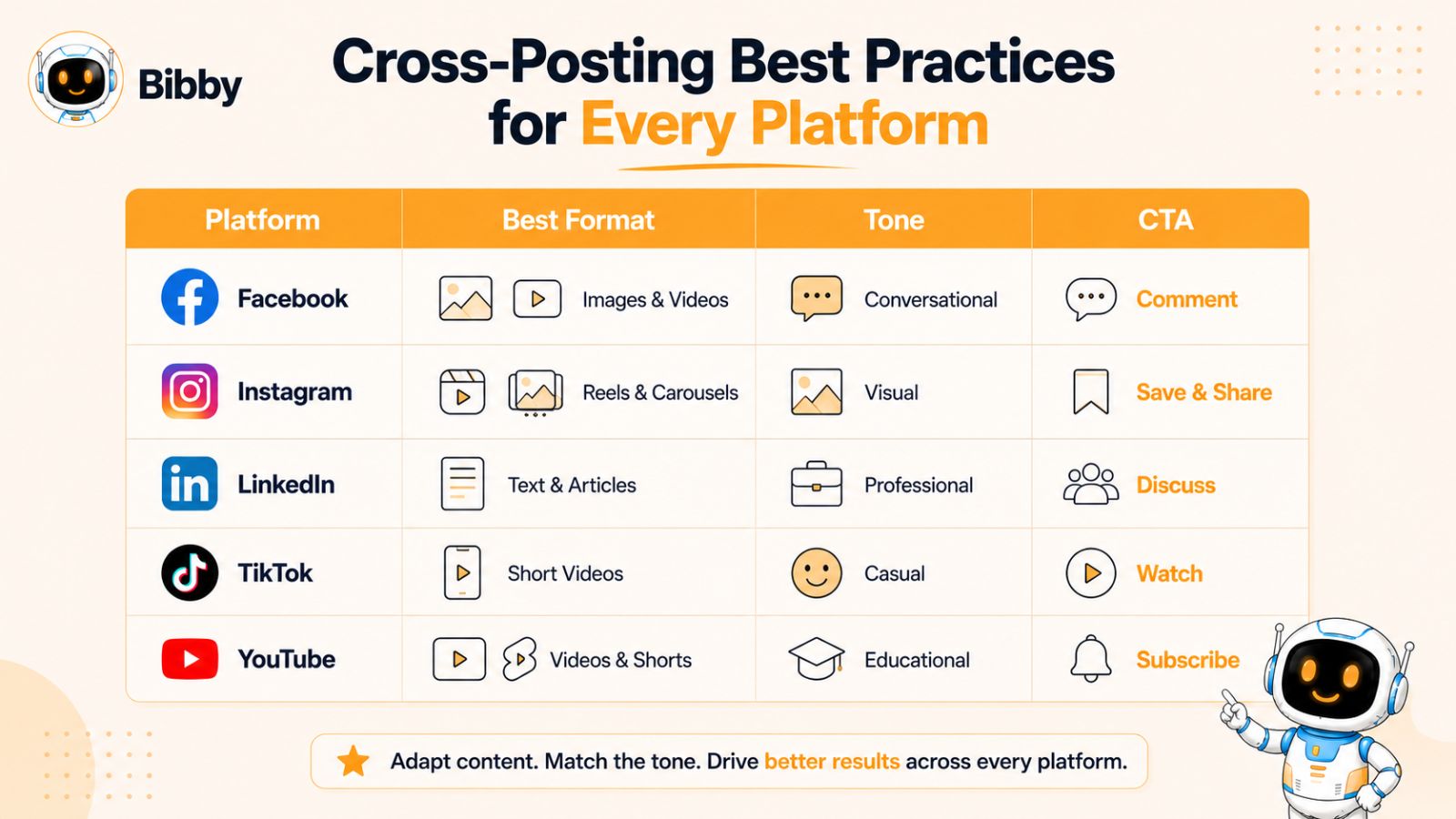
Here's how to optimize your posts for the major social networks.
Facebook remains one of the best platforms for building communities, sharing updates, and driving conversations. Users often engage with content that encourages discussion or provides practical value.
Best content types:
- Images
- Videos
- Carousels
- Community updates
- Blog links
- Live videos
Caption tips:
- Write in a friendly, conversational tone.
- Ask questions to encourage comments.
- Include a clear call to action.
- Avoid overly promotional language.
Posting frequency:
- 3–7 posts per week, depending on your audience and goals.
Cross-posting tip:
If you're sharing a blog post, don't just paste the link. Summarize the key takeaway, include an engaging visual, and encourage readers to share their opinions.
Instagram is a highly visual platform where quality imagery and engaging short-form videos perform exceptionally well. Rather than posting the same content as Facebook, focus on storytelling through visuals.
Best content types:
- Feed posts
- Carousels
- Reels
- Stories
- Behind-the-scenes content
- User-generated content
Caption tips:
- Keep captions concise but engaging.
- Use relevant hashtags naturally.
- Include a call to action.
- Encourage saves and shares.
Posting frequency:
- 4–7 feed posts per week.
- Stories several times throughout the day.
- Reels consistently for maximum reach.
Cross-posting tip:
Turn long-form educational content into carousel posts or short Reels that highlight the most valuable insights.
LinkedIn is designed for professionals, making it the ideal platform for thought leadership, company updates, and industry expertise.
Best content types:
- Industry insights
- Business tips
- Case studies
- Company news
- Employee stories
- Professional videos
Caption tips:
- Lead with a compelling opening.
- Share practical insights.
- Support your points with examples.
- End with a question to spark discussion.
Posting frequency:
- 2–5 high-quality posts per week.
Cross-posting tip:
Instead of copying your Instagram caption, rewrite your post to emphasize lessons learned, business value, or industry trends.
Also read: AI Caption Generator vs Manual Writing: Which Performs Better? →
TikTok
TikTok rewards creativity, authenticity, and short-form storytelling. Content should feel natural rather than overly polished.
Best content types:
- Educational tips
- Product demonstrations
- Tutorials
- Behind-the-scenes videos
- Trending content
- Quick how-to videos
Caption tips:
- Keep captions short.
- Start with a strong hook in the video.
- Focus on delivering value quickly.
- Use relevant keywords and trends where appropriate.
Posting frequency:
- Ideally one or more videos per day, though consistency matters more than volume.
Cross-posting tip:
Repurpose longer videos into 15–60 second clips that focus on a single takeaway or actionable tip.
YouTube
YouTube supports both long-form educational content and YouTube Shorts, giving creators multiple ways to connect with their audience.
Best content types:
- Tutorials
- Product demonstrations
- Webinars
- Interviews
- Educational videos
- Shorts
Caption and description tips:
- Write keyword-rich titles and descriptions.
- Include timestamps for long-form videos when appropriate.
- Add clear calls to action.
- Use relevant tags and custom thumbnails.
Posting frequency:
- One to two long-form videos per week, supplemented with Shorts when possible.
Cross-posting tip:
A single long-form YouTube video can generate multiple Shorts, Instagram Reels, TikTok videos, LinkedIn posts, and Facebook updates, extending its value far beyond one platform.
Keep Your Branding Consistent
Even though your content should be adapted for each platform, your brand identity should remain consistent.
Maintain the same:
- Brand voice
- Logo
- Color palette
- Messaging
- Visual style
- Core value proposition
Consistency helps your audience recognize your content regardless of where they encounter it, strengthening trust and brand recall over time.
Also read: Social Media Automation for B2B Companies: The Complete Guide (2026) →
Simplify Multi-Platform Publishing with Bibby
Managing platform-specific requirements manually can quickly become overwhelming. Every network has its own image dimensions, preferred content formats, ideal posting times, and audience expectations.
Instead of switching between multiple tools and dashboards, Bibby streamlines the entire process with a simple workflow:
- Upload your image or video—or generate original visuals with AI.
- Choose your posting style and preferred brand voice.
- Let Bibby automatically generate optimized captions, resize your media for each platform, and schedule posts across Facebook, Instagram, LinkedIn, YouTube, TikTok, and other supported channels at AI-optimized times.
From a single dashboard, you can also publish videos, Stories, and other supported content formats while tracking analytics to understand what resonates with your audience. This allows you to focus on creating valuable content instead of managing the repetitive tasks that come with multi-platform publishing.
One Message, Many Platforms
The goal of cross-posting isn't to make every post identical—it's to deliver the right version of your message to the right audience on the right platform. By understanding how each social network works and combining those insights with an efficient workflow, you can expand your reach, strengthen your brand, and achieve more with every piece of content you create.
Manual Cross-Posting vs. Automated Cross-Posting
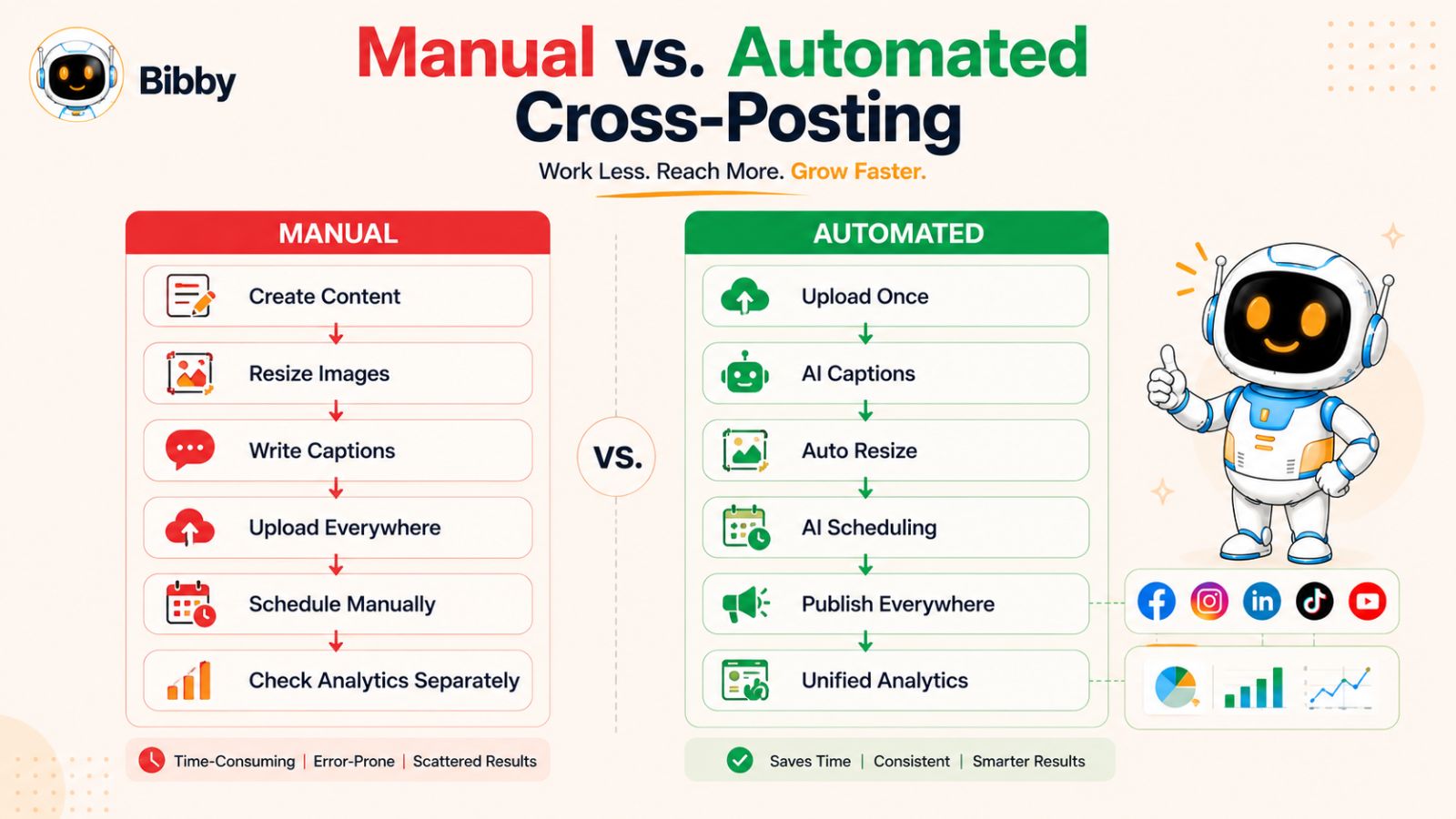
As your social media presence grows, so does the amount of work required to keep every platform active. While manually publishing content may be manageable when you're posting once or twice a week, it quickly becomes overwhelming as you expand to multiple platforms, campaigns, and content formats.
This is why many businesses, creators, and marketing teams are moving toward automated cross-posting. Let's compare both approaches.
| Manual Cross-Posting | Automated Cross-Posting |
|---|---|
| Upload content to each platform individually | Upload once and publish across multiple platforms |
| Manually resize images and videos | Automatically optimize media for each platform |
| Write separate captions from scratch | Generate AI-powered captions in seconds |
| Schedule each platform separately | Schedule all platforms from one dashboard |
| Remember the best posting time for each network | Publish at AI-optimized times |
| Switch between multiple apps | Manage everything in one place |
| Limited visibility into overall performance | Unified analytics across campaigns |
| Time-consuming and repetitive | Fast, efficient, and scalable |
The Challenges of Manual Cross-Posting
Many marketers start by managing each social media account separately. While this works for a small number of posts, the process becomes increasingly inefficient as your content strategy grows.
A typical manual workflow often looks like this:
- Design or edit your image.
- Resize it for Facebook.
- Resize it again for Instagram.
- Create another version for LinkedIn.
- Export a vertical version for TikTok.
- Upload each file separately.
- Write unique captions for every platform.
- Find the best time to publish.
- Schedule each post individually.
- Repeat the process for every campaign.
Multiply this by dozens of posts every month, and it's easy to see how social media management can consume hours of valuable time.
Why Automation Is Becoming the New Standard
Automation doesn't replace creativity—it removes the repetitive tasks that slow you down.
Instead of spending your time resizing images, rewriting captions, or logging into multiple platforms, you can focus on planning campaigns, creating better content, and engaging with your audience.
A modern automated workflow typically helps you:
- Save hours every week.
- Maintain a consistent posting schedule.
- Reduce human errors.
- Publish more efficiently.
- Improve collaboration across teams.
- Scale your social media efforts without increasing your workload.
For agencies and businesses managing multiple brands, automation can also simplify approvals, content planning, and campaign execution.
What an Ideal Cross-Posting Workflow Looks Like
The best automation tools make cross-posting feel effortless. Rather than juggling several applications, everything happens through a single, streamlined process:
- Create or upload your content.
- Optimize it for every platform.
- Generate engaging captions.
- Schedule posts across multiple social networks.
- Publish automatically at the best times.
- Track performance through built-in analytics.
- Use those insights to improve future campaigns.
With this workflow, your team spends less time on repetitive publishing tasks and more time creating content that drives meaningful results.
How Bibby Simplifies Cross-Posting
Bibby is designed to remove the complexity from social media management by combining content creation, scheduling, automation, and analytics into one intuitive platform.
Instead of jumping between separate design tools, caption generators, scheduling apps, and analytics dashboards, Bibby brings everything together with a simple workflow.
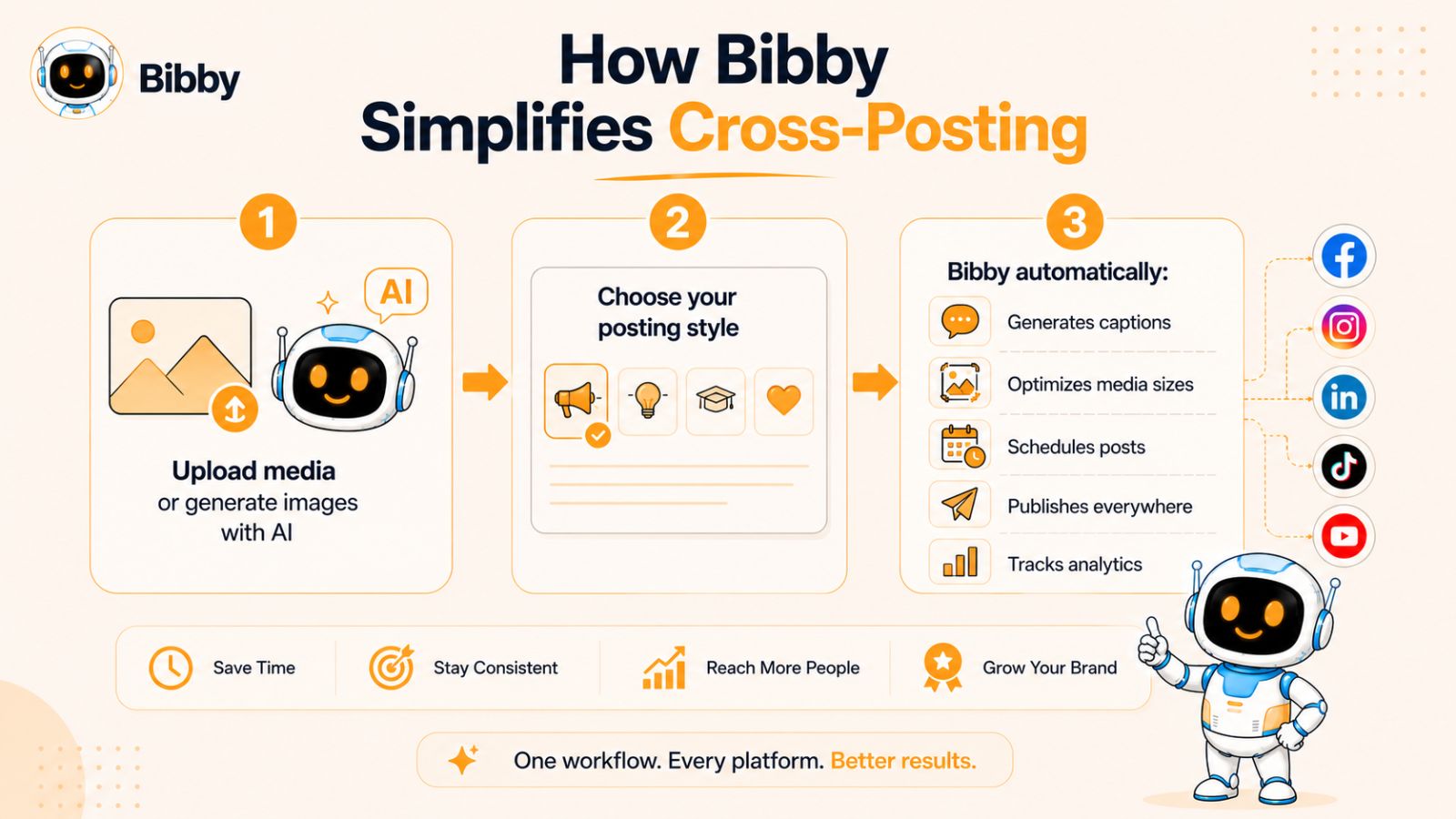
Step 1: Upload or Create Your Content
Start by uploading your image or video. If you don't already have creative assets, Bibby can also generate original images using AI, helping you move from idea to publish-ready content much faster.
Step 2: Choose Your Posting Style
Every brand has a unique voice. Whether your content is professional, educational, conversational, or promotional, Bibby lets you choose a posting style that aligns with your brand. It then uses AI to generate captions tailored to your selected tone, helping you create engaging copy without starting from a blank page.
Step 3: Let Bibby Handle the Rest
Once your content is ready, Bibby automates the tasks that typically consume the most time:
- Optimizes image sizes for different platforms.
- Generates captions automatically.
- Schedules posts across multiple social networks.
- Publishes content at AI-optimized times.
- Supports Facebook, Instagram, LinkedIn, YouTube, TikTok, and other supported platforms.
- Publishes images, videos, Stories, and other supported content formats.
- Tracks analytics from a centralized dashboard.
Instead of managing separate publishing schedules and dashboards, you can oversee your entire social media strategy from one place.
Spend Less Time Managing, More Time Growing
Automation isn't about removing the human element from social media—it's about giving you more time to focus on it. When repetitive tasks are handled automatically, you can invest more energy into creating better content, interacting with your audience, building relationships, and growing your business.
Whether you're a solo creator managing a personal brand, a small business with limited resources, or a marketing agency handling multiple clients, an automated workflow can help you stay consistent, scale your efforts, and achieve better results with less manual work.
How to Build an Effective Cross-Posting Strategy
Cross-posting delivers the best results when it's guided by a clear strategy rather than a series of random posts. Instead of asking, "What should I post today?", successful brands ask, “How can one great piece of content create value across every platform?”
The following framework will help you build a cross-posting strategy that's efficient, scalable, and designed for long-term growth.
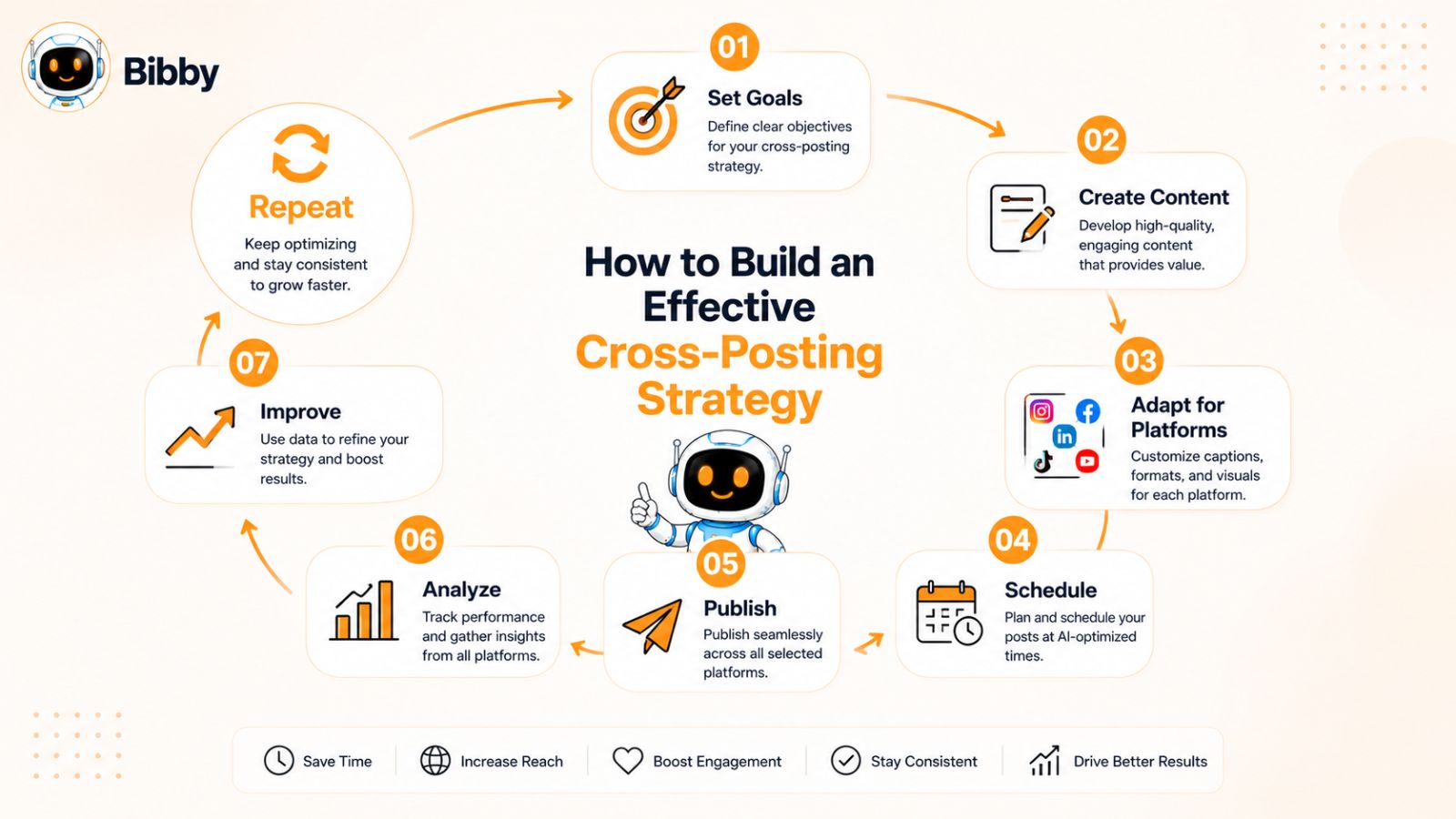
1. Define Your Goals
Before creating content, identify what you want to achieve.
Your goals will influence the type of content you produce, the platforms you prioritize, and how you measure success.
Common social media goals include:
- Increase brand awareness
- Drive website traffic
- Generate leads
- Increase product sales
- Build an engaged community
- Establish thought leadership
- Promote events or product launches
- Improve customer retention
For example, if your primary goal is lead generation, LinkedIn and Facebook may deserve more attention. If you're focused on brand awareness, Instagram, TikTok, and YouTube Shorts could play a larger role in your strategy.
2. Know Your Audience
Not every audience behaves the same way on social media.
Take time to understand:
- Which platforms they use most
- What type of content they engage with
- When they're most active
- What problems they're trying to solve
- Which formats they prefer, such as videos, carousels, Stories, or articles
Creating audience personas can help you tailor your messaging while keeping your core content consistent across platforms.
3. Create High-Quality Core Content
Every successful cross-posting strategy starts with one valuable piece of content.
This might be:
- A blog post
- A customer success story
- A product announcement
- A tutorial video
- A webinar
- A podcast episode
- A case study
- An infographic
Instead of immediately thinking about five different posts, focus on making one piece of content as useful as possible.
Strong source content makes repurposing much easier.
4. Repurpose for Each Platform
Once your core content is ready, adapt it to suit each platform instead of simply copying and pasting.
For example, a comprehensive blog post can become:
- An Instagram carousel highlighting key takeaways
- A LinkedIn article or text post
- A Facebook discussion post
- Several TikTok videos
- Multiple YouTube Shorts
- Story updates
- Quote graphics
- A weekly email newsletter
This strategy helps you reach different audiences while maximizing the value of your original content.
5. Plan a Content Calendar
Consistency is one of the biggest predictors of long-term social media success.
A content calendar helps you:
- Stay organized
- Maintain a regular posting schedule
- Coordinate campaigns
- Balance promotional and educational content
- Avoid last-minute publishing
Planning your content weeks in advance also gives you time to review, refine, and optimize each campaign before it goes live.
6. Automate Repetitive Tasks
Once your strategy is in place, automation helps you execute it consistently.
Instead of manually handling every platform, modern AI-powered tools can streamline your workflow.
With Bibby, the process is straightforward:
- Upload your image or video, or generate one with AI.
- Choose your preferred posting style.
- Let Bibby generate captions automatically.
- Automatically optimize media sizes for each platform.
- Schedule posts across Facebook, Instagram, LinkedIn, YouTube, TikTok, and other supported platforms.
- Publish at AI-optimized times.
- Monitor analytics from one centralized dashboard.
By reducing repetitive tasks, you gain more time to create meaningful content, interact with your audience, and refine your marketing strategy.
7. Measure, Learn, and Improve
Your first cross-posting strategy won't be perfect—and that's okay.
The most successful marketers continuously improve based on data.
Monitor metrics such as:
- Reach
- Impressions
- Engagement rate
- Click-through rate
- Follower growth
- Watch time
- Shares
- Saves
- Website traffic
- Conversions
Look for patterns over time.
Ask questions like:
- Which platform delivers the highest engagement?
- Which content formats perform best?
- What topics generate the most conversations?
- What posting times consistently outperform others?
The answers will help you refine future campaigns and allocate your resources more effectively.
Also read: Content Repurposing Strategy: Turn Blogs Into Viral Social Posts →
A Sample Cross-Posting Workflow
To see how everything fits together, imagine you're launching a new product.
Instead of creating separate campaigns for every platform, you could follow this workflow:
- Write one in-depth product announcement.
- Design a single set of visuals.
- Upload the assets to Bibby.
- Choose your preferred brand voice and posting style.
- Let Bibby generate platform-specific captions.
- Automatically optimize images for each social network.
- Schedule content across Facebook, Instagram, LinkedIn, TikTok, and YouTube at AI-optimized times.
- Publish videos, Stories, and additional content formats from the same dashboard.
- Review analytics after the campaign to identify top-performing platforms and content.
In just one workflow, you've transformed a single campaign into a coordinated, multi-platform marketing strategy—without repeating the same manual tasks over and over again.
Build a System That Grows With You
The most effective social media strategies are built on repeatable systems rather than constant improvisation. By creating valuable core content, adapting it thoughtfully for each platform, scheduling consistently, and automating routine tasks with tools like Bibby, you can grow your online presence more efficiently while maintaining the quality and authenticity your audience expects.
Frequently Asked Questions About Cross-Posting on Social Media
What is cross-posting on social media?
Cross-posting is the practice of publishing the same core content across multiple social media platforms while adapting it to suit each platform's audience, content format, and best practices. Instead of creating entirely new content for Facebook, Instagram, LinkedIn, TikTok, and YouTube, you create one primary asset and customize it for each network.
Is cross-posting a good idea?
Yes—when done correctly.
Cross-posting helps you reach a wider audience, maintain a consistent brand presence, and maximize the value of every piece of content you create. The key is to tailor your captions, visuals, and formatting for each platform rather than publishing identical posts everywhere.
Should I post the exact same content on every platform?
No.
While your core message can remain consistent, every platform has unique audience expectations and algorithms. A post that performs well on LinkedIn may need a different tone, length, or format to succeed on Instagram or TikTok.
Think of cross-posting as adapting content instead of duplicating it.
Which social media platforms should I cross-post to?
The best platforms depend on your audience and business goals, but many brands benefit from maintaining a presence on:
- TikTok
- YouTube
You don't need to be everywhere. Focus on the platforms where your target audience is most active and where your content delivers the most value.
How often should I cross-post?
Consistency matters more than frequency.
A realistic posting schedule is better than publishing heavily for one week and disappearing the next. Many businesses find success by posting several times per week while maintaining a consistent content calendar.
Monitor your analytics and adjust your publishing frequency based on audience engagement.
What is the best time to cross-post?
There isn't one universal "best time" because audience behavior varies by platform, industry, and location.
The ideal publishing time depends on when your followers are most active. Reviewing your analytics regularly can help identify these patterns.
Many AI-powered scheduling tools can also recommend or automatically select optimal publishing times based on engagement data.
What types of content work best for cross-posting?
Almost any content can be repurposed across multiple platforms, including:
- Blog posts
- Product launches
- Tutorials
- Customer testimonials
- Educational videos
- Infographics
- Case studies
- Company announcements
- Behind-the-scenes content
- Webinars
The most successful strategies start with one high-quality piece of content and transform it into several platform-specific formats.
What are the biggest mistakes to avoid?
Some of the most common mistakes include:
- Posting identical content everywhere
- Ignoring platform-specific formats
- Using incorrect image dimensions
- Writing one generic caption
- Publishing at the wrong times
- Failing to review analytics
- Managing every platform manually as your business grows
Avoiding these mistakes can significantly improve your reach and engagement.
Can I automate cross-posting?
Yes.
Modern social media management platforms allow you to automate much of the cross-posting process, including scheduling, caption generation, media optimization, and publishing.
Automation helps save time while maintaining a consistent posting schedule across multiple platforms.
What is the best tool for cross-posting on social media?
The ideal tool should simplify your workflow rather than add more complexity.
Bibby is designed to handle the entire cross-posting process from one intuitive dashboard. You can upload your own images or videos—or generate visuals using AI—choose your preferred posting style, let AI generate engaging captions, automatically optimize media sizes for different platforms, and schedule content across Facebook, Instagram, LinkedIn, YouTube, TikTok, and other supported networks.
Bibby also publishes content at AI-optimized times, supports images, videos, Stories, and other content formats, and provides built-in analytics so you can monitor performance and continuously improve your social media strategy.
For businesses, creators, and agencies looking to save time while maintaining a consistent presence across multiple platforms, this kind of end-to-end workflow can make cross-posting significantly more efficient.
Is cross-posting worth it for small businesses?
Absolutely.
Small businesses often have limited time and marketing resources. Cross-posting allows them to create more impact with less effort by repurposing existing content across multiple social media platforms.
When paired with automation, small teams can maintain a professional and consistent social media presence without spending hours every day managing multiple accounts.
Final Thoughts
Cross-posting on social media is one of the most effective ways to expand your reach without multiplying your workload. Instead of creating separate campaigns for every platform, you can build one high-quality piece of content, adapt it for different audiences, and maintain a consistent presence wherever your customers spend their time.
The most successful cross-posting strategies are built on three key principles. First, create valuable core content that can be repurposed into multiple formats. Second, tailor your captions, visuals, and publishing strategy for each platform instead of simply copying and pasting the same post everywhere. Third, automate repetitive tasks so you can focus on creating better content, engaging with your audience, and growing your business.
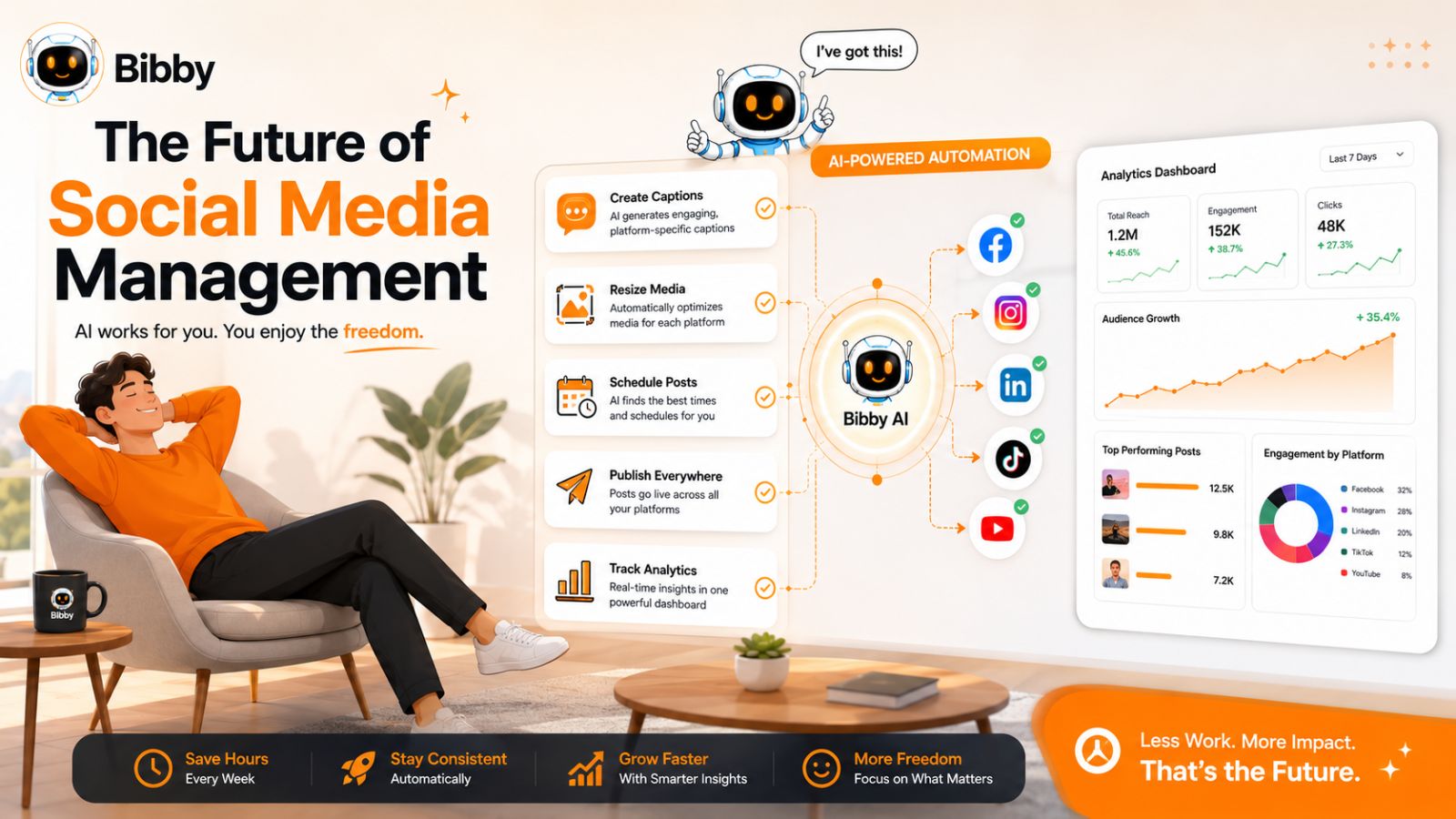
If you're ready to simplify your social media workflow, Bibby brings everything together in one place. Upload your own images or videos—or generate them with AI—choose your preferred posting style, let AI create engaging captions, automatically optimize media sizes for every platform, and schedule posts across Facebook, Instagram, LinkedIn, YouTube, TikTok, and other supported networks at AI-optimized times. You can also publish videos, Stories, and other content formats while monitoring performance through built-in analytics, giving you a complete view of your social media strategy from a single dashboard.
The future of social media marketing isn't about working harder—it's about working smarter. By combining a thoughtful cross-posting strategy with intelligent automation, you can spend less time on repetitive publishing tasks and more time creating meaningful content that drives engagement, builds your brand, and delivers measurable results.
If your next goal is to improve your social media performance even further, the natural next step is learning how to build an AI-powered social media content calendar. With a structured planning process and the right automation tools, you'll be able to publish consistently, maximize the value of every piece of content, and scale your marketing efforts with confidence.