
Growing a loyal audience on social media is harder than ever, especially when small management mistakes silently drive followers away.
Many businesses, creators, and marketers focus on creating more content when their real problem is how they manage their social media presence. The truth is that inconsistent posting, poor engagement strategies, missed analytics insights, and inefficient workflows can cost you reach, engagement, and followers long before you notice the damage.
In this guide, we have talked about:
- The 25 biggest social media management mistakes hurting growth
- Practical fixes to improve engagement and follower retention
- How automation tools like Bibby simplify social media management
Whether you're managing one account or multiple brands across Facebook, Instagram, LinkedIn, TikTok, and YouTube, avoiding these common mistakes can dramatically improve your results. Let's start by understanding why effective social media management matters more than ever in today's competitive digital landscape.
Why Social Media Management Matters More Than Ever
Social media is no longer just a place to share updates—it's where brands build relationships, establish trust, generate leads, and drive revenue. With billions of users competing for attention across platforms like Facebook, Instagram, LinkedIn, TikTok, and YouTube, even small mistakes can significantly impact your growth.
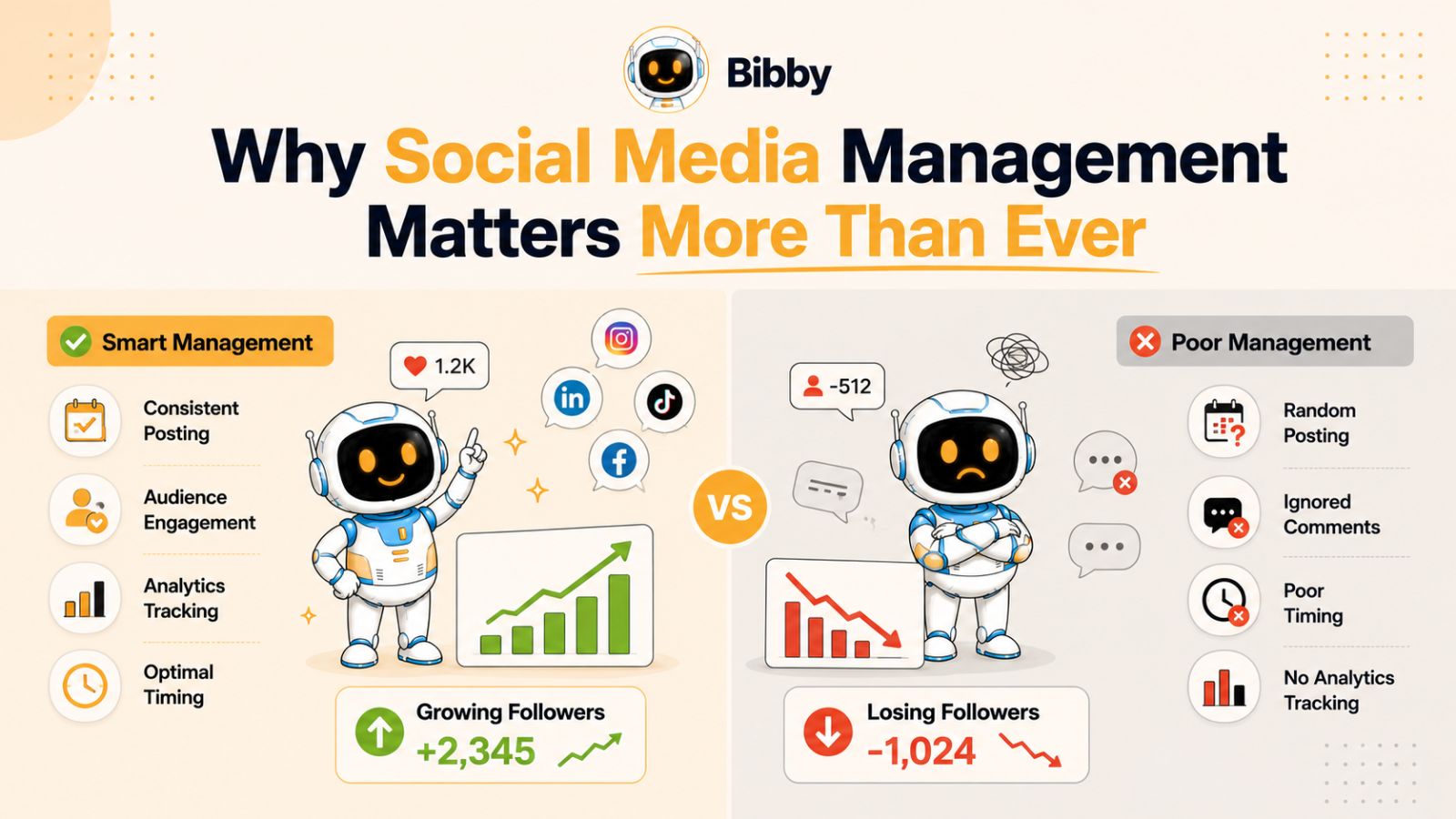
The Rising Cost of Poor Social Media Practices
Many businesses assume that losing followers is simply part of social media. In reality, poor management practices are often the real culprit. When content is posted inconsistently, engagement goes unanswered, or performance data is ignored, audiences gradually lose interest.
Poor social media management can lead to:
- Lower engagement rates
- Reduced organic reach
- Decreased brand credibility
- Missed sales opportunities
- Slower audience growth
- Higher content production costs
As platform algorithms become increasingly sophisticated, they reward accounts that consistently provide value and maintain active audience engagement. Brands that fail to meet these expectations often see declining visibility over time.
Also read: How to Build a High-Performing Content Calendar Using AI Automation
How Followers Decide Whether to Stay or Leave
Every follower makes a quick judgment each time your content appears in their feed. If your content consistently provides value, they remain engaged. If it doesn't, they may mute, unfollow, or simply ignore future posts.
Several factors influence whether people continue following your brand:
Consistency: Regular posting keeps your brand top of mind.
Relevance: Content should align with your audience's interests and needs.
Authenticity: Audiences are more likely to engage with brands that feel genuine and relatable.
Engagement: Responding to comments and messages helps build stronger relationships.
Content Quality: High-quality visuals, videos, and captions increase trust and engagement.
Successful social media growth isn't just about publishing more content. It's about creating a reliable system that consistently delivers value to your audience while optimizing every aspect of your social media workflow.
25 Social Media Management Mistakes Costing You Followers
If your follower count has stalled—or worse, started declining—there’s a good chance one or more social media management mistakes are holding you back. The challenge is that many of these mistakes aren't obvious. They often happen behind the scenes and gradually reduce your reach, engagement, and audience loyalty over time.
The good news is that most social media management mistakes are completely preventable. By identifying and correcting these issues, you can improve your content performance, strengthen audience relationships, and create a more sustainable growth strategy across all platforms.
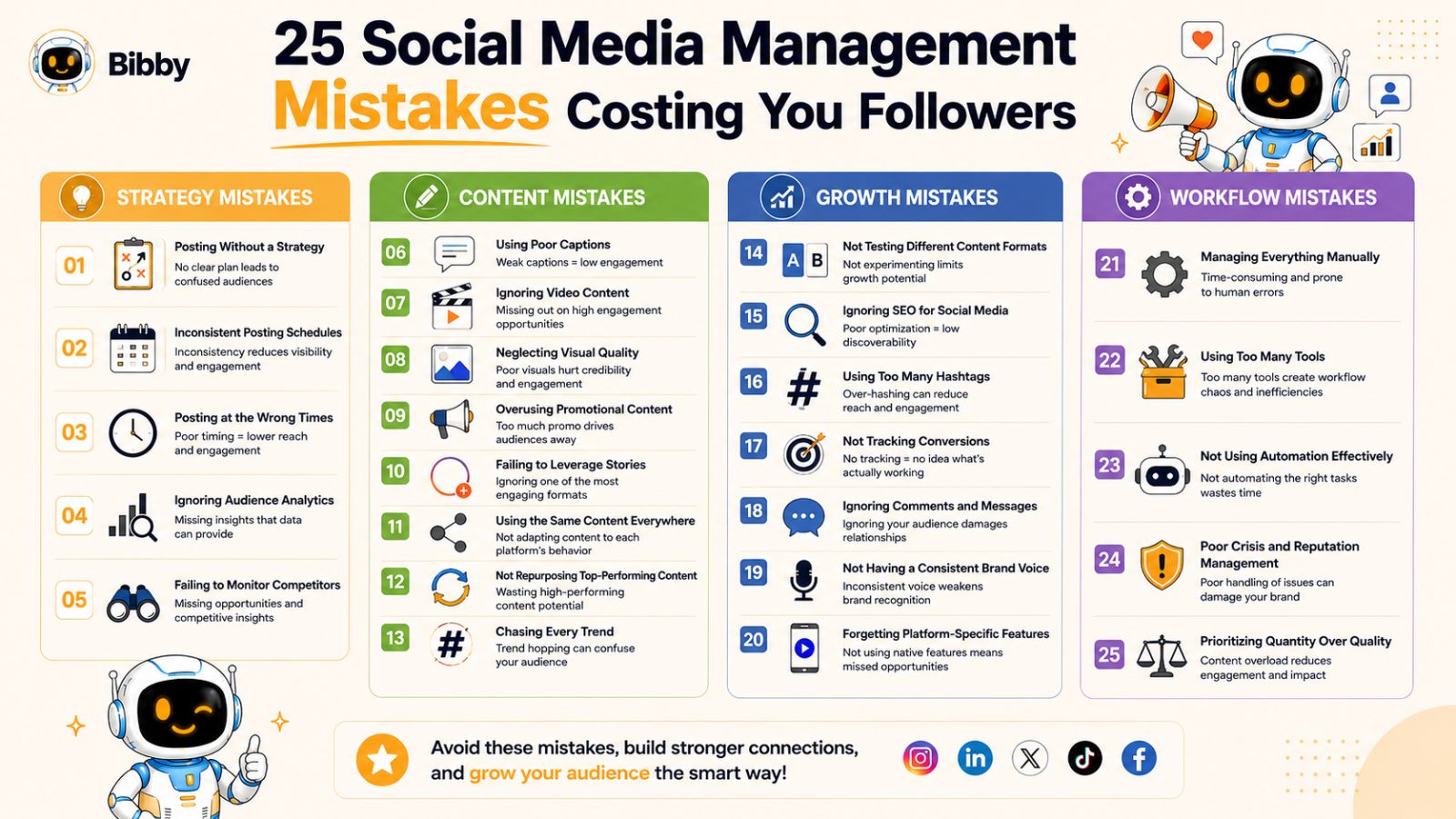
Let's start with the mistakes that could be costing you followers right now.
1. Posting Without a Strategy
One of the biggest social media management mistakes is posting content without a clear strategy. Many brands publish content whenever inspiration strikes, hoping something will resonate with their audience. Unfortunately, random posting rarely produces consistent results.
Without a strategy, your content lacks direction, your messaging becomes inconsistent, and your audience struggles to understand what value your account provides.
How to fix it:
- Define clear social media goals.
- Identify your target audience.
- Create content pillars for consistency.
- Develop a monthly content plan.
- Measure performance against specific objectives.
A well-defined strategy ensures every post serves a purpose and contributes to long-term growth.
Must read: How to Build a Successful Social Media Strategy from Scratch
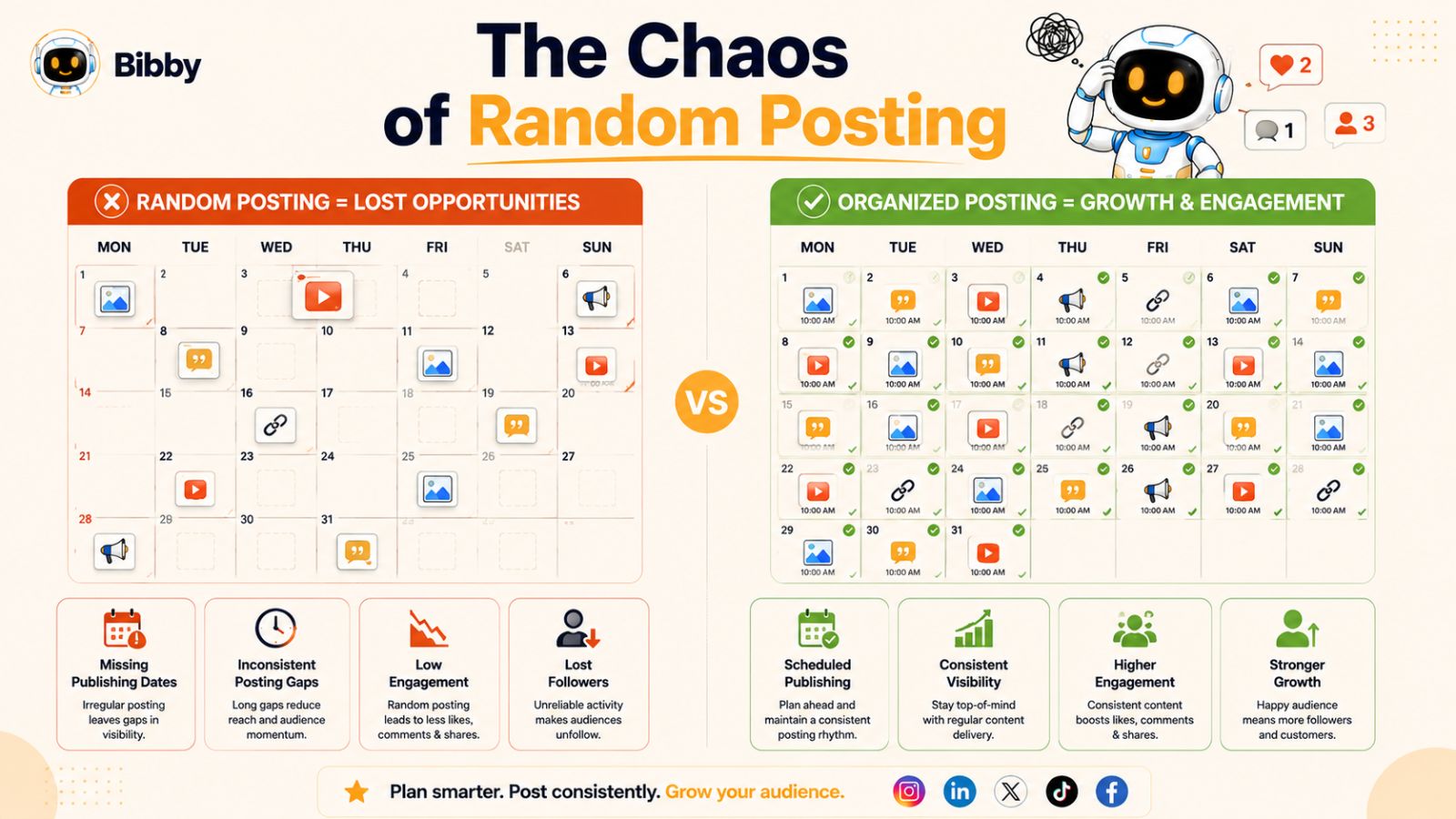
2. Inconsistent Posting Schedules
Social media algorithms favor active and consistent accounts. When you disappear for days or weeks and then suddenly post multiple times in a row, your visibility often suffers.
Inconsistent posting can make your brand appear unreliable and cause followers to lose interest. Over time, this reduces engagement and weakens your relationship with your audience.
How to fix it:
- Establish a realistic posting schedule.
- Use a content calendar to stay organized.
- Batch-create content in advance.
- Schedule posts ahead of time.
Tools like Bibby make consistency much easier by allowing you to schedule content across Facebook, Instagram, LinkedIn, TikTok, and YouTube from a single dashboard, ensuring your audience hears from you regularly without requiring daily manual effort.
3. Ignoring Audience Analytics
Many businesses spend hours creating content but very little time analyzing results. As a result, they continue producing content that may not resonate with their audience.
Analytics reveal what content generates engagement, which topics perform best, when followers are most active, and where improvements are needed.
How to fix it:
- Review engagement metrics regularly.
- Track follower growth trends.
- Monitor reach and impressions.
- Identify your highest-performing content.
- Use insights to refine future content strategies.
The most successful social media managers make decisions based on data, not assumptions.
4. Posting at the Wrong Times
Even exceptional content can underperform if it reaches your audience when they're inactive. Timing plays a major role in determining how many people see and engage with your posts.
Many businesses rely on generic "best posting times" found online, but every audience behaves differently.
How to fix it:
- Analyze audience activity patterns.
- Test different publishing times.
- Monitor engagement trends.
- Use AI-powered scheduling tools.
Platforms like Bibby automatically schedule content at AI-optimized times, helping your posts reach audiences when they are most likely to engage, without requiring constant manual testing.
Also read: Benefits of Scheduling Social Media Posts for Faster Growth
5. Using the Same Content on Every Platform
What works on LinkedIn may fail on TikTok. What performs well on Instagram may not resonate on Facebook. Yet many brands simply copy and paste identical content across every platform.
Each social network has unique user behaviors, content preferences, and engagement patterns. Ignoring these differences can lead to lower performance and reduced follower growth.
How to fix it:
- Customize content for each platform.
- Adapt captions to audience expectations.
- Optimize image and video formats.
- Leverage platform-specific features.
- Test different content styles across channels.
A platform-specific approach helps maximize engagement while creating a better experience for followers wherever they interact with your brand.
6. Prioritizing Quantity Over Quality
Many brands fall into the trap of believing that posting more content automatically leads to more growth. While consistency is important, flooding your audience with low-value content often produces the opposite effect.
Social media algorithms increasingly measure how users interact with content. If followers repeatedly scroll past your posts, spend little time engaging, or fail to interact altogether, platforms may interpret those signals as a lack of relevance. Over time, this can reduce your overall reach and visibility.
High-performing social media accounts focus on creating content that educates, entertains, inspires, or solves a problem. A single valuable post can generate more engagement and follower growth than ten rushed posts published merely to fill a content calendar.
Signs you're prioritizing quantity over quality:
- Publishing content without a clear purpose.
- Repeating the same ideas excessively.
- Creating posts solely to maintain posting frequency.
- Seeing declining engagement despite posting more often.
- Producing content that receives little meaningful interaction.
How to fix it:
- Focus on delivering value before increasing volume.
- Develop content around audience pain points.
- Invest more time in research and content planning.
- Analyze top-performing posts and identify patterns.
- Prioritize engagement quality over posting frequency.
Remember: followers don't reward effort—they reward value.
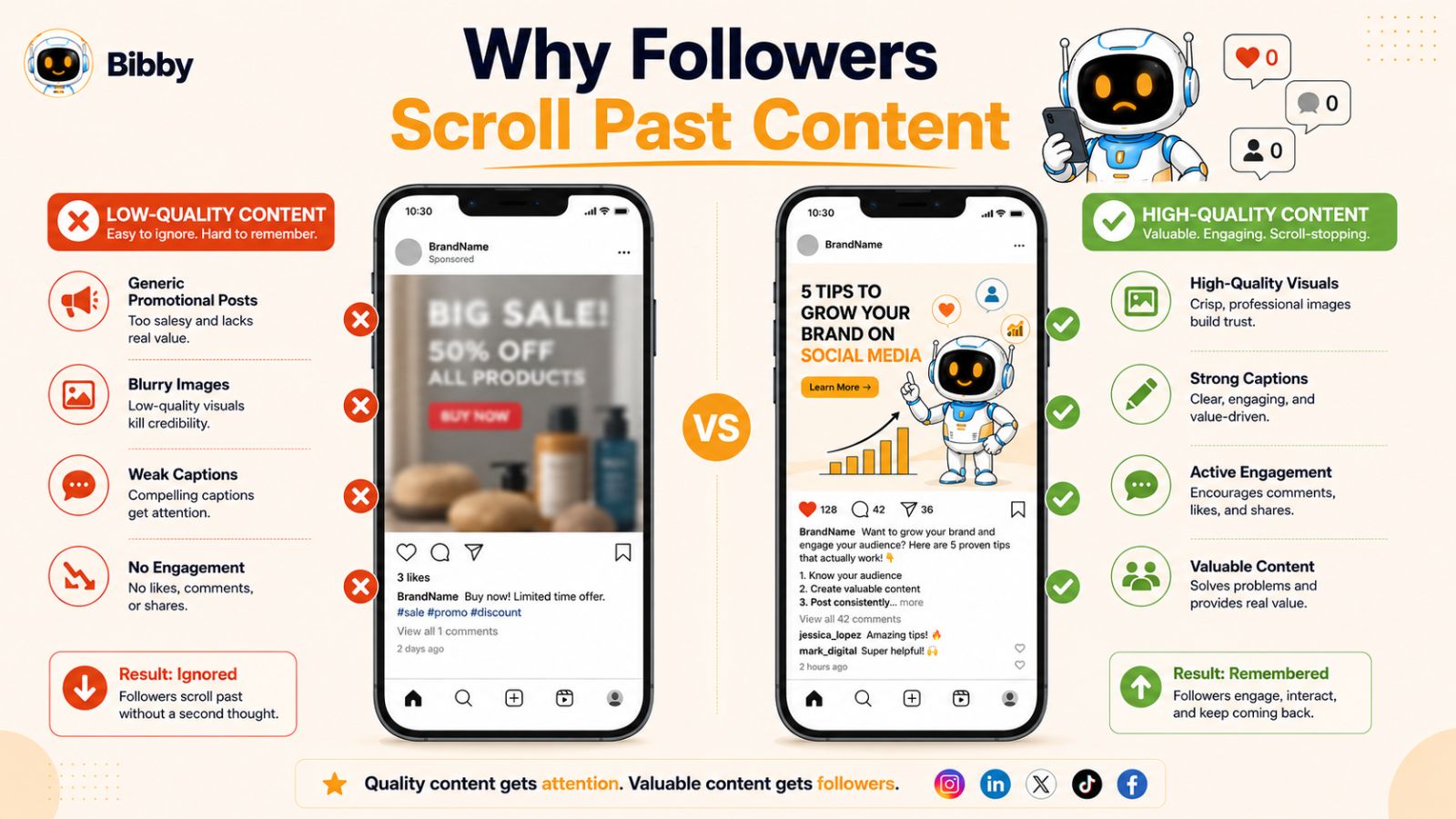
7. Overusing Promotional Content
One of the fastest ways to lose followers is to constantly talk about your products, services, or offers. Social media users don't log in to be sold to every day. They come to learn, connect, discover, and be entertained.
When every post focuses on selling, audiences begin to perceive your account as advertising rather than a valuable resource. This often results in lower engagement rates, declining reach, and increased unfollows.
The most successful brands understand that trust must be earned before conversions happen. They spend significantly more time educating and helping their audience than promoting their products.
A useful framework is the 80/20 principle:
- 80% value-driven content
- 20% promotional content
Value-driven content can include:
- Educational tips
- Industry insights
- Case studies
- Behind-the-scenes content
- Customer success stories
- Thought leadership
- Interactive content
How to fix it:
- Audit your recent posts for promotional frequency.
- Increase educational and relationship-building content.
- Focus on solving audience problems.
- Use storytelling instead of direct selling.
- Create content that earns attention before asking for action.
The brands that win on social media are often the ones that sell the least and help the most.
Also read the guide on Multi Platform Social Media Management
8. Ignoring Comments and Messages
Social media was designed to be social. Yet many businesses treat their profiles like digital billboards, publishing content while ignoring conversations happening underneath it.
Every comment, mention, and direct message represents an opportunity to strengthen a relationship. When followers take time to engage and receive no response, they may feel ignored or undervalued.
Beyond relationship building, engagement signals also influence algorithmic performance. Posts that generate active conversations often receive greater visibility than those with little interaction.
Research consistently shows that consumers are more likely to trust and purchase from brands that actively engage with their communities.
Why engagement matters:
- Builds audience loyalty.
- Increases trust and credibility.
- Encourages future interactions.
- Generates stronger community engagement.
- Sends positive signals to platform algorithms.
How to fix it:
- Respond to comments promptly.
- Acknowledge questions and feedback.
- Participate in relevant conversations.
- Monitor brand mentions regularly.
- Create systems for managing incoming messages.
The goal isn't simply to grow an audience—it's to build a community.
9. Not Having a Consistent Brand Voice
Imagine following a brand that sounds professional and authoritative one day, humorous the next, and completely different the following week. The inconsistency creates confusion and weakens brand recognition.
Your brand voice is how your business communicates across social media. It influences how followers perceive your expertise, personality, and credibility.
Strong brands develop recognizable communication styles that remain consistent regardless of platform or content format. This consistency helps audiences quickly identify your content and build familiarity over time.
Elements of a strong brand voice include:
- Tone
- Vocabulary
- Messaging style
- Communication principles
- Audience positioning
For example, a financial services company may emphasize clarity, trust, and expertise, while a lifestyle brand may focus on inspiration, energy, and relatability.
How to fix it:
- Document brand voice guidelines.
- Create examples of preferred messaging.
- Train team members on communication standards.
- Review content for consistency before publishing.
- Regularly audit social media messaging.
Consistency builds recognition. Recognition builds trust. Trust drives growth.
10. Neglecting Visual Quality
Social media is an overwhelmingly visual environment. Before users read your caption, click a link, or watch a video, they make an instant judgment based on what they see.
Low-quality visuals can undermine even the most valuable message. Blurry images, inconsistent branding, poor design choices, and outdated creative assets can reduce credibility and discourage engagement.
This doesn't mean every post requires a professional design team. It means your visuals should appear intentional, polished, and aligned with your brand identity.
High-performing visual content typically demonstrates:
- Clear branding
- Strong composition
- Readable text overlays
- Consistent design elements
- Mobile-friendly formatting
- High-resolution images and videos
Today, businesses have more options than ever for creating professional content. AI-powered tools can help generate images, improve creative workflows, and streamline content production without sacrificing quality.
For example, Bibby allows users to upload existing images or generate new AI-powered visuals, helping maintain a consistent flow of high-quality content without the traditional time investment associated with content creation.
How to fix it:
- Establish visual brand guidelines.
- Use consistent colors, fonts, and layouts.
- Prioritize mobile-first design.
- Regularly update creative assets.
- Review visual quality before publishing.
On social media, visual quality influences first impressions. And first impressions often determine whether someone becomes a follower—or keeps scrolling.
Also read: Why Social Media Automation Matters More Than Ever
11. Using Poor Captions
Many social media managers invest significant time creating visuals but treat captions as an afterthought. This is a costly mistake because captions often determine whether someone engages with your content, continues scrolling, or takes action.
A strong caption provides context, communicates value, encourages interaction, and guides readers toward a desired outcome. In contrast, weak captions typically describe the obvious, lack personality, or fail to give audiences a reason to engage.
As social platforms become increasingly competitive, captions play a critical role in both engagement and discoverability. Platforms like Instagram, LinkedIn, Facebook, and TikTok now use caption text as part of their content discovery systems, making caption optimization more important than ever.
The most effective captions typically include:
- A compelling hook in the first sentence.
- Clear audience relevance.
- Storytelling or educational value.
- Strategic keywords.
- A strong call to action.
Common caption mistakes include:
- Starting with generic introductions.
- Writing overly long, unfocused paragraphs.
- Failing to provide value.
- Using weak calls to action.
- Ignoring platform-specific writing styles.
How to fix it:
- Lead with a strong attention-grabbing hook.
- Focus on one primary message per post.
- Use formatting to improve readability.
- Include audience-focused language.
- Encourage comments, shares, or saves.
Creating engaging captions consistently can be challenging, especially when managing multiple platforms. This is where AI-powered workflows become valuable. Instead of staring at a blank screen, modern tools like Bibby can automatically generate platform-appropriate captions based on your content and preferred posting style, dramatically reducing content creation time while maintaining consistency.
12. Ignoring Video Content
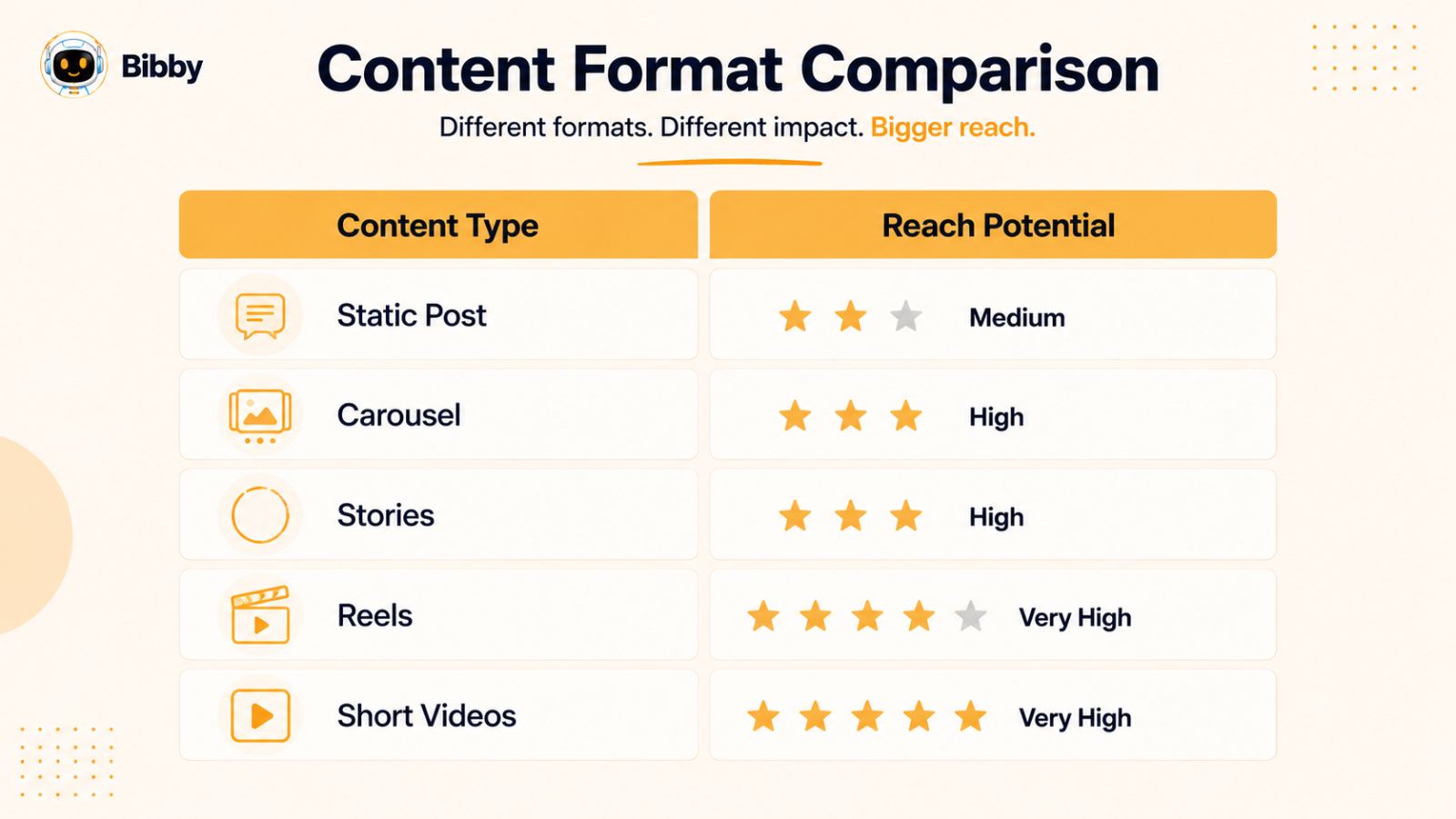
Over the past several years, video has evolved from a content advantage into a content necessity.
Virtually every major platform now prioritizes video formats:
- Instagram Reels
- TikTok videos
- YouTube Shorts
- Facebook Reels
- LinkedIn video posts
The reason is simple: video captures attention longer than most static content formats.
Many businesses avoid video because they assume it requires expensive equipment, advanced editing skills, or substantial production budgets. In reality, audiences increasingly prioritize authenticity over production quality. A useful video that solves a problem often outperforms a highly polished but unhelpful video.
Video content offers several advantages:
- Increased reach potential.
- Higher engagement rates.
- Better audience retention.
- Stronger emotional connection.
- Improved brand visibility.
How to fix it:
- Start with simple short-form videos.
- Repurpose existing content into video formats.
- Focus on education and storytelling.
- Experiment with different video lengths.
- Monitor audience response and optimize accordingly.
Brands that ignore video are increasingly competing with one hand tied behind their backs.
Important guide: AI-Powered Social Media Tools Changing Social Media Management
13. Failing to Leverage Stories
Stories have become one of the most frequently consumed content formats across social media, yet many brands still underutilize them.
Unlike traditional posts, stories create a more immediate and personal connection with audiences. They appear prominently within platform interfaces and often generate higher visibility among existing followers.
Stories are particularly effective because they encourage frequent interaction through:
- Polls
- Questions
- Quizzes
- Stickers
- Direct messages
- Link interactions
They also provide opportunities to share content that may not belong on your main feed, such as behind-the-scenes moments, quick updates, product launches, event coverage, or customer highlights.
Businesses that fail to use stories often miss opportunities to deepen audience relationships and increase overall engagement.
How to fix it:
- Create a daily or weekly story strategy.
- Use interactive features consistently.
- Share behind-the-scenes content.
- Promote new posts through stories.
- Highlight customer experiences and testimonials.
The most successful social media strategies combine permanent content with temporary content to maximize audience touchpoints.
14. Not Repurposing Top-Performing Content
One of the most inefficient practices in social media management is constantly creating new content while ignoring assets that have already proven successful.
Many brands publish a high-performing post once and never use it again. Meanwhile, top creators and marketers systematically repurpose winning content into multiple formats, extending its lifespan and maximizing return on effort.
A single successful piece of content can often become:
- Multiple social posts
- Short-form videos
- Stories
- Carousels
- LinkedIn articles
- Email content
- Blog material
Repurposing works because most followers never see every piece of content you publish. Even among those who do, information often requires multiple exposures before it is remembered or acted upon.
How to fix it:
- Identify your highest-performing content regularly.
- Turn long-form content into short-form assets.
- Adapt successful posts for different platforms.
- Update and refresh evergreen content.
- Build systems that prioritize reuse before recreation.
The goal is not simply to create more content. The goal is to extract more value from the content you already know works.
15. Chasing Every Trend
Trends can generate impressive short-term visibility, but blindly following every trend can dilute your brand identity and confuse your audience.
Many businesses become so focused on staying relevant that they abandon their content strategy entirely. They jump from one viral challenge, meme, or trending topic to the next without considering whether it aligns with their audience, expertise, or business goals.
The result is often inconsistent messaging, weakened positioning, and reduced trust.
Strong brands use trends strategically rather than reactively.
Before participating in any trend, ask:
- Is this relevant to our audience?
- Does it align with our brand values?
- Can we add unique insight?
- Will it support long-term business goals?
- Does it strengthen or weaken our positioning?
Not every trend deserves your attention.
How to fix it:
- Establish clear content priorities.
- Evaluate trends through a strategic lens.
- Focus on audience relevance over popularity.
- Maintain consistency in messaging.
- Balance trending content with evergreen content.
The brands that achieve sustainable growth aren't those that chase every trend. They're the ones that consistently deliver value while selectively leveraging opportunities that genuinely support their goals.
A good rule of thumb is that trends should enhance your strategy—not become your strategy.
16. Using Too Many Hashtags
Hashtags were once one of the most powerful tools for increasing content visibility. While they still have value on certain platforms, many social media managers continue using outdated hashtag strategies that provide little benefit and sometimes even make content appear spammy.
A common misconception is that adding dozens of hashtags will automatically increase reach. In reality, modern social media algorithms rely heavily on content relevance, engagement signals, audience behavior, keywords, and user interests. Hashtags are only one small piece of a much larger discovery system.
Poor hashtag practices often include:
- Using irrelevant hashtags solely because they are popular.
- Copying the same hashtag set onto every post.
- Using highly competitive hashtags with little chance of visibility.
- Prioritizing quantity over relevance.
Effective hashtag usage requires understanding how your target audience searches for and discovers content.
How to fix it:
- Use highly relevant hashtags related to your content.
- Focus on niche and industry-specific hashtags.
- Test different hashtag combinations.
- Monitor hashtag performance over time.
- Combine hashtags with strong keyword optimization.
The goal isn't to reach everyone. It's to reach the right people.
Also read: Do Hashtags Still Matter? What Social Media Algorithms Really Want
17. Ignoring SEO for Social Media
Many marketers still think of SEO and social media as separate disciplines. However, social platforms are increasingly functioning as search engines.
Users now search directly on:
- TikTok
- YouTube
Whether someone is looking for business advice, product recommendations, tutorials, or local services, social search behavior continues to grow.
This shift means social media content must be optimized for discoverability, not just engagement.
Modern social SEO includes:
- Strategic keyword placement.
- Search-friendly captions.
- Optimized profile descriptions.
- Keyword-rich video titles.
- Relevant on-screen text.
- Search-focused content topics.
For example, a post titled "3 Social Media Scheduling Mistakes Costing You Reach" is far more discoverable than a vague caption such as "Thoughts for today."
Businesses that ignore social SEO often miss significant opportunities to attract followers who are actively searching for solutions.
How to fix it:
- Research audience search behavior.
- Include target keywords naturally in captions.
- Optimize profile bios and descriptions.
- Use keyword-focused video titles.
- Create content around common customer questions.
As social search continues to evolve, brands that embrace SEO principles will gain a significant competitive advantage.
Also read: How Social Media SEO Helps Brands Get More Organic Traffic
18. Not Testing Different Content Formats
One of the most dangerous assumptions in social media management is believing you already know what your audience wants.
Audience preferences change. Platform algorithms change. Market conditions change.
The only reliable way to identify what works is through continuous testing.
Yet many businesses repeatedly publish the same content formats without experimentation. They create identical posts week after week and wonder why growth stagnates.
High-performing social media teams operate with a testing mindset. They constantly evaluate different approaches to uncover new opportunities.
Elements worth testing include:
- Post formats
- Caption styles
- Content length
- Visual design
- Posting times
- Calls to action
- Video structures
- Story formats
Even small improvements can create meaningful gains when compounded over hundreds of posts.
How to fix it:
- Develop structured testing processes.
- Change one variable at a time.
- Track performance consistently.
- Document learnings.
- Scale successful experiments.
The best social media managers don't guess what works. They test until they know.
19. Failing to Monitor Competitors
Competitive analysis is one of the most underutilized sources of strategic insight in social media marketing.
Monitoring competitors isn't about copying their content. It's about understanding market dynamics, audience expectations, emerging trends, and content opportunities.
Your competitors have already invested significant resources testing content strategies. Ignoring those insights means potentially missing valuable lessons that could accelerate your own growth.
A thorough competitor analysis can reveal:
- Content formats generating engagement.
- Emerging industry conversations.
- Audience pain points.
- Positioning opportunities.
- Gaps in the market.
- Untapped content ideas.
The most successful brands don't operate in isolation. They maintain awareness of the broader competitive landscape while developing their own unique voice.
How to fix it:
- Identify key industry competitors.
- Monitor content performance trends.
- Analyze engagement patterns.
- Track audience responses.
- Look for opportunities competitors overlook.
Competitive intelligence should inform your strategy—not define it.
20. Not Tracking Conversions
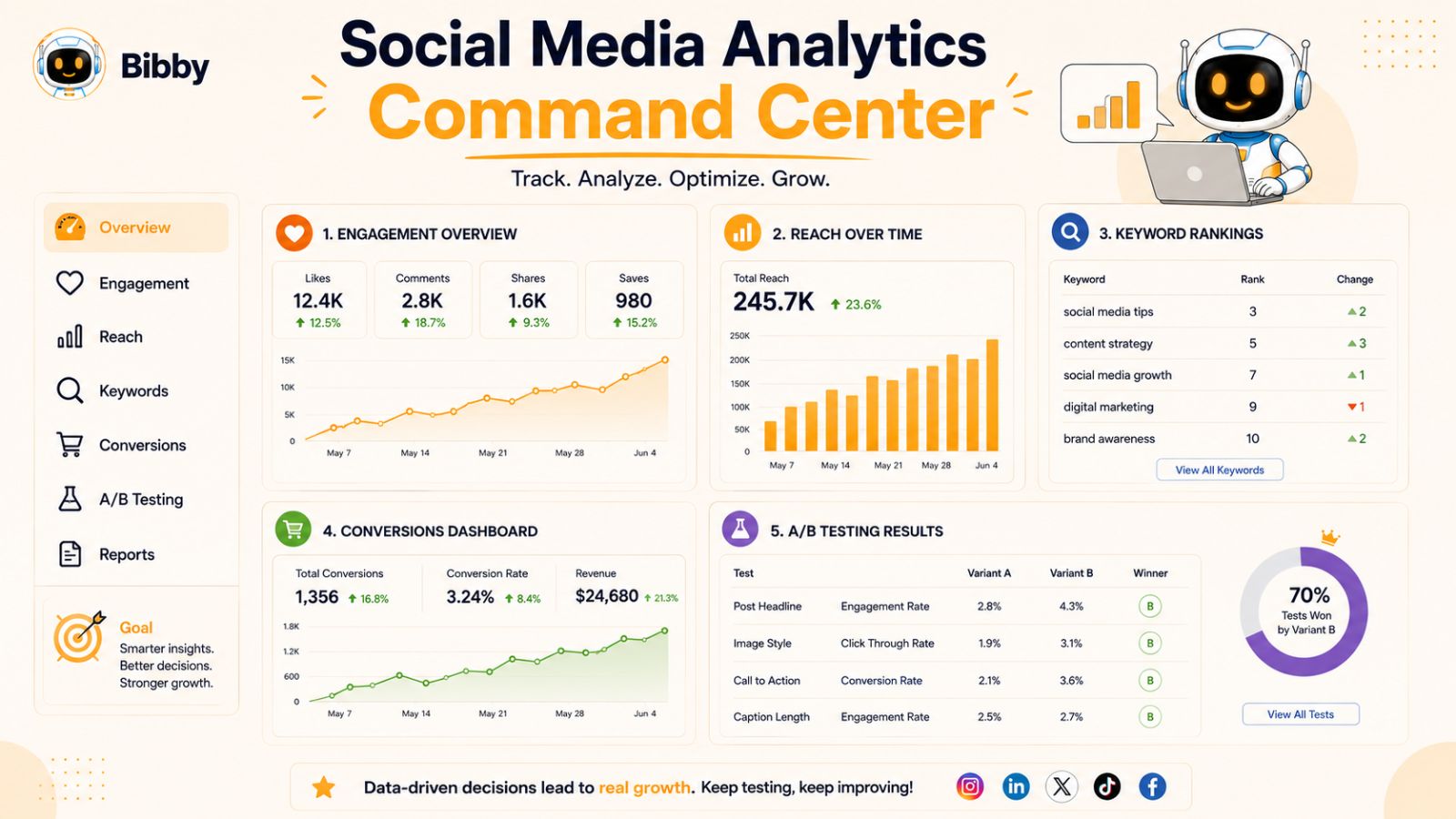
Perhaps the most expensive social media management mistake is focusing exclusively on vanity metrics.
Follower counts, likes, impressions, and views are useful indicators, but they don't necessarily measure business impact.
A post can generate thousands of likes while contributing little to revenue, lead generation, customer acquisition, or business growth.
Effective social media management requires understanding how content influences meaningful outcomes.
Depending on your goals, important conversion metrics may include:
- Website traffic
- Email signups
- Demo requests
- Lead generation
- Product purchases
- Consultation bookings
- Event registrations
- Customer retention
Organizations that consistently achieve strong social media ROI connect content performance to business outcomes rather than surface-level engagement metrics.
How to fix it:
- Define clear conversion goals.
- Implement proper tracking systems.
- Use UTM parameters where appropriate.
- Monitor customer journeys.
- Evaluate content based on business impact.
This is where analytics become especially valuable. Instead of guessing which efforts contribute to growth, businesses can make informed decisions based on actual performance data.
Platforms that centralize publishing and analytics, such as Bibby, help marketers move beyond vanity metrics by providing visibility into content performance trends, engagement patterns, and audience growth across multiple social networks from a single dashboard.
The ultimate purpose of social media management isn't simply to gain followers. It's to build an audience that contributes to measurable business success.
Also read: Social Media KPIs Every Business Should Track: The Complete Guide
21. Managing Everything Manually
Many businesses start their social media journey manually. Posting directly from each platform, writing captions on the fly, uploading content one channel at a time, and checking analytics separately may seem manageable at first.
However, as social media responsibilities grow, manual processes quickly become a bottleneck.
What begins as a few minutes per day often evolves into hours spent on repetitive administrative tasks rather than strategic activities that drive growth.
Manual workflows frequently lead to:
- Missed posting opportunities.
- Inconsistent publishing schedules.
- Human errors.
- Delayed campaign launches.
- Team inefficiencies.
- Increased operational costs.
The opportunity cost is often overlooked. Every hour spent manually scheduling posts is an hour not spent creating better content, engaging with audiences, analyzing performance, or improving strategy.
High-performing marketing teams build systems that reduce repetitive work while increasing consistency.
How to fix it:
- Create standardized workflows.
- Use content calendars.
- Batch content production.
- Automate scheduling where possible.
- Centralize publishing operations.
The goal isn't simply to work harder. It's to build a system that works smarter.
22. Forgetting Platform-Specific Features
Every social platform invests heavily in promoting its newest and most strategic features. Brands that ignore these features often miss significant opportunities for visibility and engagement.
Platforms want users to adopt features such as:
- Instagram Reels
- Instagram Stories
- Facebook Reels
- YouTube Shorts
- LinkedIn Carousels
- TikTok Series
- Interactive Story Features
When businesses rely solely on traditional image posts, they often fail to capitalize on the formats receiving the most algorithmic support.
This doesn't mean you need to use every feature available. It means understanding which features align with your audience and incorporating them into your content strategy where appropriate.
For example:
- Educational brands may benefit from carousel content.
- Personal brands may thrive through short-form video.
- E-commerce businesses may generate engagement through stories and product showcases.
- B2B companies may perform well with thought leadership videos and LinkedIn content.
How to fix it:
- Stay informed about platform updates.
- Test new features early.
- Monitor feature-specific performance.
- Adapt content to native platform formats.
- Prioritize features your audience actively uses.
The brands that maintain growth over time are often the first to adapt to platform evolution.
23. Poor Crisis and Reputation Management
Building an audience takes months or years. Damaging trust can happen in a matter of hours.
Social media has given customers unprecedented ability to publicly share experiences, opinions, and concerns. While this creates opportunities for engagement, it also increases the importance of reputation management.
Many businesses underestimate the impact of:
- Negative reviews.
- Public complaints.
- Customer service failures.
- Misinterpreted content.
- Brand controversies.
- Viral criticism.
The issue isn't whether negative feedback will occur. Every brand eventually faces criticism. What matters is how that criticism is handled.
Organizations with strong reputation management practices often strengthen customer trust during challenging situations. Those that ignore concerns, respond defensively, or remain silent can amplify the damage.
How to fix it:
- Establish response guidelines.
- Monitor brand mentions consistently.
- Respond professionally and promptly.
- Escalate serious issues appropriately.
- Focus on transparency and accountability.
Trust is one of the most valuable assets a brand can build on social media. Protecting it should be a strategic priority.
24. Not Using Automation Effectively
Automation has transformed social media management, yet many businesses fall into one of two extremes.
Some avoid automation entirely and waste countless hours on repetitive tasks.
Others over-automate everything, creating robotic experiences that feel impersonal and disconnected.
The most effective approach lies somewhere in the middle.
Automation should eliminate repetitive administrative work while preserving authentic human interaction where it matters most.
Tasks that are ideal for automation include:
- Content scheduling.
- Publishing workflows.
- Content organization.
- Performance reporting.
- Routine notifications.
- Calendar management.
Tasks that should remain primarily human include:
- Relationship building.
- Community engagement.
- Customer support conversations.
- Strategic decision-making.
- Brand storytelling.
The purpose of automation is not to replace human creativity. It is to create more time for it.
Modern platforms are increasingly combining automation with artificial intelligence to simplify social media management. Rather than spending hours planning publishing schedules, generating captions, and coordinating multiple platforms, marketers can focus on strategy while technology handles execution.
How to fix it:
- Identify repetitive tasks.
- Implement automation strategically.
- Maintain authentic audience interactions.
- Review automated workflows regularly.
- Use AI to enhance productivity rather than replace creativity.
Businesses that effectively balance automation and authenticity often gain a significant operational advantage.
25. Relying on Too Many Tools
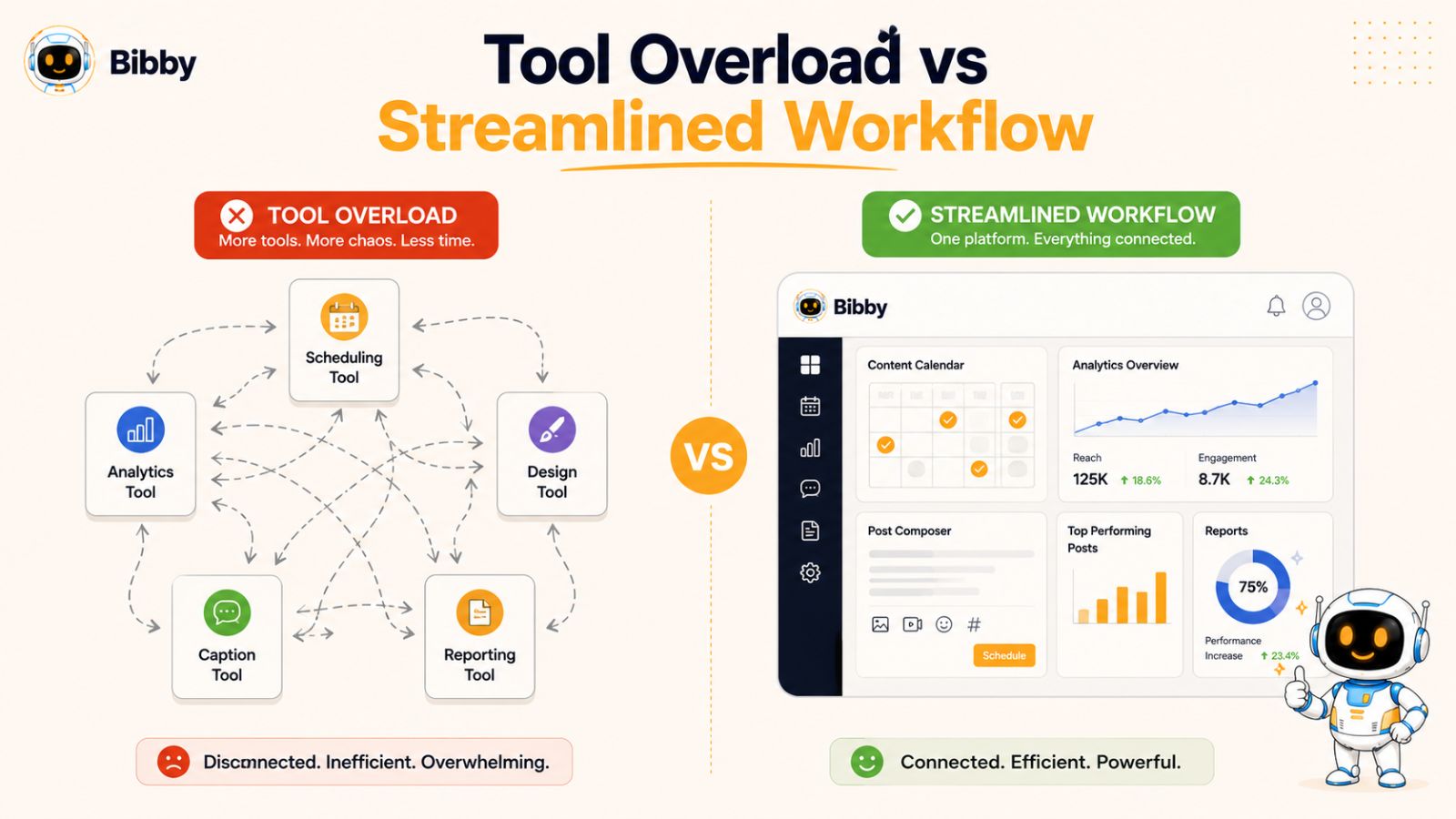
As social media operations expand, many marketers gradually accumulate an overwhelming collection of software.
One tool for scheduling.
Another for captions.
Another for image creation.
Another for analytics.
Another for video publishing.
Another for reporting.
Before long, teams are switching between multiple dashboards, managing disconnected workflows, and paying for overlapping functionality.
The result is often greater complexity rather than greater efficiency.
Common consequences include:
- Fragmented workflows.
- Higher software costs.
- Data silos.
- Increased training requirements.
- Reduced team productivity.
- Greater risk of mistakes.
The most efficient social media systems are often the simplest.
Rather than piecing together multiple solutions, many businesses are moving toward centralized platforms that streamline content creation, publishing, scheduling, automation, and analytics within a single workflow.
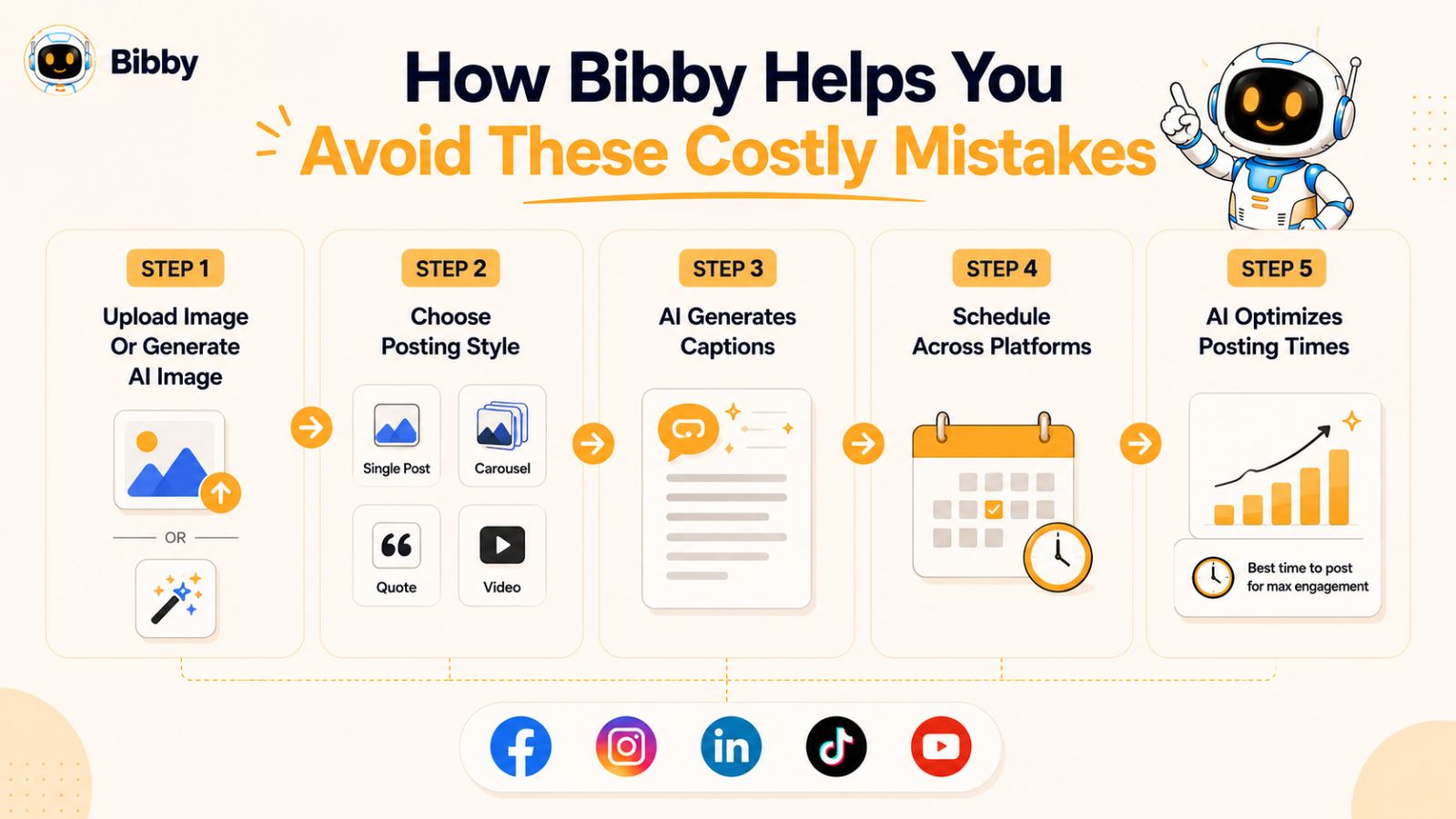
For example, Bibby simplifies the entire social media management process through a straightforward workflow:
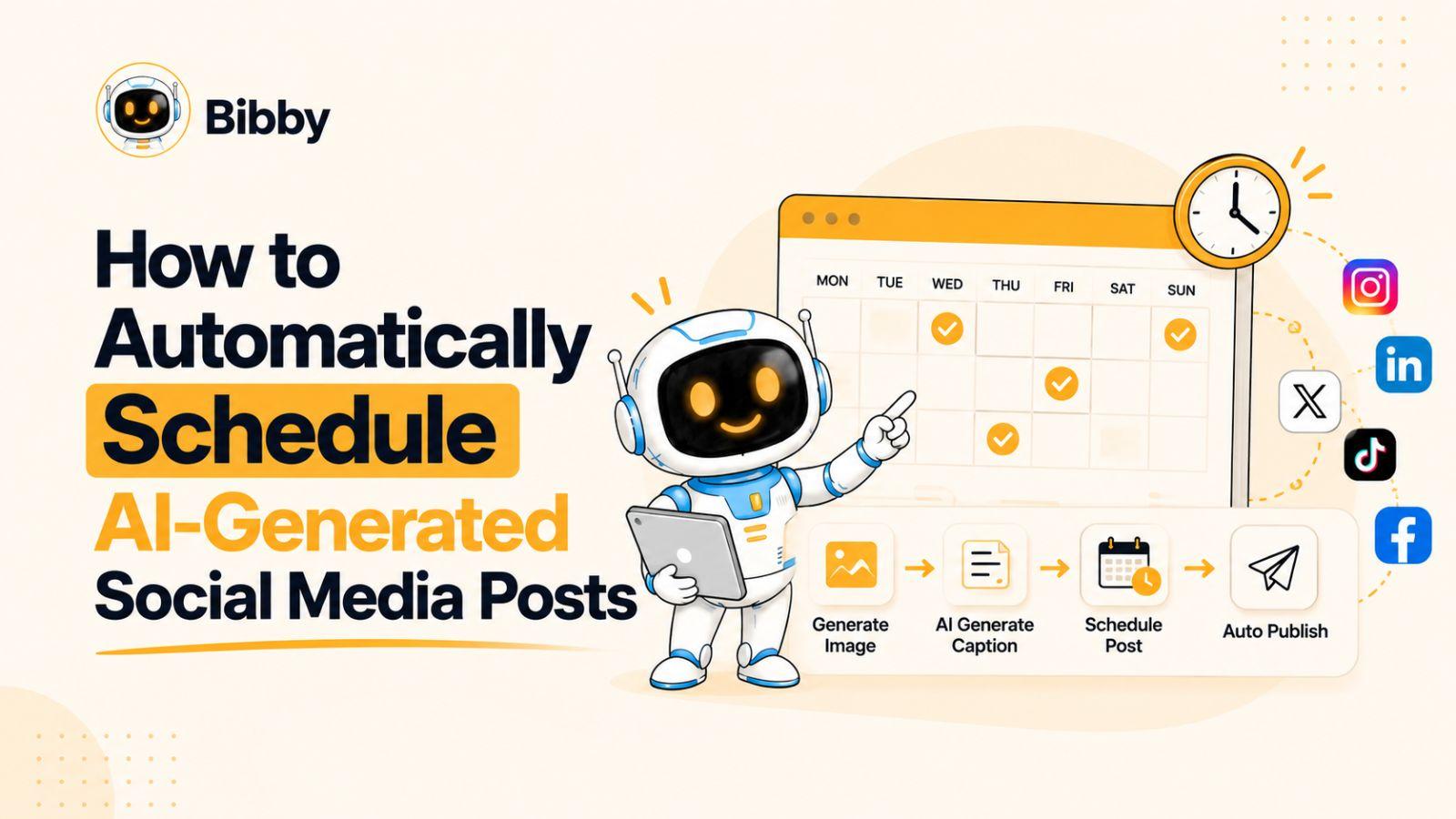
- Upload your image or generate one with AI.
- Select your preferred posting style.
- Generate captions automatically using AI.
- Schedule content across Facebook, Instagram, LinkedIn, TikTok, and YouTube.
- Allow AI to optimize posting times for maximum reach.
- Track performance through built-in analytics.
In addition to standard posts, users can manage videos, stories, and other content formats without constantly switching between tools.
How to fix it:
- Audit your current technology stack.
- Eliminate redundant software.
- Consolidate workflows where possible.
- Prioritize ease of use and scalability.
- Choose tools that support multiple stages of the content lifecycle.
The most successful social media teams are not necessarily the ones with the most tools. They are the ones with the most efficient systems.
By avoiding these 25 social media management mistakes, businesses can improve consistency, strengthen audience relationships, increase engagement, and create a more sustainable path to long-term social media growth.
Also have a look at: Social Media Marketing Goals Every Small Business Should Set
How Bibby Helps You Avoid These Costly Social Media Management Mistakes
Many of the social media management mistakes covered in this guide stem from the same underlying problem: inefficient workflows.
When content creation takes too long, posting becomes inconsistent. When scheduling is manual, opportunities are missed. When analytics are scattered across multiple platforms, decision-making becomes difficult. And when teams rely on several disconnected tools, productivity suffers.
Bibby was built to solve these challenges through a streamlined, AI-powered social media management workflow that helps businesses, creators, agencies, and marketers save time while improving consistency and performance.
Instead of juggling multiple tools for content creation, scheduling, publishing, and analytics, Bibby brings everything together in one platform.
Create Content Faster With AI
One of the biggest barriers to consistent posting is content creation.
Many marketers spend hours searching for images, designing graphics, brainstorming ideas, and writing captions before a single post is ready to publish. Over time, this creates content bottlenecks that slow growth and reduce consistency.
Bibby simplifies this process by allowing users to:
- Upload their own images.
- Generate images using AI.
- Create content more efficiently.
- Maintain a steady publishing schedule.
This reduces the time spent creating social media assets while helping teams keep their content pipeline full.
Generate Captions Automatically
Writing engaging captions consistently can be one of the most time-consuming aspects of social media management.
Every platform has different audience expectations, content styles, and engagement patterns. Creating unique captions for multiple platforms often requires significant effort.
With Bibby, users simply select their preferred posting style, and AI generates captions automatically.
Benefits include:
- Faster content production.
- Consistent messaging.
- Reduced creative fatigue.
- Improved workflow efficiency.
- Easier multi-platform publishing.
Instead of spending valuable time writing every caption from scratch, marketers can focus on strategy, audience engagement, and campaign optimization.
Schedule Across Multiple Social Platforms
Managing several social media channels manually is one of the most common causes of inconsistency.
Bibby allows users to schedule content across major platforms from a single dashboard, including:
- TikTok
- YouTube
This centralized approach helps ensure content is published consistently without requiring users to log in and manage each platform individually.
For businesses managing multiple brands, campaigns, or content calendars, the time savings can be substantial.
AI-Optimized Posting Times
Timing remains one of the most overlooked factors affecting social media performance.
Many businesses either publish content manually when convenient or rely on generic recommendations that may not reflect their audience's behavior.
Bibby's AI-powered scheduling system helps identify optimal publishing times, allowing content to be scheduled when audiences are most likely to engage.
Potential benefits include:
- Improved visibility.
- Higher engagement rates.
- Better audience reach.
- More consistent performance.
Rather than guessing when to post, users can rely on data-driven scheduling recommendations.
Manage More Than Just Standard Posts
Modern social media strategies require a variety of content formats.
Audiences consume:
- Feed posts
- Stories
- Videos
- Reels
- Shorts
- Multi-platform campaigns
Managing these formats separately can quickly become overwhelming.
Bibby helps simplify content management by supporting multiple content types from a centralized workflow, making it easier to execute a comprehensive social media strategy without unnecessary complexity.
Track Performance With Built-In Analytics
Without analytics, improving social media performance becomes largely a matter of guesswork.
Successful marketers rely on performance data to understand:
- What content resonates.
- Which platforms perform best.
- When audiences engage most.
- How campaigns contribute to growth.
Bibby's analytics capabilities provide valuable insights that help users make smarter decisions and continuously improve their social media strategies.
By monitoring performance trends and engagement metrics, businesses can move beyond assumptions and make data-driven improvements over time.
A Simple Workflow That Saves Hours Every Week
Perhaps Bibby's greatest advantage is its simplicity.
Instead of managing multiple tools and fragmented processes, users can follow a straightforward workflow:
Step 1: Upload your image or generate one with AI.
Step 2: Choose your preferred posting style.
Step 3: Let Bibby automatically generate captions.
Step 4: Schedule content across your selected social platforms.
Step 5: Allow AI to optimize publishing times.
Step 6: Monitor results through built-in analytics.
The result is a more efficient social media management process that reduces manual work, improves consistency, and helps businesses focus on what matters most: creating valuable content and growing meaningful audience relationships.
For brands looking to avoid the common mistakes that lead to declining engagement and follower loss, a streamlined platform like Bibby can turn social media management from a daily challenge into a scalable, repeatable growth system.
Also read: 50+ Social Media Marketing Statistics You Need to Know
Signs Your Current Social Media Management Process Is Hurting Growth
Many social media management problems don't appear overnight. Instead, they develop gradually through inefficient processes, inconsistent execution, and missed optimization opportunities.
Because these issues often emerge slowly, businesses may not realize their workflow is limiting growth until engagement drops, follower growth stalls, or content creation becomes overwhelming.
If any of the following signs sound familiar, your social media management process may be costing you more than you realize.
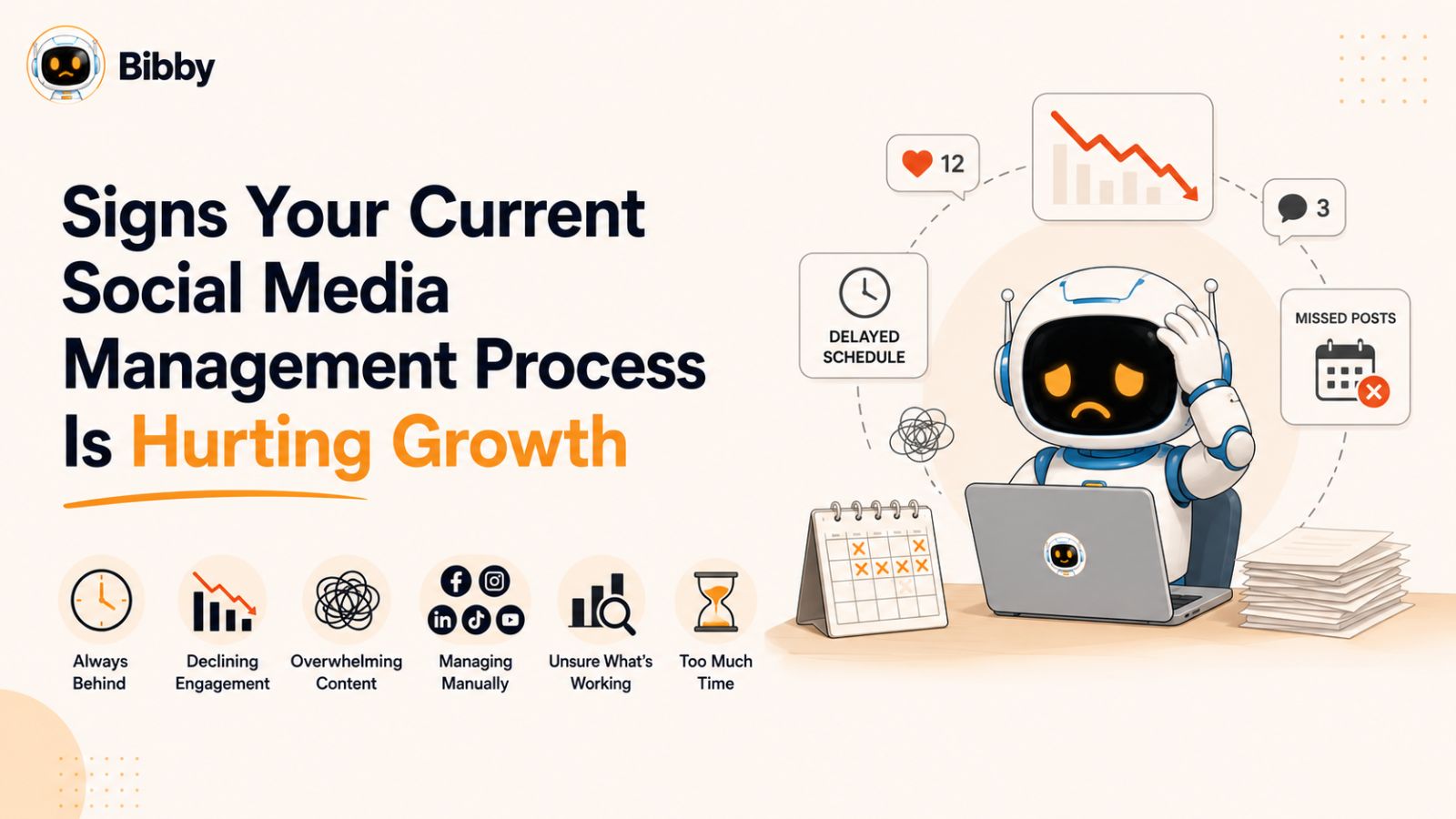
You're Constantly Behind Schedule
One of the clearest indicators of an inefficient social media workflow is always feeling like you're playing catch-up.
Content gets created at the last minute.
Posts are published inconsistently.
Campaigns launch later than planned.
Teams scramble to find content ideas every week.
This reactive approach creates unnecessary stress and often leads to lower-quality content. More importantly, it makes consistency nearly impossible to maintain.
Successful social media programs operate proactively rather than reactively. They rely on content calendars, streamlined workflows, and scheduling systems that allow teams to plan ahead instead of constantly responding to immediate publishing needs.
If posting feels rushed most of the time, the problem is likely your process—not your effort.
Engagement Is Declining Despite Posting Regularly
Many businesses assume that publishing more content automatically leads to better results. However, if engagement continues to decline despite maintaining a consistent posting schedule, deeper issues may exist.
Possible causes include:
- Content no longer aligns with audience interests.
- Posts are being published at suboptimal times.
- Platform algorithms have shifted.
- Content formats are becoming outdated.
- Audience expectations have evolved.
Declining engagement is often an early warning signal that your social media strategy requires adjustment.
Rather than increasing posting frequency, focus on understanding why performance is changing. Reviewing analytics, audience behavior, and content trends can often reveal opportunities for improvement.
Growth rarely comes from doing more of what isn't working.
Content Creation Feels Overwhelming
Creating content is one of the most important responsibilities in social media management, but it should not consume every available hour.
If your team spends excessive time:
- Brainstorming ideas
- Designing graphics
- Writing captions
- Scheduling posts
- Managing multiple platforms
then your workflow may be creating unnecessary friction.
Content creation should be a repeatable process rather than a constant struggle.
When businesses lack efficient systems, content production often becomes inconsistent, leading to missed publishing opportunities and reduced audience engagement.
This challenge becomes even more significant as businesses expand to additional platforms and content formats.
The more time spent on repetitive administrative tasks, the less time remains for strategy, creativity, and audience engagement.
You're Managing Too Many Platforms Manually
Modern audiences rarely exist on a single platform.
Many businesses maintain active presences on:
- TikTok
- YouTube
Managing each platform separately may seem manageable initially, but complexity increases rapidly as content volume grows.
Manual platform management often leads to:
- Duplicate work
- Inconsistent messaging
- Scheduling errors
- Missed opportunities
- Increased workload
The challenge isn't simply creating content. It's coordinating content efficiently across multiple channels while maintaining quality and consistency.
As social media ecosystems continue to expand, centralized workflows become increasingly important.
You Struggle to Measure What's Actually Working
Many businesses collect large amounts of social media data but struggle to convert it into actionable insights.
Common questions include:
- Which content formats drive the most engagement?
- What topics generate the highest reach?
- Which platforms contribute most to growth?
- What posting times perform best?
- Which campaigns deliver measurable business results?
Without clear answers, optimization becomes difficult.
Effective social media management requires more than content creation. It requires continuous learning and improvement based on performance data.
Organizations that regularly analyze content performance are better positioned to:
- Improve engagement.
- Increase efficiency.
- Allocate resources effectively.
- Scale successful strategies.
- Maximize return on investment.
If reporting feels complicated or disconnected, it may be a sign that your current workflow lacks the visibility needed for sustained growth.
Social Media Is Taking Too Much Time
Perhaps the most overlooked warning sign is the amount of time social media management consumes.
Many business owners, marketers, and creators spend countless hours each week:
- Creating content.
- Writing captions.
- Uploading media.
- Scheduling posts.
- Monitoring multiple platforms.
- Reviewing analytics.
While social media is important, it should not require constant manual effort to remain effective.
The most scalable social media systems reduce repetitive work through smarter processes, automation, and centralized management.
When routine tasks consume most of your available time, growth often slows because there is little capacity left for strategy, experimentation, and audience development.
The Bottom Line
If you're experiencing several of these challenges, your social media management process may be limiting your growth more than your content itself.
In many cases, the issue isn't a lack of creativity, effort, or expertise. It's a workflow problem.
By improving consistency, simplifying content creation, leveraging automation, and using analytics more effectively, businesses can eliminate many of the operational obstacles that prevent sustainable social media growth.
The next step is understanding the best practices that high-performing brands use to create efficient, scalable social media management systems.
Final take: How an AI Hashtag Generator Can Make Your Posts Go Viral
Social Media Management Best Practices for Sustainable Growth
Avoiding common mistakes is important, but sustainable social media growth requires more than simply fixing problems. The most successful brands build systems that consistently attract, engage, and retain audiences over the long term.
While platforms, algorithms, and content trends will continue to evolve, the fundamental principles behind effective social media management remain remarkably consistent. The following best practices can help create a scalable strategy that supports both audience growth and business objectives.
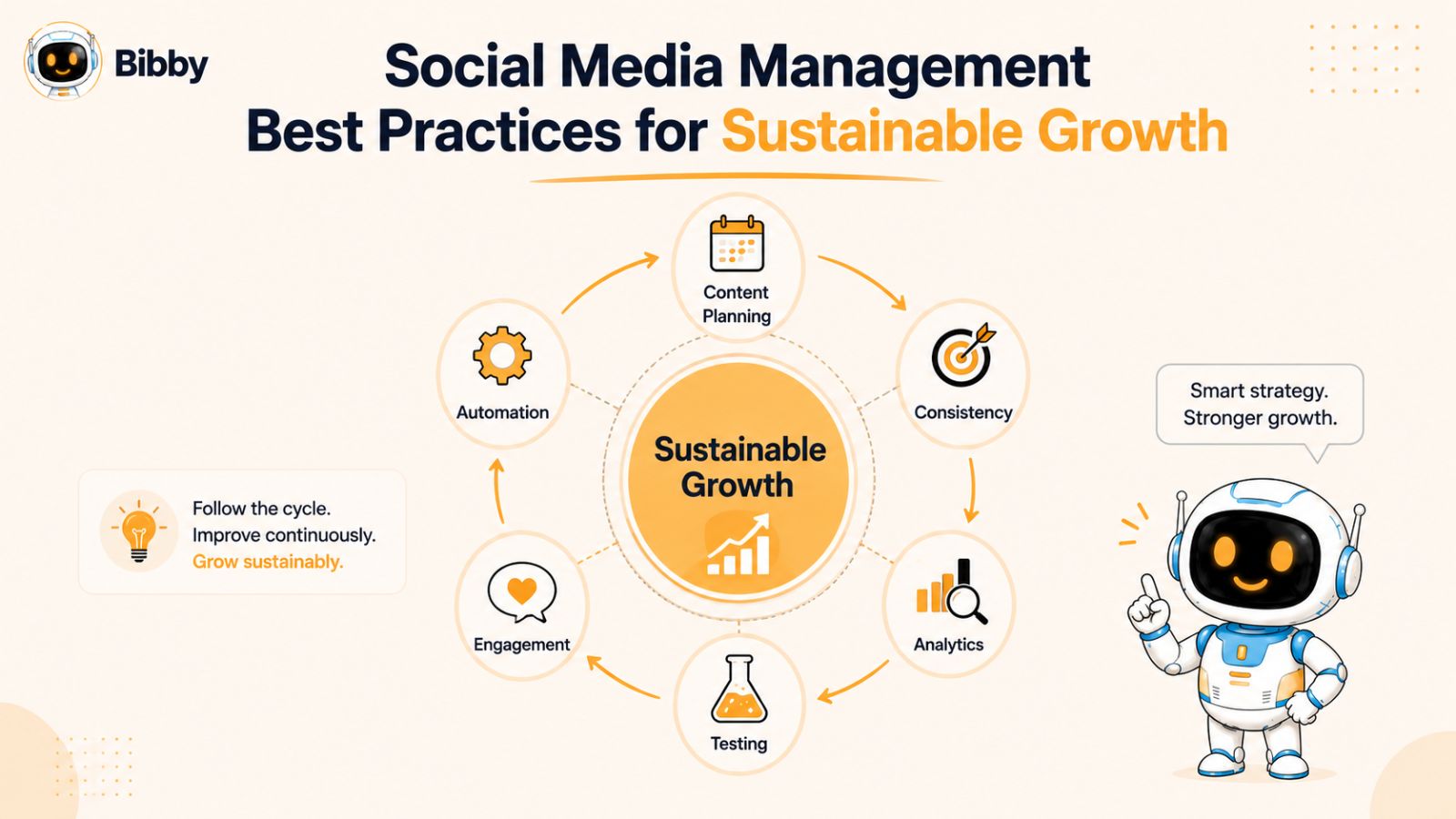
Build a Strategic Content Calendar
Successful social media management begins with planning.
A content calendar provides structure, improves consistency, and reduces the stress associated with last-minute content creation. Instead of constantly asking, "What should we post today?" teams can focus on executing a well-defined strategy.
An effective content calendar should include:
- Content themes and pillars
- Publishing dates
- Platform assignments
- Campaign timelines
- Promotional activities
- Seasonal opportunities
Planning content in advance also creates more opportunities for quality control, collaboration, and strategic alignment.
The goal is not to eliminate flexibility but to create a framework that supports consistent execution.
Use Data to Guide Decisions
One of the biggest differences between struggling and high-performing social media accounts is how decisions are made.
Many businesses rely on assumptions, personal preferences, or industry trends. Top-performing organizations rely on data.
Analytics can help answer critical questions such as:
- Which content topics resonate most?
- What formats generate the highest engagement?
- Which platforms produce the best results?
- What posting times drive the most activity?
- Which campaigns contribute to business goals?
When decisions are guided by data rather than guesswork, resources can be allocated more effectively and results become more predictable.
Continuous measurement is a competitive advantage.
Prioritize Consistency Over Perfection
Many brands delay publishing because they are waiting for the perfect design, the perfect caption, or the perfect campaign.
The problem is that perfection often becomes an excuse for inconsistency.
Audiences generally reward reliability more than perfection. They want useful, relevant content delivered consistently over time.
A realistic publishing schedule that can be maintained month after month will almost always outperform an ambitious strategy that cannot be sustained.
Consistency helps:
- Build audience expectations.
- Improve algorithmic visibility.
- Strengthen brand recognition.
- Increase engagement opportunities.
- Support long-term growth.
Progressive improvement is more valuable than occasional perfection.
Automate Repetitive Tasks
As social media responsibilities grow, efficiency becomes increasingly important.
Many administrative activities do not require constant manual attention and can be streamlined through automation.
Examples include:
- Post scheduling
- Publishing workflows
- Content organization
- Reporting processes
- Performance tracking
- Approval workflows
Automation allows teams to spend less time managing systems and more time creating value.
The most effective social media managers use technology to reduce repetitive work while preserving authentic human interactions where they matter most.
Focus on Building Relationships
At its core, social media is still about people.
Businesses often become so focused on publishing content that they forget to engage with the audience consuming it.
Follower growth alone does not create business value. Strong relationships do.
Brands that actively participate in conversations often experience:
- Higher engagement rates
- Greater audience loyalty
- Increased trust
- More referrals
- Stronger customer retention
Every comment, message, mention, and interaction represents an opportunity to strengthen those relationships.
Community building should be treated as a strategic priority rather than an afterthought.
Continuously Test and Optimize
The social media landscape changes constantly.
What performs well today may not perform as effectively six months from now. Audience behavior evolves, competitors adapt, and platforms update their algorithms regularly.
For this reason, successful social media management requires continuous optimization.
Areas worth testing include:
- Content formats
- Publishing schedules
- Caption structures
- Calls to action
- Visual styles
- Video lengths
- Content themes
Small improvements can compound significantly over time.
Organizations that embrace experimentation often uncover opportunities that competitors overlook.
Simplify Your Workflow
Complexity is one of the most common barriers to sustainable growth.
When content creation, scheduling, publishing, analytics, and reporting are spread across multiple disconnected systems, productivity often suffers.
Simplifying workflows can help:
- Reduce operational friction.
- Improve consistency.
- Eliminate redundant tasks.
- Increase team efficiency.
- Support long-term scalability.
The most effective social media strategies are often supported by the simplest operational systems.
Rather than adding more tools, businesses should focus on creating workflows that make content creation and distribution easier, faster, and more sustainable.
Think Long-Term
Many social media strategies fail because they focus exclusively on short-term results.
Follower counts, viral posts, and temporary engagement spikes can be exciting, but sustainable growth is built through consistent execution over time.
The brands that succeed on social media typically:
- Deliver value consistently.
- Build trust with their audience.
- Adapt to platform changes.
- Learn from analytics.
- Invest in relationships.
- Continuously improve their systems.
Long-term growth is rarely the result of a single viral moment. It is usually the outcome of hundreds of smart decisions executed consistently.
By combining strategic planning, data-driven decision-making, audience engagement, automation, and efficient workflows, businesses can build a social media management system that supports growth for years to come rather than relying on temporary bursts of visibility.
Final Thoughts
Losing followers is rarely caused by a single mistake. More often, it's the result of small social media management issues that compound over time—from inconsistent posting and weak engagement strategies to poor analytics tracking and inefficient workflows.
The most important takeaways are clear: first, consistency matters more than occasional bursts of activity. Second, data should guide your content decisions rather than assumptions. Third, efficient systems and automation allow you to spend less time managing social media and more time growing your audience.
The good news is that all 25 mistakes covered in this guide are fixable. By implementing better processes, focusing on audience value, and leveraging tools that simplify content creation, scheduling, and analytics, you can build a stronger social media presence and create sustainable long-term growth.
If you're ready to take the next step, focus on optimizing your social media workflow. A platform like Bibby can help streamline content creation, AI-powered caption generation, multi-platform scheduling, analytics tracking, and AI-optimized posting times—allowing you to manage your social media more effectively while freeing up valuable time to focus on strategy and growth.