
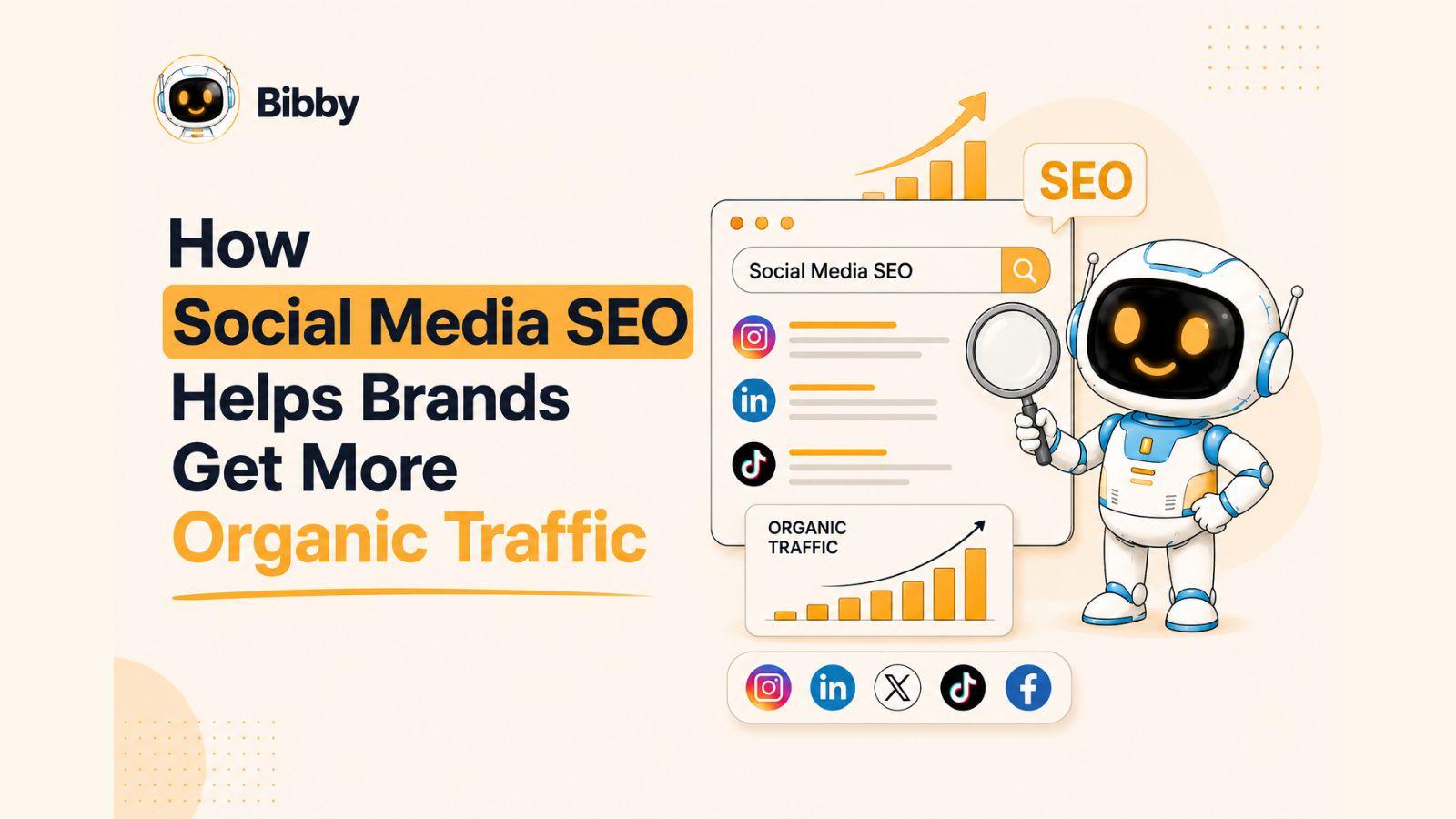
Social media is no longer just a place for engagement—it has become a powerful search engine that helps brands increase visibility, attract qualified audiences, and drive organic traffic.
As platforms like Instagram, TikTok, LinkedIn, YouTube, and Facebook continue improving their search capabilities, businesses that optimize their social content for search can gain a significant competitive advantage. By combining effective Social Media SEO strategies with AI-powered automation tools, brands can increase discoverability, reach more potential customers, and generate consistent traffic without relying solely on paid advertising.
Whether you're a marketer, business owner, creator, or agency, understanding Social Media SEO is becoming essential for long-term digital growth. Let's explore how it works and how your brand can start benefiting from it today.
What Is Social Media SEO?
Social Media SEO is the process of optimizing your social media profiles, content, captions, videos, images, and engagement strategies to improve visibility within social platform search results and increase discoverability across the web.
Traditionally, SEO focused on helping websites rank in search engines like Google. Today, however, users are increasingly searching directly on social platforms. People use Instagram to discover brands, TikTok to learn new skills, LinkedIn to find industry insights, YouTube to answer questions, and Facebook to explore local businesses and communities.
As a result, social media platforms have evolved into search engines in their own right. Their algorithms analyze keywords, hashtags, engagement metrics, watch time, user behavior, and content relevance to determine which posts appear in search results and recommendation feeds.
Why Social Platforms Are Becoming Search Engines
Modern consumers often turn to social media before using traditional search engines. A user looking for fitness tips may search TikTok, while someone researching business software might start on LinkedIn or YouTube. This shift in user behavior has made social search optimization increasingly important for brands.
Every day, millions of users search for:
- Products and services
- Industry advice
- Tutorials and how-to content
- Brand reviews
- Local businesses
- Professional expertise
Brands that optimize their content for these searches are more likely to appear in front of highly engaged audiences actively looking for solutions.
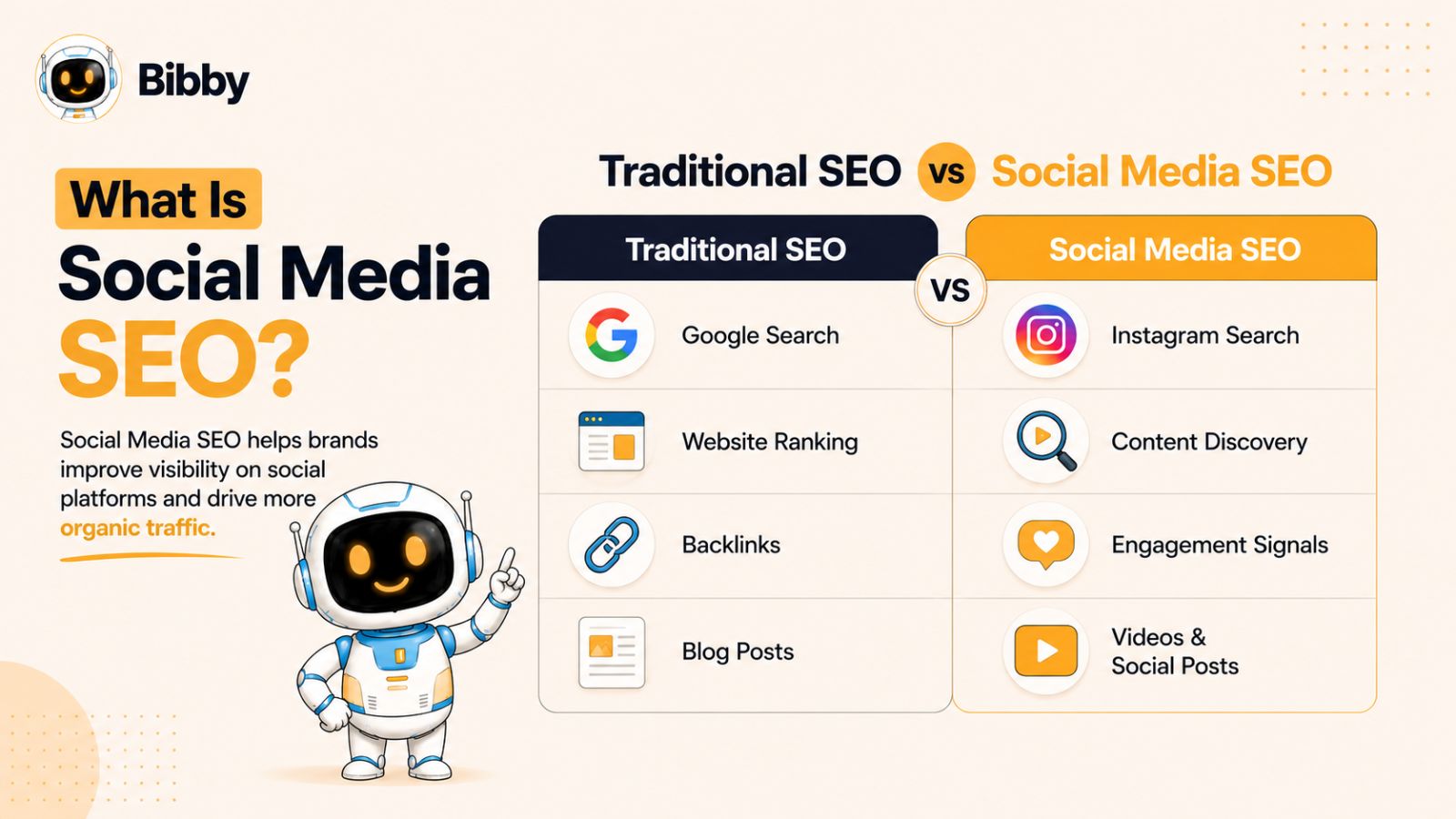
How Social Media SEO Differs From Traditional SEO
Although Social Media SEO and traditional SEO share similar principles, there are several important differences.
| Traditional SEO | Social Media SEO |
|---|---|
| Optimizes websites | Optimizes social profiles and content |
| Focuses on Google and search engines | Focuses on platform search and discovery |
| Relies heavily on backlinks | Relies heavily on engagement signals |
| Long-form content often dominates | Visual and video content often performs best |
| Rankings may take months | Visibility can improve rapidly |
The core objective remains the same: helping the right audience discover your content. The difference is that Social Media SEO prioritizes platform-specific signals such as likes, comments, shares, saves, watch time, and content relevance.
Brands that understand this shift can create content that not only performs well within social platforms but also drives valuable traffic back to their websites, landing pages, products, and services.
Also read: Best LinkedIn Scheduling Tool for Agencies
Why Social Media SEO Matters for Organic Traffic
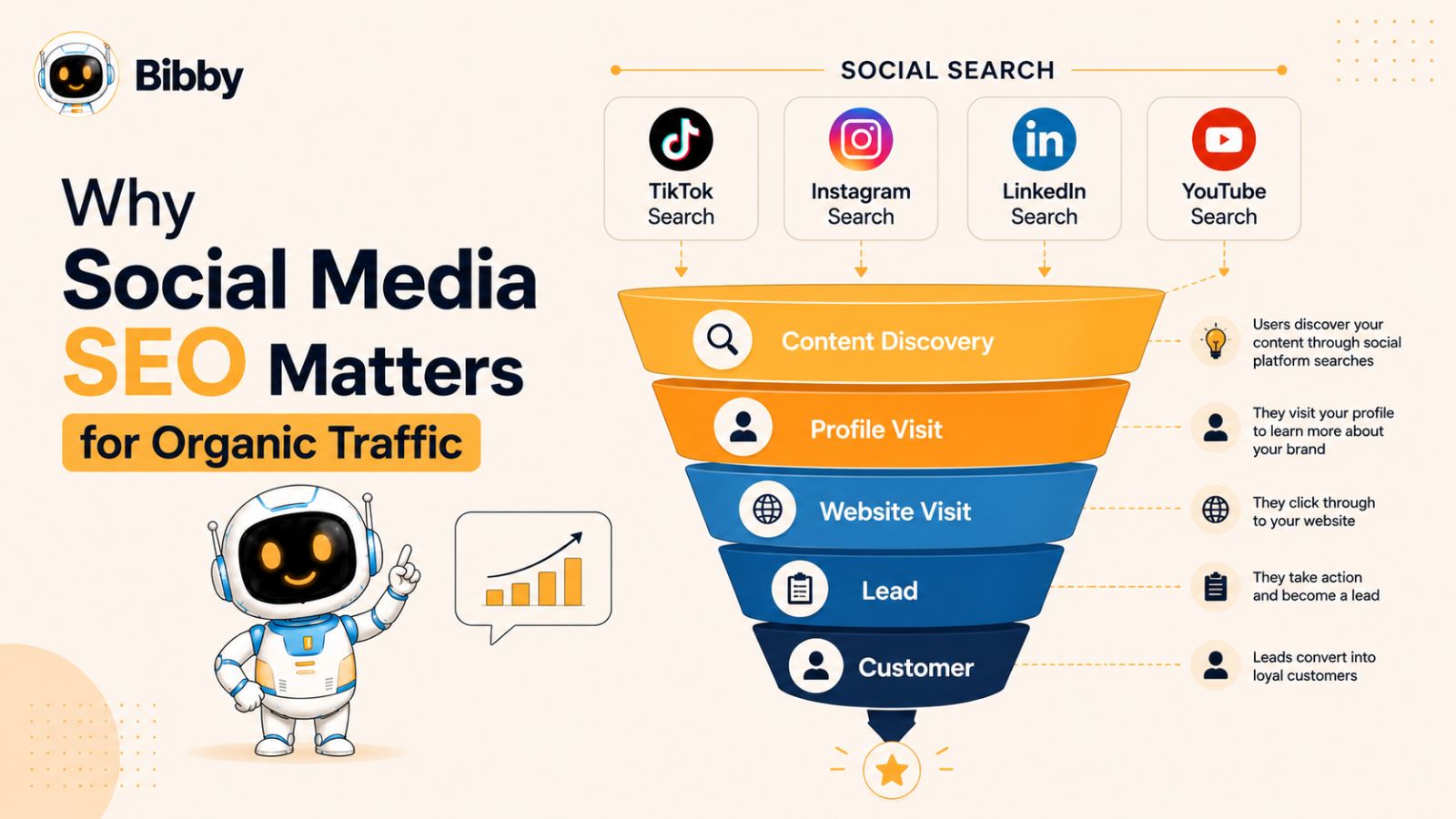
For years, brands primarily relied on Google rankings to generate organic traffic. While traditional SEO remains important, consumer behavior has changed significantly. Today, many users begin their discovery journey on social media platforms, searching for products, services, recommendations, tutorials, and industry insights before ever visiting a search engine.
This shift has made Social Media SEO a critical component of any organic growth strategy.
Increased Brand Visibility
When your social profiles and content are optimized for search, they become easier for users to discover. Instead of relying solely on followers, your content can reach people actively searching for topics related to your business.
For example, a marketing agency that consistently publishes content optimized around keywords such as "social media strategy" or "content marketing tips" can appear in platform search results when potential clients are researching those subjects.
The more frequently your content appears in relevant searches, the more visibility your brand gains.
More Website Traffic
Social Media SEO helps create multiple pathways that lead users back to your website.
When users discover valuable content on social platforms, they often:
- Visit your website to learn more
- Read related blog posts
- Download resources
- Request a demo
- Sign up for newsletters
- Make purchases
Unlike paid advertising, these traffic opportunities continue generating results long after content is published, creating a more sustainable source of visitors.
Better Search Engine Visibility
Although social signals are not direct Google ranking factors, a strong social media presence can indirectly support traditional SEO efforts.
Optimized social content can:
- Increase brand awareness
- Generate more branded searches
- Attract backlinks from other websites
- Expand content reach
- Encourage content sharing
The broader your content distribution, the greater the chance of earning mentions, citations, and links that contribute to overall search visibility.
Improved Audience Engagement
Social platforms reward content that keeps users engaged. Posts that generate comments, shares, saves, and longer viewing times are often shown to larger audiences.
By focusing on Social Media SEO, brands naturally create more relevant content that aligns with user intent. This leads to stronger engagement, improved audience relationships, and greater trust over time.
Long-Term Organic Growth
One of the biggest advantages of Social Media SEO is that it compounds over time.
Every optimized post, video, story, and profile update becomes another opportunity for discovery. As your content library grows, so does your ability to appear in searches, recommendations, and explore feeds across multiple platforms.
Combined with a consistent publishing strategy, Social Media SEO can become a powerful engine for long-term organic traffic growth.
Brands that invest in Social Media SEO today position themselves to capture attention wherever their audience chooses to search tomorrow.
How Social Media SEO Works
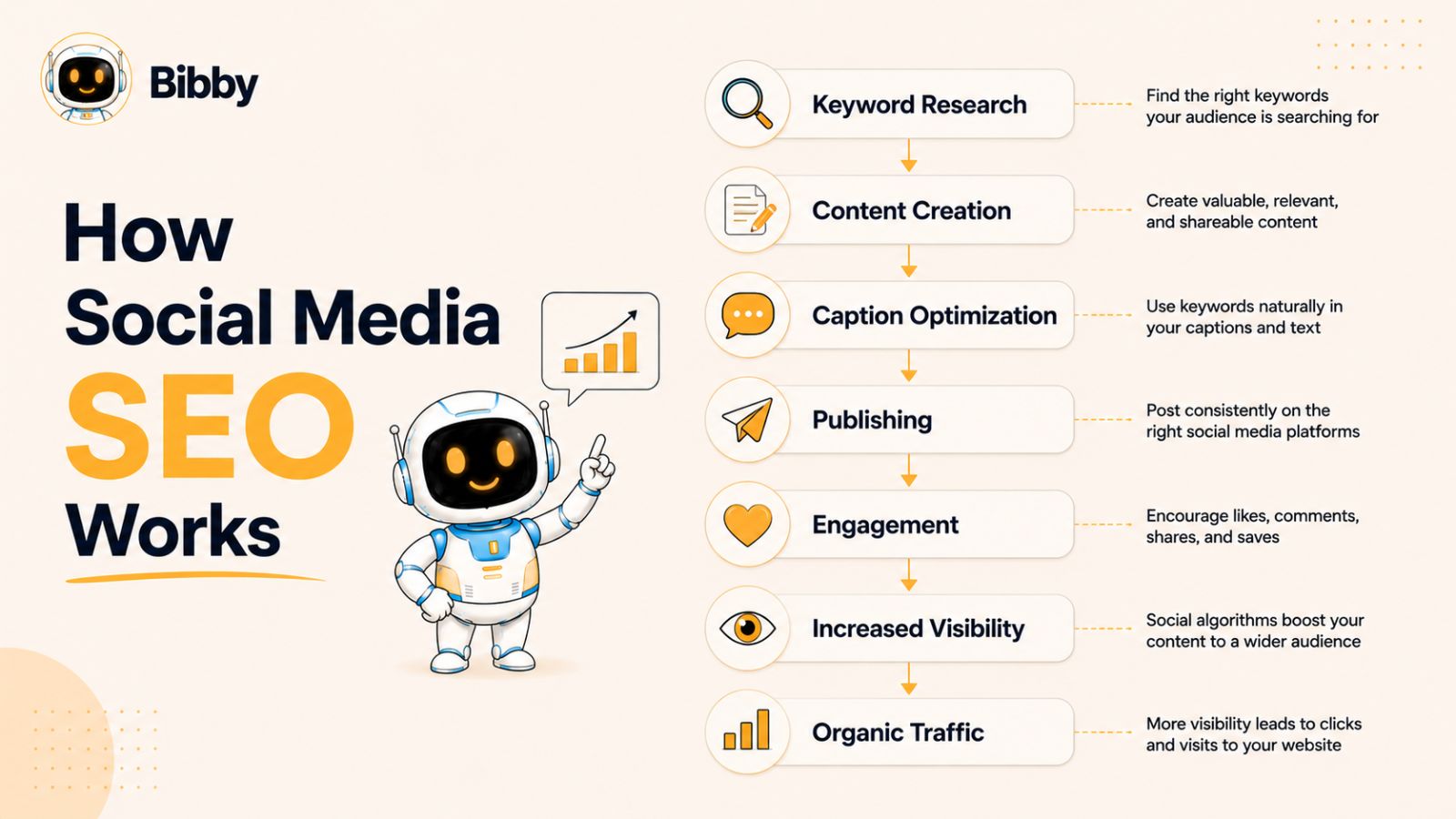
Social Media SEO works by helping platforms understand what your content is about and who it should be shown to. Similar to traditional search engines, social platforms analyze a variety of signals to determine which content deserves greater visibility in search results, recommendation feeds, explore pages, and suggested content sections.
The better optimized your content is, the more likely it is to reach users who are actively interested in your topic.
Profile Optimization
Your social media profile is often the first thing users and algorithms evaluate. An optimized profile helps platforms categorize your content and improves your chances of appearing in relevant searches.
Key profile optimization elements include:
- Using relevant keywords in your bio
- Choosing a searchable username
- Selecting the correct business category
- Including a clear description of your expertise
- Adding links to your website or landing pages
For example, a digital marketing agency should clearly mention services such as SEO, content marketing, social media management, or PPC advertising within its profile description rather than relying solely on a company slogan.
Also read: How to Automate Social Media for Small Business (Without Hiring Anyone)
Content Optimization
Every post you publish provides another opportunity to rank for relevant searches.
Social platforms analyze captions, titles, descriptions, on-screen text, and other content elements to understand context and relevance. Including keywords naturally within your content helps improve discoverability.
Content optimization best practices include:
- Researching keywords your audience searches for
- Using primary keywords in captions
- Including related terms and phrases
- Writing clear and descriptive post titles
- Answering common audience questions
Rather than creating content only for followers, successful brands create content around topics people are actively searching for.
Hashtag SEO
Hashtags help categorize content and make it easier for users to discover posts related to specific topics.
While hashtags are not as influential as they once were, they still play an important role in content discovery on many platforms.
Effective hashtag strategies include:
- Using relevant industry hashtags
- Combining broad and niche hashtags
- Avoiding excessive hashtag usage
- Matching hashtags closely to content topics
The goal is to help platforms better understand your content rather than trying to reach every possible audience.
Image and Video SEO
Visual content dominates most social platforms, making image and video optimization essential.
Platforms can now analyze:
- Video titles
- Video descriptions
- On-screen text
- Spoken keywords
- Image alt text
- Thumbnail relevance
To improve discoverability:
- Use descriptive file names before uploading
- Add keyword-rich captions
- Include text overlays when appropriate
- Create compelling thumbnails
- Mention important keywords naturally within videos
The more context you provide, the easier it becomes for algorithms to understand and categorize your content.
Engagement Signals
Optimization does not stop after publishing.
Social platforms continuously monitor how users interact with content. Strong engagement signals often indicate that content is valuable and relevant.
Important engagement signals include:
- Likes
- Comments
- Shares
- Saves
- Watch time
- Click-through rates
- Profile visits
When users engage positively with your content, platforms are more likely to show it to additional audiences, creating a cycle of increased visibility and organic reach.
Consistency and Content Freshness
Social Media SEO is not a one-time task. Platforms generally reward creators and brands that publish consistently and maintain active accounts.
Regular posting helps:
- Increase content inventory
- Generate more engagement opportunities
- Build audience trust
- Improve platform authority
- Strengthen search visibility over time
This is why many successful brands use automation tools to maintain a consistent publishing schedule across multiple platforms.
Ultimately, Social Media SEO works by combining profile optimization, keyword targeting, content relevance, engagement, and consistency to maximize discoverability. Brands that optimize all of these elements can significantly increase their organic reach and traffic over time.
Also read: What to Post on Instagram When You Have No Ideas
Top Social Media SEO Ranking Factors
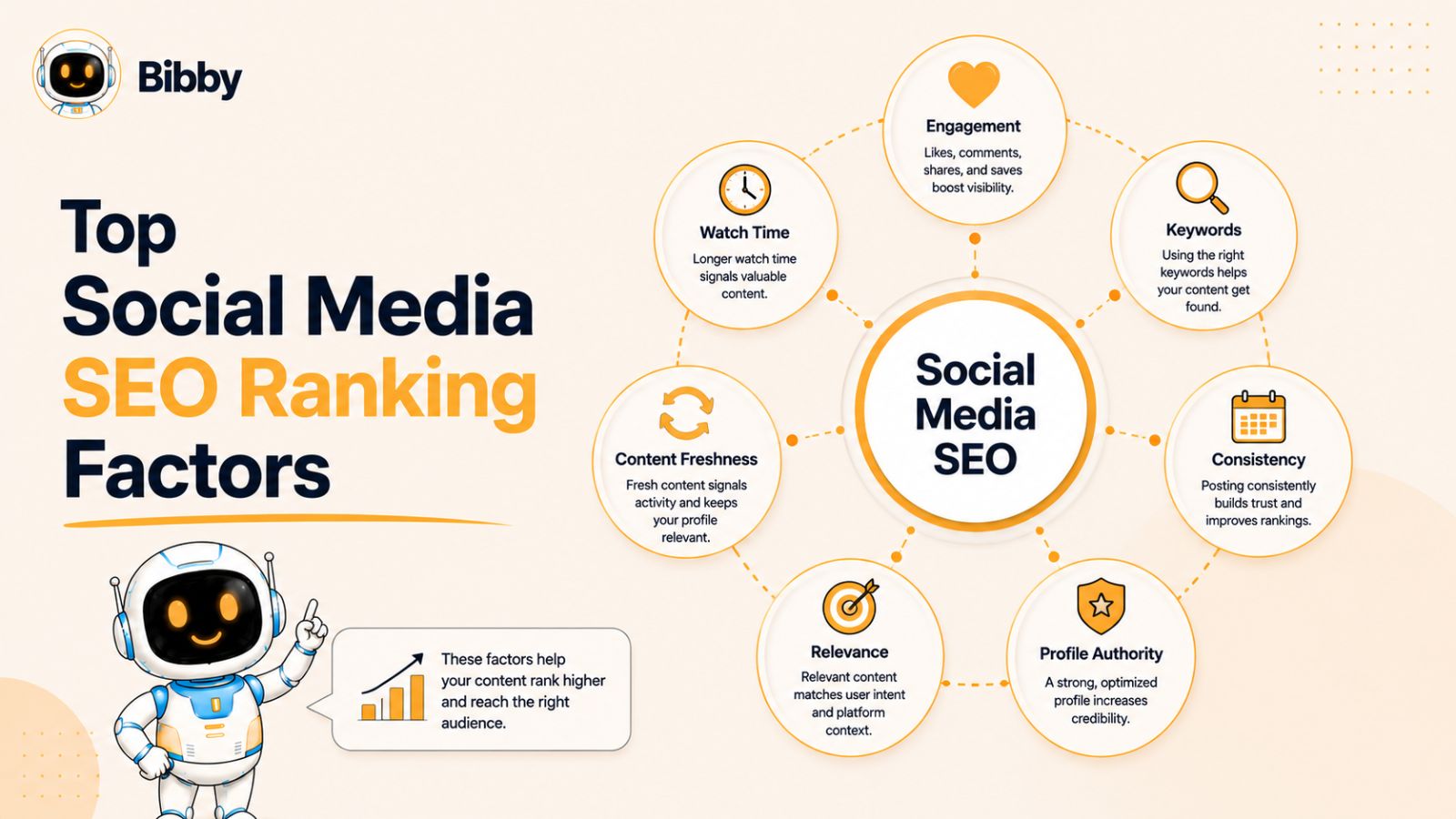
Understanding how social platforms rank content is essential for improving visibility and generating more organic traffic. While each platform uses its own algorithm, most rely on a similar set of ranking signals to determine which profiles, posts, videos, and stories deserve greater exposure.
Brands that optimize for these factors are more likely to appear in search results, explore feeds, recommended content sections, and user timelines.
Engagement Signals
Engagement is one of the strongest indicators of content quality on social media.
When users interact with your content, platforms interpret those actions as signals that the content is valuable and relevant. The stronger the engagement, the more likely the platform is to distribute the content to a wider audience.
Important engagement signals include:
- Likes
- Comments
- Shares
- Saves
- Reposts
- Clicks
- Direct messages
Among these signals, shares and saves are often particularly powerful because they indicate that users found the content useful enough to revisit or recommend to others.
Watch Time and Audience Retention
Video content dominates most social platforms, making watch time a major ranking factor.
Algorithms closely monitor:
- Average watch duration
- Video completion rates
- Replays
- Audience retention curves
If users consistently watch a large percentage of your video, platforms are more likely to promote it to additional viewers.
This is why successful videos often capture attention within the first few seconds and maintain viewer interest throughout the content.
Content Relevance
Social platforms strive to deliver the most relevant content for each search query and user interest.
To determine relevance, algorithms analyze:
- Keywords in captions
- Profile information
- Video titles and descriptions
- Hashtags
- On-screen text
- User behavior patterns
The more closely your content matches a user's interests or search intent, the better its chances of ranking.
This makes keyword research and strategic content planning critical components of Social Media SEO.
Consistency and Posting Frequency
Platforms generally favor active creators and brands that publish regularly.
Consistent posting signals that your account is engaged and continuously providing value to users.
Benefits of consistent publishing include:
- More opportunities to appear in search results
- Increased audience familiarity
- Greater engagement accumulation
- Improved account authority
Brands that publish sporadically often struggle to maintain visibility, even when individual pieces of content perform well.
Profile Authority
Over time, social platforms develop a level of trust in accounts that consistently produce valuable content.
Factors that contribute to profile authority include:
- Account age
- Content quality
- Audience engagement
- Posting consistency
- Follower growth
- Niche expertise
Accounts that establish themselves as reliable sources of information often receive greater organic reach and discoverability.
Also read: The Best Social Media Platforms for Marketing
Content Freshness
Many social platforms prioritize newer content, especially for trending topics and active searches.
Fresh content helps platforms provide users with the most current information and discussions.
This is particularly important for:
- Industry news
- Trends
- Product launches
- Seasonal content
- Time-sensitive topics
Regularly publishing fresh content increases the likelihood of appearing in search results and recommendation feeds.
User Interaction History
Algorithms also personalize search and discovery experiences based on individual user behavior.
For example, if a user frequently interacts with marketing-related content, platforms may prioritize showing them more marketing content from creators and brands within that niche.
This means that consistently attracting the right audience can improve future visibility among similar users.
Why Ranking Factors Matter for Brands
Many brands focus only on creating content, but visibility depends on much more than simply publishing posts.
The most successful Social Media SEO strategies optimize for multiple ranking factors simultaneously:
- Relevant keywords
- Strong engagement
- High-quality visuals
- Audience retention
- Consistent publishing
- Profile authority
When these elements work together, content gains greater visibility, reaches larger audiences, and generates more organic traffic over time.
Understanding these ranking factors allows brands to move beyond guesswork and build a systematic approach to social media growth.
Social Media SEO Best Practices for Brands
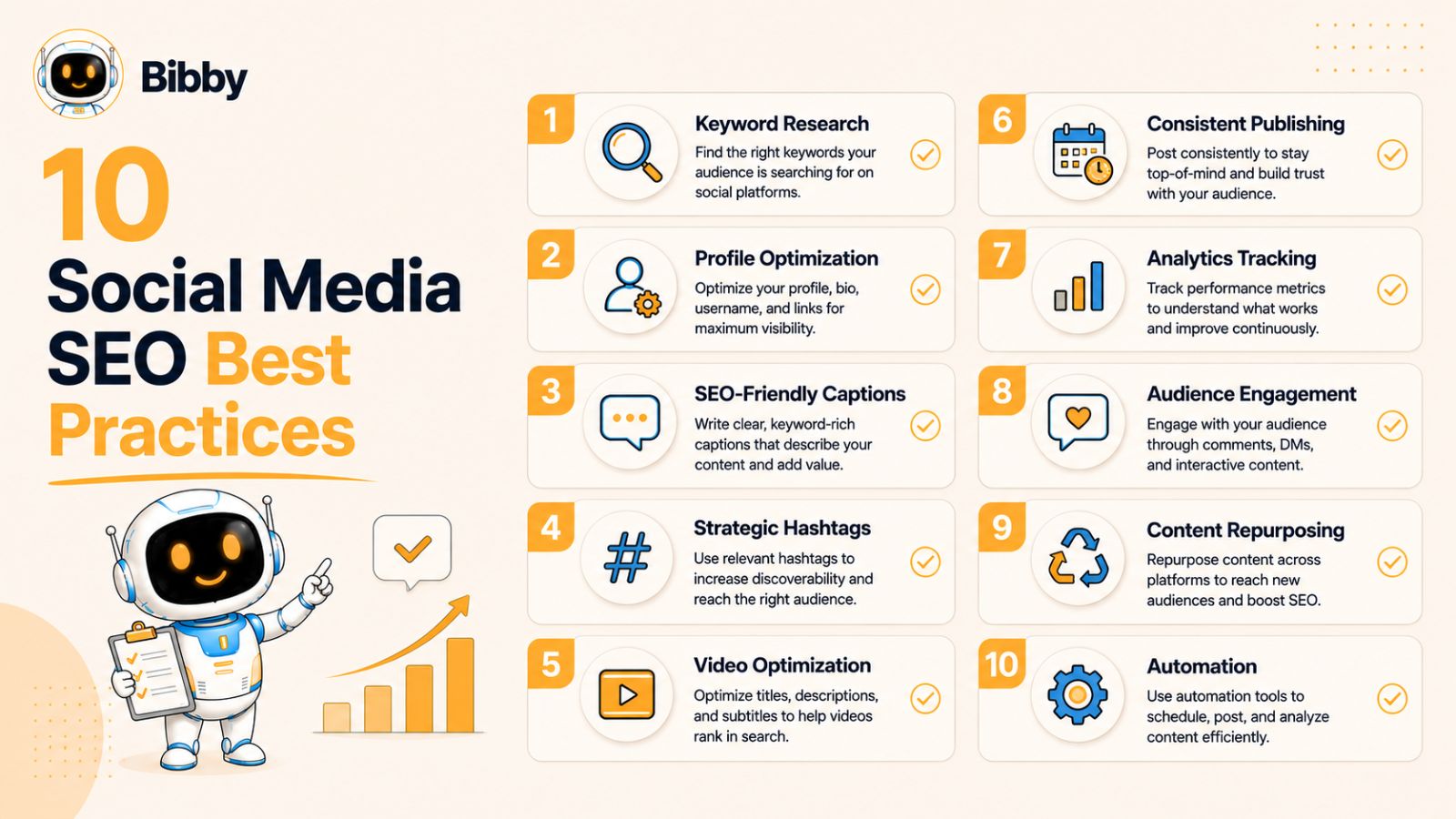
Knowing how social media algorithms work is only the first step. To generate consistent organic traffic, brands need a clear strategy that combines keyword optimization, high-quality content, audience engagement, and consistent publishing.
The following best practices can help improve discoverability across social platforms while driving more visitors to your website and business.
Perform Social Media Keyword Research
Effective Social Media SEO starts with understanding what your audience is searching for.
Just as traditional SEO relies on keyword research, social platforms reward content that aligns with user search behavior. Identifying the phrases, questions, and topics your audience uses can help you create content that appears in relevant searches.
Look for:
- Common industry questions
- Trending topics
- Frequently searched keywords
- Competitor content themes
- Customer pain points
For example, a social media management company might target searches such as:
- Social media SEO
- Content marketing tips
- Instagram growth strategies
- Social media automation
- Social media scheduling tools
Building content around these topics increases your chances of reaching users actively looking for solutions.
Optimize Every Social Profile
Your profile acts as the foundation of your Social Media SEO strategy.
Many brands spend significant time creating content but overlook profile optimization. An incomplete or poorly optimized profile can limit discoverability regardless of how good the content is.
Optimize your profile by:
- Including relevant keywords in your bio
- Clearly describing your services
- Using a professional profile image
- Adding links to important pages
- Maintaining consistent branding across platforms
A well-optimized profile helps both users and algorithms understand what your brand offers.
Create Search-Driven Content
The most successful social content answers questions, solves problems, or provides valuable insights.
Instead of posting solely for engagement, create content around topics people actively search for.
Examples include:
- How-to guides
- Tutorials
- Industry tips
- Product demonstrations
- Frequently asked questions
- Case studies
When your content directly addresses audience needs, it becomes more likely to rank in search results and recommendation feeds.
Write SEO-Friendly Captions
Captions provide important context that helps platforms understand your content.
Rather than writing vague or overly promotional descriptions, focus on clear, keyword-rich captions that explain the value of the post.
Best practices include:
- Using primary keywords naturally
- Writing descriptive opening lines
- Including related keywords
- Encouraging engagement
- Adding a clear call to action
Well-written captions improve both discoverability and user interaction.
Use Relevant Hashtags Strategically
Hashtags still play a role in helping platforms categorize content and connect it with interested audiences.
However, quality matters more than quantity.
A strong hashtag strategy includes:
- Industry-specific hashtags
- Topic-specific hashtags
- Branded hashtags
- Community hashtags
Avoid using unrelated trending hashtags simply to gain visibility, as this can reduce relevance and engagement.
Repurpose High-Performing Content
One of the easiest ways to improve Social Media SEO results is by maximizing content that already works.
A single piece of content can often be transformed into multiple formats, including:
- Short-form videos
- Carousels
- Stories
- Infographics
- LinkedIn posts
- YouTube Shorts
- TikTok videos
Repurposing allows brands to expand reach without constantly creating content from scratch.
Encourage Meaningful Engagement
Engagement is a major ranking signal on virtually every social platform.
The more conversations your content generates, the more likely it is to be distributed to larger audiences.
Encourage engagement by:
- Asking questions
- Running polls
- Inviting opinions
- Responding to comments
- Creating discussion-based content
Meaningful interactions help strengthen audience relationships while improving visibility.
You may also like reading: How to Schedule Instagram Reels Automatically?
Maintain a Consistent Publishing Schedule
Consistency remains one of the most overlooked aspects of Social Media SEO.
Publishing regularly helps:
- Build audience expectations
- Increase engagement opportunities
- Improve content distribution
- Strengthen profile authority
However, maintaining consistency across multiple platforms can quickly become overwhelming, especially for growing brands.
Use AI-Powered Automation to Scale Content
As social media becomes more competitive, many brands are turning to automation tools to maintain consistency without increasing workload.
Platforms such as Bibby simplify the entire content workflow.
Instead of manually creating, writing, scheduling, and publishing every post, users can:
- Upload an image or generate one using AI.
- Select their preferred posting style.
- Let Bibby automatically generate captions.
- Schedule content across multiple platforms.
- Publish at AI-optimized times for maximum visibility.
Bibby supports publishing across Facebook, Instagram, LinkedIn, YouTube, and TikTok from a single dashboard, helping brands maintain consistent activity without spending hours managing content.
By removing manual tasks, teams can focus more on strategy, creativity, and business growth while maintaining the consistency that Social Media SEO requires.
Track Performance and Continuously Improve
Social Media SEO is not a set-it-and-forget-it strategy.
Regularly review performance metrics such as:
- Reach
- Engagement
- Search visibility
- Click-through rates
- Website traffic
- Conversion rates
Analyzing results helps identify which content types, keywords, and posting schedules generate the strongest outcomes.
The most successful brands continuously refine their strategy based on real audience behavior and platform data.
By combining keyword research, profile optimization, content creation, engagement strategies, and AI-powered automation, brands can build a Social Media SEO system that consistently drives visibility, traffic, and long-term growth.
How AI Is Transforming Social Media SEO
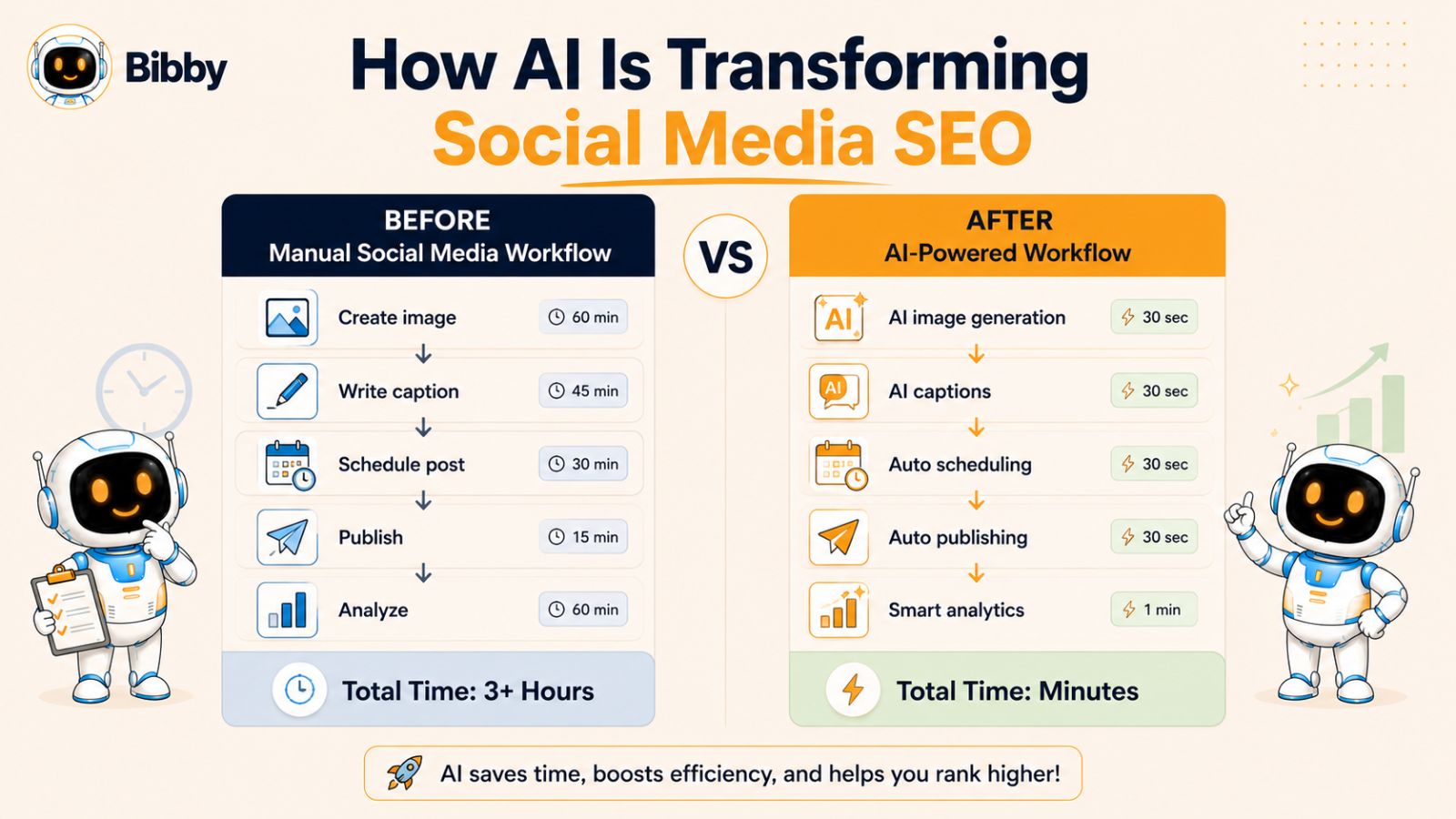
Artificial Intelligence is rapidly changing how brands create, optimize, publish, and analyze social media content. What once required hours of manual work can now be completed in minutes, allowing businesses to scale their Social Media SEO efforts more efficiently than ever before.
As competition across social platforms continues to increase, AI is becoming an essential tool for brands that want to maintain visibility, improve engagement, and drive consistent organic traffic.
AI-Powered Content Creation
Creating high-quality content consistently is one of the biggest challenges in Social Media SEO.
Brands need a constant stream of posts, captions, videos, stories, and visual content to remain visible in search results and recommendation feeds. AI helps solve this challenge by accelerating the content creation process.
Modern AI tools can assist with:
- Caption generation
- Content ideation
- Post variations
- Audience targeting
- Content repurposing
- Visual creation
Instead of spending hours brainstorming and writing content, marketers can generate optimized content ideas and captions within seconds.
This allows teams to focus more on strategy and audience engagement while maintaining a consistent publishing schedule.
AI-Powered Image Generation
Visual content plays a major role in social media discoverability and engagement.
AI image generation tools make it possible to create original graphics, illustrations, promotional visuals, and social media assets without relying on extensive design resources.
Benefits include:
- Faster content production
- Lower design costs
- Greater content variety
- Improved creative flexibility
- Easier testing of visual concepts
By removing creative bottlenecks, AI helps brands publish more frequently while maintaining quality.
AI-Powered Scheduling
Timing can significantly impact the performance of social media content.
Even the best content may struggle if it is published when your audience is inactive. AI scheduling tools analyze historical engagement patterns and audience behavior to determine optimal publishing windows.
Advantages include:
- Improved reach
- Higher engagement rates
- Better audience targeting
- Consistent posting frequency
- Reduced manual workload
Rather than guessing when to publish, brands can rely on data-driven recommendations that maximize visibility.
AI-Powered Content Distribution
Managing multiple social media platforms manually becomes increasingly difficult as businesses grow.
Each platform has unique audiences, content formats, and engagement patterns. AI-powered automation tools simplify distribution by allowing brands to publish across multiple channels from a single workflow.
This enables marketers to maintain a consistent presence across:
- YouTube
- TikTok
A centralized publishing process helps ensure that content reaches audiences wherever they spend their time online.
AI-Powered Analytics
Data is essential for improving Social Media SEO performance.
AI analytics tools help marketers move beyond basic metrics by identifying patterns, opportunities, and areas for improvement.
Advanced analytics can reveal:
- Top-performing content
- Audience preferences
- Optimal posting times
- Engagement trends
- Content gaps
- Growth opportunities
These insights allow brands to make informed decisions that improve future content performance.
Why AI and Social Media SEO Are a Powerful Combination
Social Media SEO requires consistency, optimization, and continuous improvement. AI helps brands execute all three more effectively.
With AI, businesses can:
- Create content faster
- Publish more consistently
- Improve discoverability
- Increase engagement
- Scale across multiple platforms
- Analyze performance more efficiently
As social platforms become increasingly search-focused, brands that leverage AI gain a significant advantage over competitors still relying on manual processes.
The Future of Social Media Management
The future of Social Media SEO will be shaped by automation, personalization, and data-driven decision-making.
Brands that embrace AI can spend less time on repetitive tasks and more time building relationships, developing creative campaigns, and growing their businesses.
This is where specialized platforms like Bibby are helping businesses transform their social media workflows by combining AI content creation, scheduling, publishing, and analytics into a single streamlined system.
Also read: How to Increase Instagram Followers: What Actually Works
How Bibby Helps Brands Win at Social Media SEO
Executing a successful Social Media SEO strategy requires more than just creating great content. Brands must consistently publish, optimize captions, manage multiple platforms, monitor performance, and engage audiences over time. For many businesses, these tasks quickly become overwhelming and time-consuming.
This is where Bibby simplifies the entire process.
Bibby is an AI-powered social media scheduling and automation platform designed to help businesses, creators, agencies, and marketers grow their online presence with less effort. By combining content creation, caption generation, scheduling, publishing, and analytics into a single workflow, Bibby makes it easier to maintain the consistency and optimization required for Social Media SEO success.
A Simple Three-Step Workflow
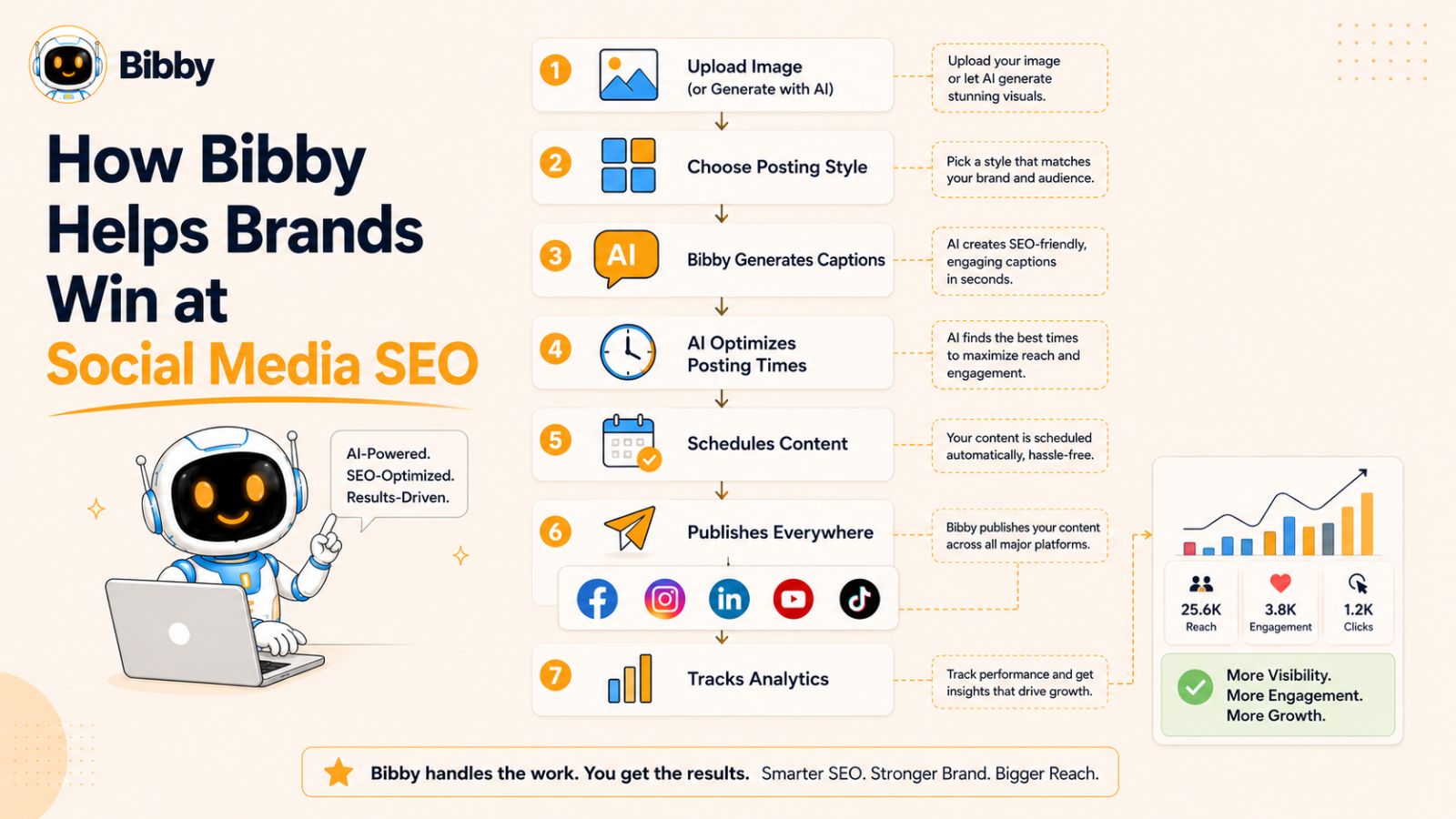
One of Bibby's biggest advantages is its simplicity. Instead of juggling multiple tools and manually managing every social media account, users can streamline their workflow in just a few steps.
Step 1: Upload an Image or Generate One with AI
Every social media campaign starts with content.
With Bibby, users can either upload their own images or create new visuals using AI. This eliminates one of the biggest content creation bottlenecks and allows brands to produce social-ready assets quickly.
Whether you're promoting a product, sharing educational content, or building brand awareness, Bibby helps you create visual content without the need for complex design software.
Step 2: Choose Your Posting Style
Different brands communicate in different ways.
Bibby allows users to select their preferred posting style so content remains aligned with their brand voice and audience expectations.
Examples may include:
- Professional and corporate
- Educational and informative
- Promotional and sales-focused
- Friendly and conversational
- Thought leadership content
This helps ensure consistency across all social channels while reducing the time spent writing content manually.
Step 3: Let Bibby Do the Heavy Lifting
Once your content and posting style are selected, Bibby takes over the most time-consuming tasks.
The platform automatically:
- Generates captions with AI
- Optimizes content for publishing
- Creates a posting schedule
- Distributes content across selected platforms
- Publishes content automatically
Instead of spending hours planning and posting content, users can focus on growing their business while Bibby handles execution.
AI-Optimized Posting Times
Timing plays a critical role in social media visibility.
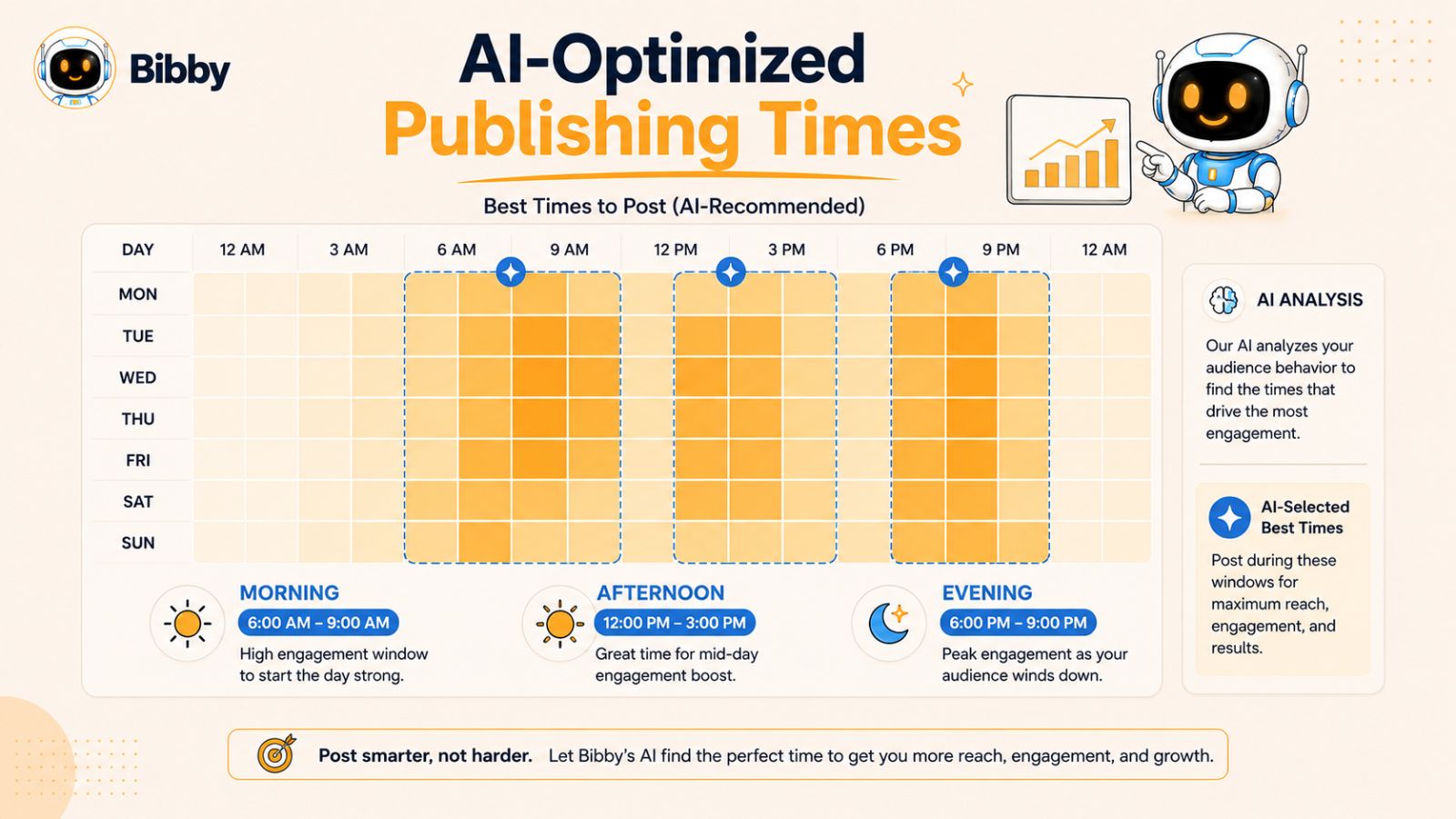
Publishing content when audiences are most active can significantly improve reach, engagement, and discoverability. However, manually determining the best posting times is difficult and often inconsistent.
Bibby uses AI to identify optimal publishing windows, helping content reach audiences when they are most likely to engage.
Benefits include:
- Increased visibility
- Higher engagement rates
- Improved audience reach
- Better Social Media SEO performance
By posting at the right times consistently, brands strengthen important engagement signals that social algorithms use to rank content.
Publish Everywhere From One Dashboard
Managing multiple social media platforms individually can be frustrating and inefficient.
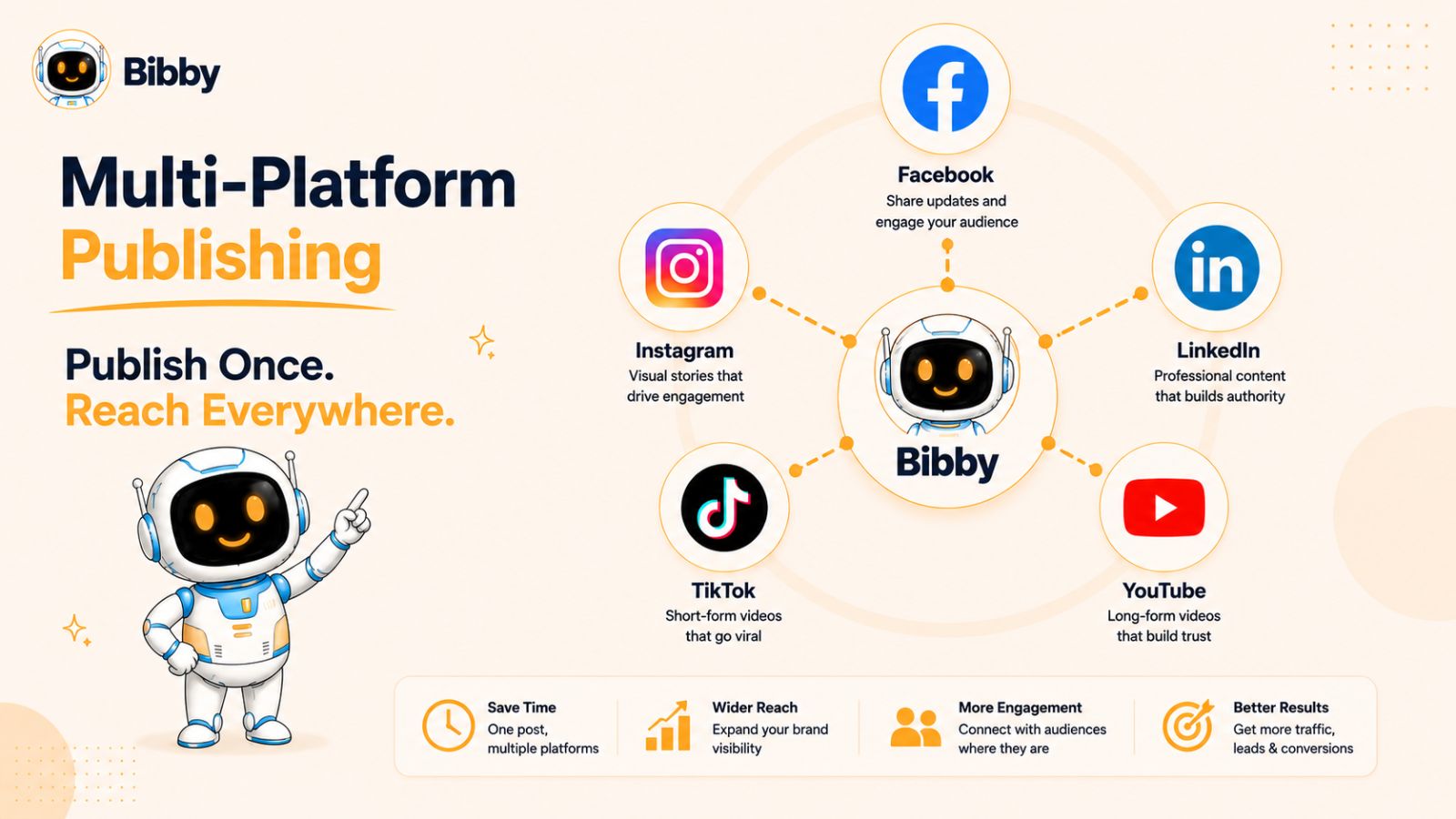
Bibby simplifies multi-platform publishing by allowing users to manage all major social networks from a single dashboard.
Supported platforms include:
- YouTube
- TikTok
This centralized workflow helps maintain consistent branding, messaging, and posting frequency across every channel.
Manage Multiple Content Formats
Modern Social Media SEO extends far beyond standard image posts.
Audiences consume content in many different formats, and social platforms reward brands that diversify their content strategies.
With Bibby, users can manage:
- Image posts
- Videos
- Stories
- Short-form content
- Promotional campaigns
- Educational content
This flexibility helps brands maximize visibility across multiple content formats and platform algorithms.
Built-In Analytics for Smarter Decisions
Publishing content is only part of the equation. Long-term success requires understanding what works and what doesn't.
Bibby's analytics tools provide valuable insights into content performance, allowing brands to make data-driven decisions.
Users can monitor:
- Engagement levels
- Audience growth
- Reach and impressions
- Content performance trends
- Posting effectiveness
These insights help marketers continuously refine their Social Media SEO strategy and improve future results.
Why Bibby Is a Powerful Social Media SEO Tool
Social Media SEO rewards consistency, relevance, engagement, and optimization. Bibby supports each of these factors through automation and AI.
By using Bibby, brands can:
- Save hours of manual work
- Maintain consistent publishing schedules
- Create content faster
- Improve engagement opportunities
- Reach audiences across multiple platforms
- Optimize posting times automatically
- Monitor performance from one location
Rather than managing social media as a collection of disconnected tasks, Bibby creates a streamlined workflow that helps brands stay visible, grow their audience, and generate more organic traffic.
For businesses looking to scale their Social Media SEO efforts without increasing workload, Bibby provides a practical solution that turns content creation, scheduling, publishing, and analytics into a simple, automated process.
You may also like reading: Best Platforms to Share Video Content and Grow Your Audience
Common Social Media SEO Mistakes to Avoid
Even brands that invest heavily in social media often struggle to generate meaningful organic traffic because they overlook key optimization principles. While creating content consistently is important, avoiding common mistakes can have an equally significant impact on visibility and performance.
Understanding these pitfalls can help brands build a stronger Social Media SEO strategy and maximize the return on their content efforts.
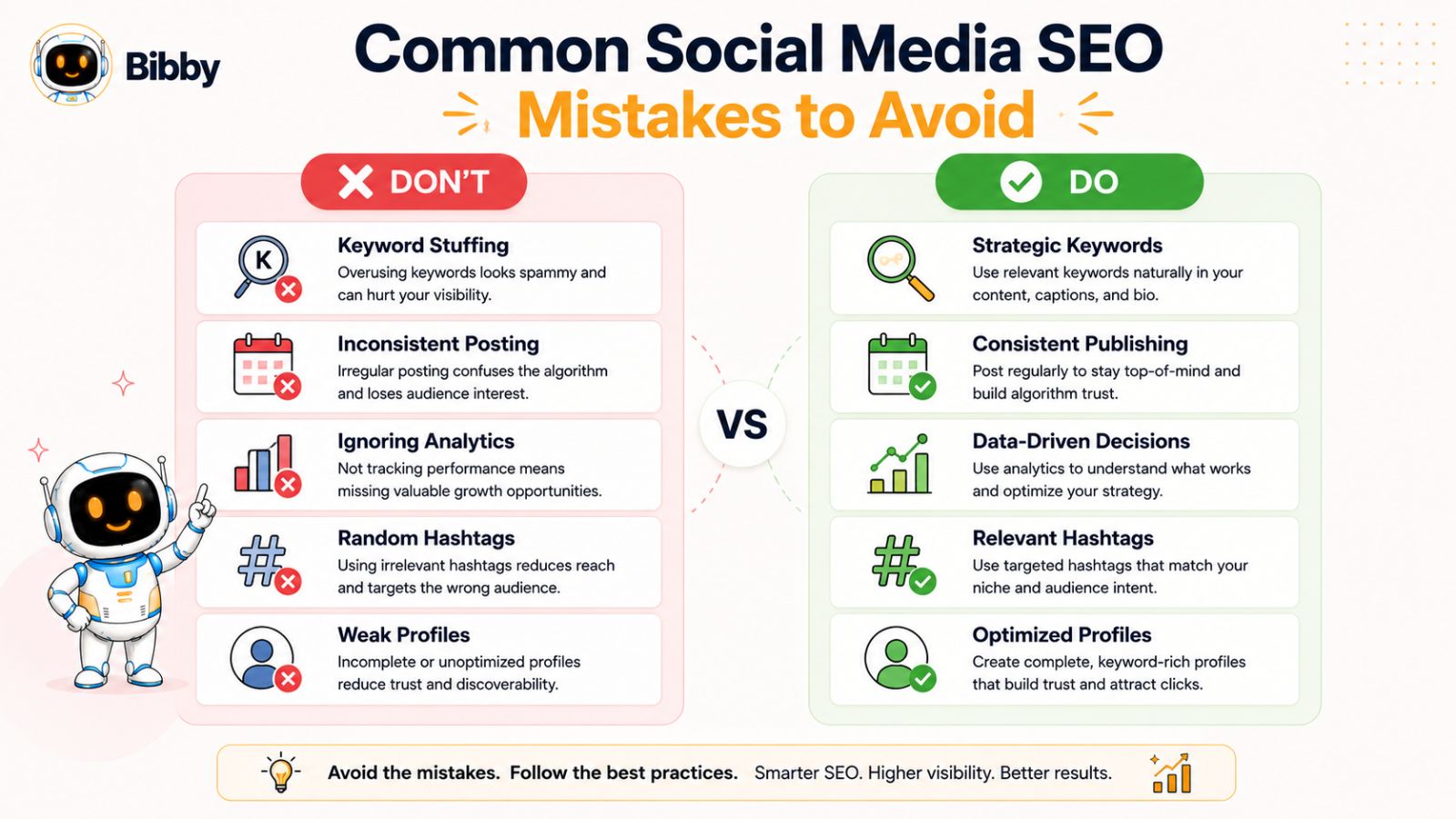
Ignoring Keywords
One of the most common mistakes is creating content without considering how people search on social platforms.
Many brands focus exclusively on creativity while neglecting the keywords and phrases their audience actually uses. As a result, their content may be engaging but difficult to discover through search.
To improve discoverability:
- Research audience search behavior
- Include relevant keywords in captions
- Optimize profile descriptions
- Use descriptive titles and video descriptions
- Incorporate keywords naturally into content
Without keyword optimization, even high-quality content can struggle to reach the right audience.
Inconsistent Posting
Social media algorithms generally favor active accounts that publish regularly.
Many brands post heavily for a few weeks and then disappear for extended periods. This inconsistency can reduce visibility and make it harder to build momentum.
Inconsistent posting often leads to:
- Reduced reach
- Lower engagement
- Slower audience growth
- Missed traffic opportunities
Creating a publishing schedule and using automation tools such as Bibby can help maintain consistency without increasing workload.
Neglecting Profile Optimization
Your social profile is one of the most important assets in your Social Media SEO strategy.
An incomplete or poorly optimized profile can limit discoverability and reduce user trust.
Common profile mistakes include:
- Missing keywords
- Unclear descriptions
- Broken links
- Inconsistent branding
- Outdated information
Optimizing your profile helps platforms understand your expertise while making it easier for potential customers to find and trust your brand.
Using Irrelevant Hashtags
Hashtags can improve content categorization, but only when used correctly.
Many brands attempt to gain visibility by adding unrelated trending hashtags to their posts. While this may generate occasional impressions, it often reduces relevance and can confuse platform algorithms.
A better approach is to use hashtags that directly align with:
- Your industry
- Your content topic
- Your target audience
- Your brand identity
Relevance almost always outperforms volume when it comes to hashtag strategy.
Focusing on Followers Instead of Visibility
A large follower count does not automatically translate into organic traffic.
Many brands become overly focused on vanity metrics while ignoring discoverability and engagement.
Social Media SEO prioritizes:
- Search visibility
- Content relevance
- Engagement quality
- Audience intent
- Website traffic
A smaller but highly engaged audience often delivers far better results than a large audience that rarely interacts with your content.
Creating Content Without a Strategy
Random posting is one of the fastest ways to limit growth.
Successful Social Media SEO requires a deliberate content strategy built around audience needs, search intent, and business goals.
Without a strategy, brands often experience:
- Inconsistent messaging
- Lower engagement
- Reduced search visibility
- Poor content performance
Every piece of content should have a purpose, whether it's attracting new audiences, educating prospects, building trust, or driving website visits.
Ignoring Analytics
Many businesses publish content regularly but rarely analyze performance data.
Without analytics, it's difficult to understand:
- Which content performs best
- Which topics generate engagement
- Which platforms drive traffic
- Which posting times work best
Monitoring analytics allows brands to identify opportunities, eliminate ineffective tactics, and continuously improve results.
Platforms like Bibby simplify this process by providing analytics that help marketers make data-driven decisions without manually gathering information from multiple platforms.
Failing to Optimize Videos
Video has become one of the most important content formats for social discovery, yet many brands still treat video optimization as an afterthought.
Common video SEO mistakes include:
- Weak titles
- Missing keywords
- Poor thumbnails
- Lack of captions
- Weak opening hooks
Optimized videos are more likely to rank in search results, appear in recommendation feeds, and generate longer watch times.
Overlooking Engagement
Social media is designed for interaction.
Brands that only broadcast promotional messages often struggle to generate meaningful engagement signals, which can reduce visibility.
Instead, encourage conversations by:
- Asking questions
- Responding to comments
- Running polls
- Sharing user-generated content
- Inviting audience participation
Higher engagement often leads to stronger organic reach and better Social Media SEO performance.
Treating Social Media SEO as a One-Time Task
Perhaps the biggest mistake is assuming optimization is something you do once and then forget.
Social platforms continuously evolve, audience behaviors change, and new trends emerge regularly.
Successful brands treat Social Media SEO as an ongoing process that includes:
- Continuous optimization
- Content testing
- Performance analysis
- Audience research
- Strategy refinement
By avoiding these common mistakes and committing to long-term improvement, brands can significantly increase their visibility, engagement, and organic traffic across social media platforms.
Also read the complete guide for Multi Platform Social Media Management,
Measuring Social Media SEO Success
A successful Social Media SEO strategy should do more than generate likes and followers. The ultimate goal is to increase visibility, attract qualified audiences, drive website traffic, and support business growth.
To understand whether your efforts are producing results, it's important to track the right metrics and monitor performance consistently.
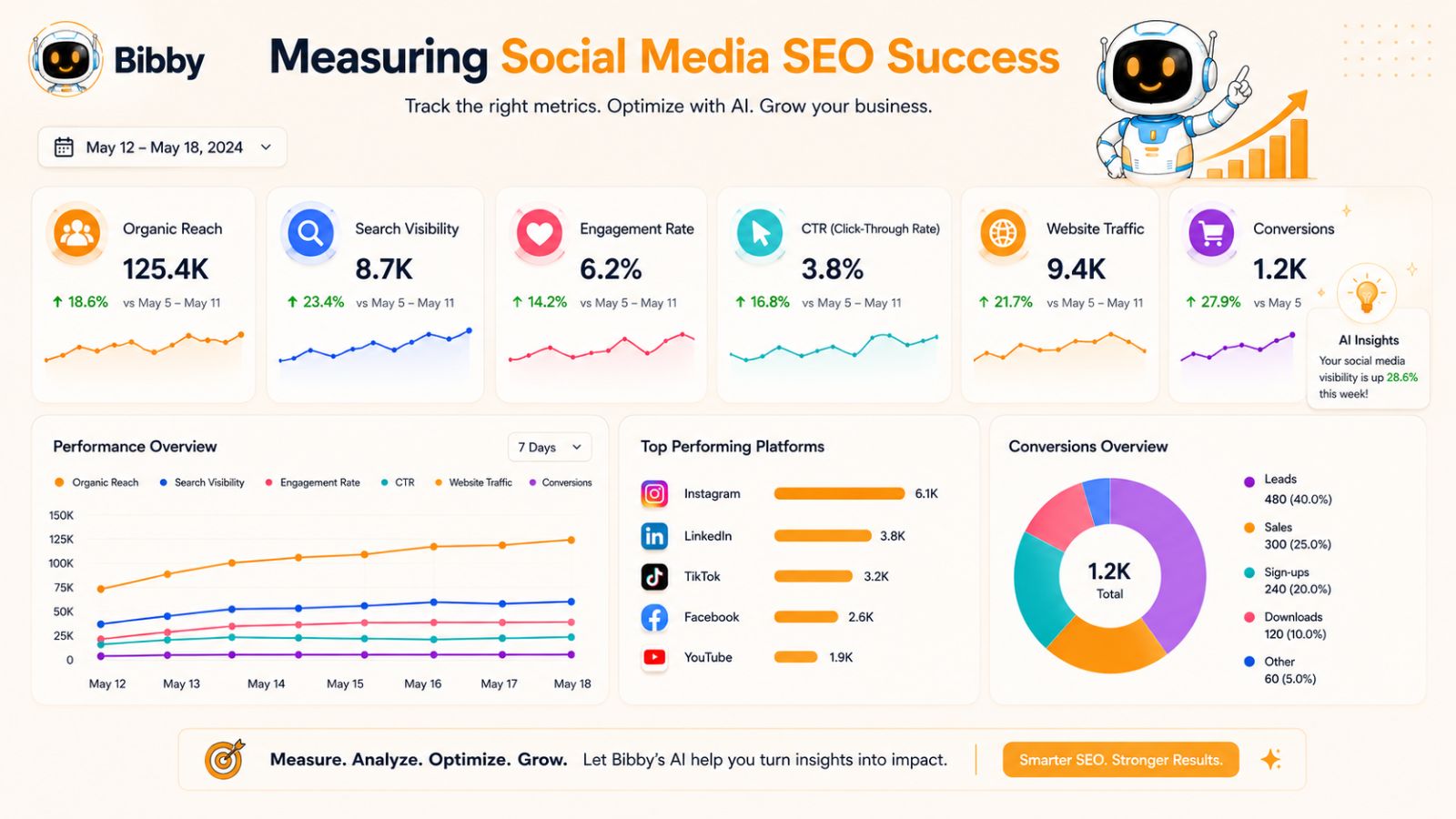
Organic Reach
Organic reach measures how many people see your content without paid promotion.
This metric provides a clear indication of how well your content is performing within platform algorithms and search systems.
Growing organic reach often suggests that:
- Content is relevant to users
- Engagement signals are strong
- Keywords are well optimized
- Platform visibility is improving
A steady increase in organic reach is often one of the earliest signs that your Social Media SEO strategy is working.
Social Search Visibility
One of the primary goals of Social Media SEO is improving discoverability through search.
Pay attention to whether your content is increasingly appearing in:
- Platform search results
- Explore pages
- Recommended content feeds
- Suggested accounts
- Topic-based content hubs
If more users are discovering your content without already following your account, your optimization efforts are likely gaining traction.
Website Traffic From Social Media
For most businesses, social media should contribute to broader marketing goals, including driving visitors to their website.
Track:
- Social referral traffic
- Landing page visits
- Blog traffic
- Product page visits
- Lead generation activity
Monitoring these metrics helps connect social media activity directly to business outcomes.
When optimized content attracts the right audience, website traffic often becomes one of the most valuable indicators of Social Media SEO success.
Engagement Rate
Engagement remains one of the strongest ranking signals on social platforms.
Rather than focusing solely on total engagement numbers, evaluate engagement relative to audience size.
Key engagement metrics include:
- Likes
- Comments
- Shares
- Saves
- Video interactions
- Story engagement
Strong engagement typically indicates that content resonates with your audience and aligns with user intent.
Click-Through Rate (CTR)
Click-through rate measures how often users take action after viewing your content.
A strong CTR often indicates:
- Effective messaging
- Relevant content
- Compelling calls to action
- Strong audience targeting
If visibility is increasing but click-through rates remain low, you may need to improve content positioning, headlines, captions, or offers.
Video Performance Metrics
Video content plays a major role in Social Media SEO, making video-specific metrics especially important.
Monitor:
- Watch time
- Average view duration
- Audience retention
- Completion rates
- Replays
- Shares
High retention rates signal content quality and often lead to greater algorithmic distribution.
Audience Growth
Growing your audience is not the primary goal of Social Media SEO, but it can serve as an indicator of increasing visibility and authority.
Track:
- New followers
- Subscriber growth
- Audience demographics
- Audience quality
Focus on attracting followers who are genuinely interested in your products, services, or expertise rather than simply maximizing numbers.
Conversion Metrics
Ultimately, traffic and engagement should support business objectives.
Depending on your goals, conversion metrics may include:
- Newsletter signups
- Demo requests
- Product purchases
- Consultation bookings
- Lead submissions
- Free trial registrations
These metrics help determine whether Social Media SEO is contributing to revenue and business growth.
Using Analytics to Improve Performance
The most successful brands don't simply collect data—they use it to make better decisions.
Regular analysis helps answer important questions such as:
- Which topics generate the most engagement?
- Which keywords drive discovery?
- Which content formats perform best?
- Which platforms produce the most traffic?
- Which posting times generate the strongest results?
By identifying patterns and trends, marketers can continuously refine their strategy and improve outcomes over time.
How Bibby Simplifies Performance Tracking
Managing analytics across multiple platforms can quickly become overwhelming.
Instead of switching between different dashboards, Bibby's built-in analytics help users monitor performance from a single location.
Brands can evaluate:
- Engagement trends
- Reach and visibility
- Content effectiveness
- Audience growth
- Publishing performance
These insights make it easier to identify what's working and adjust future content strategies accordingly.
Focus on Progress, Not Perfection
Social Media SEO is a long-term strategy. Results often build gradually as content accumulates, engagement grows, and platform authority strengthens.
Rather than obsessing over individual posts, focus on long-term trends across:
- Visibility
- Engagement
- Traffic
- Audience growth
- Conversions
Consistent improvement across these metrics is a strong indication that your Social Media SEO strategy is creating sustainable organic growth.
Future Trends in Social Media SEO
Social Media SEO continues to evolve as platforms become more sophisticated and user behavior changes. What worked a few years ago may no longer deliver the same results, and brands that adapt early often gain a significant competitive advantage.
Understanding where social search is headed can help businesses build strategies that remain effective in the years ahead.
AI-Powered Search Will Become the Norm
Artificial Intelligence is already influencing how content is ranked, recommended, and discovered across social platforms.
As AI capabilities improve, algorithms will become better at understanding:
- User intent
- Content context
- Visual elements
- Video content
- Audience preferences
This means brands will need to focus less on keyword stuffing and more on creating genuinely valuable, relevant content that satisfies user needs.
The platforms that best understand user intent will reward content that provides the most useful answers.
Visual Search Will Continue to Grow
Social platforms are becoming increasingly capable of analyzing images and videos.
Instead of relying solely on captions and hashtags, algorithms can now interpret:
- Objects within images
- Text overlays
- Product details
- Brand elements
- Video scenes
As visual search technology improves, optimizing images and videos will become just as important as optimizing written content.
Brands that invest in high-quality visual content will be better positioned to benefit from this trend.
Video SEO Will Become Even More Important
Short-form and long-form video continue to dominate user engagement across nearly every major platform.
As platforms prioritize video discovery, brands should expect increased emphasis on:
- Watch time
- Audience retention
- Video relevance
- Searchable video content
- Video engagement signals
Businesses that develop strong video content strategies will likely enjoy greater visibility and organic reach.
Also read: How to Scale a YouTube Channel With Automation
Search Behavior Will Shift Further Toward Social Platforms
Younger audiences increasingly use social platforms as their primary discovery tools.
Instead of searching traditional search engines, users often turn directly to:
- TikTok
- YouTube
to find recommendations, reviews, tutorials, products, and expert advice.
As this trend continues, Social Media SEO will become an essential component of digital marketing rather than an optional strategy.
Personalized Discovery Will Expand
Modern algorithms already deliver highly personalized content experiences.
Future social search systems will become even better at understanding individual interests, behaviors, and preferences.
This means brands will need to focus on:
- Audience relevance
- Content quality
- Niche expertise
- Consistent engagement
Generic content will become increasingly difficult to rank as platforms prioritize personalized recommendations.
Automation Will Become Essential
As content demands increase across multiple platforms, manual social media management will become less practical.
Businesses will need tools that help them:
- Create content efficiently
- Schedule posts consistently
- Optimize publishing times
- Manage multiple channels
- Analyze performance
Automation will no longer be a competitive advantage—it will become a necessity.
Integrated AI Workflows Will Drive Growth
The future of social media management lies in unified workflows that combine content creation, optimization, scheduling, publishing, and analytics.
Instead of using separate tools for each task, businesses will increasingly adopt platforms that streamline the entire process.
This approach saves time, improves consistency, and allows teams to focus on strategy rather than repetitive administrative work.
Why Brands Should Start Preparing Now
The evolution of Social Media SEO is accelerating.
Brands that begin optimizing today will have more content, stronger engagement signals, and greater authority when these trends become even more influential.
Organizations that delay may find themselves competing against businesses that have already established strong visibility and audience trust.
How Bibby Aligns With the Future of Social Media SEO
Many of the trends shaping the future of Social Media SEO—AI content creation, automated publishing, optimized scheduling, multi-platform management, and analytics-driven decision-making—are already available through Bibby.
By allowing users to:
- Upload or generate images with AI
- Select their preferred posting style
- Generate captions automatically
- Schedule content across multiple platforms
- Publish at AI-optimized times
- Track performance through analytics
Bibby helps businesses build a scalable social media workflow designed for the future.
As social search continues to evolve, brands that combine strong Social Media SEO strategies with intelligent automation will be best positioned to increase visibility, drive organic traffic, and achieve sustainable growth.
Conclusion
Social Media SEO has evolved from a niche marketing tactic into a critical growth strategy for modern brands. As platforms like Instagram, TikTok, LinkedIn, YouTube, and Facebook continue to function more like search engines, businesses that optimize their social presence gain a powerful advantage in visibility, audience growth, and organic traffic generation.
The most important takeaway is that Social Media SEO is no longer just about posting content. Success depends on creating search-friendly content, optimizing profiles and keywords, and maintaining consistent engagement across platforms. Brands that combine these practices with data-driven decision-making are far more likely to attract qualified audiences and drive sustainable growth.
At the same time, managing content creation, scheduling, publishing, and analytics manually can be challenging. That's why AI-powered platforms like Bibby are becoming increasingly valuable, helping brands automate repetitive tasks while improving consistency and discoverability.
As a next step, consider exploring how AI-powered social media automation can help you scale content production, save time, and maximize the impact of your Social Media SEO strategy across every major platform.