Every year, marketers and creators ask the same question: are hashtags finally dead?
With Instagram, TikTok, LinkedIn, Facebook, and YouTube increasingly relying on AI-powered recommendation systems, it's easy to wonder whether hashtags still play any meaningful role in content discovery. The reality is more nuanced. While hashtags haven't disappeared, they are no longer the powerful growth hack they once were. Today's algorithms care far more about audience engagement, content relevance, watch time, and user behavior than the number of hashtags you include in a post.
In this article, you will learn:
- How hashtags actually influence social media algorithms in 2026
- Which ranking signals matter more than hashtags today
- How to optimize content for maximum reach across major platforms
Understanding this shift is essential for anyone who wants to grow faster on social media without wasting time on outdated strategies.
The Short Answer: Yes, Hashtags Still Matter—But Less Than Before
If you're looking for a simple answer, here it is: hashtags still matter in 2026, but they are no longer one of the most important factors determining whether your content succeeds.
A decade ago, hashtags were one of the primary ways users discovered new content. Adding the right hashtags could dramatically increase visibility, helping posts appear in hashtag feeds and reach audiences outside your follower base. Today, social media platforms have become far more sophisticated.
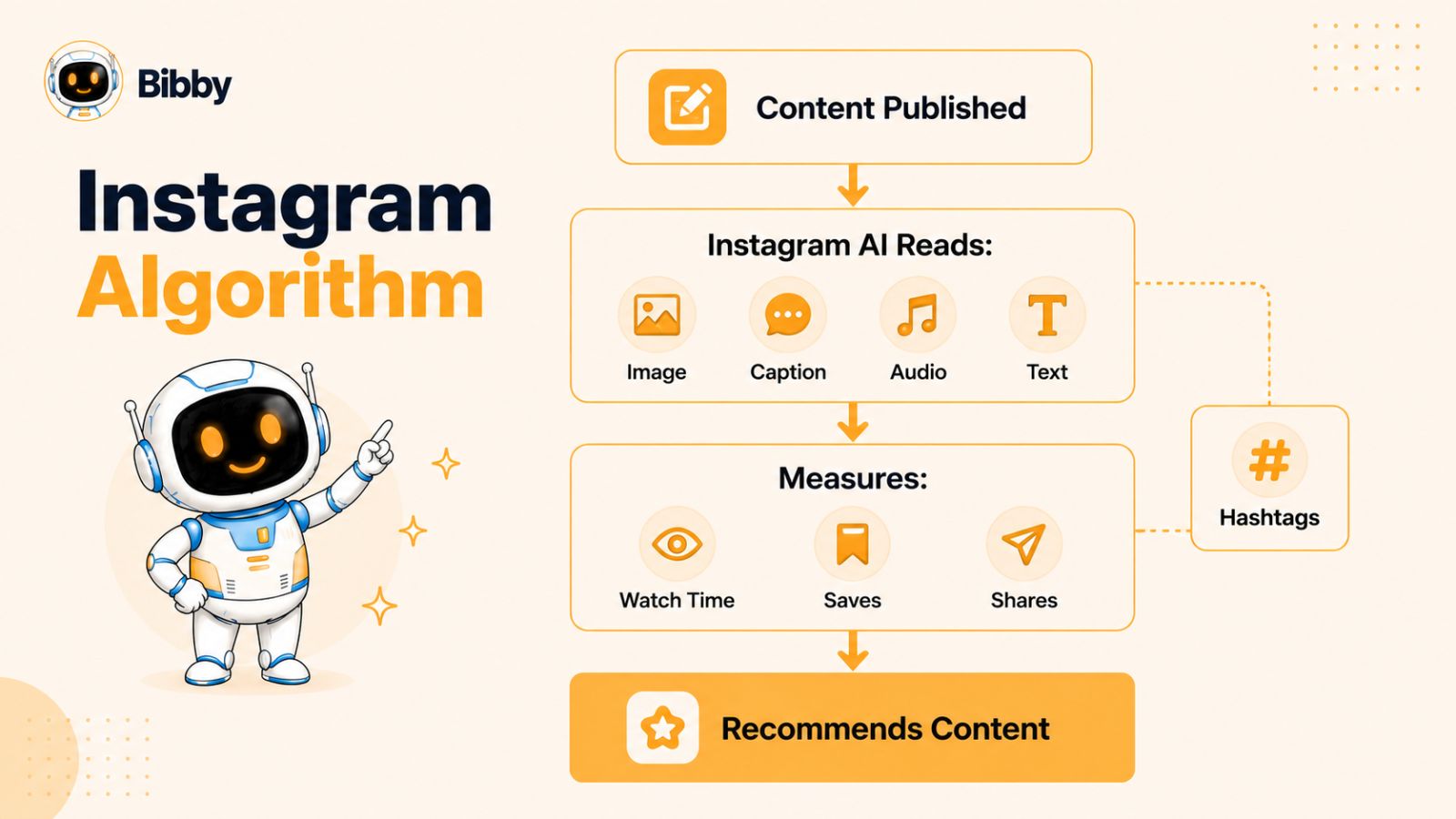
Modern algorithms can analyze images, videos, captions, audio, on-screen text, user behavior, engagement patterns, and even viewing habits. Instead of relying heavily on hashtags to understand content, platforms now use artificial intelligence to determine what a post is about and who is most likely to engage with it.
This doesn't mean hashtags are useless. They still serve as valuable contextual signals that help platforms categorize content, identify niche topics, and improve discoverability in certain situations. For example, industry-specific hashtags can still help LinkedIn users find relevant conversations, while niche hashtags on Instagram can help algorithms better understand a post's topic.
However, hashtags alone won't save weak content. A post with excellent audience retention, strong engagement, and clear relevance will almost always outperform a post that relies heavily on hashtag optimization.
The biggest mistake creators make in 2026 is treating hashtags as a growth strategy instead of a supporting tactic. Successful creators focus first on creating content that people want to watch, share, save, and discuss. Hashtags simply help reinforce the content's context.
The reality is that algorithms now reward value, relevance, and engagement far more than keyword stuffing or hashtag volume. If you're still spending more time researching hashtags than improving your content, you're focusing on the wrong part of the equation.
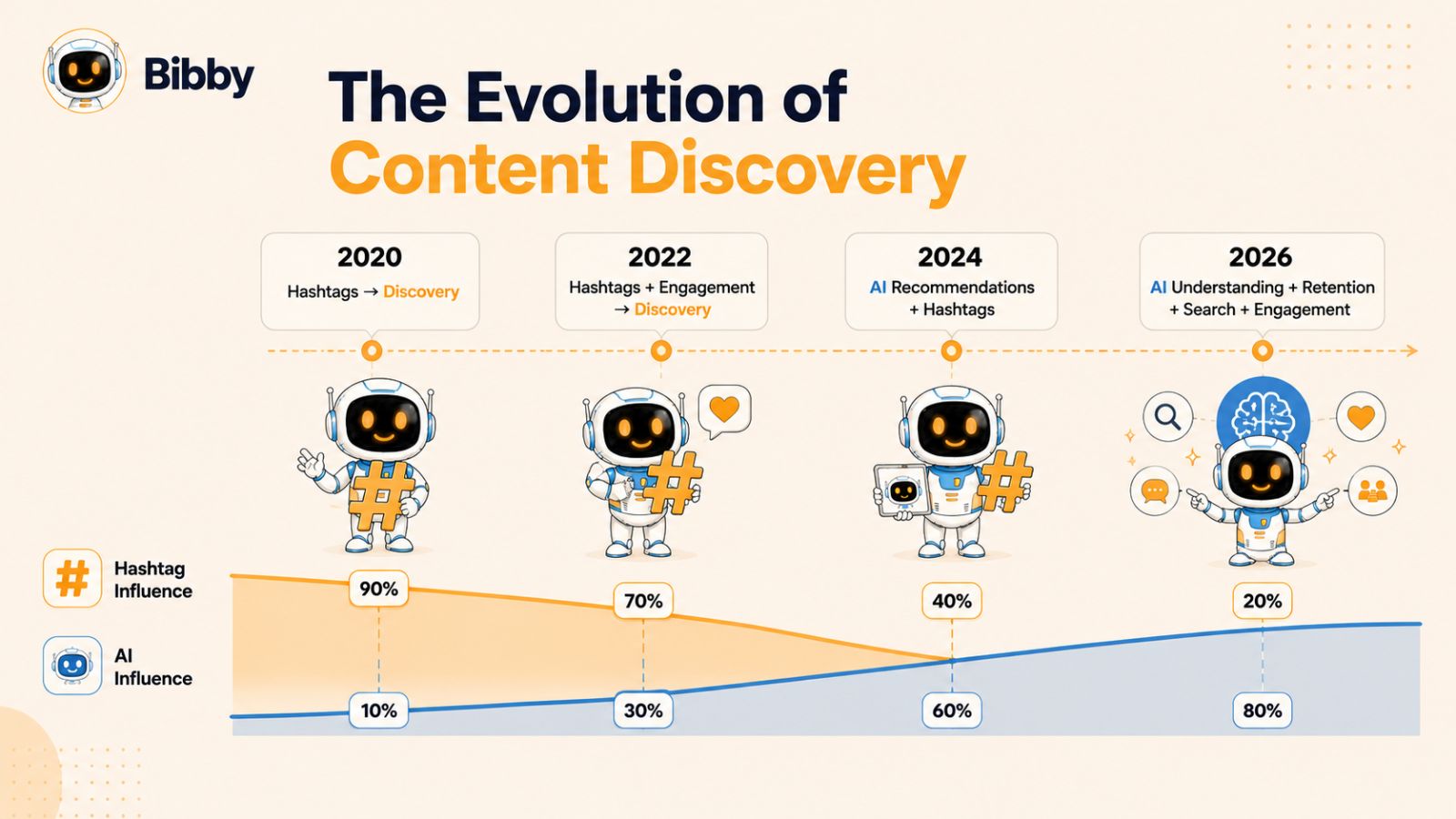
How Social Media Algorithms Have Changed Since 2020
To understand why hashtags matter less in 2026, it's important to understand how social media algorithms have evolved over the past several years.
The Early Days: Discovery Through Hashtags
In the early 2020s and before, hashtags played a major role in content discovery. Platforms had a more limited understanding of what a post contained, so hashtags acted as labels that helped categorize content.
A fitness creator might use hashtags like #FitnessTips, #WorkoutMotivation, or #GymLife to help platforms determine who should see their posts. The right hashtag strategy could significantly increase reach because algorithms depended heavily on these signals.
As a result, creators spent countless hours researching trending hashtags, testing different combinations, and trying to find the perfect mix that would maximize visibility.
The Rise of AI-Powered Content Understanding
Fast forward to 2026, and the landscape looks completely different.
Today's algorithms can understand content in ways that were impossible just a few years ago. Instead of relying primarily on hashtags, platforms analyze multiple layers of information simultaneously, including:
- Image recognition
- Video content analysis
- Spoken words in videos
- On-screen text
- Caption content
- User engagement patterns
- Watch time and retention
- Audience interests and behaviors
For example, if you post a video about email marketing, TikTok and Instagram can often identify the topic even if you never use a single marketing-related hashtag. The platforms can analyze your spoken words, captions, visual elements, and audience interactions to determine exactly what your content is about.
The Shift From Social Graphs to Interest Graphs
One of the biggest changes since 2020 has been the transition from social graphs to interest graphs.
A social graph focuses on who you follow and who follows you. An interest graph focuses on what people actually enjoy consuming.
This is why users regularly see content from creators they've never followed before. Platforms like TikTok, Instagram Reels, YouTube Shorts, and even LinkedIn increasingly prioritize showing users content that matches their interests rather than simply content from people in their network.
As a result, the algorithm's primary goal is no longer categorizing content with hashtags. Its primary goal is predicting what users will watch, engage with, and enjoy.
Why This Changes Everything for Creators
The implication is significant.
If algorithms can already understand your content through AI, then hashtags become just one signal among hundreds of others. They can still provide useful context, but they no longer carry the weight they once did.
Today, creators who consistently generate strong engagement, high retention rates, and valuable content often outperform competitors who obsess over hashtag research but neglect the actual content experience.
This shift explains why some posts go viral with only a few hashtags—or none at all—while other posts with perfectly optimized hashtag sets struggle to gain traction.
The algorithm's priority has changed. It no longer asks, "Which hashtags were used?" It asks, “Will people find this content valuable enough to keep watching, engaging, and returning for more?”
Also read: Why Every Small Business Should Use a Social Media Scheduling Tool?
What Instagram's Algorithm Wants in 2026
Instagram's algorithm has evolved far beyond the days when hashtags were the primary driver of discovery. In 2026, the platform uses advanced AI systems to evaluate content quality, relevance, and engagement potential before deciding how widely to distribute a post.
If your goal is to grow on Instagram, understanding these ranking signals is far more important than finding the perfect hashtag strategy.
Watch Time and Content Retention
One of the strongest signals Instagram tracks is how long users spend consuming your content.
For Reels especially, Instagram closely monitors:
- Video completion rates
- Average watch time
- Rewatches
- Early drop-off rates
- Overall audience retention
If viewers consistently watch your content from start to finish, Instagram interprets that as a sign that your content is valuable and engaging. The platform is then more likely to recommend it to additional users.
This is one reason short, highly engaging videos often outperform longer videos with weak hooks.
You may also like reading: How to automate posting Instagram Reels?
Engagement Quality Matters More Than Engagement Quantity
Not all engagement carries the same weight.
Instagram increasingly prioritizes actions that demonstrate genuine interest rather than passive interactions.
High-value engagement signals include:
- Saves
- Shares
- Meaningful comments
- Profile visits
- Follows generated from a post
A post that receives 50 shares and 100 saves may outperform another post with hundreds of simple likes because shares and saves indicate stronger user interest.
Content Relevance and AI Understanding
Instagram's AI can now understand content context remarkably well.
The platform analyzes:
- Images
- Video content
- Captions
- Audio
- On-screen text
- User interaction history
This allows Instagram to categorize content accurately and recommend it to users who are most likely to find it relevant.
For example, if you create content about entrepreneurship, Instagram can identify your topic through multiple signals—even before considering hashtags.
Where Hashtags Fit Into Instagram's Algorithm
So where do hashtags fit into all of this?
Think of hashtags as supporting context rather than primary ranking factors.
Hashtags help Instagram:
- Confirm content topics
- Identify niche categories
- Improve discoverability for specific searches
- Connect content to relevant communities
However, hashtags alone won't significantly boost reach if the content itself fails to generate engagement.
A highly engaging Reel with five relevant hashtags will typically outperform a mediocre Reel with thirty hashtags.
Instagram Hashtag Best Practices for 2026
The most effective hashtag strategies today are surprisingly simple.
Instead of using dozens of generic hashtags, focus on a small number of highly relevant tags.
Recommended approach:
- Use 3–8 relevant hashtags
- Prioritize niche-specific hashtags
- Match hashtags closely to the content topic
- Avoid irrelevant trending hashtags
- Support hashtags with keyword-rich captions
For example, a digital marketing creator would benefit more from specific hashtags related to their niche than broad hashtags with millions of posts that provide little targeting value.
The Real Instagram Growth Formula
The creators seeing the strongest growth on Instagram in 2026 are not necessarily the ones using the most hashtags.
They're the ones creating content that:
- Captures attention immediately
- Maintains viewer interest
- Encourages sharing and saving
- Solves real problems
- Sparks conversations
Hashtags can help reinforce these efforts, but they cannot replace them.
The Instagram algorithm ultimately rewards content that keeps users engaged on the platform. Everything else—including hashtags—plays a supporting role.
Also read: Best Hootsuite Alternative for Small Business
What TikTok's Algorithm Wants in 2026
If Instagram helped popularize AI-driven recommendations, TikTok perfected them.
TikTok's success is built on its ability to identify content that users are likely to enjoy and place it in front of the right audience—even if the creator has few followers. This is one of the reasons why new creators can still achieve massive reach on the platform.
As a result, TikTok's algorithm places far greater emphasis on viewer behavior than on hashtags.
Viewer Retention Is Everything
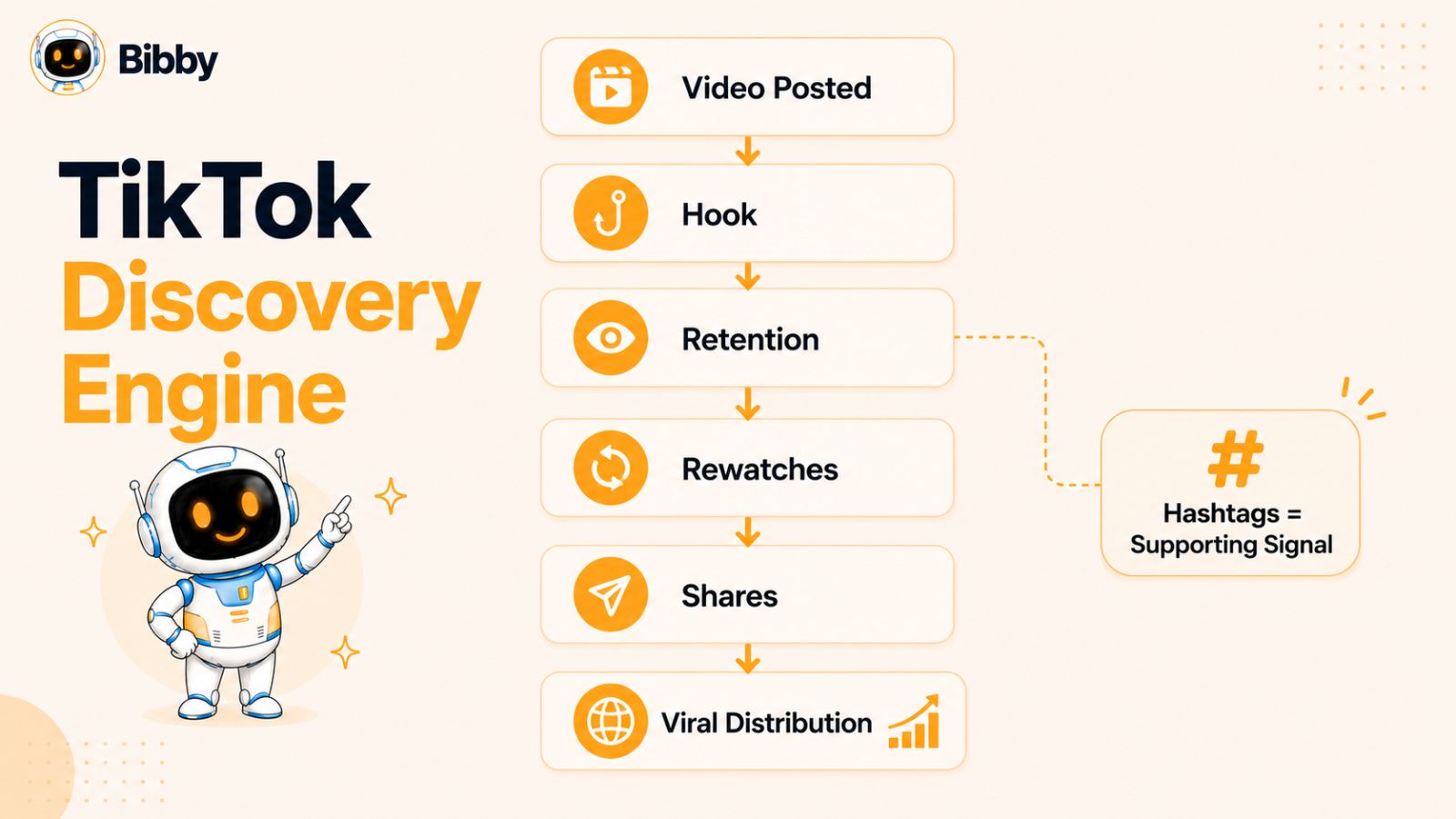
More than any other major social platform, TikTok rewards content that keeps people watching.
The platform closely tracks:
- Video completion rate
- Average watch duration
- Rewatches
- Looping behavior
- Early exits
When viewers watch a video until the end—or watch it multiple times—TikTok interprets this as a strong signal that the content is engaging.
This is why creators often spend so much effort on crafting powerful hooks within the first few seconds. If viewers leave immediately, the algorithm receives a negative signal regardless of how well the post is optimized.
Engagement Signals Still Matter
While watch time is critical, engagement remains an important ranking factor.
TikTok evaluates:
- Shares
- Comments
- Favorites
- Profile visits
- Follows generated from the content
Among these signals, shares are often particularly powerful because they indicate that users found the content valuable enough to recommend it to someone else.
The more positive engagement signals a video generates, the more confident TikTok becomes in expanding its reach.
TikTok Understands Content Without Hashtags
One of the biggest misconceptions about TikTok is that hashtags are necessary for the algorithm to understand a video's topic.
In reality, TikTok analyzes:
- Spoken words
- Video visuals
- On-screen text
- Captions
- User interactions
This allows the platform to categorize content with remarkable accuracy.
For example, a video explaining email marketing strategies can be identified as marketing-related through its audio, captions, and visual content even if no marketing hashtags are included.
Are Hashtags Important on TikTok?
Yes—but not for the reasons many creators think.
Hashtags can help:
- Provide additional context
- Support content categorization
- Participate in niche conversations
- Improve discoverability in specific communities
However, hashtags rarely determine whether a video succeeds or fails.
Many viral TikTok videos use only a handful of hashtags. Some use none at all. What they consistently have in common is strong viewer retention and engagement.
Keywords Are Becoming More Important Than Hashtags
As TikTok increasingly functions as a search engine, keyword optimization has become more valuable.
Users now search TikTok for:
- Product reviews
- Tutorials
- Business advice
- Travel recommendations
- Local services
- Educational content
Because of this shift, creators should focus on naturally incorporating keywords into:
- Spoken dialogue
- On-screen text
- Video captions
- Titles and descriptions
This helps both TikTok's recommendation engine and its search engine understand the content.
A Smarter TikTok Strategy for 2026
Instead of obsessing over hashtag formulas, focus on creating content that encourages viewers to stay engaged.
A strong TikTok strategy should prioritize:
- Attention-grabbing hooks
- Clear storytelling
- Fast pacing
- Audience retention
- Searchable keywords
- Authentic engagement
Hashtags can still play a supporting role, but they should never be the foundation of your growth strategy.
In 2026, TikTok's algorithm doesn't reward the creator with the most hashtags. It rewards the creator who can consistently capture and hold attention.
What LinkedIn's Algorithm Wants in 2026
Unlike Instagram and TikTok, LinkedIn serves a different purpose. Users visit the platform to learn, network, build professional relationships, and discover industry insights. Because of this, LinkedIn's algorithm evaluates content through a different lens.
While hashtags still have some value on LinkedIn, the platform increasingly rewards expertise, relevance, and meaningful conversations over simple content categorization.
Professional Relevance Comes First
LinkedIn's primary goal is to show users content that helps them succeed professionally.
The algorithm evaluates whether your content is relevant to a user's:
- Industry
- Job function
- Skills
- Professional interests
- Network connections
This means a highly targeted post about B2B marketing may perform exceptionally well among marketers even if it never reaches a broad audience.
On LinkedIn, relevance often beats reach.
Authority Signals Are More Important Than Ever
LinkedIn wants to surface content from people who demonstrate expertise and provide valuable insights.
Authority signals include:
- Industry knowledge
- Original perspectives
- Professional experience
- Educational content
- Thought leadership
Posts that simply repeat common advice often struggle to gain traction, while posts that share unique experiences, lessons learned, and actionable insights tend to perform better.
The algorithm increasingly favors creators who contribute meaningful knowledge rather than generic engagement bait.
Meaningful Conversations Drive Distribution
Comments are particularly important on LinkedIn.
However, LinkedIn doesn't just count the number of comments. It also evaluates the quality of discussions taking place beneath a post.
Strong signals include:
- Thoughtful responses
- Professional debates
- Follow-up discussions
- Long-form comments
- Conversations between multiple users
A post that generates genuine industry discussion will often outperform one that receives dozens of low-effort reactions.
Where Hashtags Fit on LinkedIn
Hashtags still help LinkedIn understand content categories and connect posts to relevant professional topics.
They can support discoverability by:
- Categorizing content themes
- Connecting posts to niche communities
- Reinforcing subject matter relevance
- Helping users follow specific topics
That said, their influence is significantly smaller than it was a few years ago.
LinkedIn can already understand much of your content through captions, topics, audience behavior, and engagement patterns.
LinkedIn Hashtag Best Practices for 2026
A simple approach works best.
Recommended strategy:
- Use 2–5 highly relevant hashtags
- Focus on industry-specific topics
- Keep hashtags aligned with the content
- Avoid stuffing posts with excessive tags
- Prioritize readability over optimization
For example, a cybersecurity professional would benefit more from a few highly relevant industry hashtags than a long list of broad business-related tags.
Consistency Is Becoming a Competitive Advantage
One of the biggest trends on LinkedIn is the growing importance of consistent publishing.
The algorithm rewards creators who regularly produce valuable content and maintain audience engagement over time.
This creates a challenge for busy professionals and businesses. Writing content, creating visuals, generating captions, scheduling posts, and tracking performance across multiple platforms can quickly become overwhelming.
This is where automation tools are becoming increasingly valuable.
How Bibby Simplifies LinkedIn and Multi-Platform Content Publishing
As social media algorithms place greater emphasis on consistency, maintaining an active presence across multiple platforms becomes difficult without a streamlined workflow.
Bibby helps simplify the entire process.
The workflow is straightforward:
- Upload your image or generate one with AI.
- Choose your preferred posting style.
- Bibby automatically generates optimized captions.
- Schedule content across Facebook, Instagram, LinkedIn, YouTube, and TikTok.
- Publish at AI-optimized posting times.
- Track analytics and performance from a single dashboard.
Beyond standard posts, Bibby also supports videos, stories, and broader content campaigns, allowing creators and businesses to manage their social media presence more efficiently.
For professionals building a personal brand on LinkedIn, the ability to consistently publish valuable content without manually managing every platform can become a significant advantage.
The Real LinkedIn Growth Formula
The most successful LinkedIn creators in 2026 aren't winning because of hashtags.
They're winning because they:
- Share genuine expertise
- Start meaningful conversations
- Publish consistently
- Provide practical value
- Build trust over time
Hashtags can help support discovery, but authority and engagement remain the true drivers of growth on the platform. For details on building a high-performing content calendar with AI, see our guide.
What Facebook's Algorithm Wants in 2026
Facebook may no longer dominate headlines the way it once did, but it remains one of the largest social media platforms in the world. For businesses, creators, and brands, Facebook continues to offer significant opportunities for audience growth and engagement.
However, Facebook's algorithm has evolved dramatically over the years. In 2026, it focuses far less on hashtags and far more on meaningful user interactions.
Meaningful Engagement Is the Core Ranking Signal
Facebook's primary objective is to keep users engaged on the platform by showing them content that sparks genuine interest and conversation.
The algorithm pays close attention to:
- Comments
- Shares
- Reactions
- Post clicks
- Video watch time
- Community interactions
Among these signals, comments and shares often carry the most weight because they indicate that users found the content valuable enough to respond to or distribute.
A post that generates meaningful discussion is generally more likely to receive additional reach than a post that simply collects passive reactions.
Facebook Prioritizes Relationships
One of Facebook's distinguishing characteristics is its emphasis on personal connections.
The algorithm evaluates relationships between:
- Friends
- Family members
- Groups
- Communities
- Frequently interacted-with accounts
As a result, content that encourages conversations between users often performs better than content designed solely for impressions or clicks.
This is one reason Facebook Groups continue to be highly effective for community building and audience engagement.
Video Content Continues to Grow
Facebook has steadily increased its focus on video content, particularly short-form video.
Key ranking factors include:
- Watch time
- Completion rates
- Repeat views
- Shares
- Audience retention
Just like Instagram Reels and TikTok, Facebook rewards content that captures attention and keeps viewers engaged.
Do Hashtags Matter on Facebook?
Compared to other platforms, hashtags have a relatively small impact on Facebook.
While Facebook still recognizes hashtags and can use them to categorize content, they are rarely a major factor in determining reach.
Most users do not actively browse hashtag feeds on Facebook the way they might on Instagram or TikTok.
Because of this, hashtags should be viewed as an optional supporting element rather than a primary optimization strategy.
Better Alternatives to Hashtag Optimization
Instead of spending time researching dozens of hashtags, Facebook marketers are generally better off focusing on:
- Writing compelling post introductions
- Encouraging discussions
- Creating shareable content
- Posting engaging videos
- Building active communities
- Consistently publishing valuable content
These activities generate much stronger algorithmic signals than hashtag usage.
Why Consistency Matters More Than Ever
One challenge many businesses face is maintaining a steady publishing schedule across multiple platforms.
Creating content is only one part of the process. Teams also need to:
- Write captions
- Schedule posts
- Manage multiple channels
- Analyze performance
- Adjust future content strategies
As algorithms increasingly reward consistency, staying active becomes essential.
How Bibby Helps Maintain Consistent Visibility
Bibby addresses one of the biggest challenges in modern social media marketing: execution.
Rather than manually managing every platform separately, users can streamline their workflow through a single system.
With Bibby, users can:
- Upload images or generate visuals with AI
- Select a preferred posting style
- Automatically generate captions
- Schedule content across Facebook, Instagram, LinkedIn, YouTube, and TikTok
- Publish at AI-optimized posting times
- Monitor analytics from one dashboard
- Manage videos, stories, and standard social posts
This allows businesses and creators to spend more time producing quality content and less time handling repetitive publishing tasks.
The Real Facebook Growth Formula
In 2026, Facebook's algorithm isn't looking for the creator with the most hashtags.
It's looking for content that creates meaningful engagement.
The pages that perform best consistently:
- Encourage conversations
- Build communities
- Deliver useful content
- Generate shares
- Maintain publishing consistency
Hashtags can still provide a small amount of context, but they are no longer a significant growth lever. If your goal is to increase reach on Facebook, focus on creating content people genuinely want to engage with and share.
Also read: How Social Media Automation Helps Startups Grow Faster
What YouTube's Algorithm Wants in 2026
Of all the major social platforms, YouTube may be the clearest example of why hashtags have become secondary signals.
Unlike platforms that rely heavily on feeds and recommendations alone, YouTube combines powerful recommendation systems with one of the world's largest search engines. As a result, the platform prioritizes viewer satisfaction, watch behavior, and search intent far more than hashtag usage.
If Instagram and TikTok are increasingly becoming search engines, YouTube has been one from the beginning.
Viewer Satisfaction Is YouTube's Ultimate Goal
YouTube's algorithm is designed to answer a simple question:
Will viewers enjoy this content enough to keep watching?
To determine this, YouTube tracks a wide range of signals, including:
- Watch time
- Audience retention
- Click-through rate (CTR)
- Session duration
- Likes and comments
- Subscriber activity
- Repeat viewership
The more evidence YouTube has that viewers enjoy a video, the more likely it is to recommend that video to additional audiences.
Watch Time and Retention Remain Critical
Watch time has long been one of YouTube's most important ranking factors, but retention is equally important.
The algorithm pays attention to:
- How much of a video viewers watch
- Where viewers stop watching
- Whether viewers continue watching other videos afterward
- Whether viewers return to the channel in the future
A video that keeps viewers engaged for a significant portion of its duration sends a strong positive signal to the algorithm.
This is why successful YouTube creators spend so much time refining hooks, pacing, storytelling, and video structure.
Search Optimization Matters More Than Hashtags
Unlike many other social platforms, YouTube still relies heavily on search behavior.
Users actively search for:
- Tutorials
- Product reviews
- Business advice
- Educational content
- Entertainment
- Industry insights
Because of this, YouTube places considerable emphasis on:
- Video titles
- Descriptions
- Keywords
- Spoken content
- Captions
- Metadata
Well-optimized videos can continue generating views for months or even years after publication.
Do Hashtags Matter on YouTube?
Yes—but only to a limited extent.
Hashtags can help:
- Categorize content
- Provide additional context
- Connect related videos
- Improve topical organization
However, they are not a major ranking factor.
A highly engaging video with strong audience retention and keyword optimization will almost always outperform a poorly performing video with perfectly selected hashtags.
In practical terms, hashtags serve as supplementary metadata rather than a primary growth strategy.
The Rise of YouTube Shorts
The rapid growth of YouTube Shorts has introduced more recommendation-driven discovery into the platform.
Even so, the core ranking principles remain similar.
YouTube Shorts are heavily influenced by:
- Viewer retention
- Replays
- Engagement
- Watch-through rates
- User satisfaction
Once again, content quality and audience behavior matter far more than hashtag usage.
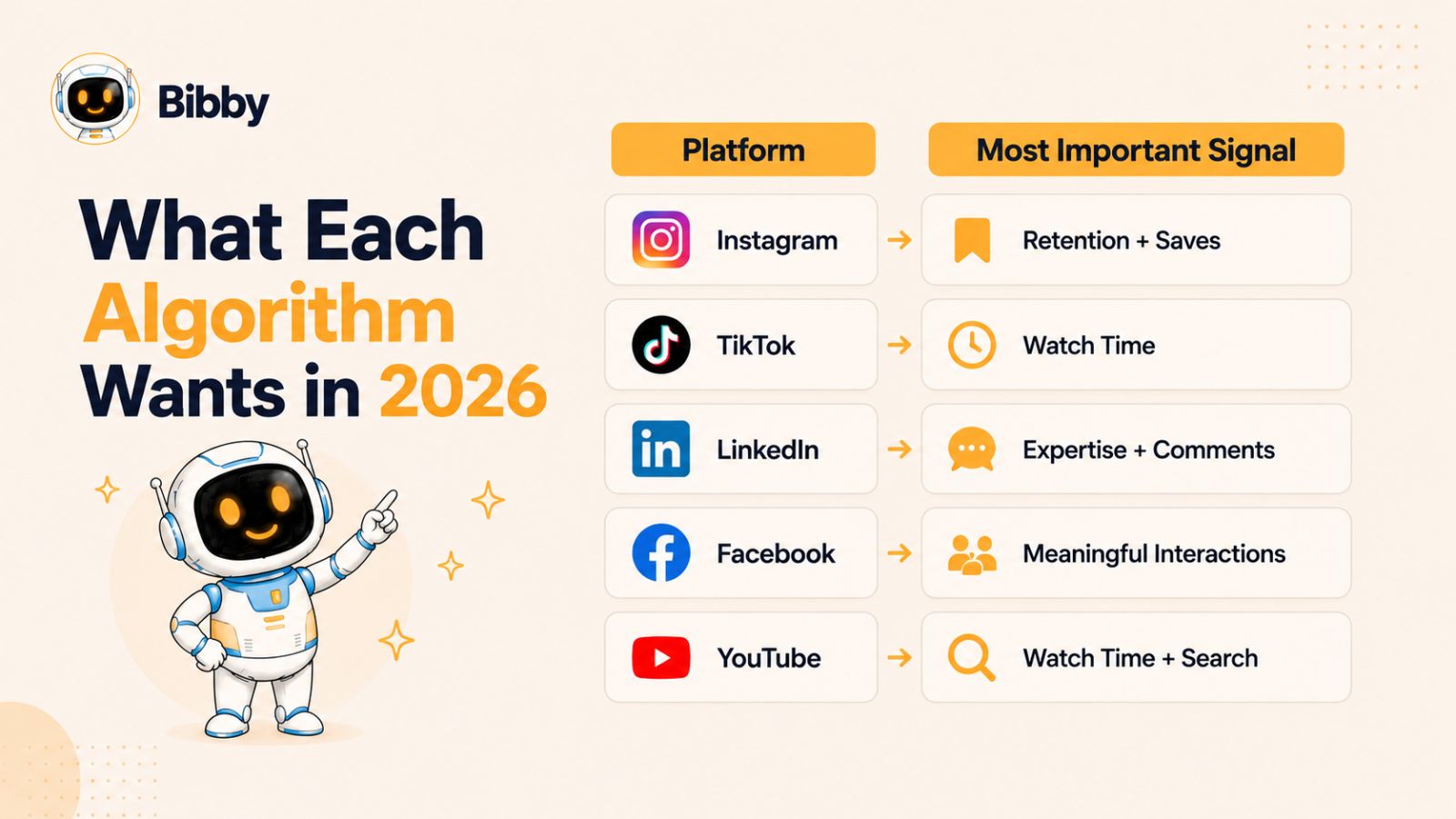
Why Keywords Outperform Hashtags on YouTube
In 2026, creators should think like both content creators and search marketers.
Instead of focusing primarily on hashtags, prioritize:
- Search-friendly titles
- Clear video topics
- Keyword-rich descriptions
- Strong thumbnails
- Audience retention strategies
Keywords help YouTube understand what a video is about, while retention helps YouTube determine whether viewers actually enjoy it.
Together, these signals are far more influential than hashtags.
Managing Content Across Multiple Platforms
One challenge creators face is that every platform has slightly different optimization requirements.
A creator might need:
- Different captions for LinkedIn
- Short-form content for TikTok
- Reels for Instagram
- Shorts for YouTube
- Community-focused posts for Facebook
Managing all of this manually can quickly become overwhelming.
How Bibby Supports Multi-Platform Content Distribution
As content production scales, creators need systems that reduce administrative work without sacrificing consistency.
Bibby helps streamline this process by combining content creation, scheduling, publishing, and analytics into a single workflow.
With Bibby, users can:
- Upload images or create visuals using AI
- Select a preferred content style
- Generate captions automatically
- Schedule posts across Facebook, Instagram, LinkedIn, TikTok, and YouTube
- Publish at AI-optimized times
- Analyze performance from one dashboard
- Manage videos, stories, and standard social content
This allows creators to focus on creating better content while maintaining a consistent publishing schedule across multiple platforms.
The Real YouTube Growth Formula
YouTube's algorithm doesn't care how many hashtags you use.
It cares whether viewers click, watch, enjoy, and continue engaging with your content.
The channels that consistently grow in 2026 focus on:
- Audience satisfaction
- Retention
- Search optimization
- Consistent publishing
- High-quality content
Hashtags can provide helpful context, but they are only a small piece of a much larger ranking system built around delivering the best possible viewing experience.
If Hashtags Matter Less, What Matters More?
At this point, a clear pattern should be emerging.
Across Instagram, TikTok, LinkedIn, Facebook, and YouTube, hashtags still serve a purpose, but they are no longer among the most influential ranking factors. Modern algorithms have become far more sophisticated, allowing platforms to evaluate content based on actual user behavior rather than simple categorization signals.
So if hashtags matter less than they once did, what should creators and marketers focus on instead?
1. Audience Retention
If there is one metric that consistently influences performance across nearly every platform, it's audience retention.
Algorithms pay close attention to how long users consume content because retention is one of the strongest indicators of value.
Platforms want answers to questions like:
- Did users watch the entire video?
- Did they stop scrolling?
- Did they read the post?
- Did they rewatch the content?
- Did they stay engaged until the end?
The longer people stay engaged, the more confidence the algorithm has that your content is worth promoting.
This is why successful creators spend significant time improving:
- Hooks
- Storytelling
- Pacing
- Content structure
- Visual presentation
Better retention often produces far greater results than any hashtag strategy.
2. Content Relevance
Modern algorithms are incredibly effective at understanding content.
They analyze:
- Images
- Videos
- Captions
- Audio
- On-screen text
- User interactions
Their goal is to determine who is most likely to benefit from or enjoy a piece of content.
This means creators should focus on making their topics clear and easy to understand.
Best practices include:
- Staying focused on a specific topic
- Using clear language
- Matching content to audience interests
- Avoiding misleading hooks or clickbait
The more relevant your content is to a target audience, the easier it becomes for algorithms to distribute it effectively.
3. Engagement Quality
Not all engagement is equal.
A like often signals casual interest.
A share, save, or thoughtful comment signals much deeper engagement.
Most major platforms prioritize actions that demonstrate meaningful value.
Strong engagement signals include:
- Shares
- Saves
- Comments
- Profile visits
- Follows
- Repeat viewership
When users actively engage with content, algorithms receive evidence that the content is worth showing to additional people.
4. Posting Consistency
Consistency has become one of the most underrated growth factors in social media.
Algorithms favor creators who consistently provide value because consistent publishing creates predictable audience behavior.
Benefits of consistency include:
- More engagement opportunities
- Stronger audience relationships
- Better algorithmic understanding
- Increased brand visibility
- More performance data for optimization
The challenge is that maintaining consistency across multiple platforms can be difficult without an efficient workflow.
5. Search Optimization and Social SEO
One of the biggest trends in 2026 is the rise of social SEO.
Users increasingly search directly within:
- TikTok
- YouTube
Rather than relying solely on hashtags, platforms now use keywords and contextual signals to surface content.
This means creators should optimize:
- Captions
- Video scripts
- On-screen text
- Titles
- Descriptions
- Profile information
When done correctly, keyword optimization helps both recommendation algorithms and platform search engines understand your content.
Why Execution Is Becoming More Important Than Optimization Hacks
As algorithms mature, success is becoming less about discovering secret tricks and more about consistently executing proven fundamentals.
Creators need to:
- Publish regularly
- Maintain quality standards
- Optimize for search
- Analyze performance
- Adapt based on results
The problem is that these responsibilities multiply as creators expand across multiple platforms.
How Bibby Helps Creators Focus on What Actually Matters
This is one reason social media automation tools have become increasingly valuable.
Instead of spending hours manually creating captions, scheduling content, and managing multiple publishing calendars, creators can automate much of the process.
Bibby is designed around a simple workflow:
- Upload your image or generate one with AI.
- Choose your posting style.
- Let Bibby generate captions automatically.
- Schedule content across Facebook, Instagram, LinkedIn, YouTube, and TikTok.
- Publish at AI-optimized times.
- Track analytics and performance from one dashboard.
Users can also manage videos, stories, and other content formats without constantly switching between platforms.
This allows creators to dedicate more time to improving the factors that actually influence algorithmic performance—content quality, audience retention, engagement, and consistency.
The New Social Media Reality
The biggest takeaway from modern social media is simple:
Algorithms no longer reward creators for gaming the system. They reward creators for delivering content that audiences genuinely enjoy.
Hashtags still have value, but they are now a supporting signal rather than a primary ranking factor.
The creators who win in 2026 are the ones who consistently create relevant content, keep audiences engaged, optimize for search, and maintain a reliable publishing schedule.
The Rise of Social SEO in 2026
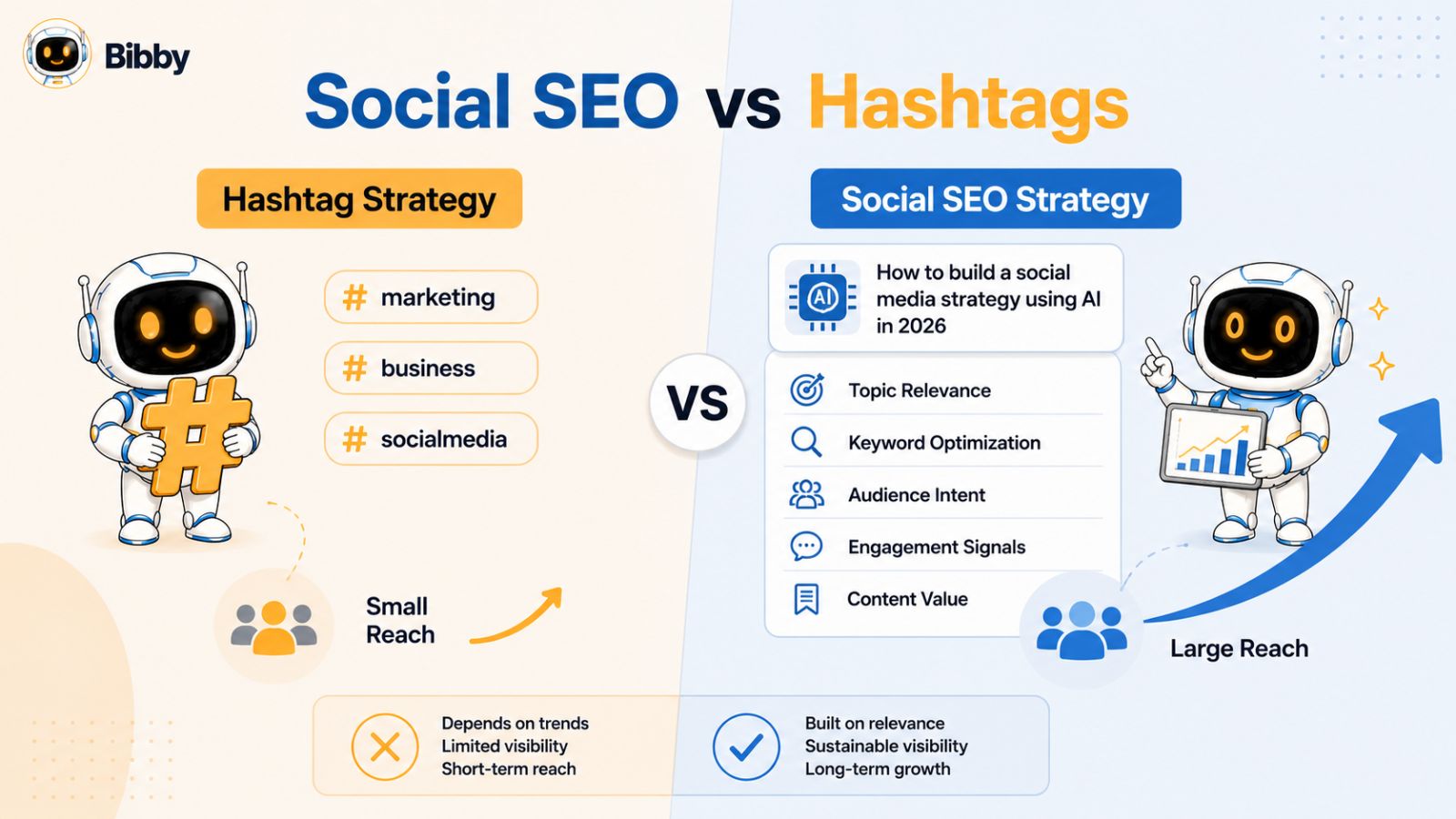
If there is one trend that explains the declining importance of hashtags, it's the rise of Social SEO.
For years, creators optimized content primarily for social feeds. Today, they're increasingly optimizing content for search. Users are no longer relying solely on recommendations from algorithms—they're actively searching for answers, products, services, and expertise directly within social media platforms.
As a result, keywords are becoming more valuable than hashtags in many situations.
Social Media Platforms Are Becoming Search Engines
The way people discover content has changed dramatically.
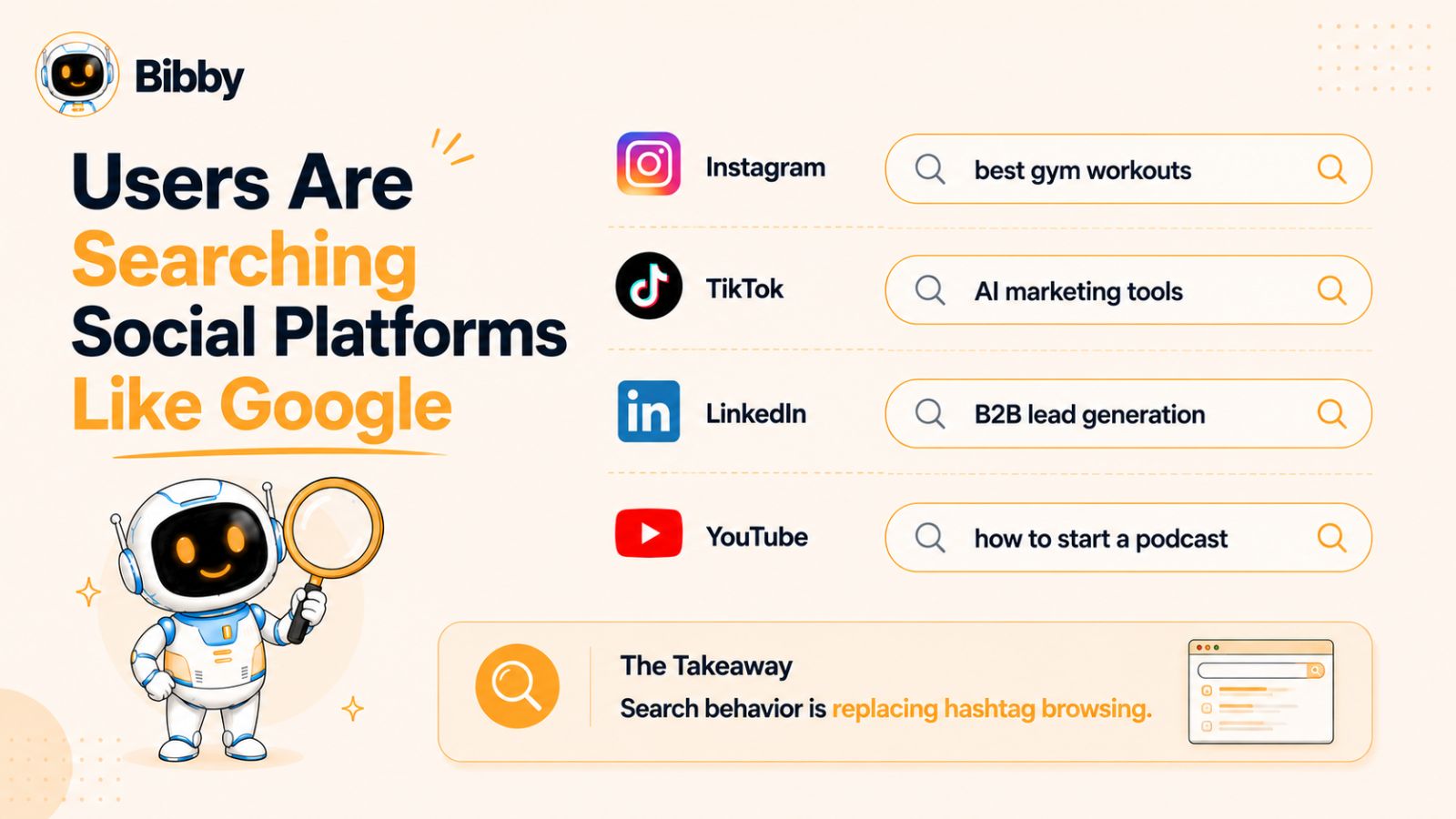
Instead of opening Google first, many users now search directly on platforms like:
- TikTok
- YouTube
Users search for topics such as:
- How-to tutorials
- Product reviews
- Business advice
- Marketing strategies
- Travel recommendations
- Local businesses
- Career guidance
This shift has forced social platforms to improve their search capabilities and better understand content context.
Why Keywords Matter More Than Ever
Modern algorithms rely heavily on keywords to understand what content is about.
Unlike hashtags, keywords can appear naturally throughout content and provide richer context.
Platforms analyze keywords in:
- Captions
- Video titles
- Descriptions
- Spoken dialogue
- On-screen text
- Profile bios
- Comments
The more clearly you communicate a topic, the easier it becomes for both search engines and recommendation algorithms to categorize and distribute your content.
For example, a creator discussing "Instagram marketing strategies for small businesses" will often benefit more from naturally using those keywords throughout their content than from simply adding a collection of marketing-related hashtags.
How Social SEO Works Across Platforms
Although every platform has its own algorithm, the underlying principle remains similar.
The algorithm attempts to answer two questions:
- What is this content about?
- Who is most likely to find it valuable?
Keywords help answer the first question.
User behavior helps answer the second.
Together, they create a powerful system for content discovery.
Social SEO Best Practices for 2026
Creators who want maximum discoverability should focus on making their content easy for algorithms to understand.
Some of the most effective tactics include:
Use Keywords in Captions
Write captions that naturally describe your topic.
Instead of relying entirely on hashtags, clearly explain what users will learn or gain from the content.
Include Keywords in Video Scripts
Many platforms now transcribe audio automatically.
When you speak relevant keywords naturally throughout a video, algorithms gain additional context.
Add Keywords to On-Screen Text
Text overlays help reinforce your topic and improve accessibility.
They also provide another signal that platforms can analyze.
Optimize Profiles and Bios
Your profile should clearly communicate:
- Your expertise
- Your niche
- Your audience
- The topics you cover
This helps algorithms connect your content to relevant users.
Align Content With Search Intent
Think about what your audience is actually searching for.
Instead of creating content solely around trends, create content that solves specific problems and answers common questions.
Hashtags and Keywords Work Best Together
It's important not to frame this discussion as keywords versus hashtags.
The strongest strategy combines both.
Keywords provide detailed context.
Hashtags provide supplemental categorization.
Together, they help reinforce your content's relevance.
However, if forced to prioritize one over the other, keywords generally have a greater impact on discoverability in 2026.
The Challenge of Scaling Social SEO
As creators expand across multiple platforms, maintaining SEO best practices becomes increasingly difficult.
Each piece of content may require:
- Platform-specific captions
- Different content formats
- Search optimization
- Scheduling adjustments
- Performance tracking
Managing all of this manually can consume significant amounts of time.
How Bibby Supports a Social SEO Strategy
One advantage of using an AI-powered social media management platform like Bibby is the ability to streamline content creation and distribution.
Rather than manually creating captions for every platform, users can:
- Upload an image or generate one with AI
- Select a preferred posting style
- Automatically generate captions
- Schedule content across Facebook, Instagram, LinkedIn, TikTok, and YouTube
- Publish at AI-optimized posting times
- Track analytics in one place
This allows creators to spend less time on administrative tasks and more time producing content that aligns with audience interests and search demand.
The Future of Discoverability
The future of social media discovery is increasingly driven by search, context, and user behavior.
Algorithms are becoming better at understanding content without relying heavily on hashtags. At the same time, users are becoming more intentional about what they search for and consume.
The creators who adapt to this shift will gain a significant advantage.
Instead of asking, "Which hashtags should I use?" the better question in 2026 is:
"How can I make my content easier for both people and algorithms to understand?"
The answer to that question lies at the heart of Social SEO.
How AI Is Reshaping Social Media Marketing
The evolution of social media algorithms isn't happening in isolation. At the same time that platforms are becoming smarter, artificial intelligence is transforming how content is created, optimized, distributed, and analyzed.
In many ways, AI is redefining what it means to be successful on social media.
The creators and brands growing the fastest in 2026 aren't necessarily working harder than everyone else. They're using technology to eliminate repetitive tasks and focus their energy on activities that generate results.
The Content Demands Have Never Been Higher
A few years ago, publishing a handful of posts each week was enough for many businesses.
Today, creators are expected to maintain an active presence across multiple channels, including:
- TikTok
- YouTube
Each platform has different audience expectations, content formats, and engagement patterns.
A single content campaign may require:
- Images
- Videos
- Stories
- Shorts
- Reels
- Platform-specific captions
- Performance analysis
The workload can become overwhelming very quickly.
AI Is Changing Content Creation
Artificial intelligence is helping creators produce content more efficiently than ever before.
Modern AI tools can assist with:
- Content ideation
- Caption generation
- Image creation
- Content repurposing
- Scheduling recommendations
- Audience analysis
Instead of starting from a blank page every time, creators can use AI to accelerate the production process while maintaining quality and consistency.
This doesn't replace human creativity. It amplifies it.
The best results still come from creators who provide expertise, personality, and original ideas. AI simply helps them execute faster.
Data-Driven Publishing Is Replacing Guesswork
Another major shift is the move from intuition-based publishing to data-driven publishing.
In the past, marketers often guessed:
- When to post
- What type of content to create
- Which platforms to prioritize
Today, AI systems can analyze large amounts of engagement data and identify patterns that humans might miss.
This allows creators to make smarter decisions about:
- Posting frequency
- Content formats
- Publishing times
- Audience targeting
- Performance optimization
As a result, consistency and efficiency become easier to achieve.
Why Execution Is Becoming the Biggest Competitive Advantage
Most marketers already know the basics:
- Create valuable content.
- Understand your audience.
- Publish consistently.
- Optimize for search.
- Track performance.
The challenge isn't knowledge.
The challenge is execution.
Many businesses struggle because they simply don't have enough time to manage every aspect of modern social media marketing.
Creating content is one task.
Publishing, scheduling, optimizing, and analyzing content across multiple platforms is another.
The Rise of Social Media Automation
This is why automation has become one of the most important trends in social media marketing.
Automation helps creators:
- Save time
- Maintain consistency
- Reduce manual work
- Improve efficiency
- Scale content production
The goal isn't to remove human involvement. The goal is to eliminate repetitive processes so creators can focus on strategy and creativity.
How Bibby Simplifies the Entire Social Media Workflow
As the demands of social media continue to grow, platforms that combine creation, scheduling, automation, and analytics into a single workflow become increasingly valuable.
Bibby is designed specifically for this challenge.
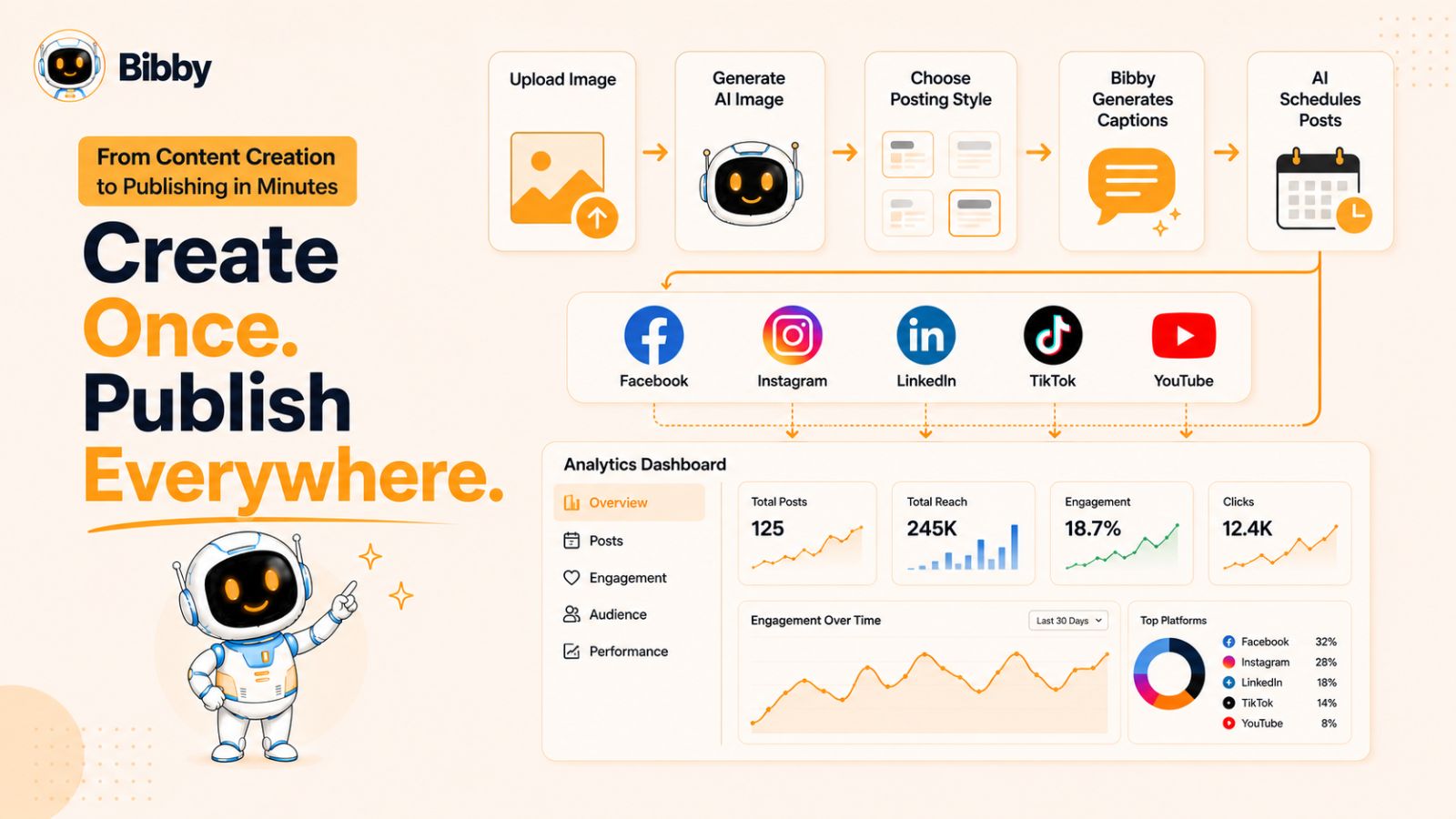
Instead of juggling multiple tools, creators can manage much of their social media workflow from one place.
The process is intentionally simple:
Step 1: Upload or Generate Content
Users can upload their own images or generate visuals using AI.
This removes one of the biggest bottlenecks in content production.
Step 2: Choose a Posting Style
Different audiences respond to different communication styles.
Users can select the type of content they want to publish, allowing Bibby to tailor the output accordingly.
Step 3: Generate Captions Automatically
Rather than manually writing captions for every platform, Bibby creates captions automatically.
This saves time while helping maintain publishing consistency.
Step 4: Schedule Across Multiple Platforms
Content can be scheduled for:
- YouTube
- TikTok
This eliminates the need to log into multiple platforms separately.
Step 5: Publish at AI-Optimized Times
One of Bibby's most valuable features is its ability to schedule content at AI-optimized posting times.
Instead of guessing when audiences are most active, creators can rely on data-driven recommendations.
Step 6: Analyze Performance
Publishing is only part of the process.
Bibby also provides analytics that help users understand:
- Engagement trends
- Audience behavior
- Content performance
- Opportunities for improvement
Beyond Standard Posts
Modern social media requires more than simple image posts.
Bibby supports:
- Videos
- Stories
- Multi-platform campaigns
- Ongoing content schedules
This makes it easier for creators and businesses to maintain an active presence without dramatically increasing workload.
The Future Belongs to Efficient Creators
The most successful creators in 2026 are not necessarily producing the most content.
They are producing the most effective content while using systems and automation to maximize efficiency.
As algorithms continue prioritizing quality, relevance, and consistency, creators who combine strong content with smart workflows will have a significant advantage.
AI isn't replacing social media marketers.
It's helping them spend less time on repetitive tasks and more time creating content that audiences actually want to consume.
Common Hashtag Mistakes to Avoid in 2026
While hashtags are no longer the dominant growth factor they once were, that doesn't mean they should be ignored entirely. The key is understanding how to use them effectively without allowing them to distract from the factors that truly drive performance.
Unfortunately, many creators are still using hashtag strategies that worked years ago but have little impact today.
Here are the most common hashtag mistakes to avoid in 2026.
Using Irrelevant Trending Hashtags
One of the oldest social media tactics is adding popular trending hashtags to posts regardless of whether they are relevant.
The logic seems reasonable: if a hashtag is popular, more people might see the content.
In reality, this often creates the opposite effect.
When hashtags don't match the content:
- Users become less likely to engage
- Audience targeting becomes less accurate
- Algorithmic categorization becomes weaker
- Reach quality decreases
Modern algorithms are sophisticated enough to recognize when hashtags don't align with the actual content.
Relevance matters far more than popularity.
Stuffing Posts With Dozens of Hashtags
Many creators still believe that using the maximum number of hashtags will increase visibility.
This strategy made sense when hashtags were one of the primary discovery tools.
In 2026, excessive hashtag usage can make content appear outdated, spammy, or overly optimized.
A smaller set of highly relevant hashtags generally performs better than a long list of generic tags.
Quality beats quantity.
Using the Same Hashtag Set Repeatedly
Some creators create one hashtag template and use it on every post.
While this saves time, it limits relevance.
Each piece of content has a unique topic, audience, and objective.
Using identical hashtags repeatedly may reduce the contextual signals available to algorithms and limit opportunities to reach niche audiences.
Hashtags should support the specific content being published.
Ignoring Keywords in Captions
This may be the most costly mistake of all.
Many creators spend time researching hashtags but fail to optimize the actual content that algorithms analyze most heavily.
Remember that modern platforms evaluate:
- Captions
- Audio
- Video content
- On-screen text
- Descriptions
- User behavior
If your caption doesn't clearly communicate the topic, hashtags alone won't solve the problem.
Keywords and content clarity typically have a greater impact than hashtag selection.
Prioritizing Hashtags Over Content Quality
No hashtag strategy can compensate for weak content.
Creators often ask:
- Which hashtags should I use?
- How many hashtags are ideal?
- Which hashtags are trending?
Far fewer ask:
- Is my hook compelling?
- Does my content solve a problem?
- Will people watch until the end?
- Is this worth sharing?
Yet those questions have a much larger influence on performance.
The best-performing content consistently delivers value, regardless of the hashtag strategy behind it.
Treating Hashtags as a Growth Hack
Perhaps the biggest mistake is believing that hashtags are a shortcut to growth.
Modern algorithms are designed to identify content that audiences genuinely enjoy.
There are no magic hashtag combinations that can consistently override poor engagement signals.
Creators who focus on growth hacks often spend their energy optimizing minor details while overlooking the fundamentals that drive long-term success.
Forgetting the Bigger Picture
Hashtags are just one small component of a much larger content ecosystem.
Successful creators focus on:
- Audience understanding
- Content quality
- Search optimization
- Engagement
- Consistency
- Performance analysis
Hashtags support these efforts, but they do not replace them.
A Smarter Approach to Hashtags
The most effective creators in 2026 use hashtags strategically rather than obsessively.
Their approach is simple:
- Use relevant hashtags
- Keep them closely aligned with the content
- Prioritize keywords and clarity
- Focus on audience value first
- Continuously test and improve
Most importantly, they understand that the real objective isn't to optimize hashtags.
The real objective is to create content that people want to consume, engage with, and share.
When that happens, hashtags become a helpful supplement rather than a critical dependency.
And that's exactly how modern social media algorithms want creators to think.
The Best Hashtag Strategy for 2026
After examining how Instagram, TikTok, LinkedIn, Facebook, and YouTube algorithms work, one conclusion becomes clear:
Hashtags still have a place in social media marketing, but they should no longer be the center of your strategy.
Instead, hashtags should support a broader content strategy built around relevance, engagement, retention, and consistency.
Here's a practical framework for using hashtags effectively in 2026.
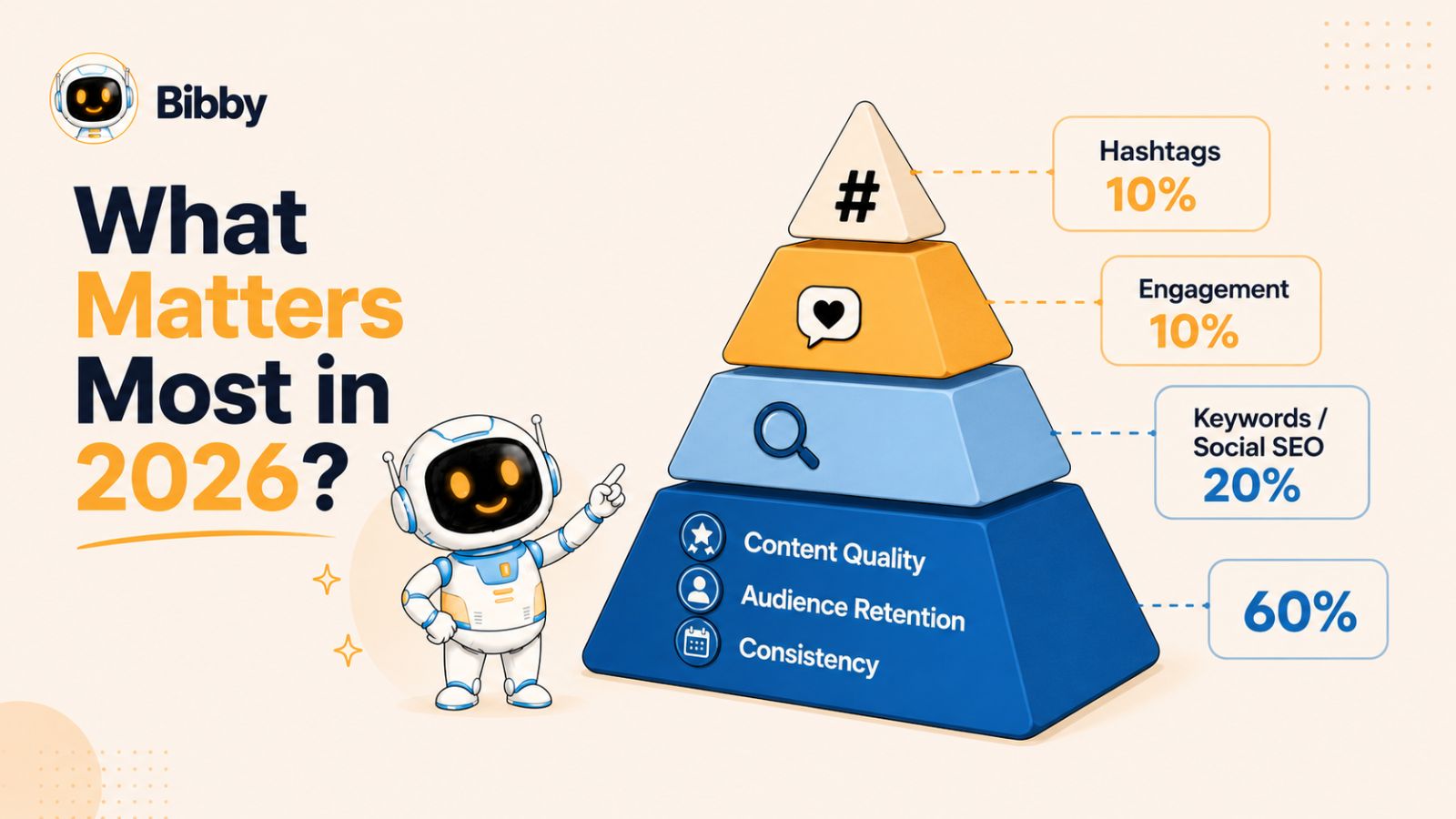
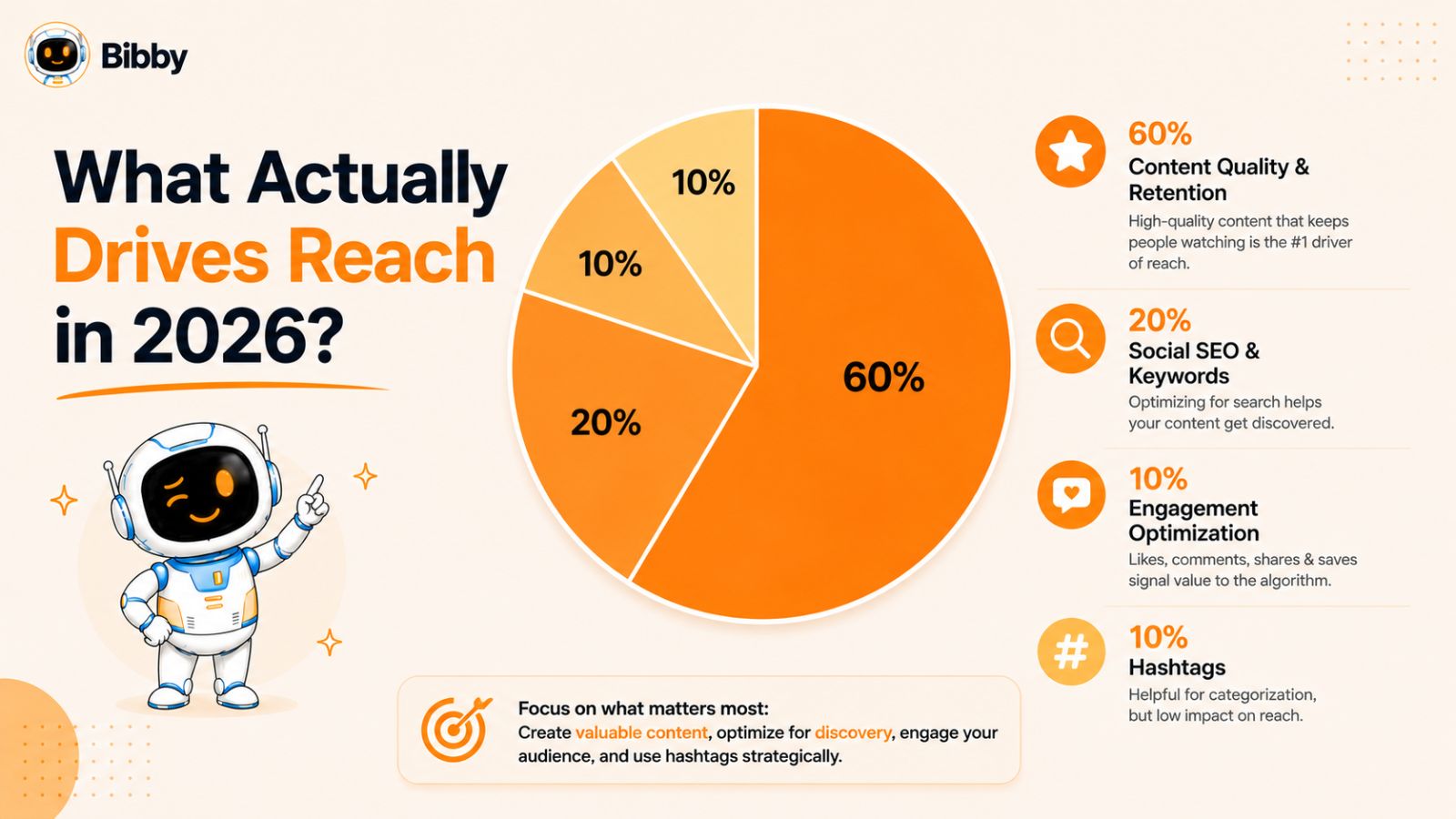
The 60-20-10-10 Framework
Rather than spending most of your time researching hashtags, allocate your effort according to what algorithms actually reward.
60%: Content Quality and Audience Retention
The majority of your focus should be on creating content that people genuinely want to consume.
Ask yourself:
- Does the content solve a problem?
- Is the hook strong enough to stop scrolling?
- Does the content maintain attention?
- Is it worth sharing?
- Would someone save it for later?
These factors influence reach far more than hashtag selection.
If retention is weak, hashtags won't rescue the post.
20%: Social SEO and Keywords
Keywords have become one of the most important discoverability tools across social platforms.
Optimize:
- Captions
- Video scripts
- On-screen text
- Titles
- Descriptions
- Profile bios
When algorithms clearly understand your topic, they can distribute your content more effectively.
This is one reason Social SEO is becoming increasingly important in 2026.
10%: Engagement Optimization
Engagement remains a major ranking signal.
Encourage:
- Comments
- Shares
- Saves
- Discussions
- Community participation
Rather than chasing vanity metrics, focus on actions that demonstrate genuine audience interest.
Strong engagement often leads to increased reach, regardless of hashtag usage.
10%: Strategic Hashtag Usage
Finally, use hashtags as supporting context.
The goal is not to maximize hashtag volume.
The goal is to reinforce content relevance.
The Ideal Hashtag Formula
For most creators, a simple approach works best.
Consider using:
- 3–8 relevant hashtags
- A mix of broad and niche tags
- Industry-specific hashtags
- Topic-specific hashtags
- Community-focused hashtags
Avoid using hashtags simply because they are popular.
Every hashtag should have a clear connection to the content.
Example: A Better Hashtag Strategy
Imagine you're publishing a post about AI-powered social media automation.
An outdated strategy might involve using twenty or thirty generic hashtags such as:
- #Marketing
- #Business
- #Success
- #Entrepreneur
A more effective 2026 strategy would use a smaller set of highly relevant hashtags while focusing on strong keyword optimization throughout the caption.
The caption itself provides most of the context.
The hashtags simply reinforce it.
Consistency Beats Perfection
One of the biggest lessons from modern social media is that consistency outperforms perfection.
Many creators spend excessive time:
- Researching hashtags
- Tweaking minor optimizations
- Chasing trends
Meanwhile, successful creators focus on publishing valuable content consistently.
The algorithm can only evaluate content that actually gets published.
The Role of Automation in Modern Content Marketing
As content demands increase, maintaining consistency becomes more difficult.
Creators often struggle with:
- Writing captions
- Scheduling content
- Managing multiple platforms
- Tracking analytics
- Maintaining publishing frequency
This is where automation can provide a significant advantage.
How Bibby Supports a Modern Hashtag and Content Strategy
Bibby aligns well with the realities of social media in 2026 because it focuses on execution rather than gimmicks.
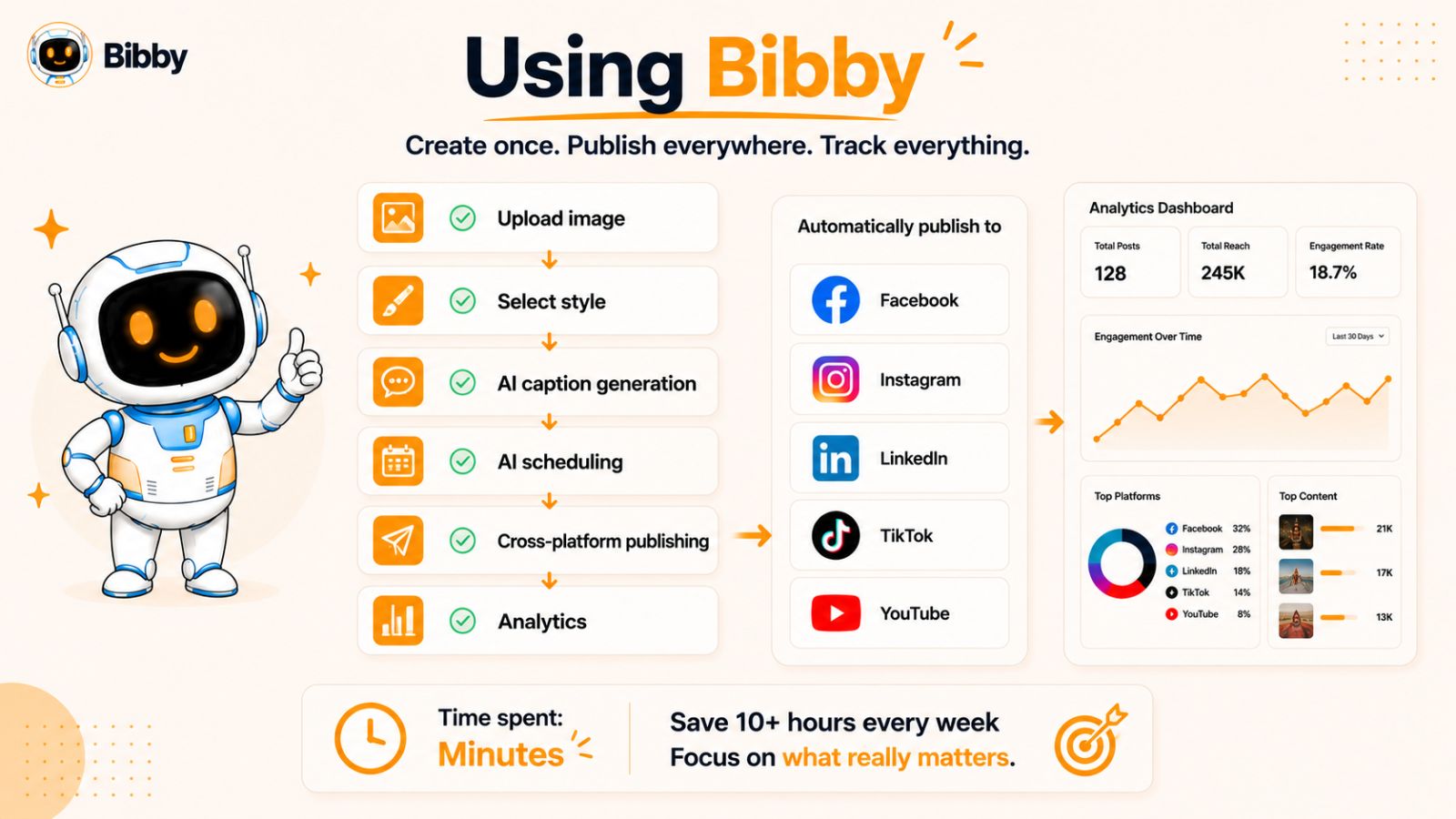
Instead of spending hours managing repetitive tasks, users can follow a streamlined workflow:
- Upload an image or generate one using AI.
- Choose a preferred posting style.
- Let Bibby generate captions automatically.
- Schedule content across Facebook, Instagram, LinkedIn, TikTok, and YouTube.
- Publish at AI-optimized times.
- Monitor analytics from a centralized dashboard.
Users can also manage:
- Videos
- Stories
- Multi-platform campaigns
- Ongoing content calendars
This allows creators to spend more time improving content quality and audience engagement while reducing time spent on manual publishing tasks.
The Winning Formula for 2026
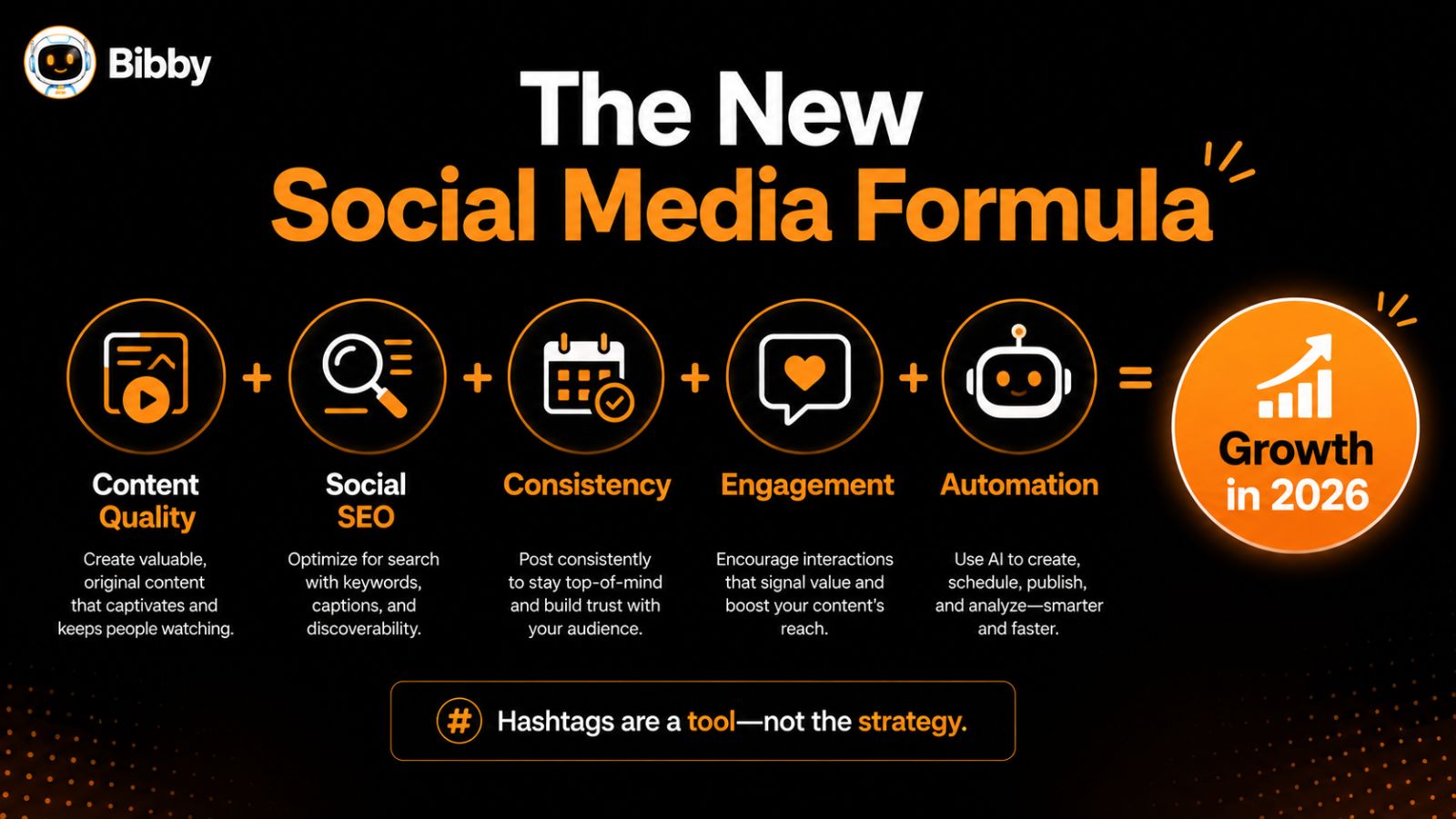
The most effective social media strategy today looks something like this:
- Create valuable content.
- Optimize for search and discoverability.
- Encourage meaningful engagement.
- Use a handful of relevant hashtags.
- Publish consistently.
- Analyze results and improve over time.
Hashtags still matter—but only as part of a much larger system.
The creators who achieve the greatest success in 2026 understand that algorithms don't reward hashtag mastery.
They reward content that delivers value, earns attention, and keeps audiences coming back for more.
Conclusion
So, do hashtags still matter in 2026?
Yes—but not in the way they once did.
The biggest takeaway is that modern social media algorithms are driven primarily by audience behavior, not hashtag usage. Across Instagram, TikTok, LinkedIn, Facebook, and YouTube, platforms increasingly prioritize content that generates strong retention, meaningful engagement, and clear relevance. Hashtags still provide useful context, but they are now a supporting signal rather than a primary growth driver.
The second key lesson is that Social SEO has become increasingly important. Keywords in captions, video scripts, titles, descriptions, and on-screen text often have a greater impact on discoverability than hashtag optimization alone. As social platforms continue evolving into search engines, creators who understand search intent will have a significant advantage.
Finally, consistency remains one of the most powerful competitive advantages in social media marketing. The creators and brands that publish valuable content consistently are the ones most likely to benefit from today's AI-driven recommendation systems. Tools like Bibby can help simplify this process by combining AI-powered content creation, automated caption generation, multi-platform scheduling, AI-optimized posting times, and analytics into a single workflow.
As algorithms continue becoming smarter, the winning strategy is becoming simpler: create content people genuinely want to consume, make it easy for algorithms to understand, and publish consistently.
The next logical step is learning how to build a complete AI-powered social media content strategy—one that combines content creation, Social SEO, automation, analytics, and distribution to maximize growth across every major platform.