
Have you ever clicked on a headline that promised something incredible, only to discover the content didn't live up to the hype? That's the power and the problem of clickbait. Designed to spark curiosity and encourage clicks, clickbait has become one of the most widely used techniques in digital marketing, social media, blogging, and online publishing.
In simple terms, clickbait is content, usually a headline, title, thumbnail, or caption, created to persuade people to click on a link by triggering curiosity, emotion, or urgency. While some clickbait relies on exaggerated or misleading promises, ethical clickbait uses compelling headlines that accurately represent the content. The goal is not to deceive readers but to encourage them to discover valuable information.
Today, clickbait is everywhere. Businesses use it to increase website traffic, creators use it to grow their audiences, YouTubers use it to improve video views, and social media marketers use it to boost engagement across platforms like Facebook, Instagram, LinkedIn, TikTok, and YouTube. When used responsibly, clickbait can improve click-through rates (CTR), increase visibility, and help great content reach more people.
However, creating headlines that are both attention-grabbing and trustworthy is becoming more challenging. Audiences are smarter than ever, and search engines and social media algorithms increasingly reward content that delivers on its promises. Misleading headlines may generate clicks in the short term, but they often lead to disappointed users, higher bounce rates, and reduced brand trust.
This is where AI-powered content creation tools are changing the game. Instead of relying on sensational or deceptive headlines, modern platforms help marketers generate engaging, audience-focused headlines, captions, and posts that balance curiosity with authenticity. For example, Bibby helps creators and businesses generate compelling captions and headlines with AI caption generation, maintain a consistent brand voice, and automatically schedule posts at AI-optimized times across Facebook, Instagram, LinkedIn, YouTube, and TikTok. With its conversational AI interface, users can even create campaigns, manage brand kits, generate social media content, and publish posts simply by chatting with the platform.
Whether you're a marketer, business owner, content creator, or social media manager, understanding how clickbait works and how to use it ethically can help you capture attention without sacrificing credibility. In this guide, you'll learn what clickbait is, why it works, common examples, its advantages and risks, SEO implications, and proven strategies for writing headlines that attract clicks while building long-term trust.
What Is Clickbait?
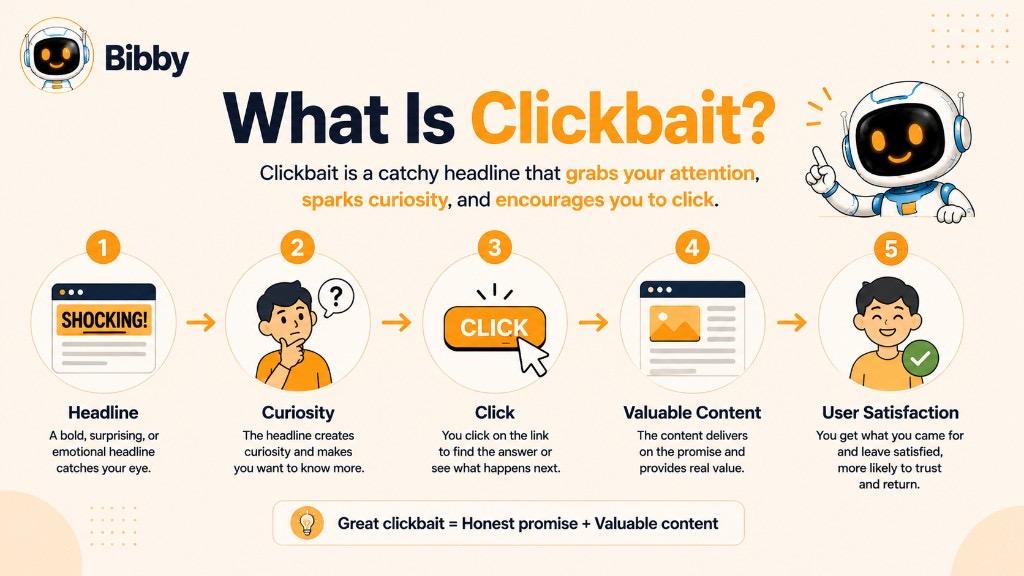
Think of clickbait as the digital version of a movie trailer. A good trailer gives viewers enough information to spark interest without revealing everything. Similarly, an effective clickbait headline creates curiosity while accurately representing the content. When readers find exactly what they were promised, they are more likely to trust the creator, engage with the content, and return in the future.
Clickbait is commonly used across websites, blogs, news platforms, YouTube, email marketing campaigns, and social media channels such as Facebook, Instagram, LinkedIn, TikTok, and X (formerly Twitter). Since users scroll through hundreds of posts every day, creators and businesses compete for attention using headlines that stand out in crowded feeds.
Here are a few examples of clickbait headlines:
- "10 Simple Marketing Tricks That Doubled Our Website Traffic"
- "The One Social Media Mistake Most Businesses Still Make"
- "You Won't Believe What Happened After We Changed One SEO Strategy"
- "5 AI Tools Every Content Creator Should Try in 2026"
Some of these headlines are perfectly acceptable if the content genuinely delivers on the promise. However, a headline like "This One Secret Will Make You Rich Overnight!" is misleading if the article offers no realistic or valuable advice. This type of deceptive clickbait may generate initial clicks but often results in frustrated readers and lost credibility.
Why Is It Called "Clickbait"?
The word clickbait combines two terms:
- Click refers to the action a user takes when opening a webpage, video, or post.
- Bait refers to something designed to attract or lure attention.
Just as bait is used to attract fish, clickbait is designed to attract users and persuade them to click. The difference lies in what happens after the click. Ethical clickbait rewards users with useful, relevant, and high-quality content, while misleading clickbait leaves them disappointed.
The Purpose of Clickbait
Businesses, publishers, and creators use clickbait for several reasons:
- Increase website traffic
- Improve click-through rates (CTR)
- Boost social media engagement
- Generate more video views
- Increase ad revenue
- Attract potential customers
- Grow brand awareness
- Encourage users to explore more content
When combined with valuable content, clickbait can be an effective marketing technique rather than a deceptive tactic.
Clickbait Is About Attention, Not Deception
One of the biggest misconceptions is that every clickbait headline is dishonest. In reality, successful digital marketing relies on capturing attention first. The challenge is doing so without misleading your audience.
For example:
Ethical clickbait:
*"7 Social Media Scheduling Tips That Save Small Businesses Hours Every Week"*
The article provides seven genuine, actionable tips.
Misleading clickbait:
*"This One Trick Will Instantly Make You Go Viral!"*
The content offers no proven method or evidence to support the claim.
The best-performing headlines strike a balance between curiosity and honesty. They encourage users to click because they promise value, and they build trust by delivering exactly what readers expect. This approach not only improves engagement but also strengthens your brand's reputation over time.
Clickbait Meaning in Digital Marketing
In digital marketing, clickbait refers to the practice of creating highly engaging headlines, titles, thumbnails, captions, or calls to action that encourage users to click on content. The objective is to attract attention in a crowded online environment and increase traffic, engagement, or conversions. While the term is often associated with misleading content, modern digital marketing focuses on ethical clickbait, where the headline sparks curiosity but accurately reflects the information users will find.
Every day, people scroll through hundreds of posts, articles, videos, and advertisements. To stand out, marketers use compelling headlines that address a problem, promise a solution, highlight a benefit, or create curiosity. When these headlines are backed by valuable content, they can significantly improve user engagement without damaging trust.
Clickbait has become an important part of content marketing because the first thing users notice is often the headline, not the content itself. Even the most informative article or video can go unnoticed if its title fails to capture attention.
Clickbait in Content Marketing
Content marketers use click-worthy headlines to encourage readers to explore blogs, guides, case studies, and landing pages. A strong headline increases the chances that users will stop scrolling and engage with the content.
For example:
- Less engaging: "Tips for Better Social Media Marketing"
- More click-worthy: "10 Social Media Marketing Mistakes That Could Be Costing You Customers"
Both headlines discuss the same topic, but the second creates curiosity while clearly communicating the value readers will receive.
Clickbait in SEO
Search engine optimization (SEO) is not just about ranking high on Google. It is also about convincing users to click your result instead of competing pages. An engaging SEO title can improve your click-through rate (CTR), which may lead to more organic traffic.
However, search engines prioritize user satisfaction. If visitors quickly leave because the content doesn't match the headline, your page may experience higher bounce rates and lower engagement signals. That's why SEO-friendly clickbait should always deliver on its promise.
Clickbait on Social Media
Social media platforms reward content that generates interactions such as clicks, likes, comments, shares, and saves. As a result, businesses and creators often use engaging captions and headlines to increase visibility.
Examples include:
- "You're Probably Making This Instagram Mistake Every Day."
- "The AI Tool That's Helping Small Businesses Save Hours Every Week."
- "Before You Schedule Your Next Post, Read This."
These headlines encourage users to learn more without making unrealistic claims.
AI-powered platforms like Bibby make this process easier by helping users generate engaging captions and headlines that align with their brand voice. Instead of relying on exaggerated language, Bibby creates content designed to capture attention while staying authentic. Users can then schedule posts across Facebook, Instagram, LinkedIn, YouTube, and TikTok from a single platform using AI-optimized publishing times.
Clickbait in YouTube Marketing
On YouTube, titles and thumbnails often determine whether someone watches a video. Successful creators combine compelling headlines with visually appealing thumbnails to improve click-through rates.
Examples include:
- "I Tested 15 AI Tools So You Don't Have To"
- "What Happened After Posting Every Day for 30 Days?"
- "The Biggest SEO Mistake Beginners Make"
As with articles, the video should fulfill the promise made by the title to maintain viewer trust and increase watch time.
Clickbait in Email Marketing
Email marketers also use clickbait-inspired subject lines to improve open rates. A subject line needs to stand out in a crowded inbox while remaining truthful.
Examples include:
- "You're Missing Out on This Marketing Opportunity"
- "One Small Change That Increased Our Sales by 40%"
- "Before You Publish Your Next Social Media Post..."
When the email content delivers real value, these subject lines can increase engagement without frustrating subscribers.
Clickbait in Paid Advertising
Paid advertisements on platforms like Facebook, Instagram, LinkedIn, and Google Ads often rely on curiosity-driven messaging to attract clicks. However, advertising platforms have strict policies against misleading or sensational claims.
Successful ads typically focus on clear benefits, solve a specific problem, or highlight measurable results rather than making unrealistic promises. This approach not only improves ad performance but also builds credibility with potential customers. Learn more about paid social strategies that prioritize trust alongside performance.
Why Ethical Clickbait Matters
In today's digital landscape, attracting clicks is only half the battle. The real goal is to keep users engaged, earn their trust, and encourage them to return. Ethical clickbait helps achieve this balance by combining compelling headlines with valuable content.
Businesses that consistently create honest, curiosity-driven headlines are more likely to build loyal audiences, improve brand reputation, and achieve sustainable growth. Tools like Bibby further simplify this process by using AI to generate engaging captions, headlines, and complete social media campaigns that attract attention while remaining relevant and trustworthy.
How Clickbait Works
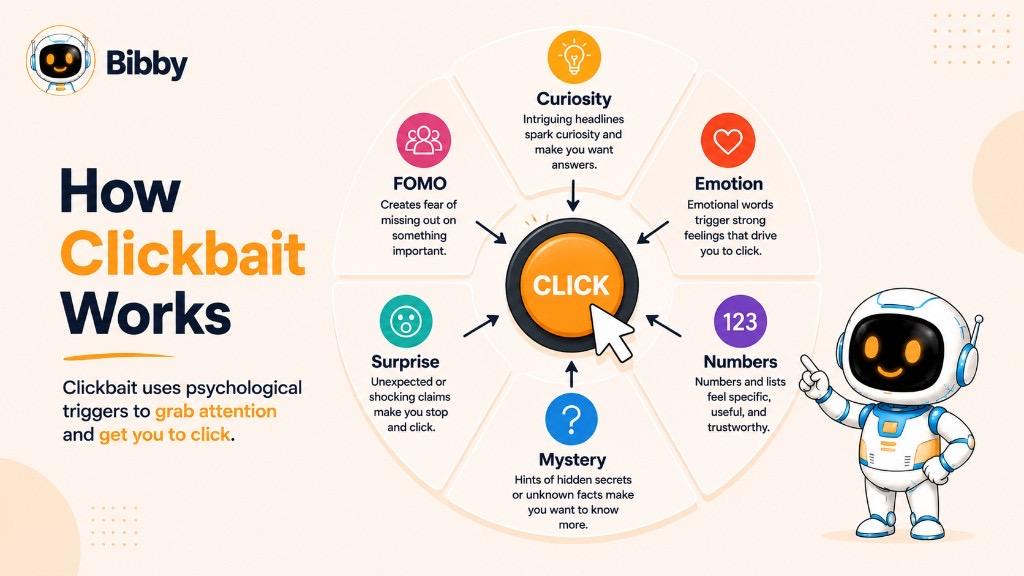
Clickbait works because it taps into natural human psychology. People are naturally curious and want answers, solutions, or information that feels important, surprising, or useful. When a headline hints at something valuable without revealing the full story, it encourages users to click to satisfy their curiosity.
In today's digital world, where thousands of posts compete for attention every minute, people often decide within seconds whether to engage with a piece of content. A well-crafted clickbait headline interrupts scrolling, creates interest, and motivates users to learn more.
However, successful clickbait is more than using dramatic words or exaggerated claims. The best headlines understand why people click and combine psychological triggers with genuine value. When the content fulfills the promise made by the headline, readers are more likely to stay engaged, trust the brand, and return for more.
Below are the key psychological principles that make clickbait effective.
Curiosity Gap
The curiosity gap is one of the most powerful techniques behind clickbait. It occurs when a headline gives readers enough information to spark interest but withholds enough details to make them want to know more.
For example:
- "The Marketing Strategy That Increased Sales by 300%"
- "One Small SEO Mistake Could Be Hurting Your Rankings"
- "Most Businesses Ignore This Social Media Feature. Should You?"
These headlines don't reveal the full answer immediately, encouraging users to click to fill the information gap.
When used ethically, the content provides the answer readers expect. If the article fails to deliver, users quickly lose trust.
Fear of Missing Out (FOMO)
People naturally want to avoid missing valuable opportunities. This psychological effect, known as Fear of Missing Out (FOMO), is frequently used in click-worthy headlines.
Examples include:
- "Don't Launch Your Campaign Before Reading This."
- "5 AI Marketing Trends Every Business Should Know in 2026."
- "What Your Competitors Already Know About Social Media Automation."
These headlines create urgency by suggesting readers may miss useful information if they don't click.
Ethical marketers use FOMO to highlight real opportunities rather than inventing false urgency.
Emotional Triggers
Emotions strongly influence online behavior. Headlines that evoke excitement, surprise, happiness, fear, inspiration, or empathy often receive more clicks than neutral titles.
Examples include:
- "The Inspiring Story Behind a Brand That Grew from Zero to One Million Followers."
- "The Biggest Marketing Mistake Small Businesses Keep Making."
- "Why Customers Stop Trusting Brands Overnight."
Emotional headlines connect with readers because they relate to common experiences, challenges, or aspirations.
Surprise and Shock
Unexpected information naturally attracts attention. Headlines that challenge assumptions or reveal surprising facts encourage users to explore further.
Examples include:
- "The Social Media Platform Growing Faster Than You Think."
- "Why Posting More Doesn't Always Increase Engagement."
- "This Simple Change Improved Our Marketing Results."
The key is ensuring the content genuinely supports the surprising claim with useful insights or data.
Numbers and Lists
People prefer content that appears organized and easy to consume. Headlines containing numbers often perform well because they set clear expectations.
Examples include:
- "7 Ways to Improve Your Social Media Strategy."
- "15 Clickbait Headline Formulas That Actually Work."
- "10 AI Tools Every Digital Marketer Should Try."
List-based articles are popular because readers know exactly how the information will be structured before they click.
Incomplete Information
Sometimes, withholding a small piece of information encourages readers to continue exploring.
Examples include:
- "The One Habit That Successful Content Creators Never Skip."
- "This Simple Marketing Technique Is Often Overlooked."
- "One Change Made a Huge Difference to Our Engagement."
Unlike misleading headlines, ethical versions answer the question clearly within the content rather than keeping readers waiting unnecessarily.
Why Some Clickbait Succeeds While Others Fail
Not every clickbait headline produces positive results. The difference usually comes down to trust.
Successful clickbait:
- Creates genuine curiosity.
- Matches the content accurately.
- Delivers valuable information.
- Meets user expectations.
- Encourages readers to continue exploring your website or social channels.
Poor clickbait:
- Makes unrealistic promises.
- Uses exaggerated or false claims.
- Hides important information without reason.
- Disappoints readers after the click.
- Damages credibility and reduces long-term engagement.
Modern search engines and social media platforms increasingly reward content that satisfies users rather than simply attracting clicks. This means the most effective strategy is to combine compelling headlines with high-quality content.
AI-powered tools like Bibby help creators strike this balance by generating engaging headlines, captions, and social media posts that are designed to attract attention while remaining authentic. Instead of relying on sensational language, Bibby helps businesses create content that sparks curiosity, maintains brand consistency, and keeps audiences engaged across Facebook, Instagram, LinkedIn, YouTube, and TikTok.
Types of Clickbait
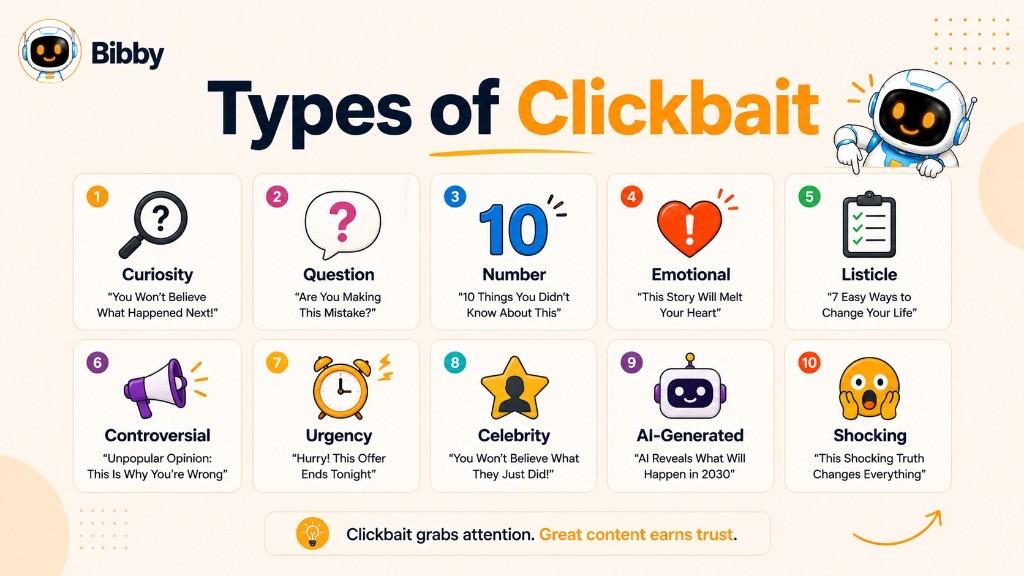
Not all clickbait is created the same way. Different headline styles appeal to different emotions, interests, and user behaviors. Some spark curiosity, while others rely on urgency, surprise, or a promise of valuable information. Understanding these types can help marketers, content creators, and businesses write headlines that capture attention without misleading their audience.
Below are the most common types of clickbait used in digital marketing and social media.
Curiosity Headlines
Curiosity headlines provide just enough information to make readers want to know more. They leave an unanswered question or tease a valuable insight without revealing everything upfront.
Examples:
- The Social Media Strategy Most Brands Still Ignore
- We Changed One Thing and Our Engagement Doubled
- There's a Better Way to Schedule Social Media Posts
Best for: Blog posts, case studies, educational content, marketing articles
Tip: Make sure your content clearly answers the question raised by the headline.
Question Headlines
Question-based headlines encourage readers to compare the question with their own experiences. If the topic feels relevant, they're more likely to click for the answer.
Examples:
- Are You Posting on Social Media at the Wrong Time?
- Why Isn't Your Content Getting More Engagement?
- Is AI Replacing Social Media Managers?
Best for: How-to guides, tutorials, educational blogs, industry insights
Shocking Headlines
These headlines present an unexpected fact or statement that surprises readers. When backed by accurate information, they can significantly increase click-through rates.
Examples:
- Why Posting Every Day Can Hurt Your Social Media Growth
- Most Viral Posts Don't Go Viral by Accident
- The Biggest Content Marketing Myth Debunked
Best for: Research-based articles, industry reports, opinion pieces
Emotional Headlines
Emotions influence decision-making, making emotional headlines highly effective. They can inspire excitement, empathy, hope, concern, or motivation.
Examples:
- The Marketing Lesson Every Small Business Should Learn
- How One Creator Built a Loyal Community from Scratch
- Why Customers Stop Following Brands They Once Loved
Best for: Storytelling, brand marketing, personal experiences, customer success stories
Number-Based Headlines
Headlines with numbers immediately tell readers how the content is organized and how much information they can expect. This makes the content feel easier to read.
Examples:
- 10 Clickbait Headline Formulas That Actually Work
- 7 Ways to Increase Your Social Media Reach
- 15 Content Marketing Mistakes to Avoid
Best for: Educational articles, checklists, resource guides, SEO content
Listicles
Listicles are one of the most popular content formats online. They combine numbered headlines with easy-to-scan information, making them highly shareable.
Examples:
- 20 Best AI Tools for Social Media Marketing
- 12 Instagram Caption Ideas for Small Businesses
- 25 Social Media Statistics Every Marketer Should Know
Best for: Beginner-friendly content, resource collections, product roundups
Controversial Headlines
Controversial headlines challenge common beliefs or industry opinions. They encourage discussion and often generate high engagement.
Examples:
- Why More Followers Don't Always Mean More Sales
- SEO Isn't Dead. You're Just Doing It Wrong
- AI Won't Replace Marketers Anytime Soon
Best for: Opinion articles, industry debates, thought leadership
Tip: Support your viewpoint with facts and real examples to maintain credibility.
Urgency Headlines
Urgency headlines motivate readers to act quickly by emphasizing time-sensitive opportunities or limited availability.
Examples:
- Read This Before You Launch Your Next Campaign
- The Social Media Trends You Can't Ignore This Year
- Stop Making These Content Mistakes Today
Best for: Seasonal campaigns, product launches, industry updates
Avoid creating fake urgency, as it can reduce trust if readers discover there is no real deadline.
Celebrity-Based Headlines
Recognizable names naturally attract attention. These headlines reference public figures, brands, or well-known companies to increase interest.
Examples:
- What Small Businesses Can Learn from Nike's Social Media Strategy
- How MrBeast Keeps Millions of People Watching
- Marketing Lessons from Apple's Product Launches
Best for: Marketing analysis, case studies, business education
Always ensure the celebrity or brand reference is genuinely relevant to the content.
AI-Generated Clickbait
Artificial intelligence has transformed headline writing by analyzing audience behavior, engagement patterns, and SEO best practices. AI can generate multiple headline variations that balance curiosity with clarity, helping marketers create content that attracts clicks without relying on misleading claims.
Modern AI tools can:
- Generate multiple headline options in seconds.
- Optimize headlines for SEO and readability.
- Match headlines to your brand voice.
- Suggest emotional triggers without exaggeration.
- Create headlines for blogs, videos, emails, and social media posts.
For example, Bibby uses AI to help creators and businesses generate engaging headlines, captions, and complete social media posts through a simple chat interface. Users can create campaigns, build brand kits, regenerate captions, and schedule posts across Facebook, Instagram, LinkedIn, YouTube, and TikTok from one platform. Need ideas fast? Try Bibby's free Post Idea Generator or Caption Generator.
Choosing the Right Type of Clickbait
The best type of clickbait depends on your audience, platform, and content goals. A curiosity-driven headline may work well for a blog post, while a number-based headline might perform better on Google search results. On social media, emotional or question-based headlines often encourage more engagement.
Regardless of the format, the most successful clickbait follows one simple rule: the headline should create curiosity, and the content should reward it. When readers consistently find value after clicking, they are more likely to trust your brand, engage with your content, and return for more.
Clickbait Examples
The best way to understand clickbait is by looking at real-world examples. A well-written clickbait headline grabs attention, creates curiosity, and encourages users to click. However, an ethical clickbait headline always delivers on its promise, while a misleading one exaggerates or deceives readers.
Below are examples from different industries, showing the difference between poor clickbait and ethical clickbait.
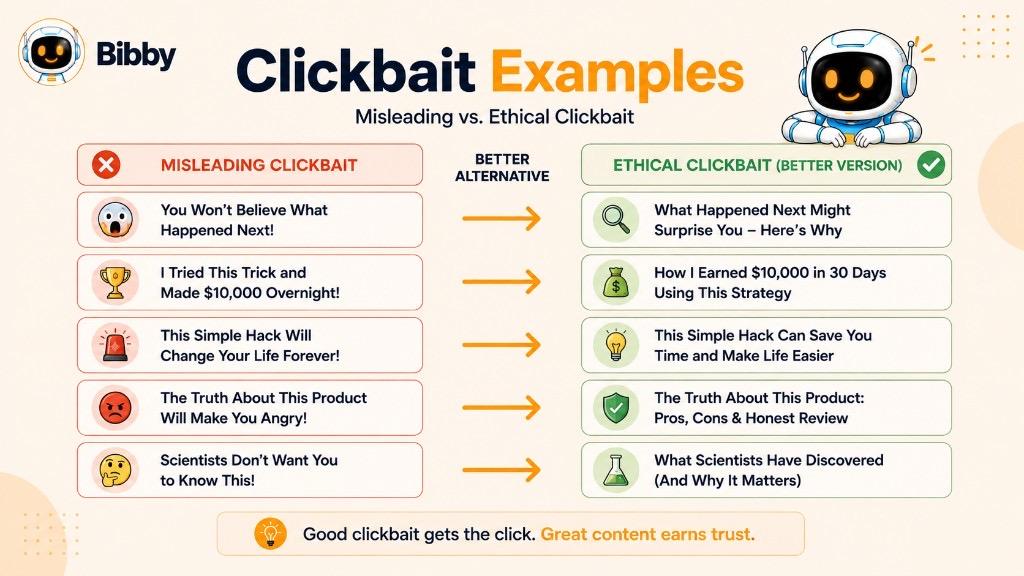
Business
| Poor Clickbait | Ethical Clickbait |
|---|---|
| This One Secret Will Make Your Business Millions Overnight | 7 Business Strategies That Helped Companies Increase Revenue |
| You'll Never Have Financial Problems Again | How Better Financial Planning Can Improve Business Growth |
| Every Business Owner Is Doing This Wrong | Common Business Mistakes and How to Avoid Them |
Why the ethical version works: It promises valuable insights without making unrealistic claims.
Marketing
| Poor Clickbait | Ethical Clickbait |
|---|---|
| This Marketing Trick Changes Everything | 10 Marketing Strategies That Improved Customer Engagement |
| Double Your Sales Instantly | Proven Ways to Improve Your Marketing Results Over Time |
| Marketers Don't Want You to Know This | Marketing Tactics Used by Successful Brands |
Why the ethical version works: It sets realistic expectations while still creating curiosity.
Technology
| Poor Clickbait | Ethical Clickbait |
|---|---|
| AI Will Replace Every Job Next Year | How AI Is Transforming the Way Businesses Work |
| This App Changes Everything Forever | Why Businesses Are Adopting AI Productivity Tools |
| Your Computer Is Probably Being Hacked Right Now | Common Cybersecurity Risks and How to Stay Protected |
Why the ethical version works: It focuses on education instead of fear or exaggeration.
Fitness
| Poor Clickbait | Ethical Clickbait |
|---|---|
| Lose 20 Pounds in One Week | Healthy Weight Loss Tips Backed by Experts |
| This One Exercise Burns All Body Fat | Effective Exercises That Support Fat Loss |
| Get Six-Pack Abs Overnight | Habits That Can Help You Build a Stronger Core |
Why the ethical version works: It encourages realistic goals and builds trust.
Travel
| Poor Clickbait | Ethical Clickbait |
|---|---|
| You'll Never Believe This Hidden Paradise | Beautiful Hidden Destinations Worth Exploring |
| Don't Visit Europe Until You Read This | Essential Europe Travel Tips for First-Time Visitors |
| This Destination Will Blow Your Mind | Why Travelers Love Visiting This Destination |
Why the ethical version works: It creates interest while accurately describing the content.
Finance
| Poor Clickbait | Ethical Clickbait |
|---|---|
| Become a Millionaire in 30 Days | Practical Investment Strategies for Long-Term Growth |
| This Stock Will Make You Rich | Factors to Consider Before Investing in Growth Stocks |
| Banks Don't Want You to Know This | Understanding Common Banking Fees and How to Reduce Them |
Why the ethical version works: It provides realistic expectations and useful advice.
Food
| Poor Clickbait | Ethical Clickbait |
|---|---|
| The Best Recipe You'll Ever Eat | A Creamy Pasta Recipe That's Easy to Make at Home |
| You'll Never Cook Chicken the Same Way Again | A Simple Chicken Recipe with a Flavorful Twist |
| This Dessert Is Completely Life-Changing | A Rich Chocolate Dessert That's Perfect for Special Occasions |
Why the ethical version works: It focuses on the value of the recipe instead of making exaggerated claims.
Fashion
| Poor Clickbait | Ethical Clickbait |
|---|---|
| This Outfit Makes Everyone Look Perfect | Fashion Tips That Suit Different Body Types |
| Never Wear These Clothes Again | Style Mistakes to Avoid for a More Polished Look |
| Everyone Is Buying This Right Now | Fashion Trends Gaining Popularity This Season |
Why the ethical version works: It informs readers without creating unnecessary pressure.
Real Estate
| Poor Clickbait | Ethical Clickbait |
|---|---|
| Buy a House Before It's Too Late | What First-Time Homebuyers Should Know Before Purchasing |
| This Property Will Make You Rich | Investment Factors to Consider Before Buying Property |
| Every Homeowner Is Making This Mistake | Common Home Selling Mistakes and How to Avoid Them |
Why the ethical version works: It offers practical advice rather than unrealistic promises.
Social Media
| Poor Clickbait | Ethical Clickbait |
|---|---|
| This One Instagram Hack Guarantees Viral Posts | Instagram Strategies That Can Improve Your Reach |
| Your Social Media Strategy Is Completely Wrong | Common Social Media Mistakes and How to Fix Them |
| Stop Posting Right Now | Why Posting at the Right Time Matters More Than Posting More |
Why the ethical version works: It encourages clicks by promising useful information rather than making false guarantees. For timing strategy, see best time to post.
Modern AI tools like Bibby help marketers create engaging social media headlines without relying on misleading language. By generating optimized captions, headline variations, and complete campaigns through its AI chat interface, Bibby enables users to create content that captures attention while remaining authentic. Combined with AI-powered scheduling across Facebook, Instagram, LinkedIn, YouTube, and TikTok, it helps businesses maximize engagement while building long-term audience trust.
What These Examples Teach Us
The difference between effective clickbait and misleading clickbait is honesty. A compelling headline should spark curiosity, but the content must always deliver the value readers expect.
When your headlines accurately reflect your content, you can:
- Increase click-through rates (CTR)
- Improve social media engagement
- Build audience trust
- Reduce bounce rates
- Strengthen your brand reputation
- Encourage repeat visitors
In the long run, ethical clickbait is a sustainable strategy that attracts attention without sacrificing credibility. It helps businesses, creators, and marketers grow their audience while delivering a better experience for every reader.
Characteristics of a Clickbait Headline
Not every headline that attracts clicks is considered clickbait. The most effective clickbait headlines share certain characteristics that naturally capture attention and encourage users to learn more. They combine psychology, persuasive writing, and relevance to stand out in crowded search results and social media feeds.
The key is to create interest without misleading your audience. A headline should spark curiosity while accurately reflecting the content users will find after clicking.
Here are the most common characteristics of a successful clickbait headline.
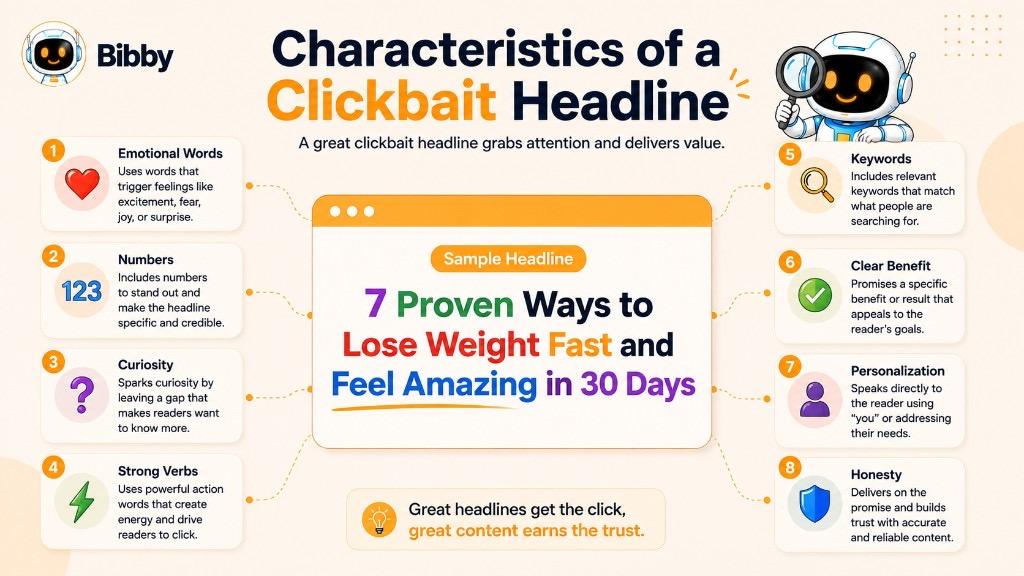
Emotional Words
People often make decisions based on emotions before logic. Headlines that evoke excitement, surprise, fear, happiness, or inspiration tend to receive more clicks because they create an immediate emotional connection.
Examples:
- Incredible Marketing Strategies Every Startup Should Know
- The Biggest SEO Mistake You Can Avoid
- Amazing Social Media Tips for Beginners
Best practice: Use emotional language naturally without exaggerating the benefits or outcomes.
Curiosity
Curiosity is one of the strongest motivators behind clickbait. A headline that leaves readers wanting more encourages them to click and discover the answer.
Examples:
- The Social Media Feature Most Businesses Ignore
- One Small Change Improved Our Engagement Dramatically
- There's a Better Way to Manage Multiple Social Accounts
Best practice: Raise a question or hint at valuable information, then answer it clearly in your content.
Numbers
Numbers make headlines feel structured, specific, and easy to read. They also set clear expectations for readers.
Examples:
- 10 Ways to Improve Your Content Strategy
- 7 AI Tools Every Marketer Should Try
- 15 Headline Formulas That Increase Clicks
Best practice: Choose numbers that accurately represent your content and avoid using random figures solely to attract attention.
Questions
Question headlines invite readers to think about their own experiences or challenges, increasing the likelihood that they'll click for answers.
Examples:
- Are You Posting at the Wrong Time?
- Why Isn't Your Website Getting More Traffic?
- Is AI Changing Social Media Marketing?
Best practice: Ask questions that address real problems your audience wants to solve.
Mystery
Creating a sense of mystery encourages readers to seek additional information. The headline hints at something valuable without revealing every detail.
Examples:
- The Secret Behind High-Performing Content
- What Successful Brands Do Differently
- The Marketing Lesson We Learned the Hard Way
Best practice: Reveal the mystery within the content instead of dragging it out unnecessarily.
Strong Adjectives
Powerful descriptive words make headlines more engaging and memorable—simple, proven, essential, powerful, effective, practical, ultimate, smart, complete, beginner-friendly.
Examples:
- The Ultimate Guide to Social Media Automation
- Proven Content Marketing Strategies That Work
- A Complete SEO Checklist for Beginners
Best practice: Use adjectives that genuinely describe your content instead of making exaggerated claims.
Clear Promise of Value
Successful clickbait tells readers exactly what they will gain after clicking. The value could be learning a new skill, solving a problem, saving time, or discovering useful information.
Examples:
- Learn How to Create Better Social Media Posts
- Discover AI Tools That Save Hours Every Week
- Improve Your LinkedIn Strategy with These Practical Tips
Best practice: Make a promise you can confidently fulfill.
Time-Sensitive Language
Words that suggest urgency or relevance encourage readers to act sooner rather than later.
Examples:
- Marketing Trends You Should Know This Year
- Read This Before Launching Your Next Campaign
- What Every Business Should Know Today
Best practice: Use urgency only when the information is genuinely time-sensitive.
Personalization
Readers are more likely to engage with headlines that speak directly to their interests, profession, or challenges.
Examples:
- Every Small Business Owner Should Read This
- A Guide for Content Creators Looking to Grow Faster
- What Digital Marketers Need to Know About AI
Best practice: Tailor headlines to a specific audience instead of trying to appeal to everyone.
Action Words
Strong action verbs encourage readers to take the next step—discover, learn, improve, build, create, boost, increase, master, avoid, transform.
Examples:
- Discover Better Ways to Schedule Social Media Posts
- Learn How to Write Headlines That Get More Clicks
- Improve Your Content Marketing Strategy Today
Best practice: Combine action words with a clear benefit to make headlines more compelling.
How to Combine These Characteristics Effectively
The best clickbait headlines rarely rely on a single technique. Instead, they combine several characteristics to create a headline that is engaging, informative, and trustworthy.
For example:
Basic headline: Social Media Tips
Improved headline: 10 Proven Social Media Tips Every Small Business Should Try
More click-worthy but ethical: 10 Proven Social Media Tips That Helped Small Businesses Increase Engagement
The final version uses numbers, a strong adjective ("Proven"), personalization ("Small Businesses"), clear value ("Increase Engagement"), and curiosity—while remaining honest.
Why These Characteristics Matter
An attention-grabbing headline is often the first interaction people have with your content. If it captures interest and accurately reflects the information inside, readers are more likely to stay engaged, share your content, and trust your brand.
AI-powered tools like Bibby help creators apply these principles consistently by generating engaging headlines, captions, and social media content tailored to different platforms. Whether you're publishing a blog, carousel, video, or social media post, Bibby helps create click-worthy content that attracts attention while maintaining authenticity and delivering real value to your audience.
Is Clickbait Good or Bad?
The answer depends on how it is used. Clickbait itself is neither good nor bad. It is simply a technique for attracting attention. When a headline creates curiosity and the content fulfills its promise, clickbait can be an effective marketing strategy. However, when a headline exaggerates, misleads, or deceives readers, it damages trust and creates a poor user experience.
In today's digital landscape, users are exposed to thousands of headlines every day. Businesses, marketers, and content creators need compelling titles to stand out. The challenge is finding the right balance between capturing attention and maintaining credibility.
Ethical clickbait focuses on creating curiosity while providing genuine value. Misleading clickbait focuses only on generating clicks, regardless of whether the content satisfies the reader.
Advantages of Clickbait
When used responsibly, clickbait offers several benefits for businesses, publishers, and content creators.
#### Higher Click-Through Rate (CTR)
An engaging headline naturally attracts more clicks than a generic one. Higher click-through rates can lead to increased website traffic, better visibility, and improved content performance.
Generic headline: Social Media Marketing Tips
Better headline: 10 Social Media Marketing Tips That Can Increase Engagement
#### More Website Traffic
Compelling headlines encourage more users to visit your website, blog, or landing page—especially when the content provides real value.
#### Better Social Media Engagement
Attention-grabbing headlines often receive more likes, shares, comments, saves, and reposts. Social media algorithms tend to favor content that generates meaningful engagement.
#### Increased Brand Awareness
Every click introduces new people to your brand. Consistently publishing valuable content with engaging headlines helps build recognition over time.
#### Higher Content Discoverability
Strong headlines improve the chances that users will notice your content among competing articles, videos, and social media posts.
#### More Opportunities for Conversions
A click is often the first step in the customer journey. If your content educates readers and solves their problems, those visitors may subscribe, download a resource, contact your business, or purchase a product.
Disadvantages of Clickbait
While clickbait can increase traffic, misleading headlines often create long-term problems.
#### Loss of Trust
If readers feel tricked after clicking, they are less likely to trust your brand in the future. Trust is difficult to earn but easy to lose.
#### High Bounce Rate
When users don't find the information promised by the headline, they often leave the page within seconds.
#### Lower Audience Loyalty
One misleading article may generate temporary traffic, but disappointed readers rarely become repeat visitors.
#### Poor Brand Reputation
Brands that consistently publish sensational or deceptive headlines can quickly develop a negative reputation.
#### Reduced Conversion Rates
Visitors who feel misled are less likely to subscribe, purchase, share, or recommend your brand.
#### Possible SEO Impact
Search engines aim to provide users with helpful, relevant content. If users consistently return to search results because your content doesn't satisfy their needs, it can negatively affect your overall content performance over time.
Ethical Clickbait vs. Misleading Clickbait
The biggest difference lies in user satisfaction.
Ethical clickbait creates genuine curiosity, matches the content accurately, provides useful information, builds long-term trust, and encourages repeat visits.
Example headline: *"7 AI Tools That Can Save Social Media Managers Hours Every Week"* — with a review of seven AI tools and practical recommendations.
Misleading clickbait makes unrealistic promises, exaggerates outcomes, uses false urgency, hides important information, and prioritizes clicks over value.
Example headline: *"This One AI Tool Will Instantly Make You Famous"* — with generic AI advice that never supports the claim.
Which Approach Performs Better in the Long Run?
Although misleading clickbait may produce a temporary spike in traffic, it rarely delivers sustainable growth. Ethical clickbait produces better long-term results because it builds audience trust, encourages repeat visitors, increases engagement, improves brand credibility, supports sustainable SEO, and strengthens customer relationships.
How Bibby Helps You Create Ethical Clickbait
Creating engaging headlines doesn't require exaggeration or misleading claims. Bibby helps users generate attention-grabbing headlines, captions, and social media posts using AI. Through its chat-based interface, users can create campaigns, build brand kits, regenerate captions, and schedule content across Facebook, Instagram, LinkedIn, YouTube, and TikTok. By focusing on relevance, clarity, and brand consistency, Bibby helps businesses attract more clicks while maintaining audience trust.
Key Takeaway: Good vs Bad
Clickbait is good when it sparks curiosity and delivers meaningful value. It is bad when it relies on deception, exaggeration, or false promises. The most successful marketers create headlines that encourage people to click and content that makes them glad they did.
Clickbait vs. Misleading Content
The terms clickbait and misleading content are often used interchangeably, but they are not the same. While both aim to attract attention, the difference lies in whether the content fulfills the promise made by the headline.
Ethical clickbait uses curiosity to encourage users to click while delivering valuable, relevant, and accurate information. Misleading content exaggerates, distorts, or hides the truth simply to generate clicks, views, or engagement.
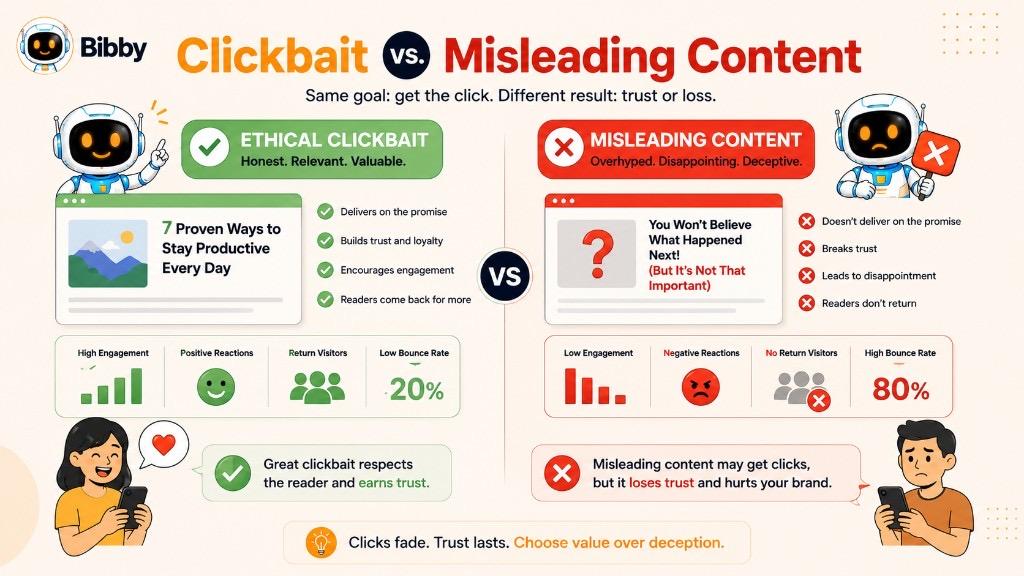
| Feature | Ethical Clickbait | Misleading Content |
|---|---|---|
| Purpose | Capture attention while providing real value | Generate clicks regardless of user satisfaction |
| Headline Accuracy | Accurately represents the content | Exaggerates or misrepresents the content |
| Content Quality | Matches the promise made in the headline | Often fails to deliver what was promised |
| User Experience | Leaves readers informed and satisfied | Leaves readers confused or disappointed |
| Trust | Builds long-term credibility | Damages brand reputation |
| SEO Impact | Supports positive engagement signals | May increase bounce rates and reduce user satisfaction |
| Social Media Performance | Encourages meaningful engagement and shares | May generate initial clicks but fewer repeat interactions |
| Long-Term Results | Sustainable audience growth | Short-term traffic with limited long-term value |
| Brand Reputation | Strengthens authority and reliability | Creates skepticism and reduces audience loyalty |
Ethical Clickbait: Curiosity With Value
Headline: *10 Social Media Scheduling Tips That Save Small Businesses Hours Every Week*
Content: The article explains ten practical scheduling techniques, recommends useful tools, and provides actionable advice.
Misleading Content: Clicks Without Value
Headline: *This One Social Media Trick Guarantees 1 Million Followers*
Content: Generic social media advice with no evidence or strategy capable of producing such results.
Real-World Examples
Misleading: *"Scientists Finally Reveal the Secret to Living Forever."* — discusses healthy lifestyle habits without any scientific breakthrough.
Ethical: *"Research Highlights Lifestyle Habits Linked to Longer Life."*
Misleading: *"This AI Tool Will Replace Every Marketing Team."* — simply reviews a productivity tool.
Ethical: *"How AI Tools Are Helping Marketing Teams Work More Efficiently."*
Misleading: *"Your Website Is Losing Thousands of Dollars Every Day."* — provides no evidence or context.
Ethical: *"Common Website Mistakes That May Reduce Sales and Conversions."*
Why Search Engines Prefer Honest Content
Modern search engines are designed to reward content that satisfies user intent rather than simply attracting clicks. When users click a result and find helpful, relevant information, they are more likely to stay longer, explore additional content, share the article, and return. By contrast, if users immediately leave because the content doesn't match the headline, it often signals dissatisfaction.
How Bibby Helps You Create Engaging Yet Honest Headlines
Bibby uses AI to generate engaging headlines, captions, and social media posts that align with your brand voice and content goals. Through its chat-based interface, users can create campaigns, develop brand kits, regenerate captions, and publish posts across Facebook, Instagram, LinkedIn, YouTube, and TikTok from one dashboard—sparking curiosity while accurately representing the content.
Clickbait vs. Headlines
Every piece of online content has a headline, but not every headline is clickbait. A standard headline is designed to inform readers about the topic, while a clickbait headline is crafted to spark curiosity and encourage users to click. Both have their place in digital marketing, journalism, SEO, and social media, but they serve different purposes.
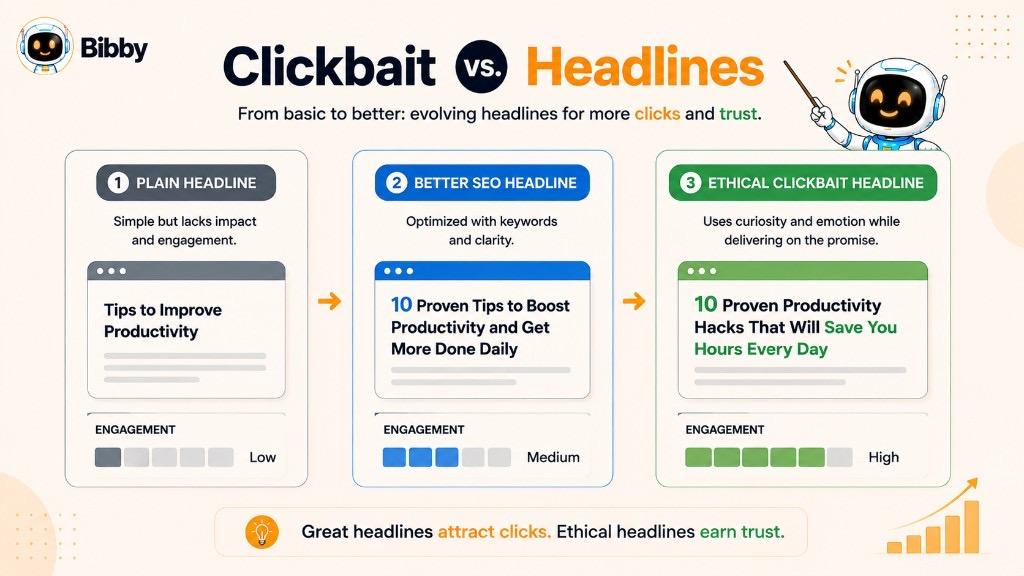
| Feature | Standard Headline | Clickbait Headline |
|---|---|---|
| Primary Goal | Inform the reader | Attract attention and encourage clicks |
| Writing Style | Direct and descriptive | Curiosity-driven and engaging |
| Emotional Appeal | Usually neutral | Often uses emotion or intrigue |
| Curiosity Level | Low to moderate | High |
| Click-Through Rate (CTR) | Moderate | Often higher when used ethically |
| User Expectations | Clearly states the topic | Hints at value while creating curiosity |
| Risk of Misleading Readers | Very low | Higher if used irresponsibly |
| Best Use Cases | News, documentation, reports | Blogs, videos, social media, marketing campaigns |
Standard Headlines
A standard headline clearly tells readers what the content is about. Examples include "Social Media Marketing Tips for Small Businesses," "How AI Improves Content Creation," and "Beginner's Guide to Search Engine Optimization."
Benefits: Clear and easy to understand, builds credibility, sets accurate expectations, works well for educational and professional content.
Clickbait Headlines
Clickbait headlines are designed to stand out in search results and social media feeds. Examples include "10 Social Media Marketing Mistakes That Could Be Costing You Customers," "The AI Strategy Successful Brands Don't Want to Ignore," and "Why Your Instagram Posts Aren't Getting Enough Engagement."
Benefits: Higher click-through rates, better social media engagement, increased website traffic, more content visibility.
When Should You Use Each?
Use standard headlines for news, technical documentation, educational resources, research reports, official announcements, and knowledge base articles.
Use clickbait headlines to increase blog traffic, improve social media engagement, promote YouTube videos, boost email open rates, drive clicks to landing pages, and attract readers in competitive search results—while remaining accurate.
Can a Headline Be Both Informative and Click-Worthy?
Absolutely. The most successful content combines clarity and curiosity.
Standard: How to Schedule Social Media Posts
Improved: How to Schedule Social Media Posts More Efficiently
Click-worthy yet honest: How to Schedule Social Media Posts in Half the Time with AI Automation
Tips for Writing Better Headlines
- Focus on the reader's problem or goal.
- Highlight a clear benefit.
- Use numbers where appropriate.
- Include relevant keywords for SEO.
- Keep the headline concise and easy to understand.
- Avoid exaggerated claims you can't support.
- Make sure the content fulfills the headline's promise.
Bibby uses AI to generate compelling headlines, captions, and complete social media posts that balance curiosity with authenticity—helping you grow an audience and build long-term trust.
Clickbait vs. Sensationalism
The terms clickbait and sensationalism are often confused because both are designed to attract attention. However, they are different techniques. Clickbait primarily encourages users to click, while sensationalism focuses on making information appear more dramatic, emotional, or shocking than it actually is.
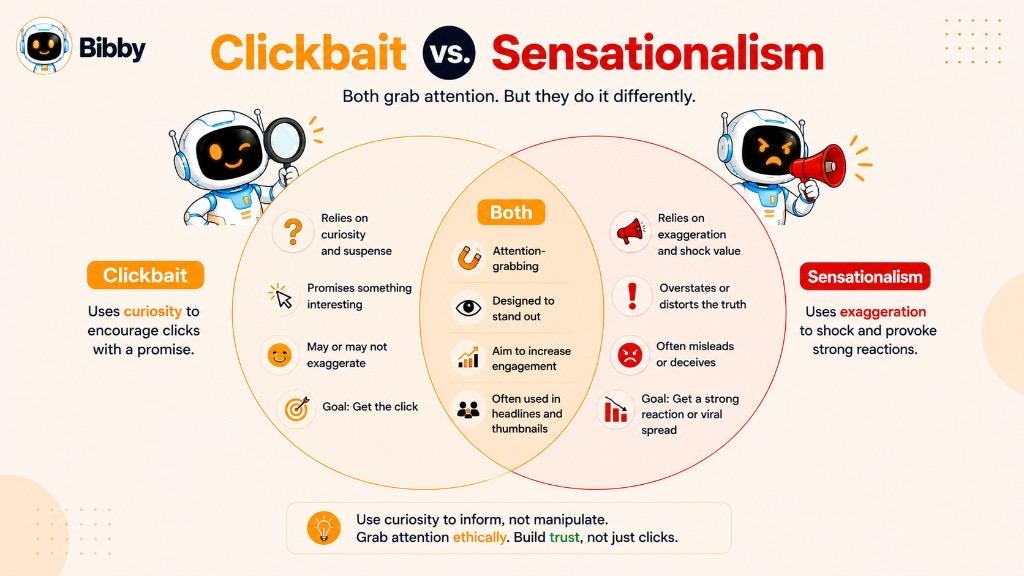
| Feature | Clickbait | Sensationalism |
|---|---|---|
| Primary Goal | Encourage users to click | Create strong emotional reactions |
| Focus | Curiosity and engagement | Drama, shock, or controversy |
| Writing Style | Intriguing and curiosity-driven | Emotional, exaggerated, and dramatic |
| Accuracy | Can be accurate if used ethically | Often exaggerates facts or emotions |
| Common Platforms | Blogs, YouTube, social media, email | News media, tabloids, viral content, social media |
| Long-Term Trust | Builds trust if content delivers | Can damage credibility if overused |
| Reader Expectation | Wants answers or solutions | Expects shocking or emotional stories |
What Is Sensationalism?
Sensationalism aims to provoke strong emotional responses such as fear, anger, excitement, or disbelief. It often uses exaggerated language to make ordinary events seem extraordinary.
Ethical clickbait example: *7 AI Tools That Can Help You Save Time on Social Media*
Sensational example: *AI Is Destroying Every Marketing Job Right Now!*
Can Clickbait Become Sensationalism?
Yes. Clickbait crosses into sensationalism when it starts making exaggerated, unrealistic, or emotionally manipulative claims simply to increase clicks.
Curiosity-driven: *Why Your LinkedIn Posts May Not Be Getting Enough Engagement*
Sensational: *LinkedIn Is Destroying Your Career Without You Knowing It*
How to Avoid Sensationalism
- Use curiosity instead of exaggeration.
- Support claims with facts or data.
- Avoid absolute words like "always," "never," or "everyone" unless accurate.
- Don't create false urgency.
- Focus on solving readers' problems.
- Ensure the content matches the headline.
- Prioritize long-term credibility over short-term traffic.
Bibby helps create headlines that combine curiosity, clarity, and authenticity—without dramatic or misleading language.
Why Social Media Platforms Reward Clickable Content
Every day, billions of posts compete for attention across social media platforms. Platforms use algorithms to determine which posts deserve greater visibility, and one of the strongest signals is user engagement.
Clickable content often performs better than content with weak or generic headlines. If a post encourages people to stop scrolling, click, watch, comment, share, or save it, the platform interprets those actions as signs that the content is valuable. However, platforms don't reward clickbait simply because it generates clicks—they prioritize content that keeps users engaged and delivers a positive experience.
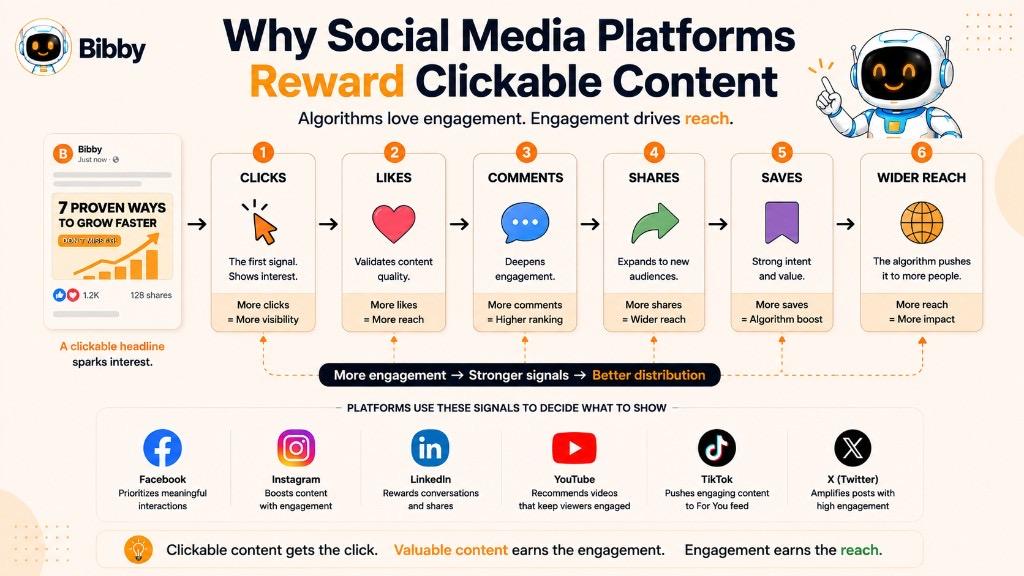
Facebook's algorithm aims to show users content that generates meaningful interactions—clicks, comments, shares, reactions, reading time, and video watch time. Facebook has also taken steps to reduce the visibility of engagement bait and misleading clickbait headlines.
Instagram relies on likes, comments, shares, saves, profile visits, Reels watch time, and carousel swipe completion. Captions that spark curiosity or encourage conversation often perform better.
LinkedIn prioritizes thoughtful comments, reactions, shares, longer reading time, and profile engagement. Educational headlines often outperform sensational ones.
YouTube
On YouTube, clickable titles and thumbnails influence CTR, but YouTube also measures watch time, audience retention, satisfaction, likes, comments, shares, and subscribers gained.
TikTok
TikTok analyzes video completion rate, replays, shares, comments, likes, saves, and watch time. Curiosity-driven captions and strong opening hooks encourage viewers to watch until the end.
X (Formerly Twitter)
X promotes replies, reposts, likes, link clicks, bookmark saves, and time spent reading posts.
The Engagement Signals That Matter Most
- Click-through rate (CTR) — how often people click after seeing your content
- Watch time — especially for video platforms
- Shares — voluntary distribution beyond your followers
- Saves — long-term value signals
- Comments — meaningful discussion
- Likes and reactions — interest indicators when combined with other signals
Why Misleading Clickbait No Longer Works Well
Years ago, sensational headlines often generated significant traffic because algorithms primarily measured clicks. Today, if users leave immediately, stop watching early, hide the post, or report the content, distribution may decline.
How Bibby Helps Create Social Media Content That Performs
Bibby uses AI to generate compelling captions, headlines, and social media posts tailored to your audience. Through its chat-based interface, you can create campaigns, develop brand kits, regenerate captions, and publish images, videos, carousels, and stories across Facebook, Instagram, LinkedIn, YouTube, and TikTok—scheduled at AI-optimized times without relying on misleading clickbait.
Does Clickbait Help SEO?
Yes, clickbait can help SEO, but only when it is used ethically. A compelling headline can increase your click-through rate (CTR), attract more visitors from search engines, and encourage greater engagement. However, if the headline is misleading or fails to meet user expectations, it can hurt your content's overall performance.
Modern SEO is no longer just about keywords and backlinks. Search engines aim to deliver content that satisfies user intent. Attracting clicks is only the first step—keeping readers engaged and providing valuable information leads to long-term SEO success.
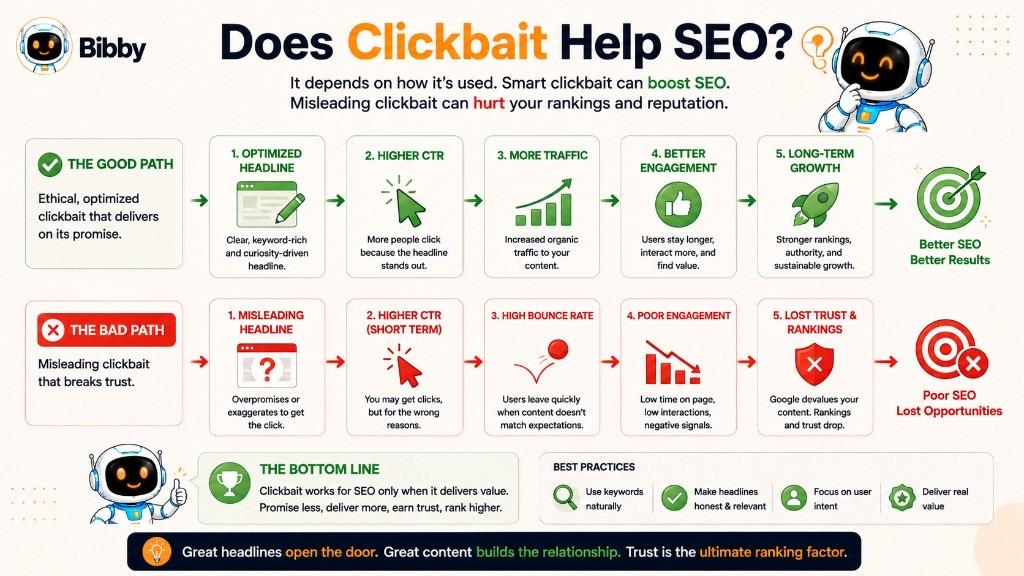
Benefits of Clickbait for SEO
- Higher click-through rate (CTR)
- Increased organic traffic
- Better social sharing
- Improved brand recognition
Risks of Clickbait for SEO
- High bounce rate
- Lower user engagement
- Loss of audience trust
- Reduced long-term performance
What Search Engines Actually Reward
Search engines don't reward clickbait itself. They reward content that provides a positive user experience—clear, relevant titles, helpful information, strong structure, fast loading, mobile-friendly design, satisfied readers, high-quality backlinks, and positive engagement signals.
Best Practices for SEO-Friendly Clickbait
- Include your primary keyword naturally.
- Clearly communicate the value readers will receive.
- Use numbers where appropriate.
- Create curiosity without hiding essential information.
- Avoid exaggerated promises.
- Match the headline to the content.
- Answer the user's search intent early in the article.
- Deliver practical, well-organized information.
Poor example: You'll Never Believe This SEO Trick!
Better example: 7 SEO Strategies That Can Improve Organic Traffic
Bibby helps users create content that aligns with search intent, maintains a consistent brand voice, and encourages meaningful engagement—supporting long-term SEO and social media growth.
How to Write Click-Worthy Headlines Without Misleading Readers
Writing a headline that attracts clicks is an essential skill for marketers, bloggers, businesses, and content creators. However, the goal isn't simply to increase traffic. A successful headline should capture attention, set accurate expectations, and encourage readers to continue engaging with your content.
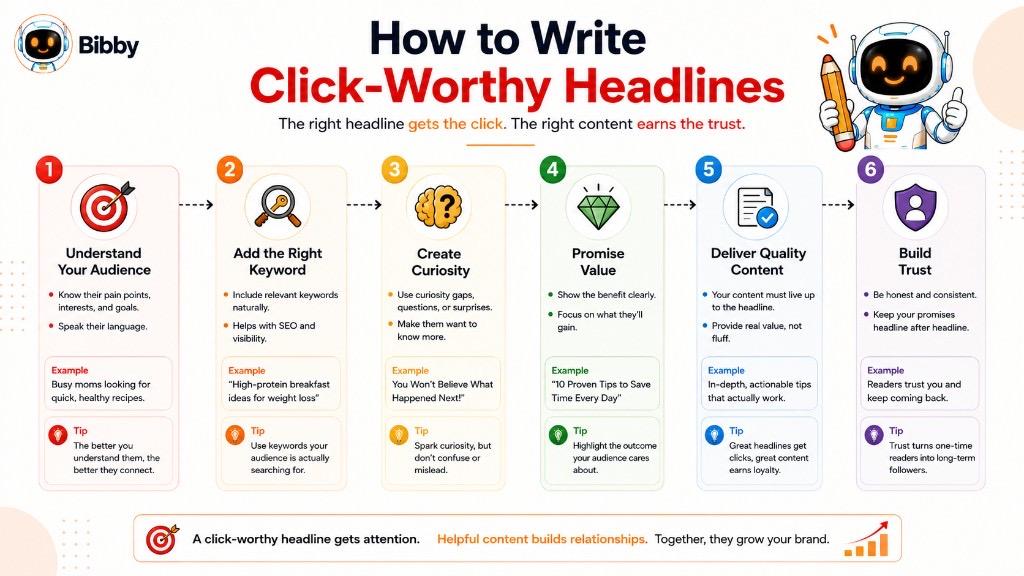
1. Promise Only What You Can Deliver
Poor: This One Marketing Trick Will Triple Your Revenue Overnight
Better: Marketing Strategies That Helped Businesses Increase Revenue
2. Create Curiosity, Not Confusion
✔ The Social Media Feature Most Businesses Overlook
3. Highlight a Clear Benefit
Readers click when they understand what they'll gain—saving time, learning a skill, solving a problem, or improving results.
4. Use Numbers to Set Expectations
- 10 Content Marketing Tips for Beginners
- 7 Ways to Improve Your Instagram Reach
- 15 AI Tools Every Digital Marketer Should Know
5. Solve a Specific Problem
- Why Your Social Media Posts Aren't Getting Enough Engagement
- Common SEO Mistakes That Reduce Organic Traffic
- How to Create Better Content in Less Time
6. Include Strong Action Verbs
Discover, learn, improve, build, increase, create, master, boost, optimize, grow.
7. Add Relevant Keywords Naturally
Keyword: Clickbait
Headline: What Is Clickbait? Definition, Examples, Benefits, and Best Practices
8. Use Emotional Language Carefully
Prefer "Powerful Marketing Strategies That Deliver Real Results" over "The Most Incredible Marketing Secret Ever."
9. Avoid False Urgency
Prefer "Marketing Trends Every Business Should Know This Year" over "Read This Before It's Too Late!"
10. Keep Headlines Clear and Concise
Aim for headlines that are easy to understand, specific, keyword-rich, benefit-focused, and simple to scan.
A Simple Formula for Writing Great Headlines
Number or Trigger + Topic + Benefit
Examples:
- 10 Clickbait Examples Every Marketer Should Study
- How AI Helps Create Better Social Media Posts
- Why Small Businesses Are Automating Social Media Marketing
- The Beginner's Guide to Writing Headlines That Get Clicks
Test Multiple Headlines
Version 1: Social Media Automation Tips
Version 2: 7 Social Media Automation Tips for Small Businesses
Version 3: 7 Social Media Automation Tips That Save Hours Every Week
You can also A/B test headline variations to see what resonates.
Bibby generates multiple headline and caption variations through its conversational interface, matching your brand voice and optimizing for Facebook, Instagram, LinkedIn, YouTube, and TikTok—then scheduling at AI-optimized times.
Best Practices for Ethical Clickbait
Ethical clickbait is about attracting attention without misleading your audience. Follow these best practices:
- Write honest headlines that accurately represent the content.
- Deliver on your promise once readers arrive.
- Match the thumbnail, image, or preview to the topic.
- Focus on solving problems.
- Use curiosity responsibly.
- Avoid exaggeration and unrealistic guarantees.
- Build long-term trust.
- Think beyond the click—make the full experience valuable.
- Optimize for search intent.
- Test different headline variations.
Ethical Clickbait Checklist
- The headline accurately reflects the content.
- The article delivers everything promised.
- The primary keyword appears naturally.
- The headline creates curiosity without misleading readers.
- Emotional language is balanced and realistic.
- Images and thumbnails match the topic.
- The content answers the user's search intent.
- The article provides practical value.
- The headline strengthens, rather than harms, your brand reputation.
Bibby helps marketers avoid misleading clickbait while increasing engagement through AI-powered headline generation, caption creation, brand kits, campaigns, and multi-platform scheduling.
Common Clickbait Mistakes
1. Making False Promises
Poor: This One Trick Will Make Your Website Rank #1 on Google
Better: SEO Strategies That Can Help Improve Your Search Rankings
2. Using Excessive Exaggeration
Avoid absolute words like always, never, guaranteed, instantly, everyone, impossible, and perfect unless they are accurate.
3. Creating Fake Urgency
Unless the information is genuinely time-sensitive, pressure headlines often feel manipulative.
4. Misleading Thumbnails or Images
Visual clickbait—unrelated images, deceptive edits, or fake results—can damage trust as much as misleading headlines.
5. Hiding Essential Information
Poor: You'll Never Guess What Happened Next
Better: How One Simple Change Increased Customer Engagement
6. Overusing ALL CAPS and Excessive Punctuation
Professional headlines usually outperform shouty ones.
7. Using Too Many Buzzwords
Rather than "revolutionary" or "mind-blowing," explain the actual value readers will receive.
8. Ignoring Search Intent
Someone searching "What is clickbait?" expects a definition, examples, advantages, disadvantages, and SEO impact—not only viral YouTube tips.
9. Prioritizing Clicks Over Quality
A great headline gets readers to the page. Great content keeps them there.
10. Forgetting About Brand Reputation
Every headline represents your brand. Consistently publishing misleading content reduces trust, authority, loyalty, and repeat visits.
| Mistake | Better Alternative |
|---|---|
| Making unrealistic promises | Set clear, achievable expectations |
| Using fake urgency | Highlight genuine relevance |
| Misleading images | Use visuals that match the content |
| Overusing emotional language | Balance emotion with accuracy |
| Writing vague headlines | Clearly communicate the value |
| Ignoring user intent | Answer the reader's question directly |
| Focusing only on clicks | Prioritize reader satisfaction |
| Publishing weak content | Deliver valuable, actionable information |
Bibby focuses on creating engaging content that aligns with your brand voice and audience expectations—improving CTR while maintaining credibility.
How AI Helps Create Better Clickbait Headlines
Artificial intelligence has transformed how marketers write headlines. Instead of relying on guesswork, AI can analyze audience behavior, SEO trends, and language patterns to generate headlines that are engaging, relevant, and optimized for higher click-through rates—shifting the focus from misleading clickbait to ethical clickbait.
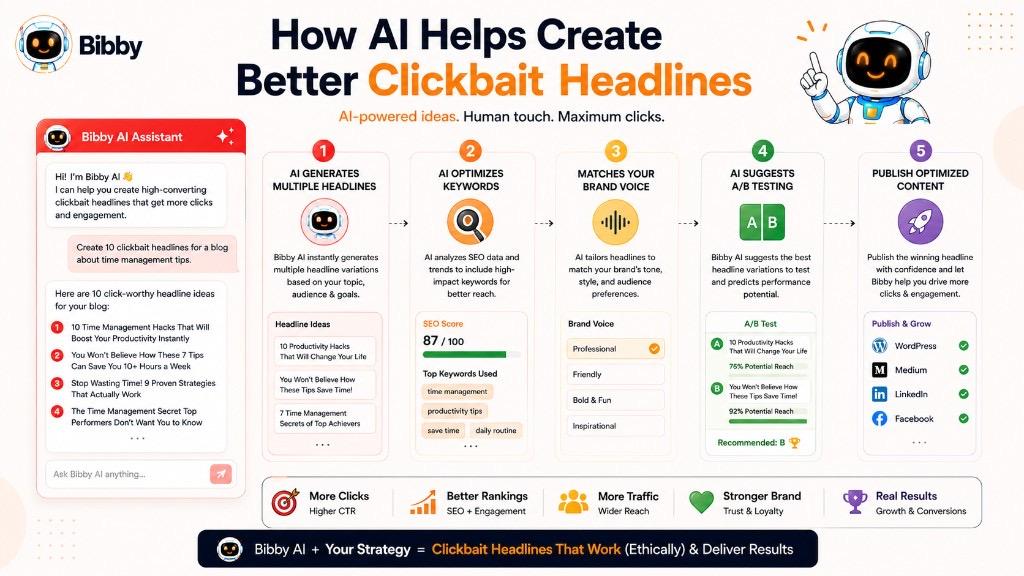
AI can help you:
- Generate multiple headline ideas in seconds
- Improve SEO performance with natural keyword placement
- Balance curiosity and clarity
- Match your brand voice
- Create platform-specific headlines
- Suggest better word choices
- Support A/B testing
- Save time and increase productivity
- Personalize headlines for different audiences
- Reduce the risk of misleading clickbait
How Bibby Uses AI to Create Better Headlines
Bibby combines AI-powered content creation with social media automation so you can generate multiple headline variations, create compelling captions for images, videos, carousels, and stories, build brand kits, launch campaigns, regenerate captions, optimize for different platforms, and schedule posts across Facebook, Instagram, LinkedIn, YouTube, and TikTok at AI-optimized times.
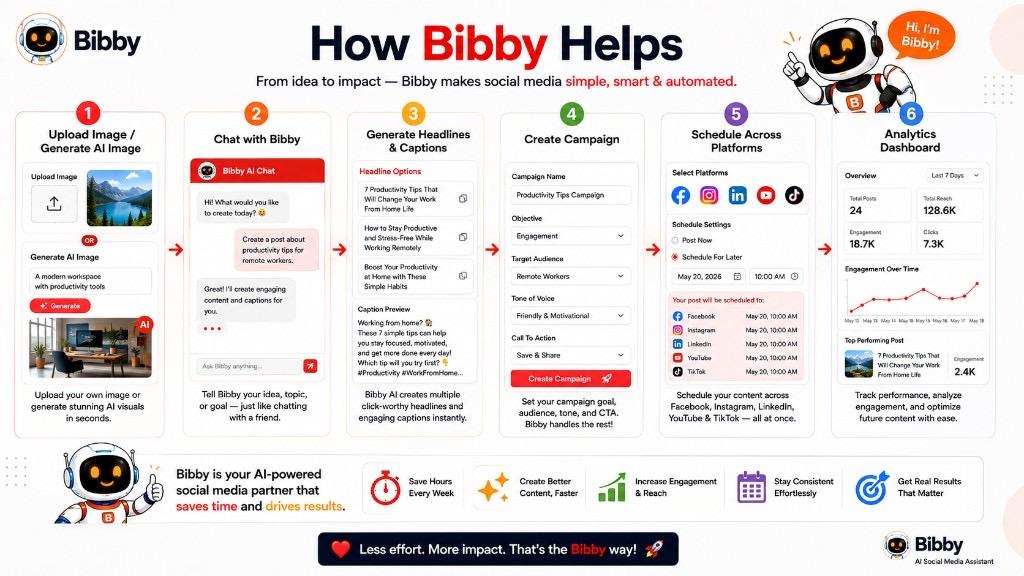
Because Bibby understands context, tone, and audience preferences, it creates headlines that balance curiosity with credibility—helping businesses increase click-through rates, improve engagement, and maintain long-term audience trust while saving hours of manual work.
Conclusion
Clickbait has earned a mixed reputation over the years, but the concept itself isn't the problem. At its core, clickbait is simply a technique for attracting attention in a crowded digital landscape. The real difference lies in how it's used.
Ethical clickbait creates curiosity while setting accurate expectations. Misleading clickbait relies on exaggeration or false promises that may generate short-term traffic but often damage trust and credibility.
Whether you're writing blog posts, producing YouTube videos, sending email campaigns, or publishing social media content, the most successful strategy is to combine compelling headlines with high-quality information. This approach improves click-through rates and engagement while strengthening your brand reputation and supporting long-term SEO performance.
As AI continues to transform digital marketing, tools like Bibby help businesses generate attention-grabbing headlines, write engaging captions, create campaigns, maintain brand consistency, and automate publishing across multiple social media platforms—attracting more clicks while delivering meaningful experiences that keep audiences coming back.
Ultimately, the best clickbait doesn't trick people into clicking. It earns their attention, fulfills its promise, and turns curiosity into lasting trust.
Key Takeaways
- Clickbait uses curiosity, emotion, or urgency to encourage clicks—ethical when the content delivers, harmful when it misleads.
- The curiosity gap, FOMO, emotion, numbers, and clear benefits make headlines click-worthy when paired with real value.
- Platforms and search engines increasingly reward engagement *and* satisfaction, not clicks alone.
- Write headlines that promise only what you can deliver, then fulfill that promise in the content.
- Bibby helps you generate ethical, platform-ready headlines and captions, then schedule them at AI-optimized times across multiple platforms.
- Continue with related terms like CTR, engagement, captions, brand awareness, and A/B testing—or start with a free Bibby trial.