
Social media discoverability is the key to getting your content in front of the right audience, even if they don't already follow you.
With algorithms increasingly prioritizing relevance, engagement, and searchability over follower count, creating great content alone is no longer enough. To consistently grow your reach across platforms like Instagram, TikTok, LinkedIn, Facebook, and YouTube, you need to understand how discoverability works and apply strategies that help your content surface in feeds, search results, recommendations, and explore pages.
In this blog, you will look into:
- How social media algorithms determine which content gets discovered.
- Proven strategies to increase visibility across every major social platform.
- How AI and automation can simplify consistent, high-performing publishing.
Whether you're a creator, marketer, business owner, or social media manager, this guide will give you a practical framework for improving your social media discoverability and reaching more people with every post.
What Is Social Media Discoverability?
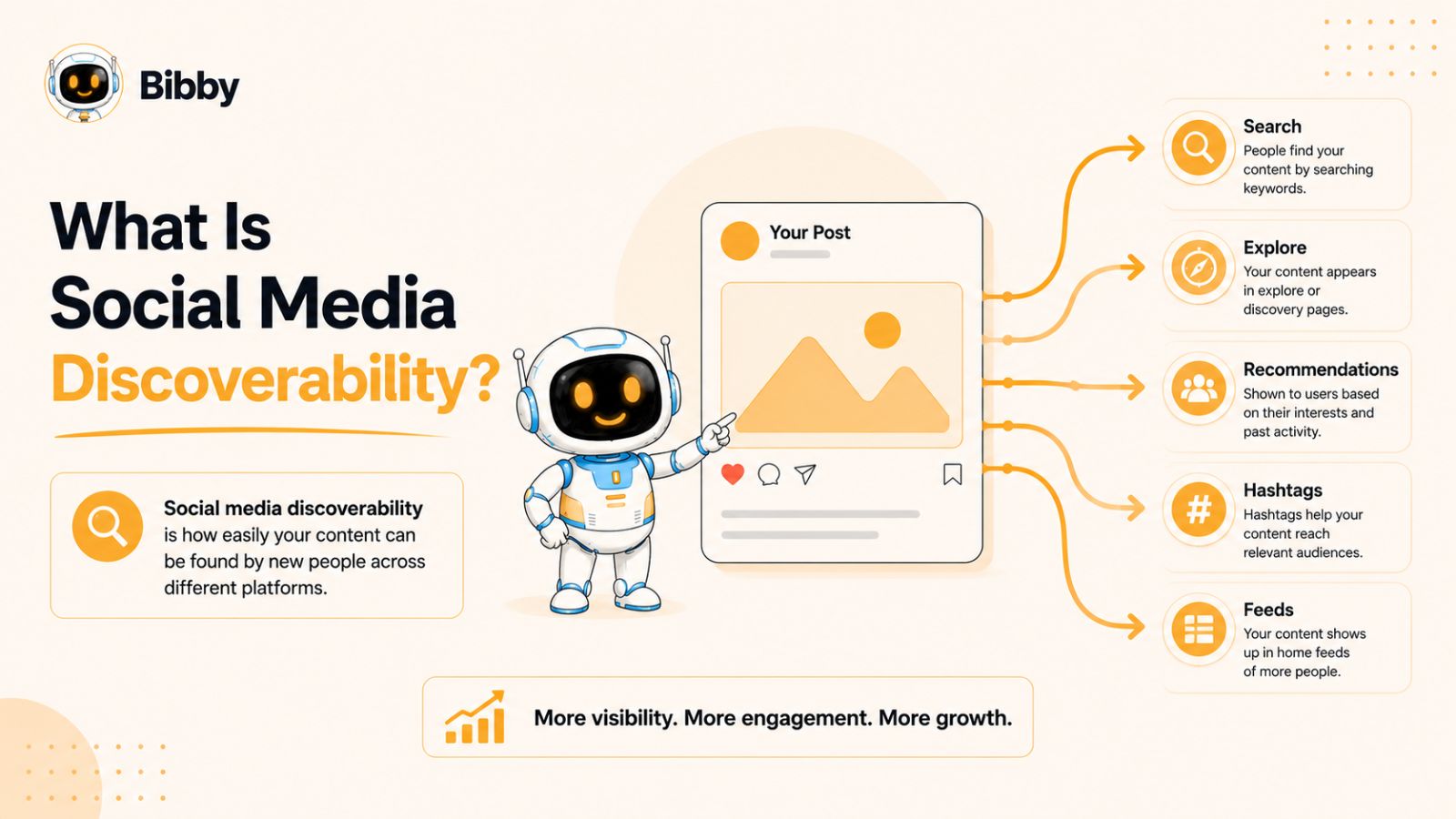
Social media discoverability is the ability of your content, profile, or brand to be found by people who don't already follow you. Instead of relying solely on your existing audience, discoverability helps your posts reach new users through search results, recommendations, explore pages, hashtags, trending feeds, and algorithm-powered content suggestions.
In simple terms, discoverability is what enables a video, image, carousel, or story to reach someone who has never interacted with your brand before. The stronger your discoverability, the greater your opportunity to grow your audience organically and build long-term engagement.
Social Media Discoverability vs. Reach vs. Engagement
These three terms are closely related but represent different metrics.
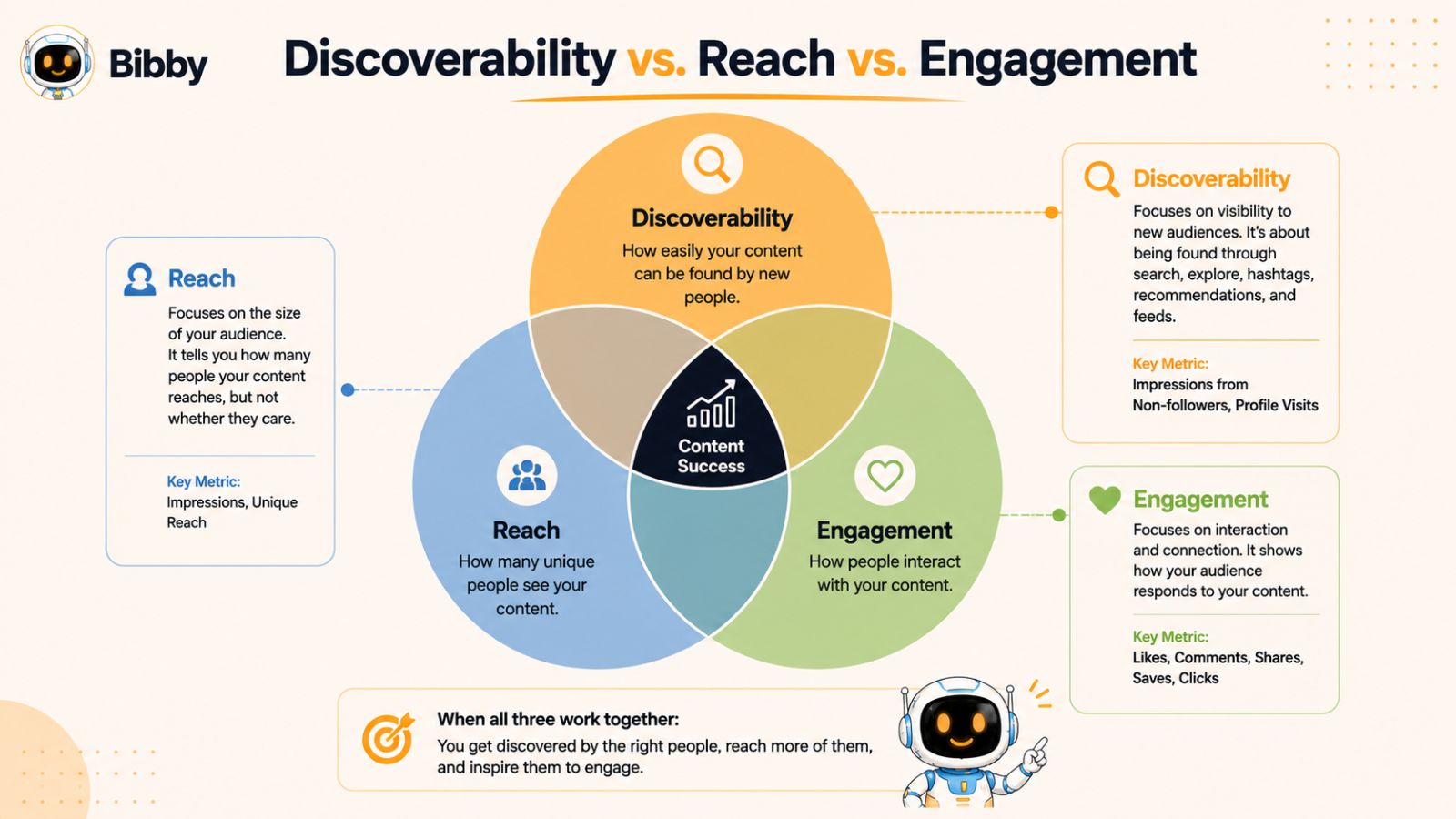
- Discoverability refers to how easily new audiences can find your content through algorithms, search, recommendations, and platform features.
- Reach is the number of unique people who actually see your content.
- Engagement measures how people interact with your content through likes, comments, shares, saves, clicks, watch time, and other meaningful actions.
Think of discoverability as the opportunity to be seen, reach as the number of people who actually see your content, and engagement as how those people respond once they find it. Strong engagement often signals to social media algorithms that your content is valuable, which can improve future discoverability.
Why Discoverability Matters More Than Followers
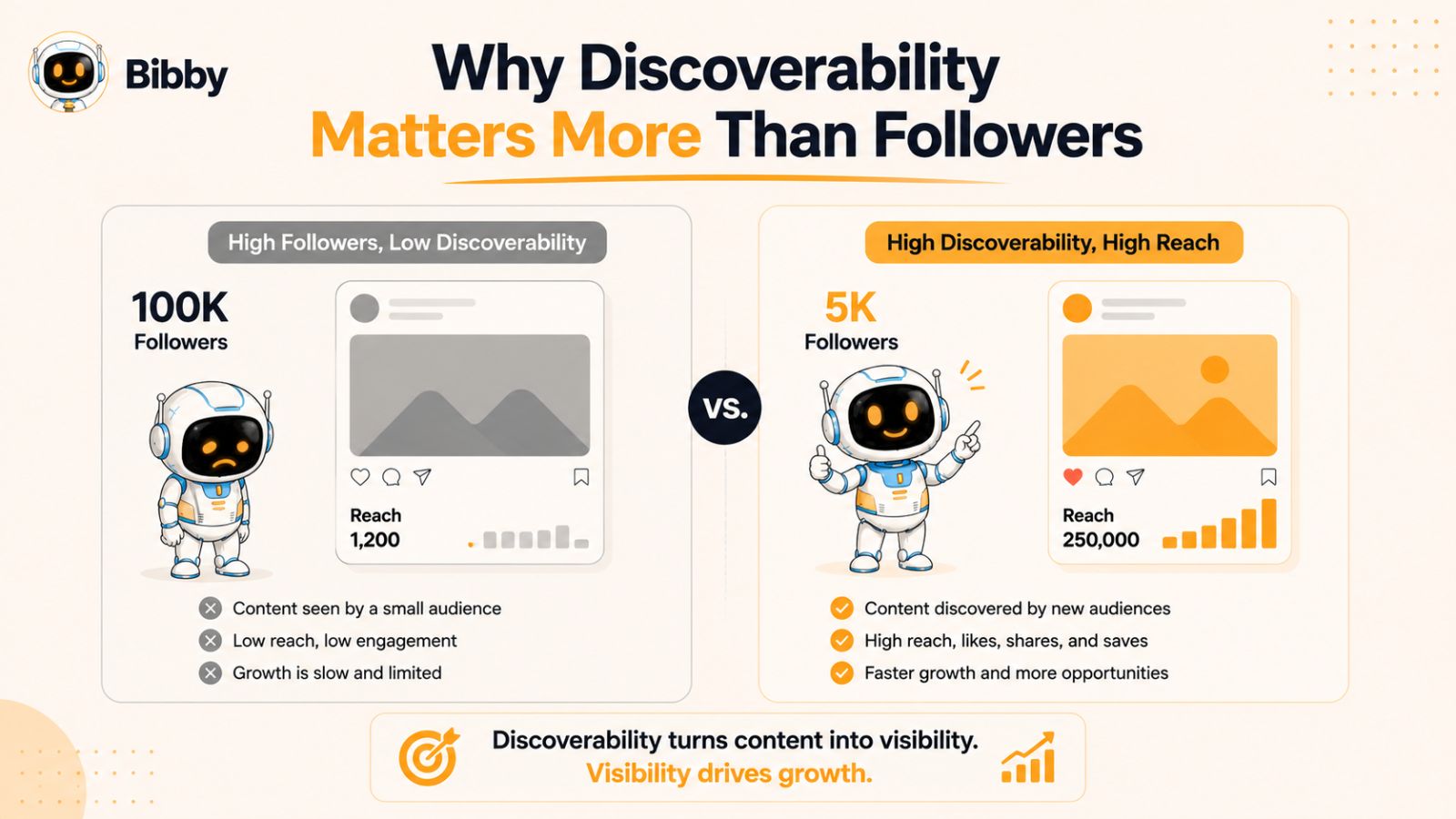
For years, marketers focused on growing follower counts. While followers still matter, modern social media platforms prioritize showing users content they are most likely to enjoy or engage with, regardless of whether they follow the creator.
This shift means that a small business, startup, or new creator can reach thousands—or even millions—of people with a single high-quality post. Platforms like Instagram, TikTok, YouTube, LinkedIn, and Facebook now use sophisticated recommendation systems that evaluate each piece of content individually.
Rather than asking, "How many followers do I have?" a better question is, “How discoverable is my content?”
How Social Media Discoverability Has Changed
Not long ago, social media feeds primarily displayed content from accounts users followed in chronological order. Today, most major platforms rely on AI-powered recommendation systems that personalize every user's experience.
Instead of simply showing the latest posts, these algorithms evaluate hundreds of signals, including user interests, watch time, shares, saves, comments, keywords, and content quality, to determine what deserves wider distribution.
At the same time, social media has evolved into a powerful search engine. Users now search for products, services, tutorials, reviews, local businesses, and industry advice directly on platforms like Instagram, TikTok, LinkedIn, YouTube, and Facebook. As a result, optimizing your content with relevant keywords, compelling captions, descriptive titles, and valuable information is just as important as creating visually appealing posts.
Understanding this shift is the foundation of modern social media marketing. The brands that consistently get discovered aren't necessarily the ones posting the most—they're the ones creating content that is easy for both users and algorithms to understand, recommend, and share.
How Social Media Algorithms Decide What People See
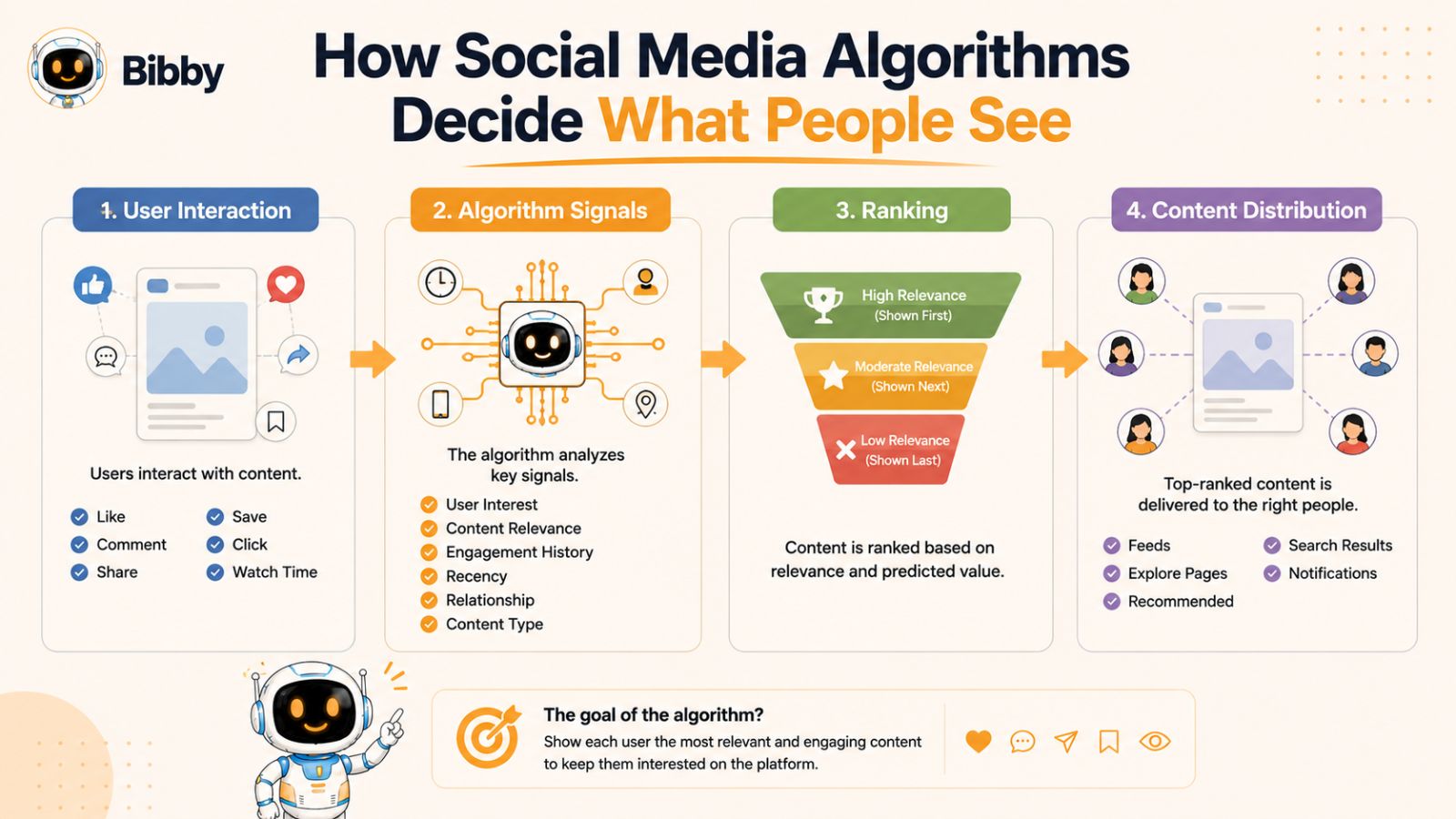
Every major social media platform uses algorithms to determine which content appears in users' feeds, search results, recommendations, and discovery sections. While the exact formulas are closely guarded and frequently updated, the goal is generally the same: show people content they're most likely to find valuable, engaging, or relevant.
Rather than relying on a single metric, social media algorithms evaluate hundreds of signals to predict how users will interact with each post. Understanding these signals can help you create content that's more likely to reach new audiences and improve your overall social media discoverability.
Interest Signals
Algorithms learn what users care about by analyzing their past behavior. The types of posts someone likes, comments on, shares, saves, or watches regularly help determine what they see next.
To improve discoverability, create content tailored to your target audience's interests instead of trying to appeal to everyone. The more relevant your content is to a specific audience, the more likely the algorithm is to recommend it to similar users.
Watch Time and Audience Retention
For video content, watch time is one of the strongest indicators of quality. If viewers stay until the end—or even rewatch parts of your video—it signals that your content is engaging.
To increase retention:
- Capture attention within the first few seconds.
- Keep your message focused and easy to follow.
- Use strong visuals, storytelling, and clear pacing.
- Deliver on the promise made in your opening hook.
The longer people stay engaged, the stronger the signal that your content deserves broader distribution.
Saves and Shares
While likes are encouraging, saves and shares often indicate deeper value. When someone saves your post for later or shares it with others, they're signaling that the content is useful, entertaining, or worth revisiting.
Educational guides, checklists, tutorials, industry insights, and practical tips often generate more saves, while relatable, inspiring, or entertaining content is more likely to be shared.
Comments and Meaningful Conversations
Comments show that your content sparked interest or discussion. More importantly, meaningful conversations can signal that your content resonates with your audience.
Encourage authentic engagement by asking thoughtful questions, inviting opinions, or prompting users to share their own experiences. Focus on creating genuine conversations rather than chasing comment counts.
Click-Through Rate (CTR)
When users see your content in search results, recommendations, or suggested feeds, the algorithm considers whether they actually click on it.
Compelling headlines, eye-catching thumbnails, engaging opening lines, and clear value propositions can all improve your click-through rate. A higher CTR suggests your content matches what users are looking for.
Profile Activity
Algorithms don't evaluate posts in isolation. They also consider how users interact with your overall profile.
Actions such as visiting your profile, following your account, browsing multiple posts, or clicking links indicate strong interest in your content. Optimizing your profile with a clear description, recognizable branding, and consistent messaging can encourage these actions.
Content Freshness
Timeliness remains an important ranking factor on many platforms. Fresh content is often given an initial opportunity to reach an audience, allowing the algorithm to measure how users respond.
Publishing consistently helps you take advantage of these opportunities while keeping your audience engaged. However, consistency should never come at the expense of quality.
User Relationships
Social media platforms prioritize content from accounts users regularly interact with. If someone frequently watches your videos, comments on your posts, replies to your stories, or shares your content, they're more likely to see your future posts.
Building these relationships takes time. Responding to comments, participating in conversations, and consistently delivering value encourages repeat interactions that strengthen your visibility over time.
Search Optimization
Modern social media platforms increasingly function as search engines. Users search for tutorials, product recommendations, business solutions, travel ideas, and educational content directly within apps like Instagram, TikTok, LinkedIn, YouTube, and Facebook.
Including relevant keywords in your profile, captions, titles, descriptions, on-screen text, and hashtags helps algorithms understand your content and match it with relevant searches. This makes social media SEO an essential part of any discoverability strategy.
Why Understanding Algorithms Matters
Although each platform uses its own ranking system, they all reward content that provides value and keeps users engaged. Instead of trying to "beat the algorithm," focus on creating content that aligns with what both your audience and the platform want: relevant, helpful, engaging, and easy-to-understand content.
The most successful creators and brands don't chase every algorithm update. They build a consistent strategy centered on audience needs, optimize their content for search and discovery, and use performance data to continuously improve. Over time, this approach creates a strong foundation for sustainable social media discoverability across every major platform.
Why Most Brands Struggle with Discoverability
Many businesses assume that posting more often will automatically increase their visibility. In reality, consistency alone isn't enough. If your content isn't optimized for your audience, search, and platform algorithms, even daily posts can go largely unnoticed.
The good news is that most discoverability challenges are fixable. By recognizing the common mistakes below, you can build a stronger social media strategy that helps your content reach more of the right people.
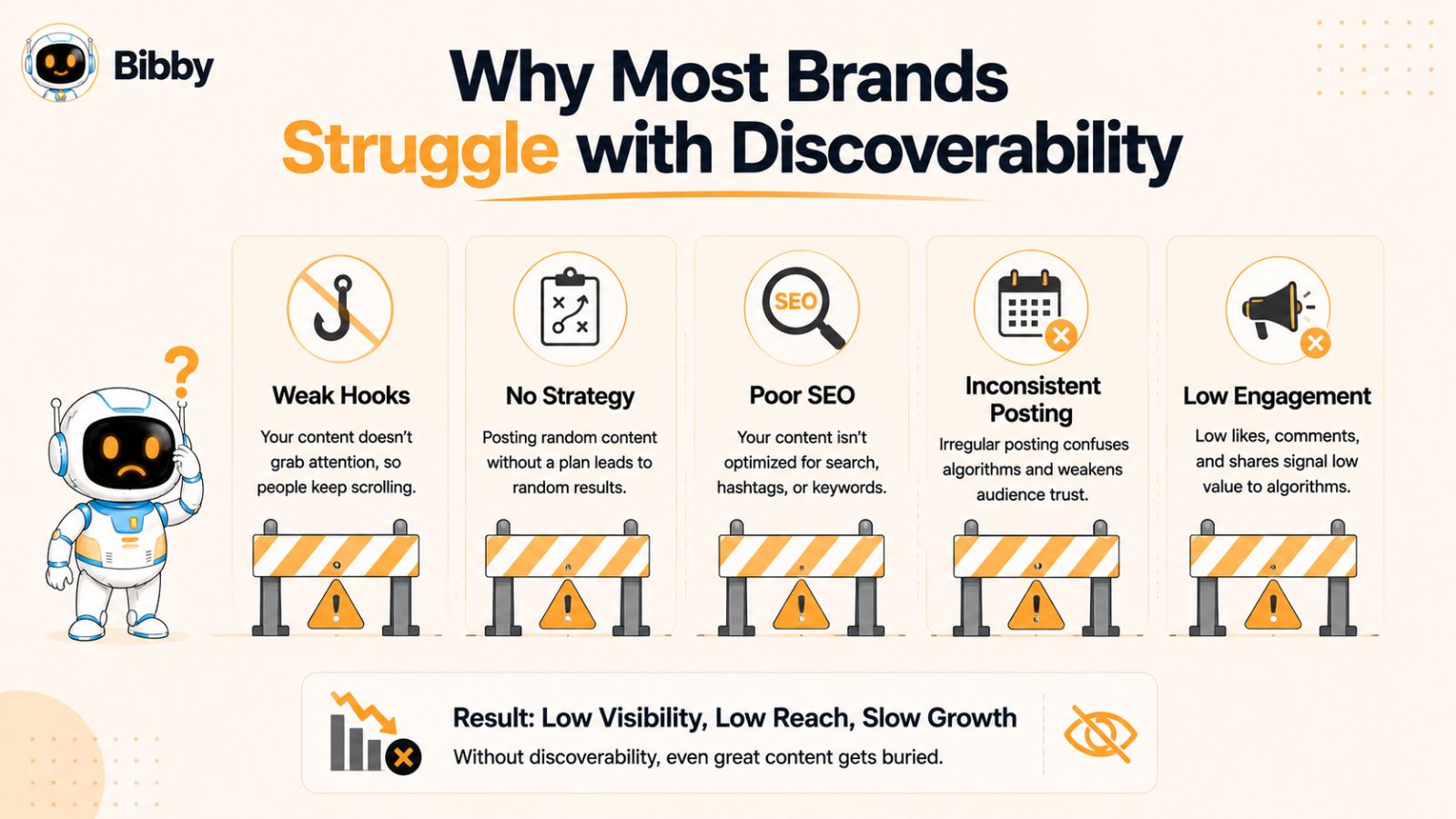
Posting Without a Strategy
One of the biggest reasons brands struggle with discoverability is the lack of a clear content strategy. Posting randomly or only when inspiration strikes often leads to inconsistent messaging and unpredictable results.
Start by defining your target audience, content pillars, and publishing schedule. Every post should have a purpose—whether it's educating, entertaining, inspiring, or driving conversions. A strategic approach helps algorithms understand your niche and makes it easier for your audience to know what to expect.
Weak Hooks That Fail to Grab Attention
You only have a few seconds to capture someone's attention before they scroll to the next post. If your opening line, first frame, or headline doesn't spark curiosity or communicate value, users are unlikely to engage.
Experiment with hooks that ask a compelling question, challenge a common belief, reveal a surprising fact, or promise a practical solution. A strong opening encourages users to stop scrolling and spend more time with your content.
Inconsistent Branding
If your visual style, tone of voice, or messaging changes dramatically from post to post, people may struggle to recognize your brand. Consistency builds familiarity and trust, both of which encourage repeat engagement.
Develop a recognizable brand identity by using consistent colors, typography, imagery, and messaging across all platforms. The more memorable your brand becomes, the more likely users are to engage with future content.
Poor Caption Optimization
Captions do more than describe your content—they provide context for both users and algorithms. Generic captions, missing keywords, or unclear calls to action can limit your content's discoverability.
Write captions that naturally include relevant keywords, provide useful information, and encourage interaction. Ask questions, invite feedback, or include actionable tips that motivate users to comment or share.
Ignoring Social Media SEO
Many brands still think search engine optimization only applies to websites. In reality, platforms like Instagram, TikTok, LinkedIn, YouTube, and Facebook increasingly rely on keywords to understand and recommend content.
Optimize your profile, captions, video titles, descriptions, hashtags, and on-screen text with language your audience is already searching for. Strong social media SEO improves your chances of appearing in search results and recommended content.
Posting at the Wrong Time
Even high-quality content can struggle if it's published when your audience isn't active. While great posts can gain traction later, publishing when followers are online often increases the likelihood of early engagement, which may help improve distribution.
Review your platform analytics to identify when your audience is most active, then test different posting times to find what consistently works best for your brand.
Posting and Forgetting
Publishing a post shouldn't be the end of the process. Brands that ignore comments, questions, and conversations miss valuable opportunities to strengthen engagement.
Responding promptly to comments, answering questions, and participating in discussions shows your audience that you're active and invested. These interactions can also generate additional engagement signals that support discoverability.
Failing to Analyze Performance
Without reviewing your analytics, it's difficult to know what's actually working. Many brands continue producing content based on assumptions instead of data.
Track key metrics such as reach, impressions, watch time, saves, shares, engagement rate, profile visits, and follower growth. Look for patterns among your best-performing posts and use those insights to refine your strategy over time.
Trying to Be Everywhere at Once
Maintaining a presence on multiple platforms is valuable, but manually creating, publishing, and managing content for each one can quickly become overwhelming. As workloads increase, posting often becomes inconsistent, and opportunities to engage with audiences are missed.
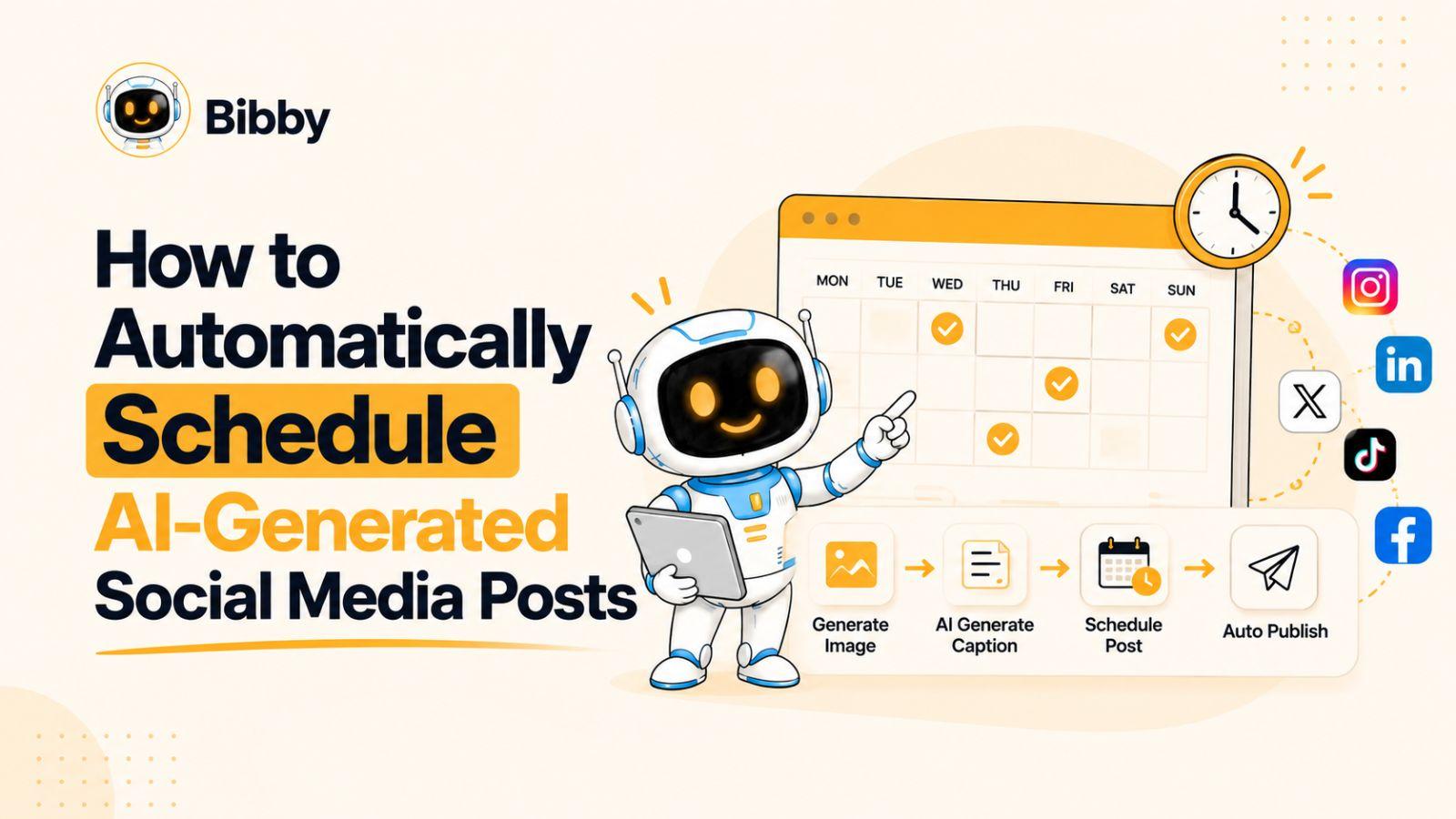
This is where automation can make a meaningful difference. Tools like Bibby simplify the publishing process by allowing you to upload or generate images with AI, create captions automatically based on your preferred posting style, schedule content across Facebook, Instagram, LinkedIn, YouTube, and TikTok at AI-optimized times, and monitor performance from a single dashboard. By reducing repetitive tasks, you can spend more time creating valuable content and engaging with your audience while maintaining a consistent publishing schedule.
Discoverability Is Built Through Continuous Improvement
There isn't a single tactic that guarantees social media success. Instead, discoverability is the result of consistently creating valuable content, optimizing it for search and platform algorithms, engaging with your audience, and learning from performance data.
Brands that treat social media as an ongoing process—not a one-time campaign—are better positioned to grow their reach, build stronger communities, and achieve sustainable long-term visibility.
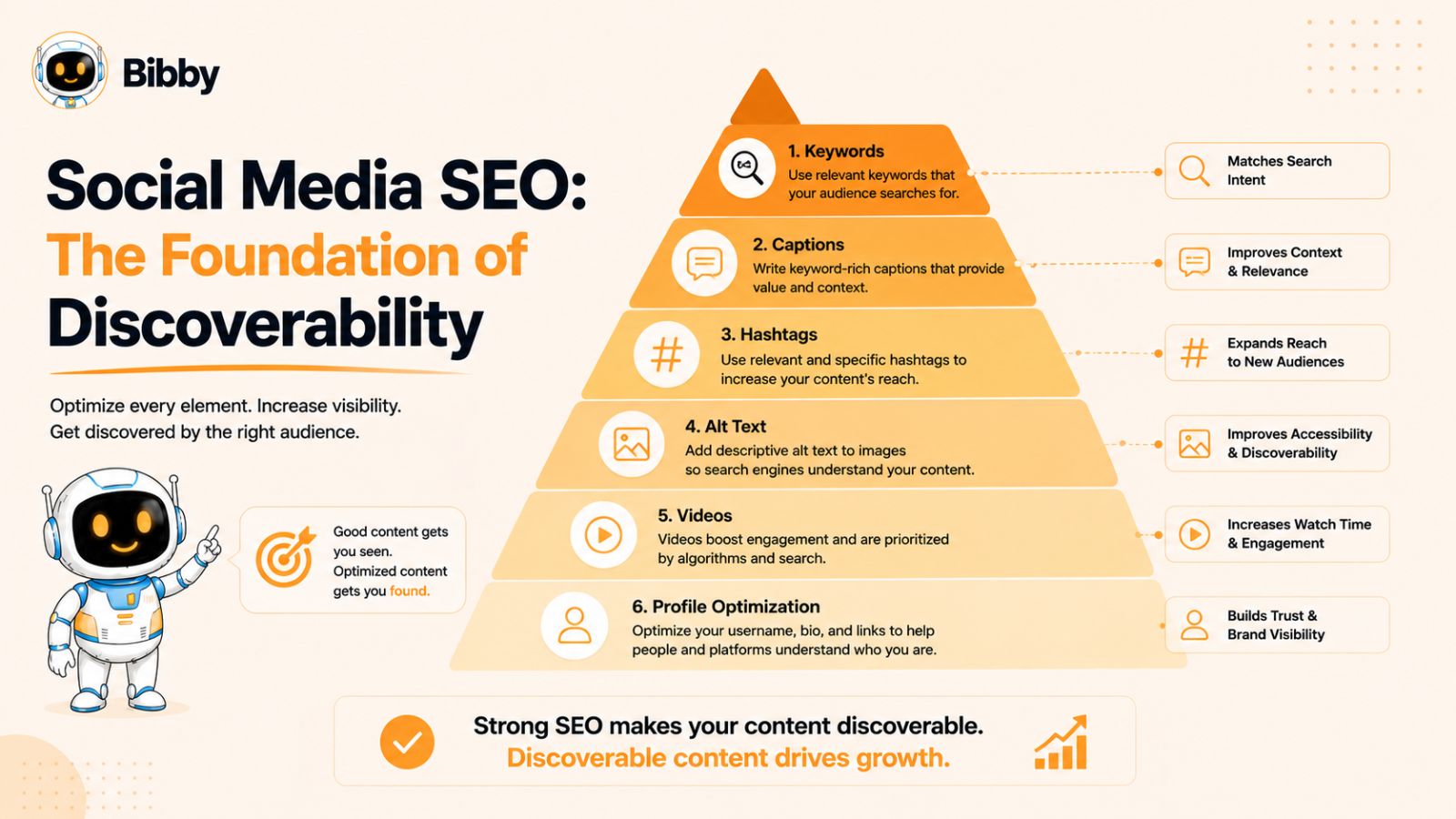
Social Media SEO: The Foundation of Discoverability
Search engine optimization is no longer limited to websites and blogs. Today, social media platforms have become powerful search engines where people look for products, services, tutorials, reviews, businesses, and industry expertise. Whether someone is searching on Instagram, TikTok, LinkedIn, Facebook, or YouTube, optimized content has a much better chance of being discovered.
Social Media SEO is the process of optimizing your profiles, captions, videos, images, and other content so that platform algorithms can better understand and recommend it to the right audience. When done correctly, it increases your chances of appearing in search results, recommendation feeds, explore pages, and suggested content.
Research the Right Keywords
Every successful SEO strategy starts with understanding what your audience is searching for. Before creating content, identify the words and phrases your potential customers use when looking for information related to your industry.
You can find keyword ideas by:
- Using the search bar on Instagram, TikTok, YouTube, or LinkedIn.
- Looking at autocomplete suggestions.
- Reviewing competitors' top-performing content.
- Monitoring frequently asked customer questions.
- Using SEO keyword research tools for broader insights.
Instead of targeting only broad terms like "marketing," focus on more specific phrases such as "social media discoverability," "Instagram growth tips," or "AI social media scheduling." These keywords often align better with user intent and face less competition.
Write SEO-Friendly Captions
Captions provide valuable context for both users and algorithms. Rather than stuffing them with keywords, write naturally while incorporating relevant phrases where they fit.
An effective caption should:
- Include your primary keyword naturally.
- Explain the value of the post.
- Encourage engagement through a question or call to action.
- Remain easy to read and informative.
The goal is to help both people and algorithms understand exactly what your content is about.
Optimize Your Profile
Your social media profile is often the first impression users have of your brand. A well-optimized profile makes it easier for both search algorithms and potential followers to understand who you are and what you offer.
Make sure your profile includes:
- A clear, searchable username whenever possible.
- A compelling bio with relevant keywords.
- A professional profile photo or logo.
- A consistent brand name across platforms.
- A link to your website or landing page.
Small improvements to your profile can make it easier for people to discover and trust your brand.
Use Hashtags Strategically
Hashtags still play an important role in content categorization, although they are no longer the primary driver of discoverability on most platforms.
Instead of using dozens of unrelated hashtags, focus on a smaller selection of highly relevant ones that accurately describe your content and audience.
A balanced hashtag strategy may include:
- Industry-specific hashtags.
- Niche community hashtags.
- Topic-focused hashtags.
- Branded hashtags.
- Campaign hashtags when appropriate.
Relevance is far more valuable than quantity.
Add Alt Text to Images
Many platforms allow creators to include alternative text for images. While originally designed to improve accessibility, alt text also helps platforms better understand the content of your visuals.
Describe the image clearly and naturally, including relevant keywords where appropriate. Avoid keyword stuffing and prioritize accuracy.
Optimize Your Videos for Search
Video has become one of the most discoverable content formats across social media. However, simply uploading a video isn't enough.
Improve your video SEO by optimizing:
- Titles
- Descriptions
- On-screen text
- Spoken keywords
- Closed captions
- File names (where applicable)
- Relevant hashtags
The more context you provide, the easier it is for algorithms to categorize and recommend your content.
Create Click-Worthy Thumbnails
On platforms like YouTube and Facebook, thumbnails significantly influence whether someone clicks on your content.
An effective thumbnail should:
- Clearly communicate the topic.
- Be visually clean and easy to understand.
- Highlight the main benefit or outcome.
- Match the expectations set by the title.
Misleading thumbnails may generate clicks initially, but they often lead to lower watch time and reduced trust.
Use a Consistent Brand Voice
Search optimization isn't only about keywords—it also includes building recognition. When your tone, messaging, and visual identity remain consistent, audiences are more likely to remember your content and engage with future posts.
Whether your brand is educational, professional, entertaining, or conversational, consistency helps strengthen your identity across every platform.
Keep Publishing Consistently
Social Media SEO works best when paired with a consistent publishing schedule. The more high-quality, optimized content you produce, the more opportunities algorithms have to understand your niche and recommend your content to new audiences.
Maintaining that consistency manually can become difficult, especially when managing multiple platforms. This is where Bibby simplifies the process. Instead of creating captions, scheduling posts, and publishing separately for each platform, you can upload your own image or generate one with AI, choose your preferred posting style, let Bibby create optimized captions automatically, and schedule your content across Facebook, Instagram, LinkedIn, YouTube, and TikTok from one place.
Bibby also supports videos and stories, publishes content at AI-optimized times based on your schedule, and provides built-in analytics so you can track performance and continually improve your strategy. By automating repetitive tasks, you can focus on creating valuable content while maintaining the consistency that supports long-term discoverability.
Think Like Both a User and an Algorithm
The best Social Media SEO strategy balances optimization with user experience. Algorithms reward content they can understand, while audiences reward content that solves problems, answers questions, or provides entertainment.
When every post combines valuable information, strategic keywords, engaging visuals, and consistent publishing, your content becomes easier to discover—and more likely to earn meaningful engagement from the right audience.
Read deeper insights on: How Social Media SEO Helps Brands Get More Organic Traffic
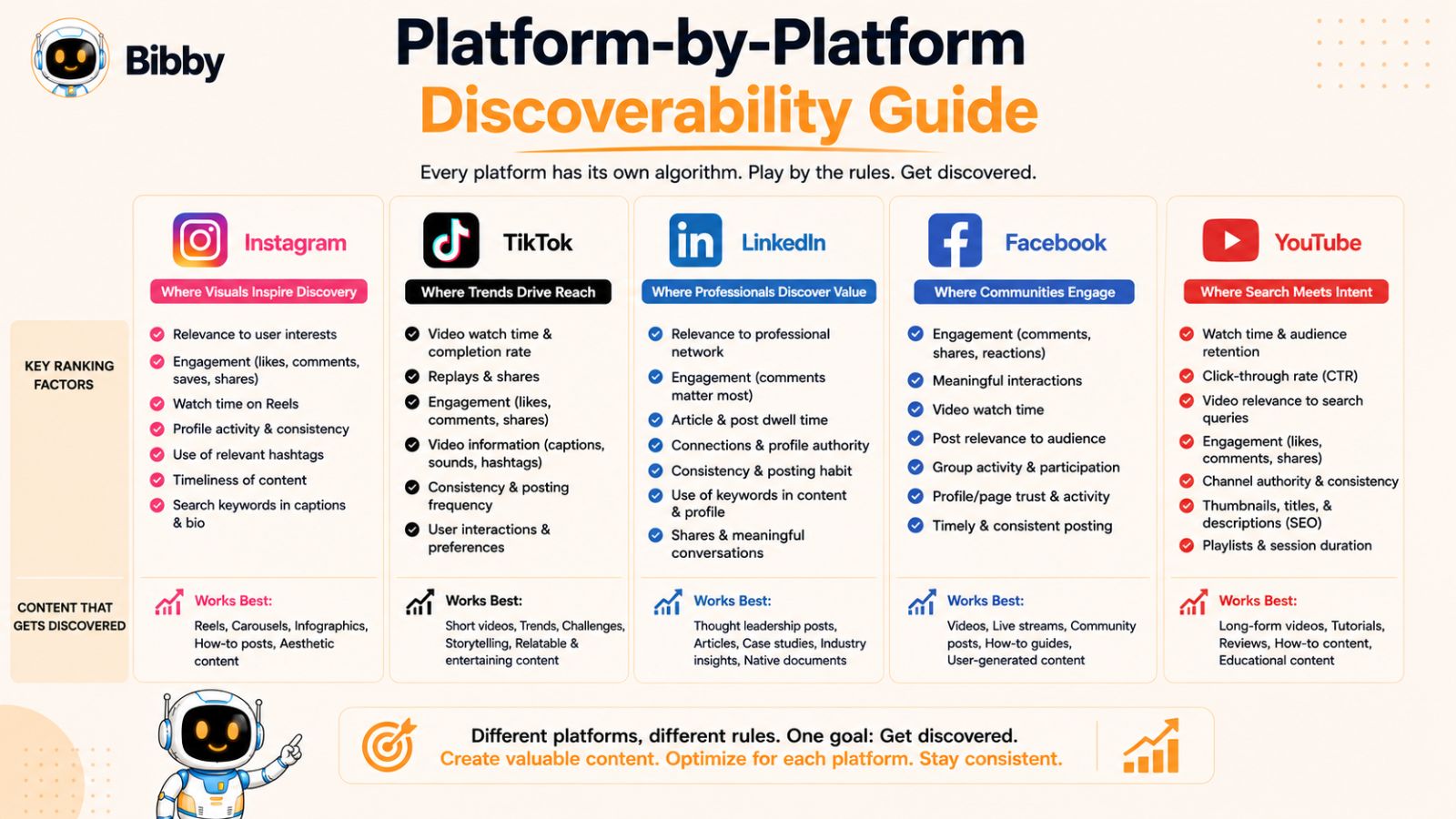
Platform-by-Platform Discoverability Guide
Every social media platform uses its own recommendation systems, ranking signals, and content formats. While the goal is the same—helping users discover relevant content—the strategies that work on one platform may not produce the same results on another.
Understanding how each platform surfaces content allows you to create posts that align with user behavior and algorithm preferences, increasing your chances of reaching new audiences.
Instagram Discoverability
Instagram has evolved far beyond a photo-sharing app. Today, users discover content through the Explore page, Reels, keyword searches, hashtags, recommendations, and shared posts. The platform prioritizes content that captures attention quickly and encourages meaningful engagement.
To improve discoverability on Instagram:
- Optimize your profile with a searchable name and keyword-rich bio.
- Publish Reels consistently, as short-form videos often receive broader distribution.
- Create carousel posts that encourage users to swipe through every slide.
- Write captions that naturally include relevant keywords.
- Use a focused mix of relevant hashtags instead of large, generic collections.
- Encourage saves and shares by publishing educational or actionable content.
- Use collaboration posts to expose your content to new audiences.
- Add descriptive alt text to images where appropriate.
- Respond to comments and direct messages to strengthen audience relationships.
TikTok Discoverability
TikTok is built around discovery. The For You feed introduces users to content from creators they may have never seen before, making it one of the most powerful platforms for organic growth.
To increase discoverability on TikTok:
- Capture attention within the first few seconds.
- Keep videos concise and engaging.
- Use trending sounds when they align naturally with your content.
- Include relevant keywords in captions and on-screen text.
- Speak important keywords naturally within your videos, as TikTok analyzes audio.
- Encourage viewers to watch until the end.
- Experiment with different video lengths and formats.
- Post consistently and learn from analytics instead of relying solely on trends.
LinkedIn Discoverability
LinkedIn rewards valuable professional content that encourages meaningful conversations. While viral moments are possible, consistent thought leadership often produces stronger long-term results.
Improve your LinkedIn discoverability by:
- Completing your profile with industry-specific keywords.
- Sharing practical insights and real-world experiences.
- Publishing native documents and carousel-style posts.
- Posting short videos that educate or explain industry topics.
- Encouraging thoughtful discussions instead of chasing reactions.
- Responding to comments promptly to extend conversations.
- Maintaining a consistent publishing schedule.
Facebook Discoverability
Although Facebook's algorithm prioritizes content from friends, groups, and communities, businesses can still increase visibility through engaging and shareable content.
Best practices include:
- Publish short-form videos and Reels regularly.
- Participate in relevant Facebook Groups by providing genuine value.
- Encourage conversations with questions and community-focused posts.
- Share educational content that people are likely to save or share.
- Maintain consistent posting habits to stay visible to your audience.
- Monitor analytics to identify which content formats perform best.
YouTube Discoverability
YouTube functions as both a social media platform and one of the world's largest search engines. Strong discoverability depends on creating videos that satisfy user intent while maximizing watch time and viewer retention.
To improve YouTube discoverability:
- Research keywords before creating videos.
- Include target keywords in your titles, descriptions, and tags where relevant.
- Design compelling thumbnails that accurately represent the content.
- Write titles that spark curiosity without being misleading.
- Keep viewers engaged throughout the video to improve watch time.
- Organize related content into playlists.
- Publish YouTube Shorts alongside long-form videos to reach different audiences.
- Encourage viewers to subscribe and continue watching related content.
Adapting Content for Every Platform
Cross-posting the exact same content across every platform rarely delivers the best results. Each platform has different audiences, preferred formats, and engagement patterns.
A more effective approach is to adapt your content while maintaining a consistent message. For example, a long-form educational video can be repurposed into a YouTube video, several Instagram Reels, a TikTok series, a LinkedIn carousel, and a Facebook post. This allows you to maximize the value of a single idea while tailoring the presentation to each platform.
Managing this workflow manually can quickly become time-consuming, especially when publishing across multiple channels. Bibby streamlines the process by helping you create content once and distribute it efficiently. You can upload your own images or generate visuals with AI, choose a posting style that matches your brand, automatically generate captions, and schedule content across Facebook, Instagram, LinkedIn, YouTube, and TikTok from a single dashboard.
Bibby also supports videos and stories, publishes content at AI-optimized times to help maintain consistency, and provides analytics that make it easier to understand what resonates with your audience. Instead of juggling multiple tools and calendars, you can manage your entire publishing workflow in one place while focusing more on creating high-quality content.
Build a Platform-Specific Strategy
Successful brands don't try to beat algorithms—they learn how each platform works and create content that fits naturally within its ecosystem. By combining platform-specific optimization with consistent publishing, strong audience engagement, and data-driven improvements, you can steadily increase your social media discoverability across every major network.
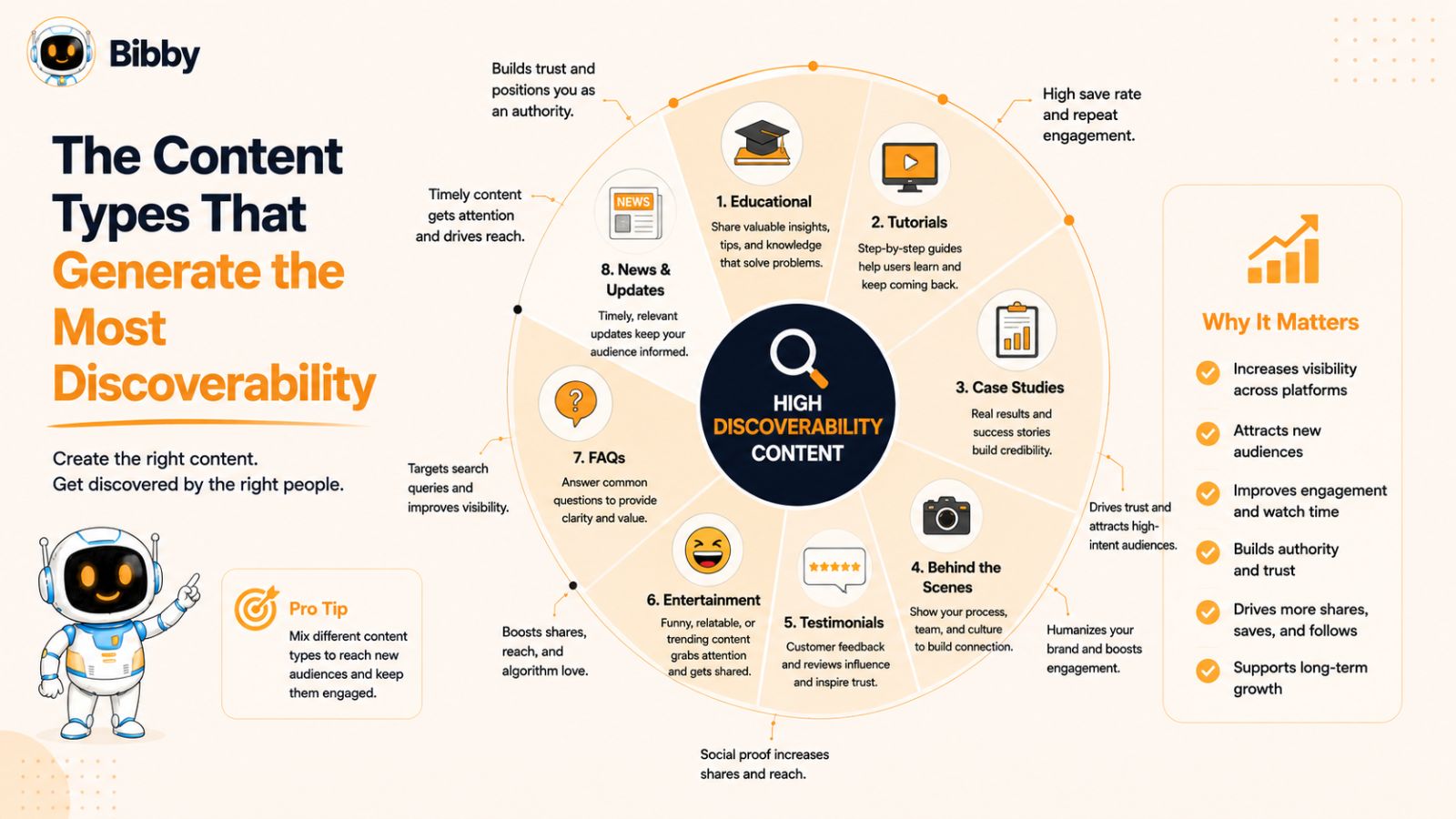
The Content Types That Generate the Most Discoverability
Not all content performs equally on social media. While trends come and go, certain content formats consistently attract more views, engagement, shares, and saves because they provide clear value to the audience. The more valuable your content is, the more likely platform algorithms are to recommend it to new users.
Instead of focusing on creating more content, focus on creating better content. A balanced content strategy that combines education, entertainment, authenticity, and community engagement gives you the best chance of improving discoverability over time.
Educational Content
Educational content remains one of the most effective ways to build authority and generate long-term discoverability. People actively search for answers, tutorials, and practical advice, making this type of content highly searchable and shareable.
Examples include:
- Step-by-step tutorials
- How-to guides
- Tips and tricks
- Industry insights
- Best practices
- Common mistakes to avoid
- Checklists and frameworks
Educational posts often receive more saves because users want to reference them later.
Entertaining Content
Entertainment captures attention and encourages sharing. Whether it's humor, storytelling, relatable moments, or creative trends, entertaining content helps expand your reach beyond your existing audience.
The key is to ensure that entertainment aligns with your brand rather than distracting from it. Even lighthearted content should reinforce your messaging and connect with your target audience.
Behind-the-Scenes Content
People enjoy seeing the human side of a business. Behind-the-scenes content builds trust and authenticity by showing how products are made, how your team works, or what happens during your creative process.
Ideas include:
- A day in the life
- Team introductions
- Workspace tours
- Product development
- Event preparation
- Creative workflows
This type of content strengthens audience relationships and makes your brand more memorable.
Customer Stories and Testimonials
Social proof is a powerful driver of engagement. Sharing customer success stories, testimonials, or user-generated content demonstrates real-world value and encourages trust.
Highlight measurable results whenever possible, and explain how your product or service solved a specific problem. Authentic stories often resonate more strongly than promotional messaging.
Case Studies
Case studies combine education and storytelling by showing how a strategy, campaign, or solution produced meaningful results. They work particularly well for B2B businesses, agencies, consultants, and SaaS companies.
An effective case study should include:
- The challenge
- The solution
- The implementation
- The outcome
- Key lessons learned
These posts establish credibility while providing practical insights for your audience.
Tutorials and Demonstrations
Showing people how to accomplish a task is often more engaging than simply telling them. Tutorials and product demonstrations keep viewers watching longer, increasing audience retention and improving discoverability.
Whether you're explaining a feature, solving a common problem, or demonstrating a workflow, make your instructions clear, concise, and actionable.
Before-and-After Content
Transformation stories naturally capture attention because they create curiosity and clearly demonstrate progress.
Examples include:
- Design makeovers
- Marketing results
- Fitness journeys
- Product improvements
- Business growth
- Website redesigns
Whenever possible, support your transformation with data, visuals, or customer feedback to make the results more compelling.
Industry News and Trends
Commenting on relevant industry developments positions your brand as a trusted source of information. Sharing timely insights also increases the likelihood of appearing in conversations around trending topics.
Instead of simply reporting the news, explain what it means for your audience and offer your unique perspective or recommendations.
Opinion and Thought Leadership
People follow experts for their insights, not just their information. Sharing thoughtful opinions, predictions, lessons learned, and personal experiences helps differentiate your brand from competitors.
Thought leadership performs especially well on professional platforms like LinkedIn, but it can also build credibility across Instagram, Facebook, TikTok, and YouTube when presented authentically.
Frequently Asked Questions
Every business receives recurring questions from customers. Turning these questions into content is one of the easiest ways to create highly relevant posts that match search intent.
FAQ content can include:
- Short videos
- Carousel posts
- Stories
- Live sessions
- Long-form educational videos
Answering common questions not only helps your audience but also increases the chances of appearing in search results for those topics.
Repurpose High-Performing Content
Creating quality content takes time, so don't let your best ideas disappear after a single post. Repurposing allows you to extend the lifespan of successful content while reaching audiences who prefer different formats.
For example, a blog post can become:
- An Instagram carousel
- A TikTok video
- A LinkedIn article
- A YouTube tutorial
- A Facebook post
- Multiple short-form videos
- Story content
- An email newsletter
Repurposing saves time, reinforces your message, and creates more opportunities for discovery across platforms.
Maintain Consistency Without Increasing Your Workload
Publishing a variety of high-quality content consistently can become challenging when managing multiple social media platforms. Between creating visuals, writing captions, choosing posting times, and scheduling content, the process quickly becomes time-consuming.
This is where Bibby helps simplify your workflow. You can upload your own images or generate visuals using AI, select your preferred posting style, and let Bibby automatically generate captions tailored to your content. From there, you can schedule posts, videos, and stories across Facebook, Instagram, LinkedIn, YouTube, and TikTok from one dashboard.
Instead of manually publishing to each platform, Bibby schedules your content at AI-optimized times and provides analytics that help you understand which content types generate the most engagement. This makes it easier to maintain a consistent publishing strategy while continually improving your discoverability based on real performance data.
Focus on Value Over Volume
The brands that consistently grow on social media aren't necessarily the ones posting the most—they're the ones consistently delivering value. Educational resources, engaging stories, authentic experiences, and practical solutions naturally encourage users to watch longer, save content, share it with others, and return for more.
By building a diverse content strategy around your audience's needs and supporting it with consistent publishing and performance analysis, you'll create more opportunities for your content to be discovered across every major social media platform.
How AI and Automation Can Improve Discoverability
Creating high-quality content is only one part of improving social media discoverability. You also need to publish consistently, optimize every post, schedule content across multiple platforms, monitor performance, and continually refine your strategy. As your presence grows, managing all of these tasks manually becomes increasingly difficult.
Artificial intelligence and automation help streamline these repetitive processes, allowing creators, marketers, and businesses to spend more time developing ideas and engaging with their audience instead of handling routine publishing tasks
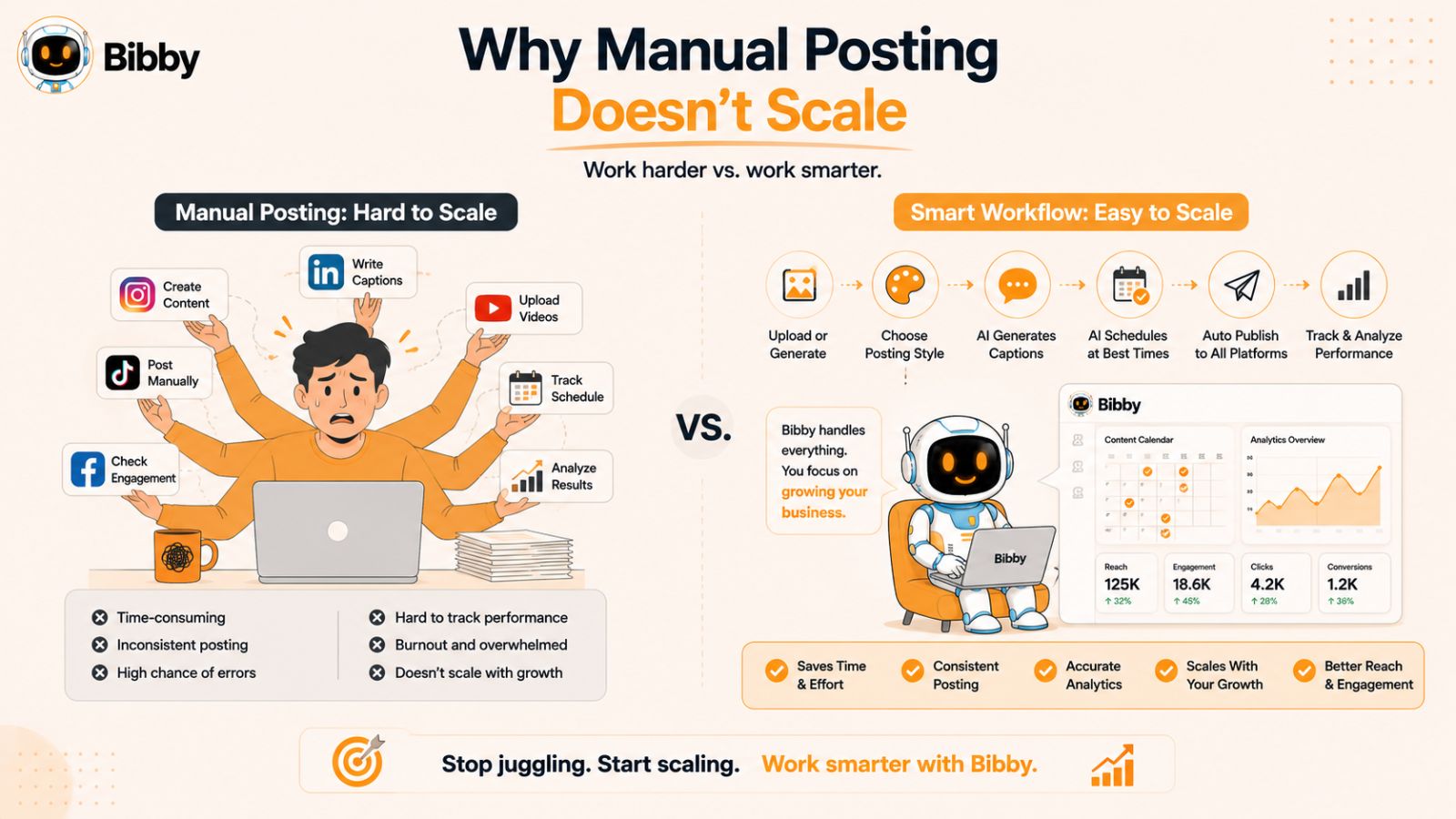
Why Manual Posting Doesn't Scale
Managing one social media account may be straightforward, but maintaining an active presence across Instagram, Facebook, LinkedIn, TikTok, and YouTube can quickly become overwhelming.
A typical publishing workflow often includes:
- Designing or sourcing visuals.
- Writing platform-specific captions.
- Choosing relevant hashtags and keywords.
- Scheduling posts for different audiences.
- Publishing content at the right time.
- Monitoring comments and engagement.
- Reviewing analytics and reporting.
Repeating these steps for every platform every day takes significant time and increases the likelihood of inconsistencies.
AI-Assisted Content Creation
AI can help speed up the creative process by assisting with brainstorming, content planning, caption writing, and image generation. Rather than replacing creativity, AI acts as a productivity tool that helps creators overcome writer's block and produce content more efficiently.
For example, AI can help:
- Generate caption ideas.
- Rewrite content for different platforms.
- Suggest stronger hooks.
- Create content variations.
- Generate images from text prompts.
- Repurpose existing content into new formats.
Human review is still important to ensure every post reflects your brand voice and provides genuine value.
AI Caption Generation
Writing fresh, engaging captions for every post is often one of the most time-consuming parts of social media management. AI can significantly reduce this workload by generating draft captions that align with your content and preferred tone.
Instead of starting from a blank page every time, you can use AI-generated captions as a foundation, then customize them with your expertise, personality, or brand messaging before publishing.
AI Scheduling
Posting consistently is one of the strongest habits you can build, but remembering to publish manually every day isn't always realistic.
Scheduling tools allow you to prepare content in advance and maintain a regular publishing cadence. Some platforms also use AI to recommend posting times based on historical audience activity and engagement patterns, helping you test and refine your publishing schedule over time.
While no scheduling tool can guarantee better reach, publishing consistently at times when your audience is active can support your overall discoverability strategy.
Analytics That Drive Better Decisions
Improving discoverability requires more than publishing regularly—it requires learning from your results.
By reviewing analytics, you can identify:
- Which content formats perform best.
- Which topics generate the most engagement.
- When your audience is most active.
- Which platforms deliver the strongest results.
- How engagement changes over time.
These insights help you make informed decisions instead of relying on guesswork.
Content Repurposing Across Platforms
Creating unique content for every platform isn't always practical. Repurposing allows you to maximize the value of each idea by adapting it to different formats and audiences.
For example, a single tutorial can become:
- A YouTube video.
- Several TikTok clips.
- Instagram Reels.
- A LinkedIn carousel.
- A Facebook post.
- Story updates across multiple platforms.
Repurposing saves time while ensuring your message reaches people wherever they spend their time online.
How Bibby Simplifies Your Social Media Workflow
As your publishing schedule grows, using separate tools for image creation, caption writing, scheduling, analytics, and cross-platform publishing can make social media management unnecessarily complex.
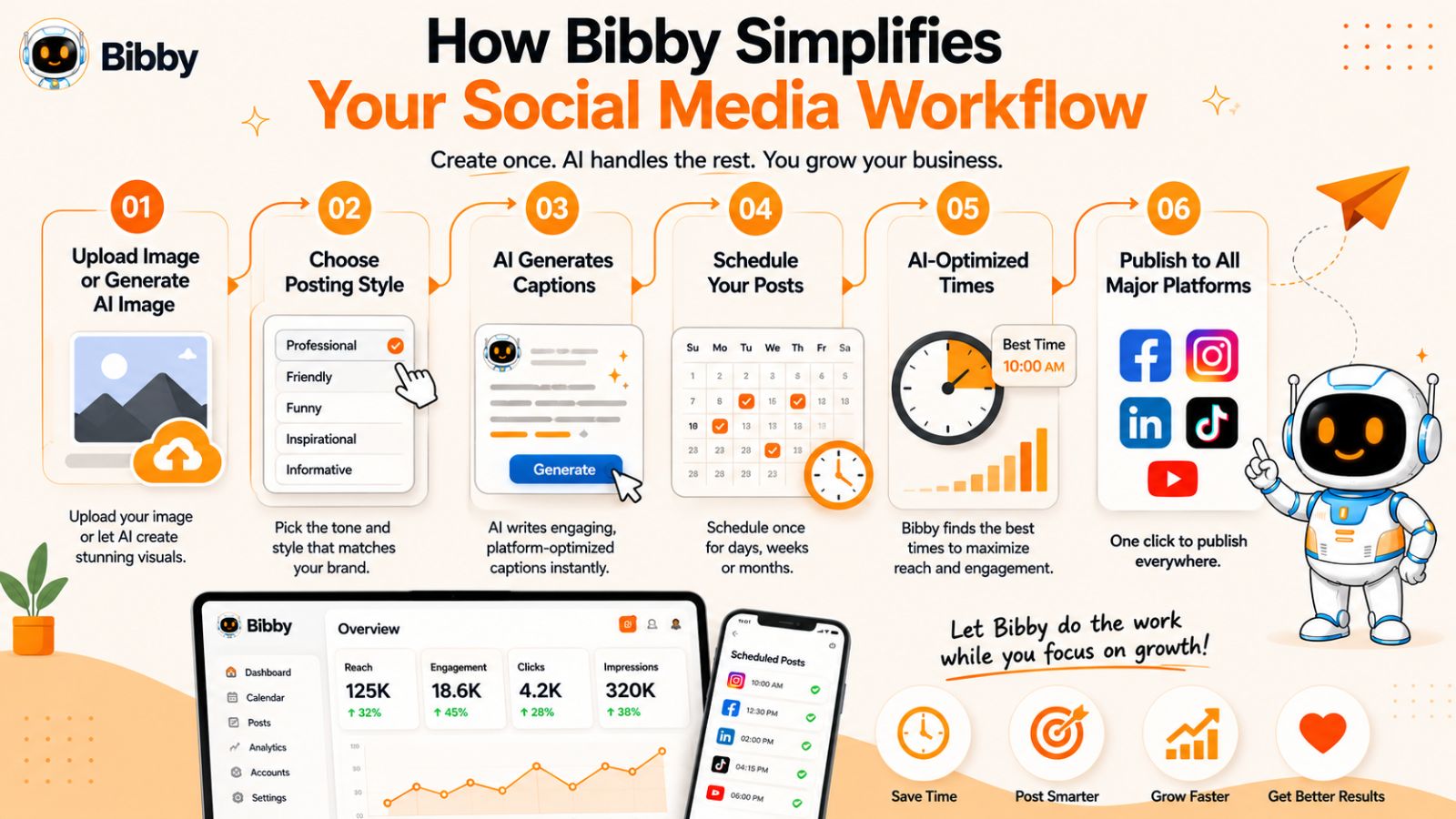
Bibby brings these tasks together in a single workflow designed to simplify content creation and publishing.
With Bibby, you can:
- Upload your own image or generate one using AI.
- Choose a posting style that matches your brand or campaign.
- Automatically generate captions with AI.
- Schedule posts in advance from one dashboard.
- Publish across Facebook, Instagram, LinkedIn, YouTube, and TikTok.
- Schedule videos as well as stories where supported.
- Review analytics to understand which content performs best.
- Manage your social media workflow without switching between multiple tools.
Instead of spending hours repeating the same publishing tasks, you can prepare your content in advance and maintain a more consistent posting schedule. This consistency creates more opportunities for your content to be evaluated and recommended by platform algorithms over time.
Automation Supports Consistency—Not Guaranteed Reach
Automation is a powerful productivity tool, but it's important to set realistic expectations. AI scheduling and automation cannot guarantee viral content or higher rankings because each platform ultimately decides how content is distributed.
What automation can do is remove repetitive work, help you publish more consistently, streamline optimization, and make it easier to learn from your analytics. Combined with valuable content and a strong understanding of your audience, these efficiencies can strengthen your long-term discoverability strategy.
The most successful creators don't rely on automation alone. They use it to free up time for the activities that matter most: understanding their audience, creating exceptional content, building relationships, and continually improving based on performance data.
20 Proven Tips to Increase Social Media Discoverability
Improving social media discoverability isn't about finding a secret algorithm hack. It's about consistently following proven best practices that help both users and platforms recognize the value of your content. The following strategies can help you increase your visibility, reach new audiences, and build sustainable organic growth.
1. Optimize Every Social Media Profile
Your profile is often the first interaction someone has with your brand. Use a recognizable profile photo, a clear description of what you do, relevant keywords in your bio, and a consistent brand identity across every platform.
2. Research Keywords Before Creating Content
Think about what your audience is searching for before you publish. Including relevant keywords in your titles, captions, descriptions, and on-screen text makes it easier for platforms to understand and recommend your content.
3. Write Strong Hooks
The first few seconds of a video or the opening line of a caption determine whether users continue engaging or keep scrolling. Start with a compelling question, surprising statistic, bold statement, or clear promise of value.
4. Create Scroll-Stopping Visuals
High-quality images and videos grab attention in crowded feeds. Use clean designs, readable text, strong contrast, and visuals that immediately communicate the topic of your content.
5. Focus on Solving Real Problems
The most discoverable content answers questions, solves challenges, or teaches something useful. Before publishing, ask yourself whether your audience will learn, save, or share the post.
6. Encourage Saves and Shares
Likes are valuable, but saves and shares often indicate deeper engagement. Create checklists, tutorials, templates, and practical guides that people will want to revisit or send to others.
7. Publish Consistently
Regular publishing helps build audience expectations and provides more opportunities for algorithms to evaluate your content. Create a realistic schedule that prioritizes quality over quantity.
8. Post When Your Audience Is Active
Use your platform analytics to identify when your audience is online and experiment with different publishing times. Early engagement can provide useful signals that may help your content gain momentum.
9. Repurpose Your Best Content
If a post performs well, extend its reach by adapting it for other platforms or formats. A successful blog post can become a carousel, Reel, TikTok video, LinkedIn article, YouTube Short, or email newsletter.
10. Start Conversations
Ask thoughtful questions, encourage opinions, and invite users to share their experiences. Meaningful conversations create stronger engagement than one-word responses.
11. Use Hashtags Strategically
Choose hashtags that accurately describe your content and audience. A focused selection of relevant hashtags is generally more effective than using large lists of unrelated or overly competitive ones.
12. Create More Short-Form Videos
Short-form video continues to receive strong visibility across most major platforms. Experiment with tutorials, behind-the-scenes content, product demonstrations, and quick tips that deliver value within the first few seconds.
13. Build a Recognizable Brand
Consistent colors, messaging, tone, and design help audiences recognize your content instantly. Strong branding also increases trust and encourages repeat engagement.
14. Respond to Your Audience
Reply to comments, answer questions, and acknowledge feedback whenever possible. Active engagement strengthens relationships and demonstrates that your account is actively managed.
15. Collaborate With Others
Partnering with creators, businesses, or industry experts introduces your content to new audiences. Collaborations can include interviews, live sessions, guest content, or co-created campaigns.
16. Monitor Your Analytics
Review metrics such as reach, watch time, engagement rate, profile visits, saves, shares, and follower growth. Look for patterns in your highest-performing content and use those insights to guide future decisions.
17. Experiment and Adapt
Social media evolves constantly. Test different content formats, posting schedules, captions, and creative styles to discover what resonates most with your audience.
18. Stay Current With Platform Changes
Algorithms, features, and user behavior change over time. Keep experimenting with new content formats and platform updates instead of relying on strategies that worked years ago.
19. Use AI to Streamline Your Workflow
AI can help reduce repetitive work such as generating captions, organizing content ideas, scheduling posts, and repurposing existing content. By saving time on routine tasks, you can focus more on creating content that connects with your audience.
20. Simplify Publishing With Bibby
Consistency is easier to maintain when your workflow is simple. Bibby helps streamline the entire publishing process by allowing you to upload your own images or generate visuals with AI, select your preferred posting style, automatically create captions, and schedule posts across Facebook, Instagram, LinkedIn, YouTube, and TikTok from a single dashboard.
You can also publish videos and stories, review analytics to identify your best-performing content, and manage your social media strategy without switching between multiple tools. By reducing manual work, Bibby helps you maintain a consistent publishing schedule, giving your content more opportunities to reach the right audience over time.
A Simple Discoverability Checklist
Before publishing your next post, ask yourself:
- Does it solve a problem or provide clear value?
- Have I included relevant keywords naturally?
- Is the opening strong enough to stop someone from scrolling?
- Are the visuals clear and engaging?
- Have I included a call to action?
- Is the content optimized for the platform?
- Am I posting consistently?
- Have I reviewed recent analytics to guide this post?
- Can I repurpose this content for other platforms?
- Have I scheduled future content to maintain consistency?
Checking these items before every post won't guarantee viral success, but it will help you build the habits that support long-term social media discoverability. Over time, consistent optimization, valuable content, and ongoing analysis create a stronger foundation for sustainable organic growth.
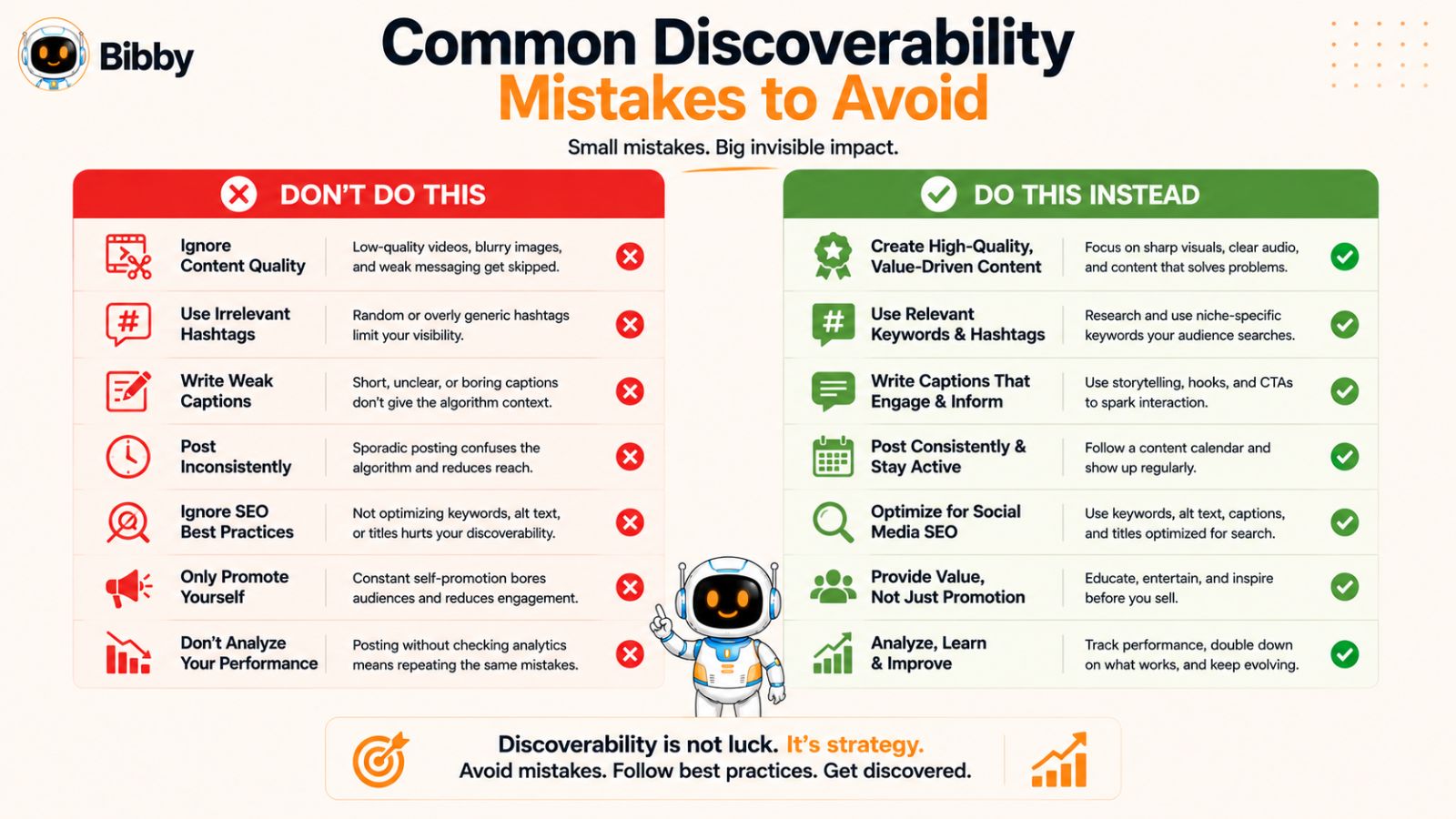
Common Discoverability Mistakes to Avoid
Even well-designed content can struggle to reach new audiences if it's held back by avoidable mistakes. Many brands focus on creating more content when the real issue lies in how that content is planned, optimized, and distributed.
Avoiding the following mistakes can help improve your social media discoverability and ensure your efforts produce better long-term results.
Buying Followers or Engagement
A large follower count may look impressive, but purchased followers rarely interact with your content. Low engagement rates send weak signals to platform algorithms and make it harder for your posts to reach genuine users.
Focus on building an authentic audience through valuable content, meaningful conversations, and consistent publishing rather than chasing vanity metrics.
Keyword Stuffing
Keywords help platforms understand your content, but using the same phrase repeatedly can make captions feel unnatural and reduce the user experience.
Instead, write for people first. Include your target keywords naturally in captions, titles, descriptions, and profile information while maintaining a conversational tone.
Using Too Many Hashtags
Adding dozens of unrelated hashtags doesn't improve discoverability. In many cases, it makes your content appear less focused.
Choose hashtags that accurately describe your content, industry, and audience. A smaller number of relevant hashtags is usually more effective than a long list of generic ones.
Ignoring Analytics
Many creators publish content without reviewing the results. Without analytics, it's difficult to know which topics, formats, or posting times are generating the strongest engagement.
Review your performance regularly and look for trends. Double down on content that performs well, and refine or replace strategies that consistently underperform.
Posting Inconsistently
Posting several times one week and then disappearing for the next few weeks makes it harder to build audience expectations.
A realistic publishing schedule that you can maintain consistently is generally more effective than short bursts of activity followed by long periods of silence.
Publishing the Same Content Everywhere
Every platform has its own audience, preferred formats, and user behavior. Simply copying and pasting identical content across every network often leads to lower engagement.
Adapt your content for each platform by adjusting the format, caption, length, and presentation while keeping the core message consistent.
Focusing on Quantity Instead of Quality
Publishing more content doesn't always lead to better results. A few valuable, well-optimized posts often outperform a large number of rushed or repetitive ones.
Prioritize content that educates, entertains, inspires, or solves real problems for your audience.
Ignoring Your Audience
Some brands spend so much time trying to satisfy algorithms that they forget about the people consuming their content.
Algorithms are designed to reward content that users genuinely enjoy. When you understand your audience's interests, challenges, and goals, you naturally create posts that generate stronger engagement.
Forgetting Calls to Action
Many posts end without giving users a reason to interact.
Simple calls to action such as asking a question, inviting users to share their experiences, encouraging saves, or requesting feedback can increase meaningful engagement without feeling overly promotional.
Trying to Manage Everything Manually
As your social media presence grows, manually creating captions, scheduling posts, publishing across multiple platforms, and tracking analytics becomes increasingly difficult.
Using a centralized platform like Bibby can simplify this workflow. Instead of switching between multiple tools, you can generate AI-powered images or upload your own, create captions automatically, choose your preferred posting style, schedule content across Facebook, Instagram, LinkedIn, YouTube, and TikTok, publish videos and stories, and monitor analytics from one place. This allows you to spend less time on repetitive administrative work and more time creating content that your audience values.
Build Sustainable Discoverability
There are no shortcuts to long-term social media success. Lasting discoverability comes from consistently publishing valuable content, optimizing it for search and platform algorithms, engaging with your audience, and learning from your performance data.
By avoiding common mistakes and focusing on continuous improvement, you'll build stronger relationships with your audience and create more opportunities for your content to be discovered across every major social media platform.
Frequently Asked Questions
What is social media discoverability?
Social media discoverability is the ability of your content, profile, or brand to be found by people who don't already follow you. Platforms like Instagram, TikTok, LinkedIn, Facebook, and YouTube recommend content through search results, feeds, explore pages, and personalized recommendations, making discoverability essential for organic growth.
Why is social media discoverability important?
Better discoverability helps you reach new audiences without relying solely on paid advertising or your existing followers. When your content is consistently discovered by the right people, you can increase brand awareness, generate more engagement, grow your community, and create additional business opportunities.
How do social media algorithms determine discoverability?
Although every platform uses its own ranking system, most algorithms evaluate signals such as watch time, audience retention, comments, shares, saves, click-through rate, content relevance, keywords, and previous user interactions. Content that provides value and encourages meaningful engagement is generally more likely to be recommended.
Is social media SEO the same as website SEO?
No. Website SEO focuses on improving visibility in search engines like Google, while Social Media SEO focuses on optimizing content for discovery within social media platforms. However, both rely on relevant keywords, high-quality content, and understanding user intent.
Do hashtags still help with discoverability?
Yes, but their role has changed. Hashtags are now one of many signals platforms use to categorize content. Using a small number of relevant hashtags is generally more effective than adding dozens of broad or unrelated ones.
Does posting every day improve discoverability?
Not necessarily. Consistency is more important than frequency. Publishing valuable, well-optimized content on a schedule you can maintain is usually more effective than posting daily if quality suffers.
Which social media platform offers the best organic discoverability?
It depends on your audience and content. TikTok and YouTube are known for strong recommendation systems that frequently introduce users to new creators. Instagram Reels, LinkedIn, and Facebook also provide opportunities for organic discovery when content aligns with audience interests and platform best practices.
Can AI improve social media discoverability?
AI cannot guarantee greater reach, but it can help you work more efficiently. AI tools can assist with brainstorming, generating captions, creating images, repurposing content, scheduling posts, and analyzing performance. This makes it easier to publish consistently and optimize your content over time.
Can scheduling tools improve discoverability?
Scheduling tools don't directly influence platform algorithms. Their primary benefit is helping you maintain a consistent publishing schedule, organize campaigns, and post when your audience is most active. Consistency supports a stronger long-term discoverability strategy.
How does Bibby help with social media discoverability?
Bibby simplifies the entire social media publishing process in one platform. You can upload your own images or generate visuals with AI, choose your preferred posting style, automatically generate captions, and schedule posts across Facebook, Instagram, LinkedIn, YouTube, and TikTok.
Bibby also supports publishing videos and stories, recommends AI-optimized posting times based on your schedule, and provides built-in analytics to help you understand which content performs best. While no platform can guarantee increased reach, Bibby helps remove repetitive tasks, making it easier to maintain the consistency and optimization that support long-term discoverability.
How long does it take to improve social media discoverability?
The timeline varies depending on your niche, competition, content quality, consistency, and audience engagement. Some creators see improvements within a few weeks, while others may take several months to build meaningful momentum. The most sustainable results come from continually creating valuable content, optimizing it for search, engaging with your audience, and refining your strategy based on analytics.
Conclusion
Social media discoverability isn't about chasing every algorithm update—it's about building a sustainable strategy that helps the right people find your content. By understanding how social media algorithms work, optimizing every post for search and engagement, and consistently publishing valuable content, you can steadily increase your visibility across Instagram, TikTok, LinkedIn, Facebook, and YouTube.
As your content strategy grows, simplifying your workflow becomes just as important as improving your content. Instead of managing multiple tools for image creation, caption writing, scheduling, publishing, and analytics, platforms like Bibby bring everything together in one place. With AI-powered image generation, automatic caption creation, AI-assisted scheduling, cross-platform publishing, support for videos and stories, and built-in analytics, Bibby helps you spend less time on repetitive tasks and more time creating content your audience will enjoy.
The next step is simple: audit your current social media strategy, identify one or two areas where discoverability can be improved, and implement the techniques from this guide consistently. Small improvements, repeated over time, often lead to the biggest long-term results. As your workflow becomes more efficient and your content becomes more discoverable, you'll be well positioned to grow your audience and strengthen your social media presence.