
Today's customers interact with brands across multiple social media platforms, making consistency more important than ever.
Whether someone discovers your business on Instagram, researches you on LinkedIn, watches your videos on YouTube, or follows your updates on Facebook and TikTok, they expect a seamless experience at every touchpoint. When your messaging, visuals, and brand voice remain consistent across channels, you build trust, strengthen recognition, and create a more professional brand presence that drives long-term growth.
Maintaining a consistent brand experience doesn't mean posting identical content everywhere—it means delivering the same brand promise while adapting content to fit each platform's unique audience and format. Let's explore how successful brands achieve this and how you can do the same.
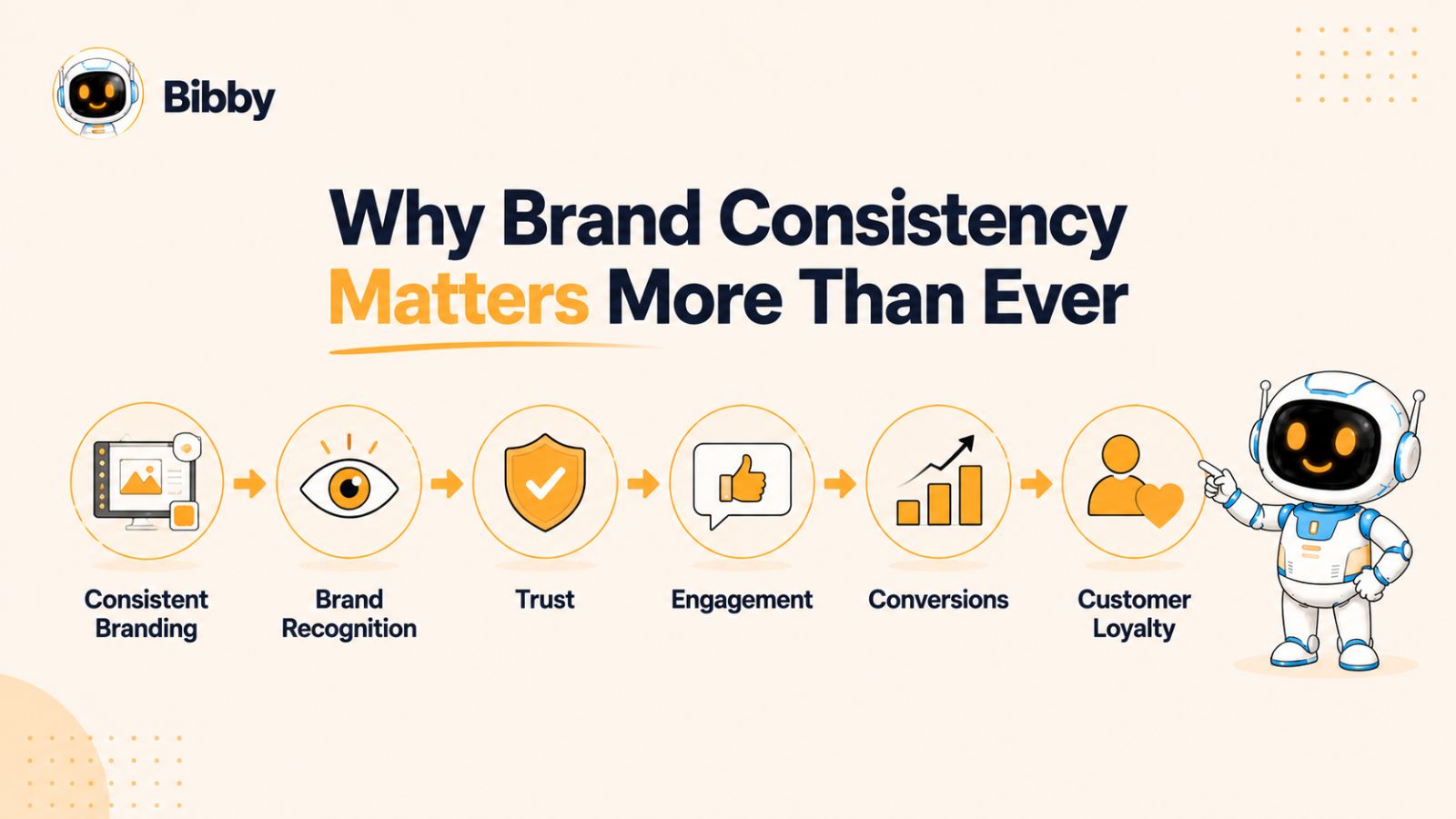
Why Brand Consistency Matters More Than Ever
Consumers rarely interact with a brand through a single channel. A potential customer might first discover your company on TikTok, visit your Instagram profile, read your LinkedIn content, and eventually watch your YouTube videos before making a purchase decision. Every interaction contributes to their perception of your brand.
When those experiences feel disconnected, customers can become confused about who you are, what you offer, and why they should trust you. On the other hand, a consistent brand experience creates familiarity, strengthens credibility, and makes your business more memorable.
Consistency Increases Brand Recognition
The most recognizable brands in the world share a common trait: they look and sound the same wherever customers encounter them. Consistent use of logos, colors, imagery, messaging, and tone helps audiences instantly identify your content, even when they are scrolling quickly through crowded social feeds.
Over time, this repeated exposure builds brand recall, making it easier for potential customers to remember your business when they are ready to buy.
Consistency Builds Trust
Trust is one of the most valuable assets a brand can have. When customers encounter consistent messaging across social channels, they perceive the business as more professional and reliable.
In contrast, conflicting messages, inconsistent visuals, or dramatically different tones can create uncertainty. Customers may begin to question whether they are interacting with the same brand, reducing confidence and potentially affecting purchasing decisions.
Consistency Improves Engagement
Audiences are more likely to engage with content when they understand what a brand stands for and what type of value it consistently delivers. A clear and recognizable presence helps followers develop expectations about your content, encouraging them to return regularly for updates, insights, entertainment, or inspiration.
As engagement grows, social media algorithms often reward that consistency with greater visibility and reach.
Consistency Drives Better Business Results
A consistent brand experience does more than improve aesthetics. It directly impacts business performance by creating smoother customer journeys, strengthening customer loyalty, and increasing conversion opportunities.
When every social channel reinforces the same brand message and value proposition, customers can move through the buying process with greater confidence. This alignment reduces friction and helps turn followers into customers more effectively.
Consistency Creates a Competitive Advantage
Many businesses struggle to maintain a unified presence across multiple social networks. Teams become siloed, content is created independently, and branding standards gradually become inconsistent.
Organizations that establish clear brand guidelines and efficient workflows stand out from competitors by delivering a seamless experience everywhere their audience interacts with them. In a crowded digital landscape, that consistency can become a significant competitive advantage.
Must read: How AI Helps Maintain Brand Consistency Across Social Platforms
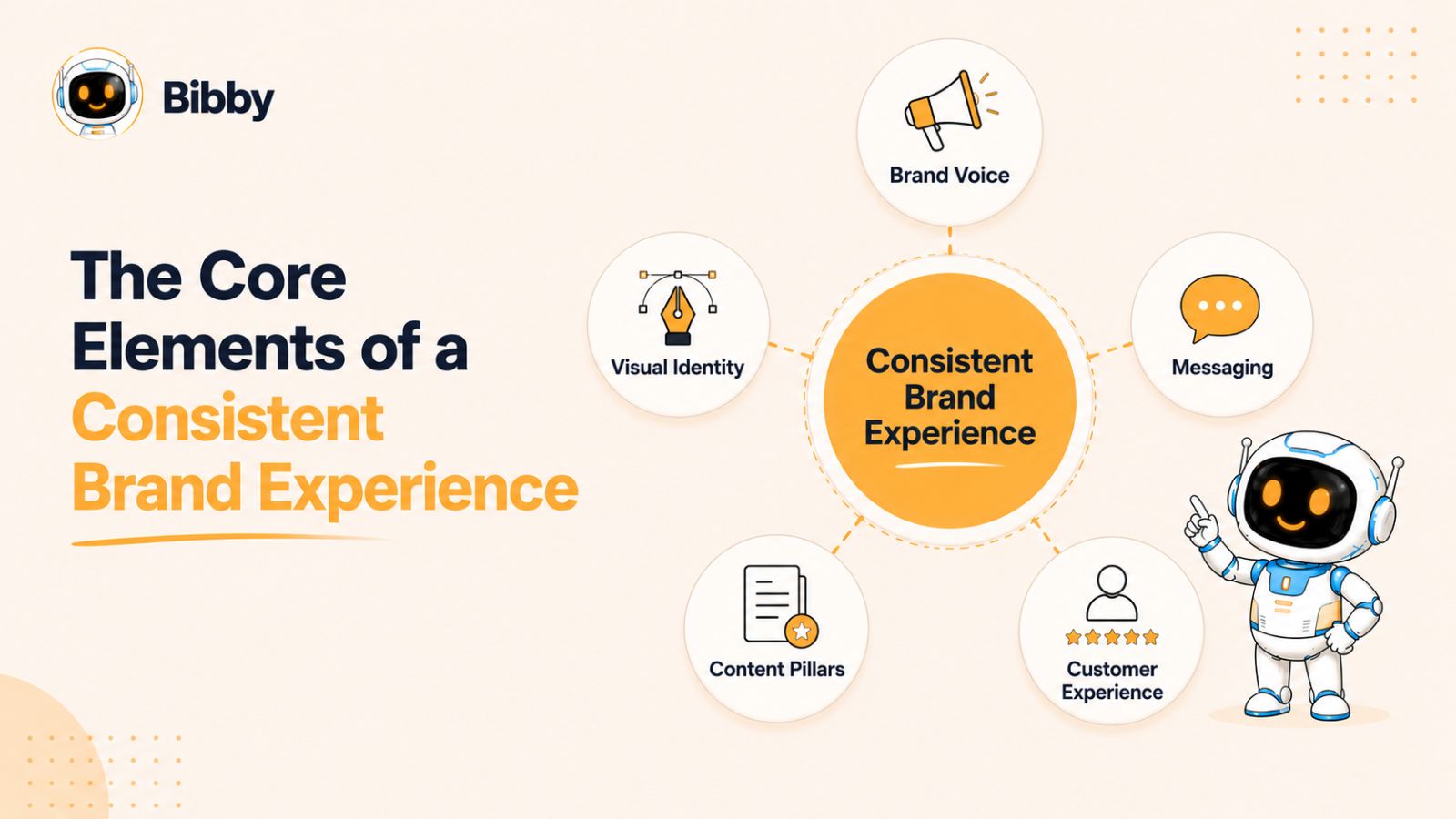
The Core Elements of a Consistent Brand Experience
Creating a consistent brand experience across social channels requires more than using the same logo everywhere. It involves aligning every aspect of your content so audiences receive the same impression of your brand regardless of where they interact with it.
Brand Voice
Your brand voice is the personality behind your content. It influences how you communicate with your audience and helps differentiate your brand from competitors.
Whether your brand is professional, friendly, educational, inspirational, or humorous, that voice should remain recognizable across every platform. While the format of your content may change, the way you communicate should feel familiar.
A well-defined brand voice typically includes:
- Preferred tone and language
- Words and phrases commonly used
- Messaging guidelines
- Communication dos and don'ts
- Examples of approved content styles
When your voice remains consistent, followers can instantly recognize your content regardless of where they encounter it.
Visual Identity
Visual consistency is often the first thing audiences notice about a brand. Consistent visuals make your content immediately recognizable and help strengthen brand recall.
Key visual elements include:
- Brand colors
- Logo placement and usage
- Typography
- Graphic design styles
- Photography guidelines
- Video branding elements
- Content templates
While different platforms may require different image dimensions and formats, your overall visual identity should remain consistent across all channels.
Brand Messaging
Brand messaging refers to the core ideas and value propositions your business communicates.
Many brands make the mistake of promoting different messages on different platforms, which can confuse audiences and weaken their positioning. Instead, every piece of content should reinforce the same central message about who you are, what you do, and why customers should choose you.
Your messaging framework should include:
- Brand mission
- Value proposition
- Core benefits
- Customer pain points
- Unique differentiators
When audiences repeatedly encounter the same key messages, they develop a stronger understanding of your brand and its value.
Content Pillars
Content pillars provide structure and consistency to your social media strategy. They ensure that every platform supports the same business goals while serving audience interests.
Common content pillars include:
- Educational content
- Industry insights
- Product or service content
- Customer success stories
- Behind-the-scenes content
- Community engagement
- Thought leadership
By consistently publishing content within these categories, you create a cohesive experience that reinforces your expertise and brand identity.
Customer Experience
Brand consistency extends beyond visuals and content. It also includes how audiences interact with your business.
Customers should receive a similar experience whether they:
- Send a direct message
- Comment on a post
- Watch a video
- Read a caption
- Visit your website from social media
Response times, communication style, customer support quality, and overall professionalism should align with your brand standards across every touchpoint.
Consistency Doesn't Mean Identical Content
One of the biggest misconceptions about social media branding is that consistency requires posting the exact same content everywhere.
In reality, each platform has its own audience expectations and content formats. The goal is not to create identical posts but to maintain a consistent identity while adapting content to fit each channel.
For example, a thought leadership topic might become:
- A detailed article on LinkedIn
- A short educational Reel on Instagram
- A quick video on TikTok
- A long-form discussion on YouTube
The format changes, but the message, voice, and brand identity remain the same. This balance between consistency and platform-specific optimization is what creates a truly effective cross-channel brand experience.
Also read: How to Analyze Your Competitors on Social Media and Outperform Them
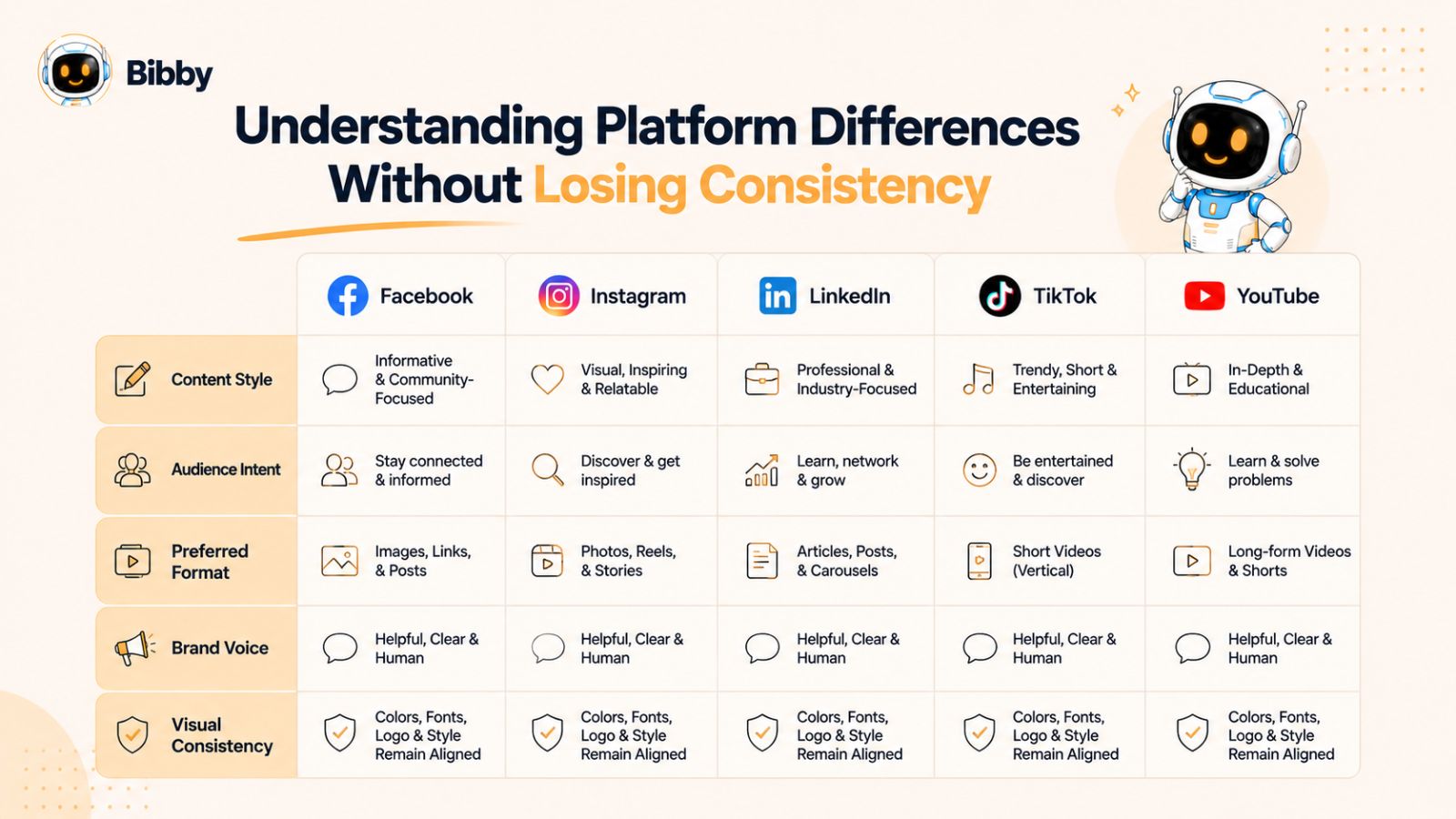
Understanding Platform Differences Without Losing Consistency
One of the biggest challenges brands face is adapting content for different social media platforms while maintaining a consistent identity. Every platform has its own audience behaviors, content formats, and engagement patterns. However, successful brands understand that consistency comes from maintaining the same core identity, not from publishing identical content everywhere.
The goal is to adapt the delivery while preserving the brand experience.
Facebook: Focus on Community and Relationships
Facebook remains a powerful platform for building communities and fostering long-term customer relationships. Users often engage with a mix of educational content, company updates, customer stories, and discussions.
To maintain consistency on Facebook:
- Use your established brand voice in captions and comments
- Maintain consistent visual branding
- Share content that aligns with your core messaging
- Encourage meaningful conversations with your audience
Even when discussing different topics, your audience should immediately recognize that the content comes from your brand.
Instagram: Prioritize Visual Storytelling
Instagram is a highly visual platform where aesthetics play a major role in brand perception. From feed posts and Reels to Stories and Highlights, every piece of content contributes to your overall brand image.
To maintain consistency on Instagram:
- Use a recognizable visual style
- Maintain consistent color palettes and design elements
- Keep captions aligned with your brand voice
- Create content around your established content pillars
A strong Instagram presence should feel like an extension of your overall brand rather than a separate identity.
LinkedIn: Showcase Expertise and Authority
LinkedIn audiences typically expect more professional and educational content. While the tone may become slightly more formal, your brand's personality should still be present.
To maintain consistency on LinkedIn:
- Share industry insights and thought leadership
- Use consistent messaging around your expertise
- Maintain your brand's unique communication style
- Align content with broader business objectives
Your audience should see the same values and brand positioning on LinkedIn that they see on every other platform.
TikTok: Embrace Authenticity
TikTok rewards authenticity, creativity, and relatability. Brands often make the mistake of abandoning their identity in pursuit of trends, which can create inconsistency.
Instead:
- Participate in trends that align with your brand
- Maintain your core messaging
- Use a recognizable tone and personality
- Create content that feels natural while supporting your brand goals
Authenticity should strengthen your brand identity, not replace it.
YouTube: Build Deeper Brand Connections
YouTube allows brands to provide more in-depth content through tutorials, educational videos, product demonstrations, interviews, and storytelling.
To maintain consistency on YouTube:
- Use branded intros and visual elements
- Keep messaging aligned with other channels
- Maintain a recognizable presentation style
- Reinforce your brand values throughout your content
Long-form video content provides an opportunity to deepen audience trust while strengthening brand recognition.
Adapt the Format, Not the Brand
Many businesses struggle with consistency because they either post identical content everywhere or create completely different identities for each platform.
The most effective approach lies between these extremes.
For example, a single content idea can be transformed into:
- A LinkedIn article
- An Instagram carousel
- A TikTok video
- A Facebook discussion post
- A YouTube tutorial
Although the format changes, the core message, brand voice, visual identity, and value proposition remain the same.
Create a Cross-Platform Content System
As brands expand across multiple channels, maintaining consistency manually becomes increasingly difficult. Different image sizes, content requirements, posting schedules, and audience expectations can quickly create operational complexity.
This is why leading brands rely on structured workflows, content systems, and automation tools to ensure every piece of content supports a unified brand experience across all social channels.
The next step is creating a framework that makes consistency scalable, regardless of how many platforms your brand manages.
How to Build a Cross-Channel Brand Framework
Maintaining brand consistency across multiple social platforms doesn't happen by accident. The most successful brands rely on documented systems and repeatable processes that ensure every piece of content aligns with their identity.
A cross-channel brand framework provides the structure needed to scale content production while maintaining consistency across Facebook, Instagram, LinkedIn, TikTok, YouTube, and any future platforms you adopt.
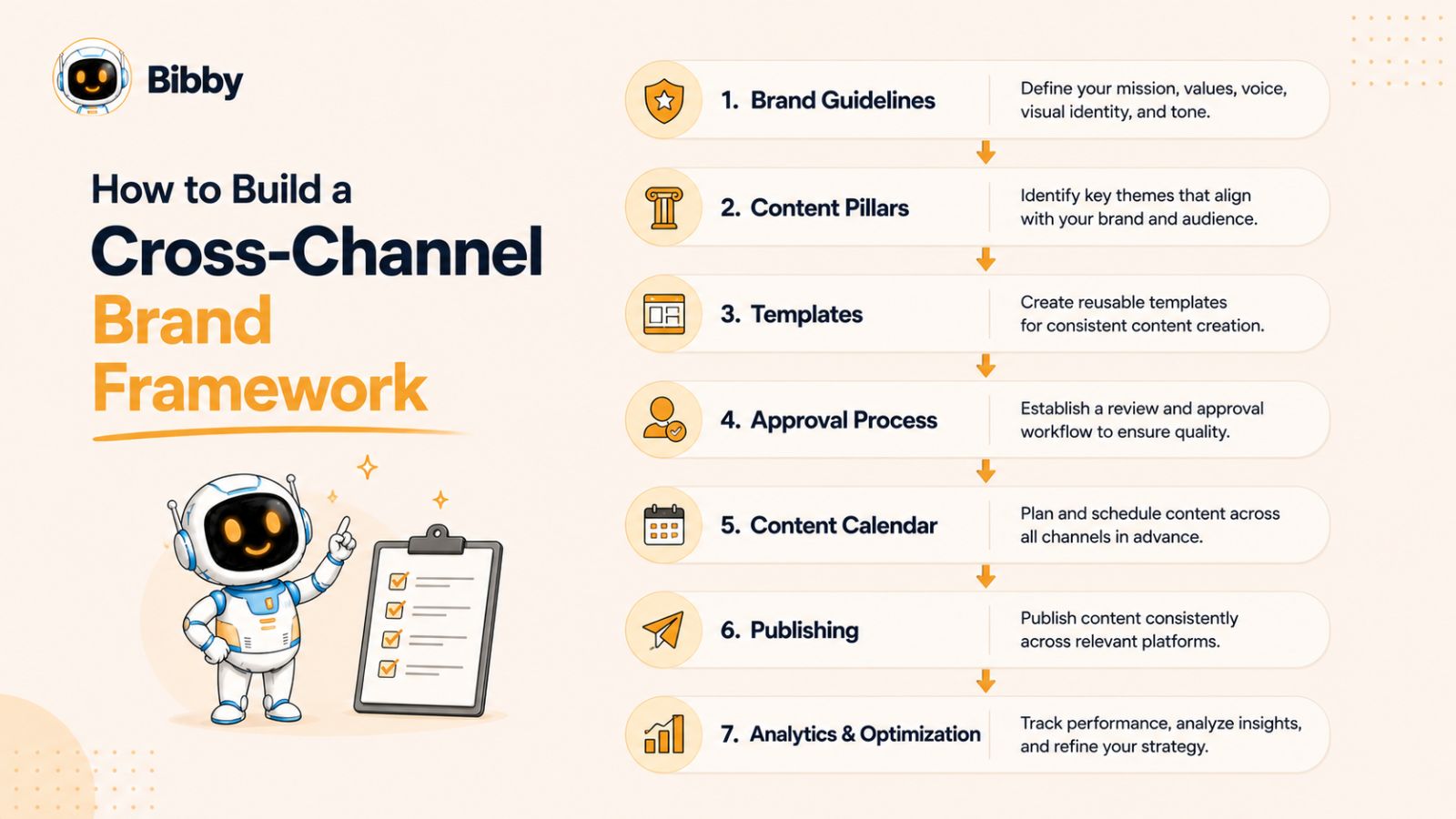
Create a Social Media Brand Style Guide
A social media style guide serves as the foundation of your brand framework. It ensures that everyone involved in content creation follows the same standards.
Your style guide should include:
- Brand mission and values
- Brand voice and tone guidelines
- Approved messaging pillars
- Visual identity standards
- Logo usage rules
- Brand colors and typography
- Content formatting guidelines
- Hashtag strategy
- Audience personas
Documenting these standards reduces confusion and helps maintain consistency even as your team grows.
Define Your Content Pillars
Content pillars create a strategic structure for your social media efforts. Instead of posting randomly, every piece of content should fit within predefined categories that support your business objectives.
Examples of content pillars include:
- Educational content
- Industry insights
- Customer success stories
- Product updates
- Behind-the-scenes content
- Thought leadership
- Community engagement
When content is organized around consistent themes, audiences develop a clearer understanding of your expertise and brand identity.
Develop Reusable Content Templates
Templates help maintain visual consistency while significantly reducing content creation time.
Consider creating templates for:
- Social media graphics
- Carousels
- Video covers
- Stories
- Promotional posts
- Announcements
- Educational content
Templates ensure that every post feels connected to your brand, even when different team members are creating content.
Establish a Content Approval Process
Without a review process, inconsistencies can quickly appear across channels.
A simple approval workflow can help ensure that content aligns with your brand standards before publication.
Review checkpoints may include:
- Brand voice consistency
- Visual compliance
- Messaging accuracy
- Grammar and quality control
- Platform optimization
The goal is not to slow down content production but to protect the consistency of your brand experience.
Create a Centralized Content Calendar
One of the most common causes of inconsistency is a lack of visibility into upcoming content.
A centralized content calendar allows teams to:
- Plan campaigns in advance
- Coordinate messaging across platforms
- Maintain consistent posting frequency
- Avoid duplicate content
- Align content with business goals
When all content is planned from a single source of truth, maintaining consistency becomes significantly easier.
Standardize Customer Interactions
Brand consistency extends beyond published content. It also includes how your team interacts with customers across social channels.
Develop guidelines for:
- Comment responses
- Direct messages
- Customer support interactions
- Community management
- Crisis communication
Whether a customer contacts you through Facebook, Instagram, LinkedIn, or TikTok, they should receive a consistent experience that reflects your brand values.
Measure and Refine Your Framework
A brand framework should evolve as your audience, business goals, and social platforms change.
Regular audits can help identify inconsistencies and opportunities for improvement.
Evaluate:
- Visual consistency
- Messaging alignment
- Engagement performance
- Audience feedback
- Brand perception
Continuous refinement ensures your framework remains effective as your social media presence grows.
Make Consistency Scalable
As the number of platforms, campaigns, and content formats increases, maintaining consistency manually becomes more difficult and time-consuming.
What starts as a manageable process can quickly become overwhelming when teams must create platform-specific assets, write captions, schedule posts, monitor performance, and maintain brand standards simultaneously.
This is where automation, AI-powered workflows, and centralized social media management tools become essential. They help businesses scale their content efforts while ensuring every post contributes to a unified brand experience.
Also read: The Perfect Post Length for Instagram, Facebook, LinkedIn, and X
Common Brand Consistency Mistakes to Avoid
Even brands with strong marketing teams can struggle to maintain consistency across social media channels. As content volume increases and new platforms emerge, small inconsistencies can gradually weaken brand recognition and create confusion among audiences.
Understanding the most common mistakes can help you avoid them and maintain a stronger, more unified brand presence.
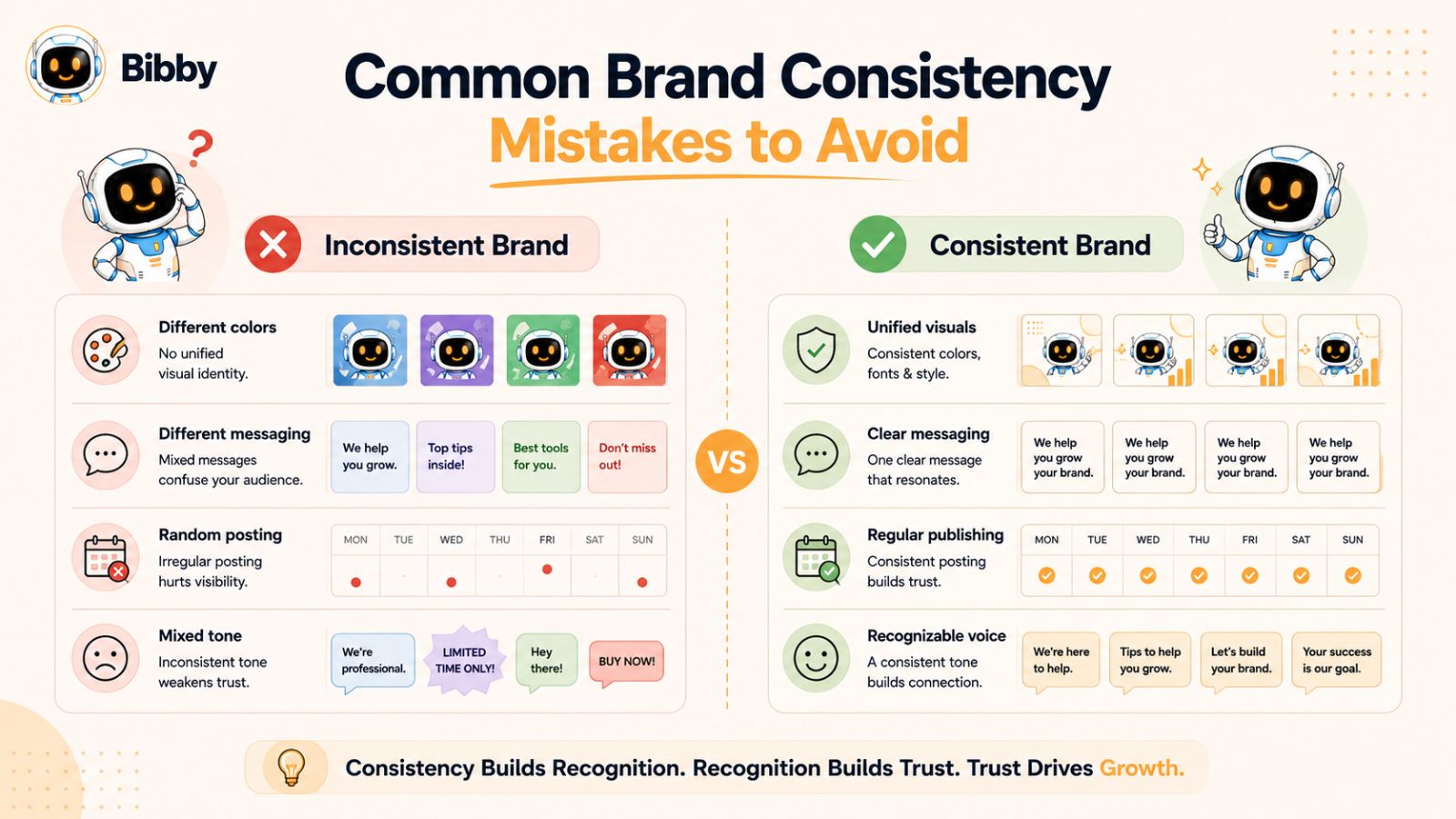
Using Different Brand Voices on Different Platforms
Many businesses mistakenly assume that each platform requires a completely different personality. As a result, they sound professional on LinkedIn, overly casual on Instagram, and entirely different on TikTok.
While content formats and communication styles should adapt to each platform, your core brand personality should remain recognizable everywhere.
Your audience should feel like they're interacting with the same brand regardless of the platform they choose.
Creating Inconsistent Visual Designs
Visual inconsistency is one of the fastest ways to weaken brand recognition.
Common issues include:
- Using different color palettes
- Inconsistent typography
- Varying logo treatments
- Unrelated graphic styles
- Different photography aesthetics
When visual elements constantly change, audiences have a harder time associating content with your brand.
Consistent visual branding helps your content stand out in crowded social feeds and reinforces familiarity over time.
Sending Mixed Messages
Your messaging should support a clear and consistent brand position.
Problems arise when businesses:
- Promote conflicting values
- Emphasize different benefits on different platforms
- Change their positioning frequently
- Target unrelated audiences simultaneously
If customers receive different messages depending on where they find you, they may struggle to understand what your brand actually represents.
Consistency in messaging builds clarity, trust, and stronger market positioning.
Posting Inconsistently
Brand consistency isn't just about what you post—it's also about how often you show up.
Long periods of inactivity followed by bursts of content can make a brand appear unreliable or disorganized.
A predictable posting schedule helps:
- Maintain audience engagement
- Strengthen brand visibility
- Improve algorithm performance
- Build audience expectations
Consistency in publishing often matters more than publishing large amounts of content sporadically.
Treating Each Platform as a Separate Marketing Channel
Some businesses manage each social platform independently, resulting in disconnected campaigns and inconsistent customer experiences.
For example:
- Instagram promotes one offer
- Facebook highlights another
- LinkedIn focuses on unrelated topics
- TikTok follows trends without brand alignment
While content should be tailored to each platform, all channels should support the same overall marketing objectives and brand narrative.
The strongest brands create integrated experiences across every touchpoint.
Ignoring Audience Interactions
Many brands focus heavily on content creation while overlooking how they engage with their audience.
Inconsistent responses, delayed replies, or different communication styles across platforms can negatively impact brand perception.
Customers often remember interactions more than content itself.
Establishing clear communication guidelines ensures that every conversation reflects your brand values and personality.
Failing to Monitor Performance
Without analytics, it's difficult to know whether your brand consistency efforts are working.
Regular performance reviews help identify:
- Which content resonates most
- Whether messaging is aligned
- How audiences perceive the brand
- Areas where consistency is breaking down
Data-driven decisions help strengthen your brand experience over time.
Relying Entirely on Manual Processes
As social media operations grow, manual workflows become increasingly difficult to manage.
Teams often spend significant time:
- Resizing images for multiple platforms
- Writing unique captions
- Scheduling posts individually
- Managing multiple publishing tools
- Tracking performance across channels
These repetitive tasks create more opportunities for inconsistency and human error.
The brands that scale successfully typically rely on automation and centralized workflows to maintain consistency while reducing workload. By streamlining content creation, publishing, and analytics, businesses can spend less time managing social media and more time building meaningful relationships with their audience.
Also read: The Ultimate Guide to Social Media Management Tools for Small Businesses
How AI and Automation Help Maintain Brand Consistency
Creating a consistent brand experience across social channels becomes increasingly difficult as your content volume grows. What starts as a manageable process for one or two platforms can quickly become overwhelming when you're publishing across Facebook, Instagram, LinkedIn, TikTok, YouTube, and other channels simultaneously.
This is where AI and automation can transform your social media workflow.
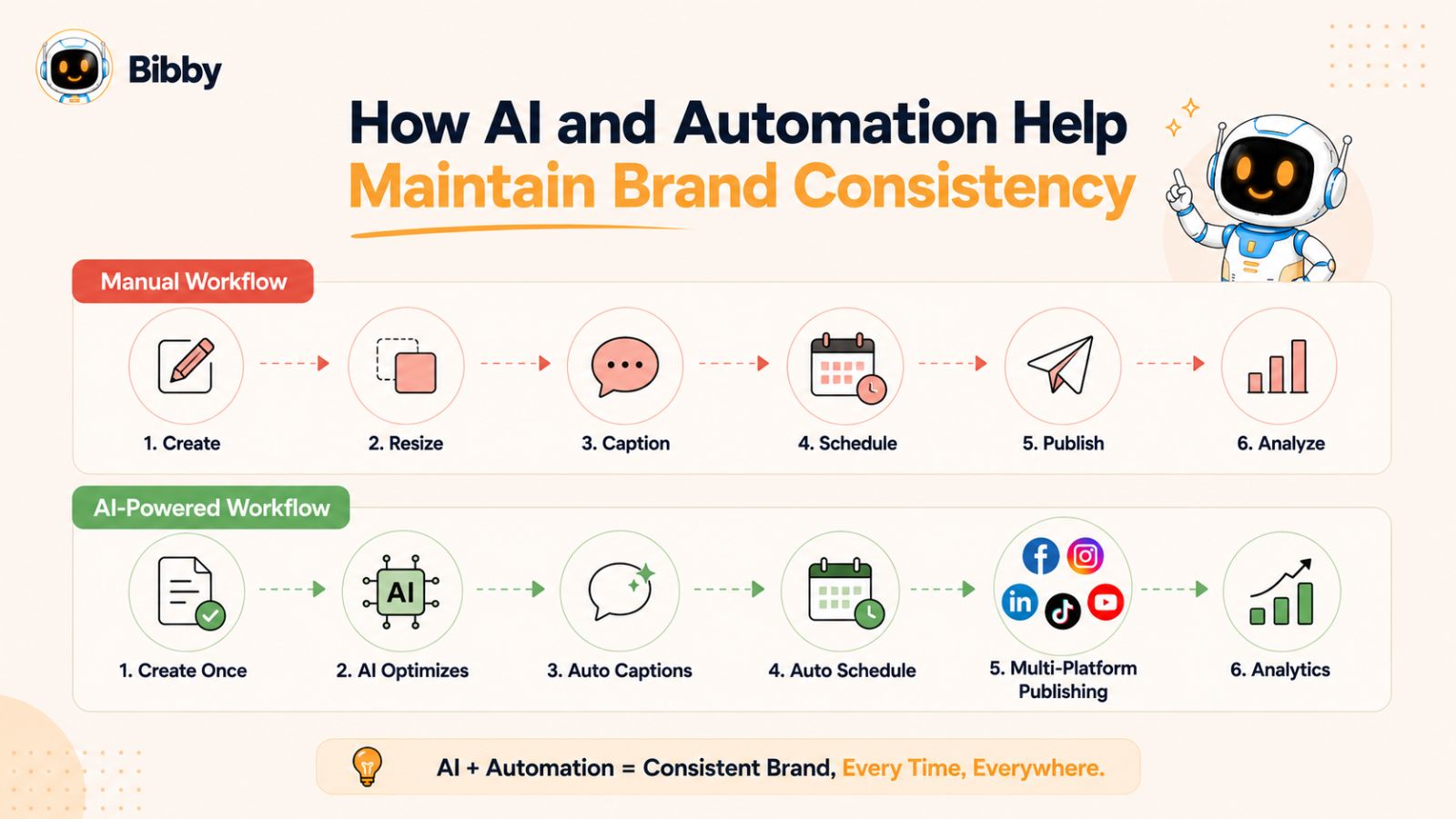
Why Manual Social Media Management Creates Challenges
Managing multiple social platforms manually often leads to inefficiencies and inconsistencies.
Common challenges include:
- Creating content for different platform formats
- Resizing images and videos manually
- Writing captions for every post
- Maintaining a consistent brand voice
- Scheduling content across multiple platforms
- Finding the best times to publish
- Tracking analytics in separate dashboards
As these tasks multiply, maintaining consistency becomes more difficult and time-consuming.
AI Helps Standardize Content Creation
AI-powered tools can help businesses create content that aligns with their brand guidelines while significantly reducing the time required to produce and publish content.
With the right workflow, AI can assist with:
- Caption generation
- Content ideation
- Visual creation
- Brand voice consistency
- Content optimization
- Audience targeting
Instead of starting from scratch every time, teams can create content faster while maintaining a more unified brand experience.
Automation Reduces Human Error
One of the biggest benefits of automation is consistency.
Automated workflows help ensure that:
- Posts are published on schedule
- Content follows brand standards
- Campaigns remain coordinated across channels
- Publishing gaps are minimized
- Team processes remain organized
This reduces the likelihood of mistakes that can weaken your brand presence.
AI-Powered Scheduling Improves Reach and Engagement
Timing plays a major role in social media performance. Posting at the wrong time can significantly reduce visibility and engagement.
Many modern social media tools use AI to analyze audience behavior and identify optimal publishing times.
This helps brands:
- Reach more people
- Increase engagement rates
- Improve content performance
- Maintain a consistent publishing schedule
Rather than relying on guesswork, AI can help determine when your audience is most likely to interact with your content.
Centralized Workflows Create a Better Brand Experience
A fragmented social media workflow often results in fragmented branding.
When content creation, scheduling, publishing, and analytics are spread across multiple tools, maintaining consistency becomes more challenging.
Centralized platforms simplify operations by bringing everything together in one place, making it easier to:
- Maintain visual consistency
- Standardize messaging
- Coordinate campaigns
- Monitor performance
- Scale content production
This creates a stronger and more cohesive brand experience across every social channel.
Consistency Becomes Easier When the Process Is Simpler
The most successful social media strategies are often built on simple, repeatable systems.
When teams can create, schedule, publish, and analyze content from a single workflow, they spend less time managing tasks and more time focusing on strategy, creativity, and audience engagement.
This is why many businesses are turning to AI-powered social media management platforms that automate repetitive tasks while helping maintain a consistent brand presence across every platform.
Also read the guide on Social Media Copywriting Using AI
How Bibby Simplifies Consistent Cross-Channel Branding
Maintaining a consistent brand experience across multiple social media platforms can be challenging. Every platform has different content requirements, image dimensions, audience expectations, and posting schedules. As brands grow, managing these moving parts manually often becomes time-consuming and difficult to scale.
Bibby simplifies this process by combining content creation, optimization, scheduling, publishing, and analytics into a single streamlined workflow.
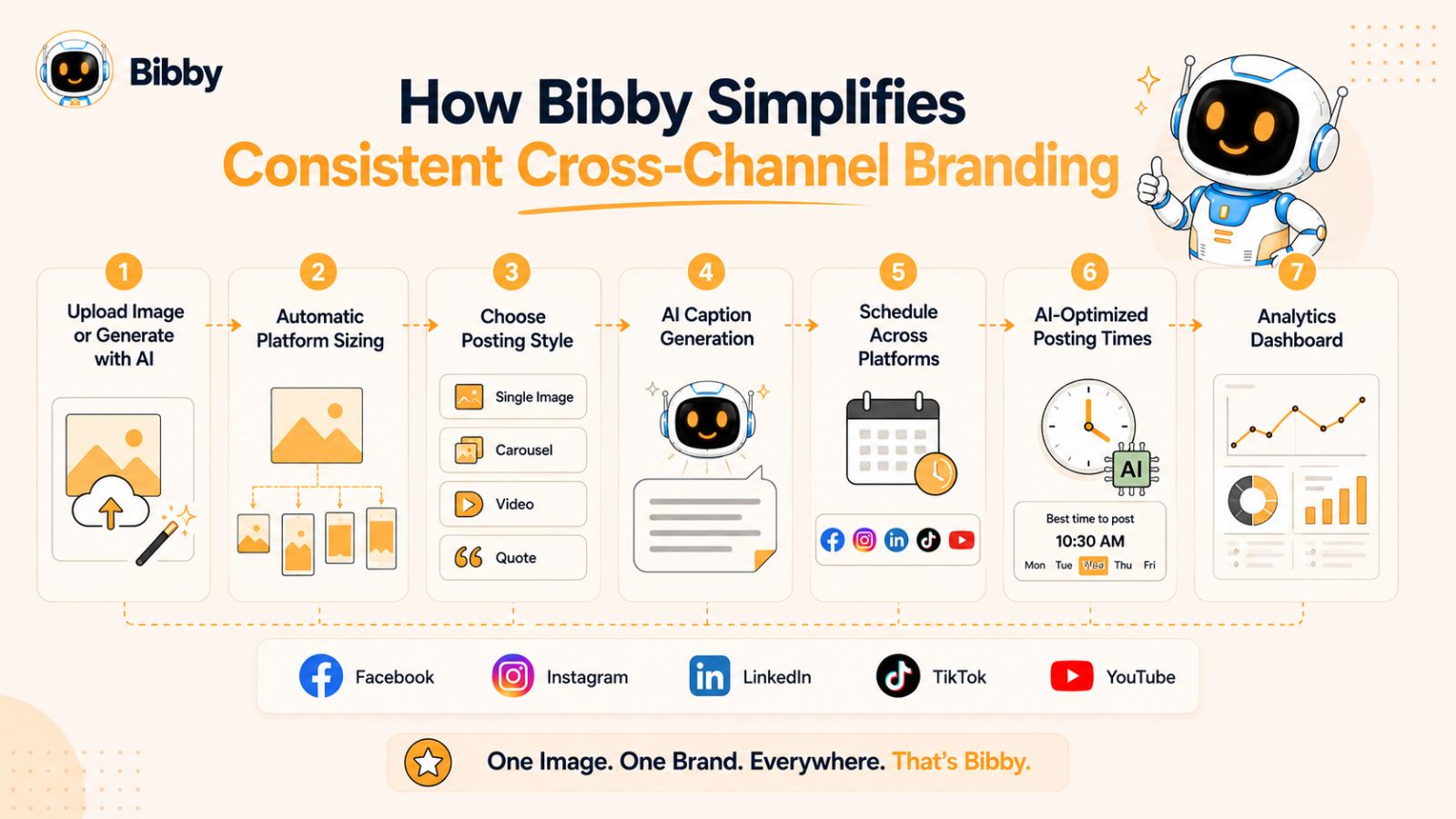
Create Content Faster With AI
One of the biggest obstacles to maintaining consistency is producing enough high-quality content for multiple platforms.
With Bibby, you can start by either:
- Uploading your own image
- Generating an image using AI
This flexibility allows businesses to quickly create content while maintaining a consistent visual identity across channels.
Instead of switching between multiple design tools, users can create and prepare content within a single workflow.
Automatically Optimize Content for Every Platform
Each social network has its own recommended image sizes and formatting requirements.
Manually resizing content for different platforms can be tedious and often leads to inconsistencies.
Bibby automatically handles platform-specific sizing requirements, helping ensure that your content looks professional everywhere it is published.
Whether you're posting to Facebook, Instagram, LinkedIn, TikTok, or YouTube, your content is optimized for the platform without requiring additional design work.
Generate Brand-Aligned Captions Automatically
Writing captions for multiple platforms can consume a significant amount of time, especially when trying to maintain a consistent voice.
After creating or uploading your content, Bibby can automatically generate captions based on your chosen posting style.
This helps businesses:
- Save time
- Maintain a consistent tone of voice
- Produce content more efficiently
- Scale content creation across channels
Rather than starting from a blank page, marketers can quickly generate content that aligns with their brand messaging.
Schedule Content Across Multiple Platforms
Publishing content manually across multiple social networks often results in missed opportunities and inconsistent posting schedules.
Bibby enables users to schedule content across major platforms, including:
- TikTok
- YouTube
By managing everything from a single dashboard, businesses can maintain a coordinated and consistent social media presence.
Publish at AI-Optimized Times
Even great content can underperform if it is published at the wrong time.
Bibby uses AI-powered scheduling to help determine optimal posting times based on engagement opportunities. This removes much of the guesswork involved in scheduling and helps maximize the visibility of your content.
The result is a more consistent publishing strategy designed to improve reach and engagement.
Manage More Than Just Standard Posts
Modern social media strategies involve more than static images.
Bibby supports a variety of content formats, including:
- Images
- Videos
- Stories
- Multi-platform campaigns
This allows brands to maintain consistency across every type of content they publish, not just traditional feed posts.
Monitor Performance From One Place
Brand consistency should be measured and refined over time.
Bibby's analytics capabilities allow businesses to monitor performance across platforms from a centralized location.
By tracking key metrics, teams can:
- Identify top-performing content
- Understand audience behavior
- Measure engagement trends
- Improve future campaigns
- Refine brand messaging
Having analytics integrated into the same workflow helps brands make more informed decisions while maintaining a cohesive social media strategy.
Why Bibby Helps Brands Stay Consistent
Consistency becomes much easier when content creation, optimization, scheduling, publishing, and analytics are managed through a single system.
Instead of juggling multiple tools and workflows, Bibby provides a simplified process:
- Upload an image or generate one with AI.
- Select your preferred posting style.
- Let Bibby generate captions automatically.
- Schedule content across multiple platforms.
- Publish at AI-optimized times.
- Track results through built-in analytics.
By reducing manual work and streamlining social media management, Bibby helps businesses maintain a professional and consistent brand experience across every channel while freeing up valuable time for strategy and growth.
You may also like reading: How to Build a Successful Social Media Strategy from Scratch
Best Practices for Maintaining Brand Consistency Long-Term
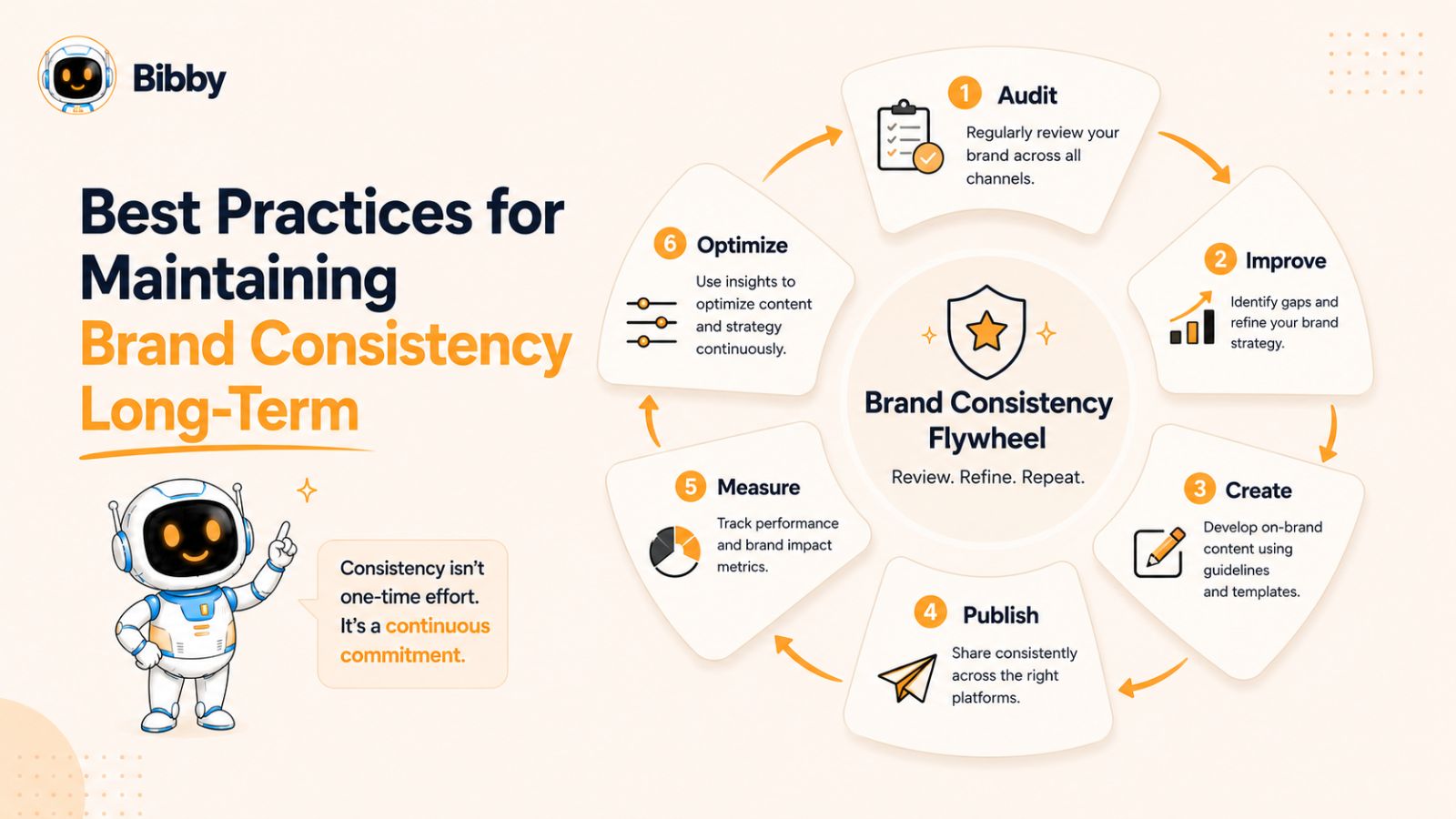
Creating a consistent brand experience is not a one-time project. As your business grows, new team members join, social platforms evolve, and content demands increase, maintaining consistency requires ongoing attention and refinement.
The most successful brands treat consistency as an ongoing process rather than a one-time goal.
Conduct Regular Brand Audits
Over time, even well-managed brands can develop inconsistencies.
A regular brand audit helps identify areas where your social media presence may have drifted from established guidelines.
Review factors such as:
- Visual branding
- Content quality
- Brand voice
- Messaging consistency
- Posting frequency
- Audience engagement
Quarterly audits can help ensure that every social channel continues to reflect your brand accurately.
Keep Your Brand Guidelines Updated
Brand guidelines should evolve alongside your business.
As you introduce new products, services, content formats, or social platforms, update your documentation to reflect these changes.
Your guidelines should remain a living resource that provides clear direction for everyone involved in content creation and community management.
The more detailed and accessible your guidelines are, the easier it becomes to maintain consistency at scale.
Train Everyone Involved in Content Creation
Brand consistency is a team effort.
Whether content is created by internal marketers, freelancers, agencies, or customer support representatives, everyone should understand your brand standards.
Training should cover:
- Brand voice and tone
- Visual identity requirements
- Messaging priorities
- Customer communication standards
- Social media best practices
When everyone follows the same framework, your audience receives a more unified experience.
Create Repeatable Content Workflows
Consistency improves when processes are repeatable.
Documenting workflows helps ensure that content moves through the same quality-control process every time.
Effective workflows often include:
- Content planning
- Creation
- Review and approval
- Scheduling
- Publishing
- Performance analysis
The more structured your process, the easier it becomes to maintain quality and consistency across channels.
Monitor Audience Feedback
Your audience can often identify inconsistencies before your team does.
Pay close attention to:
- Comments
- Direct messages
- Reviews
- Brand mentions
- Customer questions
Feedback can reveal whether your messaging is clear, whether your content resonates with your audience, and whether your brand experience feels consistent across different platforms.
Use Analytics to Guide Decisions
Data should play a central role in your brand consistency strategy.
Regularly reviewing analytics can help you understand:
- Which content performs best
- Which messaging resonates most
- Where engagement is strongest
- How audience preferences evolve over time
These insights allow you to refine your strategy while remaining aligned with your core brand identity.
Balance Consistency With Adaptability
Consistency is important, but rigidity can be limiting.
Social media platforms change constantly, and audience preferences evolve over time. The most successful brands maintain a stable identity while adapting their content formats, tactics, and distribution strategies when needed.
Think of consistency as protecting your brand's foundation while allowing flexibility in how you communicate and deliver value.
Leverage Automation to Scale Consistency
As your social media presence expands, maintaining consistency manually becomes increasingly difficult.
Automation tools can help streamline repetitive tasks such as:
- Content scheduling
- Caption generation
- Asset management
- Performance tracking
- Multi-platform publishing
By reducing operational complexity, businesses can focus more on strategy, creativity, and audience engagement while ensuring that every social channel delivers a cohesive brand experience.
The combination of strong brand guidelines, repeatable workflows, ongoing optimization, and intelligent automation creates a sustainable system for maintaining brand consistency over the long term.
Also read: Do Hashtags Still Matter
Final thoughts
Creating a consistent brand experience across social channels is one of the most effective ways to build trust, strengthen brand recognition, and improve marketing results. While every platform has unique formats and audience expectations, successful brands maintain the same core identity through consistent messaging, visual branding, and customer experiences.
The most important takeaway is that consistency goes beyond logos and colors. It requires a clear brand voice, well-defined content pillars, and a structured framework that guides every piece of content you publish. Equally important is having systems in place that make consistency scalable as your social media presence grows.
Finally, leveraging AI and automation can dramatically simplify the process. Tools like Bibby help businesses streamline content creation, automatically optimize content for different platforms, generate captions, schedule posts at AI-optimized times, and monitor performance from a single dashboard—all while supporting a more consistent brand experience.
Now that you understand how to create a unified presence across social media, the next step is learning how to build a complete social media content strategy that not only maintains consistency but also turns followers into engaged customers and loyal brand advocates.
Frequently Asked Questions
What is a consistent brand experience?
A consistent brand experience is when customers receive the same overall impression of a business across every touchpoint, including social media platforms, websites, emails, advertisements, and customer interactions. Consistency is achieved through unified messaging, visual branding, tone of voice, and customer experiences.
Why is brand consistency important on social media?
Brand consistency helps build trust, improve brand recognition, and create a more professional image. When audiences encounter the same messaging and visual identity across platforms, they are more likely to remember your brand and feel confident engaging with your business.
How can I maintain brand consistency across multiple social media platforms?
The most effective approach is to create clear brand guidelines that define your voice, messaging, visual identity, and content strategy. Using content templates, centralized workflows, and social media management tools can also help ensure consistency across platforms.
Does brand consistency mean posting the same content everywhere?
No. Brand consistency does not require publishing identical content across every channel. Instead, it means maintaining the same brand identity while adapting content formats to suit each platform's audience and best practices.
What are the key elements of a consistent brand experience?
The main elements include:
- Brand voice and tone
- Visual identity
- Core messaging
- Content pillars
- Customer interactions
- Publishing consistency
Together, these elements create a cohesive experience that audiences can recognize and trust.
How often should brands audit their social media presence?
Most businesses should conduct a brand audit at least once per quarter. Regular audits help identify inconsistencies in visuals, messaging, content quality, and audience engagement before they negatively impact brand perception.
What are the biggest brand consistency mistakes businesses make?
Common mistakes include:
- Using different brand voices on different platforms
- Inconsistent visual branding
- Mixed messaging
- Irregular posting schedules
- Poor customer engagement practices
- Managing channels in isolation
These issues can confuse audiences and weaken brand recognition.
How does AI help improve brand consistency?
AI can help standardize content creation, generate captions, automate scheduling, optimize posting times, and reduce manual errors. This allows businesses to maintain a more consistent presence while saving time and improving efficiency.
How does Bibby help create a consistent brand experience?
Bibby simplifies social media management by bringing content creation, optimization, scheduling, publishing, and analytics into a single workflow. Users can upload or generate images with AI, automatically optimize content sizes for different platforms, generate captions, schedule posts at AI-optimized times, and track performance across multiple social channels.
Which social media platforms should businesses focus on for brand consistency?
The most important platforms depend on your audience and business goals. However, many brands prioritize maintaining consistency across Facebook, Instagram, LinkedIn, TikTok, and YouTube because these platforms collectively cover a broad range of audiences and content formats.