

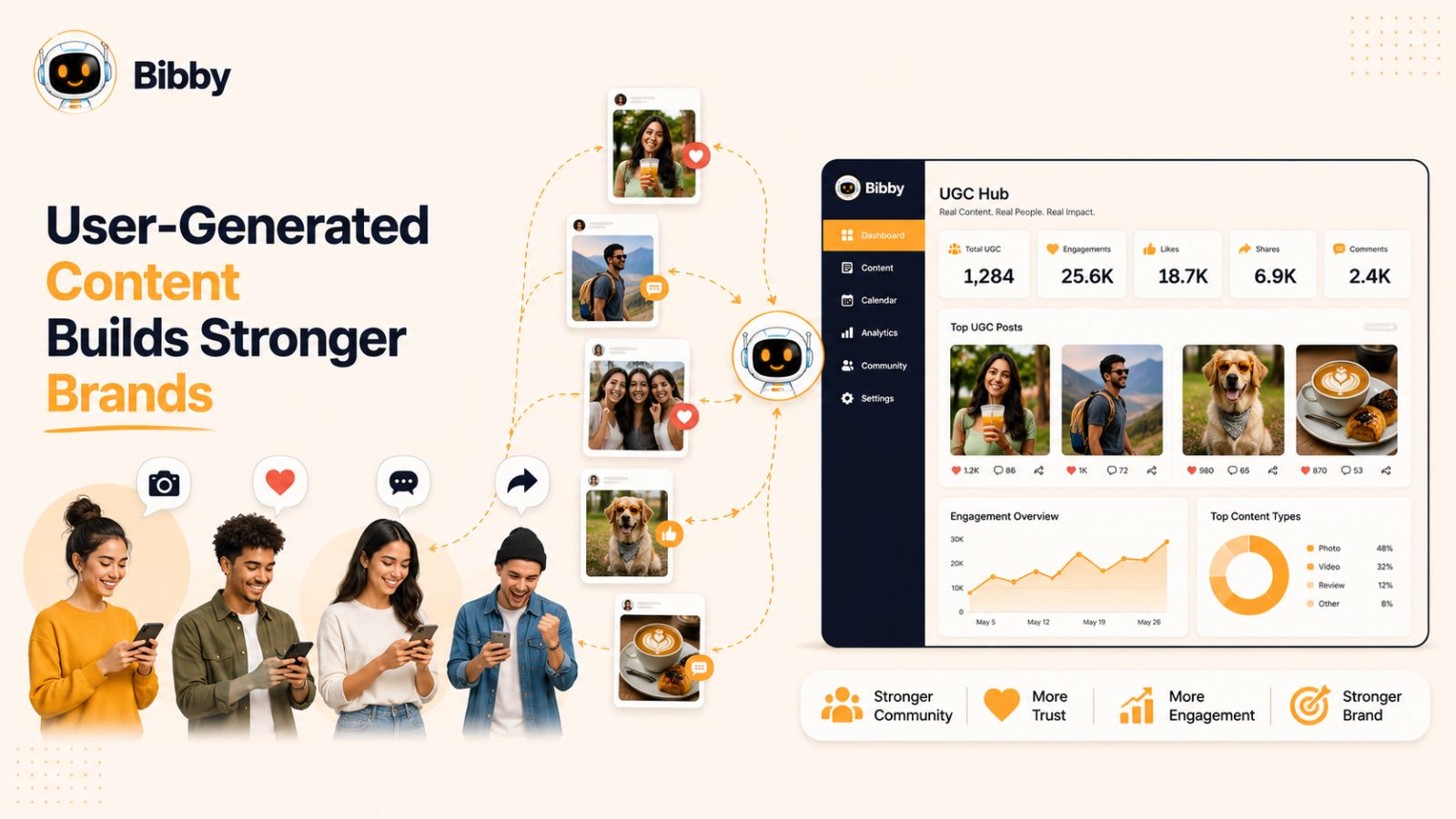
User-generated content (UGC) has become one of the most powerful ways for brands to build trust, increase engagement, and grow their presence on social media.
Whether you're a small business, a growing startup, or an established brand, creating enough high-quality social media content can be challenging. A well-planned social media user-generated content strategy solves this problem by turning your customers into authentic brand advocates while helping you create content that resonates with your audience and drives meaningful business results.
In this blog, we will discuss:
- How to build an effective UGC strategy from planning to execution.
- Proven tactics to encourage customers to create authentic content.
- How AI tools can streamline content creation, scheduling, and performance tracking.
By the end of this guide, you'll have a practical framework for creating a scalable user-generated content strategy that strengthens your brand, builds lasting customer relationships, and delivers consistent results across every major social media platform.
Also read: Social Media Automation for Franchises and Multi-Location Businesses
What Is User-Generated Content (UGC)?
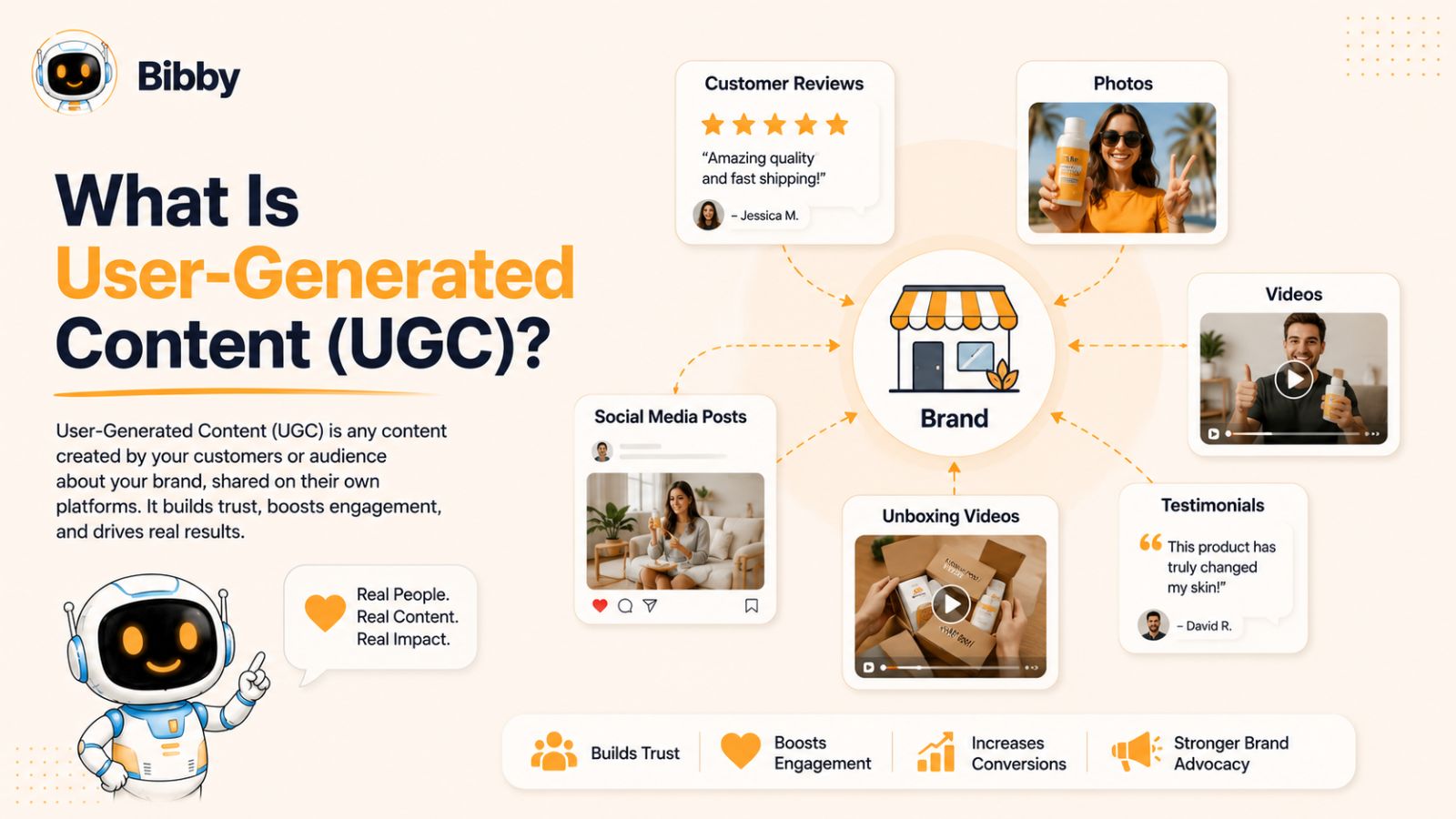
User-generated content (UGC) is any content—such as photos, videos, reviews, testimonials, social media posts, or stories—created by customers, fans, or community members rather than the brand itself. Unlike traditional branded content, UGC showcases real experiences from real people, making it one of the most authentic and persuasive forms of marketing.
Today's consumers are more likely to trust recommendations from other customers than polished advertisements. That's why brands across industries encourage their audiences to share their experiences online and then repurpose that content across their marketing channels.
Types of User-Generated Content
UGC comes in many formats, giving brands plenty of opportunities to connect with their audiences. Some of the most common types include:
- Customer photos featuring your products
- Short-form videos on platforms like TikTok, Instagram Reels, and YouTube Shorts
- Product reviews and star ratings
- Customer testimonials and success stories
- Social media mentions and tagged posts
- Unboxing and first-impression videos
- Before-and-after transformation photos
- Tutorials and how-to videos
- Community discussions and forum posts
- User-created memes and creative content
Each format helps build credibility while giving potential customers an authentic look at your products or services.
What Makes UGC So Effective?
Unlike promotional content created by brands, user-generated content reflects genuine customer experiences. This authenticity helps people relate to your brand more easily and reduces skepticism often associated with traditional advertising.
UGC also encourages community participation. When customers see others sharing their experiences, they're more likely to join the conversation, create their own content, and become active advocates for your brand.
For businesses, this creates a continuous stream of fresh content that supports marketing efforts without requiring every post to be produced in-house.
User-Generated Content vs. Brand-Created Content
Both content types play an important role in a successful marketing strategy, but they serve different purposes.
Brand-created content gives you complete control over your messaging, visuals, and campaigns. It's ideal for product launches, announcements, educational resources, and maintaining consistent branding.
User-generated content, on the other hand, provides authentic social proof. It demonstrates how real customers use and enjoy your products, helping build trust and influence purchasing decisions.
The strongest social media strategies combine both approaches—using branded content to communicate your message while leveraging user-generated content to reinforce credibility and strengthen customer relationships.
Also read: How to Manage Multiple Brands on Social Media Efficiently
Why Every Brand Needs a Social Media User-Generated Content Strategy
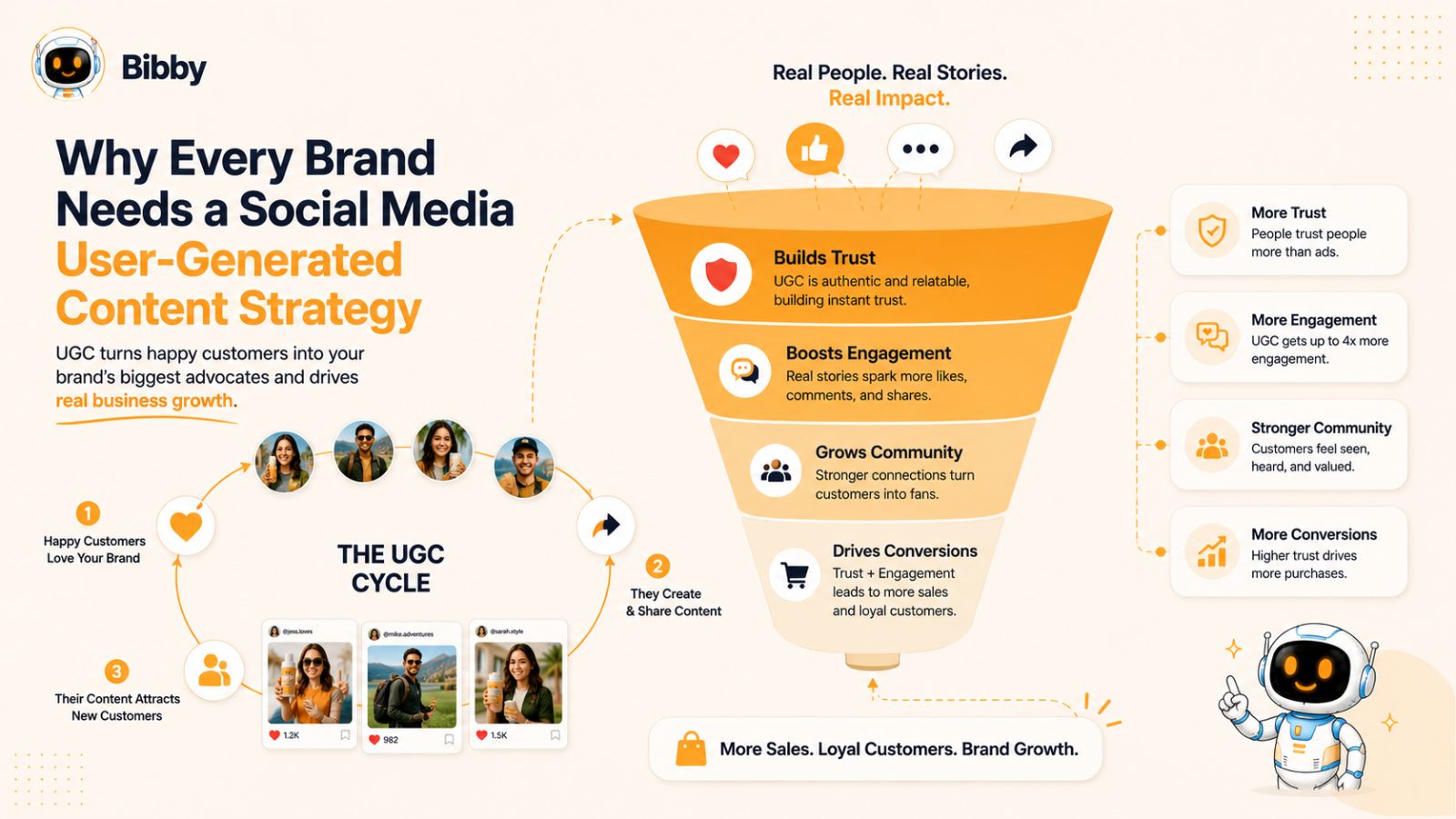
Creating great content consistently is one of the biggest challenges brands face on social media. Audiences expect fresh, engaging posts across multiple platforms, while businesses must balance limited time, budgets, and creative resources. A well-defined social media user-generated content strategy helps solve these challenges by turning satisfied customers into content creators and brand advocates.
Instead of relying solely on in-house marketing teams, brands can leverage authentic customer experiences to build trust, increase engagement, and create a stronger online community.
Build Authentic Trust
Trust is one of the most valuable assets a brand can earn, and user-generated content is one of the fastest ways to build it. People naturally trust recommendations, reviews, and experiences shared by other customers more than traditional advertisements.
When potential buyers see real people using and enjoying your products, they gain confidence in their purchasing decisions. This authenticity can significantly influence how consumers perceive your brand.
Increase Engagement
Social media algorithms reward content that sparks conversations and interactions. User-generated content often receives higher engagement because it feels genuine and relatable rather than overly promotional.
Encouraging customers to share their experiences through photos, videos, reviews, or testimonials creates opportunities for likes, comments, shares, and meaningful discussions that expand your brand's reach organically.
Strengthen Social Proof
Every customer post, review, or testimonial serves as social proof that others trust and value your brand. As more people share positive experiences, your business builds credibility with prospective customers who may be discovering your products for the first time.
The more authentic voices promoting your brand, the easier it becomes to overcome purchase hesitation.
Reduce Content Creation Costs
Producing high-quality content consistently can be expensive and time-consuming. While branded content remains essential, incorporating user-generated content reduces the pressure to create every post from scratch.
By curating customer photos, videos, and testimonials, marketing teams can maintain an active content calendar while showcasing authentic experiences that resonate with their audience.
Create a Stronger Community
User-generated content transforms customers from passive buyers into active participants. Featuring their content makes them feel valued and encourages deeper engagement with your brand.
As more people contribute, your social channels evolve into thriving communities where customers inspire one another, share ideas, and strengthen loyalty through meaningful interactions.
Improve Conversions and Sales
Authentic customer experiences often have a greater impact on purchasing decisions than polished promotional campaigns. Reviews, testimonials, unboxing videos, and real-world product demonstrations help reduce uncertainty and answer questions that potential buyers may have.
When combined with strategic calls to action, user-generated content can increase conversion rates, improve customer confidence, and contribute to long-term business growth.
Scale Your Strategy with AI and Automation
As your user-generated content library grows, managing assets, writing captions, scheduling posts, and tracking performance across multiple platforms can become overwhelming. AI-powered automation helps brands stay consistent while reducing manual work.
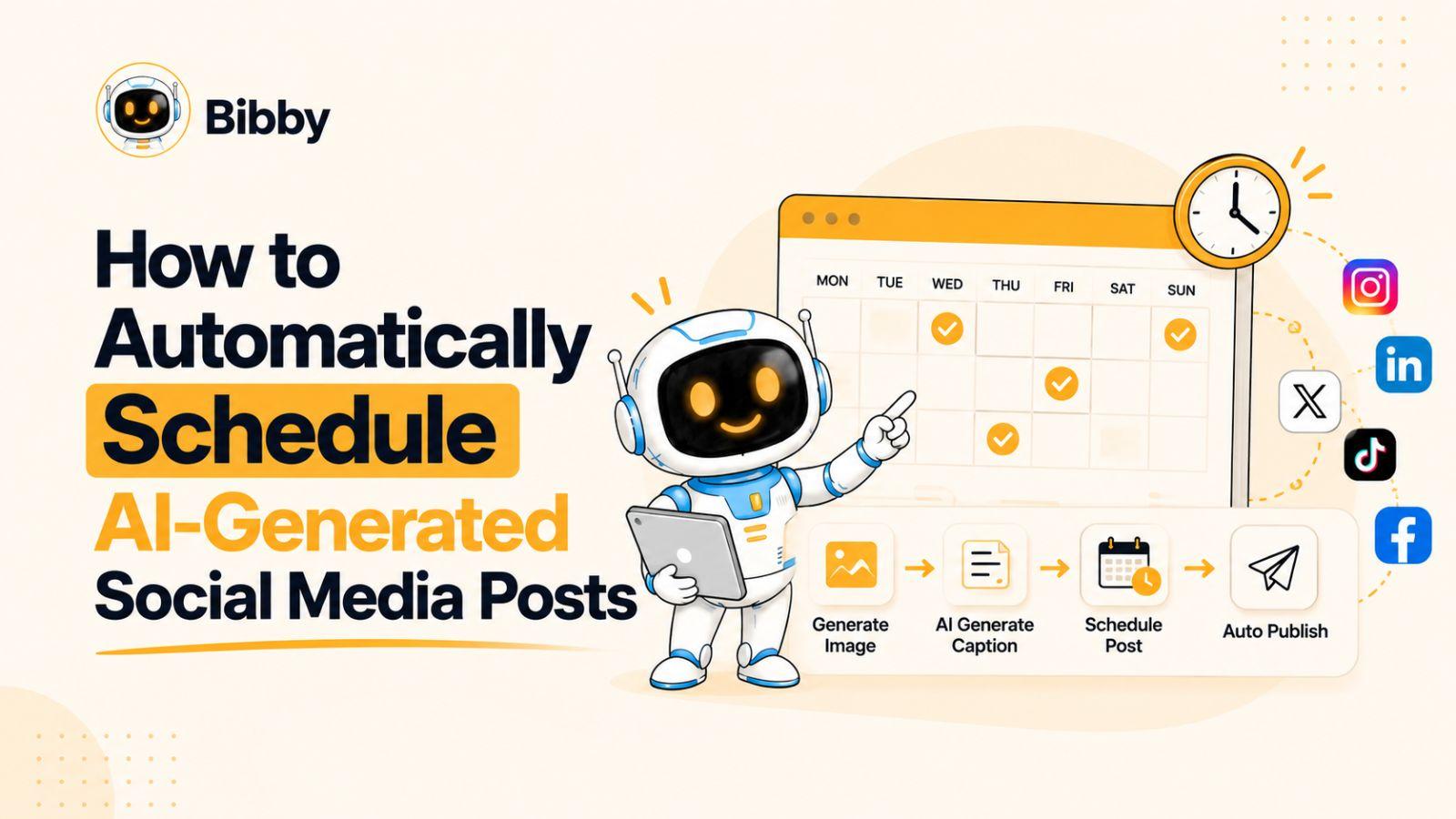
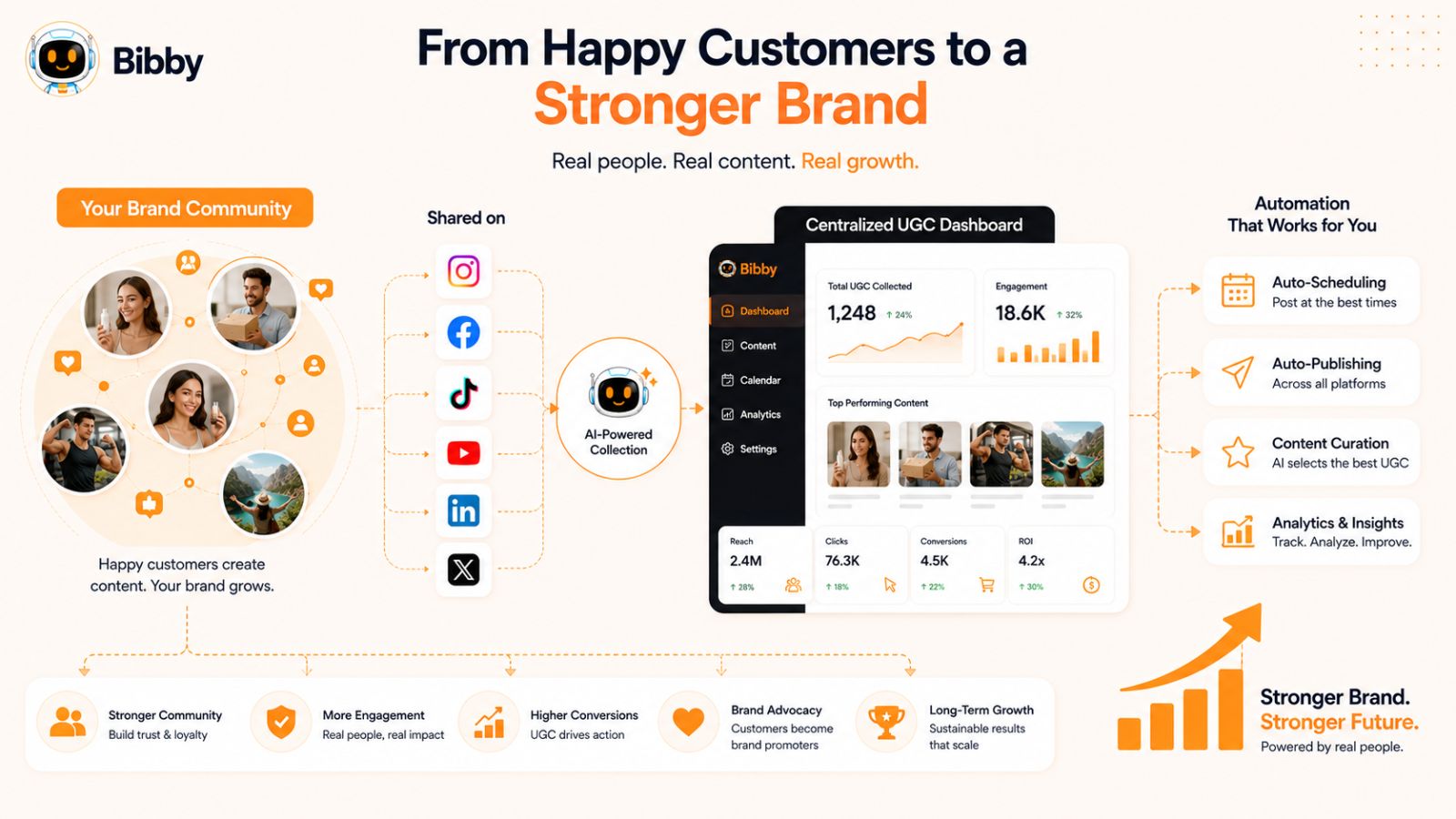
For example, Bibby simplifies the entire social media workflow. You can upload your own images or generate visuals with AI, choose your preferred posting style, and let Bibby automatically create platform-specific captions. From there, it schedules your content at AI-optimized posting times across Facebook, Instagram, LinkedIn, YouTube, and TikTok—all from a single dashboard.
Beyond scheduling, Bibby also supports videos, stories, and other content formats while providing built-in analytics to help you measure performance and refine your strategy. Instead of spending hours managing social media manually, you can automate repetitive tasks and focus on building stronger relationships with your audience and encouraging more user-generated content.
Benefits of User-Generated Content
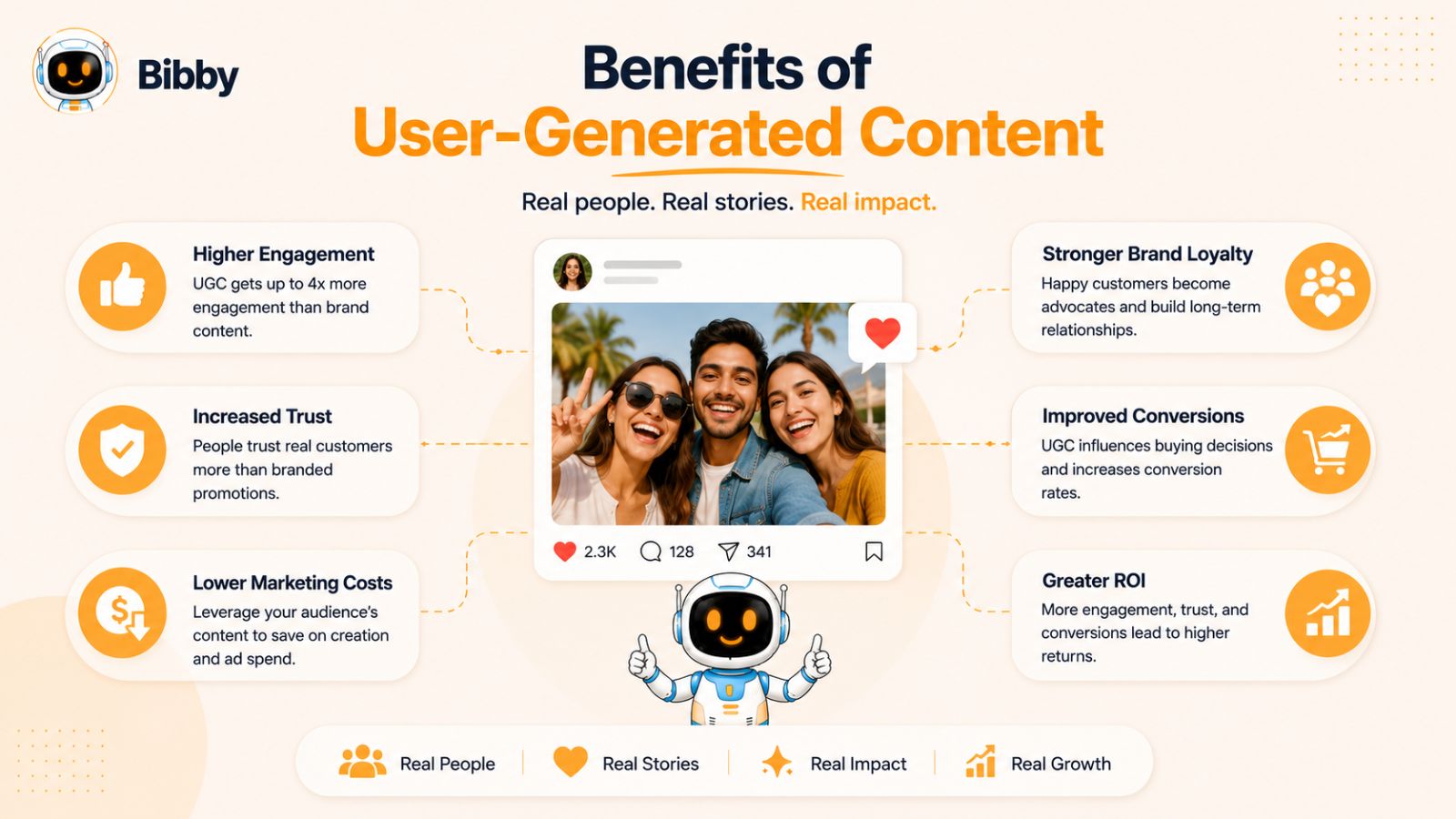
A successful social media user-generated content strategy does more than fill your content calendar. It helps brands build credibility, foster stronger customer relationships, and achieve measurable marketing results. Whether you're looking to increase brand awareness, generate leads, or boost sales, UGC can support every stage of the customer journey.
Higher Engagement Rates
People are naturally drawn to authentic content shared by other users. Customer photos, videos, testimonials, and reviews often feel more relatable than traditional promotional posts, encouraging more likes, comments, shares, and saves.
Higher engagement also signals to social media algorithms that your content is valuable, increasing the likelihood that it will be shown to a larger audience.
Build Trust and Credibility
Modern consumers research products before making purchasing decisions. Seeing real customers share positive experiences provides reassurance that your products or services deliver on their promises.
Unlike paid advertisements, user-generated content acts as unbiased social proof, helping potential buyers feel more confident about choosing your brand.
Also read: The Complete Guide to Cross-Posting on Social Media
Increase Brand Awareness
Every time a customer tags your brand, uses your campaign hashtag, or shares content featuring your products, your business is introduced to a new audience. This organic exposure expands your reach without requiring additional advertising spend.
As more users create and share content, your brand gains visibility across multiple social platforms, increasing recognition and attracting potential customers.
Improve Conversion Rates
User-generated content helps reduce uncertainty during the buying process. Product reviews, testimonials, unboxing videos, and real-life demonstrations answer common questions while showing how your products perform in everyday situations.
Adding UGC to product pages, landing pages, and social media campaigns can increase customer confidence and encourage more purchases.
Lower Content Creation Costs
Creating original content for multiple social media platforms requires significant time, creative effort, and resources. Incorporating customer-created content into your marketing strategy reduces the need to produce every asset internally.
Instead of constantly organizing new photoshoots or video productions, brands can curate high-quality content already being created by their community.
Strengthen Customer Loyalty
Featuring customer content is a simple but effective way to recognize and appreciate your audience. When people see their posts highlighted by a brand they admire, they often feel more connected and valued.
This recognition encourages repeat engagement, increases customer retention, and motivates others to share their own experiences, creating a continuous cycle of community participation.
Improve Search Visibility
Although user-generated content is primarily associated with social media, it can also support your broader digital marketing efforts. Reviews, testimonials, and customer stories provide fresh, relevant content that can be repurposed on your website, product pages, blogs, and landing pages.
Regularly updating your website with authentic customer content can improve user engagement metrics and help search engines recognize your site as active and valuable.
Generate Valuable Customer Insights
Every piece of user-generated content offers insight into how customers perceive your brand. By analyzing reviews, captions, comments, and shared experiences, businesses can better understand customer preferences, identify common pain points, and uncover opportunities for product improvements or new marketing campaigns.
These insights help brands make more informed decisions while creating content that resonates with their target audience.
Maximize ROI with AI-Powered Workflows
The true value of user-generated content increases when it's easy to manage at scale. Instead of spending hours organizing assets, writing captions, and manually publishing posts across multiple platforms, AI-powered tools can automate much of the process.
For example, Bibby allows marketers to upload or generate AI images, automatically create engaging captions based on a selected posting style, schedule posts at AI-optimized times, publish across Facebook, Instagram, LinkedIn, YouTube, and TikTok, and monitor performance through built-in analytics. By reducing repetitive tasks, businesses can focus on encouraging more customers to create authentic content while maintaining a consistent and effective social media presence.
Also read: Social Media Automation for B2B Companies: The Complete Guide
The Psychology Behind Why User-Generated Content Works
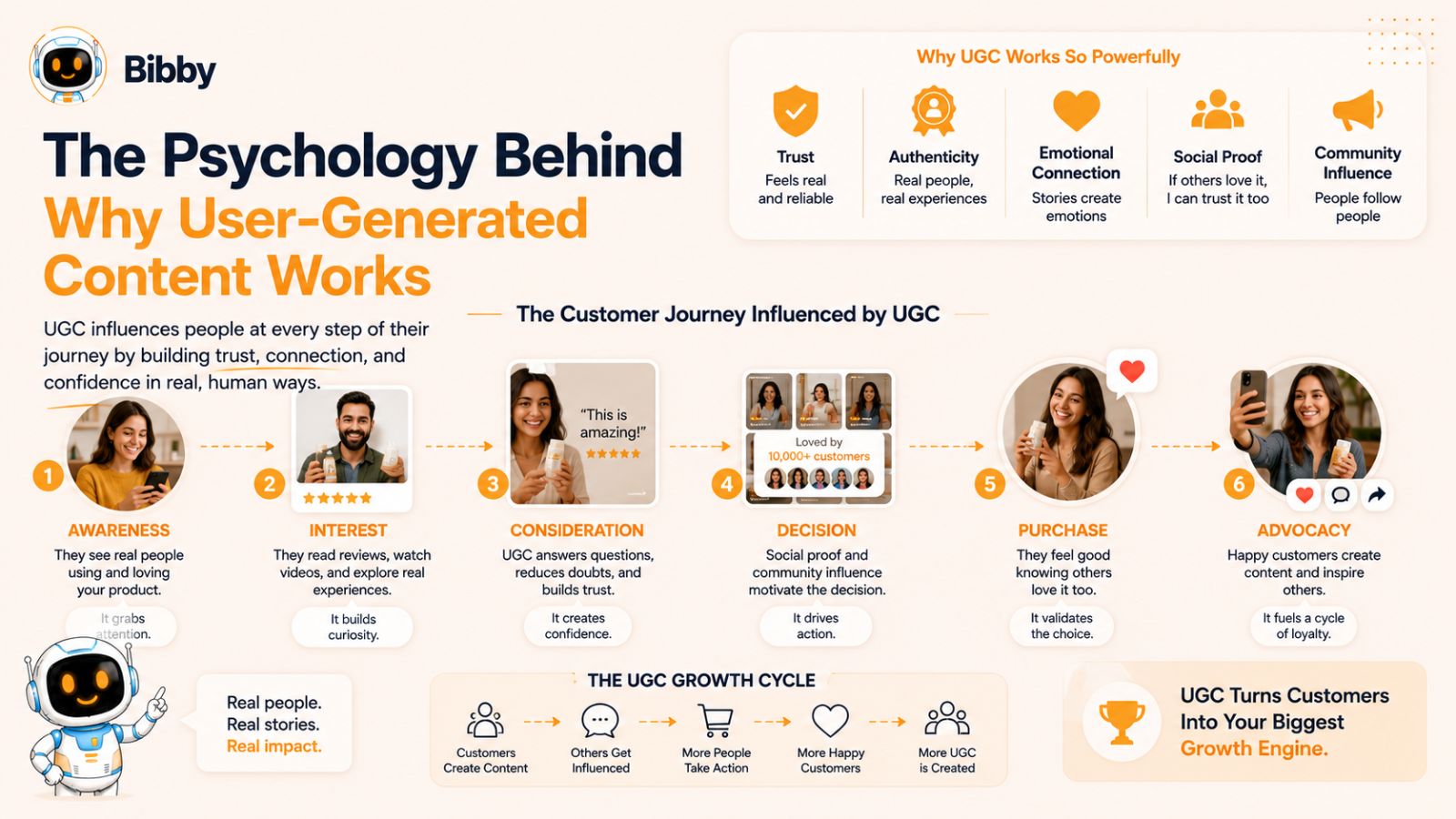
User-generated content isn't just another marketing trend—it's effective because it aligns with how people naturally make decisions. Before buying a product or trying a new service, consumers look for reassurance from others who have already had the experience. UGC taps into fundamental psychological principles that influence trust, engagement, and purchasing behavior.
Understanding why user-generated content works can help you build campaigns that feel authentic, encourage participation, and drive better results.
Social Proof Influences Decisions
People often look to others when making decisions, especially when they're uncertain. This psychological concept, known as social proof, explains why reviews, testimonials, and customer photos have such a strong influence on buying behavior.
When potential customers see real people using and recommending your products, it validates your brand's credibility and reduces the perceived risk of making a purchase.
Authenticity Builds Trust
Consumers are exposed to thousands of advertisements every day, making it easier to recognize overly polished or overly promotional content. User-generated content stands out because it reflects genuine experiences rather than carefully crafted marketing messages.
Authentic customer stories, unfiltered photos, and honest reviews help humanize your brand, making it easier for audiences to relate to and trust your business.
People Connect with People
Behind every piece of user-generated content is a real person sharing a real experience. This personal connection makes UGC more engaging than traditional advertising because it feels conversational instead of promotional.
Whether it's a customer sharing an unboxing video or posting before-and-after results, these authentic moments create emotional connections that encourage others to interact with your brand.
FOMO Encourages Participation
Fear of Missing Out (FOMO) is a powerful motivator on social media. When users see others participating in challenges, showcasing products, or celebrating positive experiences, they're more likely to join in themselves.
Campaigns that feature branded hashtags, contests, or community challenges often gain momentum because people don't want to miss the opportunity to be part of a growing conversation.
Recognition Motivates Customers
People enjoy being acknowledged for their creativity and experiences. When brands feature customer photos, videos, or testimonials on their social media channels, it gives contributors a sense of recognition and appreciation.
This simple act of highlighting community members encourages repeat participation and inspires others to create content in hopes of being featured as well.
Community Creates Loyalty
Successful brands don't just attract customers—they build communities. User-generated content gives people a way to contribute, interact, and feel like they're part of something bigger than a transaction.
As more customers share their experiences and engage with one another, your brand evolves into a community where members exchange ideas, celebrate successes, and recommend products organically.
Consistency Reinforces Trust
Trust isn't built through a single review or viral post. It develops over time as people consistently see positive experiences shared by different customers across multiple platforms.
Maintaining a steady flow of authentic user-generated content helps reinforce your brand's credibility and keeps your business top of mind for both existing and potential customers.
AI Helps Scale Authentic Content
As participation grows, managing user-generated content manually can become overwhelming. AI-powered tools make it easier to organize content, create captions, schedule posts, and publish consistently without sacrificing authenticity.
For example, Bibby streamlines this process by helping marketers upload or generate visuals with AI, automatically create captions based on a chosen posting style, and schedule content across Facebook, Instagram, LinkedIn, YouTube, and TikTok at AI-optimized times. This allows brands to maintain a consistent presence while focusing on what matters most—encouraging real customers to share real experiences.
Also read: AI Social Media Assistant: Everything You Need to Know →
Types of User-Generated Content Campaigns That Work
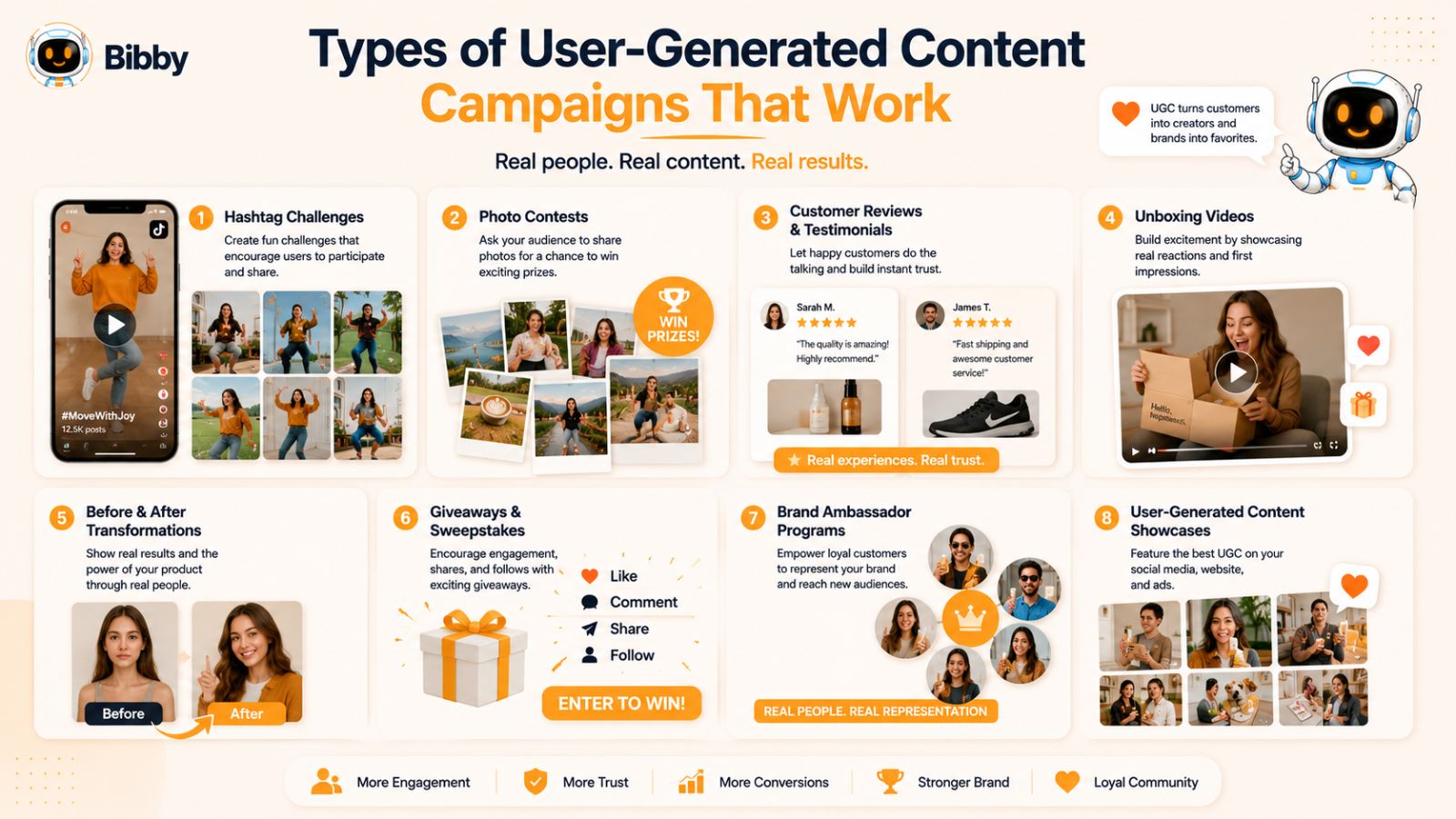
Not every user-generated content campaign delivers the same results. The most successful campaigns are simple to join, enjoyable to participate in, and rewarding for your audience. By giving customers a clear reason to create and share content, you can build a steady stream of authentic posts that increase engagement, expand your reach, and strengthen your brand community.
Below are some of the most effective UGC campaign ideas that brands of all sizes can use.
Branded Hashtag Campaigns
Creating a unique branded hashtag makes it easy for customers to share content while allowing your team to discover and curate those posts.
A successful hashtag should be:
- Short and memorable
- Easy to spell
- Relevant to your brand or campaign
- Encouraging for user participation
Promote your hashtag consistently across your website, social media profiles, packaging, and email campaigns to maximize participation.
Photo Contests
Photo contests encourage customers to showcase how they use your products in their everyday lives. Offering prizes, discounts, or exclusive recognition can significantly increase participation.
To run an effective photo contest:
- Define clear entry rules
- Set a submission deadline
- Choose an appealing reward
- Feature winning entries across your social channels
Photo contests generate a large library of authentic visuals that can be repurposed throughout your marketing campaigns.
Video Challenges
Short-form videos continue to dominate platforms like TikTok, Instagram Reels, and YouTube Shorts. Creating a fun challenge encourages users to produce creative content that can spread organically.
Successful video challenges typically:
- Have simple instructions
- Include a memorable hashtag
- Encourage creativity
- Are easy for beginners to participate in
The easier the challenge, the higher the likelihood that users will join.
Customer Reviews and Testimonials
Reviews remain one of the most trusted forms of user-generated content. Encourage satisfied customers to leave reviews on your website, Google Business Profile, Facebook, or industry-specific review platforms.
You can also transform positive reviews into engaging social media graphics, carousel posts, or short videos to reinforce trust and credibility.
Unboxing Videos
Unboxing content captures customers' first impressions of your products. These videos create excitement, answer common questions, and demonstrate product quality in an authentic way.
Brands can encourage unboxing videos by:
- Creating memorable packaging
- Including personalized thank-you notes
- Adding branded inserts with social media hashtags
- Offering incentives for sharing
Before-and-After Transformations
Transformation content works particularly well for industries such as fitness, beauty, home improvement, education, and software.
Showing real customer results helps potential buyers visualize the value of your products or services while providing compelling social proof.
Customer Success Stories
Longer-form customer stories go beyond simple reviews by highlighting how your product solved a real problem or helped someone achieve a specific goal.
These stories can be repurposed into:
- Blog articles
- Case studies
- Social media posts
- Short-form videos
- Email marketing campaigns
Sharing measurable outcomes makes these stories even more persuasive.
Giveaways and Contests
Giveaways remain one of the fastest ways to generate user participation. Instead of asking people to simply like or follow your page, require participants to create and share original content featuring your brand.
This approach increases engagement while producing valuable user-generated content that can be reused in future campaigns.
Brand Ambassador Programs
Some of your happiest customers may be willing to promote your products on a regular basis. Brand ambassador programs reward loyal customers with exclusive benefits in exchange for consistently creating authentic content.
Benefits may include:
- Early product access
- Exclusive discounts
- Free products
- Affiliate commissions
- VIP community access
Over time, ambassadors become trusted advocates who continuously strengthen your brand's credibility.
Community Challenges
Community challenges encourage users to participate together around a common theme or goal. Examples include 30-day challenges, creative contests, fitness milestones, or educational series.
These campaigns keep audiences engaged over an extended period while generating a continuous flow of user-generated content.
Choosing the Right Campaign for Your Brand
The best UGC campaign depends on your audience, industry, and business goals. A fashion brand may benefit from styling challenges and outfit photos, while a SaaS company might see better results from customer success stories and tutorial videos.
Start with one campaign that's easy for your audience to join, measure the results, and refine your approach based on participation and engagement. As your community grows, you can expand into multiple campaign types to keep your content fresh and your audience actively involved.
How to Build a Winning Social Media User-Generated Content Strategy
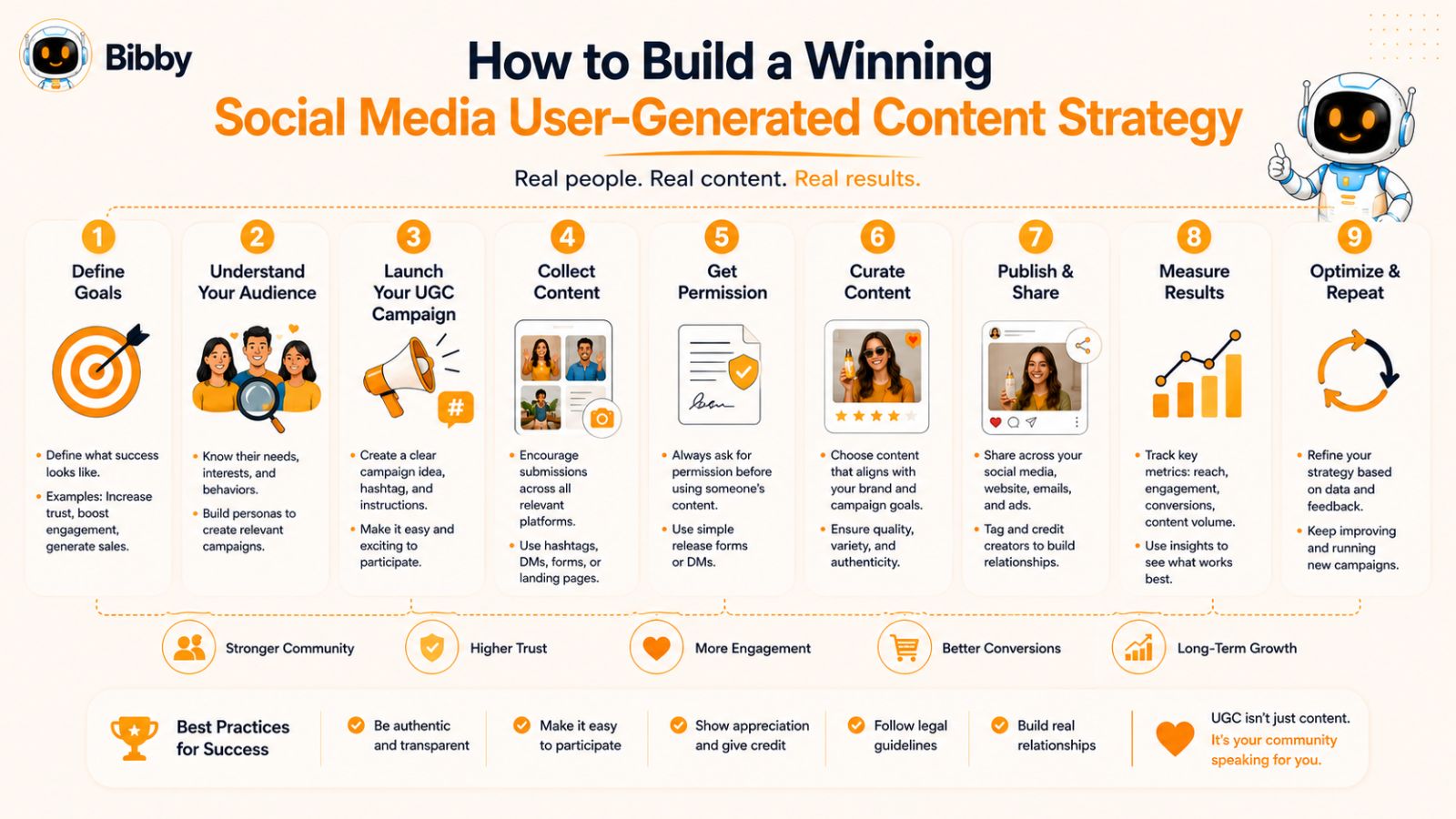
Building a successful social media user-generated content strategy requires more than asking customers to share photos or tag your brand. The most effective strategies are built on clear objectives, audience insights, consistent processes, and the right tools. Follow these steps to create a UGC strategy that attracts participation, builds trust, and delivers measurable business results.
Define Your Goals
Start by identifying what you want your user-generated content strategy to achieve. Your goals will influence the type of content you encourage, the platforms you prioritize, and the metrics you track.
Common objectives include:
- Increasing brand awareness
- Growing your social media following
- Driving website traffic
- Generating more leads
- Boosting online sales
- Building customer loyalty
- Strengthening your online community
Set SMART (Specific, Measurable, Achievable, Relevant, and Time-bound) goals so you can evaluate the success of your campaigns.
Understand Your Audience
A successful UGC strategy begins with knowing your audience. Learn what motivates your customers, where they spend time online, and what types of content they enjoy creating and consuming.
Consider questions such as:
- Which social media platforms do they use most?
- What inspires them to share content?
- What challenges or goals do they have?
- Which content formats receive the highest engagement?
The better you understand your audience, the easier it becomes to create campaigns that encourage participation.
Choose the Right Social Media Platforms
You don't need to run UGC campaigns on every platform. Focus on the channels where your audience is most active.
- Instagram: Ideal for photos, Reels, Stories, and influencer collaborations.
- Facebook: Great for community groups, reviews, and customer stories.
- TikTok: Perfect for short-form videos, trends, and viral challenges.
- LinkedIn: Best for B2B testimonials, employee advocacy, and professional success stories.
- YouTube: Excellent for product reviews, tutorials, and long-form customer experiences.
Tailor your content strategy to each platform instead of publishing identical content everywhere.
Make It Easy for Customers to Participate
The easier it is for customers to create content, the more likely they are to participate. Remove unnecessary barriers and provide clear guidance.
Simple ways to encourage participation include:
- Creating a branded hashtag
- Providing content prompts
- Running giveaways or contests
- Offering exclusive rewards
- Featuring customer content on your social channels
- Asking customers to tag your brand
Small incentives can significantly increase participation without requiring a large budget.
Create Clear Content Guidelines
While creativity should be encouraged, providing basic guidelines helps maintain consistency and ensures submissions align with your brand.
Include guidance such as:
- Preferred image or video quality
- Campaign hashtags
- Brand mentions or tags
- Content themes
- Submission deadlines
- Community rules
Clear expectations reduce confusion and improve the quality of submitted content.
Always Get Permission Before Republishing
Never assume you have the right to reuse customer content. Always obtain permission before featuring user-generated content in your marketing campaigns.
This protects both your business and your customers while building trust within your community. A simple message requesting permission or clear campaign terms can help avoid legal and ethical issues.
Curate High-Quality Content
Not every submission needs to be published. Review customer content carefully and select pieces that align with your brand's values, quality standards, and campaign goals.
When curating UGC, consider:
- Image and video quality
- Authenticity
- Relevance
- Brand alignment
- Diversity and inclusivity
- Audience appeal
Featuring high-quality content encourages others to create their best work as well.
Repurpose UGC Across Your Marketing Channels
User-generated content shouldn't live only on social media. Repurposing it across your marketing ecosystem helps maximize its value and reach.
You can feature UGC on:
- Your website
- Product pages
- Landing pages
- Email newsletters
- Paid advertisements
- Blog posts
- Sales presentations
- Digital brochures
Repurposing content extends its lifespan while reinforcing trust across every customer touchpoint.
Build a Consistent Publishing Schedule
Consistency is one of the biggest factors in long-term social media success. Publishing user-generated content regularly keeps your community engaged and encourages ongoing participation.
Instead of posting only when new content arrives, create a content calendar that balances:
- User-generated content
- Educational posts
- Promotional content
- Behind-the-scenes updates
- Product announcements
- Community highlights
A consistent schedule helps maintain audience interest and supports steady growth.
Automate Your Workflow with AI
As your business grows, managing user-generated content manually becomes increasingly difficult. Collecting submissions, organizing assets, writing captions, scheduling posts, and monitoring performance across multiple platforms can consume hours every week.
This is where automation can transform your workflow.
With Bibby, you can upload your own images or generate new visuals with AI in just a few clicks. Once your content is ready, simply choose your preferred posting style, and Bibby's AI automatically generates engaging captions tailored to your brand voice.
From there, Bibby schedules your content across Facebook, Instagram, LinkedIn, YouTube, and TikTok at AI-optimized posting times designed to maximize visibility and engagement. You can also publish videos and Stories from the same dashboard, eliminating the need to switch between multiple tools.
Instead of manually planning weeks of content, Bibby helps you streamline your entire workflow—from content creation to scheduling and publishing—so you can focus on growing your community and encouraging more customers to create authentic user-generated content.
Measure, Learn, and Improve
An effective user-generated content strategy is never finished. Regularly analyze your campaigns to understand what's working and where improvements can be made.
Track metrics such as:
- Engagement rate
- Reach and impressions
- Shares and saves
- Website traffic
- Click-through rate
- Conversion rate
- User-generated content submissions
- Follower growth
- Customer sentiment
Use these insights to refine future campaigns, test new ideas, and continually improve your results. The more you learn from your audience, the stronger and more effective your UGC strategy will become over time.
Also read: AI Social Media Manager: What It Is and How It Works →
Best Practices for User-Generated Content Success
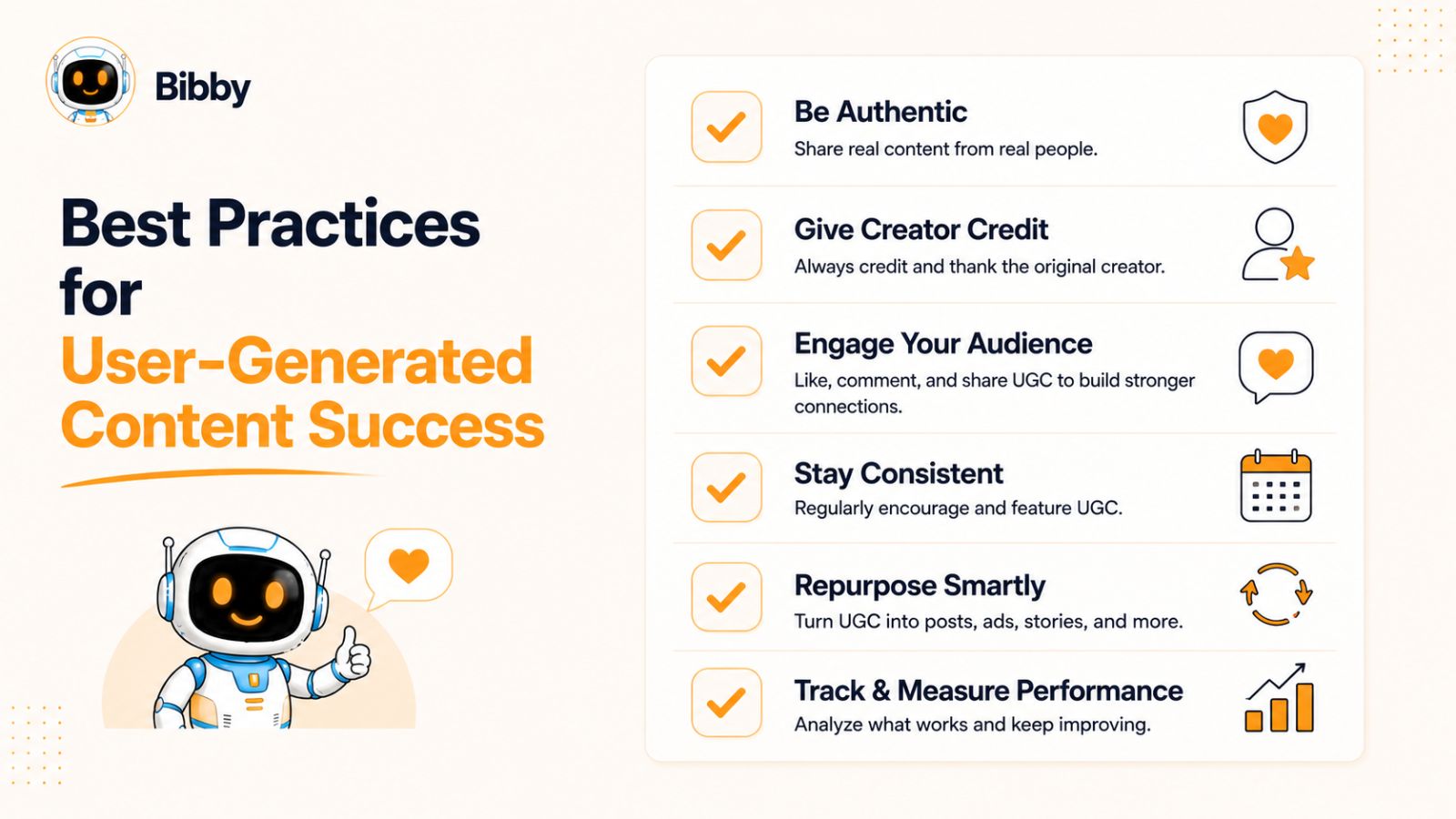
Launching a user-generated content campaign is only the beginning. To achieve consistent results, you need a strategy that encourages participation, maintains quality, and builds lasting relationships with your audience. The following best practices will help you maximize the impact of your social media user-generated content strategy.
Be Authentic
Authenticity is the foundation of successful user-generated content. Resist the temptation to heavily edit customer photos, videos, or testimonials. People connect with genuine experiences, not content that looks overly polished or staged.
Celebrate real stories, honest reviews, and everyday moments that showcase how customers use your products or services. Authentic content builds trust and encourages others to share their own experiences.
Encourage Participation Regularly
Don't wait for customers to create content on their own. Actively invite them to participate by asking questions, launching challenges, creating branded hashtags, and running seasonal campaigns.
The more consistently you encourage participation, the more user-generated content you'll receive over time.
Reward Your Community
Recognition is often just as valuable as prizes. Featuring customer content on your social media pages, website, or newsletters makes contributors feel appreciated and motivates others to join in.
You can also reward participants with:
- Discount codes
- Exclusive products
- Early access to new launches
- Loyalty points
- Gift cards
- Special mentions
Simple rewards can significantly increase participation while strengthening customer loyalty.
Always Credit Content Creators
Whenever you share user-generated content, give proper credit to the original creator. Tag their social media profile whenever possible and thank them for contributing.
Acknowledging creators demonstrates respect, builds trust, and encourages future participation from both the featured customer and your broader community.
Maintain Brand Consistency
While user-generated content is naturally diverse, it should still align with your overall brand identity. Curate content that reflects your brand values, messaging, and target audience.
Maintaining a consistent visual style and tone across your feed helps create a professional appearance without sacrificing authenticity.
Respond and Engage
User-generated content is about building conversations, not just collecting posts. Respond to comments, thank customers for sharing, answer questions, and engage with community members whenever they mention your brand.
Active engagement shows customers that their contributions matter and helps strengthen long-term relationships.
Repurpose High-Performing Content
Great user-generated content deserves more than one appearance. Repurpose your best-performing posts across multiple marketing channels to maximize their value.
Consider using top-performing UGC in:
- Website galleries
- Product pages
- Email campaigns
- Paid social ads
- Blog posts
- Sales presentations
- Case studies
Repurposing content extends its lifespan while creating a consistent customer experience across every touchpoint.
Stay Consistent with Publishing
Sharing user-generated content occasionally won't produce long-term results. Create a publishing schedule that regularly features customer content alongside your branded posts.
A balanced content mix keeps your social media channels fresh while continually reinforcing social proof.
Instead of manually managing every post, platforms like Bibby make consistency much easier. You can organize your content, generate captions with AI, and automatically schedule posts across multiple social media platforms, ensuring your audience always has fresh content to engage with.
Also read: 12 TikTok Content Formats That Consistently Drive Engagement →
Monitor Performance
Regularly review your campaign performance to understand which types of user-generated content resonate most with your audience.
Pay attention to metrics such as:
- Engagement rate
- Reach
- Shares
- Saves
- Click-through rate
- Website traffic
- Conversions
- Customer participation
These insights help you optimize future campaigns and invest more time in the content formats that deliver the best results.
Keep Testing and Improving
Social media trends, audience preferences, and platform algorithms change constantly. Don't be afraid to experiment with different campaign formats, hashtags, incentives, and posting schedules.
Small improvements over time can lead to significant increases in engagement, community growth, and conversions. Treat every campaign as an opportunity to learn more about your audience and refine your user-generated content strategy.
Also read: How Local Shops Can Attract More Customers Through Social Media in 2026 →
Common User-Generated Content Mistakes to Avoid
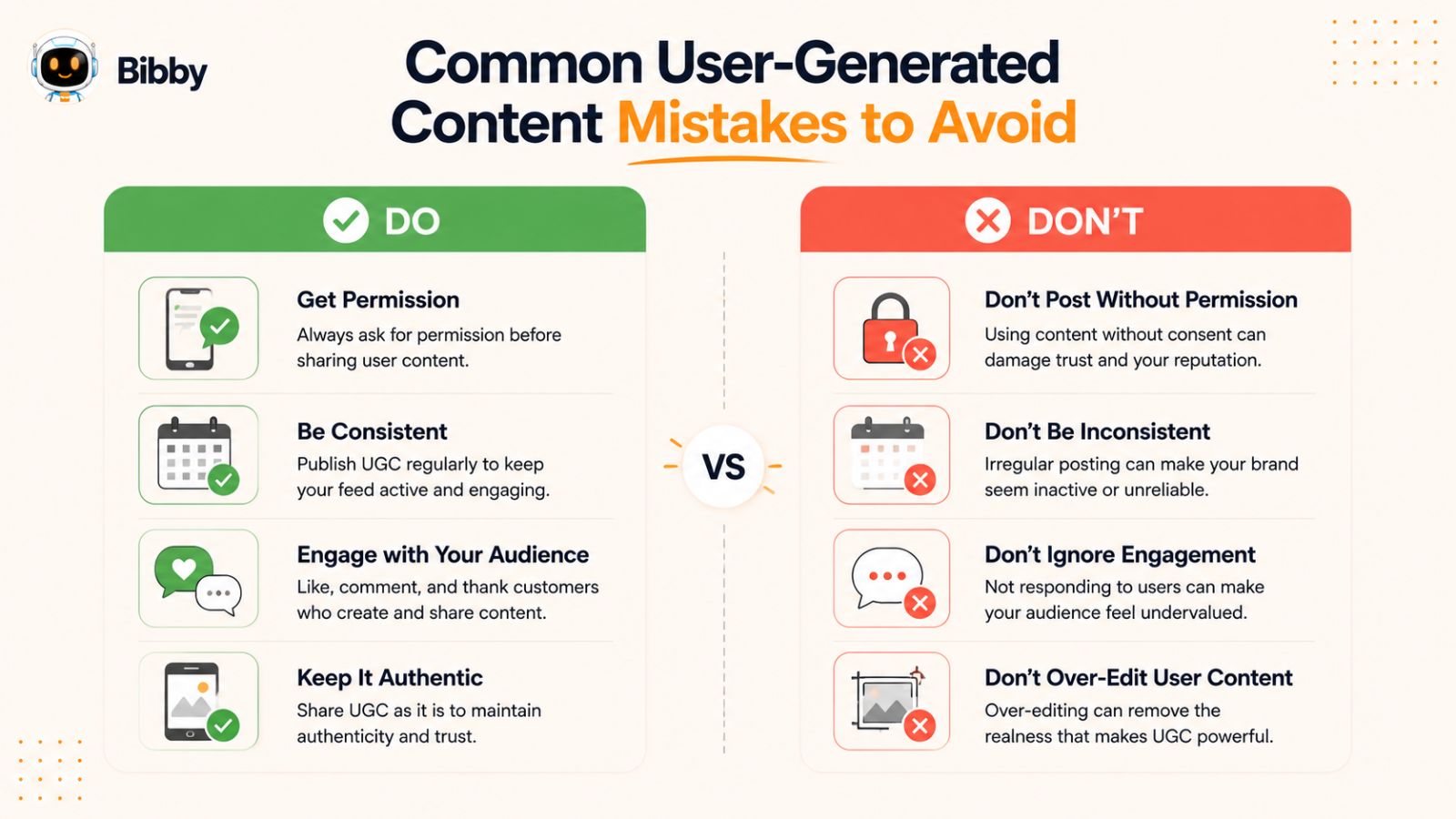
Even the best user-generated content strategies can fall short if they're built on poor planning or inconsistent execution. Avoiding these common mistakes will help you create a sustainable strategy that builds trust, encourages participation, and delivers long-term results.
Not Setting Clear Goals
Many brands launch UGC campaigns without defining what success looks like. Without clear objectives, it's difficult to measure performance or determine whether your efforts are driving meaningful business results.
Before launching a campaign, identify your primary goal, such as increasing brand awareness, improving engagement, generating leads, or boosting sales. Then, choose the metrics that align with those objectives.
Making Participation Too Complicated
If customers have to follow too many steps to participate, many will lose interest before they even get started.
Keep your campaigns simple by providing clear instructions, using memorable hashtags, and minimizing entry requirements. The easier it is to participate, the more content you'll receive.
Forgetting to Ask for Permission
Just because someone tags your brand doesn't automatically give you permission to reuse their content in marketing campaigns.
Always request permission before reposting user-generated content. This demonstrates respect for your customers, protects your brand from legal issues, and helps build stronger relationships with your community.
Ignoring Your Community
Collecting user-generated content without acknowledging the people behind it is a missed opportunity.
Thank customers for sharing their experiences, respond to comments, and engage with contributors whenever possible. Building a genuine relationship with your community encourages repeat participation and long-term loyalty.
Over-Editing User Content
The authenticity of UGC is what makes it valuable. Applying excessive filters, changing captions, or heavily editing customer photos and videos can make the content feel less genuine.
Minor edits for formatting or branding are acceptable, but the original message and experience should remain intact.
Posting Inconsistently
Sharing user-generated content only once in a while makes it difficult to build momentum. Consistency keeps your audience engaged and encourages more people to contribute.
Create a content calendar that includes regular UGC posts alongside your branded content. Using a scheduling platform like Bibby can help automate publishing across multiple social media channels, ensuring your campaigns stay active without requiring daily manual effort.
Focusing Only on Promotional Content
If every user-generated content campaign is designed to sell a product, your audience may lose interest. The most successful brands balance promotional content with educational, entertaining, and community-focused posts.
Celebrate customer stories, share behind-the-scenes moments, answer questions, and highlight creative submissions to keep your content engaging.
Choosing Quantity Over Quality
Receiving hundreds of submissions is exciting, but publishing everything isn't always the best approach.
Curate content that aligns with your brand values, represents your target audience, and provides genuine value to potential customers. High-quality, authentic content will always outperform a large volume of low-quality posts.
Ignoring Performance Data
Many businesses launch campaigns but never analyze the results. Without reviewing performance metrics, it's impossible to understand what resonates with your audience or where improvements are needed.
Monitor key metrics such as engagement, reach, conversions, click-through rates, and customer participation. Use these insights to refine future campaigns and improve your overall strategy.
Not Adapting to New Trends
Social media evolves quickly, and user behavior changes over time. Sticking to the same campaign format year after year can lead to declining engagement.
Stay informed about new platform features, content formats, and audience preferences. Experiment with trends that align with your brand, test new ideas, and continuously optimize your strategy to keep your user-generated content fresh and relevant.
Also read: 15 Social Media Scheduling Hacks Every Small Business Owner Should Know →
User-Generated Content Ideas by Industry
Every industry can benefit from user-generated content, but the most effective campaigns are tailored to the needs and behaviors of each audience. The following ideas can help you inspire customers to create authentic content that supports your marketing goals while building stronger relationships with your community.
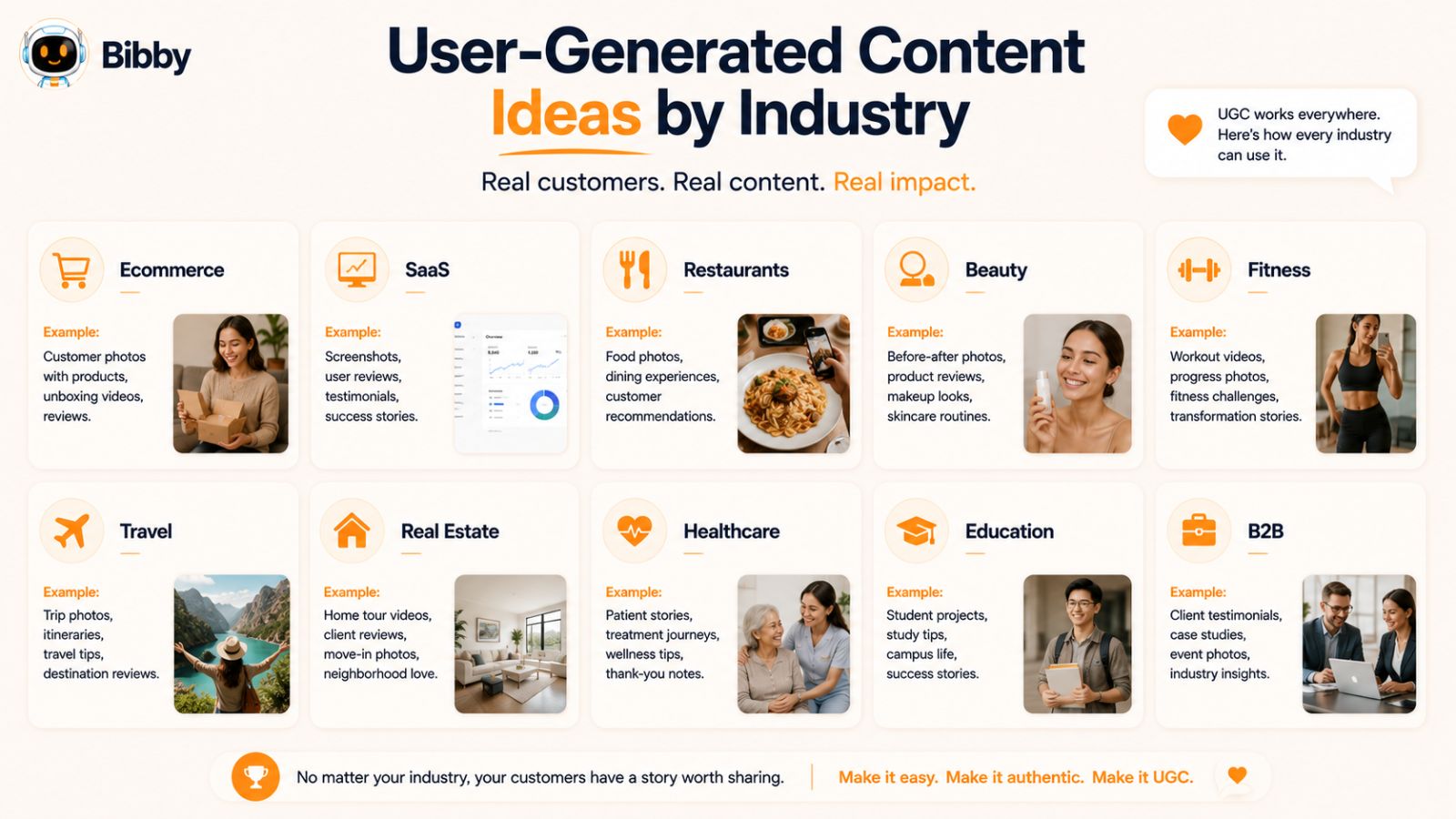
Ecommerce
Ecommerce brands have countless opportunities to showcase products through customer experiences.
Encourage customers to share:
- Product photos
- Unboxing videos
- Styling ideas
- Product reviews
- Before-and-after transformations
- Wishlist posts
- Gift recommendations
Repurpose this content on product pages, social media, email campaigns, and paid advertisements to increase trust and improve conversions.
SaaS
Software companies can use user-generated content to demonstrate real-world results and customer success.
Popular UGC ideas include:
- Customer testimonials
- Video reviews
- Product walkthroughs
- Workflow demonstrations
- Productivity tips
- Customer success stories
- Feature tutorials
These content formats help potential customers understand how your software solves real business challenges.
Restaurants and Cafés
Restaurants naturally generate visual content, making them ideal for UGC campaigns.
Encourage customers to share:
- Food photography
- Dining experiences
- Video reviews
- Behind-the-scenes moments
- Celebration photos
- Seasonal menu favorites
- Restaurant recommendations
Branded hashtags and location tags can further increase your local visibility.
Beauty and Skincare
Beauty brands thrive on authentic customer experiences.
Encourage users to create:
- Makeup tutorials
- Skincare routines
- Before-and-after results
- Product reviews
- Daily routines
- GRWM (Get Ready With Me) videos
- Favorite product collections
Real customer transformations often build more trust than professionally produced advertisements.
Fitness and Wellness
Fitness communities are highly engaged and love sharing their progress.
Campaign ideas include:
- Workout videos
- Progress photos
- Transformation stories
- Healthy recipes
- Daily fitness routines
- Personal milestones
- Community challenges
These posts inspire others while demonstrating the value of your products or services.
Travel and Hospitality
Travel experiences naturally encourage customers to capture memorable moments.
Invite guests to share:
- Vacation photos
- Hotel reviews
- Travel itineraries
- Destination videos
- Local experiences
- Adventure highlights
- Family memories
Featuring guest experiences helps future travelers visualize their own stay.
Real Estate
Real estate professionals can use user-generated content to build credibility and celebrate client milestones.
Ideas include:
- New homeowner photos
- Client testimonials
- Moving day videos
- Home makeover stories
- Neighborhood recommendations
- Property tour reactions
- Investment success stories
These authentic experiences create emotional connections with prospective buyers.
Healthcare and Wellness
Healthcare providers can use UGC carefully while respecting privacy and obtaining proper consent.
Content ideas include:
- Patient testimonials
- Wellness journeys
- Success stories
- Healthy lifestyle tips
- Community event participation
- Educational videos
Always ensure compliance with applicable privacy regulations and obtain written permission before sharing patient-related content.
Education and Online Learning
Educational institutions and online learning platforms can showcase student achievements and learning experiences.
Examples include:
- Student testimonials
- Course completion celebrations
- Project showcases
- Study tips
- Classroom experiences
- Success stories
- Career milestones
These stories help prospective students understand the real value of your programs.
B2B Companies
User-generated content isn't limited to consumer brands. B2B companies can also build trust through authentic customer experiences.
Consider highlighting:
- Client case studies
- Customer interviews
- Conference photos
- Webinar highlights
- Team success stories
- Industry awards
- Partnership announcements
Professional testimonials and measurable business outcomes are especially persuasive in B2B marketing.
Managing UGC Across Every Industry
No matter your industry, consistency is key. As your library of customer content grows, organizing assets, creating captions, scheduling posts, and tracking performance manually can quickly become overwhelming.
A platform like Bibby helps simplify this process by bringing everything into one place. You can upload customer photos and videos or generate visuals with AI, select your preferred posting style, let AI create engaging captions, and automatically schedule content across Facebook, Instagram, LinkedIn, YouTube, and TikTok. With built-in analytics, you can identify which campaigns perform best and continuously improve your social media user-generated content strategy, regardless of your industry.
Also read: 15 Proven Instagram Engagement Strategies to Grow Faster in 2026 →
Measuring the Success of Your User-Generated Content Strategy
Creating a user-generated content campaign is only half the journey. To maximize its impact, you need to measure performance consistently and use data to improve future campaigns. Tracking the right metrics helps you understand what resonates with your audience, identify growth opportunities, and demonstrate the return on your marketing efforts.
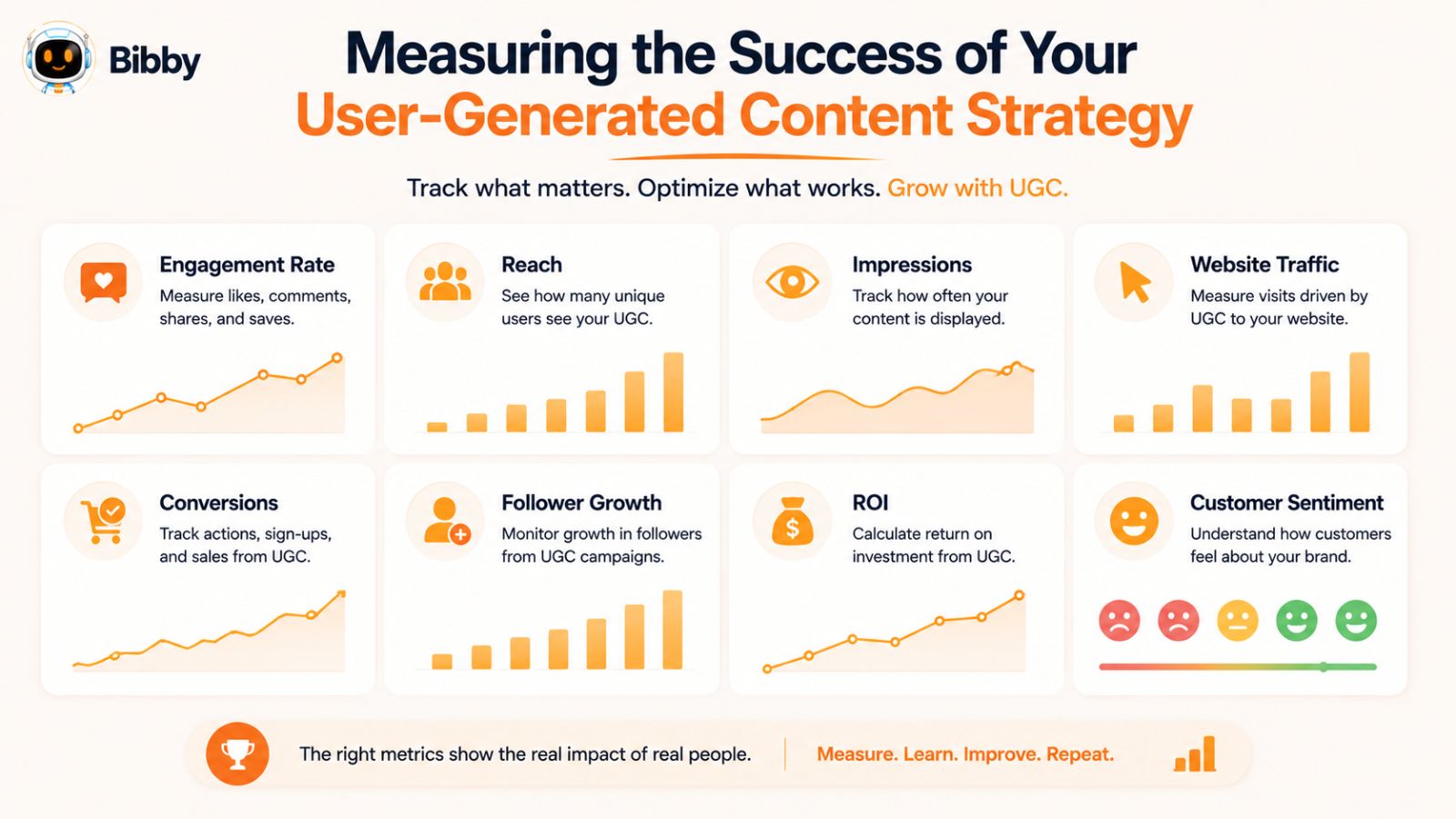
Engagement Rate
Engagement rate is one of the most important indicators of a successful UGC strategy. It measures how actively your audience interacts with your content through likes, comments, shares, saves, and other platform-specific actions.
A high engagement rate typically indicates that your content is relevant, authentic, and valuable to your audience.
Monitor metrics such as:
- Likes
- Comments
- Shares
- Saves
- Reposts
- Story interactions
Compare engagement across different types of user-generated content to discover which formats perform best.
Reach and Impressions
Reach tells you how many unique users have seen your content, while impressions measure the total number of times it has been displayed.
These metrics help you understand how effectively your UGC is expanding your brand's visibility and attracting new audiences.
If certain posts consistently achieve higher reach, analyze what made them successful and incorporate those elements into future campaigns.
User-Generated Content Submissions
One of the clearest indicators of campaign success is the amount of content your community creates.
Track:
- Number of customer submissions
- Branded hashtag usage
- Brand mentions
- Tagged posts
- Video submissions
- Contest entries
Growing participation usually indicates increasing brand awareness and stronger community engagement.
Website Traffic
User-generated content should contribute to more than social media engagement—it should also drive visitors to your website.
Use analytics tools to monitor:
- Traffic from social media platforms
- Landing page visits
- Product page views
- Referral traffic from customer posts
- Time spent on site
Understanding where visitors come from helps you identify your highest-performing social channels.
Click-Through Rate (CTR)
Click-through rate measures how many users clicked your links after viewing your content.
A strong CTR suggests that your captions, calls to action, and visuals are motivating users to take the next step.
Experiment with different messaging, creative formats, and CTAs to improve this metric over time.
Conversion Rate
Ultimately, your UGC strategy should contribute to business growth. Conversion rate measures how effectively your campaigns turn visitors into customers or leads.
Depending on your goals, conversions may include:
- Product purchases
- Newsletter sign-ups
- Demo requests
- Free trial registrations
- Event registrations
- Contact form submissions
Tracking conversions helps connect your social media efforts directly to business outcomes.
Follower Growth
Consistent user-generated content often leads to increased brand visibility, which can translate into steady follower growth.
Monitor:
- New followers
- Audience growth rate
- Platform-specific growth trends
- Audience demographics
Growing your audience creates more opportunities for future engagement and customer participation.
Customer Sentiment
Not all success can be measured with numbers. Pay attention to how people talk about your brand.
Review:
- Comments
- Reviews
- Direct messages
- Brand mentions
- Survey responses
Positive sentiment indicates that your campaigns are strengthening customer relationships and building trust.
Return on Investment (ROI)
Measuring ROI helps determine whether your user-generated content strategy is delivering value relative to the time, budget, and resources invested.
Consider factors such as:
- Revenue generated
- Cost savings from reduced content production
- Lower customer acquisition costs
- Increased customer lifetime value
- Growth in organic reach
- Improvements in conversion rates
A well-executed UGC strategy often produces long-term returns by generating authentic content that can be reused across multiple marketing channels.
Use Analytics to Continuously Improve
The best marketers treat every campaign as a learning opportunity. Review your performance regularly, identify trends, and use those insights to refine your strategy.
Platforms like Bibby make this process easier by combining publishing and analytics in one dashboard. Instead of switching between multiple tools, you can monitor post performance, identify your highest-performing content, evaluate engagement across Facebook, Instagram, LinkedIn, YouTube, and TikTok, and use those insights to optimize future campaigns. By pairing AI-powered scheduling with built-in analytics, Bibby helps you make smarter, data-driven decisions while continuously improving your social media user-generated content strategy.
Frequently Asked Questions
What is user-generated content (UGC)?
User-generated content (UGC) is any content created by customers, fans, or community members rather than a brand. It includes photos, videos, reviews, testimonials, social media posts, unboxing videos, tutorials, and other content that showcases real customer experiences.
Why is user-generated content important for social media?
User-generated content helps brands build trust, increase engagement, strengthen social proof, and create authentic connections with their audience. Because UGC comes from real customers, it often performs better than traditional promotional content and can positively influence purchasing decisions.
How do I encourage customers to create user-generated content?
The easiest way to encourage UGC is to make participation simple and rewarding. You can create branded hashtags, run contests, feature customer content on your social channels, offer incentives, ask customers to tag your brand, and engage with everyone who contributes.
Which social media platforms are best for UGC?
The best platform depends on your audience and business goals.
- Instagram is ideal for photos, Reels, and Stories.
- TikTok excels at short-form videos and viral challenges.
- Facebook works well for community groups, reviews, and customer stories.
- LinkedIn is effective for B2B testimonials and employee advocacy.
- YouTube is perfect for product reviews, tutorials, and long-form customer experiences.
Many brands achieve the best results by sharing user-generated content across multiple platforms.
How often should I post user-generated content?
There's no universal rule, but consistency is more important than frequency. Many brands include user-generated content several times each week as part of a balanced content calendar that also includes educational, promotional, and behind-the-scenes posts.
Using a scheduling platform can help maintain a consistent publishing schedule without increasing your team's workload.
Do I need permission to repost user-generated content?
Yes. Always ask for permission before republishing customer photos, videos, or testimonials. Obtaining permission demonstrates respect for your community, protects your brand from legal issues, and builds stronger relationships with your customers.
Can small businesses benefit from user-generated content?
Absolutely. User-generated content is one of the most cost-effective marketing strategies available for small businesses. It helps generate authentic content, build trust, increase brand awareness, and create stronger customer relationships without requiring a large marketing budget.
How can AI help manage a user-generated content strategy?
AI can automate many of the repetitive tasks involved in social media management, including generating captions, organizing content, scheduling posts, recommending optimal publishing times, and analyzing campaign performance.
For example, Bibby streamlines the entire workflow by allowing you to upload your own images or generate visuals with AI, choose your preferred posting style, automatically generate engaging captions, and schedule content across Facebook, Instagram, LinkedIn, YouTube, and TikTok at AI-optimized times. It also provides built-in analytics, making it easier to monitor performance and continuously improve your user-generated content strategy.
What are the most important metrics to track for UGC campaigns?
The most valuable metrics include:
- Engagement rate
- Reach and impressions
- User-generated content submissions
- Website traffic
- Click-through rate (CTR)
- Conversion rate
- Follower growth
- Customer sentiment
- Return on investment (ROI)
Tracking these metrics helps you understand what's working, optimize future campaigns, and measure the overall impact of your user-generated content strategy.
Conclusion
A winning social media user-generated content strategy isn't built overnight, but the results are well worth the effort. By encouraging authentic customer content, making participation simple, and consistently measuring your performance, you can build stronger relationships with your audience while increasing engagement, trust, and conversions.
As your community grows, managing content across multiple social media platforms can become increasingly time-consuming. That's where automation makes a real difference. With Bibby, you can upload your own images or generate new visuals with AI, choose your preferred posting style, automatically generate engaging captions, and schedule posts across Facebook, Instagram, LinkedIn, YouTube, and TikTok at AI-optimized times. You can also publish videos and Stories, monitor performance through built-in analytics, and manage your entire social media workflow from one intuitive platform.
The most successful brands don't wait for customers to talk about them—they create opportunities for those conversations to happen. Start implementing the strategies in this guide, refine your approach using data, and build a thriving community powered by authentic user-generated content.
Your next step is to create a social media content calendar that combines branded content, user-generated content, and AI-powered automation to keep your audience engaged consistently throughout the year.