
Following is one of the most basic actions on social media: it lets you choose which accounts you want to hear from and whose content can appear in your feed. Whether you follow creators on Instagram, brands on Facebook, professionals on LinkedIn, or creators on TikTok, your following list helps shape your social media experience.
In this guide, you'll learn what following means, how it works across different platforms, and how it differs from followers, friends, and subscribers.
In this article, you will learn:
- What “following” means on social media
- How following affects your social media feed
- The difference between following and followers
First, let's look at exactly what “following” means in social media.
What Does “Following” Mean on Social Media?
Following refers to the accounts a user chooses to subscribe to on a social media platform. When you follow an account, its content becomes eligible to appear in your social media feed, recommendations, or other areas of the platform.
In simple terms, following means choosing whose content you want to see.
For example, if you follow a photographer on Instagram, their posts and videos may appear in your feed. If you follow a company on LinkedIn, you may see its updates and articles. On TikTok, following creators helps shape the content available in your Following feed.
Following is usually a one-way relationship. You can follow another account without that account following you back. This is different from a friendship system, where both people typically need to accept each other.
Your following list also plays a role in personalizing your social media experience. Platforms can use the accounts you follow, along with your interactions and other signals, to determine which content to show you and when.
In other words, following is one of the main ways you curate your online experience. By choosing the accounts you follow, you give the platform an idea of the people, brands, creators, and topics you want to keep up with.
How Does Following Work?
Following someone on social media is usually a simple process. You find an account you're interested in, select Follow, and the platform adds that account to your following list.
Once you follow an account, its content can become part of your social media experience. Depending on the platform, you may see its posts, videos, stories, updates, or other content in your feed. The platform's algorithm then decides how and when that content is presented based on factors such as your activity and interactions.
The process typically works like this:
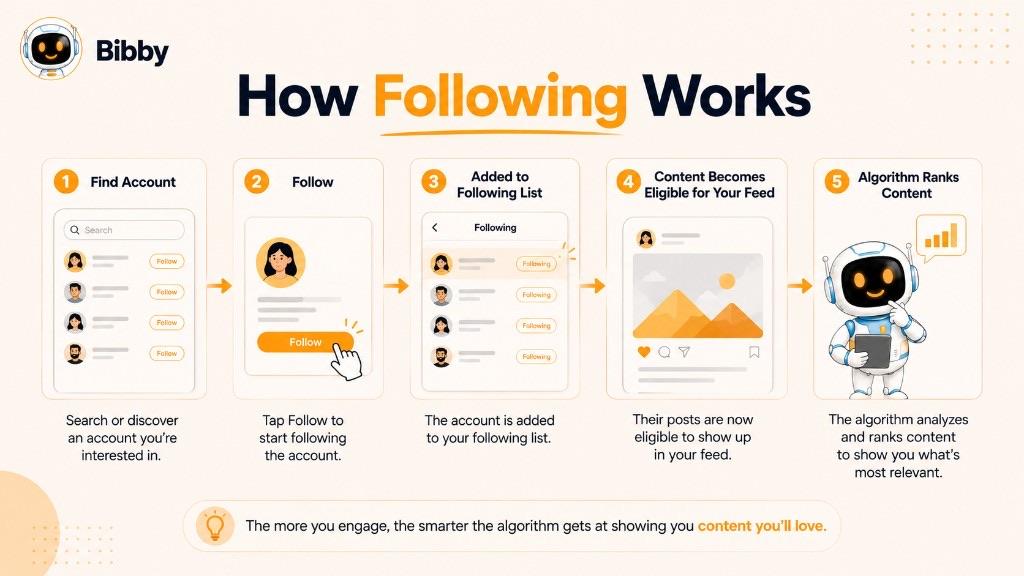
- Find an account: Search for a creator, brand, friend, or organization you want to keep up with.
- Tap Follow: Select the platform's follow button to subscribe to that account's content.
- Content enters your potential feed: Posts and other updates from the account can now be shown to you.
- The platform personalizes your feed: Algorithms determine which content to prioritize and when to show it.
- Manage your following list: You can continue following accounts, unfollow accounts, or adjust notification settings as your interests change.
Following someone does not guarantee that every piece of their content will appear in your feed. Modern social platforms typically use recommendation and ranking systems to decide what users see.
This means your following list is an important part of your social media experience, but it is only one factor influencing what appears on your screen.
What Happens When You Follow Someone?
When you follow someone on social media, you are telling the platform that you're interested in seeing content from that account. The account is added to your following list, and its content becomes eligible to appear in your feed or other personalized areas of the platform.
Depending on the social network and your settings, several things can happen:
- Their content can appear in your feed: Posts, videos, stories, or updates from the account may be shown to you.
- Your recommendations can change: The accounts you follow can influence the content and creators that a platform recommends to you.
- You may receive notifications: Some platforms allow you to receive notifications when an account publishes new content.
- The account may know you followed them: Many platforms notify users when someone follows them, although the exact behavior varies.
- You don't automatically become mutual followers: Following someone does not usually mean they will follow you back.
It's also important to remember that following does not guarantee that you will see every post from an account. Social platforms often rank and personalize content using algorithms, so some posts may appear prominently while others may appear later or not at all.
You can usually change your following choices at any time. If an account no longer interests you, you can unfollow it, helping you keep your social media feed aligned with your current interests.
Following on Different Social Media Platforms
The basic idea of following is similar across social networks: you choose an account whose content you want to keep up with. However, each platform uses following differently and may use different terminology.
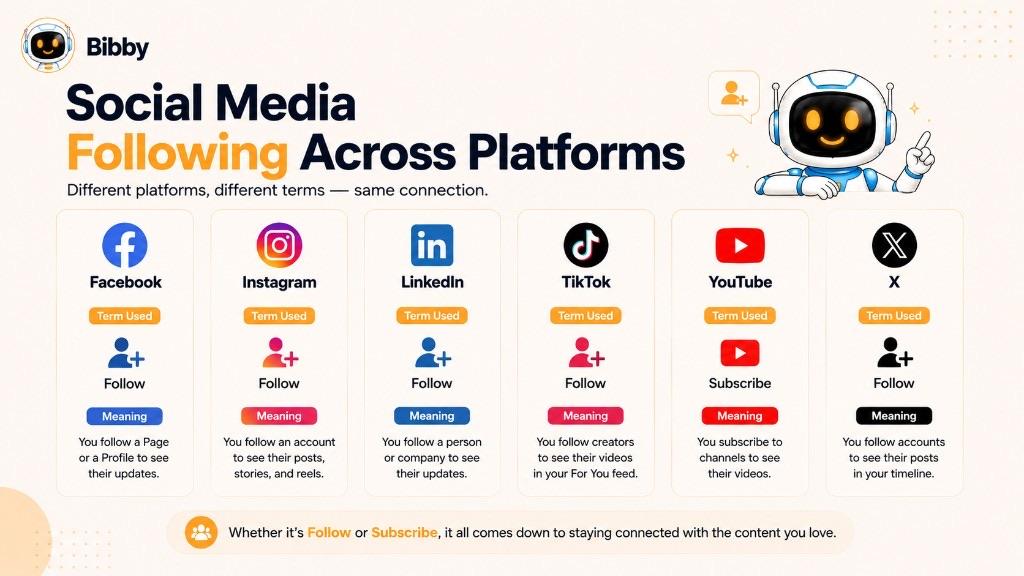
On Facebook, you can follow profiles, Pages, and other public accounts. Following an account can make its public posts eligible to appear in your Feed, even when you aren't connected as friends.
On Instagram, following an account allows its content to become part of your Instagram experience. Depending on the account and content type, you may see posts, Reels, or other updates from accounts you follow.
On LinkedIn, you can follow people, companies, and creators to see their professional content and updates. Following someone does not necessarily create a connection between you and that person, making it useful for keeping up with professionals without establishing a direct connection.
TikTok
On TikTok, following creators helps personalize the content available in your Following feed. You can follow creators whose videos you enjoy and use your following list to keep track of accounts you want to see more often.
YouTube
YouTube primarily uses the term Subscribe rather than Follow. Subscribing to a channel serves a similar purpose: it signals that you want to keep up with that creator's content. Subscribers may see new videos in their feeds and can receive notifications based on their settings.
X
On X, following an account allows its posts to become part of your timeline. You can follow individuals, organizations, brands, and other accounts to keep up with topics and conversations that interest you.
Although the terminology and features vary, the underlying concept remains the same: following lets users choose the accounts they want to hear from, while the platform determines how that content is presented.
Following vs. Followers
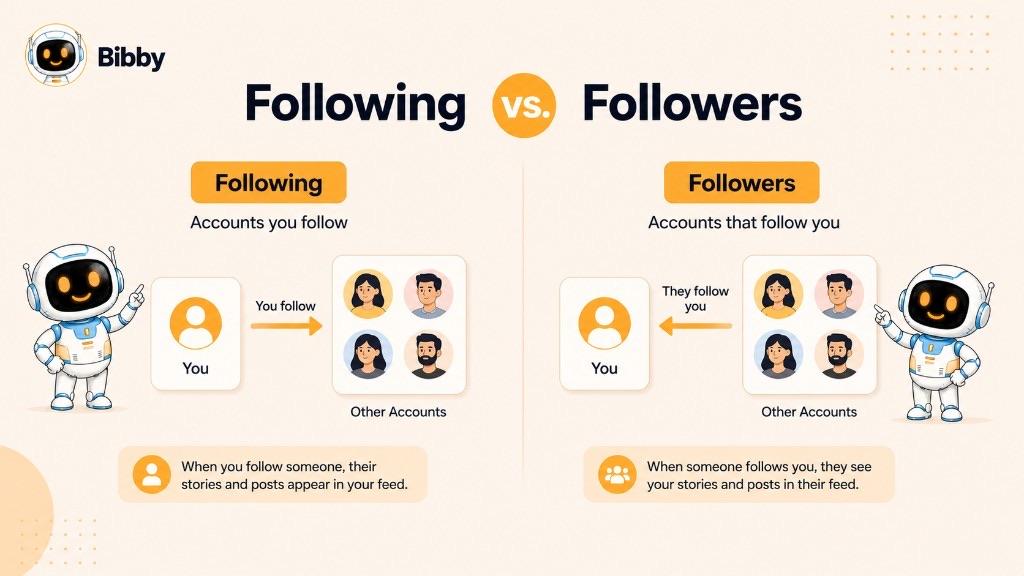
Following and followers describe two different sides of the same social media relationship. The easiest way to remember the difference is that following refers to the accounts you follow, while followers are the accounts that follow you.
| Term | Meaning |
|---|---|
| Following | Accounts you have chosen to follow |
| Followers | Accounts that have chosen to follow you |
For example, imagine you follow 300 Instagram accounts, but 2,000 people follow your account. Your profile would show 300 following and 2,000 followers.
These numbers can represent different things. Your following count shows how many accounts you have chosen to keep up with, while your follower count represents the size of the audience that has chosen to receive or discover your content.
Following is also generally one-directional. You can follow another account without that account following you back. Likewise, someone can follow you even if you don't follow them.
For creators, brands, and businesses, followers can represent a potential audience for their content. For individual users, following is more about curating the content, creators, brands, and conversations they want to see.
Understanding this distinction is important when analyzing social media profiles, engagement, and audience growth.
Following vs. Friends
Following and friends are not always the same thing on social media. Following is generally a one-way relationship where you choose to receive or discover another account's content. A friendship is usually a mutual relationship that requires both people to connect or accept each other.
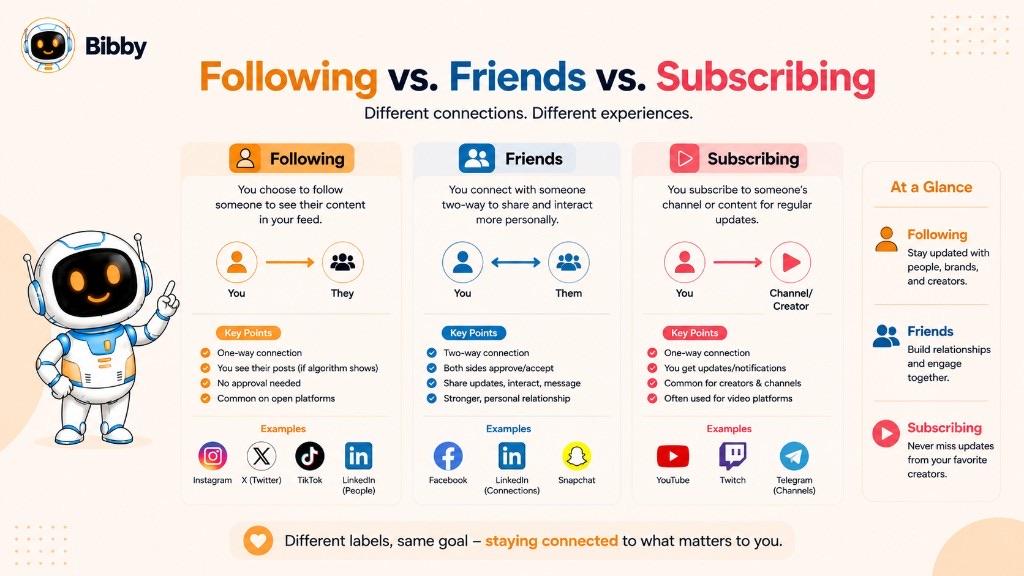
For example, you might follow a creator on Instagram or TikTok without having any personal relationship with them. Similarly, you can follow a professional on LinkedIn to see their posts without connecting with them directly.
The main differences are:
- Following: Usually one-directional and focused on seeing someone's content.
- Friends: Usually mutual and may provide access to more personal content or interactions.
- Following: Commonly used for creators, brands, public figures, and topics.
- Friends: More commonly associated with people you know personally.
Different platforms use these concepts in different ways. Facebook, for example, has traditionally emphasized friendships while also allowing users to follow public profiles and Pages. Other platforms, such as Instagram and TikTok, are built more heavily around the following model.
So, being friends with someone doesn't necessarily mean the same thing as following them. Following is primarily about content discovery and curation, while friendship generally represents a mutual social connection.
Following vs. Subscribing
Following and subscribing are similar concepts, but social platforms use the terms differently. Both generally indicate that you want to keep up with content from a particular person, creator, brand, or organization.
The biggest difference is the terminology used by each platform:
- Instagram: Uses “Follow” for accounts you want to keep up with.
- TikTok: Uses “Follow” to connect users with creators and other accounts.
- LinkedIn: Uses “Follow” for people, creators, and organizations.
- Facebook: Uses “Follow” for profiles, Pages, and public content.
- YouTube: Uses “Subscribe” for channels you want to keep up with.
The underlying idea is similar: you signal that you are interested in an account's content, and the platform can use that relationship when personalizing your experience.
However, subscribing can sometimes imply a more structured or ongoing relationship than simply following. YouTube subscriptions, for example, are closely connected to channel updates, video discovery, and notification options.
In social media terminology, following is the broader concept, while subscribing is one platform-specific way of expressing a similar interest in someone's content.
Why Do People Follow Accounts?
People follow social media accounts because they want to keep up with content, people, brands, or topics that interest them. Every follow is essentially a small signal that says, “I want to see more of this.”
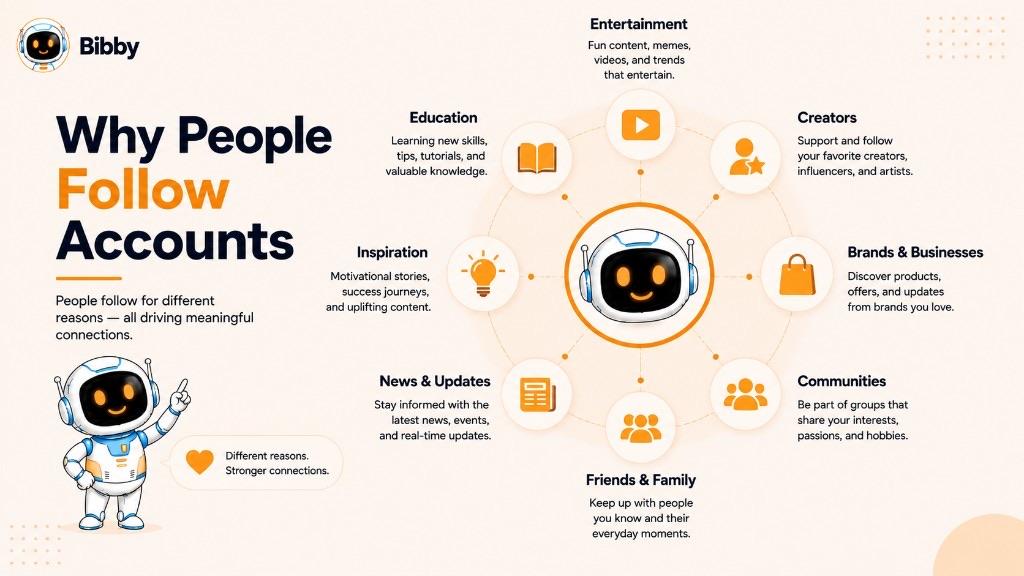
Common reasons people follow accounts include:
- Entertainment: To discover funny, interesting, or engaging content.
- Education: To learn about specific subjects, skills, industries, or trends.
- Inspiration: To find ideas for fitness, travel, fashion, business, design, and more.
- News and updates: To stay informed about people, organizations, events, or topics they care about.
- Friends and family: To keep up with people they know personally.
- Creators: To regularly discover content from creators they enjoy.
- Brands and businesses: To learn about products, services, launches, offers, or company updates.
- Communities: To participate in conversations around shared interests or identities.
- Professional development: To follow experts, companies, and industry leaders for useful career or business information.
Following is therefore more than a simple social media metric. It is a way for users to curate their digital environment. Instead of relying entirely on a platform's recommendations, users can actively choose which accounts they want to hear from.
For creators and businesses, this makes earning a relevant following particularly valuable. A follower has already expressed some level of interest in what an account publishes, creating an opportunity to build familiarity, engagement, and a long-term audience through consistent content.
How Following Shapes Your Social Media Feed
Your following list is one of the signals that helps shape your social media experience. When you follow an account, you indicate that you're interested in its content, giving the platform information it can use when deciding what to show you.
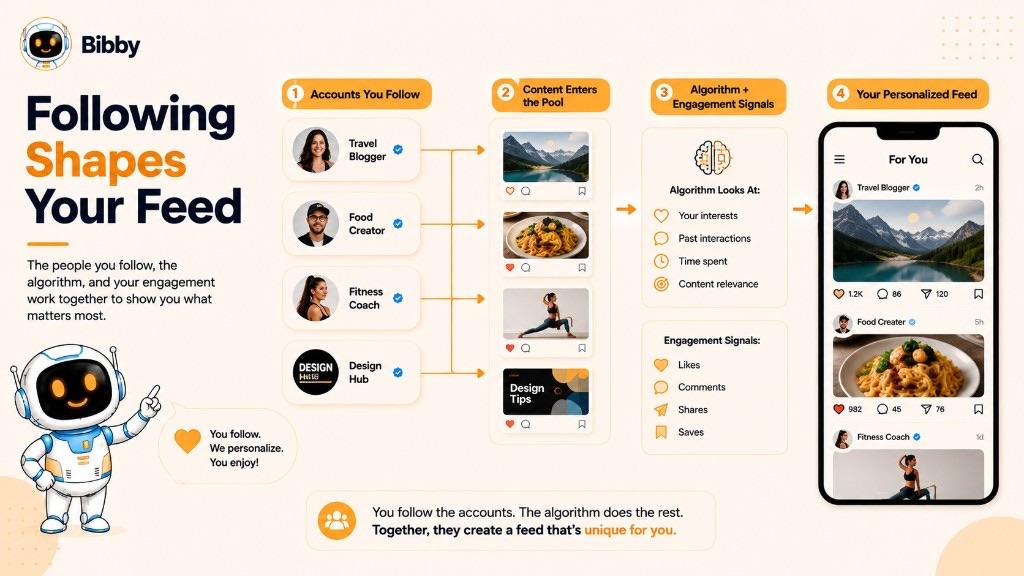
However, following does not mean you'll automatically see every post from every account you follow. Most major social platforms use algorithms to rank, personalize, and recommend content.
Your feed may be influenced by several factors, including:
- Accounts you follow: The people, creators, brands, and organizations you've chosen to keep up with.
- Your engagement: Likes, comments, shares, saves, views, and other interactions.
- Content preferences: The topics and formats you regularly engage with.
- Recency: How recently something was published.
- Recommendations: Content from accounts you don't currently follow but the platform thinks you may find interesting.
- Your activity: Searches, profile visits, viewing behavior, and other interactions can contribute to personalization.
This creates an important distinction:
Following = who you choose to hear from.
Algorithmic recommendations = what the platform thinks you might want to see.
For example, you might follow 500 accounts but regularly interact with only 50 of them. A platform may use those interactions to determine which accounts and topics deserve more visibility in your feed.
This is why your social media feed can contain a mixture of content from accounts you follow, recommended posts, advertisements, and other personalized content.
Ultimately, following gives you a degree of control over your social media experience, while algorithms determine much of how that content is organized and delivered.
How Following Matters for Social Media Marketing
For brands, creators, and businesses, building a following can create a valuable audience for future content. When people choose to follow an account, they have already shown some level of interest in what that account offers.
However, a large following does not automatically mean a successful social media presence. The quality and relevance of the audience often matter more than the raw follower count.
A strong following can help businesses:
- Reach an interested audience: Followers are more likely to encounter future posts from the account.
- Build brand familiarity: Consistent content can make a brand more recognizable over time and support brand awareness.
- Encourage engagement: Relevant followers can interact with posts through likes, comments, shares, saves, and other actions.
- Create relationships: Regular social content gives brands opportunities to communicate with their audience.
- Support conversions: An engaged audience can eventually become customers, subscribers, or advocates.
Consistency is especially important. A business that gains followers but rarely publishes new content may struggle to turn that audience into an active community.
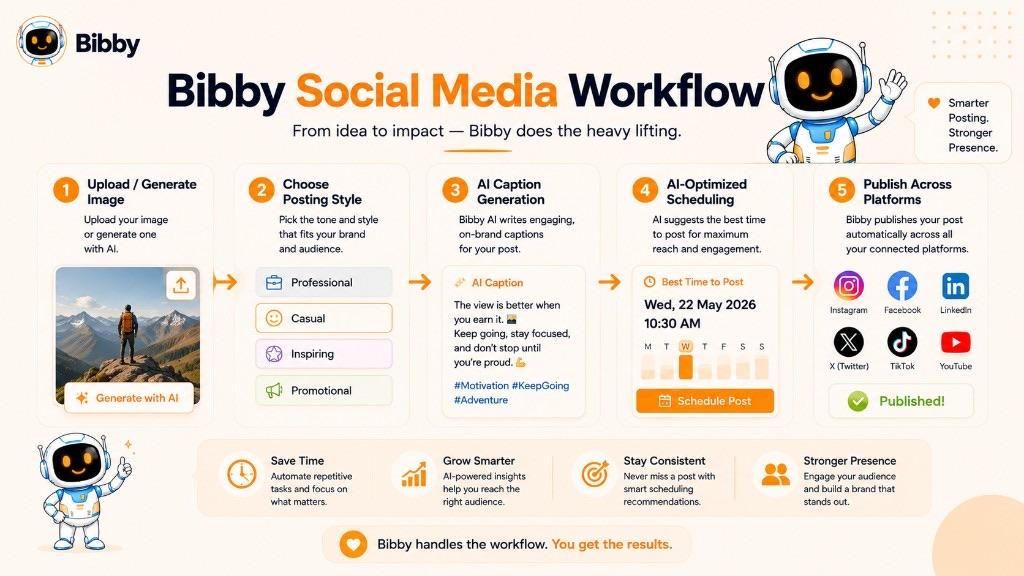
This is where social media scheduling and automation can help. Tools like Bibby allow businesses and creators to prepare content, generate captions, choose posting styles, and schedule posts across multiple platforms at AI-optimized times.
The goal isn't simply to collect as many followers as possible. The real goal is to build a relevant audience and consistently give that audience a reason to keep following you.
How to Grow a Relevant Following
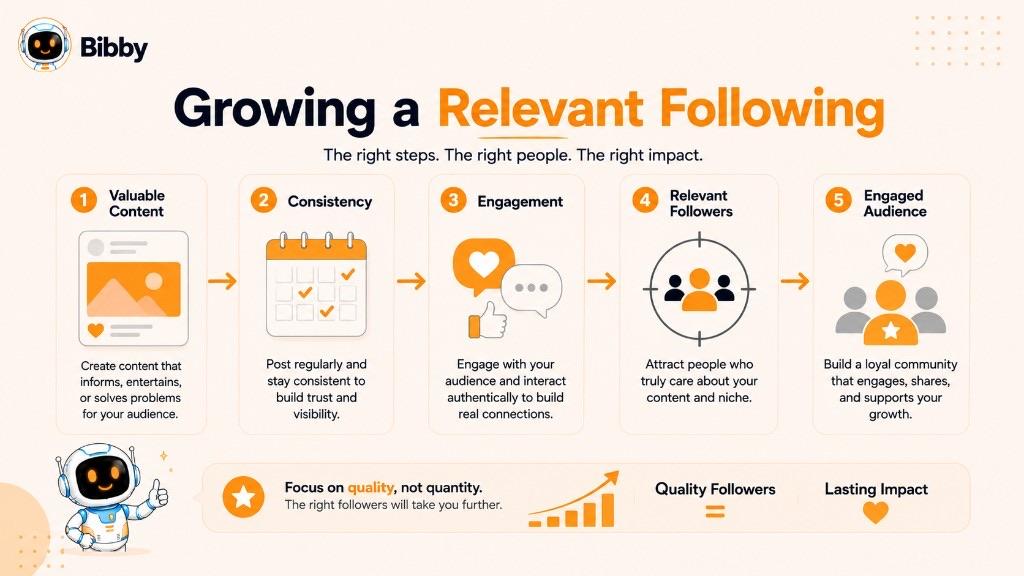
Growing a following is most valuable when the people following you are genuinely interested in your content. A smaller, engaged audience can be more useful than a large audience that rarely interacts with your posts.
Here are several practical ways to build a relevant following:
Publish Consistently
Regularly publishing useful or entertaining content gives people a reason to follow and stay connected with your account. Consistency also helps your audience know what to expect from you.
Create Content for a Specific Audience
Understand who you want to reach and create content around their interests, problems, and goals. A clear audience makes it easier to attract followers who are genuinely relevant to your brand.
Use the Right Content Formats
Experiment with formats such as images, carousels, short-form videos, Stories, and other platform-specific content. Different audiences respond differently to different formats.
Make Your Content Worth Following
Give people a clear reason to follow you. That could mean sharing expert advice, entertaining videos, original insights, useful tutorials, industry updates, or consistently valuable information.
Engage With Your Audience
Respond to comments, participate in relevant conversations, and acknowledge the people interacting with your content. Social media works best as a two-way communication channel.
Repurpose Content Across Platforms
A strong piece of content can often be adapted for multiple social networks. Repurposing helps you maintain a consistent presence without having to create every piece of content from scratch.
Analyze What Performs Best
Pay attention to which topics, formats, and posts generate meaningful engagement. Use those insights to refine your future content strategy.
Stay Consistent With Publishing
Creating content is only half the challenge. Publishing it consistently across multiple platforms can take significant time, especially for businesses managing several social accounts.
Social media automation tools such as Bibby can simplify this process by helping you create content, generate captions, and schedule posts across platforms. The more efficiently you can maintain a consistent publishing workflow, the more time you can spend improving the content itself.
Ultimately, growing a relevant following comes down to consistently creating content that the right people find useful, interesting, or entertaining.
Key Takeaways
Following is one of the fundamental ways users control and personalize their social media experience. By choosing which accounts to follow, users can decide whose content they want to keep up with.
The most important points to remember are:
- Following means subscribing to an account's content.
- Your following list helps shape your social media experience.
- Following is different from followers, friends, and subscribers.
- Algorithms determine how followed content is ranked and displayed.
- For businesses, a relevant and engaged following is more valuable than follower count alone.
Whether you're following friends, creators, industry experts, or brands, every follow helps shape the content you encounter online.
For businesses and creators, building that audience is only the first step. Maintaining a consistent publishing schedule is what keeps followers engaged and gives them a reason to stay.
With Bibby, you can upload an image or generate one with AI, choose a posting style, generate captions, create images, carousels, videos, and Stories, and schedule posts across Facebook, Instagram, LinkedIn, YouTube, and TikTok. Bibby's chat interface also lets you create campaigns, create posts, build a brand kit, and regenerate captions through conversation.
Continue learning with related dictionary entries on followers, feeds, engagement, social media algorithms, organic reach, and community management—or browse the social media dictionary. Then start a free Bibby trial to create, caption, and schedule content for the audience that chooses to follow you across your channels.