Creating viral social media content in 2026 is no longer about luck—it's about understanding how modern algorithms, audience psychology, and AI-powered tools work together.
Whether you're a creator, marketer, entrepreneur, or business owner, your goal is the same: reach more people, generate more engagement, and grow your brand without spending countless hours creating content. The good news is that viral content follows recognizable patterns, and once you understand them, you can dramatically increase your chances of success.
In this blog, you will learn:
- The content formats and strategies driving viral reach in 2026
- How AI tools can accelerate content creation and distribution
- The proven framework top creators use to grow consistently
Social media platforms are becoming increasingly competitive, but they are also providing more opportunities than ever before for creators who know how to capture attention and deliver value. Let's explore the 15 proven strategies that can help your content stand out, get shared, and reach millions of people across platforms like Instagram, TikTok, LinkedIn, Facebook, and YouTube.
Why Some Content Goes Viral While Most Content Gets Ignored
Every day, millions of posts are published across social media platforms. Yet only a tiny percentage achieve significant reach, engagement, and shares. The difference isn't random. Viral content tends to follow a predictable set of principles that align with how both people and algorithms make decisions.
In 2026, social media platforms are more sophisticated than ever. Artificial intelligence now plays a major role in determining which content gets distributed to larger audiences. Instead of prioritizing accounts with the biggest followings, platforms increasingly reward content that generates strong engagement signals immediately after publication.
Understanding the 2026 Social Media Algorithm Landscape
While every platform has its own ranking system, most algorithms prioritize similar performance indicators:
Engagement Velocity
Engagement velocity refers to how quickly people interact with your content after it's published. Posts that receive likes, comments, shares, saves, and watch time within the first few hours are more likely to be shown to larger audiences.
Watch Time and Retention
Video content dominates social media, making retention one of the most important ranking factors. The longer viewers stay engaged with your content, the more platforms interpret it as valuable.
This is why successful creators spend significant time crafting compelling openings that keep viewers watching beyond the first few seconds.
Shares and Saves
Shares and saves have become stronger indicators of quality than likes alone. When users share content with friends or save it for later, they signal that the content has lasting value.
Many viral posts generate massive reach because users actively distribute them to their own networks.
Meaningful Interactions
Algorithms increasingly favor conversations over passive engagement. Comments, replies, discussions, and direct interactions help platforms identify content that creates genuine community engagement.
AI-Powered Content Recommendations
Modern recommendation engines analyze user behavior in real time. Instead of only showing content from followed accounts, platforms recommend content based on interests, viewing habits, engagement history, and behavioral patterns.
This means even new creators can achieve viral reach if their content resonates with the right audience.
Common Myths About Viral Content
Many creators unknowingly hold beliefs that limit their growth. Let's clear up a few misconceptions.
Myth #1: You Need a Massive Following
One of the biggest advantages of modern algorithms is that they prioritize content quality over follower count. Countless creators with small audiences achieve millions of views because their content performs well with initial viewers.
Myth #2: Virality Is Pure Luck
Luck can influence outcomes, but consistent viral success is rarely accidental. The most successful creators rely on repeatable systems, audience research, testing, and optimization.
Myth #3: Expensive Production Is Required
Many high-performing social media posts are created with smartphones and simple editing tools. Audiences often prefer authentic content over highly polished productions.
Myth #4: Posting More Automatically Creates Growth
Publishing more content can increase opportunities, but quantity without strategy rarely produces meaningful results. Consistently publishing valuable content is far more effective than simply increasing volume.
The creators and brands that dominate social media in 2026 understand a simple truth: viral content happens when audience psychology and algorithm preferences align. The remaining strategies in this guide will show you exactly how to create that alignment and dramatically increase your chances of reaching a larger audience.
Also read: Why Every Small Business Should Use a Social Media Scheduling Tool?
Strategy #1: Start With Audience Obsessions, Not Brand Messages
One of the biggest mistakes brands and creators make is focusing too much on what they want to say rather than what their audience wants to hear.
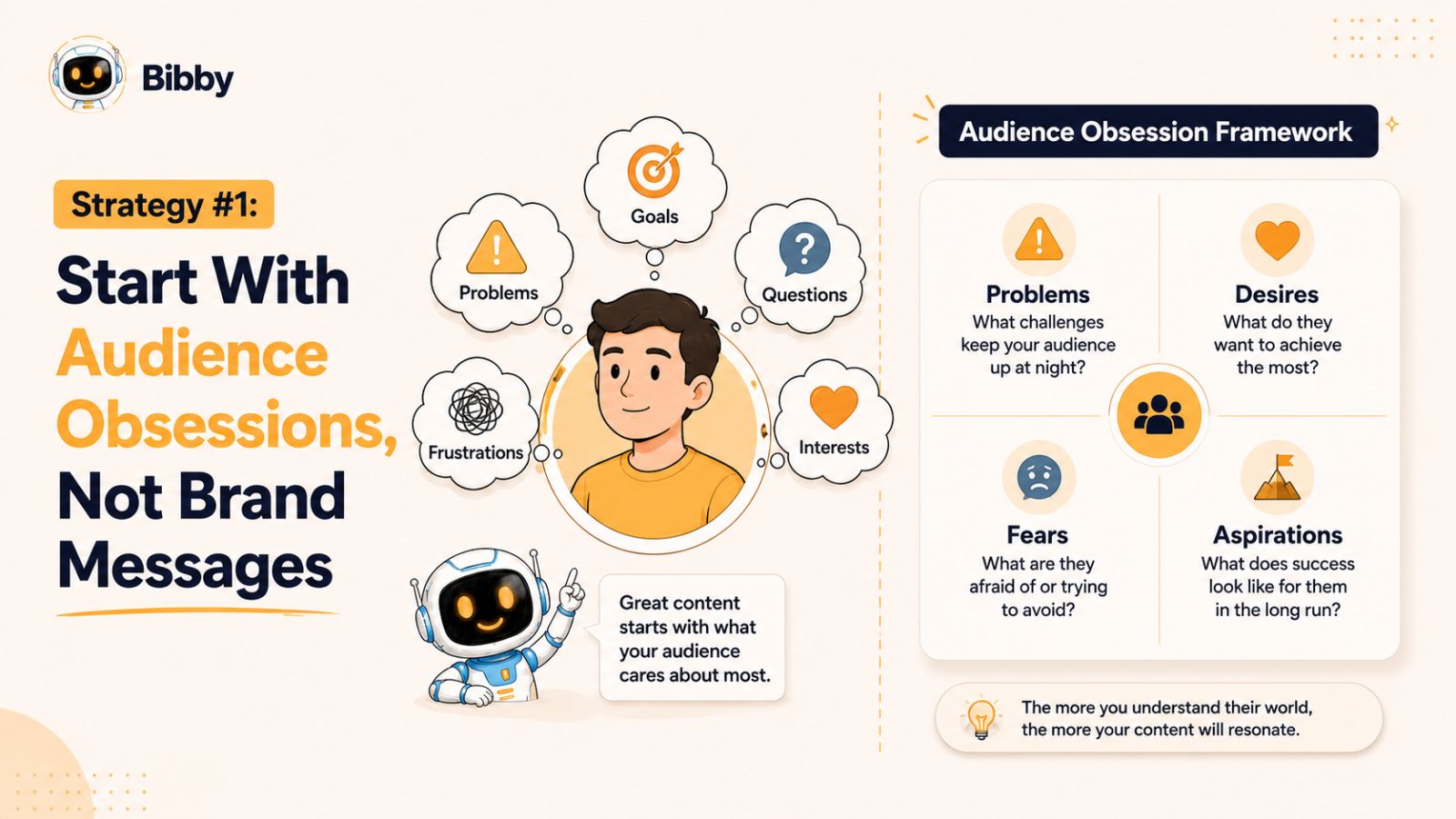
Viral content starts with the audience. The most successful social media posts tap into existing interests, problems, desires, and conversations that people already care about. Instead of pushing messages outward, top creators align their content with topics their audience is actively searching for, discussing, and sharing.
Before creating any piece of content, ask yourself a simple question:
"Why would someone stop scrolling and care about this?"
If the answer focuses on your audience's needs rather than your brand's goals, you're moving in the right direction.
How to Identify High-Interest Topics
The fastest way to create content people engage with is to understand what matters to them right now.
Listen to Your Audience
Pay attention to:
- Frequently asked questions
- Common customer objections
- Support requests
- Social media comments
- Direct messages
- Community discussions
When the same question appears repeatedly, it's often a strong content opportunity.
Monitor Industry Conversations
Industry trends often reveal what people are currently interested in learning.
Look at:
- LinkedIn discussions
- Reddit communities
- Facebook Groups
- Industry newsletters
- YouTube comments
- Competitor content
The goal isn't to copy others. It's to identify recurring topics that attract attention and then provide a unique perspective.
Analyze High-Performing Content
Review your own content analytics and identify patterns.
Ask:
- Which posts generated the most shares?
- Which videos had the highest watch time?
- Which content drove the most comments?
- Which topics consistently outperform others?
Your audience often tells you what they want through their behavior.
The Audience Obsession Framework
The most shareable content usually falls into one of four categories:
Problems
People actively seek solutions to challenges they face.
Examples:
- How to grow on social media
- How to generate more leads
- How to save time creating content
Problem-solving content often performs exceptionally well because it provides immediate value.
Desires
People engage with content that helps them achieve a goal.
Examples:
- Growing a business
- Building a personal brand
- Increasing income
- Becoming more productive
The stronger the desire, the more likely the content is to be shared.
Fears
Content that addresses concerns often attracts attention because it helps people avoid mistakes.
Examples:
- Social media mistakes that kill engagement
- Marketing tactics that waste money
- Common content creation errors
Fear-based content works best when paired with practical solutions.
Aspirations
People love content that helps them imagine a better future.
Examples:
- Creator success stories
- Business growth case studies
- Before-and-after transformations
- Productivity breakthroughs
Aspirational content is highly shareable because it inspires action and possibility.
Create Content Around the Audience, Not the Product
Many brands make every piece of content about their product or service. The most successful creators take the opposite approach.
For example, instead of constantly promoting a social media automation tool, create content that helps people solve social media challenges.
Once trust is established, recommendations feel natural.
A great example is Bibby. Rather than simply telling people to use a scheduling tool, valuable content could show creators how to save hours every week managing social media. After teaching the strategy, Bibby naturally becomes part of the solution by allowing users to upload or generate AI images, create captions automatically, schedule content across Facebook, Instagram, LinkedIn, YouTube, and TikTok, optimize posting times with AI, and track analytics from one simple dashboard.
The lesson is simple: people rarely share advertisements, but they frequently share solutions.
When your content consistently addresses audience obsessions instead of brand messaging, you'll create stronger engagement, more shares, and significantly greater opportunities for virality.
Also read: Best Hootsuite Alternative for Small Business
Strategy #2: Build Strong Hooks in the First Three Seconds
You can have the most valuable content in the world, but if people don't stop scrolling, they'll never see it.
In 2026, attention is the most valuable currency on social media. Users are exposed to thousands of pieces of content every day, and algorithms quickly measure whether your content captures attention or gets ignored. That's why the first three seconds often determine whether a post reaches hundreds of people or hundreds of thousands.
A strong hook creates curiosity, promises value, sparks emotion, or presents an unexpected idea that makes people want to keep consuming your content.
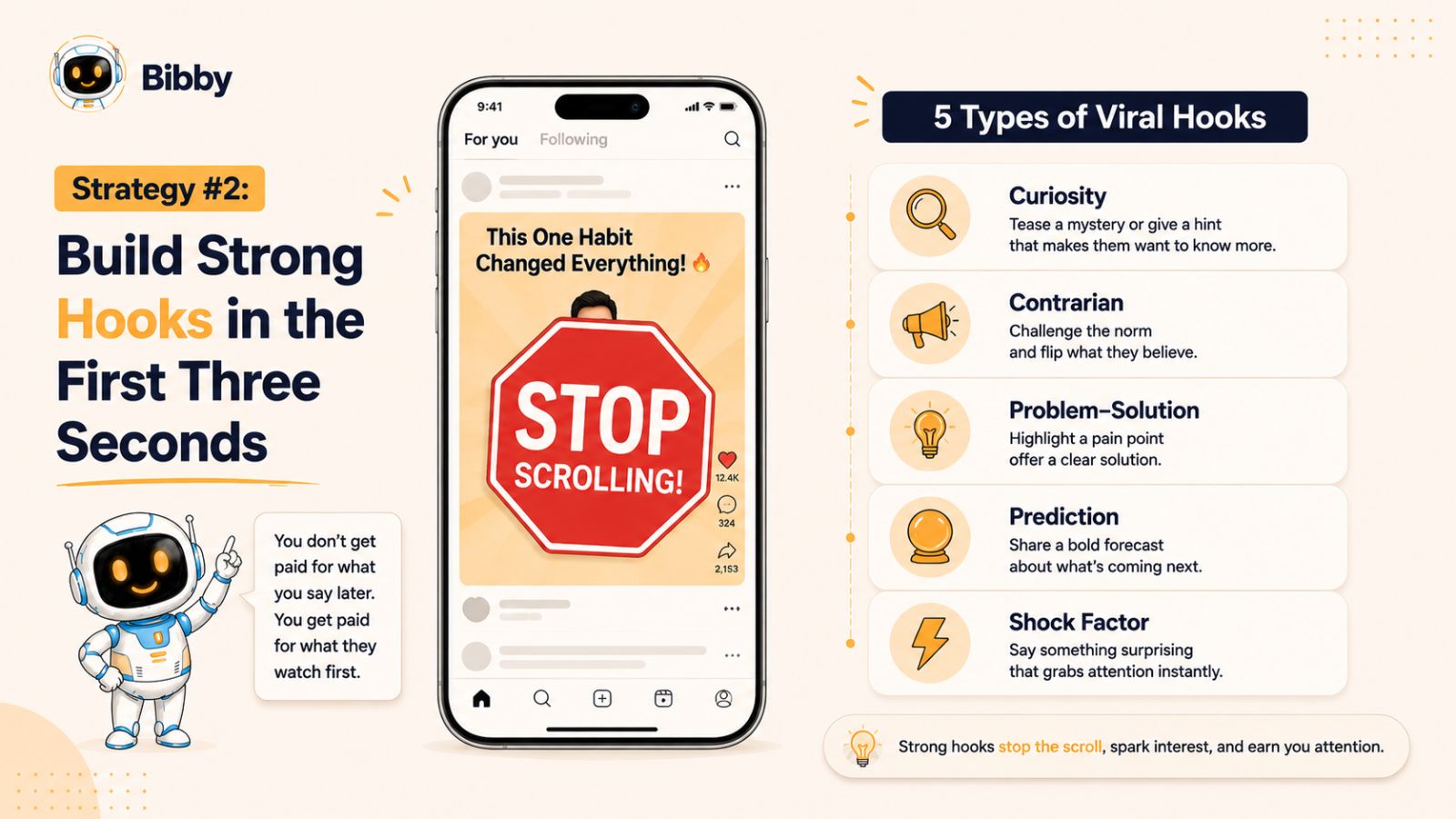
Why the First Three Seconds Matter
Social media platforms closely monitor early engagement signals.
When users immediately scroll away, algorithms interpret that behavior as a sign that the content is not relevant or engaging. However, when viewers stop, watch, read, or interact, platforms receive a positive signal that encourages wider distribution.
This applies across all major platforms:
- TikTok prioritizes retention and watch time.
- Instagram rewards content that keeps users engaged.
- LinkedIn boosts posts that generate meaningful interactions.
- Facebook favors content that sparks discussions.
- YouTube evaluates click-through rates and audience retention.
The first few seconds are your opportunity to earn attention.
The Anatomy of a High-Performing Hook
Most viral hooks achieve one or more of the following objectives:
- Create curiosity
- Present a surprising fact
- Challenge common beliefs
- Highlight a problem
- Promise a clear outcome
- Trigger emotion
Let's look at some proven hook frameworks.
Curiosity Hooks
Curiosity is one of the strongest psychological drivers of engagement.
Examples:
- "Most creators are making this mistake without realizing it."
- "The reason your content isn't growing may surprise you."
- "I tested this strategy for 30 days. Here's what happened."
These hooks create an information gap that viewers want to close.
Contrarian Hooks
People naturally pay attention when they encounter ideas that challenge conventional wisdom.
Examples:
- "Posting more content won't fix your growth problem."
- "Stop chasing followers. Focus on this instead."
- "Everything you've been told about social media growth is changing."
Contrarian content encourages discussion and sharing because it introduces a fresh perspective.
Problem-Solution Hooks
This framework works because it immediately identifies a pain point and implies a solution.
Examples:
- "Struggling to get engagement? Try this simple framework."
- "Here's why your videos lose viewers after five seconds."
- "If your posts aren't getting shares, do this."
The audience instantly understands the value of continuing.
Prediction Hooks
Prediction-based content performs well because people want to know what's coming next.
Examples:
- "These social media trends will dominate 2026."
- "AI will change content creation in ways most marketers aren't expecting."
- "The next viral content format is already emerging."
Predictions generate curiosity while positioning you as a knowledgeable source.
Hook Formulas You Can Reuse
Here are several templates you can adapt to nearly any niche:
Formula #1
"How I achieved [result] without [common obstacle]."
Formula #2
"Most people don't realize that [surprising insight]."
Formula #3
"Before you [action], read this."
Formula #4
"The fastest way to [desired outcome]."
Formula #5
"Why [common belief] is actually hurting your results."
Match Your Hook to the Content
One of the biggest mistakes creators make is using misleading hooks that don't match the actual content.
While clickbait may generate initial attention, it often destroys retention, trust, and long-term growth.
The best hooks make a promise that the content immediately fulfills.
Using AI to Generate Better Hooks
Many creators struggle to consistently develop fresh ideas and compelling openings. This is where AI-powered tools can help.
For example, platforms like Bibby can automatically generate captions and content variations based on your preferred posting style. Instead of spending hours brainstorming introductions and captions, creators can quickly test multiple messaging angles and identify which hooks resonate most with their audience.
This allows marketers to focus less on repetitive writing tasks and more on creating valuable content.
The Golden Rule of Virality
If people don't stop scrolling, nothing else matters.
Before worrying about editing, design, analytics, or scheduling, focus on creating a hook that captures attention immediately. Mastering this single skill can dramatically improve watch time, engagement, shares, and overall reach across every social platform.
The most successful creators don't simply create better content—they create content that people actually notice.
Also read: How to Grow on Social Media With AI?
Strategy #3: Design Content for Shares, Not Likes
Many creators obsess over likes.
The problem is that likes rarely drive virality.
A like is a low-effort action. It tells the algorithm that someone enjoyed your content, but it doesn't necessarily indicate that the content was valuable enough to spread. Shares, on the other hand, introduce your content to entirely new audiences and significantly increase the likelihood of viral reach.
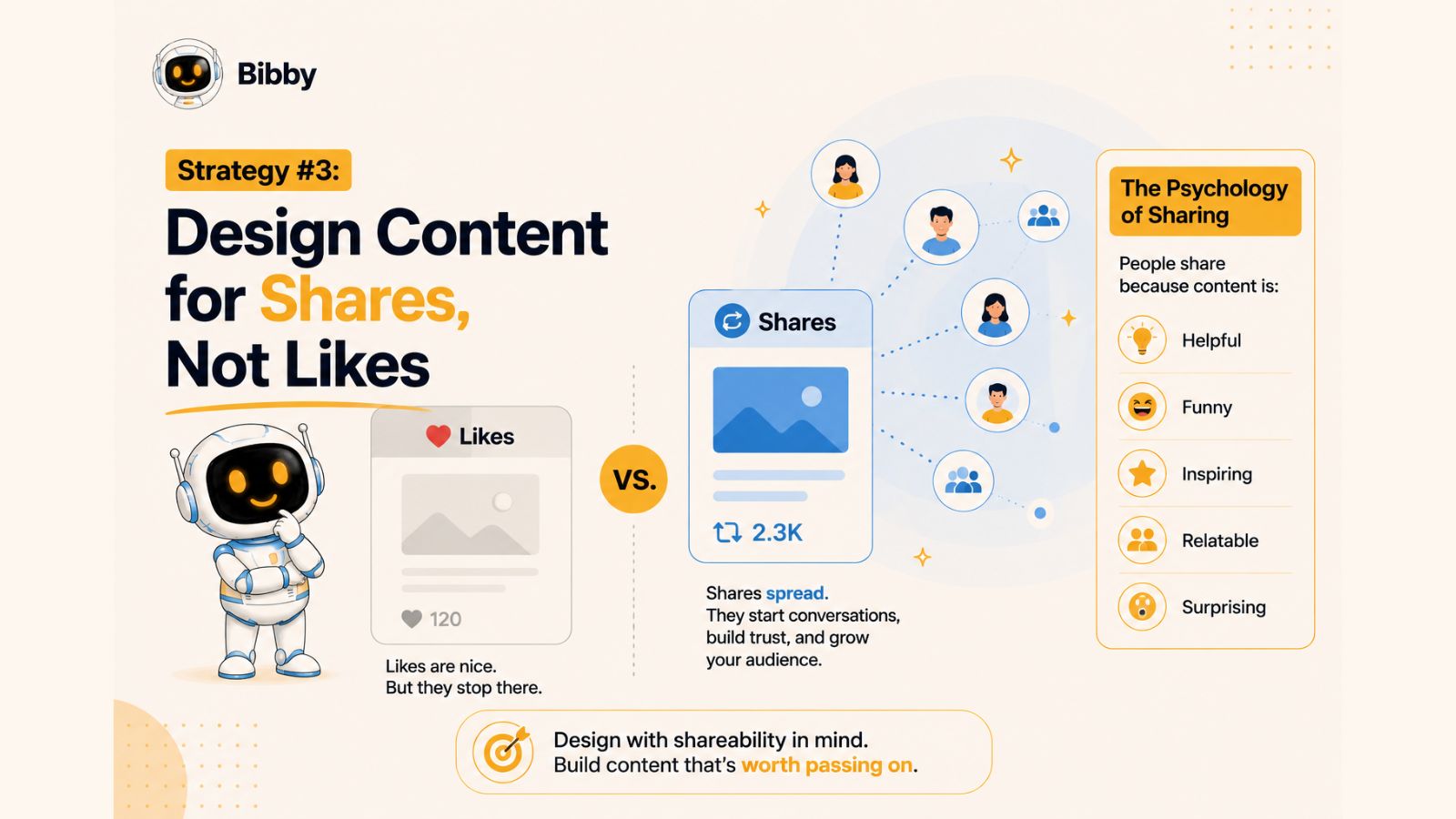
If your goal is to create viral social media content in 2026, you need to shift your mindset from creating content people simply enjoy to creating content people feel compelled to share.
Why Shares Are the Ultimate Viral Signal
Think about how social media platforms make recommendations.
Their goal is to keep users engaged by showing content people find useful, entertaining, or meaningful. When someone shares a post with friends, colleagues, or followers, they are effectively endorsing that content.
This sends a powerful signal to the algorithm:
"More people should see this."
As a result, platforms often reward highly shared content with additional distribution.
A post with 500 shares can often outperform a post with thousands of likes because shares actively expand reach.
The Psychology Behind Sharing
People don't share content randomly.
Most shares happen because the content helps users express something about themselves or provide value to others.
Typically, people share content for one of five reasons:
1. It Makes Them Look Smart
Educational content performs well because people enjoy sharing useful information.
Examples:
- Industry insights
- Statistics
- Tutorials
- Case studies
- Productivity tips
When someone shares educational content, they position themselves as knowledgeable and helpful.
2. It Makes Them Feel Understood
Relatable content often generates significant engagement because people see themselves in it.
Examples:
- Common workplace frustrations
- Creator struggles
- Entrepreneur challenges
- Daily life experiences
People share relatable content to say:
"This is exactly how I feel."
3. It Inspires Others
Motivational and aspirational content frequently spreads because people enjoy encouraging their networks.
Examples:
- Success stories
- Personal transformations
- Business growth journeys
- Overcoming obstacles
Inspiration creates emotional connections that increase sharing behavior.
4. It Creates Strong Emotions
Emotion is one of the strongest drivers of virality.
Content that generates:
- Surprise
- Excitement
- Humor
- Inspiration
- Curiosity
is more likely to be shared than content that produces no emotional response.
5. It Solves a Problem
Practical content consistently performs well because it delivers immediate value.
Examples:
- Templates
- Checklists
- Frameworks
- Step-by-step guides
- Time-saving tips
The more useful the content, the more likely people are to pass it along.
Content Formats That Generate Shares
Certain formats naturally encourage sharing.
Actionable Lists
Examples:
- 10 AI tools every marketer should try
- 7 content ideas for small businesses
- 15 social media growth tactics that still work
Lists are easy to consume and easy to share.
Visual Frameworks
People love content that simplifies complex ideas.
Examples:
- Infographics
- Flowcharts
- Processes
- Strategic frameworks
Visual content often receives more shares because it delivers value quickly.
Contrarian Opinions
When a creator challenges common thinking with a strong argument, people often share it to spark conversations.
Examples:
- "Why follower counts matter less than ever."
- "The biggest social media myth marketers still believe."
These posts tend to generate both engagement and discussion.
Industry Predictions
Prediction content encourages sharing because people want to discuss future possibilities.
Examples:
- Emerging AI trends
- Marketing predictions
- Platform updates
- Consumer behavior changes
Make Sharing Effortless
One overlooked aspect of virality is simplicity.
If a post is too complicated, too long, or difficult to understand, people are less likely to share it.
The best shareable content is:
- Easy to understand
- Easy to consume
- Easy to explain to others
Always ask:
"Would someone want to send this to a friend or colleague?"
If the answer is yes, you're on the right track.
Scaling Shareable Content Consistently
Creating one highly shareable post is valuable. Creating dozens every month is transformational.
This is where automation becomes a major advantage.
Instead of manually creating, captioning, and scheduling every post, tools like Bibby help streamline the entire workflow. Creators can upload images or generate visuals with AI, choose a preferred posting style, automatically generate captions, and schedule content across Facebook, Instagram, LinkedIn, YouTube, and TikTok at AI-optimized times.
This consistency allows marketers to publish more shareable content, test different content formats, and discover what resonates most with their audience.
Focus on Value Distribution
Many creators ask:
"How can I get more views?"
A better question is:
"How can I create content people want to distribute for me?"
When your content educates, inspires, entertains, or solves problems, your audience becomes your distribution network. And that's when social media algorithms begin to amplify your reach on a much larger scale.
The most viral content isn't necessarily the most creative—it’s the content that people can't resist sharing.
Also read: How Social Media Automation Helps Startups Grow Faster
Strategy #4: Use AI to Accelerate Content Creation
One of the biggest advantages creators and marketers have in 2026 is access to powerful AI tools that dramatically reduce the time required to create, publish, and optimize content.
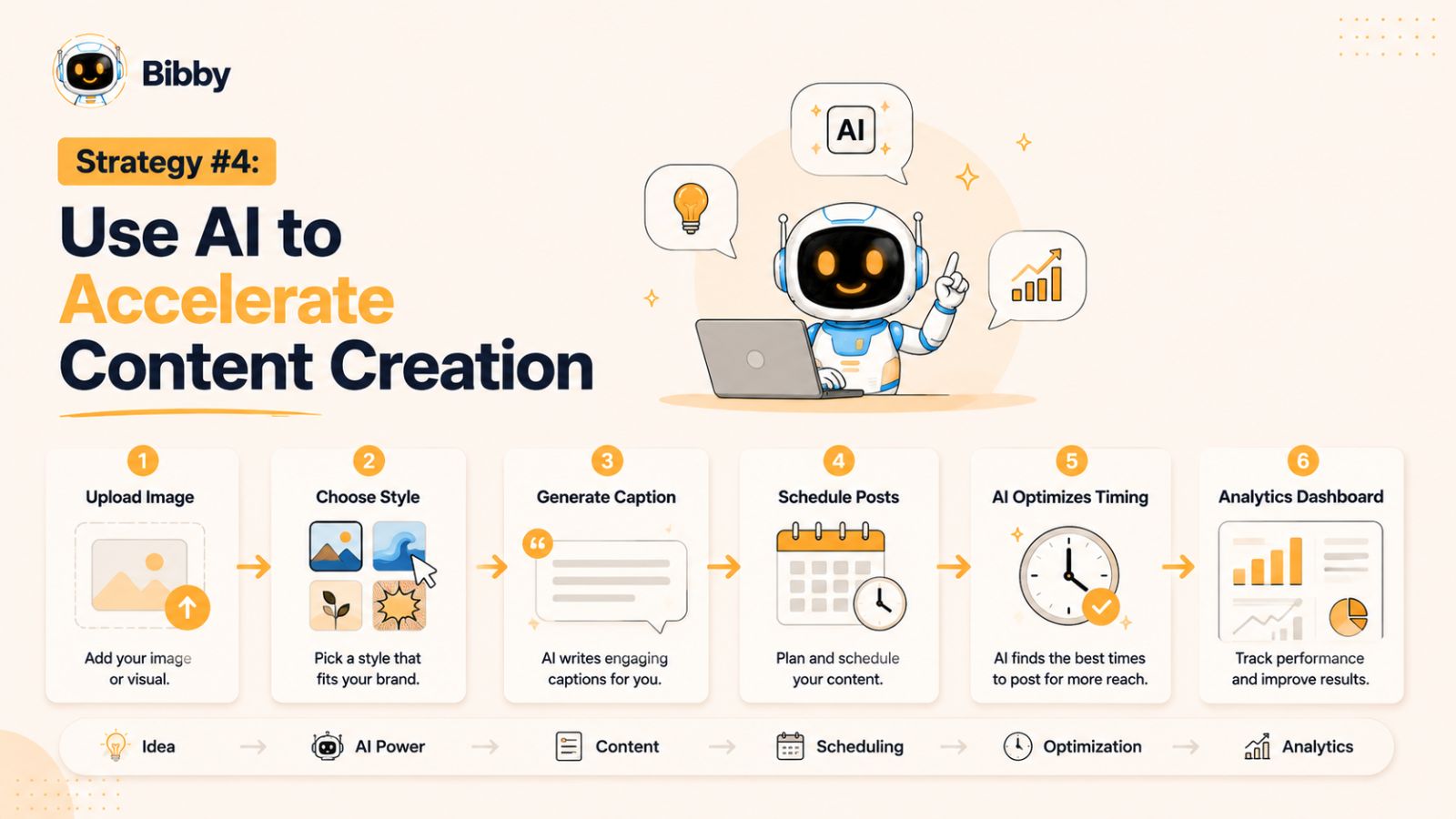
Just a few years ago, building a consistent social media presence required hours of manual work every week. Creators had to brainstorm ideas, design graphics, write captions, determine posting schedules, publish content manually, and analyze results separately across multiple platforms.
Today, AI can automate much of that process.
The creators growing the fastest aren't necessarily working harder. They're using AI to eliminate repetitive tasks and spend more time focusing on strategy, creativity, and audience engagement.
Why AI Is Reshaping Social Media Marketing
Social media success has always depended on consistency.
However, maintaining consistency becomes difficult when content creation consumes too much time.
AI helps solve this problem by accelerating key parts of the workflow, including:
- Content ideation
- Caption writing
- Image generation
- Content repurposing
- Scheduling
- Analytics
- Performance optimization
As a result, creators can produce more content, test more ideas, and maintain a stronger publishing cadence without burning out.
AI-Powered Tasks That Save Hours Every Week
Let's examine where AI delivers the greatest impact.
Content Ideation
Many creators struggle with what to post next.
AI tools can analyze trends, audience interests, and previous performance data to generate fresh content ideas that align with your niche.
This removes much of the guesswork from content planning.
Caption Generation
Writing captions is one of the most repetitive aspects of social media marketing.
AI can instantly generate multiple caption variations tailored to different tones, audiences, and platforms.
Instead of spending 20 minutes writing a single caption, creators can produce several high-quality options in seconds.
Image Creation
Visual content remains a major driver of engagement.
Modern AI tools can generate custom images, graphics, and creative assets that support social media campaigns without requiring advanced design skills.
Content Repurposing
A single idea can often become:
- A LinkedIn post
- An Instagram carousel
- A TikTok video
- A Facebook post
- A YouTube Short
AI helps transform one piece of content into multiple platform-specific formats, dramatically increasing content output.
Analytics and Optimization
AI can identify patterns that humans often miss.
Instead of manually reviewing large amounts of performance data, creators can quickly discover:
- Which content performs best
- Which topics generate engagement
- Which formats drive shares
- Which posting times produce the strongest results
How Bibby Simplifies the Entire Social Media Workflow
While many tools solve individual parts of the content creation process, Bibby brings the entire workflow together into one streamlined system.
Instead of juggling multiple platforms and tools, users can manage content creation, scheduling, publishing, and analytics from a single dashboard.
The process is intentionally simple.
Step 1: Upload or Generate Your Content
Users can upload their own image or create one using AI.
This allows creators to quickly prepare content without switching between multiple design platforms.
Step 2: Choose Your Posting Style
Different brands require different voices.
Bibby allows users to select a preferred posting style, helping maintain a consistent brand identity across every platform.
Step 3: Generate AI Captions Automatically
Once content is uploaded, Bibby generates captions automatically.
This removes one of the most time-consuming parts of content creation while ensuring captions remain aligned with the selected style.
Step 4: Schedule Content Across Multiple Platforms
Rather than manually publishing content every day, users can schedule posts in advance across:
- YouTube
- TikTok
This creates a consistent publishing schedule without requiring constant attention.
Step 5: Let AI Optimize Posting Times
Timing can significantly impact engagement.
Bibby uses AI to determine optimal publishing windows, helping content reach audiences when they are most active.
Step 6: Track Performance in One Place
Understanding what works is critical for growth.
Bibby provides analytics that allow creators and businesses to monitor performance, identify successful content, and improve future campaigns.
Step 7: Manage Multiple Content Formats
Modern social media isn't limited to image posts.
Users can manage:
- Videos
- Stories
- Image posts
- Multi-platform campaigns
all from the same workflow.
Why Automation Creates a Competitive Advantage
Many marketers still spend hours every week handling repetitive tasks manually.
This creates a hidden cost: less time for strategy, creativity, and audience engagement.
Automation changes the equation.
When AI handles routine tasks such as caption writing, scheduling, and posting, creators gain more time to:
- Research trends
- Build communities
- Test new content ideas
- Engage with followers
- Improve content quality
Over time, these advantages compound.
The Future Belongs to AI-Assisted Creators
The goal of AI isn't to replace creativity.
The goal is to remove friction.
The most successful creators in 2026 combine human creativity with AI-powered efficiency. They use technology to speed up production, increase consistency, and focus their attention where it matters most: creating content that people genuinely want to consume and share.
The faster you can move from idea to publication, the more opportunities you create for growth. AI gives creators that speed—and in today's social media landscape, speed is a powerful competitive advantage.
Also read: Bibby vs Later: Which Social Media Tool Is Best for Small Business?
Strategy #5: Leverage Micro-Trends Before They Peak
By the time a trend appears everywhere, it's usually too late.
One of the biggest differences between content that gets moderate engagement and content that explodes across social media is timing. Viral creators often identify and capitalize on emerging trends before the majority of users even notice them.
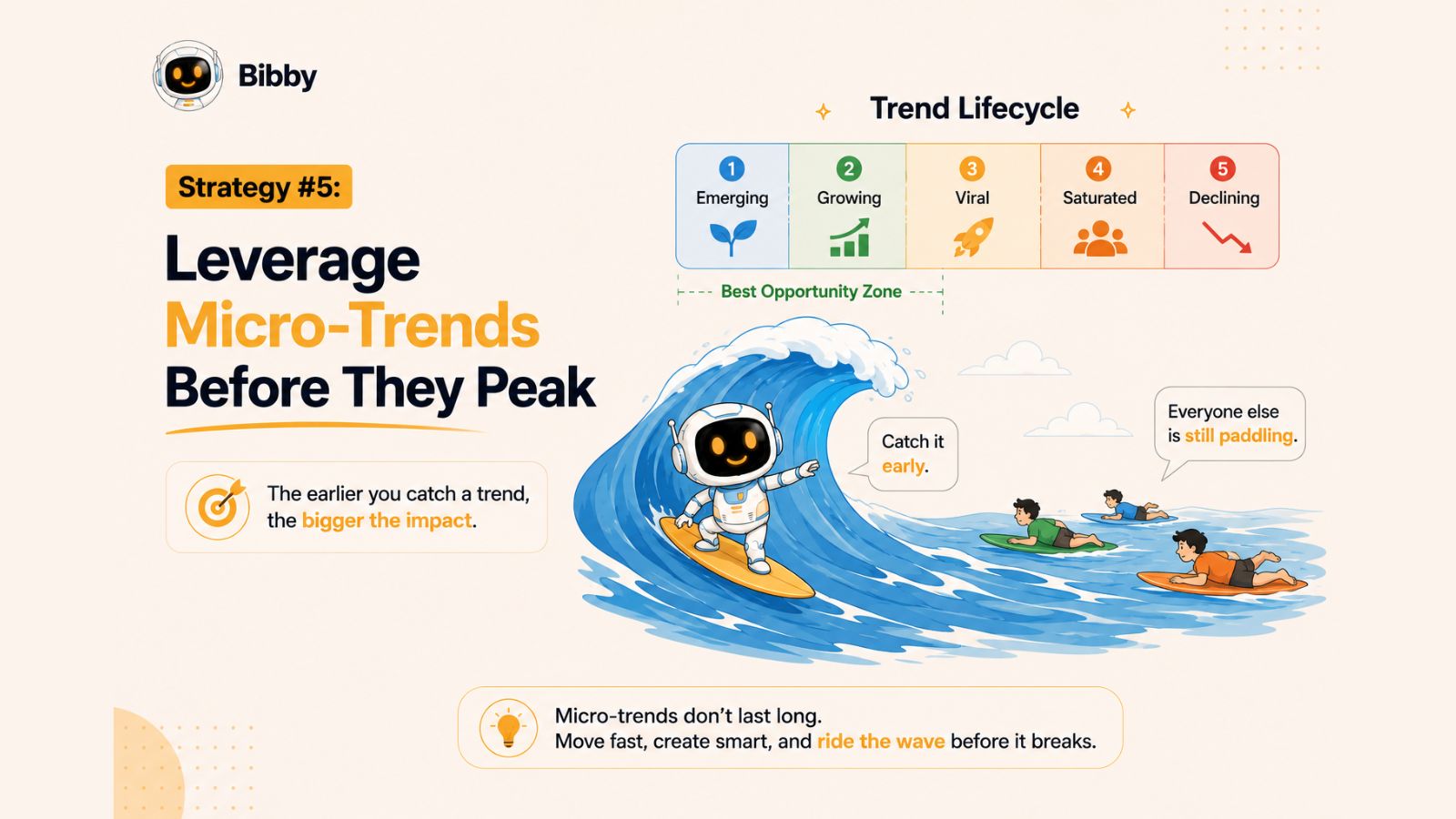
In 2026, trends move faster than ever. Thanks to AI-powered recommendation algorithms, a niche conversation can spread globally within days—or even hours. The creators who consistently generate viral content are not simply following trends. They are spotting them early and adapting them to their audience.
What Are Micro-Trends?
Micro-trends are emerging topics, content formats, challenges, visual styles, sounds, or conversations that are gaining momentum but have not yet reached mainstream saturation.
Unlike major trends that everyone eventually sees, micro-trends provide an opportunity to stand out before competition increases.
Examples include:
- Emerging AI tools
- New content formats
- Viral storytelling styles
- Trending audio clips
- Industry-specific discussions
- Platform feature updates
The earlier you identify a trend, the greater the potential reach.
Why Early Trend Adoption Matters
Social media algorithms often reward fresh content that aligns with emerging user interests.
When a trend starts gaining traction, platforms actively search for more content on the same topic to satisfy growing demand.
Creators who publish early can benefit from:
- Increased discoverability
- Higher engagement rates
- Greater reach
- Faster audience growth
- Reduced competition
Being early often matters more than being perfect.
Where to Find Emerging Trends
Monitor Creator Communities
Many trends begin within small communities before reaching mainstream audiences.
Watch:
- Industry influencers
- Niche creators
- LinkedIn discussions
- Facebook Groups
- Reddit communities
- Professional forums
Pay attention to topics that suddenly appear in multiple conversations.
Analyze Platform Discovery Feeds
Discovery pages often reveal trends before they become obvious.
Review:
- TikTok For You Page
- Instagram Explore
- YouTube Shorts feed
- LinkedIn trending conversations
Look for recurring formats, themes, and content styles.
Follow Industry News
Major shifts often begin with new technology, platform updates, or consumer behavior changes.
Staying informed allows you to create content around trends before competitors react.
Use AI-Powered Trend Research
AI tools can help identify emerging patterns by analyzing large amounts of content and engagement data.
Instead of manually reviewing hundreds of posts, creators can quickly spot opportunities that are gaining momentum.
The Trend Adoption Framework
The best creators don't blindly copy trends.
They use a structured process.
Step 1: Discover
Identify an emerging topic, format, or conversation.
Ask:
- Is engagement increasing?
- Are multiple creators discussing it?
- Does it align with my audience?
Step 2: Adapt
Never copy a trend exactly.
Instead, connect it to:
- Your niche
- Your expertise
- Your audience's interests
- Your brand voice
Adaptation creates originality.
Step 3: Publish Quickly
Perfection is often the enemy of trend-based content.
Micro-trends have limited lifespans.
The sooner you publish, the more likely you are to benefit from the trend's growth phase.
Step 4: Scale What Works
If a trend-related post performs well:
- Create follow-up content
- Expand on the topic
- Turn it into a content series
- Repurpose it across multiple platforms
Winning trends should be fully leveraged.
Avoid the Biggest Trend Mistake
Many creators chase every trend they encounter.
This usually leads to inconsistent branding and audience confusion.
Before participating in a trend, ask:
"Would my audience genuinely care about this?"
If the answer is no, skip it.
Relevance is more important than popularity.
Combining Trends With Automation
One challenge with trend-based content is speed.
The faster you can create and publish content, the more likely you are to benefit from an emerging opportunity.
This is where streamlined workflows become extremely valuable.
Using a platform like Bibby, creators can quickly upload or generate visuals, create AI-powered captions, schedule content across Facebook, Instagram, LinkedIn, YouTube, and TikTok, and publish at optimized times without slowing down the process.
When trends can rise and fade within days, reducing production friction becomes a significant competitive advantage.
The Early-Mover Advantage
Most creators wait for proof that a trend is successful before participating.
By then, thousands of others are already competing for attention.
The creators who consistently achieve viral reach develop a habit of acting earlier. They monitor conversations, recognize emerging opportunities, and publish quickly while competition remains low.
In social media, timing often determines whether content becomes one post among thousands—or one of the posts that everyone else starts copying.
Also read: How to Automate Your LinkedIn Posting Strategy for B2B Growth
Strategy #6: Create Platform-Native Content
One of the fastest ways to limit your reach is to publish identical content across every social media platform without making any adjustments.
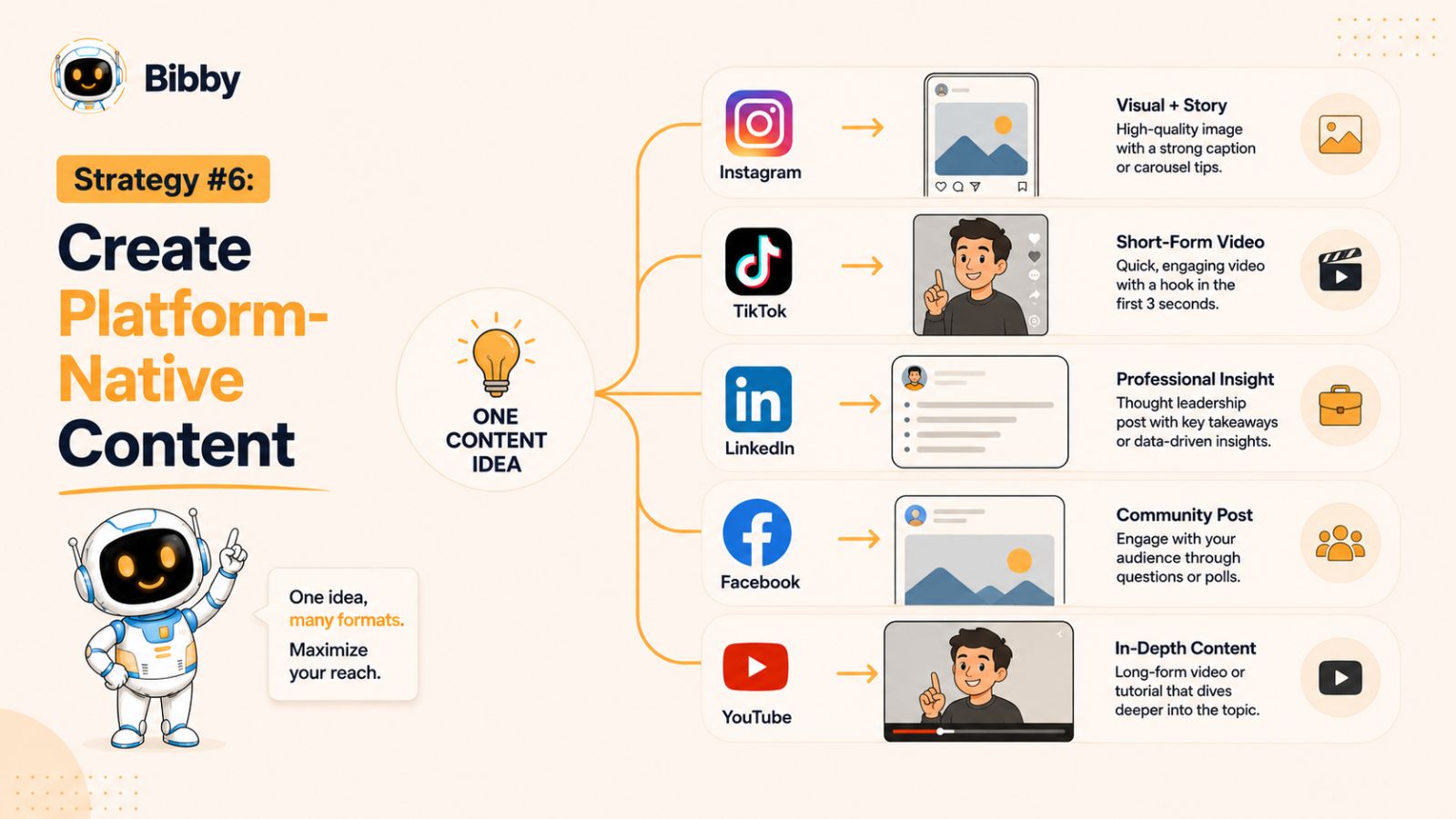
While cross-posting can save time, each platform has its own audience expectations, content formats, engagement patterns, and algorithm preferences. Content that performs exceptionally well on TikTok may struggle on LinkedIn, while a successful LinkedIn post might generate little engagement on Instagram.
The creators who consistently achieve viral growth understand a simple principle:
Create for the platform first, then optimize for the audience.
What Is Platform-Native Content?
Platform-native content is content specifically designed for the environment where it will be consumed.
This means adapting:
- Content format
- Writing style
- Length
- Visual presentation
- Call-to-action
- Audience expectations
The goal isn't to create completely different content for every platform. Instead, it's about packaging the same idea in a way that feels natural to each audience.
Instagram: Visual Storytelling Wins
Instagram users expect visually engaging content.
High-performing formats include:
- Reels
- Carousels
- Stories
- Before-and-after transformations
- Educational graphics
Successful Instagram content is often:
- Visually appealing
- Easy to consume quickly
- Emotionally engaging
- Highly shareable
Captions support the content, but the visual element usually drives initial engagement.
TikTok: Entertainment and Authenticity
TikTok rewards attention and retention.
Users expect:
- Fast-paced content
- Strong hooks
- Authentic delivery
- Trending formats
- Story-driven videos
Content often performs best when it feels native to the platform rather than polished like a traditional advertisement.
The first few seconds are especially important because retention significantly impacts distribution.
LinkedIn: Expertise and Professional Value
LinkedIn audiences are looking for:
- Professional insights
- Industry trends
- Business lessons
- Career advice
- Personal experiences
Successful LinkedIn posts often combine storytelling with actionable takeaways.
Examples include:
- Lessons learned
- Case studies
- Industry predictions
- Business growth stories
- Contrarian perspectives
The focus should be on delivering value while encouraging meaningful discussion.
YouTube: Depth and Retention
YouTube offers opportunities for both short-form and long-form content.
Successful creators often focus on:
- Tutorials
- Educational content
- Reviews
- Deep dives
- Storytelling
Because YouTube functions as both a social platform and a search engine, content can continue generating views for months or even years after publication.
Strong titles, thumbnails, and audience retention remain critical.
Facebook: Community and Conversation
Despite the rise of newer platforms, Facebook still offers significant reach.
Content tends to perform well when it encourages:
- Discussions
- Community participation
- Personal stories
- Group engagement
- Local conversations
Posts that spark comments and interactions often receive additional distribution.
Adapt One Idea Into Multiple Formats
Creating platform-native content doesn't mean creating everything from scratch.
For example, a single content idea can become:
TikTok
A short educational video with a strong hook.
Instagram
A carousel breaking down the key lessons.
LinkedIn
A professional insight post with a personal perspective.
Facebook
A discussion-focused version that encourages comments.
YouTube
A deeper explanation with examples and supporting details.
The core message stays the same, but the presentation changes.
Why Platform-Specific Optimization Matters
Algorithms are designed to reward content that users engage with.
When content feels native to a platform, users are more likely to:
- Watch longer
- Engage more
- Share content
- Start conversations
- Follow the creator
These signals lead to increased visibility and reach.
Simplifying Multi-Platform Publishing
Managing multiple platforms can quickly become overwhelming.
Creators often struggle to maintain consistency while adapting content for different audiences.
This is where centralized workflows become valuable.
With Bibby, creators can prepare content once, generate AI-powered captions tailored to their preferred style, and schedule posts across Facebook, Instagram, LinkedIn, YouTube, and TikTok from a single dashboard. This makes it easier to maintain platform-specific publishing strategies without dramatically increasing workload.
Combined with AI-optimized posting times and built-in analytics, creators can focus more on creating effective content and less on managing multiple publishing systems.
Stop Treating Every Platform the Same
Many creators fail to grow because they assume every platform behaves similarly.
The reality is that each platform rewards different behaviors, content styles, and audience expectations.
The creators who consistently achieve viral reach understand how to package their message appropriately for each platform while maintaining a consistent brand identity.
When you combine a strong content idea with platform-native execution, your chances of achieving meaningful reach increase dramatically.
You may also like looking into: How to Build a Strong LinkedIn Presence?
Strategy #7: Use Storytelling Frameworks That Trigger Emotion
Facts inform.
Stories persuade.
Emotion drives action.
This is one of the most important principles behind viral content. While statistics, tips, and educational content can generate engagement, stories create emotional connections that people remember, discuss, and share.
Think about the content you've shared recently. Chances are, it made you laugh, inspired you, surprised you, or made you feel understood. That's not an accident. Human beings are naturally wired to respond to stories and emotions.
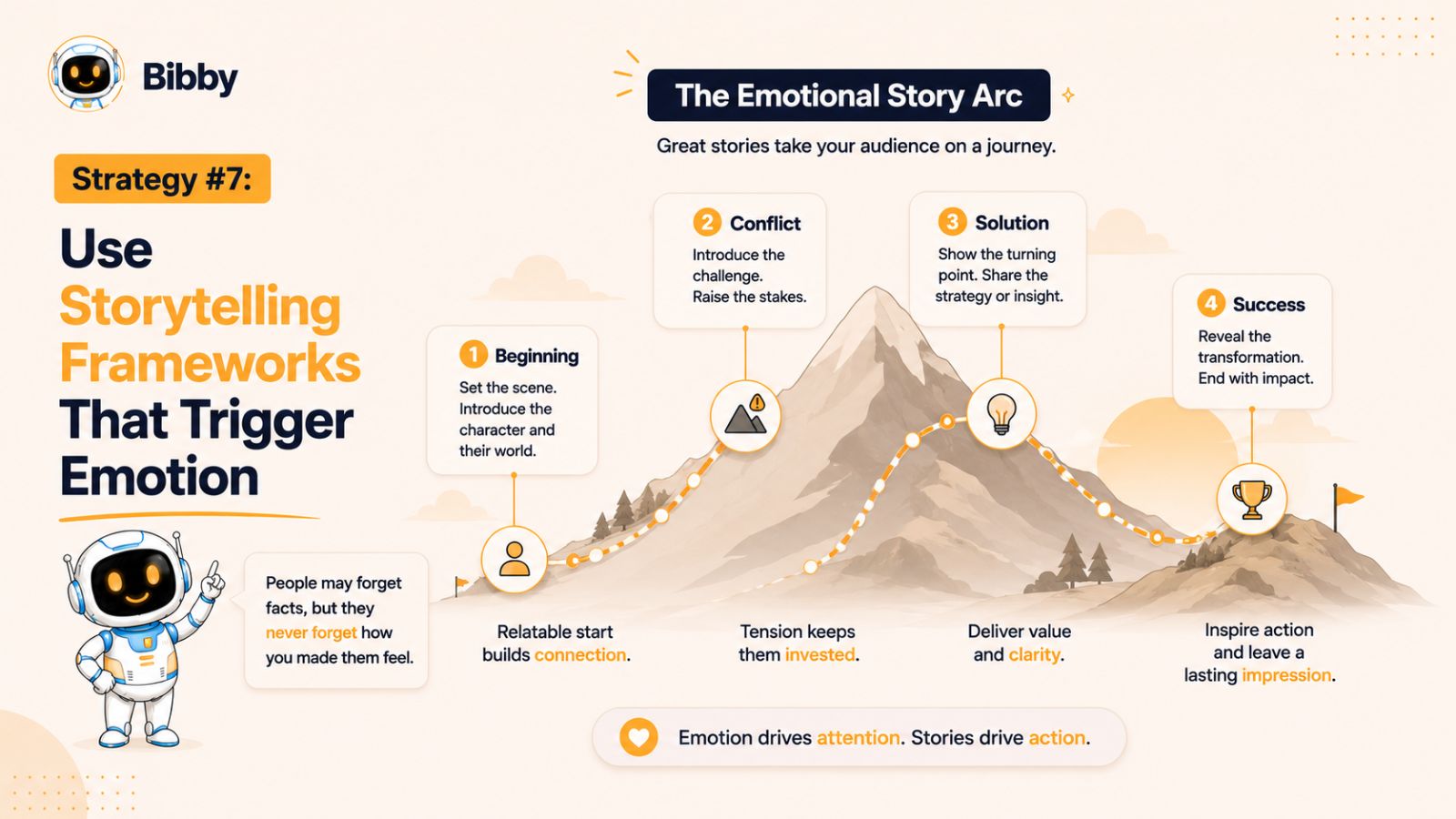
The most successful creators in 2026 understand how to combine valuable information with emotional storytelling.
Why Emotion Drives Virality
Social media users are constantly exposed to information.
What stands out is content that creates a feeling.
When people experience an emotional reaction, they're more likely to:
- Watch longer
- Comment
- Share
- Save content
- Remember the creator
Emotion increases engagement because it transforms passive viewers into active participants.
The Five Emotional Triggers Behind Viral Content
While many emotions can drive engagement, certain triggers consistently appear in highly shared content.
1. Surprise
People love unexpected insights and outcomes.
Examples:
- Unexpected success stories
- Surprising statistics
- Counterintuitive lessons
- Industry myths debunked
Surprise creates curiosity and encourages sharing.
2. Inspiration
Inspirational content gives people hope and motivation.
Examples:
- Entrepreneur journeys
- Creator growth stories
- Personal transformations
- Business breakthroughs
People frequently share inspirational content because they want others to feel the same motivation.
3. Humor
Humor remains one of the most effective forms of social sharing.
Examples:
- Relatable creator experiences
- Industry jokes
- Everyday frustrations
- Memes and trends
Humorous content is often shared because it helps people connect with others.
4. Curiosity
Curiosity keeps people consuming content.
Examples:
- Open loops
- Cliffhangers
- Predictions
- Unexpected discoveries
Curiosity increases retention and encourages viewers to stay engaged.
5. Empathy
Content that makes people feel understood often performs exceptionally well.
Examples:
- Common struggles
- Shared experiences
- Career challenges
- Creator frustrations
When people feel seen, they are more likely to engage and share.
The Problem–Struggle–Solution–Result Framework
One of the simplest storytelling structures for social media is:
Problem → Struggle → Solution → Result
This framework works because it mirrors real human experiences.
Step 1: Introduce the Problem
Start with a challenge that your audience recognizes.
Example:
"I spent months creating content that barely reached anyone."
Step 2: Describe the Struggle
Explain the obstacles or frustrations.
Example:
"I tried posting more often, following trends, and copying successful creators, but nothing seemed to work."
Step 3: Present the Solution
Introduce the key lesson or strategy.
Example:
"Everything changed when I started focusing on audience retention instead of follower count."
Step 4: Share the Result
Demonstrate the outcome.
Example:
"Within three months, my content was reaching hundreds of thousands of people organically."
This structure creates both emotional engagement and educational value.
Storytelling Works in Every Niche
Many people assume storytelling is only useful for personal brands.
In reality, every industry can benefit from storytelling.
Examples include:
Business
Customer success stories and lessons learned.
Marketing
Campaign results and case studies.
Technology
Problem-solving journeys and innovations.
Fitness
Transformation stories and progress updates.
Education
Student success stories and practical examples.
The format changes, but the emotional principles remain the same.
Turn Data Into Stories
Even highly technical content can become more engaging when presented through stories.
Instead of saying:
"Engagement increased by 40%."
Tell the story:
"We spent weeks trying to improve engagement. After testing a new content framework, engagement increased by 40% in just one month."
The second version creates context and emotional investment.
Scaling Storytelling With AI
Many creators understand the value of storytelling but struggle to consistently transform ideas into engaging posts.
AI can help accelerate this process by generating content drafts, caption variations, and narrative structures that creators can refine with their own experiences and insights.
For example, Bibby's AI-powered caption generation can help creators quickly transform content ideas into polished social media posts while maintaining a consistent posting style across multiple platforms. Combined with automated scheduling and publishing, this allows creators to focus on the human element—telling compelling stories that audiences connect with.
People Remember Stories, Not Features
One of the biggest content mistakes businesses make is focusing entirely on features and facts.
People rarely share product specifications.
They share experiences.
They share lessons.
They share transformations.
If you want your content to spread further, stop asking:
"What information should I share?"
Start asking:
"What story can I tell?"
Because when information is wrapped inside a compelling story, it becomes far more memorable, relatable, and shareable—and that's exactly what viral content needs.
Also read: Best LinkedIn Scheduling Tool for Agencies
Strategy #8: Repurpose Winning Content Across Multiple Platforms
One of the biggest misconceptions in social media marketing is that you need endless new ideas to grow.
You don't.
In reality, many successful creators and brands generate millions of views from a relatively small number of core ideas. The secret is not creating more content—it's getting more value from the content you already know works.
This is where content repurposing becomes one of the highest-leverage growth strategies available.
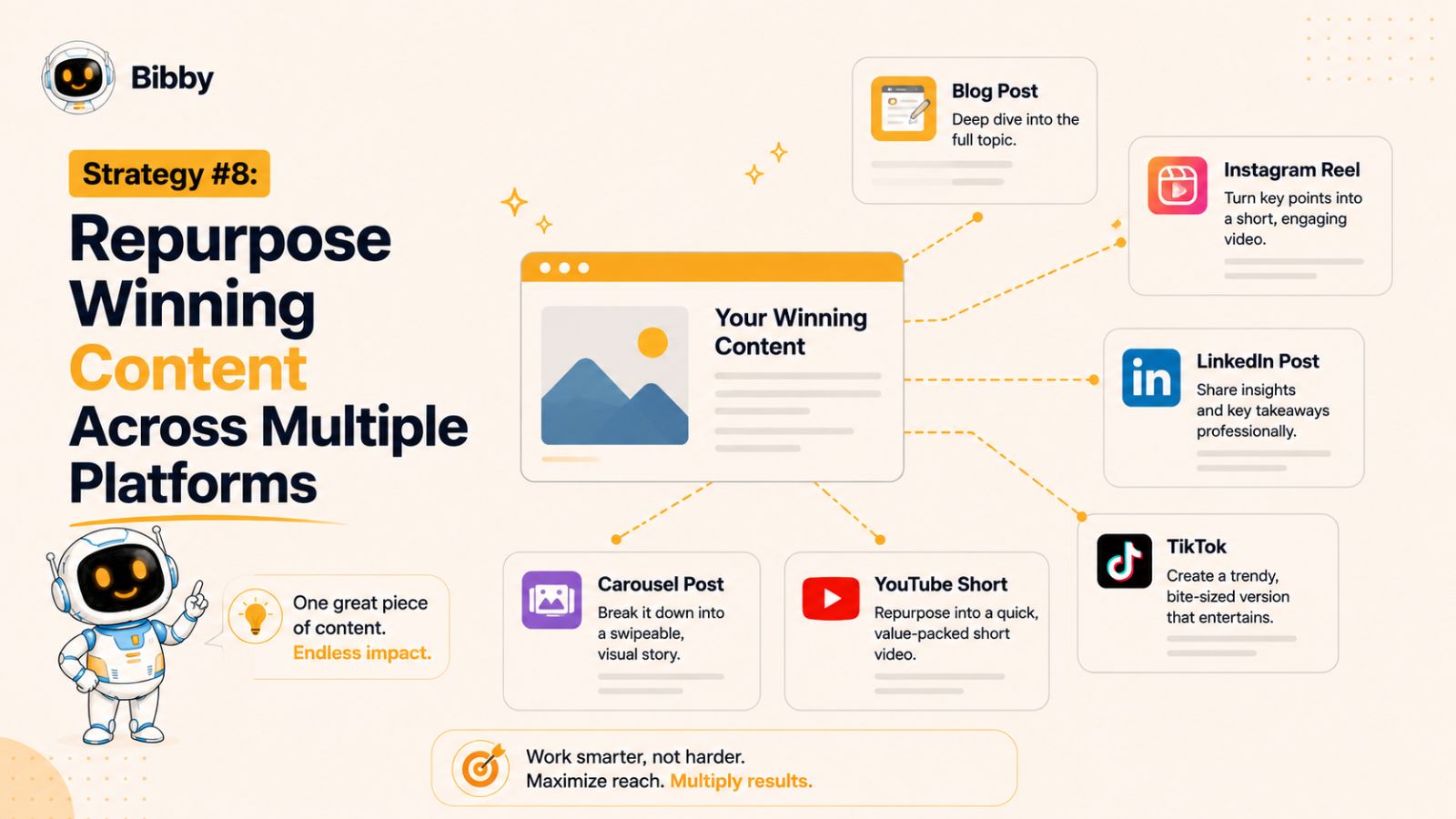
Instead of creating ten completely different pieces of content, smart creators create one strong piece of content and transform it into multiple formats for different platforms.
Why Repurposing Works
Most of your audience never sees every piece of content you publish.
Different people consume content on different platforms, at different times, and in different formats.
A creator may have:
- TikTok followers who never use LinkedIn
- LinkedIn followers who never watch YouTube
- Instagram followers who rarely check Facebook
Repurposing allows you to reach these audiences without constantly starting from scratch.
It also helps reinforce your message through repetition, which improves brand recognition and retention.
The Content Multiplication Method
Think of every content idea as a source asset.
From one source asset, you can create numerous pieces of content.
For example, imagine you create a blog post about viral content strategies.
That single article can become:
- A YouTube video
- Multiple YouTube Shorts
- A LinkedIn post
- An Instagram carousel
- Several Instagram Reels
- A Facebook post
- A TikTok video
- An email newsletter
- A podcast discussion
- A Twitter/X thread
One idea becomes an entire content campaign.
Repurposing Long-Form Content
Long-form content is often the best starting point because it contains multiple insights.
For example:
Blog Post → Social Posts
Extract:
- Key statistics
- Main lessons
- Actionable tips
- Quotes
- Frameworks
Each can become a standalone social media post.
YouTube Video → Short-Form Videos
Identify:
- Strong hooks
- Key insights
- Contrarian opinions
- Memorable moments
These clips often outperform the original long-form content in terms of reach.
Podcast → Content Library
Podcasts are excellent sources for:
- Video clips
- Quote graphics
- Social media posts
- Email content
- Blog articles
A single recording can fuel weeks of content.
Repurposing Visual Content
Images and graphics can also be adapted across platforms.
Examples:
Instagram Carousel
Detailed educational breakdown.
LinkedIn Document Post
Professional version of the same information.
Facebook Graphic
Community-focused adaptation.
Pinterest Pin
Search-friendly visual format.
The information remains the same while the presentation changes.
Repurposing Without Looking Repetitive
Many creators worry that repurposing will annoy their audience.
In reality, most people won't notice.
However, effective repurposing involves adaptation rather than duplication.
For example:
Instead of reposting the exact same message everywhere, adjust:
- Headline
- Hook
- Length
- Format
- Call-to-action
- Visual style
The core idea stays consistent while the execution feels fresh.
How to Identify Content Worth Repurposing
Not every piece of content deserves extensive distribution.
Focus on proven winners.
Look for content with:
- High shares
- High saves
- Strong watch time
- Exceptional engagement
- Consistent traffic
If a post already performs well, there's a strong chance it can succeed in additional formats.
Create Content Systems, Not Individual Posts
The most successful creators think in systems.
Instead of asking:
"What should I post today?"
They ask:
"How many assets can I create from this idea?"
This shift dramatically increases efficiency and content output.
Using Automation to Scale Repurposing
One challenge of repurposing content is managing distribution across multiple platforms.
Without a system, creators often spend more time scheduling and publishing than actually creating content.
Tools like Bibby help simplify this process by allowing creators to generate captions automatically, schedule content across Facebook, Instagram, LinkedIn, YouTube, and TikTok, and manage multiple content formats from a single dashboard.
Whether you're publishing image posts, videos, stories, or repurposed content campaigns, automation reduces administrative work and ensures consistency.
The Highest-Leverage Content Strategy
Many creators believe growth requires creating more content.
Often, growth comes from maximizing the value of content you've already created.
A single high-performing idea can generate dozens of pieces of content when approached strategically.
The goal isn't to work harder.
The goal is to make every content asset work harder for you.
When you combine strategic repurposing with consistent distribution, your reach expands dramatically without requiring a proportional increase in effort.
Also read: Social Media Marketing Statistics You Need to Know
Strategy #9: Create Save-Worthy Educational Content
If likes are good and shares are great, saves may be the most underrated growth signal on social media.
In 2026, platforms increasingly prioritize content that users return to repeatedly. When someone saves a post, they are telling the algorithm:
"This content is valuable enough to keep for later."
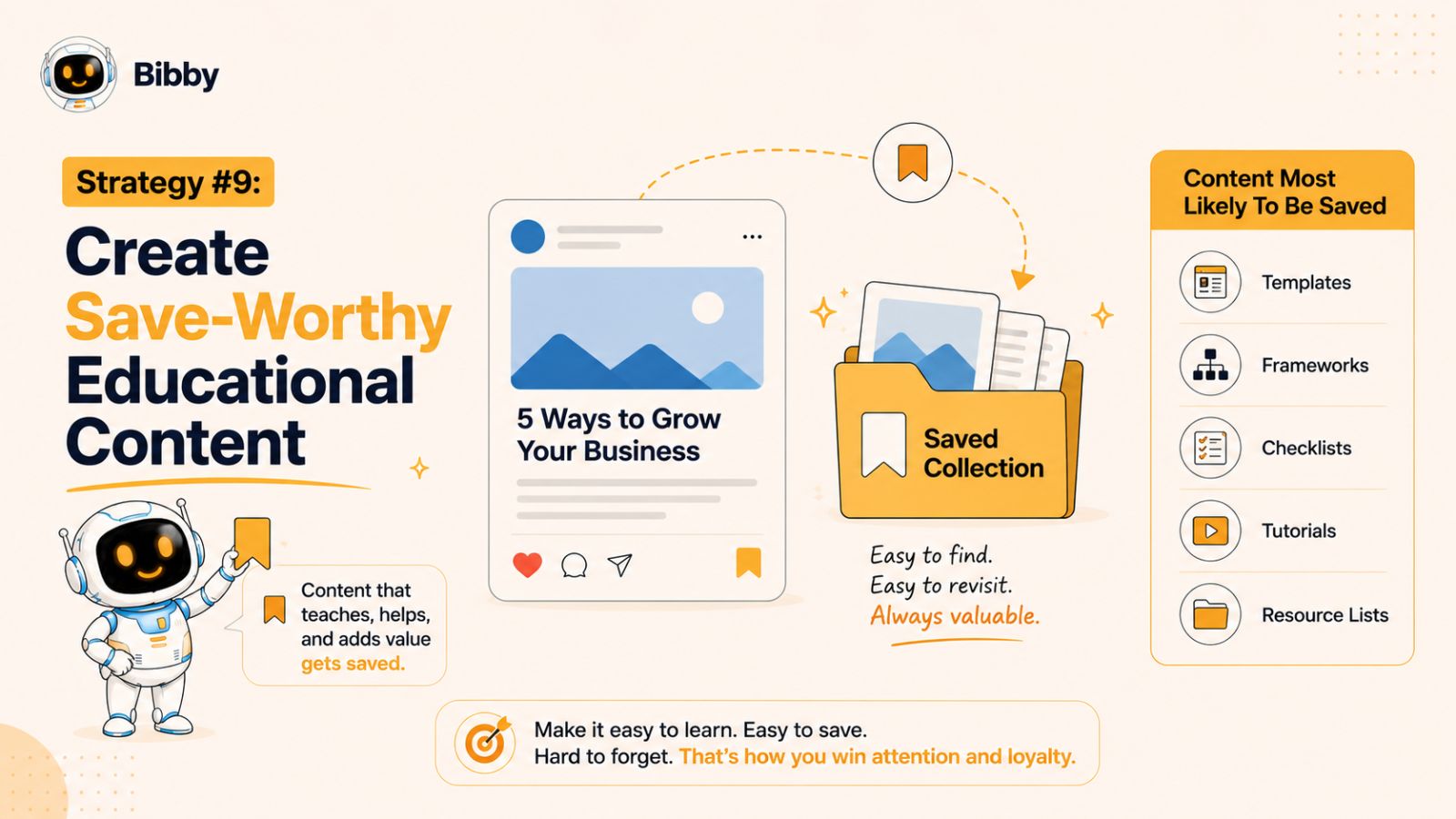
That signal often carries more weight than a simple like because it indicates long-term value rather than a momentary reaction.
Creators who consistently produce save-worthy content often experience stronger reach, better engagement, and more sustainable audience growth.
Why Saves Matter More Than Ever
Most social media users consume content quickly.
They scroll, watch, react, and move on.
Saving content is different.
It requires a deliberate action because the user expects the content to be useful in the future.
This makes saves a strong indicator of quality.
Content that generates large numbers of saves often:
- Receives additional distribution
- Builds authority
- Generates recurring engagement
- Produces long-term value
- Attracts new followers over time
What Makes People Save Content?
People typically save content when it helps them achieve a future goal.
Examples include:
- Learning a new skill
- Solving a problem
- Following a process
- Implementing a strategy
- Remembering important information
The more actionable your content is, the more likely people are to save it.
High-Save Content Formats
Certain content formats consistently generate saves across platforms.
Checklists
People love clear action steps.
Examples:
- Social media audit checklist
- SEO optimization checklist
- Content publishing checklist
- Video creation checklist
Checklists provide immediate practical value.
Frameworks
Frameworks simplify complex topics.
Examples:
- Content creation frameworks
- Marketing funnels
- Growth systems
- Decision-making models
When information is organized into a repeatable process, users often save it for future reference.
Templates
Templates remove uncertainty and save time.
Examples:
- Caption templates
- Email templates
- Content calendar templates
- Sales message templates
Template-based content often performs exceptionally well because it is immediately usable.
Tutorials
Step-by-step educational content remains one of the strongest save drivers.
Examples:
- How-to guides
- Walkthroughs
- Process explanations
- Software tutorials
The more detailed and practical the tutorial, the more likely it is to be saved.
Resource Collections
Curated resources often become reference material.
Examples:
- AI tool lists
- Marketing resources
- Creator toolkits
- Productivity apps
Users frequently save these posts because they want to revisit them later.
Focus on Utility Over Virality
Ironically, some of the most viral educational content isn't designed to go viral.
It's designed to be useful.
Creators often focus on making content entertaining while overlooking practical value.
The most successful educational posts typically answer one question:
"What can someone do immediately after consuming this content?"
The clearer the answer, the stronger the value.
Make Educational Content Easy to Consume
Even highly valuable information can fail if it's difficult to understand.
Use:
- Clear headlines
- Simple language
- Bullet points
- Visual hierarchy
- Actionable takeaways
The easier content is to consume, the more likely people are to save it.
Turn Expertise Into Assets
Many creators underestimate how much useful knowledge they already possess.
Think about:
- Frequently asked questions
- Client challenges
- Industry misconceptions
- Common mistakes
- Proven systems
Each can become educational content that delivers ongoing value.
Educational Content Builds Authority
Entertainment can generate attention.
Education builds trust.
When people consistently learn from your content, they begin to view you as a credible source of information.
This creates:
- More followers
- More engagement
- More shares
- More conversions
- Greater brand recognition
Over time, authority compounds.
Scaling Educational Content Efficiently
One challenge with educational content is maintaining consistency.
Creators often have valuable knowledge but lack the time to package it into engaging posts regularly.
This is where AI-assisted workflows can help.
For example, Bibby allows creators to transform ideas into publishable content more efficiently through AI-generated captions, automated scheduling, and multi-platform publishing. Instead of spending hours manually preparing educational posts for Facebook, Instagram, LinkedIn, YouTube, and TikTok, creators can focus on delivering expertise while automation handles much of the distribution process.
Create Content Worth Returning To
Many social media posts are consumed once and forgotten.
The best educational content becomes a resource.
Ask yourself:
"Would someone want to revisit this in a week, a month, or even a year?"
If the answer is yes, you're creating content with lasting value.
And in an algorithm-driven world, lasting value is one of the strongest foundations for sustainable growth and virality.
Strategy #10: Encourage User-Generated Content
The most scalable content strategy isn't creating more content yourself.
It's getting your audience to create content for you.
User-generated content (UGC) has become one of the most powerful drivers of trust, engagement, and viral growth. Whether you're a creator, personal brand, startup, or established business, content created by real users often outperforms content created by the brand itself.
Why?
Because people trust people more than they trust marketing.
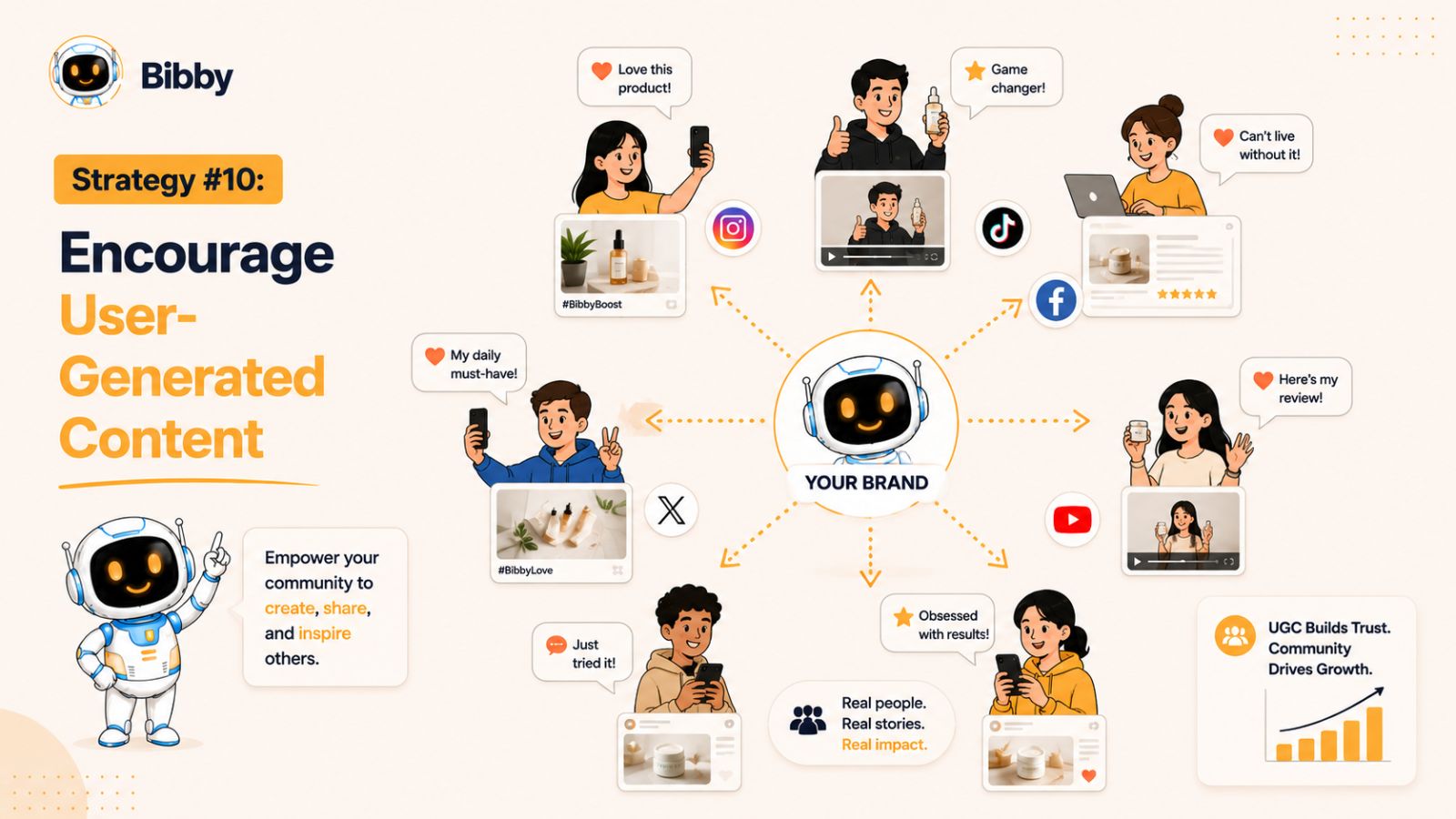
In 2026, audiences are becoming increasingly skeptical of polished promotional content. They want authenticity, real experiences, and genuine recommendations. User-generated content delivers exactly that.
What Is User-Generated Content?
User-generated content refers to any content created by customers, followers, fans, or community members rather than the brand itself.
Examples include:
- Reviews
- Testimonials
- Social media mentions
- Product demonstrations
- Success stories
- Case studies
- Before-and-after transformations
- Community posts
UGC acts as social proof and helps expand your reach beyond your existing audience.
Why User-Generated Content Drives Virality
User-generated content creates a unique growth loop.
When someone creates content about your brand or idea:
- Their audience sees it.
- New people discover you.
- More users engage.
- More people create additional content.
This cycle can generate exponential reach.
Unlike traditional marketing, UGC scales through community participation.
The Trust Advantage
Consumers increasingly rely on peer recommendations when making decisions.
A potential customer is often more influenced by:
- A customer review
- A creator's experience
- A success story
- A community recommendation
than by a direct advertisement.
This is why brands with strong communities often grow faster than brands with larger advertising budgets.
Types of User-Generated Content That Perform Well
Customer Success Stories
People love seeing real results.
Examples:
- Revenue growth
- Audience growth
- Productivity improvements
- Personal transformations
Success stories combine proof with inspiration.
Testimonials
Testimonials provide credibility.
Instead of telling people your product works, let customers demonstrate it.
Community Challenges
Challenges encourage participation and content creation.
Examples:
- 30-day content challenges
- Fitness challenges
- Business growth challenges
- Learning challenges
Every participant becomes a potential content creator.
Social Mentions
Simple mentions often generate significant visibility.
Encouraging users to tag your brand creates opportunities for resharing and amplification.
How to Encourage More User-Generated Content
Many brands want UGC but never actively ask for it.
The easiest way to increase participation is to create opportunities.
Ask Directly
Sometimes the simplest solution works best.
Examples:
- Share your results.
- Show us your setup.
- Tell us your biggest win.
- Post your experience and tag us.
Clear calls-to-action increase participation.
Highlight Community Members
People enjoy recognition.
When brands regularly feature customers and community members, others become more motivated to participate.
Examples include:
- Customer spotlights
- Success stories
- Community showcases
- Featured creators
Recognition creates momentum.
Create Shareable Experiences
The easier it is for people to share, the more likely they are to do so.
Provide:
- Templates
- Frameworks
- Challenges
- Branded hashtags
- Shareable achievements
Reduce friction wherever possible.
User-Generated Content Creates a Distribution Network
Most brands rely solely on their own audience.
Brands that successfully encourage UGC gain access to hundreds or thousands of additional audiences.
Each customer, creator, or community member becomes a distribution channel.
This significantly expands reach without requiring additional advertising spend.
Combining UGC With Automation
As user-generated content grows, managing and publishing it can become challenging.
Teams often need to:
- Collect submissions
- Organize assets
- Create captions
- Schedule posts
- Analyze performance
Using a centralized platform such as Bibby can simplify this process. Brands can upload customer content, generate captions automatically, schedule posts across Facebook, Instagram, LinkedIn, YouTube, and TikTok, and monitor performance from a single dashboard.
This makes it easier to consistently showcase community content while maintaining an active social media presence.
Turn Followers Into Advocates
The strongest brands don't just build audiences.
They build communities.
And communities naturally create content.
Instead of asking:
"How can we create more content?"
Ask:
"How can we encourage more people to share their experiences?"
When your audience becomes your content engine, growth becomes significantly easier, more authentic, and more scalable.
That's when social media transforms from a broadcasting channel into a self-sustaining ecosystem of engagement, trust, and reach.
Also read: How to Automate Your LinkedIn Posting Strategy for B2B Growth
Strategy #11: Optimize Posting Times With AI
Even exceptional content can underperform if it's published at the wrong time.
While content quality remains the most important factor in social media success, timing still plays a significant role in determining how quickly your content gains traction. In 2026, social media algorithms closely monitor early engagement signals, making the first few hours after publication especially important.
Publishing when your audience is active increases the likelihood of generating the engagement velocity that algorithms love.
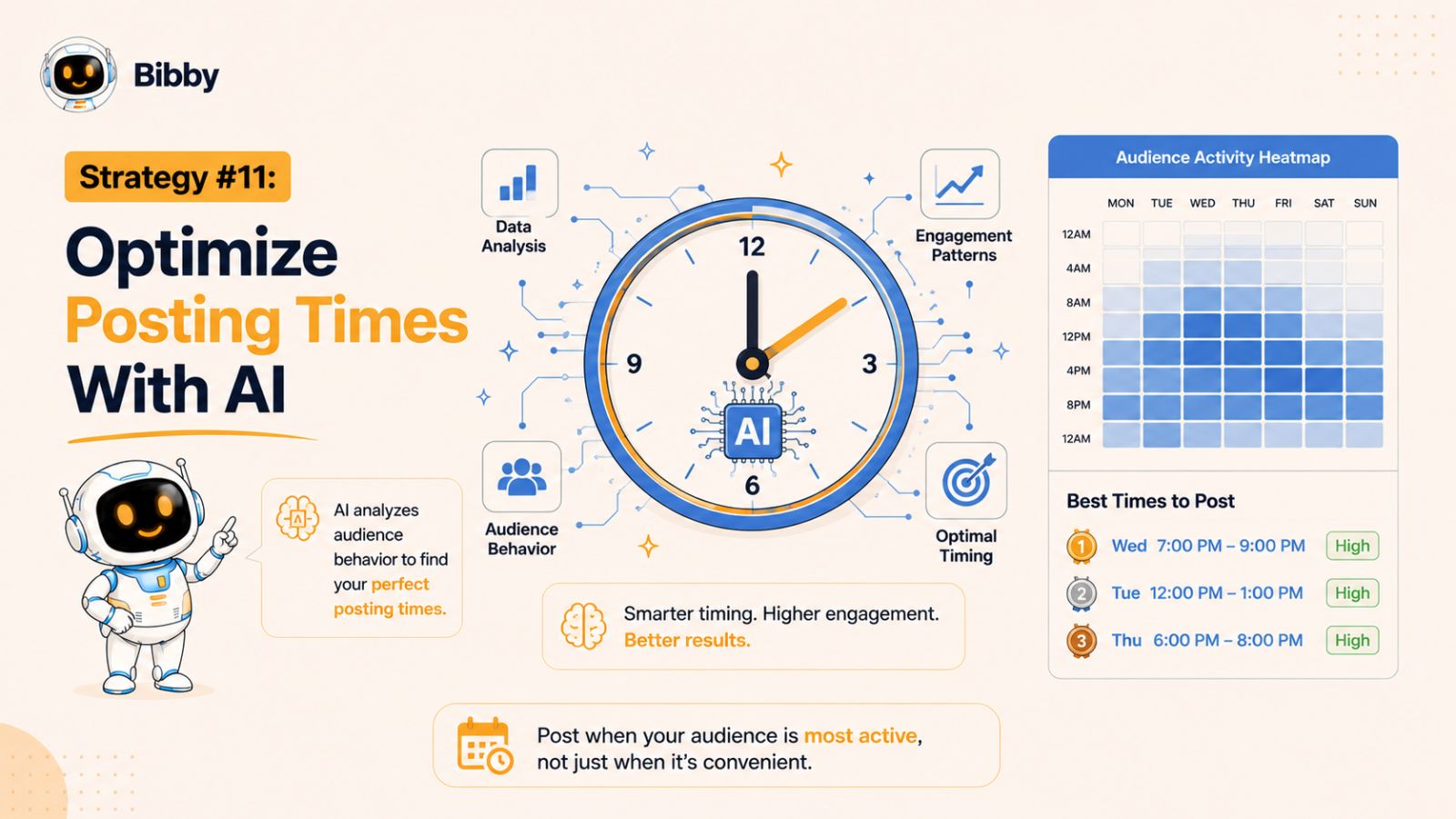
The challenge is that there is no universal "best time to post."
The ideal posting time varies based on:
- Platform
- Industry
- Audience demographics
- Geographic location
- Content type
- Historical performance
This complexity is why AI-driven scheduling has become increasingly valuable.
Why Timing Still Matters
Many marketers mistakenly assume that algorithms have made posting schedules irrelevant.
The reality is more nuanced.
While great content can perform at almost any time, publishing when your audience is active provides several advantages:
- Faster initial engagement
- Higher visibility
- Better retention
- More comments and shares
- Stronger algorithmic signals
The more engagement content receives early, the more likely platforms are to continue distributing it.
The Problem With Generic Posting Advice
Search online and you'll find countless articles claiming things like:
- "Post on Instagram at 9 AM."
- "LinkedIn works best on Tuesdays."
- "The best TikTok posting time is 6 PM."
These recommendations may be based on averages, but your audience is unique.
What works for one brand may not work for another.
A global audience behaves differently than a local audience. A B2B audience behaves differently than a consumer audience. Different content formats also perform differently.
This is why personalized optimization is far more effective than generic advice.
How AI Improves Posting Schedules
AI can analyze large amounts of performance data far more efficiently than manual review.
Instead of guessing, AI identifies patterns based on actual audience behavior.
This includes:
Audience Activity Patterns
AI can determine when your followers are most active across different platforms.
Rather than relying on assumptions, publishing schedules are based on real engagement behavior.
Historical Performance Analysis
AI can identify which posting times historically generate:
- More views
- More shares
- Better retention
- Higher engagement rates
This allows scheduling decisions to improve over time.
Platform-Specific Optimization
Different platforms often require different publishing schedules.
For example:
- LinkedIn audiences may engage during business hours.
- TikTok users may be active later in the day.
- Instagram engagement may vary by audience segment.
AI can account for these differences automatically.
Continuous Learning
One of the biggest advantages of AI is adaptation.
As audience behavior changes, AI can continuously refine scheduling recommendations to maintain optimal performance.
Why Consistency Matters More Than Perfection
While timing is important, consistency remains even more important.
Many creators spend too much time searching for the perfect posting schedule while neglecting regular publishing.
A consistent publishing cadence helps:
- Build audience expectations
- Improve algorithmic trust
- Generate more data
- Increase content volume
- Create more growth opportunities
The goal is not perfect timing.
The goal is consistent exposure.
How Bibby Uses AI-Optimized Scheduling
One of the most time-consuming aspects of social media management is determining when to publish content across multiple platforms.
Bibby simplifies this process through AI-powered scheduling.
Instead of manually selecting publishing times, users can:
- Upload or generate content
- Create AI-generated captions
- Schedule posts across Facebook, Instagram, LinkedIn, YouTube, and TikTok
- Allow AI to optimize publishing windows
- Maintain a consistent posting schedule automatically
This helps creators and businesses maximize visibility while reducing manual workload.
The Compound Effect of Better Timing
A small increase in engagement can create a surprisingly large impact over time.
Imagine two creators publishing equally valuable content.
One consistently posts when their audience is least active.
The other consistently posts when engagement potential is highest.
Over weeks and months, those differences accumulate.
More engagement leads to:
- More reach
- More followers
- More shares
- More opportunities for virality
Small optimizations compound into significant growth.
Work Smarter, Not Harder
Many creators still rely on guesswork when deciding when to publish.
The problem is that audience behavior is constantly changing.
AI removes much of that uncertainty by using data rather than assumptions.
Instead of spending time manually analyzing schedules, creators can focus on what truly drives growth:
- Better ideas
- Better storytelling
- Better audience engagement
- Better content quality
When timing and quality work together, content has a much greater chance of achieving the reach and visibility required for viral success.
Strategy #12: Focus on Community Building Over Broadcasting
For years, social media was treated like a digital billboard.
Brands published content, audiences consumed it, and communication flowed in one direction.
That approach no longer works as effectively.
In 2026, the creators and businesses experiencing the fastest growth are not simply broadcasting messages. They are building communities.
The difference is significant.
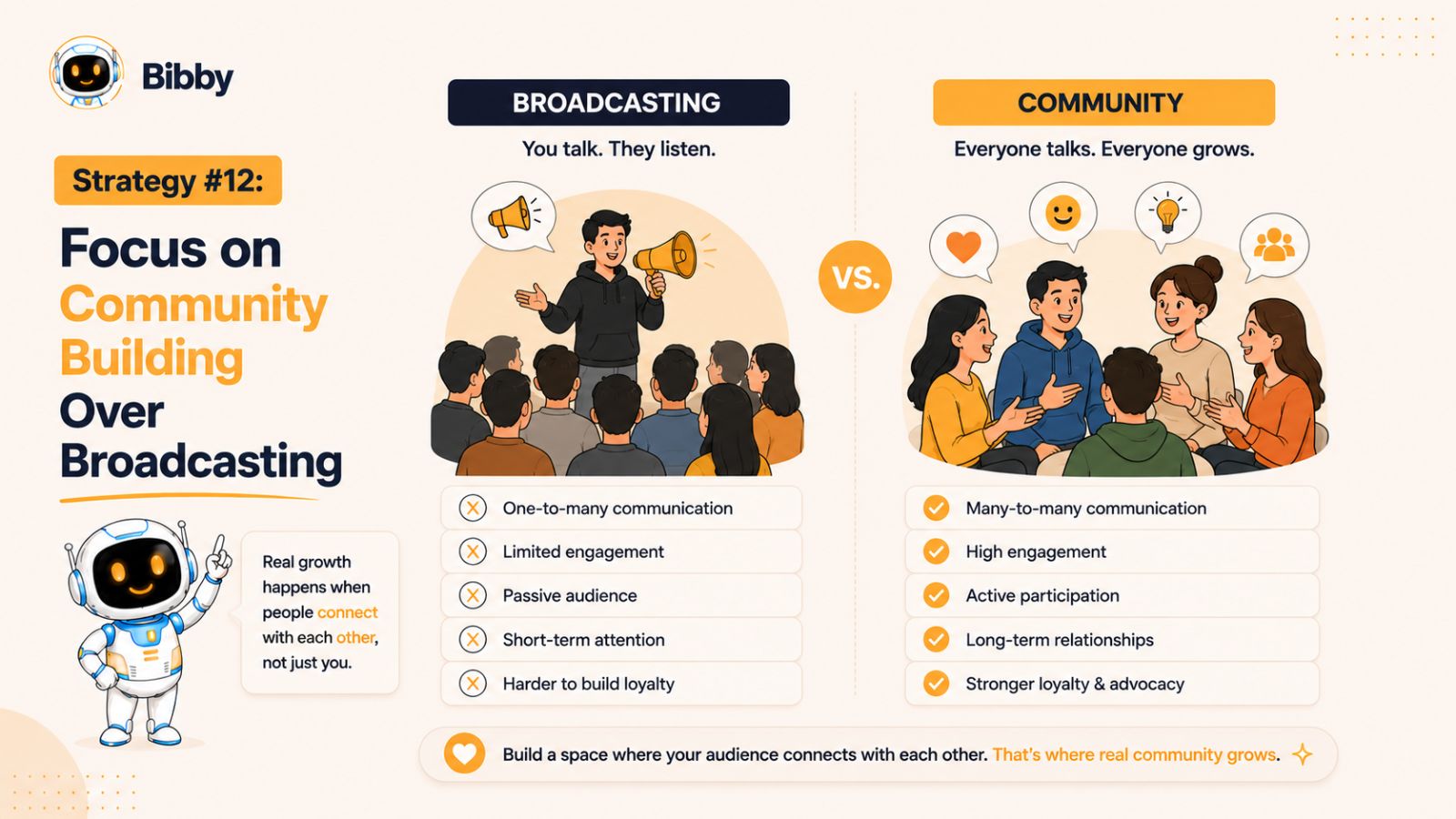
Broadcasting focuses on pushing content out.
Community building focuses on creating meaningful interactions.
And social media algorithms increasingly reward those interactions.
Why Community Matters More Than Followers
A large follower count can look impressive.
But followers alone don't guarantee engagement, reach, or business results.
A smaller, highly engaged community often outperforms a much larger passive audience.
Community members are more likely to:
- Comment regularly
- Share content
- Participate in discussions
- Recommend your brand
- Purchase products or services
- Create user-generated content
In other words, communities generate momentum.
The Shift From Audience to Community
An audience consumes.
A community participates.
The goal is to move people from passive viewers to active contributors.
Instead of asking:
"How can I get more views?"
Ask:
"How can I encourage more conversations?"
This simple shift changes how you create content.
Create Conversation-Starters
One of the easiest ways to build engagement is by creating content designed to spark discussion.
Examples include:
Questions
Ask thoughtful questions related to your niche.
Examples:
- What's the biggest challenge you're facing right now?
- Which social media platform is delivering the best results for you?
- What's one lesson you wish you learned earlier?
Questions lower the barrier to engagement and invite participation.
Opinions
Strong opinions often generate discussion.
Examples:
- "Follower counts matter less than most marketers think."
- "AI won't replace creators, but it will replace repetitive work."
People naturally respond when they agree or disagree.
Industry Debates
Healthy debates encourage engagement and visibility.
Examples:
- Long-form vs. short-form content
- Organic growth vs. paid advertising
- Quality vs. quantity
Discussion creates activity, and activity creates reach.
Respond to Your Audience
Many creators spend hours creating content and very little time interacting with the people who engage with it.
This is a missed opportunity.
Every comment is an invitation to strengthen relationships.
Simple actions such as:
- Replying to comments
- Asking follow-up questions
- Acknowledging feedback
- Thanking supporters
can dramatically increase community engagement.
People are more likely to participate when they feel heard.
Create Recurring Community Experiences
Communities thrive on consistency.
Recurring formats help create familiarity and anticipation.
Examples include:
- Weekly Q&A sessions
- Monthly challenges
- Live discussions
- Community spotlights
- Industry trend breakdowns
When people know what to expect, they are more likely to return regularly.
Encourage Peer-to-Peer Interaction
The strongest communities don't depend entirely on the creator.
Members interact with each other.
You can encourage this by:
- Asking open-ended questions
- Creating discussion threads
- Hosting group challenges
- Highlighting community contributions
The more connections that exist within the community, the stronger it becomes.
Community Creates Long-Term Growth
Many viral posts generate temporary attention.
Communities generate sustainable growth.
When people feel connected to a creator or brand, they are more likely to:
- Follow consistently
- Engage regularly
- Recommend content
- Defend the brand
- Become long-term supporters
This creates a growth engine that extends beyond individual posts.
Managing Community at Scale
As communities grow, maintaining consistent engagement can become challenging.
Creators often need to balance:
- Content creation
- Scheduling
- Publishing
- Analytics
- Community interaction
Automation can help free up time for relationship-building.
For example, Bibby handles much of the operational side of social media management through AI-generated captions, scheduling, multi-platform publishing, and analytics. By reducing time spent on repetitive tasks, creators can invest more energy into engaging with their audience and strengthening their community.
You may also like looking into: How Often Should Businesses Post on LinkedIn?
The Future of Social Media Belongs to Communities
Algorithms change.
Platforms evolve.
Trends come and go.
Communities endure.
The creators who thrive in 2026 understand that social media is no longer just a distribution channel—it's a relationship platform.
Instead of focusing solely on broadcasting messages, focus on creating conversations, encouraging participation, and building genuine connections.
Because the strongest growth doesn't come from having the loudest voice.
It comes from creating a community that wants to listen, contribute, and share your message with others.
Strategy #13: Analyze and Double Down on Winners
Most creators spend too much time worrying about content that failed.
The smartest creators spend most of their time studying content that succeeded.
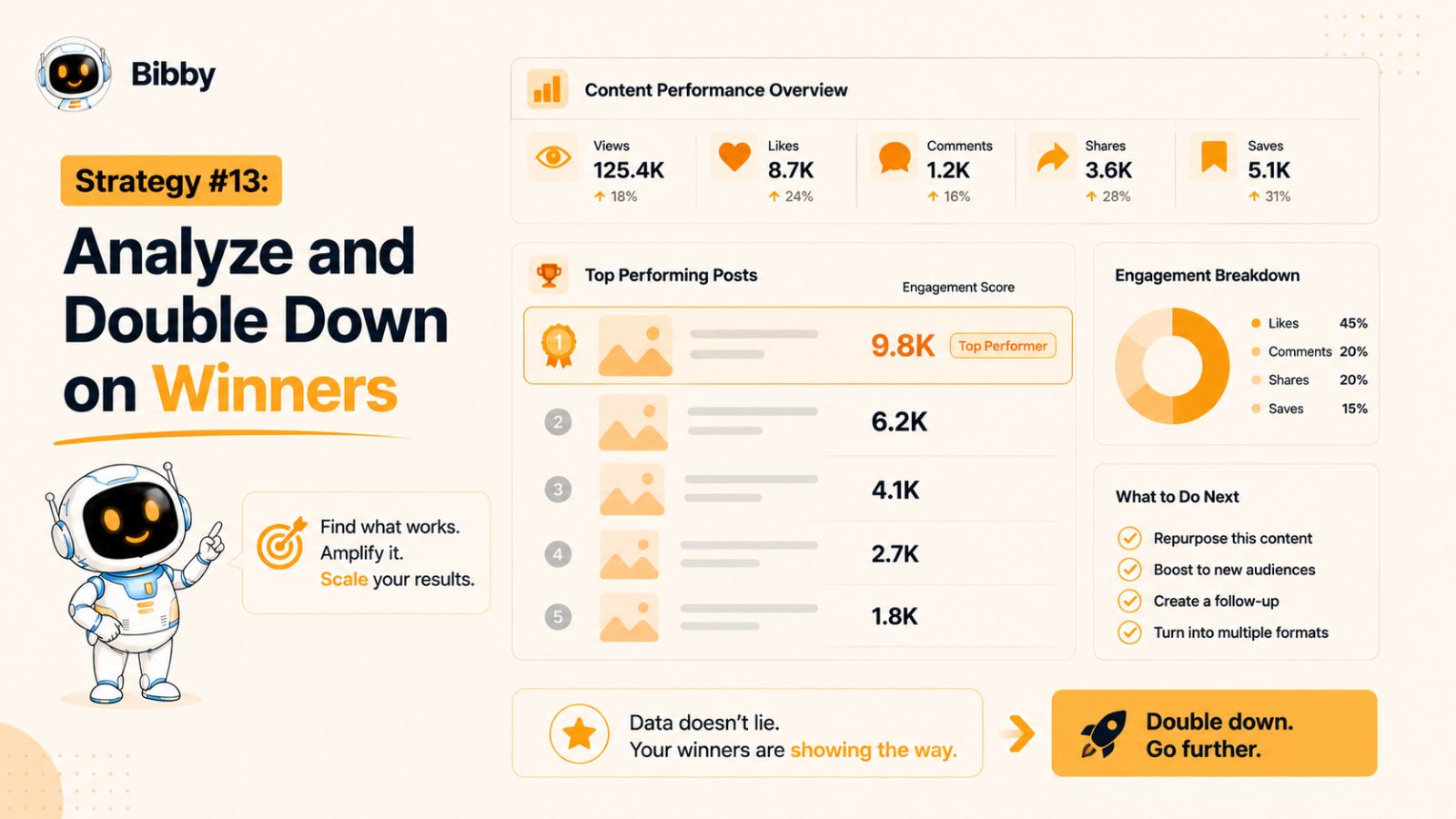
One of the biggest advantages of digital marketing is that nearly everything is measurable. Every post, video, story, and campaign generates data that can reveal what your audience truly wants.
Yet many creators ignore this information.
Instead of analyzing results and building on success, they constantly chase new ideas.
The fastest path to growth is often much simpler:
Find what works and do more of it.
Why Data Beats Guesswork
Many social media decisions are based on assumptions.
Creators often ask:
- What should I post next?
- Which platform should I prioritize?
- Which content format works best?
The answers usually already exist in your analytics.
Your audience tells you what they want through their behavior.
By studying performance data, you can replace guesswork with evidence.
The Most Important Metrics to Track
Not all metrics deserve equal attention.
Focus on the metrics that indicate genuine audience interest.
Reach
Reach measures how many people saw your content.
A sudden increase in reach often indicates that algorithms are distributing your content more broadly.
Reach helps identify topics and formats that attract attention.
Shares
Shares are among the strongest indicators of value.
When people share content, they are helping distribute it to new audiences.
High-share content often contains:
- Useful information
- Strong emotions
- Relatable experiences
- Surprising insights
Saves
Saves indicate long-term value.
Content with high save rates often contains:
- Frameworks
- Tutorials
- Checklists
- Templates
- Educational insights
These posts frequently continue generating engagement long after publication.
Watch Time and Retention
For video content, retention is one of the most important indicators of quality.
Strong retention suggests:
- Effective hooks
- Compelling storytelling
- Relevant content
Low retention often signals that viewers are losing interest early.
Comments
Comments indicate active engagement.
Look for content that generates meaningful discussions rather than simple reactions.
The more conversation a post creates, the stronger its community-building potential.
The Viral Content Audit Framework
Every month, review your highest-performing content.
Ask:
What Topics Performed Best?
Identify recurring themes.
Examples:
- AI tools
- Social media growth
- Productivity
- Entrepreneurship
Patterns often emerge quickly.
Which Formats Generated the Most Engagement?
Different formats appeal to different audiences.
Examples:
- Reels
- Carousels
- Short-form videos
- Stories
- Text-based posts
Understanding format preferences helps improve future performance.
Which Hooks Performed Best?
Review your strongest-performing openings.
Look for common characteristics.
Examples:
- Contrarian opinions
- Curiosity-based hooks
- Strong claims
- Predictions
Great hooks are often reusable.
Which Calls-to-Action Worked?
Analyze how audiences responded to different prompts.
Examples:
- Comment below
- Share with a friend
- Save for later
- Follow for more
Small adjustments can significantly impact engagement.
Turn One Winner Into Multiple Winners
Many creators celebrate a successful post and immediately move on.
Instead, ask:
"Why did this work?"
Once you identify the reason, create variations.
For example:
A high-performing post about AI content creation could become:
- A video
- A carousel
- A case study
- A tutorial
- A content series
The goal is to maximize successful ideas.
Build a Repeatable Growth Engine
Successful creators don't rely on random inspiration.
They develop systems.
The process looks like this:
- Publish content.
- Measure performance.
- Identify winners.
- Create variations.
- Scale successful formats.
Over time, this creates predictable growth.
How Analytics Tools Accelerate Optimization
Manually reviewing performance across multiple platforms can become overwhelming.
Creators often need to track:
- Facebook performance
- Instagram engagement
- LinkedIn metrics
- YouTube analytics
- TikTok results
Using a centralized platform such as Bibby simplifies this process by combining publishing and analytics into one workflow. Instead of switching between multiple dashboards, creators can monitor performance, identify winning content, and make data-driven decisions more efficiently.
This makes it easier to spot trends and scale successful content strategies.
Success Leaves Clues
Many creators think viral growth comes from discovering a magical new strategy.
More often, growth comes from paying attention.
Your best-performing content contains valuable clues about:
- What your audience cares about
- What they share
- What they save
- What keeps them engaged
The more closely you study those clues, the easier it becomes to create future content that performs even better.
The goal isn't to reinvent your strategy every week.
The goal is to identify what already works and systematically do more of it.
Strategy #14: Create Content Series Instead of One-Off Posts
Most creators treat every post as an isolated event.
They publish a piece of content, hope it performs well, and then immediately move on to the next idea.
The problem with this approach is that it forces you to constantly earn attention from scratch.
Content series solve this problem.
Instead of creating standalone posts, you create connected content that encourages people to return for the next installment. This transforms individual posts into an ongoing experience and helps build audience loyalty over time.
Many of the fastest-growing creators on social media rely heavily on content series because they increase engagement, retention, and follower growth simultaneously.
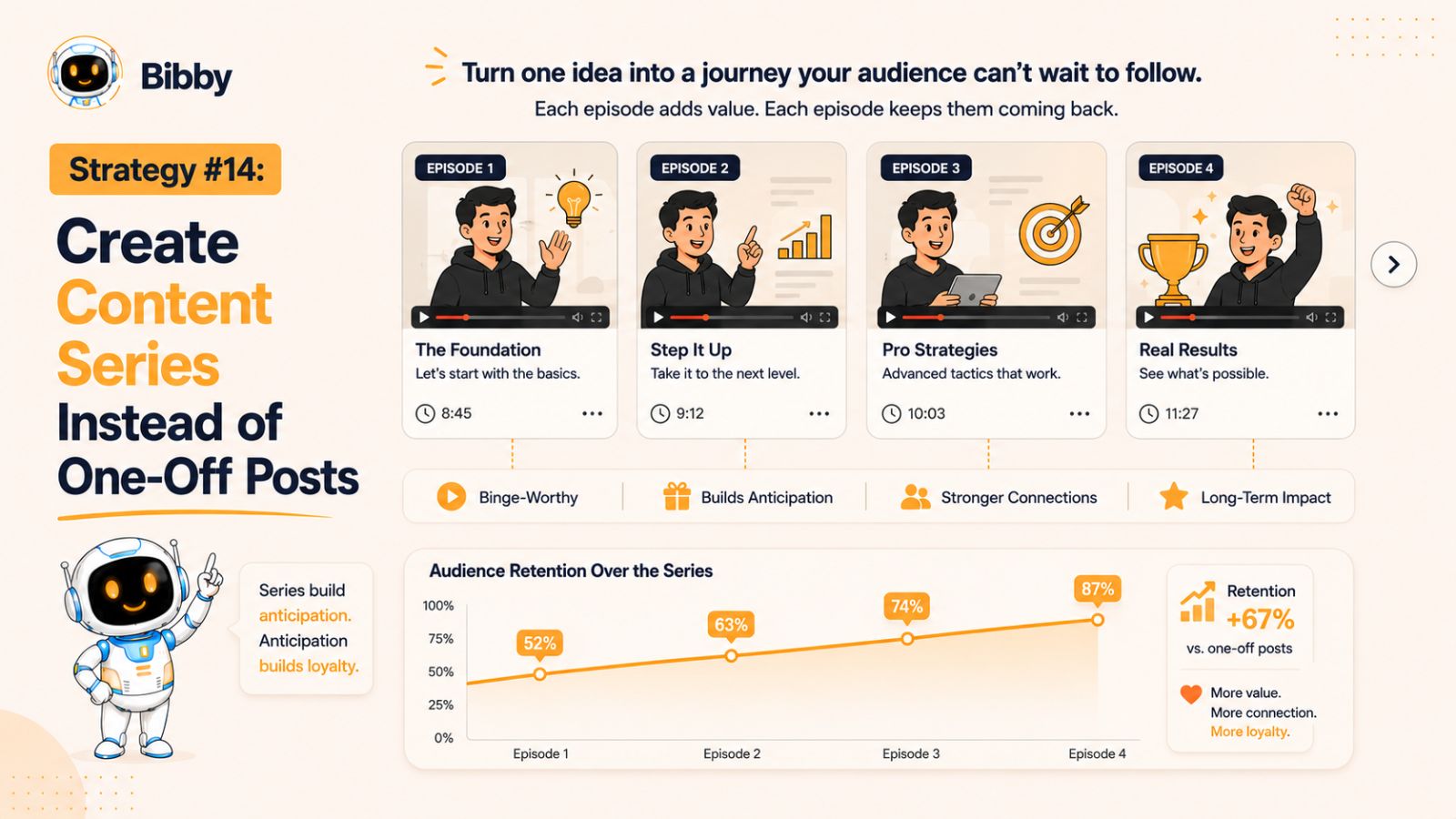
Why Content Series Work So Well
Humans naturally enjoy continuity.
We watch television series, follow podcast episodes, subscribe to newsletters, and consume multi-part stories because we like knowing there's more to come.
Content series leverage this same psychological principle.
When audiences enjoy one installment, they're more likely to:
- Follow your account
- Return for future content
- Watch longer
- Engage more often
- Share your content
Instead of earning attention once, you create repeated opportunities for engagement.
The Benefits of Content Series
Higher Retention
People who enjoy one episode are more likely to watch the next.
This creates a recurring audience that actively seeks out your content.
Faster Audience Growth
When users know more valuable content is coming, they're more likely to follow your account.
Content series often outperform isolated posts when it comes to follower conversion.
Easier Content Planning
One successful topic can generate multiple posts.
Instead of constantly brainstorming new ideas, you can expand on themes that already resonate with your audience.
Stronger Brand Recognition
Series create familiarity.
Over time, audiences begin associating certain formats, topics, or themes with your brand.
Types of Content Series That Perform Well
Weekly Tips Series
Examples:
- Weekly social media growth tips
- Weekly AI tool recommendations
- Weekly marketing insights
- Weekly productivity hacks
These series are easy to produce and encourage repeat engagement.
Industry Predictions Series
People love forward-looking content.
Examples:
- AI predictions
- Marketing trends
- Social media updates
- Industry forecasts
Prediction-based series often generate discussion and sharing.
Case Study Series
Case studies combine education and storytelling.
Examples:
- Marketing campaign breakdowns
- Business growth stories
- Creator success stories
- Customer transformations
These posts build authority while providing actionable lessons.
Behind-the-Scenes Series
Audiences enjoy seeing how things work.
Examples:
- Content creation workflows
- Team operations
- Product development
- Business growth journeys
Authenticity often drives strong engagement.
Mistake and Lesson Series
People are naturally curious about what works and what doesn't.
Examples:
- Marketing mistakes
- Creator lessons learned
- Business failures
- Growth experiments
These series are highly relatable and educational.
How to Structure an Effective Series
Every series should have:
A Clear Theme
People should immediately understand what the series is about.
Examples:
- "30 Days of Content Growth Tips"
- "Weekly AI Marketing Breakdown"
- "The Creator Growth Playbook"
Clarity improves participation and retention.
Consistent Branding
Use:
- Similar titles
- Consistent visuals
- Recurring hashtags
- Recognizable formats
Consistency helps audiences identify your content quickly.
A Predictable Schedule
Regular publishing creates anticipation.
Examples:
- Every Monday
- Every Friday
- Daily for 30 days
- Monthly deep dives
Predictability encourages repeat visits.
Turn Successful Posts Into Series
One of the easiest ways to create a series is to start with content that has already performed well.
Ask:
"Can this topic be expanded?"
For example:
If a post about social media growth performs exceptionally well, follow up with:
- Common growth mistakes
- Growth case studies
- Growth experiments
- Growth frameworks
- Growth predictions
One successful topic can become an entire content series.
Managing Series Across Multiple Platforms
As content series grow, maintaining consistency becomes increasingly important.
Creators often need to:
- Schedule multiple posts
- Adapt content for different platforms
- Maintain branding
- Track performance
- Coordinate publishing dates
This is where automation becomes valuable.
With Bibby, creators can plan entire content series in advance, generate AI-powered captions, schedule posts across Facebook, Instagram, LinkedIn, YouTube, and TikTok, and publish at AI-optimized times. This allows creators to focus on creating great content while ensuring every installment is delivered consistently.
Build Anticipation, Not Just Content
Many creators focus entirely on producing the next post.
The most successful creators focus on creating anticipation for future posts.
When audiences know there is another valuable installment coming, engagement compounds over time.
Instead of asking:
"How can I make this post successful?"
Ask:
"How can this post lead naturally to the next one?"
Because the strongest social media brands don't just create content.
They create experiences that people want to follow, anticipate, and share.
Strategy #15: Test Relentlessly and Scale What Works
If there is one trait shared by nearly every successful creator, marketer, and brand on social media, it's this:
They test constantly.
Many people assume viral content creators have a special talent for predicting what will work.
In reality, most successful creators don't know exactly which posts will perform best.
They simply run more experiments.
Social media platforms change constantly. Audience preferences evolve. New formats emerge. Algorithms adjust. What worked six months ago may not work today.
This is why testing is one of the most important skills you can develop.
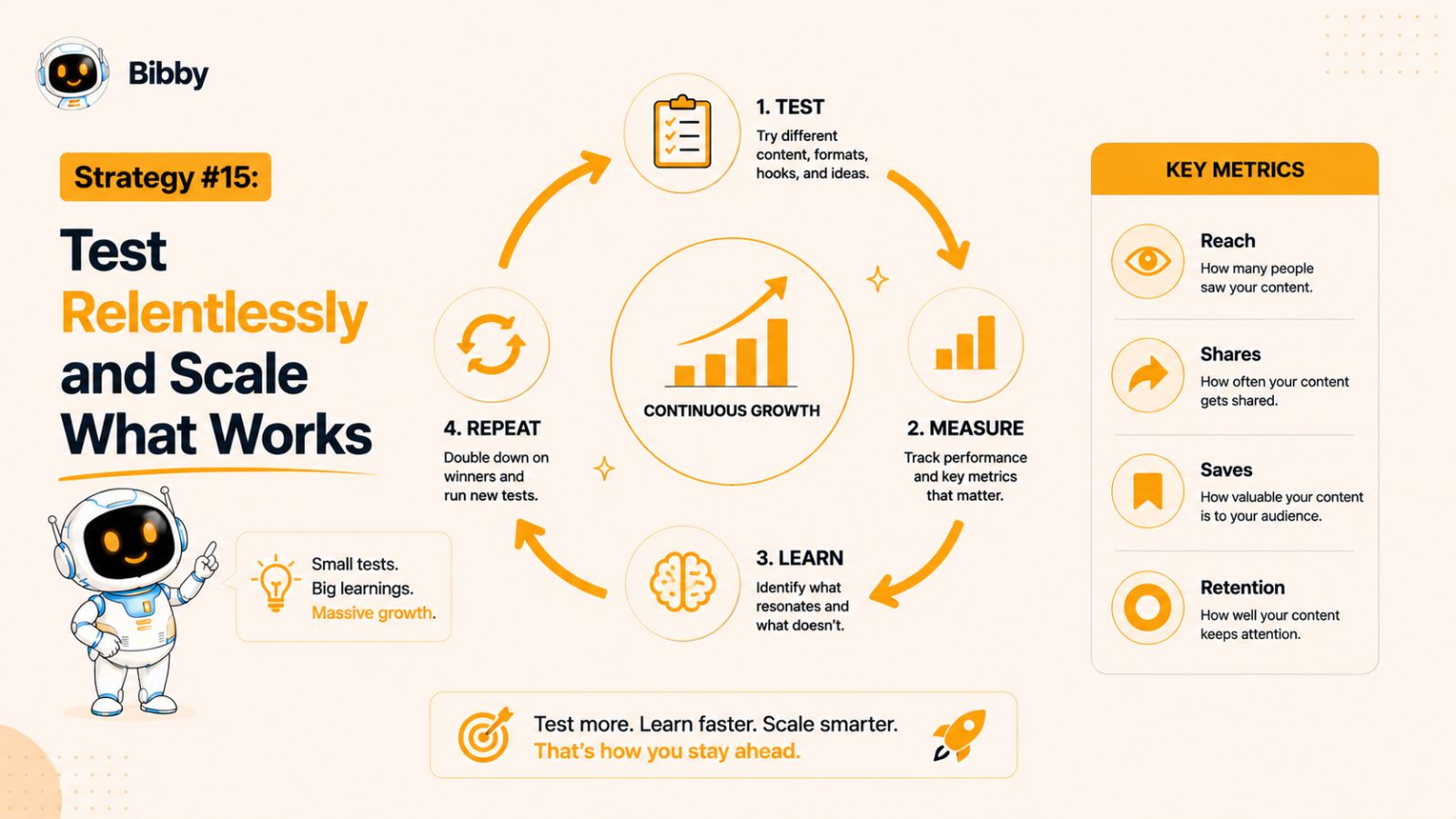
Why Testing Beats Prediction
Trying to predict viral content is difficult.
Testing allows you to gather real-world feedback instead of relying on assumptions.
Every post becomes an experiment that answers questions such as:
- Which hooks perform best?
- Which topics generate the most shares?
- Which formats increase watch time?
- Which calls-to-action encourage engagement?
- Which posting schedules maximize reach?
The more experiments you run, the more data you collect.
The more data you collect, the easier it becomes to identify patterns.
What You Should Test
Many creators only test content topics.
The best creators test everything.
Hooks
Small changes to the opening can dramatically affect performance.
Examples:
- Curiosity hook
- Contrarian hook
- Question hook
- Statistic-based hook
- Prediction hook
Sometimes the hook determines whether a post succeeds or fails.
Content Formats
Different audiences respond differently to content formats.
Examples:
- Reels
- Short-form videos
- Carousels
- Stories
- Text posts
- Long-form videos
Testing helps identify audience preferences.
Content Length
Longer isn't always better.
Shorter isn't always better.
The ideal length depends on:
- Platform
- Topic
- Audience
- Format
Testing reveals what works best.
Visual Styles
Visual presentation affects engagement.
Examples:
- Personal photos
- Graphics
- AI-generated visuals
- Screenshots
- Educational slides
Different styles often produce different results.
Calls-to-Action
Simple changes can increase engagement significantly.
Examples:
- Comment your thoughts below.
- Save this for later.
- Share this with a friend.
- Follow for more tips.
Testing helps determine which prompts motivate action.
The Test–Measure–Learn–Repeat Framework
The most successful creators follow a simple cycle.
Step 1: Test
Publish content variations.
Experiment with new approaches.
Step 2: Measure
Analyze performance data.
Focus on:
- Reach
- Shares
- Saves
- Retention
- Engagement
Step 3: Learn
Identify what influenced the results.
Ask:
- What worked?
- What failed?
- Why?
Step 4: Repeat
Apply those insights to future content.
Each cycle improves performance.
Avoid Emotional Decision-Making
One of the biggest mistakes creators make is becoming emotionally attached to individual posts.
Sometimes great content underperforms.
Sometimes simple content exceeds expectations.
Instead of reacting emotionally, focus on patterns.
Individual results matter less than long-term trends.
Create More Opportunities for Success
Virality is often a numbers game.
The more quality experiments you run, the more opportunities you create.
Consider two creators:
Creator A
Publishes four posts per month.
Creator B
Publishes twenty posts per month while maintaining quality.
Creator B gathers more feedback, learns faster, and identifies winning patterns more quickly.
Consistency accelerates learning.
Scale What Works Aggressively
Many creators discover successful content but fail to capitalize on it.
When you find a winner:
- Create follow-up content
- Repurpose it
- Turn it into a series
- Expand the topic
- Test variations
A single winning idea can become dozens of successful posts.
The goal is not to chase endless new ideas.
The goal is to maximize proven ideas.
How Automation Enables More Testing
Testing requires volume.
The more efficiently you can create and publish content, the more experiments you can run.
This is where automation becomes a significant advantage.
With Bibby, creators can upload or generate content, create captions automatically, schedule posts across Facebook, Instagram, LinkedIn, YouTube, and TikTok, and publish at AI-optimized times. This reduces the operational burden of content management and allows creators to focus on experimentation and strategy.
More efficient workflows lead to more testing opportunities.
More testing opportunities lead to better results.
The Creators Who Win Never Stop Learning
The social media landscape will continue evolving.
New platforms will emerge.
Algorithms will change.
Audience behaviors will shift.
The creators who succeed long term are not necessarily the most talented.
They are the most adaptable.
Instead of searching for a permanent formula, embrace continuous experimentation.
Test relentlessly.
Study the results.
Scale what works.
And repeat the process over and over again.
Because the path to viral growth is rarely built on one breakthrough—it is built on hundreds of small improvements that compound over time.
Common Mistakes That Kill Virality
Understanding what creates viral content is important.
Understanding what prevents virality is equally important.
Many creators spend months improving their content strategy while unknowingly making mistakes that limit reach, reduce engagement, and suppress growth. In many cases, fixing these issues can produce faster results than learning new tactics.
Let's examine the most common mistakes that prevent otherwise valuable content from achieving its full potential.
Posting Without a Clear Strategy
One of the biggest reasons creators struggle to grow is inconsistency in direction.
Many people publish content randomly based on inspiration rather than a structured plan.
The result often looks like this:
- Different topics every week
- No clear audience focus
- Inconsistent messaging
- Confusing brand positioning
When audiences can't immediately understand what your content is about, it's harder for them to follow, engage, and share.
Successful creators typically have:
- A defined niche
- Clear audience targeting
- Consistent content pillars
- Repeatable content systems
Virality becomes much easier when every piece of content reinforces a clear message.
Focusing Only on Followers
Many creators become obsessed with follower counts.
The reality is that followers are a lagging indicator.
Engagement matters far more.
A creator with:
- 5,000 highly engaged followers
can often outperform someone with:
- 100,000 passive followers
Algorithms reward interaction, not vanity metrics.
Instead of asking:
"How do I get more followers?"
Ask:
"How do I create content people want to engage with?"
The followers usually follow naturally.
Ignoring Analytics
Many creators publish content and never review the results.
This is one of the fastest ways to slow growth.
Without analytics, you're operating blindly.
You won't know:
- Which topics resonate
- Which hooks perform best
- Which formats generate engagement
- Which posts drive shares and saves
Data provides the roadmap for future content decisions.
Ignoring that data forces you to rely on guesswork.
Creating Content for Yourself Instead of Your Audience
Many creators fall into the trap of publishing what they find interesting rather than what their audience finds valuable.
While passion is important, audience relevance is critical.
Before publishing, ask:
"Will my audience care about this?"
The most successful content creators consistently prioritize audience needs over personal preferences.
Chasing Every Trend
Trends can generate visibility.
Trend-chasing without strategy creates confusion.
Many creators jump from one viral topic to another without considering whether those topics align with their audience or expertise.
This often leads to:
- Inconsistent branding
- Weak audience retention
- Lower trust
- Reduced authority
Not every trend deserves your attention.
Focus on trends that support your overall content strategy.
Neglecting Strong Hooks
Even valuable content can fail if nobody pays attention to it.
Weak openings are one of the most common causes of poor performance.
Examples of weak hooks include:
- Generic introductions
- Vague headlines
- Slow beginnings
- Unclear value propositions
Remember:
If people don't stop scrolling, they won't experience the value of your content.
Inconsistent Publishing
Many creators publish intensely for a few weeks and then disappear.
Algorithms and audiences both reward consistency.
Inconsistent publishing makes it difficult to:
- Build momentum
- Gather data
- Develop audience habits
- Improve content quality
Consistency creates opportunities.
The more consistently you publish, the more opportunities you have to discover winning content.
Overcomplicating Content
Many creators assume that more information automatically creates more value.
In reality, complexity often reduces engagement.
The best-performing content is usually:
- Clear
- Simple
- Actionable
- Easy to understand
If an idea requires excessive explanation, look for ways to simplify it.
Not Leveraging Automation
Manual processes often become growth bottlenecks.
Creators spend excessive time:
- Writing captions
- Scheduling posts
- Publishing manually
- Managing multiple platforms
This reduces the time available for strategy, audience engagement, and content improvement.
Automation tools can significantly improve efficiency.
For example, Bibby allows creators to upload or generate content, create captions automatically, schedule posts across Facebook, Instagram, LinkedIn, YouTube, and TikTok, publish at AI-optimized times, and monitor performance through analytics.
By reducing repetitive work, creators can focus on the activities that drive growth.
Expecting Immediate Results
Perhaps the biggest mistake of all is expecting instant virality.
Most successful creators spend months—or even years—learning, testing, improving, and refining their content systems.
Virality is rarely the result of a single post.
More often, it's the result of:
- Consistency
- Experimentation
- Audience understanding
- Strategic optimization
The creators who succeed are the ones who continue improving even when results are not immediate.
Growth Comes From Eliminating Weaknesses
Many creators search endlessly for secret tactics and growth hacks.
Often, the fastest path forward is simpler.
Identify what's holding your content back.
Remove the obstacles.
Strengthen the fundamentals.
Because viral growth isn't only about doing more things right.
It's also about stopping the things that quietly limit your potential.
The Future of Viral Social Media Content Beyond 2026
Social media has evolved dramatically over the past decade.
The next few years will bring even greater changes.
While the core principles of human psychology—attention, emotion, storytelling, and value—will remain constant, the technology powering content creation and distribution will continue advancing rapidly.
Creators who understand where the industry is heading will be better positioned to adapt, innovate, and maintain growth as platforms evolve.
The future of viral content will be shaped by a combination of artificial intelligence, personalization, automation, and cross-platform content ecosystems.
AI-Powered Personalization Will Become the Norm
Algorithms are becoming increasingly sophisticated.
Instead of showing the same content to large groups of users, platforms are moving toward highly personalized experiences.
In the future, recommendation systems will become even better at understanding:
- User interests
- Viewing behavior
- Engagement patterns
- Content preferences
- Purchase intent
This means creators will need to focus less on broad appeal and more on creating highly relevant content for specific audiences.
The better your content aligns with audience interests, the greater its distribution potential.
Predictive Content Creation Will Accelerate Growth
Today, creators analyze performance after content is published.
Tomorrow, AI will increasingly predict performance before publication.
Advanced systems will be able to estimate:
- Engagement potential
- Audience response
- Optimal formats
- Best publishing times
- Platform suitability
This shift will reduce guesswork and help creators make smarter content decisions.
However, creativity and originality will remain essential.
AI can identify opportunities, but humans will still be responsible for creating ideas worth sharing.
Content Creation Will Become Faster Than Ever
The barrier to creating content continues to decrease.
Tasks that once required specialized skills are becoming accessible to everyone through AI.
Creators can already use AI to assist with:
- Writing
- Image generation
- Video editing
- Caption creation
- Scheduling
- Analytics
As these capabilities improve, the speed of content production will increase significantly.
The challenge will no longer be creating content.
The challenge will be creating content that stands out.
Cross-Platform Content Ecosystems Will Dominate
Many creators still treat each platform as a separate channel.
The future belongs to integrated content ecosystems.
Instead of creating isolated content, successful creators will build systems where one idea fuels multiple platforms simultaneously.
For example:
- A blog becomes a YouTube video.
- The video becomes Shorts and Reels.
- The insights become LinkedIn posts.
- The discussion becomes Stories.
- The highlights become TikTok clips.
One idea can create dozens of touchpoints across the social media landscape.
This approach increases efficiency while maximizing reach.
Automation Will Become a Competitive Necessity
Automation is rapidly shifting from an advantage to a requirement.
As content competition increases, creators who rely entirely on manual processes will struggle to keep pace.
Automation enables:
- Faster publishing
- Greater consistency
- More experimentation
- Better optimization
- Improved scalability
The most successful creators will combine creativity with systems that reduce operational friction.
The Rise of AI-Native Social Media Workflows
Rather than using separate tools for every task, creators are increasingly adopting unified workflows.
This trend will continue as platforms seek to simplify content management.
Tools such as Bibby represent this shift by combining multiple stages of the social media process into a single workflow.
Instead of switching between design tools, caption generators, schedulers, and analytics platforms, creators can:
- Upload or generate images with AI
- Select a posting style
- Generate captions automatically
- Schedule content across Facebook, Instagram, LinkedIn, YouTube, and TikTok
- Publish at AI-optimized times
- Monitor analytics from one dashboard
As content production becomes more complex, streamlined workflows will become increasingly valuable.
Authenticity Will Become Even More Important
Ironically, as AI-generated content becomes more common, authenticity may become one of the most valuable differentiators.
Audiences will continue seeking:
- Genuine experiences
- Personal stories
- Original perspectives
- Human insights
- Real-world expertise
Technology can accelerate content creation, but authentic human experiences remain difficult to replicate.
The creators who combine AI efficiency with genuine expertise will have a significant advantage.
The Fundamentals Will Still Win
Despite technological advances, the foundations of viral content are unlikely to change.
People will still share content that:
- Solves problems
- Creates emotion
- Provides value
- Sparks conversations
- Tells compelling stories
The tools will evolve.
The platforms will evolve.
The algorithms will evolve.
Human behavior will remain remarkably consistent.
Prepare for Change, But Master the Basics
Many creators spend too much time chasing the newest platform, feature, or trend.
The future rewards adaptability, but it also rewards fundamentals.
If you can consistently:
- Understand your audience
- Create valuable content
- Tell engaging stories
- Analyze performance
- Leverage automation effectively
you will be well positioned to succeed regardless of how social media evolves.
The future of viral content belongs to creators who embrace innovation without abandoning the timeless principles that make people stop, engage, and share.
Conclusion
Creating viral social media content in 2026 is no longer about luck, guesswork, or chasing every new trend. The creators and brands that consistently achieve viral reach follow proven systems that combine audience understanding, compelling content, and smart automation.
Throughout this guide, three key lessons stand out:
- Viral content starts with understanding what your audience truly cares about.
- Consistent testing and data-driven optimization outperform random creativity.
- AI and automation allow creators to scale content production without sacrificing quality.
The most successful marketers don't focus on creating a single viral post. They build repeatable processes that generate engagement, shares, saves, and audience growth over time. By combining strong hooks, storytelling, platform-native content, community building, and continuous experimentation, you dramatically increase your chances of reaching larger audiences across every major social platform.
Tools like Bibby can help simplify that process by bringing content creation, AI-powered caption generation, scheduling, publishing, analytics, and multi-platform management into one streamlined workflow. Instead of spending hours on repetitive tasks, creators can focus on strategy, creativity, and building meaningful relationships with their audience.
The next step is not simply creating more content—it's building a scalable content system.
As social media continues evolving, creators who combine human creativity with AI-powered workflows will have a significant competitive advantage. Start implementing these strategies today, build a repeatable growth engine, and position yourself to thrive in the next generation of social media marketing.
Your next challenge? Learning how to build a complete AI-powered content marketing system that generates ideas, creates content, automates publishing, and continuously improves performance with minimal manual effort.