
Building a strong LinkedIn presence has become one of the most effective ways for professionals and entrepreneurs to grow their personal brands, expand their networks, and create new business opportunities.
Whether you're looking to attract clients, establish industry authority, or generate inbound leads, LinkedIn offers a unique platform for reaching decision-makers and building trust at scale. The challenge is that success on LinkedIn requires more than simply creating a profile—it demands a clear strategy, valuable content, consistent publishing, and meaningful engagement over time.
In this article, you will learn:
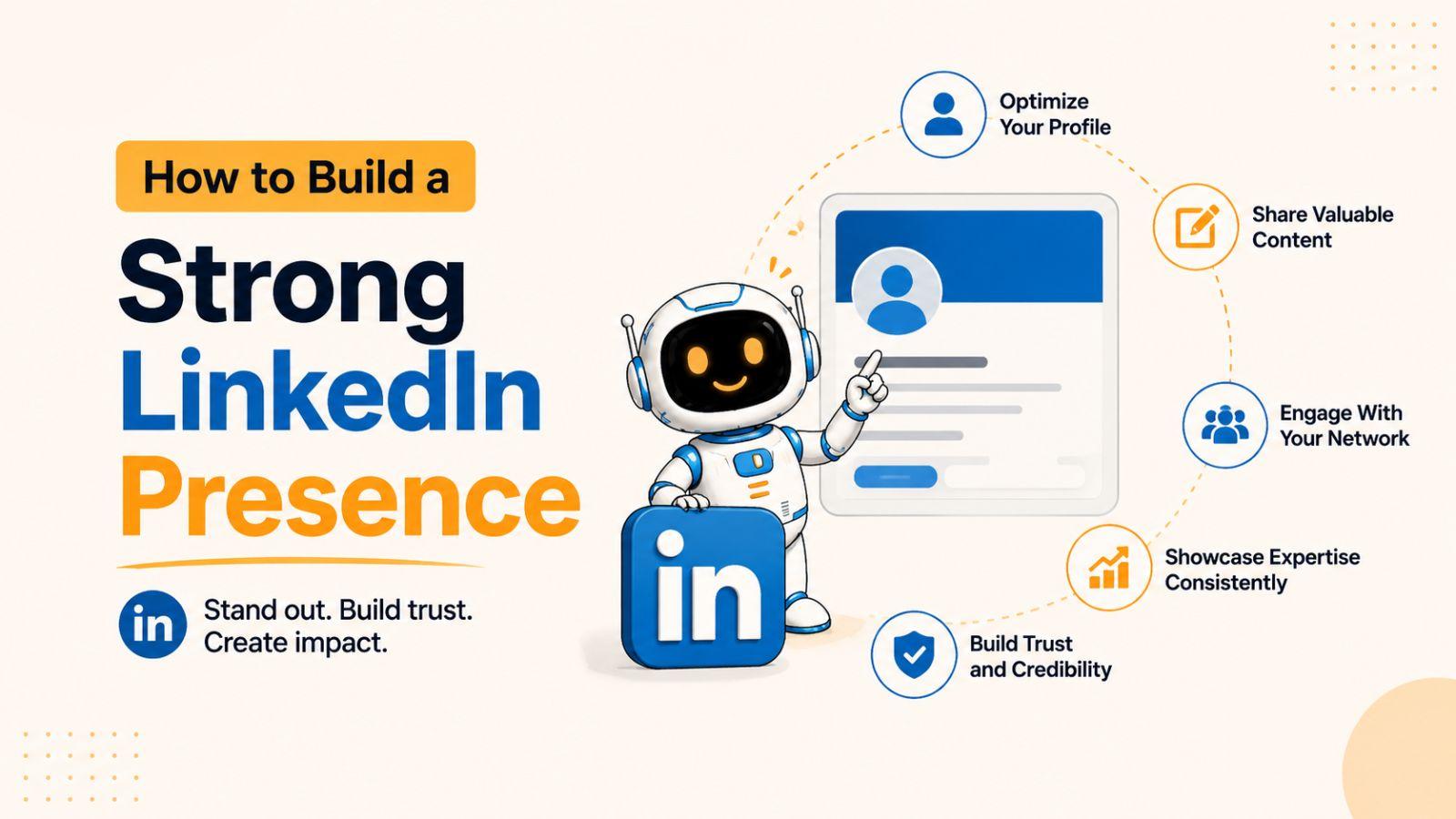
- How to optimize your profile for credibility and visibility
- How to create content that attracts your ideal audience
- How to build consistency using systems and automation tools
The professionals who achieve the greatest success on LinkedIn aren't necessarily the most experienced—they're often the most consistent, which is why developing a sustainable approach to content creation and publishing is essential.
You may also like looking into: How Often Should Businesses Post on LinkedIn?
Why LinkedIn Matters More Than Ever for Personal Branding
A decade ago, LinkedIn was primarily viewed as an online resume and job-search platform. Today, it has evolved into one of the most influential professional networks in the world, where entrepreneurs, executives, consultants, creators, and business owners can build audiences, establish authority, and create opportunities without relying on traditional marketing channels.
The shift toward digital-first business relationships has made personal branding more important than ever. Before scheduling a sales call, hiring a consultant, investing in a company, or partnering with a service provider, many people will visit LinkedIn to evaluate credibility. Your profile, content, and interactions collectively shape the first impression you make.
Unlike other social platforms that often prioritize entertainment, LinkedIn is built around professional value. Users actively seek insights, industry trends, business advice, and career development content. This creates a unique opportunity for professionals who consistently share expertise and demonstrate their knowledge publicly.
A strong LinkedIn presence can produce benefits that extend far beyond engagement metrics. It can help you:
- Attract qualified leads and business opportunities
- Build trust before sales conversations begin
- Create industry recognition and authority
- Expand your professional network
- Generate speaking, partnership, and media opportunities
- Stay top-of-mind with potential customers and collaborators
One of LinkedIn's greatest advantages is the compounding effect of consistent visibility. Every valuable post, thoughtful comment, and professional connection contributes to a growing digital reputation. Over time, this accumulated trust can become a significant competitive advantage.
Unfortunately, many professionals underestimate the power of consistency. They post sporadically, engage infrequently, and abandon their efforts before momentum has a chance to build. Meanwhile, individuals who publish consistently often gain disproportionate visibility simply because they remain active and relevant.
This is why building a LinkedIn presence should be viewed as a long-term asset rather than a short-term marketing tactic. The goal is not to go viral. The goal is to become the person your target audience repeatedly sees, trusts, and remembers when opportunities arise.
Also read: Best LinkedIn Scheduling Tool for Agencies
Define Your LinkedIn Goals Before You Start Posting
One of the biggest mistakes professionals make on LinkedIn is creating content without a clear objective. They post regularly, experiment with different formats, and chase engagement metrics without understanding how those activities support their broader business or career goals.
Before publishing your first post, it's important to define exactly what you want LinkedIn to help you achieve.
Understand the Different Types of LinkedIn Goals
Not every LinkedIn strategy is designed to accomplish the same outcome. A consultant seeking new clients will approach content differently than a founder trying to attract investors or an executive looking to build industry influence.
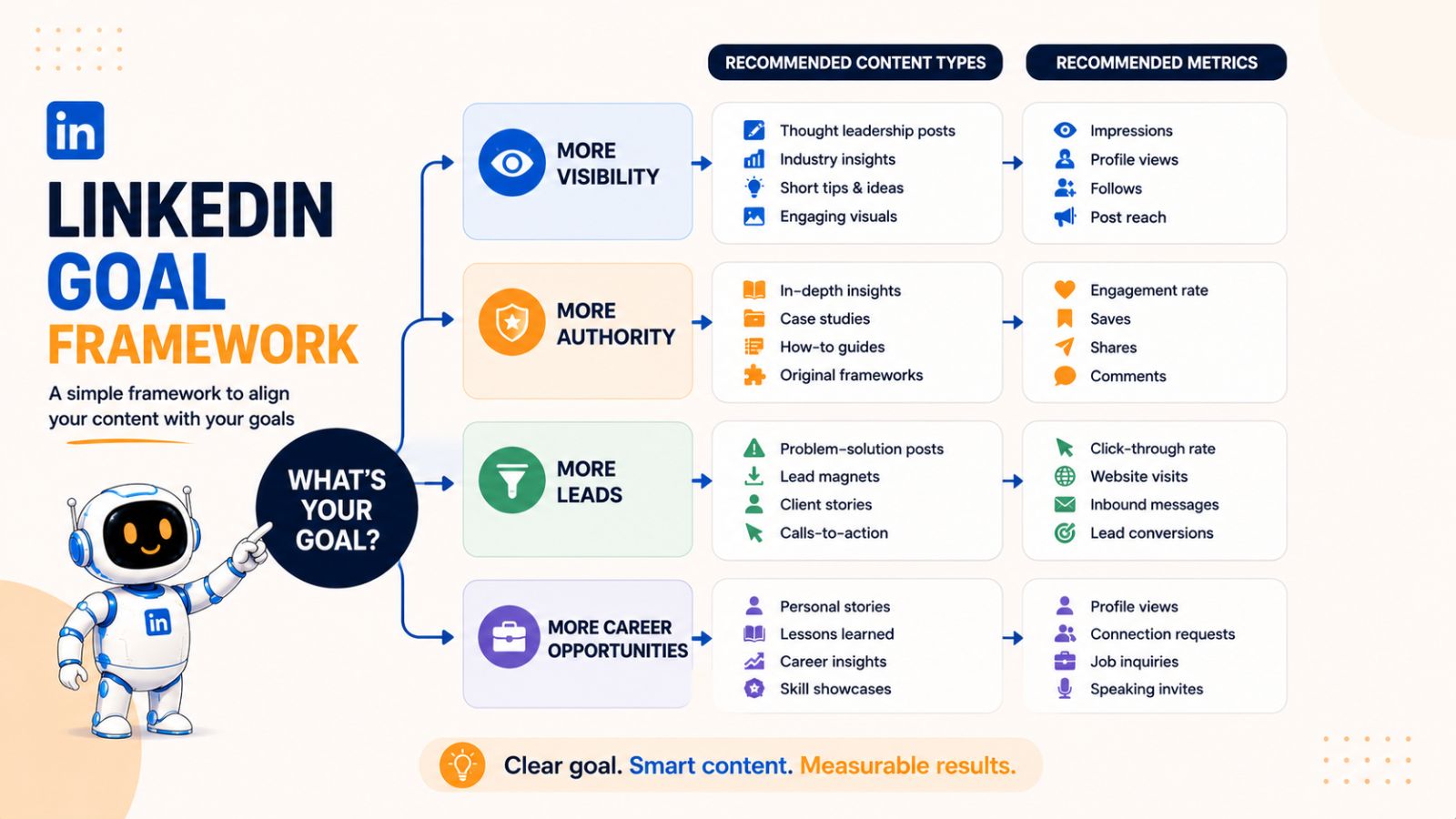
Most LinkedIn goals fall into one or more of the following categories:
Visibility
- Increase profile views and brand awareness
- Expand reach within your industry
- Grow your follower count
Authority
- Demonstrate expertise in your field
- Become a recognized thought leader
- Build trust with your target audience
Lead Generation
- Attract potential clients or customers
- Create inbound sales opportunities
- Generate conversations with qualified prospects
Career Growth
- Increase professional opportunities
- Attract recruiters and hiring managers
- Build relationships with industry leaders
Understanding your primary objective will influence everything from your profile optimization to your content strategy.
Identify Your Target Audience
Many LinkedIn users attempt to speak to everyone and ultimately resonate with no one.
The most effective creators and professionals have a clear understanding of who they want to reach. Consider questions such as:
- Who are your ideal clients, customers, or connections?
- What challenges do they face?
- What topics interest them most?
- What information would they find valuable?
- What outcomes are they trying to achieve?
The clearer your audience definition becomes, the easier it is to create content that consistently attracts attention and engagement.
Create Content Pillars Around Your Expertise
Content pillars are the core topics you repeatedly discuss on LinkedIn. They help your audience understand what you stand for and what type of value they can expect from your content.
For example, a marketing consultant might focus on:
- Marketing strategy
- Lead generation
- Business growth
- Client case studies
- Entrepreneurship
A startup founder might focus on:
- Company building
- Leadership
- Fundraising
- Product development
- Industry trends
When your content pillars remain consistent, your expertise becomes easier for others to recognize and remember.
Define Success Metrics
Many professionals evaluate success based solely on likes and comments. While engagement can be useful, it does not always translate into meaningful business outcomes.
Instead, identify metrics that align with your actual objectives, such as:
- Profile views
- Follower growth
- Connection requests
- Website visits
- Newsletter subscribers
- Discovery calls booked
- Qualified leads generated
- Partnership opportunities created
These metrics provide a more accurate picture of whether your LinkedIn efforts are producing tangible results.
Build a Strategy You Can Sustain
Your goals should also reflect the amount of time and resources you can realistically invest.
Many professionals start with ambitious plans to publish daily content, only to become overwhelmed after a few weeks. A better approach is to create a system that supports long-term consistency.
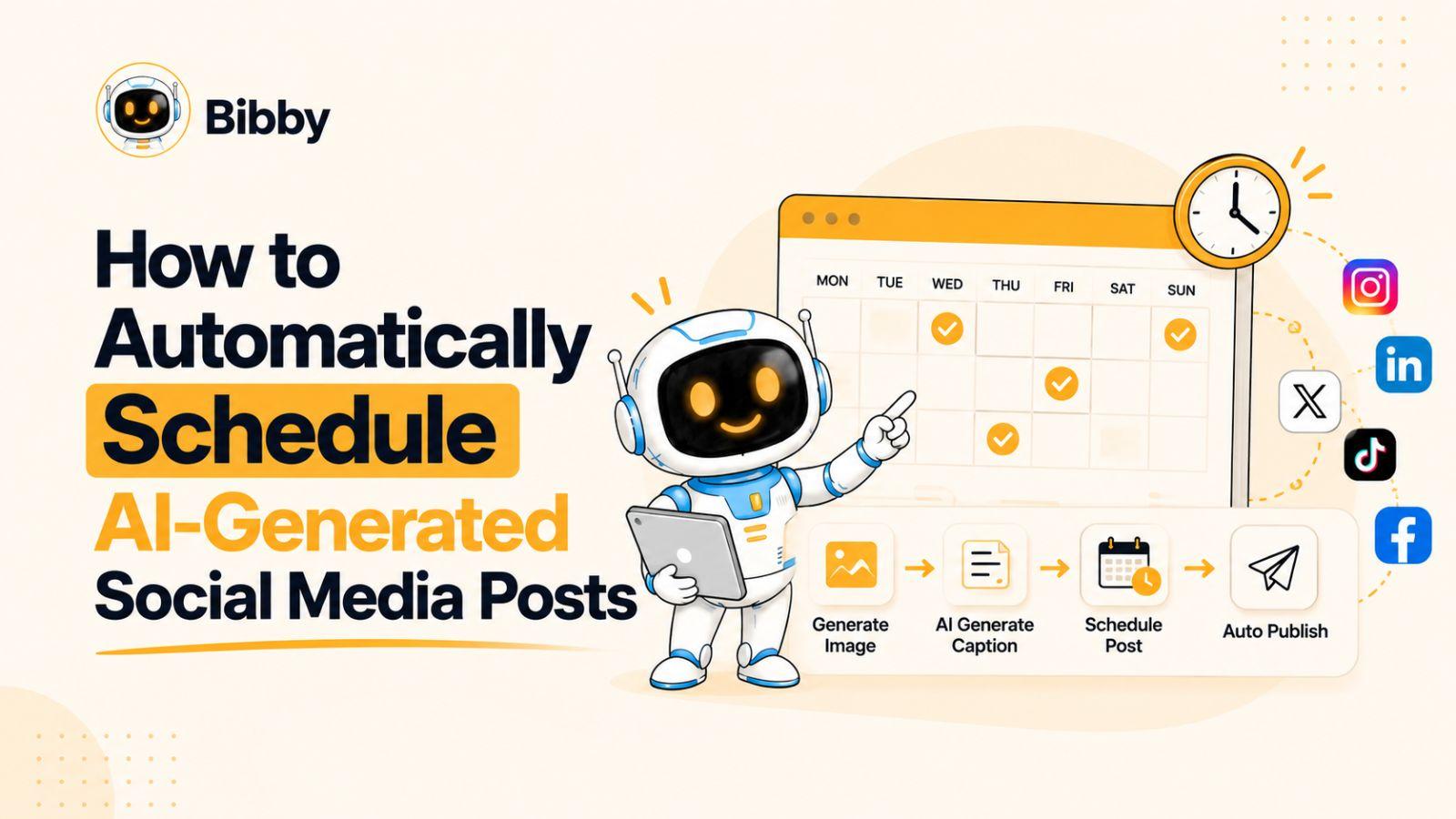
This is where planning and automation can become valuable. Rather than scrambling to create content every day, many entrepreneurs batch-create posts, prepare visuals in advance, and use scheduling tools to maintain a consistent presence. Platforms such as Bibby make this process significantly easier by allowing users to upload their own images or generate visuals with AI, then schedule content weeks or even months ahead. This enables professionals to stay visible without constantly interrupting their daily workflow to publish manually.
Once you've established clear goals, identified your audience, and created a sustainable publishing plan, you'll have a much stronger foundation for creating content that drives meaningful results.
Optimize Your LinkedIn Profile for Maximum Credibility
Your LinkedIn content may attract attention, but your profile is what ultimately converts that attention into trust.
When someone discovers your post, comments on your content, or receives a connection request from you, one of the first things they will do is visit your profile. Within seconds, they will decide whether you appear credible, relevant, and worth following.
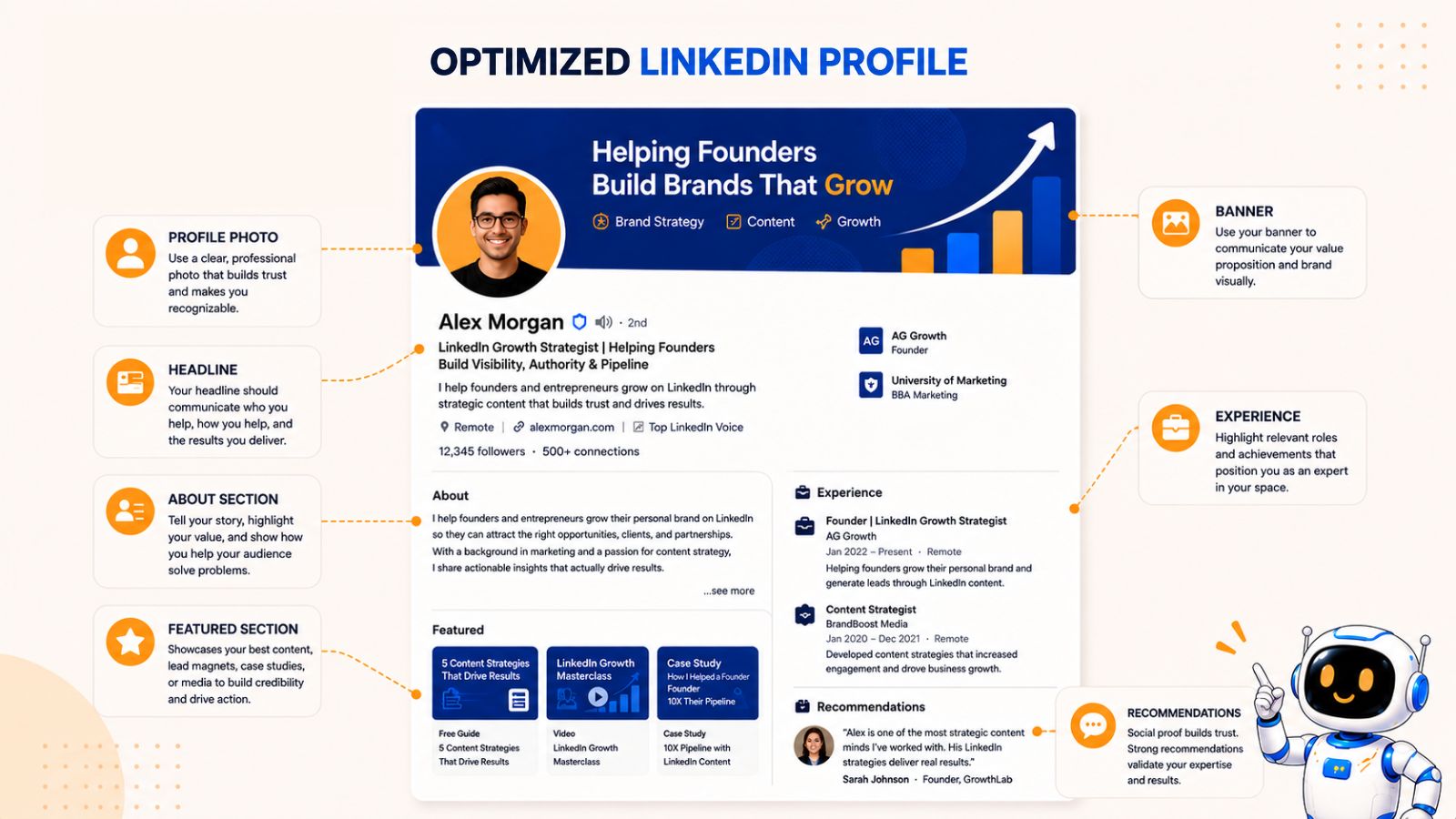
A well-optimized LinkedIn profile acts as a digital landing page for your personal brand. It should clearly communicate who you help, how you help them, and why you're qualified to do so.
Create a Strong First Impression
First impressions on LinkedIn are formed almost instantly. Before visitors read a single sentence, they notice your profile photo, banner image, headline, and overall presentation.
Choose a Professional Profile Photo
Your profile photo should be:
- High quality and well-lit
- Clear and recognizable
- Professional but approachable
- Consistent with your personal brand
Profiles with strong professional photos tend to generate more profile views, connection requests, and engagement because they create immediate trust.
Use Your Banner Strategically
Most LinkedIn users leave their banner image blank or use a generic background. This is a missed opportunity.
An effective banner can communicate:
- Your expertise
- Your business or service
- A key value proposition
- Social proof or achievements
- A memorable personal brand message
Think of the banner as free advertising space that reinforces your professional identity.
Write a Headline That Communicates Value
Many users simply list their job title in the headline section.
Instead of focusing solely on your role, explain the value you provide.
For example:
Weak headline:
Marketing Consultant
Stronger headline:
Helping B2B SaaS Companies Generate More Qualified Leads Through Content Marketing
The second example immediately tells visitors who you help and what outcome you create.
Write an About Section That Builds Trust
Your About section is your opportunity to tell your story and establish credibility.
Rather than creating a lengthy career summary, focus on answering a few key questions:
- Who are you?
- What do you specialize in?
- Who do you help?
- What results have you achieved?
- Why should someone connect with or follow you?
A simple structure might look like this:
- Introduce your expertise.
- Explain the problems you help solve.
- Highlight relevant accomplishments.
- Share your mission or perspective.
- Include a clear call to action.
The goal is to make it easy for visitors to understand your value within a few moments of reading.
Showcase Achievements Instead of Responsibilities
Many professionals describe their experience using job descriptions.
A stronger approach is to highlight outcomes and accomplishments.
Instead of writing:
"Managed marketing campaigns."
Consider:
"Developed marketing campaigns that increased qualified leads by 45% over 12 months."
Specific results create credibility because they demonstrate real-world impact.
Whenever possible, include:
- Revenue growth
- Lead generation results
- Team achievements
- Business outcomes
- Notable projects
- Awards or recognition
Use the Featured Section Effectively
The Featured section is one of LinkedIn's most underutilized profile elements.
You can use it to showcase:
- High-performing posts
- Case studies
- Articles
- Podcasts and interviews
- Lead magnets
- Company websites
- Portfolio examples
This section allows visitors to explore your expertise more deeply after their initial introduction to your profile.
Strengthen Your Social Proof
People trust what others say about you more than what you say about yourself.
LinkedIn provides several ways to build social proof:
- Recommendations from colleagues and clients
- Skill endorsements
- Featured testimonials
- Published thought leadership content
- Speaking engagements and media appearances
Even a handful of thoughtful recommendations can significantly improve perceived credibility.
Align Your Profile with Your Content Strategy
Your profile and content should work together.
For example, if you consistently publish content about leadership, your profile should reinforce your leadership expertise. If your content focuses on entrepreneurship, your profile should clearly communicate your entrepreneurial background and experience.
Consistency across your profile and content helps visitors quickly understand your professional identity and remember what you are known for.
Think of Your Profile as a Conversion Asset
Every post you publish is an opportunity to drive people back to your profile.
The stronger your profile, the more likely visitors are to:
- Follow you
- Connect with you
- Visit your website
- Subscribe to your newsletter
- Book a meeting
- Become a customer
Before investing heavily in content creation, take the time to optimize your profile. A well-crafted profile ensures that the attention your content generates translates into meaningful professional and business opportunities.
Also read: How to Automate Your LinkedIn Posting Strategy for B2B Growth
Build a Content Strategy That Attracts the Right Audience
Many LinkedIn users assume that success comes from posting more often. In reality, successful LinkedIn growth is driven by publishing the right content consistently.
Without a clear content strategy, it's easy to run out of ideas, attract the wrong audience, or spend hours creating posts that generate little engagement. A strong content strategy ensures that every post serves a purpose and contributes to your long-term goals.
Understand What Performs Well on LinkedIn
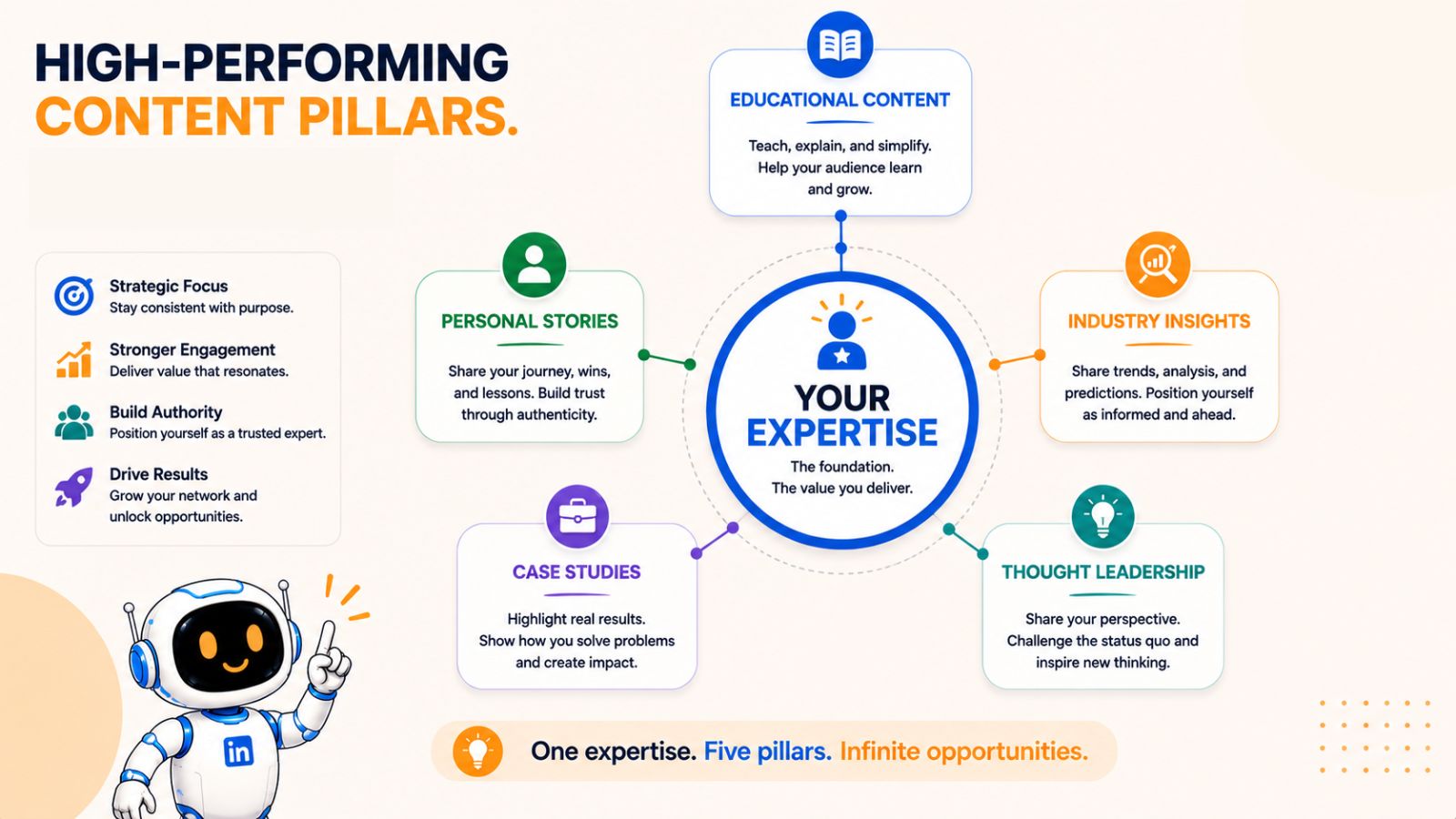
While every audience is different, certain content formats consistently perform well because they educate, inspire, or spark conversation.
Educational Content
Educational posts help your audience solve problems and learn new skills.
Examples include:
- Step-by-step guides
- Industry frameworks
- Lessons learned
- Practical tips
- Best practices
This type of content positions you as a knowledgeable professional and encourages people to follow you for future insights.
Personal Stories
People connect with people more than they connect with businesses.
Sharing authentic experiences can make your content more memorable and relatable.
Examples include:
- Business challenges you've overcome
- Career lessons learned
- Failures and setbacks
- Important milestones
- Behind-the-scenes experiences
Stories often generate strong engagement because they create emotional connection.
Industry Insights
Your audience wants to understand what's happening in their industry.
Regularly sharing observations about market trends, emerging technologies, and changing customer behavior can position you as a trusted source of information.
Case Studies and Results
Nothing builds credibility like evidence.
Case studies allow you to demonstrate how your expertise produces real-world outcomes.
Examples include:
- Client success stories
- Campaign results
- Growth experiments
- Business transformations
- Lessons from successful projects
Concrete results often generate higher trust than general advice alone.
Develop Clear Content Pillars
One of the easiest ways to simplify content creation is by establishing content pillars.
Content pillars are the primary topics you discuss repeatedly.
For example, a business coach might focus on:
- Leadership
- Productivity
- Team management
- Entrepreneurship
- Personal development
A marketing consultant might focus on:
- Content marketing
- Lead generation
- SEO
- Business growth
- Customer acquisition
By narrowing your focus to a handful of core topics, you become easier to recognize and remember.
When someone repeatedly encounters your content on a specific subject, they begin associating you with that expertise.
Balance Value, Authority, and Personality
Many professionals make the mistake of publishing only educational content.
While educational content is valuable, audiences also want to understand the person behind the expertise.
A balanced content strategy often includes:
Value Content
- Tips
- Frameworks
- Tutorials
- Industry insights
Authority Content
- Case studies
- Results
- Success stories
- Professional experiences
Personal Content
- Lessons learned
- Challenges overcome
- Personal perspectives
- Behind-the-scenes moments
This combination helps build trust while maintaining professional credibility.
Create a Sustainable Publishing Schedule
Consistency is one of the most important drivers of LinkedIn growth.
However, consistency doesn't necessarily mean posting every day.
The best schedule is one you can maintain for months rather than weeks.
For many professionals, this might mean:
- Three posts per week
- Four posts per week
- One high-quality post each weekday
The exact frequency matters less than your ability to maintain it consistently.
Plan Content in Advance
One reason many professionals stop posting is because they create content reactively.
Every morning becomes a search for a new idea, and eventually the process becomes exhausting.
A more effective approach is to build a content pipeline.
For example:
- Brainstorm ideas monthly
- Batch-write posts weekly
- Prepare visuals ahead of time
- Schedule content in advance
This reduces stress and allows you to focus on creating better content instead of constantly worrying about what to post next.
Use Automation to Maintain Consistency
As your content strategy matures, managing the publishing process manually can become increasingly difficult.
This is especially true for entrepreneurs and business owners who already have numerous responsibilities competing for their attention.
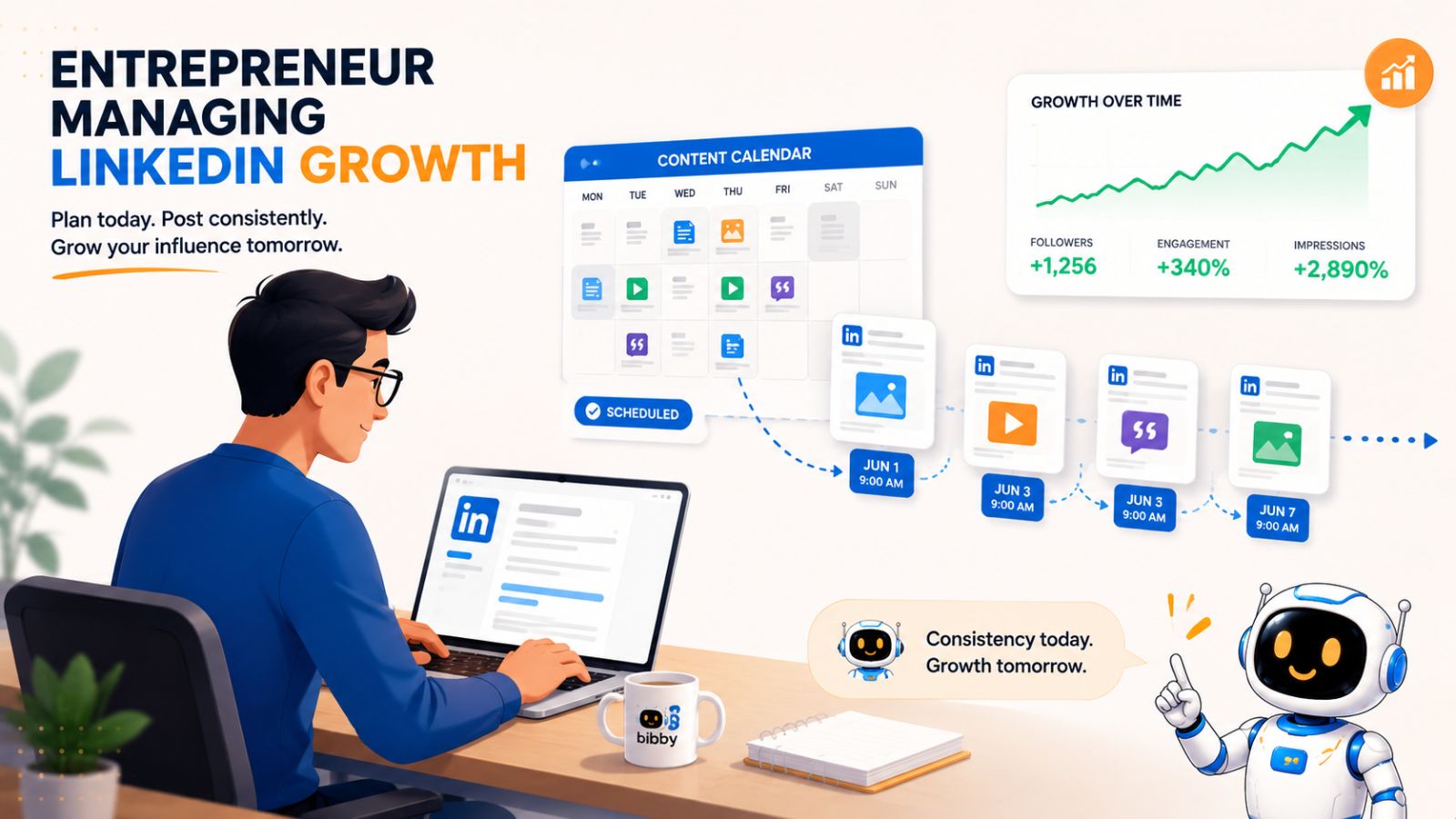
Tools such as Bibby help solve this challenge by turning content creation into a repeatable system. Instead of manually publishing every post, users can upload their own branded images or generate visuals using AI, then schedule content weeks or even months in advance. This allows professionals to maintain a consistent LinkedIn presence even during busy periods, ensuring their audience continues to see valuable content on a regular basis.
The key advantage isn't simply saving time. It's protecting consistency. Many LinkedIn creators fail not because they lack expertise, but because they struggle to publish consistently enough to build momentum.
Focus on Long-Term Audience Building
A strong LinkedIn content strategy isn't designed to produce instant results.
It's designed to gradually build familiarity, trust, and authority with the people who matter most to your business.
Each post becomes another opportunity to demonstrate expertise, start conversations, and reinforce your personal brand. Over time, these small interactions accumulate into a powerful professional presence that can generate opportunities for years to come.
With a content strategy in place, the next challenge becomes creating posts that people actually stop to read, engage with, and remember.
How to Write LinkedIn Posts That Generate Engagement
Creating content consistently is important, but consistency alone won't build a strong LinkedIn presence. If your posts fail to capture attention, encourage interaction, or provide value, even the most disciplined publishing schedule will produce limited results.
The most successful LinkedIn creators understand that engagement starts long before someone clicks the like button or leaves a comment. It begins the moment a user encounters your post in their feed and decides whether it's worth reading.
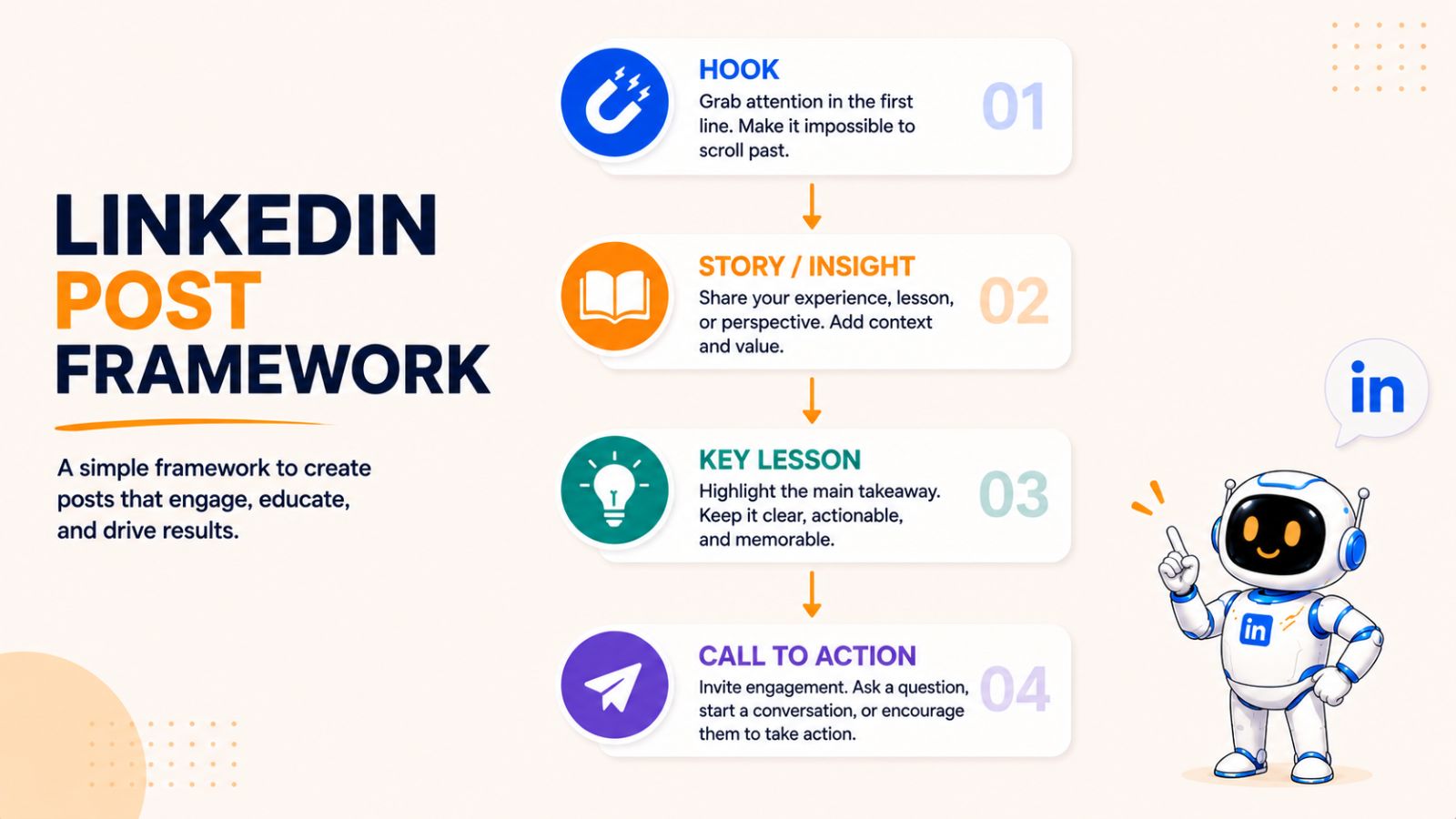
Start with a Strong Hook
The first line of your post is often the difference between someone continuing to read or scrolling past.
LinkedIn users move quickly through their feeds, which means your opening line must immediately capture attention.
Effective hooks often do one of the following:
- Challenge a common belief
- Share a surprising insight
- Present a bold opinion
- Introduce a compelling story
- Highlight a specific result
For example:
Weak Hook
"Here are some thoughts on content marketing."
Stronger Hook
"Most businesses don't have a content problem—they have a consistency problem."
The second example creates curiosity and encourages readers to continue.
Focus on One Core Idea
Many LinkedIn posts fail because they attempt to cover too many topics at once.
Instead, build each post around a single takeaway.
Ask yourself:
"If someone remembers only one thing from this post, what should it be?"
Maintaining a single focus makes your content easier to understand, more memorable, and more likely to be shared.
Make Your Posts Easy to Read
Even excellent ideas can perform poorly if they're difficult to consume.
LinkedIn favors readability because users often browse content from mobile devices.
Simple formatting techniques can significantly improve engagement:
- Use short paragraphs
- Add white space between ideas
- Avoid large blocks of text
- Use bullet points when appropriate
- Keep sentences concise
Compare these two approaches:
Difficult to Read
A long paragraph that contains multiple ideas, examples, and explanations without any spacing can quickly overwhelm readers and cause them to stop reading before reaching the main point.
Easy to Read
A short paragraph.
Followed by another short paragraph.
With plenty of space between ideas.
The second format feels much easier to consume.
Use Storytelling Whenever Possible
Facts inform, but stories help people remember.
One reason storytelling works so well on LinkedIn is that it transforms abstract advice into relatable experiences.
A simple story framework looks like this:
Situation
- What happened?
Challenge
- What obstacle did you face?
Solution
- What action did you take?
Lesson
- What can others learn from it?
This structure creates both engagement and educational value.
For example, instead of saying:
"Consistency is important."
You might share a story about abandoning LinkedIn for six months, losing momentum, then rebuilding your audience through consistent posting.
The lesson becomes more memorable because readers can visualize the experience.
Share Specific Examples and Results
Generic advice is everywhere on social media.
Specific insights stand out.
Consider these examples:
Generic
"Build relationships before selling."
Specific
"After spending three months commenting on industry leaders' posts without pitching anything, I generated five inbound conversations that led to two new clients."
Specific examples create credibility because they demonstrate real-world experience.
Whenever possible, include:
- Numbers
- Results
- Timelines
- Lessons learned
- Practical applications
End with a Purpose
Many LinkedIn posts simply stop when the writer runs out of ideas.
A stronger approach is to end intentionally.
Depending on your goal, you might:
- Ask a question
- Invite discussion
- Encourage readers to share experiences
- Direct people to a resource
- Prompt a specific action
Examples:
- "What's the biggest challenge you've faced with LinkedIn consistency?"
- "Have you noticed similar trends in your industry?"
- "What's one lesson you'd add to this list?"
Questions give readers a natural reason to engage.
Write for Conversations, Not Virality
One of the most common mistakes on LinkedIn is optimizing solely for likes and impressions.
While reach is valuable, meaningful conversations often create far more business value.
A post that generates ten comments from ideal prospects can be more impactful than a post that receives thousands of impressions from people who will never become customers.
Focus on creating content that attracts the right audience rather than the largest audience.
Create Systems for Better Content Production
Writing high-quality posts consistently can become challenging, especially when balancing client work, meetings, and other business responsibilities.
This is why many successful creators rely on structured workflows rather than inspiration alone.
For example, a common process might involve:
- Collecting ideas throughout the week
- Drafting multiple posts in one session
- Creating or selecting visuals
- Scheduling content in advance
Platforms like Bibby support this workflow by allowing users to prepare content in batches, upload their own images or generate visuals with AI, and schedule posts weeks or months ahead. Instead of scrambling to create content every day, entrepreneurs can focus on improving the quality of their ideas while maintaining a consistent publishing schedule.
Engagement Is Earned Through Value
The most effective LinkedIn posts don't rely on tricks, hacks, or viral tactics.
They earn attention by delivering genuine value.
When readers consistently learn something useful, gain a new perspective, or feel understood, they begin looking forward to your content. Over time, this trust becomes one of the strongest assets you can build on LinkedIn.
However, even exceptional content will struggle to generate results if it isn't published consistently. That's why the next step in building a strong LinkedIn presence is understanding the role consistency plays in long-term growth.
The Power of Consistency: Why Most Professionals Fail on LinkedIn
If there is one factor that separates successful LinkedIn creators from everyone else, it is consistency.
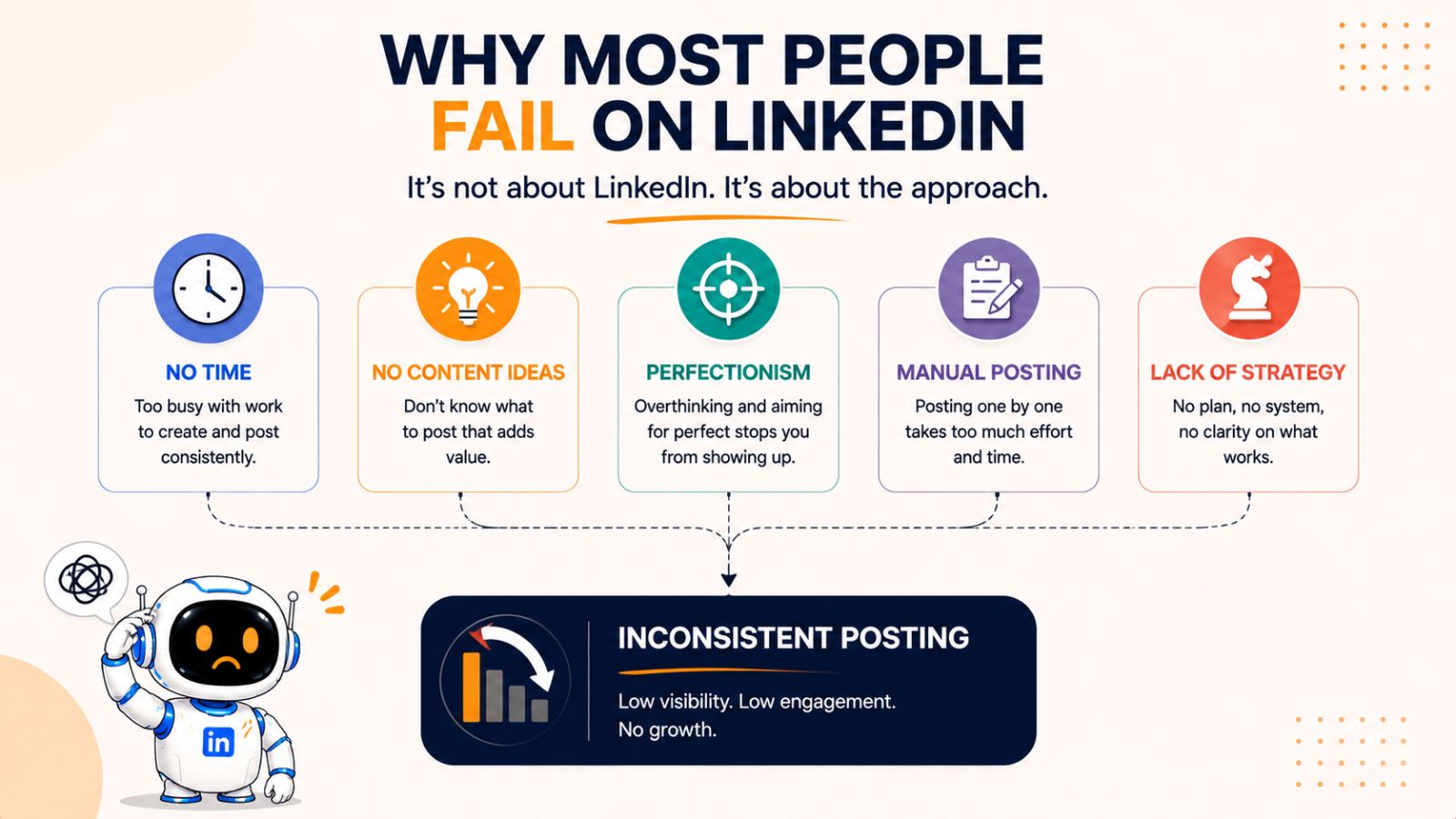
Most professionals understand the value of LinkedIn. They optimize their profiles, publish a few posts, and engage with their networks for a short period of time. But after a few weeks, client work, meetings, deadlines, and everyday responsibilities take priority. Posting becomes less frequent, engagement declines, and eventually their LinkedIn strategy disappears altogether.
The problem is rarely a lack of expertise.
The problem is a lack of consistency.
Why Consistency Matters So Much
LinkedIn rewards active users.
The more consistently you publish valuable content and engage with your network, the more opportunities you create to:
- Reach new audiences
- Build familiarity with existing connections
- Demonstrate expertise
- Generate conversations
- Stay top-of-mind within your industry
Every post acts as another touchpoint with your audience.
A prospect might ignore your first post.
They might skim your fifth.
They might engage with your tenth.
And they might reach out after your twentieth.
Trust is often built through repeated exposure rather than a single interaction.
The Compound Effect of Consistent Posting
Many professionals underestimate how LinkedIn growth compounds over time.
Imagine two entrepreneurs.
The first publishes one post every few weeks whenever they have spare time.
The second publishes three high-quality posts every week for an entire year.
By the end of that year, the second entrepreneur has created more opportunities to:
- Gain followers
- Build authority
- Start conversations
- Drive profile visits
- Generate leads
The difference isn't necessarily talent.
It's consistency.
Small actions repeated over long periods often outperform occasional bursts of activity.
Why Most Professionals Struggle to Stay Consistent
Consistency sounds simple, but maintaining it is difficult.
Common obstacles include:
Lack of Time
Business owners and entrepreneurs already juggle multiple responsibilities.
When schedules become busy, content creation is often the first activity to be postponed.
Running Out of Ideas
Many professionals create content reactively.
Without a system for capturing ideas, they eventually feel like they have nothing left to say.
Perfectionism
Some creators spend hours rewriting posts because they want every piece of content to be perfect.
This dramatically slows production and often leads to publishing less frequently.
Manual Workflows
Creating content, designing visuals, and publishing posts manually every day requires significant effort.
Over time, this process becomes difficult to sustain.
Motivation Is Not a Reliable Strategy
One of the biggest mistakes professionals make is relying on motivation.
Motivation comes and goes.
Systems endure.
The creators who achieve long-term success typically don't wake up every day feeling inspired. Instead, they establish repeatable processes that make publishing easier.
For example:
- Maintaining a content idea database
- Batch-writing multiple posts at once
- Creating visuals in advance
- Scheduling content ahead of time
- Setting recurring engagement habits
These systems reduce the amount of daily effort required to remain active.
Consistency Creates Trust
When people see your content regularly, they begin associating you with your area of expertise.
This familiarity has a powerful effect.
A prospect who encounters your content consistently over six months is far more likely to trust you than someone who discovers you for the first time today.
Consistent visibility signals:
- Reliability
- Professionalism
- Expertise
- Commitment
These qualities influence how people perceive your personal brand.
Building a Consistency System
Rather than focusing exclusively on creating the next post, focus on building a system that supports ongoing publishing.
An effective LinkedIn workflow often includes:
- Capturing content ideas continuously.
- Creating content in batches.
- Preparing visuals ahead of time.
- Scheduling content in advance.
- Monitoring performance and refining strategy.
This approach transforms LinkedIn from a daily task into a scalable business process.
How Automation Helps Maintain Momentum
One reason social media automation has become increasingly popular among entrepreneurs is that it helps eliminate many of the operational challenges that lead to inconsistency.
Instead of manually publishing content every day, tools such as Bibby allow users to build a content pipeline that runs weeks or even months ahead. Entrepreneurs can upload their own branded images or generate visuals using AI, pair them with prepared content, and schedule posts across an extended timeframe.
The advantage isn't simply convenience.
It is continuity.
When business priorities shift or schedules become crowded, your LinkedIn presence remains active. Your audience continues seeing valuable content, your personal brand continues growing, and your momentum remains intact.
Consistency Is a Competitive Advantage
Many professionals are knowledgeable.
Many have impressive experience.
Many possess valuable insights worth sharing.
Yet relatively few maintain a consistent presence long enough to realize the full benefits of LinkedIn.
This creates an opportunity.
By simply showing up consistently, delivering value, and staying visible over time, you can differentiate yourself from competitors who post only when it's convenient.
The challenge then becomes finding ways to scale your efforts efficiently—which is where automation and content management tools can play an important role in supporting long-term LinkedIn growth.
Also read: Social Media Marketing Statistics You Need to Know
Using Automation to Scale Your LinkedIn Presence
As your LinkedIn strategy matures, you'll eventually encounter a common challenge: maintaining consistency becomes increasingly difficult as your business grows.
Creating content, designing visuals, responding to comments, networking, and managing daily responsibilities can quickly consume your available time. While consistency remains essential for LinkedIn growth, manually handling every aspect of content publishing is often unsustainable for busy entrepreneurs and professionals.
This is where automation becomes valuable.
When used correctly, automation doesn't replace authenticity—it helps you deliver it more consistently.
The Role of Social Media Automation
Many people associate automation with robotic content and impersonal communication.
In reality, effective automation focuses on repetitive tasks rather than relationship-building activities.
For example, automation can help with:
- Scheduling content
- Organizing publishing calendars
- Managing content pipelines
- Preparing visuals
- Maintaining posting consistency
Meanwhile, activities such as engaging with comments, building relationships, and participating in conversations remain human-driven.
The goal is not to automate your personal brand.
The goal is to automate the operational work that supports your personal brand.
Why Automation Matters for LinkedIn Growth
Without a system, most professionals operate in a reactive mode.
They wake up, realize they haven't posted recently, rush to create content, and publish something quickly before moving on to other priorities.
This approach creates several problems:
- Inconsistent posting frequency
- Lower-quality content
- Increased stress
- Missed opportunities
- Reduced audience growth
Automation helps eliminate these issues by creating structure around your content strategy.
Instead of wondering what to post today, you already know what is scheduled for the coming days, weeks, or months.
Building a Content Pipeline
One of the most effective ways to scale LinkedIn content is through batching.
A simple workflow might look like this:
Step 1: Collect Ideas
Capture insights, observations, stories, and lessons throughout the week.
Step 2: Create Multiple Posts at Once
Rather than writing one post every day, dedicate a focused session to creating several posts at the same time.
Step 3: Prepare Visual Assets
Select branded graphics, personal photos, screenshots, or supporting visuals.
Step 4: Schedule Content
Load your content into a scheduling system and automate publishing.
Step 5: Engage With Your Audience
Spend your time responding to comments and building relationships rather than manually publishing content.
This workflow dramatically reduces the amount of effort required to maintain a professional LinkedIn presence.
How Bibby Simplifies LinkedIn Content Management
For entrepreneurs and professionals looking to streamline their LinkedIn strategy, Bibby provides a practical solution for managing content creation and scheduling at scale.
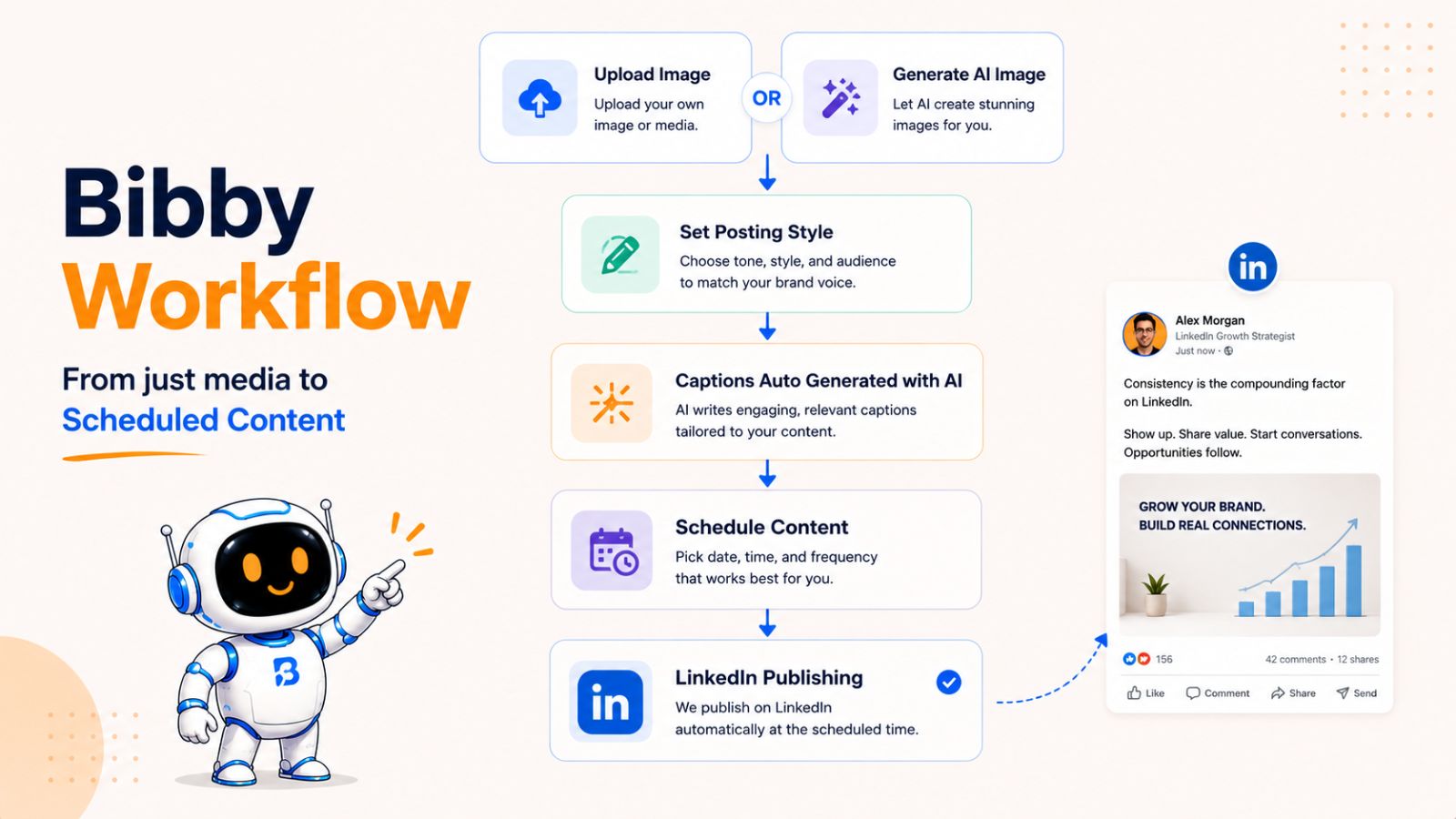
Instead of treating each post as a separate task, Bibby helps users build a structured content system that supports long-term consistency.
Some of the platform's capabilities include:
Upload Your Own Images
Many personal brands rely on custom visuals to strengthen recognition and maintain consistency.
Bibby allows users to upload their own images and pair them with scheduled content, making it easier to maintain a cohesive brand identity across posts.
Generate Images with AI
Creating visuals can often become a bottleneck in the content production process.
Bibby addresses this challenge by enabling users to generate images with AI directly within their workflow. This allows entrepreneurs to create supporting visuals without requiring advanced design skills or additional software.
Schedule Content Weeks or Months in Advance
One of Bibby's most powerful advantages is its scheduling capability.
Instead of planning content one day at a time, users can prepare and schedule posts for weeks or even months ahead.
This approach helps:
- Maintain consistent visibility
- Reduce daily workload
- Avoid content gaps
- Support long-term audience growth
For busy founders and business owners, this can transform LinkedIn from a recurring task into an automated growth engine.
Automation and Authenticity Can Coexist
A common concern about automation is that it may make content feel less personal.
In practice, the opposite is often true.
When repetitive tasks are automated, professionals gain more time to focus on activities that strengthen authenticity, such as:
- Responding to comments
- Engaging with peers
- Building relationships
- Participating in discussions
- Creating thoughtful content
Automation should handle distribution.
Humans should handle connection.
When these responsibilities are separated effectively, both efficiency and authenticity improve.
Best Practices for Using Automation Responsibly
To get the most value from automation, follow a few simple guidelines:
Maintain Your Personal Voice
Automation should publish your content—not generic content.
Ensure every post reflects your expertise, experiences, and perspective.
Review Scheduled Content Regularly
Industries change quickly.
Review your content calendar periodically to ensure scheduled posts remain relevant and timely.
Stay Active After Publishing
Scheduling content does not eliminate the need for engagement.
The strongest LinkedIn creators actively participate in conversations generated by their posts.
Focus on Value First
Automation amplifies your strategy.
If the content itself isn't valuable, automation won't solve the underlying problem.
Scale the Process, Not Just the Output
The ultimate purpose of automation is not simply to publish more content.
It's to create a repeatable system that allows your LinkedIn presence to grow without consuming an increasing amount of time and energy.
When content creation, visual production, scheduling, and publishing are organized into a structured workflow, maintaining a strong LinkedIn presence becomes far more achievable.
Once consistency is no longer a challenge, the next opportunity is expanding your reach by strategically growing your professional network.
Grow Your Network Strategically
Publishing great content is only one part of building a strong LinkedIn presence.
The other half is building relationships.
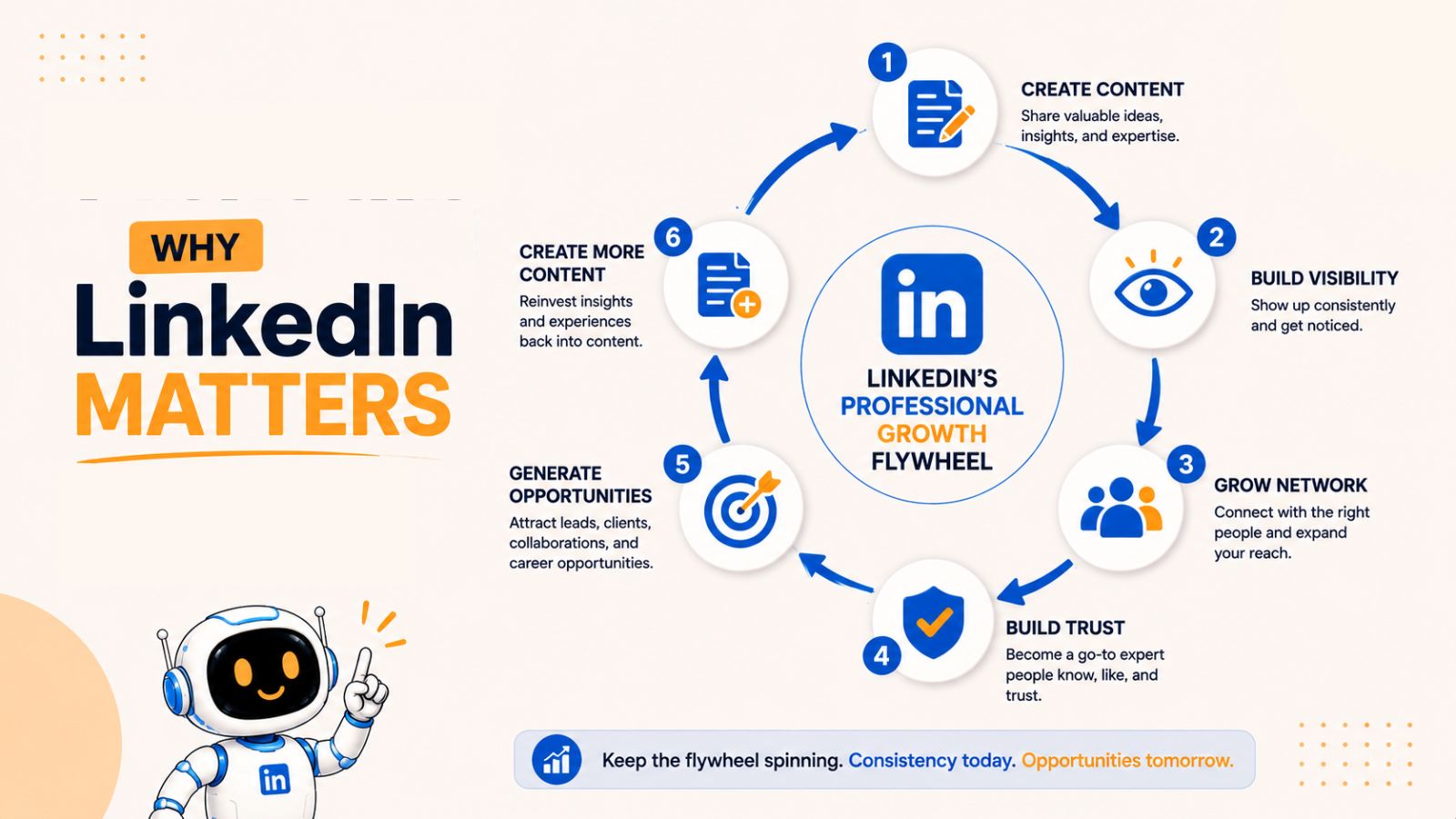
LinkedIn is fundamentally a networking platform. While content helps people discover you, meaningful connections help transform visibility into opportunities. Whether your goal is generating leads, attracting partnerships, finding career opportunities, or building industry authority, your network plays a critical role in your success.
The strongest LinkedIn creators don't simply build audiences.
They build communities.
Connect with the Right People
One of the most common networking mistakes is sending connection requests to anyone and everyone.
A more effective approach is to focus on quality and relevance.
Consider connecting with:
- Potential clients
- Industry peers
- Decision-makers
- Strategic partners
- Thought leaders
- Prospective employers
- Current and former colleagues
Building a network of relevant professionals increases the likelihood that your content reaches people who can contribute to your goals.
Personalize Your Connection Requests
Many LinkedIn users receive dozens of generic connection requests every week.
A personalized message can significantly improve acceptance rates.
A simple connection request might include:
- How you found them
- Why you're interested in connecting
- A shared interest or mutual connection
- Appreciation for their content or work
For example:
"I've been following your posts on SaaS growth and found your recent insights on customer retention particularly helpful. I'd love to connect and continue learning from your content."
The objective isn't to sell.
The objective is to start a relationship.
Avoid Immediate Sales Pitches
Few things damage trust faster than sending a sales pitch immediately after someone accepts your connection request.
Most professionals have experienced this:
- Accept a connection request.
- Receive a sales message seconds later.
- Ignore or remove the connection.
Instead, focus on relationship-building before promotion.
Spend time:
- Engaging with their content
- Learning about their business
- Participating in conversations
- Providing value where possible
Trust should precede any sales discussion.
Engage Before You Expect Engagement
One of the fastest ways to increase visibility on LinkedIn is through thoughtful engagement.
Many users focus exclusively on creating content while neglecting interaction.
Comments can often be just as powerful as posts.
When you consistently contribute meaningful insights to discussions, you gain exposure to audiences that may never have discovered your content otherwise.
Effective engagement includes:
- Adding thoughtful perspectives
- Asking insightful questions
- Sharing relevant experiences
- Expanding on ideas introduced in a post
Simple comments such as "Great post!" rarely create meaningful visibility.
Valuable contributions do.
Become Known for Showing Up
Many successful LinkedIn creators become recognizable because they consistently participate in industry conversations.
Over time, people begin seeing their names repeatedly in:
- Comment sections
- Discussions
- Industry debates
- Shared content
This repeated exposure builds familiarity.
And familiarity often leads to trust.
You don't need to be the loudest voice in your industry.
You simply need to be a consistently valuable participant.
Build Relationships at Scale
Strategic networking doesn't require hundreds of direct messages every week.
Small, consistent actions can create significant results over time.
Examples include:
- Congratulating connections on milestones
- Commenting on posts regularly
- Sharing helpful resources
- Introducing relevant people to one another
- Following up after meaningful conversations
These habits help transform online connections into genuine professional relationships.
Create Opportunities Through Conversation
The best LinkedIn opportunities often emerge from conversations rather than direct promotion.
A comment may lead to a direct message.
A direct message may lead to a meeting.
A meeting may lead to:
- A new client
- A partnership
- A speaking opportunity
- A referral
- A career opportunity
This is why networking should be viewed as a long-term investment rather than a short-term tactic.
Support Your Networking Efforts with Consistent Content
Content and networking work best together.
When someone discovers your profile after interacting with you, your content reinforces your expertise and credibility.
Likewise, every new connection becomes a potential reader of your future content.
Consistency plays a major role here. If someone visits your profile after a positive interaction and sees that you haven't posted in months, the opportunity to deepen that relationship may be reduced.
This is another area where scheduling and automation tools can be valuable. By maintaining a steady stream of content through platforms like Bibby, professionals can ensure that new connections consistently encounter fresh insights and relevant expertise whenever they visit their profile.
Focus on Long-Term Relationship Building
Many professionals approach LinkedIn networking with a transactional mindset.
The most successful users take the opposite approach.
Instead of asking:
"What can I get from this connection?"
They ask:
"How can I create value for this person?"
Over time, this mindset builds stronger relationships, greater trust, and a more influential professional network.
As your network grows and your content gains traction, LinkedIn's built-in publishing tools can help you reach even larger audiences and strengthen your authority further.
Leverage LinkedIn Features for Greater Reach
Most LinkedIn users focus almost exclusively on standard text posts.
While regular posts are important, LinkedIn offers several additional features that can help expand your reach, strengthen your authority, and create deeper relationships with your audience.
Professionals who take advantage of these tools often discover new opportunities to engage their network and position themselves as trusted experts within their industries.
Use LinkedIn Newsletters to Build a Loyal Audience
LinkedIn Newsletters allow creators to publish recurring content directly to subscribers.
Unlike standard posts that quickly disappear from feeds, newsletters create an ongoing relationship with readers who have actively chosen to hear from you.
Benefits of newsletters include:
- Building a dedicated audience
- Increasing content visibility
- Strengthening thought leadership
- Encouraging repeat engagement
- Creating a long-term content asset
A newsletter can be especially valuable for professionals who regularly share educational insights, industry analysis, or business lessons.
Topics might include:
- Marketing trends
- Leadership advice
- Entrepreneurship lessons
- Industry news and analysis
- Career development strategies
Because subscribers receive notifications when new editions are published, newsletters can generate consistent engagement over time.
Publish Long-Form LinkedIn Articles
While posts are ideal for quick insights and conversations, articles allow you to explore topics in greater depth.
Articles work particularly well for:
- Detailed guides
- Industry analysis
- Case studies
- Research-backed insights
- Thought leadership content
For example, a marketing consultant might publish a comprehensive article explaining a lead-generation framework, while a founder could share lessons learned from scaling a company.
Long-form content demonstrates expertise and provides value that shorter posts often cannot.
Repurpose Existing Content
One of the easiest ways to maximize your efforts is by repurposing content across multiple formats.
For example:
A long-form article can become:
- Several LinkedIn posts
- A newsletter edition
- A carousel
- Multiple discussion topics
- A short video script
Repurposing allows you to extract more value from your best ideas without constantly creating new content from scratch.
Experiment with Video Content
Video remains one of the most effective ways to build trust because it allows people to see and hear you directly.
Video content can help:
- Humanize your personal brand
- Increase engagement
- Build familiarity faster
- Showcase expertise more effectively
Popular video formats include:
- Quick tips
- Industry commentary
- Behind-the-scenes updates
- Lessons learned
- Frequently asked questions
The goal isn't professional production quality.
The goal is delivering useful information consistently.
Use Visual Content to Increase Attention
Visuals can make your content more engaging and easier to consume.
Examples include:
- Personal photos
- Infographics
- Screenshots
- Data visualizations
- Branded graphics
- AI-generated imagery
Well-designed visuals help capture attention in crowded feeds and can improve overall engagement.
However, creating visuals consistently can become time-consuming, especially for entrepreneurs who already manage numerous business responsibilities.
Simplify Visual Content Creation
One reason many professionals struggle with content consistency is that every post requires both written content and supporting visuals.
Creating graphics manually for every piece of content can quickly become a bottleneck.
Tools like Bibby streamline this process by giving users the flexibility to upload their own images or generate visuals with AI. This allows entrepreneurs to maintain a professional visual presence without relying on complex design workflows or additional creative resources.
When visual creation becomes easier, maintaining a consistent publishing schedule becomes significantly more realistic.
Turn One Idea into Multiple Content Assets
High-performing LinkedIn creators rarely start from scratch every day.
Instead, they maximize the value of strong ideas.
For example:
A single business lesson could become:
- A LinkedIn post
- A newsletter edition
- A long-form article
- A short video
- Several future discussion prompts
This approach increases efficiency while reinforcing your expertise across multiple content formats.
Combine Features for Maximum Reach
The strongest LinkedIn strategies often combine multiple platform features.
For example:
- Publish a long-form article.
- Convert key insights into several posts.
- Include the article in a newsletter.
- Create visual content supporting the main ideas.
- Engage with readers through comments and discussions.
This multi-format approach allows a single idea to reach audiences through different channels and consumption preferences.
Reach Is a Byproduct of Value
Many users search for shortcuts to increase LinkedIn reach.
In reality, the platform's most successful creators focus less on algorithms and more on consistently delivering value.
LinkedIn's publishing tools simply provide additional ways to distribute that value.
When combined with a strong profile, strategic networking, high-quality content, and a consistent publishing schedule, these features can significantly accelerate your growth and influence on the platform.
The next step is understanding how to measure your progress so you can continuously improve your LinkedIn strategy over time.
Measure and Improve Your LinkedIn Performance
Building a strong LinkedIn presence is not a one-time project. It's an ongoing process of creating content, building relationships, analyzing results, and making improvements over time.
One of the biggest advantages of LinkedIn is that it provides valuable data about how your audience interacts with your content. By tracking the right metrics and learning from your results, you can make smarter decisions and accelerate your growth.
The goal isn't to obsess over numbers.
The goal is to understand what's working so you can do more of it.
Focus on the Metrics That Matter
Many professionals become fixated on vanity metrics such as likes and follower counts.
While these numbers can provide useful signals, they don't always reflect meaningful business outcomes.
Instead, focus on metrics that align with your goals.
Visibility Metrics
These metrics help you understand how many people are discovering your content.
Examples include:
- Post impressions
- Profile views
- Search appearances
- Follower growth
Consistent improvement in these areas often indicates that your content is reaching a larger audience.
Engagement Metrics
Engagement reveals how your audience interacts with your content.
Key metrics include:
- Comments
- Shares
- Reactions
- Saves
- Click-through rates
Generally speaking, comments and shares provide stronger indicators of audience interest than likes alone.
Business Metrics
Ultimately, many professionals use LinkedIn to create business opportunities.
Track outcomes such as:
- Website visits
- Discovery calls
- Lead form submissions
- Email subscribers
- Partnership inquiries
- Client opportunities
These metrics help determine whether your LinkedIn strategy is contributing to your broader objectives.
Identify Your Best-Performing Content
Review your content regularly to identify patterns.
Ask questions such as:
- Which topics receive the most engagement?
- Which formats perform best?
- Which stories generate the most conversation?
- Which posts lead to profile visits?
- Which content drives business opportunities?
Over time, trends will emerge.
You may discover that:
- Personal stories outperform industry news.
- Case studies attract more leads than general advice.
- Educational content generates the most shares.
- Visual posts consistently receive more engagement.
These insights allow you to refine your content strategy based on actual audience behavior.
Analyze Why Content Performs Well
Looking only at engagement numbers is not enough.
You should also examine why certain posts succeed.
Consider factors such as:
- The hook
- The topic
- The format
- The call to action
- The timing
- The visual element
Understanding these variables helps you replicate successful patterns without simply repeating the same content.
Create a Monthly Performance Review
Many professionals post consistently but never analyze their results.
A simple monthly review can dramatically improve performance over time.
During your review:
- Identify your top-performing posts.
- Identify your lowest-performing posts.
- Look for common themes.
- Evaluate audience growth.
- Review business outcomes.
- Adjust your strategy accordingly.
This process helps ensure your LinkedIn efforts continue evolving.
Test New Ideas Regularly
While consistency is important, experimentation is equally valuable.
Your audience may respond differently to:
- New content formats
- Different storytelling approaches
- Alternative posting schedules
- New visual styles
- Emerging industry topics
Testing helps uncover opportunities that would otherwise remain hidden.
The goal is not to change everything at once.
The goal is to make small, data-informed improvements over time.
Use Systems to Make Optimization Easier
Tracking performance becomes easier when your content process is organized.
For example, many successful creators maintain:
- Content calendars
- Idea databases
- Performance dashboards
- Topic libraries
- Content templates
These systems make it easier to identify trends and scale successful content strategies.
How Automation Supports Better Performance
Automation isn't only valuable for consistency—it can also improve performance management.
When content is planned and scheduled in advance, it's easier to review results objectively rather than operating in a reactive mode.
For example, entrepreneurs using platforms like Bibby can create content pipelines weeks or months ahead while maintaining a clear overview of their publishing schedule. This structured approach makes it easier to evaluate which content themes are performing well and adjust future content accordingly.
Instead of constantly focusing on day-to-day publishing tasks, professionals can dedicate more attention to analyzing results and improving strategy.
Improvement Comes from Iteration
Many people expect immediate results from LinkedIn.
In reality, the strongest personal brands are built through continuous refinement.
Every post provides feedback.
Every interaction offers insight.
Every month presents an opportunity to improve.
The professionals who succeed on LinkedIn are not necessarily those who start with the best content. They are often the ones who consistently learn from their audience and adapt their strategy over time.
Of course, improvement also requires avoiding the common mistakes that prevent many professionals from reaching their full potential on the platform.
Common LinkedIn Mistakes That Hurt Growth
Many professionals invest significant time into LinkedIn without seeing meaningful results.
In some cases, the problem isn't a lack of effort. It's a collection of small mistakes that limit visibility, reduce engagement, and prevent long-term growth.
The good news is that most of these mistakes are entirely avoidable.
By identifying and correcting them early, you can accelerate your progress and build a stronger presence much more efficiently.
Posting Inconsistently
Inconsistency is one of the most common reasons LinkedIn strategies fail.
Many users begin with enthusiasm, publish several posts, and then disappear for weeks or months.
This creates several challenges:
- Reduced visibility
- Slower audience growth
- Lower engagement
- Missed networking opportunities
- Difficulty building trust
LinkedIn growth is largely driven by repeated exposure. When your audience sees your content regularly, they begin associating you with your expertise.
When you disappear, that momentum fades.
Consistency doesn't require posting every day. It requires maintaining a publishing schedule that you can realistically sustain.
Treating LinkedIn Like a Sales Channel
Another common mistake is focusing on promotion instead of value.
Many users publish content that constantly talks about:
- Their services
- Their products
- Their company
- Their achievements
While occasional promotional content is appropriate, audiences generally engage more with content that helps them solve problems, learn something new, or gain useful insights.
A useful guideline is:
Provide value most of the time.
Promote selectively.
People are far more likely to buy from professionals who consistently educate and help them.
Neglecting Profile Optimization
Even strong content can underperform when supported by a weak profile.
Imagine someone discovers one of your posts and decides to learn more about you.
If they encounter:
- An incomplete profile
- A vague headline
- An outdated banner
- A weak About section
They may lose interest before taking the next step.
Your profile should reinforce the expertise your content demonstrates.
Think of it as the destination your content drives people toward.
Focusing Only on Posting
Some professionals treat LinkedIn as a broadcasting platform.
They publish content but rarely engage with others.
This limits growth significantly.
LinkedIn rewards participation.
Successful users often spend time:
- Commenting on industry posts
- Supporting peers
- Joining discussions
- Building relationships
Engagement increases visibility and creates opportunities that content alone may never generate.
Chasing Virality Instead of Relevance
It's easy to become distracted by viral posts and impressive engagement numbers.
However, a post reaching thousands of irrelevant people may provide less value than a post reaching a handful of ideal prospects.
For example:
A consultant who receives three qualified client inquiries from a niche post may achieve a better outcome than someone who receives thousands of views but no business opportunities.
Growth should be measured against your goals—not someone else's metrics.
Creating Content Without a Strategy
Random content typically produces random results.
Without clear content pillars, audience targeting, and objectives, it's difficult to build authority in a specific area.
This often leads to:
- Inconsistent messaging
- Confused audiences
- Weak positioning
- Slower growth
A defined content strategy helps establish expertise and creates a more cohesive personal brand.
Ignoring Analytics
Many professionals never review their LinkedIn performance data.
As a result, they continue publishing content without understanding what resonates with their audience.
Analytics provide valuable insights into:
- Popular topics
- Effective formats
- Audience interests
- Engagement patterns
Regular review helps improve future content and maximize results.
Making Content Creation Harder Than Necessary
Perfectionism often becomes an invisible growth barrier.
Some users spend hours writing individual posts, creating custom graphics, and manually publishing content every day.
Eventually, the workload becomes unsustainable.
The result is usually inconsistency.
A better approach is to simplify and systemize the process.
For example:
- Batch-create content
- Reuse successful ideas
- Repurpose existing content
- Schedule posts in advance
- Create repeatable workflows
Tools such as Bibby help reduce operational friction by allowing users to prepare content ahead of time, upload their own visuals or generate AI-powered images, and schedule content for weeks or months into the future. This allows entrepreneurs to focus more on creating valuable content and less on managing the mechanics of publishing.
Expecting Immediate Results
Perhaps the most damaging mistake is abandoning LinkedIn too early.
Many users expect significant audience growth, leads, or business opportunities within a few weeks.
In reality, LinkedIn is often a long-term investment.
Authority, trust, and visibility are built gradually through:
- Consistent content
- Meaningful engagement
- Strategic networking
- Ongoing optimization
The professionals who achieve the greatest success are often those who continue showing up long after others have stopped.
Success Comes from Avoiding the Fundamentals
Building a strong LinkedIn presence doesn't require secret tactics or algorithm hacks.
It requires executing the fundamentals consistently:
- Optimize your profile
- Create valuable content
- Publish consistently
- Build relationships
- Measure performance
- Improve continuously
Avoiding the mistakes in this section will put you ahead of the majority of LinkedIn users and create a strong foundation for sustainable growth.
The final step is bringing everything together into a practical action plan that you can follow over the next 90 days.
A 90-Day Plan to Build a Strong LinkedIn Presence
Building a strong LinkedIn presence doesn't happen overnight.
The most successful professionals and entrepreneurs grow their influence through consistent actions repeated over time. Rather than trying to master everything at once, it's often more effective to focus on a structured plan that builds momentum step by step.
The following 90-day roadmap will help you establish a strong foundation, develop consistent publishing habits, and create a scalable system for long-term LinkedIn growth.
Month 1: Build Your Foundation
The first month is focused on creating the assets and systems that support future growth.
Optimize Your Profile
Review every major section of your LinkedIn profile:
- Profile photo
- Banner image
- Headline
- About section
- Experience section
- Featured content
Ensure your profile clearly communicates:
- Who you help
- What you help them achieve
- Why you're qualified to help them
Define Your Content Pillars
Choose three to five core topics that align with your expertise and audience.
For example:
Marketing Consultant
- Content marketing
- SEO
- Lead generation
- Business growth
- Marketing strategy
Entrepreneur
- Startup growth
- Leadership
- Productivity
- Sales
- Personal branding
These pillars will become the foundation of your content strategy.
Create a Content Idea Library
Begin capturing ideas continuously.
Sources may include:
- Client conversations
- Industry news
- Personal experiences
- Common questions
- Lessons learned
Aim to collect at least 50 content ideas before the end of the month.
This prevents the "I don't know what to post" problem that often derails consistency.
Publish Your First Consistent Content
Start with a manageable schedule.
For example:
- Three posts per week
- Four posts per week
- One post every weekday
Choose a frequency you can realistically maintain.
Month 2: Build Consistency and Visibility
With your foundation established, the second month focuses on increasing activity and engagement.
Maintain Your Publishing Schedule
Continue publishing consistently.
At this stage, avoid overanalyzing individual post performance.
The goal is to build the habit of showing up regularly.
Engage Daily
Spend time each day:
- Commenting on industry posts
- Supporting peers
- Participating in discussions
- Building new relationships
Even 15–20 minutes of engagement can significantly increase visibility.
Expand Your Network Strategically
Send targeted connection requests to:
- Prospective clients
- Industry peers
- Thought leaders
- Strategic partners
Focus on quality rather than quantity.
Experiment with Different Content Types
Test multiple formats, including:
- Educational posts
- Personal stories
- Case studies
- Industry commentary
- Lessons learned
This will help identify what resonates most with your audience.
Month 3: Scale and Optimize
The final month focuses on improving efficiency and expanding reach.
Analyze Your Results
Review your previous content and identify:
- Top-performing posts
- Most engaging topics
- Best-performing formats
- Audience growth trends
Look for patterns you can replicate.
Repurpose Successful Content
Turn strong-performing ideas into additional assets.
For example:
- Convert posts into articles
- Expand posts into newsletters
- Create videos from written content
- Update and repost proven ideas
This allows you to generate more value from content that already works.
Implement Automation Systems
By now, content creation may be consuming a significant amount of time.
This is an ideal stage to introduce automation.
A structured workflow might include:
- Batch-create content weekly.
- Prepare visuals in advance.
- Schedule content ahead of time.
- Monitor engagement and respond manually.
Tools like Bibby can help streamline this process by allowing entrepreneurs to upload their own images or generate AI-powered visuals, organize content efficiently, and schedule posts weeks or even months into the future. Instead of worrying about daily publishing, you can focus on improving content quality, networking, and audience engagement.
Increase Content Output Carefully
Once your systems are functioning smoothly, consider increasing publishing frequency.
For example:
- Move from three posts per week to five.
- Publish a weekly newsletter.
- Experiment with LinkedIn articles.
- Introduce video content.
Scale only if quality remains high.
What Success Looks Like After 90 Days
By the end of this process, you should have:
- A fully optimized LinkedIn profile
- Clearly defined content pillars
- A growing professional network
- A consistent publishing habit
- Performance data to guide future decisions
- A scalable content workflow
Most importantly, you'll have built momentum.
Momentum is one of the most valuable assets on LinkedIn because it makes future growth easier and more predictable.
Focus on Progress, Not Perfection
Many professionals delay action because they want the perfect profile, perfect strategy, or perfect content plan.
The reality is that LinkedIn success is built through execution and iteration.
Start with what you know.
Publish consistently.
Learn from your audience.
Refine your approach.
Then repeat.
Over time, these small improvements compound into a strong LinkedIn presence that creates visibility, authority, relationships, and business opportunities for years to come.
Final Words
Building a strong LinkedIn presence isn't about chasing viral posts or gaming the algorithm. It's about consistently creating value, building meaningful relationships, and establishing yourself as a trusted voice within your industry.
Throughout this guide, we've covered three core principles that drive long-term LinkedIn success: optimizing your profile to build credibility, creating valuable content that attracts the right audience, and maintaining consistency through systems and automation. When these elements work together, LinkedIn becomes more than a social platform—it becomes a powerful engine for personal branding, networking, and business growth.
The professionals who achieve the greatest results aren't necessarily the most talented writers or the most experienced experts. They're often the ones who show up consistently, learn from their audience, and continue improving over time.