
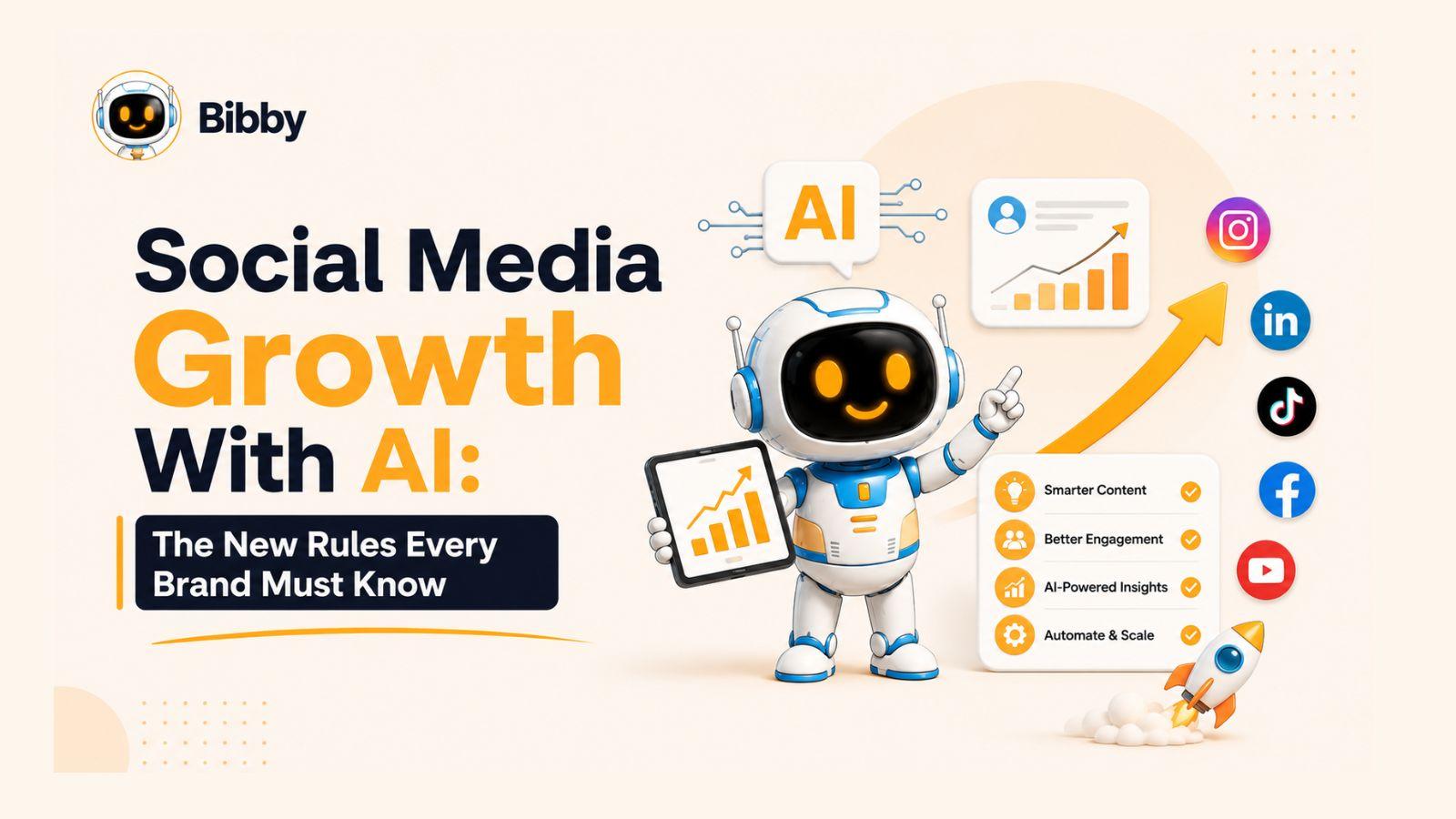
Artificial intelligence is transforming how brands create, manage, and grow their social media presence.
Keeping up with today's social media landscape is no longer just about posting consistently—it’s about creating high-quality content faster, reaching the right audience, and making smarter decisions with less manual effort. Brands that embrace AI are discovering new ways to streamline workflows, improve engagement, and scale their marketing without dramatically increasing time or resources.
In this blog, we will look into:
- How AI is reshaping modern social media marketing.
- The new rules brands should follow to grow faster with AI.
- How AI-powered automation simplifies content creation and publishing.
Whether you're a small business owner, content creator, marketer, or enterprise brand, understanding these new AI-driven strategies will help you stay competitive and build a more efficient social media workflow.
Why AI Is Changing Social Media Forever
Social media has always evolved quickly, but the rise of artificial intelligence has accelerated that change more than any previous trend. What once required hours of brainstorming, designing, writing, and scheduling can now be completed in a fraction of the time with AI-powered tools.
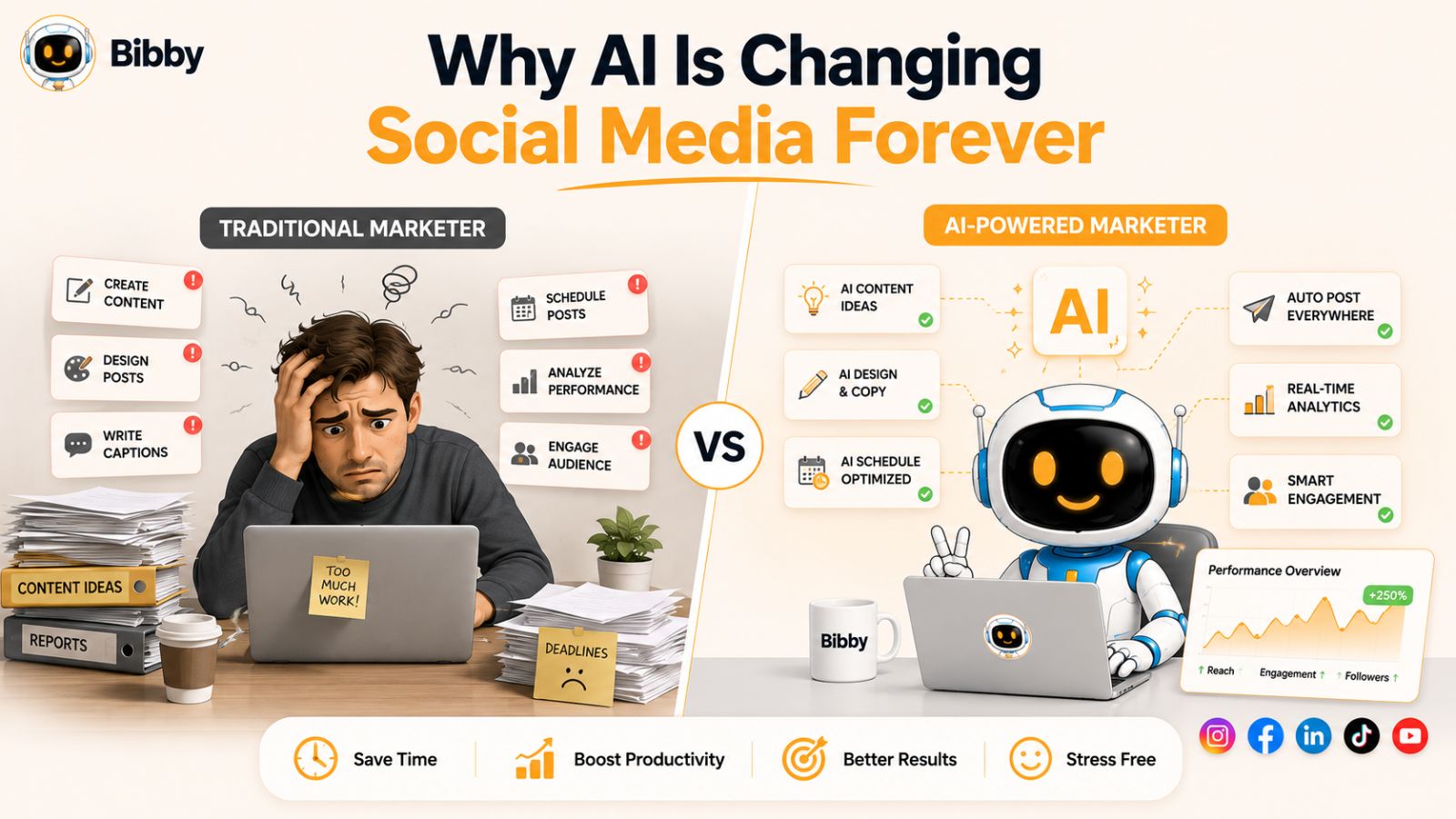
At the same time, audience expectations have increased. Users expect brands to publish consistently, create platform-specific content, respond quickly, and stay relevant to trending conversations. Meeting these expectations manually has become increasingly difficult, especially for small teams and growing businesses.
AI helps bridge this gap by automating repetitive tasks while giving marketers more time to focus on creativity, storytelling, and strategy. Instead of replacing human creativity, AI acts as a powerful assistant that speeds up content production, improves consistency, and helps brands make data-informed decisions.
The Explosion of AI-Powered Marketing
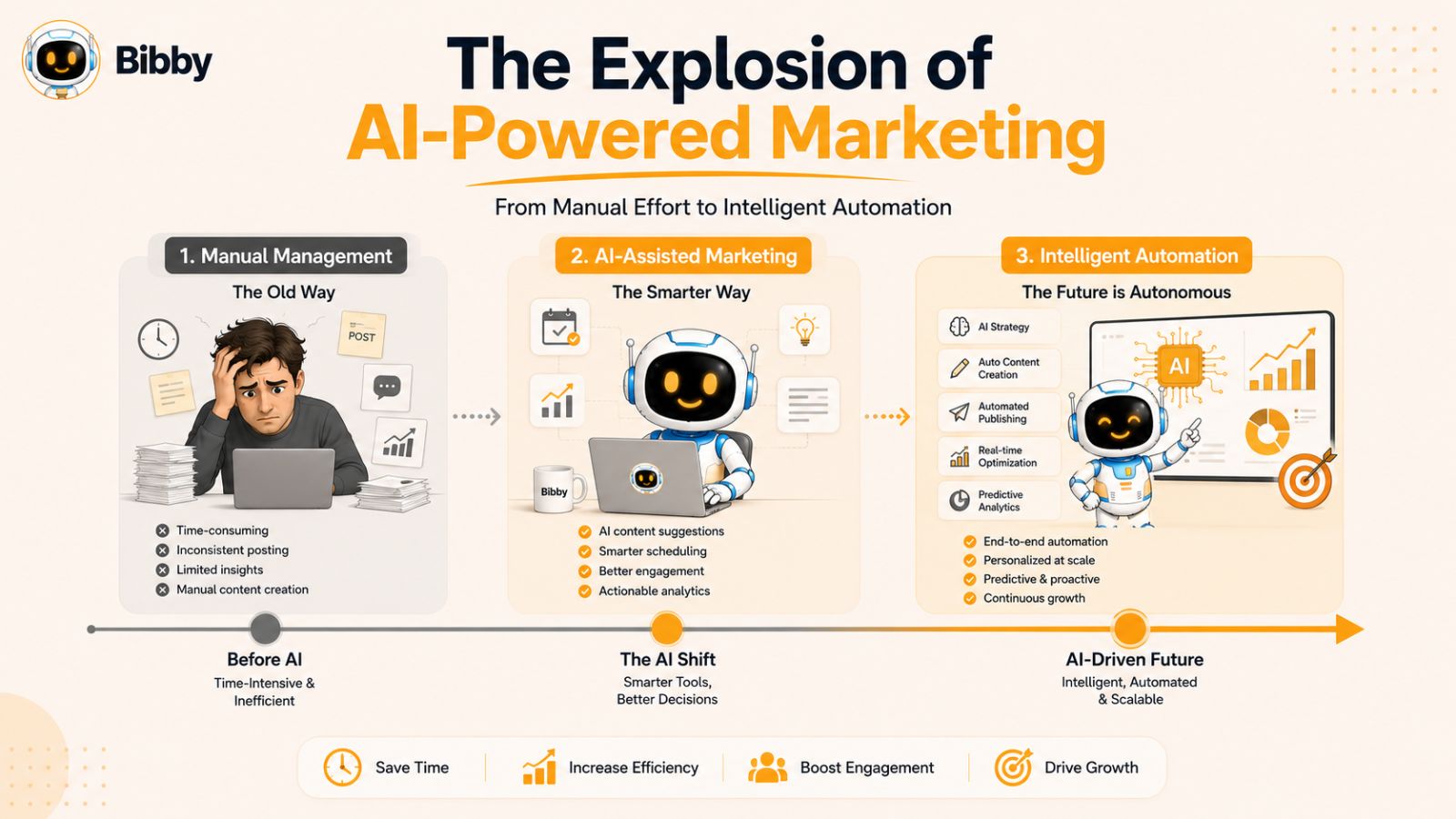
Artificial intelligence is no longer limited to large enterprises with massive budgets. Today, businesses of every size use AI to generate content ideas, write captions, edit images, create videos, analyze performance, and schedule posts across multiple social platforms.
This accessibility has leveled the playing field, allowing startups, creators, and local businesses to compete with much larger brands by producing high-quality content faster and more consistently.
Why Traditional Social Media Workflows No Longer Scale
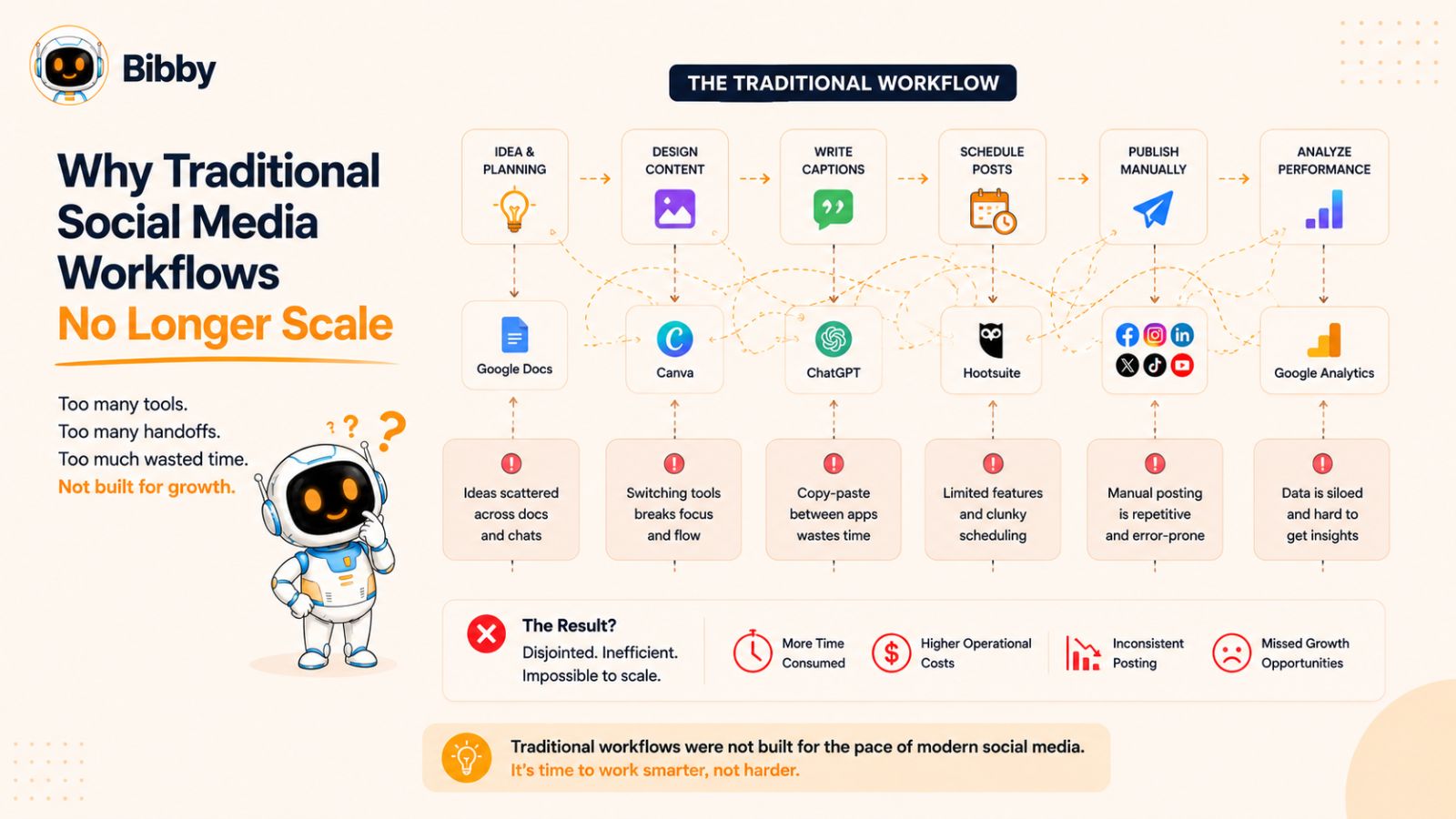
Managing social media manually often involves juggling multiple tools and repetitive tasks:
- Brainstorming new content ideas
- Designing graphics or editing videos
- Writing unique captions
- Selecting hashtags
- Scheduling posts on each platform individually
- Tracking analytics and performance
As the number of platforms grows, so does the workload. For many marketing teams, this approach becomes time-consuming, expensive, and difficult to sustain.
The New Expectations From Consumers
Modern audiences expect more than frequent posts. They want authentic stories, timely updates, visually engaging content, and meaningful interactions. They also expect brands to adapt content for each platform instead of publishing identical posts everywhere.
AI makes it easier to personalize messaging, maintain a consistent publishing schedule, and optimize content for different audiences without dramatically increasing workload.
Why Every Business Is Adopting AI
The biggest advantage of AI isn't simply creating content faster—it's building a smarter, more scalable marketing process. Businesses that integrate AI into their workflows can spend less time on repetitive tasks and more time developing campaigns, strengthening customer relationships, and measuring results.
As AI continues to evolve, the brands that combine automation with human creativity will be best positioned to grow their reach, improve engagement, and stay ahead in an increasingly competitive social media landscape.
The Biggest Challenges Brands Face Today
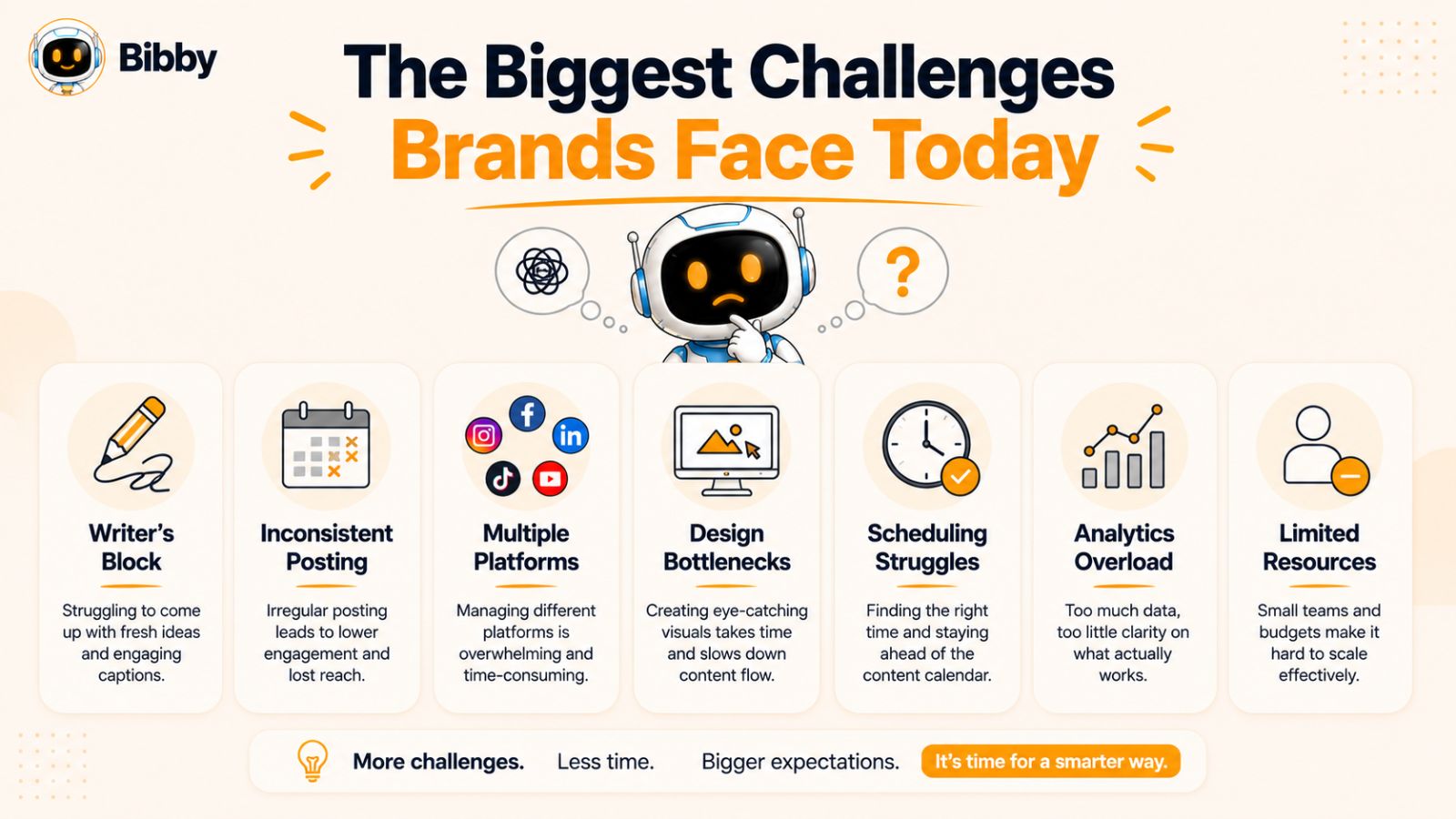
Growing a social media presence has never offered more opportunities—but it has also never been more demanding. Brands are expected to create fresh content daily, engage with their audience in real time, and maintain a consistent presence across multiple platforms. For many businesses, keeping up can feel like a full-time job.
Here are some of the biggest challenges modern brands face:
Creating Content Consistently
Consistency is one of the most important factors in social media growth, yet producing high-quality content every day is difficult. Coming up with new ideas, creating visuals, and writing engaging captions requires significant time and creative energy.
Writer's Block and Content Fatigue
Even experienced marketers run out of ideas. After weeks or months of posting, it becomes harder to create content that feels fresh, valuable, and engaging. This often leads to inconsistent posting or repetitive messaging.
Design Bottlenecks
Not every business has an in-house designer or video editor. Creating professional-looking images, carousels, stories, and videos can slow down publishing schedules and increase production costs.
Managing Multiple Platforms
Every platform has its own audience, preferred content formats, and best practices. Creating and publishing content separately for Facebook, Instagram, LinkedIn, YouTube, and TikTok can quickly become overwhelming, especially for small teams.
Finding the Right Time to Post
Timing plays an important role in content performance, but identifying the best posting times for different audiences and platforms requires ongoing analysis. Manually scheduling every post adds another layer of complexity.
Maintaining a Consistent Brand Voice
As more people contribute to social media content, maintaining a recognizable tone and style becomes increasingly challenging. Inconsistent messaging can weaken brand identity and reduce audience trust.
Measuring What Actually Works
Likes and views only tell part of the story. Brands need to understand which posts drive engagement, website traffic, leads, or sales. Without clear insights, it's difficult to improve future content and maximize return on effort.
Limited Time and Resources
Many businesses operate with lean marketing teams—or even a single person managing social media. Balancing content creation, scheduling, community engagement, and reporting alongside other responsibilities often leaves little room for strategic planning.
Staying Ahead of the Competition
Competitors are also embracing AI, publishing more frequently, and experimenting with new content formats. Brands that rely entirely on manual processes risk falling behind as the pace of social media continues to accelerate.
Why These Challenges Matter
Each of these obstacles affects the same goal: sustainable growth. When content creation becomes inconsistent or time-consuming, opportunities to reach new audiences and build stronger customer relationships are lost.
The good news is that these challenges aren't caused by a lack of creativity—they're often the result of outdated workflows. By combining human expertise with AI-powered tools, brands can automate repetitive tasks, maintain consistency, and spend more time creating content that truly connects with their audience.
Also read: How to Build a Perfect Social Media Posting Schedule →
The New Rules of Social Media Growth With AI
The old playbook for social media success was simple: post regularly, hope for engagement, and repeat. While consistency is still important, AI has fundamentally changed how brands create, optimize, and distribute content. Today, the fastest-growing brands aren't necessarily the ones with the biggest teams—they're the ones using AI strategically.
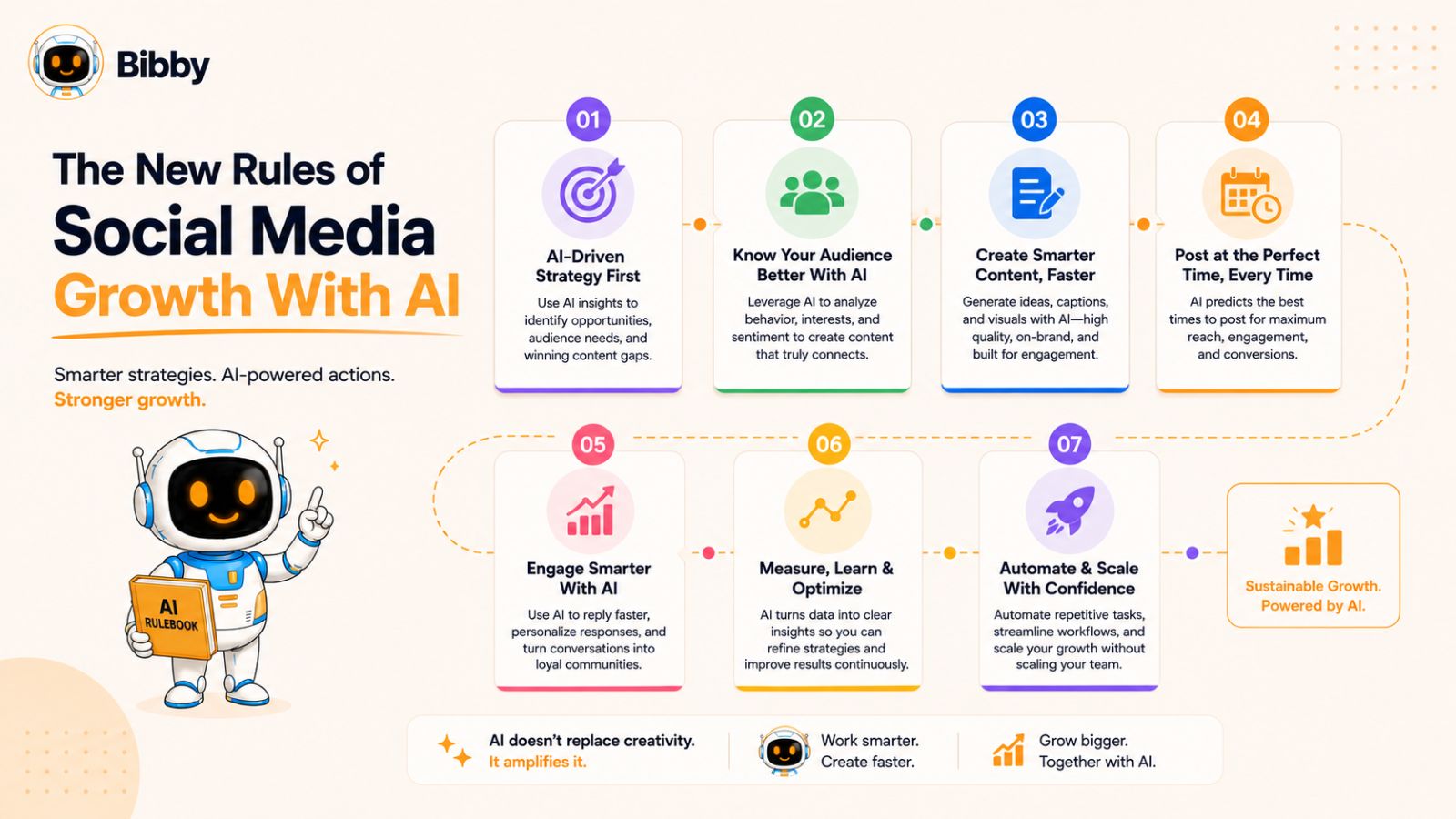
Here are the new rules every brand should follow.
Rule #1: Speed Beats Perfection
Waiting days to publish a single post is no longer practical. Social media moves quickly, and trends can disappear within hours. AI helps brands brainstorm ideas, create visuals, write captions, and prepare content in minutes, allowing teams to respond faster without sacrificing quality.
The goal isn't to publish imperfect content—it's to remove unnecessary delays so your team can stay relevant and consistent.
Rule #2: Consistency Wins More Than Virality
A viral post can create a temporary spike in attention, but long-term growth comes from showing up consistently. Audiences are more likely to trust and engage with brands that provide value on a regular schedule.
AI simplifies consistency by helping teams plan content calendars, generate fresh ideas, and automate publishing, making it easier to maintain momentum even during busy periods.
Rule #3: Use AI to Amplify Creativity, Not Replace It
AI is an incredible assistant, but it shouldn't replace your brand's unique voice. The most successful brands use AI to handle repetitive tasks while people focus on storytelling, strategy, and authentic customer connections.
Think of AI as a creative partner that helps you work faster—not as a substitute for human insight.
Rule #4: Repurpose Your Best Content
Creating every post from scratch is inefficient. A single blog post, webinar, product launch, or customer success story can become dozens of pieces of content, including:
- Instagram carousel
- LinkedIn thought leadership post
- Facebook update
- TikTok video idea
- YouTube Short
- Story series
- Email newsletter snippet
AI can quickly adapt your content for different formats and audiences, helping you get more value from every piece you create.
Rule #5: Optimize Content for Every Platform
Every social platform rewards different types of content. What performs well on LinkedIn may not resonate on TikTok, and an Instagram caption may need a different tone than a Facebook post.
Instead of copying and pasting the same content everywhere, use AI to tailor messaging, visuals, and formats for each platform while maintaining a consistent brand identity.
Rule #6: Let AI Handle Repetitive Tasks
Scheduling posts, generating captions, organizing content, and managing publishing calendars are essential tasks—but they don't require hours of manual effort.
Automating these repetitive processes frees your team to focus on higher-value work such as campaign planning, audience engagement, partnerships, and creative strategy.
Rule #7: Let Data Drive Every Decision
The best-performing brands don't rely on guesswork. They analyze what resonates with their audience and use those insights to improve future content.
AI can help identify patterns in engagement, recommend better posting schedules, and surface opportunities that might otherwise go unnoticed. Over time, these incremental improvements compound into stronger reach, higher engagement, and more predictable growth.
The Future Belongs to Smarter Workflows
AI isn't just another marketing tool—it's reshaping the way successful brands operate. Businesses that embrace AI-powered workflows can create more content, maintain greater consistency, adapt faster to trends, and scale their marketing without proportionally increasing their workload.
The next step is understanding what that workflow looks like in practice. Instead of juggling multiple tools and manual processes, modern brands are building streamlined systems that combine content creation, automation, scheduling, and optimization into a single, efficient workflow.
Also read: How Social Media Scheduling Tools Increase Engagement →
The Modern AI Social Media Workflow
For years, social media management meant switching between multiple tools to complete a single task. You'd brainstorm content ideas in one app, design graphics in another, write captions elsewhere, and finally log in to each social platform to publish your posts. The process worked, but it was slow, repetitive, and difficult to scale.
Today, AI has transformed that workflow. Instead of spending hours on manual tasks, brands can automate much of the content creation and publishing process while maintaining full creative control.
The Traditional Workflow
A typical social media publishing process often looks like this:
- Brainstorm content ideas.
- Create or source images and videos.
- Design graphics or carousels.
- Write captions for each platform.
- Add hashtags and calls to action.
- Schedule posts individually.
- Monitor performance and repeat.
While each step is important, together they consume valuable time that could be spent on strategy, customer engagement, or business growth.
The AI-Powered Workflow
A modern social media workflow simplifies these steps by combining AI assistance with automation:
- Generate content ideas based on your goals.
- Create or upload images and videos.
- Use AI to write platform-specific captions.
- Optimize content for each social network.
- Schedule posts automatically at the best times.
- Analyze performance and refine future campaigns.
This approach helps brands publish more consistently, respond faster to trends, and reduce the amount of manual work required to manage multiple social channels.
Bringing Everything Together With Bibby
One of the biggest challenges with AI is that many businesses still rely on separate tools for image generation, caption writing, scheduling, and campaign management. Switching between platforms creates unnecessary complexity and slows down the entire process.
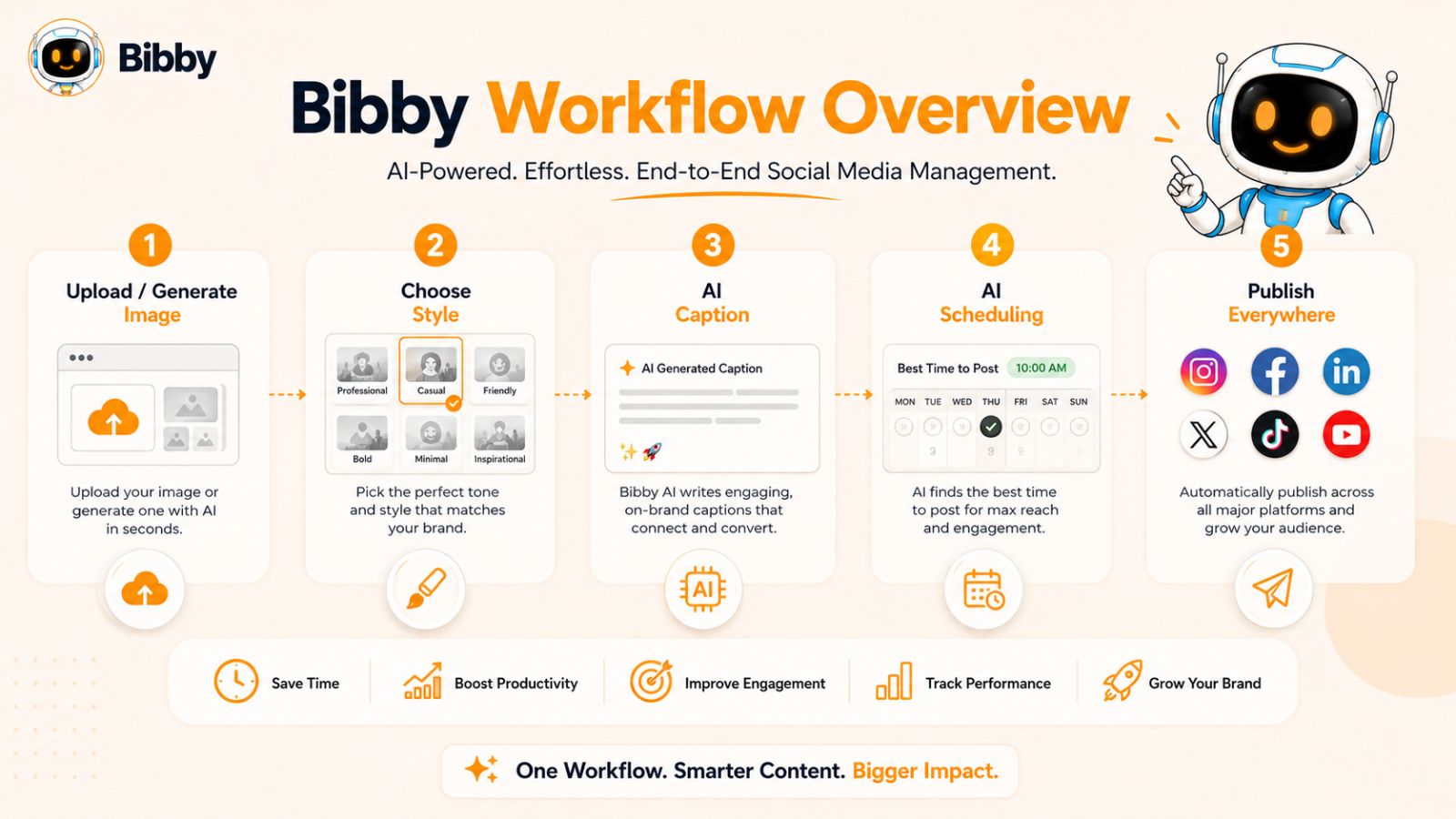
Bibby brings these capabilities together into a single, streamlined workflow. it's one of the best Social Media scheduling tools available in the market.
Step 1: Upload or Generate Images With AI
Every great post starts with strong visuals. With Bibby, you can either upload your own images or generate new ones using AI, making it easy to create content for promotions, announcements, educational posts, or everyday engagement.
Whether you're publishing a single image, a carousel, or a video, your content is ready to move through the workflow without exporting files between multiple applications.
Step 2: Choose Your Posting Style
Every brand has its own personality. Instead of writing prompts from scratch every time, Bibby lets you choose a posting style that aligns with your brand voice.
For example, you might publish content that's:
- Professional
- Educational
- Friendly
- Inspirational
- Promotional
- Story-driven
- Personal
This helps ensure your content remains consistent across every platform while still feeling authentic to your audience.
Step 3: Generate Captions Automatically
Once your media and posting style are selected, Bibby's AI generates captions tailored to your content.
Instead of staring at a blank screen, you receive ready-to-edit captions that can save significant time while maintaining a natural, engaging tone. You can refine the output, regenerate alternatives, or use it as inspiration before publishing.
Step 4: Schedule Everything in One Place
After your content is ready, Bibby handles the publishing process.
You can schedule:
- Images
- Carousels
- Videos
- Stories
Across multiple platforms, including:
- YouTube
- TikTok
Rather than scheduling posts one by one, Bibby organizes your content calendar and publishes your posts at AI-optimized times, helping you maintain a consistent presence without constantly monitoring the clock.
Manage Social Media Through Conversation
One of Bibby's newest capabilities is its conversational AI interface.
Instead of navigating complex menus or learning dozens of features, you can simply chat with Bibby as if you were working with an experienced social media manager.
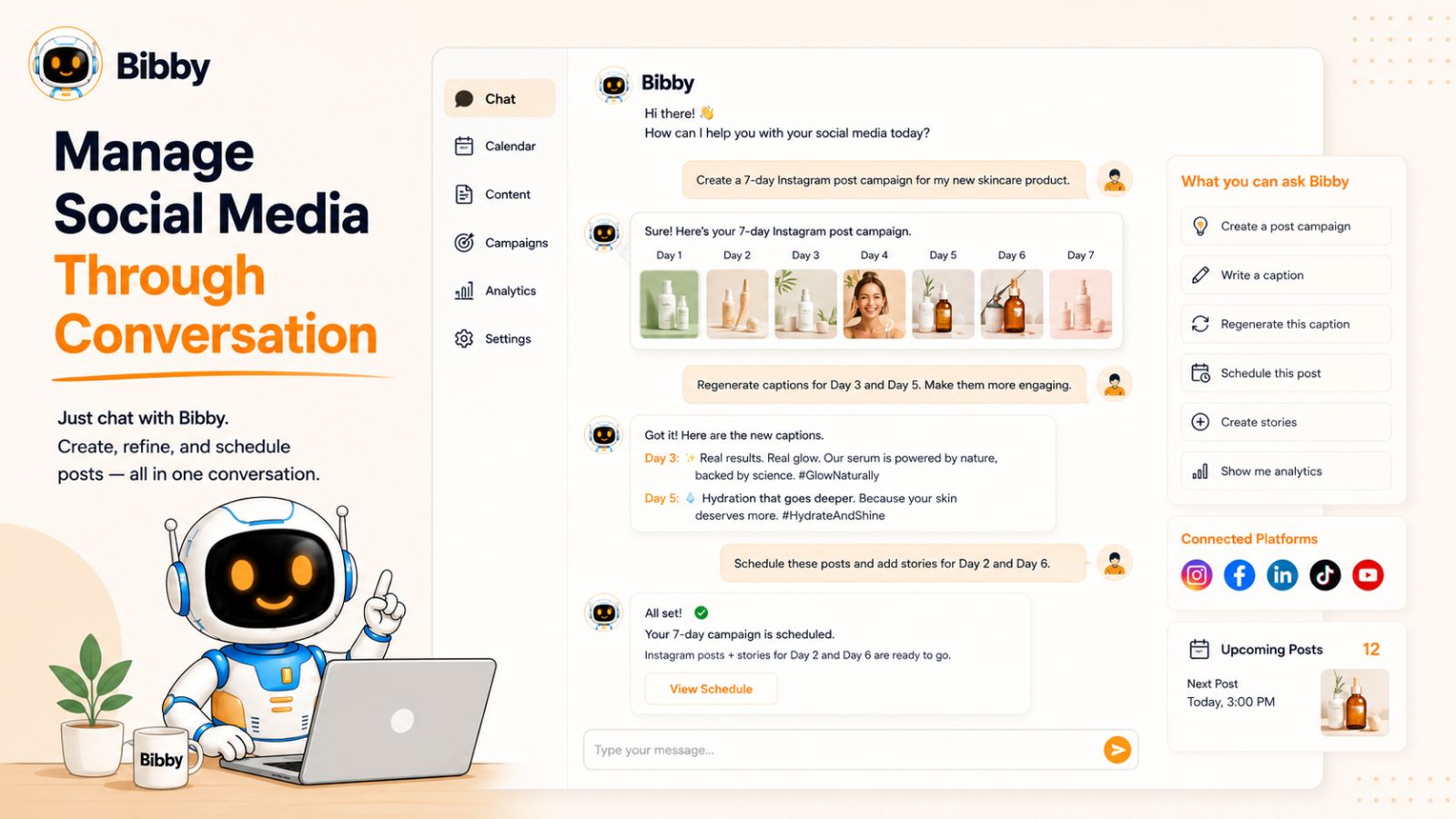
Within the chat interface, you can:
- Create a complete brand kit
- Build marketing campaigns
- Generate new social media posts
- Regenerate captions whenever you want fresh ideas
- Organize and manage your content workflow through natural conversation
This conversational approach makes advanced social media management accessible to businesses of all sizes. Whether you're planning next month's campaign or creating a last-minute post, you can accomplish tasks by describing what you need in plain language.
Why This Workflow Matters
The biggest advantage isn't simply saving time—it's removing friction from the entire content creation process. When ideation, image creation, caption writing, scheduling, and campaign management work together in one platform, teams can spend less time managing tools and more time building relationships with their audience.
As AI continues to evolve, the brands that adopt integrated workflows will be better equipped to publish consistently, respond quickly to new opportunities, and scale their social media efforts without scaling their workload at the same pace.
Also read: The Complete Checklist for Managing Social Media with AI (2026 Guide) →
Benefits of Using AI for Social Media Growth
AI has evolved from being a productivity tool into a competitive advantage. Instead of simply helping marketers work faster, it enables brands to create more impactful content, maintain consistency across channels, and make smarter decisions based on data.
Whether you're a solo creator, a growing startup, or an established enterprise, AI can help you scale your social media efforts without proportionally increasing your workload.
Produce More Content in Less Time
Creating high-quality social media content manually can take hours. From brainstorming ideas to designing visuals and writing captions, every step adds to the workload.
AI streamlines these repetitive tasks, allowing teams to produce more content in significantly less time. This means you can focus on creative strategy, audience engagement, and business growth instead of administrative work.
Stay Consistent Across Every Platform
Consistency is one of the strongest signals for long-term social media growth. However, maintaining a regular posting schedule across multiple platforms is challenging without a structured workflow.
AI helps brands plan, organize, and schedule content in advance, making it easier to publish consistently without scrambling for last-minute ideas.
Improve Content Quality
AI doesn't just create content—it can help improve it. From generating compelling captions to suggesting better headlines and refining messaging, AI acts as a creative assistant that helps elevate the quality of your content.
Combined with human creativity and brand expertise, this results in posts that are more engaging, relevant, and aligned with your marketing goals.
Optimize Posting Times
Publishing great content at the wrong time can limit its reach. AI analyzes patterns and recommends or automatically selects optimal publishing times based on audience behavior and platform activity.
This helps maximize visibility while removing the guesswork from scheduling.
Scale Without Growing Your Team
As your business grows, so do your content needs. AI makes it possible to increase publishing frequency and expand to additional platforms without hiring a larger marketing team or dramatically increasing production costs.
This scalability is especially valuable for startups, agencies, and small businesses looking to compete with larger brands.
Maintain a Consistent Brand Voice
A recognizable brand voice builds trust and strengthens customer relationships. AI can support this by generating content that follows your preferred tone, messaging, and style guidelines.
When paired with a defined brand strategy, every post feels cohesive regardless of who creates or approves it.
Reduce Creative Burnout
Constantly creating new ideas can lead to creative fatigue. AI helps overcome writer's block by generating fresh concepts, alternative captions, and content variations that spark inspiration.
Instead of replacing creativity, AI gives your team a stronger starting point, making the creative process faster and more enjoyable.
Simplify Multi-Platform Publishing
Managing Facebook, Instagram, LinkedIn, YouTube, and TikTok separately often means repeating the same tasks multiple times.
Platforms like Bibby simplify this process by bringing content creation, AI-generated captions, scheduling, and publishing into one streamlined workflow. Rather than switching between multiple applications, you can manage your social media from a single interface and keep your content calendar organized across every supported platform.
Make Better Decisions With Data
Successful social media strategies are built on continuous improvement. AI helps identify trends, highlight top-performing content, and uncover opportunities to optimize future campaigns.
By learning from performance data, brands can make informed decisions instead of relying on assumptions or intuition alone.
AI Helps Teams Focus on What Matters Most
The greatest benefit of AI isn't simply automation—it's enabling marketers to spend more time on high-impact work. When repetitive tasks are handled efficiently, teams can invest their energy in storytelling, community building, campaign strategy, and creating memorable customer experiences.
The brands seeing the strongest results aren't using AI to replace people—they're using it to empower people. By combining human creativity with intelligent automation, businesses can build a social media strategy that's more efficient, more consistent, and better equipped for long-term growth.
Common AI Mistakes Brands Should Avoid
AI can dramatically improve your social media workflow, but it's not a substitute for strategy, creativity, or understanding your audience. The brands achieving the best results use AI as a powerful assistant while keeping humans in control of the final message.
Avoid these common mistakes to get the most from AI-powered social media.
Relying on AI Without a Clear Strategy
AI can generate ideas, captions, and even entire content calendars, but it can't define your business goals. Before creating content, identify what you want to achieve—whether that's increasing brand awareness, driving website traffic, generating leads, or building a loyal community.
A strong strategy gives AI the direction it needs to produce meaningful results.
Publishing AI-Generated Content Without Reviewing It
AI is fast, but it isn't perfect. Captions may need adjustments, facts should be verified, and messaging should always align with your brand voice.
Always review AI-generated content before publishing to ensure it's accurate, relevant, and appropriate for your audience.
Using the Same Content Everywhere
Every social media platform has a different audience and content style. Simply copying and pasting the same post across Facebook, Instagram, LinkedIn, YouTube, and TikTok can reduce engagement.
Instead, adapt your messaging, visuals, and calls to action for each platform while maintaining a consistent brand identity.
Ignoring Your Brand Voice
One of the biggest risks of AI is producing content that sounds generic. If every post feels like it could have come from any company, your brand becomes less memorable.
Define your tone of voice, messaging guidelines, and personality so AI-generated content reflects what makes your brand unique.
Over-Automating Everything
Automation saves time, but not every interaction should be automated. Customers still value genuine conversations, thoughtful responses, and authentic engagement.
Use AI to automate repetitive tasks like content creation and scheduling, while your team focuses on building relationships with your audience.
Forgetting About Analytics
Publishing content is only half the job. Without reviewing performance data, you'll miss opportunities to improve.
Track metrics such as:
- Engagement rate
- Reach and impressions
- Click-through rate
- Website traffic
- Follower growth
- Conversions
Use these insights to refine your content strategy and create more of what resonates with your audience.
Chasing Every Trend
Not every trending topic is relevant to your brand. While AI can help identify emerging trends, you don't need to participate in all of them.
Focus on trends that align with your audience, values, and business objectives rather than trying to capitalize on every viral moment.
Treating AI as a Replacement Instead of a Partner
The most successful brands don't use AI to replace marketers—they use it to make marketers more effective.
AI excels at generating ideas, drafting content, organizing workflows, and automating repetitive tasks. Humans excel at storytelling, emotional intelligence, strategic thinking, and understanding customer needs.
When these strengths work together, the result is content that's both efficient to produce and genuinely valuable to your audience.
The Best Results Come From Balance
AI works best when it's part of a balanced workflow. Let automation handle repetitive tasks, but keep people involved in planning, reviewing, and refining your content.
Platforms like Bibby are most effective when used this way. By simplifying content creation, caption generation, scheduling, campaign management, and day-to-day social media operations through its AI-powered workflow and conversational interface, Bibby reduces manual work while leaving creative direction and strategic decisions where they belong—with your team.
The goal isn't to automate your brand's personality. It's to eliminate repetitive work so you can spend more time creating content that informs, inspires, and connects with your audience.
Also read: Content Repurposing Strategy: Turn Blogs Into Viral Social Posts →
How to Build an AI-Powered Social Media Strategy
AI is most effective when it's part of a well-defined strategy. While automation can accelerate content creation and publishing, long-term growth still depends on understanding your audience, setting clear goals, and continuously improving your approach.
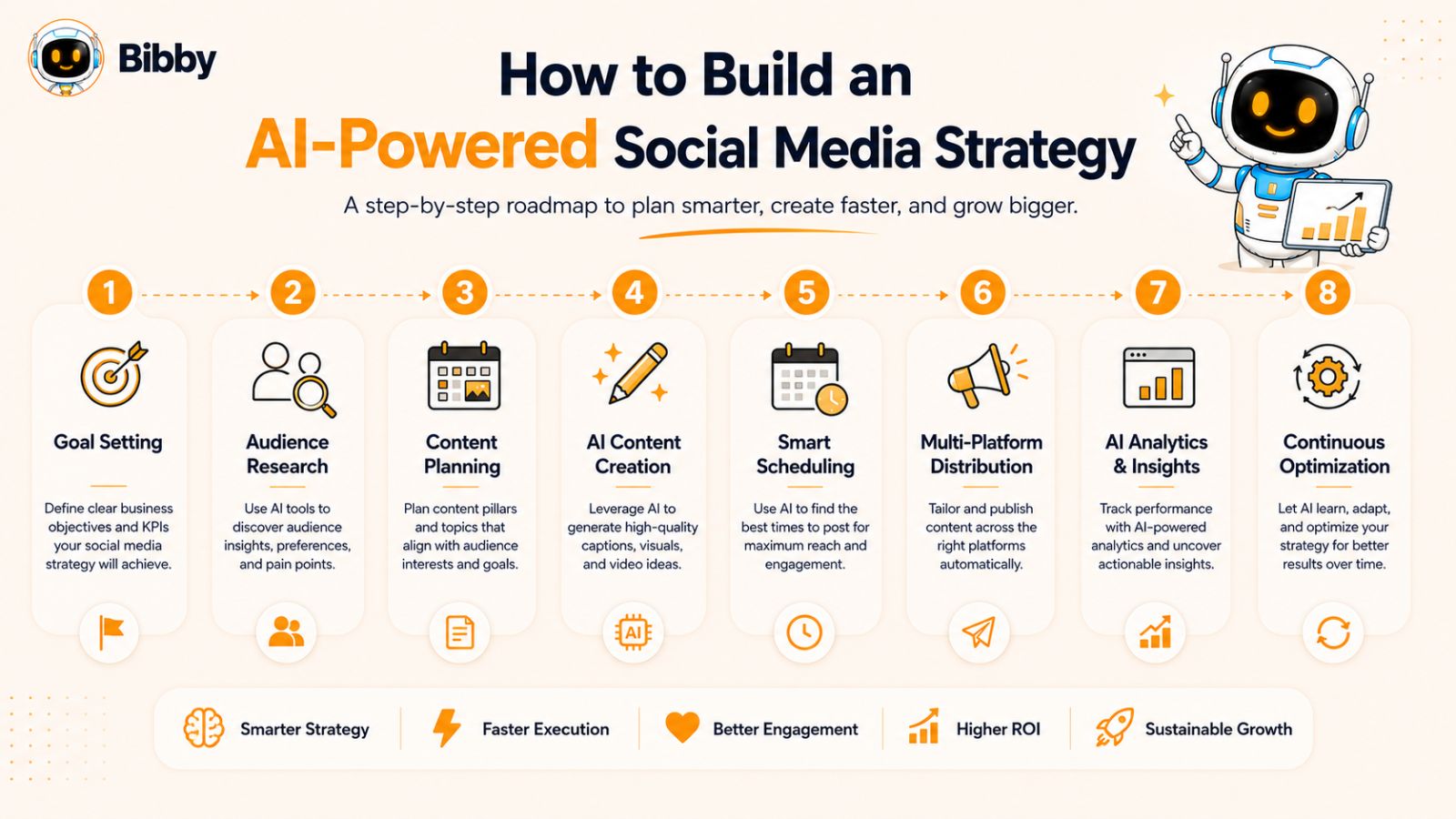
Follow these steps to build a social media strategy that combines the power of AI with human creativity.
Step 1: Define Clear Goals
Before creating content, decide what success looks like for your brand. Your objectives will influence the type of content you create, the platforms you prioritize, and the metrics you track.
Common social media goals include:
- Increase brand awareness
- Grow followers
- Generate leads
- Drive website traffic
- Increase product sales
- Build an engaged community
- Improve customer support
Having clear goals ensures every piece of content serves a purpose.
Step 2: Understand Your Audience
The best-performing content solves problems, answers questions, or entertains a specific audience.
Take time to understand:
- Who your ideal customers are
- Which social platforms they use most
- What content formats they prefer
- What challenges they face
- What motivates them to engage
AI can help identify trends and generate ideas, but your understanding of your audience is what makes content truly relevant.
Step 3: Build a Strong Brand Foundation
Consistency starts with a clear brand identity. Before generating large volumes of content, define your:
- Brand voice
- Messaging
- Visual style
- Brand colors
- Target audience
- Content pillars
With Bibby, you can create a comprehensive Brand Kit directly within the chat interface. Once your brand guidelines are established, Bibby uses them to generate content that aligns with your preferred tone and identity, helping every post feel consistent regardless of the platform.
Step 4: Plan Campaigns Instead of Individual Posts
Rather than thinking one post at a time, organize your content into campaigns.
For example, a product launch campaign might include:
- Teaser posts
- Behind-the-scenes content
- Educational carousels
- Customer testimonials
- Launch announcements
- Video highlights
- Follow-up engagement posts
Bibby's conversational AI allows you to create and organize campaigns simply by describing your goals, making it easier to maintain a structured content calendar.
Step 5: Create Content Faster With AI
Once your strategy is in place, AI can dramatically speed up content production.
With Bibby, a typical workflow might look like this:
- Upload your own image or generate one with AI.
- Select your preferred posting style.
- Let Bibby generate engaging captions.
- Review and refine the content if needed.
- Schedule everything across your chosen platforms.
Instead of switching between multiple applications, the entire process happens within one streamlined workflow.
Step 6: Publish Consistently Across Every Platform
Consistency builds trust and keeps your audience engaged.
Using Bibby, you can schedule:
- Images
- Carousels
- Videos
- Stories
Across platforms including:
- YouTube
- TikTok
AI-optimized scheduling helps ensure your content is published at times when it's most likely to reach your audience, while giving you the flexibility to manage your content calendar in advance.
Step 7: Use the Chat Interface as Your AI Social Media Manager
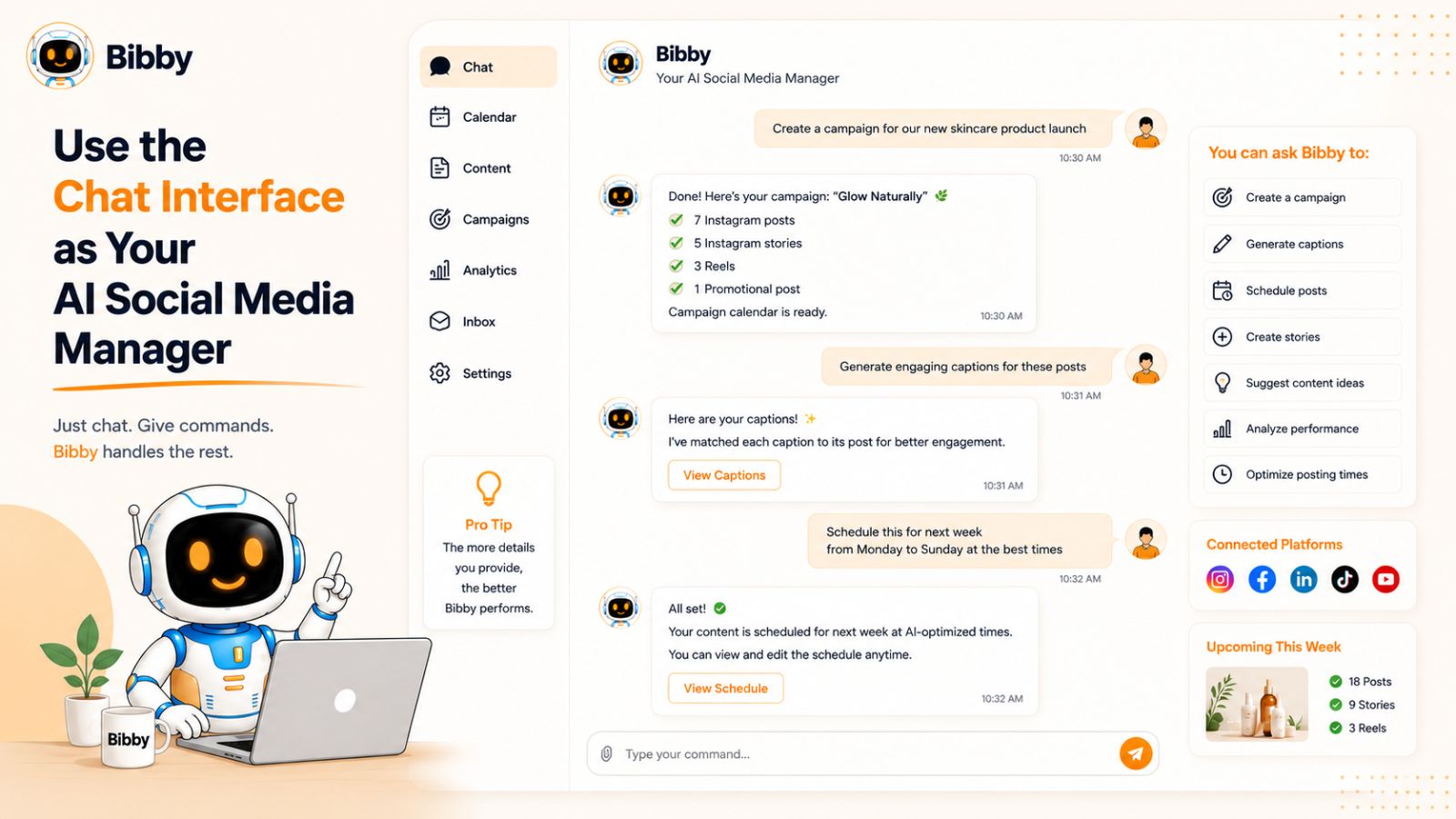
One of the biggest advantages of Bibby is its conversational interface.
Instead of navigating menus, you can simply ask Bibby to:
- Create a brand kit
- Build a campaign
- Generate social media posts
- Regenerate captions
- Plan future content
- Organize your publishing workflow
This natural language approach makes managing social media feel like collaborating with an experienced marketing assistant rather than operating complex software.
Step 8: Measure, Learn, and Improve
Your first strategy won't be your best—and that's completely normal. The strongest social media strategies evolve over time.
Regularly review metrics such as:
- Engagement rate
- Reach
- Shares
- Saves
- Comments
- Click-through rate
- Website traffic
- Lead generation
- Conversions
Use these insights to identify what resonates with your audience, refine future campaigns, and continuously improve your results.
The Winning Formula
Successful brands don't rely on AI alone, and they don't rely on manual processes alone. They combine strategic thinking, authentic storytelling, and intelligent automation to create a workflow that is both efficient and scalable.
With a platform like Bibby, businesses can simplify every stage of the process—from building a brand kit and planning campaigns to generating captions, scheduling content, and managing social media through a conversational AI interface. The result is a more organized workflow, greater consistency, and more time to focus on growing the business instead of managing repetitive tasks.
Frequently Asked Questions
What is AI social media marketing?
AI social media marketing is the use of artificial intelligence to help plan, create, optimize, schedule, and analyze social media content. AI can assist with generating captions, creating images, identifying trends, recommending posting times, and automating repetitive tasks, allowing marketers to focus more on strategy and audience engagement.
How can AI help grow social media?
AI helps brands grow on social media by increasing content production, maintaining a consistent posting schedule, optimizing content for different platforms, and identifying the best times to publish. It also provides insights that help marketers refine their strategy based on audience behavior and content performance.
Will AI replace social media managers?
No. AI is designed to assist social media managers, not replace them. While AI can automate repetitive tasks such as caption writing, scheduling, and content organization, human creativity, strategic thinking, and relationship building remain essential for long-term success.
Can AI write good social media captions?
Yes. Modern AI tools can generate engaging captions based on your content, preferred tone, and marketing goals. Most businesses use AI-generated captions as a starting point, then review and personalize them to ensure they reflect their brand voice and messaging.
What is the best AI tool for social media management?
The best tool depends on your workflow and business needs. If you're looking for an all-in-one platform that combines AI-powered content creation, caption generation, scheduling, campaign management, and conversational automation, Bibby provides a streamlined solution. You can upload or generate images with AI, choose your posting style, automatically generate captions, schedule content across multiple platforms, and manage your social media simply by chatting with the platform.
Can AI schedule posts automatically?
Yes. Many AI-powered social media platforms allow you to schedule posts in advance. Some tools also recommend or automatically choose publishing times based on audience activity, helping improve consistency and maximize reach.
Which social media platforms should businesses focus on?
The right platforms depend on your audience and business goals. For many brands, the strongest results come from maintaining an active presence on Facebook, Instagram, LinkedIn, YouTube, and TikTok while tailoring content to the unique audience and format of each platform.
Is it better to use multiple social media tools or one integrated platform?
Using multiple tools can work, but it often creates extra steps and increases the time required to manage content. An integrated platform can simplify your workflow by bringing content creation, AI assistance, scheduling, campaign planning, and publishing into one place, helping teams stay organized and consistent.
How often should I post on social media?
There isn't a universal posting frequency that works for every brand. Instead of focusing solely on quantity, prioritize consistency and quality. A realistic publishing schedule that you can maintain over time is generally more effective than posting frequently for a short period and then becoming inactive.
What's the biggest mistake brands make when using AI?
The most common mistake is relying on AI without a clear strategy or human review. AI can accelerate your workflow, but your brand's personality, expertise, and understanding of your audience are what make content truly stand out. The best results come from combining intelligent automation with authentic human creativity.
Final Thoughts
Artificial intelligence is no longer a competitive advantage reserved for large enterprises—it's becoming an essential part of modern social media marketing. Brands that combine AI with a clear strategy can create better content, publish more consistently, and manage multiple platforms with far less manual effort.
The biggest takeaways are simple: use AI to eliminate repetitive tasks, maintain a consistent and platform-specific content strategy, and let automation support your creativity rather than replace it. When these principles come together, your team can spend less time managing workflows and more time building meaningful relationships with your audience.
If you're ready to simplify your social media process, an all-in-one platform like Bibby can help. From generating AI images and captions to scheduling posts at AI-optimized times, managing campaigns, building brand kits, and controlling everything through a conversational chat interface, Bibby brings your entire social media workflow into one place.
As AI continues to reshape digital marketing, the brands that embrace intelligent automation today will be better positioned to grow tomorrow. The next step is to build a complete AI-powered content strategy that connects your social media, blog content, email marketing, and customer engagement into one scalable growth engine.