
Social media engagement has become one of the most important indicators of online marketing success.
Whether you're a creator, small business, or growing brand, consistently attracting likes, comments, shares, and clicks can be challenging when managing multiple social platforms. The good news is that social media scheduling tools make it easier to publish content consistently, reach audiences at the right time, and automate repetitive tasks that directly impact engagement.
In this article, you will learn:
- Why consistency plays a major role in engagement growth
- How AI-powered scheduling improves post performance
- How tools like Bibby simplify social media automation
As social media platforms become more competitive, understanding how scheduling and automation influence engagement can help you build a stronger and more effective content strategy.
What Are Social Media Scheduling Tools?
Social media scheduling tools are software platforms that allow individuals, businesses, and marketers to plan, create, schedule, and publish content across multiple social media networks from a single dashboard. Instead of manually logging into each platform and posting content one by one, users can prepare content in advance and automate the publishing process.
These tools were originally designed to solve a simple problem: saving time. However, modern scheduling platforms have evolved into comprehensive social media management solutions that help brands maintain consistency, improve engagement, analyze performance, and scale their content marketing efforts.
At their core, social media scheduling tools automate the process of publishing content at predetermined times. This ensures that posts go live even when marketers are busy, outside working hours, or managing multiple campaigns simultaneously. Consistent publishing is particularly important because social media algorithms tend to reward active accounts that regularly provide fresh content to their audiences.
Today's advanced scheduling platforms go far beyond basic automation. Many now incorporate artificial intelligence to help users create content, generate captions, identify optimal posting times, and improve overall content performance. This shift has transformed scheduling tools from simple productivity software into strategic marketing assets.
Core Features of Modern Scheduling Tools
Most leading social media scheduling platforms include the following capabilities:
Content Planning and Calendars
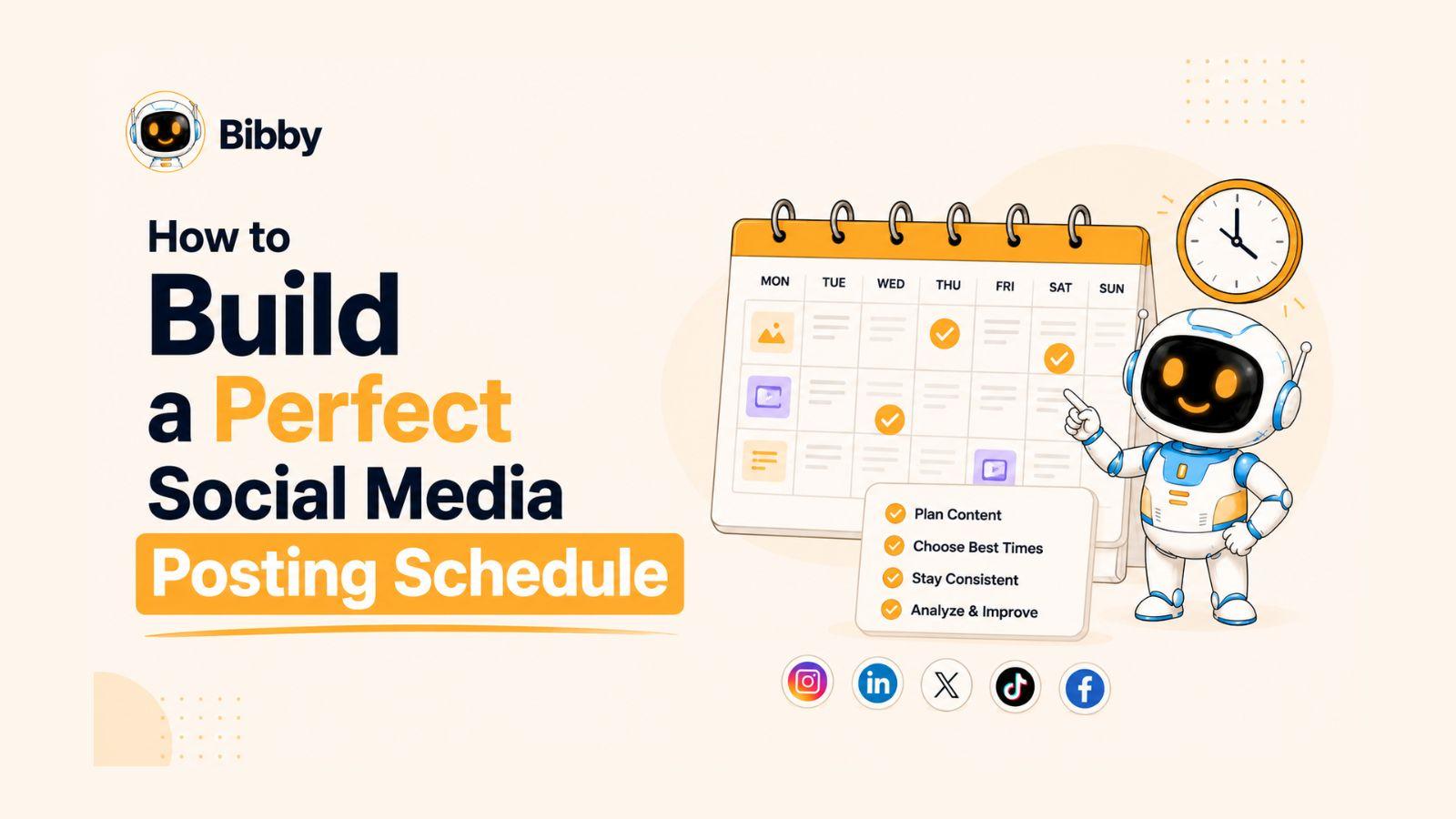
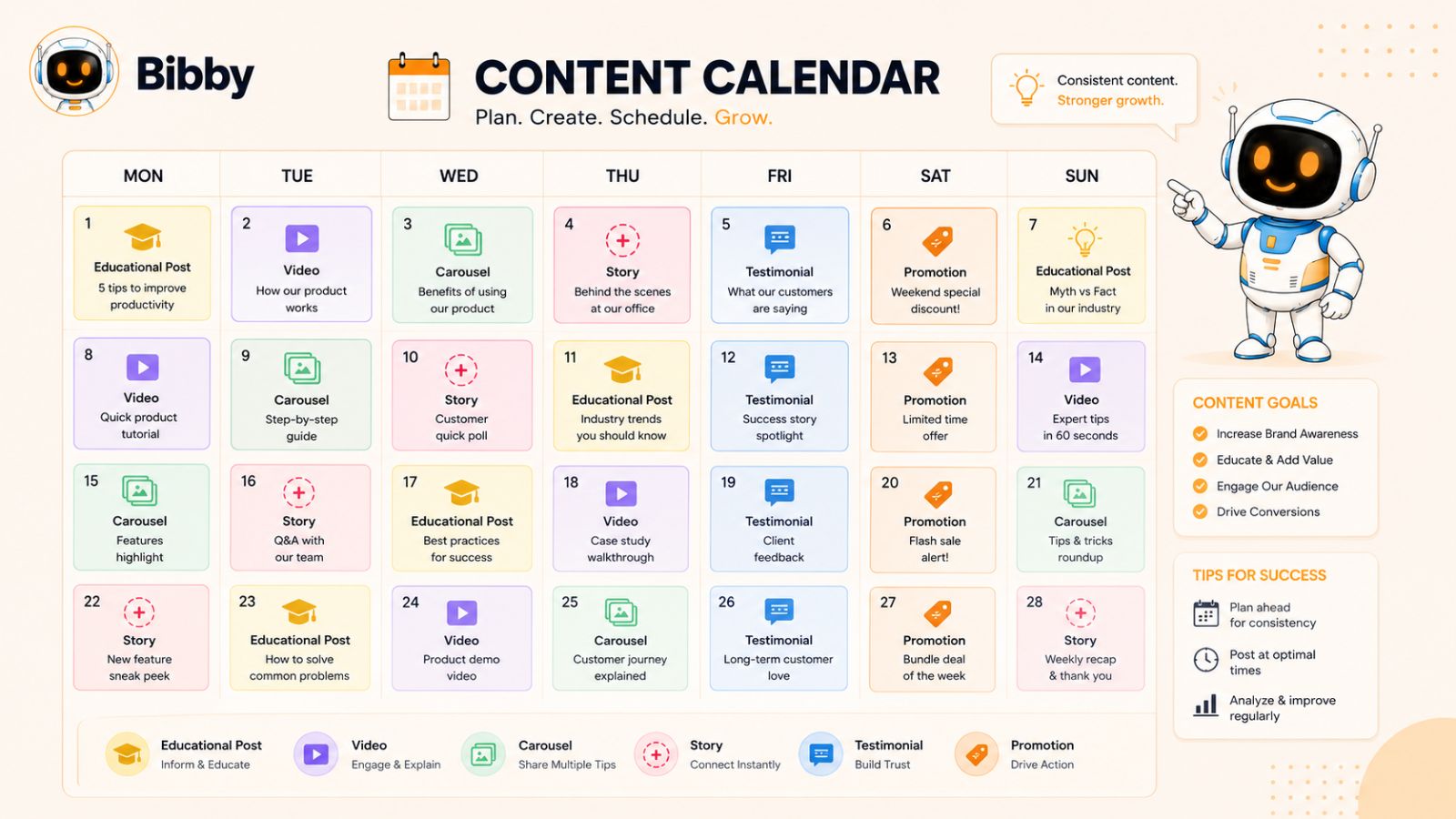
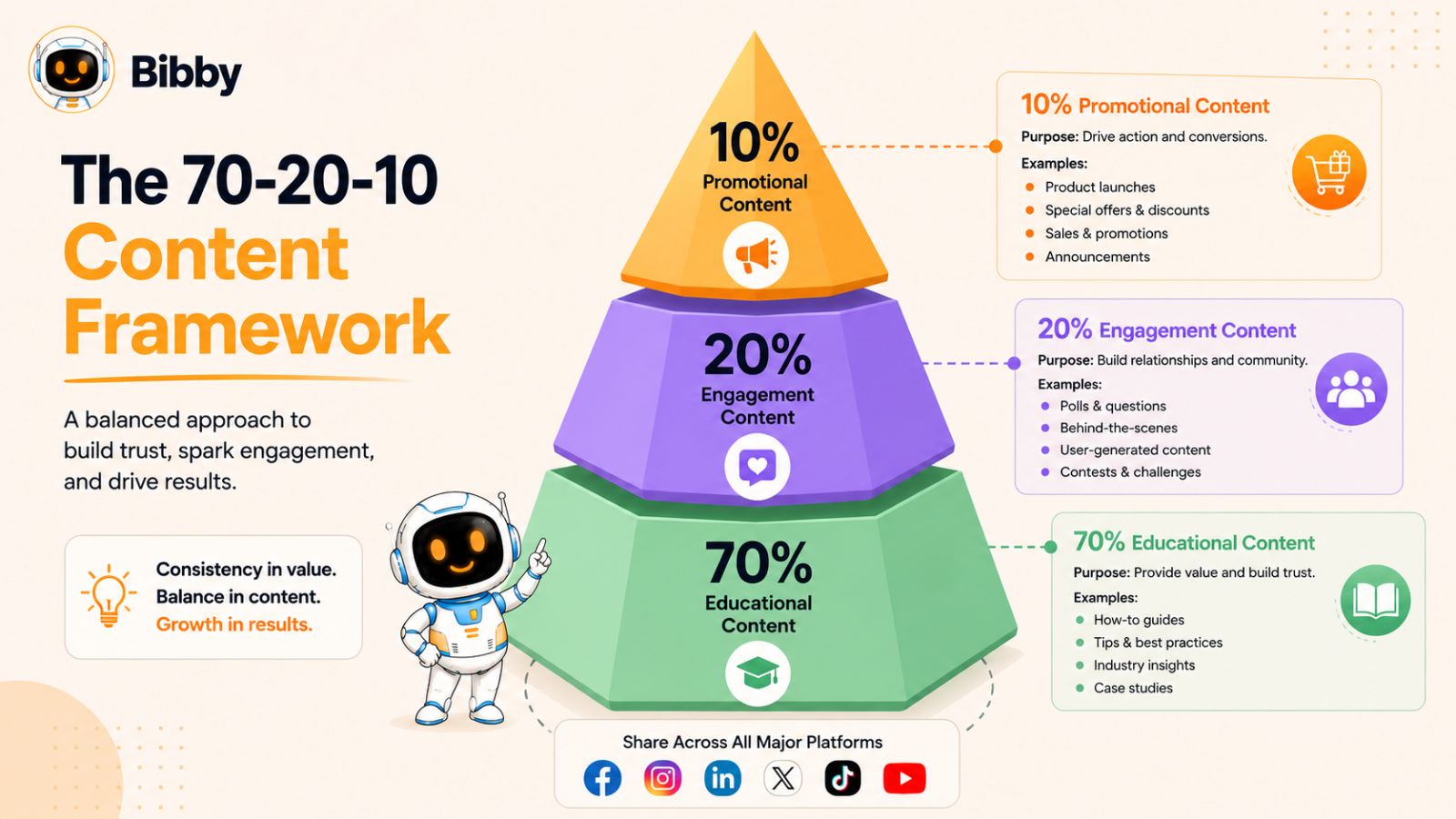
A visual content calendar allows users to organize posts days, weeks, or even months in advance. This helps maintain a consistent posting schedule while ensuring a balanced mix of promotional, educational, and engaging content.
Multi-Platform Publishing
Instead of publishing separately on each network, users can manage content across platforms such as Facebook, Instagram, LinkedIn, TikTok, and YouTube from one centralized workspace.
Automated Scheduling
Posts can be scheduled to publish automatically at specific dates and times, eliminating the need for manual posting and reducing the risk of missed opportunities.
AI-Powered Content Assistance
Many modern tools use artificial intelligence to generate captions, suggest hashtags, recommend content improvements, and optimize publishing schedules based on audience behavior.
Analytics and Performance Tracking
Built-in reporting features help users understand which content performs best, enabling more informed decisions and continuous improvement.
Team Collaboration
Businesses and agencies can streamline approval workflows, assign responsibilities, and manage multiple accounts without confusion or duplicated effort.
The Evolution Toward AI-Powered Scheduling
The latest generation of scheduling tools focuses heavily on automation and artificial intelligence. Rather than simply scheduling posts, these platforms actively help improve engagement by determining when content should be published and how it should be presented.
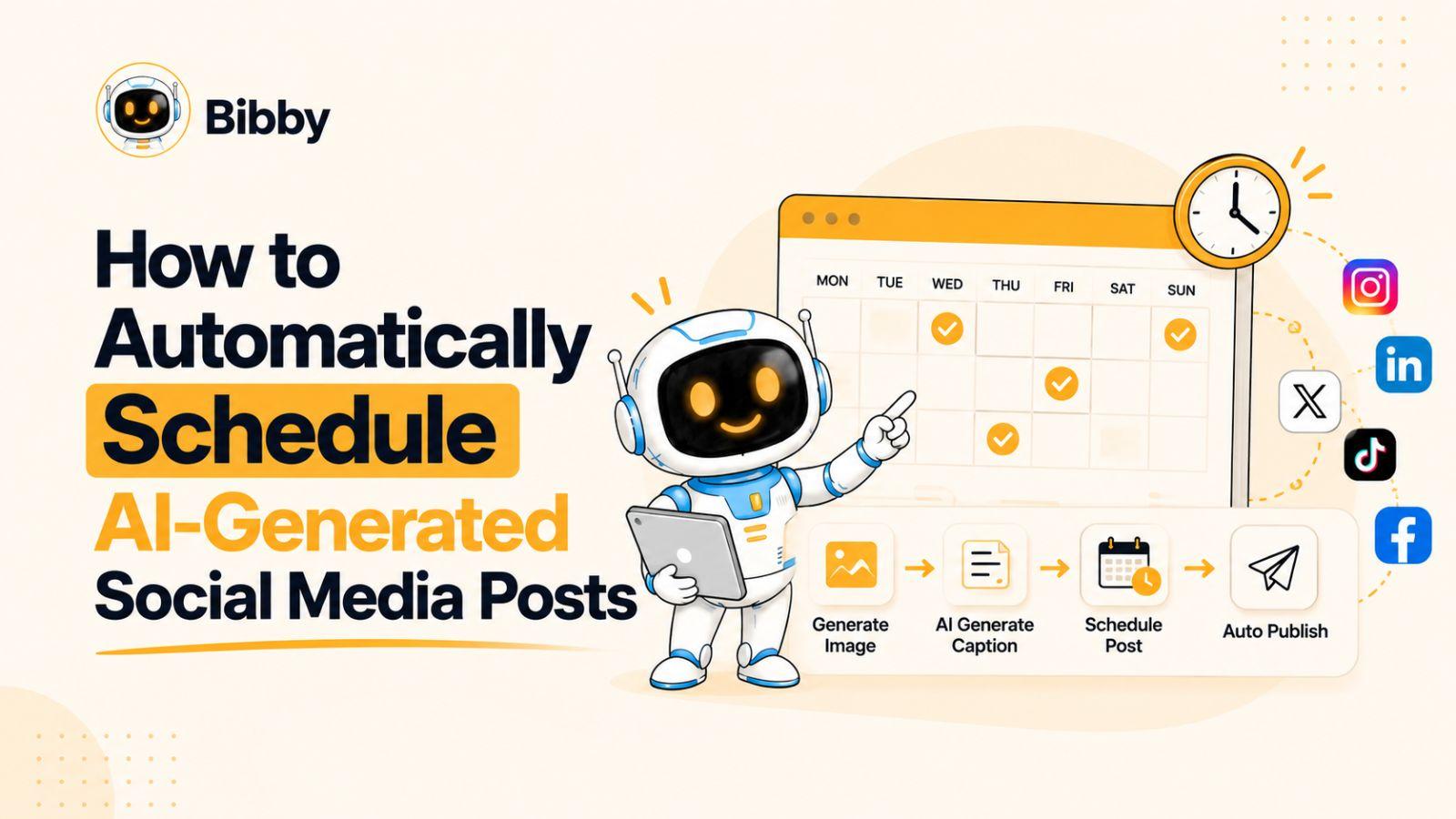
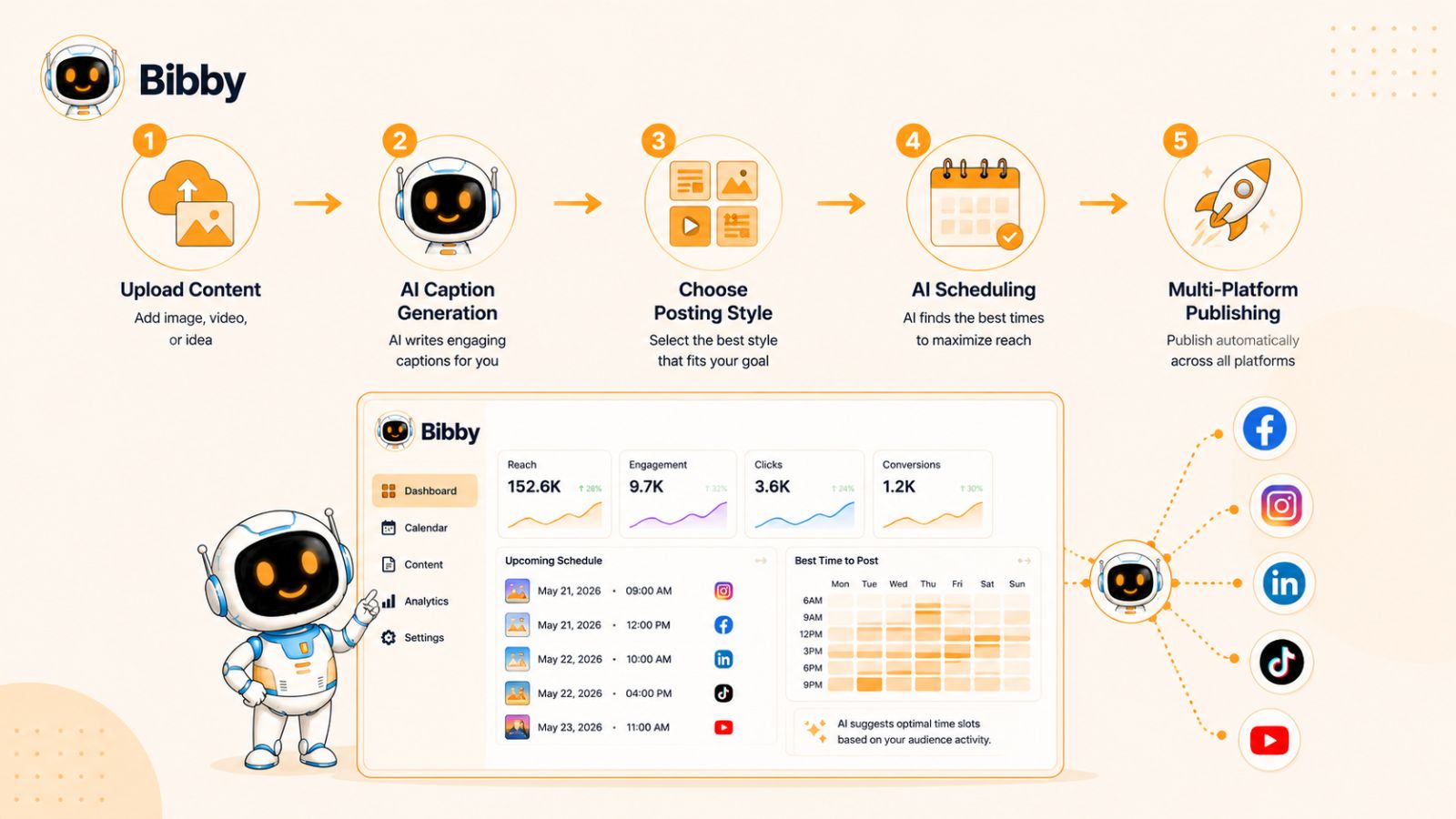
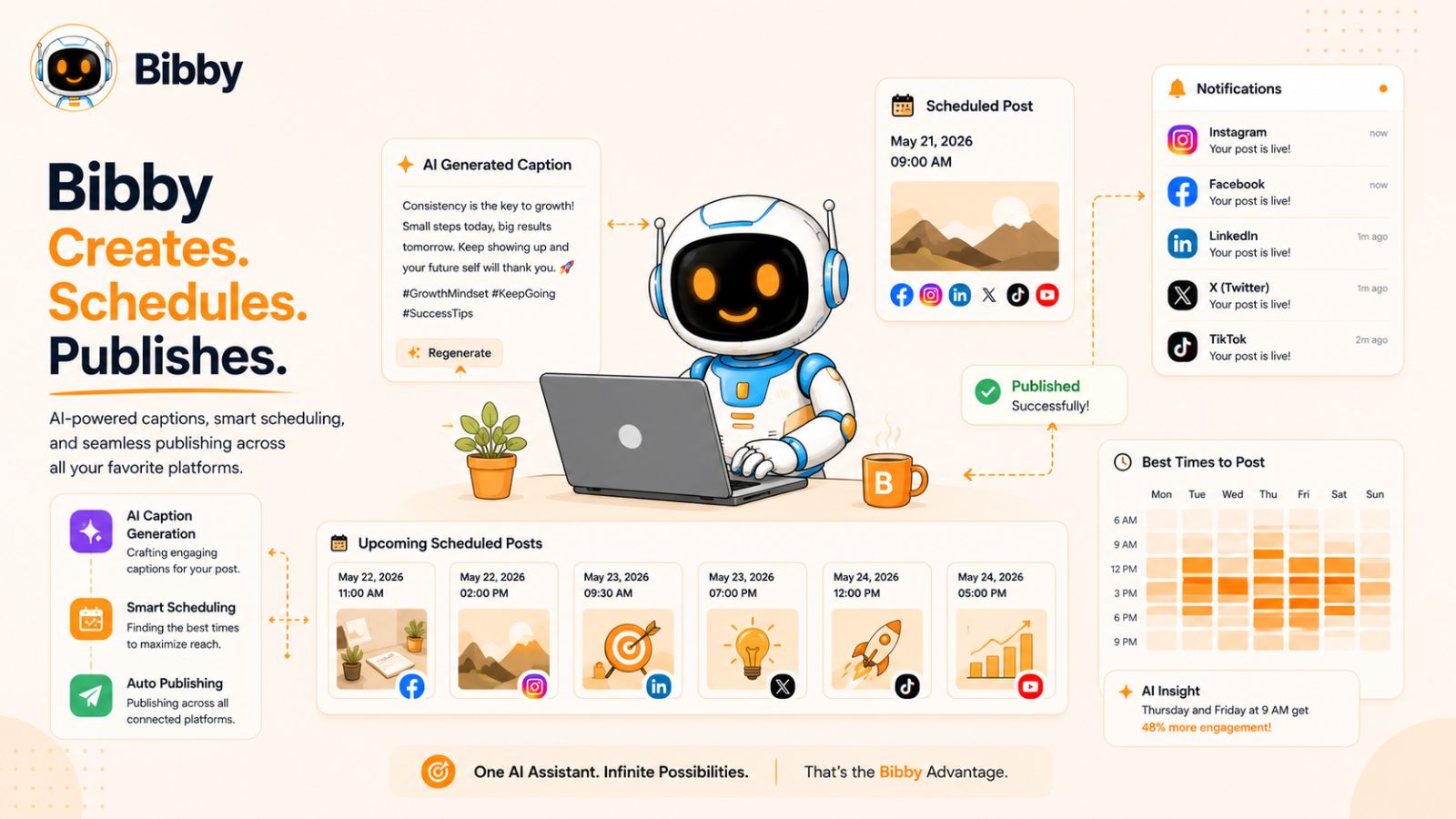
A great example is Bibby, which simplifies the entire social media workflow. Users can upload an image or generate one with AI, select their preferred posting style, and let Bibby automatically generate captions and schedule content across multiple platforms. The platform supports images, carousels, videos, and stories while publishing them at AI-optimized times on networks like Facebook, Instagram, LinkedIn, TikTok, and YouTube. This allows creators and businesses to spend less time managing content and more time focusing on growth, customer relationships, and strategy.
As social media becomes increasingly competitive, scheduling tools are no longer just convenient—they have become essential for maintaining visibility, consistency, and engagement across multiple channels.
Also read: AI Social Media Assistant: Everything You Need to Know
Why Social Media Engagement Matters
Many businesses focus heavily on growing their follower count, but followers alone do not guarantee success on social media. What truly determines the effectiveness of your social media strategy is engagement—the way your audience interacts with your content. High engagement signals that your content resonates with users, encourages conversations, and motivates people to take action.
Social media platforms are designed to keep users active and engaged. As a result, algorithms often prioritize content that generates meaningful interactions. The more engagement your posts receive, the more likely they are to be shown to a larger audience, creating a cycle of increased visibility and growth.
Understanding Social Media Engagement
Engagement refers to any action users take in response to your content. While the specific metrics vary by platform, common engagement signals include:
Likes and Reactions
Likes and reactions are often the first indicators that users find your content valuable, entertaining, or relevant. While they require minimal effort from users, they still contribute to overall content performance.
Comments
Comments represent deeper engagement because they require users to actively participate in a conversation. Posts that generate discussions often receive additional visibility from social media algorithms.
Shares and Reposts
When users share your content with their own audiences, they effectively become advocates for your brand. Shares can significantly expand your reach beyond your existing followers.
Saves and Bookmarks
Saves indicate that users find your content valuable enough to revisit later. Many platforms consider saves a strong engagement signal because they reflect genuine user interest.
Click-Through Rates
Whether directing users to a website, landing page, product page, or blog post, clicks demonstrate that your content successfully encourages action.
Video Views and Watch Time
For video content, engagement extends beyond views. Metrics such as watch time, completion rates, and repeat views provide insight into how effectively your content captures attention.
Story Interactions
Replies, polls, stickers, link clicks, and other story-based actions help measure audience engagement with temporary content formats.
How Engagement Impacts Social Media Growth
Engagement is more than a vanity metric. It directly influences several factors that contribute to long-term success.
Improved Algorithm Visibility
Most social media platforms use engagement signals to determine which content deserves wider distribution. Posts that receive strong engagement shortly after publication are often shown to more users, increasing organic reach without additional advertising spend.
Stronger Audience Relationships
Engagement creates two-way communication between brands and their audiences. Responding to comments, participating in discussions, and encouraging interaction helps build trust and loyalty over time.
Increased Brand Awareness
As engagement grows, content reaches more people through shares, recommendations, and algorithmic promotion. This expanded visibility helps introduce your brand to potential new followers and customers.
Better Lead Generation Opportunities
Engaged audiences are more likely to click links, subscribe to newsletters, download resources, or inquire about products and services. Higher engagement often translates into more qualified leads.
Higher Conversion Potential
People who regularly interact with your content develop greater familiarity and trust with your brand. This trust can significantly improve conversion rates when they are ready to make a purchase decision.
Why Consistency Is Essential for Engagement
One of the biggest challenges businesses face is maintaining a consistent presence across multiple platforms. Sporadic posting can reduce visibility, weaken audience relationships, and negatively impact engagement metrics.
This is where social media scheduling tools become particularly valuable. By ensuring content is published consistently and at optimal times, businesses can maintain audience engagement without needing to be online constantly. Tools like Bibby further enhance this process by automating content creation, caption generation, and AI-optimized scheduling, making it easier to stay active across Facebook, Instagram, LinkedIn, TikTok, and YouTube.
Ultimately, engagement is the bridge between content creation and business results. The more effectively you engage your audience, the greater your opportunities for growth, visibility, and revenue.
How Social Media Scheduling Tools Increase Engagement
Creating great content is only half the battle on social media. Even the most valuable posts can fail to generate engagement if they are published inconsistently, posted at the wrong time, or buried beneath the daily demands of managing multiple platforms. Social media scheduling tools solve these challenges by helping brands maintain consistency, optimize timing, and streamline content management.
Here are the most important ways social media scheduling tools directly increase engagement.
1. They Ensure Consistent Posting
Consistency is one of the strongest predictors of social media success. Audiences expect regular content from the brands and creators they follow, and social media algorithms tend to favor active accounts that consistently publish fresh content.
Unfortunately, maintaining a consistent posting schedule can be difficult when managing multiple responsibilities. Missed days can quickly lead to reduced visibility and declining engagement.
Scheduling tools eliminate this problem by allowing users to plan and schedule content in advance. Instead of worrying about posting every day manually, businesses can build a content calendar and automate publishing for weeks or months ahead.
Benefits of consistent posting include:
- Improved algorithm performance
- Increased audience trust
- Better brand recognition
- Higher long-term engagement rates
- More predictable content performance
When followers know they can expect valuable content regularly, they are more likely to continue engaging with future posts.
2. They Publish Content at the Best Times
Timing plays a major role in engagement. Even excellent content may underperform if it is published when the target audience is offline.
Every platform has unique audience activity patterns. For example, LinkedIn users may be more active during business hours, while Instagram and TikTok audiences often engage more during evenings and weekends.
Determining the best posting times manually requires significant analysis and ongoing monitoring. Scheduling tools simplify this process by identifying high-engagement time windows and automating publication accordingly.
Advanced AI-powered platforms take this a step further by continuously analyzing performance data and adjusting posting schedules based on audience behavior.
The result is:
- More immediate engagement after publishing
- Greater organic reach
- Improved visibility in feeds
- Better overall content performance
Publishing at the right time helps maximize the value of every piece of content you create.
3. They Help Maintain a Steady Content Pipeline
Many businesses experience engagement fluctuations because they create content reactively instead of strategically.
One week may include several posts, while the next week contains none. This inconsistency often confuses audiences and weakens content momentum.
Scheduling tools encourage proactive planning by allowing users to organize content weeks or months in advance. A structured content calendar ensures that valuable content continues reaching audiences even during busy periods.
This approach creates:
- More consistent audience interaction
- Stronger content momentum
- Better campaign execution
- Reduced stress for marketing teams
The ability to plan ahead helps brands stay visible without constantly scrambling to create and publish content.
4. They Free Up Time to Create Better Content
Manually publishing content across multiple social networks consumes valuable time that could be spent on strategy, creativity, and audience engagement.
Instead of logging into multiple platforms every day, scheduling tools automate repetitive tasks and centralize content management.
This allows marketers to focus on:
- Creating higher-quality content
- Developing stronger campaigns
- Engaging with followers
- Improving storytelling
- Analyzing performance data
Better content naturally generates more engagement. By reducing administrative workload, scheduling tools indirectly contribute to stronger social media performance.
5. They Simplify Multi-Platform Publishing
Today's audiences are spread across multiple platforms. A brand may need to maintain a presence on Facebook, Instagram, LinkedIn, TikTok, and YouTube simultaneously.
Managing each platform individually is time-consuming and often results in inconsistent publishing schedules.
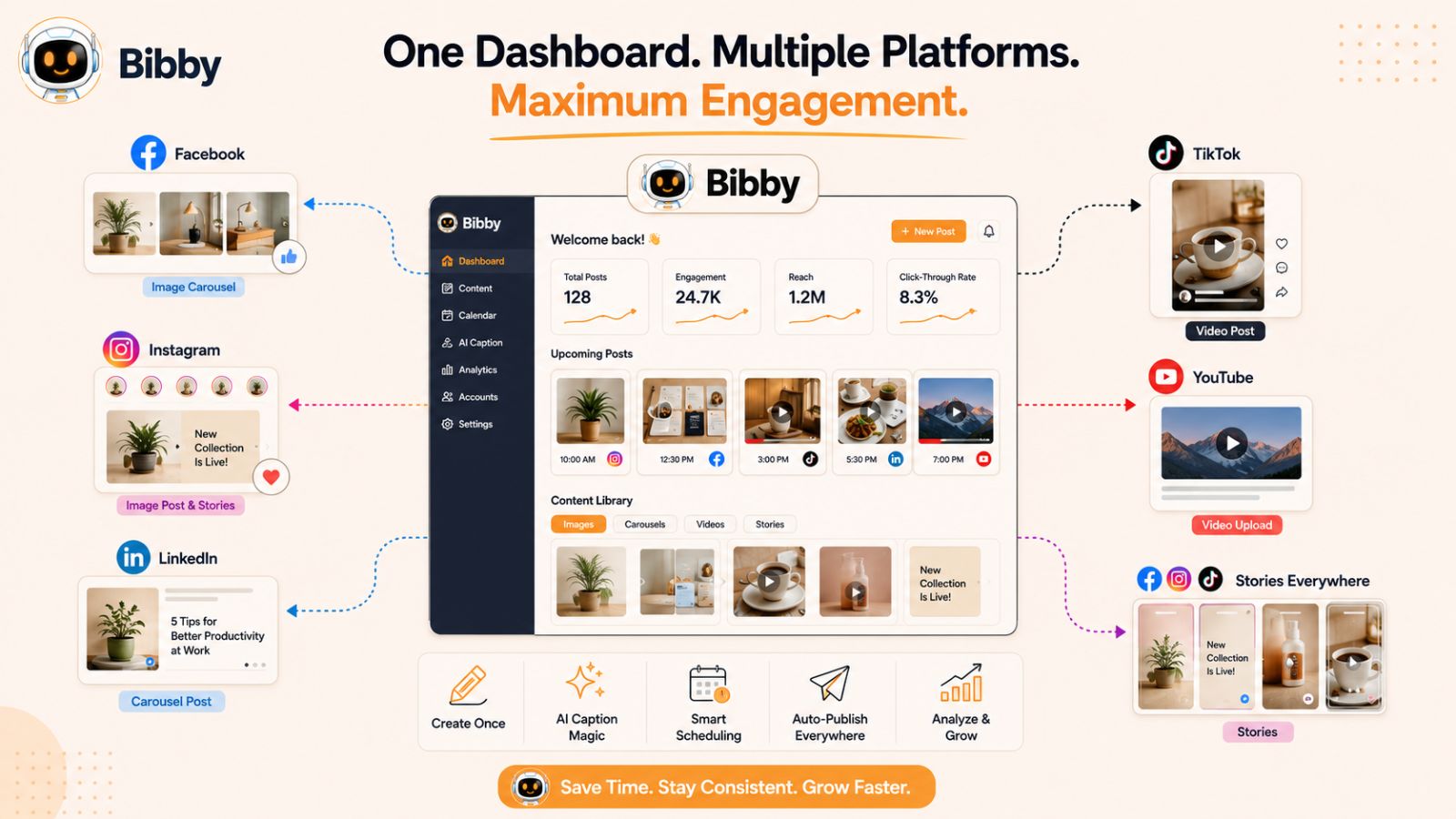
Scheduling tools provide a centralized solution that allows users to manage all major networks from a single dashboard.
This offers several engagement benefits:
- Greater content reach
- Consistent brand messaging
- Improved audience touchpoints
- More efficient content distribution
The more consistently your audience encounters your content across platforms, the more opportunities you create for engagement.
6. They Support Data-Driven Optimization
Successful social media marketing requires continuous improvement. Scheduling tools provide analytics that help users understand what content performs best.
These insights often reveal:
- Top-performing content formats
- Best posting times
- Most engaging topics
- Platform-specific trends
- Audience preferences
By using this data to refine future content strategies, businesses can steadily improve engagement rates over time.
Rather than relying on assumptions, marketers can make decisions based on real performance metrics.
7. They Leverage AI to Improve Results
Artificial intelligence is transforming social media management by making scheduling smarter and more effective.
Modern scheduling tools can use AI to:
- Recommend optimal posting times
- Generate captions
- Suggest content ideas
- Improve content consistency
- Identify performance patterns
AI removes much of the guesswork involved in social media marketing while helping users scale their content efforts more efficiently.
Also read: 21 AI-Powered Social Media Tools Changing Social Media Management
How Bibby Takes Social Media Engagement to the Next Level
While many scheduling tools focus only on publishing content, Bibby simplifies the entire social media workflow from creation to distribution.
The process is intentionally simple:
- Upload an image or generate one with AI.
- Choose your preferred posting style.
- Let Bibby automatically generate captions.
- Allow the platform to schedule your content.
- Publish across all selected social networks.
Bibby supports a wide range of content formats, including:
- Images
- Carousels
- Videos
- Stories
Once your content is ready, Bibby automatically schedules posts at AI-optimized times designed to maximize visibility and engagement. Content can then be distributed across Facebook, Instagram, LinkedIn, TikTok, and YouTube without requiring manual publishing.
This streamlined workflow helps businesses, creators, and marketing teams save hours every week while maintaining a consistent and engaging social media presence.
The Bottom Line
Social media scheduling tools increase engagement by solving some of the biggest challenges marketers face: inconsistent posting, poor timing, limited resources, and inefficient workflows. By automating publishing, optimizing schedules, and supporting better content planning, these tools help brands maintain visibility and build stronger relationships with their audiences.
As AI continues to evolve, platforms like Bibby are making it easier than ever to create, schedule, and distribute engaging content across multiple channels with minimal effort.
The Role of AI in Social Media Scheduling
Artificial intelligence is rapidly changing how businesses approach social media marketing. What once required hours of manual research, content creation, scheduling, and optimization can now be streamlined through AI-powered tools that automate many of the most time-consuming tasks.
For marketers, creators, and business owners, AI offers a significant advantage: the ability to scale content production and improve engagement without increasing workload. As social media platforms become more competitive and algorithms become more sophisticated, AI-driven scheduling tools are helping brands stay visible and relevant.
Why Traditional Scheduling Is No Longer Enough
Basic scheduling tools allow users to choose a date and time for a post to go live. While this saves time, it still requires users to make important decisions manually.
Questions such as:
- What should the caption say?
- When is the best time to publish?
- Which content format will perform best?
- How often should content be posted?
- What type of content is most likely to generate engagement?
Traditionally, marketers relied on experience, testing, and analytics to answer these questions. AI dramatically accelerates this process by analyzing large amounts of data and providing recommendations automatically.
How AI Improves Social Media Engagement
Modern AI-powered scheduling tools help increase engagement in several ways.
AI Identifies Optimal Posting Times
One of the most valuable applications of AI is determining when audiences are most likely to engage with content.
Instead of relying on generic industry benchmarks, AI analyzes audience behavior patterns and historical performance data to identify ideal publishing windows.
Benefits include:
- Higher visibility immediately after publishing
- Increased engagement rates
- Better organic reach
- Improved content performance
The more engagement a post receives shortly after publication, the more likely social media algorithms are to distribute it to additional users.
AI Generates Captions Faster
Writing engaging captions consistently can be challenging, especially when managing multiple social media accounts.
AI-powered caption generation helps users:
- Save time
- Maintain posting consistency
- Overcome creative blocks
- Produce platform-specific content
Rather than starting from scratch each time, marketers can use AI-generated drafts as a foundation and customize them as needed.
AI Helps Maintain Content Consistency
Many businesses struggle to maintain a consistent voice and posting schedule.
AI can help standardize content creation by generating captions and recommendations that align with predefined brand styles. This consistency strengthens brand identity and improves audience recognition over time.
AI Supports Smarter Content Planning
By analyzing previous engagement data, AI can identify trends that may not be immediately obvious.
Examples include:
- Topics that consistently perform well
- Content formats with higher engagement rates
- Seasonal trends
- Audience preferences
- Platform-specific opportunities
These insights help marketers make better decisions and allocate resources more effectively.
AI-Powered Scheduling vs Manual Scheduling
To understand the value of AI, it helps to compare it with traditional scheduling methods.
| Manual Scheduling | AI-Powered Scheduling |
|---|---|
| Requires manual posting decisions | Automatically recommends optimal times |
| Captions written from scratch | AI-assisted caption generation |
| Limited scalability | Easily manages large content volumes |
| Relies heavily on human analysis | Uses data-driven insights |
| Time-intensive workflow | Highly automated workflow |
While human creativity remains essential, AI significantly reduces repetitive work and allows marketers to focus on strategy, storytelling, and community building.
How Bibby Uses AI to Simplify Social Media Management
Bibby is an example of how AI can streamline the entire social media workflow rather than solving just one part of the process.
Instead of requiring users to handle content creation, caption writing, scheduling, and publishing separately, Bibby combines these tasks into a simple workflow.
With Bibby, users can:
- Upload an image or generate one using AI.
- Select a preferred posting style.
- Generate captions automatically with AI.
- Schedule content at AI-optimized posting times.
- Publish across multiple social media platforms from one place.
The platform supports various content types, including:
- Images
- Carousels
- Videos
- Stories
It also allows users to distribute content across Facebook, Instagram, LinkedIn, TikTok, and YouTube without needing separate workflows for each platform.
This approach reduces manual effort while helping businesses maintain consistent publishing schedules that support higher engagement levels.
The Future of AI in Social Media Scheduling
AI capabilities are expected to become even more advanced in the coming years. Future scheduling tools may provide:
- Predictive engagement forecasting
- Automated content personalization
- Advanced audience segmentation
- Real-time content optimization
- Cross-platform performance recommendations
As these technologies mature, businesses will be able to create more effective social media strategies with fewer resources and less manual effort.
Key Takeaway
AI is no longer a luxury feature in social media scheduling tools—it is becoming a necessity. By helping users create content faster, identify optimal posting times, maintain consistency, and make data-driven decisions, AI enables brands to improve engagement while reducing workload.
For businesses looking to simplify social media management and maximize engagement opportunities, AI-powered platforms like Bibby represent the next evolution of content scheduling and automation.
Introducing Bibby: An AI-Powered Social Media Scheduling Solution
While many social media scheduling platforms help users plan and publish content, they often require multiple tools and manual steps to complete the entire workflow. Content creation may happen in one platform, caption writing in another, and scheduling in a third.
Bibby was built to eliminate this complexity by combining content creation, AI-powered caption generation, scheduling, and multi-platform publishing into a single streamlined workflow.
Instead of spending hours creating posts, writing captions, selecting posting times, and publishing across different platforms, users can manage everything from one place and let AI handle much of the heavy lifting.
What Is Bibby?
Bibby is an AI-powered social media scheduling and automation platform designed to help creators, businesses, agencies, and marketers publish content more efficiently.
The platform simplifies social media management by combining:
- AI-powered content creation
- Automated caption generation
- Smart scheduling
- Multi-platform publishing
- Content workflow automation
The goal is simple: reduce the amount of time spent managing social media while increasing consistency and engagement.
The Bibby Workflow: From Content Creation to Publishing
One of Bibby's biggest advantages is its straightforward workflow.
Step 1: Upload or Generate Content
Everything starts with content.
Users can upload existing media such as:
- Images
- Product photos
- Marketing graphics
- Promotional videos
- Brand assets
For users who need fresh content, Bibby also supports AI-generated images, making it easier to create visual content without relying on external design tools.
This flexibility helps businesses maintain a steady stream of content without constantly creating assets from scratch.
Step 2: Choose Your Posting Style
Different brands communicate differently.
A corporate LinkedIn page may require a professional tone, while a lifestyle brand on Instagram may prefer a casual and engaging style.
Bibby allows users to select their preferred posting style so content aligns with their brand voice and audience expectations.
This helps maintain consistency across all platforms while reducing the effort required to craft individual posts.
Step 3: Generate Captions Automatically
Writing captions for multiple social media posts can quickly become one of the most time-consuming aspects of content management.
Bibby's AI automatically generates captions based on the content and selected posting style.
Benefits include:
- Faster content production
- Consistent messaging
- Reduced creative fatigue
- Improved workflow efficiency
Instead of staring at a blank screen, users can generate captions in seconds and make adjustments if needed.
Step 4: Schedule Content at AI-Optimized Times
Choosing when to publish is just as important as deciding what to publish.
Bibby uses AI to schedule content at engagement-focused times, helping users reach audiences when they are most active.
This removes the need to:
- Research posting times manually
- Monitor multiple time zones
- Constantly test scheduling strategies
By optimizing publication timing automatically, Bibby helps maximize the visibility of every post.
Step 5: Publish Across Multiple Platforms
Managing several social media accounts often creates unnecessary complexity.
Bibby allows users to publish content across major social media platforms from a single dashboard, including:
- TikTok
- YouTube
Rather than uploading content separately on each platform, users can manage their entire social media presence through one centralized workflow.
Support for Multiple Content Formats
Modern social media strategies require more than static images.
Different platforms and audiences respond to different content formats, which is why Bibby supports a wide variety of media types.
These include:
Images
Perfect for announcements, promotions, quotes, and branded content.
Carousels
Ideal for educational content, tutorials, storytelling, and step-by-step guides.
Videos
A powerful format for increasing reach, engagement, and audience retention.
Stories
Useful for timely updates, behind-the-scenes content, polls, promotions, and audience interaction.
Supporting multiple formats allows users to build more diverse content strategies while managing everything from a single platform.
How Bibby Helps Increase Engagement
The features above contribute directly to stronger engagement outcomes.
Bibby helps users:
- Publish consistently
- Reach audiences at optimal times
- Scale content production
- Maintain brand consistency
- Reduce manual work
- Increase content output
- Stay active across multiple platforms
These factors collectively improve visibility, audience interaction, and long-term social media growth.
Who Can Benefit From Bibby?
Bibby is designed for a wide range of users, including:
Small Businesses
Maintain an active social presence without hiring a large marketing team.
Content Creators
Automate repetitive publishing tasks and focus more on content creation.
Marketing Agencies
Manage multiple clients efficiently from a centralized workflow.
E-commerce Brands
Promote products consistently across multiple social platforms.
Personal Brands
Build authority and engagement without spending hours managing daily posts.
Why Simplicity Matters
One of the biggest reasons businesses abandon social media strategies is complexity. The more steps involved in creating and publishing content, the harder it becomes to maintain consistency.
Bibby's simple workflow removes many of the common obstacles that prevent businesses from posting regularly. By combining AI-powered content creation, caption generation, smart scheduling, and multi-platform publishing in one platform, it helps users stay active and engaged with significantly less effort.
For businesses looking to increase engagement while reducing the time spent on social media management, Bibby offers a practical and scalable solution that aligns with the growing demand for automation and AI-powered marketing.
Common Challenges Solved by Scheduling Tools
Most businesses understand the importance of social media, but maintaining a consistent and effective presence is often easier said than done. Between content creation, community management, customer support, and daily business operations, social media can quickly become overwhelming.
This is one of the primary reasons social media scheduling tools have become essential for modern marketing teams. By automating repetitive tasks and streamlining workflows, these tools help solve many of the challenges that limit engagement and growth.
Challenge #1: Lack of Time
Time is one of the most common obstacles to successful social media management.
Many business owners and marketers find themselves:
- Posting content at the last minute
- Skipping publishing days
- Rushing content creation
- Neglecting social media during busy periods
When social media becomes a reactive task instead of a planned strategy, engagement often suffers.
How Scheduling Tools Help
Scheduling tools allow users to batch-create content and schedule posts in advance. Instead of spending time every day on publishing tasks, marketers can dedicate a few hours each week or month to planning content.
This approach:
- Reduces daily workload
- Improves consistency
- Creates more time for strategy
- Allows teams to focus on audience engagement
The result is a more sustainable social media process that supports long-term growth.
Challenge #2: Inconsistent Posting
Consistency is one of the most important factors influencing engagement, yet it is also one of the hardest to maintain.
Many brands experience cycles like:
- Posting frequently for several days
- Becoming busy with other priorities
- Disappearing for weeks
- Returning with inconsistent activity
This pattern makes it difficult to build momentum and audience trust.
How Scheduling Tools Help
Scheduling tools automate publishing and ensure content continues to be posted according to a predetermined schedule.
Benefits include:
- Regular audience touchpoints
- Improved algorithm visibility
- Greater brand recognition
- More predictable engagement patterns
Consistency becomes easier to maintain because the system continues working even when the team is focused elsewhere.
Challenge #3: Managing Multiple Platforms
Today's audiences rarely exist on a single social network.
Businesses often need to maintain a presence on:
- TikTok
- YouTube
Managing each platform separately can be extremely time-consuming and increases the likelihood of errors or missed opportunities.
How Scheduling Tools Help
A centralized dashboard allows users to manage multiple platforms from one location.
Instead of:
- Logging into different accounts
- Uploading content repeatedly
- Managing separate publishing schedules
Users can create and distribute content across multiple channels simultaneously.
This improves efficiency while ensuring consistent messaging across all platforms.
Challenge #4: Finding the Best Posting Times
Many marketers struggle with a simple but important question:
"When should I post?"
Audience behavior varies significantly depending on:
- Platform
- Industry
- Location
- Time zone
- Content format
What works for one account may not work for another.
How Scheduling Tools Help
Advanced scheduling tools analyze engagement data and help identify high-performing posting times.
AI-powered platforms go even further by automatically selecting optimal publishing windows based on audience activity and performance trends.
This can lead to:
- Greater reach
- Higher engagement rates
- Better content visibility
- Improved campaign performance
Instead of relying on guesswork, users can make scheduling decisions based on data.
Challenge #5: Content Creation Bottlenecks
Creating enough content to maintain an active social media presence is often difficult.
Teams frequently encounter challenges such as:
- Running out of content ideas
- Writer's block
- Limited design resources
- Difficulty maintaining a consistent brand voice
These bottlenecks can delay publishing and reduce content output.
How Scheduling Tools Help
Many modern scheduling platforms incorporate AI-powered content assistance features that support:
- Caption generation
- Content ideation
- Content repurposing
- Workflow automation
This helps users produce content more efficiently while maintaining consistency and quality.
Challenge #6: Scaling Social Media Efforts
As businesses grow, their social media requirements often become more complex.
Growth may require:
- More platforms
- More content
- More campaigns
- Larger audiences
- Additional team members
Managing increased workload manually becomes increasingly difficult.
How Scheduling Tools Help
Automation allows businesses to scale without dramatically increasing time investment.
Scheduling tools provide:
- Repeatable workflows
- Team collaboration features
- Automated publishing
- Centralized management
These capabilities make it easier to grow social media operations while maintaining performance standards.
How Bibby Solves These Challenges
Bibby was designed specifically to remove many of the obstacles that make social media management difficult.
Instead of requiring users to piece together multiple tools and workflows, Bibby combines content creation, caption generation, scheduling, and publishing into a single process.
Users can:
- Upload media or generate images with AI.
- Select a preferred posting style.
- Generate captions automatically.
- Schedule content at AI-optimized times.
- Publish across Facebook, Instagram, LinkedIn, TikTok, and YouTube.
This workflow helps solve several common problems simultaneously:
- Lack of time
- Inconsistent posting
- Multi-platform complexity
- Caption creation challenges
- Scheduling uncertainty
- Scaling difficulties
By reducing manual work and simplifying content management, Bibby enables businesses to focus on creating value for their audiences rather than managing repetitive publishing tasks.
Key Takeaway
The biggest barriers to social media success are often operational rather than strategic. Businesses usually know they should post consistently, engage with their audiences, and publish at optimal times—but executing these activities manually can be challenging.
Social media scheduling tools address these obstacles by automating repetitive tasks, improving efficiency, and helping businesses maintain a stronger online presence. As a result, they create the conditions necessary for higher engagement, better visibility, and sustainable social media growth.
Best Practices for Maximizing Engagement with Scheduling Tools
Simply using a social media scheduling tool does not automatically guarantee higher engagement. While automation can significantly improve efficiency and consistency, the most successful social media strategies combine smart scheduling with valuable content and audience-focused communication.
To get the best results from your scheduling platform, follow these proven best practices.
Create a Consistent Posting Schedule
Consistency remains one of the most important factors in social media success.
When audiences regularly see your content, they become more familiar with your brand and are more likely to engage with future posts. Consistent publishing also sends positive signals to social media algorithms, helping improve content visibility.
Instead of posting randomly, establish a structured publishing schedule based on your goals and audience behavior.
Consider:
- Posting frequency for each platform
- Content themes for different days
- Seasonal campaigns
- Product launches and promotions
- Educational and engagement-focused content
Scheduling tools make it easier to maintain consistency because content can be planned and automated well in advance.
Focus on Quality Over Quantity
Publishing more content does not always lead to better results.
Many brands fall into the trap of prioritizing volume over value. Audiences are far more likely to engage with content that is relevant, useful, entertaining, or inspiring.
Before scheduling content, ask:
- Does this provide value?
- Is it relevant to my audience?
- Does it encourage interaction?
- Does it support my brand goals?
High-quality content consistently outperforms large quantities of low-value posts.
Use a Mix of Content Formats
Different audiences engage with different types of content.
Relying on a single format can limit engagement opportunities and reduce audience interest over time.
A balanced content strategy may include:
Images
Great for announcements, quotes, promotions, and quick updates.
Carousels
Ideal for tutorials, educational content, step-by-step guides, and storytelling.
Videos
One of the most engaging content formats across most social platforms.
Stories
Excellent for behind-the-scenes content, polls, product updates, and audience interaction.
Using multiple content formats helps keep your content fresh while appealing to different audience preferences.
Also read: Social Media Automation for B2B Companies
Take Advantage of AI-Powered Scheduling
One of the biggest advantages of modern scheduling platforms is their ability to optimize publishing times automatically.
Instead of relying on generic recommendations, AI-powered tools analyze audience activity and engagement trends to identify when content is most likely to perform well.
Benefits include:
- Increased reach
- Faster engagement after publishing
- Improved visibility in feeds
- Better overall content performance
Allowing AI to assist with scheduling can often produce better results than manually selecting publishing times.
Customize Content for Each Platform
Although scheduling tools simplify multi-platform publishing, every social network has unique audience expectations.
For example:
- LinkedIn audiences often prefer professional and educational content.
- Instagram audiences frequently engage with visual storytelling.
- TikTok users typically favor short-form, entertaining videos.
- Facebook audiences respond well to community-focused content.
- YouTube viewers often seek in-depth educational or entertainment content.
Whenever possible, tailor content to fit the platform while maintaining consistent brand messaging.
Review Analytics Regularly
Data is one of the most valuable assets available to marketers.
Engagement metrics provide important insights into:
- What content performs best
- Which topics resonate with audiences
- The most effective posting times
- High-performing content formats
- Audience behavior trends
Reviewing analytics regularly helps identify opportunities for improvement and allows businesses to make smarter content decisions over time.
Continue Engaging After Content Is Published
Scheduling tools automate publishing, but they should not replace human interaction.
Once content is live, continue to:
- Respond to comments
- Answer questions
- Participate in discussions
- Acknowledge audience feedback
- Build relationships with followers
The combination of automation and genuine engagement often produces the strongest results.
Repurpose High-Performing Content
Creating entirely new content every day is not always necessary.
Many successful brands regularly repurpose their best-performing content into new formats.
Examples include:
- Turning blog posts into carousel posts
- Converting videos into short clips
- Transforming customer testimonials into graphics
- Breaking long-form content into multiple social posts
Repurposing extends the lifespan of valuable content while reducing content creation demands.
Build a Long-Term Content Strategy
The most successful social media accounts focus on long-term consistency rather than short-term spikes.
A strong strategy typically includes:
- Content pillars
- Publishing schedules
- Audience engagement goals
- Growth objectives
- Performance measurement processes
Scheduling tools support this approach by making it easier to execute content plans consistently over time.
How Bibby Helps Implement These Best Practices
Bibby is designed to make engagement-focused social media management simple and scalable.
The platform helps users apply many of the best practices discussed above by providing:
- AI-generated captions
- AI-generated images
- Automated scheduling
- Multi-platform publishing
- Support for images, videos, carousels, and stories
- AI-optimized posting times
With Bibby, users can upload or generate content, choose a posting style, allow AI to create captions, and schedule content across Facebook, Instagram, LinkedIn, TikTok, and YouTube from a single workflow.
This reduces the operational burden of social media management while helping maintain the consistency and timing needed to improve engagement.
Key Takeaway
Scheduling tools are most effective when paired with a thoughtful content strategy. By publishing consistently, leveraging AI-powered insights, diversifying content formats, analyzing performance, and actively engaging with audiences, businesses can significantly increase their engagement rates.
Platforms like Bibby simplify these best practices by combining content creation, scheduling, and automation into one streamlined solution, making it easier to achieve better results with less effort.
Social Media Scheduling Trends for the Future
Social media scheduling has evolved from a simple convenience tool into a critical component of modern marketing strategy. As artificial intelligence, automation, and platform algorithms continue to advance, scheduling tools are becoming smarter, faster, and more capable of driving meaningful engagement.
Businesses that embrace these innovations will be better positioned to maintain visibility, improve efficiency, and build stronger relationships with their audiences.
Here are some of the most important trends shaping the future of social media scheduling.
AI-Powered Content Creation Will Become Standard
Creating enough high-quality content remains one of the biggest challenges for marketers.
In the coming years, AI will play an even larger role in content production by helping users:
- Generate captions
- Create social media posts
- Produce images
- Suggest content ideas
- Repurpose existing content
Rather than replacing human creativity, AI will function as a productivity partner that accelerates content workflows and reduces repetitive tasks.
Businesses that leverage AI effectively will be able to publish more consistently while maintaining content quality.
Predictive Scheduling Will Improve Performance
Today's scheduling tools already use data to identify optimal posting times. Future systems are expected to become even more sophisticated.
Predictive scheduling may soon:
- Forecast engagement levels before publishing
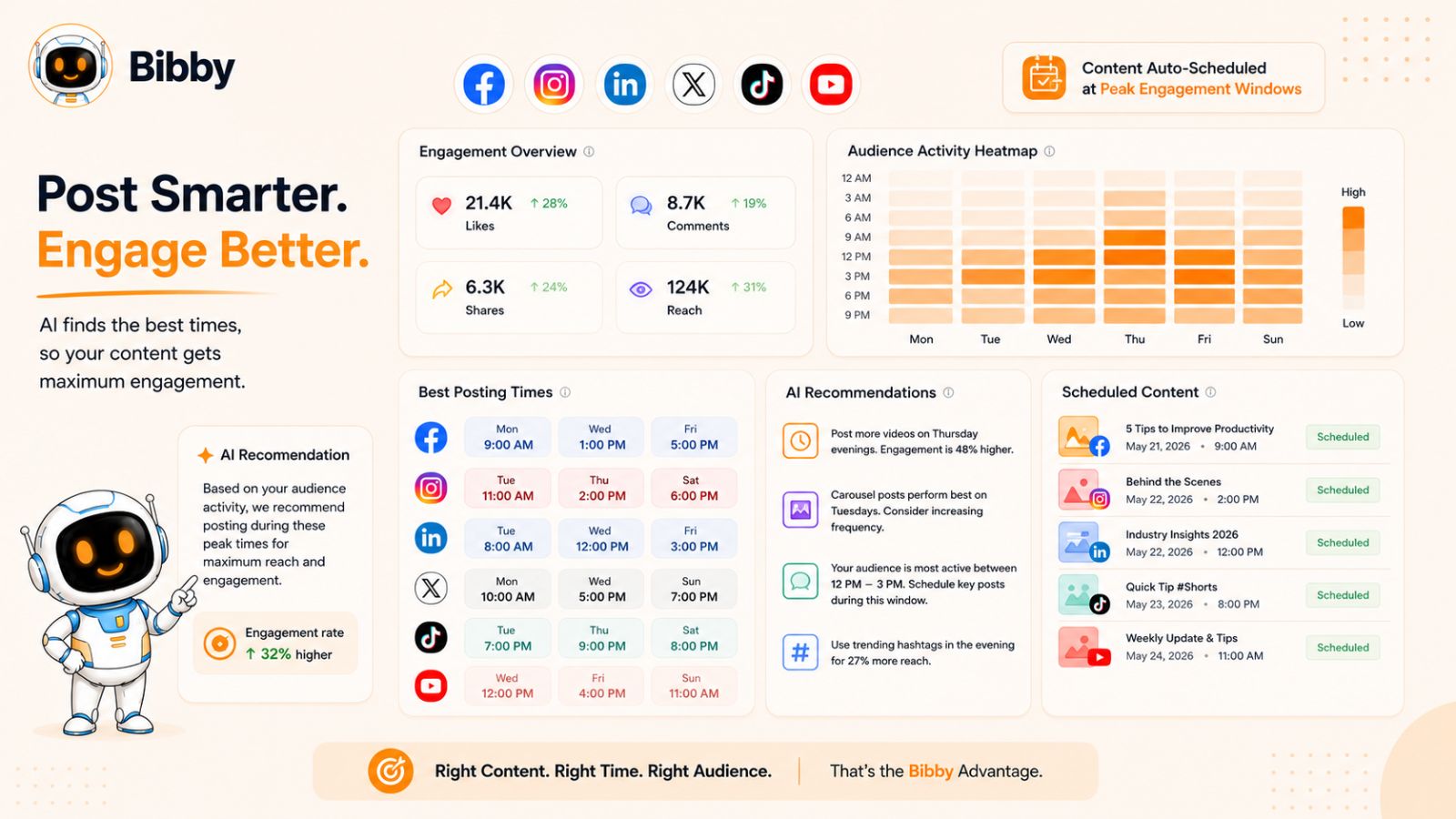
- Recommend content timing based on historical trends
- Adjust schedules automatically as audience behavior changes
- Optimize campaigns in real time
This level of intelligence will allow marketers to maximize reach and engagement with minimal manual intervention.
Cross-Platform Automation Will Continue to Expand
Managing multiple social networks remains a challenge for many businesses.
Future scheduling platforms will increasingly provide unified workflows that allow users to create, schedule, optimize, and publish content across all major channels from a single interface.
Benefits may include:
- Greater efficiency
- Improved consistency
- Faster campaign execution
- Simplified content management
As more businesses adopt multi-platform strategies, centralized publishing solutions will become increasingly valuable.
Personalized Content Distribution Will Increase
Audience expectations continue to evolve. Users now expect content that feels relevant to their interests and behaviors.
Future scheduling platforms may use AI to help brands deliver more personalized experiences through:
- Audience segmentation
- Customized messaging
- Platform-specific recommendations
- Behavioral targeting
This personalization can improve engagement by making content more relevant to individual audience groups.
Smarter Analytics and Recommendations
Data will become more actionable as scheduling platforms continue integrating advanced AI capabilities.
Rather than simply reporting performance metrics, future tools may provide recommendations such as:
- Topics likely to perform well
- Content gaps to address
- Opportunities for audience growth
- Suggested content formats
- Predicted campaign outcomes
These insights will help marketers make faster and more informed decisions.
Automation Will Reduce Operational Complexity
One of the biggest goals of future scheduling technology is reducing the amount of manual work required to maintain an active social media presence.
Businesses increasingly want solutions that handle:
- Content generation
- Caption creation
- Scheduling
- Publishing
- Optimization
The less time spent on repetitive tasks, the more time teams can dedicate to creativity, strategy, and customer relationships.
How Bibby Aligns with the Future of Social Media Scheduling
Many of the trends shaping the future of social media management are already reflected in Bibby's approach.
Bibby combines several emerging capabilities into a single workflow, including:
- AI-generated images
- AI-powered caption generation
- Automated scheduling
- Multi-platform publishing
- AI-optimized posting times
Instead of requiring users to manage multiple tools, Bibby streamlines the process into a simple sequence:
- Upload an image or generate one with AI.
- Choose a posting style.
- Generate captions automatically.
- Schedule content at optimized times.
- Publish across Facebook, Instagram, LinkedIn, TikTok, and YouTube.
This integrated workflow reflects the broader industry movement toward greater automation, simplicity, and efficiency.
What Businesses Should Do Today
While future innovations are exciting, businesses do not need to wait to improve their social media performance.
Organizations can prepare for the future by:
- Adopting AI-powered tools
- Building consistent content systems
- Diversifying content formats
- Leveraging analytics regularly
- Automating repetitive workflows
The businesses that adapt early will likely gain a competitive advantage as social media continues evolving.
Key Takeaway
The future of social media scheduling is centered around artificial intelligence, automation, personalization, and data-driven optimization. Scheduling tools are rapidly evolving from simple publishing platforms into intelligent marketing systems capable of helping brands create, optimize, and distribute content more effectively.
Solutions like Bibby demonstrate how these trends are already becoming reality by simplifying content creation, automating scheduling decisions, and helping businesses maintain a stronger and more consistent presence across multiple social media platforms.
Also read: Social Media Automation for Franchises and Multi-Location Businesses
Frequently Asked Questions
Do social media scheduling tools increase engagement?
Yes. Social media scheduling tools can increase engagement by helping businesses post consistently, publish content at optimal times, maintain a steady content pipeline, and manage multiple platforms more efficiently. Consistency and timing are two of the most important factors influencing social media performance, and scheduling tools help automate both.
Why does posting consistency matter for engagement?
Social media algorithms generally favor active accounts that publish content regularly. Consistent posting keeps your brand visible, helps build audience expectations, and creates more opportunities for likes, comments, shares, and other interactions. Inconsistent posting can reduce visibility and make audience growth more difficult.
What is the best time to post on social media?
There is no universal best time because audience behavior varies by platform, industry, location, and content type. The most effective posting times are those when your specific audience is most active. AI-powered scheduling tools can analyze engagement patterns and identify optimal publishing windows automatically.
Are AI-powered scheduling tools better than traditional scheduling tools?
AI-powered scheduling tools offer additional advantages beyond basic automation. They can recommend posting times, generate captions, identify performance trends, and help optimize content strategies. While traditional scheduling tools save time, AI-powered platforms can also help improve engagement and efficiency.
Can scheduling tools post to multiple social media platforms at once?
Yes. Most modern scheduling platforms support multi-platform publishing, allowing users to create content once and distribute it across multiple networks from a centralized dashboard. This reduces manual work and helps maintain consistent messaging.
What types of content can be scheduled?
Most scheduling platforms support a variety of content formats, including:
- Images
- Carousels
- Videos
- Stories
- Promotional content
- Educational posts
- User-generated content
The available formats may vary depending on the platform and scheduling tool being used.
How does Bibby simplify social media management?
Bibby combines content creation, caption generation, scheduling, and publishing into a single workflow. Users can upload an image or generate one with AI, choose a posting style, automatically generate captions, and schedule content across multiple social media platforms from one dashboard.
Does Bibby support AI-generated content?
Yes. Bibby allows users to generate images with AI and automatically create captions based on their selected posting style. This helps reduce content creation time while maintaining consistency across social media channels.
Which social media platforms does Bibby support?
Bibby supports publishing across major social media networks, including:
- TikTok
- YouTube
This enables businesses and creators to manage multiple channels without switching between different platforms.
Can Bibby schedule different content formats?
Yes. Bibby supports a wide range of content formats, including images, carousels, videos, and stories. This flexibility allows users to build more engaging content strategies while managing everything from one platform.
Is social media automation suitable for small businesses?
Absolutely. Small businesses often have limited time and resources for marketing. Social media automation helps reduce manual work, improve consistency, and maintain an active online presence without requiring a large marketing team.
Will social media scheduling replace human interaction?
No. Scheduling tools automate publishing, but genuine audience engagement still requires human involvement. Businesses should continue responding to comments, answering questions, and participating in conversations to build strong relationships with their audiences. The best results come from combining automation with authentic engagement.
What should businesses look for in a social media scheduling tool?
When evaluating a scheduling platform, consider features such as:
- Multi-platform publishing
- AI-powered scheduling
- Caption generation
- Content calendar functionality
- Analytics and reporting
- Team collaboration tools
- Support for multiple content formats
Choosing a solution that simplifies workflows while supporting engagement goals can significantly improve long-term social media performance.
Final Thoughts
Social media engagement doesn't happen by accident. Brands that consistently publish valuable content, reach audiences at the right time, and maintain an active presence across multiple platforms are far more likely to grow their reach and build meaningful relationships with their followers.
Throughout this article, we've explored three key takeaways: consistency is essential for long-term engagement, AI-powered scheduling can significantly improve content performance, and automation helps businesses scale their social media efforts without increasing workload. When these elements work together, they create a more efficient and effective social media strategy.
As social media continues to evolve, businesses that embrace smarter workflows and AI-driven tools will be better positioned to stay competitive. Platforms like Bibby simplify the entire process by combining AI-generated images, automated caption creation, AI-optimized scheduling, and multi-platform publishing into one streamlined workflow.
The next step is to evaluate your current social media process and identify opportunities to automate repetitive tasks. By implementing a smarter scheduling strategy and leveraging tools designed for efficiency and engagement, you can spend less time managing content and more time growing your audience, brand, and business.