
Social media has evolved from a brand awareness channel into one of the most powerful sales tools available to businesses today.
Whether you're selling products, services, or building a personal brand, your potential customers are already spending hours each day on platforms like Facebook, Instagram, LinkedIn, YouTube, and TikTok. The businesses that successfully integrate social media into their sales strategy are able to build trust faster, generate qualified leads, and convert followers into loyal customers at scale.
In this article, you will learn:
- How to turn social media engagement into consistent sales opportunities
- Proven social selling strategies that increase conversions and revenue
- How AI-powered tools like Bibby can automate and scale growth
Let's explore the most effective ways to transform social media from a marketing channel into a predictable revenue-generating sales engine.
Why Social Media Is Now a Critical Sales Channel
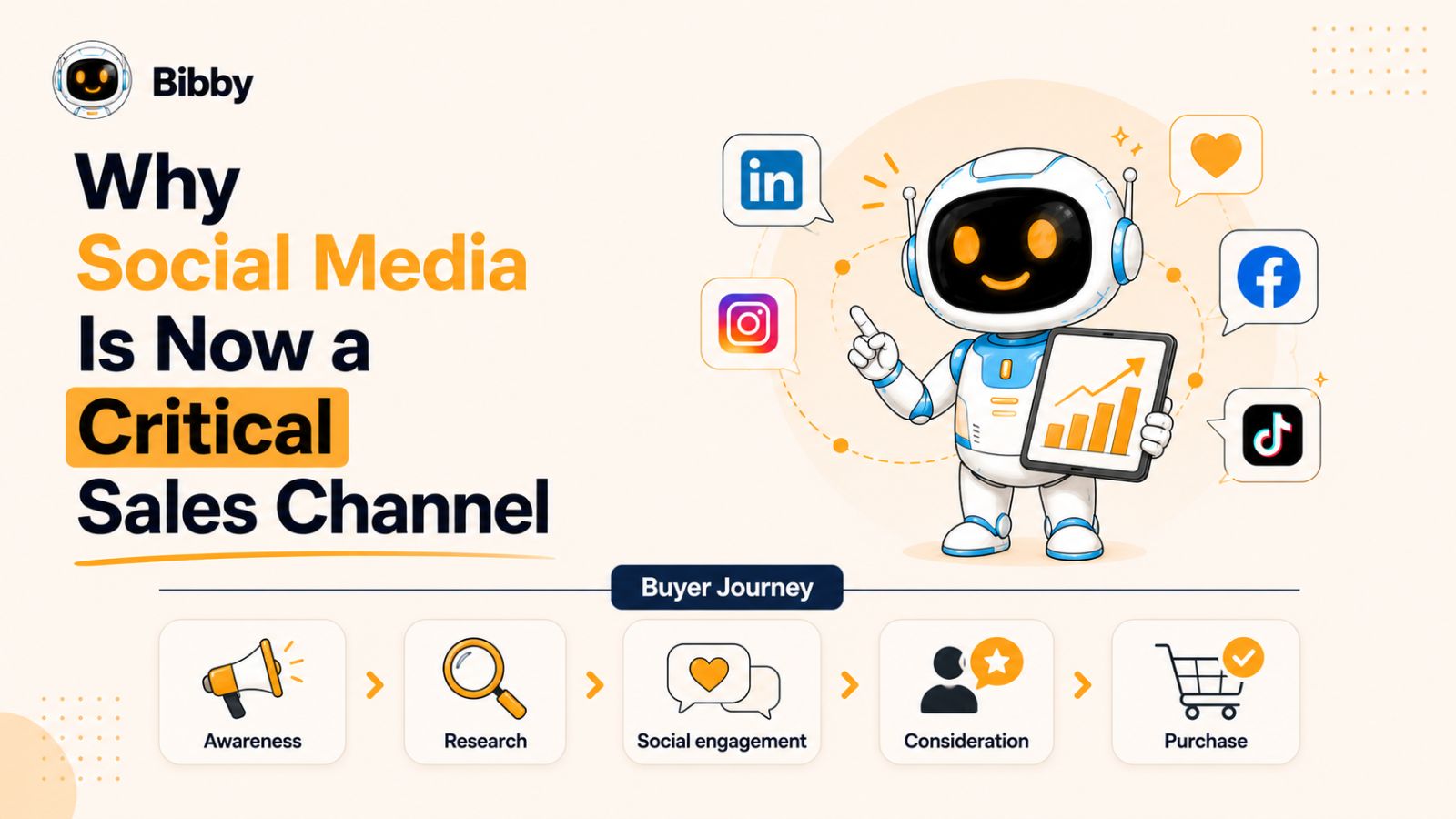
The way people buy has changed dramatically over the past decade. Before speaking with a sales representative or making a purchase, most consumers now conduct their own research online. They compare options, read reviews, watch videos, and seek recommendations from their networks. Social media has become one of the primary places where these buying decisions begin.
For businesses, this shift presents a significant opportunity. Instead of waiting for prospects to visit a website or respond to an advertisement, companies can engage potential customers where they already spend their time. Through consistent content, meaningful interactions, and strategic social selling, brands can build trust long before a sales conversation takes place.
The Evolution of Buyer Behavior
Today's buyers are more informed and selective than ever. They expect brands to provide value before asking for a sale. Educational content, customer success stories, product demonstrations, and authentic engagement help buyers gain confidence in a business before making a purchasing decision.
In both B2B and B2C markets, social platforms have become an essential part of the customer journey. A prospect may discover a brand through a LinkedIn post, watch a product demonstration on YouTube, read customer reviews on Facebook, and ultimately make a purchase after several interactions across multiple channels.
How Social Media Directly Impacts Revenue
When integrated effectively into a sales strategy, social media can deliver measurable business results, including:
- Increased brand visibility and awareness
- Higher-quality leads from targeted audiences
- Improved customer trust and credibility
- Shorter sales cycles through continuous engagement
- Greater customer retention and loyalty
- More opportunities for referrals and word-of-mouth marketing
Unlike traditional sales channels that rely heavily on direct outreach, social media allows businesses to attract and nurture prospects organically throughout the buying process.
The Competitive Advantage of Social Selling
Businesses that actively engage on social media gain a significant advantage over competitors that use social platforms solely for promotion. By participating in conversations, answering questions, sharing expertise, and building relationships, brands position themselves as trusted authorities in their industry.
As competition continues to increase across digital channels, companies that combine relationship-building with smart automation will be best positioned for long-term growth. This is where having a structured social media sales strategy becomes essential.
Also read the complete guide for Multi Platform Social Media Management
Understand Your Audience Before Selling
One of the biggest mistakes businesses make on social media is focusing on selling before understanding who they are selling to. Even the most creative content and aggressive promotional campaigns will struggle if they are not aligned with the needs, interests, and behaviors of the target audience.
Successful social selling starts with a deep understanding of your ideal customers. The better you know your audience, the easier it becomes to create content that attracts attention, builds trust, and drives conversions.
Build Detailed Buyer Personas
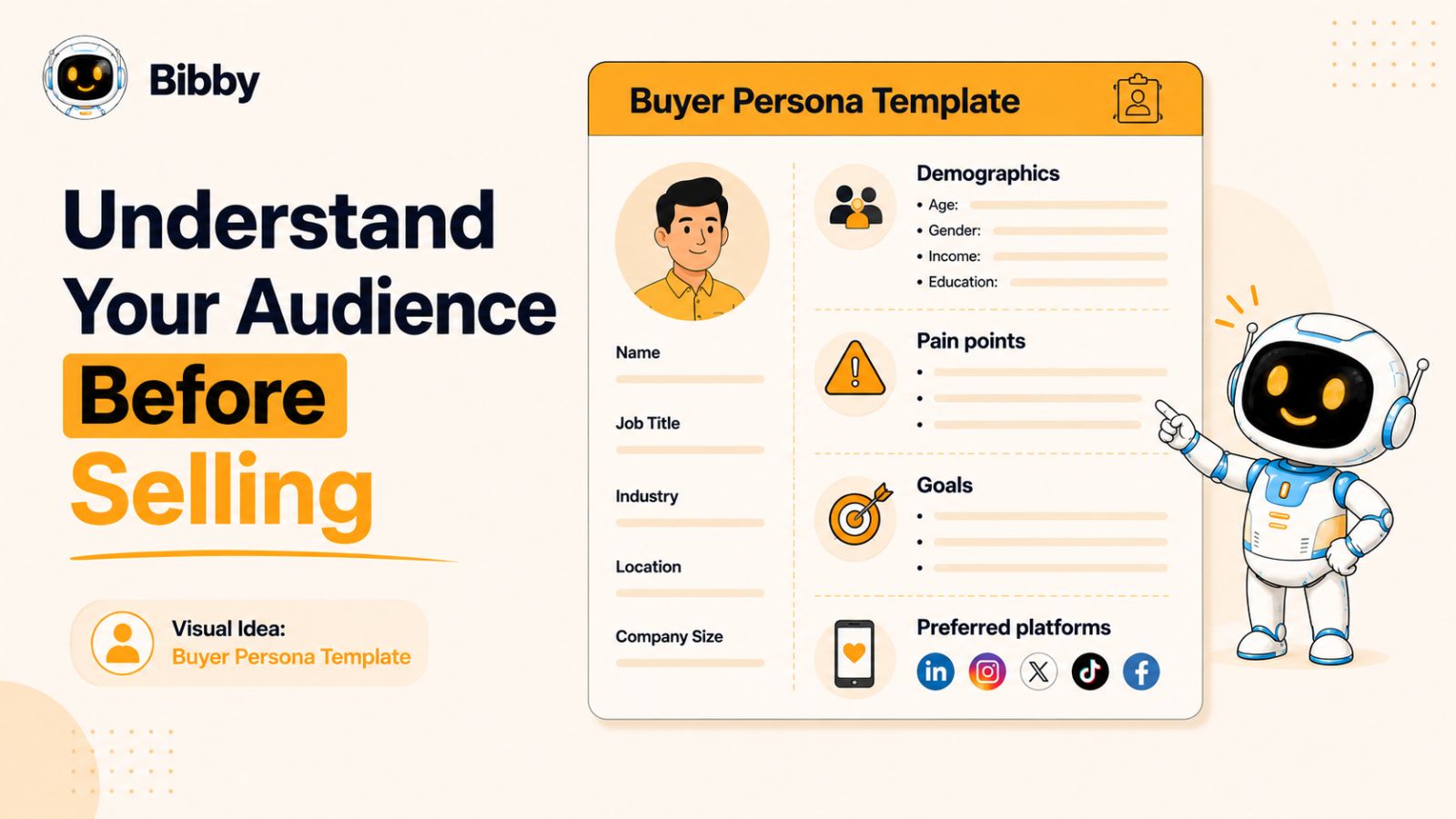
A buyer persona is a detailed profile of your ideal customer. Instead of targeting everyone, businesses should focus on understanding the specific people most likely to purchase their products or services.
When creating buyer personas, consider:
- Age, location, and demographics
- Job title and industry (for B2B businesses)
- Income level and purchasing power
- Goals and aspirations
- Challenges and pain points
- Common objections before purchasing
- Preferred social media platforms
- Content formats they engage with most
For example, a B2B software company may target marketing managers on LinkedIn, while an e-commerce fashion brand may focus on younger audiences who spend more time on Instagram and TikTok.
Identify Platform-Specific Behaviors
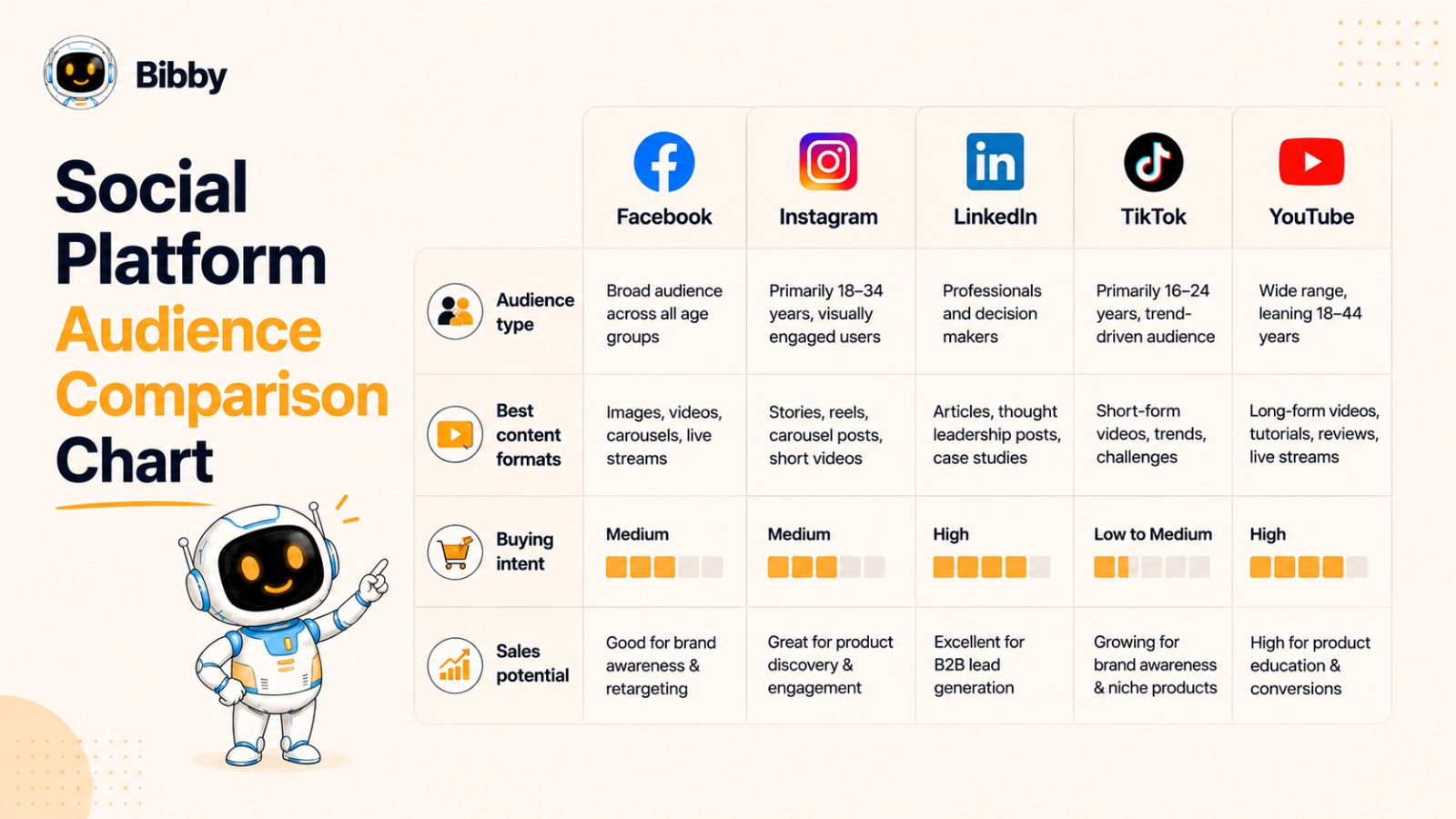
Each social media platform attracts different audiences and encourages different types of interactions. Understanding these differences helps businesses create content that resonates with users on each platform.
Facebook remains a powerful platform for community building, customer engagement, and targeted advertising. Users often engage with educational content, customer testimonials, live videos, and community-focused discussions.
Instagram is highly visual and works particularly well for lifestyle brands, e-commerce businesses, personal brands, and service providers. High-quality images, Stories, Reels, and user-generated content often generate the strongest engagement.
LinkedIn is the leading platform for B2B social selling. Decision-makers, executives, and professionals actively use LinkedIn to learn, network, and evaluate potential business solutions. Thought leadership content and industry insights perform especially well.
TikTok
TikTok's algorithm rewards creativity, authenticity, and short-form video content. Businesses that educate, entertain, or showcase their products in engaging ways can quickly expand their reach and attract new audiences.
YouTube
YouTube serves as both a search engine and a social platform. Product demonstrations, tutorials, case studies, customer success stories, and educational videos can influence purchasing decisions long after they are published.
Use Audience Insights to Guide Content Creation
Once you understand your audience and their preferred platforms, every piece of content should be designed to solve a problem, answer a question, or move potential customers closer to a purchasing decision.
Rather than creating content based on assumptions, successful brands use audience data to guide their strategy. This leads to higher engagement, stronger relationships, and ultimately more sales opportunities.
The businesses that consistently generate results from social media are not necessarily posting the most content—they are posting the most relevant content to the right audience at the right time.
Also read: What to Post on Instagram When You Have No Ideas
Create a Social Media Sales Funnel
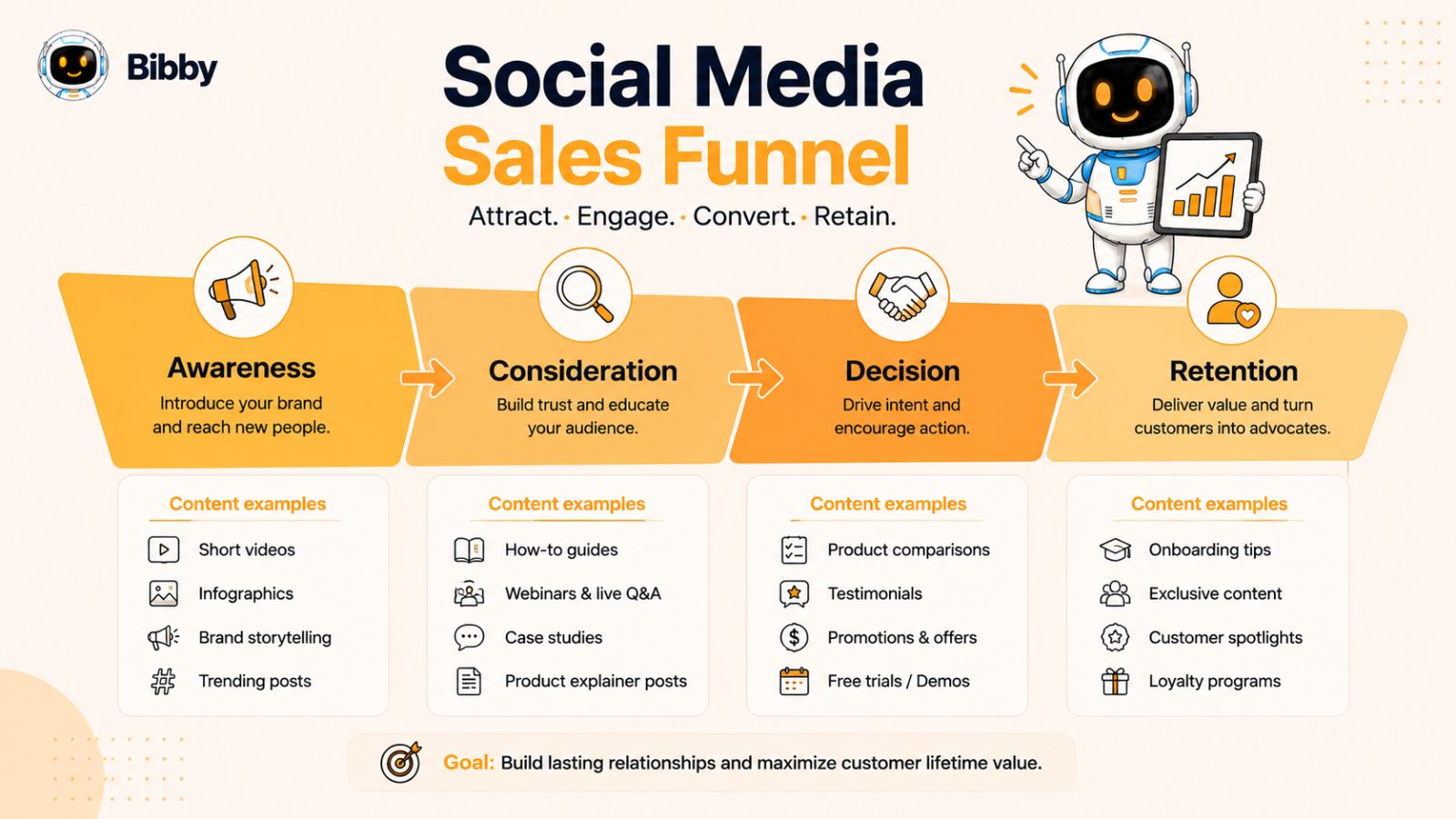
Many businesses post regularly on social media but struggle to generate meaningful sales because they lack a structured process for moving prospects toward a purchase. A social media sales funnel helps guide potential customers through each stage of the buying journey, transforming casual followers into loyal customers.
Instead of treating every post as a sales pitch, successful brands create content that matches where a prospect is in the decision-making process. This approach builds trust naturally while increasing conversion rates.
Awareness Stage: Attract New Audiences
At the top of the funnel, your goal is to introduce your brand to people who may not know you exist. Prospects in this stage are not ready to buy yet, so educational and entertaining content tends to perform best.
Effective awareness content includes:
- Industry tips and insights
- Educational videos and tutorials
- Trending topics and thought leadership
- Short-form videos and social media reels
- Infographics and visual content
- Behind-the-scenes content
The objective is to capture attention and establish credibility while encouraging users to follow your brand and engage with your content.
Consideration Stage: Build Trust and Demonstrate Value
Once prospects become familiar with your brand, they begin evaluating whether your solution can help them solve a problem. This is where trust-building content becomes essential.
Effective consideration-stage content includes:
- Case studies and success stories
- Customer testimonials and reviews
- Product demonstrations
- Live Q&A sessions
- Webinar highlights
- Comparison content
At this stage, your content should answer common questions, overcome objections, and clearly communicate the value of your products or services.
Decision Stage: Convert Prospects Into Customers
Prospects in the decision stage are actively considering a purchase. They need reassurance, clarity, and a compelling reason to take action.
Effective conversion-focused content includes:
- Free trial offers
- Product walkthroughs
- Limited-time promotions
- Consultation offers
- Customer success metrics
- Detailed feature demonstrations
Strong calls-to-action are particularly important during this stage. Make it easy for prospects to contact your team, schedule a demo, make a purchase, or request additional information.
Retention Stage: Turn Customers Into Advocates
The sales process doesn't end after a customer makes a purchase. Retaining existing customers is often more cost-effective than acquiring new ones.
Post-purchase social media content can help strengthen customer relationships through:
- Exclusive updates and announcements
- Customer appreciation campaigns
- Community groups
- Educational resources
- Product training content
- Loyalty and referral programs
Satisfied customers frequently become some of your most effective marketers by sharing their experiences and recommending your brand to others.
Use Automation to Keep Your Funnel Consistent
Managing content for every stage of the funnel across multiple platforms can quickly become overwhelming. Consistency is critical, but manually creating, scheduling, and publishing content every day consumes valuable time.
This is where automation platforms such as Bibby can significantly improve efficiency. Instead of manually managing posts across Facebook, Instagram, LinkedIn, YouTube, and TikTok, businesses can streamline the entire process from content creation to publishing.
By maintaining a steady flow of awareness, consideration, decision, and retention content, companies can keep prospects moving through the sales funnel while focusing more time on closing deals and serving customers.
A well-designed social media sales funnel ensures that every piece of content serves a purpose, helping businesses generate predictable growth rather than relying on random viral success.
Also read: How to Scale a YouTube Channel With Automation
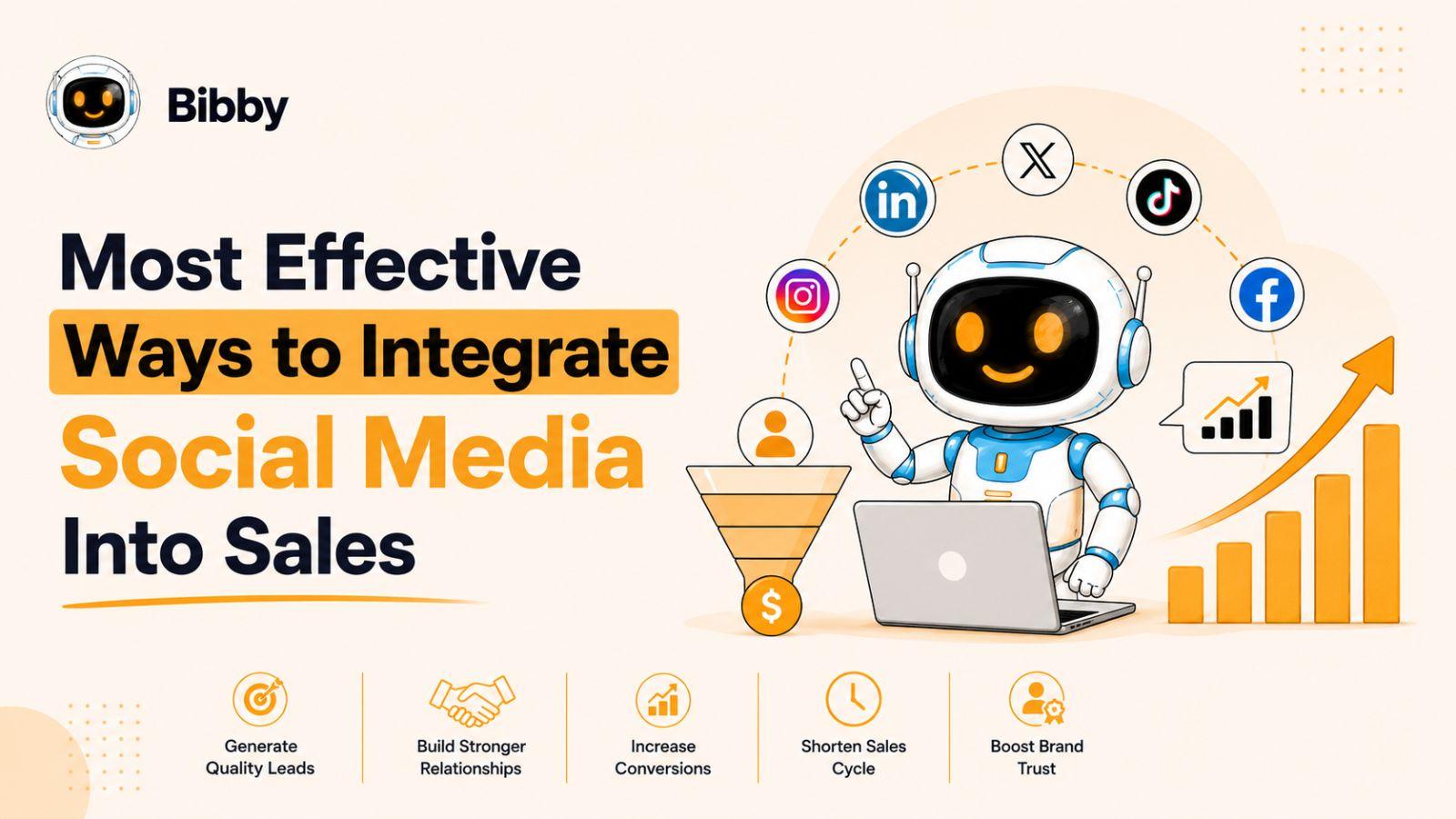
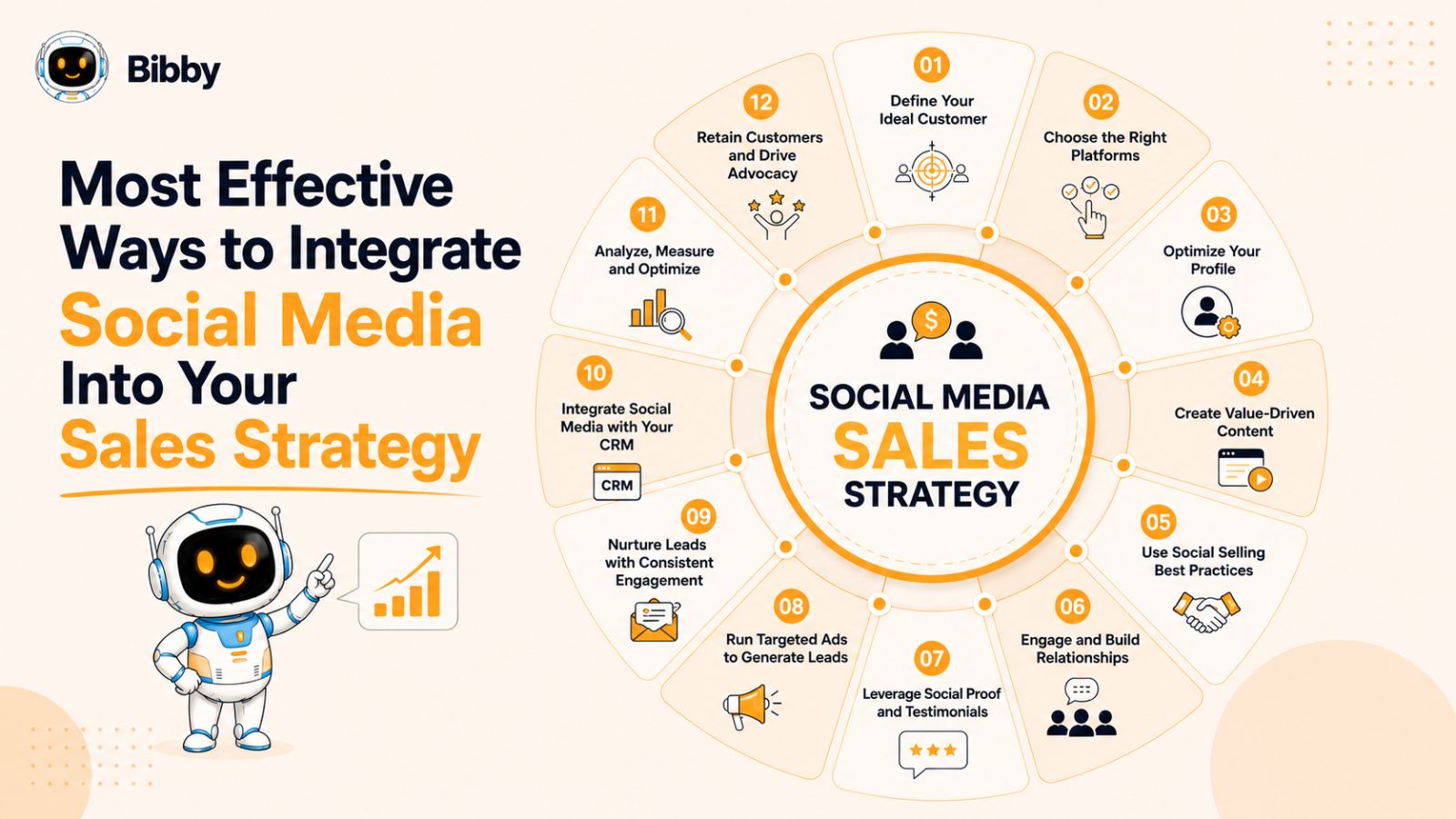
Most Effective Ways to Integrate Social Media Into Your Sales Strategy
Building a successful social media sales strategy requires more than simply posting content and hoping for engagement. The most effective businesses use social media intentionally, creating systems that attract prospects, build trust, nurture relationships, and ultimately drive conversions.
The following strategies can help turn your social media presence into a consistent source of leads and revenue.
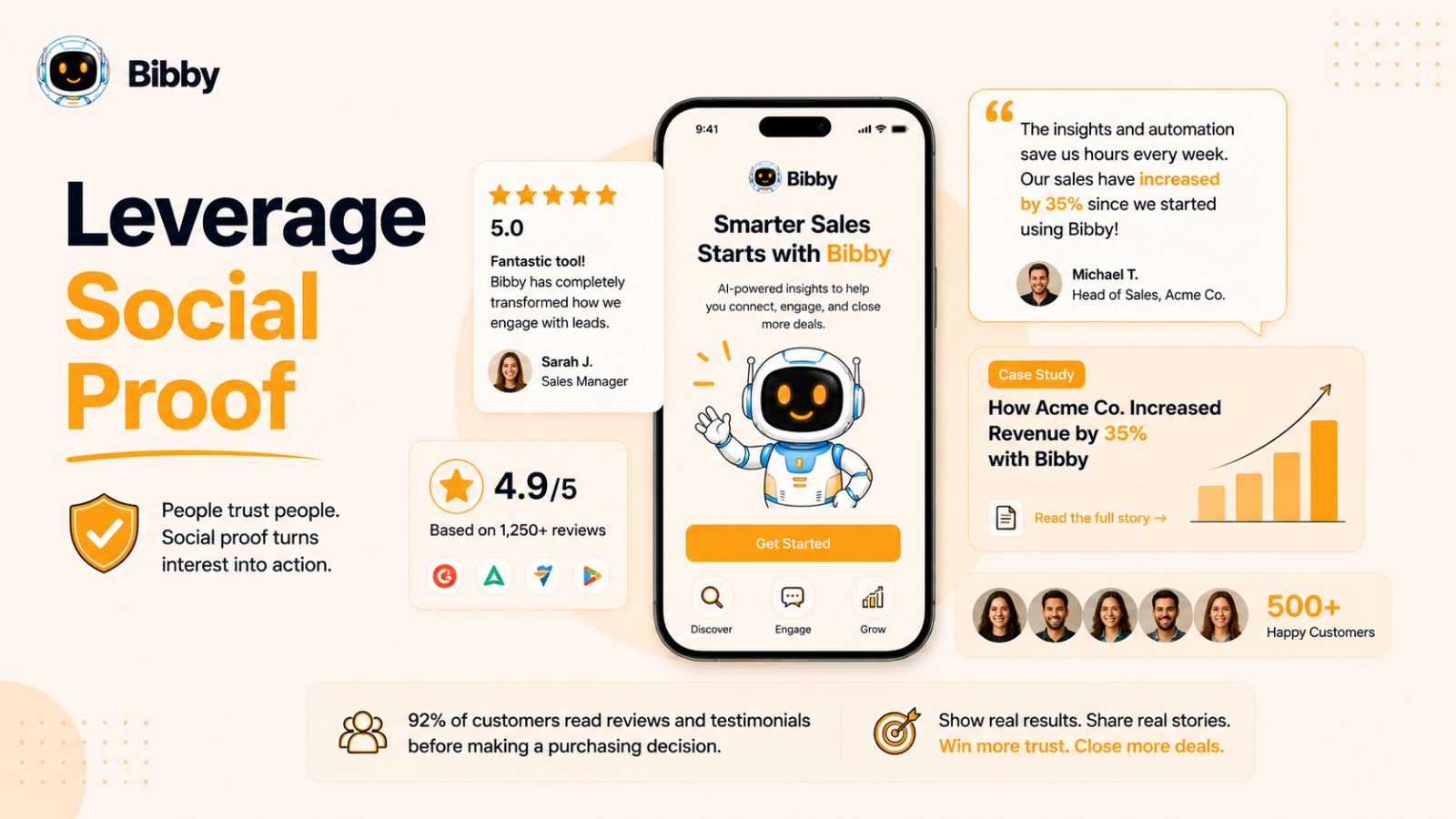
Leverage Social Proof
People are naturally influenced by the experiences of others. Social proof helps reduce uncertainty and gives potential customers confidence in their purchasing decisions.
Incorporate:
- Customer testimonials
- Product reviews
- User-generated content
- Success stories
- Case studies
- Client achievements
The more evidence prospects see that others have achieved positive outcomes, the more likely they are to take the next step.
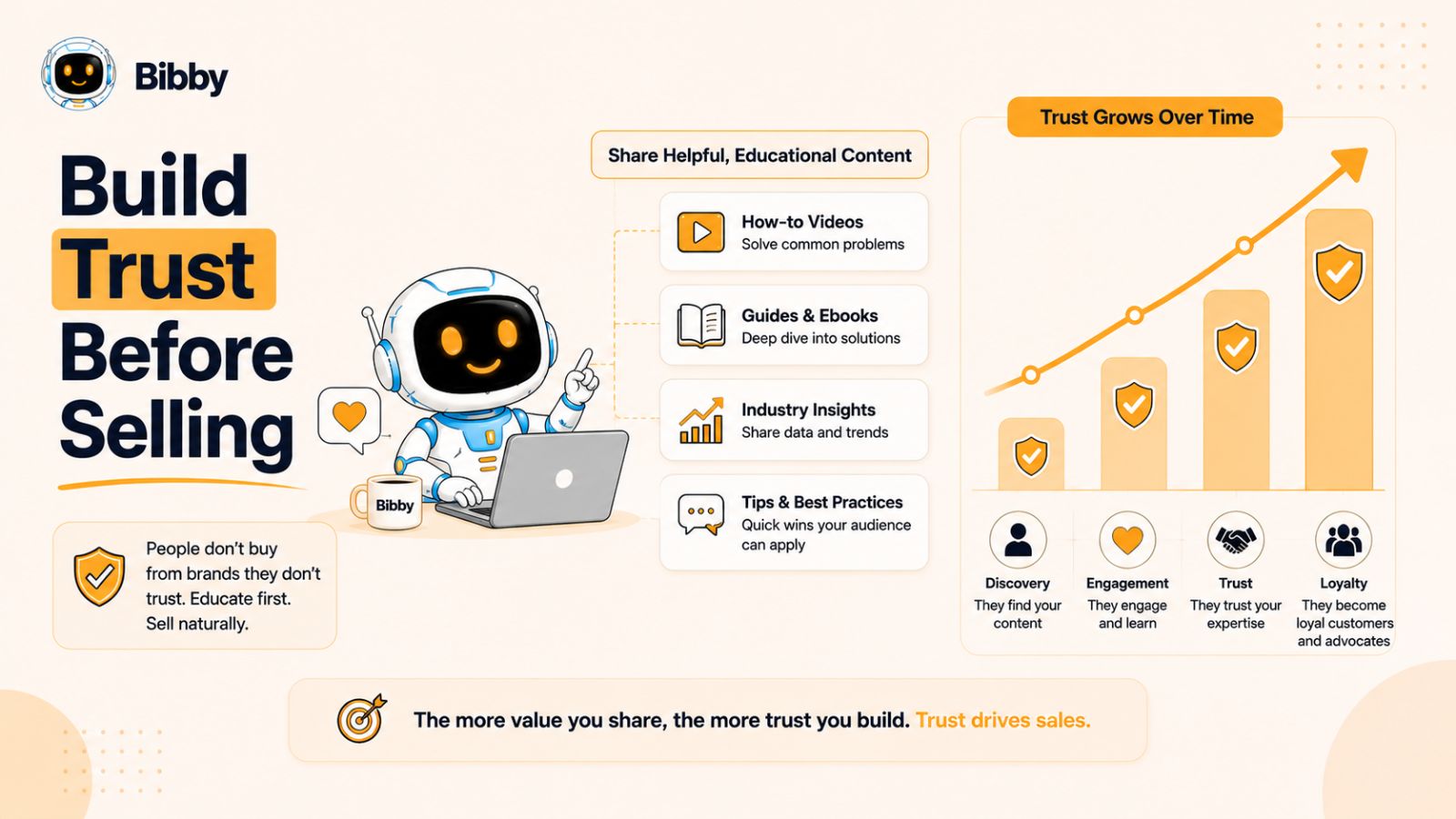
Build Trust Before Selling
One of the fastest ways to lose potential customers is to focus exclusively on promotion. Modern buyers are constantly exposed to advertisements, making them more likely to engage with brands that provide genuine value first.
Share educational content, industry insights, practical tips, and solutions to common customer challenges. When people consistently learn something useful from your content, they begin to view your brand as a trusted authority rather than another company trying to make a sale.
Trust often precedes purchases, especially in competitive markets.
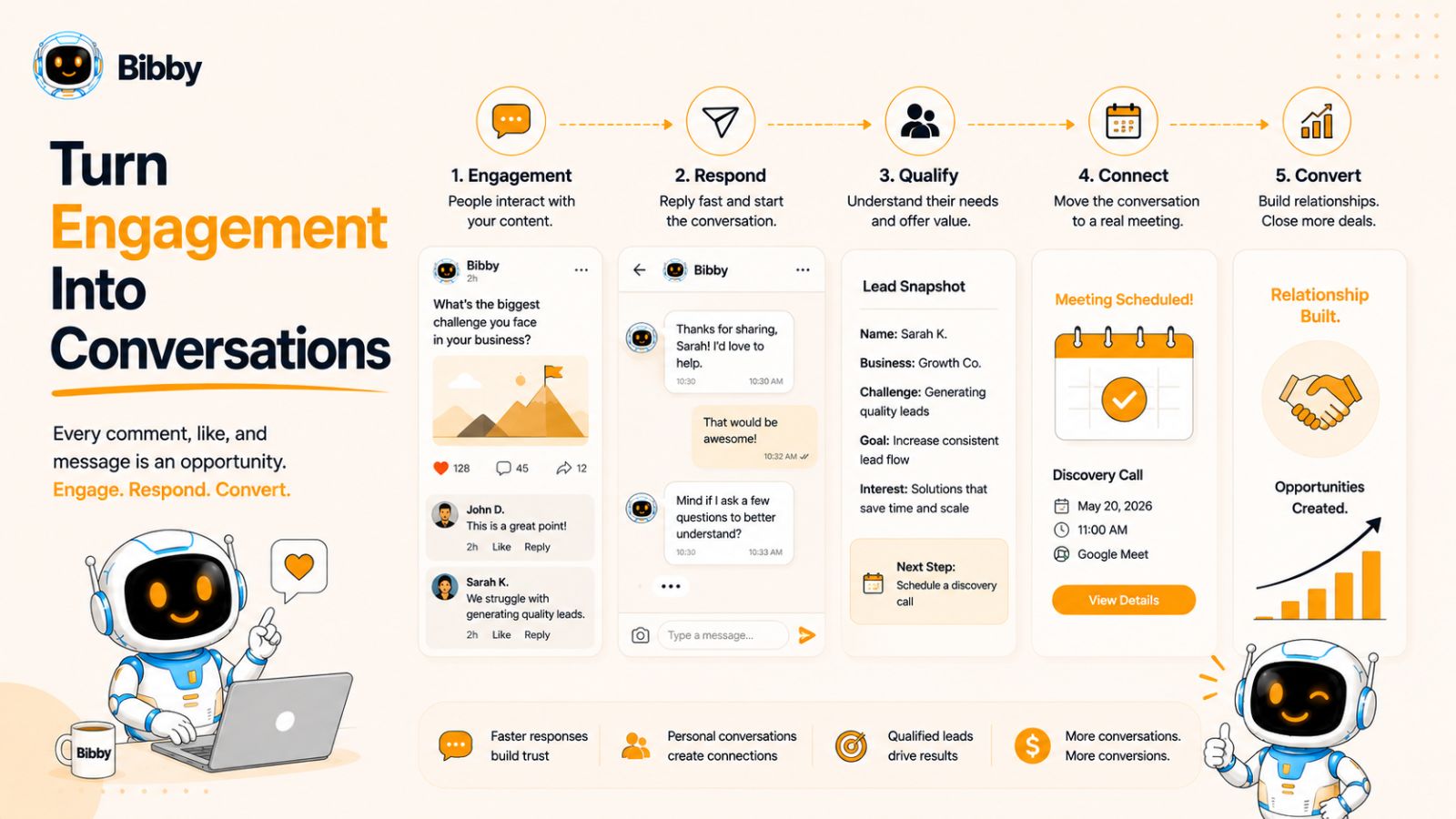
Turn Engagement Into Conversations
Likes and comments are valuable, but conversations drive sales.
When prospects engage with your content, view it as an opportunity to build relationships. Respond promptly to comments, answer questions, and continue discussions through direct messages when appropriate.
Meaningful interactions help prospects feel heard and valued while creating opportunities to better understand their needs.
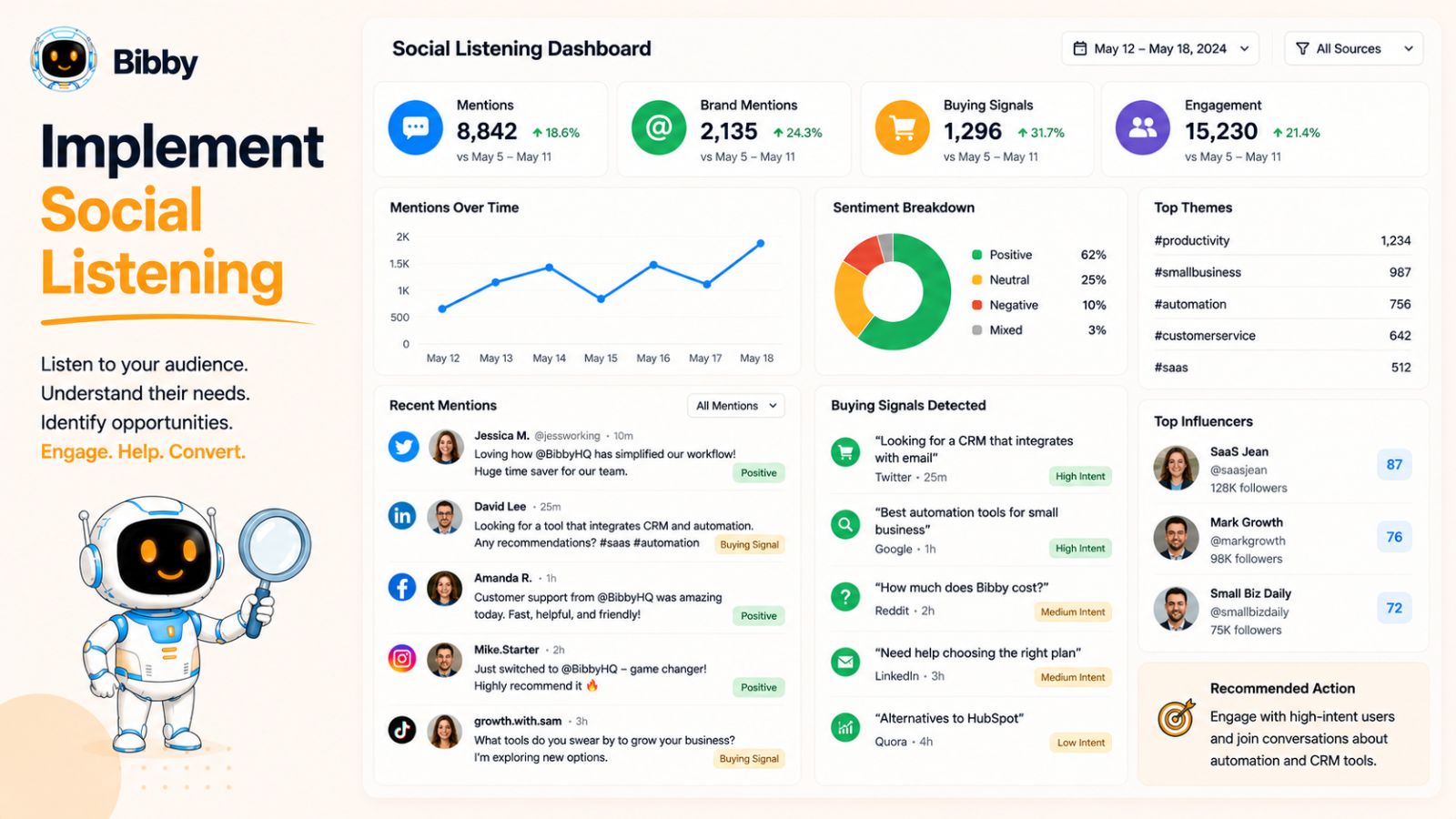
Implement Social Listening
Social listening involves monitoring online conversations related to your brand, industry, competitors, and target audience.
This approach helps businesses:
- Identify customer pain points
- Discover trending topics
- Monitor brand sentiment
- Find sales opportunities
- Engage in relevant conversations
By listening carefully to what potential customers are discussing, businesses can create more relevant content and position their solutions more effectively.
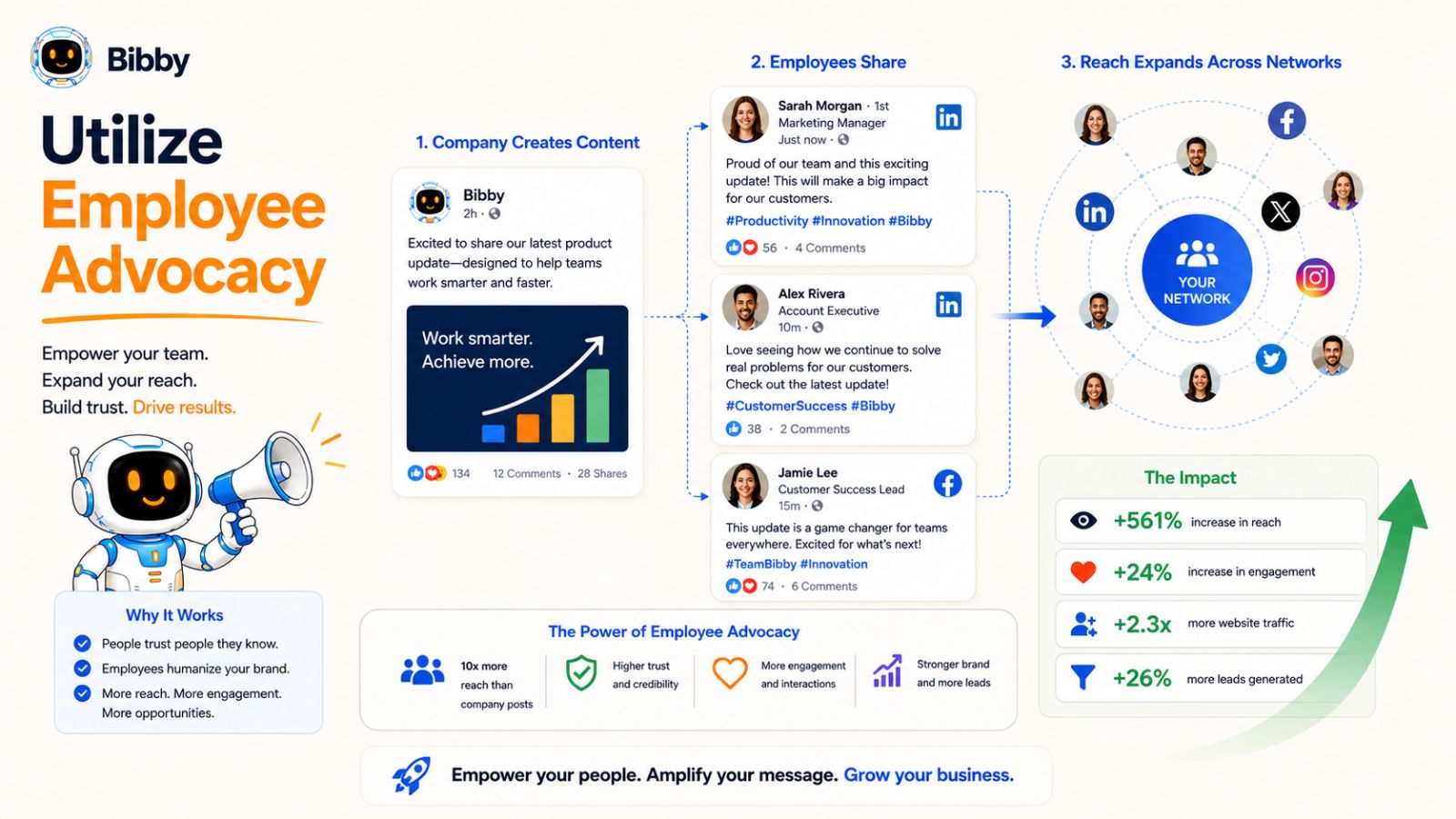
Utilize Employee Advocacy
Your employees can become some of your most effective brand ambassadors.
Encouraging team members to share company content, industry insights, and personal expertise can significantly expand your reach. Prospects often trust individuals more than corporate accounts, making employee advocacy a powerful social selling strategy.
This is especially valuable for B2B organizations where personal relationships play a major role in purchasing decisions.
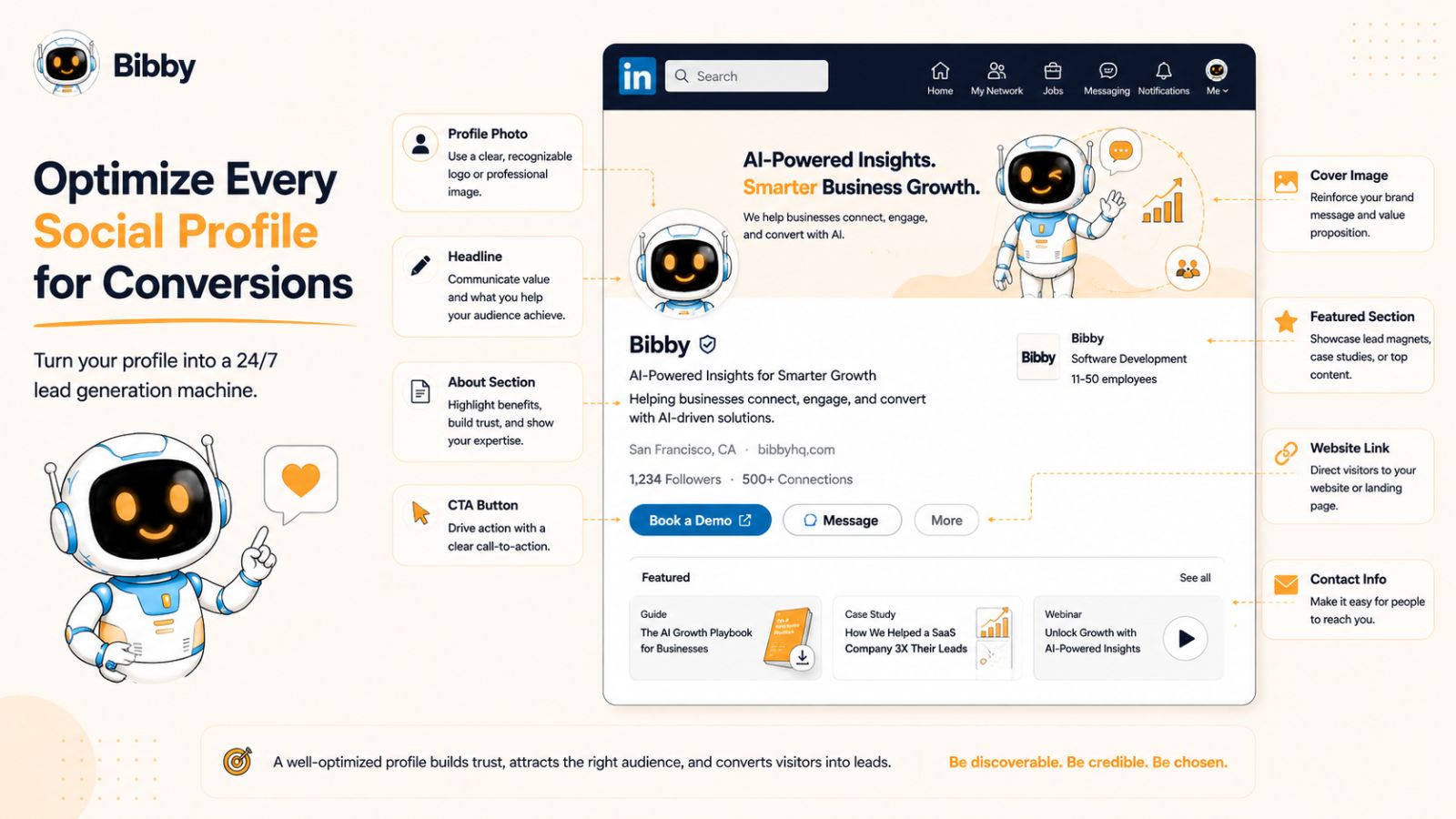
Optimize Every Social Profile for Conversions
Many businesses treat their social media profiles as digital business cards rather than conversion tools.
Every profile should clearly communicate:
- Who you help
- What problem you solve
- Why prospects should trust you
- What action visitors should take next
Strong profile optimization includes compelling descriptions, professional branding, clear calls-to-action, and links to relevant landing pages or offers.
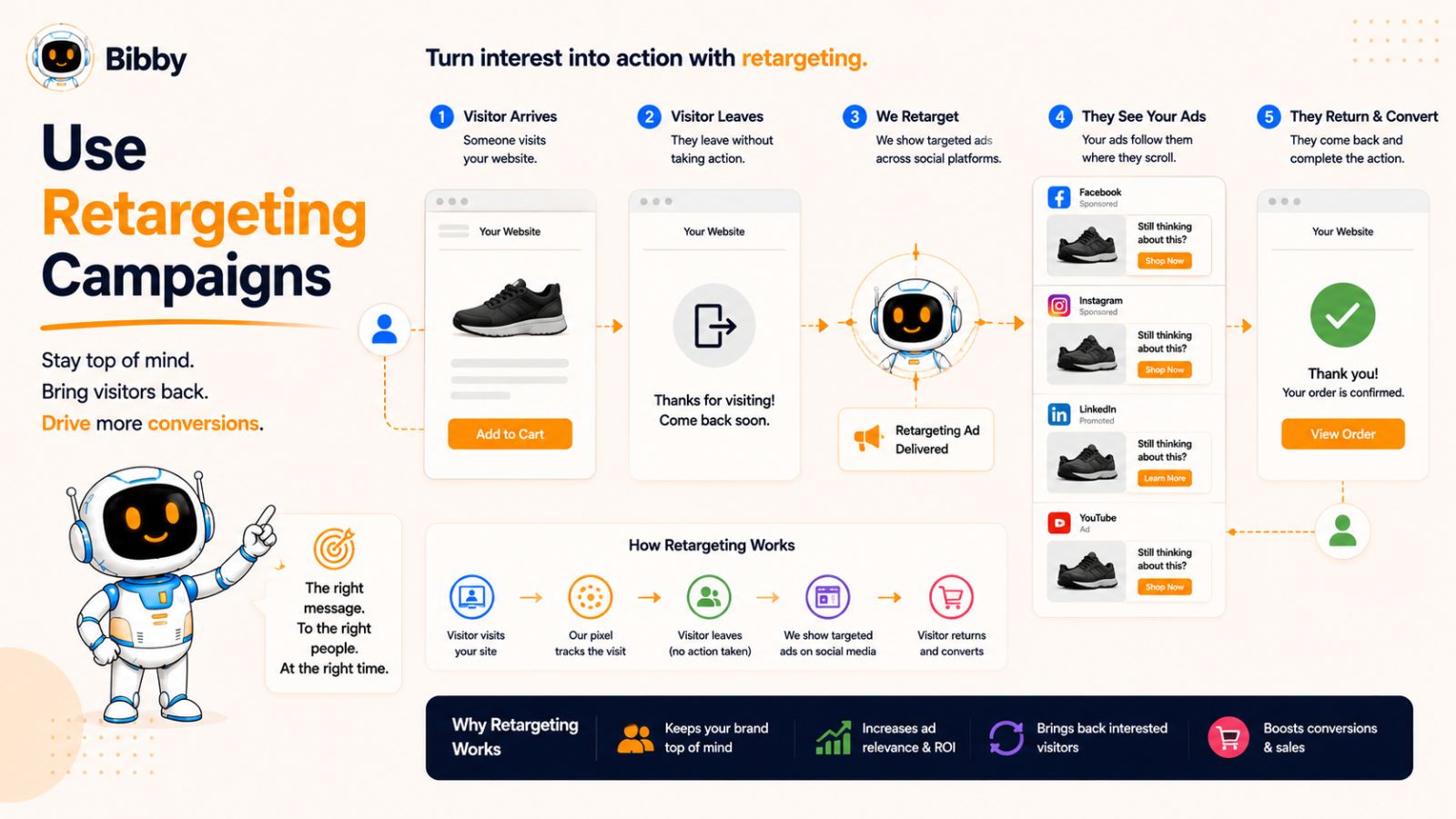
Use Retargeting Campaigns
Most people do not make a purchase during their first interaction with a brand.
Retargeting allows businesses to reconnect with individuals who have already shown interest by:
- Visiting a website
- Watching videos
- Engaging with social content
- Downloading resources
- Visiting product pages
These audiences are often significantly more likely to convert because they already recognize and trust your brand.
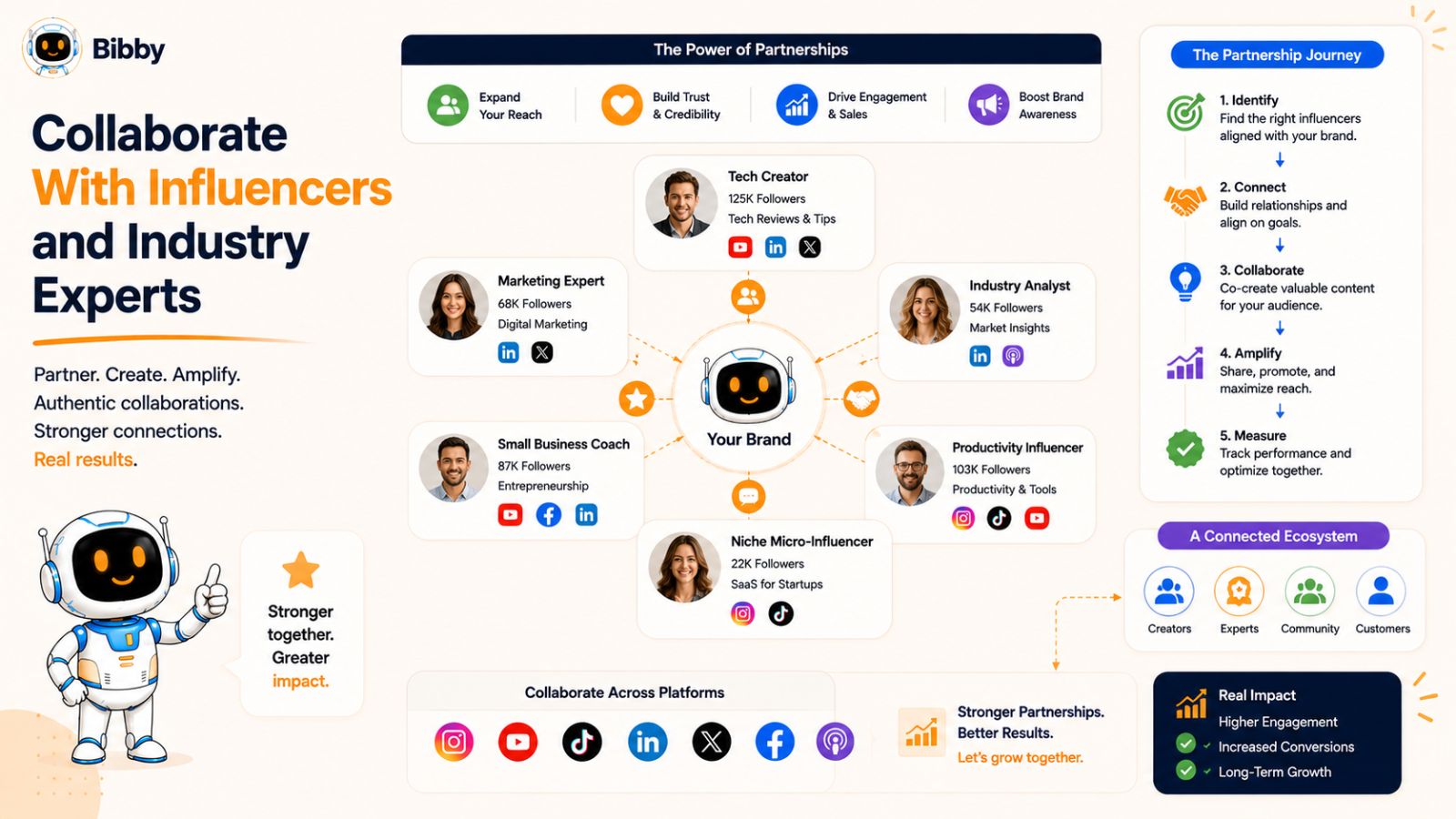
Collaborate With Influencers and Industry Experts
Influencer marketing is no longer limited to large consumer brands. Businesses of all sizes can benefit from partnerships with trusted voices in their industry.
Micro-influencers and niche experts often provide:
- Higher engagement rates
- More targeted audiences
- Greater authenticity
- Stronger community trust
Strategic collaborations can quickly expand brand awareness and introduce your products or services to highly relevant audiences.
Integrate Social Commerce Features
Social media platforms increasingly allow users to discover and purchase products without leaving the app.
Features such as:
- Facebook Shops
- Instagram Shopping
- TikTok Shop
- YouTube Shopping
reduce friction in the buying process and create a more seamless customer experience.
The fewer steps required to complete a purchase, the higher the likelihood of conversion.
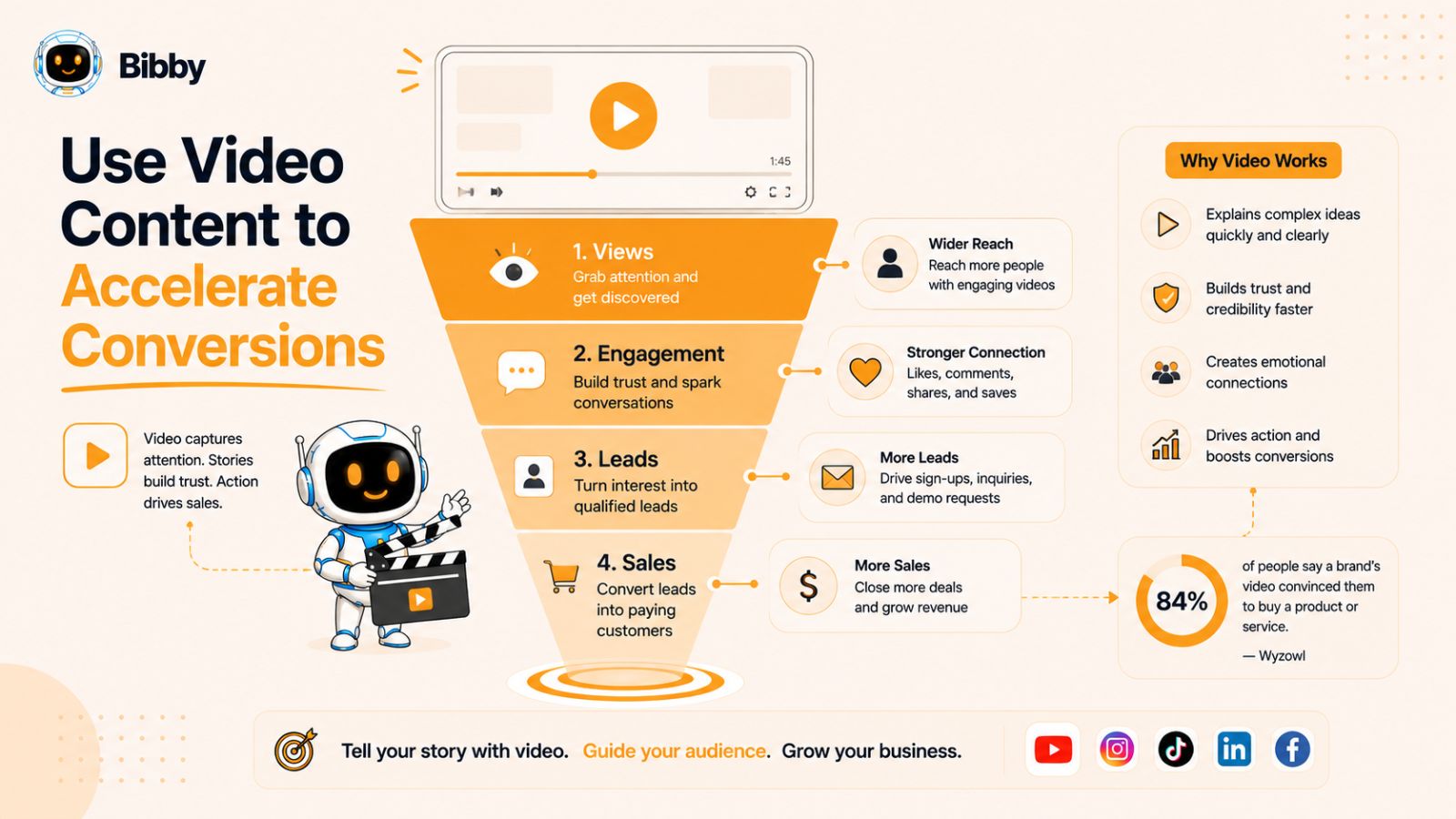
Use Video Content to Accelerate Conversions
Video has become one of the most effective content formats across nearly every social platform. It allows businesses to explain complex concepts, demonstrate products, and build personal connections much faster than text alone.
Consider creating:
- Product demonstrations
- Tutorials
- Customer interviews
- Behind-the-scenes videos
- Live streams
- Frequently asked question videos
Video content often generates higher engagement rates and can significantly influence buying decisions.
Create Platform-Specific Content
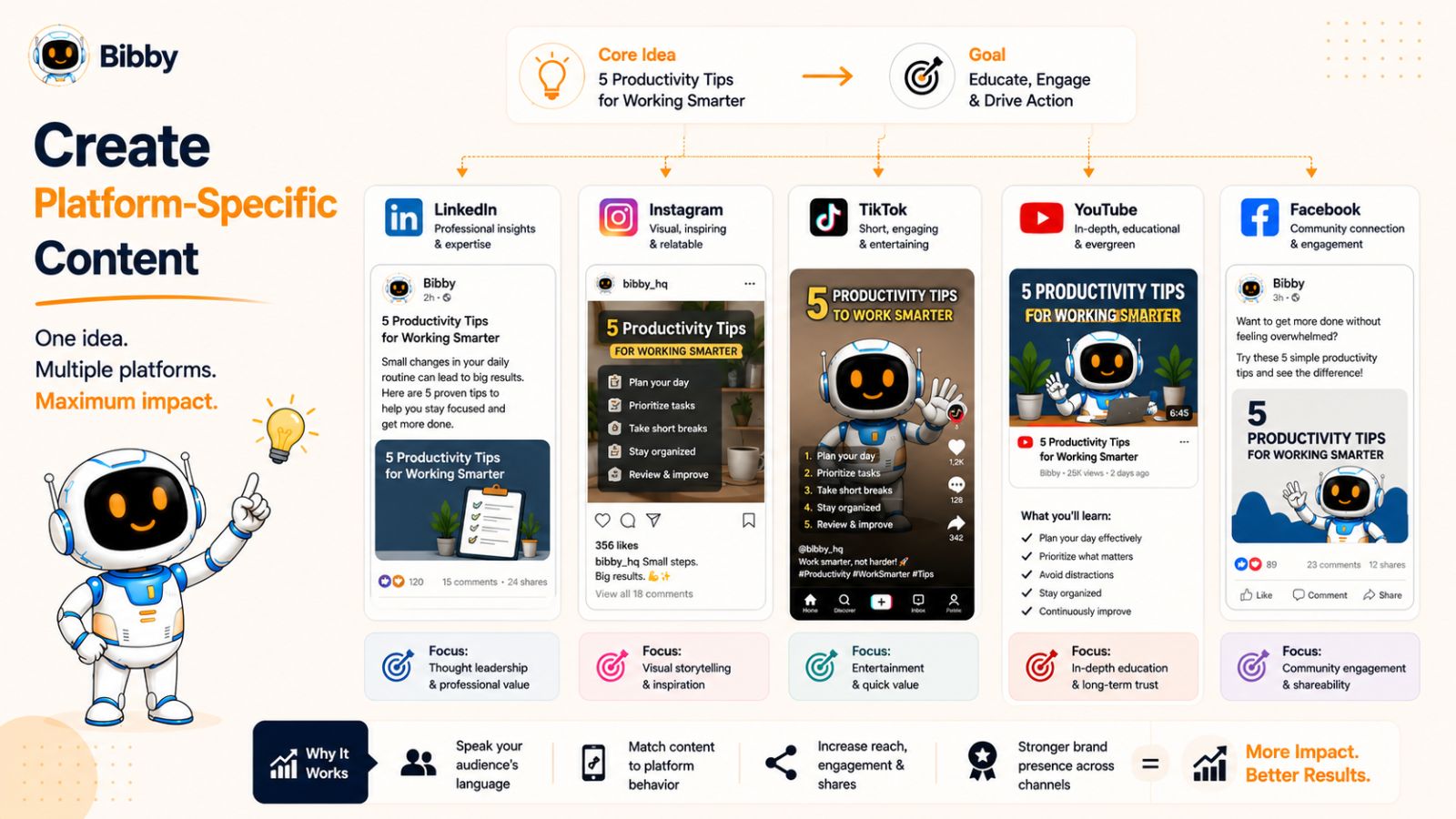
Every platform has unique user expectations, content formats, and engagement patterns.
A LinkedIn audience may respond best to thought leadership content, while Instagram users may prefer visual storytelling and TikTok audiences often favor short-form entertainment and educational videos.
Tailoring content to each platform increases relevance, engagement, and overall effectiveness.
Use AI and Automation to Scale Results
As businesses grow, managing multiple social media channels manually becomes increasingly difficult. Content creation, scheduling, engagement monitoring, and performance tracking can quickly consume significant amounts of time.
AI-powered automation allows businesses to maintain consistency while reducing manual effort.
Instead of spending hours every week creating and publishing content, companies can streamline workflows, optimize posting schedules, and focus more attention on sales activities that directly impact revenue.
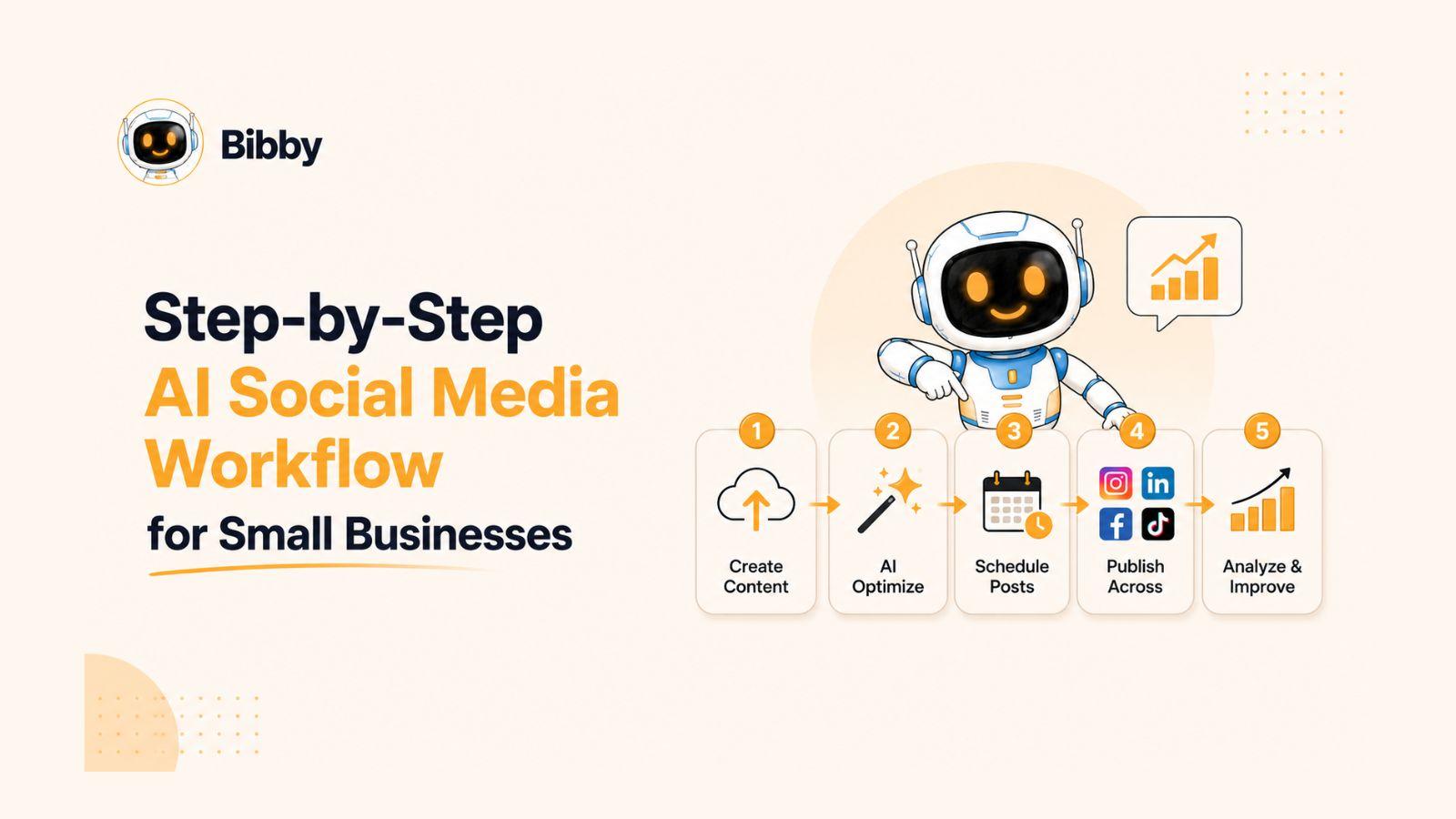
This is where platforms like Bibby have become increasingly valuable for modern sales and marketing teams. By combining content creation, scheduling, analytics, and multi-platform publishing into a single workflow, businesses can scale their social media efforts without dramatically increasing workload.
The most successful organizations are not necessarily those producing the most content. They are the ones that consistently deliver the right content to the right audience at the right time while leveraging automation to maximize efficiency.
Also read: How to Build a Successful Social Media Strategy from Scratch
How Bibby Simplifies Social Media Sales Growth
Maintaining a consistent social media presence is one of the biggest challenges businesses face. Creating content, writing captions, scheduling posts, publishing across multiple platforms, monitoring analytics, and staying consistent can quickly become a full-time job.
This is where Bibby helps businesses simplify and automate their entire social media workflow.
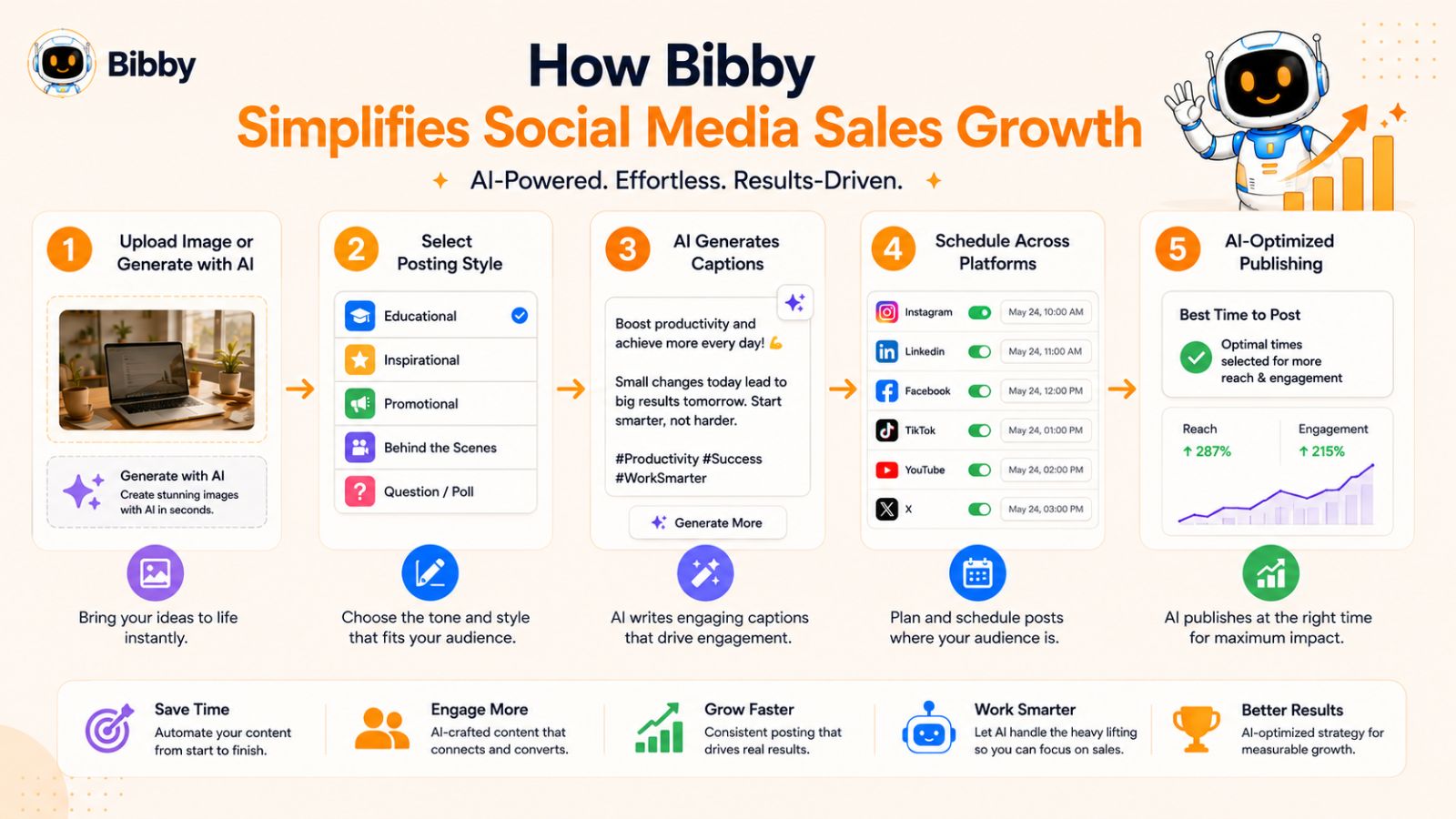
Instead of managing multiple tools and manually posting content every day, Bibby brings content creation, scheduling, publishing, and analytics into one streamlined platform. The result is more consistent social media activity, greater efficiency, and more time to focus on sales and business growth.
Create Content in Minutes
Every successful social media strategy starts with quality content. However, creating enough content to stay active across multiple platforms can be overwhelming.
Bibby simplifies this process by allowing users to either:
- Upload their own images and media
- Generate images using AI
This flexibility helps businesses maintain a steady flow of content without constantly searching for new creative assets.
Whether you're promoting products, sharing educational content, highlighting customer success stories, or building brand awareness, Bibby helps accelerate the content creation process.
Choose Your Posting Style
Different business goals require different content approaches.
With Bibby, users can select the posting style that best aligns with their objectives, such as:
- Promotional content
- Educational content
- Brand awareness campaigns
- Community engagement content
- Thought leadership posts
- Product-focused content
This allows businesses to maintain a consistent brand voice while tailoring content to different stages of the customer journey.
Let AI Generate Captions Automatically
Writing engaging captions for multiple social media platforms can be one of the most time-consuming aspects of content marketing.
Bibby's AI-powered caption generation helps eliminate this bottleneck.
Based on the content and posting style selected, Bibby automatically generates captions designed to:
- Capture attention
- Encourage engagement
- Communicate value clearly
- Support brand consistency
- Save significant amounts of time
Instead of staring at a blank screen trying to write dozens of captions each week, businesses can create social-ready content in just a few clicks.
Publish Across All Major Social Media Platforms
Managing multiple social channels individually often leads to inefficiencies and inconsistent posting schedules.
Bibby allows users to manage content across major social networks from a single dashboard, including:
- YouTube
- TikTok
Rather than logging into multiple accounts and repeating the same publishing process, users can coordinate their entire social media strategy from one place.
Schedule Content at AI-Optimized Times
Timing plays an important role in social media performance. Even great content can underperform if it's published when the target audience is inactive.
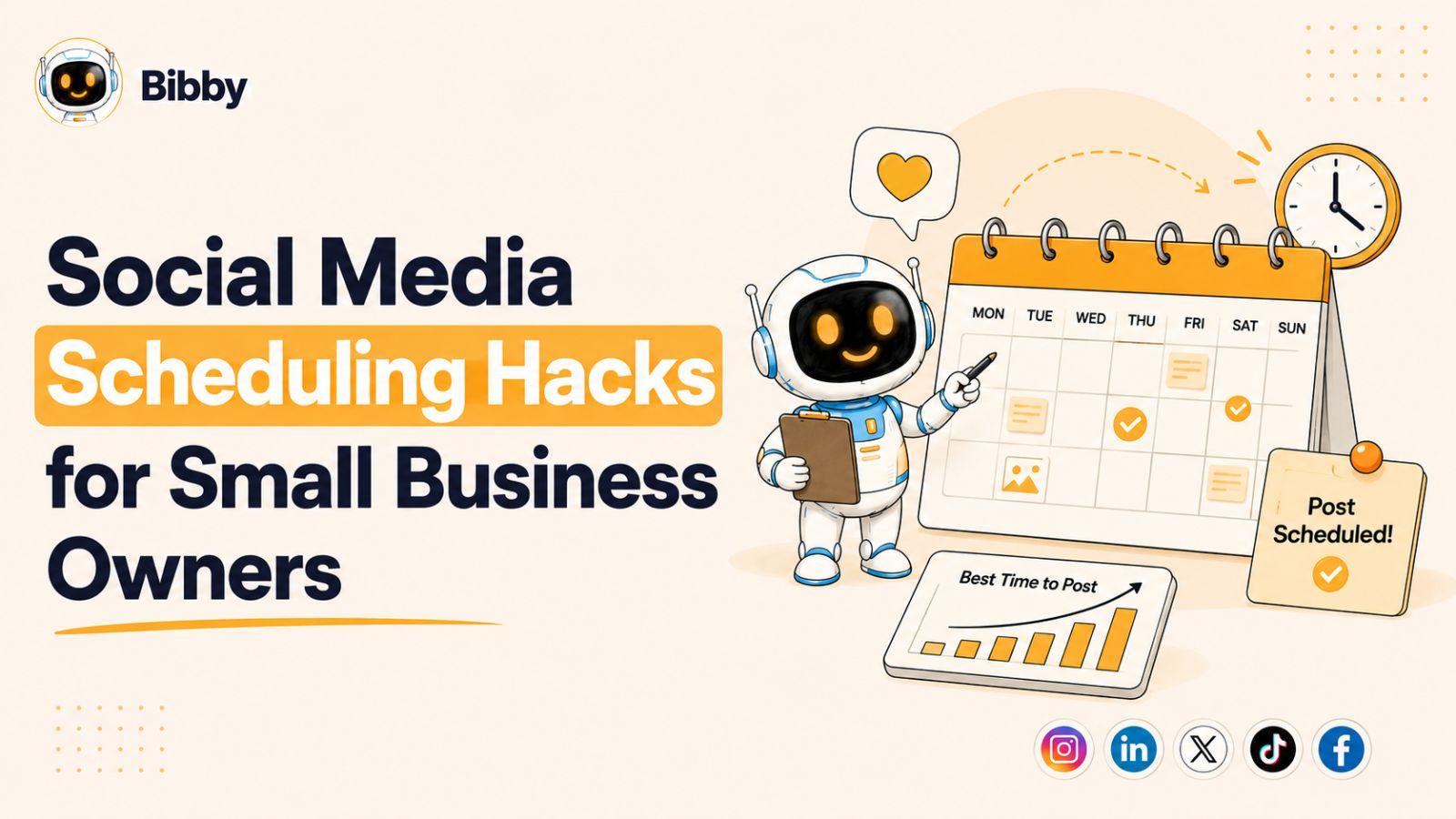
Bibby's AI scheduling technology helps solve this challenge by identifying optimized publishing times based on engagement opportunities.
Benefits include:
- Increased visibility
- Higher engagement potential
- Improved audience reach
- Consistent posting frequency
- Reduced manual planning
This helps businesses maximize the impact of their content without constantly monitoring posting schedules.
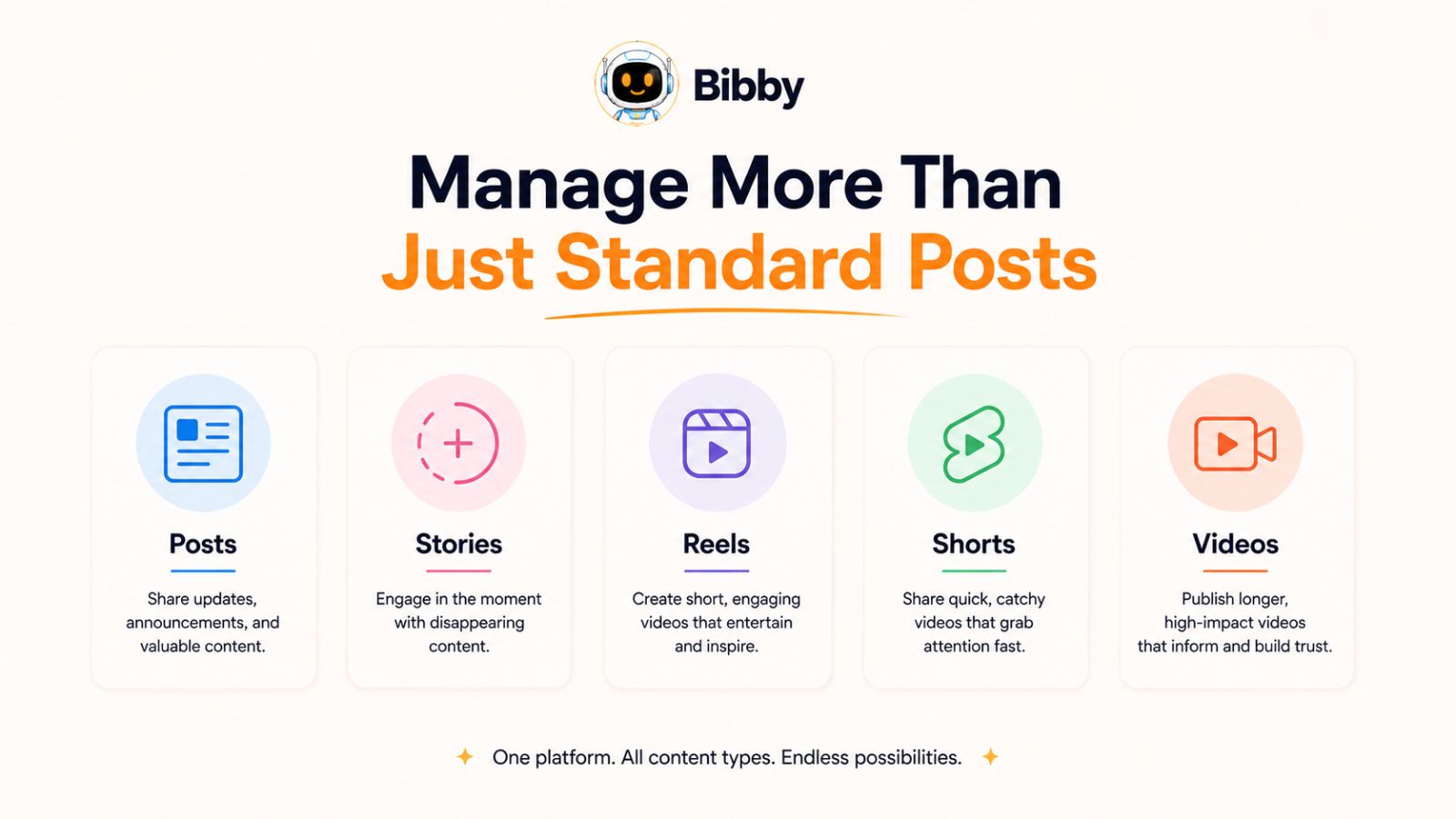
Manage More Than Just Standard Posts
Modern social media strategies require a variety of content formats to stay competitive.
Bibby supports multiple content types, including:
- Images
- Videos
- Stories
- Short-form content
- Promotional content
- Educational content
This allows businesses to execute a complete content strategy from a single platform instead of juggling multiple tools.
Track Performance With Built-In Analytics
Publishing content is only part of the equation. To improve results over time, businesses need visibility into what is working and what is not.
Bibby's analytics capabilities help users monitor performance and make data-driven decisions by tracking:
- Engagement trends
- Audience growth
- Content performance
- Reach and visibility
- Overall account activity
These insights help businesses refine their strategy and focus on the content that generates the strongest results.
Free Up More Time for Sales Activities
One of the greatest advantages of social media automation is the ability to reclaim valuable time.
Rather than spending hours each week creating posts, writing captions, scheduling content, and managing multiple platforms, businesses can automate much of the process and focus on activities that directly contribute to revenue growth.
Sales teams can spend more time:
- Building relationships
- Following up with leads
- Closing deals
- Improving customer experiences
- Developing strategic partnerships
At the same time, their social media presence continues working in the background.
Why Bibby Fits Into a Modern Social Media Sales Strategy
Successful social selling requires consistency. Businesses that post sporadically often struggle to maintain visibility and engagement, regardless of how good their content may be.
Bibby helps solve this challenge by simplifying the entire social media workflow—from content creation and AI-generated captions to multi-platform publishing, scheduling, and analytics.
For businesses looking to scale their social media efforts without significantly increasing workload, Bibby provides a practical way to maintain an active presence across Facebook, Instagram, LinkedIn, YouTube, and TikTok while allowing teams to focus on what matters most: generating leads, building relationships, and driving sales.
Also read: How to Scale a YouTube Channel With Automation
Common Mistakes Businesses Make When Using Social Media for Sales
Even with access to powerful social media platforms and advanced automation tools, many businesses struggle to generate meaningful sales results. In most cases, the problem is not the platform itself—it's the strategy behind it.
Avoiding the following mistakes can significantly improve your ability to attract leads, build relationships, and convert followers into customers.
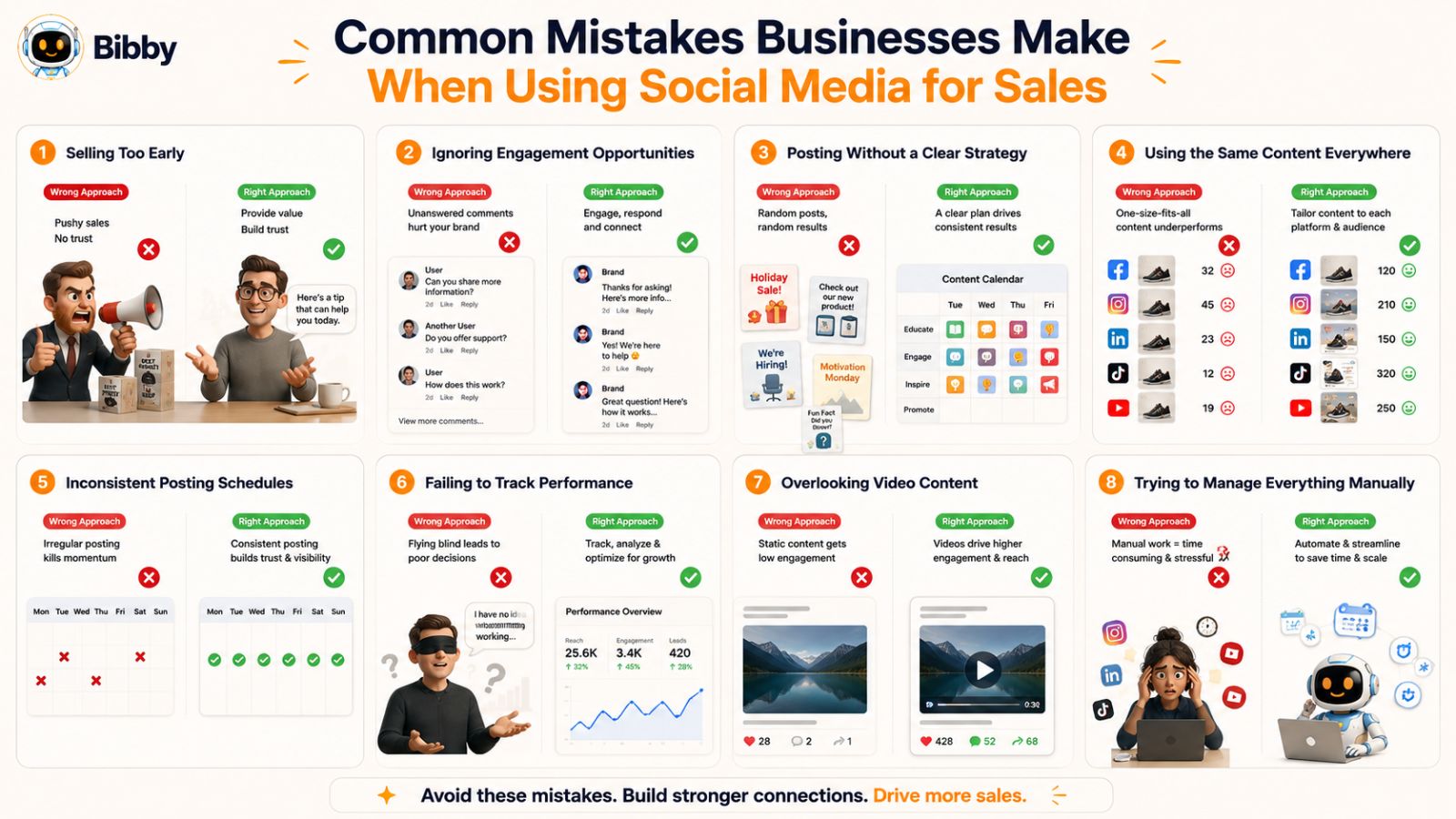
Selling Too Early
One of the most common mistakes is treating every social media post like a sales pitch.
Most users are not ready to buy the first time they encounter your brand. Constantly pushing products or services can cause audiences to disengage and unfollow your accounts.
Instead, focus on providing value through educational content, insights, entertainment, and helpful resources. When trust is established first, sales conversations become much easier.
Ignoring Engagement Opportunities
Social media is designed for interaction. Businesses that only publish content without responding to comments, messages, and questions miss valuable opportunities to build relationships.
Every interaction can help strengthen trust and move prospects closer to a purchase decision.
Successful brands actively:
- Respond to comments
- Answer questions
- Participate in conversations
- Thank customers for feedback
- Engage with their communities
The more responsive a brand is, the more approachable and trustworthy it appears.
Posting Without a Clear Strategy
Random posting often leads to random results.
Many businesses publish content simply because they feel they should be active on social media. Without defined goals, audience targeting, and content planning, it becomes difficult to generate consistent business outcomes.
A successful social media sales strategy should align content with specific objectives such as:
- Brand awareness
- Lead generation
- Customer education
- Product promotion
- Customer retention
Every post should support a larger business goal.
Using the Same Content Everywhere
Each social media platform has its own audience, culture, and preferred content formats.
A post that performs well on LinkedIn may not generate the same results on TikTok or Instagram. Simply copying and pasting identical content across platforms can limit engagement and reach.
Businesses should adapt content based on:
- Platform expectations
- Audience preferences
- Content format requirements
- User behavior patterns
Customized content generally delivers stronger performance than a one-size-fits-all approach.
Inconsistent Posting Schedules
Consistency is one of the most important factors in social media success.
Many businesses start with enthusiasm, post regularly for a few weeks, and then disappear for extended periods. This inconsistency can reduce visibility, engagement, and audience trust.
Maintaining a predictable publishing schedule helps:
- Keep audiences engaged
- Strengthen brand recognition
- Improve algorithm performance
- Increase opportunities for lead generation
Automation tools like Bibby can help businesses maintain consistency without requiring daily manual effort.
Failing to Track Performance
Without analytics, it's impossible to know whether your social media strategy is working.
Many businesses focus on vanity metrics such as likes and follower counts while ignoring indicators that directly impact revenue.
Instead, monitor metrics that align with business objectives, including:
- Lead generation
- Website traffic
- Conversion rates
- Engagement quality
- Customer acquisition costs
- Revenue attribution
Data-driven decision-making allows businesses to continuously improve results over time.
Overlooking Video Content
Video has become one of the most effective content formats across major social media platforms. Businesses that rely exclusively on static images or text often miss opportunities to increase engagement and reach.
Videos can help:
- Demonstrate products
- Explain complex topics
- Build personal connections
- Showcase customer success stories
- Increase time spent engaging with content
A balanced content strategy should include a mix of images, videos, stories, and other interactive formats.
Trying to Manage Everything Manually
As social media efforts expand, managing content creation, publishing, scheduling, engagement, and analytics manually becomes increasingly difficult.
This often leads to:
- Missed posting opportunities
- Inconsistent content output
- Reduced productivity
- Team burnout
Leveraging automation and AI-powered tools allows businesses to scale their social media efforts while maintaining quality and consistency.
The Bottom Line
Most social media sales challenges are not caused by a lack of effort. They are usually the result of strategic mistakes that prevent businesses from maximizing the opportunities available on modern platforms.
By focusing on relationship-building, maintaining consistency, tracking performance, and utilizing automation where appropriate, businesses can avoid these common pitfalls and create a social media strategy that consistently contributes to revenue growth.
Also read: How to Build a Successful Social Media Strategy from Scratch
Measuring Social Media Sales Success
A successful social media strategy is not measured by likes, comments, or follower counts alone. While these metrics can provide insight into audience engagement, they do not always reflect business impact.
To understand whether social media is contributing to revenue growth, businesses need to track metrics that connect directly to sales objectives. Measuring the right data helps identify what is working, what needs improvement, and where future opportunities exist.
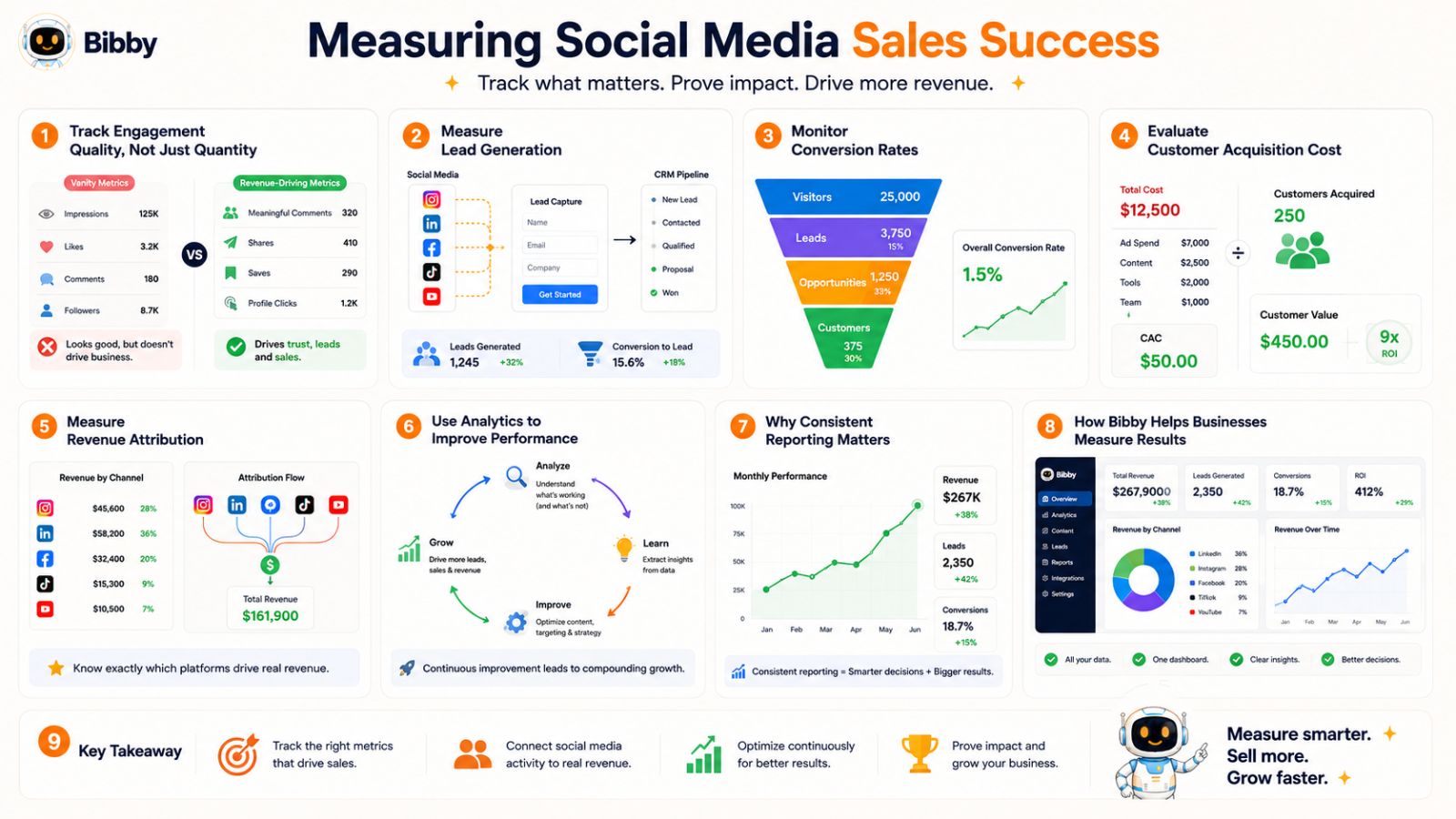
Track Engagement Quality, Not Just Quantity
High engagement can be a positive sign, but not all engagement is equally valuable.
A post that generates hundreds of likes may contribute less to business growth than a post that starts meaningful conversations with potential customers.
Pay attention to indicators such as:
- Meaningful comments
- Direct messages from prospects
- Content shares
- Saved posts
- Click-through rates
- Community interactions
These actions often signal genuine interest and can lead to future sales opportunities.
Measure Lead Generation
For many businesses, lead generation is one of the most important outcomes of social media activity.
Track how many prospects are entering your sales pipeline through social channels by monitoring:
- Contact form submissions
- Demo requests
- Consultation bookings
- Newsletter sign-ups
- Downloadable resource registrations
- Direct inquiries from social platforms
Understanding which platforms and content types generate the most leads helps optimize future campaigns.
Monitor Conversion Rates
Generating leads is only part of the process. Businesses should also track how many of those leads ultimately become customers.
Conversion tracking helps answer important questions such as:
- Which social platform generates the highest-quality leads?
- Which content types influence purchasing decisions?
- Where do prospects drop off during the buying journey?
- Which campaigns generate the strongest return on investment?
The answers can help businesses allocate resources more effectively.
Evaluate Customer Acquisition Cost
Customer acquisition cost (CAC) measures how much it costs to acquire a new customer.
When evaluating social media performance, compare the cost of content creation, advertising, software tools, and team resources against the number of customers generated.
A lower acquisition cost combined with strong customer lifetime value often indicates a highly effective social media sales strategy.
Measure Revenue Attribution
One of the most valuable metrics is revenue attribution—the ability to connect social media activities directly to sales results.
Businesses should track:
- Revenue generated from social campaigns
- Sales originating from social referrals
- Conversion value by platform
- Return on advertising spend
- Customer lifetime value from social channels
This provides a clearer picture of how social media contributes to overall business growth.
Use Analytics to Improve Performance
Data is only valuable when it informs action.
Regularly reviewing analytics helps businesses identify:
- Top-performing content
- Best-performing platforms
- Audience behavior patterns
- Emerging opportunities
- Underperforming campaigns
These insights can guide future content creation, advertising decisions, and sales strategies.
Why Consistent Reporting Matters
Many businesses evaluate social media results too quickly. While some campaigns generate immediate results, social selling is often a long-term process that involves building trust and nurturing relationships over time.
Consistent reporting allows businesses to identify trends rather than making decisions based on short-term fluctuations.
Monthly and quarterly reviews can help answer questions such as:
- Is audience engagement improving?
- Are lead generation numbers increasing?
- Which platforms deserve additional investment?
- Is social media contributing to overall revenue growth?
Tracking these trends creates a more accurate picture of performance than focusing on individual posts or campaigns.
How Bibby Helps Businesses Measure Results
Managing analytics across multiple social media platforms can be time-consuming and complicated. Businesses often find themselves switching between different dashboards just to understand overall performance.
Bibby's built-in analytics simplify this process by providing visibility into content performance, engagement trends, audience growth, and overall account activity from a centralized location.
This allows businesses to spend less time gathering data and more time using insights to improve their social media sales strategy.
The most successful companies treat social media as a measurable business asset rather than a marketing experiment. By tracking the right metrics and continuously optimizing based on performance data, businesses can turn social media into a predictable and scalable source of leads, customers, and revenue.
Also read: How to Scale a YouTube Channel With Automation
Future Trends in Social Selling
Social media continues to evolve rapidly, and businesses that adapt to emerging trends will be better positioned to attract customers, generate leads, and increase revenue. While the fundamentals of relationship-building remain unchanged, the tools and technologies that support social selling are becoming increasingly sophisticated.
Understanding these trends can help businesses stay ahead of competitors and build a more effective long-term social media sales strategy.
AI-Powered Content Creation
Artificial intelligence is transforming the way businesses create and distribute content. AI can assist with generating captions, creating images, identifying content opportunities, and optimizing publishing schedules.
As AI technology continues to improve, businesses will be able to produce high-quality content faster while maintaining consistency across multiple channels.
The goal is not to replace human creativity but to eliminate repetitive tasks and allow teams to focus on strategy, relationship-building, and sales.
Smarter Automation Workflows
Automation is becoming a core component of successful social media management.
Future social selling strategies will rely heavily on tools that can automate:
- Content scheduling
- Multi-platform publishing
- Audience engagement workflows
- Performance reporting
- Lead nurturing activities
Businesses that effectively combine automation with authentic communication will gain a significant competitive advantage.
Platforms like Bibby are already helping businesses move in this direction by simplifying content creation, scheduling, publishing, and analytics through a unified workflow.
Increased Personalization
Consumers increasingly expect personalized experiences. Generic marketing messages are becoming less effective as audiences demand content that speaks directly to their interests, challenges, and goals.
Businesses will continue investing in:
- Personalized content recommendations
- Audience segmentation
- Behavior-based messaging
- Customized customer journeys
The brands that deliver relevant content at the right moment will be more likely to capture attention and drive conversions.
Growth of Social Commerce
Social commerce is expected to become an even larger part of the online shopping experience.
Platforms are continuously expanding features that allow users to discover, evaluate, and purchase products without leaving the app.
Benefits of social commerce include:
- Faster purchasing experiences
- Reduced friction in the sales process
- Higher conversion potential
- Improved customer convenience
Businesses that embrace social commerce early can create more seamless buying journeys and increase sales opportunities directly within social platforms.
Video Will Continue to Dominate
Video content has become one of the most effective formats for capturing attention and building trust.
Short-form videos, live streams, product demonstrations, tutorials, and customer success stories are likely to play an even greater role in future social media strategies.
Businesses that consistently create engaging video content will have more opportunities to reach new audiences and influence purchasing decisions.
Data-Driven Decision Making
The future of social selling will be increasingly driven by analytics and performance insights.
Businesses will rely on data to determine:
- Which content drives conversions
- Which platforms generate the highest-quality leads
- When audiences are most active
- How customer behavior evolves over time
Organizations that use data effectively will be able to make smarter decisions and achieve better results with fewer resources.
Building Communities Over Audiences
Many businesses have traditionally focused on growing follower counts. However, future success will depend more on building engaged communities than accumulating large audiences.
Strong communities create:
- Higher customer loyalty
- Increased engagement
- More referrals
- Greater trust
- Better customer retention
Brands that foster meaningful interactions and create spaces for conversation will often outperform competitors with larger but less engaged audiences.
Human Connection Will Remain Essential
Despite advances in AI and automation, social selling will always be rooted in human relationships.
Technology can help businesses create content faster, schedule posts more efficiently, and analyze performance more effectively, but trust is still built through authentic interactions.
The businesses that thrive in the future will be those that use technology to enhance human connection rather than replace it.
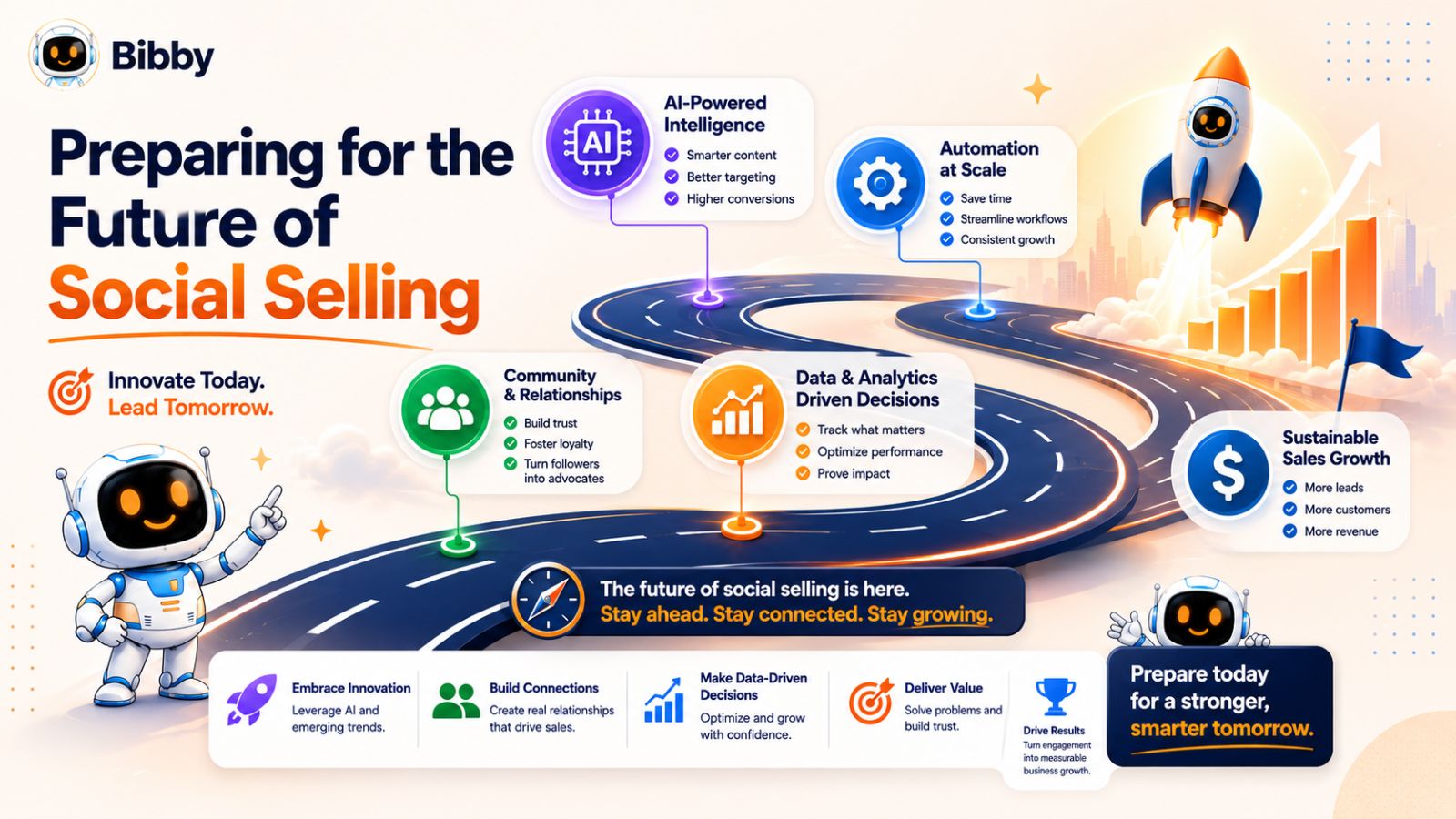
Preparing for the Future of Social Selling
The future belongs to businesses that can combine strategic content creation, data-driven decision-making, automation, and genuine relationship-building.
By embracing emerging technologies while remaining focused on customer needs, organizations can create scalable social media sales systems that continue to generate results as platforms and consumer behaviors evolve.
Tools like Bibby make it easier for businesses to adapt to this changing landscape by simplifying content creation, AI-powered scheduling, multi-platform publishing, and performance tracking. As social media becomes an even more important part of the customer journey, having efficient systems in place will be critical for sustained growth.
Also read: How to Build a Successful Social Media Strategy from Scratch
Conclusion
Social media has evolved into one of the most powerful sales channels available to modern businesses. When used strategically, it can help brands build trust, generate qualified leads, nurture customer relationships, and drive consistent revenue growth.
The most effective social media sales strategies focus on three key principles. First, businesses must prioritize providing value and building trust before attempting to sell. Second, they should create a structured social media sales funnel that guides prospects from awareness to purchase. Third, leveraging automation and AI-powered tools can help maintain consistency while reducing the time and effort required to manage multiple platforms.
As competition for attention continues to increase, businesses that combine authentic engagement with smart automation will be best positioned for success. Tools like Bibby make it easier to create content, generate captions, schedule posts, publish across multiple platforms, and analyze performance from a single workflow.
The next step is to evaluate your current social media strategy and identify opportunities to improve consistency, efficiency, and engagement. By implementing the strategies outlined in this guide, you can transform social media from a marketing activity into a scalable engine for lead generation, customer acquisition, and long-term business growth.