
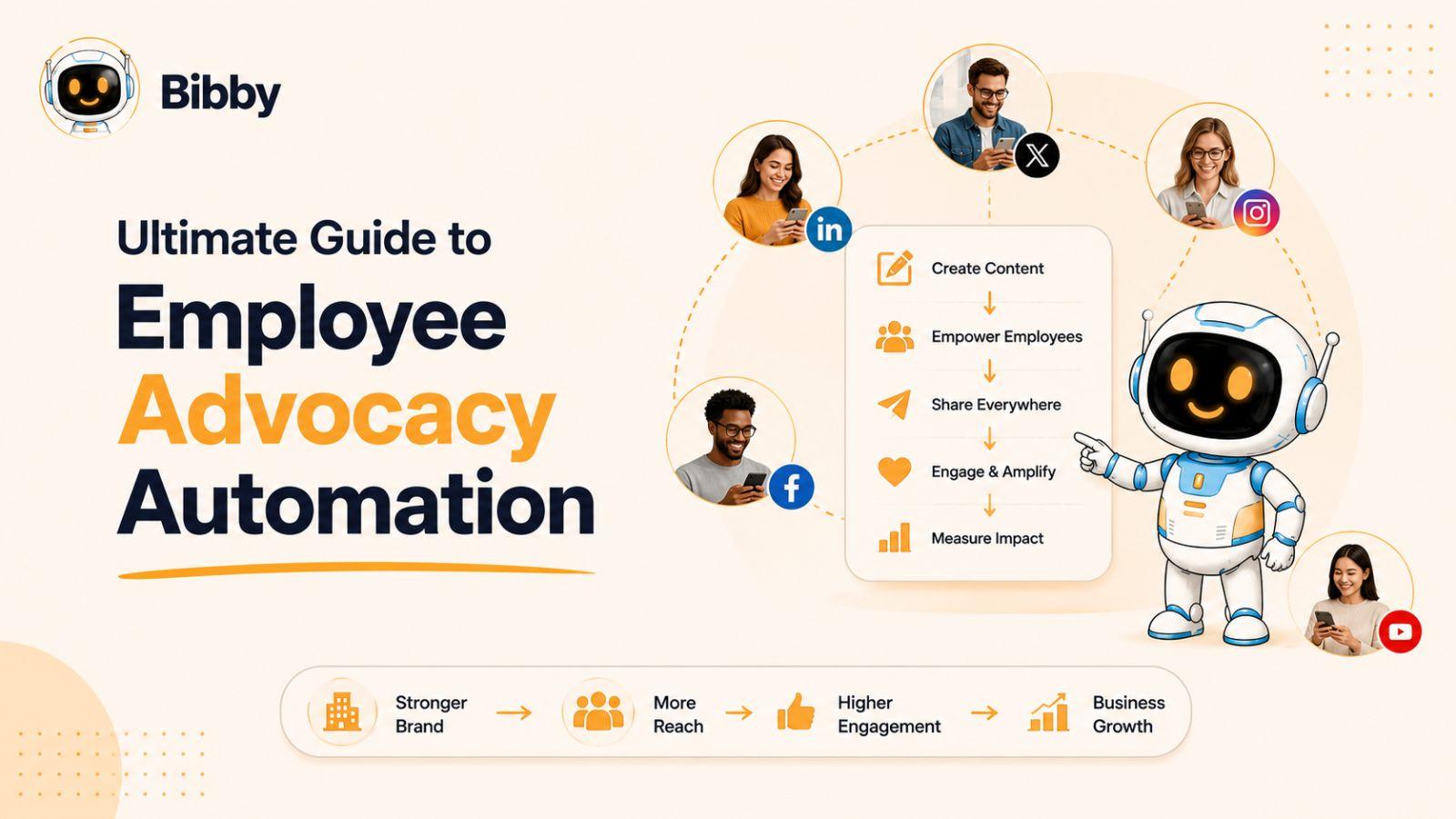
Employee advocacy has become one of the most effective ways for businesses to expand their reach, build trust, and amplify their brand across social media.
As organic reach continues to decline for brand pages, companies are increasingly turning to their employees to share authentic content that resonates with their professional and personal networks. However, manually creating content, writing captions, and posting consistently across multiple platforms can quickly become overwhelming. That's where employee advocacy automation changes the game by combining AI with social media scheduling to make the entire process faster, easier, and more effective.
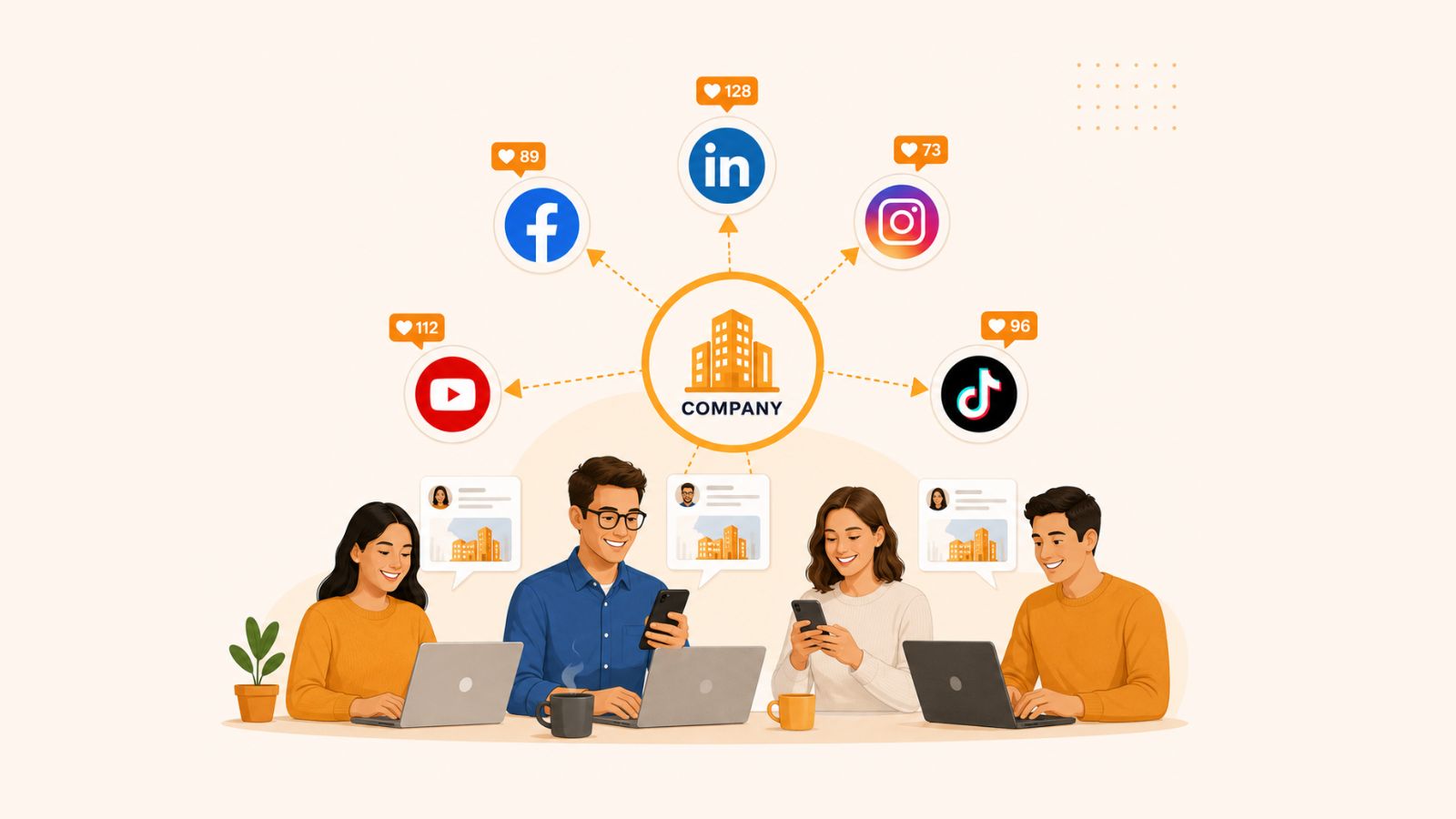
In this article, you will learn:
- How employee advocacy automation helps businesses scale authentic social media marketing.
- The biggest challenges companies face and how AI solves them efficiently.
- How tools like Bibby simplify content creation, scheduling, publishing, and analytics from one platform.
Whether you're a marketing leader, business owner, or social media manager, this guide will show you how to automate employee advocacy while maintaining authentic engagement and maximizing your team's impact across every major social platform.
What Is Employee Advocacy?
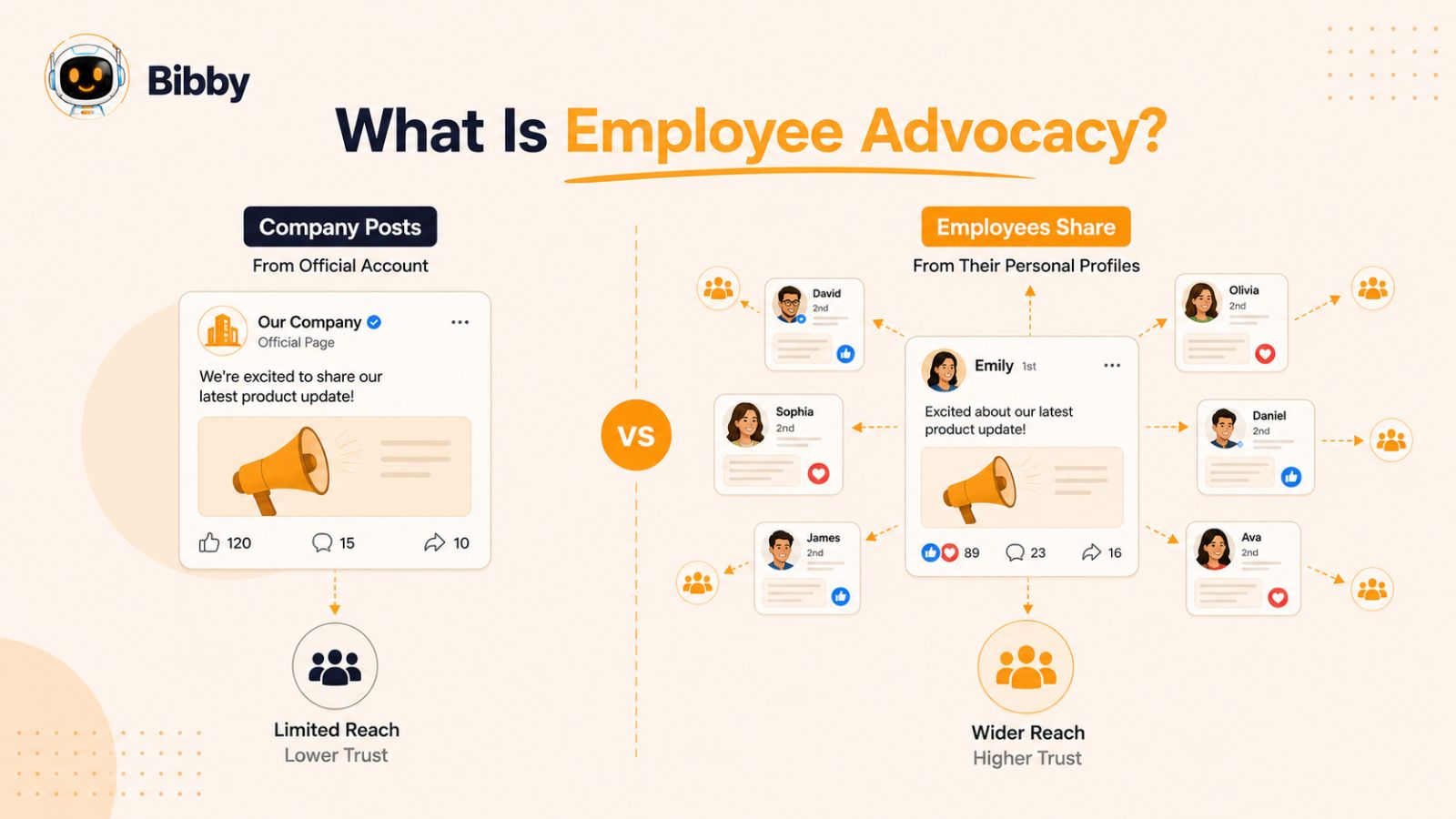
Employee advocacy is a marketing strategy where employees actively share company content, industry insights, achievements, and personal experiences on their own social media pr
ofiles. Instead of relying solely on official brand accounts, businesses empower their workforce to become authentic brand ambassadors who help expand the company's reach and credibility.
Unlike traditional corporate marketing, employee advocacy feels more personal and trustworthy. People are far more likely to engage with content shared by someone they know than with posts from a company page. Whether it's announcing a product launch, celebrating a workplace milestone, or sharing industry expertise, employee posts often generate higher engagement and foster stronger relationships with potential customers, partners, and future employees.
Why Employee Advocacy Is So Effective
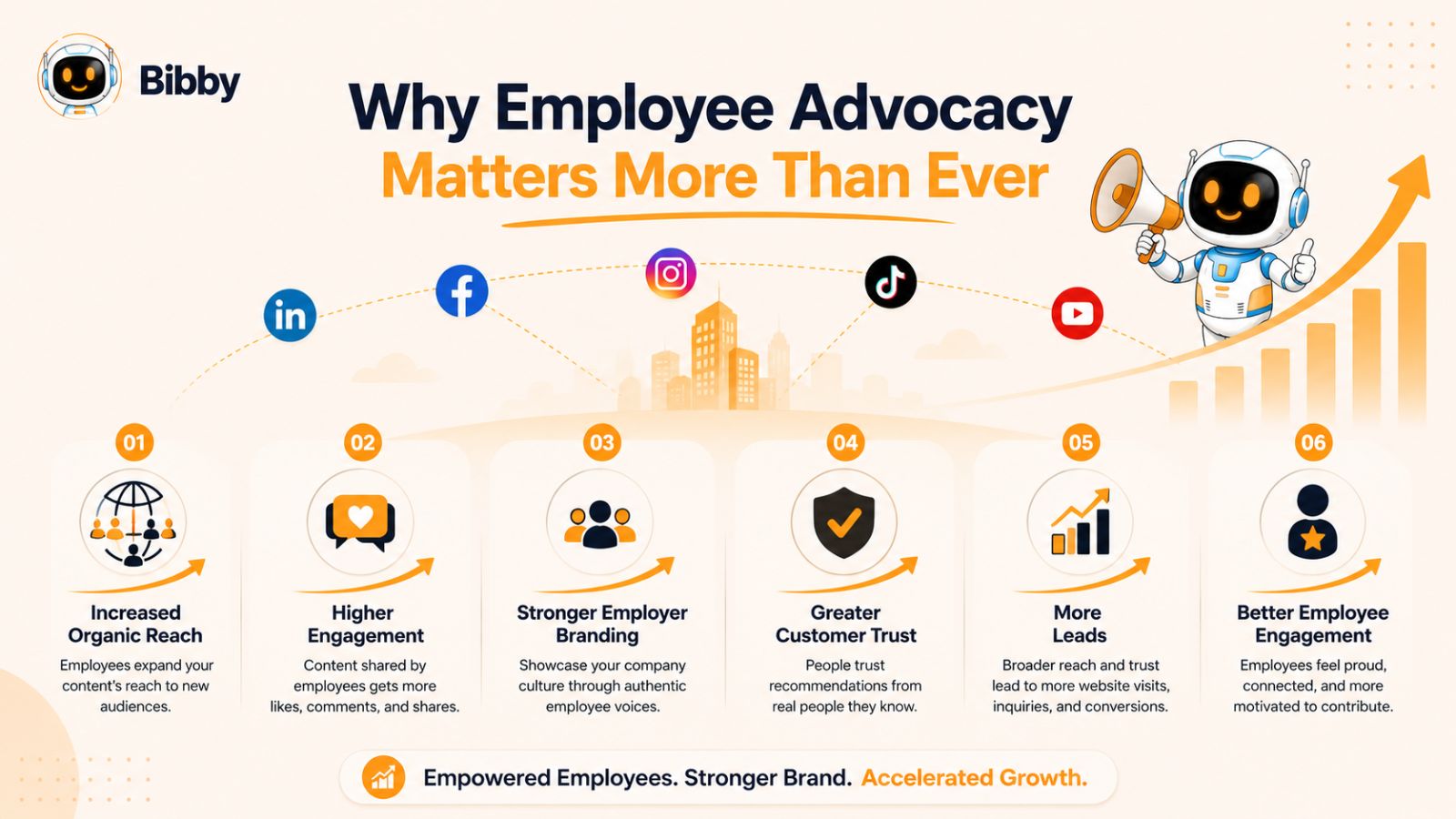
Employee advocacy succeeds because it combines authenticity with scale. Every employee has their own professional network, interests, and voice, allowing companies to reach audiences that branded social media pages may never reach organically.
Some of the biggest benefits include:
- Greater organic reach by extending your brand message through employees' personal networks.
- Higher engagement rates because audiences are more likely to interact with content shared by individuals rather than brands.
- Increased trust and credibility through authentic recommendations and real employee experiences.
- Stronger employer branding that helps attract top talent by showcasing company culture.
- More website traffic and leads as employee-shared content introduces new audiences to your business.
Employee Advocacy vs. Influencer Marketing
Although both strategies rely on people instead of brand accounts, they serve different purposes.
Influencer marketing typically involves paying external creators to promote products or services to their audiences. Employee advocacy, on the other hand, leverages the genuine voices of the people who know the company best—its employees. Their firsthand experiences make the content feel more authentic, helping build long-term trust rather than delivering one-time promotional campaigns.
Why Automation Is Becoming Essential
While employee advocacy offers tremendous value, managing it manually becomes increasingly difficult as organizations grow. Employees often struggle to find content to share, create engaging captions, remember posting schedules, and maintain consistency across multiple platforms.
This is where AI-powered automation transforms the process. Modern tools can streamline content creation, generate compelling captions, schedule posts at optimal times, publish across multiple social networks, and provide detailed analytics—all while allowing employees to maintain their authentic voice. As a result, businesses can scale employee advocacy programs without creating additional work for their teams.
Why Employee Advocacy Matters More Than Ever
Consumers today are exposed to thousands of marketing messages every day, making it increasingly difficult for brands to capture attention through traditional advertising alone. At the same time, social media algorithms have reduced the organic reach of business pages, forcing companies to find new ways to connect with their audiences.
Employee advocacy addresses this challenge by putting real people at the center of your social media strategy. When employees share company news, industry insights, or their own experiences, the content often feels more authentic, reaches wider audiences, and generates stronger engagement than posts published by corporate accounts.
Expand Your Organic Reach
Every employee has a unique network of colleagues, clients, friends, and industry professionals. Even a small team can collectively reach thousands—or even millions—of people without increasing advertising spend.
As more employees participate, your brand visibility grows naturally across platforms like LinkedIn, Facebook, Instagram, TikTok, and YouTube.
Build Trust Through Authentic Voices
People trust people more than brands. Employees can share genuine experiences about their work, company culture, and industry expertise, making their content feel more relatable and credible.
This authenticity helps businesses strengthen relationships with customers, attract new prospects, and establish greater brand authority.
Increase Employee Engagement
Employee advocacy doesn't just benefit your marketing efforts—it also empowers employees to build their own professional brands. By sharing valuable content and demonstrating their expertise, employees can expand their networks, grow their influence, and position themselves as thought leaders in their industries.
When employees feel involved in promoting the company's mission, they're often more engaged and invested in its success.
Strengthen Employer Branding
Potential candidates increasingly research a company's culture before applying for a job. Employee-generated content offers an authentic behind-the-scenes look at daily work life, team achievements, company events, and career growth opportunities.
A strong employee advocacy program helps organizations attract top talent by showcasing what it's actually like to work there.
Generate More Leads and Business Opportunities
Every employee interaction creates opportunities for your business. A shared article, product update, customer success story, or educational video can spark conversations with potential customers, partners, or future hires.
Because these recommendations come from trusted individuals instead of corporate pages, they often produce higher engagement and better conversion rates.
The Challenge of Scaling Employee Advocacy
While the benefits are clear, running a successful employee advocacy program manually can be difficult. Creating content, writing captions, choosing the right hashtags, posting consistently, and managing multiple social media platforms requires significant time and effort.
As organizations grow, these tasks become even more challenging to coordinate across teams. That's why many businesses are turning to employee advocacy automation, using AI to simplify content creation, streamline scheduling, and help employees share high-quality content consistently without adding to their workload.
The Biggest Challenges of Employee Advocacy
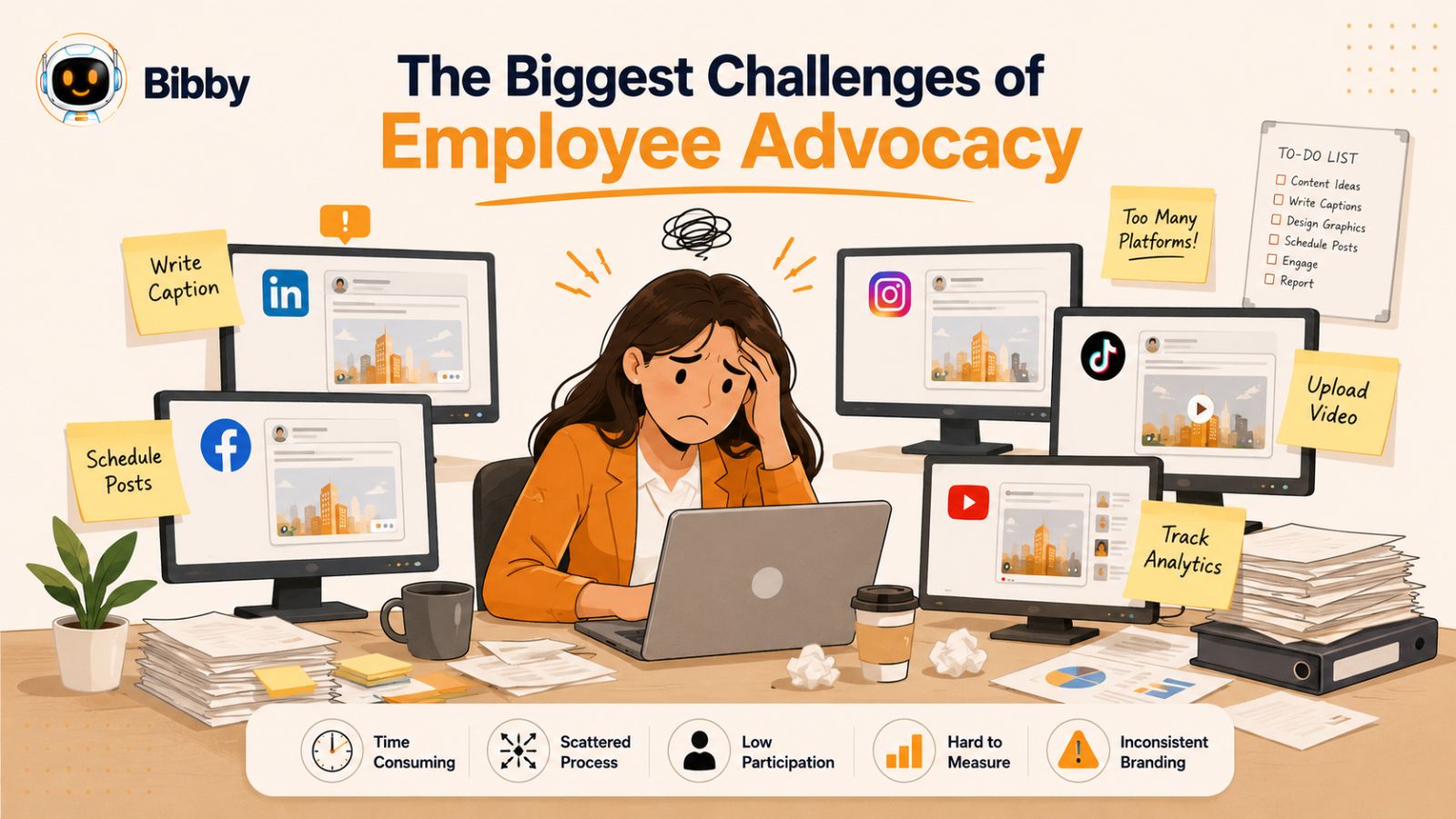
While employee advocacy offers tremendous benefits, building a successful program isn't always easy. Many companies launch advocacy initiatives with enthusiasm, only to see participation decline after a few weeks. The reason isn't a lack of interest—it's the amount of time and effort required to create, manage, and consistently share quality content.
Fortunately, most of these challenges can be solved with the right combination of strategy and automation.
Employees Don't Know What to Share
One of the biggest barriers to employee advocacy is uncertainty. Employees often want to support their company but aren't sure what type of content is appropriate to post or how to make it engaging for their audience.
Without clear guidance, many choose not to post at all, resulting in missed opportunities to expand the company's reach.
Creating Content Takes Too Much Time
Writing compelling captions, designing graphics, editing videos, and finding relevant hashtags can be time-consuming. For employees whose primary responsibilities lie outside of marketing, creating social media content often becomes a low priority.
As a result, even the best employee advocacy programs can lose momentum over time.
Maintaining Consistency Is Difficult
Successful employee advocacy depends on consistent posting. However, remembering to publish content regularly across multiple platforms can be challenging, especially for busy professionals.
Inconsistent activity reduces visibility and limits the long-term impact of your advocacy efforts.
Managing Multiple Social Media Platforms
Most businesses maintain a presence on several social networks, including LinkedIn, Facebook, Instagram, TikTok, and YouTube. Each platform has its own audience, content style, and posting best practices.
Managing separate publishing schedules for every platform quickly becomes overwhelming without a centralized workflow.
Writing Platform-Specific Captions
A caption that performs well on LinkedIn may not resonate with audiences on Instagram or TikTok. Creating unique, engaging copy for every platform requires creativity and time—resources that many employees simply don't have.
Without optimized captions, even great content may fail to achieve its full potential.
Finding the Best Time to Post
Publishing at the right time can significantly improve reach and engagement. However, identifying the optimal posting schedule for different platforms and audiences often requires ongoing testing and analysis.
Manually tracking this information is impractical for most businesses.
Measuring Success
Employee advocacy isn't just about posting content—it's about understanding what works. Businesses need insights into engagement, reach, clicks, audience growth, and top-performing content to improve future campaigns.
Without analytics, it's difficult to measure ROI or identify opportunities for improvement.
Why Automation Is the Next Step
As employee advocacy programs grow, manual processes become increasingly difficult to manage. AI-powered automation eliminates many of these repetitive tasks by helping teams create content, generate captions, schedule posts, publish across multiple platforms, and monitor performance from a single dashboard.
Instead of spending hours managing social media, employees can focus on building authentic relationships while automation handles the repetitive work behind the scenes. That's exactly why modern businesses are embracing employee advocacy automation as a smarter, more scalable approach to social media marketing.
Also read: Social Media Automation for Franchises and Multi-Location Businesses
Why Automation Is Transforming Employee Advocacy
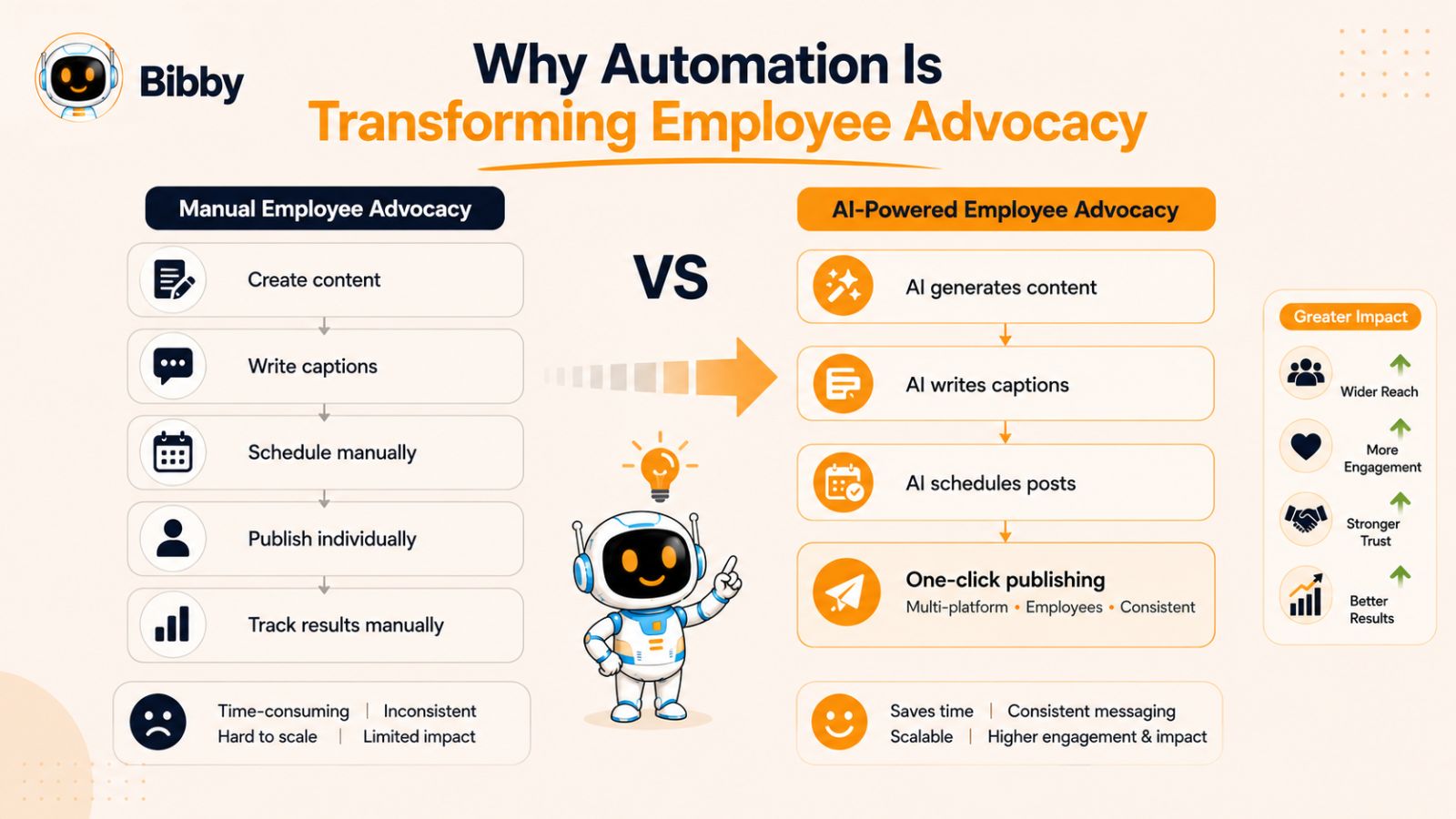
Employee advocacy works best when employees can share valuable content consistently without disrupting their daily work. However, manually creating posts, writing captions, scheduling content, and publishing across multiple platforms can quickly become overwhelming.
This is where automation and artificial intelligence (AI) are changing the game. Instead of spending hours managing social media, businesses can automate repetitive tasks while allowing employees to focus on what they do best—building relationships, sharing expertise, and engaging with their audiences.
AI Makes Content Creation Faster
One of the biggest obstacles to employee advocacy is creating fresh content regularly. AI-powered tools can help generate engaging captions, suggest hashtags, and even create images, dramatically reducing the time needed to prepare social media posts.
Employees no longer have to start from a blank page. With AI assistance, they can create professional, platform-ready content in minutes.
Smart Scheduling Keeps Content Consistent
Consistency is one of the most important factors in social media success. Rather than remembering to publish posts manually every day, automation tools can schedule content weeks or even months in advance.
This ensures your employee advocacy program remains active, even during busy periods or holidays.
AI Optimizes Posting Times
The timing of a social media post can significantly impact its performance. AI-powered scheduling tools analyze engagement patterns and automatically publish content when audiences are most likely to see and interact with it.
This helps maximize visibility without requiring employees to constantly monitor the best times to post.
Publish Across Multiple Platforms at Once
Managing separate posts for LinkedIn, Facebook, Instagram, TikTok, and YouTube can be tedious. Modern automation platforms eliminate this complexity by allowing users to publish content across multiple social networks from a single dashboard.
This saves valuable time while maintaining a consistent brand presence everywhere your audience spends time.
Analytics Drive Better Decisions
Automation doesn't stop after publishing. Built-in analytics help businesses understand which posts generate the most engagement, reach, clicks, and conversions.
These insights allow marketing teams to refine their employee advocacy strategy, identify successful content formats, and continuously improve future campaigns.
How Bibby Simplifies Employee Advocacy
Bibby brings all of these capabilities together in one simple, AI-powered workflow designed to make social media management effortless.
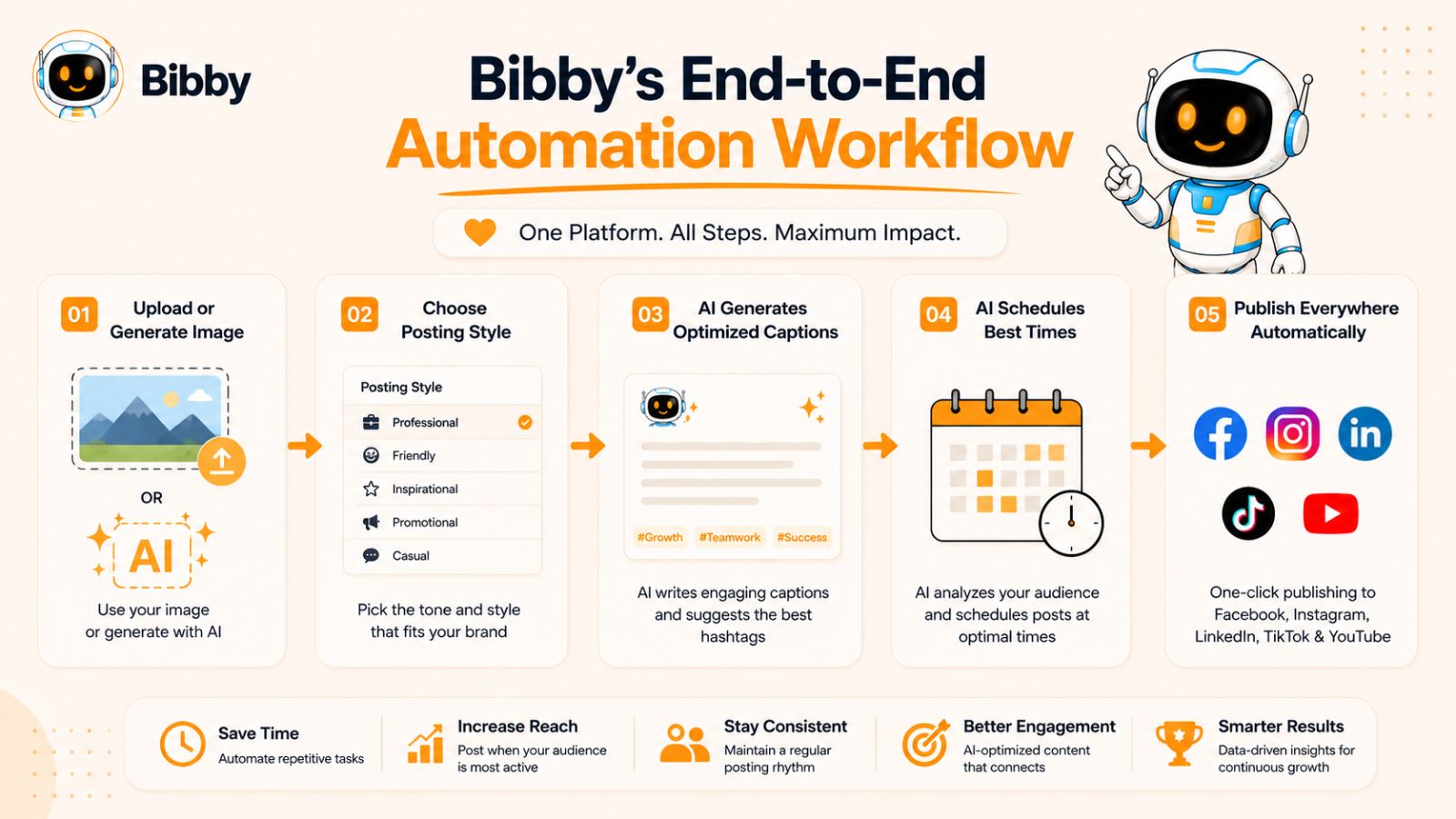
Instead of juggling multiple tools, employees and marketing teams can manage their entire content lifecycle from a single platform.
With Bibby, the process is simple:
- Upload your own image or generate one with AI.
- Choose your preferred posting style, such as professional, educational, promotional, or casual.
- Let Bibby's AI generate engaging captions tailored for each social media platform.
- Automatically schedule posts across Facebook, Instagram, LinkedIn, TikTok, and YouTube at AI-optimized posting times.
- Publish videos, stories, images, and other media from one centralized dashboard.
- Monitor detailed analytics to track reach, engagement, audience growth, and campaign performance.
By automating the repetitive work, Bibby gives employees the freedom to focus on creating meaningful connections while ensuring content is published consistently and at the right time. The result is a more effective employee advocacy program that saves time, increases productivity, and helps businesses grow their presence across every major social media platform.
Also read: Social Media Automation for B2B Companies
Best Practices for Employee Advocacy Automation
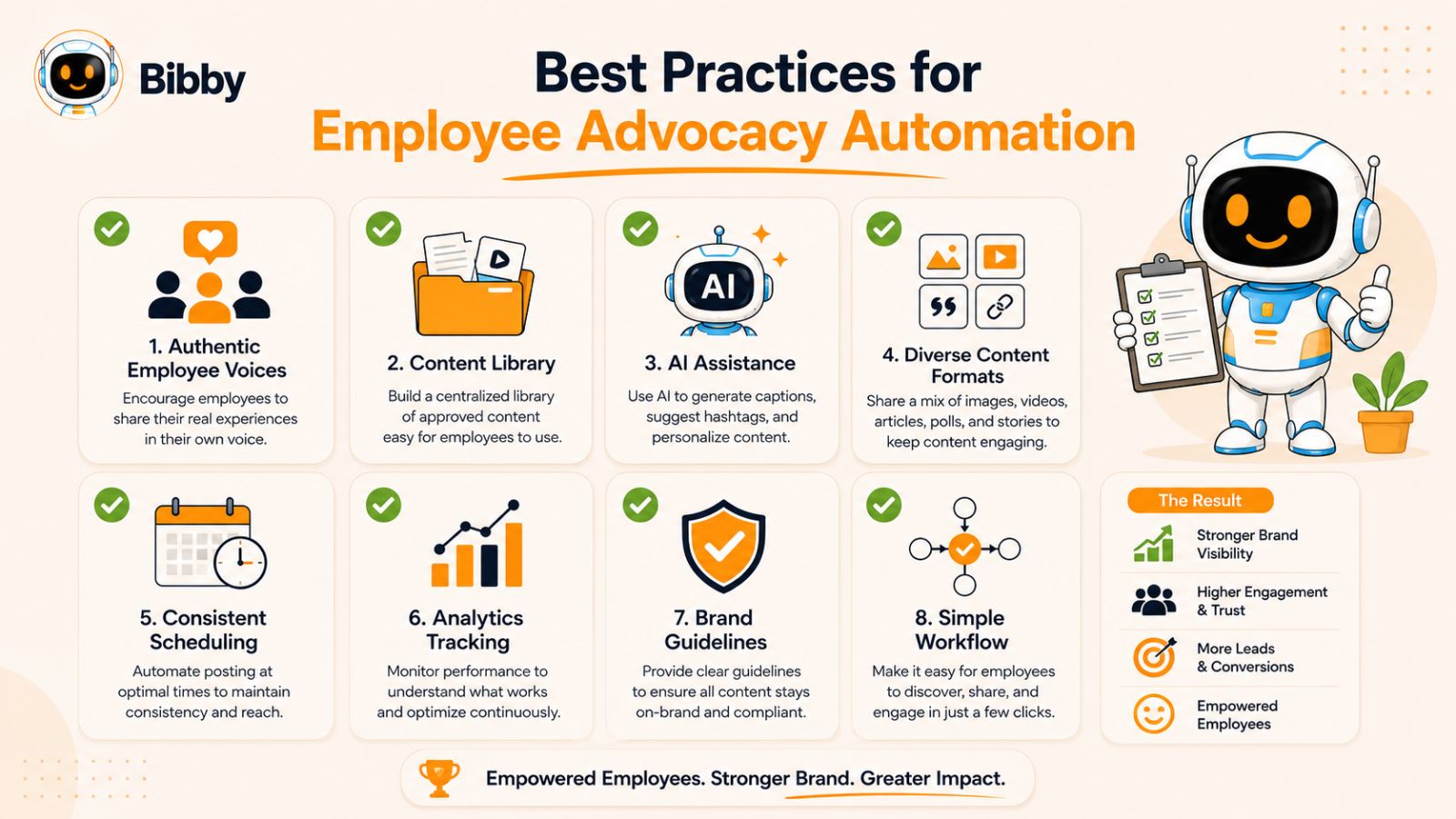
Automation can make employee advocacy significantly more efficient, but the most successful programs combine AI with authentic human engagement. Instead of replacing employees' voices, automation should empower them to share valuable content more consistently and confidently.
Here are some best practices to help you build an employee advocacy program that delivers long-term results.
Encourage Authentic Employee Voices
Employees shouldn't sound like corporate marketing copy. While AI can generate captions and suggest content ideas, encourage employees to personalize posts with their own experiences, opinions, or insights.
Authentic storytelling builds trust and often generates higher engagement than generic promotional messages.
Provide High-Quality Content to Share
Not every employee has time to create original content from scratch. Give your team access to a library of useful resources, including blog posts, case studies, product updates, company news, customer success stories, and industry insights.
When employees have valuable content readily available, they're much more likely to participate in your advocacy program.
Use AI to Save Time, Not Replace Creativity
AI is most effective when it handles repetitive tasks such as generating captions, suggesting hashtags, scheduling posts, or recommending the best publishing times.
Employees can then focus on adding their unique perspective, responding to comments, and engaging with their audience—activities that AI can't replicate authentically.
Diversify Your Content Formats
Successful employee advocacy goes beyond text posts. Mix different types of content to keep your audience engaged, including:
- Images
- Short-form videos
- Stories
- Educational carousels
- Blog articles
- Behind-the-scenes content
- Customer success stories
- Company announcements
Using a variety of formats helps maintain audience interest while expanding your reach across different social media platforms.
Maintain a Consistent Posting Schedule
Consistency is one of the biggest drivers of long-term social media growth. Rather than posting sporadically, create a content calendar that keeps employees active throughout the week.
Tools like Bibby simplify this process by allowing teams to schedule weeks or even months of content in advance. AI-optimized posting times ensure content is published when audiences are most likely to engage, eliminating the guesswork from scheduling.
Monitor Performance and Improve
Employee advocacy should continuously evolve based on real performance data. Regularly review analytics to understand which posts generate the most:
- Reach
- Engagement
- Clicks
- Shares
- Profile visits
- Followers
- Website traffic
These insights help identify successful content types and refine your strategy over time.
Keep Brand Guidelines Simple
Providing employees with clear brand guidelines helps maintain consistency without limiting creativity. Offer recommendations for tone, messaging, visual style, and hashtags while still allowing individuals to express themselves naturally.
The goal is to create content that feels personal while reinforcing your company's brand values.
Make Participation Easy
The easier it is for employees to share content, the more likely they are to participate consistently. Complicated workflows often discourage engagement and reduce the effectiveness of your advocacy program.
Platforms like Bibby streamline the entire process by combining AI-powered content creation, caption generation, scheduling, multi-platform publishing, and analytics into one intuitive workflow. Employees can spend less time managing social media and more time building genuine relationships with their audience.
Frequently Asked Questions
What is employee advocacy automation?
Employee advocacy automation is the process of using AI and social media management tools to simplify how employees share company content. Instead of manually creating captions, scheduling posts, and publishing across multiple platforms, automation handles these repetitive tasks while employees focus on engaging with their audience and building authentic relationships.
Why is employee advocacy important?
Employee advocacy helps businesses expand their organic reach, increase engagement, build trust, and strengthen employer branding. Since people are more likely to interact with content shared by individuals than corporate pages, employee advocacy can significantly improve brand awareness and generate more leads.
Can employee advocacy be automated?
Yes. Modern AI-powered platforms can automate many aspects of employee advocacy, including content creation, caption generation, scheduling, publishing, and analytics. Automation saves time while making it easier for employees to maintain a consistent social media presence.
What are the benefits of automating employee advocacy?
Automating employee advocacy offers several advantages, including:
- Saves time by reducing manual work.
- Maintains a consistent posting schedule.
- Publishes content at AI-optimized times.
- Supports multiple social media platforms from one dashboard.
- Provides analytics to measure performance.
- Helps employees participate without adding to their daily workload.
Which social media platforms support employee advocacy?
Employee advocacy works across virtually every major social media platform, including LinkedIn, Facebook, Instagram, TikTok, YouTube, and X (formerly Twitter). The best platform depends on your audience, industry, and marketing goals.
What should employees share on social media?
Employees can share a variety of valuable content, such as:
- Industry insights
- Company news
- Product updates
- Educational articles
- Customer success stories
- Behind-the-scenes content
- Company events
- Career milestones
- Professional tips and advice
The most effective posts combine company messaging with the employee's own perspective, making the content more authentic and engaging.
How often should employees post?
There is no universal posting frequency, but consistency is more important than volume. For most professionals, sharing content two to five times per week helps maintain visibility without overwhelming their audience. Scheduling content in advance also makes it easier to stay consistent.
What analytics should businesses track?
To measure the success of an employee advocacy program, monitor key performance indicators such as:
- Reach
- Impressions
- Engagement
- Click-through rate (CTR)
- Shares
- Comments
- Follower growth
- Website traffic
- Leads and conversions
Reviewing these metrics regularly helps refine your strategy and improve future campaigns.
What is the best employee advocacy automation tool?
The best platform depends on your organization's needs, but businesses should look for a solution that combines AI-powered content creation, caption generation, smart scheduling, multi-platform publishing, and performance analytics.
Bibby brings all of these capabilities together in one easy-to-use platform. With a simple workflow, you can upload your own images or generate visuals with AI, choose your preferred posting style, let AI create optimized captions, automatically schedule content at the best times, publish images, videos, and stories across Facebook, Instagram, LinkedIn, TikTok, and YouTube, and monitor detailed analytics—all from a single dashboard.
Also read: How to Build a Winning Social Media User-Generated Content Strategy (Complete Guide)
Final Thoughts
Employee advocacy is one of the most effective ways to expand your brand's reach, build trust, and create meaningful engagement on social media. By empowering employees to share authentic content, businesses can connect with audiences in a way that traditional brand pages often cannot.
As we've explored throughout this guide, successful employee advocacy depends on three key elements: creating valuable content consistently, simplifying the sharing process with automation, and using analytics to continuously improve results. AI-powered automation removes repetitive tasks like writing captions, scheduling posts, and managing multiple social media platforms, allowing employees to focus on authentic conversations and relationship building.
If you're ready to scale your employee advocacy program, a platform like Bibby can simplify the entire workflow. From generating AI images and captions to scheduling posts at AI-optimized times, publishing across Facebook, Instagram, LinkedIn, TikTok, and YouTube, and tracking performance with built-in analytics, Bibby helps businesses save time while maximizing their social media impact.
As your employee advocacy program grows, the next step is to develop a comprehensive social media content strategy that aligns your brand messaging, employee participation, and AI automation. Combining these elements will help you build a sustainable social media presence that drives long-term engagement, brand awareness, and business growth.