
The badge is meant to help people find an official profile and tell it apart from impersonators or unofficial pages. Exact meaning depends on the platform and program. It does not universally mean famous, expert, or endorsed. It is not a guarantee that posts are accurate.
Bibby does not apply for badges or confirm identity. After you have an official profile, generate captions and schedule images, carousels, videos, and Stories on Facebook, Instagram, LinkedIn, YouTube, and TikTok—not X. See the dictionary, blog, and free tools.
What Is a Verified Account?
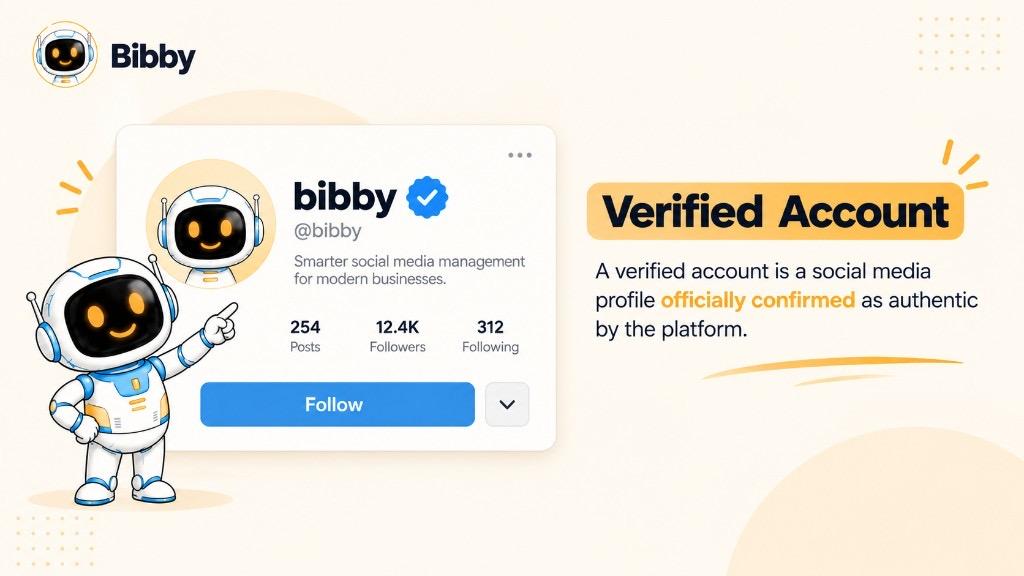
A platform confirms or signals that the account meets its verification requirements. Public figures, creators, businesses, organizations, and brands may go through eligibility review. Some networks also use paid subscriptions or identity programs.
Verification, authenticity, and trust are related but different. Judge the content yourself.
What Does the Verified Badge Mean?
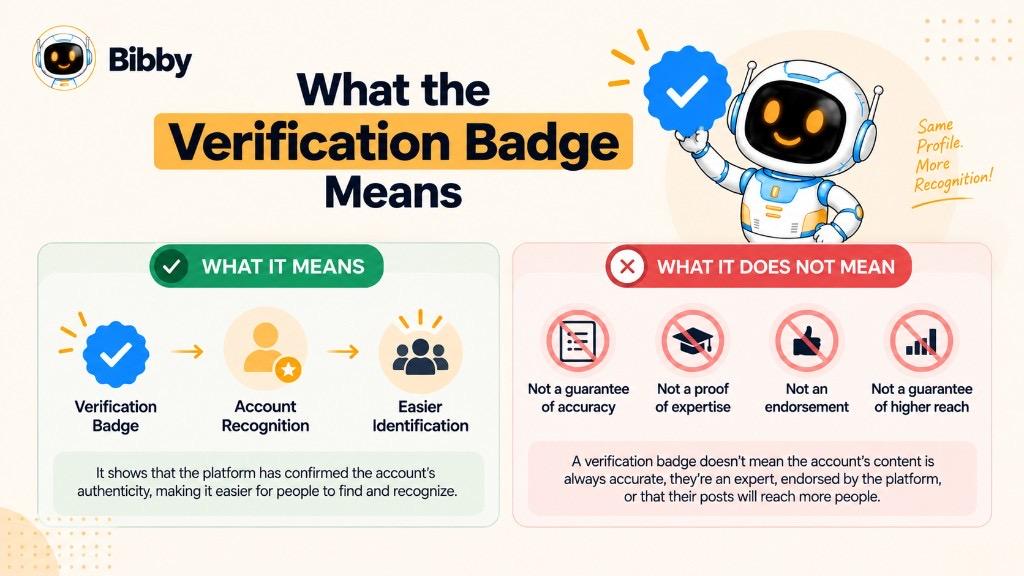
It is a visual indicator of a designation—often a checkmark—so users can tell a designated account from similar names.
Authenticity — helps identify the person, brand, business, organization, or public figure the profile is meant to represent, especially when impersonation is a risk.
Platform recognition — the network applied its system. That is not an endorsement of opinions, products, or posts.
Perceived credibility — a badge can make a profile easier to recognize and may affect how people judge it. It still does not prove expertise, accuracy, or reliability.
A badge does not automatically mean:
- every post is accurate
- the account is an expert
- it has a large or engaged audience
- the platform endorses its views
- it gets more reach or engagement
How Does Social Media Account Verification Work?
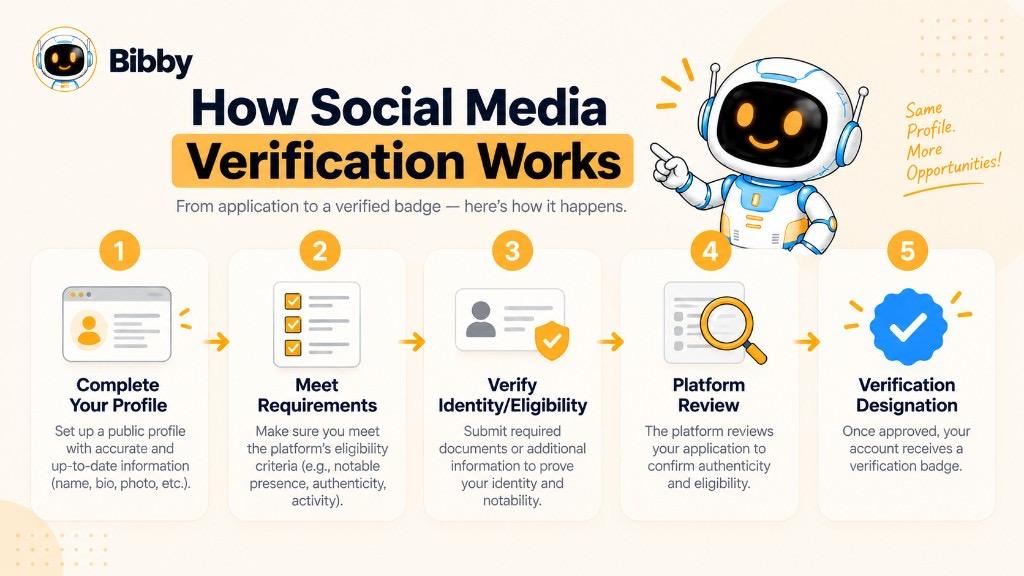
Process varies by platform, account type, location, and program: application, identity check, business review, paid subscription, or a platform-initiated review.
- Meet requirements — authenticity, identity, completeness, activity, eligibility, or policy compliance. Some programs are narrow; others are broader.
- The platform reviews — identity, business details, or other documents. Some programs ask for government ID or company information.
- A designation is added — a badge or another indicator. Look and meaning differ by network.
- Routes differ — eligibility-based, identity, business, subscription-based, or platform-selected.
- Rules change — eligibility, subscriptions, and badge policies update. Advice for one network may not apply to another, or stay true forever.
Verification is not a universal certificate. It is a platform-specific designation.
What Are the Benefits of a Verified Account?
Benefits depend on the platform and program.
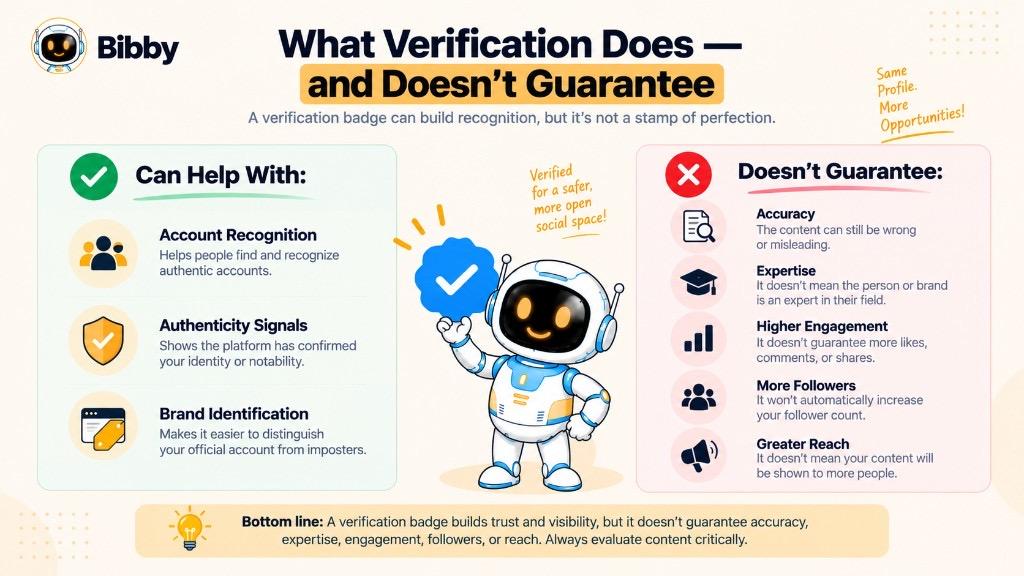
- Official vs. lookalikes — useful for brands, creators, orgs, and public figures that attract impersonators.
- Easier to recognize — an extra visual signal next to name, handle, and bio.
- Perceived credibility — people may treat the account as more legitimate when they decide to follow or read more. Perceived credibility ≠ factual reliability.
- Program extras — some programs add features, protection, or support. Do not assume every verified account gets the same extras.
- Brand recognition — helps people find the intended profile among several with similar names.
A badge is not a promise of higher organic reach, more followers, more engagement, accuracy, expertise, endorsement, or business success. Primary value: identification. Extra perks are program-specific.
How to Get a Verified Account on Social Media
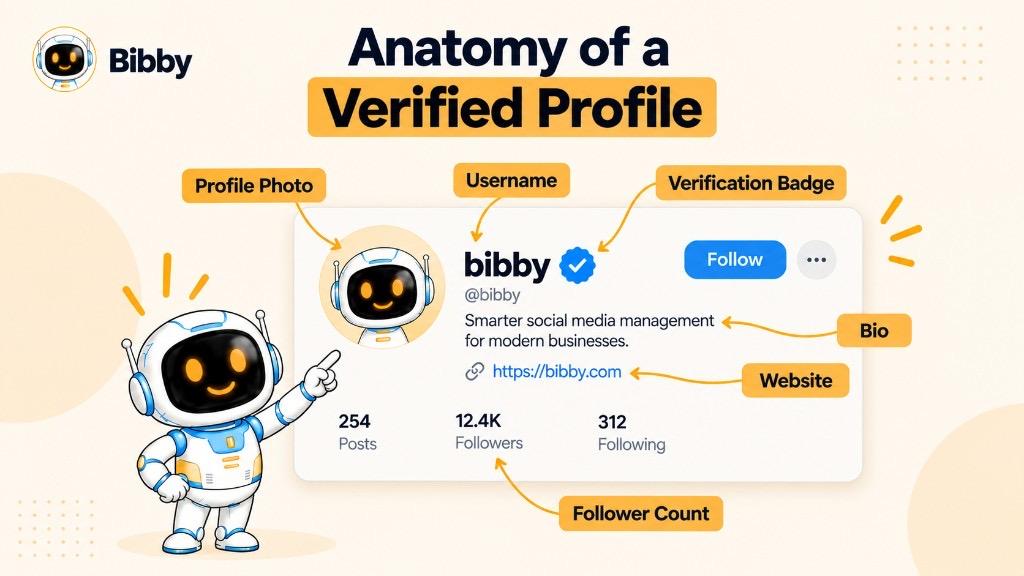
There is no single process. In general: authentic profile, meet that network’s rules, complete identity or business steps if asked.
- Complete the profile (name, photo, bio, website).
- Use an authentic identity.
- Follow terms and community guidelines.
- Check eligibility for *that* program.
- Submit an application, ID, business docs, or join a paid program if that is the route.
- Finish extra confirmations (email, phone, identity).
Possible asks: government ID, business documents, accurate profile data, photo, verified contact details, policy compliance. Examples, not a universal checklist. Check the live help center for that platform.
Is it free? Not always. Some routes have no subscription; others are paid and change over time. Meeting best practices does not guarantee approval. Bibby cannot submit the application for you.
Verified Accounts on Different Social Media Platforms
| Platform | Indicator | How it may work |
|---|---|---|
| Badge | Options vary by account and program. | |
| Badge | Can include eligibility and subscription-based routes; region and program matter. | |
| Verification indicators | Identity, workplace, and other confirmations—not only a classic checkmark. | |
| YouTube | Badge | Helps distinguish the official channel from similar names. Separate from monetization and views. |
| TikTok | Badge | TikTok’s own criteria; another network’s badge does not auto-qualify you. |
X and other apps have their own programs too. Bibby does not publish there.
Facebook — badge on a profile or Page for a person, creator, business, or org; read it according to *that* program.
Instagram — badge next to the name; meaning depends on route and current policy.
LinkedIn — broader than one checkmark; different indicators can confirm different facts.
YouTube — official channel vs. similar names. Not an endorsement of every video.
TikTok — official person, brand, or entity per TikTok’s rules.
Always ask which platform issued the designation and what it currently says the indicator means.
Verified Account vs. Unverified Account
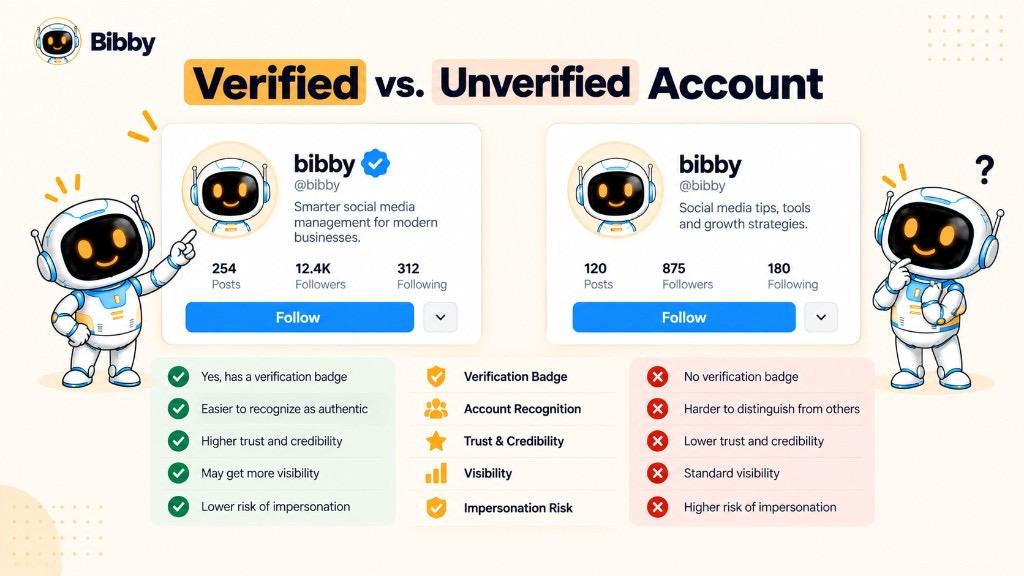
Verified = the platform gave a designation (usually a badge). Unverified = it did not—even if the profile is genuine.
| Feature | Verified | Unverified |
|---|---|---|
| Badge | Usually yes | Usually no |
| Platform designation | Yes | No |
| Can be a real person or business | Yes | Yes |
| Automatically trustworthy | No | No |
| Automatically authoritative | No | No |
| Content reviewed for accuracy | No | No |
| Guaranteed higher reach | No | No |
Unverified ≠ fake. Many real people, creators, and small businesses never pursue a badge. Verified ≠ every post is true.
Verified means a designation. Unverified does not mean illegitimate. Still judge identity, content, and reputation separately.
Verified Account vs. Authentic Account
Authentic = it genuinely represents who or what it claims.
Verified = the platform applied a designation.
A company’s official Instagram can be authentic without a badge. A small business can use its real name, site, branding, and contact details and never qualify for—or never apply for—verification.
A badge can *signal* authenticity; meaning still depends on the program (identity vs. subscription vs. eligibility). It is not a universal guarantee of accuracy or quality.
Verified Account vs. Verification Badge
Verified account = the profile that received the designation.
Verification badge = the symbol (often a checkmark).
Verification checkmark = everyday name for a checkmark-style badge.
“That creator has a verified account” and “that creator has a checkmark” usually mean the same status. The platform still defines what the symbol represents, and designs change.
Do Verified Accounts Get More Reach?
No automatic guarantee of more reach, views, followers, or engagement. Verification and distribution are separate. Ranking can weigh relevance, interactions, freshness, and other signals—not “has a badge” as a shortcut to the FYP.
A badge can make an official profile easier to recognize, which *may* change whether someone follows or taps. That is not the same as extra organic distribution.
Follower growth still depends on content quality, audience fit, consistency, discoverability, and engagement. A badge is not a like, comment, share, save, or view machine.
Verification asks: did this account get a designation?
Reach asks: how many people saw the content?
Do not treat them as the same. For marketers, a badge can help official presence; publishing relevant content is a separate job. Scheduling in Bibby does not add reach because of a checkmark.
Is a Verified Account More Trustworthy?
It can be a signal of recognition, not a truth filter.
People may trust a badge because it reduces “which profile is official?” uncertainty. It does not prove every statement, ad, or recommendation.
Verified accounts can still share errors, opinions, promotions, mistakes, and content you disagree with.
When you evaluate: who runs it, can you confirm the claim, sources, history, and other reliable coverage. Identity help ≠ universal trustworthiness.
Can Anyone Get a Verified Account?
Depends on platform, account type, and program. No universal “anyone who wants a badge.”
Possible eligible types: individuals, creators, public figures, businesses, brands, organizations, other public or professional accounts—with different requirements.
Fame does not universally guarantee a badge. Small businesses may be eligible for some identity or business programs. New accounts may need activity, identity, or security steps first. Paid programs can differ from classic review.
Meeting requirements ≠ guaranteed approval. Check current rules for that network.
Can a Verified Account Lose Its Verification?
Yes. Reasons can include policy violations, misleading info during review, misrepresentation, failing a program’s ongoing rules, account or program changes, or other terms.
Big name, identity, or business changes can affect status—read the policy first. A badge is not a permanent property right.
Examples of Verified Accounts
Public figure — hundreds of same-name profiles; the badge helps people find the official one. It does not make every statement true or endorsed.
Business — official name, logo, site, contact. The badge helps shoppers skip fan pages and impersonators. It does not guarantee product quality.
Creator — educational videos, similar lookalikes. The badge helps fans find the right profile. It does not make them an expert or prove every tip.
A verified account is platform-designated status. Treat the badge as one signal, not proof of popularity, expertise, accuracy, or trust.
Why Verified Accounts Matter for Social Media Marketing
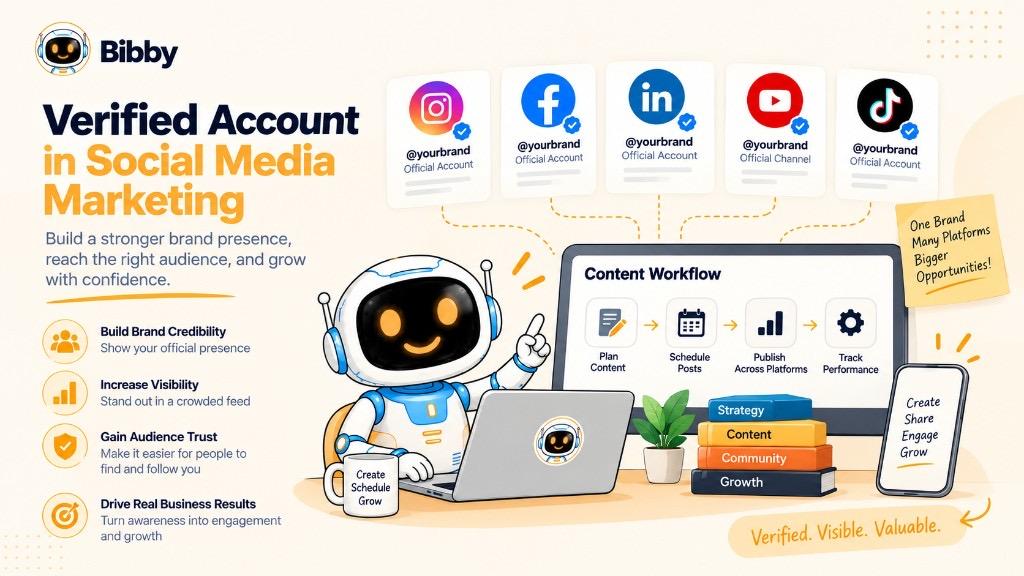
Useful for a recognizable official presence—especially with similar names or impersonators. It is only one piece of strategy next to consistent content, clear messaging, engagement, and a publishing workflow.
A badge can complement a consistent name, visuals, bio, website, and voice across Facebook, Instagram, LinkedIn, TikTok, and YouTube.
Campaigns still need different formats, captions, and timing per network. Automation in Bibby can generate captions, organize campaigns, and schedule images, carousels, videos, and Stories on those five channels—it does not submit verification. Plans and sign up; more in resources and help.
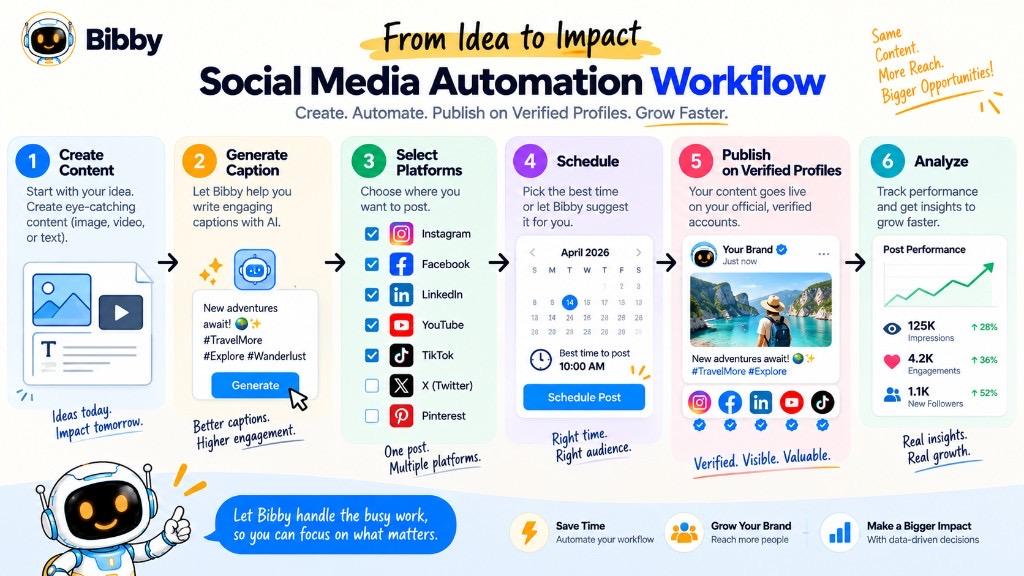
A badge does not replace useful posts, brand identity, audience fit, formats, Insights review, or a calendar. Social proof from customers is also separate from a checkmark.
Verified Account Meaning in Simple Terms
A verified account received a platform designation, usually a checkmark. That can help people find an official profile when lookalikes exist. It does not automatically mean more trustworthy, more authoritative, or always accurate.
Meaning = that platform + that program. A verified account is recognized under a verification system—not a content-quality guarantee.
Key Takeaways
- Platform-specific — systems, requirements, and programs differ.
- Not a trust guarantee — recognition or authenticity signal ≠ every post is true.
- One part of marketing — content, branding, engagement, and publishing still matter.
Next: handles, a bio, social proof, and social media automation.