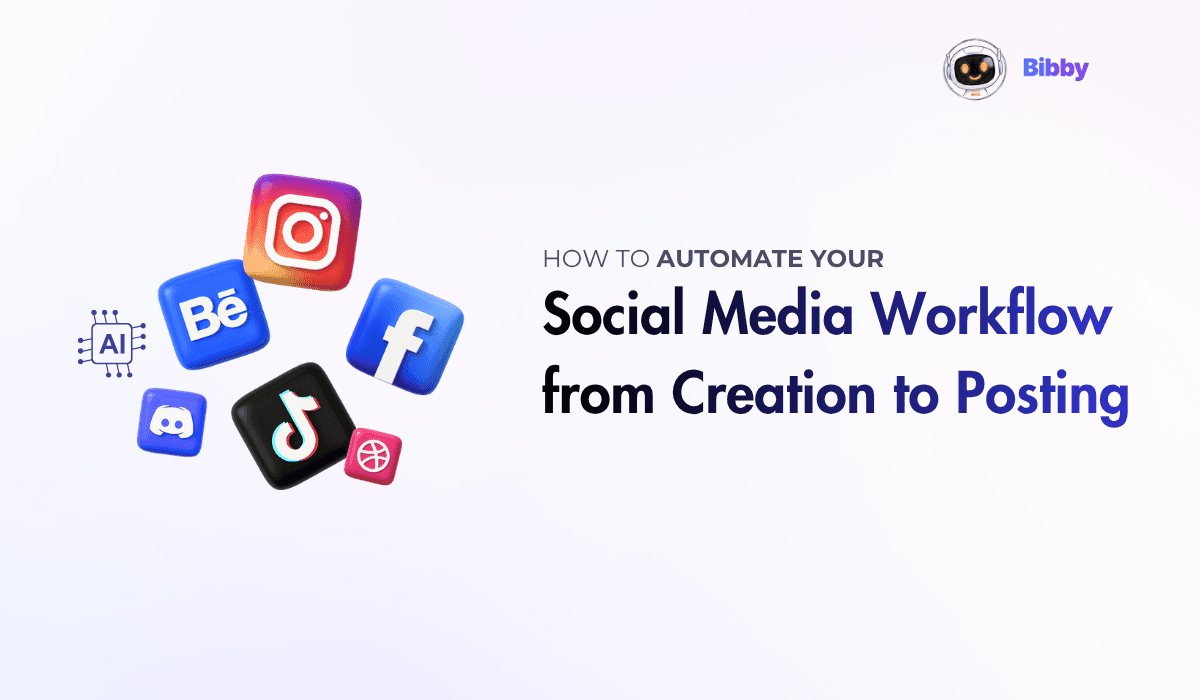
How to Automate Your Social Media Workflow from Creation to Posting
You spend hours crafting the perfect Instagram caption, finding just the right image, and timing your post for maximum visibility — only to do it all over again tomorrow. Sound familiar?
Managing social media today isn't just time-consuming — it's overwhelming. Between juggling multiple platforms, meeting content deadlines, and responding to DMs, even the most organized marketers end up in a constant cycle of catch-up. The truth is, staying consistent on social media shouldn't feel like running a never-ending marathon.
That's where automation steps in. The smartest creators and brands have already discovered a secret: when you automate your workflow — from content creation to posting — you reclaim your time, boost engagement, and create space for creativity again.
In this guide, you'll uncover how to transform your scattered social media routine into a seamless, self-running system that works while you sleep. Ready to take back control of your social media game? Let's dive in.
Why Social Media Workflow Automation Matters
Social media has evolved from a creative playground into one of the most powerful business tools in the digital world. But with that growth comes complexity. Brands now manage multiple platforms, each with its own algorithm, content format, and audience behavior — a task that can quickly spiral into chaos when handled manually.
Think about it: a single campaign might require drafting dozens of captions, resizing graphics for different platforms, scheduling posts across time zones, and tracking performance metrics — all before even responding to comments. Without automation, these repetitive tasks eat away at your team's most valuable resource: time.
Automation changes that equation entirely. It allows you to offload the routine so you can focus on what truly moves the needle — creative strategy, storytelling, and audience engagement. Studies show that businesses using social media automation tools see up to 40% higher efficiency in campaign execution and a significant improvement in posting consistency.
Even better, automation reduces human error. No more missed posts because someone forgot to hit "publish." No more inconsistent branding because one team member used an outdated template. Instead, your content flows through a system designed to keep your brand active and visible — even when you're off the clock.
In a world where algorithms reward consistency and timing, automating your workflow isn't just smart — it's essential. It ensures that your message reaches your audience when it matters most, without you having to constantly babysit every post.
The Core Components of a Social Media Workflow
Before you can automate your social media, you need to understand the moving parts that make up the entire process. A social media workflow isn't just about posting content — it's about creating a smooth, repeatable system that connects every stage, from brainstorming to reporting.
A well-structured workflow usually includes six key phases:
1. Ideation: Generating content ideas that align with your goals, trends, and audience interests.
2. Creation: Designing graphics, writing captions, and preparing media for each platform.
3. Approval: Getting sign-off from stakeholders or team members before scheduling.
4. Scheduling: Assigning specific dates and times for posts to go live.
5. Engagement: Responding to comments, DMs, and mentions to build relationships.
6. Analytics: Measuring performance to understand what's working and where to improve.
When done manually, each of these phases creates friction. Ideas get lost in chat threads. Posts get delayed waiting for feedback. Analytics reports pile up because no one has time to pull them. The result? Inconsistency — and inconsistency kills momentum on social media faster than anything else.
Automation connects these dots into a continuous loop. Instead of moving content from one platform or person to another manually, automation tools handle transitions seamlessly. For example, your idea board can automatically feed into your content creation app, your approved visuals can be scheduled instantly, and your analytics dashboard can update in real time without you lifting a finger.
Think of it as building a digital assembly line for your content. Every piece moves efficiently from one stage to the next — without bottlenecks, missed deadlines, or chaos in your DMs.
By mapping out your current workflow, you can quickly see where automation will have the biggest impact. Maybe it's in scheduling, maybe in analytics, or maybe in the endless back-and-forth of approvals. Once you identify those gaps, you can start introducing smart automation tools to smooth them out.
Automating the Content Creation Phase
Creating social media content is exciting — but it's also the part that drains the most time. From brainstorming ideas to designing visuals and writing captions, even a single post can take hours. Multiply that across multiple platforms and campaigns, and suddenly, social media feels like a full-time creative grind.
Automation is the creative partner you didn't know you needed. It doesn't replace your ideas — it amplifies them. AI-powered tools now help creators generate post ideas, draft captions, and even design on-brand graphics in minutes. These tools learn your tone, your aesthetic, and your audience preferences, allowing you to produce high-quality content faster than ever before.
Imagine needing a 10-slide carousel for Instagram. Instead of manually designing each slide, you can use a Carousel Post Generator to instantly create cohesive, branded slides that fit your message. Just customize the copy, tweak a few visuals, and you're ready to go. What once took hours now takes minutes — without sacrificing quality.
Automation can also standardize your creative assets. Templates, branded design kits, and pre-set caption formats ensure that every post feels consistent, even when multiple people are involved. That means fewer revisions, fewer inconsistencies, and a stronger, more recognizable brand identity.
But here's the secret: the best results come from blending automation with authentic creativity. Let the machine handle the mechanical parts — formatting, resizing, caption optimization — while you focus on storytelling, emotion, and originality. The goal isn't to sound robotic; it's to free up your creative energy for the ideas that actually connect with people.
By automating the content creation process, you eliminate one of the biggest bottlenecks in your workflow — giving yourself more time to plan, experiment, and engage.
Automating the Approval and Scheduling Process
Even the best content can lose its impact if it's not published at the right moment — or worse, if it gets stuck in endless approval loops. That's why automating the approval and scheduling phase is one of the smartest moves you can make for your social media workflow.
Let's start with approvals. In many teams, content passes through multiple hands before it's ready to post — creators, designers, brand managers, and sometimes even clients. Manually collecting feedback through email or chat can slow everything down. Automation solves this by centralizing your review process. Modern social media management tools let you assign approval tasks, track changes, and automatically move content to the next stage once it's approved. No more waiting for sign-offs buried in inboxes.
Once your post gets the green light, scheduling automation takes over. You can plan an entire month of content in a single session — simply drag and drop your approved posts into a shared calendar and let the system handle the rest. Whether it's one platform or ten, automation ensures every post goes live right on schedule.
Here's where timing becomes powerful. Instead of guessing when your audience is most active, you can use a [BEST_TIME:Best Time to Post Tool] that analyzes engagement data across platforms. It automatically suggests or even schedules your posts for optimal visibility, maximizing reach without any extra effort.
This kind of automation isn't just convenient — it's strategic. You're aligning your posting rhythm with audience behavior, ensuring that every piece of content gets seen by the most people possible.
Automation also gives you consistency, which is critical for growth. You'll never miss a day, holiday, or trending opportunity. Your audience sees you as reliable, professional, and always "on."
By automating approvals and scheduling, you transform what used to be hours of back-and-forth into a seamless, hands-free process. It's not about doing less work — it's about doing smarter work.
Automating Engagement and Community Management
Social media isn't just about posting — it's about connecting. Every like, comment, and DM is a chance to build relationships, strengthen loyalty, and turn casual followers into genuine fans. But here's the problem: real engagement takes time. And when you're managing multiple accounts, responding to every message manually becomes almost impossible.
Automation can bridge that gap. By setting up smart engagement systems, you can ensure no follower gets ignored while still keeping your voice authentic and personal.
Start with automated replies and smart filters. Many social media platforms and third-party tools allow you to set automatic responses for common inquiries — like business hours, pricing questions, or product links. That means your followers get instant answers, even when you're offline.
Next, use smart tagging and prioritization. Automation tools can flag important messages — like influencer collaborations or customer complaints — so you can respond faster to what truly matters. Instead of drowning in hundreds of notifications, you get a clear, actionable view of your conversations.
You can also automate your community engagement alerts. Imagine getting notified only when someone with a large following interacts with your content or when engagement on a post suddenly spikes. These insights help you respond strategically and capitalize on momentum right when it happens.
But remember: automation should never fully replace human interaction. The best social brands know when to jump in personally — especially for meaningful conversations or problem-solving moments. Automation should start the conversation, not finish it.
The key is balance. Use automation for responsiveness and scale, but use your human touch for empathy and storytelling. This mix keeps your brand relatable while ensuring your community always feels heard.
Automating Analytics and Performance Tracking
Posting consistently is only half the game. The real growth happens when you know what's working — and what's not. But gathering and analyzing social media data manually can be overwhelming. Each platform has its own dashboard, metrics, and export formats, and trying to stitch it all together eats up hours every week.
That's where automation takes analytics to the next level.
Instead of manually checking engagement numbers, impressions, and click-through rates, automated analytics tools pull data in real time from all your connected platforms. They organize your insights into one dashboard — no spreadsheets, no copy-pasting, no guesswork.
The biggest advantage? You can set up automated reports to be delivered to your inbox weekly or monthly. Want to know which content type drives the most engagement or which platform performs best for your brand? Automation can track it continuously and send you insights automatically, freeing you from the constant cycle of manual reporting.
Some advanced tools even use predictive analytics to suggest what to post next, based on audience behavior. For example, they might detect that your audience interacts most with carousels on Wednesdays or reels during weekends — and automatically recommend adjusting your strategy accordingly.
Automation also helps measure ROI more effectively. By integrating analytics tools with your ad managers, CRM, or e-commerce platforms, you can see exactly how social media contributes to sales and conversions. This level of visibility allows you to make smarter, faster decisions about where to invest your time and budget.
Ultimately, automated analytics aren't just about saving time — they're about making data accessible. When insights flow automatically, you spend less time crunching numbers and more time acting on them.
Building a Fully Connected Automation Ecosystem
At this point, you've seen how automation can simplify each phase of your social media workflow — but the real magic happens when everything connects. Instead of using a dozen tools that operate in isolation, imagine one seamless ecosystem where your ideas, content, approvals, posts, and analytics all flow together effortlessly.
That's what a fully automated social media ecosystem looks like.
Start by mapping your current process. Which tools handle content creation? Which manage scheduling, engagement, and analytics? If they don't "talk" to each other, you're losing efficiency. The key to true automation isn't just using great tools — it's integrating them.
Platforms like Zapier, Make (formerly Integromat), and native API integrations can link your favorite apps into one smooth, automated pipeline. For example, once a content idea is approved in your project management tool, it can automatically move into your scheduling platform. When a post goes live, analytics tracking begins instantly, and weekly reports are generated without you ever opening a spreadsheet.
This interconnected system means every piece of your social media machine operates in sync — no manual uploads, no missed updates, no wasted time.
For most creators and teams, finding the best SM automation tool means looking for one that offers built-in integrations rather than siloed features. A unified platform keeps your workflow lean and efficient, ensuring that automation actually saves time instead of creating more complexity.
But remember: automation isn't about doing everything automatically — it's about creating flow. The more your systems communicate, the less energy you spend on logistics and the more focus you can dedicate to strategy and creativity.
By connecting all your automation layers, you create a self-sustaining cycle — content gets created, approved, scheduled, posted, analyzed, and optimized, all with minimal manual input.
Common Mistakes to Avoid in Social Media Automation
Automation can be a game-changer — but only if used strategically. When brands rush to automate without understanding the nuances, it can lead to embarrassing mistakes, lost followers, or even reputational damage. Here are the most common pitfalls to watch for — and how to avoid them.
1. Over-Automating Your Brand Voice
Automation should amplify your personality, not erase it. Many creators fall into the trap of letting AI write every caption or response. The result? Robotic, lifeless messaging that disconnects from the audience. Use automation to draft ideas, not to dictate your tone. Always review and personalize before publishing.
2. Ignoring the "Human Checkpoint"
Even the best tools make mistakes — a caption might sound off, or an auto-scheduled post could go live during an insensitive moment. Always keep a human checkpoint in your process for quality control, especially for time-sensitive or brand-critical posts.
3. Forgetting to Engage After Posting
Automation can post your content, but it can't build relationships. Some marketers set everything on autopilot and forget to check comments or DMs for days. Engagement drops fast when audiences feel ignored. Automation should give you more time to engage, not an excuse to disappear.
4. Failing to Update Automation Rules
Social media algorithms evolve constantly. What worked last quarter might not work today. If you set your automation workflows and never revisit them, they'll quickly become outdated. Review your systems monthly to ensure your posting schedules, hashtags, and analytics triggers still align with current platform behavior.
5. Treating All Platforms the Same
Different platforms have different tones, formats, and engagement patterns. A caption that works on LinkedIn might flop on TikTok. Automation can duplicate posts easily, but that doesn't mean you should. Customize content for each platform to maintain authenticity and maximize performance.
6. Neglecting Data Privacy and Security
When connecting multiple tools, you're sharing login data and permissions across systems. Always use trusted tools with secure integrations. Check your permissions regularly and remove access for any outdated or unused apps to protect your accounts.
Avoiding these mistakes ensures your automation strategy feels effortless, personal, and brand-safe. Remember — automation is meant to make you more humanly efficient, not less human.
Balancing Automation with Human Creativity
The biggest misconception about social media automation is that it replaces creativity. In reality, it does the opposite — it frees creativity.
When you automate the repetitive and time-consuming parts of your social media workflow, you reclaim your most valuable resource: mental bandwidth. You stop spending hours resizing images or copying captions into multiple platforms, and start spending that time on what actually makes your content stand out — storytelling, experimentation, and connection.
Think of automation as your digital assistant. It handles the mechanics so you can focus on the magic. The tools don't tell your brand's story — you do. The captions that resonate, the visuals that inspire, the voice that builds trust — those things still come from you.
The best brands know how to find that balance. They automate consistency but never authenticity. They use scheduling tools to ensure regular posting, but they still show up personally in the comments. They let analytics run in the background but use the insights to guide human intuition.
Here's the truth: audiences can tell when a brand feels human. It's in the warmth of a response, the humor in a post, the relevance of a timely reaction. Automation can handle efficiency — but only you can handle empathy.
So as you continue to streamline your workflow, remember that technology should serve your creativity, not the other way around. Use automation to open space for the ideas that can't be automated — the moments of inspiration, connection, and storytelling that make your audience stop scrolling and start caring.
Conclusion
Social media automation isn't about replacing human effort — it's about amplifying it.
By streamlining repetitive tasks, connecting your tools, and focusing your energy where it matters most, automation transforms chaos into clarity.
Let's recap the three most important lessons from this guide:
1. Automation saves time and boosts consistency. You'll post regularly without burnout or missed opportunities.
2. Smart workflows enhance creativity and strategy. When tools handle the routine, you can focus on storytelling and growth.
3. The right ecosystem connects everything. From creation to analytics, automation unites your entire process into one seamless system.
And if you're ready to put all this into action, there's no better place to start than with Bibby — your all-in-one social media assistant built to simplify every stage of your workflow.
With Bibby, you can brainstorm ideas, design posts, write captions, schedule across platforms, and even optimize your profile using built-in tools like the [BIO_GEN:Social Media Bio Generator]. It's the bridge between creative freedom and automation power — a platform designed for creators, marketers, and teams who want to do more in less time.