
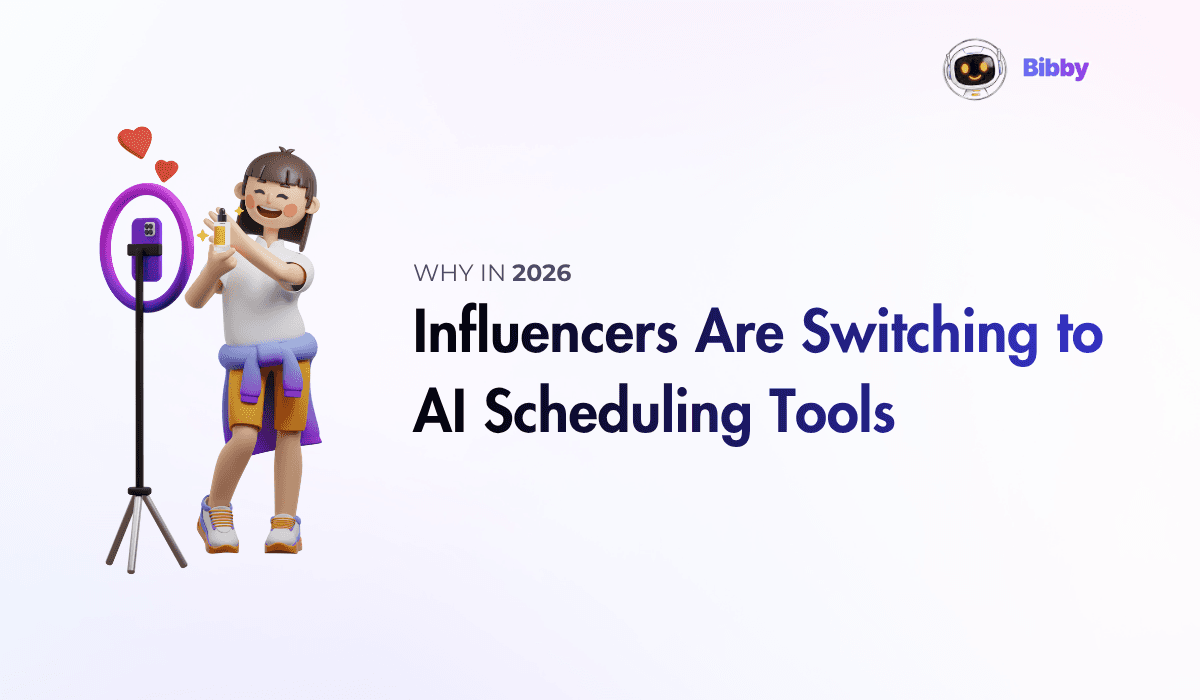
Influencers are rapidly adopting AI scheduling tools as the content landscape becomes more demanding in 2026.
Creators today are juggling more platforms, faster posting cycles, and increasing pressure to maintain consistent engagement. This article explains why AI-powered schedulers have become essential—not just as time-savers, but as strategic tools that help creators stay competitive and reduce burnout.
In this article, you will learn:
- How AI automates smarter posting decisions
- Why creators see measurable engagement and efficiency gains
- How to integrate AI schedulers into a modern content workflow
Let's explore why this shift is happening now and what it means for creators in 2026.
The New Realities of Influencer Work in 2026
1.1 The explosion of multi-platform content demands
By 2026, most influencers create for at least five platforms simultaneously—usually Instagram, TikTok, YouTube Shorts, Threads, and one long-form or community channel. Each platform now favors distinct formats, posting frequencies, and algorithmic signals, making manual planning nearly impossible. The workload has shifted from "post once a day" to "adapt every piece of content five different ways."
1.2 Shortened content cycles and algorithm volatility
Algorithm changes happen weekly instead of quarterly. Trends peak and decline within hours. This volatility forces creators to produce and publish faster while making precise decisions about timing and format. Missing a key posting window can result in a 50–80% reduction in visibility.
1.3 Rising competition and the push toward operational efficiency
With more aspiring creators entering the space—and brands allocating budgets across a broader influencer spectrum—competition for attention is fierce. Influencers are optimizing their workflows not only to increase output but also to maintain quality. Efficiency has become a strategic advantage, and AI tools like Bibby are emerging as the most reliable way to scale without burning out.
What Today's AI scheduling tools Actually Do
2.1 Intelligent posting recommendations based on platform-specific behavior
AI schedulers in 2026 analyze each platform's real-time engagement signals—comments, dwell time, viewer retention, save ratios—and cross-reference them with historical creator data. Instead of guessing when to post, influencers receive precise recommendations optimized for visibility, audience activity, and trend momentum.
2.2 Automated cross-platform optimization (formatting, captioning, sizing)
Modern schedulers automatically adjust aspect ratios, trim clips for Shorts vs. Reels, rewrite captions to fit platform norms, and generate hashtags aligned with current trend clusters. What once required several tools and manual editing now happens inside a single dashboard with AI-powered scheduling.
2.3 Predictive engagement modeling and recommended publishing windows
These tools forecast how well a post will perform before it goes live. They identify ideal time windows, suggest content tweaks, and flag potential issues like low keyword density or overly long hooks. For creators, this minimizes risk and increases the likelihood of strong engagement.
2.4 AI-powered content repurposing workflows
Influencers can upload a single long-form video and automatically generate Shorts, Reels, text posts, carousels, and thumbnails. Repurposing—which previously took hours—now takes minutes, enabling creators to multiply their output without increasing workload.
Automate Your Content Workflow Like Top Influencers — Start for Free Today
Ready to automate your social media?
Start for FreeWhy Influencers Are Switching: The Core Drivers
3.1 Time savings that free creators to focus on high-leverage work
Influencers now spend less time on repetitive admin tasks—like resizing videos, scheduling posts, or manually checking audience activity. AI handles the operational layer, allowing creators to shift their energy toward ideation, filming, community interaction, and brand strategy. The result is more creativity with less overhead.
3.2 Consistency without burnout: automated queueing and smart batching
Most creators lose growth momentum when they post inconsistently. AI schedulers maintain a steady publishing cadence by building automated queues from a creator's content library. Tools also assist with smart batching—turning multiple raw assets into a month of content with minimal fatigue. Learn more about organizing your entire social media calendar with AI.
3.3 Better analytics insights than platform-native dashboards
Platform analytics are siloed and often limited. AI schedulers unify data across all channels, surface patterns humans tend to miss, and highlight actionable insights such as declining audience segments or top-performing hook structures. This data elevates creators from reactive posting to strategic planning.
3.4 Collaboration improvements for teams, editors, and brand partners
Influencers working with editors, managers, or agencies benefit from centralized workflows. AI scheduling tools streamline approvals, automate handoffs, and generate brand-ready reporting at the push of a button. This reduces friction and makes creators more reliable partners for paid collaborations.
The Measurable Impact of AI Schedulers
4.1 Case statistics: engagement lift, follower growth, and output quantity
Across creator surveys and tool-reported benchmarks, influencers adopting AI schedulers typically see double-digit improvements. Engagement rates often rise 12–28% thanks to optimized timing and captions. Output increases even more dramatically—some creators report publishing 2–3× more content simply because repurposing and scheduling are no longer manual bottlenecks.
4.2 How AI reduces manual errors in timing and formatting
Human scheduling mistakes—like posting a Reel in the wrong aspect ratio or publishing during a low-visibility window—can severely hurt performance. AI minimizes these errors by automating formatting checks, adjusting time slots in real time, and validating whether each post meets platform-specific requirements. This prevents small issues from snowballing into major engagement drops.
4.3 Improvements in brand deal delivery and reporting efficiency
Brands expect precise deadlines, consistent quality, and post-campaign reporting. AI schedulers help creators meet these expectations with automated posting calendars, performance snapshots, and campaign-specific analytics exports. This reliability strengthens creator–brand relationships and often leads to repeat collaborations, higher rates, and multi-month partnerships.
Join Thousands of Creators Who Schedule Smarter with AI — Try Bibby Free
Ready to automate your social media?
Start for FreeHow Creators Are Integrating AI Schedulers Into Their Workflow
5.1 Transitioning from manual tools to AI-first dashboards
Most creators begin by importing their existing content libraries and connecting all platforms. AI immediately analyzes posting history, audience behavior, and engagement trends. Within minutes, creators receive a personalized posting strategy—something that previously took hours of manual review. This shift moves them from scattered tools to one centralized command center.
5.2 Building weekly and monthly content calendars with AI
AI schedulers generate structured calendars based on content themes, trending topics, and optimal posting times. Creators can drag-and-drop ideas, auto-fill empty slots, and allow the tool to generate filler posts from stored assets. Planning 30 days of content now becomes an automated, repeatable workflow with AI-powered content planning.
5.3 Using AI to A/B test content variations at scale
Creators increasingly rely on AI to test multiple captions, hooks, thumbnail options, or short-form edits. The scheduler posts variations strategically and analyzes which combinations maximize reach or retention. This scientific approach replaces guesswork and helps creators refine their style based on real data.
5.4 Automating evergreen content rotation
Evergreen content—tips, FAQs, product demos, and "start here" posts—can now be automatically reintroduced at intervals set by the creator. AI detects when engagement dips and slots evergreen posts into underperforming weeks, keeping channels active even when creators are on break or filming new projects.
Common Fears and Misconceptions About AI Schedulers
6.1 "Will AI make my content feel generic?"
Many creators worry that automation will dilute their voice, but AI schedulers don't generate the core creative—they optimize its delivery. The creator's tone, ideas, and personality remain intact while AI handles formatting, timing, and repurposing. This keeps content authentic while removing the repetitive tasks that cause creative fatigue.
6.2 "Will platforms penalize AI-assisted posting?"
Platforms currently care far more about content quality and user engagement than whether a creator used AI to schedule a post. AI schedulers operate within platform guidelines and use official APIs, so creators don't face penalties. In fact, timely and well-formatted posts often perform better.
6.3 "Are AI tools replacing human creativity?"
AI enhances creative output—it doesn't replace the ideas behind it. Influencers still make the strategic and stylistic decisions; AI simply accelerates execution. This distinction allows creators to spend more time on ideation, storytelling, and community building. Learn how automation actually improves content quality over time.
6.4 Navigating data privacy concerns
Data privacy is a valid concern as creators connect multiple platforms and brand accounts. Modern schedulers clearly document what information is stored, how it's encrypted, and who can access it. Many also offer secure client workspaces for creators handling brand assets, ensuring that sensitive files remain protected.
Choosing an AI Scheduling Tool in 2026
7.1 Key features to evaluate
The best AI schedulers share a few essential capabilities: real-time posting recommendations, automated formatting, deep analytics, and multi-platform integration. Creators should also look for native editing tools, brand-collaboration features, and transparent data policies. A strong scheduler acts as both a publishing engine and an insights hub.
Bibby offers all these features in one centralized platform, making it the top choice for creators who want intelligent automation without sacrificing creative control.
7.2 Cost considerations for micro-, mid-tier, and macro-influencers
Micro-influencers typically benefit from low-cost plans that include basic automation and analytics. Mid-tier creators usually need advanced features like A/B testing and team workspaces. Macro-influencers and agencies often require enterprise plans with client management tools, API access, and dedicated support. Pricing varies widely, so creators should choose based on workflow complexity—not follower count alone.
7.3 Integrations, APIs, and automation systems
Modern schedulers integrate with editing suites, CRM tools, project management software, and brand reporting dashboards. For creators managing multiple clients or partnerships, API access allows automated custom workflows. Integration depth often determines whether a tool is truly scalable.
7.4 When to upgrade from free plans to pro-level tools
Free plans work well for testing basic automation, but creators typically outgrow them fast. When scheduling volume increases, brand deals become more frequent, or analytics needs deepen, upgrading unlocks significant value. A pro plan is usually justified once AI automation saves at least 5–10 hours per month—something most creators experience quickly.
Discover Why Top Influencers Choose Bibby for AI Scheduling — Start Free Today
Ready to automate your social media?
Start for FreeConclusion
Influencers are switching to AI scheduling tools in 2026 because these platforms deliver smarter posting decisions, measurable engagement and efficiency gains, and streamlined workflows that reduce manual effort. Together, these advantages help creators operate at a level of consistency and scale that would be impossible without automation.
The three major takeaways from this article are simple:
- AI schedulers automate the operational burden so creators can stay focused on creativity
- They deliver real, measurable performance improvements across engagement, output, and reliability
- They integrate seamlessly into modern creator workflows, making planning and execution dramatically easier
If you're ready to go deeper, a natural next step is exploring Bibby's free AI-powered tools to experience how AI can transform your content creation process. You can also learn how to automate your Instagram posts, Reels, and captions to put these scheduling strategies into practice immediately.
Start Scheduling Like a Pro Influencer — Try Bibby's AI Scheduler Free Today
Ready to automate your social media?
Start for Free