
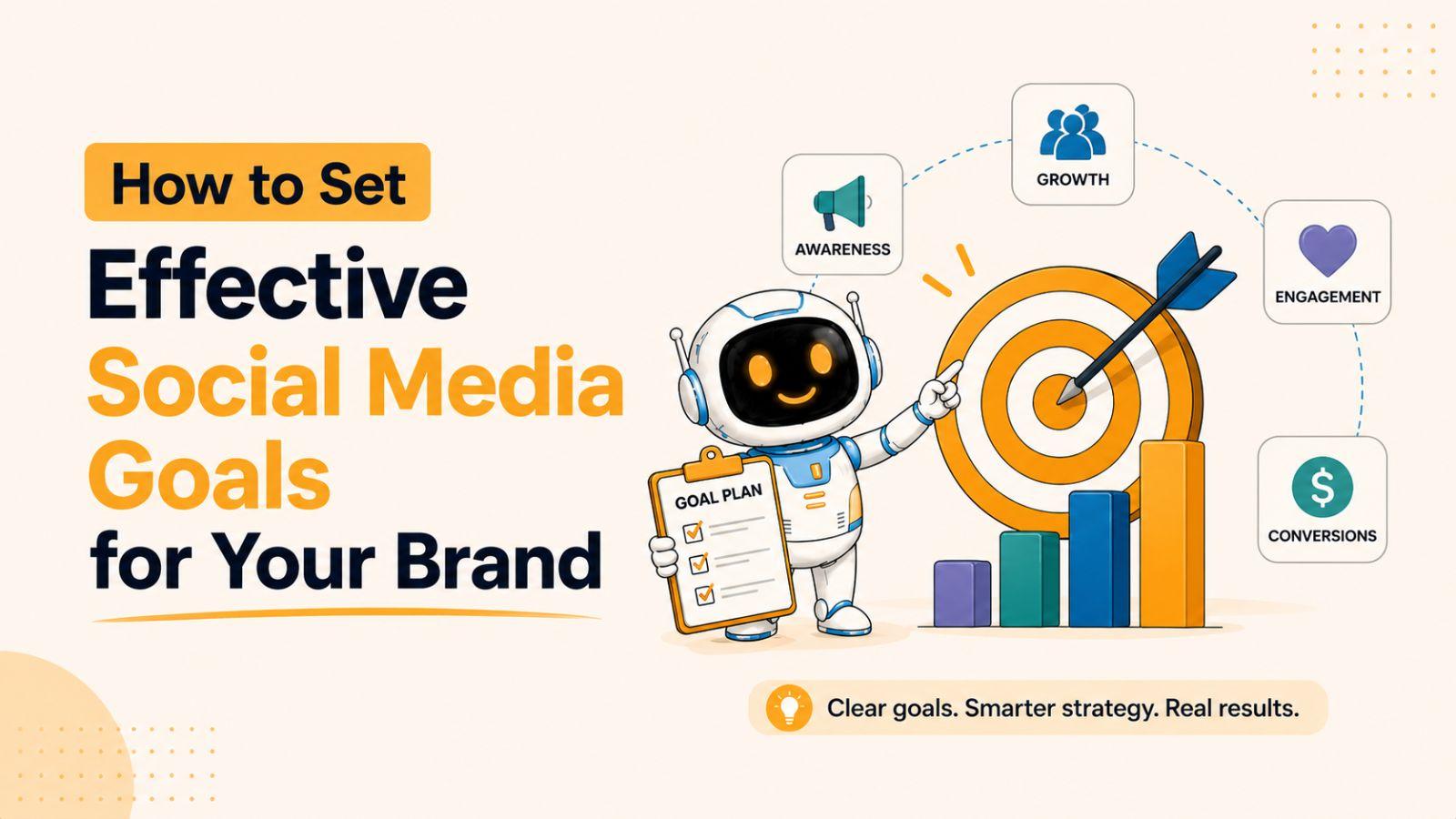
Social media success doesn't happen by accident—it starts with setting the right goals.
Whether you're trying to increase brand awareness, generate leads, or drive sales, clear social media goals give your marketing efforts direction and purpose. Without defined objectives, it's difficult to know what's working, what needs improvement, and whether your investment in social media is delivering meaningful results.
In this article, you will learn:
- How to align social media goals with business objectives
- How to create measurable goals that drive real results
- How automation helps you consistently achieve your targets
By the end, you'll have a practical framework for setting effective social media goals and a clearer understanding of how the right tools and processes can help you reach them faster.
What Are Social Media Goals?
Social media goals are the specific outcomes your brand wants to achieve through its social media activities. They provide a clear direction for your content, campaigns, and overall social media strategy, ensuring that every post serves a purpose beyond simply staying active online.
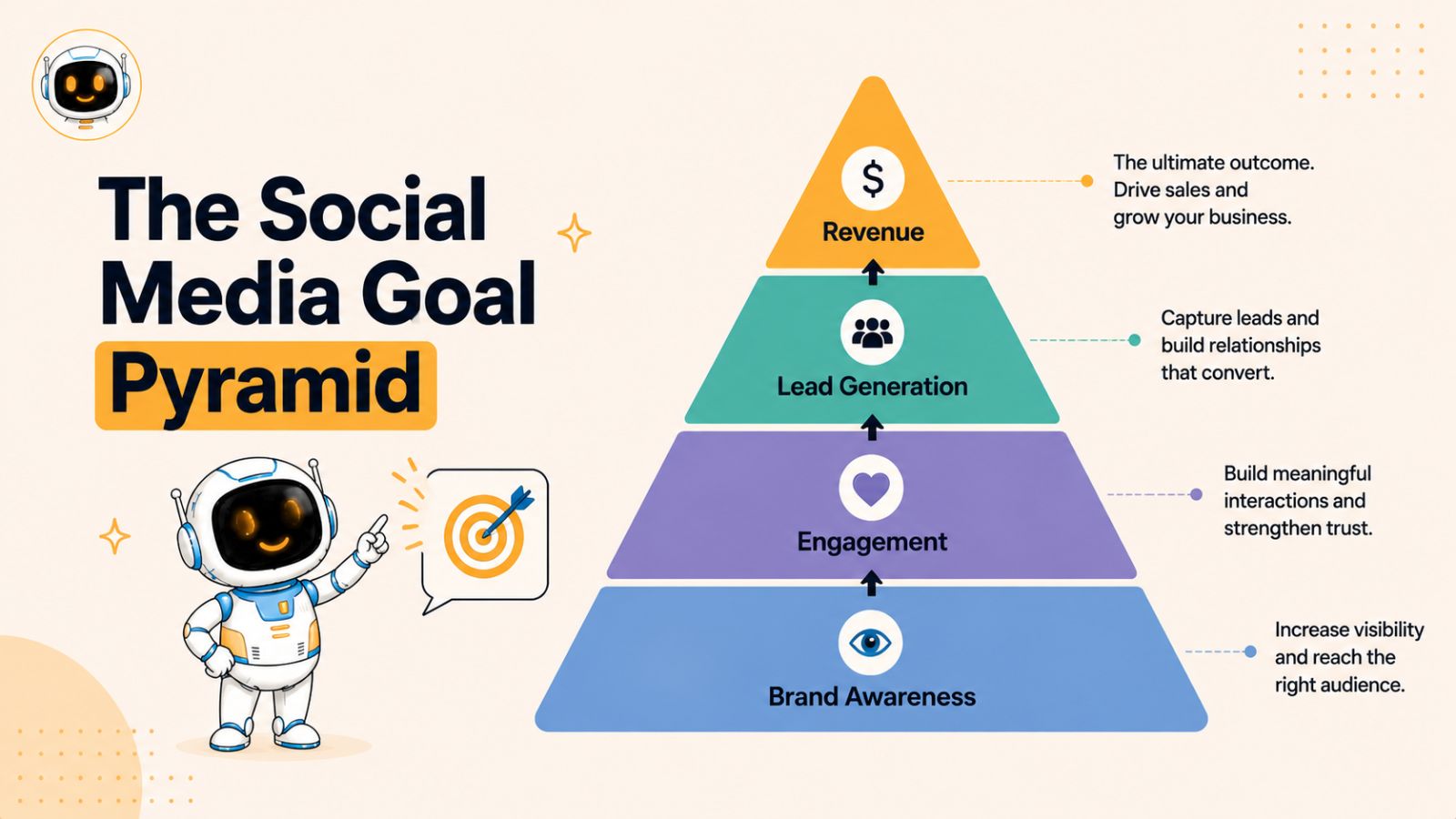
Many brands make the mistake of posting content without a defined objective. While this may generate occasional engagement, it often leads to inconsistent results and makes it difficult to measure success. Social media goals help transform your social presence from a collection of random posts into a strategic marketing channel that supports business growth.
It's also important to understand the difference between goals, strategies, and tactics:
- Goals define what you want to achieve.
- Strategies outline how you plan to achieve those goals.
- Tactics are the specific actions you take to execute the strategy.
For example, a goal might be to increase brand awareness by 30% over the next six months. Your strategy could involve creating educational content and partnering with industry influencers, while your tactics might include publishing weekly videos, sharing customer success stories, and running targeted social media campaigns.
When your goals are clearly defined, it becomes easier to allocate resources, track performance, and make data-driven decisions. Instead of focusing on vanity metrics like follower counts alone, you can measure success based on meaningful outcomes that contribute to your business objectives.
Ultimately, effective social media goals create alignment between your marketing efforts and your broader business ambitions, helping you build a stronger brand, engage the right audience, and achieve measurable results.
Also read: How Social Media Automation Improves Content Quality Over Time
Start With Your Business Objectives
One of the biggest mistakes brands make when setting social media goals is treating social media as a separate activity from the rest of the business. In reality, your social media goals should directly support your company's broader objectives.
Before deciding which metrics to track or which platforms to focus on, ask yourself a simple question: What does success look like for the business?
The answer will help determine which social media goals matter most.
Aligning Social Media Goals With Business Outcomes
Different businesses have different priorities, and your social media strategy should reflect them.
Brand Awareness
If your goal is to increase visibility and reach new audiences, your social media efforts should focus on expanding brand recognition. Relevant metrics may include reach, impressions, brand mentions, and follower growth.
Lead Generation
For businesses looking to grow their customer pipeline, social media can be a powerful lead-generation channel. Goals may focus on driving traffic to landing pages, generating newsletter signups, or encouraging demo requests.
Sales Growth
Many brands use social media to directly influence purchasing decisions. In this case, success metrics may include conversions, revenue attributed to social campaigns, and customer acquisition costs.
Customer Retention
Existing customers can be just as valuable as new ones. Social media goals centered around customer engagement, education, and support can help strengthen loyalty and increase lifetime value.
Community Building
Some brands thrive by building highly engaged communities around their products, services, or expertise. Engagement rates, comments, shares, and user-generated content often become key indicators of success.
Examples of Goal Alignment
A growing e-commerce store may prioritize increasing product sales through Instagram and TikTok content.
A SaaS company may focus on generating qualified leads through LinkedIn thought leadership and educational content.
A local service business may use social media to improve brand awareness within a specific geographic area.
A personal brand may prioritize audience growth and engagement to create future monetization opportunities.
Avoid Common Goal-Setting Mistakes
When setting social media goals, avoid these common pitfalls:
- Chasing vanity metrics without a business purpose
- Copying competitors' goals without considering your own objectives
- Trying to achieve too many goals simultaneously
- Measuring activity instead of outcomes
- Failing to establish clear timelines and benchmarks
The most effective social media goals are rooted in business priorities. Once you understand what your company is trying to achieve, you can create social media objectives that contribute directly to those outcomes rather than generating metrics that look impressive but deliver little value.
Also read: How AI Helps Maintain Brand Consistency Across Social Platforms
Use the SMART Framework for Social Media Goals
Once you've aligned your social media efforts with your business objectives, the next step is turning those objectives into clear, actionable goals. One of the most effective ways to do this is by using the SMART framework.
SMART goals help eliminate ambiguity and provide a structured way to measure progress. Instead of setting vague targets like "grow our social media presence," you'll create goals that are specific, trackable, and achievable.
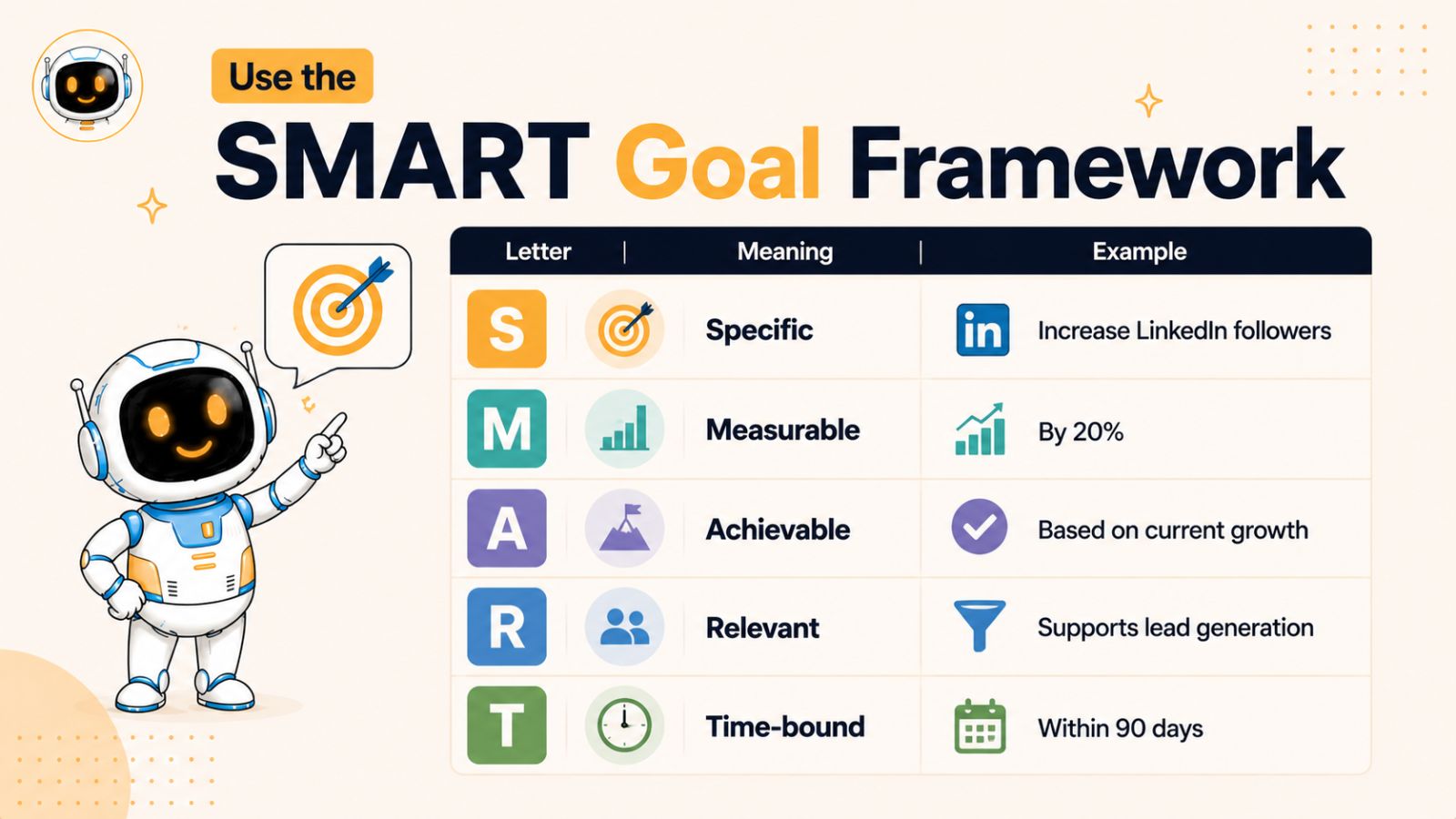
What Does SMART Stand For?
Specific
Your goal should clearly define what you want to accomplish. The more precise your objective, the easier it will be to create a strategy around it.
For example:
- Vague: Increase engagement.
- Specific: Increase Instagram engagement by encouraging more comments and shares.
Measurable
A goal should include metrics that allow you to track progress and determine success.
Examples include:
- Engagement rate
- Website clicks
- Follower growth
- Lead generation
- Conversion rate
Without measurable benchmarks, it's impossible to know whether you're moving in the right direction.
Achievable
While ambitious goals can be motivating, unrealistic expectations often lead to frustration. Your targets should challenge your team while remaining attainable based on available resources, audience size, and past performance.
Relevant
Every social media goal should support a larger business objective. If a metric doesn't contribute to your overall goals, it may not be worth prioritizing.
For example, a B2B software company may care more about qualified leads than viral content, while a consumer brand may prioritize reach and engagement.
Time-Bound
Deadlines create accountability and urgency. Every goal should include a timeframe that defines when success will be measured.
Examples:
- Within 30 days
- By the end of the quarter
- Over the next six months
Examples of SMART Social Media Goals
Compare these examples:
Weak Goal:
Grow our LinkedIn presence.
SMART Goal:
Increase LinkedIn followers by 20% over the next 90 days by publishing three thought leadership posts per week.
Weak Goal:
Generate more leads.
SMART Goal:
Generate 100 qualified leads from social media campaigns during the next quarter.
Weak Goal:
Improve engagement.
SMART Goal:
Increase Instagram engagement rate from 3% to 5% within six months through more interactive content and community management.
Turning Goals Into Action
Once you've established a SMART goal, you can begin building a strategy around it. You'll know exactly which metrics to track, which content initiatives to prioritize, and how to evaluate performance over time.
This clarity becomes especially valuable as your social media efforts scale. Instead of guessing what success looks like, your team can make decisions based on clearly defined targets and measurable outcomes.
The result is a more focused social media strategy that drives meaningful business results rather than simply generating activity.
Also read: Social Media KPIs Every Business Should Track
The Most Common Social Media Goals Brands Should Consider
Not every brand needs the same social media goals. A startup trying to gain visibility will have different priorities than an established company focused on customer retention or revenue growth.
However, most social media objectives fall into a handful of categories. Understanding these common goals can help you identify which outcomes matter most for your business and create a strategy that supports them.
Brand Awareness Goals
For many businesses, social media serves as a powerful tool for increasing visibility and reaching new audiences.
Brand awareness goals focus on getting your content in front of more people and making your brand recognizable within your industry.
Common awareness metrics include:
- Reach
- Impressions
- Follower growth
- Brand mentions
- Share of voice
Awareness goals are particularly important for new businesses, product launches, and brands entering competitive markets.
Example goal:
Increase Instagram reach by 25% over the next three months through consistent posting and short-form video content.
Engagement Goals
Building awareness is only the first step. To create meaningful relationships with your audience, you need engagement.
Engagement goals measure how people interact with your content and brand across social platforms.
Key engagement metrics include:
- Likes
- Comments
- Shares
- Saves
- Direct messages
- Community participation
High engagement often indicates that your content resonates with your audience and can help improve organic reach on many platforms.
Example goal:
Increase average post engagement rate from 4% to 6% within 90 days.
Lead Generation Goals
For service businesses, SaaS companies, consultants, and many B2B organizations, social media is a valuable lead-generation channel.
Rather than focusing solely on visibility, these brands use social media to move potential customers into the sales funnel.
Common lead-generation metrics include:
- Website visits
- Landing page conversions
- Newsletter subscriptions
- Demo requests
- Contact form submissions
Example goal:
Generate 150 qualified leads from LinkedIn content and campaigns during the next quarter.
Sales and Revenue Goals
Many businesses now use social media as a direct driver of revenue.
Whether through social commerce, product promotions, or content marketing, social media can influence purchasing decisions throughout the customer journey.
Relevant metrics include:
- Sales conversions
- Revenue generated
- Customer acquisition cost (CAC)
- Return on ad spend (ROAS)
- Social media ROI
Example goal:
Increase revenue generated from social media by 20% over the next six months.
Customer Retention and Loyalty Goals
Social media isn't only for attracting new customers. It can also help strengthen relationships with existing ones.
Brands often use social platforms to provide support, share educational content, and foster ongoing engagement.
Retention-focused metrics may include:
- Customer satisfaction
- Repeat purchases
- Community engagement
- Customer support response times
- Brand advocacy
Example goal:
Reduce average customer response time on social media to under two hours by the end of the quarter.
Community-Building Goals
Some of the strongest brands focus on creating communities rather than simply attracting followers.
Community-building goals emphasize conversations, participation, and long-term relationships.
Signs of a healthy social media community include:
- Frequent audience interactions
- User-generated content
- Active discussions
- Brand advocacy
- Organic referrals
When people feel connected to your brand, they're more likely to remain loyal customers and recommend your products or services to others.
Choosing the Right Goal for Your Brand
The best social media goals depend on your current stage of growth and business priorities.
If you're struggling to gain visibility, focus on awareness.
If your audience is growing but not interacting, prioritize engagement.
If you're generating attention but not business results, shift your focus toward leads and conversions.
By selecting goals that align with your business needs, you'll create a social media strategy that delivers measurable outcomes rather than simply increasing activity.
Also read: Social Media Marketing Statistics You Need to Know
How to Choose the Right Metrics for Each Goal
Setting a social media goal is only half the equation. To determine whether you're making progress, you need to track the right metrics.
One of the most common mistakes brands make is measuring everything—or worse, focusing on metrics that don't actually support their objectives. While follower counts and likes can provide useful context, they don't always indicate business success.
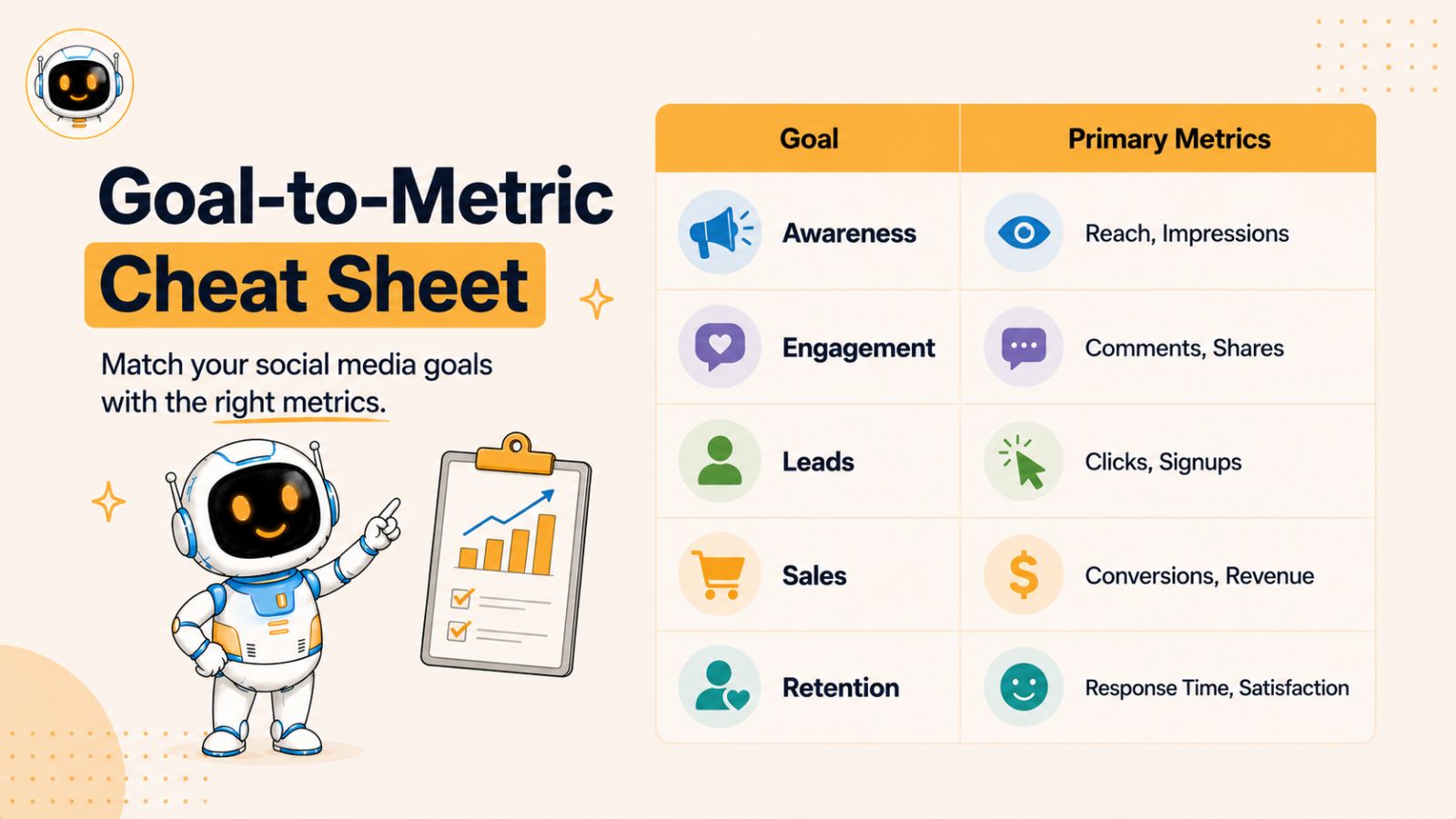
The key is choosing metrics that directly align with your goals.
Metrics for Brand Awareness Goals
If your objective is to increase visibility, focus on metrics that measure how many people are seeing and recognizing your brand.
Key awareness metrics include:
- Reach
- Impressions
- Follower growth
- Brand mentions
- Share of voice
These indicators help you understand whether your content is expanding your brand's presence and attracting new audiences.
For example, if your goal is to increase awareness by 30%, tracking reach and impressions will be far more valuable than monitoring website conversions.
Metrics for Engagement Goals
When your priority is building relationships with your audience, engagement metrics become more important.
Key engagement metrics include:
- Engagement rate
- Comments
- Shares
- Saves
- Direct messages
- Community participation
Strong engagement signals that your content resonates with your audience and encourages meaningful interactions.
Rather than focusing on total likes alone, engagement rate often provides a more accurate picture because it accounts for audience size and reach.
Metrics for Lead Generation Goals
Lead generation goals require metrics that track movement from social media into your marketing or sales funnel.
Important lead-generation metrics include:
- Website clicks
- Landing page visits
- Form submissions
- Newsletter signups
- Demo requests
- Cost per lead
These metrics help determine whether your social media content is attracting people who are interested enough to take the next step.
Metrics for Sales and Revenue Goals
If your social media efforts are designed to drive purchases, revenue-focused metrics should take priority.
Track metrics such as:
- Conversion rate
- Revenue generated
- Average order value
- Customer acquisition cost
- Return on ad spend
- Social media ROI
These indicators provide a direct connection between your social media activity and business performance.
Metrics for Customer Retention Goals
Retention-focused brands should measure how effectively social media supports customer relationships.
Useful metrics include:
- Response time
- Customer satisfaction scores
- Repeat customer engagement
- Community participation
- Brand advocacy
A loyal customer base often creates long-term value that extends far beyond a single purchase.
Avoid Vanity Metrics
Vanity metrics are numbers that may look impressive but provide little insight into business performance.
Examples include:
- Follower counts without engagement
- Viral posts with no conversions
- High impressions with low audience relevance
While these metrics can be useful indicators, they should never be the primary measure of success unless they directly support your goals.
Simplifying Performance Tracking
As your social media presence grows, tracking performance across multiple platforms can become increasingly difficult. Each network provides different analytics, and manually reviewing data can consume significant time.
This is where automation and centralized social media management tools become valuable. Instead of spending hours collecting performance data, brands can focus on analyzing results and improving their strategy.
The most effective approach is to identify a small set of key performance indicators (KPIs) that align directly with your goals. By consistently monitoring those metrics, you'll gain a much clearer understanding of what's working, what needs improvement, and where to invest your efforts moving forward.
Creating a Social Media Action Plan
Setting goals and identifying the right metrics are important first steps, but they won't drive results on their own. To achieve your objectives, you need a clear action plan that transforms strategy into consistent execution.
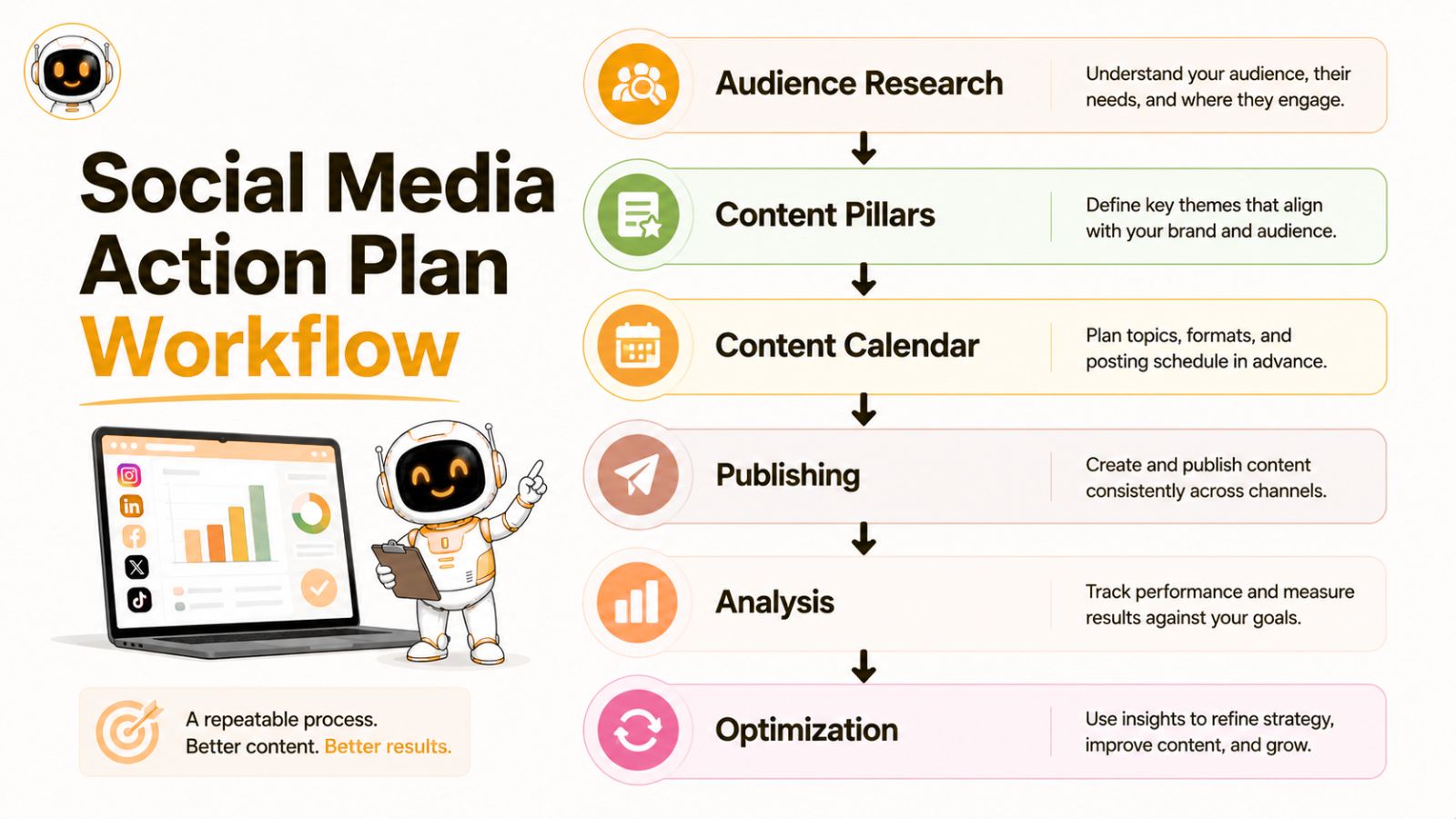
A social media action plan outlines who you're targeting, what content you'll create, where you'll publish it, and how you'll measure success. Without a structured plan, even the best goals can become difficult to achieve.
Define Your Target Audience
Effective social media marketing starts with understanding who you're trying to reach.
Before creating content, identify:
- Demographics such as age, location, and occupation
- Interests and pain points
- Purchasing behaviors
- Preferred social media platforms
- Types of content they engage with most
The better you understand your audience, the easier it becomes to create content that captures attention and encourages action.
For example, a B2B software company may find that its audience spends most of its time on LinkedIn, while a fashion brand may achieve stronger results on Instagram and TikTok.
Build Content Pillars
Content pillars are the primary topics your brand consistently discusses on social media.
Rather than posting random content, establish a few core themes that support your goals and resonate with your audience.
Common content pillars include:
- Educational content
- Industry insights
- Product updates
- Customer success stories
- Behind-the-scenes content
- Thought leadership
These pillars help maintain consistency while ensuring your content remains relevant and valuable.
Establish a Consistent Posting Schedule
Consistency is one of the most important factors in social media success.
Brands that post regularly are more likely to stay visible, engage their audiences, and achieve their goals over time.
When building your posting schedule, consider:
- Platform-specific best practices
- Audience activity patterns
- Available resources
- Content production capacity
The goal is not necessarily to post more often but to post consistently.
A realistic schedule that you can maintain is usually more effective than an aggressive plan that becomes unsustainable after a few weeks.
Create a Content Calendar
A content calendar helps organize your social media efforts and reduces the stress of last-minute content creation.
Your calendar may include:
- Weekly content themes
- Product launches
- Promotional campaigns
- Industry events
- Seasonal opportunities
- Important company announcements
Planning ahead allows you to maintain consistency while ensuring that your content aligns with business objectives throughout the year.
Define Roles and Responsibilities
If multiple people contribute to your social media efforts, it's important to establish clear responsibilities.
Determine who will handle:
- Content creation
- Graphic design
- Community management
- Scheduling and publishing
- Analytics and reporting
Clear ownership helps eliminate confusion and keeps your strategy moving forward efficiently.
Build a Process for Ongoing Optimization
Your social media action plan should never be static.
The most successful brands regularly review performance and make adjustments based on data.
Schedule recurring reviews to evaluate:
- Top-performing content
- Audience engagement trends
- Conversion performance
- Campaign effectiveness
- Opportunities for improvement
These insights help ensure your strategy continues to evolve alongside your audience and business goals.
Focus on Execution, Not Just Planning
Many brands spend significant time setting goals and building strategies but struggle with consistent execution. Content creation, scheduling, publishing, and channel management can quickly become overwhelming—especially when managing multiple social media platforms.
This is often where businesses begin looking for ways to streamline their workflow. By reducing manual tasks and creating repeatable processes, teams can spend less time managing social media and more time improving results.
A strong action plan provides the structure needed to achieve your goals. The next challenge is maintaining that consistency over time, which is where many brands encounter their biggest obstacle.
Why Consistency Is Often the Biggest Challenge
Most brands don't fail on social media because they lack goals or ideas. They struggle because maintaining consistent execution is difficult.
At the beginning, it's easy to stay motivated. Teams create content calendars, set ambitious goals, and commit to posting regularly. But as workloads increase and priorities shift, social media often moves down the list.
The result is a familiar cycle: a burst of activity followed by periods of inactivity, inconsistent messaging, and missed opportunities to engage with the audience.
The Reality of Managing Social Media
Successful social media management involves far more than publishing a few posts each week.
Brands must regularly:
- Research content ideas
- Create posts and visuals
- Write captions
- Schedule content
- Monitor engagement
- Respond to comments and messages
- Analyze performance
- Manage multiple platforms
Each task may seem manageable on its own, but together they can consume a significant amount of time and resources.
For small businesses, startups, and lean marketing teams, maintaining a consistent presence across multiple channels can quickly become overwhelming.
The Cost of Inconsistency
When posting becomes irregular, achieving social media goals becomes much more difficult.
Inconsistent activity can lead to:
- Reduced audience engagement
- Slower follower growth
- Lower content reach
- Missed lead generation opportunities
- Weaker brand recognition
Even great content struggles to perform when audiences don't know when to expect it or when long gaps exist between posts.
Consistency helps build familiarity and trust—two factors that are essential for long-term social media success.
Managing Multiple Platforms Creates Additional Complexity
Today's brands rarely focus on a single social media channel.
Many businesses actively manage:
- X
- TikTok
- YouTube
Each platform requires its own content formats, posting schedules, and audience engagement strategies.
Coordinating content across multiple channels manually can become a full-time job, especially as your brand grows.
Content Creation Becomes a Bottleneck
One of the biggest obstacles to consistency is the constant demand for fresh content.
Many brands struggle with questions like:
- What should we post next?
- How do we keep content aligned with our brand?
- Where do we find enough visuals?
- How do we maintain quality while increasing output?
As content demands increase, teams often find themselves spending more time producing content than executing strategy.
Why Many Brands Turn to Automation
To overcome these challenges, businesses increasingly rely on automation to handle repetitive and time-consuming tasks.
Automation doesn't replace strategy. Instead, it helps ensure that strategy is executed consistently.
When routine tasks such as content planning, image generation, scheduling, and publishing are streamlined, teams gain more time to focus on higher-value activities like audience engagement, campaign optimization, and business growth.
The most successful brands understand that achieving social media goals requires more than setting targets—it requires building systems that make consistent execution possible. That's where modern social media automation tools can make a significant difference.
Using Automation to Achieve Social Media Goals Faster
Setting clear goals is essential, but achieving those goals consistently requires execution. As brands grow, manually managing content creation, scheduling, publishing, and channel management can become increasingly difficult.
This is where social media automation can play a transformative role.
By automating repetitive tasks, businesses can spend less time managing their social media presence and more time focusing on strategy, creativity, and audience engagement. The result is a more efficient workflow and a greater likelihood of achieving social media goals consistently.
How Automation Supports Social Media Success
Automation helps brands:
- Maintain a consistent posting schedule
- Reduce the time spent creating and publishing content
- Manage multiple social media channels from a single workflow
- Scale content production without significantly increasing workload
- Improve overall efficiency and productivity
Rather than replacing human creativity, automation enables teams to focus on the activities that have the greatest impact on business growth.
Introducing Bibby: An All-in-One Social Media Automation Platform
One of the biggest challenges brands face is coordinating multiple social media tasks across various tools and platforms. Content planning, image creation, scheduling, and publishing are often handled separately, creating inefficiencies and increasing the risk of inconsistency.
Bibby simplifies this process by bringing these functions together into a single platform designed to help brands achieve their social media goals more effectively.
Set Your Posting Style
Every brand has a unique voice and personality. Maintaining that identity across social media channels is essential for building recognition and trust.
With Bibby, you can define your preferred posting style so content remains aligned with your brand voice and messaging. This helps create a more consistent experience for your audience, regardless of where they engage with your content.
Automatically Learn About Your Brand
Creating content becomes much easier when a platform understands your business.
Bibby can pull information directly from your website and existing social media channels, allowing it to learn about your brand, products, services, and messaging. This reduces the amount of manual setup required while helping ensure that generated content remains relevant to your business.
Connect All Your Social Media Channels
Managing multiple platforms individually can quickly become time-consuming.
Bibby allows you to connect your social media channels in one place, making it easier to coordinate content and maintain a consistent presence across your marketing ecosystem.
This centralized approach helps streamline workflows and reduces the complexity of managing multiple accounts.
Automatically Post Content for the Week
Consistency is one of the most important factors in social media success, but it's often one of the hardest to maintain.
Bibby helps solve this challenge by automatically creating and publishing content throughout the week. Instead of manually scheduling every post, brands can establish a more reliable publishing cadence that supports their goals without requiring constant attention.
This can be especially valuable for small teams and busy business owners who want to remain active on social media without dedicating hours each day to content management.
Generate AI Images Tailored to Your Brand
Visual content plays a critical role in social media performance, but creating high-quality images can be time-consuming and expensive.
Bibby's AI image generation capabilities help address this challenge by creating branded visuals based on the information it learns from your social media channels and website.
Because the platform understands your brand identity, the generated images are designed to align with your messaging and visual style, helping maintain consistency across your content.
Connecting Automation to Your Goals
The value of automation becomes clear when you connect it directly to your social media objectives.
If your goal is brand awareness, automation helps you maintain the consistent posting schedule needed to increase visibility.
If your goal is engagement, automation ensures your audience regularly receives valuable content.
If your goal is lead generation or sales, automation helps keep your content pipeline active and supports ongoing audience nurturing.
In other words, automation doesn't replace goal setting—it helps ensure your goals are consistently supported through execution.
When combined with a clear strategy and measurable objectives, tools like Bibby can help brands reduce manual effort, improve consistency, and create a more scalable approach to social media marketing.
Measuring and Adjusting Your Social Media Goals
Setting goals and implementing a strategy are important milestones, but long-term social media success depends on continuous measurement and improvement.
Social media platforms, audience behaviors, and market conditions are constantly changing. Goals that were realistic six months ago may no longer be relevant today. That's why successful brands regularly evaluate their performance and make adjustments based on data.
The purpose of measurement isn't simply to collect numbers—it's to understand what's working, what's not, and how to improve future results.
Conduct Regular Performance Reviews
Consistent reviews help ensure your social media strategy stays aligned with your business objectives.
A simple review schedule might include:
- Weekly performance monitoring
- Monthly reporting and analysis
- Quarterly strategy reviews
These reviews allow you to identify trends before they become major opportunities or problems.
For example, a sudden increase in engagement may reveal a content format your audience loves, while a decline in reach may signal the need to adjust your posting strategy.
Focus on the Metrics That Matter
When reviewing performance, return to the goals you established at the beginning of your strategy.
Ask questions such as:
- Are we reaching more people?
- Is engagement improving?
- Are we generating qualified leads?
- Are social media efforts contributing to revenue?
- Are customers becoming more engaged with the brand?
The answers should be based on the key performance indicators (KPIs) you selected for each goal.
Avoid getting distracted by metrics that look impressive but don't contribute to your overall objectives.
Identify Your Best-Performing Content
One of the most valuable aspects of social media analytics is understanding what resonates with your audience.
Review your top-performing content and look for patterns such as:
- Popular topics
- Preferred content formats
- Posting times
- Visual styles
- Calls to action
These insights can help you create more effective content moving forward and improve the efficiency of your overall strategy.
Learn From Underperforming Content
Not every post or campaign will succeed—and that's okay.
Underperforming content often provides valuable information about audience preferences and expectations.
Instead of viewing poor results as failures, treat them as opportunities to learn.
Consider questions such as:
- Was the topic relevant?
- Was the message clear?
- Was the content published at the right time?
- Did the format fit the platform?
- Was the call to action compelling?
Over time, these insights can lead to stronger content and better results.
Adjust Goals When Necessary
Your goals should provide direction, but they shouldn't be rigid.
As your business grows and market conditions change, your priorities may evolve as well.
For example:
- A startup focused on awareness may later shift toward lead generation.
- A growing company may prioritize customer retention.
- A mature brand may focus on maximizing social media ROI.
Regular reviews ensure your goals continue supporting your current business needs rather than outdated priorities.
Use Automation to Improve Optimization
One challenge many brands face is finding the time to consistently monitor performance while also managing content creation and publishing.
Automation can help reduce operational workloads, allowing teams to focus more on analysis and strategic improvements.
By streamlining content planning, scheduling, and publishing, tools like Bibby free up valuable time that can be invested in reviewing performance data, identifying opportunities, and refining future campaigns.
This creates a more sustainable process where strategy, execution, and optimization work together to support long-term growth.
Continuous Improvement Drives Long-Term Results
Social media success isn't achieved through a single campaign or viral post. It's the result of consistently setting goals, measuring performance, learning from data, and making incremental improvements over time.
Brands that embrace this cycle of continuous optimization are far more likely to achieve meaningful and sustainable results from their social media efforts.
The key is to view social media as an ongoing process rather than a one-time initiative. The more effectively you measure and adapt, the more likely you are to achieve your goals and maximize the value of your social media investment.
Also read: Best Buffer Alternative for Small Business
Social Media Goal-Setting Checklist
Before launching your next social media strategy, use this checklist to ensure your goals are clear, measurable, and aligned with your business objectives.
Before You Set a Goal
✓ Identify your primary business objective
✓ Determine what success looks like for your organization
✓ Understand your target audience
✓ Choose the social media platforms that matter most
✓ Review current performance benchmarks
Before You Launch Your Strategy
✓ Create SMART social media goals
✓ Select the right KPIs for each objective
✓ Define your content pillars
✓ Build a content calendar
✓ Establish reporting and review processes
During Execution
✓ Publish content consistently
✓ Monitor engagement and audience feedback
✓ Track performance against your KPIs
✓ Test different content formats and messaging
✓ Optimize based on data and insights
During Performance Reviews
✓ Identify top-performing content
✓ Analyze underperforming campaigns
✓ Compare results against goals
✓ Adjust tactics where necessary
✓ Document lessons learned
Scaling Your Efforts
✓ Streamline repetitive workflows
✓ Maintain brand consistency across channels
✓ Ensure content creation remains sustainable
✓ Use automation to support consistent execution
✓ Focus team resources on strategy and growth
The most effective social media strategies aren't built around random posting or chasing trends. They're built around clearly defined goals, measurable outcomes, and consistent execution.
By following this checklist, you'll be in a much stronger position to create social media campaigns that support real business growth and deliver meaningful results over time.
Conclusion
Effective social media goals provide the foundation for every successful social media strategy. By aligning your goals with business objectives, using the SMART framework to create measurable targets, and tracking the right performance metrics, you can ensure your social media efforts contribute to meaningful business outcomes.
Just as importantly, achieving those goals requires consistent execution. Brands that combine clear strategy with reliable systems are far more likely to build audience engagement, generate leads, increase sales, and strengthen customer relationships over time. Automation tools like Bibby can help bridge the gap between planning and execution by streamlining content creation, generating brand-aligned visuals, connecting your social channels, and automatically publishing content throughout the week.
As your social media strategy matures, the next step is learning how to create a scalable content marketing system that consistently delivers value to your audience. Mastering content planning, creation, and distribution will help you turn your social media goals into long-term growth for your brand.