
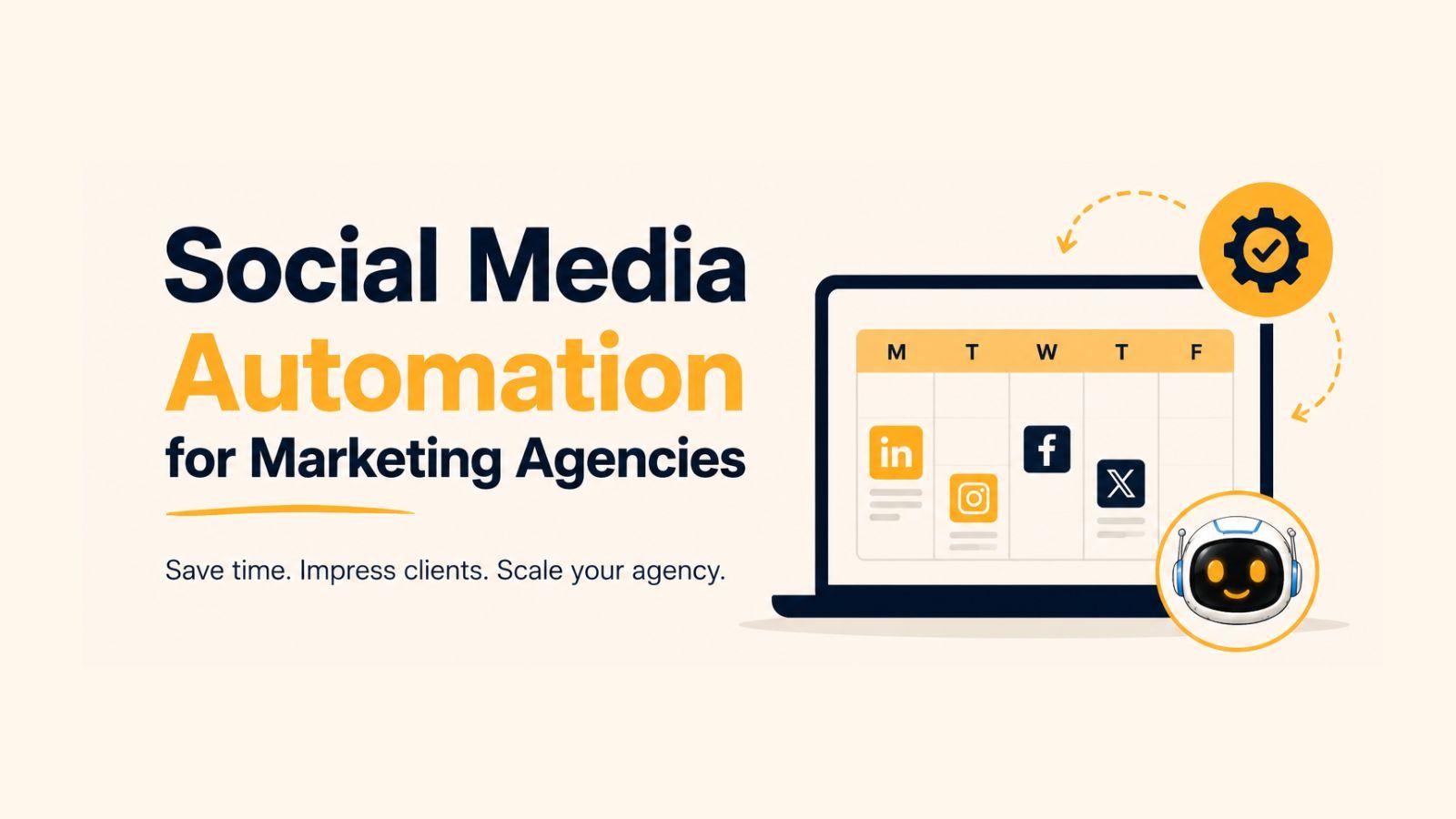
Managing social media for multiple clients can quickly become overwhelming as your agency grows.
As client expectations increase and brands demand a stronger presence across Facebook, Instagram, LinkedIn, YouTube, and TikTok, manual social media management becomes harder to sustain. The good news is that social media automation allows agencies to streamline workflows, save time, and scale client operations without continuously expanding their team.
In this article, you will learn:
- How social media automation improves agency efficiency and profitability
- Which social media management tasks agencies should automate first
- How Bibby helps agencies scale client accounts across major platforms
Whether you're managing five client accounts or fifty, implementing the right automation strategy can help your agency deliver better results while operating more efficiently.
Also read: The Ultimate List of Social Media Automation Tools for Businesses and Creators
What Is Social Media Automation?
Social media automation is the process of using software to automate repetitive social media tasks such as scheduling posts, publishing content, managing content calendars, and generating performance reports. Instead of manually posting content on every platform, agencies can plan campaigns in advance and execute them automatically.
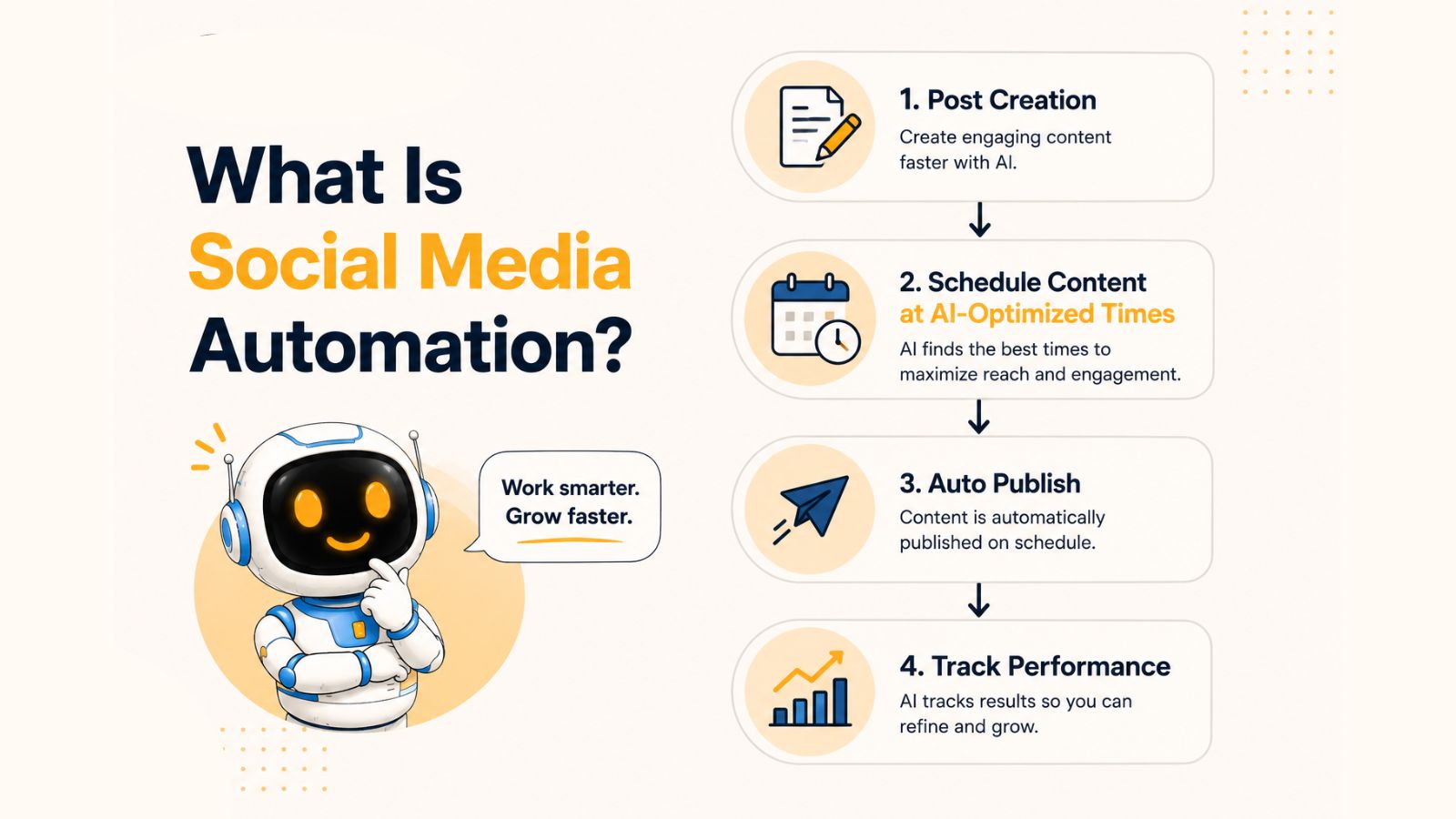
For marketing agencies, social media automation is more than just scheduling posts. It enables teams to manage multiple client accounts efficiently, maintain consistent publishing schedules, and reduce the time spent on administrative work.
Common social media automation capabilities include:
Content Scheduling and Publishing
Agencies can schedule posts days, weeks, or even months in advance. Once content is approved, it can be automatically published at the optimal time across multiple social media platforms.
Multi-Platform Content Distribution
Managing content separately for Facebook, Instagram, LinkedIn, YouTube, and TikTok can be time-consuming. Automation tools allow agencies to publish content from a single dashboard, reducing the need to switch between multiple platforms.
Analytics and Reporting
Instead of manually collecting data from multiple social channels, agencies can automate reporting and gain faster insights into campaign performance, engagement, and audience growth.
Why Social Media Automation Matters for Agencies
As agencies take on more clients, the volume of content, campaigns, and social accounts grows rapidly. Without automation, teams often spend more time managing processes than developing strategies that drive results.
By automating routine tasks, agencies can focus on higher-value activities such as content creation, campaign optimization, audience engagement, and client growth. The result is a more scalable operation that can support additional clients without requiring proportional increases in staffing.
The Biggest Social Media Challenges Marketing Agencies Face
Managing social media for a single brand can be demanding. Managing it for dozens of clients across multiple platforms is a completely different challenge. As agencies grow, operational complexity often becomes one of the biggest barriers to scaling profitably.
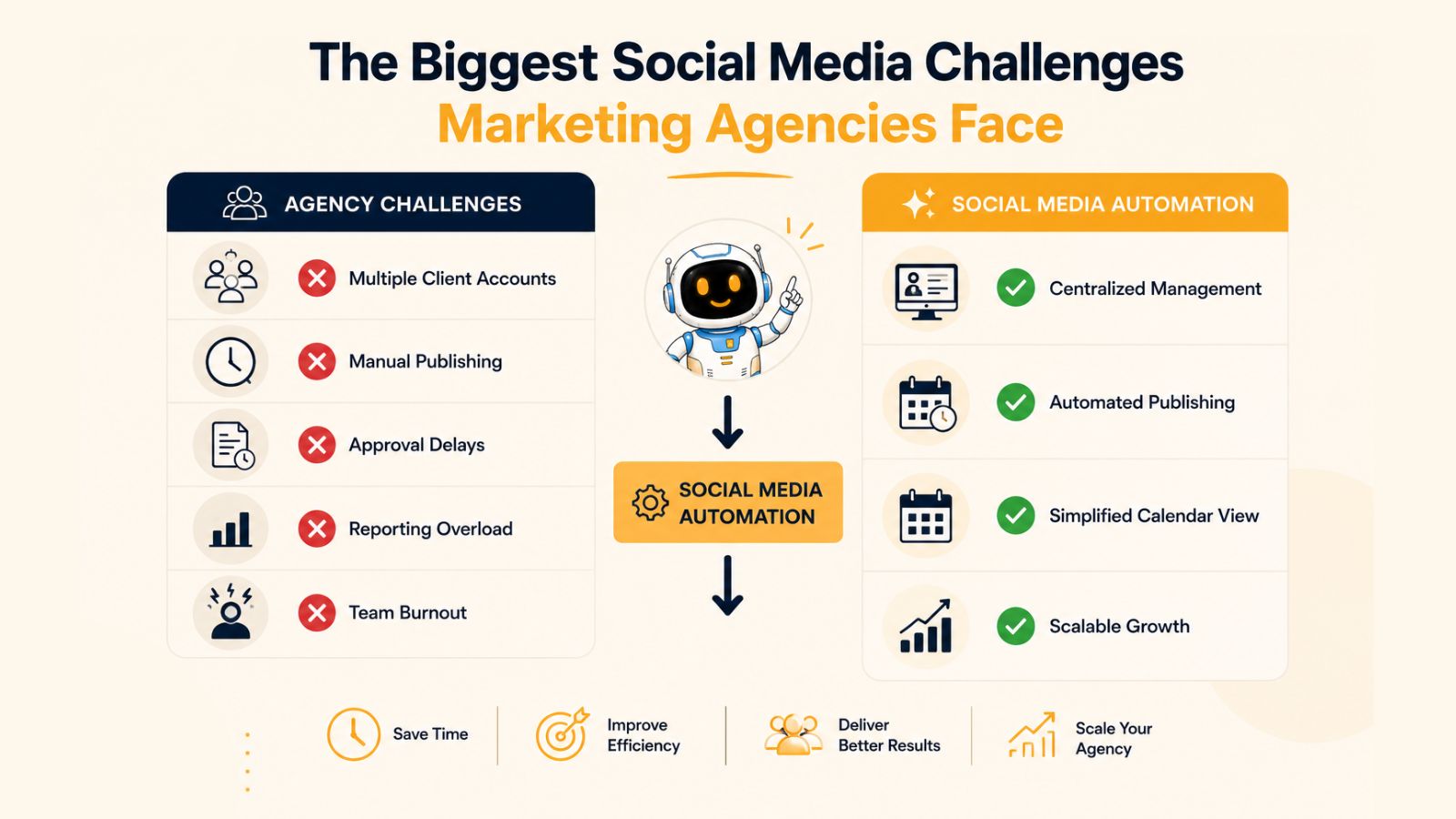
Here are some of the most common challenges marketing agencies face when managing social media for clients.
Managing Multiple Client Accounts
Every client has unique goals, audiences, brand guidelines, and posting schedules. Agency teams must keep track of multiple content calendars while ensuring that each brand maintains a consistent voice and presence.
Without a centralized system, managing dozens of accounts across Facebook, Instagram, LinkedIn, YouTube, and TikTok can quickly become overwhelming.
Common issues include:
- Tracking different publishing schedules
- Managing multiple login credentials
- Coordinating content across teams
- Maintaining brand consistency for every client
Time-Consuming Content Publishing
Many agencies still spend significant time manually publishing content across different platforms. While this may be manageable for a few clients, it becomes inefficient as the client roster grows.
Manual publishing often leads to:
- Repetitive administrative work
- Missed posting opportunities
- Scheduling errors
- Reduced productivity
Instead of focusing on strategy and creative work, teams end up spending valuable hours on tasks that could be automated.
Complex Approval Processes
Client approvals are essential, but they can also slow down campaign execution. Content may go through multiple rounds of revisions before receiving final approval, creating delays and confusion.
Without a structured workflow, agencies often struggle with:
- Lost feedback in emails and messages
- Version control issues
- Delayed publishing schedules
- Communication bottlenecks
Reporting and Performance Tracking
Clients expect clear visibility into campaign performance. However, gathering analytics from multiple platforms and turning that data into meaningful reports can be extremely time-consuming.
Agency teams frequently spend hours:
- Exporting platform data
- Building reports manually
- Compiling engagement metrics
- Tracking campaign performance across channels
As the number of clients grows, reporting can become a major drain on resources.
Scaling Without Increasing Headcount
Perhaps the biggest challenge for growing agencies is finding ways to take on more clients without continuously hiring new team members.
As client workloads increase, agencies often experience:
- Team burnout
- Slower turnaround times
- Reduced service quality
- Lower profit margins
This creates a difficult tradeoff: either limit growth or increase operational costs.
Why These Challenges Continue to Grow
The social media landscape is becoming more demanding every year. Clients expect consistent content, faster responses, stronger performance, and visibility across more platforms than ever before.
For agencies that rely heavily on manual processes, these challenges compound as they grow. That's why many successful agencies are turning to social media automation to streamline operations, improve efficiency, and scale client management without overwhelming their teams.
Also read: 10 Signs It's Time to Automate Your Social Media Marketing
Benefits of Social Media Automation for Marketing Agencies
Social media automation is no longer a luxury for growing agencies—it's a competitive advantage. By automating repetitive tasks and centralizing social media management, agencies can improve efficiency, serve more clients, and focus on delivering better results.
Here are the key benefits of social media automation for marketing agencies.
Save Hours Every Week
One of the biggest advantages of automation is the amount of time it saves. Instead of logging into multiple platforms every day to publish content manually, agency teams can schedule weeks or even months of content in advance.
This allows teams to:
- Batch content creation and scheduling
- Eliminate repetitive publishing tasks
- Reduce time spent switching between platforms
- Spend more time on strategy and client communication
Even saving a few hours per client each month can have a significant impact on overall agency productivity.
Improve Team Productivity
Highly skilled marketers shouldn't spend most of their day handling manual administrative work. Social media automation removes many of these repetitive tasks, allowing team members to focus on activities that create more value.
With fewer manual processes, teams can dedicate more time to:
- Creating high-quality content and captions
- Developing social media strategies
- Optimizing campaigns
- Building stronger client relationships
As a result, agencies can accomplish more without increasing workload or staff.
Manage More Clients Without Growing Your Team
Scaling an agency often means hiring additional employees to handle increasing workloads. However, automation changes this equation.
By streamlining content publishing, approvals, and reporting, agencies can support more clients with their existing resources.
Benefits include:
- Faster client onboarding
- Increased account capacity
- Better resource allocation
- More predictable workflows
This makes growth more sustainable and profitable.
Ensure Consistent Publishing Across Platforms
Consistency is critical for social media success. Missed posts, scheduling errors, and inconsistent publishing can negatively affect client performance and trust.
Automation helps agencies maintain reliable posting schedules across:
- YouTube
- TikTok
With content scheduled in advance, agencies can ensure clients maintain a steady and professional presence on every platform.
Reduce Human Error
Managing multiple accounts manually increases the risk of mistakes. Publishing content to the wrong account, missing deadlines, or forgetting scheduled posts can damage client relationships.
Automation helps minimize these risks by creating standardized workflows and reducing reliance on manual processes.
This leads to:
- Fewer publishing errors
- Better content organization
- More reliable campaign execution
- Improved client confidence
Streamline Client Approvals
Content approvals are often one of the most time-consuming aspects of agency operations. Automation tools can simplify the review process by providing structured approval workflows and centralized communication.
This helps agencies:
- Speed up feedback cycles
- Reduce confusion
- Keep projects moving forward
- Meet publishing deadlines more consistently
A smoother approval process benefits both agency teams and clients.
Generate Reports More Efficiently
Reporting is essential for demonstrating value to clients, but creating reports manually can consume significant time every month.
Automation enables agencies to collect and organize performance data more efficiently, making it easier to track key metrics and communicate results.
Instead of spending hours building reports, teams can focus on analyzing data and identifying opportunities for improvement.
Increase Agency Profitability
When agencies save time, improve efficiency, and manage more clients with the same team, profitability naturally increases.
Social media automation helps agencies:
- Lower operational costs
- Improve team efficiency
- Increase client capacity
- Deliver services more consistently
The result is a more scalable business model that supports long-term growth.
As agencies continue to manage more platforms, more content, and more client expectations, automation becomes a critical part of building an efficient and profitable operation.
Also read: How to Grow on Social Media With AI: A Complete Guide for Faster Audience Growth
What Social Media Tasks Should Agencies Automate?
Not every aspect of social media management should be automated. Strategic planning, creative content development, and audience engagement still require human expertise. However, many repetitive and time-consuming tasks can be automated to improve efficiency and free up valuable resources.
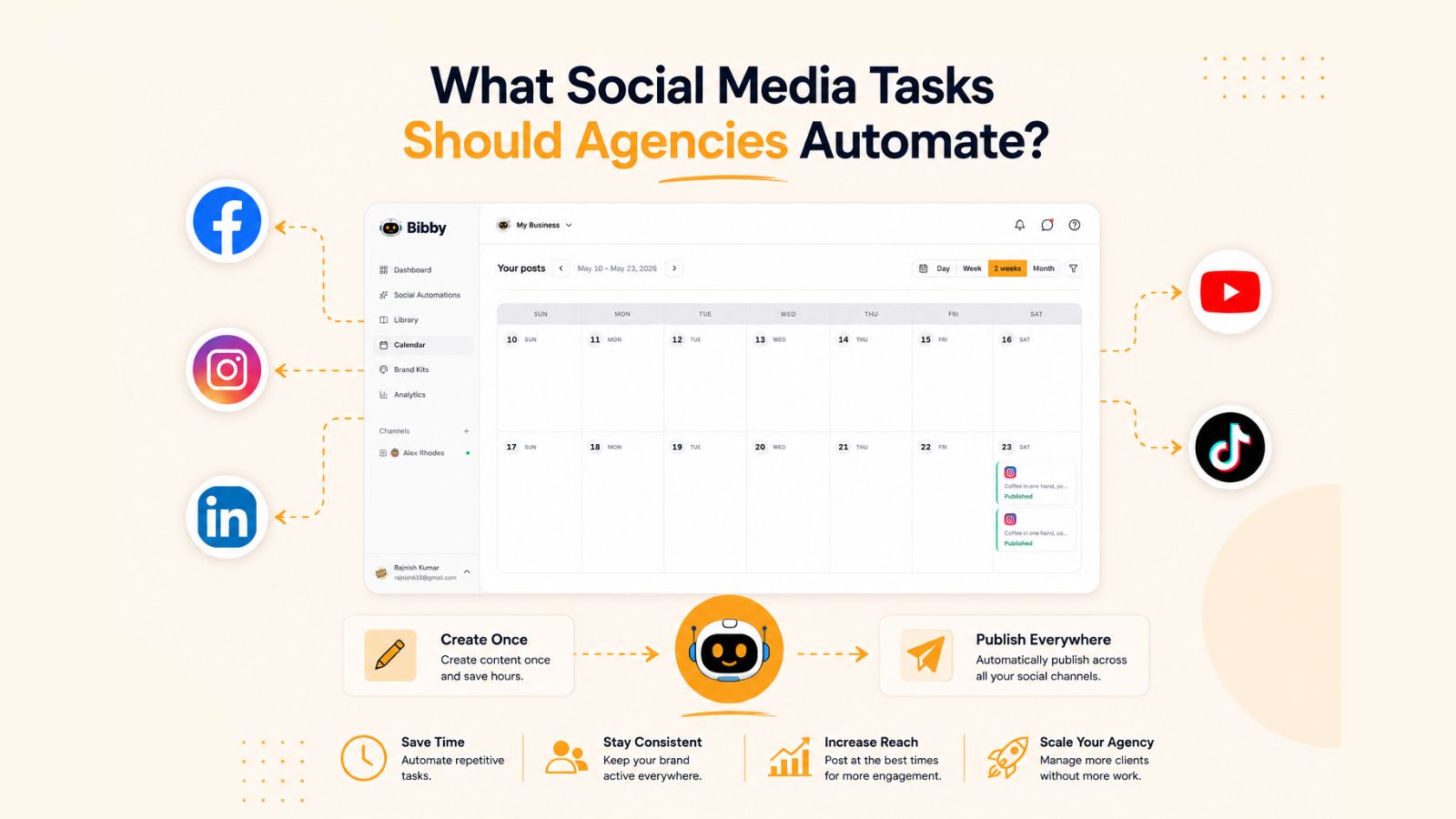
Here are the key social media tasks that marketing agencies should automate.
Content Scheduling
Content scheduling is often the first and most impactful process agencies automate.
Rather than publishing posts manually every day, teams can create content in batches and schedule it weeks or months in advance. This approach creates a more organized workflow and ensures a consistent posting schedule across client accounts.
Benefits of automating content scheduling include:
- Reduced manual work
- Improved content consistency
- Better campaign planning
- Fewer missed publishing opportunities
Multi-Platform Publishing
Managing content separately on Facebook, Instagram, LinkedIn, YouTube, and TikTok can quickly become inefficient.
Automation tools allow agencies to publish content across multiple platforms from a single dashboard, eliminating the need to switch between accounts and applications throughout the day.
This helps agencies:
- Save time
- Improve workflow efficiency
- Maintain consistent messaging
- Manage multiple clients more effectively
Content Calendar Management
Keeping track of multiple client campaigns can become challenging as an agency grows.
Automated content calendars provide a centralized view of scheduled posts, upcoming campaigns, and publishing timelines. This makes it easier for teams to collaborate and identify content gaps before they become problems.
A well-organized content calendar helps agencies:
- Plan campaigns more effectively
- Coordinate team efforts
- Avoid scheduling conflicts
- Maintain posting consistency
Client Approval Workflows
Approval delays are one of the most common obstacles in social media management.
Automating approval workflows helps agencies streamline communication and keep projects moving forward. Instead of managing feedback through endless email threads, teams can collect approvals, revisions, and comments in one place.
Benefits include:
- Faster approval cycles
- Better collaboration
- Improved transparency
- Reduced administrative overhead
Content Repurposing
Creating unique content for every platform can be resource-intensive. Automation can help agencies repurpose existing content into multiple formats suitable for different channels.
For example:
- A LinkedIn post can be adapted into a Facebook update
- A long-form video can generate YouTube Shorts and TikTok clips
- A blog post can become a series of social media posts
This allows agencies to maximize the value of every piece of content they create.
Analytics Collection and Reporting
Tracking performance across multiple social platforms can require significant manual effort.
Automation tools can gather metrics from various channels and organize them into centralized dashboards and reports. This gives agencies faster access to performance data while reducing reporting workloads.
Automated reporting helps agencies:
- Monitor campaign performance
- Track engagement trends
- Identify growth opportunities
- Demonstrate ROI to clients
Team Collaboration and Workflow Management
As agencies grow, coordination becomes increasingly important.
Automated workflows help teams assign tasks, track progress, and maintain visibility across multiple client projects. This reduces bottlenecks and ensures everyone remains aligned on deadlines and responsibilities.
The Goal Isn't to Automate Everything
Successful agencies don't automate social media to remove human involvement. They automate repetitive tasks so their teams can focus on work that requires creativity, strategy, and expertise.
By automating scheduling, publishing, approvals, reporting, and workflow management, agencies can operate more efficiently while still delivering personalized service and meaningful results for clients.
The next step is choosing a platform that brings all of these capabilities together in a way that supports agency growth and client success.
Also try: Best LinkedIn Scheduling Tool for Agencies
How Bibby Helps Marketing Agencies Automate Social Media Management
As agencies grow, managing multiple client accounts across different social media platforms becomes increasingly complex. Teams often find themselves juggling content calendars, publishing schedules, and performance reports—all while trying to deliver consistent results for clients.
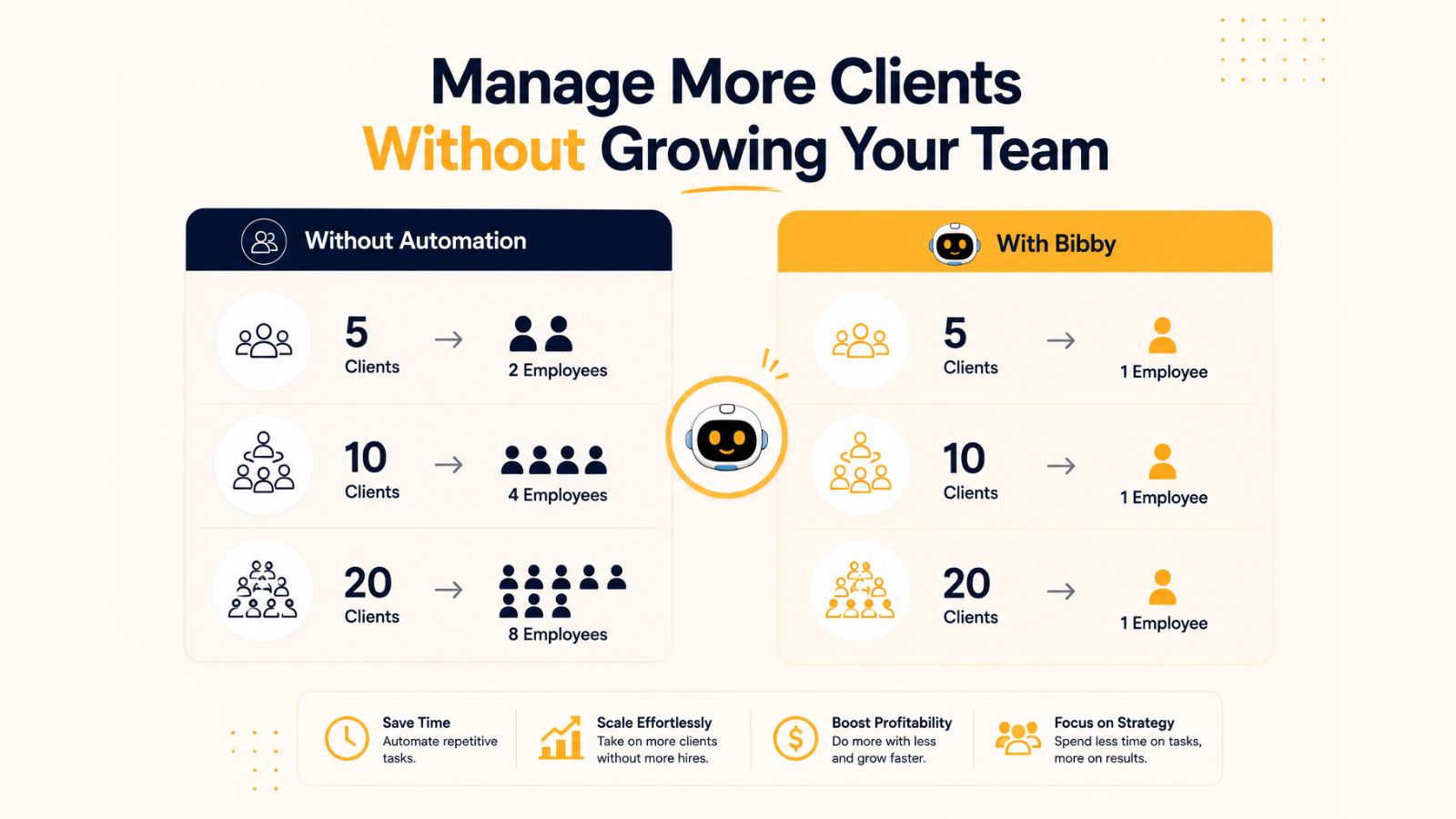
Bibby is designed to solve these challenges by giving marketing agencies a centralized platform to automate and streamline social media management at scale.
Manage All Client Social Media Accounts From One Dashboard
One of the biggest challenges agencies face is switching between multiple platforms and client accounts throughout the day.
Bibby brings everything together in a single workspace, allowing agencies to manage client social media operations from one centralized dashboard.
Instead of logging into separate platforms, teams can organize, schedule, and monitor content across all client accounts in one place.
This creates:
- Better workflow visibility
- Faster campaign management
- Improved team collaboration
- Reduced administrative overhead
Publish Content Across Multiple Social Networks
Modern clients expect an active presence across several social media platforms. Managing each platform separately can consume valuable time and resources.
With Bibby, agencies can schedule and publish content across:
- YouTube
- TikTok
By centralizing publishing workflows, agencies can maintain consistent posting schedules while significantly reducing manual work.
Simplify Content Planning and Scheduling
Successful social media campaigns require careful planning and consistent execution.
Bibby helps agencies organize content through a centralized scheduling system that makes it easier to plan weeks or months of content in advance.
Key benefits include:
- Bulk content scheduling
- Organized content calendars
- Campaign visibility across clients
- Improved publishing consistency
This allows teams to focus less on daily posting tasks and more on creating effective marketing strategies.
Streamline Client Approvals and Collaboration
Approval bottlenecks can delay campaigns and create frustration for both agencies and clients.
Bibby helps simplify collaboration by sending approval email 24 hours prior to publishing of each content for the day.
This enables agencies to:
- Reduce approval delays
- Improve communication
- Keep campaigns on schedule
- Maintain clear visibility into project status
A smoother approval process leads to faster execution and a better client experience.
Save Time on Repetitive Tasks
Many social media management activities are repetitive and time-consuming. Scheduling posts, updating calendars, tracking content status, and coordinating workflows can consume hours every week.
By automating these routine tasks, Bibby helps agency teams reclaim valuable time that can be invested in:
- Strategy development
- Creative content production
- Audience engagement
- Client relationship management
Scale Agency Operations Without Scaling Headcount
For many agencies, growth creates a difficult challenge: serving more clients often requires hiring more people.
Bibby's automation capabilities help agencies break this cycle by improving operational efficiency. Teams can manage more accounts, publish more content, and maintain higher service levels without proportionally increasing staffing costs.
This creates several growth advantages:
- Higher client capacity
- Improved profit margins
- More efficient workflows
- Sustainable agency growth
Built for the Way Agencies Work
Unlike generic scheduling tools, Bibby is built around the needs of marketing agencies managing multiple client accounts and social media channels.
By combining content planning, publishing, collaboration, and automation into a single platform, Bibby helps agencies simplify operations while delivering a better experience for both their teams and their clients.
As competition increases and client expectations continue to grow, agencies that embrace automation will be better positioned to scale efficiently, improve profitability, and deliver stronger results.
Best Practices for Implementing Social Media Automation
Social media automation can transform agency operations, but success depends on how it's implemented. Simply automating every task isn't the goal. The most successful agencies use automation strategically to improve efficiency while maintaining the creativity and personalization clients expect.
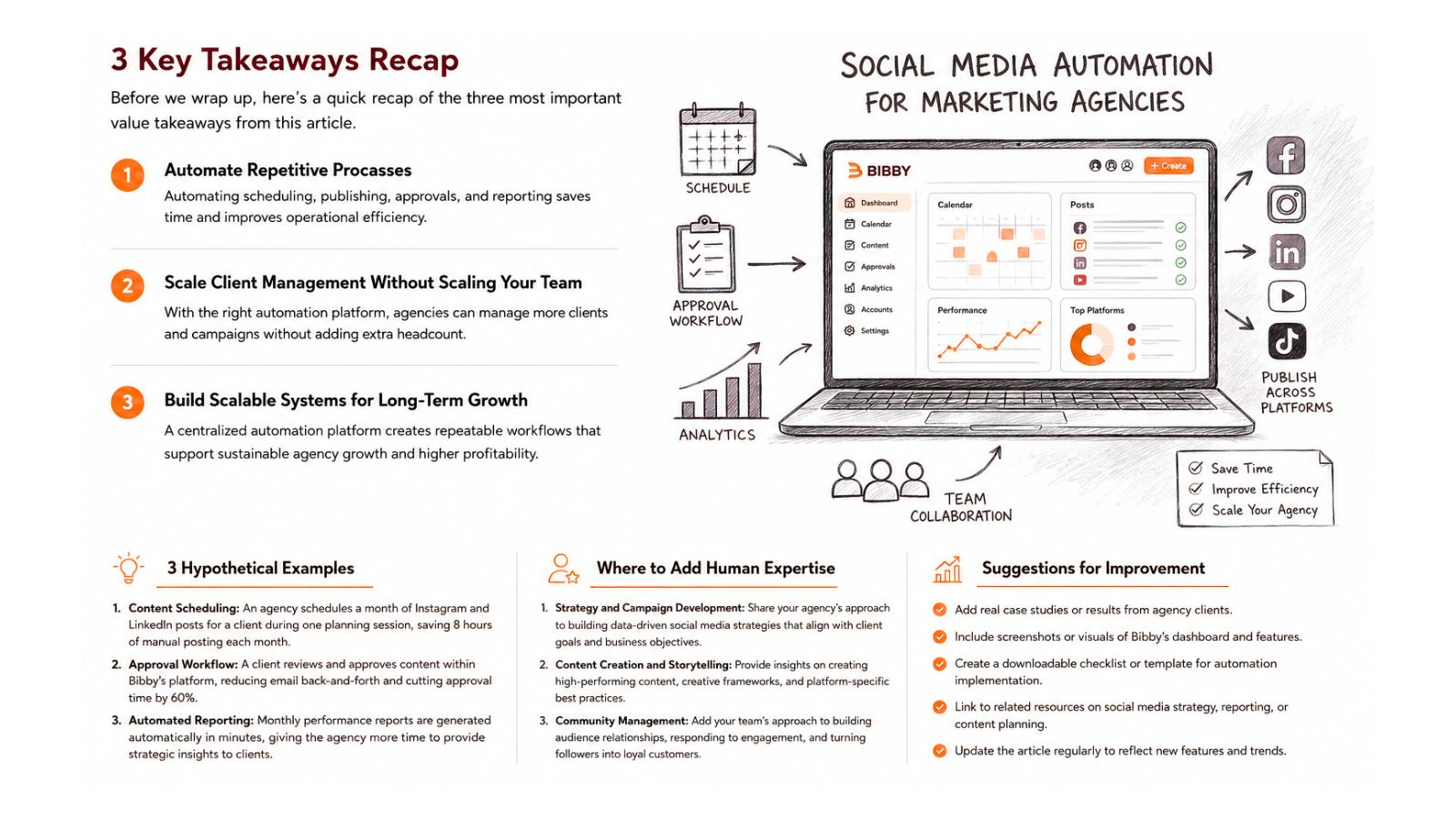
Here are some best practices for implementing social media automation effectively.
Start With Your Most Repetitive Tasks
The easiest way to see immediate value from automation is to begin with tasks that consume the most time.
For most agencies, these include:
- Content scheduling
- Post publishing
- Content calendar management
- Client approvals
- Performance reporting
Automating these routine processes can free up significant time without disrupting existing workflows.
Maintain Human Oversight
Automation should support your team—not replace it.
While software can handle scheduling and workflow management, human expertise is still essential for developing strategies, creating engaging content, and building relationships with audiences.
Agency teams should continue to:
- Review scheduled content
- Monitor campaign performance
- Respond to audience engagement
- Adjust strategies based on results
The best outcomes come from combining automation with human creativity and decision-making.
Create Standardized Workflows
As agencies grow, inconsistent processes often create bottlenecks and confusion.
Establishing standardized workflows helps ensure every client account follows a clear and repeatable process.
Consider creating workflows for:
- Content creation
- Internal reviews
- Client approvals
- Publishing schedules
- Monthly reporting
Standardization makes it easier to onboard new team members and scale operations efficiently.
Plan Content in Advance
One of the biggest advantages of automation is the ability to schedule content ahead of time.
Rather than managing content day by day, agencies should develop weekly or monthly content plans that align with client goals and marketing campaigns.
Advanced planning helps:
- Reduce last-minute work
- Improve content quality
- Ensure posting consistency
- Support long-term campaign objectives
Customize Content for Each Platform
Automation makes it easy to publish across multiple social networks, but agencies should avoid posting identical content everywhere.
Each platform has different audience behaviors and content preferences.
For example:
- LinkedIn audiences often prefer professional and educational content
- Instagram prioritizes visual storytelling
- TikTok rewards short-form, engaging videos
- YouTube supports longer-form content and tutorials
- Facebook benefits from community-focused engagement
Customizing content for each platform can significantly improve performance and engagement.
Use Analytics to Guide Decisions
Automation tools provide access to valuable performance data, but collecting data is only the first step.
Agencies should regularly analyze metrics such as:
- Engagement rates
- Reach and impressions
- Audience growth
- Video performance
- Click-through rates
These insights help identify what is working, what needs improvement, and where new opportunities exist.
Keep Clients Informed
Automation can improve transparency when used correctly.
Providing clients with visibility into content calendars, approvals, and campaign performance helps build trust and reduce unnecessary back-and-forth communication.
When clients understand what's happening and why, collaboration becomes much more efficient.
Continuously Refine Your Processes
Social media trends, platform algorithms, and client expectations constantly evolve. Agencies should regularly review their workflows and automation strategies to ensure they remain effective.
Questions to ask include:
- Which tasks still require excessive manual effort?
- Where are approval delays occurring?
- Which workflows can be further optimized?
- Are reporting processes delivering meaningful insights?
Continuous improvement helps agencies maximize the value of automation over time.
Automation Works Best When Combined With Strategy
The agencies that achieve the best results don't rely on automation alone. They use automation to eliminate repetitive work while focusing their team's energy on strategy, creativity, and client success.
When implemented correctly, social media automation becomes a powerful growth enabler—allowing agencies to deliver better results, improve operational efficiency, and scale with confidence.
You may also like looking into: Best Buffer Alternative for Small Business
Common Social Media Automation Mistakes Agencies Should Avoid
Social media automation can significantly improve efficiency, but using it incorrectly can create new problems instead of solving existing ones. Agencies that treat automation as a complete replacement for strategy and human involvement often struggle to achieve the results they expect.
To maximize the benefits of automation, avoid these common mistakes.
Over-Automating Everything
One of the biggest misconceptions about social media automation is that every task should be automated.
While automation is excellent for scheduling, publishing, and workflow management, it cannot replace strategic thinking, creativity, or authentic audience engagement.
Over-automation often leads to:
- Generic content
- Reduced brand personality
- Lower audience engagement
- Missed opportunities for meaningful interactions
The goal should be to automate repetitive tasks while keeping people focused on strategy and relationship-building.
Publishing the Same Content Across Every Platform
Automation makes it easy to distribute content across multiple social networks, but that doesn't mean every platform should receive identical posts.
Each social media channel has different audience expectations and content formats.
For example:
- LinkedIn users often engage with professional insights and industry expertise
- Instagram audiences respond to visual storytelling
- TikTok users prefer short, engaging video content
- YouTube viewers expect deeper, more detailed content
Simply copying and pasting the same content everywhere can reduce engagement and limit campaign performance.
Ignoring Audience Engagement
Automation can publish content, but it cannot build relationships with your audience.
Many agencies focus heavily on scheduling posts while neglecting community management activities such as:
- Responding to comments
- Answering messages
- Participating in conversations
- Addressing customer concerns
Social media remains a relationship-driven channel. Active engagement is essential for building trust, loyalty, and brand awareness.
Failing to Monitor Scheduled Content
Scheduling content weeks in advance improves efficiency, but agencies should never adopt a "set it and forget it" approach.
Unexpected events, industry news, or changes in client priorities can make previously scheduled content inappropriate or irrelevant.
Regularly reviewing scheduled content helps agencies:
- Maintain brand relevance
- Avoid posting insensitive content
- Align campaigns with current events
- Protect client reputations
Automation should increase flexibility, not eliminate oversight.
Neglecting Analytics and Performance Data
Many agencies automate reporting but fail to act on the insights they collect.
Data is only valuable when it informs decision-making.
Agencies should regularly evaluate:
- Top-performing content
- Audience engagement trends
- Platform-specific performance
- Campaign ROI
- Areas for improvement
Using analytics to refine strategy helps clients achieve better results over time.
Creating Complicated Workflows
Automation should simplify operations, not make them more complex.
Some agencies introduce too many approval steps, unnecessary processes, or overly complicated workflows that slow down execution.
Effective automation focuses on:
- Reducing friction
- Improving efficiency
- Simplifying collaboration
- Eliminating bottlenecks
The simpler the workflow, the easier it is to scale.
Choosing Tools That Don't Support Agency Growth
Many social media tools are designed for individual creators or small businesses rather than agencies managing multiple clients.
As a result, agencies often outgrow their tools and face limitations such as:
- Poor multi-account management
- Limited collaboration features
- Inefficient approval workflows
- Restricted scalability
Choosing a platform built specifically for agency workflows can prevent these challenges and support long-term growth.
Remember: Automation Is a Tool, Not a Strategy
The most successful agencies understand that automation is designed to support their marketing efforts—not replace them.
When agencies automate repetitive tasks while maintaining strong strategy, creative execution, and client communication, they achieve the best results. Automation becomes a force multiplier that allows teams to work smarter, serve more clients, and deliver greater value without sacrificing quality.
By avoiding these common mistakes, agencies can build a social media automation system that improves efficiency while preserving the human expertise that clients rely on.
Also read: 7 Reasons Your Small Business Should Switch to AI Social Media Scheduling
Why Social Media Automation Is the Future of Agency Growth
The social media landscape is evolving faster than ever. Clients expect more content, more platform coverage, faster execution, and greater transparency into results. At the same time, agencies face increasing pressure to scale efficiently while maintaining profitability.
Meeting these demands through manual processes alone is becoming increasingly difficult.
Client Expectations Continue to Rise
Today's clients don't want to be active on just one social network. Most brands are expected to maintain a presence across multiple platforms, including Facebook, Instagram, LinkedIn, YouTube, and TikTok.
This creates new challenges for agencies:
- More content to create
- More campaigns to manage
- More performance data to analyze
- More opportunities for errors and delays
Automation helps agencies keep up with these growing expectations without overwhelming their teams.
Content Demands Are Increasing
Businesses are publishing more content than ever before to stay visible and competitive online.
From short-form videos and promotional campaigns to educational content and community engagement, the volume of work required to maintain an effective social media presence continues to grow.
Agencies that rely heavily on manual workflows often struggle to keep pace, while agencies that embrace automation can manage higher content volumes more efficiently.
Profitability Depends on Operational Efficiency
Many agencies reach a point where growth becomes difficult because every new client requires additional manual work.
Without automation, scaling often means:
- Hiring more employees
- Increasing operational costs
- Adding management complexity
- Reducing profit margins
Automation helps break this cycle by allowing agencies to handle more client work with existing resources, creating a more scalable and profitable business model.
Agencies Need Systems That Scale
The most successful agencies build repeatable systems that support growth.
Rather than relying on manual processes and individual team members to manage every task, scalable agencies use automation to create consistent workflows for:
- Content planning
- Publishing
- Client approvals
- Collaboration
- Reporting
These systems make it easier to onboard new clients, maintain quality standards, and support long-term expansion.
Competitive Agencies Are Embracing Automation
As automation technology becomes more accessible, agencies that adopt it gain a significant competitive advantage.
They can:
- Deliver services more efficiently
- Respond faster to client needs
- Improve team productivity
- Increase client capacity
- Scale without excessive overhead
In contrast, agencies that continue relying on outdated manual processes may find it increasingly difficult to compete.
Automation Enables Better Client Service
One of the biggest misconceptions about automation is that it reduces personalization.
In reality, automation often allows agencies to provide better service because teams spend less time on repetitive administrative tasks and more time on strategic work that drives results.
By eliminating routine work, agencies can focus on:
- Developing stronger campaigns
- Creating higher-quality content
- Building client relationships
- Improving performance outcomes
This leads to a better experience for both agencies and their clients.
The Future Belongs to Agencies That Work Smarter
The future of agency growth isn't about working longer hours or continuously expanding teams. It's about creating efficient systems that allow agencies to scale sustainably.
Social media automation is a key part of that transformation. By streamlining workflows, improving consistency, and reducing manual effort, agencies can unlock new growth opportunities while maintaining high-quality service delivery.
Platforms like Bibby help make this possible by giving agencies a centralized way to manage content, automate publishing, streamline collaboration, and support clients across multiple social media channels.
Conclusion
Social media automation has become an essential growth strategy for modern marketing agencies. As client demands increase and social media management becomes more complex, manual processes can limit efficiency, profitability, and scalability.
Throughout this guide, we've explored three key takeaways:
- Social media automation reduces repetitive work and improves operational efficiency.
- Agencies can manage more clients and campaigns without significantly increasing headcount.
- The right automation platform creates scalable systems that support long-term growth.
By automating content scheduling, multi-platform publishing, approvals, reporting, and workflow management, agencies can spend less time on administrative tasks and more time delivering value to clients.
If your agency is looking to streamline operations and scale social media management across Facebook, Instagram, LinkedIn, YouTube, and TikTok, now is the time to evaluate your current processes. Tools like Bibby can help centralize workflows, improve team productivity, and create a more efficient foundation for sustainable agency growth.
As your agency continues to grow, the next step is learning how to build repeatable client delivery systems that combine automation, collaboration, and performance tracking to maximize both client results and agency profitability.